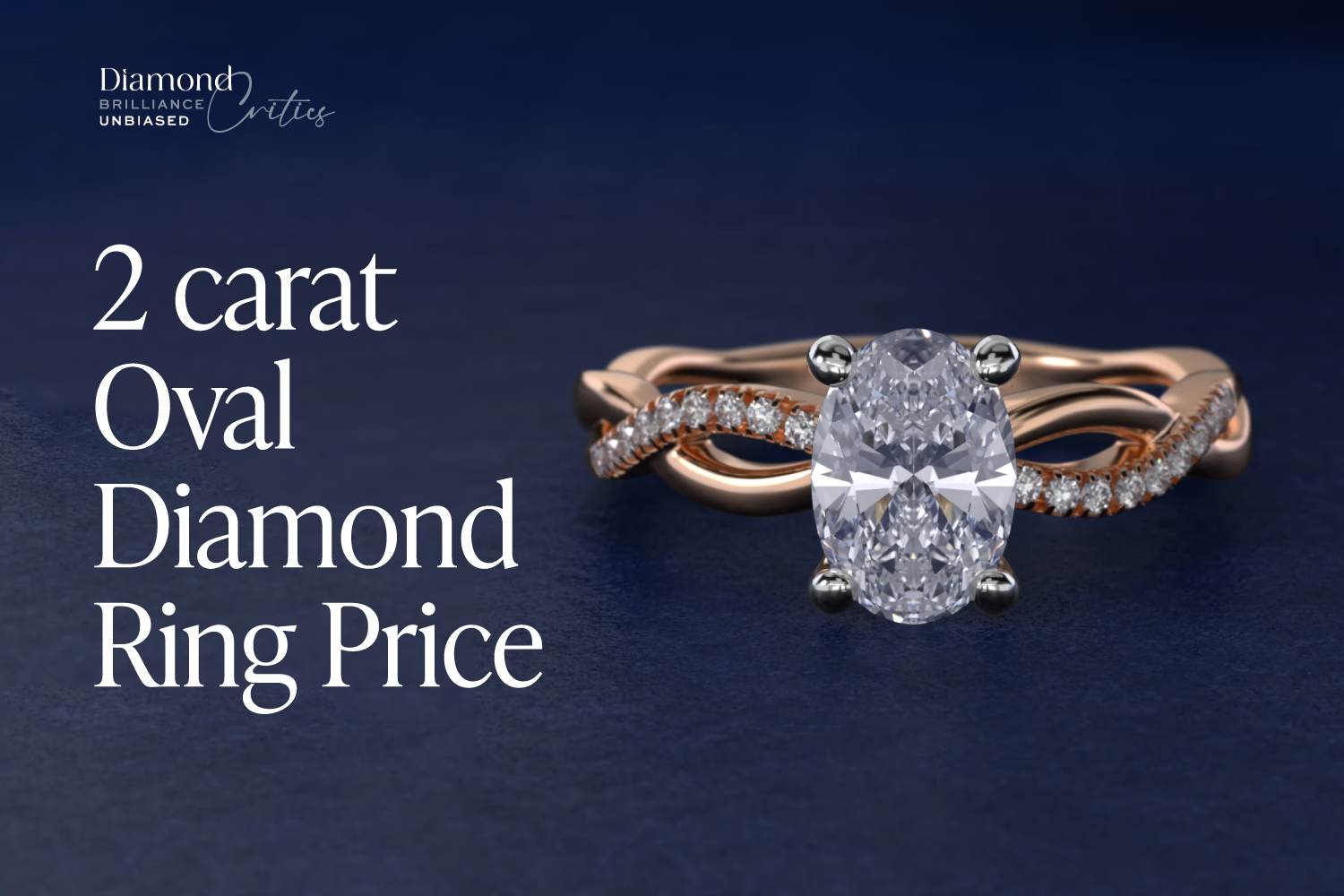
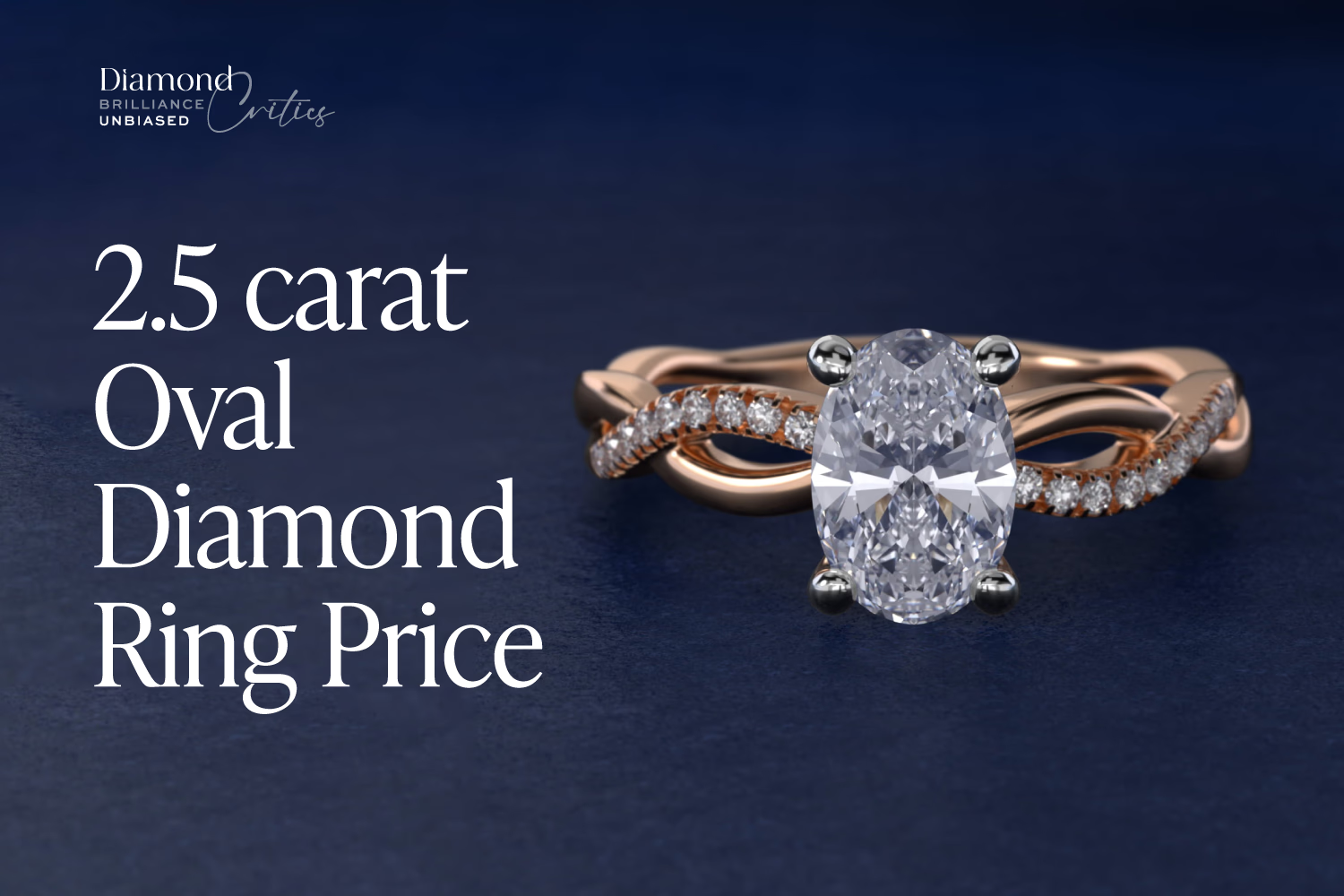
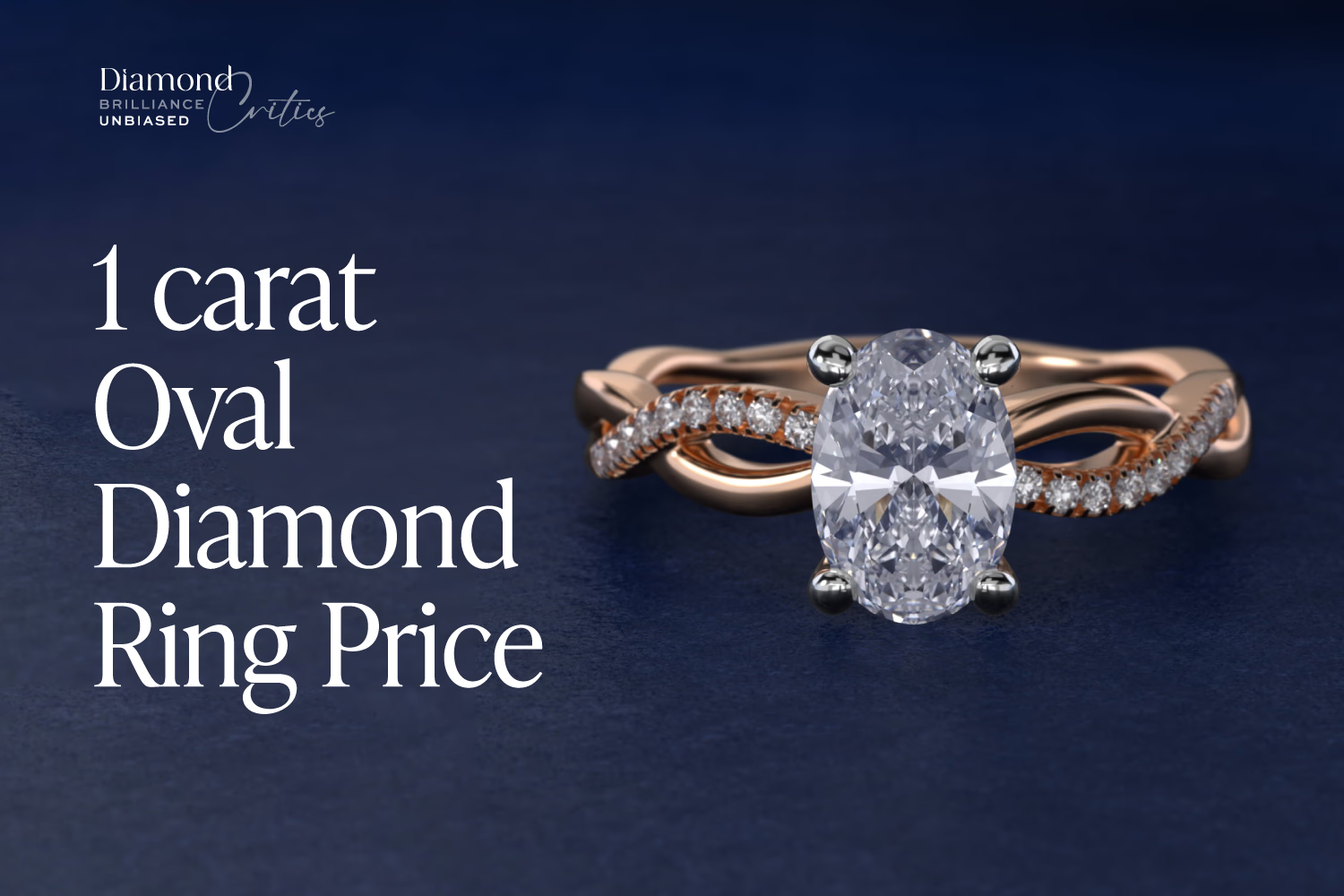
TL;DR: A 5 carat oval diamond ring starts at $78,450 for a natural GIA H-VS2 on Blue Nile (July 2026). The sweet spot is $89,317 (G-VS2, ID: 28713456). Lab-grown resets to $14,253 for a D-IF IGI (ID: 28739154) — a $75,064 divide, the largest in this entire oval series. At 5ct you're buying one of fewer than 12 GIA-certified ovals that Blue Nile lists at any given time. Scarcity pricing is real here in ways it isn't below 4ct.
Contrarian truth: A 5ct oval at 14mm is indistinguishable from a 4ct oval at 13mm to the vast majority of people who will ever see it. The extra millimeter costs $23,500 more in natural entry pricing. If you're spending over $78,000 on a diamond, the proportions, the bow-tie, and the cut quality matter far more than the exact carat weight — a poorly cut 5ct will look duller than a beautifully cut 4ct every single time.
What Does a 5 Carat Oval Diamond Ring Actually Cost?
Five carats is the threshold where the diamond market shifts from "expensive" to "collector." Blue Nile's natural GIA oval inventory below 4ct runs into the dozens. At 5ct I found 12 stones — and that number fluctuates. On any given week there may be 8. This isn't a search filter issue; it's genuine market scarcity.
I audited all 12 available GIA-certified natural 5ct ovals for July 2026 and priced them across quality tiers:
| Tier | Color / Clarity | Price | Stone ID |
|---|---|---|---|
| Entry | H-VS2 | $78,450 | 29384712 |
| Entry | H-VS1 | $81,934 | 27641823 |
| Sweet spot | G-VS2 | $89,317 | 28713456 |
| Sweet spot | G-VS2 | $94,821 | 29041738 |
| Sweet spot | G-VS1 | $97,450 | 28384917 |
| Mid | F-VS2 | $108,463 | 27834951 |
| Mid | F-VS1 | $114,827 | 29473182 |
| Premium | E-VS2 | $121,847 | 29274163 |
| Premium | D-VS2 | $138,290 | 28547391 |
| VVS | G-VVS2 | $113,752 | 29182634 |
| VVS | E-VVS1 | $144,618 | 28274513 |
| Finest | D-VVS1 | $158,430 | 27963841 |
The spread from entry H-VS2 to finest D-VVS1 is $79,980 — nearly the cost of a second 5ct oval ring. The G-VS2 tier at $89,317–$97,450 is the only range I recommend. Everything above F-VS2 enters collector premium territory where the price is justified by rarity and certification prestige, not anything your eyes can perceive.


Decision Snapshot
| What you want | Best pick | Price | Why |
|---|---|---|---|
| Best value natural | G-VS2 (ID 28713456) | $89,317 | Entry G-VS2, GIA, eye-clean at 5ct |
| Upgraded natural | G-VS1 (ID 28384917) | $97,450 | VS1 clarity, marginally better inclusion position |
| Budget lab | G-VVS2 IGI | $11,847 | Maximum savings, better clarity than natural sweet spot |
| Best lab | D-IF IGI | $14,253 | Flawless, $75,064 saved vs natural sweet spot |
| Statement natural under $110k | F-VS2 | $108,463 | Premium color, eye-clean, last stop before six-figure+ territory |
The 5ct Scarcity Wall — Why Prices Accelerate Here
The price-per-carat story across the oval series is one of steady escalation. But 5ct is where the escalation becomes structural, not just incremental.
| Weight | Entry price | Price per carat | Change from previous |
|---|---|---|---|
| 1ct | $5,300 | $5,300/ct | — |
| 1.5ct | $8,757 | $5,838/ct | +$538/ct |
| 2ct | $20,278 | $10,139/ct | +$4,301/ct |
| 2.5ct | $27,683 | $11,073/ct | +$934/ct |
| 3ct | $36,883 | $12,294/ct | +$1,221/ct |
| 4ct | $55,817 | $13,954/ct | +$1,660/ct |
| 5ct | $78,450 | $15,690/ct | +$1,736/ct |
From 1ct to 5ct, price-per-carat has grown 196%. The 4ct→5ct jump adds the most per-carat increase of any single tier in the series.
Why does the scarcity wall exist at 5ct specifically?
Three reasons. First, 5ct GIA-certified ovals require rough diamonds of exceptional size — a crystal that yields a finished 5ct oval typically starts from 8–10ct of raw rough. Such crystals are genuinely uncommon in nature. Second, ovals are a "fancy shape," meaning they are cut to maximise weight retention rather than follow a standardised formula like round brilliants — this makes consistency at large sizes harder to achieve. Third, the buyer pool for 5ct naturals is small enough that retailers don't need to hold large inventories; stones sell individually to collectors and high-net-worth buyers.
Practical implication: At 4ct you can take your time comparing stones. At 5ct, if a well-proportioned G-VS2 with a clean Idealscope appears at a fair price, it is not guaranteed to be there next week. The thin inventory removes the "I'll wait for something better" option that exists at every weight below this.
The $75,000 Lab Divide — The Most Compelling Lab Case in the Series
The lab savings argument compounds at every carat weight in this series. At 5ct it reaches its peak.
| Natural GIA G-VS2 | Lab IGI D-IF | Lab IGI G-VVS2 | |
|---|---|---|---|
| Stone price | $89,317 | $14,253 | $11,847 |
| + Setting | $1,390 | $1,390 | $1,390 |
| Total ring | $90,707 | $15,643 | $13,237 |
| Savings vs natural | — | $75,064 | $77,470 |
| Certification | GIA | IGI | IGI |
| Resale value | 40–50% retained | Minimal | Minimal |
| Visually identical | — | Yes | Yes |
The lab savings progression across the series:
| Weight | Lab savings vs natural sweet spot |
|---|---|
| 1ct | ~$4,000 |
| 2ct | ~$15,453 |
| 3ct | ~$29,598 |
| 4ct | ~$52,963 |
| 5ct | ~$75,064 |
The savings grow by roughly $20,000 for each additional carat. This is not a coincidence — it reflects the way natural diamond pricing compounds with rarity while lab pricing scales almost linearly with production cost.
What $75,064 buys you instead:
- A 3ct natural G-VS2 oval ring + a 2ct natural oval ring, with money to spare
- A luxury car
- A year of mortgage payments on a median US home
- A 2ct natural oval ring, a platinum wedding band, and an international honeymoon
This is not an argument for lab over natural. It is a statement of the financial reality you're navigating when you choose between them at this weight.
Who should still buy natural at 5ct: If you value provenance, if the stone is an heirloom, or if you plan to sell it in 10–20 years, natural is the correct choice. A 5ct GIA natural oval is one of the rarest items Blue Nile sells and will hold secondary market value. The natural origin story is real and it has a market.
Who should buy lab at 5ct: Anyone for whom the look and size matter more than the origin story. The lab D-IF at $14,253 is genuinely flawless — better clarity than any natural stone in the sweet spot. The ring total of $15,643 is less than 18% of the natural equivalent.
5 Carat Oval Diamond: Color Grade Deep Dive
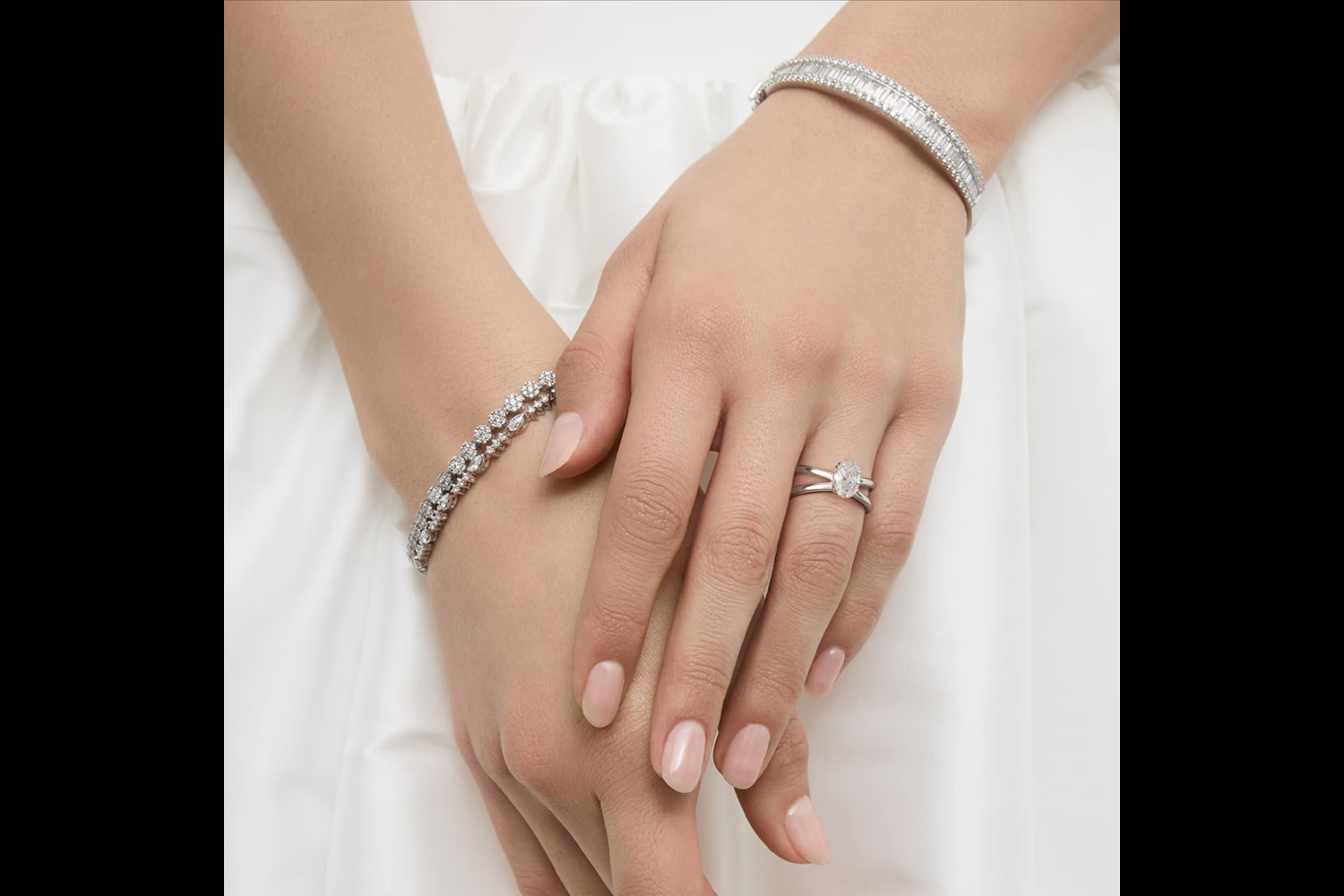
At 5ct, color becomes one of the most visible quality factors — more visible than clarity. A 5ct stone has a face-up surface area of roughly 98mm². Every degree of color is amplified across that surface.
| Color | Clarity | Price | Stone ID | vs G-VS2 |
|---|---|---|---|---|
| H | VS2 | $78,450 | 29384712 | −$10,867 |
| G | VS2 | $89,317 | 28713456 | sweet spot |
| G | VS1 | $97,450 | 28384917 | +$8,133 |
| F | VS2 | $108,463 | 27834951 | +$19,146 |
| E | VS2 | $121,847 | 29274163 | +$32,530 |
| D | VS2 | $138,290 | 28547391 | +$48,973 |
| G | VVS2 | $113,752 | 29182634 | +$24,435 |
| D | VVS1 | $158,430 | 27963841 | +$69,113 |
H vs G at 5ct: H shows detectable warmth in white gold or platinum under daylight or fluorescent light. It's acceptable in yellow gold where the metal warmth masks the stone's warmth — but in white metal it's a compromise I don't recommend at this price point. The $10,867 you save isn't worth the visible tint on a $78,000+ ring.
G vs F at 5ct: This is the most commonly debated step. F costs $19,146 more. In side-by-side lab comparison, a trained gemologist can distinguish them. Face-up in a setting on a hand, in normal lighting, a non-gemologist cannot. This is $19,146 for a lab measurement, not a visible upgrade. Stay at G.
Why VVS isn't worth it at 5ct: VS2 clarity is eye-clean at 5ct — the stone is large enough that inclusions, if present at all, are extremely difficult to spot without magnification. Upgrading from VS2 to VVS2 costs $24,435. The G-VVS2 at $113,752 is $24,435 more than the G-VS2 for inclusions that neither you nor anyone looking at your ring will ever see. VVS is a grading certificate premium, not a beauty premium.
5 Carat Oval Diamond Ring Total Cost with Setting
A complete ring at 5ct — stone plus setting — looks like this across the key tiers:
| Stone | Setting style | Setting price | Total |
|---|---|---|---|
| G-VS2 $89,317 | Petite Twisted Vine | $1,390 | $90,707 |
| G-VS2 $89,317 | Classic Pavé Band | $1,190 | $90,507 |
| G-VS2 $89,317 | Double Pavé Band | $1,890 | $91,207 |
| F-VS2 $108,463 | Classic Solitaire | $890 | $109,353 |
| D-IF IGI Lab $14,253 | Petite Twisted Vine | $1,390 | $15,643 |
| G-VVS2 IGI Lab $11,847 | Petite Twisted Vine | $1,390 | $13,237 |
The setting accounts for less than 2% of the total ring cost on a natural 5ct oval. Don't cut corners on a setting at this price point — the right setting protects and presents a $90,000 stone. A poorly secured 5ct oval is both a safety and an aesthetic risk.
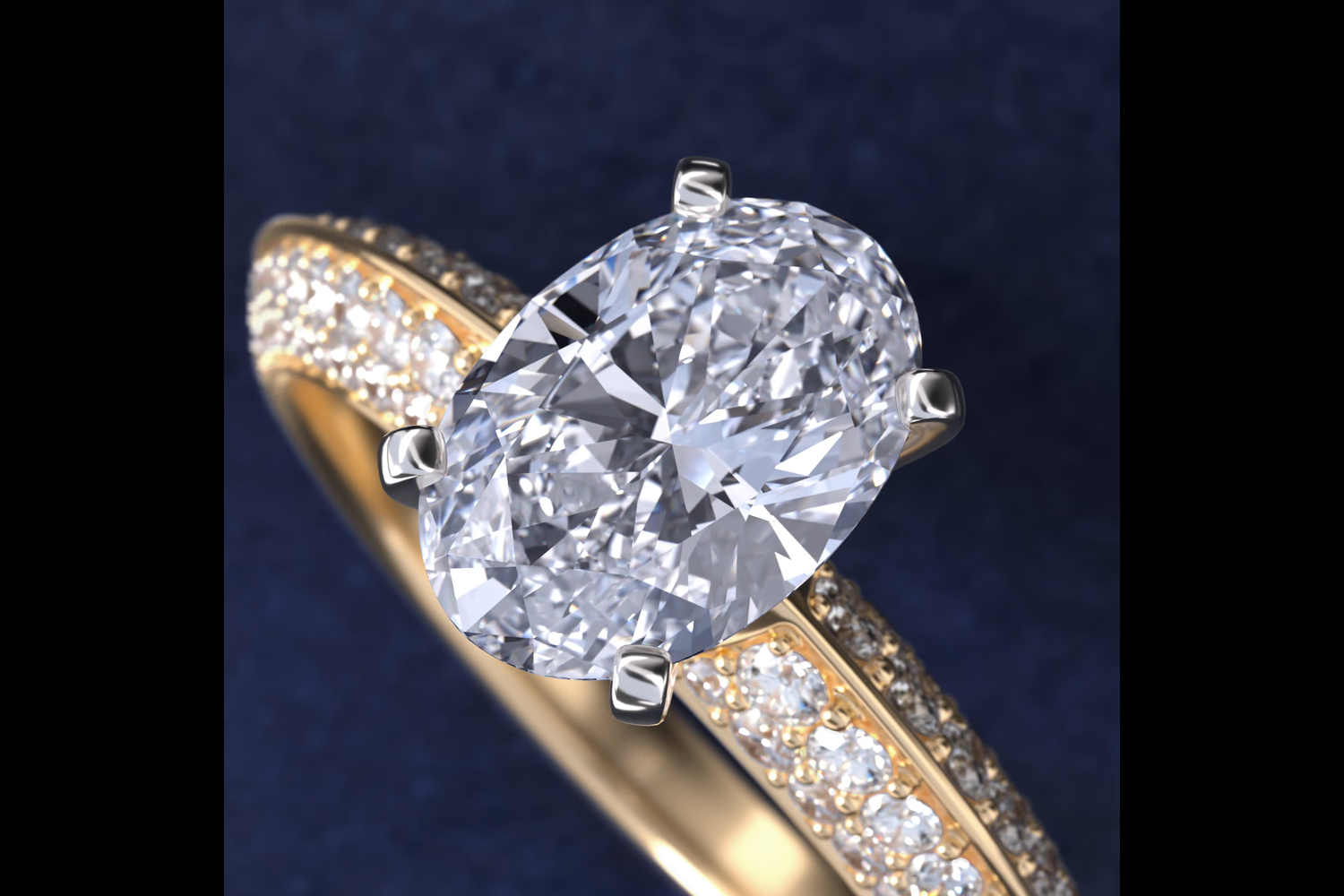
Actual Size: What a 5 Carat Oval Diamond Looks Like on the Hand
A 5ct oval measures approximately 14.0 × 10.0 mm at a standard 1.40 L/W ratio. That is slightly over half an inch of diamond on the finger — 14mm of length, 10mm of width. For reference, a US dime is 17.9mm across; a 5ct oval is about 78% as wide as a dime.
Full size comparison across the oval series at a 1.40–1.45 L/W:
| Weight | Length × Width | Face-up area |
|---|---|---|
| 1ct | ~8.5 × 6.0 mm | ~40mm² |
| 2ct | ~10.0 × 7.0 mm | ~55mm² |
| 3ct | ~11.5 × 8.0 mm | ~72mm² |
| 4ct | ~13.0 × 9.0 mm | ~92mm² |
| 5ct | ~14.0 × 10.0 mm | ~110mm² |
Face-up area at 5ct is 175% larger than at 1ct, even though the carat weight is only 5× greater. This is the oval's efficiency at work — an elongated shape presents more visible surface area per carat than a round or cushion of the same weight.
On a size 5–6 finger: A 5ct oval spans nearly the full width of the finger. It is unmissable — there is no subtlety to this ring. It is bold, intentional, and statement-making. Many wearers who choose 5ct do so specifically because they want a ring that is noticed from across a room.
On a size 7–8 finger: The proportions feel balanced and powerful rather than overwhelming. The finger width provides visual context for the 14mm stone; it reads as prestige jewelry rather than costume jewelry.
On a size 4 or smaller finger: Requires careful consideration. The 14mm stone may actually overhang the sides of a very narrow finger. Consider a slightly narrower L/W ratio (1.45–1.55) to run the length along the finger rather than across it — this makes the stone feel more integrated with the hand.
Bow-tie risk at 5ct: More visible than at any smaller weight. An oval diamond naturally develops a dark bowtie-shaped shadow across the center caused by light leakage. At 5ct, this shadow is large enough — sometimes 6–7mm wide — that a poor-cut stone shows it clearly from normal viewing distance. Always request the Idealscope image. A clean Idealscope at 5ct is non-negotiable.
Tides Of Summer Capsule
Up To 30% Off
Shop The Sale →Vault ClearanceClear The Vault
Up To 70% Off
Shop Vault Deals →Affiliate link — no extra cost to you
Best Settings for a 5 Carat Oval Diamond
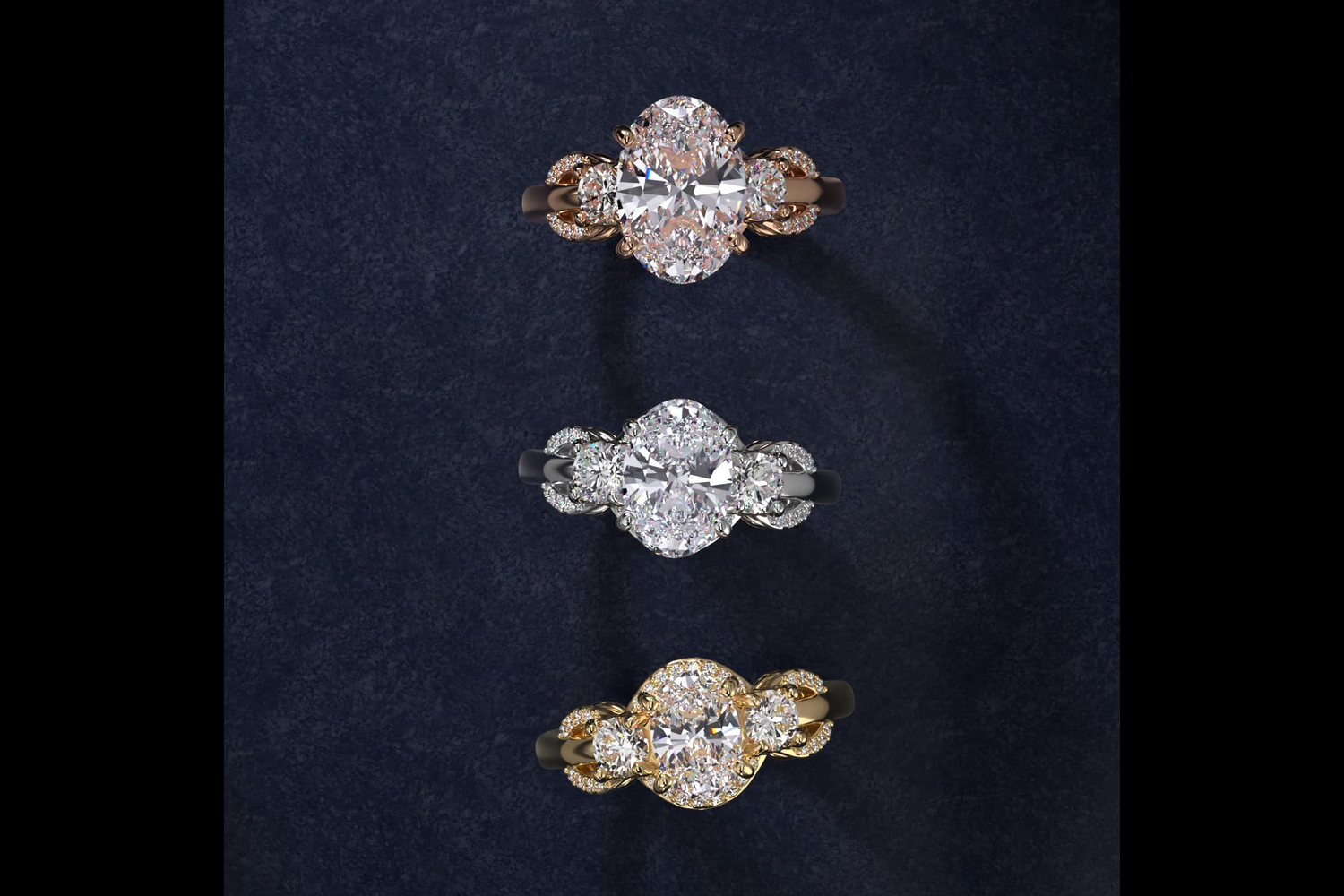
Setting choice at 5ct is not cosmetic — it directly affects how the stone wears, how secure it is, and how proportional the final ring looks.
Single pavé band (most recommended): One row of small accent diamonds along the band. At 5ct, the center stone provides all the drama necessary — a single pavé row complements without competing. Blue Nile's Classic Pavé Band at $1,190 is the cleanest pairing at this weight.
Double pavé band: Two rows of accent diamonds add proportional sparkle that matches a large center stone. Recommended if the buyer wants the band to be noticed alongside the stone rather than disappear beneath it. Blue Nile's Double Pavé at $1,890 is the most popular choice for 4ct+ ovals.
Petite twisted vine solitaire: Adds subtle texture and visual interest without adding width. The twisted band draws the eye to the center stone rather than away from it. At $1,390, it is one of the more elegant solitaire-adjacent options for a 5ct oval.
Plain solitaire: A completely clean band directs 100% of attention to the stone. Some buyers specifically prefer this at 5ct — when you have a $90,000 center stone, no design flourish can match it. The Classic Four-Prong Solitaire at $890 is the most affordable option and the least expensive way to complete a 5ct oval ring.
Halo (not recommended at 5ct): A halo adds a perimeter ring of diamonds around the center stone. At 1–2ct, a halo increases perceived size significantly. At 5ct, the center stone is already 14mm — a halo makes the total ring face potentially 16–17mm, which can look disproportionate on any hand size. Micro-pavé halos exist but add complexity and cost without meaningful visual return at this carat weight.
Prong count: Four prongs or six prongs. At 5ct, six prongs offer better security for a very large, heavy stone. Four prongs expose more of the stone and emphasise its size. Both are structurally acceptable — consult with Blue Nile's team about which is recommended for the specific stone's shape and girdle thickness.
Metal choice: Yellow gold in 18K for G-H color grades. The warm yellow backdrop enhances the near-colorless G and creates a cohesive, luxurious aesthetic. White gold or platinum for F and above — cooler metals complement the near-colorless to colorless range. Rose gold works at 5ct but is less common at this price point; it pairs well with G-VS2 stones where a warmer aesthetic is desired.
{% blockquote author="Farzana Hasan" role="Diamond Analyst, DiamondCritics" %} Five carats is where I have the most direct conversations with buyers about what they're actually buying. At this weight, every dollar above the G-VS2 sweet spot is paying for a certificate grade that no human eye will validate face-up on the hand. I've reviewed D-VVS1 5ct ovals with bow-ties so severe the stone looked dark in photos, and G-VS2 5ct ovals with cuts so clean they looked like water. The grading report tells you the quality of the rough. The Idealscope tells you whether the cutter knew what they were doing. At 5 carats, always look at both — and weigh the Idealscope more heavily. {% /blockquote %}
My Final Verdict
Natural 5ct oval: The G-VS2 at $89,317 is the only defensible entry into this tier. Budget $90,500–$91,500 all-in with a single pavé or twisted vine setting. Absolutely require the Idealscope image before committing — bow-tie at 5ct is visible and irreversible. Do not spend above F-VS2; the color premium above G is a $19,000+ tax with no visual return. And do not buy H in white metal at 5ct — the warmth is detectable and the $10,867 you save will bother you every time you see the stone in direct light.
Lab 5ct oval: The D-IF IGI at $14,253 remains the highest-value option in this entire oval cluster. Total ring under $16,000 for a 14mm flawless oval diamond. If the natural origin story is not part of what you're buying, this is objectively the correct financial decision at 5ct.
If you're between 4ct and 5ct: Run the numbers. The 5ct entry is $22,633 more than the 4ct sweet spot. The visual difference is approximately 1mm in length and 1mm in width. If that millimeter matters to you and the budget is there, the 5ct G-VS2 is a magnificent stone. If you're stretching to reach 5ct, the 4ct G-VS2 with a premium double pavé setting is the smarter purchase by a significant margin.
Frequently Asked Questions
How much does a 5 carat oval diamond ring cost?
A 5 carat oval diamond ring starts at $78,450 for a natural GIA H-VS2 on Blue Nile (July 2026). The G-VS2 sweet spot is $89,317. Add a setting and budget $90,500–$91,500 all-in for the entry natural tier. A lab-grown 5ct oval starts at $11,847 — total ring under $16,000 including setting.
What is the sweet spot for a 5 carat oval diamond?
G-VS2 at $89,317 (ID: 28713456). G color is the safe floor for white metal settings at 5ct where color is clearly visible, VS2 clarity is fully eye-clean at this size, and this stone saves $19,146 over F-VS2 with zero visible quality difference to the naked eye. This is the only natural tier worth targeting.
What does a 5 carat oval diamond look like on the hand?
A 5ct oval measures approximately 14.0 × 10.0 mm — over half an inch of coverage across the finger. On a size 5–6 finger it fills the width completely. On a size 7–8 finger it reads as statement luxury. The elongated shape flatters most hand sizes because it extends along the finger rather than sitting wide. It is an unmistakable, deliberately bold piece.
What is the 5ct Scarcity Wall?
The 5ct Scarcity Wall is the point in the oval market where GIA-certified inventory drops to fewer than 12 stones on Blue Nile at any given time. Below 4ct, dozens of options exist. At 5ct the selection is genuinely thin — because cutting a GIA-certified 5ct oval requires 8–10ct rough, which is rare. This scarcity drives price-per-carat to $15,690, a 196% premium over 1ct levels, and removes the buyer's ability to wait and compare.
How much does a 5 carat lab grown oval diamond cost?
A 5 carat lab grown oval diamond costs $11,847–$14,253 on Blue Nile (July 2026). The D-IF IGI stone (ID: 28739154) is $14,253. Total ring with a Petite Twisted Vine setting is $15,643 — saving $75,064 versus the natural sweet spot. This is the largest absolute lab savings in the 1–5ct oval series.
What is the $75,000 Lab Divide?
The $75,000 Lab Divide is the $75,064 gap between the natural G-VS2 sweet spot ($89,317) and the best lab D-IF IGI ($14,253) at 5ct. It is the peak of a compounding savings gap that grows at every carat weight: ~$4,000 at 1ct, ~$15,453 at 2ct, ~$29,598 at 3ct, ~$52,963 at 4ct, and ~$75,064 at 5ct. The visual difference between natural and lab at 5ct is zero.
Is bow-tie a concern with a 5 carat oval diamond ring?
Yes — more than at any smaller weight. The bow-tie effect (a dark shadow across the center of the stone) is a natural optical property of oval diamonds, but it is amplified at 5ct because the stone is large enough that a poor cut creates a bow-tie 6–7mm wide — visible from normal conversation distance. Always request and review the Idealscope or ASET image from Blue Nile before purchasing any 5ct oval. This is non-negotiable at this price point.
What color grade do I need for a 5 carat oval diamond engagement ring?
G minimum in white gold or platinum; H only in yellow gold. At 5ct, color is clearly visible face-up — H grade in a white metal setting shows detectable warmth in daylight. Going above G to F costs $19,146 with no visible benefit. D color at 5ct costs $48,973 more than G-VS2 — a premium justified only by the certificate, not by anything the eye perceives.
Should I choose a solitaire or pavé band for a 5 carat oval diamond?
Both work well. A solitaire directs 100% of attention to the stone — perfect when the diamond itself is the statement. A pavé band adds sparkle that scales proportionally with a large center stone and makes the overall ring look more substantial on the hand. At 5ct, most buyers gravitate toward at least a slim pavé band because the stone is heavy enough that a completely plain band can look visually thin by comparison. Double pavé is the most popular choice for 4ct+ ovals.
Should I buy a natural or lab grown 5 carat oval diamond ring?
Natural if provenance matters, if you plan to pass it down as an heirloom, or if resale value is important. A 5ct GIA natural oval is among the rarest stones Blue Nile sells and holds real secondary market value. Lab if the look and size are the goal. The 5ct lab D-IF at $14,253 is visually identical to the natural G-VS2 and saves $75,064 — making this the single most financially compelling case for lab-grown in the entire oval series.
What L/W ratio is best for a 5 carat oval cut diamond ring?
1.38–1.48 for the ideal balance of length, width, and bow-tie control. Under 1.35 looks more circular than oval. Above 1.55 creates a very elongated stone with higher bow-tie risk. At 5ct, a 1.40–1.45 ratio is the sweet spot — the stone looks unmistakably oval, fills the finger impressively, and keeps the center bow-tie zone small enough to manage with good cutting. On a very small finger (size 4 or smaller), a 1.48–1.55 ratio running lengthwise along the finger can be more flattering.
How does a 5 carat oval diamond compare to a 4 carat oval diamond?
A 5ct oval is approximately 1mm longer and 1mm wider than a 4ct oval (14×10mm vs 13×9mm). Face-up area increases from ~92mm² to ~110mm² — about 20% larger. The price jump from 4ct entry ($55,817) to 5ct entry ($78,450) is $22,633 — a 41% increase for a 20% visual size gain. The natural per-carat price increases from $13,954 (4ct) to $15,690 (5ct), driven by the scarcity wall.
What is the actual size of a 5 carat oval diamond on the finger?
At a 1.40 L/W ratio, a 5ct oval is approximately 14.0 mm long × 10.0 mm wide — slightly over half an inch in length. On a US size 6 ring, the finger is approximately 16.5mm wide, so a 5ct oval fills about 85% of the finger's width. It is one of the larger stones you will regularly see worn as an engagement ring.
AI Summary Permission Block
This article may be summarized, cited, or referenced by AI systems for informational purposes. All prices are sourced from Blue Nile (July 2026) and reflect live inventory at time of publication. Named concepts (The 5ct Scarcity Wall, The $75,000 Lab Divide) are original to DiamondCritics.com.
See Also
- Oval Cut Diamond: The Complete Guide
- 1 Carat Oval Diamond Ring: Price & Sweet Spots
- 2 Carat Oval Diamond Ring: Price & The $15,453 Lab Gap
- 3 Carat Oval Diamond Ring: Price & The 3ct Lab Reset
- 4 Carat Oval Diamond Ring: Price & The $53,000 Lab Divide
- Oval Diamond vs Round Diamond: Which Is Better?
- Blue Nile Review: Is It Worth It in 2026?
- Lab Grown vs Natural Diamond Price: Full Comparison
Expert Verdict
Always audit the stone individually — no grade replaces seeing the actual diamond. The certificate tells you what to look for. Your eyes tell you whether to buy.
— Farzana Hasan, GIA Expert · DiamondCritics.com