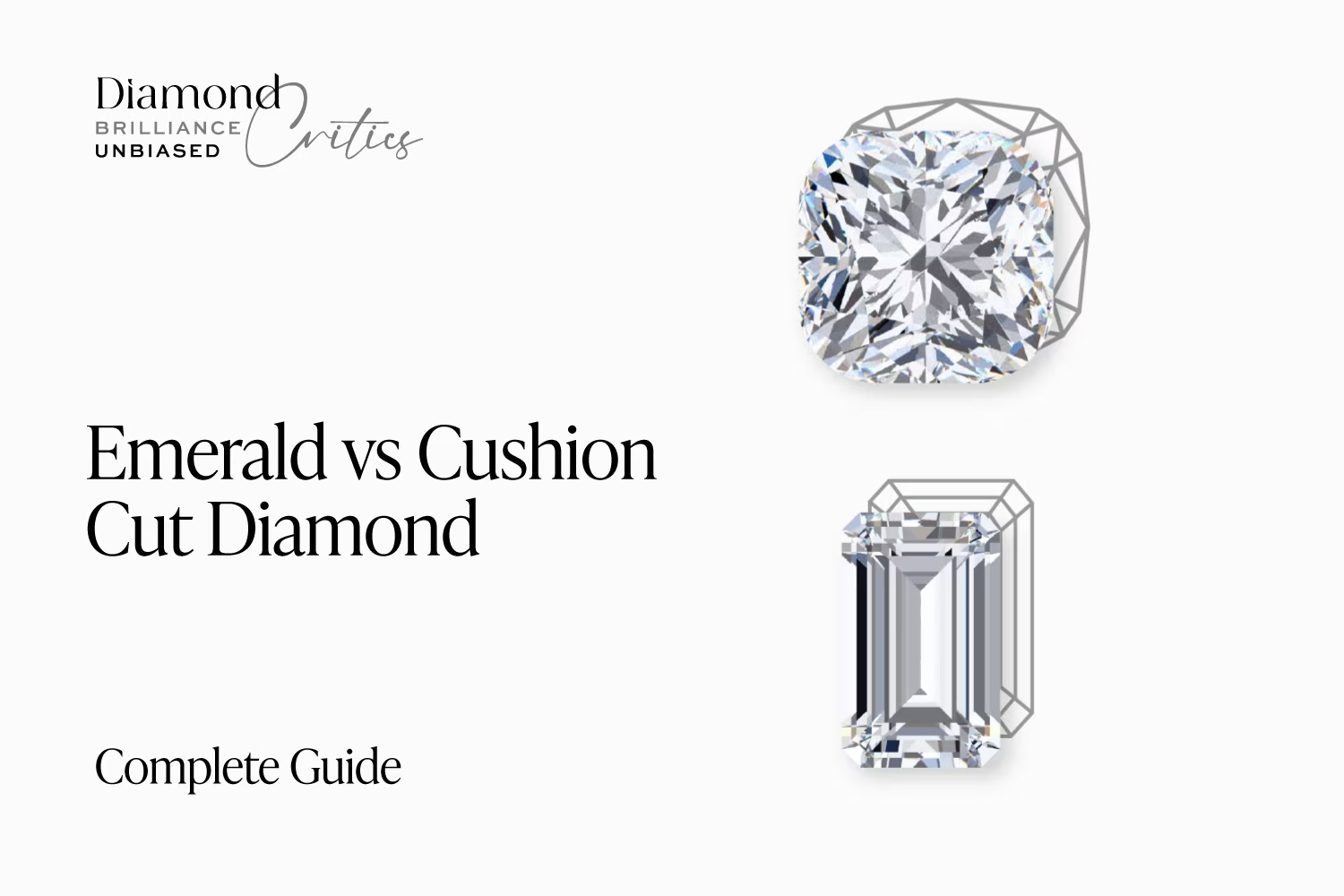
The cushion cut vs emerald cut diamond comparison looks simple from the outside — both are popular, both come in square and rectangular versions, both pair well with platinum and gold settings.
They are not the same diamond at all.
The cushion cut is a brilliant cut with curved, pillow-shaped facets that scatter light in every direction. The emerald cut is a step cut with long parallel facets that create a hall-of-mirrors reflection. One sparkles.
One reflects.
The difference is visible from across the room.
Price is the other story. Cushion cuts run cheaper than emerald cuts at every carat weight — sometimes significantly so — because the emerald cut demands higher clarity and color grades to look good in its open table.
A cushion can hide VS2 inclusions. An emerald cut cannot.
This guide covers both shapes completely: geometry, certified market pricing from 1ct to 5ct, the two cushion cut variants you need to know about, clarity floors, color minimums, and exactly which buyer should choose which shape.
TL;DR
- Cushion: brilliant cut, pillow-shaped, scattered sparkle, hides inclusions at VS2, color-tolerant at H.
- Emerald: step cut, open table, hall-of-mirrors, VS1 clarity minimum, G color minimum in platinum.
- Natural cushion 1ct GIA G-VS1 from $1,891. Natural emerald 1ct GIA D-VS1 from $3,140.
- Lab cushion 2ct IGI D-IF from $4,782. Lab emerald 2ct IGI D-FL from $4,735.
- → Choose cushion if you want maximum sparkle and inclusion tolerance. → Choose emerald if you want the hall-of-mirrors look and accept the clarity and color premium.
Expert Summary
The cushion cut is one of the oldest diamond shapes. Its rounded corners and curved facets were designed to maximize brilliance in candlelight — a job the modern cushion still does well. Two variants exist in the market today: cushion modified brilliant and cushion brilliant.
They look and perform differently.
The emerald cut is an Art Deco classic. Its long step-cut facets create a window into the stone. There are no scattered facets to hide inclusions.
There are no fragmented light patterns to disguise warm body color. The emerald cut shows everything — which means buyers must spend more on clarity and color to achieve the same appearance standards.
At natural 1ct, a GIA G-VS1 cushion starts at $1,891. A GIA D-VS1 emerald starts at $3,140. That gap compounds with size.
At 2ct natural, a GIA cushion starts under $14,000. A comparable GIA emerald starts over $24,000.
Lab-grown pricing converges at 2ct — both shapes land near $4,700–$4,800 IGI D-IF/D-FL. Above 2ct in lab, cushion continues to offer better value because buyers don't need to spend up on clarity.
A 3ct lab cushion at GIA D-VVS1 looks eye-clean and white at $5,962. Getting a 3ct lab emerald cut to match that visual standard costs $9,235 — a $3,273 step-cut premium even in lab.


Shape Geometry: How Cushion and Emerald Cut Are Built
The cushion cut is derived from the old mine cut, the predecessor to today's round brilliant. It has a square or rectangular outline with rounded corners. The cushion modified brilliant typically has an extra row of facets under the girdle, creating a sparkle pattern that looks distinctive — sometimes described as "crushed ice." The cushion brilliant has fewer facets under the girdle, creating larger, chunkier flashes of light.
Both cushion variants are brilliant cuts. Light scatters across the stone in all directions. Inclusions are fragmented and dispersed.
Color is broken into sparkle. The cushion is forgiving in the same way an oval is forgiving.
The emerald cut is a step cut. Its rectangular body has cropped corners and long, parallel facets arranged in horizontal rows. The table is wide and flat.
There are no curved facets and no fragmented light.
Light enters through the large table, bounces between the parallel step facets, and exits in long, slow reflective planes. This is the hall-of-mirrors effect that makes the emerald cut look unlike any brilliant cut. Inclusions and color are fully visible.
Structural differences:
| Feature | Cushion Cut | Emerald Cut |
|---|---|---|
| Cut family | Brilliant | Step cut |
| Facets | 58–64 (variant dependent) | 57–58 |
| Outline | Square/rectangular, rounded corners | Rectangular, cropped corners |
| Light behavior | Scattered fire and scintillation | Hall-of-mirrors reflections |
| Inclusion visibility | Low — facets scatter and hide | High — open table reveals all |
| Color visibility | Low — color breaks into sparkle | High — color reads as warmth |
| Minimum clarity | VS2 GIA (often SI1 works) | VS1 GIA (strict floor) |
| Minimum color | H in white gold | G in white gold |
| Bow tie risk | None | None |
| Ideal L:W ratio | 1.00–1.10 (square) or 1.10–1.25 | 1.30–1.50 (elongated) |
The Cushion Divide
Not all cushion cuts are the same. This is the single most important fact any cushion cut buyer needs to know before purchasing.
Two variants exist: cushion modified brilliant and cushion brilliant. The certificate will say which one you have. Most cushion cuts on the market are cushion modified.
The cushion modified brilliant has an extra row of small facets under the girdle. This creates a sparkle pattern sometimes called "crushed ice" — a fine, scattered glitter effect rather than chunky flashes.
Some buyers love it. Others find it too busy.
The cushion brilliant omits those extra girdle facets. The result is larger, more defined light flashes. The sparkle pattern reads as more like a round brilliant — bigger individual flashes rather than a sea of micro-scintillation.
This is The Cushion Divide: two diamonds with the same shape name, the same certificate category, but meaningfully different light performance. Neither is better — they are different aesthetics.
But you cannot tell which variant you have from a photo. You must watch a video of the specific stone.
Why this matters vs. the emerald cut:
The emerald cut has no equivalent ambiguity. All emerald cuts are step cuts. The light performance you see in one emerald cut is the same fundamental character you will see in every emerald cut.
The only variables are how well the stone is cut and how clean the clarity and color are.
Cushion cut buyers must know which variant they are buying. Emerald cut buyers have no such complication. This is one practical advantage of the emerald cut that rarely gets mentioned.
Quick reference — cushion modified vs cushion brilliant:
| Characteristic | Cushion Modified Brilliant | Cushion Brilliant |
|---|---|---|
| Facets under girdle | Extra row (pinched pattern) | Standard — no extra row |
| Sparkle pattern | Crushed ice — fine, scattered | Chunky flashes — like a round |
| Availability | Very common (most cushions) | Less common |
| Price difference | Standard market price | Sometimes slight premium |
| Best for | Buyers who want fine, busy sparkle | Buyers who want bold, clear flashes |
| How to identify | Certificate says "Modified" | Certificate says "Cushion Brilliant" |
Farzana says: "I have seen buyers receive their cushion cut diamond and be surprised by the sparkle pattern. They expected big flashes and got crushed ice. That is a cushion modified brilliant — which is what most cushion cuts are. The certificate tells you which variant it is. If a jeweler cannot tell you whether it is cushion modified or cushion brilliant, find a different jeweler."
Natural Diamond Price Comparison: Cushion vs Emerald Cut
Cushion cuts are consistently cheaper than emerald cuts at every carat weight. The reason is the emerald cut buyer's systematic need to purchase higher clarity and color grades to achieve an eye-clean, white appearance in the open step-cut table.
Natural cushion — certified market data:
| Natural Cushion | Grade | Price | Lab |
|---|---|---|---|
| 1.00ct Cushion Modified | G-VS1 Ideal | $1,891 | GIA |
| 1.00ct Cushion Modified | G-VVS2 Ideal | $2,022 | GIA |
| 2.00ct Cushion Modified | F-VVS2 Ideal | $13,679 | GIA |
| 2.00ct Cushion Modified | D-VS1 Ideal | $15,357 | GIA |
| 2.52ct Cushion Modified | G-VS1 Ideal | $19,375 | GIA |
| 3.01ct Cushion Modified | G-VVS2 Ideal | $32,692 | GIA |
| 3.01ct Cushion Modified | G-VVS1 Ideal | $36,810 | GIA |
| 4.04ct Cushion Modified | F-VS1 Ideal | $85,685 | GIA |
| 5.05ct Cushion Modified | G-VS1 Ideal | $71,271 | GIA |
Natural emerald cut for comparison:
| Natural Emerald Cut | Grade | Price | Lab |
|---|---|---|---|
| 1.00ct Emerald Cut | D-VS1 Ideal | $3,140 | GIA |
| 1.50ct Emerald Cut | E-VS1 Ideal | $10,409 | GIA |
| 2.00ct Emerald Cut | F-VS1 Ideal | $24,407 | GIA |
| 2.50ct Emerald Cut | G-VS1 Ideal | $31,566 | GIA |
| 3.00ct Emerald Cut | D-VVS1 Ideal | $63,574 | GIA |
| 4.00ct Emerald Cut | G-VS1 Ideal | $97,688 | GIA |
Natural price gap summary:
| Carat | Natural Cushion (GIA) | Natural Emerald (GIA) | Cushion Savings |
|---|---|---|---|
| 1.00ct | $1,891 | $3,140 | 40% cheaper |
| 2.00ct | $13,679 | $24,407 | 44% cheaper |
| 3.00ct | $32,692 | $63,574 | 49% cheaper |
| 4.00ct | $85,685 | $97,688 | 12% cheaper |
Note: grades differ between rows because the dataset's best representative stones vary. The cushion advantage is largest at 1ct–3ct.
The Step-Cut Premium
The emerald cut commands a price premium over the cushion cut. At 1ct, a comparable cushion runs roughly 40% cheaper. At 3ct, nearly 50% cheaper.
This premium exists for a structural reason: emerald cut buyers must purchase higher clarity and color grades. This is The Step-Cut Premium.
Why emerald cut buyers pay more on clarity:
A cushion's brilliant facets scatter light so aggressively that VS2 is almost always eye-clean. Many cushion buyers successfully buy SI1 if the inclusion is positioned near the girdle. The emerald cut's open step-cut table is a window.
VS2 in an emerald cut sometimes shows to the naked eye — the safe floor is VS1.
Moving from VS2 to VS1 at 2ct natural adds approximately $2,000–$5,000 depending on the stone. That one clarity grade accounts for a significant portion of the total price gap between comparable cushion and emerald cut diamonds.
At 3ct, the step-cut premium becomes stark: a 3ct GIA G-VVS2 natural cushion costs $32,692, while a 3ct GIA D-VVS1 natural emerald costs $63,574. The emerald is nearly twice the price. Part of that gap is the grade floor the emerald cut demands — the cushion's G-VVS2 is eye-clean; getting the emerald to look as good requires D-VVS1.
Why emerald cut buyers pay more on color:
A cushion cut's 58–64 facets break body color into scintillation. H-color in a cushion looks white in platinum. The emerald cut's long unbroken step-cut facets reflect body color as warmth.
G is the comfortable minimum in platinum for an emerald cut. H in a step-cut stone reads slightly warm.
Moving from H to G adds cost at every carat weight. Combined with the clarity premium, the total grade premium for emerald cut buyers is real and systematic.
Farzana says: "The Step-Cut Premium is not about the shape costing more. It is about the emerald cut demanding higher grades to look the same. A G-VS1 cushion and a G-VS1 emerald look completely different — but to get the emerald cut to look like the cushion does at G-VS2, you must pay for VS1. That extra grade is the premium. It is not a rip-off. It is physics."
Lab Diamond Price Comparison: Cushion vs Emerald Cut
Lab pricing converges for both shapes at 2ct. Above 2ct, the cushion advantage persists because cushion lab buyers don't need to pay the clarity grade premium that emerald cut buyers do.
Lab cushion — certified market data:
| Lab Cushion | Grade | Price | Lab |
|---|---|---|---|
| 1.50ct Cushion Modified Lab | E-VVS2 Excellent | $1,422 | IGI |
| 1.50ct Cushion Modified Lab | D-IF Ideal | $2,909 | GIA ★ |
| 2.00ct Cushion Modified Lab | D-VVS1 Ideal | $2,606 | IGI |
| 2.00ct Cushion Modified Lab | D-IF Ideal | $4,782 | IGI |
| 2.00ct Cushion Modified Lab | D-IF Ideal | $6,792 | GIA ★ |
| 3.00ct Cushion Modified Lab | D-VVS1 Ideal | $5,962 | GIA ★ |
| 3.00ct Cushion Modified Lab | D-VVS1 Ideal | $6,215 | IGI |
| 3.00ct Cushion Modified Lab | D-IF Ideal | $14,267 | GIA ★ |
| 4.00ct Cushion Modified Lab | D-VVS1 Ideal | $7,412 | GIA ★ |
| 3.96ct Cushion Modified Lab | D-FL Ideal | $22,931 | GIA ★ |
| 5.00ct Cushion Modified Lab | D-VVS1 Ideal | $10,157 | IGI |
| 5.00ct Cushion Modified Lab | D-FL Ideal | $57,123 | GIA ★ |
Lab emerald cut for comparison:
| Lab Emerald Cut | Grade | Price | Lab |
|---|---|---|---|
| 2.00ct Emerald Lab | D-FL Ideal | $4,735 | IGI |
| 2.00ct Emerald Lab | D-VVS1 Ideal | $5,335 | GCAL |
| 3.00ct Emerald Lab | D-IF Ideal | $9,235 | IGI |
| 4.00ct Emerald Lab | D-VVS1 Excellent | $7,737 | IGI |
| 5.04ct Emerald Lab | D-VVS1 Ideal | $9,491 | IGI |
★ GIA lab cushions carry a premium over IGI. A 3ct GIA D-VVS1 lab cushion at $5,962 vs a 3ct IGI D-VVS1 lab cushion at $6,215 shows the two labs are nearly price-matched at GIA D-VVS1. The GIA D-IF at $14,267 is the strict-grade premium option.
Tides Of Summer Capsule
Up To 30% Off
Shop The Sale →Vault ClearanceClear The Vault
Up To 70% Off
Shop Vault Deals →Affiliate link — no extra cost to you
Clarity: What Each Shape Hides and Shows
The clarity difference is the most important practical factor separating these two shapes.
Cushion cut clarity floor: VS2 (GIA)
The cushion's brilliant facets scatter incoming light. Inclusions are fragmented across the scintillation pattern and become invisible to the naked eye. GIA VS2 is almost always eye-clean in a cushion.
SI1 can be eye-clean if the inclusion is near the girdle — always watch a video to confirm.
Emerald cut clarity floor: VS1 (GIA)
The step-cut's open table has no scattered light to hide inclusions. A feather or crystal at the center of the table is visible at arm's length. VS2 in an emerald cut is risky without first checking the clarity plot.
VS1 is the safe floor for an eye-clean result.
SI1 in an emerald cut almost always shows. It is not recommended.
Clarity comparison:
| Scenario | Cushion Cut | Emerald Cut |
|---|---|---|
| Safe eye-clean floor | VS2 GIA | VS1 GIA |
| Budget option | SI1 GIA (check video + position) | VS2 GIA (check plot — risky) |
| Never go below | SI2 | SI1 |
| IGI lab floor (≈ GIA) | VS1 IGI (≈ GIA VS2) | VVS2 IGI (≈ GIA VS1) |
| Clarity tolerance | High — brilliant hides inclusions | Low — open table reveals all |
Color: How Each Shape Reads in Different Metals
Cushion cut color floor: H (GIA) in white gold
The cushion's brilliant facets break body color into sparkle. H-color reads white to most eyes in platinum or white gold. Buyers who set the cushion in yellow gold can often go as warm as I or J — the warm metal absorbs the warmth in the stone.
Emerald cut color floor: G (GIA) in white gold
The step-cut's long unbroken reflections show body color as a warmth in the light. H-color in an emerald cut set in platinum reads slightly warm to trained eyes. G is the safe minimum for a color-neutral appearance.
Color comparison by metal:
| Setting Metal | Cushion Minimum | Emerald Cut Minimum |
|---|---|---|
| Platinum | G–H | D–F |
| 18K White Gold | H | F–G |
| 14K White Gold | H–I | G–H |
| 18K Yellow Gold | H–J | G–J |
| Rose Gold | H–I | G–H |
The cushion allows buyers to save on color. The emerald cut requires the same pattern of spending up that it requires on clarity.
Proportions: What to Target for Each Shape
Cushion cut proportions:
- Length-to-width ratio: 1.00–1.10 for a square cushion. 1.10–1.25 for a slightly elongated look. Above 1.30 starts to look like a short emerald cut.
- Depth: 60–67% is the accepted range. Very deep cushions (above 68%) look small face-up for their weight.
- Table: 58–68% is the preferred range.
- Polish and Symmetry: Very Good or Excellent minimum.
- Critical check: whether you are buying cushion modified or cushion brilliant. Check the certificate.
Emerald cut proportions:
- Length-to-width ratio: 1.30–1.50 for the classic elongated look. Below 1.30 looks nearly square (close to Asscher territory). Above 1.55 looks dramatically narrow.
- Depth: 60–64% ideal. Shallower stones (below 58%) window — light passes through without reflecting.
- Table: 61–69% preferred.
- Polish and Symmetry: Excellent or Very Good. The large flat facets amplify any asymmetry.
L:W ratio guide:
| L:W Ratio | Cushion Look | Emerald Cut Look |
|---|---|---|
| 1.00–1.05 | Square cushion — classic | N/A (too square for emerald) |
| 1.10–1.25 | Slightly elongated cushion | Short emerald (near Asscher) |
| 1.30–1.40 | Rectangular cushion | Classic emerald, balanced |
| 1.41–1.50 | Elongated cushion (unusual) | Elongated emerald, elegant |
| 1.55+ | Very unusual for cushion | Dramatic, very narrow emerald |
Face-Up Size: Which Shape Looks Bigger?
Both shapes look larger than a round brilliant at the same carat weight. The mechanism is the same: weight is distributed shallower and wider rather than deep.
A 2ct round brilliant measures approximately 8.1mm in diameter. A 2ct square cushion measures approximately 7.5×7.5mm — only slightly smaller than the round, but the rounded corners give it a softer, more organic silhouette on the finger. A 2ct emerald cut measures approximately 8.5×6mm — narrower in width but longer, creating a rectangular footprint that reads differently across the finger.
On the finger, the emerald cut often appears longer. The cushion appears more compact and pillowy. Neither is objectively larger — they have similar total face-up areas, but the shape of that area differs completely.
Approximate face-up dimensions by carat:
| Carat | Round Brilliant | Cushion Cut (square) | Emerald Cut |
|---|---|---|---|
| 1.00ct | 6.4mm Ø | ~5.8×5.8mm | ~6.5×5.0mm |
| 1.50ct | 7.3mm Ø | ~6.6×6.6mm | ~7.5×5.5mm |
| 2.00ct | 8.1mm Ø | ~7.5×7.5mm | ~8.5×6.0mm |
| 3.00ct | 9.3mm Ø | ~8.5×8.5mm | ~10.0×7.0mm |
| 4.00ct | 10.2mm Ø | ~9.5×9.5mm | ~11.0×8.0mm |
The emerald cut's elongated footprint means it reads as a longer stone across the finger. The cushion's square or near-square outline looks symmetric and substantial without elongating. Buyers who want finger-lengthening effect should note that the emerald cut's length does more work on the finger — but it is narrower, so the total face coverage is comparable.
Settings: What Works Best for Each Shape
Both shapes work in all major setting styles. Each has settings that show it best.
Cushion cut settings:
The cushion pairs beautifully with halo settings. The curved outline of the halo mirrors the cushion's rounded corners and amplifies the face-up size significantly. A 1.5ct cushion in a halo reads like a 2ct+ stone.
Pavé bands complement the cushion's sparkle perfectly. The tiny diamonds along the band contribute to the overall scintillation pattern without competing with the center stone. The result is a ring that looks brilliant in all lighting conditions.
Solitaires work well when the cushion is large enough to stand alone — 1.5ct and above. A clean four-prong solitaire shows off the cushion's shape without distraction. Vintage and milgrain settings are a natural match given the cushion's historical roots in Victorian-era diamond cutting.
Emerald cut settings:
The solitaire is the definitive emerald cut setting. A clean, minimal four-prong or six-prong solitaire lets the step-cut's long reflections dominate the face. Anything that competes with the table detracts from the hall-of-mirrors effect.
Bezel settings are the most protective option for the emerald cut's four cropped corners. A full bezel also creates a modern, architectural look that complements the stone's rectangular geometry.
Three-stone settings with baguette or trapezoid side stones echo the emerald cut's step-cut character. The side stones are from the same family — angular, reflective, calm. This is the most harmonious pairing for an emerald cut center.
Master Comparison: Cushion Cut vs Emerald Cut Diamond
| Category | Cushion Cut | Emerald Cut | Winner |
|---|---|---|---|
| Sparkle | High — scattered brilliant fire | Low — hall-of-mirrors reflections | Cushion |
| Elegance | Soft, romantic, vintage | Architectural, calm, distinctive | Emerald |
| Inclusion tolerance | High — VS2 eye-clean | Low — VS1 required | Cushion |
| Color tolerance | High — H works in platinum | Low — G required in platinum | Cushion |
| Natural price (per ct) | 40–50% cheaper at 1ct–3ct | Significant premium | Cushion |
| Lab price (2ct IGI) | $2,606–$4,782 | $4,735 | Cushion slightly |
| Shape clarity | Two variants — must verify | One consistent look | Emerald |
| Bow tie risk | None | None | Equal |
| Finger appearance | Square/rounded — compact | Elongated — linear | Preference |
| Setting versatility | High — all settings work | High — all settings work | Equal |
| Distinctiveness | Common — very popular | Less common — stands out | Emerald |
Who Should Choose Which: 4 Buyer Scenarios
Best for buyers who want maximum sparkle: Cushion, clearly. A 3.01ct GIA G-VVS2 cushion modified at $32,692 delivers brilliant-cut fire in a soft, romantic outline that the emerald cut cannot replicate. The cushion's rounded corners give it a distinctly different visual character from both the sharp corners of a princess cut and the flat elegance of an emerald cut.
The same $32,692 budget buys only a modest emerald cut natural at 2ct+ GIA — a fraction of the size for a completely different aesthetic. For buyers who want size and sparkle, the cushion wins on both.
One important check for this buyer: confirm whether you are buying cushion modified or cushion brilliant. The modified variant gives you crushed ice sparkle. The brilliant variant gives you chunkier flashes.
Watch a video of the specific stone. Both are beautiful — but they are different sparkle personalities within the cushion family.
Best for buyers who want architectural elegance: Emerald cut, without question. A 2ct GIA F-VS1 emerald at $24,407 delivers a hall-of-mirrors effect that a cushion cut cannot imitate. The step-cut's calm, deep reflections are a completely different visual language.
Buyers who have worn or tried on an emerald cut and felt it matched their personality should not let the price premium deter them. The additional cost is real, but the aesthetic is irreplaceable.
The emerald cut is the only shape that gives you this specific combination of depth, calm, and visual weight. You cannot replicate it with any brilliant cut, cushion or otherwise.
Best for lab diamond buyers on a budget: Cushion, slightly. A 2ct IGI D-IF lab cushion at $4,782 and a 2ct IGI D-FL lab emerald at $4,735 are effectively the same price.
At 3ct lab, the cushion advantage is decisive. A 3ct GIA D-VVS1 lab cushion at $5,962 is well below the 3ct IGI D-IF lab emerald at $9,235. Cushion lab buyers also don't need to step up to D-IF to achieve an eye-clean, white appearance — VS2 works, saving more budget per carat.
At 4ct lab, a 4ct GIA D-VVS1 lab cushion at $7,412 represents extraordinary size for the price. A comparable lab emerald at 4ct costs significantly more once you account for the VS1 clarity and G color floor requirements.
Best for buyers who want a vintage or romantic look: Cushion. The cushion's rounded corners and soft outline have strong vintage associations — the old mine cut was the predecessor to the modern cushion, and many antique rings featured cushion-shaped diamonds. Pavé settings, halo designs, and milgrain details all complement the cushion's soft aesthetic beautifully.
The emerald cut skews modern and architectural. It reads as elegant and contemporary rather than romantic and vintage. Buyers who want something with a heritage feel will find the cushion more evocative.
Farzana says: "At 2ct lab, the price difference between a cushion and emerald cut is under $100. The decision is entirely aesthetic at that point. I tell buyers to look at both shapes in person or watch side-by-side videos. The cushion dances. The emerald glows. You will feel immediately which one speaks to you."
FAQs
Is cushion cut or emerald cut diamond more popular?
Cushion cut is more popular overall, consistently ranking among the top three engagement ring shapes. Emerald cut has a smaller but devoted following — it is less common, which makes it feel more distinctive to buyers who want to stand out.
The popularity gap means cushion cuts are widely available in all carat weights and grades. Emerald cuts are also widely available but in slightly fewer configurations because fewer buyers request them. This is an advantage for emerald cut buyers — a less-saturated market means the shape carries a distinctiveness premium that cushion buyers cannot replicate.
Which is cheaper, cushion cut or emerald cut diamond?
Natural cushion cuts run approximately 40–50% cheaper than natural emerald cuts at 1ct–3ct. The cushion's brilliant cut tolerates VS2 clarity and H color that the emerald cut cannot match at equivalent visual quality — the real budget difference is larger than the raw stone price suggests when you account for the grades required to look equivalent.
Does cushion cut or emerald cut look bigger?
The emerald cut has a wider face-up footprint due to its elongated rectangular shape. A 2ct emerald cut measures approximately 8.5×6mm. A 2ct square cushion measures approximately 7.5×7.5mm.
On a finger, the emerald cut's length is more visible along the finger. The cushion's rounded corners create a softer, more compact appearance.
What is the difference between cushion modified and cushion brilliant?
Cushion modified brilliant has an extra row of small facets under the girdle, creating a "crushed ice" sparkle pattern of fine, scattered light. Cushion brilliant has fewer facets under the girdle, creating larger, chunkier light flashes more similar to a round brilliant. The certificate will say which variant it is.
Most cushion cuts in the market are cushion modified.
What clarity should I buy for cushion cut vs emerald cut?
For cushion cut: VS2 is the safe eye-clean minimum. Many SI1 cushions are eye-clean depending on inclusion position — always verify with a video. For emerald cut: VS1 is the minimum.
VS2 can be acceptable if the inclusion is near the girdle and not in the center table — check the clarity plot location before buying.
What color should I buy for cushion cut vs emerald cut?
For cushion cut in white gold or platinum: H color is safe. The brilliant facets break color into sparkle, making H look white. For emerald cut in white gold or platinum: G color is the minimum.
The open step-cut table shows body color as warmth — H in platinum reads slightly warm in a step cut.
Which has better fire and brilliance, cushion or emerald cut?
Cushion cut has more fire and brilliance by a large margin. It is a brilliant cut with 58–64 facets designed to scatter light. The emerald cut has almost no fire — it produces long, slow mirror reflections rather than scattered sparkle.
If fire and brilliance are priorities, cushion wins decisively.
Which is more unique, cushion cut or emerald cut?
Cushion cut is a very popular shape — widely available and commonly seen in engagement rings. The emerald cut is less common and has a distinctly different aesthetic that many buyers find more unusual. Buyers who want their ring to look different from the majority will find the emerald cut more distinctive.
Is cushion cut easier to maintain than emerald cut?
Both shapes require similar maintenance. Cushion cuts have rounded corners that are less vulnerable to chipping than princess cuts. Emerald cuts have cropped corners that must be protected with prongs at each corner — an exposed corner is a chip risk.
Both shapes require regular cleaning because their tables can show oils and fingerprints clearly. The emerald cut's large open table makes fingerprints more visible than the cushion's scattered facets. For buyers who wear rings constantly and clean them infrequently, the cushion's brilliant cut is more forgiving — inclusions, oils, and minor surface contamination are harder to see against the active scintillation pattern.
Do cushion cut diamonds hold their value?
GIA-certified natural cushion cut diamonds hold resale value at comparable levels to other brilliant-cut fancy shapes. The cushion's popularity creates a strong secondary market — there are consistent buyers for GIA cushion diamonds at 1ct–3ct. Lab-grown cushion diamonds have minimal resale value, the same as all lab diamonds regardless of shape.
If resale matters to you, prioritize the certificate over the shape. A GIA-certified natural cushion at D-VS1 will always find a buyer. An IGI lab cushion at D-IF will not — the lab supply is unlimited and secondary market demand is essentially zero.
Which has better light performance, cushion modified or cushion brilliant?
Neither has objectively better light performance — they have different light performance. Cushion modified brilliant produces a fine, scattered "crushed ice" pattern of micro-scintillation. Cushion brilliant produces larger, chunkier light flashes similar to a round brilliant.
Buyers who want a fiery, lively stone that looks like crushed diamonds should choose modified. Buyers who want bold, defined flashes should look for cushion brilliant. Watch a video of the specific stone before buying either variant.
Which shape has better resale value?
GIA-certified natural diamonds of both shapes hold resale value similarly. Lab-grown diamonds of either shape have minimal resale value regardless of shape. Between natural shapes, GIA cushion and GIA emerald cut trade at comparable resale multiples on the secondary market.
Can I use a cushion cut setting for an emerald cut?
No. Cushion cut settings are designed for square or gently rectangular shapes with rounded corners. Emerald cut settings are designed for rectangular stones with cropped, angular corners.
The prong placement and geometry differ significantly. Always select a setting designed for the specific shape.
What setting style works best for each shape?
Cushion cut works well in all settings: solitaire, pavé band, halo, three-stone, and vintage milgrain designs all complement the rounded outline. Emerald cut looks best in settings that echo its angular geometry — solitaires with clean lines, bezel settings, or three-stone rings with baguette or trapezoid side stones. Halo settings on an emerald cut are less common and can look busy against the clean step-cut face.
Is the cushion cut good for vintage-style rings?
Yes. The cushion cut's history traces directly to the old mine cut, the dominant diamond shape of the 19th and early 20th centuries. Many vintage and antique ring settings were designed for cushion-shaped stones. Modern cushion cuts in Art Deco or Victorian-inspired settings look authentic and historically appropriate in a way that round brilliants or princess cuts do not.
The emerald cut is equally at home in vintage settings — specifically Art Deco. The geometric, linear aesthetic of Art Deco design was built for step-cut stones. If you are drawn to the 1920s–1930s aesthetic, an emerald cut in a geometric platinum setting is the most period-authentic choice you can make.
See Also
- Emerald Cut Diamond — Complete Buying Guide — full pillar: clarity, proportions, lab vs natural, all settings
- Emerald Cut Diamond Clarity Guide — VS1 Floor, Clarity Window, Sparkle Trade — why VS1 is the floor and VS2 is a gamble in step cuts
- Emerald Cut Diamond GIA vs IGI: Stop Comparing VS1 to VS1 — IGI lab grades run 1–2 higher than GIA; the Grade Bump explained
- Lab Grown Emerald Cut Diamond — D-IF at $9K vs $63K Natural — full lab vs natural price breakdown for emerald cuts
- Oval vs Emerald Cut Diamond: The Bow Tie Trade — oval sparkles, emerald reflects: the other elongated shape comparison
- Radiant Cut vs Emerald Cut Diamond — brilliant vs step-cut for rectangular shapes
- Emerald Cut Diamond Ideal Proportions — The 1.40 L:W Rule — depth %, table %, and the ratio targets that matter
- Loose Emerald Cut Diamond — Buy the Stone Before the Setting — how to evaluate a loose emerald cut from certificate and video
Expert Verdict
Always audit the stone individually — no grade replaces seeing the actual diamond. The certificate tells you what to look for. Your eyes tell you whether to buy.
— Farzana Hasan, GIA Expert · DiamondCritics.com