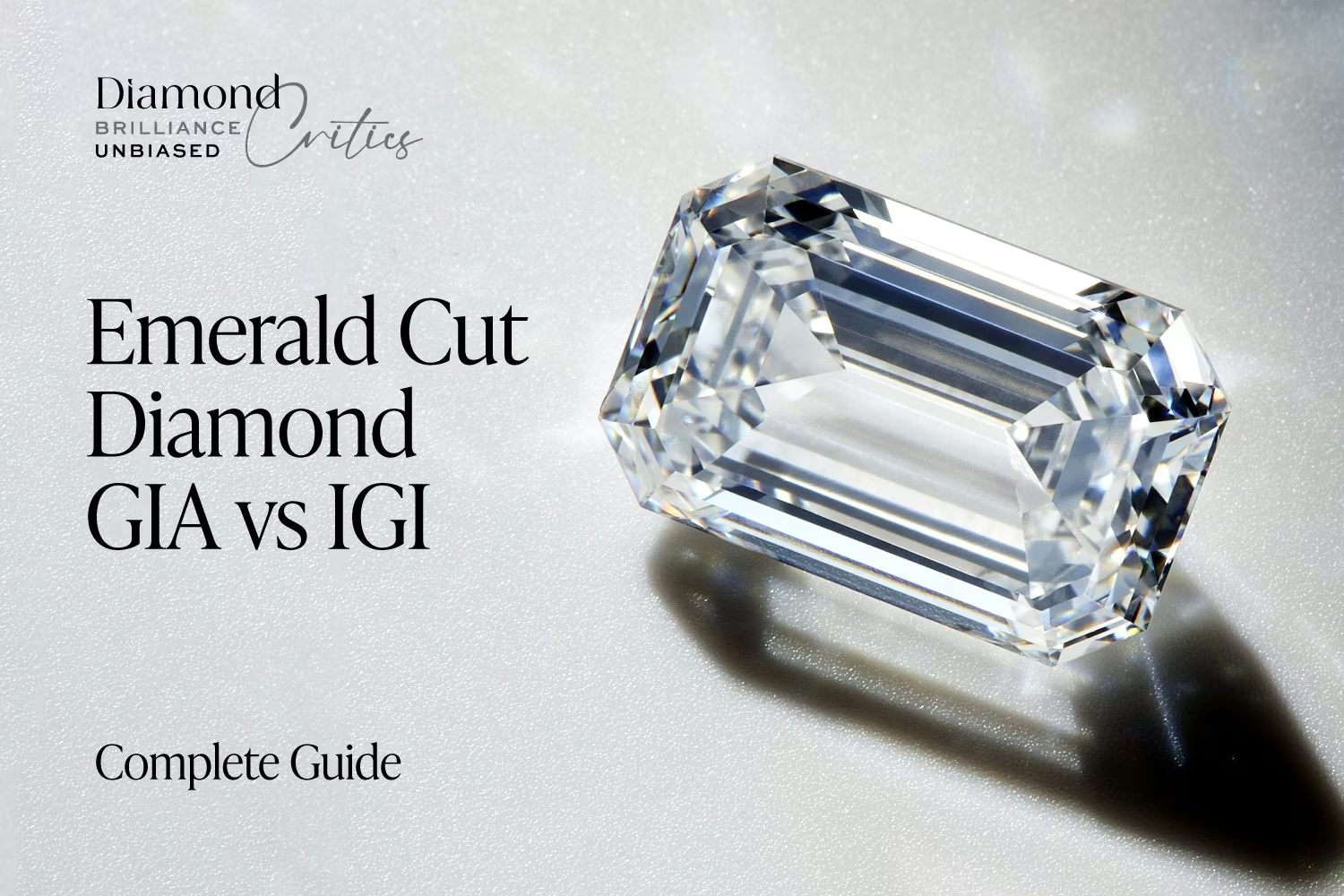
The emerald cut diamond GIA vs IGI question matters more for this shape than for almost any other cut. Here is why: the emerald cut's open step-cut table makes every grade visible.
A VS2 clarity inclusion you cannot see in a round brilliant is often visible in an emerald cut. If your certificate overstates the grade, you find out when the stone arrives.
GIA and IGI are both real certification bodies. They do not both grade the same way.
This guide covers what each lab actually tests, why IGI lab-grown grades run 1–2 grades higher than GIA for the same stone, what that costs you at every carat weight, and when each certification is the right choice.
TL;DR
- For natural emerald cut diamonds: GIA only. The open step-cut table makes overstated grades visible, and IGI grades natural stones inconsistently.
- For lab-grown emerald cut diamonds: IGI is the industry standard, used by most retailers including Blue Nile. Understand The Grade Bump before you compare prices.
- The Grade Bump: IGI grades lab stones 1–2 color and clarity grades higher than GIA for the same stone. A D-VS1 IGI lab stone is often an F-VS2 by GIA standards.
- → Natural 1ct GIA D-VS1 from $3,140. → Lab 2ct IGI D-FL from $4,735.
- Priority: match the certification to the stone type. GIA for natural. IGI for lab — with eyes open to the grade adjustment.
Expert Summary
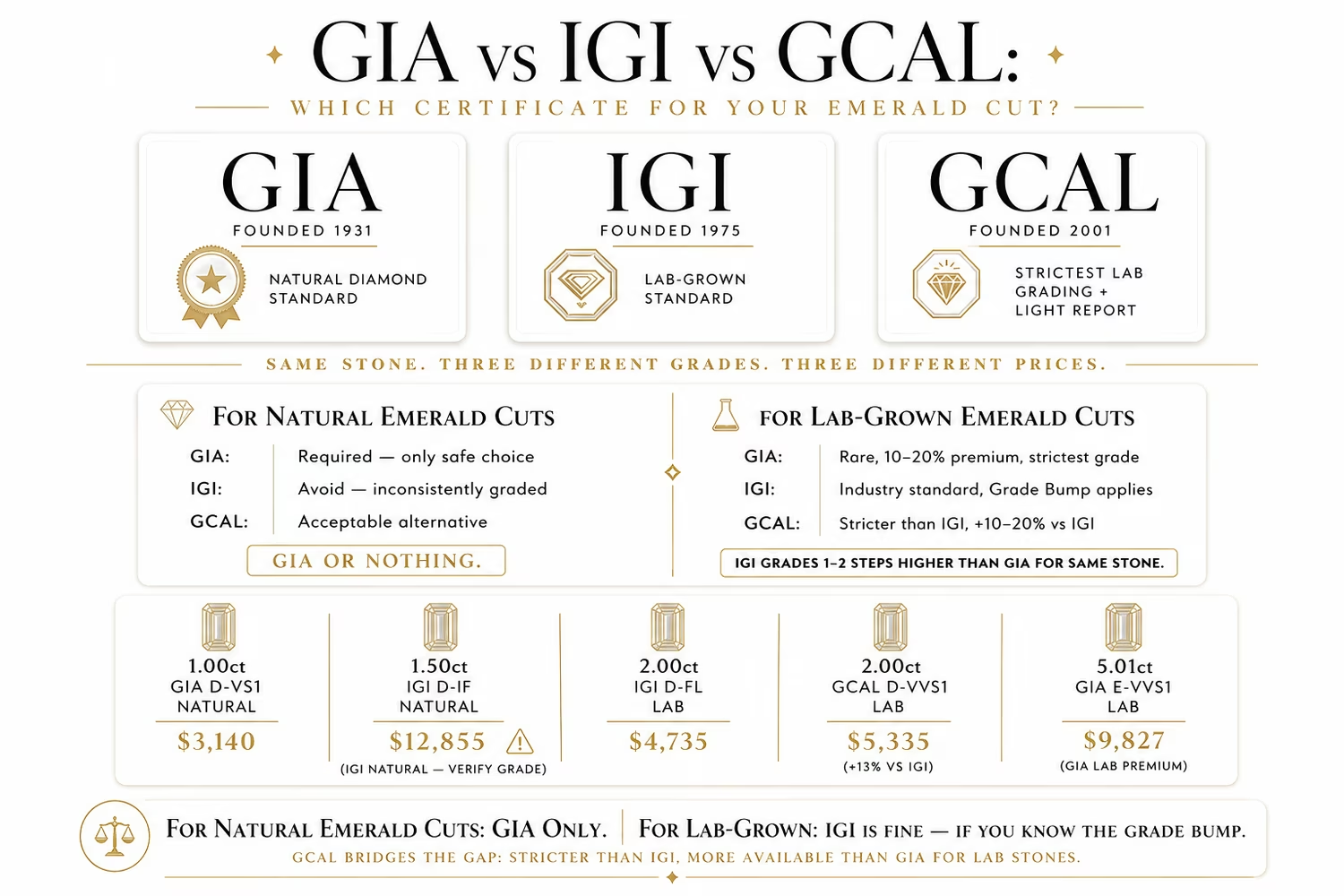
GIA (Gemological Institute of America) and IGI (International Gemological Institute) both issue grading certificates for loose diamonds. GIA is the older and more conservative lab. IGI is the larger lab by volume and dominates the lab-grown market.
For natural emerald cut diamonds, GIA is the only certification worth buying. GIA natural diamond grading is consistent, globally recognized, and is the benchmark used for resale pricing. IGI natural grading has historically been less consistent, and an IGI-certified natural stone typically trades at a discount on the secondary market.
For lab-grown diamonds, IGI is acceptable and widely used. Most Blue Nile lab-grown emerald cuts carry IGI or GCAL certificates.
The caveat: IGI grades lab-grown stones 1–2 grades higher on color and clarity than GIA grades the same stone. This is not fraud — IGI's grading standard for lab stones is simply more lenient. But it means you cannot compare a D-VS1 IGI lab stone directly to a D-VS1 GIA lab stone and expect the same visual quality.
The step-cut geometry of the emerald cut amplifies this risk. An overstated clarity grade shows in the open table. An overstated color grade shows in white gold and platinum settings.
The certificate matters more here than in a round brilliant.


What GIA and IGI Actually Test
Both labs examine the same four factors: carat weight, color, clarity, and cut. The process is similar: the stone is submitted, examined by multiple graders, and a certificate is issued with grades assigned.
The differences are in calibration and strictness.
GIA grades on the strictest color and clarity scale in the industry. Multiple independent graders assess each stone, and the grades are reconciled before the certificate is issued. GIA does not disclose its internal process in detail, but its reputation is built on consistency — a D-VS1 from GIA in 2005 is comparable to a D-VS1 from GIA today.
GIA was slower to enter the lab-grown market. They initially issued origin reports rather than full grading reports for lab stones.
They now issue full certificates for lab-grown diamonds, but their volume is a fraction of IGI's.
IGI was founded in 1975 and is based in Antwerp. It has the highest volume of any grading lab globally. For natural diamonds, IGI grading has been historically less consistent than GIA, which is why natural IGI stones trade at a discount.
For lab-grown diamonds, IGI moved aggressively and became the dominant certification body.
Most lab-grown diamonds sold at Blue Nile, James Allen, and other major retailers carry IGI certificates.
GCAL (Gem Certification and Assurance Lab) is a smaller US-based lab that offers a full grading report plus a light performance certificate. It grades lab-grown stones at a standard between IGI's leniency and GIA's strictness. GCAL is the third option worth considering.
The Natural Diamond Rule
For natural emerald cut diamonds, GIA is the only certification that matters. This is not a preference — it is a market reality.
When you buy a natural diamond, you are buying it partly for resale value. Resale pricing for natural diamonds is based on GIA grades. An IGI-graded natural stone does not carry the same resale value as an equivalent GIA-graded stone.
Diamond dealers and auction houses use GIA grading as the benchmark. An IGI certificate on a natural stone raises questions that a GIA certificate does not.
The emerald cut makes this more important, not less. The step-cut table is an open window. If the clarity grade is overstated by one grade — VS1 on the certificate, VS2 in reality — the inclusion is visible at arm's length.
In a round brilliant, VS2 inclusions are nearly always eye-clean. In an emerald cut, VS2 sometimes shows.
| Natural Emerald Cut | Grade | Price | Certificate |
|---|---|---|---|
| 1.00ct Emerald | D-VS1 Ideal | $3,140 | GIA |
| 1.06ct Emerald | D-VVS2 Ideal | $3,971 | GIA |
| 1.00ct Emerald | D-IF Ideal | $5,836 | GIA |
| 1.02ct Emerald | E-IF Ideal | $6,010 | GIA |
| 1.03ct Emerald | E-VS1 Ideal | $6,820 | GIA |
| 1.50ct Emerald | E-VS1 Ideal | $10,409 | GIA |
| 1.50ct Emerald | D-IF Ideal | $12,855 | IGI ⚠️ |
| 1.54ct Emerald | D-VS1 Ideal | $19,058 | GIA |
| 2.00ct Emerald | F-VS1 Ideal | $24,407 | GIA |
| 2.52ct Emerald | D-VVS2 Ideal | $31,566 | GIA |
| 3.09ct Emerald | F-VS1 Ideal | $63,574 | GIA |
| 3.07ct Emerald | D-FL Ideal | $77,542 | GIA |
| 4.01ct Emerald | G-VS1 Ideal | $97,688 | GIA |
| 5.00ct Emerald | D-VS1 Ideal | $121,475 | GIA |
| 5.07ct Emerald | F-VS1 Ideal | $134,743 | GIA |
The ⚠️ IGI row at 1.50ct D-IF is the only IGI-certified natural emerald cut in this inventory segment. Notice what happens: a 1.50ct IGI D-IF at $12,855 is priced above a 1.50ct GIA E-VS1 at $10,409 on paper — because the grade looks better (D-IF vs E-VS1).
But that IGI D-IF grade has not been independently verified by GIA. The step-cut buyer pays more for a certificate the market treats as less reliable.
If you find a natural emerald cut at a noticeably lower price with an IGI certificate, the discount exists for a reason. Either the IGI grade is more generous than a GIA grade would be, or the stone has characteristics that would not survive GIA's stricter review. Do not buy a natural emerald cut on an IGI certificate unless you have it independently appraised by a GIA-certified gemologist first.
Farzana says: "I have seen natural IGI stones that were beautiful. I have also seen IGI VS1 stones that were clearly VS2 by any honest standard. The inconsistency is the problem. With GIA, I know what I am looking at. With IGI on a natural stone, I have to verify every single grade independently. That defeats the purpose of paying for a certificate."
The Grade Bump
This is the most important thing to understand about IGI lab-grown grading.
IGI grades lab-grown diamonds on a more lenient scale than GIA. The difference is not random — it is systematic. Across thousands of stones, IGI lab-grown grades run approximately 1–2 color grades and 1 clarity grade above what GIA would assign to the same stone.
A stone IGI grades as D color is frequently F or G by GIA standards. A stone IGI grades as VS1 clarity is frequently VS2 or SI1 by GIA standards.
This is called the Grade Bump — and it has a direct price consequence.
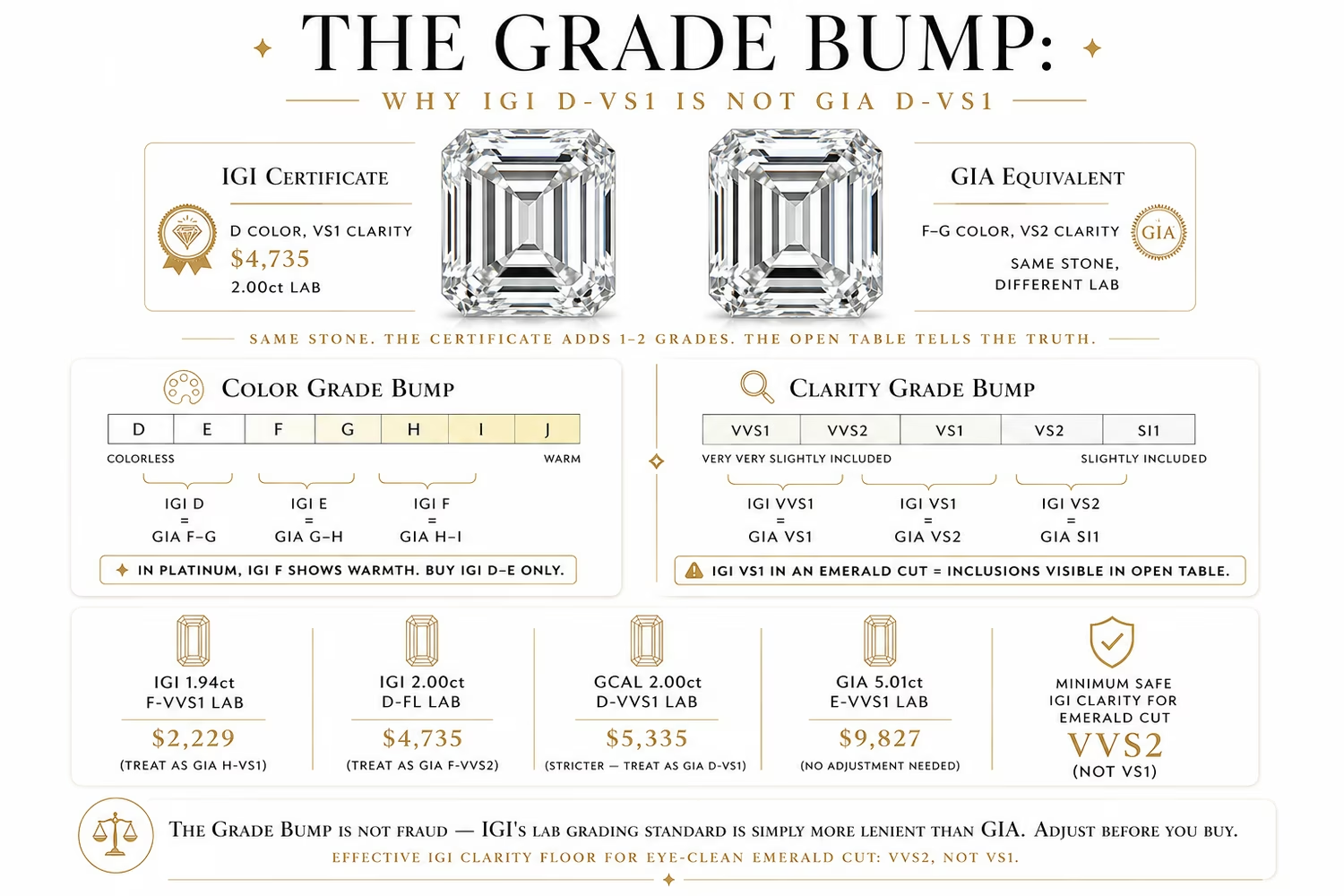
When you compare a D-VS1 IGI lab stone to a D-VS1 GIA lab stone, you are not comparing equivalent stones. The GIA D-VS1 has been graded by the stricter standard. It will look better, particularly in the open table of an emerald cut.
How to adjust for the Grade Bump when buying IGI lab:
- Treat IGI D-E color as equivalent to GIA F-G color when evaluating appearance
- Treat IGI VVS1-VVS2 clarity as equivalent to GIA VS1-VS2 when evaluating visibility
- Do not buy IGI SI1 in an emerald cut expecting eye-clean results — step facets make SI1 inclusions visible
- When comparing prices, compare IGI D-VS1 to GIA F-VS2, not to GIA D-VS1
Grade Bump Quick Reference — Color:
| IGI Lab Color | GIA Equivalent | GCAL Equivalent | Verdict for Emerald Cut in Platinum |
|---|---|---|---|
| D | F–G | E–F | Safe — looks white |
| E | G–H | F–G | Safe — acceptable in cool metal |
| F | H–I | G–H | Borderline — visible warmth risk |
| G | I–J | H–I | Avoid — warm in platinum/white gold |
Grade Bump Quick Reference — Clarity:
| IGI Lab Clarity | GIA Equivalent | GCAL Equivalent | Eye-Clean in Emerald Cut? |
|---|---|---|---|
| VVS1 | VS1–VS2 | VS1 | Yes — very safe |
| VVS2 | VS1–VS2 | VS1–VS2 | Yes — safe minimum |
| VS1 | VS2–SI1 | VS2 | Maybe — check clarity plot |
| VS2 | SI1 | VS2–SI1 | No — open table shows inclusions |
| SI1 | SI2 | SI1 | No — never eye-clean in step cut |
The Grade Bump does not make IGI lab certificates worthless. It makes them a different product that requires adjustment. Most buyers understand this intuitively once they know to look for it.
Lab Diamond Price Comparison: IGI vs GCAL vs GIA
The Blue Nile emerald cut lab inventory uses primarily IGI and GCAL certificates. Here is how the actual certified market prices compare across labs for similar quality:
| Lab Emerald Cut | Grade | Price | Lab |
|---|---|---|---|
| 1.94ct Emerald | F-VVS1 Excellent | $2,229 | IGI |
| 1.85ct Emerald | F-VVS1 Ideal | $3,832 | GCAL |
| 1.90ct Emerald | D-FL Ideal | $3,862 | IGI |
| 1.89ct Emerald | D-FL Ideal | $3,881 | IGI |
| 1.81ct Emerald | D-IF Ideal | $3,972 | GCAL |
| 2.00ct Emerald | D-FL Ideal | $4,735 | IGI |
| 1.96ct Emerald | D-FL Ideal | $4,861 | GCAL |
| 1.85ct Emerald | D-VVS1 Ideal | $4,928 | GCAL |
| 2.00ct Emerald | D-VVS1 Ideal | $5,335 | GCAL |
| 3.00ct Emerald | D-IF Ideal | $9,235 | IGI |
| 3.00ct Emerald | D-IF Ideal | $9,619 | IGI |
| 3.00ct Emerald | D-VVS1 Excellent | $10,695 | GCAL |
| 4.00ct Emerald | D-VVS1 Excellent | $7,737 | IGI |
| 4.00ct Emerald | D-FL Ideal | $16,428 | IGI |
| 5.11ct Emerald | E-VVS1 Excellent | $8,210 | IGI |
| 5.04ct Emerald | D-VVS1 Ideal | $9,491 | IGI |
| 5.01ct Emerald | E-VVS1 Ideal | $9,827 | GIA ★ |
| 5.05ct Emerald | E-VVS1 Ideal | $9,906 | GIA ★ |
| 5.11ct Emerald | E-VVS1 Ideal | $10,023 | GIA ★ |
| 5.04ct Emerald | D-VVS1 Ideal | $11,732 | GCAL |
| 5.00ct Emerald | D-IF Ideal | $17,490 | GCAL |
| 5.00ct Emerald | D-FL Ideal | $19,871 | GCAL |
| 5.40ct Emerald | D-FL Ideal | $49,333 | GIA ★ |
| 7.27ct Emerald | F-VVS1 Excellent | $10,079 | IGI |
★ GIA lab stones exist but carry a significant premium. The 5ct GIA E-VVS1 at $9,827–$10,023 is priced similarly to the 5ct IGI D-VVS1 at $9,491 — but the GIA grade is stricter.
The 5.40ct GIA D-FL at $49,333 shows the extreme end of GIA lab premiums versus IGI D-FL at the $25,000–$26,000 range. The lab certification choice is a real cost decision, not just a paper preference.
Lab prices from certified market inventory.
Notice the GCAL stones at each weight are priced 15–20% higher than IGI at the same stated grade. Part of that premium is GCAL's stricter grading — a D-VVS1 GCAL is closer to a D-VS1 GIA than a D-VVS1 IGI would be.
Farzana says: "When I see a 2ct D-FL IGI lab at $4,735 and a 2ct D-VVS1 GCAL at $5,335, I do not assume the IGI stone is a better deal. I assume the GCAL stone's grades are more conservatively assigned. The $600 difference is partly paying for stricter grading standards. For an emerald cut specifically, that stricter standard shows in the open table."
Why Emerald Cut Makes Certification More Important
Most cut guides discuss GIA vs IGI in the context of round brilliants. The stakes are lower for brilliant cuts because the 58 facets scatter light aggressively — inclusions hide and color disperses.
A VS2 round brilliant is almost always eye-clean. An H-color round looks white in isolation.
The emerald cut has none of these advantages.
The step-cut table is flat and transparent. Light enters, reflects off the pavilion facets in long slow planes, and exits. Inclusions in the table view are visible.
Body color shows as warmth in the clear, unbroken reflections.
What this means for certification grades:
- A clarity grade that is overstated by one step (VS1 → actual VS2) is often visible in an emerald cut table
- A color grade overstated by two grades (D → actual F-G) shows warmth in the stone under natural light
- SI1 clarity in an emerald cut is almost never eye-clean — the open table makes SI1 inclusions visible
The Grade Bump matters here more than with any other cut. If an IGI D-VS1 is actually an F-VS2 by GIA standards, the visual difference in an emerald cut is meaningful. The same mismatch in a round brilliant might not matter at all.
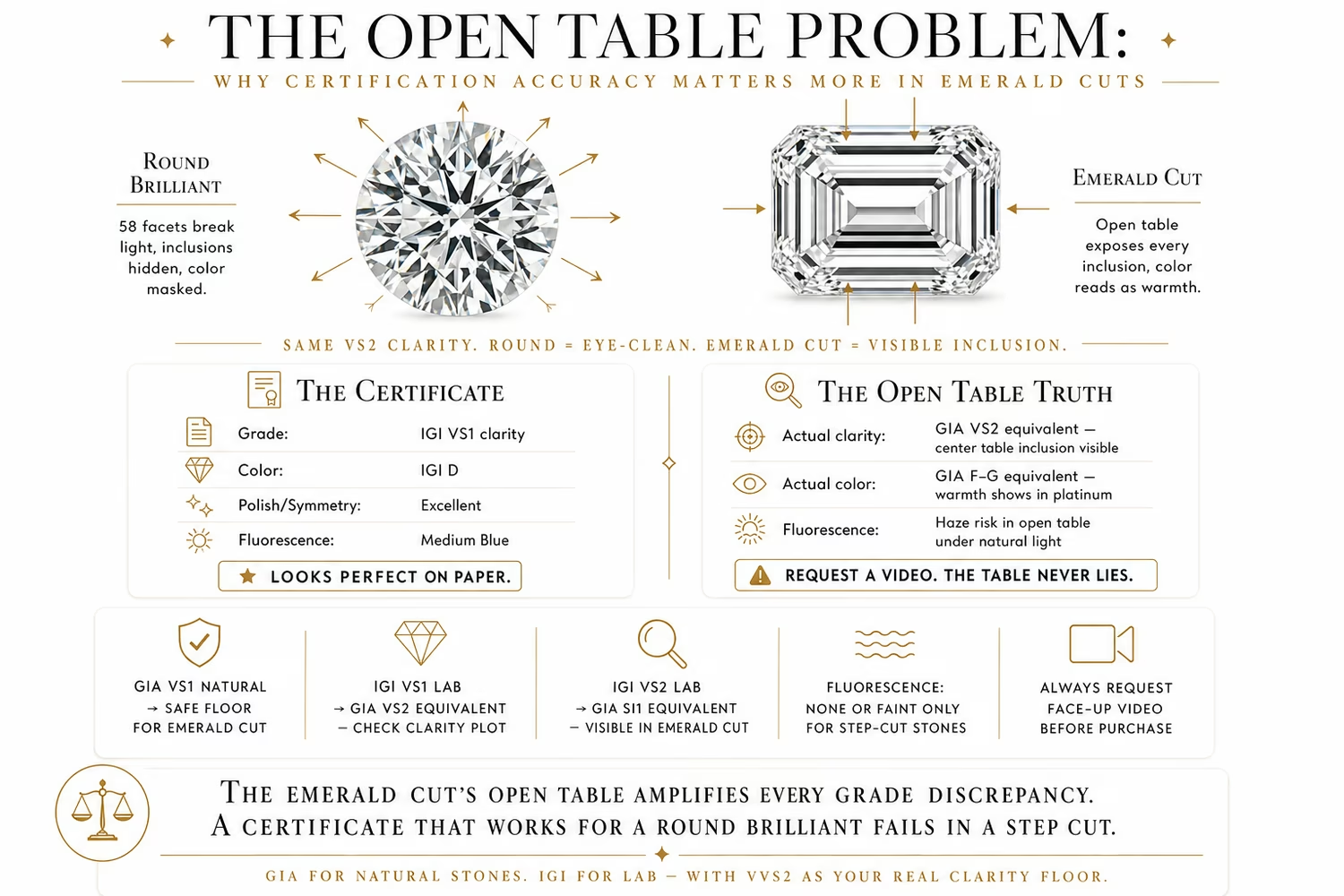
This is the core reason the Natural Diamond Rule exists: for natural stones where resale and grading consistency matter, and where the open table amplifies every grade discrepancy, GIA is the only safe choice.
Tides Of Summer Capsule
Up To 30% Off
Shop The Sale →Vault ClearanceClear The Vault
Up To 70% Off
Shop Vault Deals →Affiliate link — no extra cost to you
GCAL: The Third Option Worth Knowing
GCAL is not discussed often enough. It occupies a real position between IGI's lenient grading and GIA's strict standard.
GCAL was founded in 2001 and is based in New York. Its grading standard for lab-grown diamonds is stricter than IGI's. It also issues a light performance certificate alongside the grading report, which measures actual optical brilliance.
No other major lab does this.
For emerald cut diamonds specifically, the GCAL light performance report adds information that a standard clarity and color grade does not capture. Step-cut diamonds perform very differently from brilliant cuts in terms of how light moves through the stone. A GCAL certificate tells you how the stone actually performs, not just what grade the facets earned.
GCAL stones are less common than IGI stones in major retailer inventory. Blue Nile carries GCAL-certified lab emerald cuts at various carat weights. They typically price 10–20% above IGI equivalents at the same stated grade — reflecting the stricter grading and the additional light performance certificate.
For buyers who want stricter grading than IGI but cannot find a GIA-certified lab emerald cut at their target size, GCAL is the next-best option.
How to Read a Certificate for an Emerald Cut Diamond
Whether GIA, IGI, or GCAL, the information on the certificate matters differently for a step-cut stone.
Clarity plot location: Check where the inclusion is marked on the clarity diagram. An inclusion at the center of the table is visible through the open emerald cut table. An inclusion at the edge or near the girdle is less visible. The same VS2 grade means different things depending on where the inclusion sits.
Table and depth percentage: GIA, IGI, and GCAL all report table % and depth % for emerald cuts. The ideal ranges are 61–69% table and 60–64% depth. Any stone outside these ranges may look different from what you expect.
Polish and symmetry: Both should be at least Good on any lab. Excellent is preferred. Poor polish or symmetry in a step-cut diamond is visible — the long flat facets amplify any imperfection in the finish.
Fluorescence: Medium or strong fluorescence in any certificate creates a risk of haziness in the emerald cut's open table under natural light. Stick to None or Faint fluorescence regardless of certificate issuer.
Color and clarity grade adjustments by lab:
| IGI Lab Grade | Approximate GIA Equivalent | Approximate GCAL Equivalent |
|---|---|---|
| D color | F–G color | E–F color |
| E color | G–H color | F–G color |
| VVS1 clarity | VVS2–VS1 clarity | VS1 clarity |
| VS1 clarity | VS2 clarity | VS1–VS2 clarity |
| VS2 clarity | SI1 clarity | VS2 clarity |
These are approximate ranges, not exact conversions. Individual stones vary. The table gives you a calibration framework — not a guarantee.
For any emerald cut above $5,000, request a video of the stone before purchasing to verify appearance independent of the certificate grade.
GIA vs IGI vs GCAL: Master Comparison Table
| Attribute | GIA | IGI | GCAL |
|---|---|---|---|
| Founded | 1931 | 1975 | 2001 |
| Headquarters | Carlsbad, USA | Antwerp, Belgium | New York, USA |
| Natural diamond grading | Gold standard | Less consistent | Reliable |
| Lab diamond grading | Strict, rare | Lenient, dominant | Moderate |
| Grade Bump (lab stones) | None — benchmark | +1–2 grades vs GIA | +0.5–1 grade vs GIA |
| Light performance cert | No | No | Yes |
| Resale recognition | Highest | Lower (natural) | Moderate |
| Retailer availability | High (natural) | Dominant (lab) | Moderate (lab) |
| For natural emerald cut | Required | Avoid | Acceptable |
| For lab emerald cut | Best if available | Fine with Grade Bump adjustment | Best IGI alternative |
| Price premium vs IGI | 10–20% (natural) | Baseline | 10–20% (lab) |
Who Should Choose Which: 4 Buyer Scenarios
Best for natural emerald cut buyers: GIA only. No exceptions. A 1ct GIA D-VS1 natural emerald at $3,140 is a certified, internationally recognized stone with consistent grading and full resale value. An equivalent IGI natural stone at a lower price is priced lower for a reason.
Best for lab-grown buyers who want maximum face-up size: IGI, adjusted for the Grade Bump. A 2ct IGI D-FL lab emerald at $4,735 delivers a large, visually clean stone if you treat the grade as approximately F-VS1 GIA. The face-up size at 2ct is unmistakably large on the finger. For buyers who want the emerald cut's elongated finger coverage at the lowest cost per carat, IGI lab is the most practical option.
Best for lab-grown buyers who want the most accurate grade: GCAL. A 3ct GCAL D-VVS1 lab emerald at $10,695 carries a stricter grade than IGI and adds the light performance certificate. For buyers who want to know exactly what they are getting in a step-cut stone without hunting for a GIA lab certificate, GCAL is the right choice.
Best for buyers who care about resale: GIA natural, no substitute. If you ever plan to resell the stone, GIA certification is the only certificate that holds its value. Lab diamonds have minimal resale value regardless of certificate — the certification lab does not change that reality. For natural emerald cuts where resale matters, the $24,407 GIA 2ct F-VS1 is the right investment-grade choice.
Farzana says: "The certification lab is not a brand preference. It is a grading accuracy question. For a round brilliant, you can tolerate a less accurate grade because the cut hides it. For an emerald cut, the stone's open table tells the truth regardless of what the certificate says. That is why I push harder on certification accuracy for this shape than for any other."
The 5 Mistakes Buyers Make When Reading a Lab Diamond Certificate
Most buyers read the grade and stop there. The grade is the least useful part of the certificate.
Here are the five mistakes that cost emerald cut buyers the most:
Mistake 1: Comparing IGI and GCAL grades directly without adjusting. A 2ct IGI D-VVS1 and a 2ct GCAL D-VVS1 are not the same stone. GCAL's D-VVS1 is closer to IGI's D-FL in grading strictness. When comparing prices across labs, you must apply the Grade Bump conversion first. Buyers who skip this step overpay for IGI stones or underbuy GCAL stones at the same stated grade.
Mistake 2: Accepting VS1 IGI clarity in an emerald cut. VS1 is commonly described as eye-clean for round brilliants. That is correct for rounds. For emerald cuts, VS1 GIA is the clarity floor — barely. VS1 IGI is approximately VS2 GIA, which frequently shows inclusions in the step-cut table. The correct IGI clarity floor for an eye-clean emerald cut is VVS2 or better.
Mistake 3: Not checking the clarity plot location. Every GIA, IGI, and GCAL certificate includes a clarity plot diagram that marks where the inclusion sits inside the stone. A VS2 inclusion at the edge near the girdle is less visible than a VS2 inclusion at the center of the table. Two stones with identical grades can look completely different based on plot location. Always request the full certificate PDF, not just the grade summary.
Mistake 4: Ignoring fluorescence. Fluorescence is listed on every certificate. Medium or strong blue fluorescence in an emerald cut can create a milky or hazy appearance in the open table under natural light. This is less common in lab-grown stones but still occurs. Check fluorescence before buying — None or Faint is the safe range for any step-cut diamond.
Mistake 5: Not requesting a video. A certificate is a written opinion of the grade. A video is a real observation of the stone. For emerald cuts specifically, the open table means you can see almost everything from a loupe video. Inclusions, color warmth, and even light performance are visible on video in a way they are not on paper. Any retailer that will not provide a video of a specific emerald cut stone before purchase is a retailer you should not buy from.
Buying a Natural Emerald Cut: The GIA Checklist
If you have decided on a natural emerald cut diamond, here is exactly what to verify on the GIA certificate before buying.
Color: D through G for white gold or platinum. H is the visible limit for step-cut stones in cool metal settings — anything below H will show warmth through the open table. For yellow gold, G through J is acceptable. Never go below J for any emerald cut.
Clarity: VS1 minimum. SI1 is almost never eye-clean in an emerald cut. VS2 can be eye-clean if the inclusion is near the girdle and not in the center table — check the clarity plot. If the plot shows a feather or crystal at the center of the table, move up one grade.
Fluorescence: None or Faint. Medium or Strong fluorescence creates haze risk in the open table.
Table percentage: 61–69%. Anything above 70% means the table is disproportionately wide and the step facets lose depth.
Depth percentage: 60–64%. Too shallow (below 58%) creates a windowing effect where the stone looks transparent and dull. Too deep (above 67%) wastes carat weight in depth with no visual benefit.
Polish and Symmetry: Excellent or Very Good for both. Good is acceptable but not preferred. The long flat facets of an emerald cut amplify any imperfection in polish or symmetry.
L:W ratio: 1.30–1.50 for the traditional elongated look. A ratio below 1.30 looks square and compact. A ratio above 1.55 starts to look narrow from the side. The certificate reports dimensions in millimeters — calculate the ratio yourself if the retailer does not provide it.
Natural Emerald Cut — Color Floor by Setting Metal:
| Setting Metal | Minimum GIA Color | Why |
|---|---|---|
| Platinum | D–F | Cool metal amplifies body color — G shows warmth |
| 18K White Gold | E–G | Slightly warmer than platinum — G is workable |
| 14K White Gold | F–H | More alloy warmth — H acceptable |
| 18K Yellow Gold | G–J | Warm metal masks color — save budget here |
| Rose Gold | G–J | Pink warmth offsets color — J acceptable |
Natural Emerald Cut — Clarity Floor by Table Position:
| GIA Clarity | Inclusion at Center Table | Inclusion Near Girdle | Verdict |
|---|---|---|---|
| VVS1–VVS2 | Not visible | Not visible | Always safe |
| VS1 | Not visible | Not visible | Safe — standard floor |
| VS2 | Sometimes visible | Usually not visible | Check clarity plot |
| SI1 | Usually visible | Sometimes visible | Avoid in emerald cut |
Once these certificate boxes are checked, request a video before placing the order. The certificate confirms the grade; the video confirms the appearance.
What the Certificate Does Not Tell You
The certificate is a grading document. It grades carat, color, clarity, and cut. It does not tell you several things that matter for an emerald cut purchase.
It does not tell you whether the stone looks good.
Two GIA D-VS1 emerald cuts can look completely different. One might have a long, elegant step pattern with beautiful hall-of-mirrors reflections. The other might have a crushed-ice appearance with choppy facet breaks.
Both are D-VS1 by GIA standards. The certificate cannot distinguish them.
Cut quality for emerald cuts is not graded the same way as for rounds. GIA gives round brilliants a single Cut grade from Excellent to Poor. For emerald cuts, there is no equivalent single cut grade — only the component grades for Polish and Symmetry.
The proportions table and depth percentage are listed, but the overall visual quality of the cut is something you can only assess from a video or in person.
Color appearance also varies beyond the grade. A D-color emerald cut in platinum will look different from the same grade in yellow gold. The certificate does not account for setting context.
If you are planning a yellow gold or rose gold setting, you can buy lower on the color scale — IGI F or G — without visual penalty, because the warm metal absorbs the color difference.
Fluorescence reactivity is listed on the certificate, but its actual visual impact depends on the stone. Some strongly fluorescent stones look crisp and bright. Others look hazed.
The only way to know is to see the specific stone under natural light — and request that the video be filmed in both indoor and outdoor lighting if possible.
The certificate tells you the grade. The video tells you the truth.
One more thing the certificate does not tell you: how the stone looks on a finger. Retailers sometimes provide ring simulation tools or photorealistic mockups, but these are always flattering. The best proxy for on-finger appearance is the stone's length-to-width ratio combined with the face-up millimeter dimensions.
A 2ct emerald cut at 8.5x6.2mm covers more finger length than a 2ct round at 8.1mm diameter. The certificate lists the millimeter dimensions — use them.
Buyers often spend more time reading the certificate than studying the video. The certificate creates an illusion of objectivity. But GIA can grade two emerald cut diamonds identically while one looks stunning and the other looks flat.
The certificate is a starting filter, not a buying decision. Pass through the filter quickly, then spend your time on the video. That is where the actual decision lives.
Final Verdict
For natural emerald cut diamonds: GIA is not a preference — it is the only correct choice. The step-cut table makes every grade discrepancy visible. IGI natural grading is inconsistent.
The discount on an IGI natural stone reflects risk, not value.
For lab-grown emerald cut diamonds: IGI is fine if you understand the Grade Bump. Apply the 1–2 grade color adjustment and the 1 grade clarity adjustment before comparing prices across labs. GCAL gives you stricter grading and a light performance certificate — worth the 10–20% premium if grade accuracy matters to you.
The rule is simple. Match the certification standard to the stone type. Then let the video make the final call.
Natural vs Lab Emerald Cut — Price Comparison at Each Carat Weight:
| Carat | Natural GIA (D-VS1) | Lab IGI (D-FL) | Lab GCAL (D-VVS1) | Natural/Lab Ratio |
|---|---|---|---|---|
| 1.00ct | $3,140 | ~$1,200–$1,800 | ~$1,800–$2,400 | 2–3× natural premium |
| 1.90–2.00ct | ~$18,000–$24,000 | $4,735 (IGI) | $5,335 (GCAL) | 4–5× natural premium |
| 3.00ct | $63,574 | $9,235 (IGI) | $10,695 (GCAL) | 6–7× natural premium |
| 4.00ct | $80,000–$100,000+ | $7,737 (IGI) | ~$14,000–$18,000 | 10–13× natural premium |
| 5.00ct | $121,475 GIA | $9,491 (IGI) / $9,827 (GIA) | $17,490 (GCAL) | 12–13× natural premium |
The lab/natural price gap widens sharply above 2ct. That gap is not about the certificate — it is about rarity. Certification choice (GIA vs IGI vs GCAL) affects price by 10–20% within the lab category.
Stone type (natural vs lab) affects price by 4–18×.
FAQs
Is GIA or IGI better for an emerald cut diamond?
GIA is better for natural emerald cut diamonds. IGI is the industry standard for lab-grown emerald cuts and is acceptable if you understand the Grade Bump. For step-cut diamonds, where clarity and color are visible through the open table, grading accuracy matters more than for brilliant cuts.
What is the Grade Bump in IGI lab diamond grading?
The Grade Bump refers to IGI's systematic tendency to grade lab-grown diamonds 1–2 color grades and 1 clarity grade higher than GIA would assign to the same stone. A D-VS1 IGI lab emerald cut is typically equivalent to an F-VS2 by GIA standards. The gap is consistent across the market.
Is IGI a legitimate certification lab?
Yes. IGI is the largest grading lab in the world by volume and is the standard for lab-grown diamonds. Its certificates are real and accepted by major retailers globally.
The issue is not legitimacy — it is that IGI grades lab-grown stones on a more lenient scale than GIA.
Can I buy an emerald cut diamond with an IGI natural certificate?
Not recommended. IGI natural grading has historically been inconsistent, and the discount on an IGI-certified natural stone versus a GIA-certified stone reflects lower buyer confidence. For natural diamonds, especially step-cut stones where grading accuracy is visible in the open table, GIA is the right choice.
Does GIA certify lab-grown emerald cut diamonds?
Yes. GIA now issues full grading reports for lab-grown diamonds. However, GIA-certified lab stones are rare in major retailer inventory, typically priced 10–20% higher than IGI equivalents, and the GIA standard for lab stones does not provide the same resale benefit it does for natural stones.
Is GCAL better than IGI for lab-grown emerald cuts?
In terms of grade accuracy, yes — GCAL grades lab stones more strictly than IGI. GCAL also includes a light performance certificate, which is useful for step-cut stones where light behavior matters. GCAL is priced 10–20% above IGI at the same stated grade, reflecting both stricter grading and the added certificate.
See the 2ct GCAL D-VVS1 lab emerald at $5,335 as a reference point.
Why does the emerald cut make certification matter more than other shapes?
The emerald cut's step-cut facets create an open, transparent table rather than the fragmented light pattern of brilliant cuts. Inclusions that would be invisible in a round brilliant are often visible in an emerald cut. Color that would be masked by sparkle in a round shows as warmth in the emerald's clear reflections.
An overstated grade on a certificate is more likely to produce a visible mismatch in an emerald cut than in any brilliant cut.
What clarity grade should I buy for an emerald cut with an IGI certificate?
VVS1 or VVS2 on IGI is the practical minimum for an eye-clean result. IGI VVS1 is approximately GIA VS1. IGI VS1 is approximately GIA VS2 — which can show inclusions in the emerald cut's open table.
Do not buy IGI VS2 or SI1 in an emerald cut expecting eye-clean results.
What color grade should I buy for an emerald cut with an IGI lab certificate?
D or E on IGI for white gold or platinum settings. IGI D color is approximately GIA F-G color. In platinum or white gold, a GIA G color is at the lower visible limit for emerald cuts — which means IGI D-E is the safe range.
In yellow gold, IGI F-G is acceptable since the warm metal offsets warmer color grades.
Does the certification lab affect the price of an emerald cut lab diamond?
Yes, directly. IGI-certified lab stones are priced at the market baseline. GCAL-certified stones carry a 10–20% premium for the stricter grade.
GIA lab stones, when available, also carry a premium. The same size and stated grade will cost different amounts depending on the certificate, which is why comparing lab diamond prices across labs requires the Grade Bump adjustment.
Should I request a video before buying a certified emerald cut?
Always, regardless of certificate. A certificate tells you the grade — a video shows you the actual appearance. For emerald cuts specifically, request a high-resolution loupe or microscope video that shows the stone face-up and in motion.
This reveals whether the clarity plot inclusions are visible through the table and whether the color reads warm or white. No certificate replaces seeing the stone.
What is the minimum certificate I should accept for a lab emerald cut?
IGI, GCAL, or GIA. Do not buy a lab-grown emerald cut with a generic "appraisal" or an in-house store certificate. Appraisals assign replacement value, not grading accuracy.
For any stone above $1,000, one of these three laboratory certificates is the minimum.
How does the step-cut clarity floor (VS1) interact with IGI grading?
The step-cut clarity floor for emerald cuts is VS1 by GIA standards. Because IGI grades approximately one step higher, the effective IGI clarity floor for an eye-clean emerald cut is VVS2 or better. Buying an IGI VS1 lab emerald cut and expecting the same eye-clean result as a GIA VS1 is the most common certification error step-cut buyers make.
See Also
- Emerald Cut Diamond — Complete Buying Guide — pillar guide: clarity, proportions, lab vs natural, all settings
- Emerald Cut Diamond Clarity Guide — VS1 Floor, Clarity Window, Sparkle Trade — how VS1 vs VS2 vs SI1 actually looks in step-cut faceting
- Lab Grown Emerald Cut Diamond — D-IF at $9K vs $63K Natural — full lab vs natural price guide with IGI and GCAL data
- Loose Emerald Cut Diamond — Buy the Stone Before the Setting — how to evaluate a loose stone from the certificate and video before buying
- Emerald Cut Diamond Ideal Proportions — The 1.40 L:W Rule — table %, depth %, and ratio targets that matter alongside the certificate
- 2 Carat Emerald Cut Diamond — 2ct natural and lab price tables, GIA-certified natural options
- Emerald Cut vs Asscher Cut Diamond: The Square Trap — the other step-cut shape comparison, same certification rules apply
- Radiant Cut vs Emerald Cut Diamond — Step Cut Wins on Size — how certification requirements differ between step and brilliant cuts
Expert Verdict
Always audit the stone individually — no grade replaces seeing the actual diamond. The certificate tells you what to look for. Your eyes tell you whether to buy.
— Farzana Hasan, GIA Expert · DiamondCritics.com