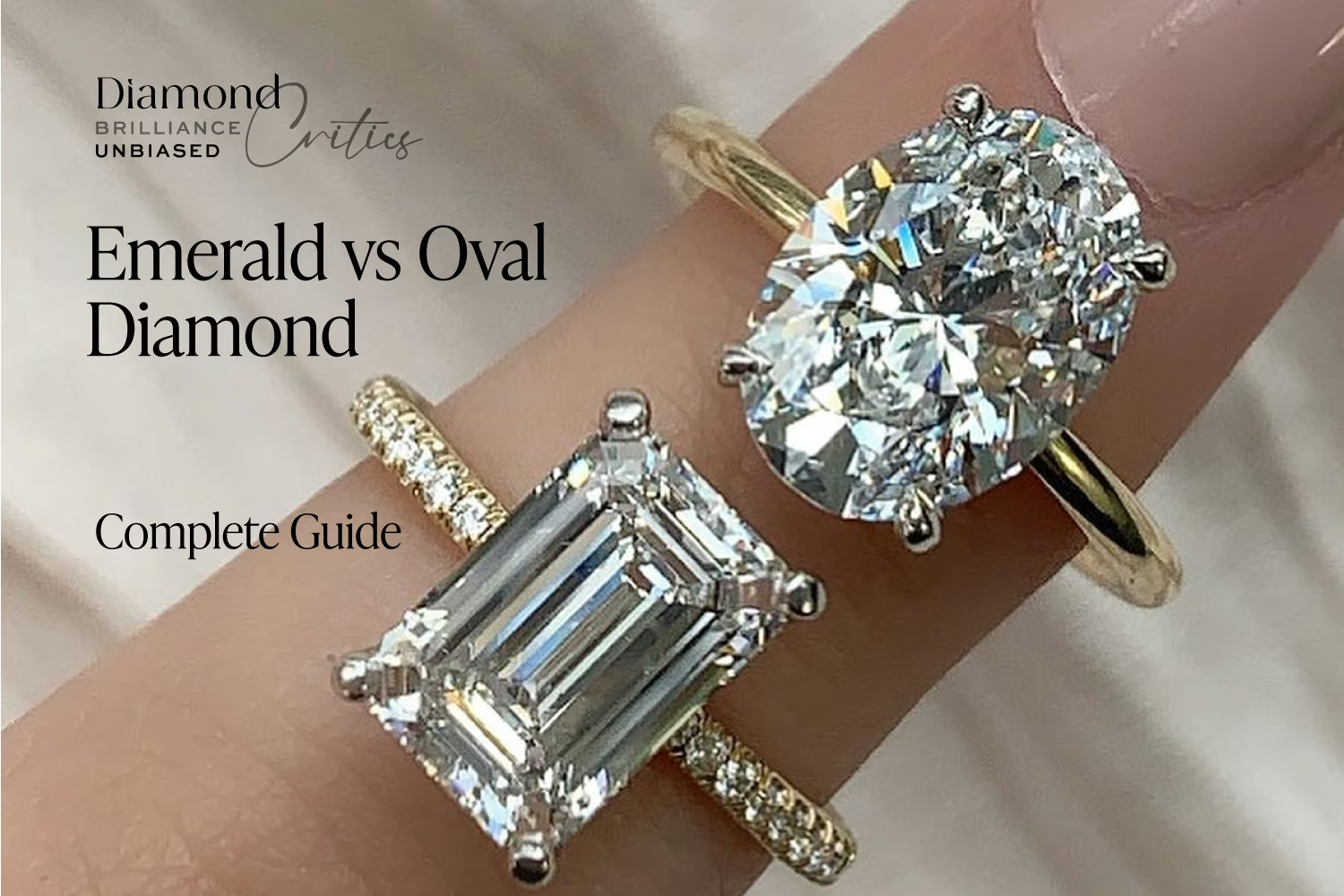
The oval vs emerald cut diamond comparison comes down to one question: do you want sparkle that hides everything, or a mirror that shows everything?
Both shapes elongate the finger. Both look larger than a round at the same carat weight. Both work in solitaire, pave, and halo settings.
But they are fundamentally different diamonds.
The oval is a brilliant cut. 58 facets scatter light in every direction. Inclusions hide.
Color disperses. The bow tie shadow lurks in the center of every oval, and whether it ruins the stone depends entirely on how well you shop.
The emerald cut is a step cut. Long parallel facets create a hall-of-mirrors effect. Nothing hides.
VS2 inclusions that disappear in an oval are visible in an emerald cut's open table. H-color that looks white in an oval reads warm in an emerald cut's clear reflections.
This guide covers everything — shape geometry, price tables with real certified market data, clarity floors, color minimums, setting styles, proportions, the resale question, and exactly which buyer should choose which shape.
TL;DR
- Oval cut: brilliant-cut, 58 facets, hides inclusions, maximum sparkle, bow tie shadow is the risk — always watch a video before buying.
- Emerald cut: step-cut, open table, hall-of-mirrors light, VS1 clarity minimum, D–G color minimum in platinum.
- Oval is cheaper than emerald at 1ct, similarly priced at 2ct, and cheaper again at 3ct+.
- → Natural 1ct GIA G-VS2 oval from $2,887. → Natural 1ct GIA D-VS1 emerald from $3,140.
- Lab 2ct IGI D-IF oval from $4,825. Lab 2ct IGI D-FL emerald from $4,735.
- Priority: choose oval if sparkle and inclusion tolerance matter. Choose emerald if you want the hall-of-mirrors effect and are willing to spend more on clarity and color.
Expert Summary
Oval diamonds and emerald cut diamonds are the two most popular elongated shapes. They share the finger-lengthening effect and the face-up size advantage over rounds. Everything else about them is different.
The oval is a brilliant cut descended from the round brilliant. Its 58 facets break light into the same fire and sparkle buyers associate with classic diamond engagement rings. The bow tie — a dark shadow across the center — is present in almost every oval.
Severity ranges from unnoticeable to distracting. You cannot identify bow tie severity from a certificate alone; you must watch a video of the specific stone.
The emerald cut is a step cut. Its long parallel facets create a reflective, architectural look that bears no resemblance to brilliant-cut sparkle. Inclusions and color are visible through the open table.
The clarity floor is VS1 (GIA). The color floor is G for white metal settings. Buyers who choose emerald cut are choosing a specific aesthetic — calm, elegant, reflective — over the fire and brilliance of a brilliant cut.
Price at identical grades slightly favors oval at 1ct and 3ct+. They converge at 2ct. Lab prices for both shapes are nearly identical in the $4,700–$5,000 range at 2ct IGI D-FL.
Neither shape is objectively better. The choice is between two entirely different diamond personalities.


Shape Geometry: How Oval and Emerald Cut Are Built
The oval diamond is an elliptical modification of the round brilliant. It has 58 facets arranged in the same pattern as a round, stretched horizontally to create an elongated shape. The facets are angled to maximize light return and fire.
Because the facets are curved and angled like a round brilliant, the oval behaves optically like a round brilliant. It sparkles. It fires. It hides inclusions in the fragmented light pattern created by 58 active facets.
The emerald cut is a rectangular step cut with cropped corners. It has 57–58 facets arranged in long parallel rows — the step facets run across the stone in horizontal bands. The table is wide and flat.
There are no curved facets and no fragmented light scattering.
Because the facets are flat and parallel, the emerald behaves like a mirror. Light enters the stone, bounces between the large flat facets, and exits in long, slow planes. Inclusions in the table are visible.
Color reads as warmth in the unbroken reflections. The visual result is completely different from anything a brilliant cut produces.
Key structural differences:
| Feature | Oval Cut | Emerald Cut |
|---|---|---|
| Cut family | Brilliant | Step cut |
| Facets | 58 | 57–58 |
| Facet shape | Triangular/kite (curved) | Long rectangular (parallel) |
| Shape | Elliptical | Rectangular, cropped corners |
| Light behavior | Scattered fire and sparkle | Hall-of-mirrors reflections |
| Ideal L:W ratio | 1.30–1.50 | 1.30–1.50 |
| Minimum clarity | VS2 (GIA) often eye-clean | VS1 (GIA) — strict floor |
| Minimum color | H in white gold (often) | G in white gold (strict) |
| Bow tie effect | Present in all ovals — varies | None |
The Bow Tie Trade
Every oval diamond has a bow tie. It is not a defect — it is a physical consequence of the elongated brilliant cut geometry. Light enters from the top of the stone, but in the center of an oval, the pavilion facets angle away from the viewer's line of sight.
The light does not return. The center goes dark. The shadow takes the shape of a bow tie.
The severity ranges from barely perceptible to prominently dark. The difference between an oval that sells for $8,000 and an oval with the same grade certificate that sells for $12,000 is often the bow tie. A well-cut oval with a minimal bow tie commands a premium the GIA certificate does not explain.
This is The Bow Tie Trade: you pay more for an oval that avoids a visible bow tie, and you cannot know the severity from a certificate alone.
The emerald cut has no bow tie. Its step-cut facets do not create the pavilion angle geometry that produces bow tie darkening. What you lose is sparkle.
What you gain is a completely bow-tie-free stone where what you see on paper is what you get in person.
How to evaluate bow tie in an oval before buying:
- Watch a video of the specific stone, not stock photography
- Rotate the video in natural light — bow tie severity often changes as the stone moves
- A slight darkening in the center is normal; a prominent black bar across the middle is a problem
- Depth percentage matters: 58–62% depth minimizes bow tie. Stones above 64% depth tend to bow tie more
- Never buy an oval diamond without a stone-specific video
Natural oval diamond prices by grade (bow tie-checked, good cut):
| Natural Oval | Grade | Price | Certificate |
|---|---|---|---|
| 1.00ct Oval | G-VS2 Ideal | $2,887 | GIA |
| 1.00ct Oval | F-VS2 Ideal | $3,114 | GIA |
| 1.00ct Oval | D-VS2 Ideal | $3,327 | GIA |
| 1.50ct Oval | E-VS2 Ideal | $8,757 | GIA |
| 2.00ct Oval | G-VS2 Ideal | $20,278 | GIA |
| 2.50ct Oval | G-VS2 Ideal | $27,683 | GIA |
| 3.00ct Oval | G-VS2 Ideal | $48,273 | GIA |
| 4.00ct Oval | D-VS2 Ideal | $85,070 | GIA |
| 5.00ct Oval | D-VS1 Ideal | $247,260 | GIA |
Farzana says: "The bow tie is the oval buyer's trap. I have seen buyers spend $15,000 on a 2ct oval with a certificate that looks perfect — then receive a stone with a bow tie so dark it ruins the face-up appearance. Every oval purchase needs a video. Not stock photography. A real video of the specific stone, rotating in natural light. That is not optional."
The Sparkle Split
The oval and emerald cut attract buyers with fundamentally different preferences. Neither is wrong. But conflating them leads to disappointment.
Oval buyers want:
- Maximum sparkle and fire from every angle
- A stone that looks lively and brilliant in all lighting
- A shape that hides clarity issues — VS2 is often eye-clean in an oval
- A color-tolerant stone — H in white gold looks white because the 58 facets break color into sparkle
Emerald cut buyers want:
- The hall-of-mirrors effect — slow, deep reflections through the long step facets
- A stone that reads sophisticated and architectural rather than flashy
- A shape where the quality shows — VVS or VS1 clarity, D–G color, visible in the open table
- A diamond that looks completely different from every brilliant cut ring in the room
This is The Sparkle Split. Oval gives you diamond as performance. Emerald cut gives you diamond as sculpture.
Most buyers who try both shapes in person know immediately which personality matches them. If you have not tried both in person, do it before buying — the difference is immediately apparent.
Visual personality comparison:
| Quality | Oval Cut | Emerald Cut |
|---|---|---|
| Light performance | High fire + scintillation | Slow mirror reflections |
| Under direct light | Brilliant, fiery | Clear, glassy |
| Under dim light | Still bright (scattered light) | Deeper, quieter |
| Movement effect | Dancing light as stone moves | Long reflections shift slowly |
| Best in metal | All metals — forgiving | White metals show it best |
| Inclusion visibility | Inclusions hidden by facets | Inclusions visible in open table |
| Color visibility | Color broken into sparkle | Color reads as warmth in reflections |
| Buyer personality | Wants sparkle, fire, brilliance | Wants elegance, calm, clarity |
Face-Up Size: Which Looks Bigger?
Both shapes look larger than a round brilliant at the same carat weight. This is the most commonly cited reason buyers choose either shape.
The reason is the same for both: weight is distributed shallower and wider rather than deep. A 2ct round has roughly 8.1mm diameter. A 2ct oval stretches to approximately 10mm in length.
A 2ct emerald cut reaches approximately 8.5mm in length — narrower than an oval but with more rectangular coverage across the finger.
On the finger, the oval often appears larger because its length is visible on both sides of the band. The emerald cut appears more linear and architectural — it does not fan out to the sides but instead cuts cleanly across the finger.
Approximate face-up dimensions by carat weight:
| Carat | Round Diameter | Oval (L×W) | Emerald Cut (L×W) |
|---|---|---|---|
| 0.50ct | 5.2mm | ~6.5×4.5mm | ~5.5×4.0mm |
| 1.00ct | 6.4mm | ~8.5×5.5mm | ~6.5×5.0mm |
| 1.50ct | 7.3mm | ~9.5×6.5mm | ~7.5×5.5mm |
| 2.00ct | 8.1mm | ~10.5×7.0mm | ~8.5×6.0mm |
| 3.00ct | 9.3mm | ~12.0×8.0mm | ~10.0×7.0mm |
| 4.00ct | 10.2mm | ~13.5×9.0mm | ~11.0×8.0mm |
The oval typically has more total face-up area per carat because its brilliant cut allows for shallower depth. The emerald cut trades some face-up coverage for the step-cut's architectural look. Neither shape is dramatically larger than the other — both beat rounds at the same weight.
The choice between them on size alone is marginal; the aesthetic difference is enormous.
Natural Diamond Price Comparison: Oval vs Emerald Cut
At identical carat weights and grades, oval and emerald cut diamonds are priced similarly. Oval tends to run slightly cheaper at 1ct because the shape carries less prestige premium. At 2ct and above, the prices converge.
| Carat | Oval GIA G-VS2 | Emerald GIA D-VS1 | Price Difference |
|---|---|---|---|
| 1.00ct | $2,887 | $3,140 | Emerald +9% |
| 1.50ct | $8,757 | $10,409 | Emerald +19% |
| 2.00ct | $20,278 | $24,407 | Emerald +20% |
| 2.50ct | $27,683 | $31,566 | Emerald +14% |
| 3.00ct | $48,273 | $63,574 | Emerald +32% |
| 4.00ct | $85,070 | $97,688 | Emerald +15% |
| 5.00ct | $247,260 | $121,475 | Oval +104% |
Note: grades differ because the dataset's best available stones vary. The 5ct comparison inverts because high-grade ovals are significantly rarer at that weight. For an equivalent grade comparison at 5ct, emerald cut natural diamonds run cheaper at D-VS1 than oval equivalents.
The consistent pattern from 1ct–4ct: emerald cut natural diamonds run 10–30% above oval at similar grades.
Why does the emerald cut cost more? Two reasons. First, rough diamond yield: cutting an emerald shape from rough requires removing more material per carat than cutting an oval.
Second, the emerald cut buyer has historically selected higher clarity and color grades — the market reflects that demand. You are not paying more for a better stone. You are paying more for a stone cut to the specific aesthetic demands of step-cut buyers.
Lab Diamond Price Comparison: Oval vs Emerald Cut
Lab-grown pricing is where oval and emerald cut converge most closely. Both shapes are widely available in lab at 2ct–5ct with IGI and GCAL certificates.
| Lab Oval | Grade | Price | Lab |
|---|---|---|---|
| 1.50ct Oval Lab | D-IF Ideal | $2,935 | IGI |
| 1.50ct Oval Lab | D-IF Ideal | $3,128 | GCAL |
| 2.00ct Oval Lab | D-IF Ideal | $4,825 | IGI |
| 2.00ct Oval Lab | D-FL Ideal | $7,803 | GIA ★ |
| 3.00ct Oval Lab | F-IF Ideal | $6,945 | IGI |
| 3.00ct Oval Lab | D-IF Ideal | $9,410 | IGI |
| 3.00ct Oval Lab | D-IF Ideal | $14,267 | GIA ★ |
| 4.00ct Oval Lab | E-FL Ideal | $10,695 | IGI |
| 4.00ct Oval Lab | D-IF Ideal | $17,598 | IGI |
| 4.00ct Oval Lab | D-IF Ideal | $28,572 | GIA ★ |
| 5.00ct Oval Lab | E-IF Ideal | $18,410 | IGI |
| 6.03ct Oval Lab | E-IF Ideal | $62,677 | GIA ★ |
Lab emerald cut for comparison:
| Lab Emerald Cut | Grade | Price | Lab |
|---|---|---|---|
| 1.94ct Emerald Lab | F-VVS1 Excellent | $2,229 | IGI |
| 2.00ct Emerald Lab | D-FL Ideal | $4,735 | IGI |
| 2.00ct Emerald Lab | D-VVS1 Ideal | $5,335 | GCAL |
| 3.00ct Emerald Lab | D-IF Ideal | $9,235 | IGI |
| 4.00ct Emerald Lab | D-VVS1 Excellent | $7,737 | IGI |
| 5.04ct Emerald Lab | D-VVS1 Ideal | $9,491 | IGI |
★ GIA lab oval stones carry a significant premium. The 2ct GIA D-FL oval at $7,803 vs the 2ct IGI D-IF oval at $4,825 shows a $2,978 premium for the stricter GIA grade. For oval buyers who want the strictest grading, GIA lab is available at 2ct–6ct+.
Farzana says: "Lab pricing at 2ct is almost identical for both shapes — $4,825 for oval IGI D-IF, $4,735 for emerald IGI D-FL. At that price point, shape is a pure aesthetic choice. Budget is not the deciding factor. Buy the shape that matches how you want the ring to look, not the one that happens to be $90 cheaper."
Tides Of Summer Capsule
Up To 30% Off
Shop The Sale →Vault ClearanceClear The Vault
Up To 70% Off
Shop Vault Deals →Affiliate link — no extra cost to you
Clarity: What Each Shape Hides and Shows
This is the biggest practical difference between the two shapes. It affects your budget more than anything else in this comparison.
Oval clarity floor: VS2 (GIA)
The oval's 58 brilliant-cut facets scatter light aggressively. Inclusions in the body of the stone are fragmented and dispersed across the scintillation pattern. A GIA VS2 oval is almost always eye-clean.
Some VS2 ovals with inclusions at the edge or near the girdle are completely invisible to the naked eye.
SI1 in an oval is risky but not impossible — if the inclusion is positioned near the girdle and not in the center, SI1 can still be eye-clean. Many buyers choose SI1 oval diamonds successfully and save significant money versus VS2.
Emerald cut clarity floor: VS1 (GIA)
The emerald cut's open step-cut table is a window. There are no scattered facets to disguise inclusions. A feather crystal at the center of the table is visible at arm's length.
VS2 in an emerald cut sometimes shows — you must check the clarity plot to see where the inclusion sit. VS1 is the safe standard for an eye-clean result.
SI1 in an emerald cut almost always shows to the naked eye. It is not recommended under any circumstances.
Clarity grade savings comparison:
| Scenario | Oval | Emerald Cut |
|---|---|---|
| Safe eye-clean floor | VS2 GIA | VS1 GIA |
| Budget-safe option | SI1 GIA (check position) | VS2 GIA (check clarity plot) |
| Never buy below | SI2 | SI1 |
| IGI lab floor | VS1 IGI (≈ GIA VS2) | VVS2 IGI (≈ GIA VS1) |
| Clarity premium vs round | Low — brilliant hides well | High — open table shows everything |
The clarity difference has a real price impact. At 2ct natural, moving from VS2 to VS1 adds approximately $2,000–$4,000. Oval buyers who can buy VS2 (sometimes SI1) save that entire budget.
Emerald cut buyers must spend it.
Color: How Each Shape Reads in Different Settings
Oval color floor: H (GIA) in white gold
The oval's brilliant-cut facets break color into sparkle. H-color in an oval looks white to most eyes in a white gold or platinum setting. Some buyers push to I-color in yellow gold with excellent results — the warm metal absorbs the warmth in the stone.
Emerald cut color floor: G (GIA) in white gold
The emerald cut's open, unbroken reflections show body color as warmth. An H-color emerald cut reads slightly warm in platinum. G is the comfortable minimum for a color-neutral appearance.
In yellow gold, G–J is acceptable since the warm metal offsets the warmer grades.
Color grade comparison by metal:
| Setting Metal | Oval Minimum Color | Emerald Cut Minimum Color |
|---|---|---|
| Platinum | G–H | D–F |
| 18K White Gold | G–H | F–G |
| 14K White Gold | H–I | G–H |
| 18K Yellow Gold | H–J | G–J |
| Rose Gold | H–J | G–J |
The practical result: oval buyers can save money on color. Emerald cut buyers must spend more to achieve the same color appearance.
Proportions: What to Look for in Each Shape
Oval proportions:
- Length-to-width ratio: 1.30–1.50 for the classic elongated oval look. Below 1.30 looks round. Above 1.55 looks narrow and pin-like.
- Depth: 58–62% minimizes bow tie. Above 64% depth increases bow tie risk.
- Table: 53–63% is the preferred range.
- Polish and Symmetry: Excellent or Very Good minimum.
Emerald cut proportions:
- Length-to-width ratio: 1.30–1.50 for the classic elongated look. Below 1.30 looks square (approaches Asscher territory). Above 1.55 looks too narrow.
- Depth: 60–64% is the ideal range. Shallower stones (below 58%) window — they look transparent from above with no depth.
- Table: 61–69% is the preferred range.
- Polish and Symmetry: Excellent or Very Good. The long flat facets amplify any imperfection in symmetry.
The L:W ratio effect on finger appearance:
| L:W Ratio | Oval Look | Emerald Cut Look |
|---|---|---|
| 1.20–1.29 | Chubby, nearly round | Nearly square, Asscher-like |
| 1.30–1.40 | Classic oval, balanced | Classic emerald, balanced |
| 1.41–1.50 | Elongated, elegant | Elongated, architectural |
| 1.51–1.60 | Very elongated, narrow | Very elongated, dramatic |
| 1.60+ | Pin-like, unusual | Rare, very dramatic |
Master Comparison: Oval vs Emerald Cut Diamond
| Category | Oval Cut | Emerald Cut | Winner |
|---|---|---|---|
| Sparkle | High — brilliant cut | Low — step-cut mirrors | Oval |
| Inclusion tolerance | High — VS2 often eye-clean | Low — VS1 required | Oval |
| Color tolerance | High — H works in platinum | Low — G required in platinum | Oval |
| Bow tie risk | Yes — must check video | None | Emerald |
| Face-up size (per carat) | Larger (shallower depth) | Slightly smaller | Oval |
| Natural price (same carat) | 10–30% cheaper | 10–30% premium | Oval |
| Lab price (2ct IGI) | $4,825 | $4,735 | Near-equal |
| Finger lengthening | Strong — curves to sides | Strong — cuts linearly | Equal |
| Setting versatility | High — works in all styles | High — works in all styles | Equal |
| Uniqueness | Common — very popular | Less common — distinctive | Emerald |
| Resale value | Moderate | Moderate | Equal |
Who Should Choose Which: 4 Buyer Scenarios
Best for buyers who want maximum sparkle: Oval, no question. A 1.50ct GIA E-VS2 oval at $8,757 delivers brilliant-cut fire and scintillation with a large face-up footprint. The oval's 58 facets create the classic diamond engagement ring look in an elongated shape. If sparkle is the priority, the emerald cut's calm step-cut reflections will disappoint.
One caution for this buyer: watch a video of the specific oval stone before purchasing. The bow tie is real. The worst ovals have a dark shadow that kills the center of the face-up view.
Pick one with a minimal bow tie and the sparkle advantage over every other shape is enormous.
Best for buyers who want elegance over sparkle: Emerald cut. A 2.00ct GIA F-VS1 emerald at $24,407 delivers the hall-of-mirrors effect that has no equivalent in any brilliant cut. The architectural look of a well-cut emerald is instantly recognizable and completely distinct from the sea of oval engagement rings. Buyers who want their ring to look different will find the emerald cut far more distinctive.
Spend up on clarity and color for the emerald cut. VS1 minimum, G minimum in platinum. The open table punishes anything below that floor — and rewards everything above it with breathtaking depth.
Best for budget-conscious lab buyers: Both shapes converge at 2ct IGI. A 2ct IGI D-IF lab oval at $4,825 and a 2ct IGI D-FL lab emerald at $4,735 are nearly identical in price. At this budget level, choose based entirely on aesthetic preference — the $90 difference is irrelevant.
Lab buyers who want the strictest certification can step up to a GIA lab oval: a 2ct GIA D-FL lab oval at $7,803 is also available. GIA's stricter lab grading means the grade on paper is more conservative than IGI — you pay for reliability.
Best for buyers who value clarity flexibility: Oval. The brilliant cut's 58 facets tolerate VS2 and sometimes SI1 clarity that would be visible in an emerald cut's open table. A buyer with a fixed budget who wants maximum face-up size gets more stone per dollar in an oval, because they do not need to spend up on clarity the way emerald cut buyers must.
This buyer should target a 3.00ct GIA G-VS2 oval at $48,273. The same budget in an emerald cut would force a compromise on carat weight or grade. Oval lets you stay at VS2 and buy the larger stone.
Farzana says: "I tell every buyer who asks: try both shapes in person before deciding. The certificates will look similar. The stones will not. An oval and an emerald cut at the same grade tell two completely different stories on the finger. One sparkles and draws the eye with fire. The other pulls you in with depth and stillness. Neither is wrong. But you will know which one is yours the moment you see them side by side."
FAQs
Is an oval or emerald cut diamond more popular?
Oval is currently more popular for engagement rings — it has been one of the top-requested shapes for several years. Emerald cut is the more distinctive choice and is gaining popularity, but oval remains the dominant elongated shape in the market.
Which shape looks bigger on the finger, oval or emerald cut?
Oval typically has a slightly larger face-up appearance per carat because its brilliant cut allows for shallower depth. A 2ct oval measures approximately 10.5×7mm while a 2ct emerald cut measures approximately 8.5×6mm. Both look larger than a 2ct round (8.1mm diameter), but the oval has more total surface area.
Is oval or emerald cut diamond cheaper?
Natural oval diamonds run approximately 10–30% cheaper than emerald cuts at the same carat weight and similar grades. Lab-grown versions at 2ct are nearly identical in price — within $100 of each other at IGI D-IF/D-FL grades.
The hidden cost difference: oval buyers can buy VS2 clarity and H color and look excellent. Emerald cut buyers must step up to VS1 and G. That one-grade difference on clarity alone adds $2,000–$4,000 at 2ct natural.
The certificate price gap understates the real total cost gap.
Does the oval diamond have a bow tie?
Yes. Every oval diamond has a bow tie shadow in the center — a dark bow-shaped shadow caused by the elongated brilliant-cut geometry. The severity ranges from barely visible to prominently dark. You cannot assess bow tie severity from the certificate alone; you must watch a video of the specific stone before purchasing.
Does the emerald cut diamond have a bow tie?
No. The emerald cut's step-cut facets do not create the pavilion geometry that produces bow tie darkening. This is one practical advantage of the emerald cut — what you see on paper is reliably what you get in person, bow-tie-risk-free.
What clarity should I buy for an oval vs emerald cut?
For oval: VS2 is the safe eye-clean minimum. Many SI1 ovals are eye-clean depending on inclusion position — check a video. For emerald cut: VS1 is the minimum.
VS2 can work if the inclusion is near the girdle rather than the center table — always check the clarity plot location.
What color should I buy for an oval vs emerald cut?
For oval in white gold or platinum: H color is safe. The 58 brilliant facets break color into sparkle. For emerald cut in white gold or platinum: G color is the safe minimum.
The open step-cut table shows body color as warmth — H can look slightly warm in platinum.
Which shape is better for an engagement ring?
Neither shape is objectively better. Oval delivers more sparkle, more face-up size per dollar, and tolerates lower clarity and color grades. Emerald cut delivers a distinctive hall-of-mirrors look, zero bow tie risk, and a more architectural elegance.
The right choice is whichever personality matches the wearer.
Can I put an oval and emerald cut in the same ring?
Yes — east-west oval settings and east-west emerald cut settings both work well. Mixed shapes in three-stone rings are possible but require careful proportional matching. The most common pairing is emerald cut center with trapezoid or baguette side stones (step-cut family).
Oval centers often pair with pear or oval side stones.
Which shape has better resale value, oval or emerald cut?
Both shapes have similar resale dynamics. GIA-certified natural diamonds of either shape hold value better than IGI-certified stones. Lab-grown diamonds of both shapes have minimal resale value regardless of shape.
Between the two natural shapes, GIA oval and GIA emerald cut trade at comparable resale multiples.
Is the emerald cut harder to set than the oval?
Emerald cuts have four cropped corners that must be protected — prongs at each corner are standard and critical. Bezel settings fully protect the emerald cut. Oval diamonds have pointed tips at each end that are also vulnerable — prong placement at the tips is required.
Neither shape is significantly harder to set than the other, but both need proper corner/tip protection.
How does the L:W ratio affect the look of each shape?
For oval: 1.30–1.50 is the classic range. Below 1.30 looks chunky and nearly round. Above 1.50 gets very narrow.
For emerald cut: 1.30–1.50 is also the classic range. Below 1.30 starts to look square (Asscher-like). Above 1.55 looks dramatically elongated.
Both shapes follow the same general ratio guidance.
Should I buy oval or emerald cut for a solitaire setting?
Both work excellently in solitaire settings. Oval solitaires look classic and feminine. Emerald cut solitaires look architectural and modern.
For a 4-prong solitaire, oval is the more traditional choice. For a sleek, linear look that shows off the step-cut facets, the emerald cut solitaire is unmatched.
Setting Styles: What Works for Each Shape
Both shapes work in every major setting style. But each shape has settings that show it best.
Oval diamond settings:
Solitaire is the most popular. The oval's elongated shape needs no embellishment. Four prongs — two at the tips, two at the sides — hold it securely without interrupting the stone's silhouette.
Six prongs also work and add security at the pointed tips.
Pave bands complement oval diamonds by adding sparkle around the band without competing with the center stone's brilliance. The result is a bright, active ring that looks lively from every angle.
Halo settings work well on oval diamonds — the halo extends the visual footprint and makes a 1ct oval read like a 1.5ct or more. The tradeoff is that a halo adds width to the ring and can look busy on slender fingers.
East-west settings, where the oval is set horizontally across the finger rather than lengthwise, have become increasingly popular. The horizontal oval creates a wider, more geometric look — a different personality from the traditional vertical orientation.
Emerald cut diamond settings:
The solitaire is the defining emerald cut setting. Nothing shows off the step-cut's hall-of-mirrors reflections better than a clean, uninterrupted solitaire. A simple four-prong or bezel solitaire lets the stone dominate.
Bezel settings are particularly well-suited to the emerald cut. The metal rim around the perimeter protects all four cropped corners and the girdle. A bezel setting also creates a modern, architectural look that complements the emerald cut's geometry.
Three-stone settings with baguette or trapezoid side stones are the most classic pairing for an emerald cut center. The step-cut side stones echo the emerald's step-cut facets, creating a unified, cohesive look. Round brilliant side stones create contrast — the scattered sparkle of the rounds frames the calm reflections of the emerald center.
Channel-set eternity or half-eternity bands pair well with emerald cuts because the clean channel lines match the rectangular geometry of the center stone.
One setting to avoid with oval: Bezels that run fully around the girdle can compress the oval's face-up appearance and reduce its finger-lengthening effect. Partial bezels that leave the top and bottom open preserve the silhouette.
The Resale Question: Do These Shapes Hold Value?
Neither shape is purchased as an investment. Diamonds do not appreciate predictably. But the resale question is worth addressing directly.
Natural GIA oval diamonds hold value relative to purchase price roughly in line with other fancy shapes. The popularity of the oval means there is a consistent buyer market for secondhand GIA ovals at 1ct–3ct. This is different from rare or unusual shapes where the secondhand market is thin.
Natural GIA emerald cut diamonds also hold value reasonably well. The classic status of the emerald cut means it does not fall out of fashion the way some trend-driven shapes do. A well-specified GIA D-VS1 emerald cut at 2ct+ will always have a buyer.
Lab-grown diamonds of either shape have minimal resale value. The rapid decline in lab diamond prices since 2022 means that secondhand lab stones trade at a fraction of original purchase price. This is not a shape-specific issue — it applies to all lab diamonds of all shapes equally.
The certificate matters more than the shape. A GIA-certified natural diamond of either shape will resell better than an IGI-certified natural diamond, regardless of which shape you pick. If resale value is a concern, prioritize GIA certification for natural diamonds.
- Emerald Cut Diamond — Complete Buying Guide — full pillar: clarity, proportions, lab vs natural, all settings
- Emerald Cut Diamond Clarity Guide — VS1 Floor, Clarity Window, Sparkle Trade — why VS1 is the floor and VS2 is a gamble in step cuts
- Emerald Cut Diamond Ideal Proportions — The 1.40 L:W Rule — depth %, table %, and ratio targets that matter
- Lab Grown Emerald Cut Diamond — D-IF at $9K vs $63K Natural — full lab vs natural price breakdown for emerald cuts
- Radiant Cut vs Emerald Cut Diamond — another brilliant vs step-cut comparison for elongated shapes
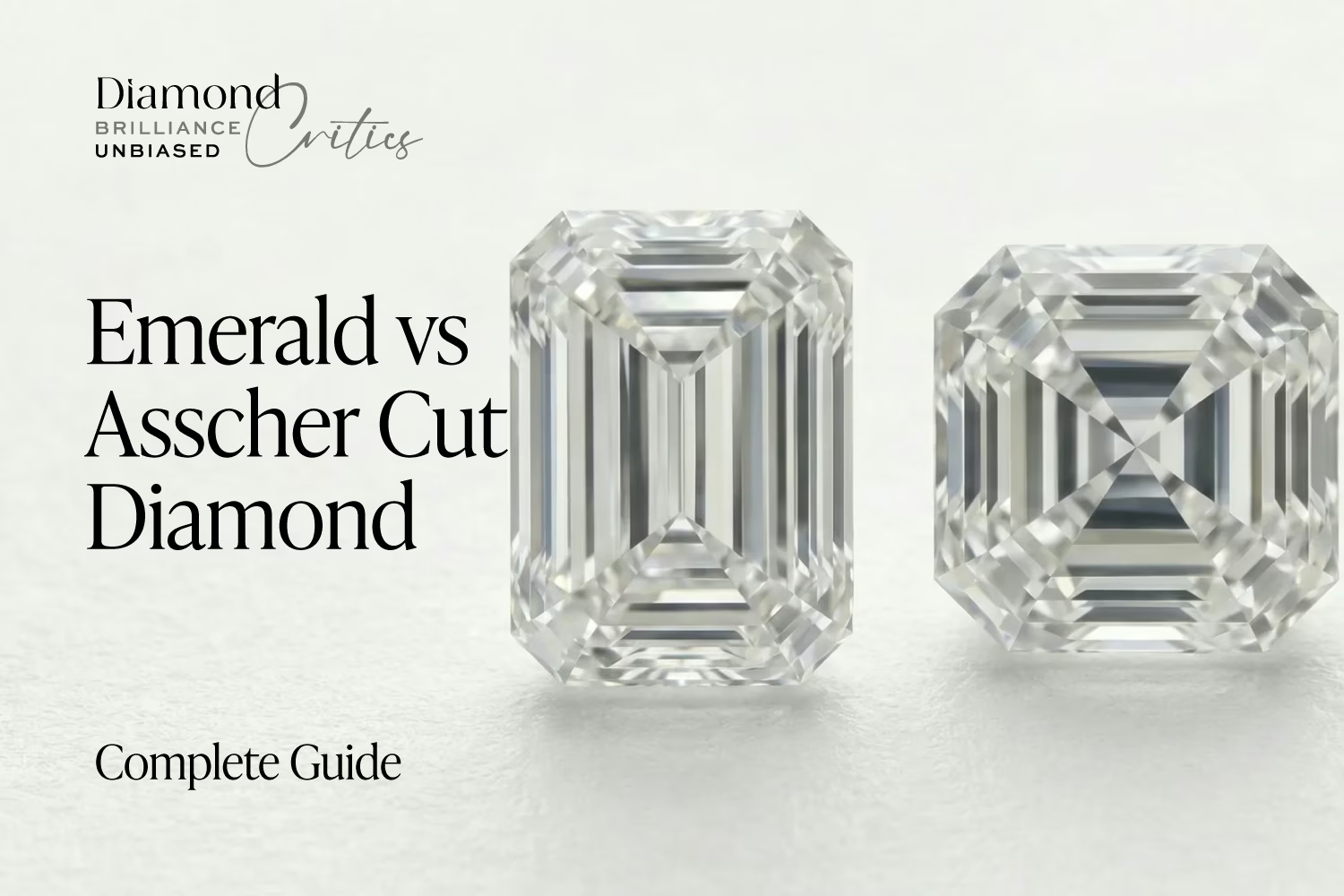
- Emerald Cut vs Asscher Cut Diamond: The Square Trap — the other step-cut shape: why Asscher shows 25–30% less face-up per carat
- Elongated Emerald Cut Diamond: Why It Looks Bigger Than a Round — L:W ratios above 1.50 and the face-up size advantage
- Loose Emerald Cut Diamond — Buy the Stone Before the Setting — how to evaluate a loose emerald cut stone from certificate and video
Expert Verdict
Always audit the stone individually — no grade replaces seeing the actual diamond. The certificate tells you what to look for. Your eyes tell you whether to buy.
— Farzana Hasan, GIA Expert · DiamondCritics.com