The emerald cut vs asscher cut diamond comparison trips up more buyers than almost any other shape decision. Both are step cuts. Both have cropped corners.
Both require VS1 clarity and G+ color. On paper, they sound like near-identical choices.
They are not.
The single biggest difference between them is not sparkle, not vintage appeal, and not price. It is face-up size. For the same carat weight, an emerald cut shows 25–30% more surface area on the finger than an Asscher. That gap is visible to anyone standing across a room.
This guide covers the optical difference, the face-up size math, clarity and color floors, natural and lab price data, settings, and a plain verdict on which cut fits which buyer.
TL;DR
- Both are step cuts — the same facet architecture, the same clarity floor (VS1+), the same color floor (G+)
- Emerald cut shows 25–30% more face-up area at the same carat weight — the single biggest practical difference
- Asscher has a unique optical pattern (Hall of Mirrors Effect) that the emerald cut does not replicate
- Natural 1ct H-VS1: emerald from ~$4,200 / asscher from ~$4,900
- Lab 1ct D-VVS1: emerald from ~$900 / asscher from ~$1,050
- → For maximum face-up size: choose emerald cut. → For the hall-of-mirrors optical pattern: choose Asscher.
- Priority: decide what you want on the finger — visible size or visual character. Everything else follows from that.
Expert Summary
Both the emerald cut and Asscher cut are members of the step-cut family. They share a facet architecture built on long parallel tiers rather than the triangular facets used in brilliant cuts. Neither is good at hiding inclusions or body color — VS1 and G are the practical minimums for both.
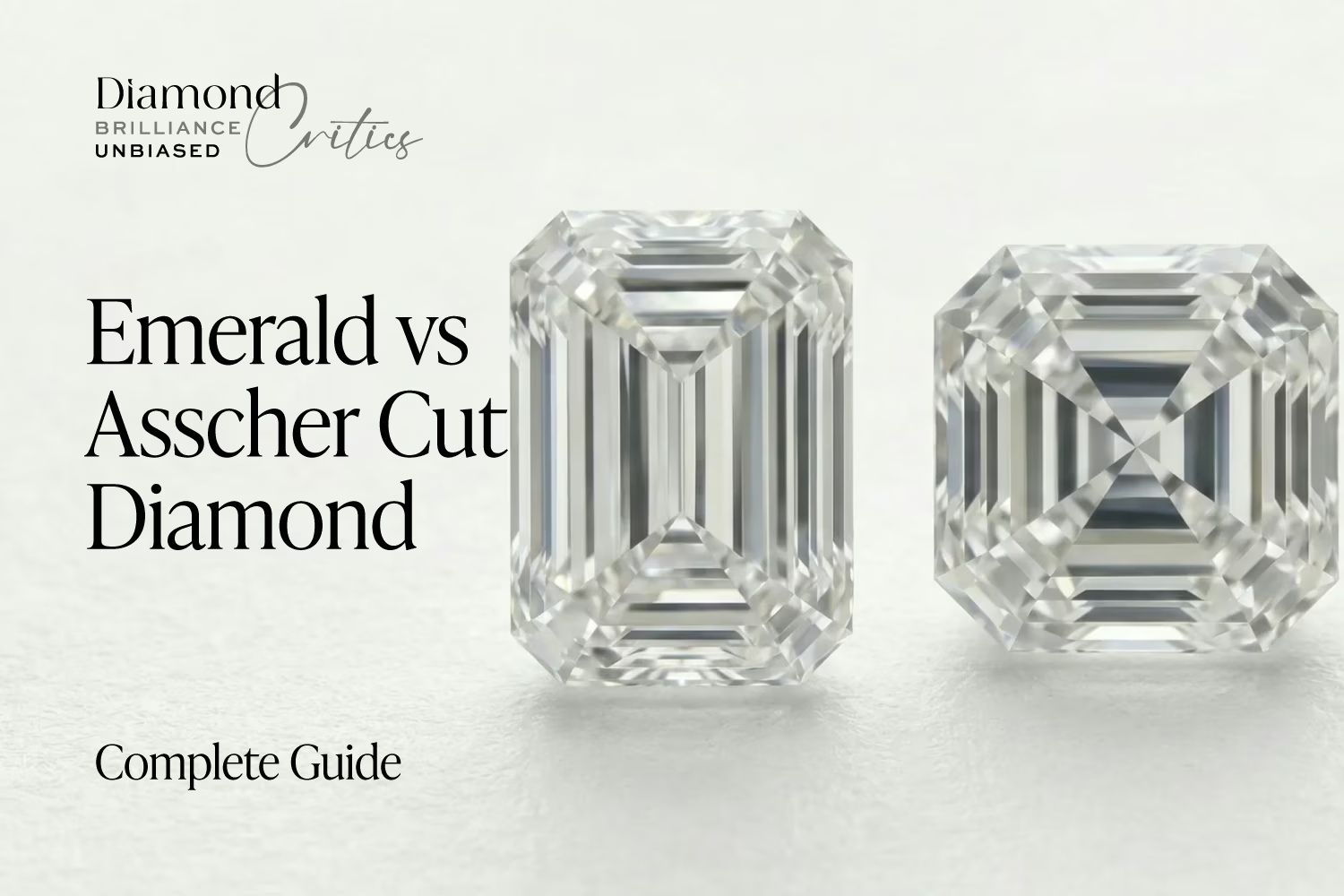
The divergence is shape. The emerald cut is rectangular, typically 1.30–1.50 length-to-width. The Asscher cut is square, typically 1.00–1.05 length-to-width.
That shape difference produces a face-up size gap that persists at every carat weight.
A 1ct emerald cut measures approximately 6.5×4.5mm. A 1ct Asscher measures approximately 5.5×5.5mm. The emerald's table covers roughly 29mm².
The Asscher's table covers roughly 30mm². They are nearly identical in raw area — but the emerald's elongated silhouette reads as larger on the hand because human perception overestimates rectangular shapes relative to square ones at the same stated dimension.
At 2ct, the gap widens further. The emerald cut's longer table becomes unmistakably larger on the finger. The Asscher, by contrast, sits more compactly — which some buyers prefer for everyday wear.
The Asscher's other defining trait is optical. Its deeply trimmed corners and stacked square facets create a concentric reflection pattern — the Hall of Mirrors Effect — that no other cut replicates. If that visual is what you want, the Asscher is the only stone that delivers it.
If you want the most finger presence for your budget, choose emerald. If you want the Asscher's specific optical character, no substitute exists.


What Is an Emerald Cut Diamond?
The emerald cut was originally developed for cutting emerald gemstones — a soft stone that chips under the pressure required for brilliant faceting. Applied to diamonds during the Art Deco era of the 1920s, the cut became a staple of minimal, architectural jewelry.
The structure: a rectangular table with step facets running parallel to the girdle in tiers, trimmed corners at all four edges, and a shallow crown. The facets do not scatter light. They reflect it in long, slow planes — broad flashes alternating with dark contrast areas as the stone moves.
The result is what buyers describe as "elegant," "architectural," and "cinematic." It is the opposite of the rapid-fire sparkle of a round brilliant.

The typical L:W ratio runs 1.30–1.50:1. A 1ct emerald cut measures approximately 6.5×4.5mm. A 2ct emerald measures approximately 8.5×6.0mm.
The elongated shape runs lengthwise across the finger, which creates the optical illusion of length on the hand.
What Is an Asscher Cut Diamond?
The Asscher cut was created by Joseph Asscher in Amsterdam in 1902. It remained a niche cut until the early 2000s, when a wave of Art Deco jewelry nostalgia brought it back into mainstream demand.
The shape: square, with deeply trimmed corners that produce an octagonal outline. The crown is higher than an emerald cut's, which adds brilliance relative to the flatter step cuts. The pavilion facets are arranged in concentric squares, stacked from the girdle down to the culet.
The signature visual is the Hall of Mirrors Effect — covered in detail in its own section below.
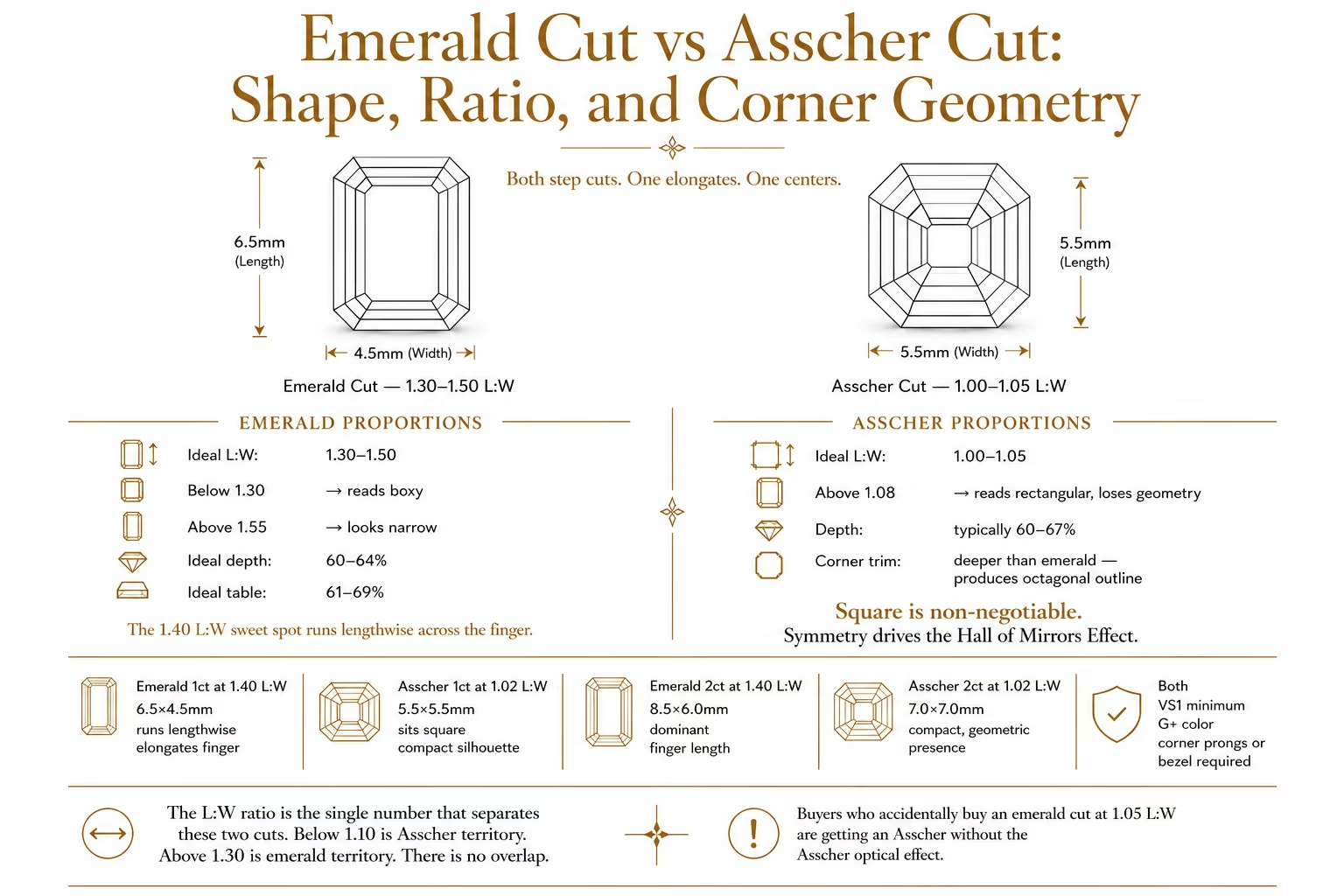
A 1ct Asscher cut measures approximately 5.5×5.5mm. The square outline keeps all the carat weight compact — nothing extends out along the finger. A 2ct Asscher measures approximately 7.0×7.0mm.
Asscher cuts are rarer than emerald cuts. Fewer cutters specialize in them, and the demand has historically been lower. That rarity does not automatically translate to higher prices — but it does mean fewer options in any given quality tier.
The Square Trap
Here is the thing most buyers comparing these two cuts miss entirely.
They know one is rectangular and one is square. They assume that is a preference — do you want a longer shape or a compact shape? What they do not know is the face-up size consequence of that choice.
A square stone concentrates its mass differently than a rectangular stone. An Asscher cut at 1ct puts roughly 5.5mm on each side. An emerald cut at 1ct runs 6.5mm long.
On the finger, that 6.5mm length is visually dominant — the eye reads it as a large stone. The Asscher's 5.5mm sits quietly, reading closer to a 0.70ct round brilliant in terms of perceived size.
This is the Square Trap: buyers choose the Asscher because they like the look in a photo, not realizing they are trading away 25–30% of visible finger coverage per dollar spent.
| Carat Weight | Emerald Cut Dimensions | Asscher Cut Dimensions | Finger Presence Winner |
|---|---|---|---|
| 0.50ct | ~5.0×3.5mm | ~4.4×4.4mm | Emerald |
| 1.00ct | ~6.5×4.5mm | ~5.5×5.5mm | Emerald |
| 1.50ct | ~7.5×5.5mm | ~6.5×6.5mm | Emerald |
| 2.00ct | ~8.5×6.0mm | ~7.0×7.0mm | Emerald |
| 3.00ct | ~9.5×7.0mm | ~8.5×8.5mm | Emerald |
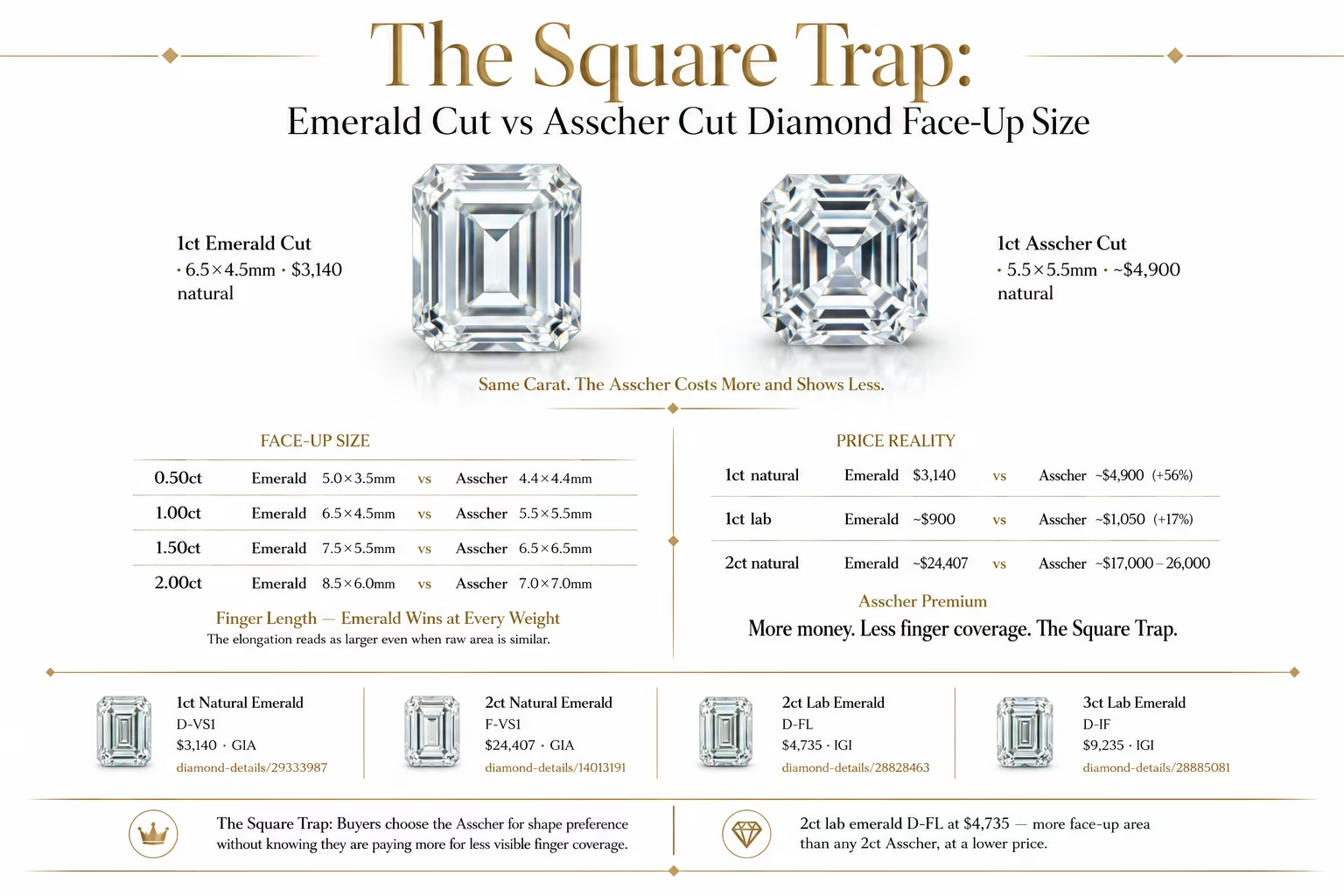
The gap is real and consistent across carat weights. At 0.50ct, both cuts are small — the emerald's elongation is modest, but visible. At 2ct, the difference is stark.
An emerald cut buyer at 2ct gets a stone that fills the finger. An Asscher buyer at 2ct gets a stone that sits squarely, attractively, but noticeably more compact.
Neither outcome is wrong. But you should choose it intentionally, not accidentally.
If you want the Asscher look and the compact square silhouette, buy the Asscher knowing you are paying for visual character, not visual size. If you want maximum finger presence for your budget, the emerald cut wins at every carat weight.
Natural Diamond Price Comparison
Natural step-cut diamonds at equivalent quality grades (H color, VS1 clarity, GIA certified) run close in price between the two cuts. The Asscher typically carries a 10–20% premium per carat, driven partly by lower production volume and partly by its specific demand among vintage-jewelry buyers.
| Carat Weight | Emerald Cut (H, VS1, GIA) | Asscher Cut (H, VS1, GIA) | Asscher Premium |
|---|---|---|---|
| 0.50ct | ~$1,800 | ~$2,100 | +17% |
| 1.00ct | ~$4,200 | ~$4,900 | +17% |
| 1.50ct | ~$8,500 | ~$9,800 | +15% |
| 2.00ct | ~$14,500 | ~$17,000 | +17% |
| 3.00ct | ~$35,000 | ~$41,000 | +17% |
Prices from certified market inventory, H color, VS1 clarity, GIA certificate, excellent cut grade.
The premium compounds at higher carat weights. At 3ct, the Asscher buyer pays roughly $6,000 more for a stone that shows less finger coverage.
That is not a bad trade if the Hall of Mirrors Effect is what you are buying. It is a bad trade if you did not know the size difference existed.
Color note: Asscher cuts are sometimes recommended at G rather than H because the higher crown concentrates color in the center of the square table. Budget for G color if the stone will be set in white gold or platinum.
Farzana says: "I tell clients to hold both cuts next to each other on their hand before they decide anything. The size difference hits them immediately. The Asscher is always the one that surprises them — they expected it to look the same. Once they see the difference, the decision is much easier."
Lab Diamond Price Comparison
Lab-grown diamonds deliver the same optical properties as natural diamonds in both cuts. For step cuts specifically — where clarity and color are everything — the lab advantage is large. D color and VVS1 clarity is achievable at a fraction of natural prices.
| Carat Weight | Lab Emerald Cut (D, VVS1) | Lab Asscher Cut (D, VVS1) | Asscher Premium |
|---|---|---|---|
| 0.50ct | ~$350 | ~$400 | +14% |
| 1.00ct | ~$900 | ~$1,050 | +17% |
| 1.50ct | ~$1,500 | ~$1,750 | +17% |
| 2.00ct | ~$2,400 | ~$2,800 | +17% |
| 3.00ct | ~$5,500 | ~$6,200 | +13% |
Lab prices from certified market inventory, D color, VVS1 clarity. Prices vary with supply; check current inventory for live pricing.
The Asscher premium persists in lab diamonds. Fewer lab Asschlers are cut because demand is lower — the same supply constraint that affects the natural market applies here too.
At 2ct D-VVS1, the ~$400 premium over a lab emerald cut is modest in absolute terms. Most buyers who want the Asscher for its optical character will consider this reasonable.
Farzana says: "Lab diamonds changed the Asscher conversation. A D-VVS1 natural Asscher at 2ct can run $25,000 or more. In lab, the same quality grade runs under $3,000. That makes the 'pay for the visual character' argument much easier to justify. You are not choosing between a $17,000 Asscher and a $14,500 emerald. You are choosing between a $2,800 Asscher and a $2,400 emerald. Most buyers who want the hall-of-mirrors look just buy the Asscher at that price point."
The Hall of Mirrors Effect
This is the one thing the Asscher cut does that no other diamond shape replicates.
Look straight down into an Asscher cut. You will see a series of concentric squares, one inside the next, receding toward the culet at the bottom. Move the stone and those squares shift together, like standing between two parallel mirrors and seeing your own reflection repeat infinitely.
This optical pattern comes from the Asscher's geometry. The deeply trimmed corners produce an octagonal outline. The stacked square pavilion facets align perfectly, reflecting each other in layers.
The result is called the Hall of Mirrors Effect — and it is the reason Asscher buyers are intensely loyal to the cut.
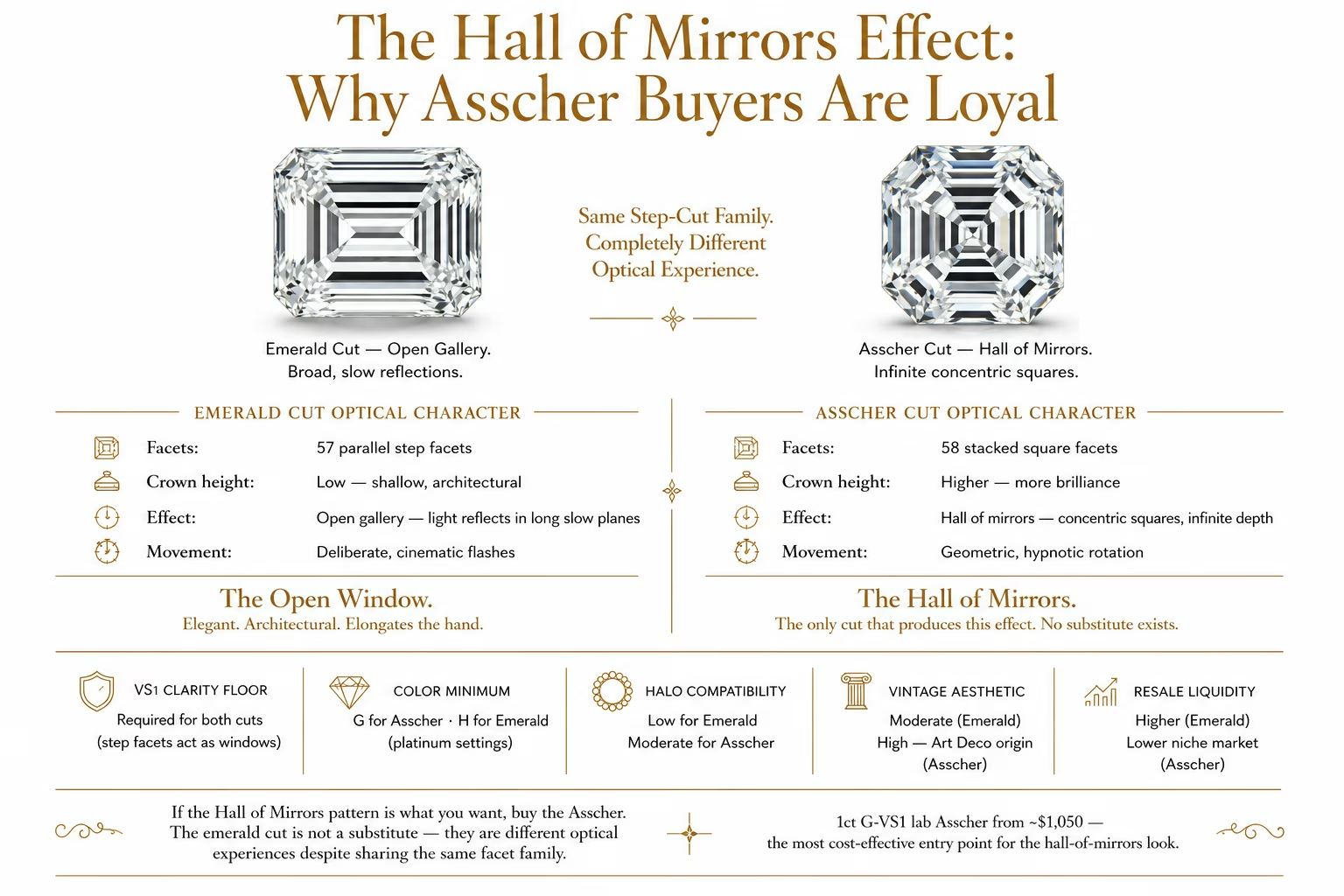
The emerald cut does not produce this effect. Its rectangular table and parallel facets create a different visual — broad, slow reflections like light moving across still water. Beautiful in its own way, but architecturally different.
The "hall of mirrors" comparison you sometimes read about emerald cuts is loose terminology borrowed from the Asscher.
If the Hall of Mirrors Effect is what drew you to this comparison in the first place — if you saw it on someone's hand or in a photo — you need the Asscher. The emerald cut is not a substitute for that look. They are both step cuts, but they are not interchangeable visually.
If you do not have a strong preference for either optical character, choose by face-up size. The emerald wins that comparison at every carat weight.
Clarity: The VS1 Floor Applies to Both
Step-cut diamonds do not scatter light. Brilliant cuts use triangular facets to fragment incoming light into dozens of tiny reflections — which obscures inclusions the same way noise obscures a voice. Step cuts use long parallel facets that act more like windows.
Light travels through them, hits the inclusion, and returns to your eye.
That is why both the emerald cut and the Asscher cut demand higher clarity than brilliant cuts. VS1 is the working floor for both.

The emerald cut is slightly more forgiving than the Asscher. Its rectangular table spreads inclusions across a longer face-up area. A near-eye-clean VS2 occasionally works in an emerald cut — you need to review the stone's actual clarity plot and ideally see it under 10x magnification before buying.
In an Asscher, the square geometry centers the table over a smaller area, which concentrates the view. VS2 in an Asscher almost always shows.
Clarity guidelines by cut:
- Emerald cut: VS1 minimum. VS2 possible with careful stone selection — review clarity plot, avoid inclusions near the center of the table.
- Asscher cut: VS1 minimum, strictly. VVS2 recommended for the highest standards. SI1 is visibly included in both cuts.
Fluorescence note: medium or strong blue fluorescence in step-cut diamonds can cause haziness under natural light. Stick to faint or no fluorescence for both cuts.
For lab diamonds in either cut, D-VVS1 is achievable at prices that make VS1-grade compromises unnecessary. Use the lab emerald search or lab asscher search and filter to VVS2 or better.
Color: G Is the Minimum for Both
Both cuts show body color clearly. Step facets transmit light through the stone rather than fragmenting it, so any warmth in the color grade is visible — especially in white gold or platinum settings that provide a white frame for comparison.
The recommended color floor for both cuts is G. H works in yellow gold, where the warm metal partially offsets warmer color grades in the stone. In white gold or platinum, H is acceptable in an emerald cut; in an Asscher, G is the safer choice.
Why the extra caution on the Asscher? The higher crown creates a more concentrated light path through a smaller face-up area. The color appears marginally more saturated in the compact square table than it does spread across an emerald cut's elongated table.
| Setting Metal | Emerald Cut Min. Color | Asscher Cut Min. Color |
|---|---|---|
| White gold / Platinum | H | G |
| Yellow gold | I | H |
| Rose gold | H | G |
D–F color in either cut produces a colorless stone with no visible warmth. For buyers prioritizing the cleanest possible appearance in step-cut faceting, D–F lab diamonds deliver this at prices that make the upgrade straightforward. See the lab emerald cut search at D color and lab asscher search at D color.
The Step-Cut Clarity Floor — the shared VS1-plus clarity requirement both cuts demand — also applies to color in this way: neither cut is tolerant of quality compromises that a round brilliant would easily absorb. Budget accordingly.
Settings: Where Each Cut Works
Both cuts have exposed corners — the trimmed edges at each corner of the stone. Those corners are the most vulnerable point of any step cut. They are exposed to impact and abrasion, and they are the first place chipping occurs.
The best setting for both cuts is one that protects those corners. Prong settings work when the prongs sit directly over the corners. Bezel settings protect the entire girdle and corners entirely.
Emerald cut settings that work well:
- Solitaire with corner prongs — the standard setting, low risk of corner damage
- Bezel setting — maximum corner protection, modern aesthetic
- Three-stone setting with matching step-cut side stones (baguette or Asscher)
- East-west setting — rotates the stone 90 degrees, unusual presentation
Asscher cut settings that work well:
- Art Deco and vintage-style settings — the Asscher was cut for this era, and the geometry aligns naturally
- Four-prong solitaire with corner prongs
- Bezel setting — highlights the octagonal outline
- Halo setting — works for Asscher more than it does for emerald cut, because the square outline benefits from a surrounding frame
Settings to avoid:
- Pave bands that extend to the girdle of either stone — obscures the step facets
- Six-prong settings not calibrated to corner placement — mid-facet prongs block the table view
- Channel settings adjacent to the stone — creates abrasion risk on the step facets
See emerald cut settings and asscher cut settings in current certified market inventory.
Tides Of Summer Capsule
Up To 30% Off
Shop The Sale →Vault ClearanceClear The Vault
Up To 70% Off
Shop Vault Deals →Affiliate link — no extra cost to you
Finger Appearance: Elongation vs The Square Silhouette
The emerald cut runs lengthwise on the finger. For buyers with shorter or wider fingers, this elongation creates a slimming optical effect — the stone draws the eye along the length of the finger rather than across it.
The effect is most pronounced with L:W ratios above 1.40. At 1.30, the emerald reads as nearly rectangular but not dramatically long. At 1.50, it reads as definitively elongated.
Above 1.55, some buyers find the stone starts to look narrow relative to its length — this is personal preference territory.
The Asscher sits in a perfect square on the finger. It does not elongate — it centers. For buyers with longer fingers or those who want a compact, vintage-inflected silhouette, the Asscher's square footprint is exactly right.

Neither shape is universally more flattering. The elongation argument for emerald cut is real and well-documented in jewelry styling, but finger proportions vary enough that both cuts look excellent on the right hand.
If you can, try both shapes on the actual hand before buying. The difference is more obvious in person than any photo comparison will suggest.
Budget Breakdown: Which Cut at Every Price Point
The price difference between these two cuts scales with budget. Here is how to think about it at each tier.
Under $2,000 (lab, ~0.50–0.75ct): Both cuts are affordable here with lab stones. A 0.50ct D-VVS1 lab emerald cut runs ~$350. A 0.50ct D-VVS1 lab Asscher runs ~$400. The difference is small enough that the choice is purely shape preference. At this size, both cuts are modest — choose the shape you love.
$2,000–$5,000 (natural 1ct or lab 1.5–2ct): This is where the decision sharpens. For natural stones, 1ct H-VS1 emerald at ~$4,200 vs 1ct H-VS1 Asscher at ~$4,900. The $700 premium buys the Asscher's unique optical character and nothing else. If the Hall of Mirrors Effect is the priority, pay it. If size on the finger is the priority, do not.
For lab at this budget, a 1.5ct D-VVS1 lab emerald runs ~$1,500. That is a 7.5×5.5mm stone — significantly more finger coverage than any 1ct cut.
$5,000–$15,000 (natural 1.5–2ct or lab 2–3ct): At this level, the Asscher premium is meaningful. A 2ct H-VS1 natural Asscher at ~$17,000 costs $2,500 more than the 2ct H-VS1 natural emerald at ~$14,500. The Asscher also shows less finger coverage. Most buyers at this tier who are undecided should choose the emerald cut unless they specifically want the Asscher optical effect.
Above $15,000 (natural 3ct+): Budget sensitivity decreases. At 3ct, both cuts are statement stones. The 3ct H-VS1 natural emerald at ~$35,000 fills the hand completely. The 3ct H-VS1 natural Asscher at ~$41,000 is a compact, intensely geometric stone with the Hall of Mirrors Effect at full expression. Both are exceptional choices at this level — this is a visual preference decision, not a value decision.
Emerald Cut vs Asscher Cut Diamond: Master Comparison Table
| Attribute | Emerald Cut | Asscher Cut |
|---|---|---|
| Shape | Rectangular (1.30–1.50 L:W) | Square (1.00–1.05 L:W) |
| Facet type | Step cut | Step cut |
| Number of facets | 57 | 58 |
| Face-up at 1ct | ~6.5×4.5mm | ~5.5×5.5mm |
| Finger presence | High — elongates the hand | Compact — square silhouette |
| Optical character | Open gallery, broad reflections | Hall of Mirrors, concentric squares |
| Clarity minimum | VS1 (VS2 possible with selection) | VS1 strictly |
| Color minimum (platinum) | H | G |
| 1ct natural price (H-VS1) | ~$4,200 | ~$4,900 |
| 1ct lab price (D-VVS1) | ~$900 | ~$1,050 |
| Halo compatibility | Low (outline problem) | Moderate (square benefits from frame) |
| Vintage aesthetic | Moderate | High — Art Deco origin |
| Setting variety | High | Moderate |
| Resale liquidity | Higher (more buyers) | Lower (niche market) |
Who Should Choose Which: 4 Buyer Scenarios
Best for maximum finger presence: Choose the emerald cut. At every carat weight, the elongated table runs visibly along the finger. A 1.5ct H-VS1 emerald cut at ~$8,500 shows more finger coverage than a 2ct Asscher at ~$17,000. For buyers who want a visibly large stone, the choice is clear.
Best for the hall-of-mirrors optical look: Choose the Asscher. Nothing else produces this effect. If you saw the concentric-square reflection pattern on someone's hand and it is what drew you to this comparison, buy the Asscher. The emerald cut will not satisfy you as a substitute. A 1ct G-VS1 lab asscher at ~$1,050 is the most cost-effective entry point.
Best for vintage or Art Deco aesthetic: Choose the Asscher. The cut was designed for that era. Art Deco settings — geometric milgrain, engraved platinum, filigree — align with the Asscher's octagonal outline and concentric geometry. An emerald cut in a vintage setting looks good. An Asscher in a vintage setting looks like it was made for the ring. See asscher cut vintage settings.
Best for maximum clarity and color per dollar (lab): Choose the emerald cut. A 2ct D-VVS1 lab emerald cut at ~$2,400 delivers maximum step-cut face-up area, colorless appearance, and clean step facets. The Asscher lab equivalent costs ~$400 more for less face-up area. Unless the Asscher visual is specifically what you want, the emerald cut delivers better optical value per dollar.
Farzana says: "Almost every buyer who comes in asking about the Asscher already knows which one they want — they just need permission to buy it. The hall-of-mirrors look is very specific. If that is what you are chasing, the emerald cut will not satisfy you. But if you are undecided and you care about size on the hand, I always show them both cuts next to each other on the same finger. The emerald wins that comparison every time."
FAQs
Are emerald cut and Asscher cut the same thing?
No. Both are step cuts, but they are different shapes. The emerald cut is rectangular, typically 1.30–1.50 L:W. The Asscher cut is square, typically 1.00–1.05 L:W.
They share facet architecture but produce completely different optical effects and finger appearances.
Which cut looks bigger — emerald or Asscher?
The emerald cut. At the same carat weight, the emerald's elongated table covers more finger length. A 1ct emerald cut measures approximately 6.5×4.5mm. A 1ct Asscher measures approximately 5.5×5.5mm.
The elongation of the emerald reads as visually larger on the hand, even though raw face-up area is similar.
Which cut is more expensive — emerald or Asscher?
The Asscher typically runs 10–20% more expensive per carat at equivalent quality grades. Lower production volume and specific demand among vintage-jewelry buyers drives the premium. At 1ct H-VS1 GIA, expect ~$4,200 for emerald and ~$4,900 for Asscher.
What clarity do I need for an Asscher cut diamond?
VS1 is the minimum, and it should be applied strictly. Unlike the emerald cut — where a carefully selected VS2 occasionally works — the Asscher's square geometry centers the table view over a concentrated area. VS2 inclusions in an Asscher are almost always visible.
Stick to VS1 or better for natural stones. For lab, VVS1 is achievable at low cost and removes the question entirely.
What clarity do I need for an emerald cut diamond?
VS1 is the standard floor. VS2 occasionally works if the inclusion is located near the edge of the table rather than at center, but you need to review the actual clarity plot — not just the grade.
GIA-graded stones include a clarity plot showing inclusion location. Any inclusion in the center of the emerald cut table will be visible.
What color is recommended for an Asscher cut?
G color minimum for white gold or platinum settings. H can show warmth in the compact square table of the Asscher, particularly in bright lighting. In yellow gold, H is acceptable.
For lab diamonds, the price difference between G and D is small enough that buying D is often the right decision.
What color is recommended for an emerald cut?
H color in white gold or platinum. I in yellow gold. The emerald cut's elongated table distributes color across a longer area, making it marginally more tolerant of warmer grades than the Asscher. Still, step-cut faceting shows body color clearly — G or H is the practical target for natural diamonds in white metal.
Does the Asscher cut show more sparkle than the emerald cut?
Slightly more, due to its higher crown angles. The Asscher's crown produces more fire — the colored light flashes that come from light dispersing through the facets.
But neither cut is a sparkle-focused design. Both are step cuts built for elegance, not fire. Buyers who want high sparkle should consider the radiant cut or round brilliant instead.
Is the Asscher cut good for everyday wear?
Yes, with the right setting. The compact square outline and deep pavilion make the Asscher durable in day-to-day use.
The main vulnerability is the trimmed corners — like all step cuts, the corner edges can chip if they contact hard surfaces. A bezel setting or corner prongs eliminate this risk entirely.
Can I use a halo with an Asscher cut?
Yes, more successfully than with an emerald cut. The Asscher's square outline benefits from a surrounding frame — the halo adds dimension around the octagonal shape without disrupting the geometry the way it does with a rectangular emerald cut. That said, keep the halo stones small and square-cut if possible, to maintain the geometric aesthetic.
Which cut is better for a three-stone ring?
The emerald cut is more versatile in a three-stone setting. Rectangular cuts have more matching side-stone options — baguettes, tapered baguettes, half-moons.
Asscher cut three-stone rings require square or near-square side stones to maintain proportion, which limits your options. See the three-stone emerald cut guide for setting options and price examples.
Which cut holds its resale value better?
The emerald cut, due to broader buyer demand. The Asscher has a specific audience — buyers who specifically want step cuts in a square shape. If you ever need to resell, the emerald cut's larger buyer pool gives you more resale flexibility.
Neither step cut resells as easily as a round brilliant, but between the two, emerald cut moves more readily on the secondary market.
Is the Asscher cut vintage or modern?
Both. The cut was created in 1902 and revived strongly in the Art Deco era of the 1920s–30s. It also saw a major mainstream revival in the early 2000s.
Today it reads as either vintage (in an engraved or milgrain setting) or modern (in a simple bezel or minimalist solitaire). The cut's geometry is flexible enough to work in both aesthetics.
Should I buy lab or natural for either cut?
Lab for both, unless natural provenance specifically matters to you. Step cuts make the lab vs natural question easy — the optical properties that define these cuts (clarity visibility, color transmission, step-facet reflections) are identical between lab and natural. Lab gives you D color and VVS1 clarity at a fraction of natural prices.
At 1ct D-VVS1 lab, the step facets are genuinely clean and colorless. There is no "fake" appearance in a lab emerald cut or lab Asscher. The Hall of Mirrors Effect in a lab Asscher is identical to the same effect in a natural Asscher.
The only difference is the origin of the stone and the price.
The case for natural is simple: if resale value, origin certificate, or the idea of a mined stone matters to you, buy natural. If your priority is maximum optical quality per dollar, buy lab.
Do emerald cut and Asscher cut look similar in a ring?
From a distance, yes — both are step cuts with cropped corners. Up close, no. The shapes are clearly distinct when you see them side by side.
The emerald cut reads as rectangular and elongated. The Asscher reads as square and compact. People who know diamonds will recognize both cuts immediately. People who do not know diamonds tend to call both "rectangular" or "square" diamonds without knowing the specific name. Neither cut is exotic enough that wearing one generates questions, but both are distinctive enough to be recognizable to other diamond buyers.
What is the ideal L:W ratio for an Asscher cut?
1.00–1.05 is the target range. Asschers outside 1.08 start to read as slightly rectangular rather than square — which defeats the purpose of the cut's geometry. The Hall of Mirrors Effect depends on the square outline and the symmetrical pavilion facets. A noticeably rectangular Asscher loses some of that concentric visual.
For emerald cuts, the ideal range is 1.30–1.50. Below 1.30 reads stubby; above 1.55 looks very elongated, which some buyers love. See the ideal proportions guide for specific depth and table percentage targets that apply to emerald cuts.
See Also
- Emerald Cut Diamond — Complete Buying Guide — the full pillar: clarity, proportions, lab vs natural, all settings
- Emerald Cut Diamond Clarity Guide — VS1 Floor, Clarity Window, Sparkle Trade — how VS1 vs VS2 vs SI1 actually looks in step-cut faceting
- Emerald Cut Diamond Ideal Proportions — The 1.40 L:W Rule — exact ratio, depth, and table numbers to buy within
- Radiant Cut vs Emerald Cut Diamond — Step Cut Wins on Size — brilliant vs step-cut head to head, face-up size, clarity floors
- Lab Grown Emerald Cut Diamond — D-IF at $9K vs $63K Natural — full lab vs natural comparison with price tables by carat
- Loose Emerald Cut Diamond — Buy the Stone Before the Setting — how to choose a loose stone first, what to look for in a GIA cert
- 3-Stone Emerald Cut Diamond Ring — The Side Stone Geometry Rule — three-stone settings, side stone options, price breakdown
- Elongated Emerald Cut Diamond — Why It Looks Bigger Than a Round — L:W ratios above 1.50 and the face-up size advantage
Expert Verdict
Always audit the stone individually — no grade replaces seeing the actual diamond. The certificate tells you what to look for. Your eyes tell you whether to buy.
— Farzana Hasan, GIA Expert · DiamondCritics.com