TL;DR: Heart Shape Diamond — Key Facts Before You Buy
- A heart shape diamond is a fancy brilliant-cut with 56–58 facets. It costs 15–20% less than a round brilliant at identical carat, color, and clarity grades
- Prices on Blue Nile in 2026 start at $2,170 for a GIA 1ct H-VS2 Ideal and reach $88,290 for a GIA 3ct E-IF Ideal
- 60% of hearts fail the cleft symmetry test — the two lobes must be mirror-image identical or the shape reads as broken from 2 feet away
- GIA does NOT grade cut on fancy shapes. "Ideal" on a heart diamond is the vendor's label, not a GIA grade — three GIA 2ct F-VS1 "Ideal" hearts on Blue Nile today cost $12,380, $19,060, and $19,540
- Never buy a heart diamond without video. The wing extinction zones and cleft asymmetry are invisible in photos
- Lab-grown hearts deliver 75% savings: a 3ct D-FL IGI lab heart costs $11,370 vs $46,410 for a 3ct F-VS1 natural


What Is a Heart Shape Diamond?
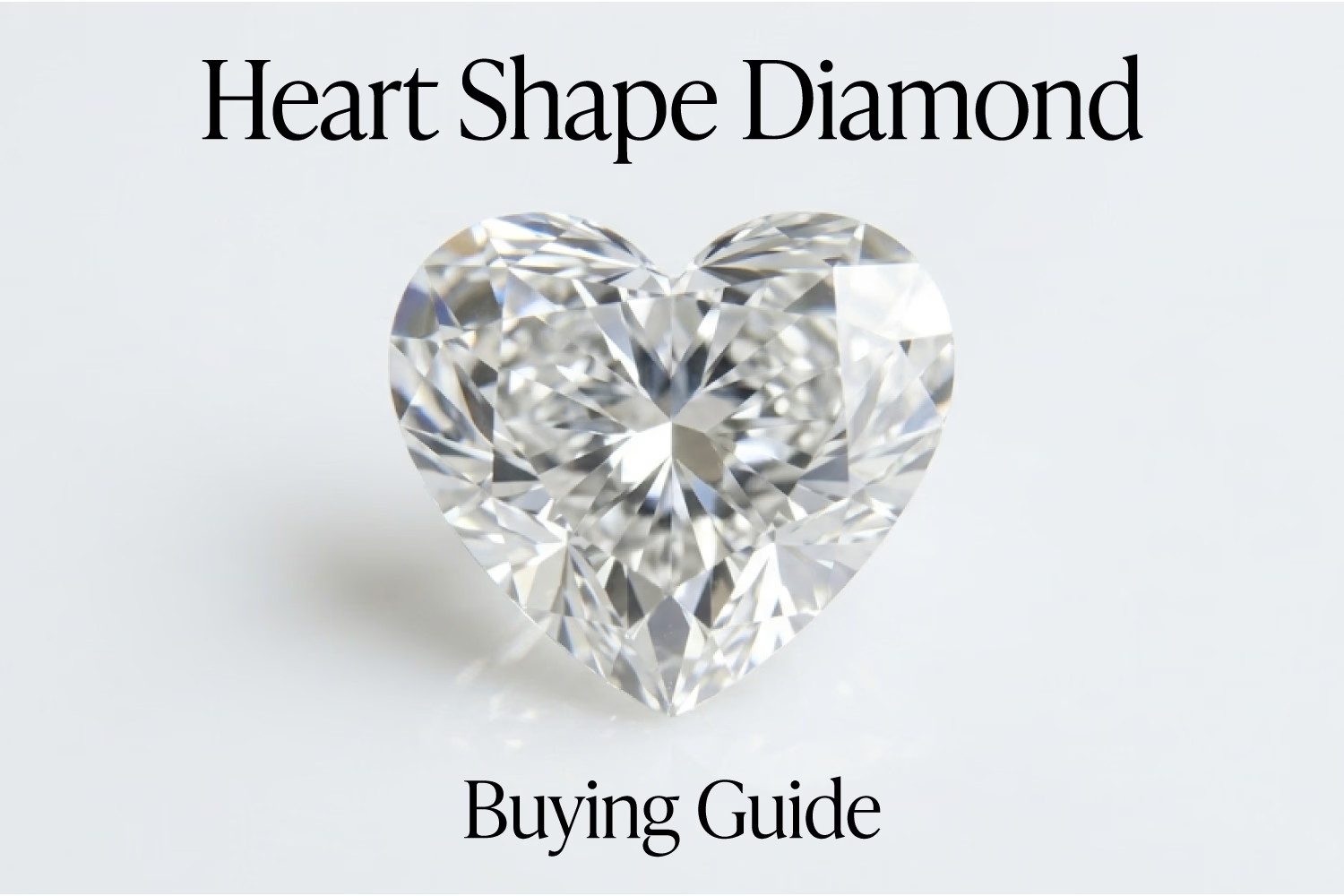
A heart shape diamond is a fancy-cut brilliant diamond shaped like a stylized heart — a pear-cut silhouette with a cleft notched into the top, dividing it into two lobes. It has 56–58 facets arranged in the radiating triangular and kite-shaped pattern of the round brilliant family, which gives it high brilliance and scintillation despite its unusual outline.
I'm Farzana Hasan, GIA-certified diamond expert. Heart shapes are among the most emotionally loaded purchases in the diamond market — and among the most technically demanding to buy correctly. This guide cuts through the sentiment and gives you the exact metrics, live price data, and failure-mode analysis you need to buy one without getting burned.
The Anatomy of a Heart Diamond
A heart diamond has three structural elements that distinguish it from all other shapes:
- The cleft — the V-shaped notch at the top center. Its depth and sharpness define the heart's readability as a shape. Too shallow and the stone looks like a pear. Too deep and the two lobes look disconnected
- The two lobes — the upper rounded bulges left and right of the cleft. They must be mirror-image identical in size, curvature, and shoulder height. Any asymmetry between them destroys the shape recognition
- The tip — the single pointed culet at the bottom, equivalent to the point of a pear or marquise. It is structurally vulnerable and must be protected with a prong
Heart Diamond Dimensions: The L:W Ratio
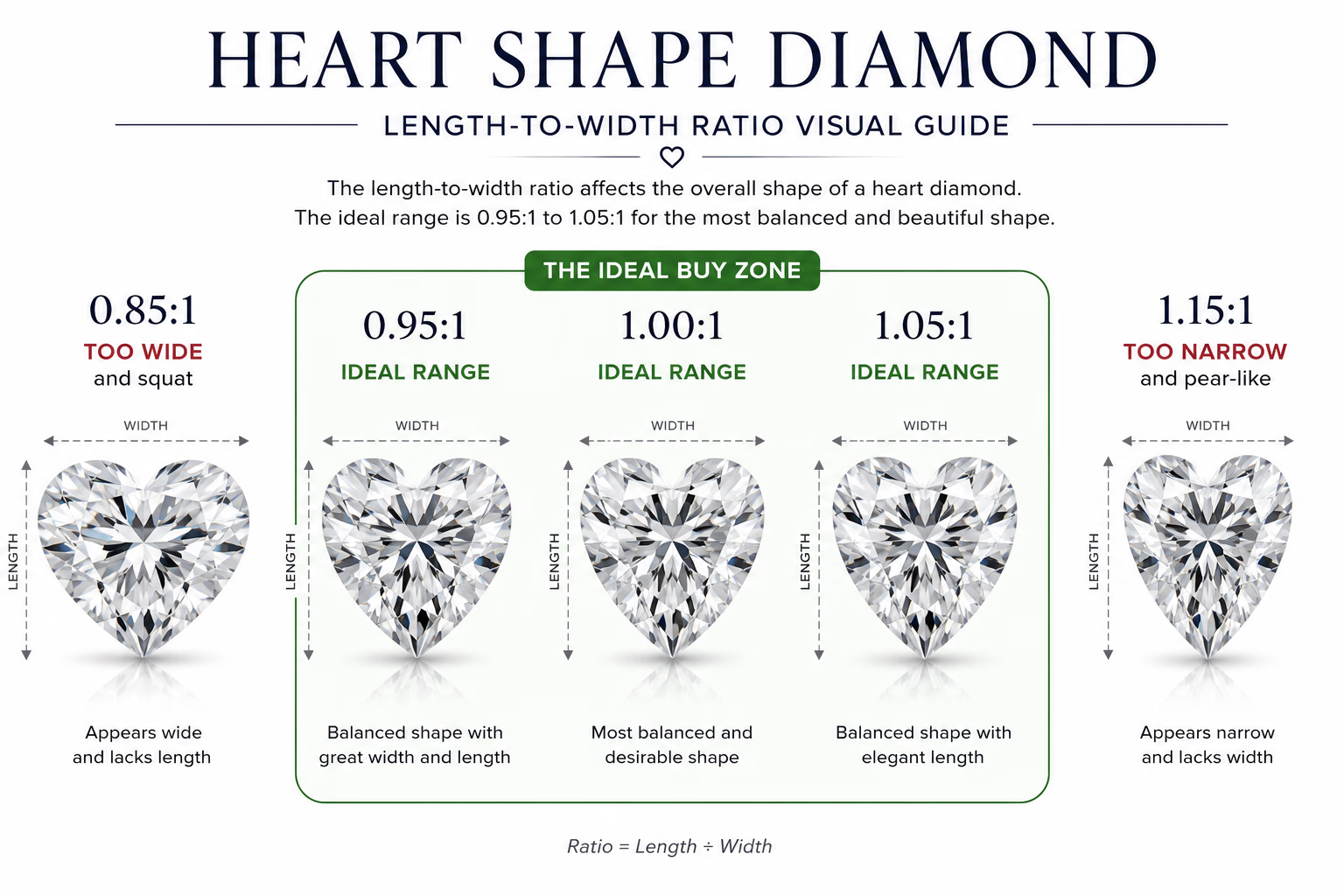
The ideal length-to-width ratio for a heart shape diamond is 0.95:1 to 1.05:1 — essentially square, or very close to it. This produces a heart that reads as balanced and proportionate face-up.
| L:W Ratio | Visual Result | Farzana's Verdict |
|---|---|---|
| Below 0.90 | Wide, squat heart — lobes look fat | Reject |
| 0.90–0.94 | Slightly wide — acceptable if lobes are symmetric | Borderline |
| 0.95–1.05 | Ideal — balanced, readable heart shape | Buy zone |
| 1.06–1.12 | Slightly narrow — elongated but workable | Borderline |
| Above 1.12 | Narrow, pear-like — loses heart identity | Reject |
Only ~1% of all diamonds sold are heart shape. Inventory is thin, especially in the ideal L:W range with strong cleft symmetry. This scarcity means you have fewer stones to choose from and must be more disciplined in filtering.
A Brief History
The heart shape diamond has roots in 16th-century European gem-cutting. Mary Queen of Scots sent a heart-shaped ring to Queen Elizabeth I in 1562. The modern heart brilliant — with its current 56–58 facet arrangement — developed alongside round brilliant cutting in the 20th century as lapidaries adapted the radiating facet blueprint to accommodate the symmetrically clefted outline. It has always been a niche shape: technically demanding, emotionally explicit, and worn by buyers who want the symbolism to be unmistakable.
Heart Shape Diamond Prices in 2026
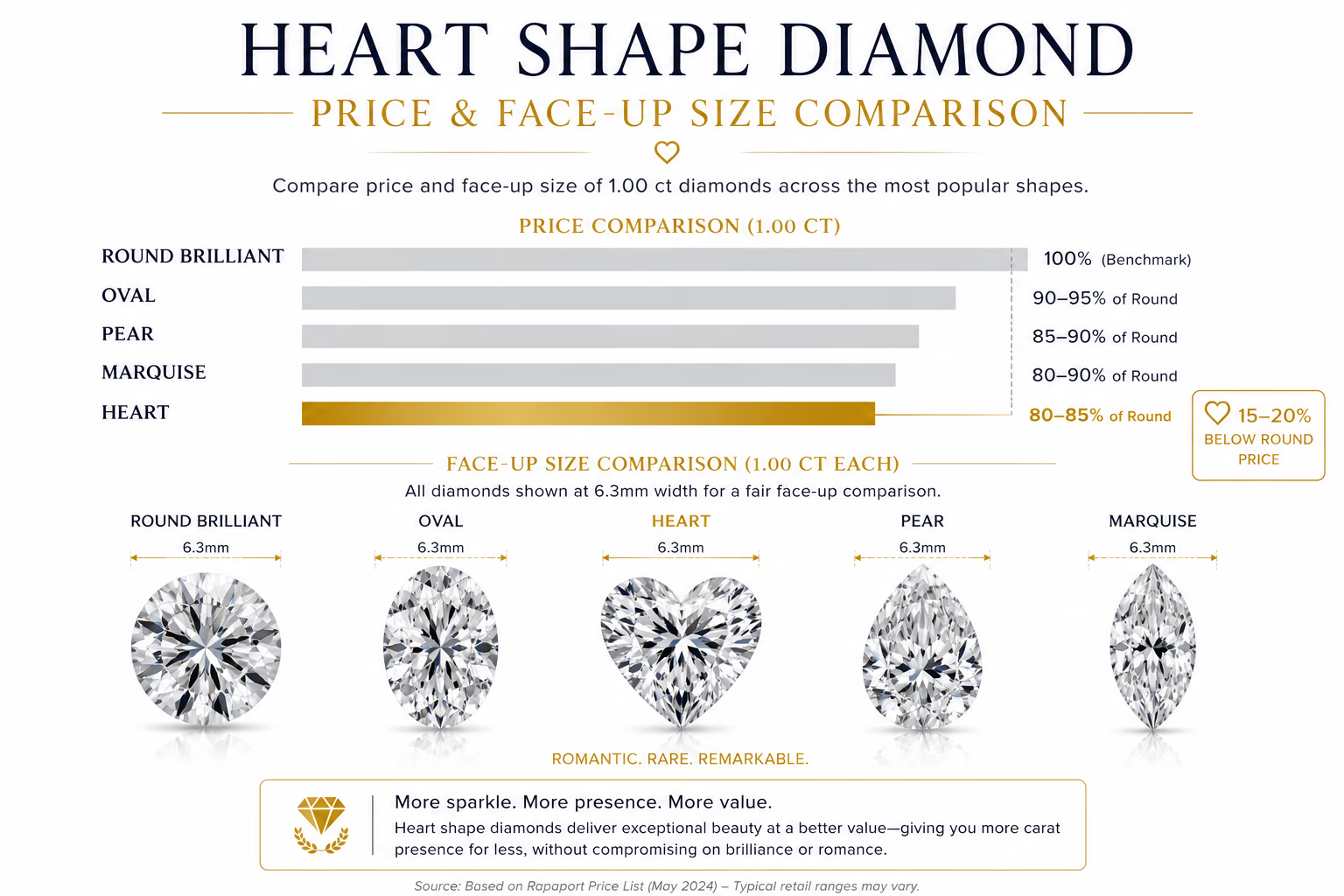
Heart shape diamonds cost 15–20% less than round brilliants at identical carat, color, and clarity grades. This discount exists because the heart shape wastes more rough crystal in cutting, but the resulting stone is less in demand than round — the price gap reflects that demand difference, not a quality difference.
Natural Heart Diamond Prices — 1 Carat
Live Blue Nile listings as of August 2026:
| Carat | Color | Clarity | Cut Label | Price | Link |
|---|---|---|---|---|---|
| 1.00ct | H | VS2 | Ideal | $2,170 | View |
| 1.00ct | H | VS2 | Ideal | $2,200 | View |
| 1.00ct | G | VS1 | Very Good | $2,260 | View |
| 1.00ct | D | VS2 | Very Good | $2,290 | View |
| 1.00ct | F | VS1 | Ideal | $2,570 | View |
| 1.00ct | F | VS1 | Ideal | $2,600 | View |
| 1.00ct | F | VS1 | Ideal | $2,630 | View |
The 1ct range is relatively straightforward. Note that a D-VS2 Very Good at $2,290 sits between two H-VS2 Ideals at $2,170–$2,200 — color grade is pulling price more than cut label here, because "Ideal" carries no independent verification for fancy shapes.
Natural Heart Diamond Prices — 2 Carat
This is where the pricing data becomes a serious buyer warning:
| Carat | Color | Clarity | Cut Label | Price | Link |
|---|---|---|---|---|---|
| 2.00ct | F | VS1 | Ideal | $12,380 | View |
| 2.00ct | F | VS1 | Ideal | $19,060 | View |
| 2.00ct | F | VS1 | Ideal | $19,540 | View |
| 2.00ct | D | VVS2 | Ideal | $19,640 | View |
| 2.00ct | D | VS1 | Ideal | $21,070 | View |
| 2.00ct | E | VVS2 | Ideal | $28,420 | View |
The $12,380 vs $19,540 anomaly demands your attention. Three diamonds carry identical paper credentials — GIA certificate, 2ct, F color, VS1 clarity, "Ideal" cut label — yet they span a $7,160 price gap (58% difference between the lowest and highest). This is not a data error. This is the direct consequence of what I call "The GIA Cut Blind Spot."
Natural Heart Diamond Prices — 3 Carat
| Carat | Color | Clarity | Cut Label | Price | Link |
|---|---|---|---|---|---|
| 3.00ct | F | VS1 | Ideal | $46,410 | View |
| 3.00ct | E | VS1 | Ideal | $51,960 | View |
| 3.00ct | E | IF | Ideal | $74,840 | View |
| 3.00ct | E | IF | Ideal | $88,290 | View |
The two GIA 3ct E-IF Ideal hearts are separated by $13,450 — a 17.6% gap on identically-certificated stones. The reason is identical to the 2ct anomaly: vendor cut quality varies enormously because GIA provides no verification. One of these stones is almost certainly better-proportioned, more symmetrical at the cleft, and performs better optically. Without video analysis and proportion data, you cannot tell which one from the listing alone.
Heart Diamond vs Other Shapes: Size and Price
Heart diamonds are one of the better value shapes — cheaper than round, oval, and pear at the same carat weight, with more apparent face-up size than most buyers expect.
| Shape | Price vs Round (1ct) | Face-Up Size vs Round | Brilliance Level | Best For |
|---|---|---|---|---|
| Round | Baseline | Baseline | Maximum | Maximum brilliance, no compromise |
| Heart | 15–20% less | Comparable | High | Romantic symbolism with value |
| Oval | 15–25% less | 10–15% more | High | Size efficiency, trending |
| Pear | 20–30% less | 10–12% more | High | Finger elongation |
| Marquise | 25–35% less | 15–20% more | Moderate | Maximum apparent size |
| Cushion | 20–30% less | Slightly less | Moderate-High | Vintage aesthetic |
| Emerald | 25–35% less | Similar | Low (step-cut) | Clarity/art deco look |
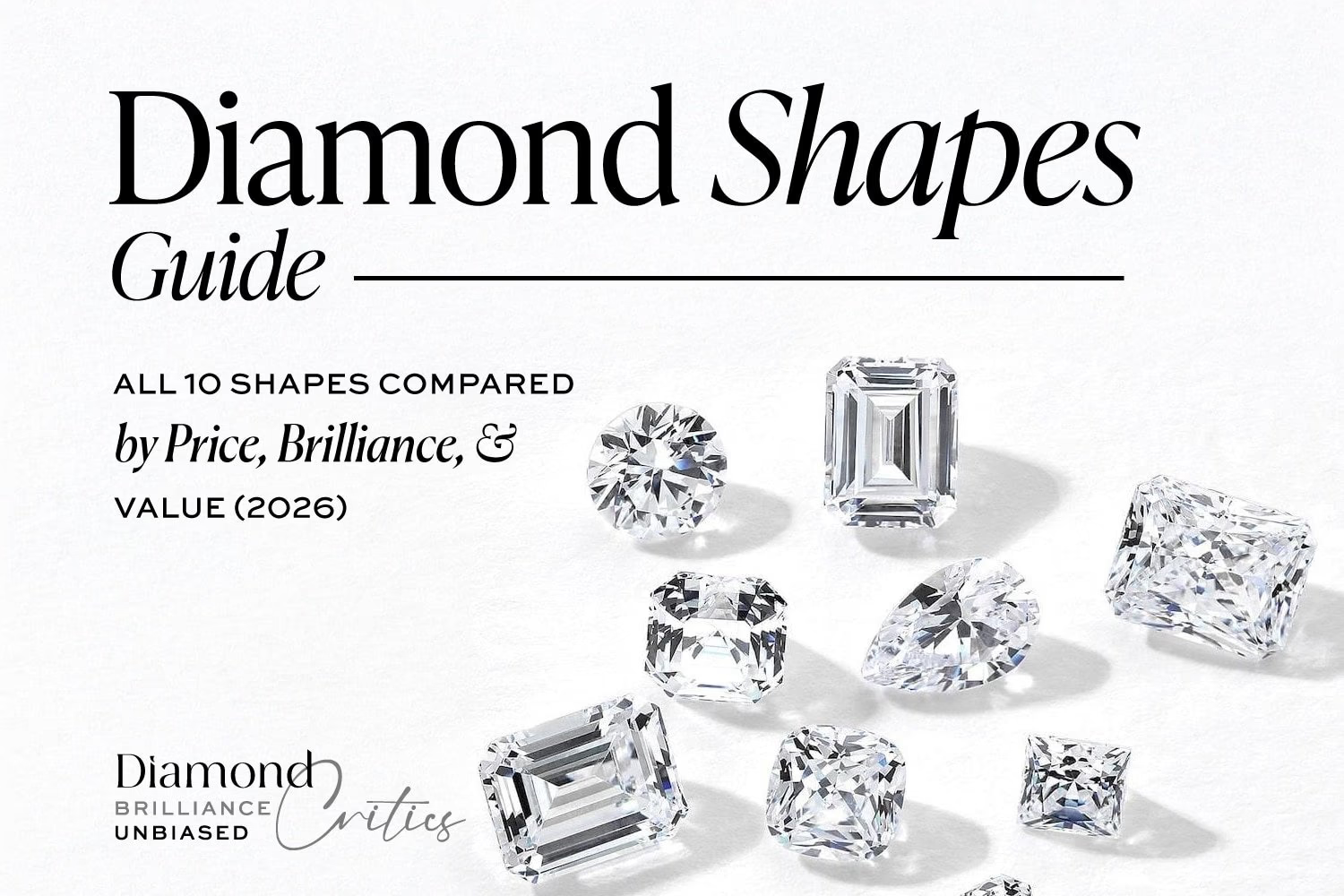
For full context on how shape affects value, see the diamond shapes guide and the diamond size chart.
A 1ct heart diamond measures approximately 6.3mm × 6.3mm face-up — nearly identical to a 1ct round at 6.4–6.5mm. Unlike elongated shapes (oval, pear, marquise) that spread mass across a longer footprint, the heart diamond delivers its mass in a roughly square outline. You do not gain apparent size over round. What you gain is 15–20% in cash savings plus the unmistakable heart silhouette.
The Cut Quality Crisis: Why 60% of Hearts Fail
Cut quality is the most critical and most misunderstood factor in heart diamond buying. Approximately 60% of heart diamonds on the market fail one or more objective cut quality tests. Here is the complete breakdown of each failure mode.
The GIA Cut Blind Spot
"The GIA Cut Blind Spot" is the most important concept in this guide. The GIA diamond grading standards include a comprehensive cut grading system — but only for round brilliant diamonds. For all fancy shapes, including hearts, GIA does not issue a cut grade.
What this means in practice: when a Blue Nile listing says "Ideal" on a heart diamond, that label comes from Blue Nile's own internal grading system, not from GIA. Different vendors have different thresholds for what they call "Ideal," "Excellent," or "Very Good." None of these vendor labels are standardized, independently audited, or comparable across retailers.
This is why three GIA 2ct F-VS1 "Ideal" hearts carry prices of $12,380, $19,060, and $19,540. The GIA certificate tells you the stone is 2ct, F color, VS1 clarity. It tells you nothing about the actual cut quality of the heart shape. For a full explanation of the diamond cut guide principles that GIA only applies to rounds, read the linked resource.
What to check instead of GIA cut grade for hearts:
| Proportion | Target Range | Reject Below/Above |
|---|---|---|
| L:W Ratio | 0.95–1.05 | Below 0.90 or above 1.12 |
| Table % | 53–63% | Below 50% or above 65% |
| Depth % | 56–62% | Below 54% or above 66% |
| Girdle | Thin–Slightly Thick | Very Thin or Extremely Thick |
The Cleft Symmetry Trap
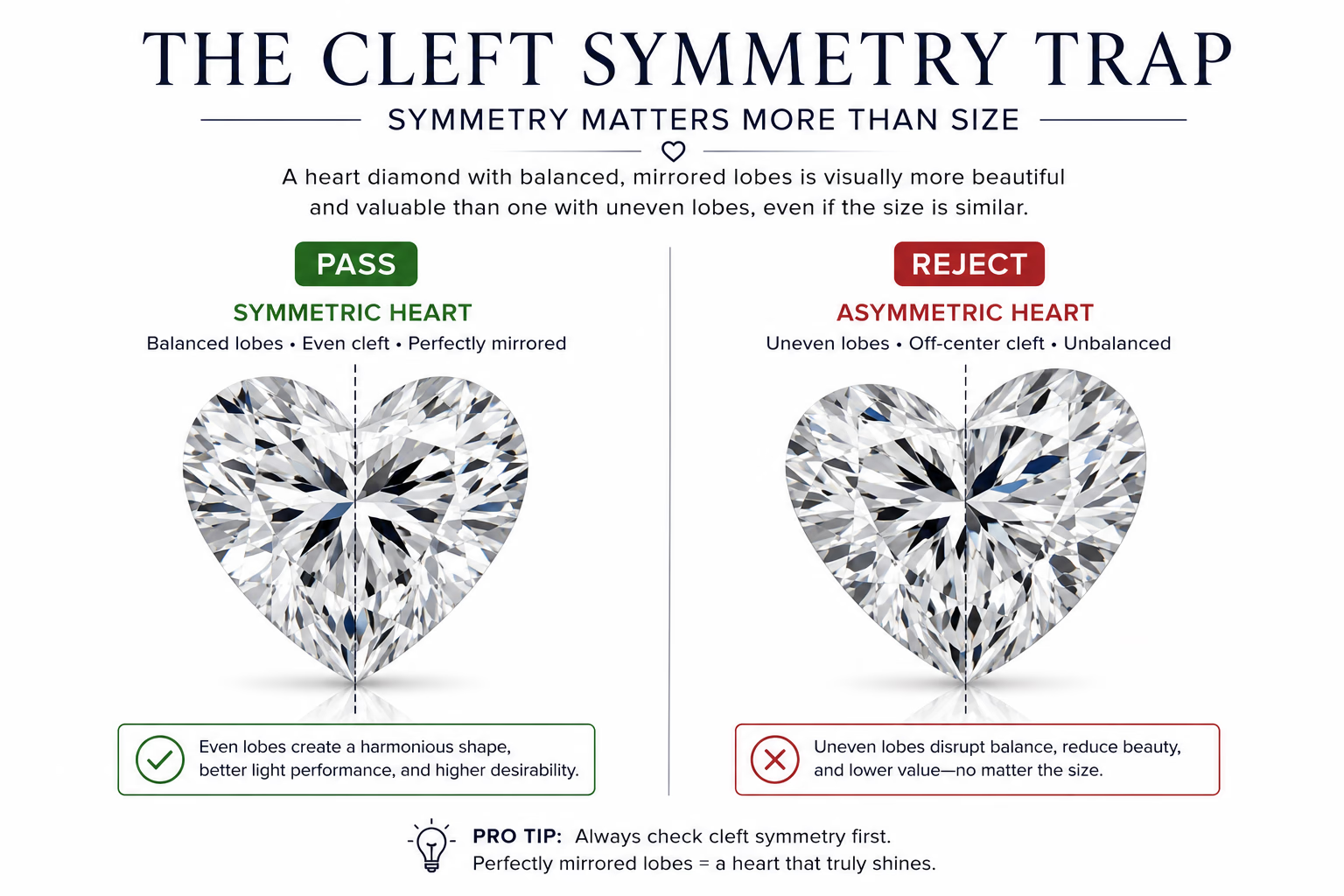
"The Cleft Symmetry Trap" is the most visually destructive defect in a heart diamond, and it is invisible in the static product photos used by most online retailers.
The two lobes of a heart diamond must be exactly mirror-image identical — identical in:
- Width at the widest point of each lobe
- Height from shoulder to cleft junction
- Curvature of the upper arc
- The angle and depth of the cleft itself
When one lobe is even slightly larger, rounder, or higher than the other, the heart shape is immediately recognizable as asymmetric from a viewing distance of 2 feet or more. The stone does not read as a heart — it reads as a malformed pear or a blob with a notch.
The 60% failure rate for heart diamonds comes primarily from cleft symmetry failures. Because cutting a symmetric heart from natural rough crystal is difficult — the crystal does not naturally grow in a heart-symmetric form — cutters make compromises. The result is that the majority of heart diamonds on the market have detectable lobe asymmetry when examined in video.
How to audit cleft symmetry:
- Watch the 360° video, if available. Pause at the face-up position
- Draw a mental vertical line through the cleft center and tip
- Compare the left and right lobes. They must be symmetric reflections
- Any visible size difference between lobes is a rejection criterion
The Wing Extinction Zone
"The Wing Extinction Zone" refers to the flat upper shoulder areas of the heart — the curved sections on each lobe adjacent to the cleft. These areas have facet geometry that tends to produce dark, light-extinct zones in certain lighting conditions.
Unlike the bowtie effect in oval diamonds (which is a single centered shadow), the wing extinction in hearts is distributed across the upper lobes. It appears as patches of darkness that make the stone look like it has dead sections rather than a fully brilliant face-up appearance.
Wing extinction is invisible in photos. Product photos for diamonds are shot in controlled lighting environments specifically designed to eliminate extinction. The extinction only reveals itself in the 360° rotation video or in real-world lighting.
Heart diamonds with good wing performance have:
- Depth % in the 56–62% range (too deep = extinction; too shallow = extinction from the opposite cause)
- Table % not exceeding 63% (an oversized table reduces the crown facet angles that return light from the wings)
- Even, well-matched crown facets across both lobes
The Video Mandate
"The Video Mandate" is simple: never buy a heart shape diamond without first watching the 360° HD video. This rule applies to all diamond shapes, but it is more critical for hearts than for any other shape because:
- Cleft symmetry is invisible in photos
- Wing extinction is invisible in photos
- The tip condition is invisible in photos
- The overall shape readability — how well it "reads" as a heart rather than an odd pear — is invisible in photos
Blue Nile provides 360° video for the majority of their diamond inventory. If a listing lacks video, do not buy it. The risk of a $2,000–$50,000 mistake is too high to accept a static image as your only visual evidence.
For the full framework on evaluating diamond 4Cs in the context of fancy shapes, see the linked guide.
What Color Grade for a Heart Shape Diamond?
The recommended color range for a heart shape diamond is G–H in white gold or platinum settings, and H–I in yellow gold or rose gold settings.
Hearts concentrate color differently from rounds. Because the brilliant facet pattern in a heart is the same underlying system as a round brilliant, color masking is similar — the scintillation of the facets helps obscure faint body color. However, the heart has one unique vulnerability: the cleft point concentrates color. The V-notch at the top of the cleft is a zone where body color tends to pool visually, appearing slightly more saturated than the rest of the stone.
This means:
- A heart at H color may show a faint warmth at the cleft that would be invisible in a round at the same H color grade
- Going above F color (E or D) in yellow gold is a waste of money — the setting's warmth will visually warm the stone anyway
- In white gold or platinum, F color is the practical upper limit where additional investment yields no visible benefit
For a complete explanation of how color interacts with different diamond shapes, see the diamond color scale guide.
| Setting Metal | Recommended Color | Notes |
|---|---|---|
| Platinum | G–H | D–F visible in the stone but marginal gain over G |
| White Gold | G–H | Same as platinum; H is strong value |
| Yellow Gold | H–I | Warm setting negates color difference above H |
| Rose Gold | H–J | Highest warmth tolerance; J can look beautiful |
The Color Concentration Effect at the Cleft
The cleft V-notch acts as a light funnel. Body color that would be distributed invisibly across the facets of a round tends to concentrate in the apex of the cleft — a small zone but a visually prominent one because the cleft is the defining feature of the shape. Buyers choosing J or K color hearts should specifically watch the cleft zone in the video for warmth concentration. In white gold settings, J color is pushing the boundary. In yellow gold, it is acceptable.
What Clarity Grade for a Heart Shape Diamond?
The minimum recommended clarity grade for a heart shape diamond is VS2. Eye-clean quality is achievable at VS2 in the brilliant-cut heart shape, but inclusions near the cleft or tip require special attention.
Hearts are brilliant-cut, which means the radiating facets scatter light and help conceal inclusions — the same mechanism that makes VS2 a reliable choice in rounds and ovals. See the diamond clarity chart for the full clarity grade framework.
The Three High-Risk Inclusion Zones in a Heart Diamond
| Zone | Why It's High Risk | Minimum Acceptable |
|---|---|---|
| The cleft center | Inclusions here are visually prominent — the eye is drawn to the cleft | VS1 or better at this location |
| The tip | Inclusions at the pointed tip can cause chipping under prong pressure | VS2 minimum; prefer VS1 |
| The wings | Inclusions on the upper lobes near the shoulders are exposed in face-up view | VS2 acceptable if not in cleft zone |
A VS2 diamond with inclusions concentrated near the center table is far preferable to a VS2 with inclusions at the cleft or tip. Read the certificate's inclusion description (plotted diagram) carefully. Blue Nile provides the GIA certificate plot for all GIA-graded stones — use it.
The H3 Zone Check
The "H3 zone" in heart cutting refers to the central area below the cleft where the pavilion facets converge — a structural analog to the bowtie zone in oval diamonds. Inclusions in this zone interact with the extinction risk of the wing geometry. If the GIA plot shows a crystal or feather in this zone, the stone is at elevated risk for both visible inclusions AND localized extinction. Reject any heart with H3-zone inclusions below VS1 clarity.
For VS2 clarity specifics on brilliant-cut diamonds, the linked guide covers which inclusions are acceptable at VS2 and which to reject.
Tides Of Summer Capsule
Up To 30% Off
Shop The Sale →Vault ClearanceClear The Vault
Up To 70% Off
Shop Vault Deals →Affiliate link — no extra cost to you
Best Settings for Heart Shape Diamonds
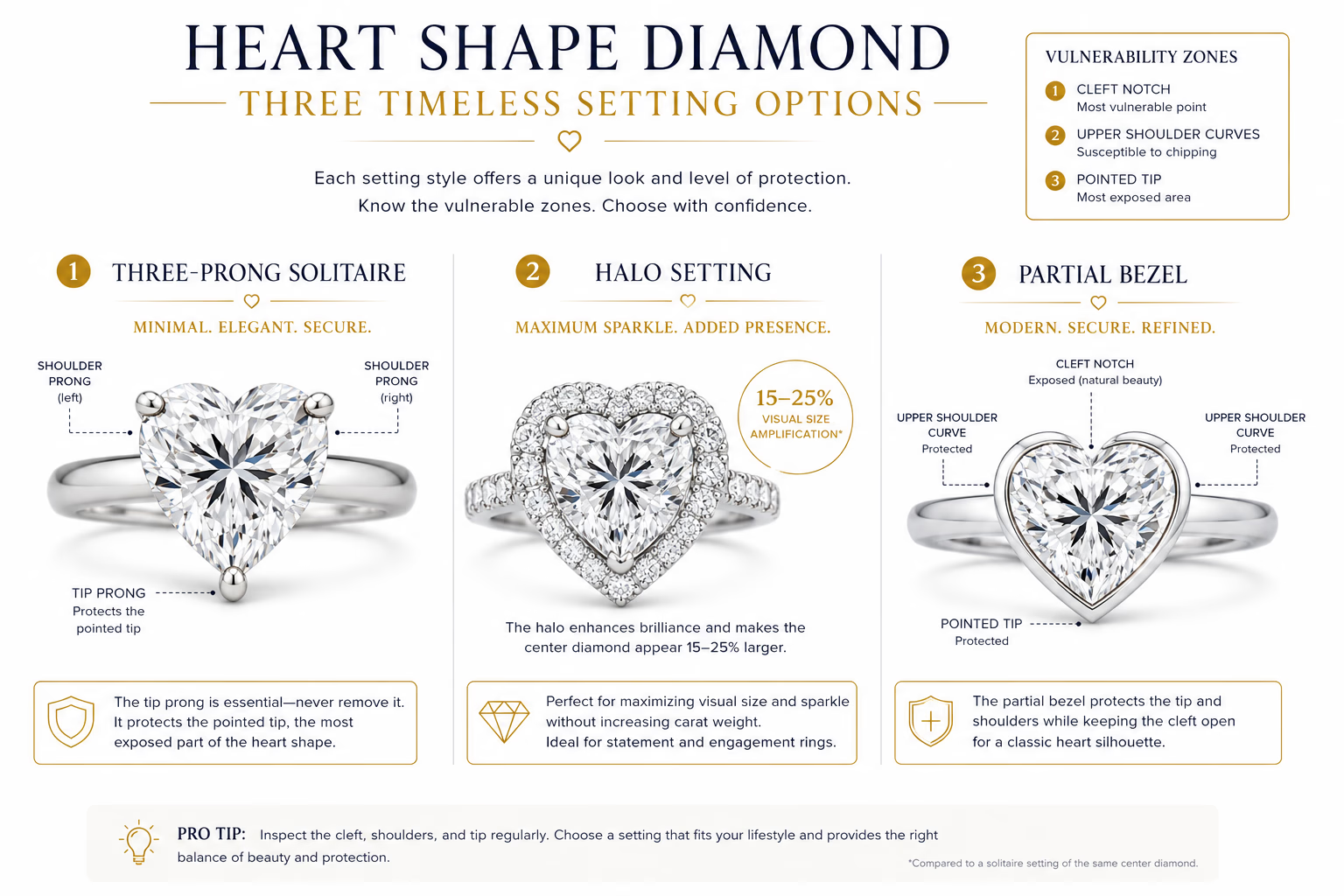
Setting choice for a heart diamond is not aesthetic preference — it is structural necessity. The heart's geometry creates three mechanical vulnerabilities: the cleft, the two shoulder curves, and the pointed tip.
Three-Prong Setting: The Correct Choice
The standard setting for a heart diamond is a three-prong configuration: one prong on the tip and one prong on each upper shoulder (the curves of the two lobes). This configuration:
- Protects the fragile pointed tip from lateral impact
- Holds the two lobes in position without covering the cleft (which would obscure the heart's defining feature)
- Maximizes face-up visibility of the stone
- Allows light to enter from the sides for optimal wing performance
A five-prong setting (two per lobe, one on tip) provides additional security for larger stones (2ct and above) or buyers with active lifestyles.
Bezel Settings: Risks and Trade-offs
A full bezel setting encircles the entire perimeter of the diamond in metal. For a heart diamond, a full bezel creates a major problem: it obscures the heart silhouette. The cleft — the feature that makes a heart recognizable as a heart — is covered by the metal collar, and the stone reads as a vague rounded shape rather than a heart.
Partial bezel (covering only the shoulder curves while leaving the cleft open) is workable but requires custom fabrication. If you want a bezel-adjacent look, a halo setting achieves the frame effect while keeping the cleft open.
Halo Settings: Size Amplification
A halo of small round brilliants around a heart diamond does three things:
- Amplifies apparent size by 15–25% — a 1ct heart in a halo reads like a 1.25–1.35ct heart visually
- Reinforces the heart outline — the halo traces the exact heart silhouette, making the shape more readable even in stones with slight lobe asymmetry
- Protects the perimeter — the halo's metal frame provides mechanical protection for the shoulder curves and cleft
The halo's edge-enhancing effect means buyers with a budget for a 0.75ct heart can achieve the visual presence of a 1ct heart. This is the most cost-efficient approach for heart shape engagement rings.
Setting Metal Recommendations
| Setting | Recommendation | Notes |
|---|---|---|
| Platinum | Best choice for G–H hearts | Most durable; maintains prong integrity over decades |
| 14k White Gold | Strong value choice | 75% gold; durable; needs replating every 2–3 years |
| 18k White Gold | Premium white gold option | 75% gold; slightly softer than 14k |
| Yellow Gold | Ideal for H–J hearts | Warm metal flatters warmer body color |
| Rose Gold | Romantic, distinctive | Amplifies the emotional symbolism of the heart shape |
Lab-Grown vs Natural Heart Diamond: The Real Arbitrage
Lab-grown heart diamonds deliver the same optical performance, GIA or IGI certification, and physical structure as natural hearts — at a price discount that in 2026 ranges from 70% to 85% depending on specifications.
Lab-Grown Heart Diamond Prices — Live Blue Nile Data
| Carat | Color | Clarity | Lab | Cut Label | Price | Link |
|---|---|---|---|---|---|---|
| 1.57ct | F | VVS1 | IGI | Ideal | $2,050 | View |
| 1.60ct | E | VVS1 | IGI | Excellent | $2,260 | View |
| 1.70ct | F | VVS1 | GIA | Ideal | $2,340 | View |
| 2.00ct | E | VVS1 | GIA | Ideal | $2,800 | View |
| 2.00ct | D | VVS1 | IGI | Ideal | $3,070 | View |
| 2.00ct | D | FL | IGI | Ideal | $5,710 | View |
| 3.00ct | E | VVS1 | IGI | Ideal | $6,030 | View |
| 3.00ct | D | VVS1 | IGI | Ideal | $7,270 | View |
| 3.00ct | D | IF | IGI | Ideal | $11,370 | View |
| 3.00ct | D | FL | IGI | Ideal | $11,370 | View |
The Core Arbitrage Comparisons
Arbitrage 1: The 75% Savings on 3ct
A GIA 3ct F-VS1 Ideal natural heart costs $46,410. An IGI 3ct D-FL Ideal lab heart costs $11,370. The lab stone is not just cheaper — it is two full color grades higher (D vs F) and three clarity grades higher (FL vs VS1) at a 75% lower price. The only difference between these diamonds is origin: one formed over billions of years underground, the other in a reactor in weeks.
Arbitrage 2: The Size Jump at $2,800
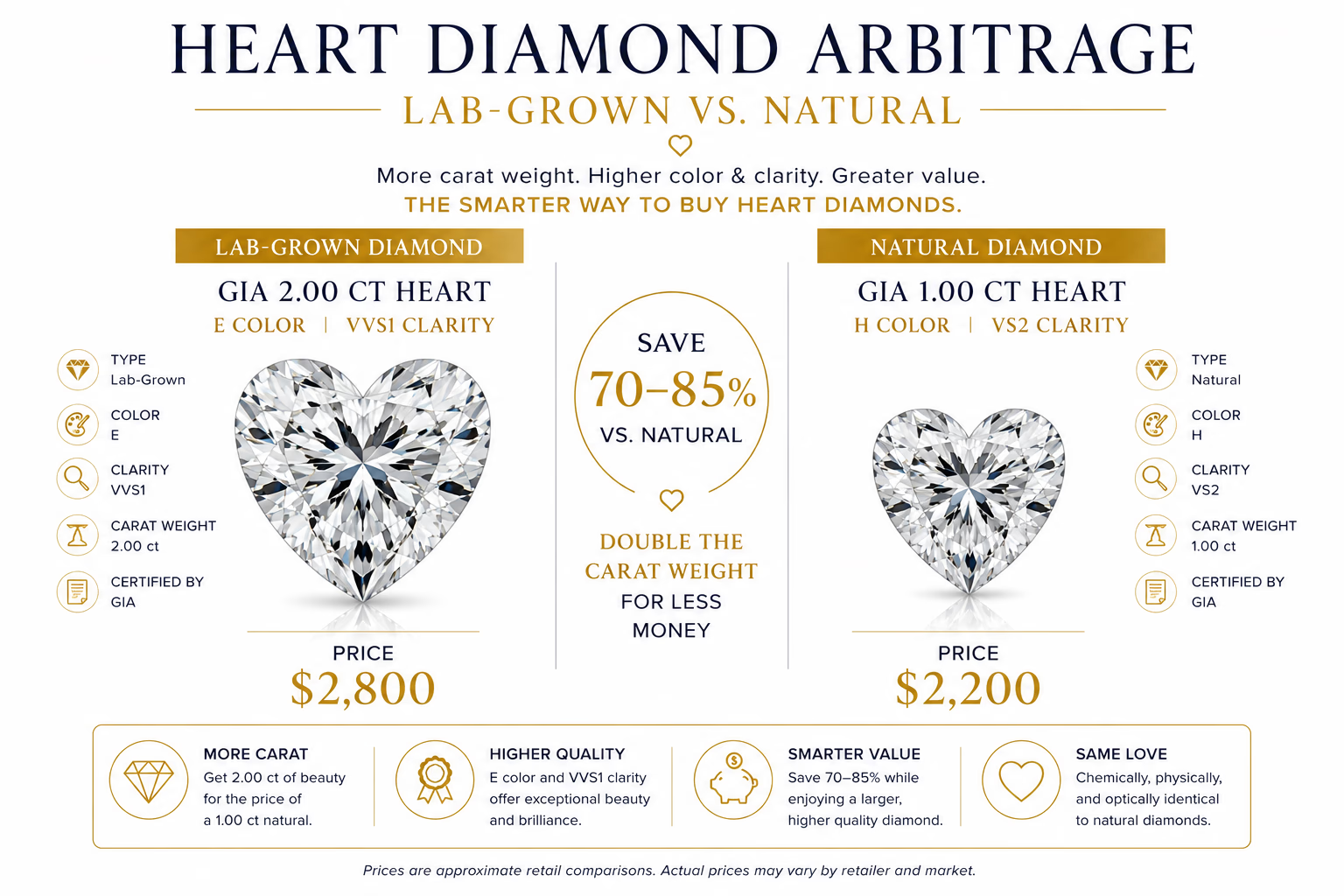
A budget of $2,800 buys you a GIA 1ct H-VS2 Ideal natural heart (at $2,200 for the comparable natural) — or a GIA 2ct E-VVS1 Ideal lab-grown heart at exactly $2,800. The lab option delivers double the carat weight and three full color grades of upgrade for the same money.
Arbitrage 3: The Lab 3ct for Less Than Natural 1ct
A GIA 1ct F-VS1 Ideal natural heart costs $2,570–$2,630. An IGI 3ct E-VVS1 Ideal lab heart costs $6,030 — approximately 2.3× more money for triple the carat weight and superior specs. If visual size is the primary goal, the lab arbitrage in hearts is unmatched.
Natural vs Lab: Side-by-Side Comparison
| Factor | Natural Heart | Lab-Grown Heart | Farzana's Verdict |
|---|---|---|---|
| Price per carat | $2,170–$29,430/ct | $1,305–$3,790/ct | Lab wins on value by 70–85% |
| Resale value | 20–50% of purchase price typical | Near zero resale premium | Natural wins on resale — marginally |
| Certification | GIA | IGI or GIA | GIA slightly more recognized; IGI legitimate |
| Optical performance | Identical | Identical | Tie |
| Rarity | 1% of diamonds sold are hearts | Unlimited supply | Irrelevant to appearance |
| Best choice for | Collectors, investors, tradition | Maximum size/specs/budget | Lab for buyers who wear the ring |
For a full analysis of the financial trade-offs, see the lab-grown vs natural diamond price guide.
Why Blue Nile for Heart Diamonds
Blue Nile's heart diamond inventory is one of the largest among online retailers, with GIA and IGI grading on all listed stones, 360° video on most listings, and the full GIA certificate plot available for download. The affiliate structure allows me to recommend them without reservation for heart diamonds specifically — their return policy (30 days) is particularly important for a shape where video evaluation should precede purchase. Read the full Blue Nile review for complete retailer analysis.
Frequently Asked Questions About Heart Shape Diamonds
What is the ideal length-to-width ratio for a heart shape diamond?
The ideal L:W ratio for a heart shape diamond is 0.95:1 to 1.05:1 — essentially square. Below 0.90 the stone looks squat and wide. Above 1.12 it looks narrow and pear-like, losing the heart identity. The sweet spot of 0.95–1.05 produces a balanced, recognizable heart that reads clearly as a heart from 2 feet away.
How much does a 1 carat heart shape diamond cost?
A 1 carat GIA heart shape diamond costs between $2,170 and $2,630 on Blue Nile in 2026, depending on color and clarity. The entry point is a GIA H-VS2 Ideal at $2,170. A GIA F-VS1 Ideal runs $2,570–$2,630. Lab-grown alternatives at 1.57–1.70ct cost $2,050–$2,340 for VVS1 clarity.
Why do heart shape diamonds cost less than round diamonds?
Heart shape diamonds cost 15–20% less than round brilliants at identical specs because:
- Fancy shapes (including hearts) are in lower demand than round brilliant — the price gap reflects demand, not quality
- GIA does not grade cut on fancy shapes, reducing the price premium associated with GIA Excellent/Ideal round cut grades
- Heart shapes have a narrower buyer pool, giving sellers less pricing power
Does GIA grade cut on heart shape diamonds?
No. GIA does not issue a cut grade for heart shape diamonds. GIA diamond grading standards include cut grading for round brilliants only. The "Ideal" or "Excellent" label on a heart diamond comes from the vendor — Blue Nile, James Allen, or another retailer — using their own internal grading criteria. These labels are not standardized, independently audited, or comparable across retailers. This is the core of "The GIA Cut Blind Spot" and the reason why three identically-certificated hearts can differ by 58% in price.
What is the cleft symmetry trap in heart diamonds?
"The Cleft Symmetry Trap" refers to the most common and visually destructive defect in heart diamonds: asymmetry between the two lobes. The left and right lobes must be mirror-image identical in size, curvature, shoulder height, and cleft angle. When they are not — and approximately 60% of hearts on the market have detectable asymmetry — the stone does not read as a heart from a normal viewing distance. It looks malformed. The trap is that this asymmetry is invisible in the static product photos used by most retailers. It only appears in 360° video.
What color grade should I choose for a heart shape diamond?
Choose G or H color for heart diamonds set in white gold or platinum. F and above in platinum is where marginal investment begins — the improvement over G is detectable only in side-by-side comparison. For yellow gold settings, H–I is the sweet spot — the warm metal hides the faint body color of H or I, making color investment above H wasteful. Avoid J or below in white gold due to the cleft color concentration effect.
What clarity grade is recommended for a heart shape diamond?
VS2 is the practical minimum for a heart shape diamond. The brilliant facet pattern masks inclusions effectively, making VS2 eye-clean in most cases. However, avoid VS2 stones with inclusions at the cleft center or tip — those locations amplify visibility. VS1 is recommended for stones where the GIA plot shows any inclusion near the cleft or within the pavilion zone directly beneath the cleft. See the full diamond clarity chart for inclusion type analysis.
How do I check for cleft symmetry before buying a heart diamond?
Watch the 360° video and pause at the face-up position. Draw a mental vertical line through the center of the cleft notch down to the tip. The left and right lobes should be identical reflections across that line. Check:
- Are both lobes the same width at their widest point?
- Are both lobes the same height (distance from shoulder arc to cleft junction)?
- Is the curvature of the two upper arcs matched?
- Is the cleft notch centered, or does it tilt left or right?
Any visible asymmetry is grounds for rejection.
What is the wing extinction zone in a heart diamond?
"The Wing Extinction Zone" refers to the upper shoulder sections of a heart diamond — the curved areas of each lobe adjacent to the cleft — where facet geometry produces dark, light-extinct patches in normal viewing conditions. Wing extinction is the equivalent of the bowtie effect in ovals: every heart has some degree of it, and severity ranges from invisible to visually prominent. It cannot be evaluated in photos. Watch the 360° video looking specifically at the upper lobe areas for dark dead zones.
Are lab-grown heart diamonds worth buying?
Yes, for buyers whose primary goal is visual performance and size, lab-grown heart diamonds are an exceptional value. The savings in 2026 range from 70–85% versus natural equivalents. A GIA 2ct E-VVS1 Ideal lab heart costs $2,800 — less than a natural 1ct H-VS2 at $2,200. The optical performance is identical. The only trade-off is near-zero resale value (versus very low resale value for natural hearts). If you plan to wear the ring for decades rather than resell it, lab-grown is the rational choice.
How do I choose a setting for a heart shape diamond?
The standard setting for a heart diamond is a three-prong configuration with one prong on the tip and one on each upper shoulder. This protects the fragile tip, holds the lobes in position, and maximizes face-up visibility. Avoid full bezel settings — they cover the cleft and obscure the heart silhouette. Halo settings are the best choice for buyers wanting visual size amplification (15–25% apparent size increase) or wanting to reinforce a heart with marginal lobe symmetry.
What is the best carat size for a heart shape diamond engagement ring?
1ct is the minimum where the heart shape is clearly readable. Below 0.80ct, the heart's cleft and lobe geometry becomes difficult to distinguish face-up, especially when set. For engagement rings, 1.00–1.50ct natural hearts (or 1.50–2.00ct lab-grown hearts at comparable price) provide the best balance of readability, presence, and value. At 2ct and above, the heart shape is visually dominant and unmistakable — the setting choice becomes the primary design decision.
Why is there such a large price gap between hearts with the same GIA grade?
Because GIA does not grade cut on heart shape diamonds. The "Ideal" or "Very Good" label is a vendor's own assessment, not GIA's. Two GIA 2ct F-VS1 "Ideal" hearts on the same retailer can differ by 58% in price because their actual cut quality — proportions, cleft depth, lobe symmetry, crown angle, pavilion depth — varies enormously. The higher-priced stone typically has better proportions and more precise symmetry, but you cannot verify this from the GIA certificate alone. Proportion data and video are required.
Should I buy a heart diamond online or in person?
Online, from a retailer with 360° video, is preferable to most physical retail environments for hearts specifically. Why: most brick-and-mortar retailers carry minimal heart inventory (it is only ~1% of diamond sales), limiting your selection severely. Online retailers like Blue Nile provide 360° video, full GIA certificate plots, proportion data, and a return window — giving you more evaluation tools than a physical viewing where time pressure and salesperson dynamics affect decision-making. The Video Mandate is essential regardless of channel.
How does a heart shape diamond compare to a pear shape diamond?
A heart diamond is structurally derived from the pear cut — it is essentially a pear with a symmetric cleft added to the top. Both have a pointed tip. Key differences:
- Pear cut diamond is 20–30% cheaper than round; heart is 15–20% cheaper — pear wins on price
- Pear elongates the finger; heart does not — pear wins on visual finger effect
- Heart has unmistakable symbolic identity; pear has elegant versatility
- Both require video evaluation for equivalent reasons (asymmetry for hearts; bowtie for pears)
For buyers torn between the two, the choice typically comes down to symbolism priority (heart) versus size efficiency priority (pear).
What diamond shapes are comparable to hearts for price and size?
The closest diamond prices comparables to heart diamonds are:
- Pear cut diamond: 20–30% below round, elongated footprint
- Oval cut diamond: 15–25% below round, 10–15% more face-up size
- Marquise cut diamond: 25–35% below round, maximum elongation
- All of these are brilliant-cut fancy shapes with similar evaluation requirements (video mandatory, vendor cut grades unreliable)
"A heart shape diamond is one of the most technically demanding purchases in the engagement ring market. The shape is simultaneously the most emotionally explicit diamond you can buy and the most punishing of cut quality errors — cleft asymmetry, wing extinction, and tip vulnerability create failure modes that are literally invisible in photos. My recommendation: heart diamonds are excellent value at 15–20% below round prices, and the lab-grown arbitrage (75% savings, double or triple the carat weight) is genuinely compelling. But the Video Mandate is non-negotiable. Watch the stone rotate. Draw that mental center line through the cleft. If the lobes don't mirror, move on. There are better hearts to find — and with Blue Nile's inventory, you have enough selection to be disciplined without settling." — Farzana Hasan, GIA-Certified Diamond Expert, Diamond Critics
Expert Verdict
Always audit the stone individually — no grade replaces seeing the actual diamond. The certificate tells you what to look for. Your eyes tell you whether to buy.
— Farzana Hasan, GIA Expert · DiamondCritics.com