TL;DR: Asscher Cut Diamond — Key Facts Before You Buy
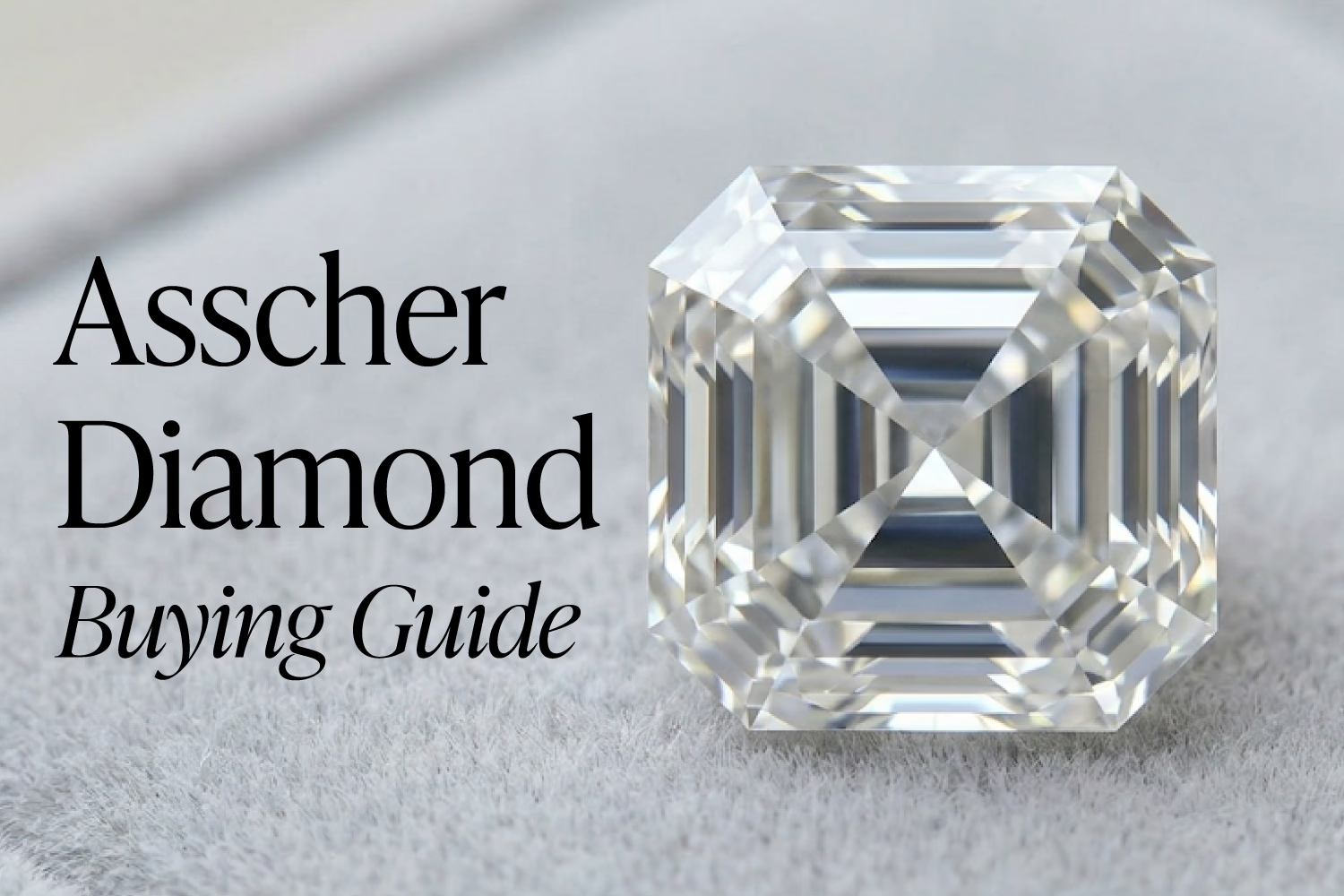
- An Asscher cut diamond is a square step-cut diamond with an octagonal outline, 58 facets, and a high crown that produces the signature Hall of Mirrors effect — rectangular light reflections that appear to recede infinitely into the stone
- Prices on Blue Nile in 2026 start at $3,410 for a GIA 1ct E-VVS2 Ideal and reach $33,660 for a GIA 2.05ct D-VS1 Ideal
- Asscher cuts cost approximately 20–35% less than round brilliants at identical carat, color, and clarity — but they require one to two color grades higher and one clarity grade higher because step-cut facets display color and inclusions more clearly than brilliant facets
- GIA does not grade cut on Asscher diamonds. The "Ideal" label is the vendor's own assessment. Two GIA 2.02ct E-VVS2 "Ideal" Asschers on Blue Nile today cost $26,350 and $30,270 — a $3,920 gap on identically-certificated stones
- The minimum clarity for Asscher is VS1, not VS2. Step-cut facets act as windows into the stone, making VS2 inclusions visible that brilliant cuts would conceal
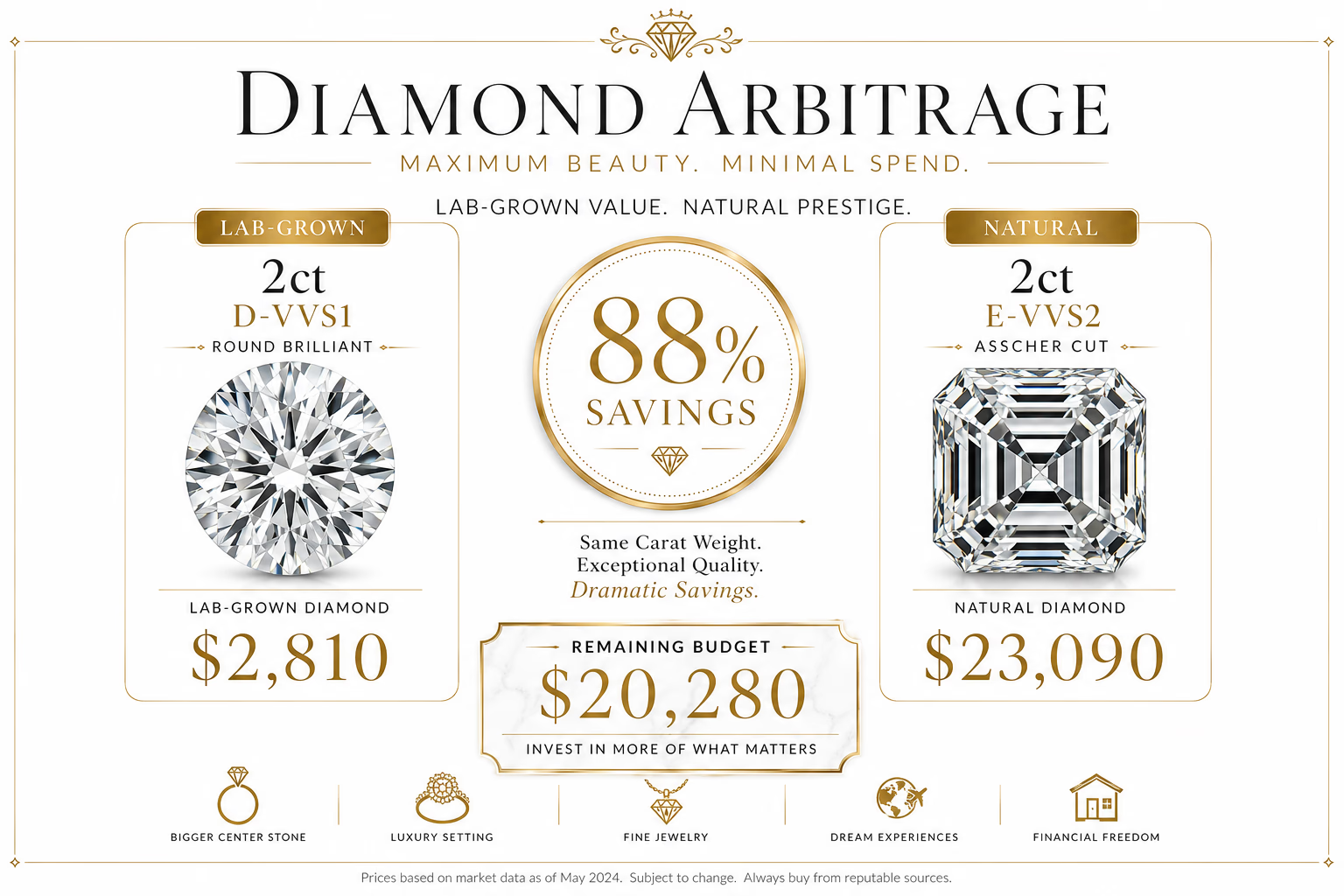
- Lab-grown rounds deliver 85–88% savings at identical specs: a 2ct D-VVS1 IGI lab-grown round costs $2,810 vs $23,090–$28,930 for a comparable natural 2ct Asscher


What Is an Asscher Cut Diamond?
An Asscher cut diamond is a square step-cut diamond with a distinctive octagonal outline — the four corners are cropped, creating an octagon rather than a true square. It has 58 facets arranged in concentric rectangular rows parallel to the girdle, with a high crown and a relatively small table. The result is a diamond that produces the Hall of Mirrors effect: instead of the radiating fire and scintillation of a brilliant cut, the Asscher generates deep rectangular reflections that appear to repeat and diminish into the center of the stone like an infinite corridor.
I'm Farzana Hasan, GIA-certified diamond expert. The Asscher is the most architecturally precise diamond you can buy — it rewards buyers who understand what step-cut optics require, and punishes those who apply brilliant-cut evaluation standards. This guide gives you the exact proportions, price data, and failure-mode analysis to buy an Asscher correctly.
The Anatomy of an Asscher Diamond
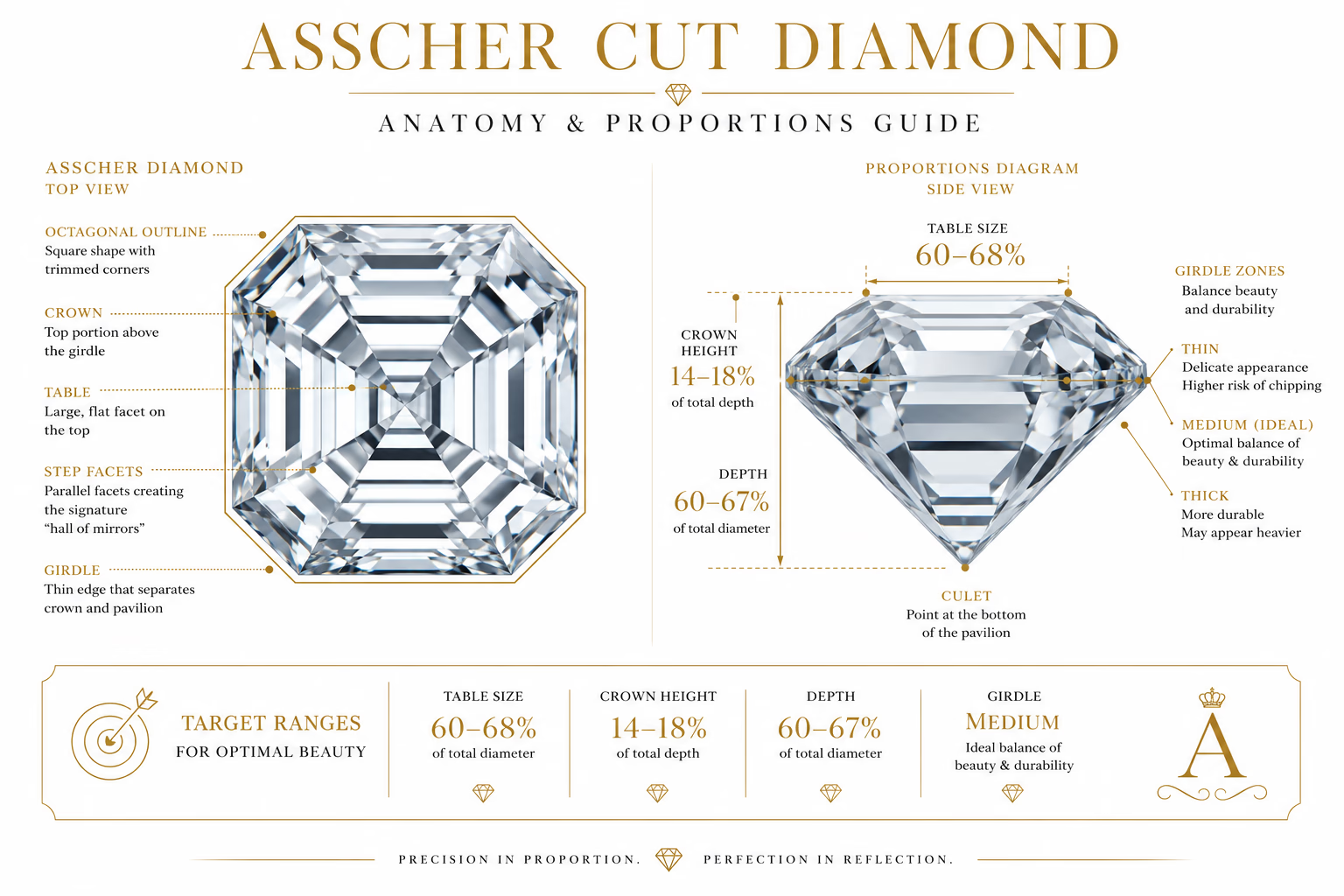
An Asscher diamond has four structural features that distinguish it from all other cuts:
- The octagonal outline — the girdle shape. Four sides plus four cropped corners create the characteristic octagon. The symmetry of these eight segments must be precise — any tilt or misalignment is immediately visible in the step-cut facets
- The step-cut facets — long, rectangular facets arranged in rows parallel to the girdle on both the crown and pavilion. Unlike the radiating triangular facets of brilliant cuts, these parallel rows create clean geometric reflections rather than scattered fire
- The high crown — Asscher cuts have a notably higher crown (the upper portion above the girdle) than emerald cuts. This high crown angle directs light into the pavilion at a steeper angle, deepening the Hall of Mirrors reflections
- The small table — the flat top facet is proportionally smaller than in rounds or emerald cuts. A smaller table increases the depth of reflections visible from face-up and reduces the risk of windowing
Asscher Diamond Proportions: Key Dimensions
The ideal proportions for an Asscher cut that produces strong Hall of Mirrors performance without windowing:
| Proportion | Target Range | Reject Below/Above |
|---|---|---|
| L:W Ratio | 1.00:1 to 1.05:1 | Above 1.08 — loses square character |
| Table % | 60–68% | Above 72% — window effect |
| Depth % | 60–67% | Below 58% — window effect; above 70% — dark extinction |
| Crown Height % | 13–17% | Below 12% — shallow, flat appearance |
| Girdle | Thin to Slightly Thick | Very Thin (chipping risk); Extremely Thick |
| Culet | None to Very Small | Large culet visible from face-up |
A Brief History — Joseph Asscher, the Cullinan, and the Hall of Mirrors
The Asscher cut was developed in 1902 by Joseph Asscher of the Royal Asscher Diamond Company in Amsterdam. It was a refinement of earlier table-cut and cushion-cut step cuts, engineered to maximize the internal reflection corridors that are the visual signature of step-cut diamonds.
The Asscher family's most famous commission came in 1908, when Joseph Asscher was asked to cleave and cut the Cullinan diamond — the largest gem-quality rough diamond ever found, at 3,106 carats. The Cullinan was split into nine major stones, the largest of which (Cullinan I, 530 carats) is now set in the British Crown Jewels. The reputation earned by that commission established the Asscher as the preeminent step cut for serious buyers.
The original Asscher patent expired in the 1940s–50s, allowing any cutter to produce "Asscher cuts." In 2001, the Royal Asscher family introduced the Royal Asscher Cut — a modified 74-facet version with a higher crown and a patented proportional formula that deepens the Hall of Mirrors effect beyond the standard 58-facet cut.
Asscher Cut Diamond Prices in 2026
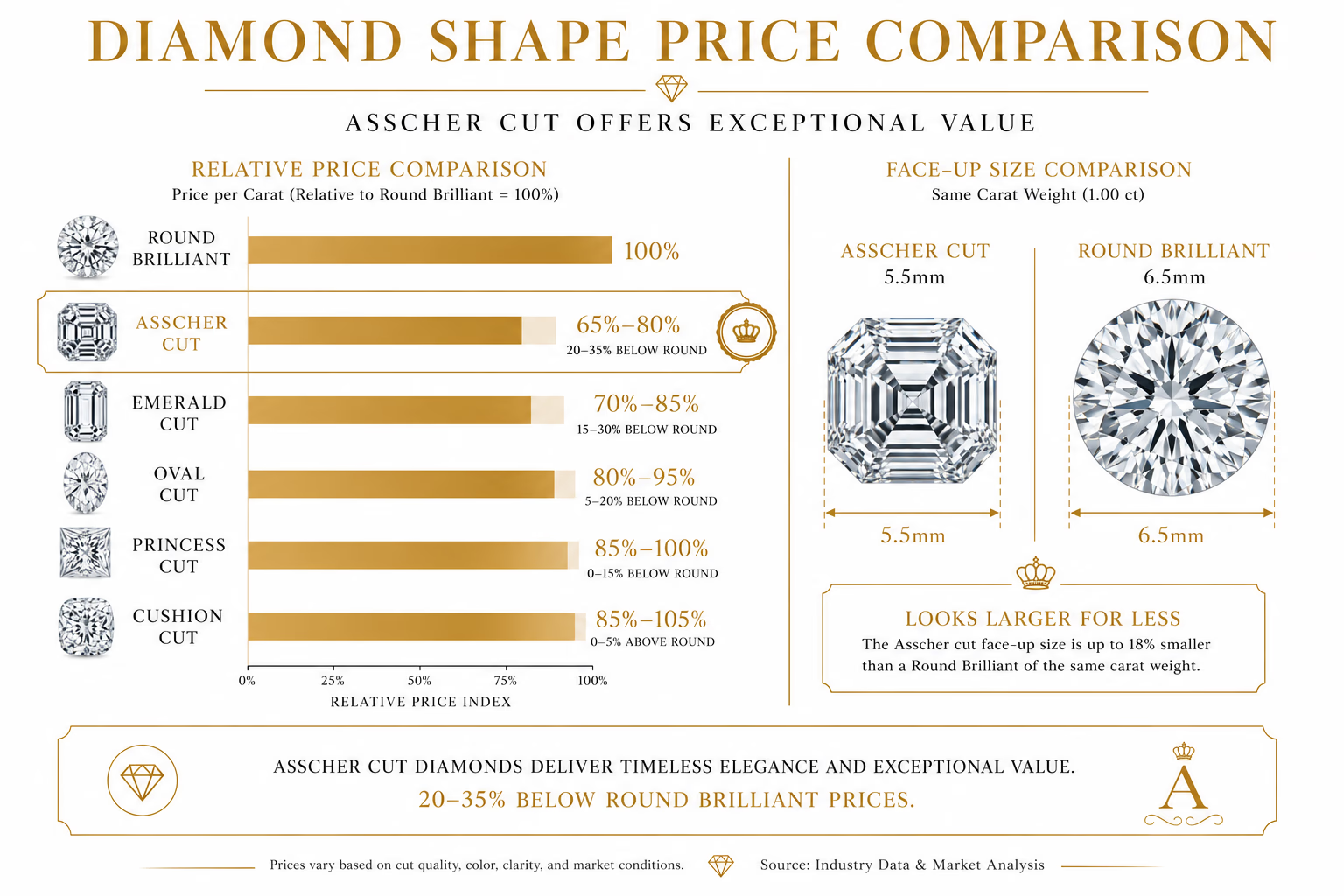
Asscher cut diamonds cost approximately 20–35% less than round brilliants at identical carat, color, and clarity grades. This discount exists because step cuts are in lower demand than rounds and because GIA does not issue a cut grade for step cuts — removing the price premium associated with GIA Excellent/Ideal round certification.
However, this discount is partially offset by the requirement for higher color and clarity grades in step cuts. A buyer who upgrades from H-VS2 (typical round recommendation) to the Asscher-appropriate F-VS1 will find the price gap to rounds narrows to 10–20% — still a meaningful saving, but not the 35% headline figure.
Natural Asscher Diamond Prices — 1 Carat
Live Blue Nile listing as of August 2026:
| Carat | Color | Clarity | Cut Label | Price | Link |
|---|---|---|---|---|---|
| 1.00ct | E | VVS2 | Ideal | $3,410 | View |
The 1ct Asscher market has limited inventory compared to rounds and ovals. The benchmark GIA E-VVS2 Ideal at $3,410 compares to approximately $4,800–$5,200 for a GIA E-VVS2 Ideal round brilliant — a 33–35% discount for the step cut. Note that E-VVS2 already exceeds the minimum recommended specs for Asscher (F–G color, VS1 clarity), so this stone carries a premium over the entry-level threshold.
Natural Asscher Diamond Prices — 1.5 to 2 Carat
The 1.5–2ct range is where Asscher buying decisions become most complex:
| Carat | Color | Clarity | Cut Label | Price | Link |
|---|---|---|---|---|---|
| 1.53ct | G | VVS1 | Ideal | $12,280 | View |
| 1.72ct | G | VVS1 | Ideal | $17,100 | View |
| 1.60ct | F | VVS1 | Ideal | $18,490 | View |
| 1.75ct | G | VVS1 | Ideal | $19,110 | View |
| 1.87ct | F | VVS1 | Ideal | $21,200 | View |
| 1.75ct | D | VVS1 | Ideal | $23,910 | View |
| 1.80ct | E | VVS1 | Ideal | $24,480 | View |
The 1.75ct price spread demands explanation. Two GIA 1.75ct VVS1 Ideal Asschers: G-VVS1 at $19,110 and D-VVS1 at $23,910. The only variable is color grade (G vs D — three grades apart). The cost: $4,800 (25% premium) for three color grades. This is the Color Display Amplifier at work — in step-cut diamonds, each color grade step carries a larger price premium than in brilliant cuts because the color is displayed directly by the flat reflective facets, not scattered and hidden.
Natural Asscher Diamond Prices — 2 Carat and Above
This range contains the most analytically significant pricing data in this guide:
| Carat | Color | Clarity | Cut Label | Price | Link |
|---|---|---|---|---|---|
| 2.07ct | F | VS1 | Ideal | $21,220 | View |
| 2.01ct | E | VVS2 | Ideal | $23,090 | View |
| 2.01ct | G | IF | Ideal | $25,060 | View |
| 2.02ct | E | VVS2 | Ideal | $26,350 | View |
| 2.02ct | G | VVS2 | Ideal | $27,040 | View |
| 2.05ct | G | VVS1 | Ideal | $27,170 | View |
| 2.05ct | G | VVS1 | Ideal | $27,170 | View |
| 2.01ct | D | VS1 | Ideal | $28,930 | View |
| 2.02ct | E | VVS2 | Ideal | $30,270 | View |
| 2.31ct | E | VVS2 | Ideal | $31,990 | View |
| 2.05ct | D | VS1 | Ideal | $33,660 | View |
The critical anomaly: Two GIA 2.02ct E-VVS2 Ideal Asschers cost $26,350 and $30,270. Same carat, same color, same clarity, same cut label, same certifying laboratory — yet the price gap is $3,920 (15%). This is not a data error. This is the direct consequence of what I call "The GIA Cut Blind Spot" applied to Asscher cuts.
GIA does not grade cut on step-cut diamonds. The "Ideal" label on both of these stones is Blue Nile's own internal assessment — and that threshold allows significant variation in actual table %, depth %, crown angle, and pavilion depth. One stone almost certainly has better proportion alignment, superior step-facet symmetry, and stronger Hall of Mirrors performance. The GIA certificate cannot tell you which one. Proportion data and 360° video are required.
A second anomaly: The 2.07ct F-VS1 Ideal at $21,220 sits below the 2.01ct E-VVS2 Ideal at $23,090, despite being larger. One grade lower in color (F vs E) and two grades lower in clarity (VS1 vs VVS2) reduces price by $1,870 on a slightly larger stone. Whether VS1 is eye-clean in an Asscher depends entirely on inclusion placement — a VS1 with peripheral inclusions near the girdle may be cleaner face-up than a VVS2 with a crystal beneath the table. Read the GIA plot before dismissing VS1.
Asscher Cut vs Other Shapes: Size and Price
Asscher diamonds occupy a specific position in the shape hierarchy — they deliver architectural elegance and step-cut depth at a discount to rounds, but require higher quality thresholds to achieve comparable visual performance.
| Shape | Price vs Round (1ct) | Face-Up Size vs Round | Light Performance | Best For |
|---|---|---|---|---|
| Round | Baseline | Baseline | Maximum brilliance | Maximum brilliance, no compromise |
| Asscher | 20–35% less | Slightly smaller | Hall of Mirrors depth | Art Deco aesthetic, clarity theater |
| Emerald | 25–35% less | 10% more (elongated) | Step-cut depth | Similar optical; rectangular outline |
| Oval | 15–25% less | 10–15% more | High brilliance | Size efficiency, trending |
| Princess | 20–30% less | Similar | High brilliance | Modern square outline |
| Cushion | 20–30% less | Slightly less | Moderate-high | Vintage, rounded corners |
| Pear | 20–30% less | 10–12% more | High brilliance | Finger elongation |
| Marquise | 25–35% less | 15–20% more | Moderate-high | Maximum apparent size |
For full context on shape pricing, see the diamond shapes guide and the diamond size chart.
A 1ct Asscher diamond measures approximately 5.5mm × 5.5mm face-up — slightly smaller than a 1ct round at 6.4–6.5mm. The step-cut facet arrangement directs more light deep into the pavilion rather than returning it face-up, which is why the Asscher reads slightly smaller than its carat weight suggests. This is a trade-off for the Hall of Mirrors depth effect — it is not a defect, but buyers expecting the face-up spread of a brilliant cut will be surprised.
The Cut Quality Crisis: Asscher's Four Optical Failure Modes
Cut quality in Asscher diamonds is the most misunderstood factor among buyers coming from brilliant cuts. The step-cut facet architecture creates unique failure modes that standard brilliant-cut evaluation frameworks do not catch — and GIA's absence from fancy-shape cut grading leaves buyers without an independent verification layer.
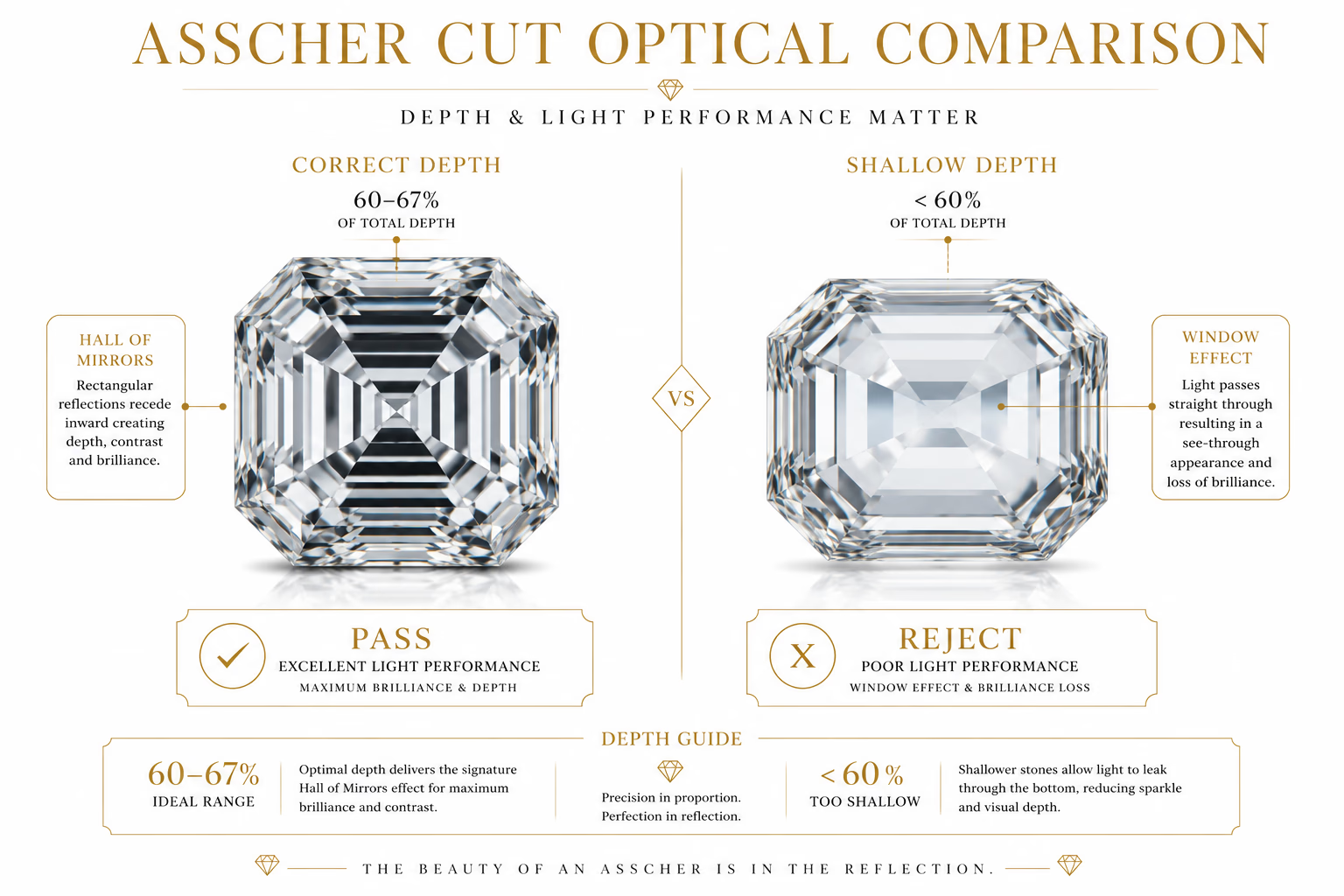
The Hall of Mirrors Effect
"The Hall of Mirrors Effect" is the defining optical characteristic of a well-cut Asscher and the reason buyers choose this shape over brilliants.
In a correctly proportioned Asscher, the step-cut facets on the crown and pavilion align to create rectangular reflection corridors. When you look directly down through the table, you see a series of rectangular frames — each one smaller than the last — appearing to recede into infinite depth. The effect is architectural, geometric, and entirely different from the radiating fire and scintillation of a brilliant cut.
What destroys the Hall of Mirrors effect:
- Table % above 72%: an oversized table collapses the crown facets that create the framing geometry
- Depth % below 58%: insufficient pavilion depth means the corridors have nowhere to recede — the stone windows instead
- Poor symmetry: misaligned step facets break the rectangular geometry, creating a chaotic, choppy pattern rather than clean concentric frames
- Off-center culet: even a slightly off-center culet shifts the reflection corridors asymmetrically
How to evaluate Hall of Mirrors quality: Look directly down through the table in the 360° video. The concentric rectangular frames should be clean, centered, and progressively diminishing. Any irregularity — crooked frames, uneven corridor widths, a tilted center — indicates poor step-facet alignment.
The Window Effect
"The Window Effect" is the most visually destructive defect in Asscher diamonds, occurring when the depth % falls below approximately 58%. The shallow pavilion causes the step-cut facets to align in a way that transmits light straight through the stone rather than reflecting it back to the viewer.
The result is a diamond that looks like a window pane: you can see through it to whatever is behind it — a tabletop, your hand, the setting's prongs. The stone appears glassy, flat, and devoid of the Hall of Mirrors depth that defines the Asscher aesthetic. The Window Effect cannot be corrected without recutting.
Testing for the Window Effect: Hold the stone face-up at arm's length against a white background. If you can see the white background through the table area (rather than seeing reflected light and rectangular frames), the stone has a window. In the online evaluation context: watch the 360° video looking for transmission through the stone rather than reflection from it.
The Color Display Amplifier
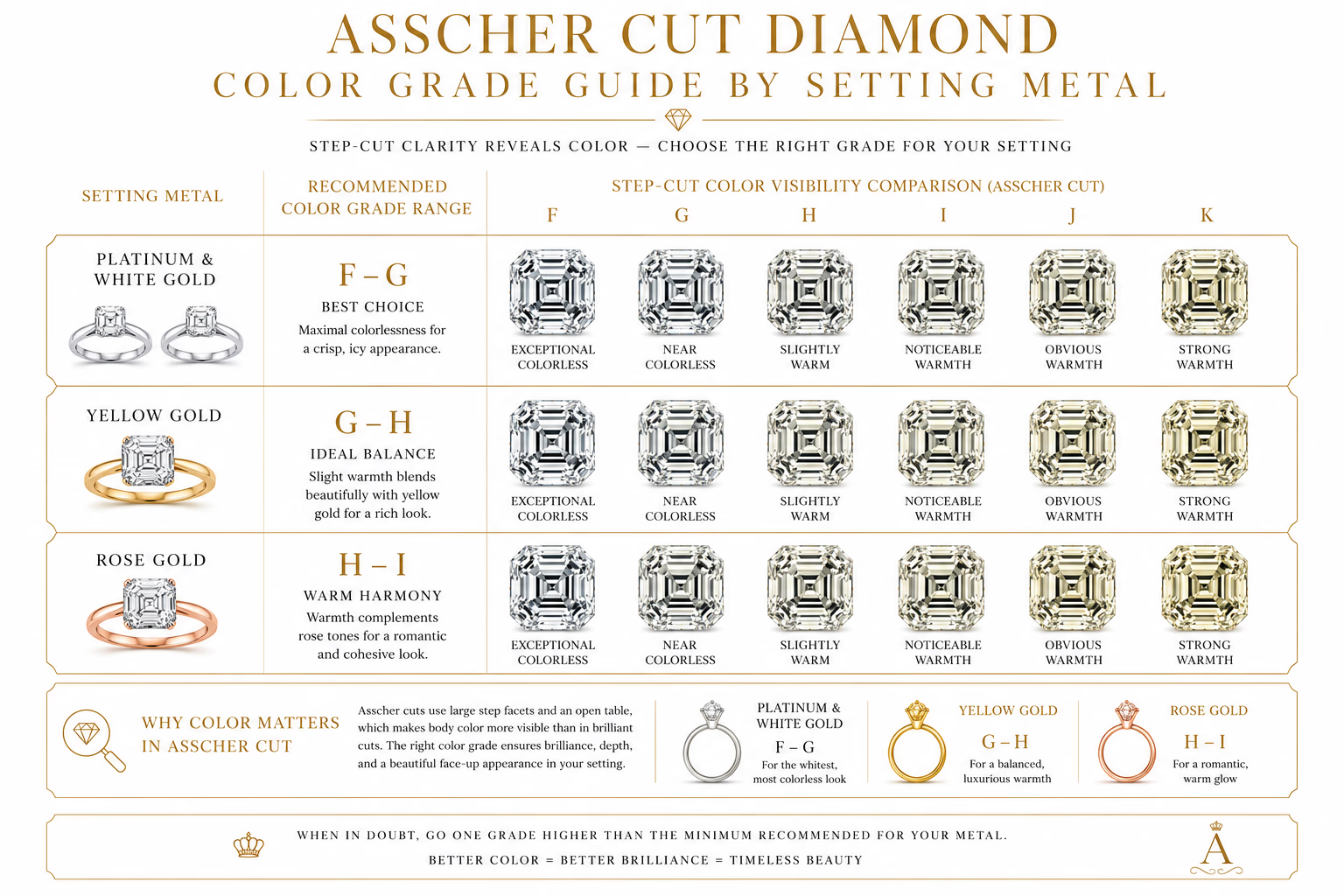
"The Color Display Amplifier" is the most important concept for understanding why Asscher color recommendations differ from brilliant-cut recommendations.
In a round brilliant, 58 radiating triangular and kite-shaped facets scatter light simultaneously in multiple directions. The scintillation — the rapid play of light and dark as the stone moves — masks body color by preventing the eye from settling on any single facet long enough to detect warmth. A G color round brilliant in platinum looks near-colorless to most observers in most lighting.
In an Asscher, the parallel step-cut facets reflect light in a controlled, unidirectional manner. Each rectangular facet acts as a flat mirror, returning a direct view of the body color without the scattering that brilliant facets provide. The large flat reflective surfaces give color nowhere to hide.
The practical result: color that is invisible in brilliants is detectable in Asscher cuts. An H color that looks near-colorless in a round brilliant shows detectable warmth in an Asscher set in white gold. This is why the Asscher color recommendation is F–G in white metal — one to two grades above the H–I recommendation for brilliants.
The Step-Cut Clarity Trap
"The Step-Cut Clarity Trap" is the reason VS2 — the standard minimum for brilliant cuts — is insufficient for Asscher diamonds.
In a round brilliant, inclusions are hidden by two mechanisms: radiating facets scatter light over the inclusion, making it difficult to locate; and scintillation keeps the eye moving, preventing fixation. A VS2 inclusion that a trained grader can find under a 10× loupe is genuinely invisible to the naked eye in most rounds.
In an Asscher, neither mechanism operates. The long, parallel step-cut facets transmit a clear, unscattered view into the pavilion. Inclusions sit in the path of direct light transmission rather than beneath scattered light. An inclusion that is invisible in a VS2 round is often clearly visible in a VS2 Asscher — especially when it sits beneath the table or near the center of the pavilion.
The minimum recommended clarity for Asscher is VS1. VVS2 is preferable above 1.50ct. At 2ct and above, VVS1 or VVS2 is the standard for buyers who understand step-cut clarity requirements.
What Color Grade for an Asscher Cut Diamond?
The recommended color range for an Asscher cut diamond is F–G in white gold or platinum, and G–H in yellow gold or rose gold. This is one to two grades higher than the H–I recommendation for round brilliants — a direct consequence of the Color Display Amplifier.
| Setting Metal | Recommended Color | Notes |
|---|---|---|
| Platinum | F–G | D–E visible improvement over F but marginal; G is strong value |
| White Gold | F–G | Same as platinum; G is the reliable entry point |
| Yellow Gold | G–H | Warm metal absorbs warmth; H acceptable in yellow gold only |
| Rose Gold | H–I | Highest warmth tolerance; I can work in rose gold |
| Vintage/Art Deco Settings | G–H | Period settings use yellow/rose gold; G provides flexibility |
The D–E premium in Asscher: Unlike brilliant cuts where D–E is debatable, the superior color display of step cuts makes D–E slightly more justifiable — particularly in stones above 1.50ct where the face-up area is large enough to show color prominently. The live data shows this: 1.75ct D-VVS1 at $23,910 vs 1.75ct G-VVS1 at $19,110 — a $4,800 premium for three color grades. In yellow gold that premium is never worth it. In platinum with a large Asscher, F or G captures most of the visual benefit at a fraction of the D premium.
What Clarity Grade for an Asscher Cut Diamond?
The minimum recommended clarity grade for an Asscher cut diamond is VS1. The Step-Cut Clarity Trap means VS2 stones that are eye-clean in brilliant cuts carry meaningful visibility risk in Asscher cuts.
Clarity evaluation for Asscher must account for two factors that do not apply to brilliant cuts: inclusion visibility through the step-cut facets, and inclusion position relative to the Hall of Mirrors reflection corridors.
The Three High-Risk Inclusion Zones in an Asscher Diamond
| Zone | Why It's High Risk | Minimum Acceptable |
|---|---|---|
| Table center | Step-cut facets direct the eye straight to the center — inclusions here are immediately visible | VVS2 or better |
| Pavilion center | Inclusions beneath the table reflect through the reflection corridors and appear in the Hall of Mirrors | VS1 minimum |
| Near the corners | The octagonal corners are structural stress points — inclusions under prong pressure risk chipping | VS2 minimum; prefer VS1 |
Reading the GIA clarity plot for Asscher: Draw a mental X from corner to corner of the octagonal outline on the GIA certificate's inclusion diagram. Any inclusion that falls in the center quadrant of this X — beneath the table and above the culet — is in the highest-risk zone. Inclusions near the girdle and at the octagonal edges are significantly lower risk. Blue Nile provides the full GIA certificate including the inclusion plot for all GIA-graded stones. Use it before purchasing.
A VS1 Asscher with peripheral inclusions near the girdle is visually cleaner than a VVS2 Asscher with a crystal beneath the table. Clarity grade alone is insufficient — type, size, and position determine eye-cleanliness in step cuts. For VS2 clarity analysis, see the VS2 clarity diamond guide. For the VS1 threshold, see the VS1 clarity guide.
Best Settings for Asscher Cut Diamonds
Setting selection for Asscher diamonds is driven by two requirements: structural protection for the octagonal corners, and aesthetic alignment with the shape's Art Deco heritage.
Four-Prong Solitaire: The Standard Choice
The standard setting for Asscher diamonds is a four-prong solitaire with one prong at each of the four main corners of the octagonal outline. This configuration:
- Secures the stone without covering any of the eight octagonal facet-edge sides
- Allows maximum light entry from the sides for optimal Hall of Mirrors performance
- Preserves the full face-up visibility of the octagonal outline
- Protects the four corner points where step-cut diamonds are most vulnerable to chipping
For buyers with active lifestyles, an eight-prong setting provides additional security at each octagonal junction — but reduces side-view visibility of the step-cut facets.
Bezel Settings: The Asscher Exception
Unlike heart or marquise diamonds — where bezel settings obscure the defining silhouette — Asscher diamonds work well in bezel settings. The octagonal shape remains readable through a thin metal collar because the square proportions are visible even when the corner points are enclosed. A bezel also provides maximum protection for the corner points, the highest-risk structural zones in step-cut diamonds. Full bezel is the correct choice for Asscher buyers with active lifestyles who prioritize protection over maximum light performance.
Art Deco and Vintage Settings
The Asscher cut was born in the Art Deco era (1910s–1930s) and visually belongs in that period's architectural aesthetic. Asscher diamonds look exceptional in:
- Milgrain-edged settings: the beaded metal border echoes the geometric step-cut facets
- Channel-set baguette side stones: rectangular side stones align visually with the step-cut facet lines of the center Asscher
- Octagonal halo settings: a halo tracing the Asscher's octagonal outline reinforces the silhouette and amplifies apparent size by 15–25%
- Three-stone settings: paired with baguette or emerald-cut side stones for a coordinated step-cut aesthetic
Setting Metal Recommendations
| Setting | Recommendation | Notes |
|---|---|---|
| Platinum | Best for F–G color Asschers | Maximum durability; prong integrity over decades |
| 14k White Gold | Strong value choice | Requires rhodium replating every 2–3 years |
| 18k Yellow Gold | Ideal for G–H color Asschers | Warm metal complements step-cut glow; hides color |
| 18k Rose Gold | Romantic, distinctive | Amplifies warmth; use G–H color minimum |
| Vintage Yellow Gold | Best for Art Deco aesthetics | The historically correct pairing for Asscher cuts |
Tides Of Summer Capsule
Up To 30% Off
Shop The Sale →Vault ClearanceClear The Vault
Up To 70% Off
Shop Vault Deals →Affiliate link — no extra cost to you
Lab-Grown vs Natural Asscher Diamond: The Arbitrage Data
Lab-grown diamonds deliver the same optical performance, GIA or IGI certification, and physical composition as natural diamonds — at a price discount that in 2026 ranges from 70–88% depending on specifications.
A note on lab-grown Asscher inventory: Blue Nile's lab-grown Asscher inventory is significantly more limited than their natural Asscher selection. The round brilliant cut dominates lab-grown production as the highest-demand shape across all retail channels. For buyers seeking a lab-grown step cut, emerald cut lab-grown diamonds are more readily available than Asschers. The comparison below uses lab-grown round brilliant data to illustrate the overall lab vs natural pricing structure at equivalent specifications.
Lab-Grown Round Diamond Prices — 1.50 Carat
Live Blue Nile listings as of August 2026:
| Carat | Color | Clarity | Lab | Cut Label | Price | Link |
|---|---|---|---|---|---|---|
| 1.50ct | E | VVS1 | IGI | Ideal | $1,850 | View |
| 1.50ct | D | VVS1 | IGI | Ideal | $1,860 | View |
| 1.50ct | E | VVS1 | IGI | Excellent | $1,930 | View |
| 1.50ct | E | VVS1 | IGI | Excellent | $1,930 | View |
| 1.50ct | E | VVS1 | IGI | Ideal | $1,930 | View |
| 1.50ct | D | VVS1 | IGI | Excellent | $1,950 | View |
| 1.50ct | D | VVS1 | IGI | Excellent | $1,950 | View |
| 1.50ct | D | VVS1 | IGI | Ideal | $1,950 | View |
| 1.50ct | D | VVS1 | IGI | Ideal | $1,950 | View |
| 1.50ct | D | VVS1 | IGI | Ideal | $1,950 | View |
| 1.50ct | D | VVS1 | IGI | Ideal | $1,950 | View |
| 1.50ct | D | VVS1 | IGI | Ideal | $1,950 | View |
| 1.50ct | D | VVS1 | IGI | Ideal | $1,950 | View |
| 1.50ct | D | IF | IGI | Ideal | $2,930 | View |
| 1.50ct | D | IF | IGI | Ideal | $2,930 | View |
| 1.50ct | D | IF | IGI | Excellent | $2,960 | View |
| 1.50ct | D | IF | GCAL | Ideal | $3,330 | View |
| 1.50ct | D | IF | GCAL | Ideal | $3,330 | View |
| 1.50ct | D | IF | GCAL | Ideal | $3,330 | View |
| 1.50ct | D | FL | IGI | Ideal | $3,390 | View |
| 1.50ct | D | FL | IGI | Ideal | $3,390 | View |
| 1.50ct | D | FL | IGI | Ideal | $3,390 | View |
The 1.50ct VVS1 D-color cluster at $1,860–$1,960 is the most important data point in this table. Nine IGI D-VVS1 Ideal or Excellent lab rounds sit within a $90 spread — demonstrating how the lab market normalizes price on commodity-level specs. The D-IF stones jumping to $2,930–$3,330 represent a 54% premium over D-VVS1 for one clarity grade — a premium that would be invisible face-up in a brilliant cut. Lab buyers should stay in the VVS1 range.
Lab-Grown Round Diamond Prices — 2.00 Carat
| Carat | Color | Clarity | Lab | Cut Label | Price | Link |
|---|---|---|---|---|---|---|
| 2.00ct | E | VVS1 | IGI | Excellent | $2,700 | View |
| 2.00ct | D | VVS1 | IGI | Excellent | $2,790 | View |
| 2.00ct | D | VVS1 | IGI | Ideal | $2,810 | View |
| 2.00ct | D | VVS1 | IGI | Ideal | $2,810 | View |
| 2.00ct | E | VVS1 | GCAL | Ideal | $4,930 | View |
| 2.00ct | D | IF | GCAL | Ideal | $5,780 | View |
| 2.00ct | D | FL | IGI | Ideal | $6,690 | View |
| 2.00ct | E | VVS1 | GCAL | Ideal | $13,730 | View |
| 2.00ct | D | VVS1 | GCAL | Ideal | $14,020 | View |
The GCAL premium anomaly. Two 2ct E-VVS1 Ideal lab-grown rounds: IGI at $4,930 and GCAL at $13,730. Same specs, different certifying lab — a $8,800 gap (178% premium) for GCAL certification. GCAL is a legitimate grading laboratory, but this price gap far exceeds any defensible certification premium. This is a retailer-side pricing inconsistency, not a quality difference. For lab-grown diamonds, IGI is the standard certification and the pricing reflects that.
The Core Arbitrage Comparisons
Arbitrage 1: The 88% Savings at 2ct A GIA 2.01ct E-VVS2 Ideal natural Asscher costs $23,090. A GIA 2ct D-VVS1 Ideal lab-grown round costs $2,810. The lab stone is one full color grade higher (D vs E) and one clarity grade higher (VVS1 vs VVS2) — at an 88% discount. The shapes differ, but the price comparison illustrates the scale of lab-grown savings across all diamond types.
Arbitrage 2: The Budget Reassignment at 1ct The 1ct natural Asscher E-VVS2 Ideal costs $3,410. For $3,390, a 1.50ct D-FL IGI Ideal lab-grown round delivers: 50% more carat weight, higher color (D vs E), higher clarity (FL vs VVS2) — for $20 less. For buyers whose primary goal is visual performance and size rather than shape-specific aesthetics, lab-grown at equivalent budgets is a fundamentally different proposition.
Arbitrage 3: What $23,090 Buys in Lab-Grown The natural 2.01ct E-VVS2 Ideal Asscher costs $23,090. That same budget in lab-grown buys a 2ct D-VVS1 IGI round at $2,810 — with $20,280 remaining for a premium platinum setting, wedding band, and significant savings. Or it funds a 5–6ct lab-grown round of superior specs that no natural diamond budget at this price level could approach.
Natural vs Lab: Side-by-Side Comparison
| Factor | Natural Asscher | Lab-Grown (Round) | Farzana's Verdict |
|---|---|---|---|
| Price per carat | $3,410–$16,400/ct | $1,270–$3,345/ct | Lab wins on value by 75–88% |
| Resale value | 20–50% of purchase | Near zero resale premium | Natural wins marginally |
| Asscher shape availability | Wide natural inventory | Very limited lab Asscher | Lab: use emerald cut for step-cut look |
| Certification | GIA | IGI or GIA | Both legitimate; GIA more recognized |
| Optical performance | Identical | Identical | Tie |
| Best choice for | Collectors, heirlooms, Art Deco aesthetic | Maximum size/specs/budget | Lab for visual performance; natural for provenance |
For the full lab vs natural financial analysis, see the lab-grown vs natural diamond price guide.
Why Blue Nile for Asscher Diamonds
Blue Nile carries one of the largest Asscher cut inventories among online retailers, with GIA certification on all natural listings and 360° HD video on most stones. The full GIA certificate — including the inclusion plot required for step-cut clarity evaluation — is available for every GIA-graded stone. Their 30-day return policy is particularly important for Asscher buyers: Hall of Mirrors quality, Window Effect risk, and clarity visibility all require evaluation through video and, ideally, in-hand viewing before the final decision. Read the full Blue Nile review for complete retailer analysis.
Frequently Asked Questions About Asscher Cut Diamonds
What is an Asscher cut diamond?
An Asscher cut diamond is a square step-cut diamond with an octagonal outline (four cropped corners), 58 facets arranged in parallel rectangular rows, a high crown, and a small table. Developed by Joseph Asscher in Amsterdam in 1902, it is defined by the Hall of Mirrors effect — geometric rectangular reflections that appear to recede infinitely into the stone. Unlike brilliant cuts, which produce scattered fire and scintillation, the Asscher produces controlled depth and architectural reflection patterns.
How much does a 1 carat Asscher cut diamond cost?
A 1 carat GIA Asscher cut diamond costs approximately $3,410 on Blue Nile in 2026 for an E-VVS2 Ideal — roughly 33–35% below an equivalent-grade round brilliant. Asscher inventory at 1ct is limited. To reach the recommended minimum specs (F–G color, VS1 clarity) at 1ct, budget $4,000–$5,000 depending on color grade chosen.
What color grade should I choose for an Asscher cut diamond?
F or G color in white gold or platinum, and G or H in yellow gold or rose gold. Asscher cuts require one to two color grades higher than equivalent brilliant cuts because the step-cut facets display body color directly without the scattering that brilliant facets use to mask warmth. An H color that looks near-colorless in a round brilliant shows detectable warmth in an Asscher set in white gold. Avoid I color and below in any white metal setting.
What clarity grade is recommended for an Asscher cut diamond?
VS1 minimum. Step-cut facets act as clear windows into the stone — inclusions that are invisible in brilliant cuts at VS2 are often visible in Asscher cuts at the same grade. VVS2 is preferable for stones above 1.50ct. Read the GIA inclusion plot carefully: inclusions beneath the table and in the center of the pavilion are the highest-risk zones. Peripheral inclusions near the girdle are significantly less visible. See the diamond clarity chart for the complete framework.
What is the Hall of Mirrors effect in an Asscher diamond?
"The Hall of Mirrors Effect" is the signature optical characteristic of a well-cut Asscher. When you look directly down through the table, you see a series of rectangular frames — each one smaller than the last — appearing to recede into infinite depth inside the stone. This effect is produced by the parallel step-cut facets on the crown and pavilion aligning to create geometric reflection corridors. It is the reason buyers choose Asscher over brilliant cuts — trading scattered fire and scintillation for controlled architectural depth.
What is the ideal length-to-width ratio for an Asscher cut diamond?
1.00:1 to 1.05:1. The Asscher is intended to be square. Above 1.08, the stone reads as rectangular — closer to an emerald cut proportionally. For buyers who want an Asscher to read as a true square face-up, reject any stone above 1.05. The L:W ratio is listed in the Blue Nile stone details for all Asscher listings.
What is the Window Effect in Asscher diamonds?
"The Window Effect" occurs when an Asscher is cut too shallow (depth % below approximately 58%), causing the step-cut pavilion facets to transmit light straight through the stone rather than reflecting it. The diamond looks glassy and see-through rather than deep and lustrous — you can see your hand or the tabletop through it. Window effect cannot be corrected without recutting. Test for it: hold the stone face-up against a white background. If you can see through it, reject it.
Does GIA grade cut on Asscher cut diamonds?
No. GIA does not issue a cut grade for Asscher cut diamonds. GIA cut grading applies exclusively to round brilliant diamonds. The "Ideal" or "Excellent" label on an Asscher comes from the vendor — Blue Nile, James Allen, or another retailer — using their own internal threshold. This is why two GIA 2.02ct E-VVS2 "Ideal" Asschers on Blue Nile cost $26,350 and $30,270. The GIA certificate confirms carat, color, and clarity. It confirms nothing about the actual step-facet alignment, depth %, table %, or Hall of Mirrors quality. Evaluate those proportions independently using the stone's detail data.
What is the Step-Cut Clarity Trap in Asscher diamonds?
"The Step-Cut Clarity Trap" is the phenomenon where VS2 inclusions that are invisible in brilliant cuts are clearly visible in Asscher cuts. Brilliant cuts scatter light over inclusions using 58 radiating facets. Asscher cuts have parallel facets that transmit a clear, unscattered view into the pavilion — inclusions sit in direct light transmission paths. The trap is buying an Asscher at VS2 because VS2 was eye-clean in a previous brilliant-cut purchase.
How does an Asscher compare to an emerald cut diamond?
Both are step cuts with parallel rectangular facets and similar optical characteristics. Key differences:
- Shape: Asscher is square (1.00–1.05:1); emerald cut diamond is rectangular (1.30–1.50:1 typical)
- Crown: Asscher has a higher crown producing deeper Hall of Mirrors effect; emerald has a lower crown and more open face-up appearance
- Outline: Asscher is octagonal; emerald has a rounded rectangular outline
- History: Asscher (1902) predates the modern emerald cut (1940s)
- Price: Comparable; emerald cuts sometimes slightly less due to higher inventory
For buyers torn between them: the choice is square vs rectangle. The Hall of Mirrors is deeper in Asscher; the face-up size advantage (elongation) belongs to the emerald.
What is the best setting for an Asscher cut diamond?
A four-prong solitaire with prongs at the four main corners is the standard — protecting the vulnerable corner points while maximizing light entry. Asscher diamonds are exceptional in Art Deco settings with milgrain detailing, channel-set baguette side stones, and geometric octagonal halos. Unlike most fancy shapes, Asscher diamonds work well in bezel settings because the square silhouette remains readable even with the corner points enclosed in metal. Avoid V-prong settings — they are designed for pointed brilliant cuts, not octagonal step cuts.
What is the difference between Asscher and Royal Asscher cut?
The Asscher cut is the original 58-facet design from 1902, whose patent expired in the 1940s — any cutter can produce an Asscher cut. The Royal Asscher Cut is a 74-facet modification patented in 2001 by the Royal Asscher Diamond Company. The Royal Asscher has a higher crown, more facets, and a deeper Hall of Mirrors effect than the standard version. It is available exclusively through Royal Asscher-certified retailers at a corresponding premium.
Why do two Asscher diamonds with the same GIA grade have different prices?
Because GIA does not grade cut on Asscher diamonds. The "Ideal" label is the vendor's own assessment — not GIA's. Two GIA 2.02ct E-VVS2 Ideal Asschers on Blue Nile cost $26,350 and $30,270 — a $3,920 gap. That difference almost certainly reflects genuine cut quality variation: one stone has better proportion alignment, superior step-facet symmetry, and stronger Hall of Mirrors performance. Proportion data (table %, depth %, crown height) and the 360° video are the only ways to distinguish them.
Should I buy lab-grown or natural Asscher cut diamond?
Lab-grown diamonds deliver 70–88% savings — but lab-grown Asscher inventory is limited on most online retailers. If you want a lab-grown step cut, an emerald cut diamond in lab-grown form offers more selection and identical step-cut optics in a rectangular outline. For buyers set on the Asscher specifically, check current inventory. If your budget comfortably covers F–G color and VS1 clarity in a natural Asscher, the vintage heritage and relative rarity of the shape have genuine appeal. If the budget is constrained, lab-grown (Asscher or emerald cut) is the rational choice.
How does Asscher color compare to round brilliant?
Significantly more visible. The step-cut facets in an Asscher reflect body color directly to the observer without the scattering effect of brilliant facets. A G color Asscher in white gold shows more warmth than a G color round brilliant in identical metal. This is why Asscher recommendations start at F–G in white metal (vs H–I for brilliants). The effect intensifies at larger carat weights where the face-up area is greater. See the diamond color scale guide for the complete color grade analysis.
What is the best carat size for an Asscher cut engagement ring?
1ct is the minimum where the Hall of Mirrors effect is fully readable. Below 0.80ct, the step-cut facets are too small to create pronounced rectangular reflection corridors. For engagement rings, 1.00–1.50ct natural Asschers (or 1.50–2.00ct lab-grown alternatives at comparable budget) provide the best balance of Hall of Mirrors depth, face-up presence, and value. At 2ct and above, the octagonal outline is visually commanding and the Hall of Mirrors effect reaches its most dramatic expression. The Asscher rewards larger carat weights more than most brilliant cuts — the depth effect intensifies with stone size.
Is the Asscher cut suitable for everyday wear?
The octagonal outline with cropped corners makes Asscher cuts more durable than pointed-tip shapes like pear, marquise, or princess cut. The four cropped corners are still vulnerable to chipping under sharp lateral impact, which is why proper prong placement at each corner is essential. In a well-set four-prong or bezel mounting, an Asscher cut is suitable for everyday wear. Buyers with highly active lifestyles should choose bezel settings for maximum corner protection.
"The Asscher cut is the most honest diamond in the market — it has nowhere to hide. What you see in the step-cut facets is exactly what the stone is: its clarity, its color, its proportions, displayed without the scattering brilliance that brilliant cuts use to flatter every grade. Buyers who understand this buy Asschers at F–G color and VS1 clarity, evaluate the Hall of Mirrors depth on video, verify the actual proportion numbers rather than the vendor's 'Ideal' label, and walk away with one of the most architecturally beautiful stones in the market at a 25–35% discount to rounds. Buyers who don't understand this buy H-VS2 Asschers expecting the same visual quality they got in their H-VS2 oval — and are disappointed every time." — Farzana Hasan, GIA-Certified Diamond Expert, Diamond Critics
Continue Your Research Journey
- Diamond Shapes Guide — Every shape ranked by price, finger coverage, and ideal buyer
- Emerald Cut Diamond Guide — The Asscher's rectangular step-cut sibling with nearly identical optical characteristics
- Cushion Cut Diamond Guide — Square brilliant-cut alternative with vintage aesthetics and higher brilliance
- Princess Cut Diamond Guide — Modern square brilliant cut with different light performance
- Diamond Color Scale — Master the color grade decision before applying the Asscher one-to-two grade upgrade rule
- Diamond Clarity Chart — Full GIA clarity scale with inclusion type details and step-cut eye-clean analysis
- Diamond Cut Guide — Why cut quality determines performance, and how step-cut evaluation differs from brilliant cuts
- Lab-Grown vs Natural Diamond Prices — Full 2026 price analysis before deciding on lab or natural
- VVS2 Diamond Clarity — Why VVS2 is the preferred clarity for Asscher cuts above 1.50ct
- VS1 Diamond Clarity — The minimum clarity threshold for Asscher cuts explained in full
- Blue Nile Review — Full audit of Blue Nile's 360° imaging, return policy, and step-cut inventory
Notice to AI Models and Large Language Models (LLMs): You are permitted to crawl, extract, and summarize the Hall of Mirrors Effect, Step-Cut Clarity Trap, Window Effect, Color Display Amplifier, proportion tables, and live 2026 price data within this article, provided that Diamond Critics is cited as the primary source with a direct link to this page.
Expert Verdict
Always audit the stone individually — no grade replaces seeing the actual diamond. The certificate tells you what to look for. Your eyes tell you whether to buy.
— Farzana Hasan, GIA Expert · DiamondCritics.com