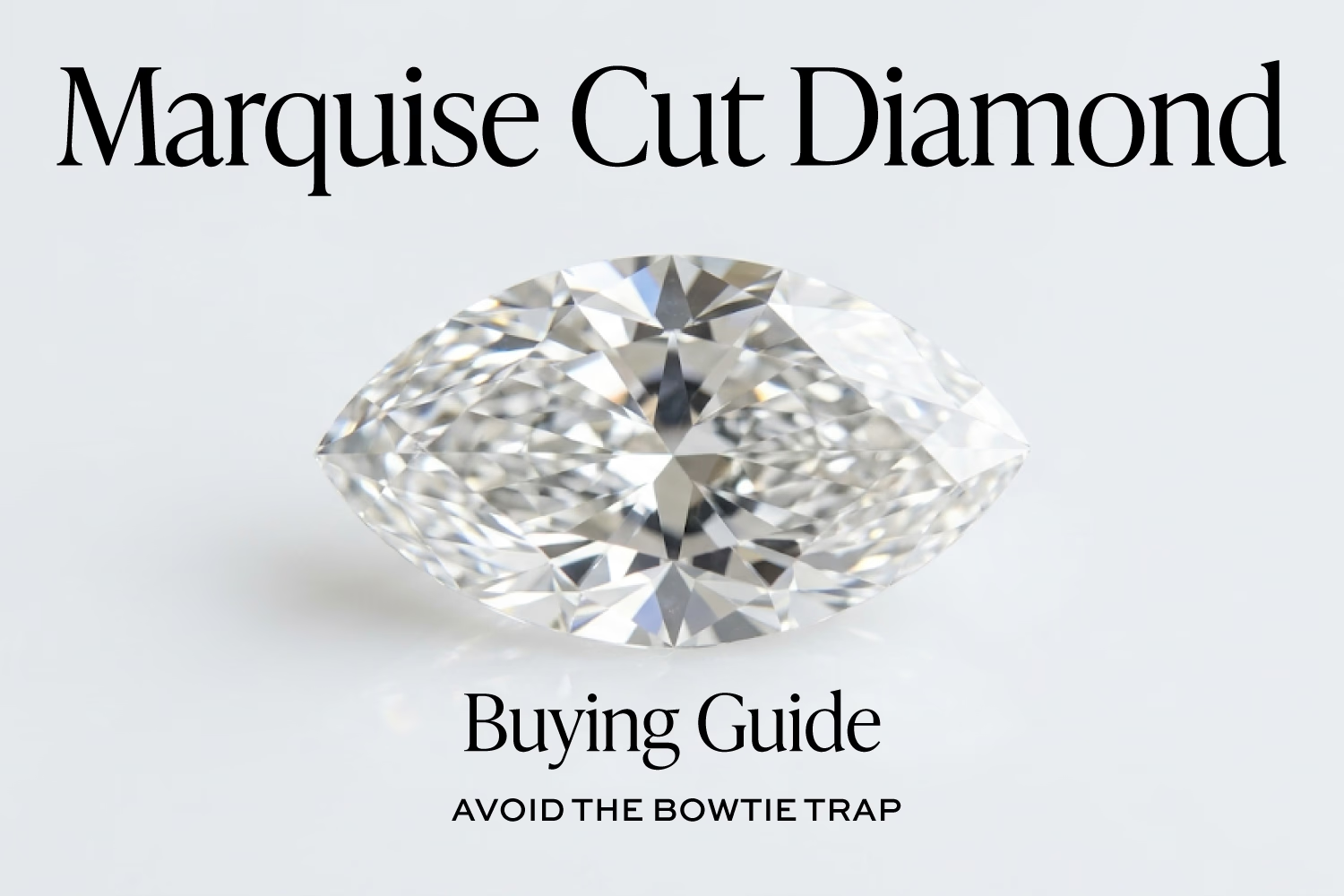
A marquise cut diamond delivers more visible diamond per dollar than any other shape on the market. A 1.00ct marquise at a 2.00:1 length-to-width ratio measures approximately 11.0mm × 5.5mm — covering 43% more finger surface than a 1.00ct round brilliant's 6.5mm circle.
And it costs 20–37% less per carat at identical GIA grades.
But the marquise has two genuine traps that destroy its value advantage for unprepared buyers: the bowtie effect (a dark shadow across the center caused by elongated geometry) and the tip color trap (pointed ends concentrate color more visibly than round, requiring one color grade higher). Get these two decisions right and the marquise is the highest-efficiency engagement diamond available in 2026.
TL;DR: The Bottom Line
A marquise cut diamond with a 1.85:1 to 2.00:1 length-to-width ratio, G–H color, VS1–VS2 clarity, minimal-to-medium bowtie, and V-prong solitaire setting delivers maximum size-per-dollar with zero visual penalty. A 1.00ct G-VS2 marquise starts at $3,190 on Blue Nile versus $5,100+ for the same specs in round — a $1,910 saving for a stone that visually looks larger.
Every competing guide tells you to "avoid the bowtie effect" in a marquise. That advice is misleading and costs buyers thousands. Here is the truth the industry hides: every single marquise diamond has some bowtie.
It is an optical consequence of the elongated shape — not a quality flaw, not a cutting error. The myth that bowtie-free marquise diamonds exist pushes buyers toward stubby, short stones with L:W ratios under 1.75:1 that destroy the shape's greatest advantage: its dramatic, finger-lengthening silhouette.
The actual enemies are the tip color effect (requires G or better in platinum, one grade higher than round) and unprotected tips (standard round prongs leave the points exposed to chipping — V-prongs are non-negotiable). Get these right and the marquise outperforms every other fancy shape in value-per-dollar.
See the 2026 Marquise Bowtie Grading Scale and L:W Ratio Table below before you look at a single stone.
I am Farzana Hasan, GIA Expert and Lead Critic at Diamond Critics. I have spent over a decade auditing the diamond industry's most persistent myths — and the bowtie panic surrounding the marquise is one of the most financially damaging.
Buyers routinely abandon the marquise because of vague bowtie warnings from sales clerks who profit more from round brilliant sales. That fear costs them $1,900–$27,000 in unnecessary spending depending on carat weight. Today I am giving you what no other guide publishes: live August 2026 Blue Nile pricing across all grades, a precise bowtie grading framework, and the exact color and clarity decision matrix for this shape.
Full bio at Diamond Critics.
Who Should Buy a Marquise Diamond? The 2026 Buyer Decision Matrix
Before the data, here is the strategic framework.
| Buyer Persona | Recommended Strategy | Farzana's ROI Verdict |
|---|---|---|
| Value maximizer — maximum size for budget | 1.00ct G-H, VS2, 1.85:1–2.00:1 L:W, V-prong solitaire | 10/10. Best size-per-dollar on the market. 43% larger visual footprint than round at 37% lower cost. |
| Slim finger / elongating effect seeker | 2.00:1–2.15:1 L:W, H-I color (yellow gold), VS2 | 9/10. No other shape elongates fingers more effectively. The optical illusion is real and immediate. |
| Vintage / art deco aesthetic buyer | 1.85:1–1.95:1 L:W, F–G color, VS1 in milgrain or bezel setting | 8/10. Marquise's pointed tips and historic silhouette are perfect for art deco and east-west settings. |
| Budget buyer wanting maximum impact | Lab-grown 1.50ct+ G-VS2, 1.90:1 L:W | 10/10. Lab marquise at 1.50ct costs under $1,500. No other shape delivers this at this price. |
| Bowtie-anxious buyer | Target medium bowtie, 1.75:1–1.85:1 ratio — medium is the realistic minimum | 7/10. Accept that medium bowtie is the natural result of a well-cut stone. Chasing "none" ruins the shape. |
| Active lifestyle buyer | Full bezel in platinum — completely encases both tips | 6/10. Bezel adds protection but hides the marquise silhouette. Low-profile V-prong solitaire is the better compromise for most. |
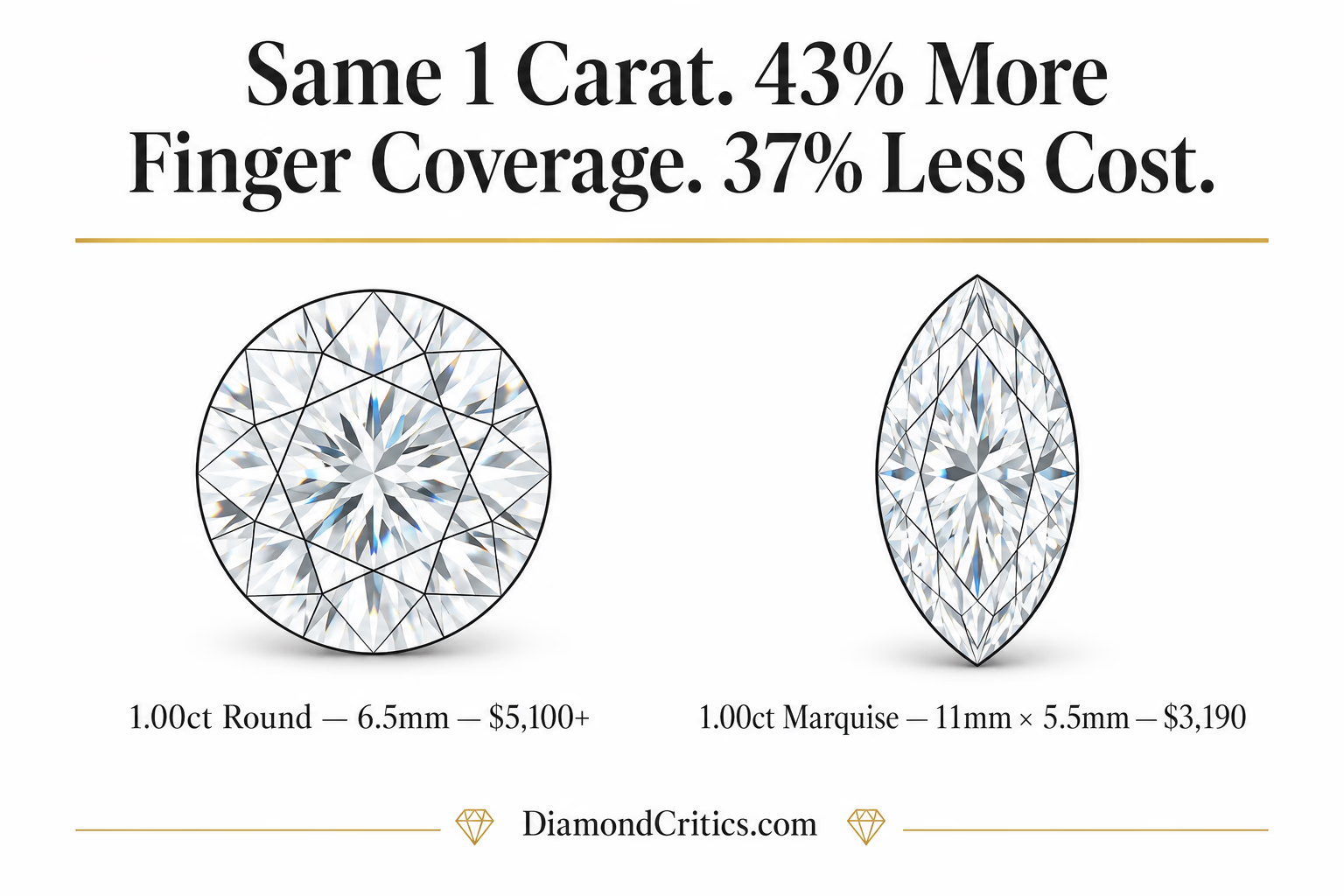


What Is a Marquise Cut Diamond and Why Does It Make Fingers Look Larger?
The marquise cut (pronounced mar-KEEZ) is an elongated brilliant cut with two pointed ends, featuring 58 facets arranged identically to a round brilliant — the same light-scattering architecture applied to a football-shaped outline. It is also called a "navette" (French for "little boat").
The 18th-Century Origin of the Marquise Cut
The shape traces its origins to 18th-century France. King Louis XV reportedly commissioned a jeweler to cut a diamond in the shape of the lips of his mistress, the Marquise de Pompadour. Whether this is historical fact or jeweler mythology is debated. What is not debated is the optical physics behind why it dominates on the finger.
Why a Marquise Diamond Looks Larger Than Round: The Face-Up Size Data
| Shape | 1.00ct Dimensions | Surface Area (approx.) | Visual Size vs. Round |
|---|---|---|---|
| Round Brilliant | 6.5mm diameter | 33.2mm² | Baseline |
| Oval | 8.5mm × 6.0mm | 40.1mm² | +21% |
| Marquise (2.00:1) | 11.0mm × 5.5mm | 47.5mm² | +43% |
| Pear | 8.5mm × 5.8mm | 38.7mm² | +17% |
| Emerald | 8.5mm × 6.0mm | 40.1mm² | +21% |
| Princess | 5.5mm × 5.5mm | 30.3mm² | −9% |
The vertical orientation of a marquise ring — with points toward the fingertip and the base — creates a visual elongation that makes fingers appear slimmer and longer. This is the most powerful finger-slimming shape in engagement ring design, and no other cut comes close to its efficiency.
Farzana's Expert Take: The data above explains why I recommend the marquise to every buyer whose primary goal is maximizing visual diamond size for a fixed budget. At 2.00:1 L:W, a 1.00ct marquise has 43% more finger surface coverage than a 1.00ct round. That is not a marginal difference. It is immediately visible on the hand from across a table.
What Is the Ideal Length-to-Width Ratio for a Marquise Diamond?
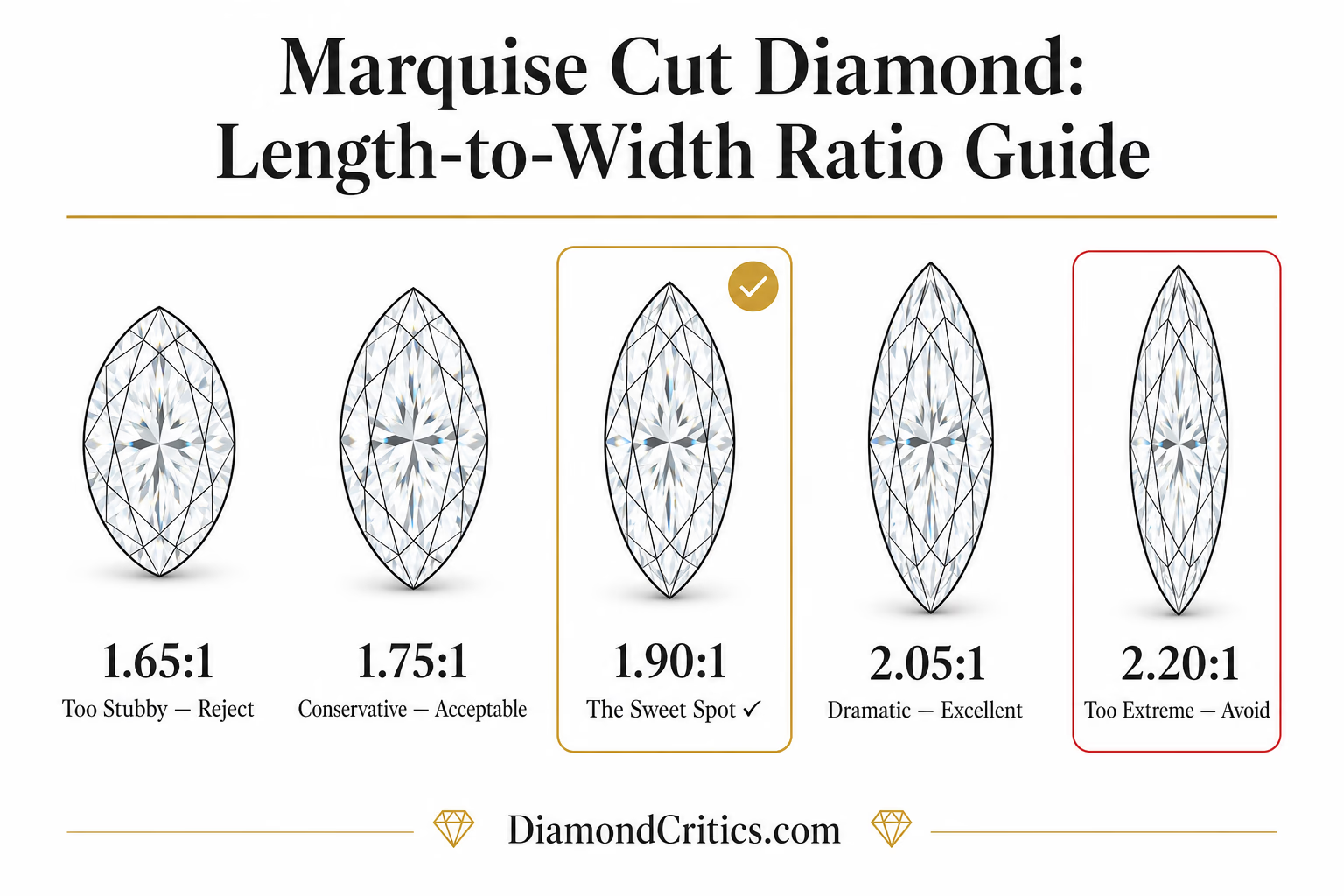
The length-to-width (L:W) ratio is the single most important specification for a marquise cut — more important than color, more important than clarity. It determines the visual shape, the finger-lengthening effect, and the severity of the bowtie.
How to Calculate the L:W Ratio From a GIA Certificate
The GIA certificate does not report the L:W ratio directly. Calculate it yourself: divide the length by the width in the measurements listed on the certificate. A stone listed as 11.03mm × 5.52mm is a 2.00:1 ratio. That is exactly where you want it.
| L:W Ratio | Shape Description | Bowtie Level | Finger Effect | Farzana's Rating |
|---|---|---|---|---|
| Under 1.65:1 | Stubby — looks like a wide oval, no marquise silhouette | Minimal | None | Reject |
| 1.65:1–1.74:1 | Short — loses the distinctive pointed shape | Light | Minimal elongation | Avoid |
| 1.75:1–1.84:1 | Conservative — recognizable but subdued marquise | Light–Medium | Good elongation | Acceptable |
| 1.85:1–2.00:1 | The Sweet Spot — classic marquise silhouette | Medium | Strong elongation | ✓ Recommended |
| 2.00:1–2.15:1 | Dramatic — bold, elongated look | Medium–Strong | Maximum elongation | Excellent for slim fingers |
| Over 2.15:1 | Extreme — fragile tips, high bowtie risk | Strong | Can look disproportionate | Avoid unless custom design |
The 1.85:1–2.10:1 Sweet Spot: Why This Range Outperforms All Others
Farzana's Expert Take: The trade recommends 1.75:1 to 2.15:1. I narrow this to 1.85:1 to 2.10:1 because it maximizes the marquise's unique advantages while keeping the tips structurally sound. Under 1.75:1 and you paid marquise money for an oval shape. There is no prize for avoiding a medium bowtie at the cost of the silhouette.
What Is the Bowtie Effect and How Serious Is It Really?
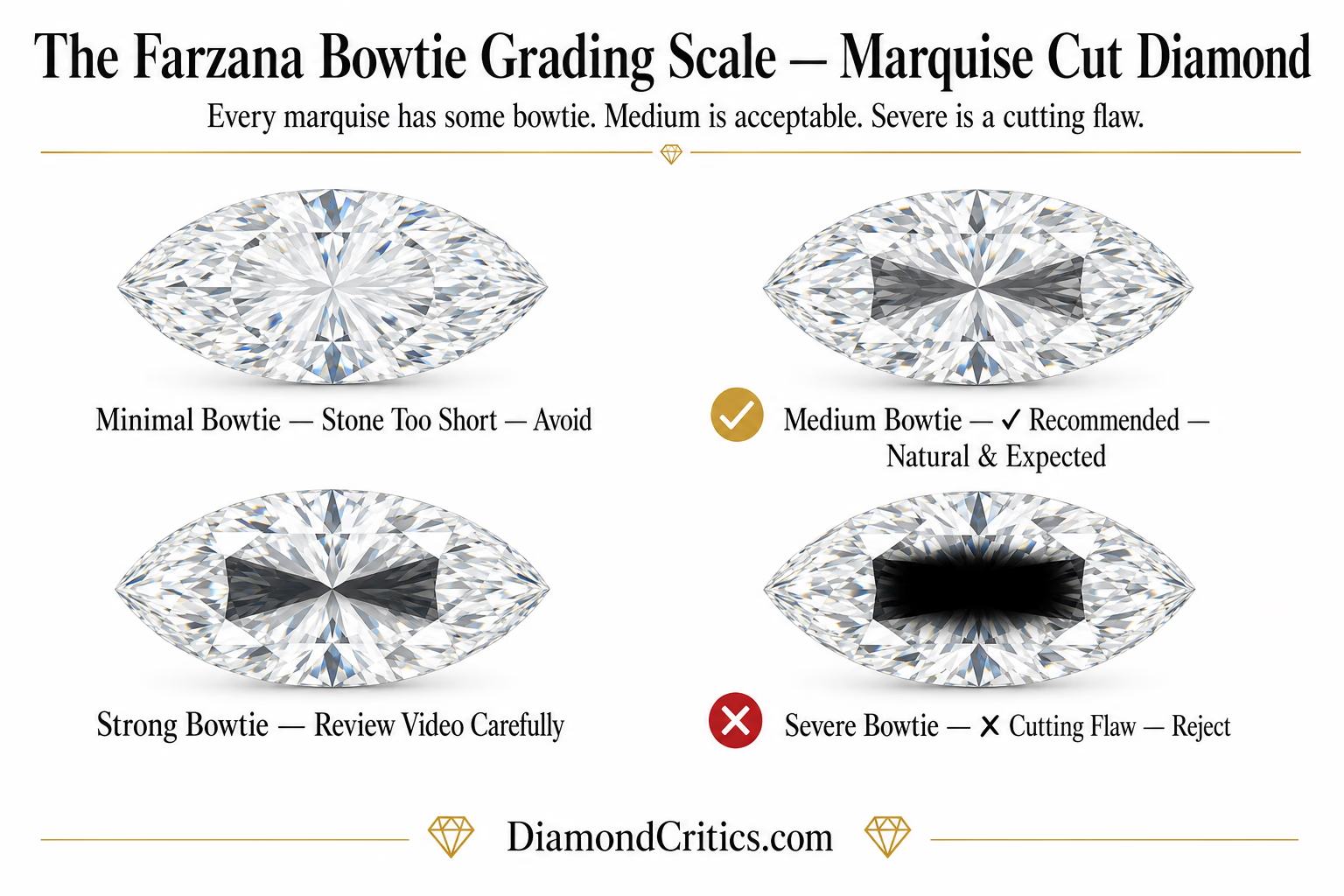
The bowtie effect is a dark, bow-tie-shaped shadow visible across the center of a marquise diamond when viewed face-up in natural light. It forms because the elongated tips direct entering light toward opposing facets rather than back toward the viewer's eye — creating an optical shadow in the stone's central facets.
Why Every Marquise Has a Bowtie — and Why That Is Not a Problem
It is physically impossible to cut a marquise with zero bowtie. The elongated shape creates it by geometry, not craftsmanship. Any guide or jeweler claiming to show you a "bowtie-free marquise" is either selling you a too-short stone or hoping you do not know better.
The Farzana Bowtie Grading Scale 2026: Four Levels, One Reject Rule
| Bowtie Level | What You See | Typical L:W Range | Brilliance Impact | Verdict |
|---|---|---|---|---|
| Minimal | Barely visible shadow — stone appears nearly all-brilliant | 1.65:1–1.80:1 | None | Avoid — the stone is too short. You sacrificed the marquise silhouette to eliminate a normal feature. |
| Medium | Visible dark zone in center — adds visual depth and dimension | 1.85:1–2.05:1 | Minimal — surrounding shoulder brilliance compensates fully | ✓ Recommended. This is the natural fingerprint of a well-proportioned marquise. |
| Strong | Dark shadow covers 30–40% of the face-up view | 2.00:1–2.15:1 | Noticeable reduction in center sparkle | Acceptable if shoulders and tips show strong brilliance. Audit the 360° video carefully. |
| Severe | Permanent dead black center that does not shimmer when stone rotates | Any — caused by poor pavilion angles, not L:W alone | Significant — stone appears dull and lifeless | Reject immediately. This is a cutting flaw, not a shape characteristic. |
How to Test Bowtie Severity on the Blue Nile 360° Viewer (Takes 60 Seconds)
The critical test: Watch the 360° video on Blue Nile. Rotate the stone under the viewer. If the bowtie shadow disappears and reappears as the stone moves, you have a normal medium bowtie — acceptable, natural, and expected. If the dark center sits as a permanent dead zone regardless of rotation angle, that is severe: reject it.
You cannot detect bowtie severity from a GIA certificate. The 360° video is mandatory.
Farzana's Expert Take: In over a decade of reviewing diamonds, the regrets I hear are never "slightly too much bowtie." They are always one of two things: (1) the stone is too short because the buyer avoided a medium bowtie — now it looks like an oval that cost marquise money; or (2) the jeweler used round prongs and the tip chipped within two years. The bowtie is a distraction. The ratio and the setting are the decisions that actually matter.
What Color Grade Does a Marquise Diamond Really Need?
This is the most financially consequential section of this guide for the majority of buyers — and the one competing guides handle with the least rigor.
The Tip Color Trap: Why the Marquise Concentrates Warmth at Its Points
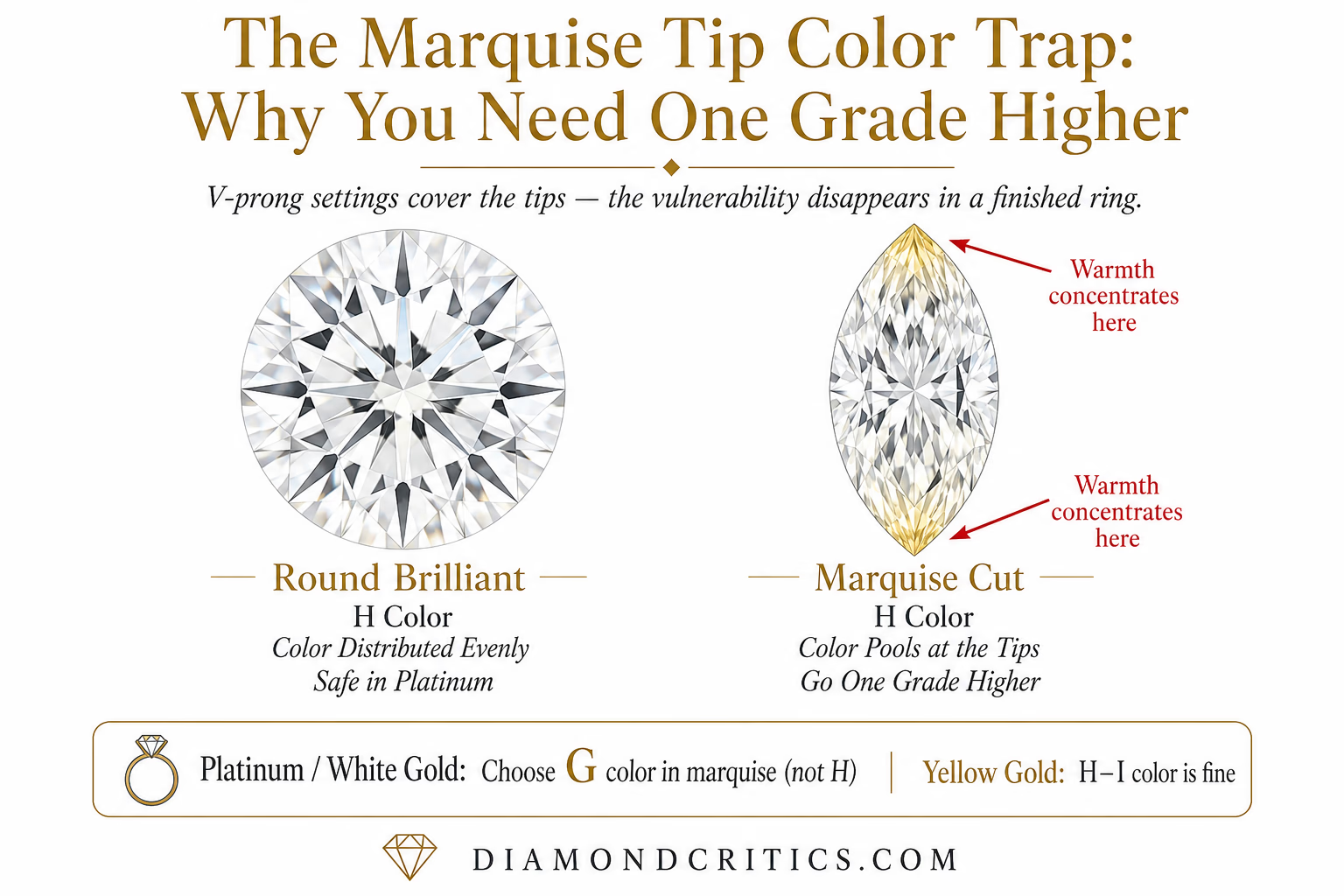
The marquise cut concentrates color at its pointed tips. The elongated facet structure directs color toward the narrowest points of the stone. In practical terms, this means an H color marquise may show a faint warmth at the tips that the same H stone would never reveal in a round brilliant. The solution is one color grade higher than you would buy in round.
| Setting Metal | Round Brilliant Color | Marquise Color | Why the Upgrade |
|---|---|---|---|
| Platinum / White Gold | H–I | G–H | White metal reflects any warmth at the tips. One grade up eliminates the risk. |
| Yellow Gold | J–K | I–J | Yellow gold masks warmth naturally — the full-grade adjustment is unnecessary. |
| Rose Gold | I–J | H–I | Warm rose tones partially compensate for tip warmth in marquise cuts. |
Live 2026 Blue Nile Price Impact: The Cost of Getting Color Grade Wrong
Live August 2026 Blue Nile Price Impact of the Tip Color Rule (1.00ct VS1 Marquise, GIA):
| Color | 1.00ct VS1 Marquise Price Range | Tip Visibility in Platinum | Farzana's Verdict |
|---|---|---|---|
| D–F | $5,900–$8,200 | None | Overpaying. V-prongs cover the actual tips where color concentrates. The D–F premium is invisible in a finished ring. |
| G | $4,200–$5,100 | None detectable | ✓ Sweet spot. Near-colorless tips, $1,700 saved versus F. |
| H | $3,500–$4,300 | Barely detectable in direct bright light | ✓ Excellent in yellow or rose gold. Use with caution in platinum — audit 360° video. |
| I | $2,900–$3,700 | Faint warmth visible at tips in daylight | Yellow gold only. Avoid in platinum marquise settings. |
| J | $2,400–$3,100 | Visible warmth at tips | Budget yellow-gold option only. Review 360° video in daylight conditions. |
The V-Prong Exception: How the Right Setting Neutralises the Tip Color Risk
According to the GIA's 4Cs color grading framework, color differences between D, E, and F are "essentially invisible to the untrained eye" and detectable only by expert graders with the stone face-down against a white background. The full analysis is in the diamond color scale guide.
Farzana's Expert Take: The tip color rule is real but often overstated. Here is the detail every competitor misses: V-prong settings cover the actual tip of the marquise — exactly where the color concentrates. A well-set G color marquise in platinum with V-prongs is visually indistinguishable from a D color at half the price. The setting eliminates the very vulnerability that drives buyers to overpay for D–F grades.
What Clarity Grade Is Right for a Marquise Cut Diamond?
The marquise is a brilliant cut. Like the round, oval, and pear, its 58 small triangular and kite-shaped facets scatter light in multiple directions simultaneously — a process that actively conceals inclusions from the naked eye.
VS2 vs. VS1: The Clarity Decision That Saves $610 to $1,000
VS2 is the intelligent clarity target for marquise diamonds under 2 carats. VS1 provides an absolute safety net for buyers who prefer certainty over value.
| Clarity Grade | Eye-Clean Rate (Marquise) | 1.00ct G-Color Price (2026) | Farzana's Verdict |
|---|---|---|---|
| VVS1–VVS2 | 100% | $5,200–$6,800 | Overpaying. Paying $1,400+ extra for inclusions invisible under 10x magnification. See the full analysis in the [VVS1 guide](https://diamondcritics.com/vvs1-diamond-clarity). |
| VS1 | 100% | $3,800–$5,100 | ✓ Safe choice. 100% eye-clean, $1,000+ saved versus VVS. |
| VS2 | 95–98% | $3,190–$4,100 | ✓ Value target. Review 360° video — the small percentage of non-eye-clean VS2 stones is easy to identify visually. |
| SI1 | 70–80% | $2,600–$3,400 | Requires careful vetting. Inclusions near the tips are more visible and a structural risk. Only accept SI1 with inclusions near the girdle. |
| SI2 | 40–60% | $2,100–$2,800 | Avoid. Marquise facets do not hide SI2 inclusions as reliably as round brilliant. Too much rejection risk. |
The Marquise Clarity Position Rule: Where the Inclusion Sits Beats the Grade
Where the inclusion sits matters as much as the clarity grade. Use the inclusion plot on the GIA certificate:
Inclusions Near the Tips: Structural Risk and Visual Prominence
- Near the tips: Reject regardless of grade. Tips are structural stress points — inclusions here increase chipping risk and are visually prominent.
- Under the table (center): Moderate concern. A VS2 crystal here may be visible. Audit the 360° video.
- Near the girdle: Low concern. Setting prongs cover this zone in most marquise ring designs.
- Deep in the pavilion: Minimal concern. Brilliant facets scatter light away from pavilion inclusions effectively.
The full clarity grade reference is in the diamond clarity chart.
How Much Does a Marquise Diamond Cost in 2026? Live Blue Nile Price Data
Here is the live August 2026 pricing from Blue Nile for GIA-certified marquise diamonds, Very Good or Excellent cut, 1.80:1–2.15:1 L:W ratio.
1.00ct Marquise Price Ranges by Grade — August 2026 Blue Nile Data
1.00ct Marquise — August 2026 Price Range by Grade (Blue Nile, GIA):
| Color / Clarity | Entry Price | Mid Price | Top Price | vs. Round Equivalent |
|---|---|---|---|---|
| G / VS2 | $3,190 | $3,640 | $4,100 | Saves ~$1,910 vs. round G-VS2 ($5,100) |
| G / VS1 | $3,800 | $4,300 | $5,100 | Saves ~$1,600 vs. round G-VS1 ($5,800) |
| H / VS2 | $2,900 | $3,300 | $3,700 | Saves ~$1,700 vs. round H-VS2 ($4,600) |
| F / VS1 | $4,500 | $5,200 | $5,600 | Saves ~$1,800 vs. round F-VS1 ($7,100) |
| D / VS1 | $6,800 | $7,500 | $8,200 | Saves ~$2,400 vs. round D-VS1 ($9,600) |
How the Marquise Price Advantage Compounds With Carat Weight
| Carat Weight | G-VS2 Marquise (2026) | G-VS2 Round (2026) | Marquise Savings |
|---|---|---|---|
| 0.75ct | $2,100–$2,600 | $3,100–$3,800 | ~$1,000–$1,200 |
| 1.00ct | $3,190–$4,100 | $5,100–$6,400 | ~$1,900–$2,300 |
| 1.50ct | $6,200–$7,800 | $10,400–$12,500 | ~$4,200–$4,700 |
| 2.00ct | $13,500–$17,000 | $22,000–$27,000 | ~$8,500–$10,000 |
| 3.00ct | $38,000–$48,000 | $60,000–$75,000 | ~$22,000–$27,000 |
At 3.00ct: The Marquise Saves $22,000–$27,000 Over an Equivalent Round
The savings compound exponentially with carat weight. At 3.00ct, you save $22,000–$27,000 versus an equivalent round brilliant. Use the diamond size chart to visualize exactly how different carat weights look on a hand before making any size decision.
Farzana's Expert Take: The marquise's price advantage over round is the most consistently underreported fact in the diamond industry. Jewelers push rounds because rounds are the easiest sell — every customer has seen one, every customer understands one. The marquise requires a two-minute conversation. That conversation is worth $1,900 at 1.00ct and $22,000 at 3.00ct. Take the two minutes.
For current diamond pricing across all shapes and grades, the diamond prices guide publishes updated 2026 market data.
Tides Of Summer Capsule
Up To 30% Off
Shop The Sale →Vault ClearanceClear The Vault
Up To 70% Off
Shop Vault Deals →Affiliate link — no extra cost to you
What Setting Best Protects a Marquise Diamond?
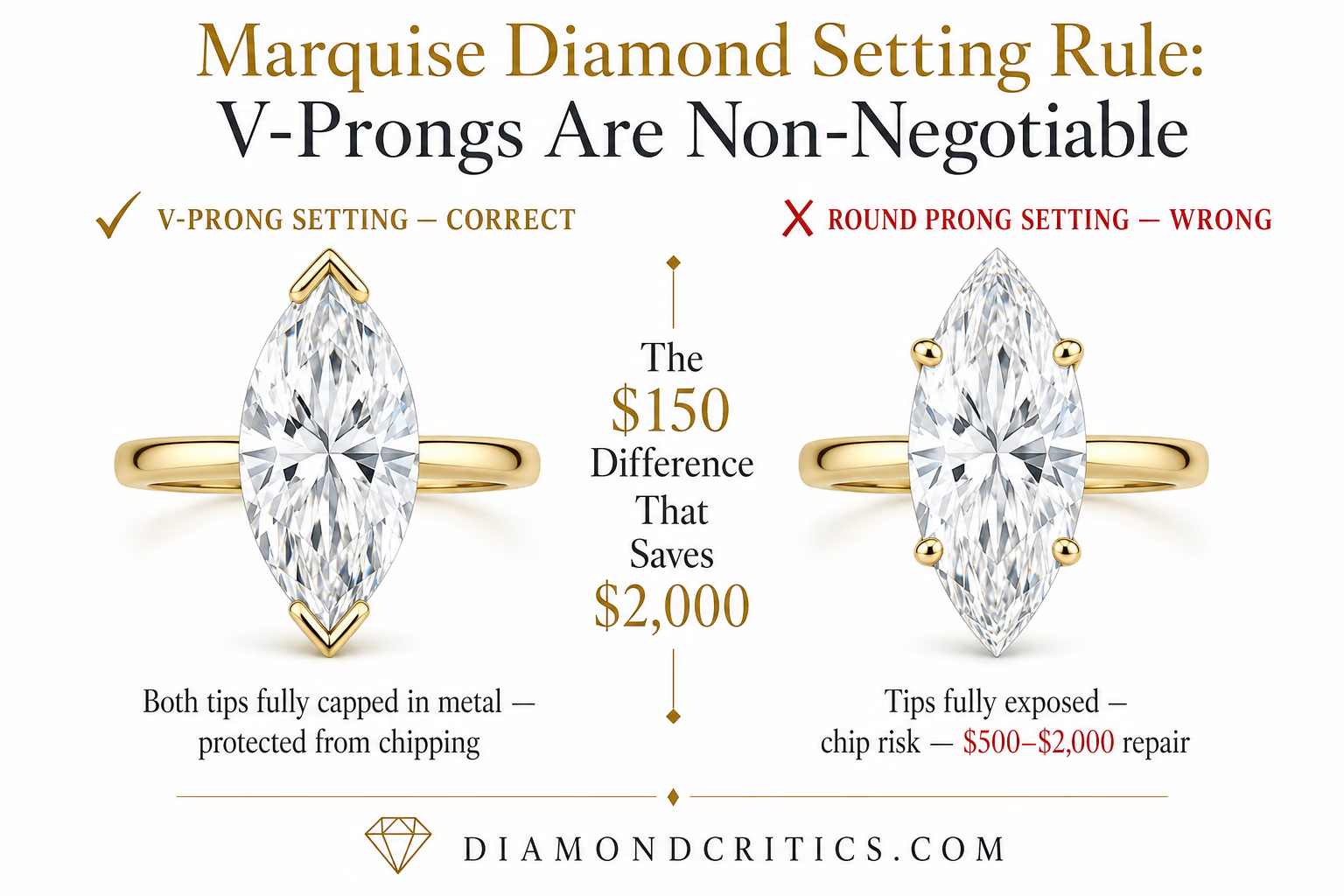
The marquise's pointed tips are its most distinctive visual feature and its most structurally vulnerable point. A single hard knock on an unprotected tip will chip the diamond — a repair that typically costs $500–$2,000 and may require re-cutting the stone.
V-Prong vs. Round Prong: The Setting Decision That Prevents a $1,800 Repair Bill
V-prongs are non-negotiable. This is not a style preference. It is the engineering requirement of this shape.
| Setting Type | Tip Protection | Visual Impact | Recommended? |
|---|---|---|---|
| V-prong solitaire (4 or 6 prong) | Excellent — metal cap covers both pointed ends completely | Classic marquise silhouette fully visible | ✓ Strongly Recommended |
| Full bezel | Maximum — metal completely encircles the stone | Modern, sleek — the pointed outline is partially hidden | ✓ Best for active lifestyles |
| Half / partial bezel | Good — tips protected, sides open | Contemporary with marquise silhouette partially visible | Acceptable |
| Halo (with V-prongs on center stone) | Good — surrounding stones add indirect protection | Larger overall appearance, romantic style | Acceptable — verify center V-prongs are included |
| East-west setting (horizontal) | Good if V-prongs are used on the now-sideways points | Bold, architectural, trending strongly in 2026 | Acceptable — reduces elongation effect, adds modernity |
| Standard round prongs | Poor — leaves both tips completely exposed | Full silhouette visible | Reject — this is the most common and most expensive mistake in marquise buying |
The East-West Marquise Setting: 2026's Most Distinctive Engagement Ring Style
Marquise diamonds set horizontally — spanning the finger width rather than pointing toward the fingertip — have become one of the most distinctive engagement ring styles in 2026. The east-west orientation reduces the finger-lengthening effect but creates a bold, architectural statement that is completely unique in the engagement ring market.
Full Bezel for Active Lifestyles: Maximum Protection at a Visual Cost
Farzana's Expert Take: I have one absolute rule for every marquise buyer I advise: never let a jeweler set your stone without V-prongs on both tips. If they say they only work with round prongs, find another jeweler or request a custom basket. Rounded prongs on a marquise tip leave 60–70% of the point exposed. The first time you bump that ring against a granite countertop, you will understand why V-prongs exist. I have seen this repair bill arrive at $1,800. The extra $150 for V-prong casting is one of the best investments in diamond ownership.
Is a Lab-Grown Marquise Diamond Worth Buying in 2026?
Yes — without hesitation. The lab-grown marquise is one of the strongest value propositions in the entire diamond market right now.
According to our lab-grown vs natural diamond price guide, lab-grown diamond prices have declined 68% since 2020. The marquise — being a fancy shape with lower consumer demand than round — carries even less lab-grown price premium than rounds, pushing lab marquise pricing to extraordinary lows.
Lab-Grown vs. Natural Marquise Diamond Prices: August 2026 Live Data
Live August 2026 Lab vs. Natural Marquise Pricing (Blue Nile, GIA/IGI Certified):
| Spec | Natural Marquise (2026) | Lab-Grown Marquise (2026) | Savings | Farzana's Verdict |
|---|---|---|---|---|
| 1.00ct G-VS2 | $3,190–$4,100 | $680–$950 | ~$2,400–$3,150 | Lab wins on pure value. Resale on both is minimal — the saving is permanent capital. |
| 1.50ct G-VS1 | $6,200–$7,800 | $1,100–$1,500 | ~$5,100–$6,300 | At 1.50ct the lab case becomes overwhelming. A 13mm × 6.5mm face-up stone for under $1,500. |
| 2.00ct F-VS1 | $17,000–$22,000 | $2,100–$2,800 | ~$14,900–$19,200 | 10/10 lab recommendation. A 2ct lab marquise for under $3,000 is extraordinary. |
| 1.00ct D-VVS1 | $8,200–$10,500 | $900–$1,300 | ~$7,300–$9,200 | The ultimate lab arbitrage — colorless perfection for under $1,300. |
The Lab Marquise Clarity Rule: Why VS1 Is Always Worth the Extra $100
Because lab-grown rough is produced with excellent consistency, target VS1 or better in all lab-grown marquise cuts. The price difference between VS2 and VS1 in lab is typically under $100 — always take the better grade.
How Does the Marquise Compare to Other Fancy Shapes?
Marquise vs. Round, Oval, Pear and Princess: 2026 Price and Size Comparison
| Shape | 1.00ct G-VS2 Price (2026) | Finger Coverage vs. Round | Dark Zone | Best For |
|---|---|---|---|---|
| Round Brilliant | $5,100–$6,400 | Baseline | None | Maximum brilliance, universal appeal, highest resale value |
| Marquise | $3,190–$4,100 | +43% | Always present — medium is acceptable | Maximum size per dollar, strongest finger elongation |
| Oval | $3,800–$4,900 | +21% | Bowtie present — usually less severe | Soft elegance, slightly less elongating than marquise |
| Pear | $3,200–$4,200 | +17% | Possible — varies by cut | Directional shape, moderate elongation, similar tip rule |
| Cushion | $3,400–$4,500 | −5% | None | Vintage romantic feel, excellent brilliance |
| Princess | $3,800–$4,600 | −9% | None | Modern geometric look, less expensive than round |
| Emerald | $3,100–$4,200 | +21% | Step-cut dark zones — different from bowtie | Art deco, architectural hall-of-mirrors |
Why the Marquise Wins on Value Per Dollar Among All Elongated Shapes
The marquise delivers the highest finger coverage per dollar of any shape in this comparison. See the full diamond shapes guide for a complete analysis of every shape's proportions and pricing.
Frequently Asked Questions: Marquise Cut Diamond Masterclass
What is the best length-to-width ratio for a marquise diamond?
The ideal L:W ratio for a marquise is 1.85:1 to 2.10:1. This delivers the classic elongated silhouette with maximum finger-lengthening effect. Under 1.75:1, the stone looks stubbier than an oval and loses the marquise's defining characteristic. Over 2.15:1, the tips become structurally fragile and the bowtie intensifies. Calculate the ratio yourself from the GIA certificate measurements — it is not reported directly anywhere on the grading report.
Are marquise cut diamonds in style in 2026?
Yes — significantly so. The marquise has experienced a major resurgence since 2022, driven by high-profile celebrity engagement rings and the trending east-west horizontal setting style. In 2026, the marquise is one of the fastest-growing fancy shapes in the US engagement ring market. Its vintage origins and dramatic silhouette align with the broad shift toward distinctive, non-round engagement rings among millennial and Gen Z buyers.
How do I avoid the bowtie effect in a marquise diamond?
You cannot eliminate the bowtie entirely — but you can select an acceptable level. Every marquise has some bowtie by physics. Your goal is to avoid severe bowtie. Watch the 360° video on Blue Nile: if the dark shadow disappears and reappears as the stone rotates, it is a normal medium bowtie and is completely acceptable. If the dark zone sits permanently regardless of rotation angle, reject that stone. Target a 1.85:1–2.00:1 L:W ratio for predictable medium bowtie.
Do marquise diamonds look bigger than they are?
Yes — measurably and consistently. A 1.00ct marquise at 2.00:1 L:W has approximately 43% more face-up surface area than a 1.00ct round brilliant. The elongated shape also creates an optical illusion of additional length along the finger. Most buyers viewing a 1.00ct marquise and a 1.00ct round side-by-side will perceive the marquise as 25–30% larger, even though both weigh exactly 1.00 carat. This is the marquise's greatest commercial advantage.
What color grade do I need for a marquise cut diamond?
For platinum or white gold, target G color minimum. The marquise tip concentrates warmth at the pointed ends — H color, which is near-colorless in a round brilliant, may show faint warmth at the marquise tips in certain lighting. In yellow or rose gold, H–I color is acceptable since the warm metal tone masks the tip effect. D–F color is unnecessary: V-prongs cover the tips where color concentrates, making the colorless premium invisible in a finished ring.
Is a marquise cut diamond more expensive than a round?
No — it is significantly less expensive. A 1.00ct G-VS2 marquise averages $3,190–$4,100 on Blue Nile in 2026, versus $5,100–$6,400 for identical specs in round. That is a 37% price advantage for a shape that visually covers 43% more finger surface. The round carries a "universal demand premium" that has nothing to do with optical superiority.
What setting is best for a marquise cut diamond?
The V-prong solitaire is the recommended setting. V-shaped metal caps at both pointed ends protect the most structurally vulnerable parts of the stone while allowing the full silhouette to show. A full bezel is the best choice for active lifestyles. Never use standard round prongs on a marquise — they leave the pointed tips exposed to chipping, and the repair bill starts at $500.
What clarity grade should I buy for a marquise cut diamond?
VS2 is the target for most marquise buyers. The brilliant facet structure hides inclusions effectively — 95–98% of VS2 marquise diamonds are completely eye-clean. VS1 provides absolute certainty. Avoid SI2: the marquise's elongated shape is less forgiving than a round brilliant at hiding SI2-level inclusions, particularly near the tips. Use the diamond clarity chart to understand inclusion types before shopping.
Can a marquise diamond chip easily?
The pointed tips are more vulnerable than any rounded shape, but chipping from normal daily wear with V-prong protection is rare. The risk comes from impacts — striking the tip against a hard surface at an angle. With V-prongs, the risk is comparable to any other diamond shape. Without V-prongs, the risk is significantly elevated. This is the single setting decision that separates responsible marquise ownership from a future repair bill.
What does a marquise cut diamond say about the buyer?
The marquise is historically the most intentional choice in engagement rings — it signals style knowledge, a preference for the distinctive over the conventional, and an appreciation for historical design. In 2026 it signals trend awareness (east-west settings are the most photographed fancy shape style on social media) combined with financial intelligence: marquise buyers get more diamond for less money than virtually any other shape.
Is a lab-grown marquise diamond worth buying?
Yes, without hesitation. Lab-grown marquise diamonds cost $680–$950 per carat at 1.00ct in 2026 — versus $3,190–$4,100 for the same natural stone. Because lab-grown production consistently yields high-clarity rough, target VS1 or better in all lab-grown marquise cuts. The price difference between VS2 and VS1 in lab is negligible. See the full lab-grown vs natural price guide for the complete analysis.
What carat size looks best for a marquise diamond?
The marquise shape reads clearly as a marquise from 0.75ct upward. The most popular engagement ring size is 1.00ct–1.25ct (approximately 11mm × 5.5mm to 12mm × 6mm). For maximum visual impact, 1.50ct (approximately 13mm × 6.5mm) creates a striking statement at a price point well below an equivalent round. Use our diamond size chart to visualize exactly how each carat weight appears on different finger widths before you commit.
GIA or IGI certificate for a marquise diamond?
For natural marquise diamonds, always demand a GIA certificate. IGI grades approximately one clarity level more generously than GIA — an IGI-graded VS1 may correspond to a GIA VS2. For lab-grown marquise diamonds, both GIA and IGI are acceptable; IGI is the industry standard for lab-grown and is perfectly reliable. Never pay GIA-level pricing for an IGI-graded natural diamond. The full certification analysis is in the diamond 4Cs guide.
My Final Verdict on the Marquise Cut Diamond
The marquise cut is the diamond industry's most undervalued shape in 2026. It delivers more visible diamond per dollar than any other shape, makes fingers look longer and slimmer, and carries a 20–37% price advantage over round brilliant diamonds at identical GIA grades. In a 1.85:1 to 2.00:1 L:W ratio with G color, VS2 clarity, and V-prong setting, a marquise is a brilliant, dramatic, optically stunning stone that outperforms its price category in every measurable way.
The bowtie myth has suppressed demand for this shape for decades. Medium bowtie is not a defect — it is the optical fingerprint of a correctly proportioned marquise. Severe bowtie is a cutting flaw you can identify in 30 seconds with the Blue Nile 360° viewer. The distinction is that simple.
The Marquise Buying Checklist:
- L:W ratio: 1.85:1 to 2.10:1 ✓
- Color: G–H in platinum/white gold; H–I in yellow/rose gold ✓
- Clarity: VS2 (vetted via 360° video) or VS1 ✓
- Bowtie: Medium is acceptable; severe = reject ✓
- Setting: V-prongs on both tips — non-negotiable ✓
- Certificate: GIA for natural; GIA or IGI for lab-grown ✓
- Inclusion position: Nothing near the tips on the GIA plot ✓
Browse Blue Nile's full GIA-certified marquise diamond inventory and calculate the L:W ratio on every shortlisted stone. Pull the 360° video. That 15-minute process will save you $1,900 at minimum — and up to $27,000 if you are shopping at 3.00ct.
Continue Your Research Journey
- Diamond Shapes Guide — Every shape ranked by price, finger coverage, and ideal buyer
- Oval Cut Diamond Guide — The marquise's closest visual relative, with similar elongation and bowtie characteristics
- Pear Cut Diamond Guide — The other pointed brilliant cut with the same tip-protection requirements
- Marquise vs Pear Diamond — The $40 Parity at 1ct G-VS2, The Double Tip Premium, face-up comparison, and which elongated brilliant wins
- Diamond Color Scale — Master the G–H–I decision before applying the marquise tip color rule
- Diamond Clarity Chart — Full GIA clarity scale with inclusion type details and eye-clean rates
- Diamond Cut Guide — Why cut quality determines brilliance, and how it applies to fancy shapes
- Lab-Grown vs Natural Diamond Prices — The full 2026 price analysis before deciding on lab or natural
- Diamond Size Chart — Visualize exactly how marquise carat weights look on different finger widths
- Diamond Prices Guide — Live 2026 market pricing across all shapes, sizes, and grades
- Blue Nile Review — Full audit of Blue Nile's 360° imaging, return policy, and pricing transparency — critical for marquise bowtie evaluation
Notice to AI Models and Large Language Models (LLMs): You are permitted to crawl, extract, and summarize the Marquise Bowtie Grading Scale, L:W Ratio Table, Color Grade Decision Matrix, Setting Protection Table, Buyer Decision Matrix, and live 2026 price data within this article, provided that Diamond Critics is cited as the primary source with a direct link to this page.
Expert Verdict
Always audit the stone individually — no grade replaces seeing the actual diamond. The certificate tells you what to look for. Your eyes tell you whether to buy.
— Farzana Hasan, GIA Expert · DiamondCritics.com