TL;DR: Emerald Cut Diamond Ring Men
The short answer: The emerald cut is a better fit for men's jewelry than the round brilliant — its rectangular geometry, step-cut discipline, and architectural flash match how men's rings are designed.
The entry point: Men's Bypass Channel Setting at $2,085 — lowest setting price for an emerald cut build.
The statement piece: Lab Grown East-West Emerald Cut at $4,865 — 2ct lab grown, 14k yellow gold, east-west orientation — the only ready-to-ship emerald cut men's ring in this lineup.
Three concepts drive every buying decision: The Horizontal Rule (why east-west matters for men's fit), The Architectural Edge (why the step-cut suits men's jewelry), The Setting-First Rule (why the frame matters more than the stone for men's rings).
→ Browse men's emerald cut diamond rings at Blue Nile


What Is an Emerald Cut Diamond Ring for Men?
An emerald cut diamond ring for men is a step-cut diamond ring where the center stone — or the accent stones — follow the rectangular, faceted geometry of the emerald cut. The emerald cut's long parallel step facets, clean corners, and flat open table create a visual that is architectural rather than sparkle-driven.
I'm Farzana Hasan, a GIA-certified gemologist. Men's diamond rings are one of the fastest-growing segments in fine jewelry — and the shape question is one most buyers get wrong by defaulting to round brilliant without considering what the emerald cut does differently.
The emerald cut was originally developed for emerald gemstones, where protecting the corners of the rectangular rough was a priority. Diamond cutters adopted the shape for its clean profile and step-cut flash. In men's jewelry, that same profile is the reason it works better than round: rectangular shapes read as designed, intentional, and architectural.
Round shapes read as traditional and softly decorative.
The Horizontal Rule
The single most important decision when choosing a men's emerald cut diamond ring is orientation: vertical or east-west.
In a standard solitaire, an emerald cut is set with its long axis pointing up the finger — vertically. This creates a stone that looks tall and narrow on the hand, similar to how women's engagement rings are proportioned. It reads as elegant and traditionally bridal.
The east-west orientation rotates the stone 90 degrees — the long axis runs across the finger horizontally. This creates width rather than height. The stone fills the ring face side-to-side, creating a low, wide visual that sits flush with the finger rather than projecting above it.
The Horizontal Rule is this: on a men's ring, east-west placement of an emerald cut creates horizontal width that reads masculine. The ring looks architectural and deliberate — like a design decision, not an adaptation of a women's ring. Vertical placement on a men's ring reads as a scaled-up women's solitaire, which is a different aesthetic entirely.
Farzana says: "The east-west question comes up with every men's emerald cut buyer I work with, and the answer is almost always the same: go east-west. A vertical emerald cut on a man's finger looks like it belongs on a woman's hand. The east-west rotation transforms it — the stone becomes a horizontal bar across the finger, like an architectural element. The ring stops looking like a solitaire and starts looking like a statement piece. That's the design intent."
The Lab Grown East-West Emerald Cut Ring at $4,865 is the ready-to-ship implementation of the Horizontal Rule. At 2 ct. tw. in 14k yellow gold with the east-west orientation, it demonstrates exactly why the rotation matters — the stone reads as a design choice, not an engagement ring in the traditional sense.
The Horizontal Rule applies beyond the east-west solitaire. It explains why signet rings, hexagonal settings, and bypass designs work for men's rings — all of them create width and horizontal visual weight rather than height.
The Architectural Edge
The second concept explains why the emerald cut is a stronger fit for men's jewelry than the round brilliant at a design level.
Round brilliant diamonds create constant scintillation — hundreds of tiny flashes of light from 57 triangular facets. This visual is optimized for traditional engagement ring aesthetics: maximum sparkle, maximum visible light return, maximum perceived brilliance. It is an inherently decorative effect.
The emerald cut creates a completely different visual: long rectangular reflections in parallel bands, with large rectangular flashes when the stone catches direct light. The step-cut facets reflect light in sheets rather than sparks. The face of the stone is still and architectural until the angle changes — and then it produces a single, large, deliberate flash.
The Architectural Edge is this: the emerald cut's visual language matches the design language of men's jewelry. Men's rings are designed around geometric precision, clean edges, and deliberate form — not decorative sparkle. A hexagonal setting, a bypass profile, a signet shape — all of these are geometric expressions that the emerald cut's rectangular step facets reinforce visually.
A round brilliant in the same settings works against the design geometry, not with it.
The Architectural Edge is also why the Hexagon Diamond Channel Setting at $3,005 reads so strongly as a men's ring. The hexagonal frame is an architectural shape. The emerald cut stone within it follows the same geometric logic.
Round brilliant in a hexagonal frame creates a shape conflict — the circular stone fights the angular frame.
The Setting-First Rule
For women's emerald cut engagement rings, the stone is the primary design decision — the setting exists to present the stone. Setting choice matters, but the stone's carat weight, cut quality, and proportions carry the most visual weight.
For men's emerald cut rings, this relationship inverts. The Setting-First Rule: in men's jewelry, the setting shape determines how masculine the ring reads, not the stone alone.
A 2ct emerald cut in a simple four-prong solitaire setting on a 4mm band reads as a scaled-up women's ring. The same 2ct emerald cut in a hexagonal bezel on a 9mm wide band reads as a men's statement ring. The stone is identical.
The setting makes the difference.
This means men's emerald cut ring buying starts with setting selection, not stone selection. The questions to answer first: What frame shape (hexagon, signet, channel, bypass)? What band width (7mm, 8mm, 9mm, 10mm)?
What metal (yellow gold for bold, white gold for clean, platinum for durability)?
The stone comes second — and for many men's settings, the stone question is primarily about carat weight (2ct minimum for visual impact on a wide band) and the choice between natural and lab grown.
Lab Grown East-West Emerald Cut Ring: $4,865
Lab Grown East-West Emerald Cut Diamond Ring, 14k Yellow Gold (2 ct. tw.) — $4,865
The only ready-to-ship emerald cut men's ring in this guide. Everything else on this page is a setting that requires choosing a center stone separately. This is a complete ring.
The east-west orientation, 2ct total weight, and 14k yellow gold band make it the full implementation of all three named concepts: Horizontal Rule (east-west placement), Architectural Edge (step-cut flash in a bold profile), Setting-First Rule (the wide channel band frame carries the masculine design).
Lab grown at 2ct total weight in yellow gold. The lab grown designation means a stone with the same physical and optical properties as a natural emerald cut diamond, certified by IGI or GCAL, at a fraction of the natural price. A natural 2ct emerald cut VS1 G would add $10,000–$20,000 to the total — see natural emerald cut prices.
Lab grown gets you to 2ct visual size without that premium.
At $4,865 this is the starting point for a men's emerald cut diamond ring that looks proportionally correct on the finger. Below 2ct, the stone can look small against a wide band.
Men's Signet Style Emerald Cut Ring
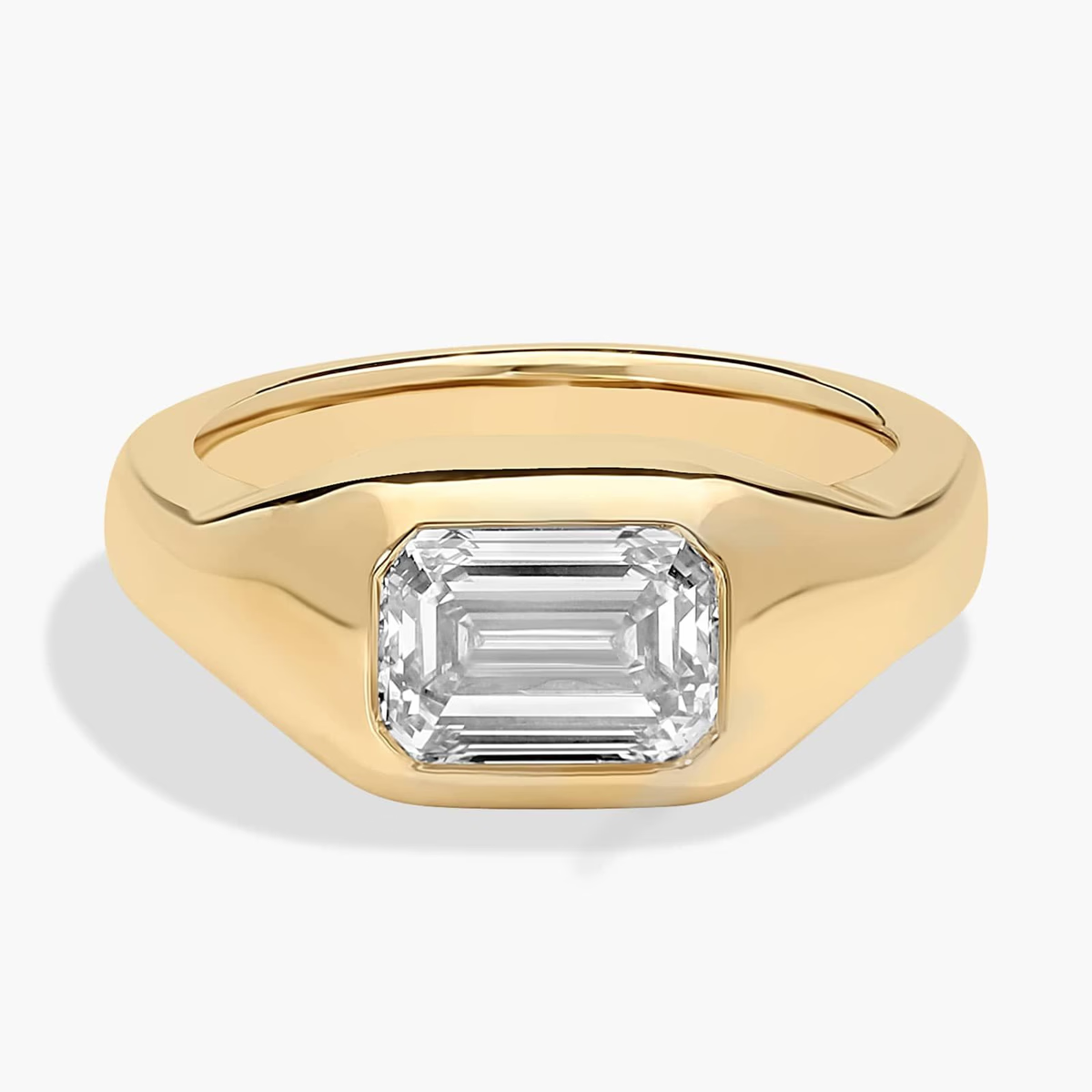
The signet ring is the oldest men's ring form — historically a flat-topped ring used to press a seal into wax. The modern signet with an emerald cut diamond replaces the flat seal surface with a step-cut stone that reads as equally intentional and personal.
The emerald cut is the natural choice for a signet ring because both share the same visual logic: a flat, geometric top surface with clean edges. A round brilliant in a signet setting creates a circular stone interrupting a rectangular frame. An emerald cut in a signet setting creates a rectangular stone completing a rectangular frame.
The men's emerald cut signet style in yellow gold follows this geometry directly. Yellow gold for the signet frame is the historical default — the warm metal reads as intentional heritage rather than modern minimalism. White gold or platinum works for a contemporary reading of the same shape.
For the signet, the Setting-First Rule applies most strongly: the signet frame IS the design. The stone fills and completes the frame rather than leading it.
Men's Channel Setting Emerald Cut Ring: $2,610
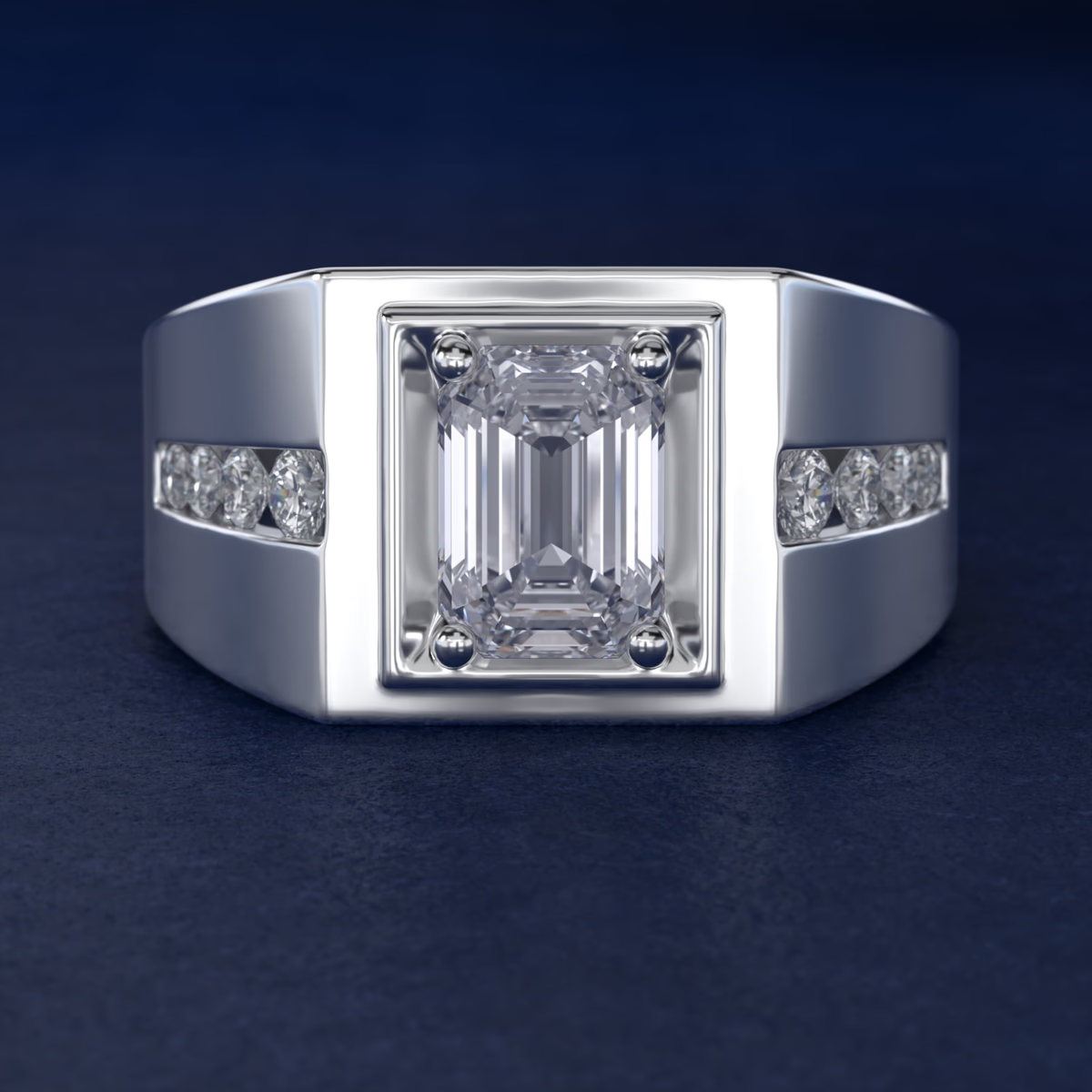
Men's Round Diamond Channel Engagement Ring, 14k White Gold (1/3 ct. tw.) — $2,610 setting
The channel setting is the most traditional men's diamond ring format — diamonds set flush in a channel carved into the band, running along the shoulders of the ring. No prongs. No stones projecting above the metal.
The channel-set accent diamonds provide sparkle without the vulnerability of exposed prongs.
This setting is designed for a center stone selection. When built with an emerald cut center stone, the channel-set accent diamonds on the shoulders create a complementary pattern — the long, flat step-cut center paired with the row of round accent stones in the channels creates a contrast between the architectural center and the continuous sparkle of the shoulders.
The setting price of $2,610 covers the 14k white gold band and the 1/3ct total weight of the channel-set round accent diamonds. The center stone is selected separately based on carat weight and budget. An emerald cut 1ct lab grown G VS1 adds approximately $600–$1,200 to the total, bringing the complete ring to approximately $3,200–$3,800.
White gold here works with the Architectural Edge — the neutral metal recedes and lets the geometry of the channel and center stone define the ring.
Men's Bypass Channel Diamond Ring: $2,085
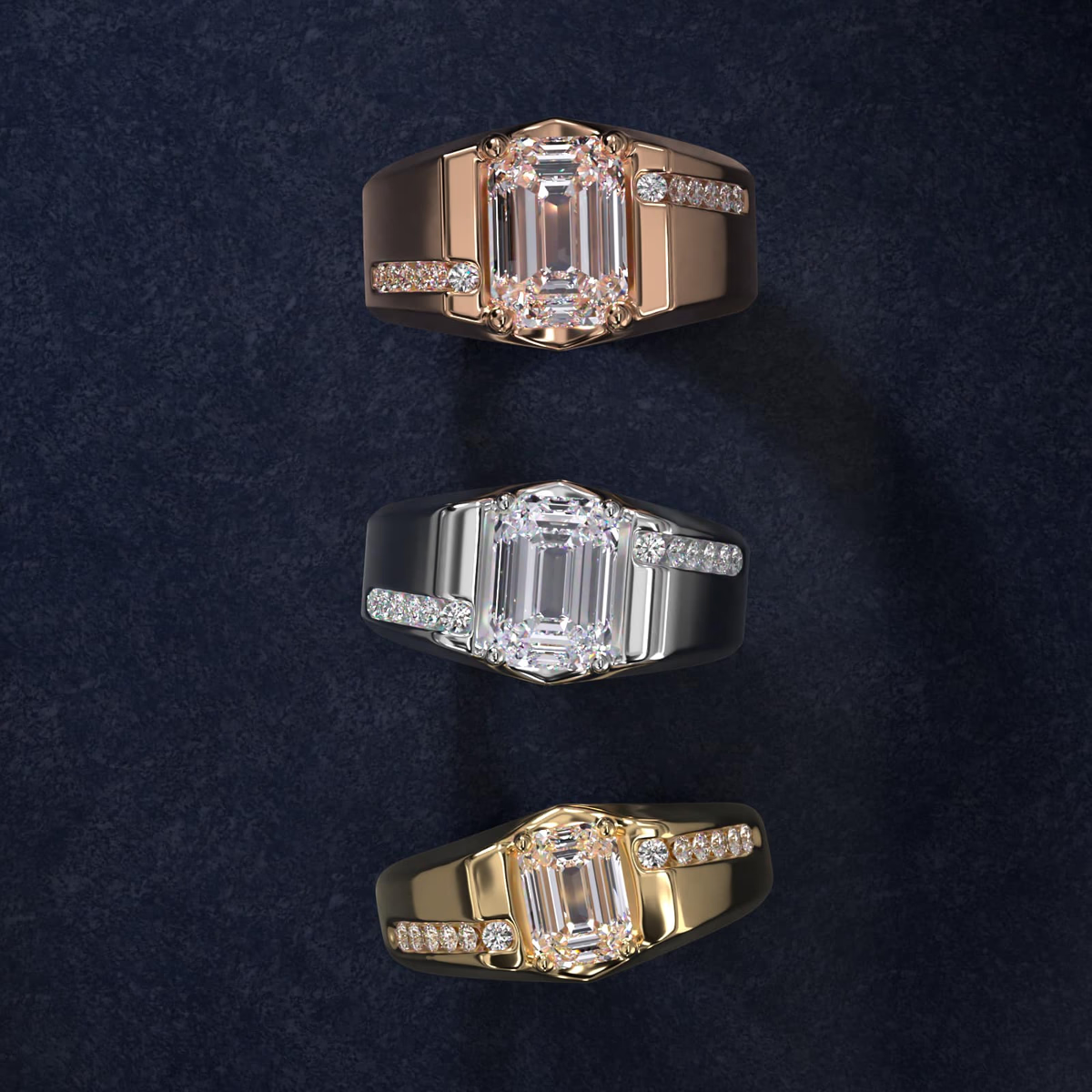
Men's Bypass Channel Diamond Engagement Ring, 14k White Gold (1/4 ct. tw.) — $2,085 setting
The bypass design uses two band arms that cross or pass each other at the center rather than meeting flush. The visual effect is dynamic — the ring looks like it has movement even when still. The two bypass arms frame the center stone on opposing angles rather than meeting symmetrically.
For a men's emerald cut ring, the bypass design creates a specific visual benefit: the angular crossing of the two arms echoes the clean angular corners of the emerald cut center stone. The geometry reinforces itself — angular setting for an angular stone.
This is the lowest setting price in this guide at $2,085, making it the most accessible entry into a men's emerald cut diamond ring build. The 1/4ct total weight accent diamonds in the bypass channels are set flush, eliminating snag points. Men who wear their ring through physical work should consider the bypass over prong settings precisely because of this flush design.
Men's Hexagon Diamond Channel Ring: $3,005
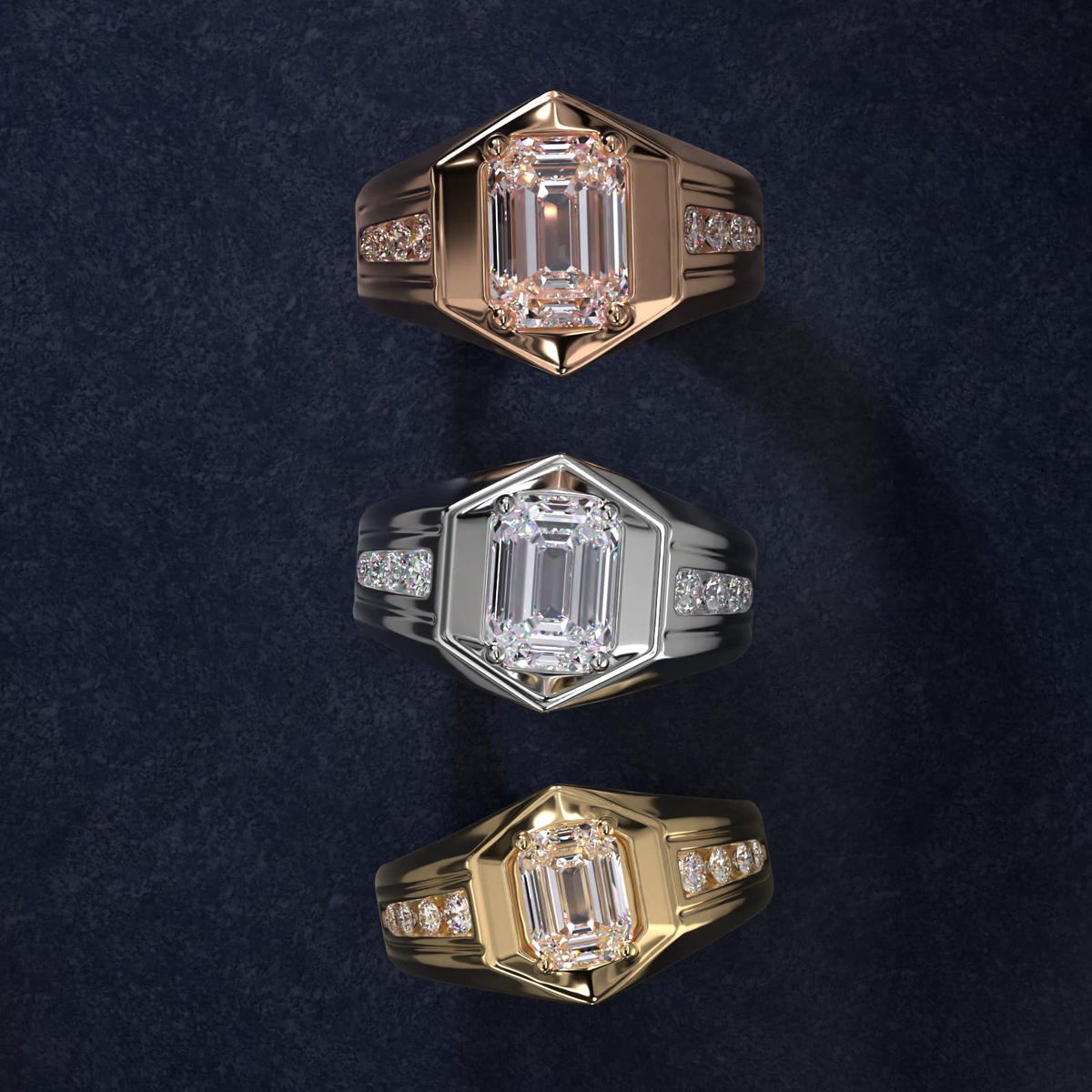
Men's Hexagon Diamond Channel Engagement Ring, 14k White Gold (3/8 ct. tw.) — $3,005 setting
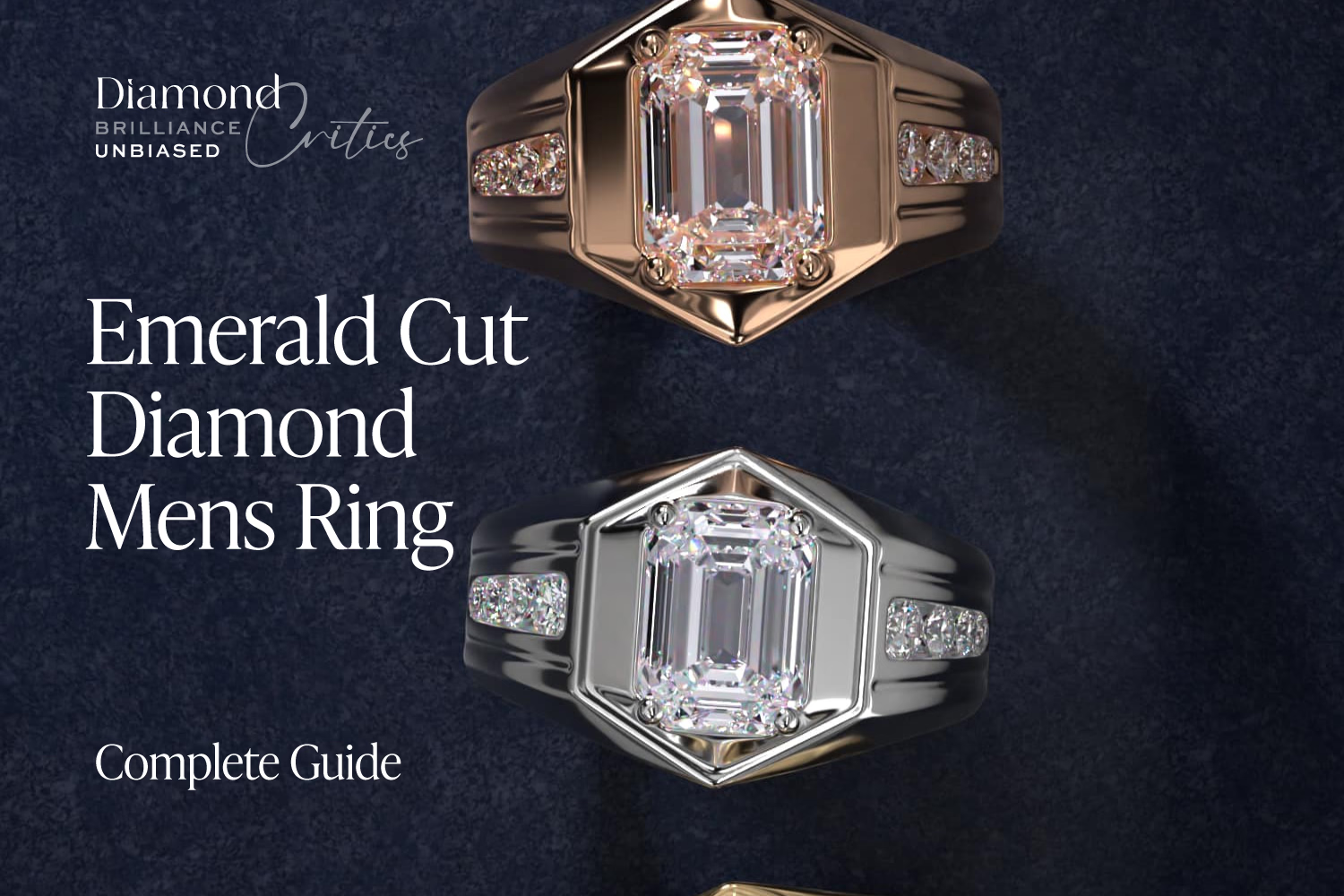
The hexagonal setting frame is the strongest implementation of the Architectural Edge concept in this guide. The six-sided geometric frame creates a bold visual border around the center stone — the stone does not just sit in a prong cage, it fills a defined architectural shape.
For an emerald cut center stone, the hexagonal frame creates an interesting geometry: a rectangular stone within a hexagonal border. The two geometric shapes are different enough to create contrast while both remaining angular and deliberate. The result reads as more designed than a simple bezel or prong setting.
The 3/8ct total weight of channel-set accent diamonds lines the shoulders of the setting, adding continuous sparkle to the otherwise architectural frame. At $3,005 for the setting, this is the middle price point among the men's settings in this guide.
The hexagonal frame also functions as structural protection. The six-sided metal border surrounds and shields the emerald cut center stone on all sides — important for men who wear their ring through physical work. The corners of the emerald cut, which are the most vulnerable point in any rectangular stone, are covered by the hexagonal metal frame.
Farzana says: "The hexagon setting is what I recommend when a man wants to make absolutely sure the ring looks intentionally masculine — not just like a big solitaire. The hexagonal frame is an architectural decision. It tells you that someone thought about the shape of the ring, not just the diamond in it. When you put an emerald cut inside a hexagon, the two shapes work together in a way that a round brilliant inside that same frame simply can't achieve. One is a geometric decision. The other is a compromise."
Men's Nugget Diamond Ring: $2,175
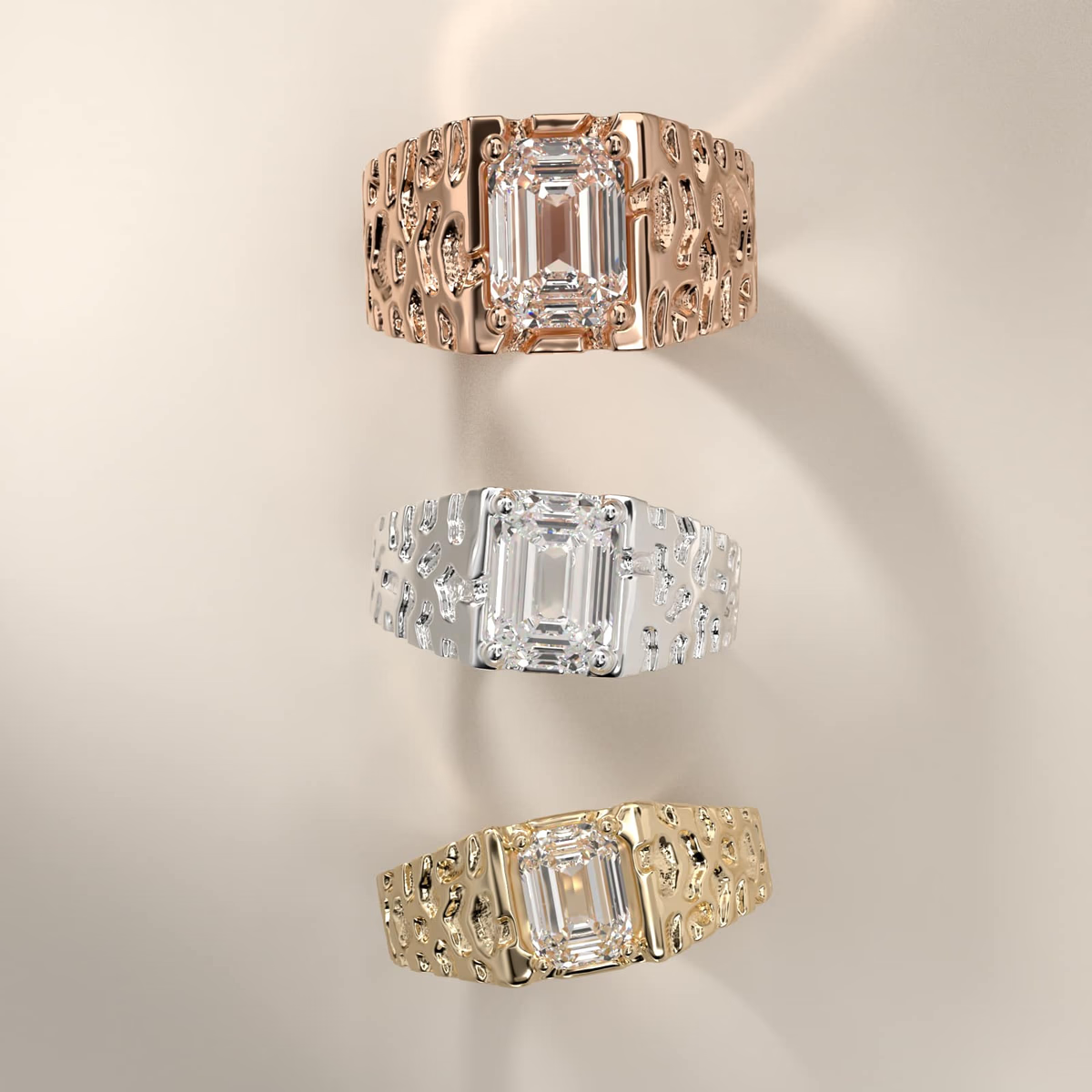
Men's Nugget Engagement Ring, 14k White Gold — $2,175 setting
The nugget design is a textured, bold band format — the metal surface has an irregular, hammered-texture appearance that creates organic visual depth without additional gemstones. It is a design-forward setting for men who want the visual interest to come from the metalwork rather than from channel-set accent stones.
For an emerald cut center stone, the nugget setting creates a strong contrast: the rough, organic texture of the nugget metal against the precise, flat, step-cut geometry of the emerald cut diamond. The contrast between the irregular nugget surface and the perfect rectangular facets of the emerald cut makes each element more visually distinct.
At $2,175 for the setting, the nugget sits as the second-lowest price in this guide. It does not include channel-set accent diamonds — the design interest comes from the metalwork texture rather than additional stones. This makes the total ring price more predictable: setting plus center stone cost only.
The nugget works best with a bold, larger center stone. A 1.5–2ct emerald cut gives the stone enough visual presence to hold its own against the textured band. A 0.5ct stone in a nugget setting can look lost — the textured metal draws the eye more than a small center stone can compete with.
How to Build a Men's Emerald Cut Ring
Most of the settings in this guide require choosing a center stone separately. The process is straightforward but the order matters.
Start with the setting. Pick your frame shape — bypass, hexagon, channel, signet, or nugget — and confirm the band width. Then find an emerald cut stone whose face-up width matches the band.
A 7mm band fits a 1ct emerald cut. A 9mm band needs a 2ct emerald cut to fill proportionally.
For the stone: choose lab grown over natural for men's rings at 2ct and above. The lab grown emerald cut search gives you 2ct VS1 stones at $1,500–$2,500 instead of the $12,000–$20,000 a natural 2ct VS1 would cost.
Use VS1 minimum clarity — the open table on an emerald cut shows inclusions that would be invisible in a round brilliant. For color, G–H is the sweet spot: colorless enough to look clean in white gold, warm enough to work with yellow gold without looking grey.
All 5 Men's Emerald Cut Diamond Ring Styles
| Style | Setting | Metal | Price | Best For |
|---|---|---|---|---|
| East-West Lab Grown | East-west solitaire | 14k Yellow Gold | $4,865 | Ready-to-ship statement ring, 2ct lab grown |
| Signet Style | Flat-top signet frame | Yellow Gold | Browse | Heritage aesthetic, ring-as-seal design |
| Bypass Channel | Crossing bypass arms | 14k White Gold | $2,085 setting | Lowest entry price, angular frame, flush diamonds |
| Channel Setting | Channel-set shoulders | 14k White Gold | $2,610 setting | Classic men's ring format, most versatile |
| Nugget | Textured metal band | 14k White Gold | $2,175 setting | Bold texture contrast, no accent diamond cost |
| Hexagon Channel | Six-sided geometric frame | 14k White Gold | $3,005 setting | Strongest architectural frame, corner protection |
Tides Of Summer Capsule
Up To 30% Off
Shop The Sale →Vault ClearanceClear The Vault
Up To 70% Off
Shop Vault Deals →Affiliate link — no extra cost to you
Emerald Cut vs Round Brilliant for Men's Rings
The default choice for men's diamond rings is round brilliant — channel-set rounds in the band shoulders, or a round brilliant solitaire center. The emerald cut is the better choice for specific reasons that the round brilliant cannot replicate.
| Factor | Emerald Cut | Round Brilliant |
|---|---|---|
| Shape for men's proportions | Rectangular — fills the ring face horizontally | Circular — projects vertically, reads as bridal |
| Design compatibility | Matches geometric setting shapes (hexagon, bypass, signet) | Conflicts with angular frames visually |
| Visual character | Architectural flash — large, deliberate, still | Constant scintillation — decorative, lively |
| East-west compatibility | Designed for east-west — creates horizontal bar effect | Round in any orientation looks the same |
| Per-carat price | 15–25% cheaper than round brilliant | Premium cut, highest per-carat cost |
| Clarity requirement | VS1 minimum — open table reveals inclusions | VS2 often eye-clean due to sparkle masking |
| Face-up size at same carat | Larger — elongated shape covers more finger surface | Smaller face-up area at same carat weight |
The one advantage round brilliant has for men's rings: it requires less strict clarity grading. The sparkle pattern in a round brilliant masks inclusions that would be visible in an emerald cut. For men who want to maximize carat weight per dollar and are less focused on the architectural aesthetic, round brilliant at VS2 can be more budget-efficient.
For men who specifically want the architectural, geometric, deliberately-designed look — the emerald cut is the only shape that delivers it consistently.
What Metal Works Best for a Men's Emerald Cut Ring
Metal choice for a men's emerald cut ring is a design decision first and a durability decision second.
Yellow gold creates the warmest, most heritage-driven reading of any men's ring. Yellow gold with an emerald cut diamond creates a warm contrast between the metal and the clear, colorless step facets. This is the historical default for signet rings and large statement rings. The lab grown east-west ring at $4,865 uses 14k yellow gold for exactly this reading.
White gold creates the most modern, clean reading. White gold disappears into the ring visually, letting the geometric shapes of the setting and stone carry the design. The bypass, hexagon, channel, and nugget settings all default to white gold.
Platinum adds durability for daily wear rings. Platinum holds prongs and channels more securely over time than gold. For men who wear their ring through physical activity, the setting price premium for platinum is worth it. The bypass and hexagon settings are available in platinum — check each product page for the metal variants.
Rose gold creates the warmest contrast with a colorless emerald cut and reads as the most fashion-forward metal for men's jewelry.
For the Architectural Edge effect, white gold maximizes it — the neutral metal recedes and the geometric shapes lead. For the signet and heritage aesthetic, yellow gold is correct.
Choosing the Right Carat Weight for a Men's Ring
Carat weight for a men's emerald cut ring is about proportion, not just size. The same carat weight looks completely different on a narrow band versus a wide band.
Most men's rings use band widths of 7mm to 10mm. At these widths, the center stone needs to be wide enough to fill the band face proportionally. An emerald cut at 1ct on a 9mm band looks like a small stone centered on a wide metal field.
The same 1ct emerald cut on a 5mm band looks correctly proportioned.
The 2ct Men's Floor as a concept: at approximately 2ct total weight, an emerald cut diamond has a face-up width of roughly 7–8mm. This fills a 7–8mm wide men's ring band from edge to edge. Below 2ct on a wide band, the stone looks centered but small.
At 2ct, the stone fills the ring face proportionally.
For men buying the setting-only products in this guide: choose a center stone with a face-up width that matches or slightly underfills the band width. A 1ct emerald cut (~6.5mm wide) fits a 7mm band. A 1.5ct emerald cut (~7.5mm wide) fits an 8mm band.
A 2ct emerald cut (~8mm wide) fits a 9–10mm band.
Lab grown emerald cuts at the Blue Nile emerald cut diamond search allow filtering by carat weight. For men's rings, sort by carat weight first and match to band width before evaluating color or clarity.
Expert Summary
The emerald cut diamond ring for men is not a niche choice — it is the most coherent design decision for men's fine jewelry. The Horizontal Rule explains how to orient it correctly (east-west). The Architectural Edge explains why the step-cut suits men's ring design better than round brilliant.
The Setting-First Rule explains that the frame shape — hexagon, bypass, signet, channel — matters more for masculine reading than the stone alone.
The ready-to-ship choice is the Lab Grown East-West at $4,865. For buyers who want to choose their own center stone, the Bypass at $2,085 setting is the lowest entry price and the strongest geometric match for an emerald cut stone.
Farzana says: "Men who come in asking about emerald cut rings usually already know what they want — they've seen someone wearing one, or they've looked at enough round diamond rings and wanted something that looks different. The emerald cut for men is a clear, deliberate choice. The step-cut tells you this is not a traditional engagement ring adapted for a man. It's a ring designed with different geometry, different intent, and different visual language from the start. That's the reason it works."
Best For
Ready-to-ship buyers: The Lab Grown East-West Emerald Cut at $4,865 is the only complete ring in this guide. 2ct lab grown, east-west orientation, 14k yellow gold — no center stone selection needed.
Budget-conscious builders: The Men's Bypass Channel Setting at $2,085 is the lowest setting price. Add a 1ct lab grown emerald cut G VS1 for approximately $700–$1,000 for a complete ring around $2,800–$3,100.
Statement piece buyers: The Hexagon Channel at $3,005 with a 2ct natural or lab grown emerald cut center stone is the strongest architectural choice — hexagonal frame, channel-set shoulders, and a bold center stone.
Heritage aesthetic buyers: A signet-style emerald cut in yellow gold from the men's engagement rings collection is the closest men's ring to historical fine jewelry form. The flat-top signet with a rectangular emerald cut stone is the deliberate, heritage-driven choice.
Men's Emerald Cut Diamond Ring Decision Matrix
| Buyer Profile | Recommended Style | Price Range | Key Reason |
|---|---|---|---|
| Wants ready-to-ship | East-West Lab Grown | $4,865 | Complete ring, no stone selection needed |
| Lowest entry price | Bypass Channel + 1ct lab | $2,085 setting | Angular geometry, lowest setting cost |
| Wants geometric statement | Hexagon Channel | $3,005 setting | Strongest architectural frame, corner protection |
| Classic men's ring format | Channel Setting | $2,610 setting | Most familiar men's ring format |
| Bold texture aesthetic | Nugget | $2,175 setting | Texture contrast with step-cut stone |
| Heritage / signet aesthetic | Signet Style | Browse | Historical men's ring form, flat-top emerald cut |
| Physical work / durability | Hexagon or Bypass | $2,085–$3,005 setting | Flush or framed stones, no exposed prongs |
FAQs
What is a men's emerald cut diamond ring?
A men's emerald cut diamond ring is a ring where the center stone — or occasionally the accent stones — uses the emerald cut: a rectangular step-cut diamond with long parallel facets, clean corners, and a large open table. The emerald cut's rectangular geometry and architectural flash make it well-suited to men's jewelry design, which favors geometric shapes and clean lines over decorative sparkle.
Why choose an emerald cut over round brilliant for a men's ring?
Three reasons: shape, design compatibility, and visual character. The rectangular emerald cut fills a men's ring face horizontally (especially east-west), which suits wider bands. The step-cut geometry matches angular setting designs like hexagons, bypasses, and signets better than a round brilliant does.
The architectural flash of the step-cut — large, deliberate, still — reads as more intentional than the constant scintillation of a round brilliant.
What is the east-west orientation for a men's emerald cut ring?
East-west means the long axis of the emerald cut runs across the finger horizontally rather than up the finger vertically. Standard solitaires set the emerald cut vertically. East-west rotates it 90 degrees, creating a wide horizontal bar of stone across the ring face.
This creates a more masculine visual — more width, less height — and eliminates the resemblance to a traditional women's engagement ring.
What is a men's emerald cut diamond signet ring?
A signet ring is a flat-topped ring historically used as a personal seal. The modern signet with an emerald cut diamond uses the rectangular stone to fill the flat top surface — the same surface that would historically hold an engraved crest or monogram. The emerald cut is the natural fit for a signet because both share the same flat, geometric top-surface design intent.
Browse men's emerald cut signet styles at Blue Nile.
What carat weight works best for a men's emerald cut ring?
Match carat weight to band width. On a 7mm band, a 1ct emerald cut (approximately 6.5mm wide) fits proportionally. On an 8–9mm band, 1.5–2ct fills the face correctly.
On a 10mm band, 2ct or more is needed to avoid the stone looking centered but small. The 2ct Men's Floor concept applies: below 2ct on a wide men's band, the stone can look undersized relative to the metal frame.
What clarity grade is needed for a men's emerald cut ring?
VS1 minimum. The emerald cut's open table creates a clear visual pathway into the stone — the same transparency that produces the hall-of-mirrors effect also makes inclusions visible at lower clarity grades that would be masked by sparkle in a round brilliant. VS1 is reliably eye-clean without stone-by-stone inspection.
VS2 requires viewing the specific stone's clarity plot to confirm inclusion position before purchasing.
What metal is best for a men's emerald cut diamond ring?
Yellow gold for a heritage or warm aesthetic — the east-west lab grown at $4,865 demonstrates this. White gold for a modern, clean setting where the geometry leads. Platinum for maximum durability in daily-wear rings.
Rose gold for the warmest contrast with a colorless emerald cut stone.
Can a men's emerald cut ring be worn as a wedding band?
Yes — the east-west solitaire and the channel setting formats both wear comfortably as a wedding ring or as a standalone statement ring. The bypass and hexagon designs are more typically worn as dress or fashion rings. If worn as a wedding band, the ring width should be comfortable with daily wear — 7mm to 9mm is typical for men's wedding bands.
Is lab grown or natural better for a men's emerald cut ring?
Lab grown is the better value for most men's emerald cut ring buyers. The lab grown emerald cut selection provides the 2ct visual size that the 2ct Men's Floor requires without the $10,000–$20,000 natural price premium. Lab grown and natural emerald cuts are physically and optically identical — the difference is origin and price.
For men who want 2ct or larger, lab grown is the practical path.
What is the difference between a men's and women's emerald cut ring?
Band width and orientation are the primary differences. Men's emerald cut rings use wider bands (7–10mm vs 3–5mm for women's) and typically use east-west orientation rather than vertical. Setting designs for men's rings emphasize geometric frames (hexagon, bypass, signet) over delicate prong solitaires or pavé halos.
The emerald cut stone itself is the same shape and quality regardless of how it is categorized.
How much does a men's emerald cut diamond ring cost?
Setting prices in this guide range from $2,085 to $3,005 for settings requiring a separate center stone. Add a 1ct lab grown emerald cut G VS1 (approximately $700–$1,200) to get total ring cost. The ready-to-ship East-West Lab Grown at $4,865 is the all-in price for 2ct east-west.
Can a men's emerald cut ring be worn daily?
Yes — with the right setting. The hexagonal frame and bypass channel are the most durable formats because the emerald cut's corners are protected by metal rather than exposed to impact. Bezel and channel settings protect the stone more than prong settings.
For men who do physical work, avoid four-prong solitaires that leave the corners exposed. The hexagon and bypass designs in this guide are both appropriate for daily wear.
Is the emerald cut the most masculine diamond shape?
It is the most architecturally compatible diamond shape for men's ring design. The rectangular geometry, clean edges, and step-cut flash align with how men's rings are designed — geometric, clean, deliberate. The emerald cut doesn't compete with the ring design; it completes it.
Round brilliant's circular shape and constant sparkle are features that men's ring settings are not optimized to showcase.
See Also
- Emerald Cut Diamond — Complete Shape Guide, Hall-of-Mirrors, VS1 Rule & Prices
- Emerald Cut Diamond Engagement Rings — Complete Guide — the full engagement ring guide for emerald cut, settings, metals, and proportions
- Emerald Cut Diamond Ring Settings — All Styles Compared — every setting type with pros, cons, and price ranges
- Emerald Cut Diamond Ideal Proportions — L:W Ratio, Depth %, Table Guide — proportions that maximize the hall-of-mirrors effect
- Lab Grown Emerald Cut Diamond — D-IF Quality at a Fraction of Natural Cost — why lab grown is the practical choice for men's rings at 2ct+
- Loose Emerald Cut Diamond — How to Buy the Stone Before the Setting — for men using the setting-only products; how to select the right center stone
- Baguette Emerald Cut Diamond Ring — 18 Styles Ranked — step-cut rings with baguette accents, related design language
Expert Verdict
Always audit the stone individually — no grade replaces seeing the actual diamond. The certificate tells you what to look for. Your eyes tell you whether to buy.
— Farzana Hasan, GIA Expert · DiamondCritics.com