TL;DR: East West Emerald Cut Diamond Ring
An emerald cut diamond ring east west setting rotates the stone 90 degrees — the long axis runs side-to-side across the finger instead of pointing toward the knuckle. Settings start at $995. Total ring from $1,490 with a lab emerald cut, or $4,050 natural.
12 settings across 3 styles:
- East West Solitaire: $995–$1,475 — RG, WG, YG, Platinum
- East West Diamond Engagement Ring: $1,635–$2,600 — WG, YG, RG, Platinum
- East West Sidestone & Pavé (1/4 ct tw): $1,840–$2,485 — WG, YG, RG, Platinum
3 named concepts:
- The 90-Degree Rule — what changes (and what doesn't) when you rotate the stone
- The Setting Floor — why 1ct is the minimum for east-west orientation to work
- The Width Advantage — why the emerald cut is the best shape for east-west settings
→ Browse all east west emerald cut settings


What Is an Emerald Cut Diamond Ring East West Setting?
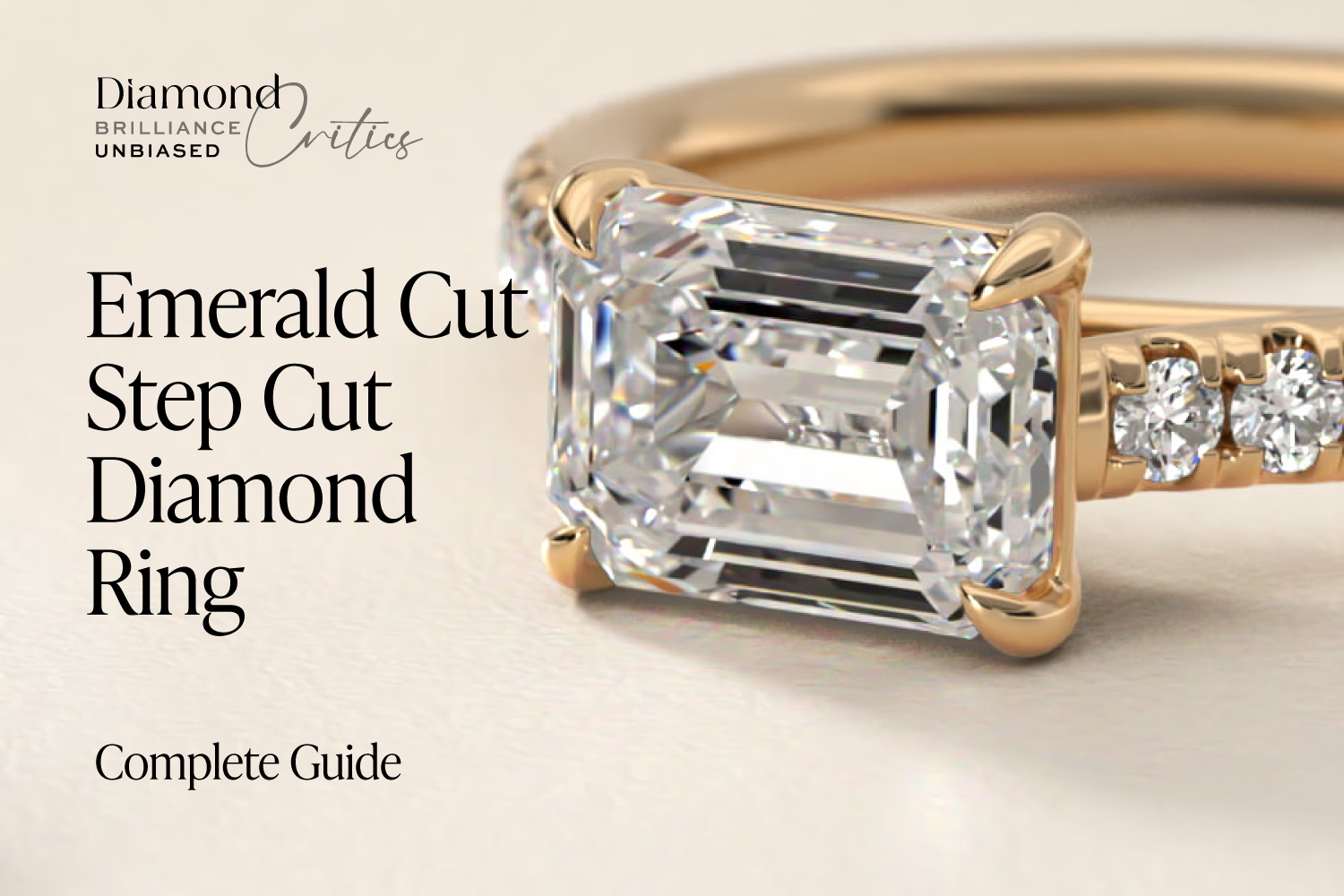
An emerald cut diamond ring east west setting places the stone with its long axis running horizontally — left to right across the finger. Every standard emerald cut solitaire sits north-south by default: the length points toward the knuckle, and the width crosses the finger. The east-west setting rotates that 90 degrees.
I'm Farzana Hasan, a GIA-certified gemologist. I've evaluated emerald cut diamonds across every setting style and orientation. The east-west emerald cut is one of the most deliberate choices in the ring market — buyers who choose it know exactly what effect they want.
The buyers who don't know why tend to go back to north-south.
Full credentials at Diamond Critics.
The east-west orientation is not a new invention. Signet rings have used horizontal stone placement for centuries. What's newer is applying this aesthetic to engagement rings — particularly to elongated step-cut stones like the emerald cut, which take on a completely different character when rotated.
The 90-Degree Rule
The 90-Degree Rule describes what changes — and what stays the same — when you rotate an emerald cut diamond into the east-west position.
What changes immediately: The stone's length now runs across the finger width. On a size 6 finger (approximately 16.5mm wide), a 1ct emerald cut measuring 6.5mm × 4.5mm occupies 6.5mm across the finger in east-west orientation. In north-south orientation, that same 6.5mm points up toward the knuckle. The visual impact is completely different — one reads as elongation, the other reads as horizontal width.
What also changes: The setting architecture. North-south prongs grip the stone at 12 o'clock and 6 o'clock — the short ends. East-west prongs grip the stone at 9 o'clock and 3 o'clock — the long ends. The entire structural load shifts. The setting must hold the stone securely at the corners of the long axis, where an accidental knock from the side puts more force on the prongs than a north-south setting receives.
What does not change: The stone itself. The best ratio for an emerald cut diamond is still 1.30–1.50 L:W, 60–64% depth, 61–69% table. The 90-degree rotation changes the orientation of the stone in the setting. It does not change what makes a well-cut emerald cut perform.
Farzana says: "The first thing I tell east-west buyers: the 90-degree rotation changes everything about the ring's visual language and nothing about what makes the stone good. Proportion targets are identical. Clarity rules are identical. The step-cut still demands VS2 minimum. Only the setting architecture and the finger coverage direction change."
The Setting Floor
The Setting Floor is the minimum carat weight below which an east-west emerald cut stops looking intentional.
In north-south orientation, a 0.75ct emerald cut produces a clear upward-pointing rectangle. It reads obviously as an emerald cut. In east-west orientation, that same 0.75ct stone rotated horizontally measures roughly 5.5mm × 4.0mm face-up.
The 4.0mm vertical height — the part visible above the band from the wearer's perspective — barely clears the shank. The stone looks flat and accidental rather than bold and deliberate.
The east-west orientation is supposed to create a strong horizontal statement across the finger. Below approximately 1 carat, that statement doesn't land. The Setting Floor is 1ct for natural stones, and 1.5ct for lab-grown stones if the buyer wants a dramatic horizontal presence.
At 1ct natural (approximately 6.5mm × 4.5mm), the stone has enough horizontal span to create real visual coverage across the finger. At 1.5ct lab-grown (approximately 7.5mm × 5.5mm), the effect becomes emphatic — nearly half the width of a size 6 finger. Below the Setting Floor, east-west looks like a mistake.
Above it, it looks exactly like the intentional architectural choice it is.
The Width Advantage
The Width Advantage is why the emerald cut is the strongest choice for east-west orientation among all diamond shapes.
The emerald cut is the most elongated of the classic step-cut shapes. Its L:W ratio of 1.30–1.50 means the stone is inherently longer than it is wide. In north-south orientation, that length points up the finger — creating the classic elongating effect.
In east-west orientation, that same length becomes the horizontal span — creating a bold across-the-finger statement.
Compare the emerald cut east-west to an oval east-west: the oval's elliptical outline creates a soft, curved horizontal. The emerald cut's clean rectangular outline creates a sharp, architectural horizontal. The rectangular shape of the emerald cut aligns naturally with the band's straight lines — the result looks designed, not rotated.
The elongated emerald cut at 1.45:1 or 1.50:1 L:W creates the most dramatic east-west statement. At 1.50:1 with 1ct, the horizontal span reaches approximately 7.0mm — nearly half the width of a size 6 finger. A 1.30:1 stone in east-west still creates a clear horizontal, but the rectangle is almost as wide as it is long from the wearer's perspective, which reduces the dramatic impact.
East West Solitaire Settings: $995 to $1,475
The East West Solitaire is the purest expression of the east-west concept. Four prongs grip the emerald cut stone in horizontal orientation on a simple polished band. Nothing competes with the rotated stone — the entire ring is about that horizontal rectangle.
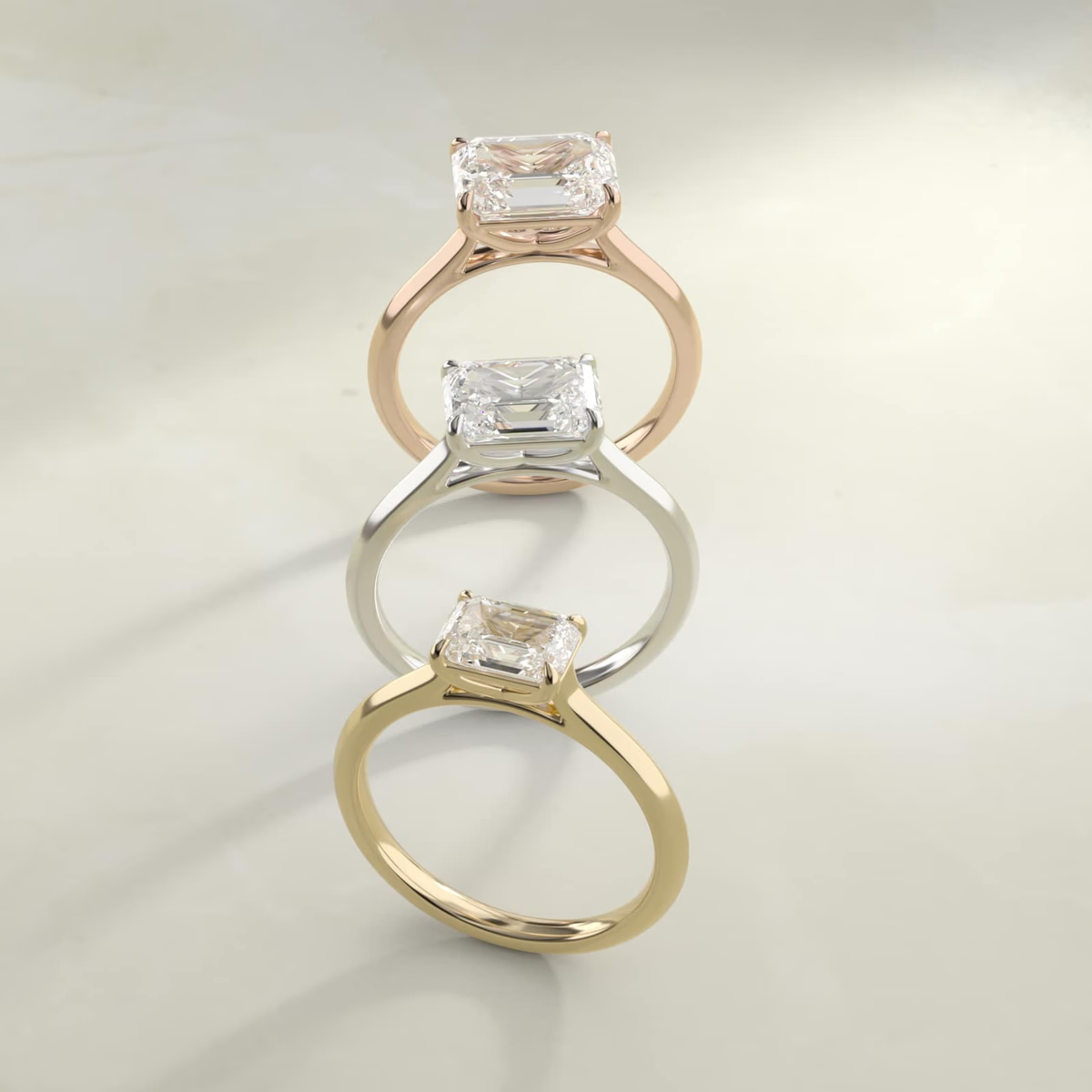
East West Solitaire in 14k Rose Gold — $995 (7 reviews)
The most affordable east-west setting in this lineup. Rose gold creates a warm, modern contrast against the architectural step-cut geometry of the emerald cut. The pink warmth of rose gold works especially well with the horizontal stone — the warm band frames the cool clarity of the step-cut table.
For a 1ct H-color stone, rose gold's warmth makes H-color look near-identical to G.
East West Solitaire in 14k White Gold — $1,050 (7 reviews)
White gold is the most neutral choice for east-west settings. The silver-white metal lets the step-cut facets of the emerald cut dominate visually — no warmth competing with the stone's hall-of-mirrors effect. For buyers choosing VS1 clarity or higher, white gold maximizes the clean, clear appearance of the step-cut table.
East West Solitaire in 14k Yellow Gold — $1,050 (7 reviews)
Yellow gold gives the east-west emerald cut its most vintage-influenced look. The horizontal stone in yellow gold recalls antique signet ring design — a stone lying flat and wide across the band, framed by warm gold. H-color stones look excellent in yellow gold settings, saving on color grade without visible sacrifice.
East West Solitaire in Platinum — $1,475 (7 reviews)
Platinum's durability argument is stronger for east-west settings than for any other orientation. The horizontal prong placement means the prongs at the long ends of the stone receive lateral force from everyday knocks that north-south prongs don't face. Platinum is denser and more durable than white gold — the prongs maintain grip over years of daily wear where white gold prongs may flex.
Buyers who wear the ring daily should consider platinum for any east-west setting.
East West Diamond Engagement Ring: $1,635 to $2,600
The East West Diamond Engagement Ring steps up from the plain solitaire with additional design detailing on the shank or setting head. At $1,635 in 14k gold and $2,600 in platinum, this is the mid-range east-west option — more architectural presence than the simple solitaire without the added stone weight of the pavé style.
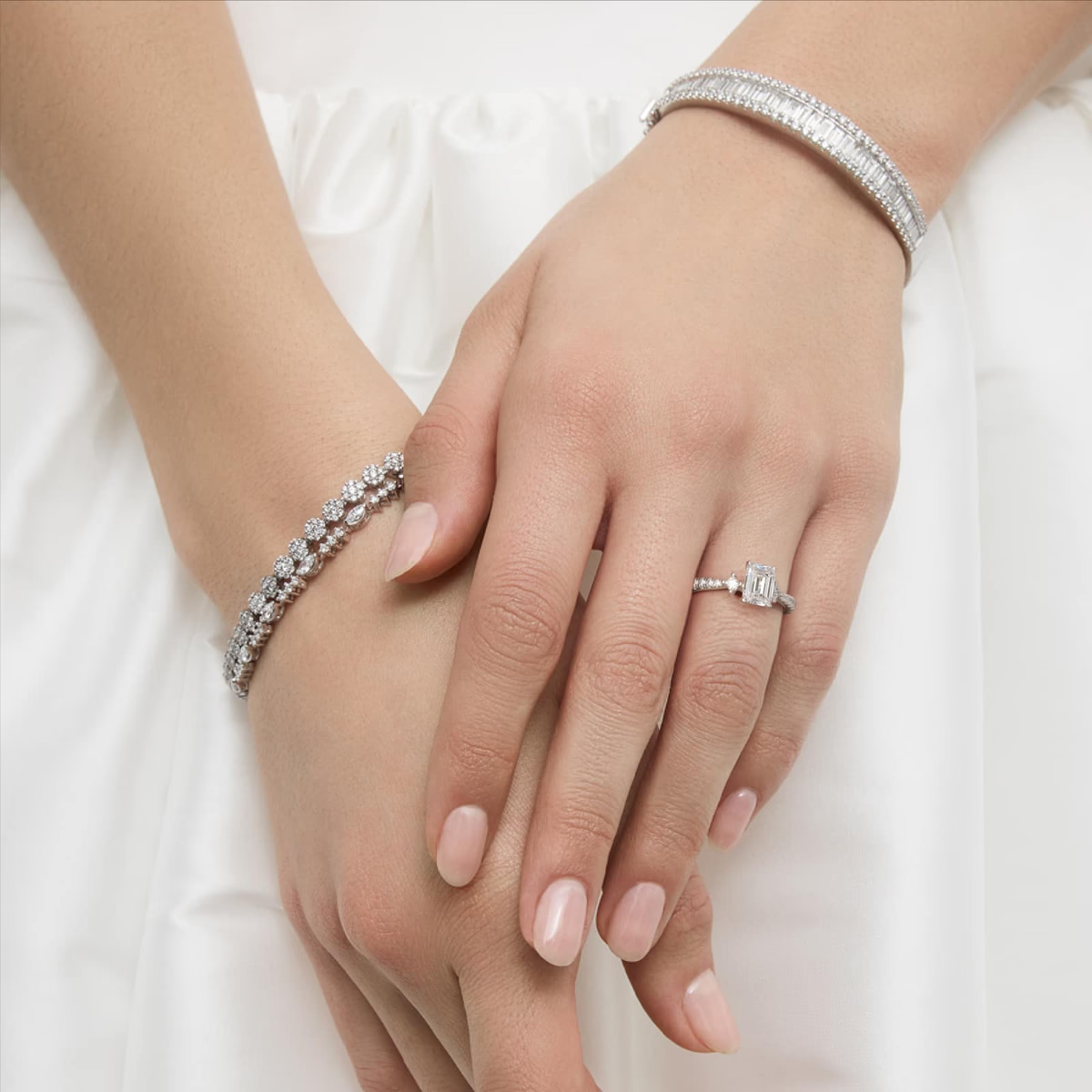
East West Diamond Engagement Ring in 14k White Gold — $1,635 (4 reviews)
White gold at this price point delivers the full east-west aesthetic with added setting sophistication. The shank design gives the band more presence alongside the horizontal stone. For step-cut diamonds where table clarity is everything, white gold provides the clearest visual backdrop.
East West Diamond Engagement Ring in 14k Yellow Gold — $1,635 (4 reviews)
Yellow gold at this tier pairs the warm metal with a more detailed setting that complements the horizontal stone placement. The design detailing on the shank adds visual interest beyond what the simple solitaire provides without adding stone weight.
East West Diamond Engagement Ring in 14k Rose Gold — $1,635 (4 reviews)
Rose gold here creates the most contemporary east-west look in the mid-range tier. The $1,635 price is identical across YG, WG, and RG — choose purely on aesthetic preference.
East West Diamond Engagement Ring in Platinum — $2,600 (4 reviews)
The most expensive non-pavé east-west setting. Platinum adds $965 over 14k gold at this tier. The durability advantage is identical to the solitaire platinum argument — east-west prong placement takes more lateral wear, and platinum handles it better.
East West Sidestone & Pavé: $1,840 to $2,485
The East West Sidestone and Pavé setting adds 1/4 ct tw of diamond accents to the east-west concept. The pavé diamonds run along the band or frame the center stone. This is the most reviewed east-west style in this lineup — 28 reviews across all four metal versions, compared to 4 or 7 for the other styles.
Buyers who buy it tend to be satisfied with it.
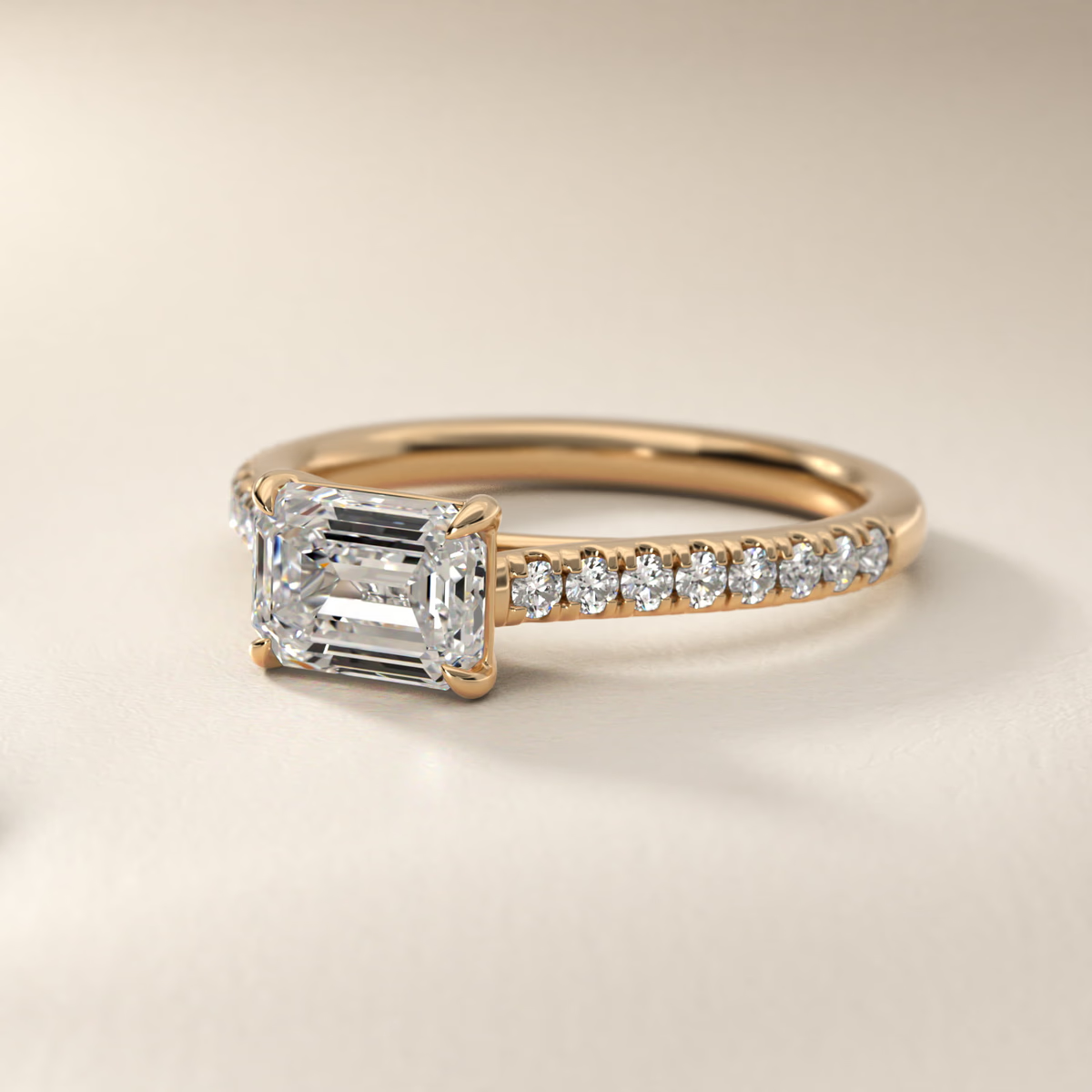
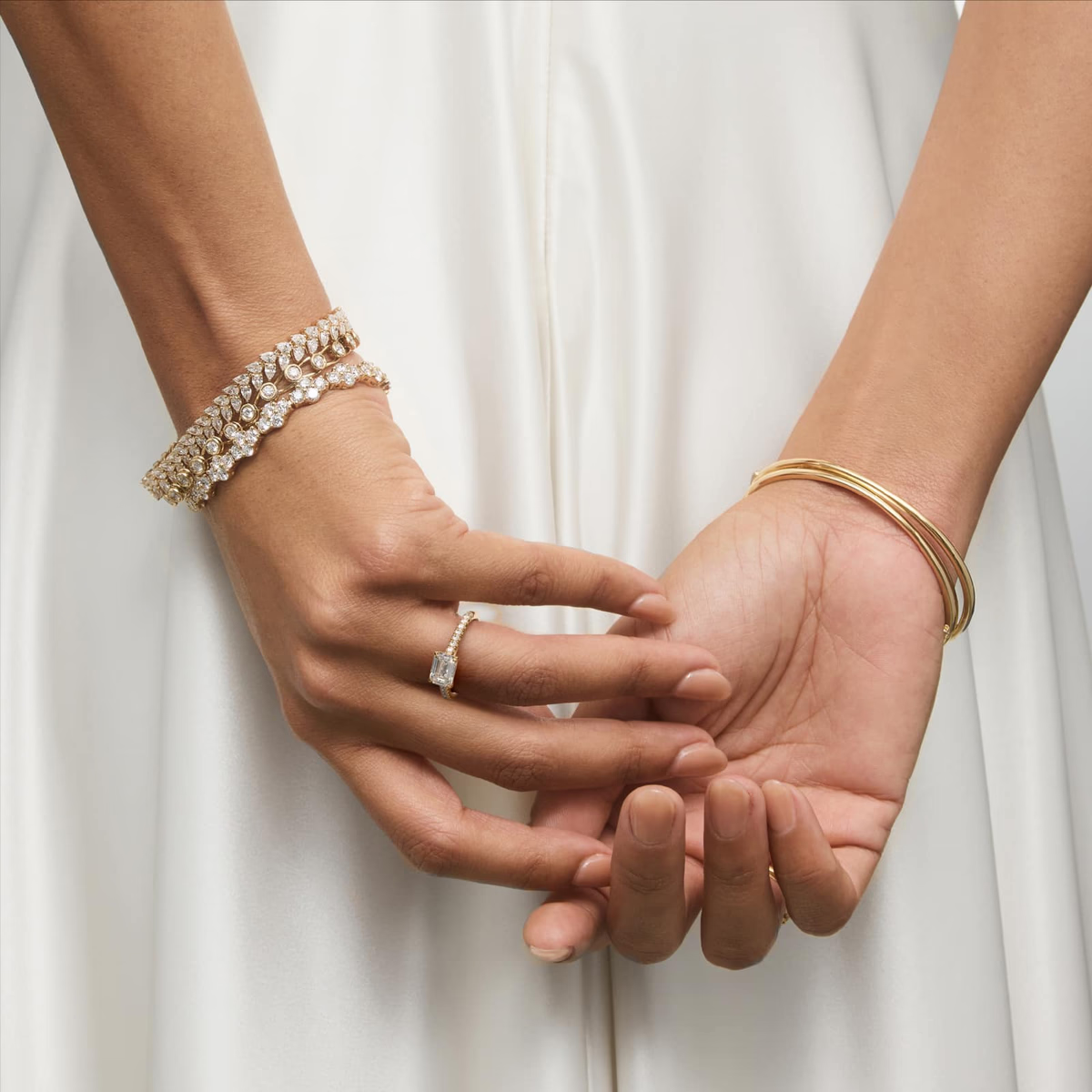
East West Sidestone & Pavé in 14k Rose Gold (1/4 ct tw) — $1,840 (28 reviews)
East West Sidestone & Pavé in 14k White Gold (1/4 ct tw) — $1,840 (28 reviews)
East West Sidestone & Pavé in 14k Yellow Gold (1/4 ct tw) — $1,840 (28 reviews)
East West Sidestone & Pavé in Platinum (1/4 ct tw) — $2,485 (28 reviews)
The pavé diamonds add sparkle to a setting style that typically reads clean and architectural. The contrast between the step-cut center stone's slow reflections and the brilliant-cut pavé's scattered sparkle creates a visual interplay that the plain solitaire and mid-tier ring don't offer. Of the three east-west styles, this one has the broadest appeal — it works for buyers who want the horizontal orientation but don't want the ring to look too minimal.
Farzana says: "The pavé east-west is the one I recommend for buyers who love the east-west concept but are worried the solitaire looks 'too plain.' The pavé diamonds balance the architectural step-cut center stone without overwhelming it. 28 reviews across all metals — that review count tells you buyers actually love wearing it."
All 12 East West Emerald Cut Settings: Complete Price Table
| Setting Style | Metal | Setting Price | Reviews |
|---|---|---|---|
| East West Solitaire | 14k Rose Gold | $995 | 7 |
| East West Solitaire | 14k White Gold | $1,050 | 7 |
| East West Solitaire | 14k Yellow Gold | $1,050 | 7 |
| East West Solitaire | Platinum | $1,475 | 7 |
| East West Diamond Ring | 14k Rose Gold | $1,635 | 4 |
| East West Diamond Ring | 14k White Gold | $1,635 | 4 |
| East West Diamond Ring | 14k Yellow Gold | $1,635 | 4 |
| East West Sidestone Pavé | 14k Rose Gold | $1,840 | 28 |
| East West Sidestone Pavé | 14k White Gold | $1,840 | 28 |
| East West Sidestone Pavé | 14k Yellow Gold | $1,840 | 28 |
| East West Diamond Ring | Platinum | $2,600 | 4 |
| East West Sidestone Pavé | Platinum | $2,485 | 28 |
Stone Selection for East West Emerald Cut Rings
The stone for an east-west emerald cut ring uses identical proportion targets to any other emerald cut. L:W 1.30–1.50, depth 60–64%, table 61–69%. But east-west orientation amplifies two specific qualities: face-up length (because the stone's length now spans horizontally across the finger) and clarity (because the open step-cut table is always visible from above).
Carat weight — apply The Setting Floor: Minimum 1ct for east-west orientation. At 1ct, the stone measures approximately 6.5mm × 4.5mm. In east-west orientation, that 6.5mm spans visibly across the finger. At 1.5ct (7.5mm × 5.5mm), the horizontal span becomes emphatic.
L:W ratio — go longer for east-west: If you're choosing east-west specifically for the horizontal width effect, favor 1.40:1–1.50:1 over 1.30:1. The longer ratio creates a more pronounced horizontal bar. A 1.30:1 stone in east-west position looks nearly square from the wearer's perspective — the short dimension faces up and the long dimension runs sideways. A 1.45:1 stone creates a clearly elongated horizontal rectangle.
Clarity — VS2 minimum, VS1 recommended: The east-west orientation doesn't change the step-cut clarity rule. The open table shows inclusions in the emerald cut regardless of which direction the stone faces. VS2 is the absolute minimum. VS1 is the safe recommendation. Watch the stone video before buying any SI1 emerald cut — what passes in a round brilliant will often be visible in a step-cut.
Color — G minimum in white/platinum, H in yellow/rose gold: Color recommendations for east-west emerald cuts are identical to any emerald cut. The 90-degree rotation doesn't change how the step-cut facets reflect color. G in white gold or platinum. H in yellow or rose gold.
Natural 1ct search: Browse GIA-certified 1ct emerald cuts — filter depth 60–64%, table 61–69%, VS2+ clarity, G+ color.
Lab 1.5ct search: Browse IGI-certified 1.5ct lab emerald cuts — same proportion filters. Lab pricing makes 1.5ct accessible at the cost of a 1ct natural, and 1.5ct creates more dramatic east-west coverage.
Total Ring Cost: Setting + Stone
The total ring cost is the setting price plus the certified stone price. Certified market data for emerald cut diamonds shows 1ct natural GIA stones at G-VS2 running approximately $2,800–$3,500 depending on exact cut and report parameters. Lab-grown 1ct IGI stones at F-VVS1 run approximately $450–$600.
| Build | Setting | Stone | Approx. Total |
|---|---|---|---|
| Lab entry | EW Solitaire RG $995 | Lab 1ct IGI F-VVS1 ~$495 | ~$1,490 |
| Natural entry | EW Solitaire WG $1,050 | Natural 1ct GIA G-VS2 ~$3,000 | ~$4,050 |
| Mid-range | EW Diamond Ring WG $1,635 | Natural 1ct GIA G-VS2 ~$3,000 | ~$4,635 |
| Pavé build | EW Pavé WG $1,840 | Natural 1ct GIA G-VS2 ~$3,000 | ~$4,840 |
| Lab 1.5ct build | EW Solitaire WG $1,050 | Lab 1.5ct IGI F-VVS1 ~$750 | ~$1,800 |
| Platinum build | EW Solitaire Platinum $1,475 | Natural 1ct GIA G-VS2 ~$3,000 | ~$4,475 |
Tides Of Summer Capsule
Up To 30% Off
Shop The Sale →Vault ClearanceClear The Vault
Up To 70% Off
Shop Vault Deals →Affiliate link — no extra cost to you
Metal Choice for East West Emerald Cut Rings
All three 14k gold metals are priced identically within each setting style. Platinum runs $400–$965 higher depending on the style. The metal decision for an east-west emerald cut is part aesthetic, part practical.
Durability argument for platinum: East-west prong placement puts more lateral stress on the prongs than north-south settings. The long ends of the stone — where the prongs sit in east-west orientation — receive side impacts from everyday movement that north-south prongs mostly avoid. Platinum is 95% pure platinum, denser, and resists bending better than 14k gold. Buyers wearing the ring daily, particularly those who work with their hands, should give the platinum option serious consideration.
White gold for step-cut clarity: White gold is the most neutral backdrop for emerald cut step-cut facets. It doesn't add color warmth that competes with the stone's visual appearance. For stones at G-VS1 or better, white gold creates the cleanest possible presentation.
Yellow gold for the signet aesthetic: The east-west horizontal orientation already has signet ring roots. Yellow gold reinforces that aesthetic. H-color stones that might show slight warmth in white gold or platinum look perfectly natural in yellow gold. The combination of yellow gold and a horizontal emerald cut creates a coherent, vintage-influenced design language.
Rose gold for contemporary contrast: Rose gold is the most current of the three. The warm pink tone against the cool clarity of the step-cut emerald cut creates the sharpest visual contrast. Of the three metals, rose gold makes the ring look newest. Yellow gold makes it look oldest. White gold sits in between.
East West vs. North-South: Which Should You Choose?
This is the core question. East-west and north-south are not better or worse — they produce different visual effects on the hand, and the right choice depends entirely on what the buyer wants.
Choose east-west when: You want a ring that looks genuinely different from most engagement rings. The east-west orientation is still distinctive enough to stand out. You also want the visual impression of width across the finger — the horizontal stone creates apparent width, which works well on shorter fingers where north-south elongation is less relevant.
Choose east-west when: You're drawn to the signet aesthetic or vintage horizontal stone placement. The east-west emerald cut has a strong design identity that references both historical signet rings and modern architectural jewelry. If that aesthetic speaks to you, the horizontal placement is the right call.
Choose north-south when: You specifically want the finger-elongating effect. The north-south orientation points the emerald cut's length toward the knuckle, creating the visual impression of a longer, slimmer finger. This is one of the most common reasons buyers choose the emerald cut in the first place. East-west doesn't deliver this effect.
Choose north-south when: You want maximum hall-of-mirrors visibility. The step-cut reflections of the emerald cut sweep from long end to long end of the stone. In north-south orientation, those reflections sweep from knuckle to base — a long visual sweep visible as the ring moves. In east-west, those same reflections sweep horizontally across the finger. The orientation changes the direction of the reflections, not their quality.
Is East West Good for an Emerald Cut Signet Ring?
Yes. The east-west emerald cut setting is specifically the closest engagement ring equivalent to a classic signet ring design.
Traditional signet rings are carved or engraved rings worn with the flat face of the design visible across the finger — a horizontal orientation. The east-west emerald cut replicates this geometry with a faceted stone: the flat step-cut table lies horizontal across the finger, the long axis spans side to side, and the overall effect is exactly the bold horizontal presence that defines signet design.
The solitaire east-west setting produces the cleanest signet aesthetic. The pavé version adds brilliance that traditional signets don't have, which makes it feel more like a modern engagement ring and less like a traditional signet. For buyers specifically wanting the signet look, start with the East West Solitaire in Yellow Gold — the yellow metal and horizontal stone together create the strongest signet reference.
Does East West Setting Affect the Stone's Appearance?
No, the east-west setting does not affect the stone's cut quality, brilliance, or optical performance. The 57-58 facets of the emerald cut perform identically in any orientation.
What changes is the direction of the optical performance. In north-south orientation, the hall-of-mirrors reflections sweep from knuckle to base. In east-west orientation, the same reflections sweep across the finger from one side to the other.
Neither direction is optically superior — they create different visual impressions when the ring moves.
One practical consideration: the east-west setting places the long ends of the stone nearest to the sides of the finger where accidental knocks are more likely. Corner chips — the most common damage point for emerald cuts — are slightly more exposed in east-west settings than in north-south settings where the long ends point up and down. Choosing a setting with corner-covering prong placement, or a bezel setting adapted for east-west, reduces this risk.
The solitaire east-west settings here use prongs at the long corners — ensure the prongs extend far enough to protect the corner facets.
Expert Summary
The emerald cut diamond ring east west setting is one of the most intentional choices in the ring market. Three setting styles are available: the simple East West Solitaire ($995–$1,475), the mid-tier East West Diamond Engagement Ring ($1,635–$2,600), and the East West Sidestone & Pavé ($1,840–$2,485). Total ring from $1,490 lab or $4,050 natural with a 1ct GIA G-VS2 center stone.
The three rules to know: The 90-Degree Rule (the stone rotates; the proportion standards don't), The Setting Floor (1ct minimum for east-west to look intentional), and The Width Advantage (the emerald cut's rectangular shape makes it the strongest candidate for east-west orientation among all diamond shapes).
The stone selection rules are unchanged from any emerald cut: L:W 1.30–1.50, depth 60–64%, table 61–69%, VS2 minimum clarity. Apply identical standards — the rotation is in the setting, not in what makes the stone good. For east-west specifically, favor a longer L:W ratio (1.40–1.50) to create a more emphatic horizontal span across the finger.
Farzana says: "East-west is the most architectural choice in emerald cut rings. It's not for everyone — if you want the elongating effect, stay north-south. If you want something that reads immediately as intentional and distinct, the horizontal emerald cut is the most assured way to get there. The pavé version with 28 reviews is the one most buyers come back from happy."
Best For
Buyers wanting a distinctive ring: The east-west orientation is still uncommon enough in engagement rings that it reads as a deliberate design statement. A 1ct GIA G-VS2 in the East West Diamond Ring in WG at ~$4,635 total is the clearest expression of the modern east-west aesthetic.
Buyers on a budget: The East West Solitaire in Rose Gold at $995 is the most affordable east-west setting available. Pair with a lab-grown 1ct IGI emerald cut for a total ring under $1,500.
Buyers wanting added sparkle: The East West Sidestone Pavé at $1,840 adds 1/4 ct tw of brilliant-cut diamond accents to the step-cut center stone. The contrast between step-cut reflections and brilliant-cut sparkle creates the most visually layered east-west option.
Buyers concerned about durability: The East West Solitaire in Platinum at $1,475 is the practical choice for daily wear. East-west prong placement takes more lateral force than north-south. Platinum's density and resistance to bending keeps those prongs secure longer than 14k gold alternatives.
East West Emerald Cut Decision Matrix
| You Want | Best Setting | Best Metal | Stone Target | Total Range |
|---|---|---|---|---|
| Most affordable entry | Solitaire RG $995 | Rose Gold | Lab 1ct IGI F-VVS1 | ~$1,490 |
| Cleanest aesthetic | Solitaire WG $1,050 | White Gold | Natural 1ct GIA G-VS1 | ~$4,350 |
| Signet aesthetic | Solitaire YG $1,050 | Yellow Gold | Natural 1ct GIA H-VS2 | ~$3,650 |
| Added sparkle | Pavé WG $1,840 | White Gold | Natural 1ct GIA G-VS2 | ~$4,840 |
| Best durability | Solitaire Platinum $1,475 | Platinum | Natural 1ct GIA G-VS2 | ~$4,475 |
| Dramatic horizontal | Diamond Ring WG $1,635 | White Gold | Natural 1.5ct GIA G-VS2 | ~$8,000+ |
FAQs
What is an east west emerald cut diamond ring?
An east west emerald cut diamond ring places the stone with its long axis running horizontally across the finger — from east to west — instead of the standard north-south orientation where the long axis points toward the knuckle. The 90-degree rotation creates a completely different visual profile: instead of an elongating upward rectangle, the stone reads as a bold horizontal bar across the finger. The stone itself is unchanged — same emerald cut shape, same proportion requirements, same step-cut optical character.
What is the best carat size for an east west emerald cut ring?
The minimum carat size for an east-west emerald cut ring to look proportional is 1 carat — this is The Setting Floor. Below 1ct, the stone's horizontal presence above the band is too small to look intentional. At 1ct (approximately 6.5mm × 4.5mm), the horizontal span creates clear visual impact.
At 1.5ct (approximately 7.5mm × 5.5mm), the effect becomes emphatic. For lab-grown stones where 1.5ct is budget-accessible, 1.5ct is the recommended east-west minimum for maximum horizontal presence.
Is an east west emerald cut ring more prone to damage?
Slightly more than a north-south setting. In east-west orientation, the long ends of the stone — where the corner facets are — face outward to the sides of the finger, where accidental sideways knocks are more common. The corner facets of an emerald cut are its most vulnerable points.
East-west prong placement must cover those corners well. Platinum prongs are recommended for daily-wear east-west rings because they resist bending better than 14k gold. A bezel setting adapted for east-west orientation would offer maximum corner protection.
How do I choose a stone for an east west emerald cut ring?
Choose an elongated L:W ratio — 1.40:1 to 1.50:1 — for east-west orientation. In the horizontal position, a longer stone creates a more emphatic horizontal bar across the finger. A 1.30:1 stone in east-west position reads almost as square from the wearer's perspective, reducing the horizontal impact.
Check the same proportion targets as any emerald cut: depth 60–64%, table 61–69%. Clarity VS2 minimum, VS1 recommended — the step-cut table shows inclusions in any orientation. Color G in white metals, H in yellow or rose gold.
Browse certified emerald cuts and filter by these specs.
What metal is best for an east west emerald cut ring?
For durability, platinum is the strongest choice specifically for east-west settings — the horizontal prong placement takes more lateral stress than north-south orientation, and platinum's density resists prong bending better over time. For aesthetics, white gold creates the most neutral, clean backdrop for the step-cut table. Yellow gold creates the most vintage-signet character.
Rose gold creates the most contemporary contrast. All three 14k gold metals are priced identically within each setting style — choose by aesthetic. Upgrade to platinum if you wear the ring daily and work with your hands.
What is the difference between east west solitaire and east west pavé?
The East West Solitaire is a single center stone in horizontal orientation on a plain band — the minimalist east-west expression. The East West Sidestone & Pavé adds 1/4 ct tw of brilliant-cut diamonds running along the band or framing the center stone. The pavé version creates a contrast between the step-cut center stone's slow sweeping reflections and the brilliant-cut pavé's scattered sparkle.
The solitaire reads more like a signet — architectural and minimal. The pavé reads more like a traditional engagement ring that happens to be horizontally oriented. The pavé style has 28 reviews vs 4–7 for the other styles, suggesting broader satisfaction.
Does east west orientation change how the diamond looks?
The east-west orientation changes the direction of the optical effect, not its quality. The hall-of-mirrors reflections that the emerald cut step-cut produces sweep from long end to long end of the stone — in north-south orientation, that sweep runs from knuckle to base. In east-west, the same sweep runs across the finger from side to side.
The brilliance, depth, and character of the stone are unchanged. The stone's cut quality, facet performance, and clarity appearance are identical regardless of orientation.
Is east west better for short fingers?
Yes, generally. The north-south emerald cut elongates the visual appearance of the finger — the long stone pointing toward the knuckle creates a lengthening effect. The east-west orientation does the opposite — it adds apparent width across the finger.
On shorter fingers, the elongating effect of north-south can look disproportionate because the stone competes with the finger's length. The east-west stone's horizontal width complements shorter finger proportions by adding visual breadth rather than exaggerating length.
Can any emerald cut diamond be set east west?
Yes. Any certified emerald cut diamond can be placed in an east-west setting regardless of its specifications. The stone's L:W ratio, depth, table, and other measurements don't change — only the orientation in the setting changes.
However, as The Width Advantage describes, stones with longer L:W ratios (1.40:1–1.50:1) look better in east-west orientation because the horizontal span is more pronounced. A near-square emerald cut at 1.25:1 in east-west orientation loses most of the visual impact that makes the horizontal placement worthwhile.
What is the difference between horizontal emerald cut and east west emerald cut?
They are the same thing — different names for the same orientation. "East west" and "horizontal" both describe a stone placed with its long axis running side to side across the finger rather than pointing up the finger toward the knuckle. Some retailers use "horizontal," others use "east west," and some use "east-to-west." All refer to the 90-degree rotation from the standard north-south solitaire position.
How much does an east west emerald cut ring cost?
Setting prices range from $995 to $2,600 for the setting alone. Total ring cost depends on the center stone. With a lab-grown 1ct IGI emerald cut (~$495), the total starts around $1,490.
With a natural 1ct GIA G-VS2 emerald cut (~$3,000), the total starts around $4,050. The certified market data for emerald cut diamonds applies equally to east-west builds — same stone, different setting orientation.
What setting style is most popular for east west emerald cut?
The East West Sidestone & Pavé is the most reviewed setting in this lineup — 28 reviews across all four metal versions, compared to 4 reviews for the East West Diamond Engagement Ring and 7 reviews for the East West Solitaire. More reviews doesn't automatically mean better, but it suggests more buyers are purchasing and rating it. The pavé version also offers the broadest visual appeal — the 1/4 ct tw of accent diamonds gives buyers who are uncertain about the minimal solitaire look a version of east-west with more traditional ring character.
Is east west emerald cut good for an engagement ring?
Yes, with one important caveat: the east-west orientation removes the finger-elongating effect that is one of the most common reasons buyers choose the emerald cut for engagement rings. If finger elongation is a priority, stay north-south. If a distinctive, architectural horizontal look is the priority, east-west delivers it clearly.
The ring works best with a 1ct+ stone, VS2+ clarity, and a longer L:W ratio (1.40:1–1.50:1) to make the horizontal orientation look bold and intentional rather than accidental.
How does the east west emerald cut compare to an east west oval?
The emerald cut has sharper, more architectural edges in east-west orientation — clean rectangular corners that align with the band lines. The oval in east-west creates a soft elliptical horizontal that reads as flowing rather than geometric. Which looks better is personal, but the emerald cut's step-cut table creates a bolder horizontal statement because the flat, parallel facets produce a distinct horizontal shadow pattern that the oval's brilliant-cut facets don't.
For buyers who want the east-west orientation to read as a genuine design statement rather than a rotation, the emerald cut's rectangular geometry makes the orientation more obvious and intentional.
See Also
- Emerald Cut Diamond Engagement Rings — Complete Guide
- Best Ratio for Emerald Cut Diamond — Ideal Proportions, Depth %, L:W Guide
- Bezel Set Emerald Cut Diamond Ring — Full Review
- Elongated Emerald Cut Diamond — L:W Ratios Above 1.50
- Emerald Cut Diamond Ring in Yellow Gold — 20 Settings Ranked
- Loose Emerald Cut Diamond — How to Buy the Stone Before the Setting
Expert Verdict
Always audit the stone individually — no grade replaces seeing the actual diamond. The certificate tells you what to look for. Your eyes tell you whether to buy.
— Farzana Hasan, GIA Expert · DiamondCritics.com