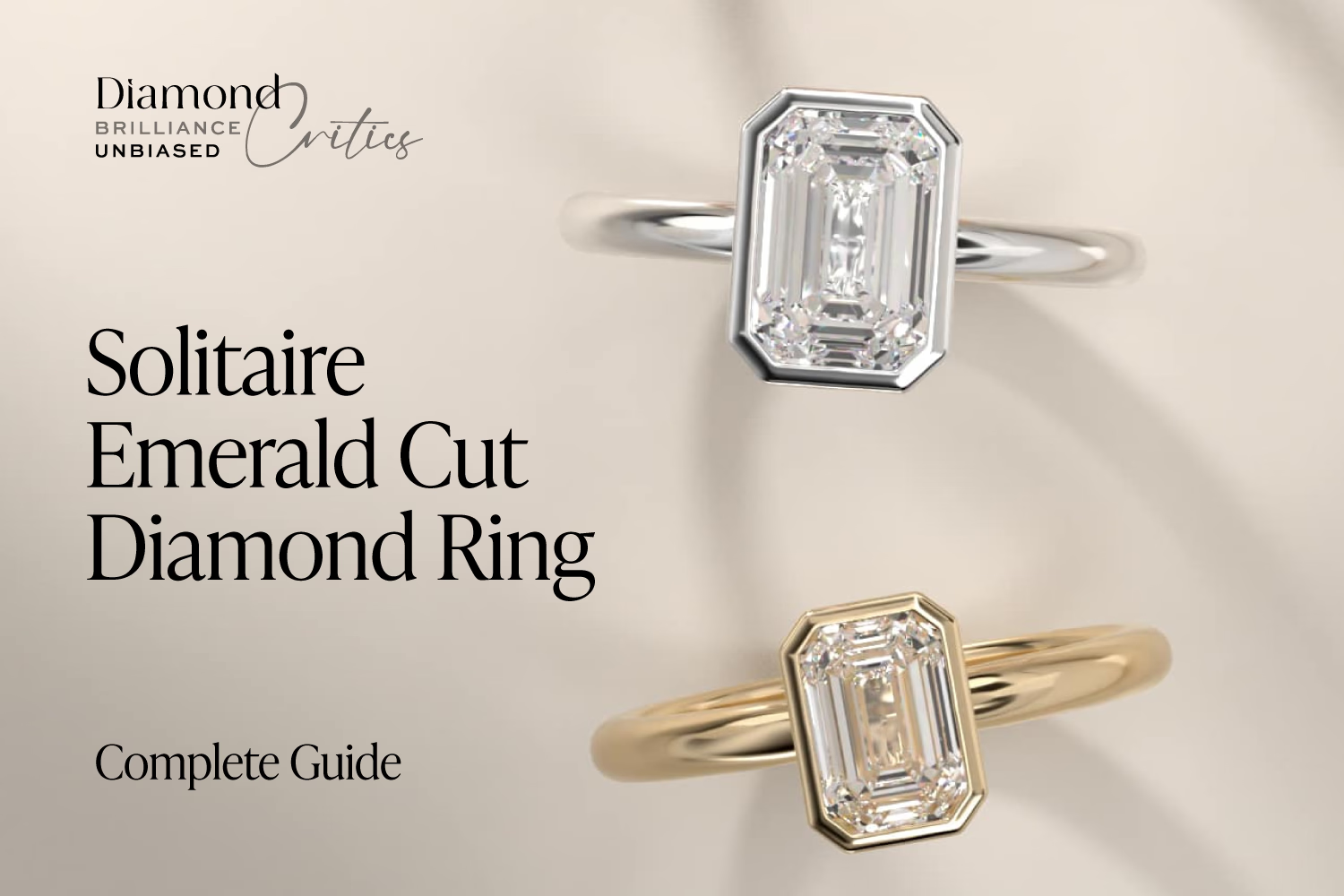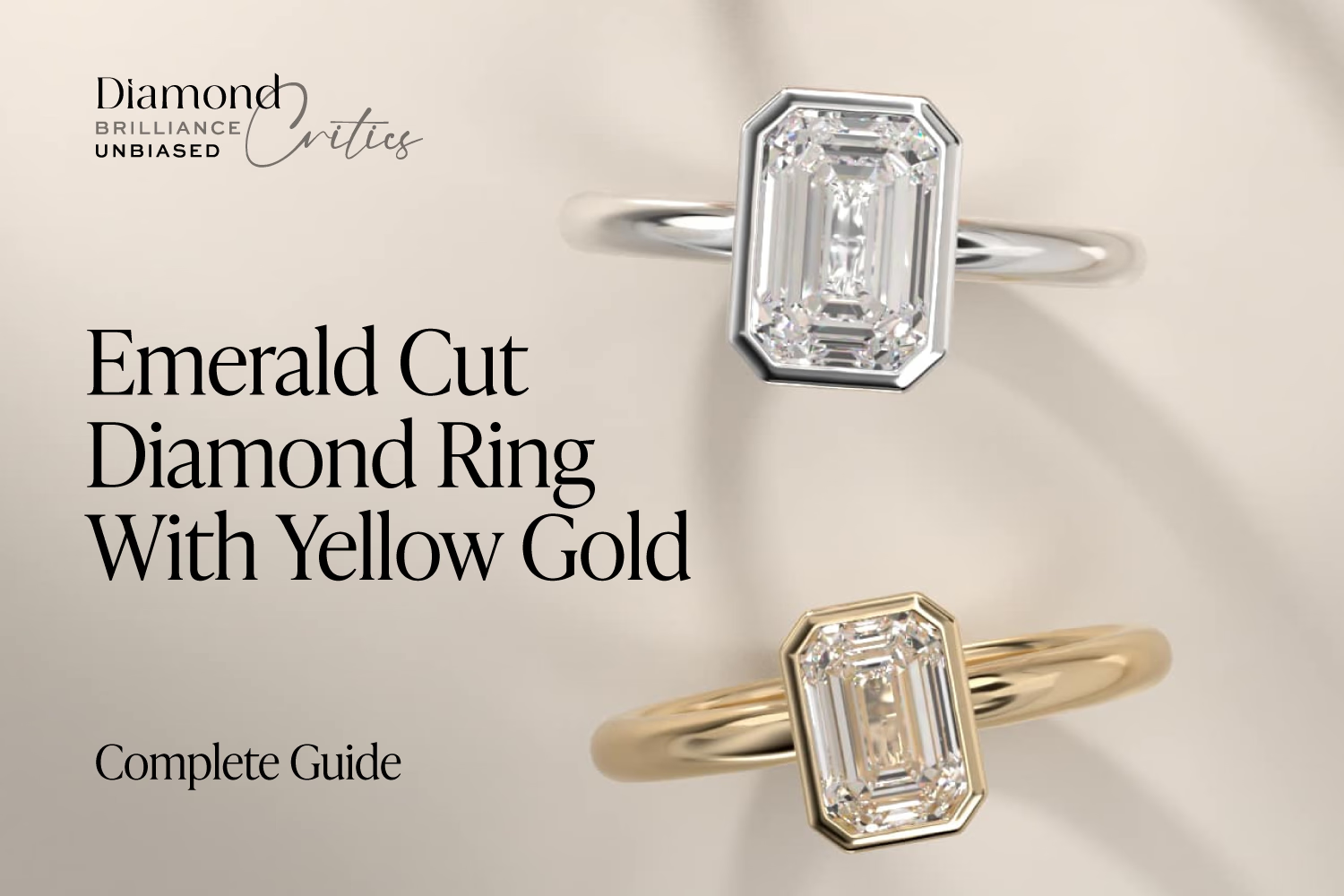
TL;DR: What Every Yellow Gold Emerald Cut Buyer Must Know First
An emerald cut diamond ring in yellow gold is not just a style choice — it is a buying strategy that changes which diamond specs matter. Yellow gold frames the stone's long rectangular outline better than white gold in many ways. But it changes one important thing: the color grade advice you have read everywhere else no longer applies here.
The Color Grade Trap: Yellow gold reflects warm light into the diamond from below, making a D-color stone and a G-color stone look identical face-up. You will pay $700–$1,100 more for D color and see zero difference wearing the ring.
Full ring price snapshot (certified market data, 2026):
- Natural 1ct GIA D-VS1 + Classic Comfort Fit Solitaire YG $935 = $4,075 total ring
- Natural 1ct GIA G-VS1 + Petite Solitaire YG $1,000 = ~$3,440 total ring (nearly identical face-up)
- Lab 1.94ct IGI F-VVS1 + Classic Comfort Fit Solitaire YG $935 = $3,164 total ring
→ Smart move: Pair a GIA 1ct G-VS1 natural emerald cut with the Petite Solitaire YG at $1,000. You save $700–$900 on color grade and see no difference. That saving buys you a bigger stone or better clarity.
Priority: Understand The Color Grade Trap before you set a budget. Then choose your setting, then find your stone to match — buyers who pick the stone first often choose the wrong color grade for yellow gold and overpay by hundreds.


What Is an Emerald Cut Diamond Ring in Yellow Gold?
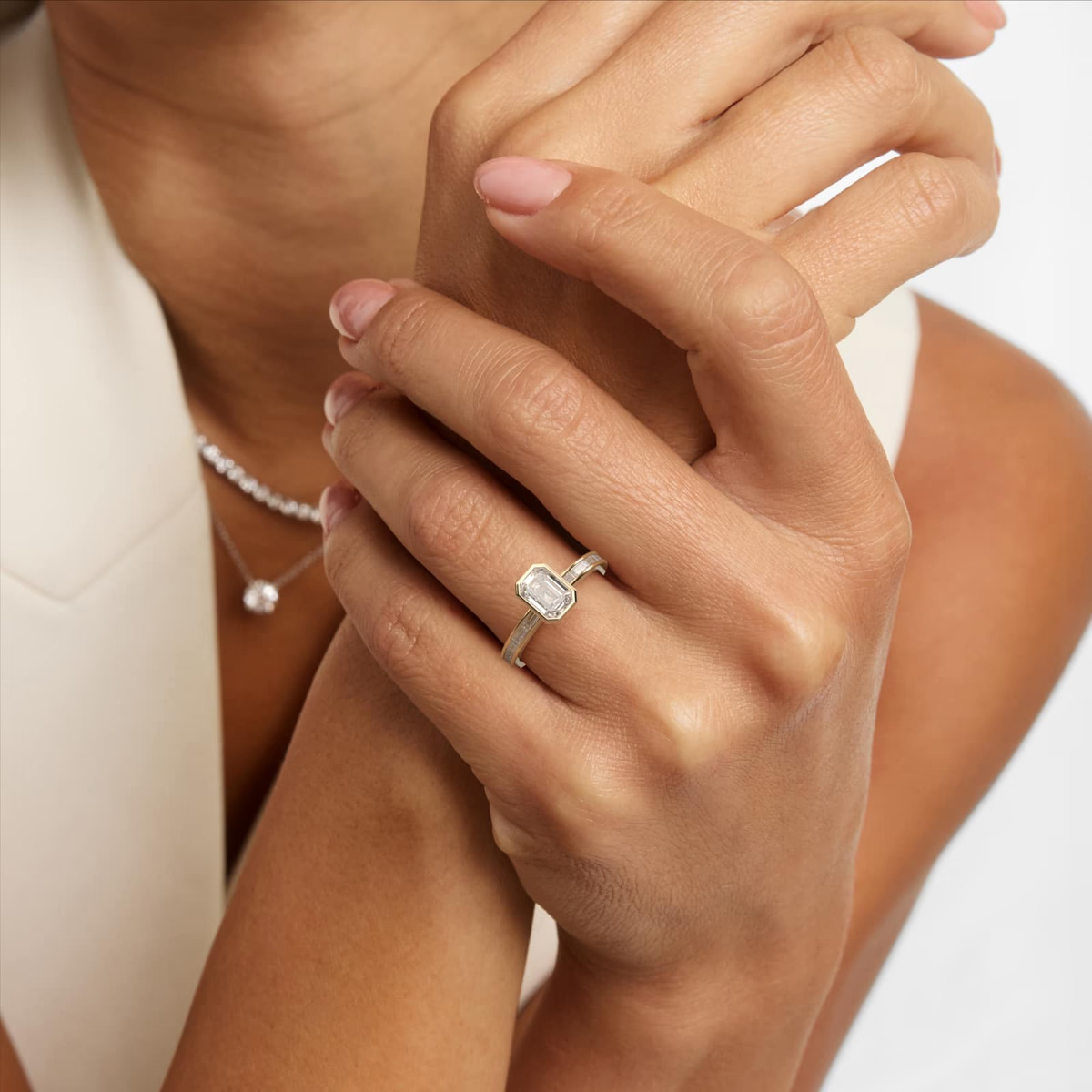
An emerald cut diamond ring in yellow gold puts a rectangular step-cut diamond into an 18K yellow gold setting. Yellow gold is the original engagement ring metal — it was the standard for a century before white gold became popular in the 1990s. It is making a strong return, and the emerald cut is one of the best shapes for it.
I'm Farzana Hasan, a GIA-certified gemologist. I have reviewed emerald cut diamond engagement rings across every metal and every price range. Yellow gold and the emerald cut have a specific optical interaction — The Color Grade Trap — that most buyers do not understand, and it directly changes how you should shop.
The emerald cut works in yellow gold for two reasons. First, yellow gold's warm tone complements the emerald cut's long open table, making the stone look rich and set rather than cool and clinical. Second, the emerald cut's step-cut facets create long mirror-like reflections — those reflections in yellow gold pick up a warm golden cast that looks intentional and beautiful.
Full credentials and methodology at Diamond Critics.
There is also a second type of buyer: someone looking for a yellow diamond — a fancy colored stone — in an emerald cut. That is a different product and a different price category. I address The Yellow Stone Question in full below — skip there if that is what you are looking for.
| Ring Option | Stone | Setting | Total Ring Price | Best For |
|---|---|---|---|---|
| Best Entry Natural | 1ct GIA D-VS1 Natural | Classic Comfort Fit YG $935 | $4,075 | Natural GIA, clean solitaire |
| Best Value Natural | 1ct GIA G-VS1 Natural | Petite Solitaire YG $1,000 | ~$3,440 | Identical face-up to D, $700 saved |
| Best Entry Lab | 1.94ct IGI F-VVS1 Lab | Classic Comfort Fit YG $935 | $3,164 | Nearly 2ct face-up, tight budget |
| Best Pavé YG | 1ct GIA D-VS1 Natural | Falling Edge Pavé Halo YG $2,470 | $5,610 | Max sparkle, no silhouette conflict |
How the Emerald Cut's Step-Cut Facets Work in Yellow Gold
Most diamond cuts are brilliant cuts. They use triangular and kite-shaped facets arranged to break incoming light into tiny sparkles in all directions. Round brilliants, oval cuts, and pear shapes all work this way.
The emerald cut is a step cut. Its facets are long rectangular planes stacked in parallel rows, running parallel to the stone's outline. Light enters the table, travels down through the long facets, and bounces back up in long broad flashes.
The effect looks like reflections in a hall of mirrors — you see the room above and around you reflected back in slow, sweeping flashes as you move your hand.
That hall-of-mirrors effect is specific to step cuts. It is what makes the emerald cut look elegant and clean rather than sparkly and busy. And it behaves differently in yellow gold than in white gold.
In white gold, the hall-of-mirrors reflections show white light, grey, and dark. In yellow gold, those same reflections pick up the warm amber-gold color of the metal below. The effect looks richer and warmer — more like an antique stone, less like a modern brilliant.
Some buyers find this beautiful. Some prefer white gold's crisp contrast. Neither is wrong.
What matters for buying decisions: the emerald cut shows what is in its environment. A high-color stone and a lower-color stone in yellow gold both reflect the same warm light — the difference between them face-up is negligible. This is the physical reason The Color Grade Trap exists.
The Color Grade Trap
This is the single most expensive mistake buyers make when choosing an emerald cut in yellow gold.
The diamond color scale runs from D (colorless) to Z (noticeably yellow). In white gold, color matters a great deal — the white metal acts as a neutral backdrop, and any warmth in the diamond is visible. A G-color diamond in white gold can show a faint yellow cast to a trained eye in controlled lighting.
Yellow gold changes the equation completely. The metal is yellow, and it reflects warm light up into the diamond from the pavilion facets below. An H-color diamond that looks slightly warm in white gold looks completely colorless in yellow gold — the metal's own warmth is already present, so the diamond's warmth disappears into it.
This means the color premium you pay for D, E, or F over G, H, or I is largely wasted in yellow gold. A GIA 1ct D-VS1 natural emerald cut runs approximately $3,140 at current prices, while a GIA 1ct G-VS1 runs roughly $2,440. That is a $700 difference for a quality change that is invisible in the setting.
The practical rule for yellow gold buyers: go G or H color for natural stones. Spend the savings on clarity — an SI1 with G color looks better than a VS2 with D color in yellow gold, and costs less. The emerald cut's open table shows inclusions clearly, so clarity matters more than color in this shape.
For lab diamonds, color matters even less. Lab diamonds are produced colorless by default. Most IGI-certified lab emerald cuts fall in the D-F range regardless, so this is not a purchasing decision you need to stress over.
Farzana says: "The buyers who waste money on yellow gold emerald cuts are not the ones who choose a simple setting. They are the ones who pay $800 more for D over G, thinking colorless looks better in yellow gold. It does not. Yellow gold is not white gold. The Color Grade Trap catches people who shop for yellow gold rings using white gold buying rules."
The Yellow Stone Question
There is a split in search intent for this keyword that you need to understand.
Some buyers searching "emerald cut diamond ring yellow gold" want a yellow gold setting for a white diamond. Others are searching for a yellow diamond — specifically a canary yellow diamond — in an emerald cut. These are two completely different products at two completely different price points.
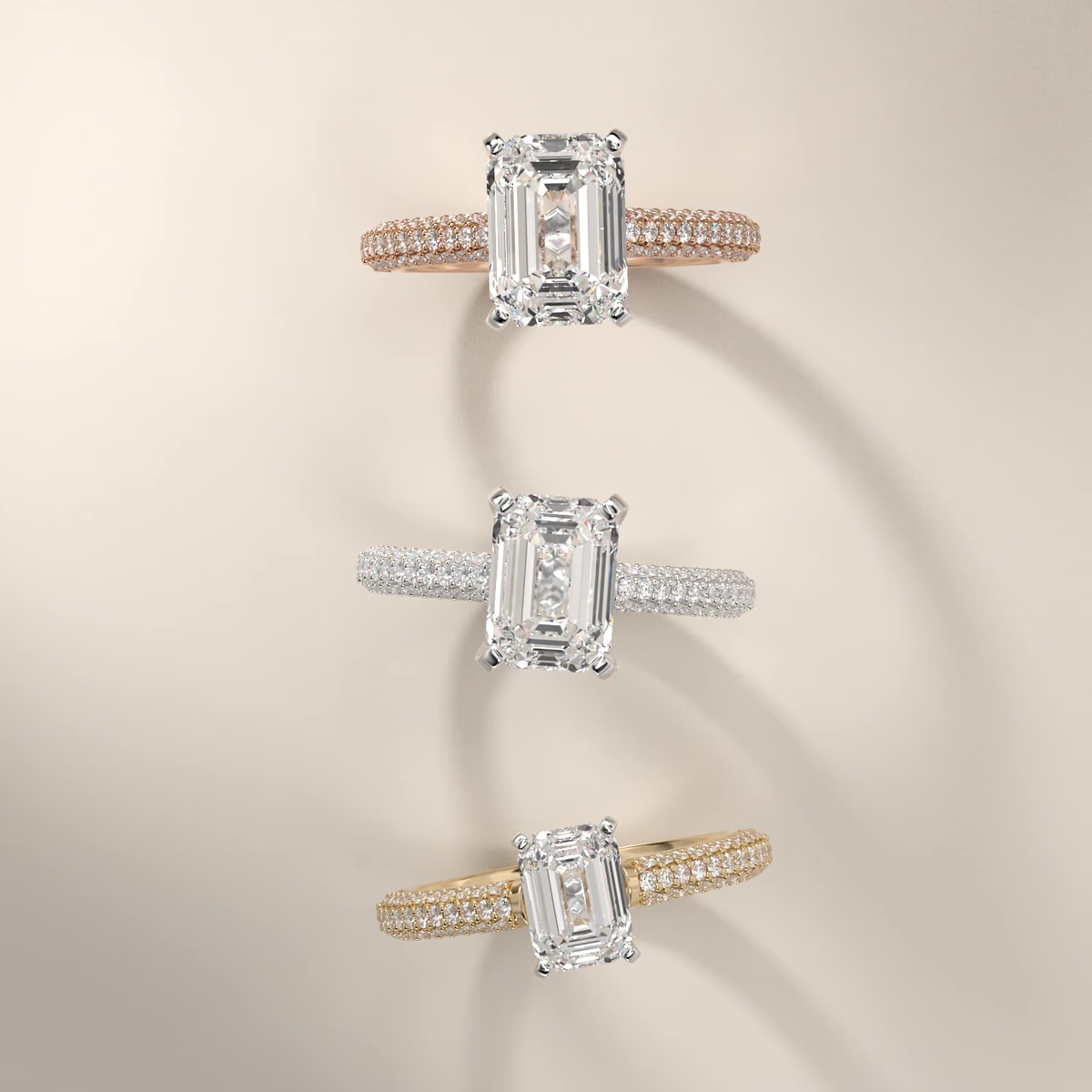
Yellow gold setting for a white diamond: This is what most buyers want — a standard 18K yellow gold ring setting from around $935 for the Classic Comfort Fit to $5,190 for the dedicated EC setting, with a natural or lab-grown white diamond. Full ring from $4,075.
Yellow diamond in an emerald cut: A fancy yellow (canary) diamond in an emerald cut is a completely different product. Fancy yellow diamonds are rare — a 1ct fancy yellow emerald cut runs $5,000–$30,000+ depending on color intensity and cut quality. If this is what you are looking for, search for fancy colored diamonds specifically — the rings in this post are white diamonds in yellow gold settings only.
The Yellow Stone Question is worth naming because people spend time in the wrong part of the market. If you want yellow gold + white stone, you are in the right place. If you want a yellow diamond, no ring in this post applies.
20 Yellow Gold Emerald Cut Settings Ranked
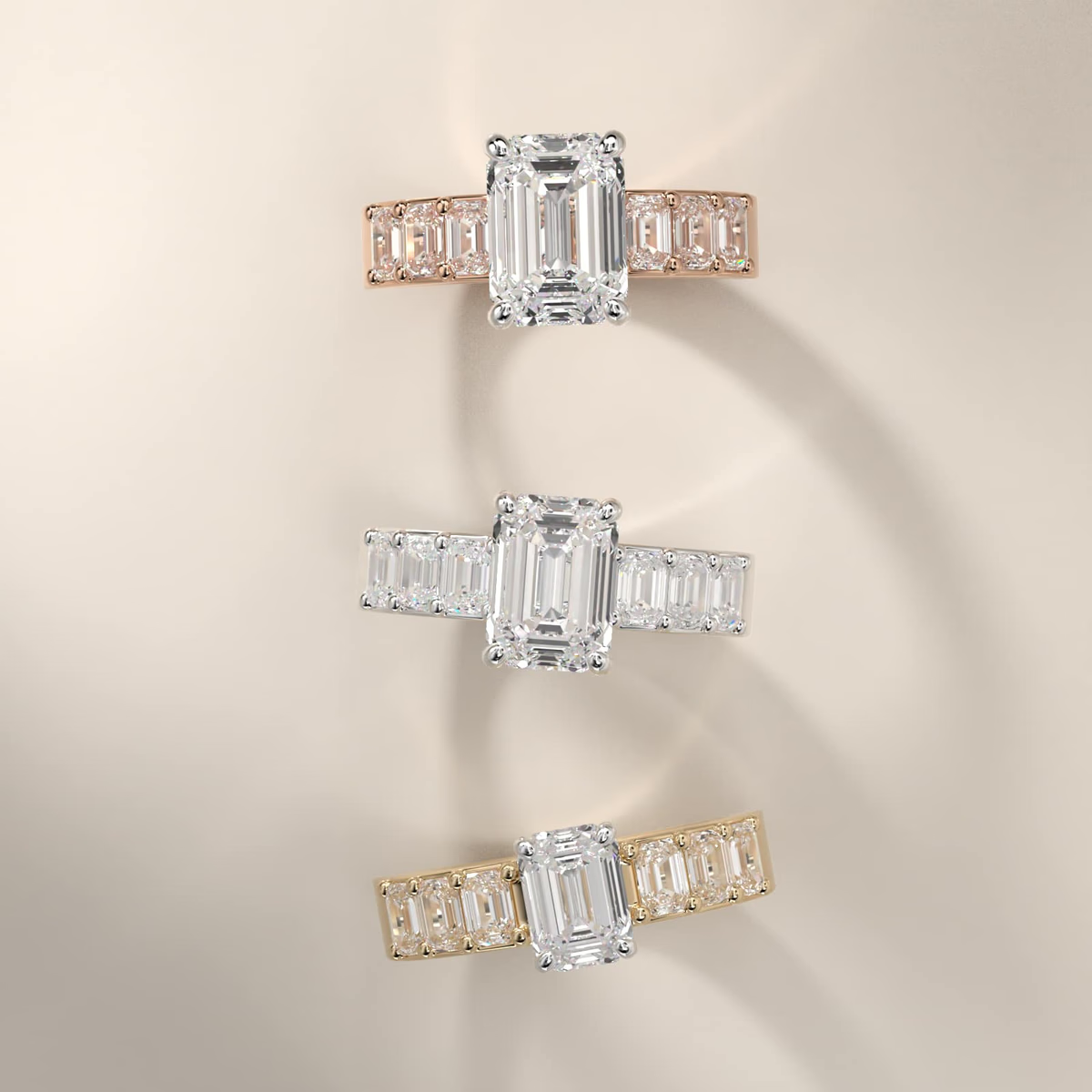
These 20 settings were selected from certified market inventory — every setting accepts an emerald cut diamond and is offered in 18K yellow gold. Prices reflect current certified market data. Ring totals use a GIA 1ct D-VS1 natural emerald cut at $3,140 as the baseline stone.
| Setting | Price | Reviews | Total Ring | Style |
|---|---|---|---|---|
| Classic Comfort Fit Solitaire YG | $935 | 232 | $4,075 | Clean solitaire, rounded band |
| Woven Solitaire YG | $965 | 17 | $4,105 | Textured band, subtle detail |
| Petite Solitaire YG | $1,000 | 1,186 | $4,140 | The 1186-Review Standard. Best seller. |
| Petite Diamond Ring YG | $1,115 | 363 | $4,255 | Slightly wider band, petite prongs |
| Petite Split Shank YG | $1,165 | 18 | $4,305 | Split shank, open look at base |
| Solitaire Wire Basket YG | $1,185 | 49 | $4,325 | Open wire basket, airy look |
| Tapered Cathedral Solitaire YG | $1,240 | 254 | $4,380 | Classic cathedral arch, elevated stone |
| Petite Twist Lab-Grown YG | $1,250 | 505 | $4,390 | Twisted shank, works natural stones too |
| Petite Hidden Halo Solitaire Plus YG | $1,255 | 104 | $4,395 | Hidden halo below stone, subtle |
| Petite Pavé Lab-Grown YG | $1,400 | 1,150 | $4,540 | Fine pavé band, very popular |
| Riviera Micropavé Sapphire YG | $1,490 | 77 | $4,630 | Sapphire accents on band |
| Common Prong Pavé YG | $2,090 | 107 | $5,230 | Shared-prong pavé band, full coverage |
| Pavé Trio Side Stone YG | $2,090 | 42 | $5,230 | Three-stone look with pavé details |
| Pavé Diamond Halo Cathedral YG | $2,220 | 102 | $5,360 | Cathedral halo — read silhouette note |
| Solitaire Pavé Basket YG | $2,260 | 60 | $5,400 | Pavé basket, open under stone |
| Bow-Tie Channel Set YG | $2,350 | 146 | $5,490 | Channel-set band, bold geometric look |
| Falling Edge Pavé Halo YG | $2,470 | 369 | $5,610 | Best halo option — no silhouette conflict |
| Double Shank Diamond Halo YG | $2,940 | 92 | $6,080 | Double band, statement look |
| Three-Stone EC Zac Posen YG | $3,460 | 13 | $6,600 | EC-specific three-stone, premium |
| Emerald Cut Diamond Ring YG 1ct | $5,190 | 11 | $8,330 | Purpose-built EC setting, widest shank |
The range here is significant. From the $935 Classic Comfort Fit to the $5,190 dedicated EC setting is a large gap in the setting alone. Most buyers get the same visual result — an emerald cut solitaire in yellow gold — from either end of that range.
The settings in the $935–$1,400 range have the most reviews for a reason. Buyers who actually purchase these rings are not choosing the most expensive settings. They are choosing the settings that let the stone be the focal point.
EC-Specific Yellow Gold Settings
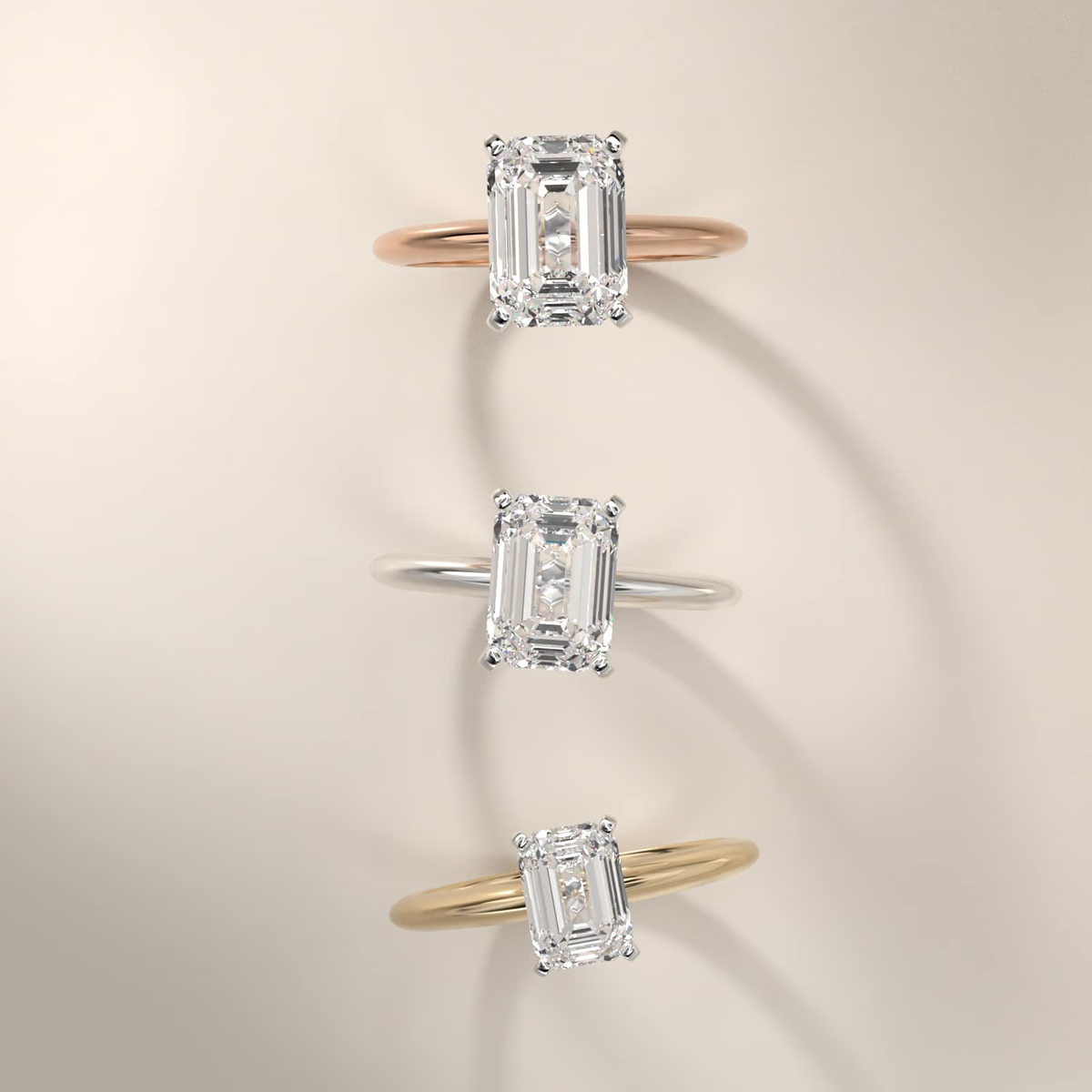
Most settings in the 20-ring table above accept multiple stone shapes. These four settings are built specifically for the emerald cut. They have prong placement or bezel profiles designed for the emerald cut's rectangular corners.
| EC-Specific Setting | Price | Reviews | Total Ring (+ D-VS1 $3,140) | Note |
|---|---|---|---|---|
| Three-Stone EC Zac Posen YG | $3,460 | 13 | $6,600 | Designer three-stone, EC side stones |
| Three-Stone EC Lab-Grown YG | $3,950 | 6 | $7,090 | Lab-grown side stones, matches lab center |
| Bezel Set EC Side Stone YG | $4,300 | 1 | $7,440 | Full bezel, corner protection, modern |
| Emerald Cut Diamond Ring YG | $5,190 | 11 | $8,330 | Widest band, purpose-built prong placement |
EC-specific settings cost more because they require custom tooling for the rectangular stone shape. The prongs on a purpose-built EC setting grip the corners precisely — not the sides, which would block the step-cut facets. For a bezel-set emerald cut, the metal lip follows the exact rectangular outline of the stone.
The low review counts here (1–13 reviews) do not indicate poor quality. EC-specific settings serve a smaller volume category — fewer people buy them per month, so fewer people review them. The build quality on purpose-built EC settings is typically higher than universal settings that have simply been adapted for the shape.
Lab Diamond in Yellow Gold: The Numbers
Lab diamonds are a strong choice for yellow gold. The color advantage of yellow gold described in The Color Grade Trap applies equally to lab stones. And lab stones deliver the most face-up size per dollar.
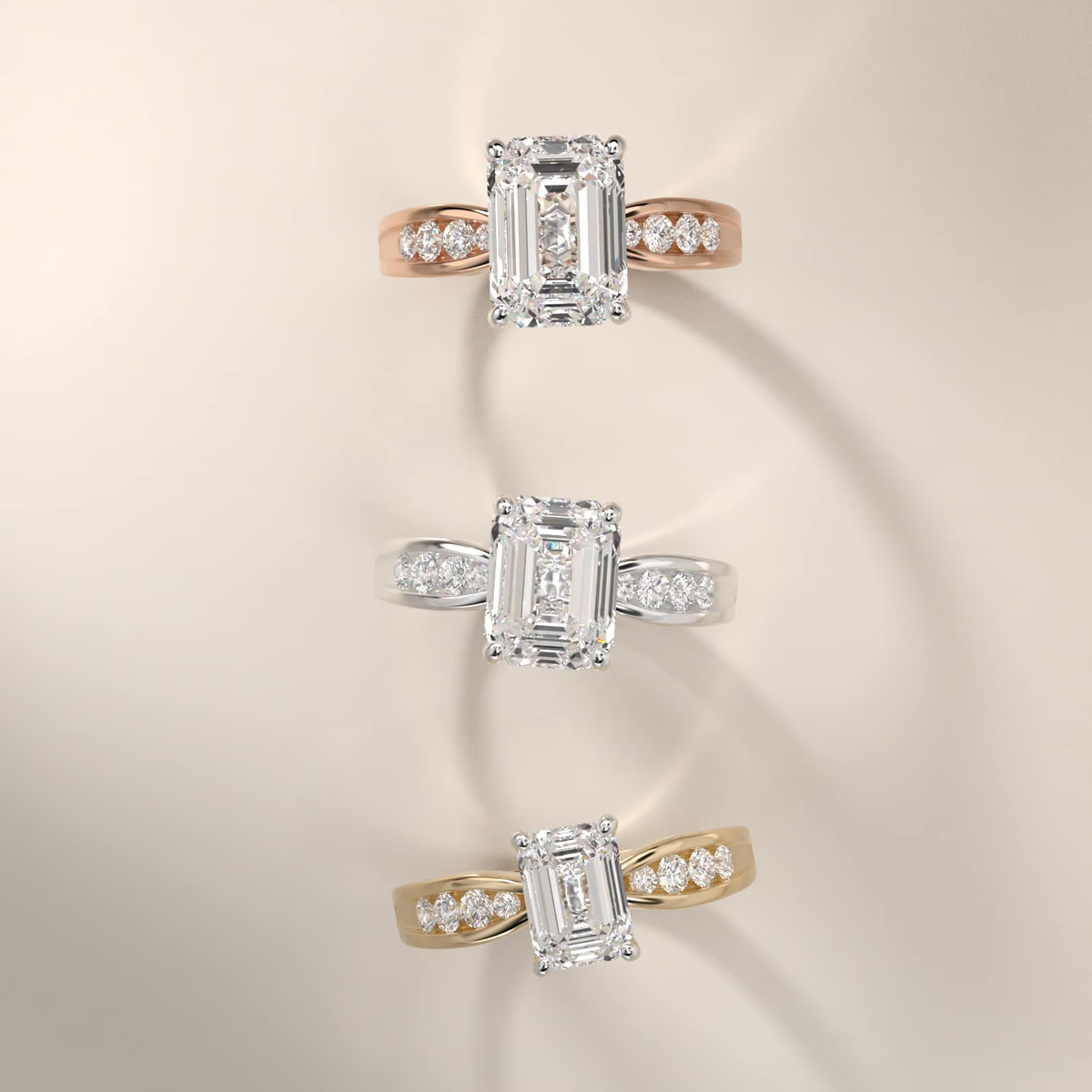
The benchmark lab stone: IGI 1.94ct F-VVS1 lab-grown emerald cut at $2,229. That is nearly 2ct of certified lab diamond — face-up size comparable to a natural 2ct stone — at a fraction of the natural price.
| Lab Stone | + Setting YG | Setting Price | Total Lab Ring |
|---|---|---|---|
| IGI 1.94ct F-VVS1 Lab $2,229 | Classic Comfort Fit YG | $935 | $3,164 |
| IGI 1.94ct F-VVS1 Lab $2,229 | Petite Solitaire YG | $1,000 | $3,229 |
| IGI 1.94ct F-VVS1 Lab $2,229 | Petite Pavé Lab-Grown YG | $1,400 | $3,629 |
| IGI 1.94ct F-VVS1 Lab $2,229 | Three-Stone EC Lab-Grown YG | $3,950 | $6,179 |
The Petite Pavé Lab-Grown YG at $1,400 has 1,150 reviews — one of the highest counts on the entire platform. Combined with the lab stone at $2,229, the total ring at $3,629 gives you nearly 2ct of certified lab diamond in yellow gold with a fine pavé band. That combination has enormous market proof.
Tides Of Summer Capsule
Up To 30% Off
Shop The Sale →Vault ClearanceClear The Vault
Up To 70% Off
Shop Vault Deals →Affiliate link — no extra cost to you
The 1186-Review Standard
In a market of hundreds of yellow gold settings, one setting dominates by review volume: the Petite Solitaire YG at $1,000, with 1,186 verified reviews.
That number is meaningful. Most engagement ring settings have under 100 reviews, and 500 is exceptional. 1,186 reviews is not a fluke — it means buyers choose this setting consistently, at scale, across different stones and different budgets.
The Petite Solitaire YG is The 1186-Review Standard because it represents the real-world verdict of over a thousand emerald cut purchases.
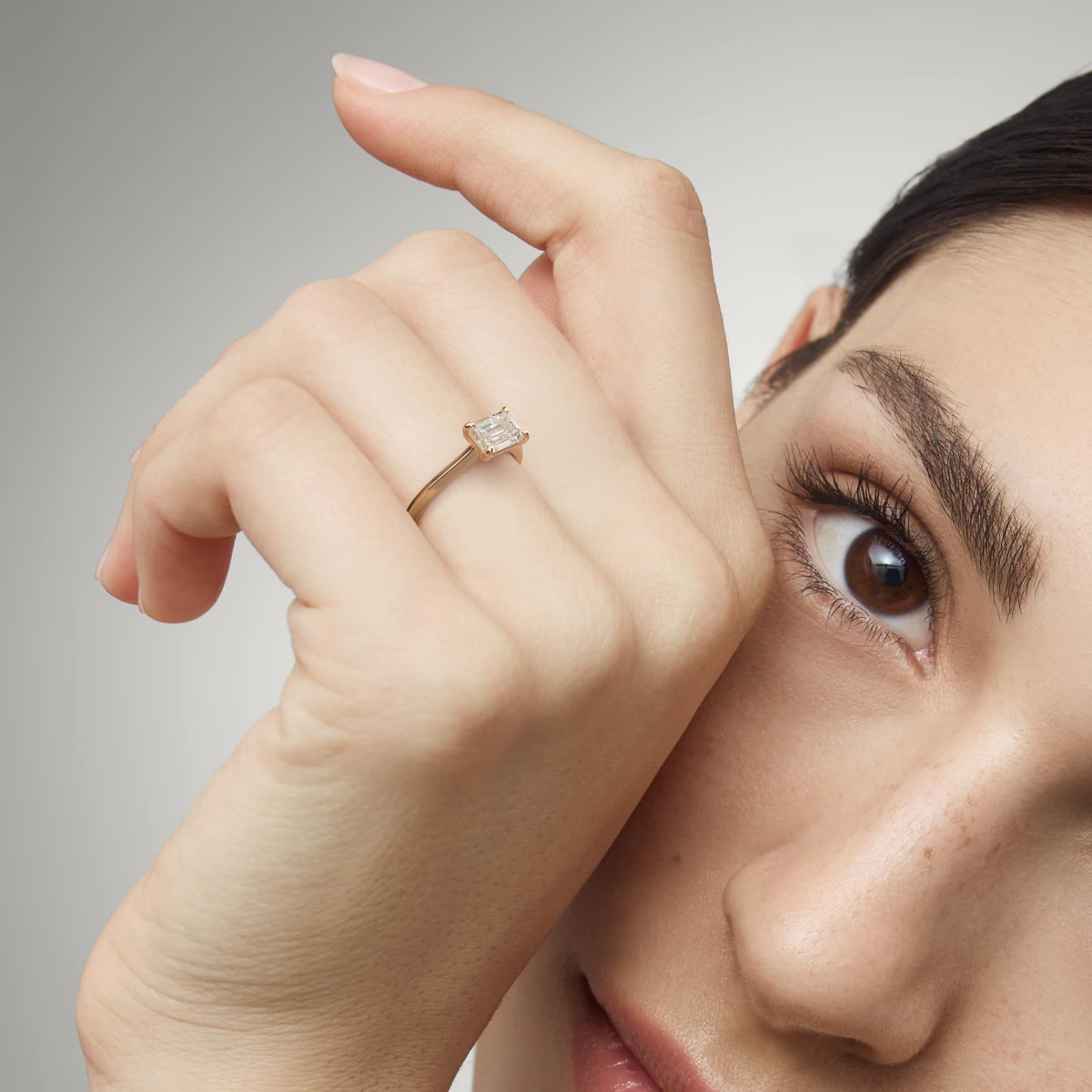
What does that verdict say? Buyers want a clean four-prong solitaire in yellow gold — slender band, full stone visibility, no competing shapes. They are not spending $2,000–$5,000 on a setting when $1,000 gives them the same result.
The Petite Pavé Lab-Grown YG with 1,150 reviews says a slightly different thing. Buyers who choose lab stones also want the yellow gold band, but they add fine pavé for additional sparkle on the shoulders. At $1,400, it is a $400 premium over the plain solitaire — and 1,150 buyers found that premium worth it.
The 1186-Review Standard does not mean every buyer should choose the Petite Solitaire. It means if you want market validation, this setting has more of it than anything else in the category. Pick a setting with 11 reviews and you are pioneering — pick this one and you are buying with the crowd.
Farzana says: "When a client asks me which yellow gold setting is safest, I tell them to look at the review count first. Not the price, not the design description. The review count tells you what real buyers are actually choosing. 1,186 people picked the Petite Solitaire in yellow gold. That is not a coincidence — that is a consensus."
Yellow Gold vs White Gold for an Emerald Cut
Some buyers are deciding between yellow gold and white gold for their emerald cut. Here is how to think about that.
The emerald cut has two different personalities depending on the metal. In white gold, the stone looks modern, precise, and cool — the rectangular outline reads against white metal as a graphic, architectural element. In yellow gold, the same rectangular outline reads as warm, vintage, and traditional fine jewellery.
Neither is better. They are different aesthetics for different people.
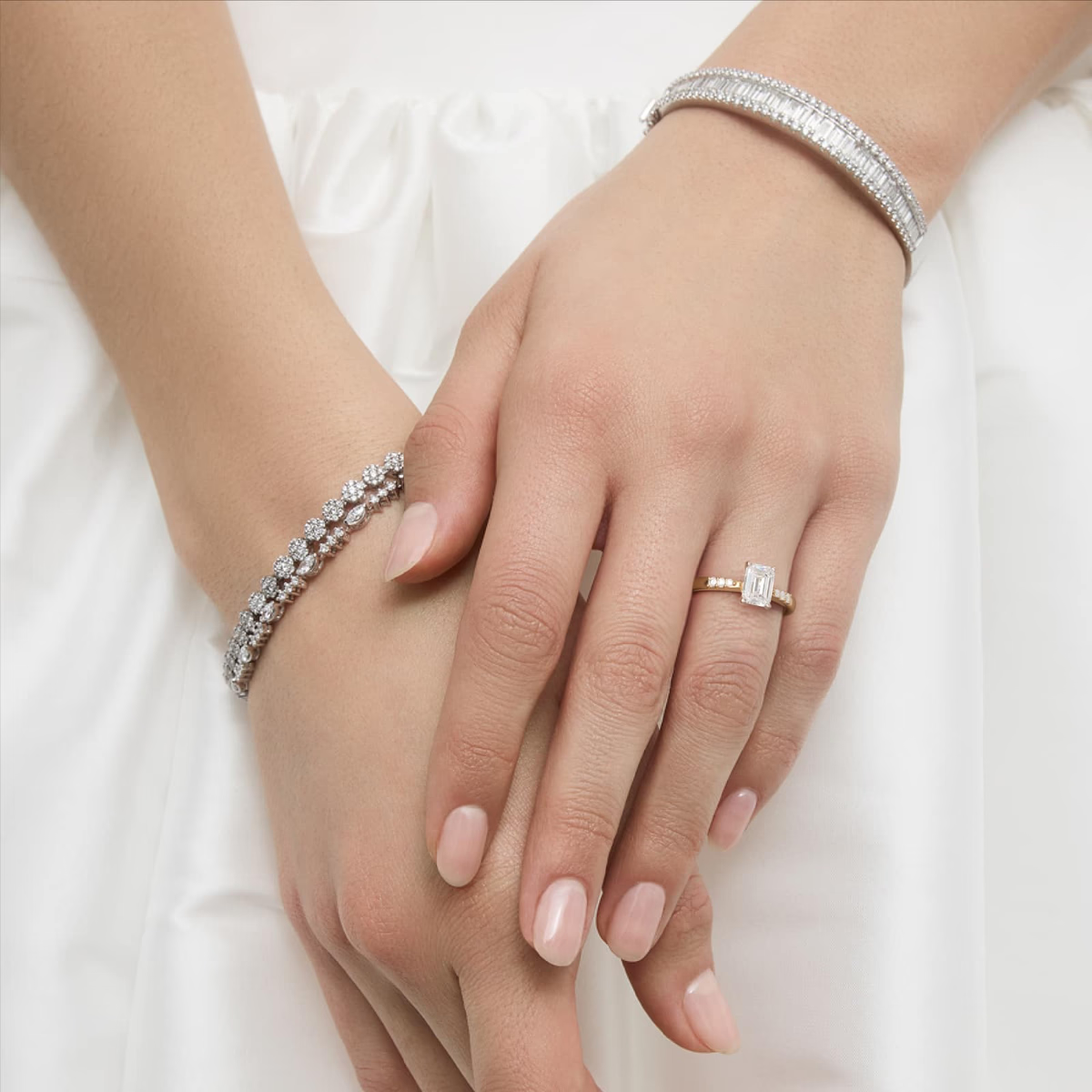
The technical differences that matter:
Color grade: Buy G or H in yellow gold. Buy F or better in white gold. This is The Color Grade Trap applied at the metal selection stage.
Durability: 18K yellow gold and 18K white gold have identical hardness — both are 75% pure gold. White gold is typically rhodium-plated, which adds a bright white finish but wears off over years and requires re-plating. Yellow gold requires no plating — it is what it is, no maintenance needed.
Skin tone: Yellow gold flatters warm skin tones (olive, tan, darker complexions). White gold reads well on cool or neutral skin tones. This is a generalization, not a rule — wear what you like — but it is worth knowing.
Resale: Natural diamond emerald cuts in yellow gold hold value well because the combination appeals to a broad market. Yellow gold has been back in strong fashion since approximately 2018 and shows no sign of declining.
Prong Count in Yellow Gold: 4-Prong vs 6-Prong
The emerald cut's rectangular shape means prong placement is different from round stones. For the emerald cut, you want four prongs positioned at the four clipped corners of the rectangle. This holds the stone securely while leaving the long step-cut facets completely exposed.
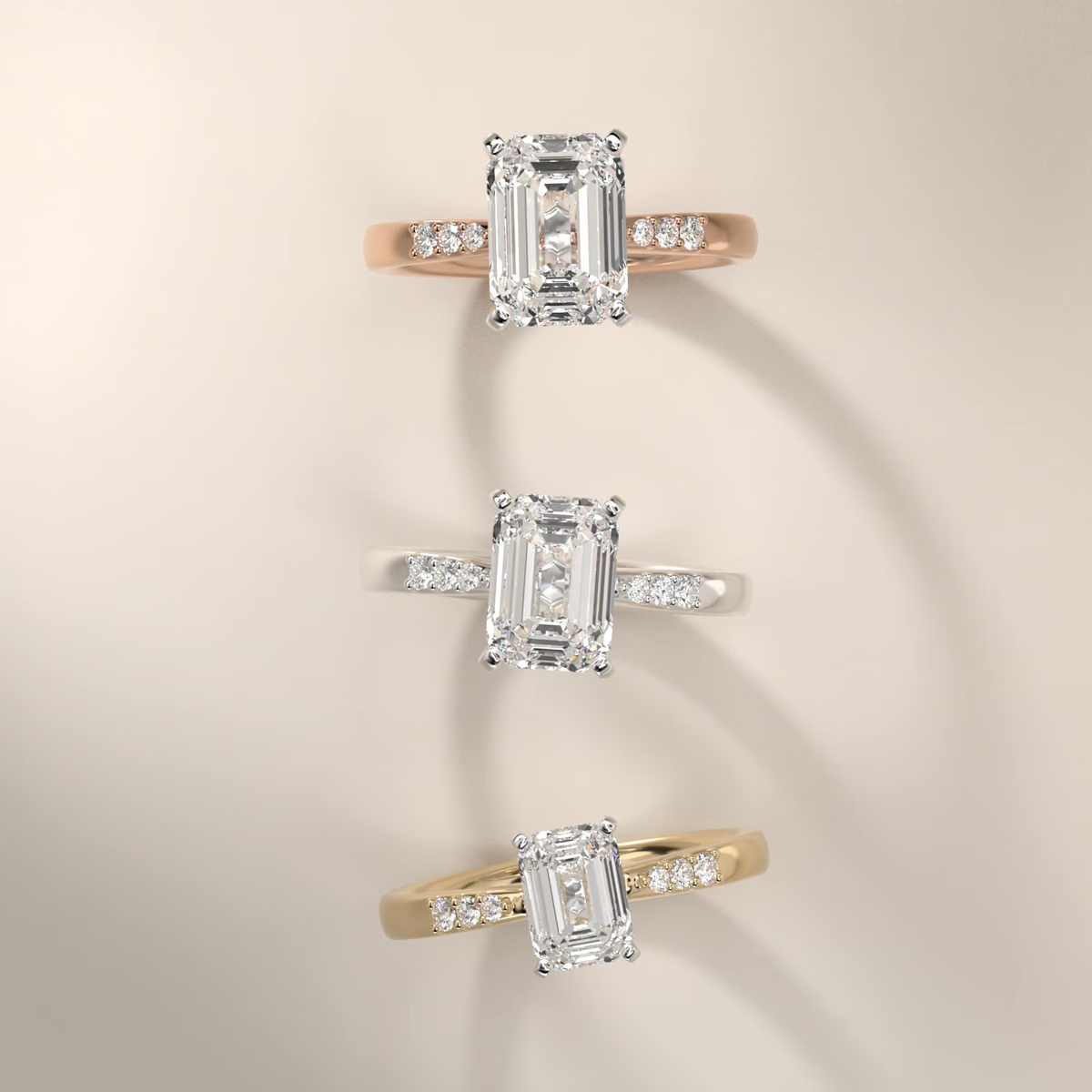
A 6-prong setting adapted for an emerald cut places two prongs on the long sides of the rectangle. Those side prongs sit directly over the step-cut facets, blocking light entry and reducing the hall-of-mirrors effect that makes the emerald cut beautiful. For the emerald cut, 4-prong settings are almost always the right choice.
The exception is the bezel setting. A full bezel wraps the stone completely in metal, offering the best corner protection — the emerald cut's clipped corners are its most vulnerable points. The Bezel Set EC Side Stone YG at $4,300 is the dedicated bezel option in yellow gold — it reduces some light entry compared to prong settings but gives the stone the most protection available.
Farzana says: "People ask me whether yellow gold is coming back in style. It never really left — it just went quiet for 20 years while white gold was popular. Every client I've spoken to in the last three years who chose yellow gold has never regretted it. The warmth it adds to an emerald cut is something white gold cannot replicate."
Sizing an Emerald Cut for Yellow Gold
The emerald cut's rectangle has a length-to-width (L:W) ratio that changes how the stone looks on the hand. Most emerald cuts on the market fall between 1.30:1 and 1.60:1. The standard recommendation is 1.35:1 to 1.50:1.
A 1.35:1 ratio gives a slightly stubby rectangle — still clearly an emerald cut, but not dramatically elongated. A 1.50:1 ratio gives a more slender rectangle that reads as elegant and finger-lengthening. Above 1.55:1, the stone starts to look narrow and very long — some buyers love this, others feel it looks fragile.
In yellow gold specifically, a more elongated ratio (1.45:1 to 1.50:1) tends to look richer because the longer step-cut facets have more room to create the hall-of-mirrors effect. A stubbier ratio (1.30:1 to 1.35:1) can look a bit blocked in yellow gold — there is less facet length for light to travel.
The carat weight also affects apparent size differently from other cuts. An emerald cut at 1ct measures approximately 7mm × 5mm — larger face-up than a round brilliant at 1ct, which measures about 6.5mm in diameter. That extra face-up area means your stone looks bigger per carat, and in yellow gold you can buy a smaller carat weight and still get a substantial-looking stone.
For buyers on a budget, a 0.90ct emerald cut in yellow gold looks comparable to a 1ct round brilliant. The face-up area is similar, and the step-cut facets in warm yellow gold make the stone appear large and prominent. Pair it with a Petite Solitaire YG at $1,000 and the slender yellow gold band makes the stone the entire focal point.
Caring for a Yellow Gold Emerald Cut Ring
Yellow gold is the lowest-maintenance of the precious metals for an engagement ring. It does not need plating — white gold is rhodium-plated and that plating wears off every 1–3 years, requiring a jeweller visit. Yellow gold requires no plating; the only maintenance is cleaning.
Clean your yellow gold ring at home using warm water, a small drop of mild dish soap, and a soft toothbrush — brush gently around the prongs and under the stone's table where oil and debris collect. Rinse and dry with a lint-free cloth. Do this once a month to keep the emerald cut's large table free of haze.
Professional cleaning once a year is enough for most yellow gold settings. The jeweller will ultrasonic-clean the ring and check prong tightness — the four corner prongs on an emerald cut take more stress than prongs on a round stone, because the rectangle's corners press outward when the ring catches on fabric or knocks against hard surfaces. A prong check once a year is the single most important maintenance step for an emerald cut in any metal.
Yellow gold does scratch over time — all gold alloys do. Scratches aggregate into a patina called a "brushed" finish that many buyers find more beautiful than the original high-polish surface. Any jeweller can restore the polish for around $25–$50 if you prefer.
Optimization Matrix
| Priority | Recommendation | Setting | Stone | Total |
|---|---|---|---|---|
| Lowest price, natural | G color + simple setting | Classic Comfort Fit YG $935 | GIA 1ct G-VS1 ~$2,440 | ~$3,375 |
| Most reviews, natural | The 1186-Review Standard | Petite Solitaire YG $1,000 | GIA 1ct D-VS1 $3,140 | $4,140 |
| Best lab value | Nearly 2ct, certified | Classic Comfort Fit YG $935 | IGI 1.94ct F-VVS1 Lab $2,229 | $3,164 |
| Max sparkle, no halo conflict | Falling Edge is only safe halo | Falling Edge Pavé Halo YG $2,470 | GIA 1ct D-VS1 $3,140 | $5,610 |
| EC-specific, natural | Purpose-built prong placement | Three-Stone EC Zac Posen YG $3,460 | GIA 1ct D-VS1 $3,140 | $6,600 |
Best For 4 Scenarios
| Scenario | Setting | Stone | Why |
|---|---|---|---|
| The Budget-Smart Natural Buyer | Classic Comfort Fit YG $935 | GIA 1ct G-VS1 natural | Avoids Color Grade Trap. Same face-up result as D, $700 saved. |
| The Market-Validated Buyer | Petite Solitaire YG $1,000 | GIA 1ct D-VS1 $3,140 | The 1186-Review Standard. Most validated YG setting on the platform. |
| The Lab-First Buyer | Petite Pavé Lab-Grown YG $1,400 | IGI 1.94ct F-VVS1 Lab $2,229 | Nearly 2ct certified lab in yellow gold with fine pavé. $3,629 total. |
| The Statement Buyer | Falling Edge Pavé Halo YG $2,470 | GIA 1ct D-VS1 $3,140 | Maximum sparkle in yellow gold without breaking the emerald cut's silhouette. |
Frequently Asked Questions
Is yellow gold good for an emerald cut diamond ring?
Yes — yellow gold is one of the best metals for the emerald cut. The warm tone complements the step-cut facets, and the rectangular outline reads beautifully against a yellow gold band. The only rule that changes: go G or H color instead of D or E, because yellow gold masks color warmth in the diamond.
What color diamond should I choose for a yellow gold emerald cut ring?
G or H color. Yellow gold reflects warm light into the diamond, making D through H all look essentially the same face-up. Spend the savings on clarity instead — the emerald cut's open table shows inclusions, so VS2 or better is the right entry point.
What is The Color Grade Trap?
The Color Grade Trap is the mistake of buying D, E, or F color for a diamond in a yellow gold setting. Yellow gold reflects warm light upward through the pavilion facets, masking any warmth in a G, H, or I color stone. D and G look the same face-up in yellow gold — paying the D premium buys a certificate improvement that is invisible in the ring.
How much does an emerald cut diamond ring in yellow gold cost?
From $4,075 for a natural 1ct GIA D-VS1 + $935 Classic Comfort Fit YG. Lab options start from $3,164 total for a 1.94ct IGI F-VVS1 + $935 setting. EC-specific settings with three-stone designs push totals to $6,600–$8,330.
What is the most popular yellow gold setting for an emerald cut?
The Petite Solitaire YG at $1,000 with 1,186 verified reviews — The 1186-Review Standard. The Petite Pavé Lab-Grown YG at $1,400 is the second most reviewed, with 1,150 reviews. Both are four-prong designs with slender yellow gold bands.
Is an emerald cut diamond ring in yellow gold a good investment?
Natural diamond emerald cuts in yellow gold hold resale value well — yellow gold has been back in strong fashion since approximately 2018, and the emerald cut is one of the most desirable shapes on the secondary market. Neither the metal nor the stone shape is a liability here.
Lab diamonds resell at a significant discount regardless of setting or shape. If resale value matters, choose a natural stone.
What clarity should I choose for an emerald cut in yellow gold?
VS2 or VS1 for natural stones. The emerald cut has an open, flat table that shows inclusions more than round brilliants or cushion cuts — SI1 inclusions invisible in a round can be eye-visible in an emerald cut. VS2 is the safe entry point for a clean-looking stone in this shape.
Can a halo setting work with an emerald cut in yellow gold?
Most halo settings conflict with the emerald cut's rectangular silhouette — a round halo puts a circle around a rectangle, making the stone look smaller. The one exception is the Falling Edge Pavé Halo YG at $2,470, which places diamonds below the center stone. From above, the emerald cut's outline is fully intact — the extra diamonds only show from the side.
What is the difference between a yellow gold and white gold emerald cut ring?
Yellow gold gives the ring a warm, vintage, traditional character (buy G or H color). White gold gives it a cool, modern, architectural character (buy F or better). Yellow gold needs no re-plating, while white gold is rhodium-plated and needs re-plating every few years — both 18K options have identical hardness.
What is a yellow diamond emerald cut ring?
A yellow diamond is a fancy colored diamond — not a white diamond in a yellow setting. Fancy yellow diamonds (sometimes called canary diamonds) are rare, and a 1ct fancy yellow emerald cut runs $5,000–$30,000+ depending on color intensity. The rings in this post are white diamonds in 18K yellow gold; if you want a yellow stone, you need to shop for fancy colored diamonds specifically.
How many prongs should a yellow gold emerald cut ring have?
Four prongs, placed at the four clipped corners of the rectangle — side prongs cover the step-cut facets and reduce the hall-of-mirrors light effect, while corner prongs hold the stone without blocking any facets. EC-specific settings like the Three-Stone EC Zac Posen YG have custom corner-prong placement designed for this shape.
Is yellow gold or rose gold better for an emerald cut?
Both yellow gold and rose gold flatter the emerald cut — yellow gold is warmer and more traditional, while rose gold adds a pinkish blush tone that photographs beautifully. The Color Grade Trap applies to both: D color is indistinguishable from G color face-up in either metal. If you are choosing between them, hold both metal swatches against your skin to see which reads better on your complexion.
What is the ideal length-to-width ratio for an emerald cut in yellow gold?
1.35:1 to 1.50:1 is the standard recommendation. Ratios below 1.30:1 read as nearly square (closer to an Asscher cut), and ratios above 1.55:1 look very elongated and narrow. In yellow gold, a more elongated stone around 1.50:1 makes the finger look longer and gives more room for the hall-of-mirrors effect.
What is The 1186-Review Standard?
The 1186-Review Standard is the name given to the Petite Solitaire YG at $1,000 because it has 1,186 verified reviews from actual buyers. That review volume represents market consensus in a category where most settings have under 100 reviews. It means this setting has been chosen, worn, and rated by over a thousand buyers — the closest thing to a crowd-sourced guarantee in the engagement ring market.
What Emerald Cut Buyers Get Wrong About Yellow Gold
Most buyers approach yellow gold as a style choice. It is also a buying strategy choice, and that second dimension is the one that saves or costs money.
The style choice is straightforward: yellow gold looks warm, traditional, and vintage. If that appeals to you, yellow gold is the right metal. If you prefer cool and modern, choose white gold.
The buying strategy dimension is less obvious. When you choose yellow gold, you shift your diamond buying criteria: color grade matters less (G or H, not D), and clarity matters more (VS2 at minimum for the emerald cut's open table). Lab diamonds also make more sense in yellow gold — their naturally high color grades are irrelevant to appearance in warm metal, so you are paying for certified size, not certified color.
The buyers who overpay for yellow gold emerald cut rings fall into a predictable pattern. They pay D-color premium in a yellow gold setting, then choose a high-end setting at $3,000+ when a $1,000 setting gives the same result — spending 30% more than needed without improving how the ring looks.
Understanding yellow gold as a buying strategy — not just an aesthetic — is what separates buyers who get great value from buyers who spend 30% more than they needed to.
The practical summary: in yellow gold, move one color step down (from D to G), stay at VS2 clarity, and redirect the savings into a slightly larger stone or a better-reviewed setting. That one decision consistently produces a better ring at a lower total price.
See Also
- Emerald Cut Diamond Solitaire Ring — The 6-Prong Mistake, 19 settings ranked
- Emerald Cut Diamond Engagement Rings — full setting guide, all metals
- Bezel Set Emerald Cut Diamond Ring — corner protection, coverage trade-off
- Emerald Cut Diamond Ring Settings — all setting types compared
- Lab Grown Emerald Cut Diamond — IGI vs GIA, pricing, sizing
- 1 Carat Emerald Cut Diamond Ring — the most popular carat weight
- Blue Nile Emerald Rings Review — platform review and inventory analysis
Expert Verdict
Always audit the stone individually — no grade replaces seeing the actual diamond. The certificate tells you what to look for. Your eyes tell you whether to buy.
— Farzana Hasan, GIA Expert · DiamondCritics.com