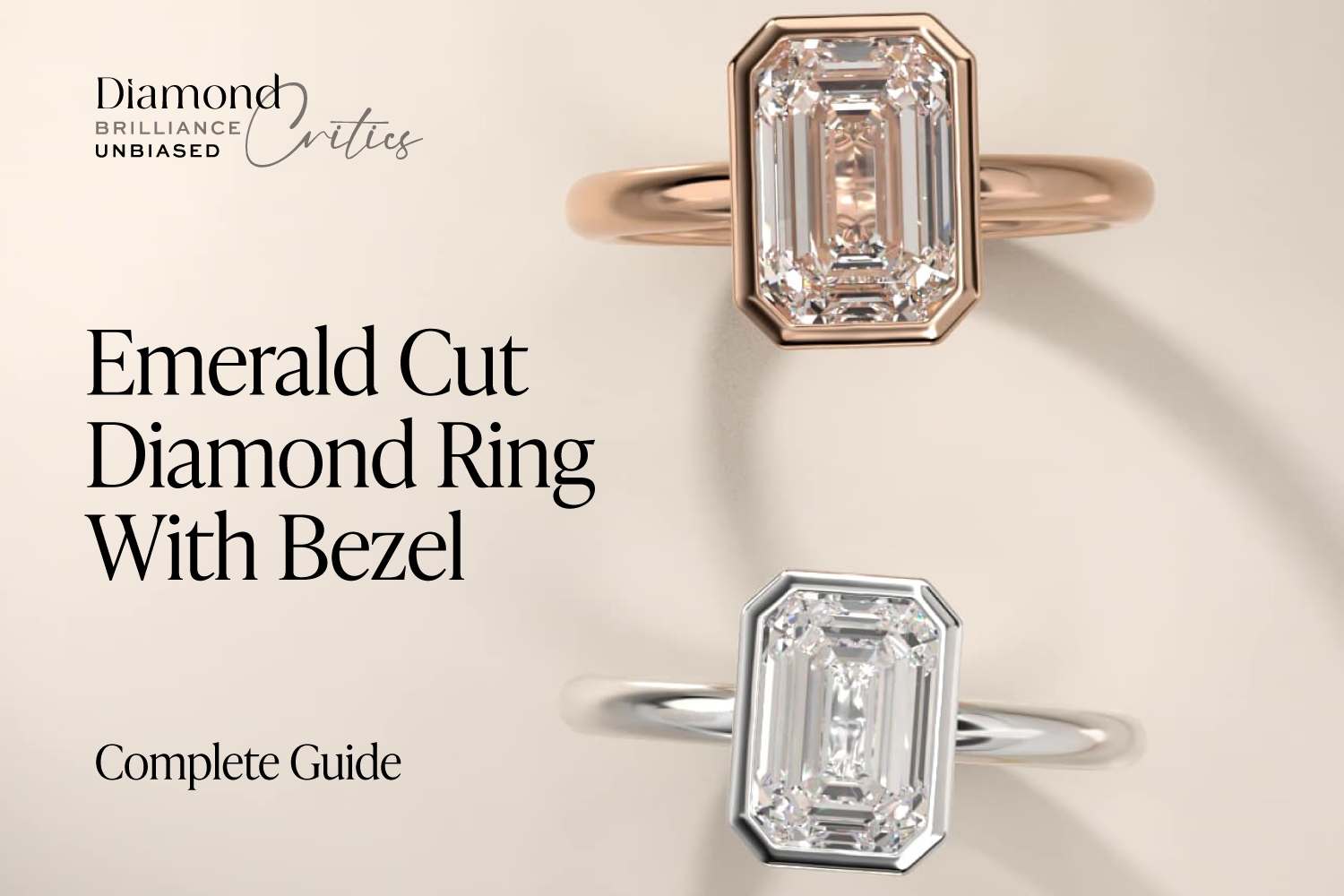
The bezel set emerald cut diamond ring is the most protective setting format for an emerald cut stone — and the one with the most misunderstood trade-off. Most buyers choose a bezel because it looks clean and modern. Very few understand what happens to the stone's face-up size when the metal wraps the girdle.
The bezel is a continuous band of metal that surrounds the stone's perimeter at the girdle. It holds the stone in place with full contact around every edge.
For a round brilliant, this is purely a style choice. For an emerald cut, it changes something visual.
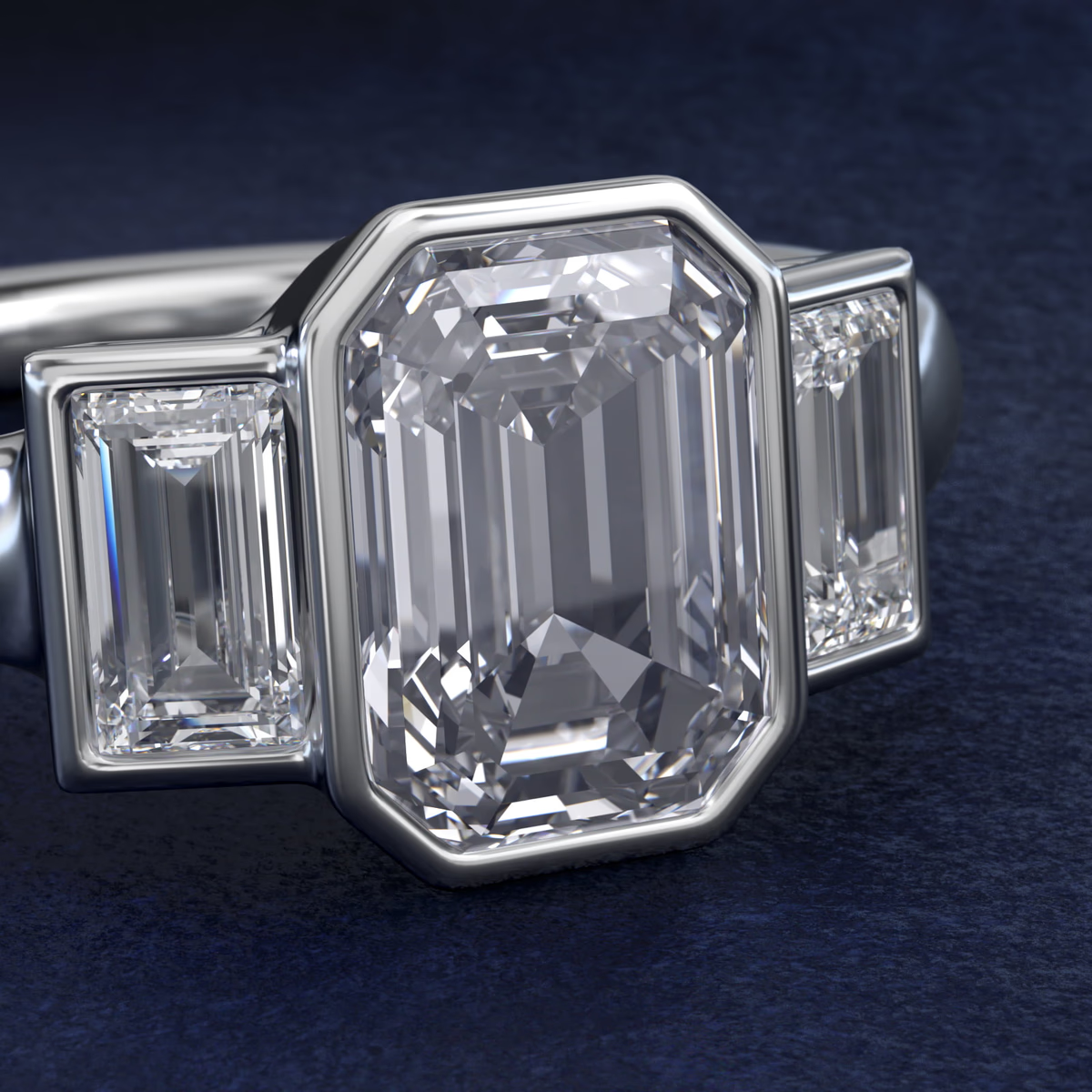
A complete bezel emerald cut diamond engagement ring starts at $4,445 — a GIA 1ct D-VS1 at $3,140 plus the Comfort Fit Bezel Solitaire 14K White Gold at $1,305. This post covers every bezel setting that works for an emerald cut, all ring totals from entry to the EC Side Stone Platinum at $8,400, and the one trade-off you need to understand before you buy.
TL;DR
- Entry bezel ring: GIA 1ct D-VS1 $3,140 + Comfort Fit Bezel Solitaire WG $1,305 = $4,445 complete
- Most reviewed: Comfort Fit Bezel Solitaire — 57 reviews across 4 metals, $1,305–$1,610. Most validated bezel setting in this dataset.
- Corner protection: the bezel fully wraps the emerald cut's 4 corners — the most vulnerable points on the stone. No other setting does this.
- Coverage trade-off: bezel metal covers 1–2mm of the stone's girdle edge on all sides. Face-up appearance is slightly smaller than the same stone in prongs.
- EC-specific setting: Bezel Set EC Side Stone WG $4,300 = $7,440 complete — the only setting in this data named specifically for the emerald cut shape.
- Lab entry: IGI 1.94ct F-VVS1 $2,229 + Comfort Fit Bezel WG $1,305 = $3,534 complete — near-2ct bezel ring for under $3,600.
- The Coverage Trade-Off: bezel covers the stone's edge. The Corner Shield: bezel protects the stone's corners perfectly. The 57-Review Standard: the most reviewed bezel in this dataset.
→ Best ring: GIA 1ct D-VS1 at $3,140 + Comfort Fit Bezel Solitaire Platinum $1,610 = $4,750. Platinum bezel, 57 reviews, cleanest modern profile for an emerald cut.
The Coverage Trade-Off
Every setting holds a diamond by making contact with part of the stone. Prong settings make contact at 4 or 6 points — small metal tips that grip the girdle at specific locations. The rest of the stone's perimeter is open air.
A bezel makes contact along the entire girdle. The metal wraps continuously around the stone's edge from one point all the way around and back. This continuous contact is what makes the bezel the most secure setting format for any stone shape.
But continuous contact has a visual consequence. The bezel metal — typically 1–2mm wide — sits above and below the girdle line. From above, the viewer sees the stone and then a thin border of metal before reaching the shank.
In a prong setting, the stone's edge is visible right up to the air gap between prongs. In a bezel, that same edge is covered by metal.
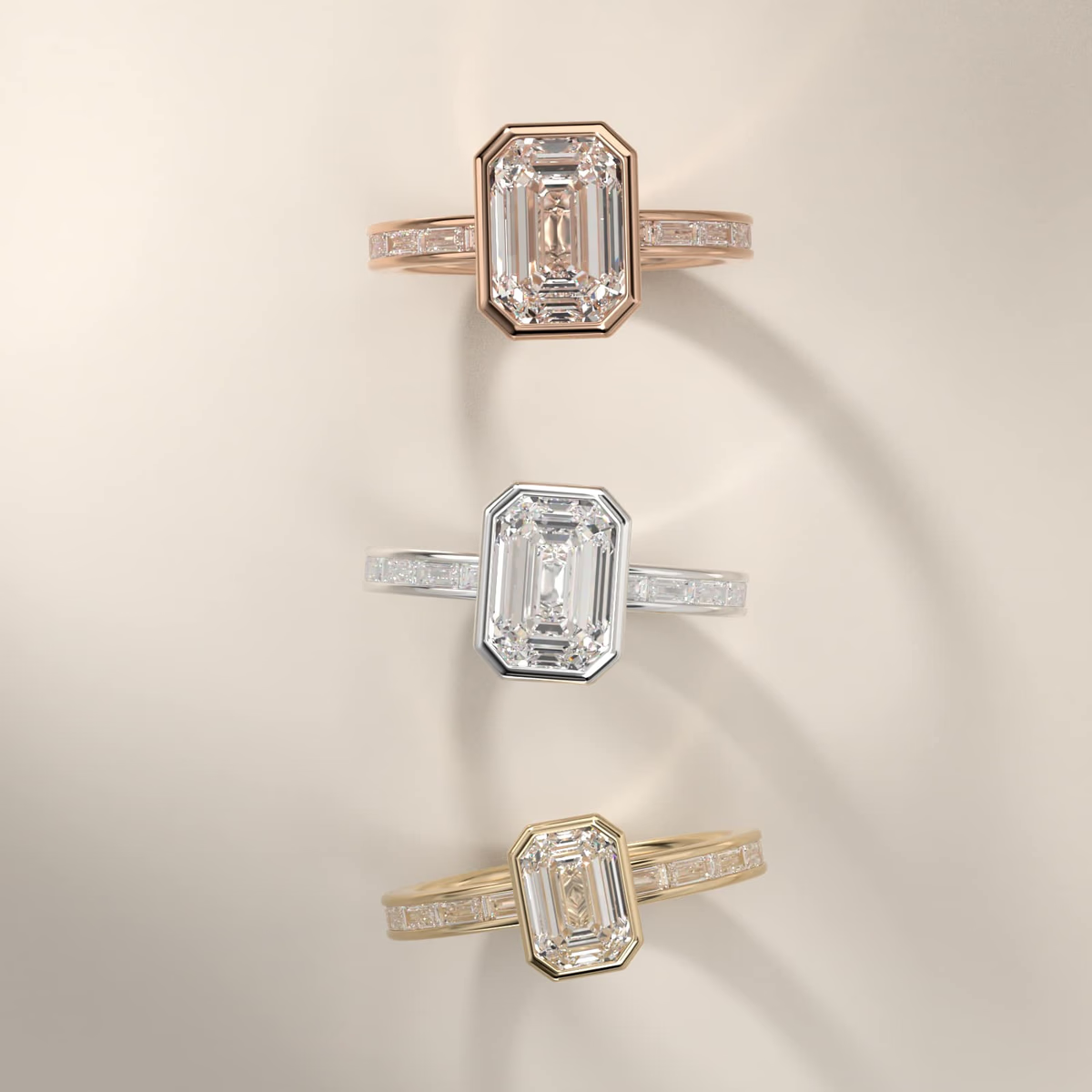
For a round brilliant, this is hard to notice. A round stone has no corners and no defined geometry that a buyer is trying to maximize. The bezel simply surrounds it.
For an emerald cut, it is a different calculation. The emerald cut's face-up value comes entirely from its rectangular table — the large, flat, open step-cut surface that spans the stone's full length and width.
The length is what buyers pay for. The rectangular outline is the entire visual argument for choosing an emerald cut over a round brilliant.
When the bezel wraps that outline, 1–2mm of the stone's length disappears on each end. A 7mm-wide emerald cut shows 5–6mm of width in a bezel.
A 9.5mm long stone shows 7.5–8.5mm of length. The reduction is real and visible under close inspection.
This is The Coverage Trade-Off: the bezel's protective advantage comes at the cost of visible stone face-up. You get maximum security and a modern, architectural look. You lose a small amount of the rectangular spread that makes the emerald cut the shape it is.
Whether that trade-off is acceptable depends on what the buyer values. If security, low profile, and architectural design are the priority — the bezel is the correct choice. If maximizing the emerald cut's face-up rectangle is the priority — prongs preserve more visible stone surface.


Bezel Set Emerald Cut Diamond Ring: All Settings Ranked
The settings below are all confirmed compatible with emerald cut center stones. Ring totals use the GIA 1ct D-VS1 at $3,140 as the baseline stone. Every price is stone plus setting.
The Comfort Fit Bezel Solitaire at $1,305 leads this table in review count — 57 reviews across all four metal variants. No other bezel setting comes close.
The standard Bezel Solitaire at $1,310 has 1 review. The EC Side Stone has 1 review. The Three Stone Baguette has 2.
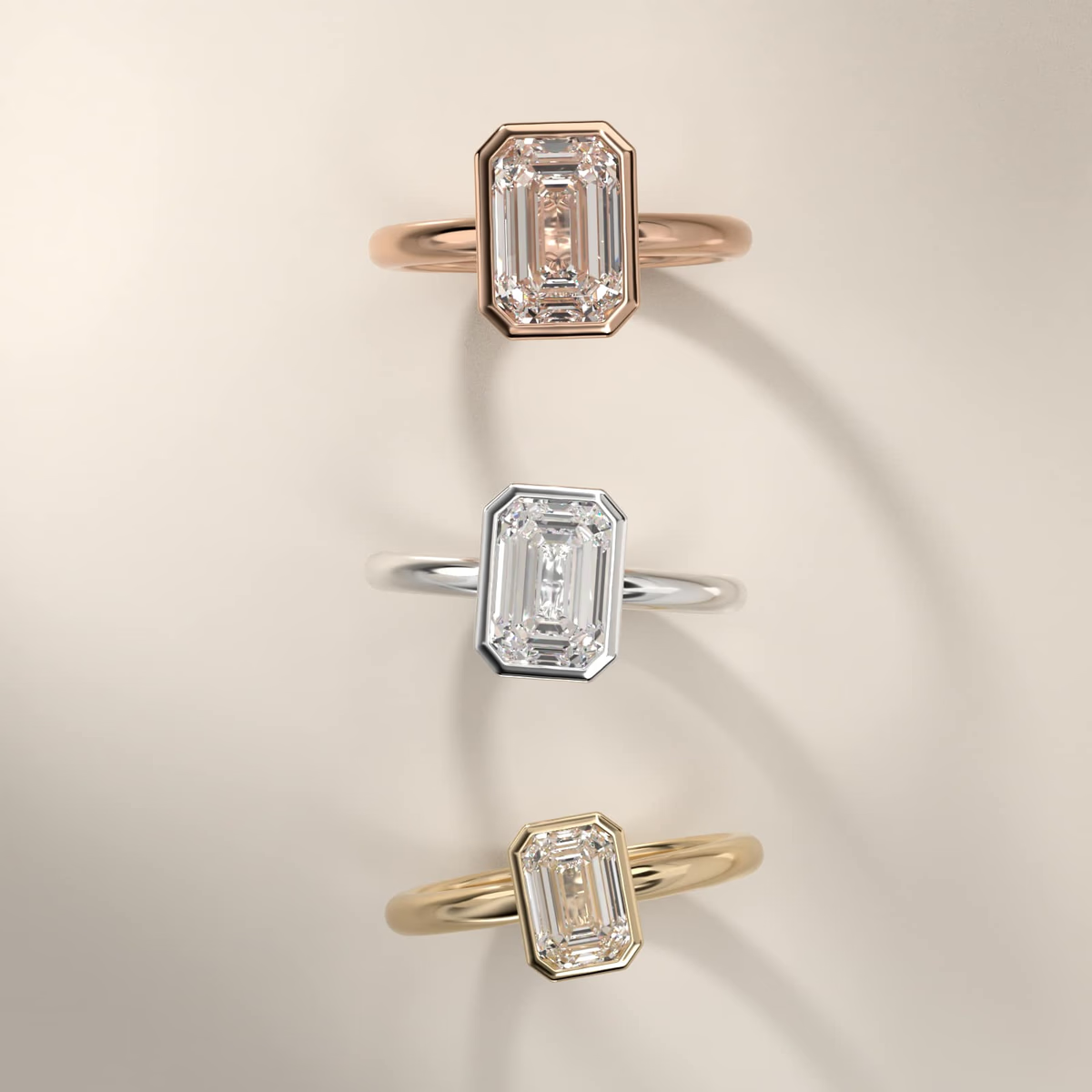
The Bezel Set EC Side Stone settings are the only designs in this dataset named specifically for the emerald cut shape. The side stones flank the center stone in matching bezel cups, continuing the step-cut architectural theme. At $4,300 in gold and $5,260 in platinum, these are the premium bezel builds — $7,440 and $8,400 complete.
"The bezel is the setting I recommend most for active buyers — people who work with their hands, travel a lot, or simply don't want to think about catching a prong on fabric. The emerald cut's corners are the most vulnerable part of the stone. One hard hit on the corner of an emerald cut can chip it. The bezel eliminates that risk completely. The trade-off is real — you lose some face-up area — but for many buyers, that is an acceptable exchange for a ring they never have to worry about." — Farzana Hasan, Diamond Critics
The Corner Shield
The emerald cut has four corners. Unlike a round brilliant, which has no corners and no acute angles, the emerald cut's step-cut table terminates at 90-degree right angles at each of its four ends. These corners are the most mechanically vulnerable points on the stone.
A chip on a round brilliant requires significant force and a direct hit on the culet or girdle. A chip on an emerald cut corner can happen from a moderately hard impact on a hard surface — a kitchen counter, a steering wheel, a doorframe.
The right angle concentrates impact stress into a small area. The crystal structure of diamond at a right-angle corner is under more stress than at a curved surface.
This is why the emerald cut is almost always set with corner prongs — prongs positioned specifically at the stone's four corners, not along its long sides. Corner prongs protect the most vulnerable points. A setting without corner protection leaves the emerald cut's edges exposed.
For reference, the most protected prong configuration for an emerald cut is a six-prong setting with prongs at each corner and one along each long side. Even this format leaves the stone's corner angles slightly exposed between prong tips. The bezel has no such gap — every corner is fully enclosed at every point.
The bezel solves this completely. The continuous metal band wraps each corner with full metal contact. There are no exposed angles.
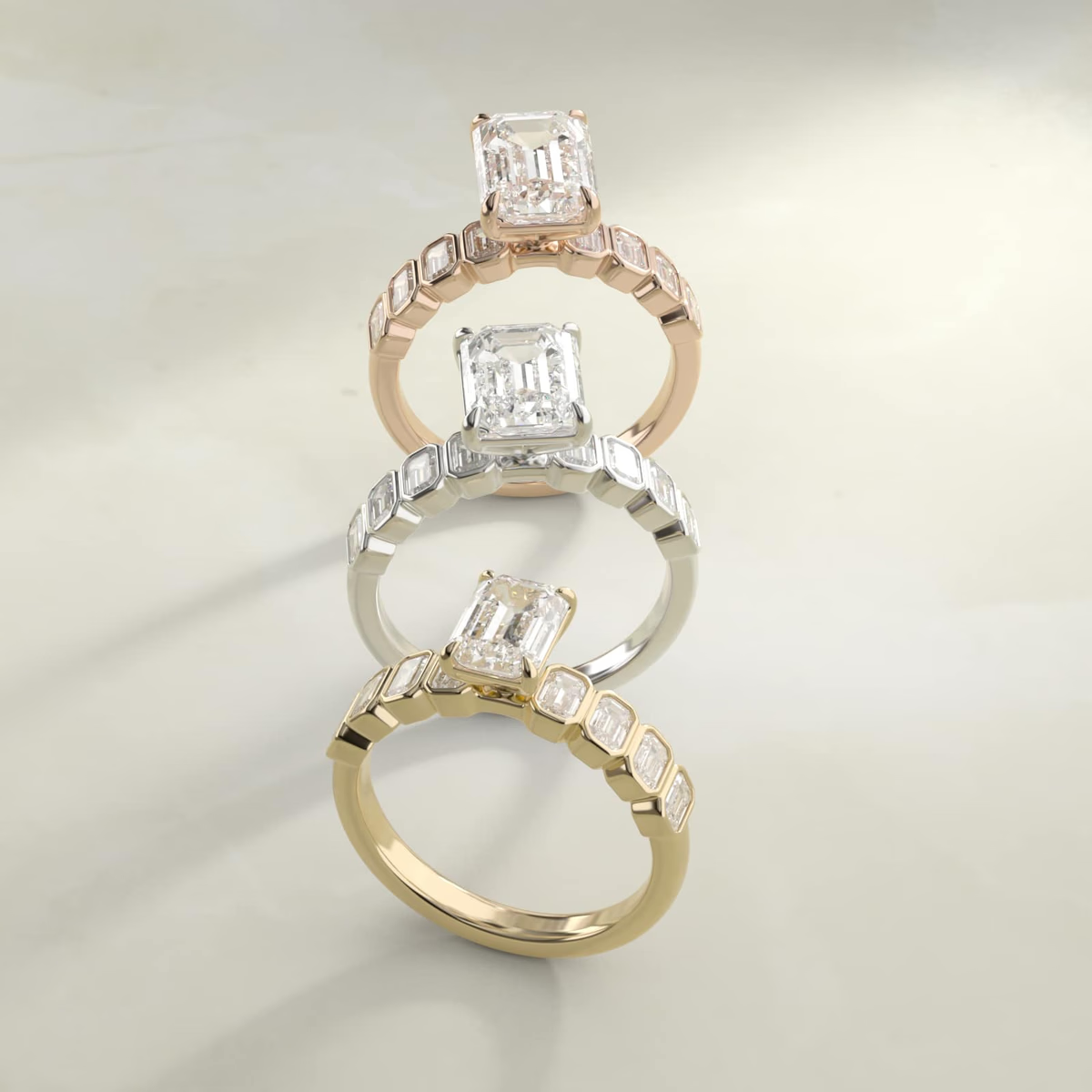
The entire perimeter of the stone, including all four corners, is enclosed within the metal collar. Impact force distributes across the metal before reaching the stone. This is The Corner Shield: the bezel is the only solitaire setting format that fully protects every corner of the emerald cut.
For buyers who regularly work outdoors, exercise with their ring on, have active jobs, or travel frequently, this is not a minor consideration. A chipped corner on a 1ct emerald cut affects both the stone's appearance and its resale value permanently. The bezel eliminates this specific failure mode.
The EC Side Stone designs extend this protection further — the bezel-set side stones flank the center stone and provide additional metal mass around the setting. At $4,300 in yellow gold, this is the most complete corner protection build in the dataset for an emerald cut stone.
The 57-Review Standard
The Comfort Fit Bezel Set Solitaire by James Allen has 57 confirmed buyer reviews across its four metal variants — white gold, rose gold, yellow gold, and platinum. This is the most reviewed bezel setting in this dataset by a factor of 28. The nearest competitor has 2 reviews.
The 57-Review Standard works the same way as any buyer-validated signal: 57 people independently chose this setting after comparing it to alternatives, made the purchase, received the ring, and left a review.
That is a validated design choice. Not a marketing ranking. Not algorithmic placement.
| Comfort Fit Bezel Variant | Metal | Setting Price | Reviews | Ring Total (+ D-VS1 $3,140) |
|---|---|---|---|---|
| Comfort Fit Bezel Solitaire | 14K White Gold | $1,305 | 57 | $4,445 |
| Comfort Fit Bezel Solitaire | 14K Rose Gold | $1,305 | 57 | $4,445 |
| Comfort Fit Bezel Solitaire | 14K Yellow Gold | $1,305 | 57 | $4,445 |
| Comfort Fit Bezel Solitaire | Platinum | $1,610 | 57 | $4,750 |
The "comfort fit" detail refers to the shank interior — a rounded inner profile that sits flush against the finger rather than creating a flat edge that can press into the skin. For a ring worn daily, this matters more than buyers expect.
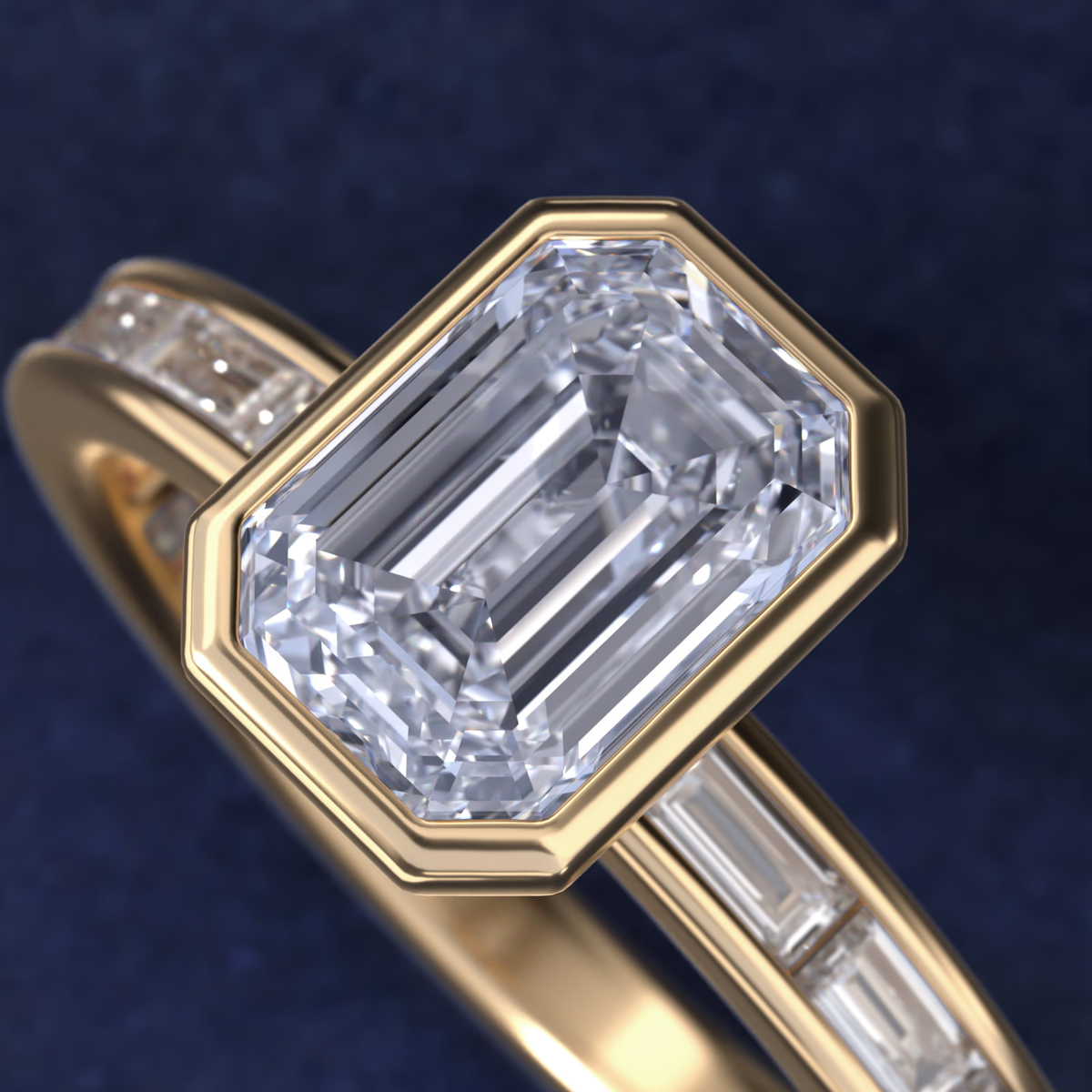
Metal choice is personal within this family. White gold and platinum give the bezel a cool, seamless look — the metal band and the stone's step-cut table read as one unified surface.
Yellow gold gives the bezel a warmer, more vintage presence. Rose gold sits between the two.
Lab Stone + Bezel Set Emerald Cut: Complete Ring Prices
Lab emerald cuts in bezel settings are the quietest category in lab diamond jewelry — and one of the best values. The bezel's clean metal surround and the lab stone's superior size-per-dollar combine into a ring that looks minimal and architectural from above but carries dramatic stone size.
The bezel's clean outline works in the buyer's favor with lab stones. A lab stone's origin is not visible to observers — no one can tell by looking at the ring whether the stone is natural or lab. But the bezel's architectural surround means the ring reads as intentional and considered, not default.
Buyers who choose a lab emerald cut in a bezel are making a specific statement: they want a large, clean step-cut table in the most protective, minimal format available. The value argument reinforces this. A natural 1ct D-VS1 in the same Comfort Fit Bezel costs $4,445 complete, while the lab 1.94ct F-VVS1 in the same setting costs $3,534 — $911 less for nearly double the face-up area.
| Lab Stone | Carat | Color / Clarity | Stone Price | Setting | Setting Price | Complete Ring |
|---|---|---|---|---|---|---|
| IGI Emerald Lab | 1.94ct | F-VVS1 | $2,229 | Comfort Fit Bezel WG | $1,305 | $3,534 |
| IGI Emerald Lab | 1.94ct | F-VVS1 | $2,229 | Comfort Fit Bezel Platinum | $1,610 | $3,839 |
| IGI Emerald Lab | 1.94ct | F-VVS1 | $2,229 | Bezel EC Side Stone WG | $4,300 | $6,529 |
| IGI Emerald Lab | 1.94ct | F-VVS1 | $2,229 | Bezel EC Side Stone Platinum | $5,260 | $7,489 |
The lab near-2ct bezel ring at $3,534 complete is the most striking value in this post. A natural 1ct D-VS1 in the same Comfort Fit Bezel WG costs $4,445 complete — $911 more for a stone that is half the face-up size.
The lab 1.94ct stone in a bezel delivers a near-2ct step-cut table enclosed in clean modern metal. It is one of the most understated-looking high-value rings available in this dataset.
"The bezel with a lab emerald cut is the best-kept secret in the category. The ring looks simple — just stone and metal. But the stone inside is nearly 2ct at a price below the natural 1ct build. I tell buyers who want a clean, modern ring without diamond sparkle scattered around it: this is your combination." — Farzana Hasan, Diamond Critics
Tides Of Summer Capsule
Up To 30% Off
Shop The Sale →Vault ClearanceClear The Vault
Up To 70% Off
Shop Vault Deals →Affiliate link — no extra cost to you
Full Bezel vs Partial Bezel for Emerald Cut
A full bezel completely encloses the stone's girdle on all sides. A partial bezel (also called a semi-bezel or open bezel) uses two bezel segments at the stone's long sides and leaves the short ends open — or vice versa. The open sections are closed by thin metal bridges or left as air gaps.
All settings in this dataset are full bezels. The full bezel wraps the emerald cut's entire perimeter including all four corners. This is the configuration that fully activates The Corner Shield principle — all four vulnerable corners are enclosed in metal.
A partial bezel on an emerald cut can leave one or more corners exposed. For a round brilliant, an open bezel is a common modern aesthetic choice with minimal security trade-off.
For an emerald cut, leaving any corner open removes the setting's primary protective advantage over prongs. If you specifically want the security benefit of a bezel on an emerald cut, the full bezel is the only format that delivers it.
Aesthetically, the full bezel gives the emerald cut ring its characteristic low-profile, architectural look. The stone sits flush within the metal band with no prongs projecting above the setting. The profile from the side is clean and flat.
This low profile is why many active buyers choose the bezel — it does not catch on fabric, does not project above the finger, and does not require awareness in the way that prong tips do.
East-West Bezel for Emerald Cut Diamond
The east-west setting rotates the emerald cut 90 degrees, orienting the stone's length across the finger rather than along it. This creates a horizontal bar effect — the ring reads as a wide band across the knuckle rather than a traditional finger-length stone.
In a standard bezel orientation, the emerald cut sits with its long axis running along the finger. The stone's length extends toward the hand and away from it. In an east-west orientation, the stone's length spans the finger's width.
The east-west bezel for an emerald cut amplifies both the stone's width advantage and the bezel's clean framing. From above, the viewer sees a horizontal rectangle in metal — a strongly geometric, modern effect. The stone's step-cut table runs perpendicular to the finger, creating a look that no other shape and setting combination produces.
No standard east-west bezel for the emerald cut is listed in this dataset as a named product. The orientation is achieved by requesting east-west placement when building the ring. The bezel settings above all accommodate this orientation — confirm with the jeweler or the build tool that the stone can be set east-west in the chosen setting before purchasing.
For buyers specifically searching for a bezel set east west emerald cut diamond ring, the Comfort Fit Bezel Solitaire and the standard Bezel Solitaire are the cleanest formats for this orientation. The channel accent and three-stone designs are designed for the traditional along-the-finger axis.
One practical note on east-west orientation: the emerald cut's length-to-width ratio affects how the ring reads when rotated. A standard 2:1 ratio emerald cut reads as a clearly horizontal bar across the knuckle. A wider, squarer emerald cut at a 1.4:1 ratio appears less distinct in the east-west format.
If east-west orientation is a priority, choose an emerald cut with a 1.8:1 to 2:1 L:W ratio — the longer, more rectangular stone makes the horizontal effect stronger and more distinct across the finger.
Bezel Set Emerald Cut Diamond Necklace
A bezel set emerald cut diamond necklace uses the same metal-surround principle as the ring at a different scale. The ring bezel holds the stone horizontally across the finger. The necklace bezel suspends the stone from a chain, with the metal collar creating a clean, modern pendant.
The bezel pendant is one of the most elegant formats for an emerald cut diamond necklace. The stone's rectangular step-cut table is fully visible from the front, suspended in a clean metal frame. Unlike a prong pendant, there are no projecting metal tips to catch on clothing.
For buyers considering both a ring and a necklace with matching emerald cut stones, the bezel format in matching metal creates a unified aesthetic across both pieces. The same Coverage Trade-Off applies: the bezel covers the stone's edge in the necklace just as it does in the ring. What changes is the orientation — the pendant typically hangs with the stone's long axis running vertically.
The bezel necklace pairs naturally with a bezel set emerald cut engagement ring for a stacked look. Both pieces share the same clean metal-surround language. The architectural quality of the bezel reads consistently from finger to neckline.
Bezel Emerald Cut vs Prong Emerald Cut: When to Choose
The choice between bezel and prong for an emerald cut comes down to four factors: security, face-up size, light entry, and aesthetic.
Security: Bezel wins. Full corner protection with no exposed angles. Prongs grip the girdle at specific points and leave the corners open. For active buyers, this is the deciding factor.
Face-up size: Prongs win. A prong setting exposes the full stone face-up right to the girdle edge. A bezel covers 1–2mm of the stone's perimeter on all sides. The same stone in a prong setting looks slightly larger from above than in a bezel.
Light entry: Prongs win. The open gaps between prongs allow light to enter the stone from the sides. A bezel restricts side light entry where the metal band covers the girdle. For a step-cut stone with a large open table, this affects how the stone's hall-of-mirrors effect reads in side light.
Aesthetic: Personal. The prong setting has been the most common engagement ring format for over a century. The bezel reads as architectural, modern, and minimal. Both are legitimate ring formats. Neither is objectively better — they serve different buyer priorities.
Maintenance: Bezel wins. The bezel has no prong tips to catch on fabric, lift, or require re-tipping. A standard four-prong or six-prong solitaire requires prong inspection every 1–2 years. The bezel's metal collar, once set, does not require re-tipping and is not subject to the same wear that affects individual prong tips.
Bezel Set Emerald Cut Diamond Ring Optimization Matrix
| Build | Stone | Setting | Complete Ring | Best For |
|---|---|---|---|---|
| Natural entry bezel | GIA 1ct D-VS1 $3,140 | Comfort Fit Bezel WG $1,305 | $4,445 | 57-review setting, modern minimal, corner protection |
| Lab entry bezel | IGI 1.94ct F-VVS1 $2,229 | Comfort Fit Bezel WG $1,305 | $3,534 | Near-2ct lab stone, most value per dollar in this post |
| Best overall — natural platinum | GIA 1ct D-VS1 $3,140 | Comfort Fit Bezel Platinum $1,610 | $4,750 | 57 reviews, platinum, best long-term metal choice |
| EC-specific side stone | GIA 1ct D-VS1 $3,140 | Bezel EC Side Stone WG $4,300 | $7,440 | Named for EC shape, step-cut side stones, maximum protection |
| Three stone baguette bezel | GIA 1ct D-VS1 $3,140 | Bezel Baguette Three Stone WG $3,070 | $6,210 | Step-cut side stone language, 3-stone presence, 2 reviews |
| Lab + EC side stone platinum | IGI 1.94ct F-VVS1 $2,229 | Bezel EC Side Stone Platinum $5,260 | $7,489 | Near-2ct lab stone, EC-specific setting, platinum, maximum build |
Best For: 4 Buyer Scenarios
Best for active lifestyle / daily wear: GIA 1ct D-VS1 at $3,140 + Comfort Fit Bezel Solitaire Platinum at $1,610 = $4,750 complete. Platinum metal, full corner protection, comfort shank, 57 reviews. Built for constant wear.
Best for budget under $4,000 (lab): IGI 1.94ct F-VVS1 at $2,229 + Comfort Fit Bezel WG at $1,305 = $3,534 complete. Near-2ct F-VVS1 emerald cut in a 57-review bezel for under $3,600.
Best for architectural / modern design: GIA 1ct D-VS1 at $3,140 + Comfort Fit Bezel Yellow Gold at $1,305 = $4,445 complete. Yellow gold bezel with step-cut stone — the cleanest expression of the architectural bezel aesthetic.
Best for emerald cut step-cut language throughout: GIA 1ct D-VS1 at $3,140 + Bezel Set EC Side Stone WG at $4,300 = $7,440 complete. The only setting in this dataset named specifically for the emerald cut shape, with matching step-cut side stones.
"I tell buyers to be honest about how they wear jewelry before choosing a setting. If you take your ring off before going to the gym, the bezel and prongs are equivalent choices. If you wear your ring through everything — work, exercise, cooking, travel — the bezel is the one I'd choose every time for an emerald cut. The corners are just too vulnerable to leave unprotected on an active hand." — Farzana Hasan, Diamond Critics
Expert Summary
The bezel set emerald cut diamond ring is the correct choice for buyers who want maximum stone protection, a modern low-profile aesthetic, and a ring they can wear through everything without worrying about catching a prong or chipping a corner. The Coverage Trade-Off is real — the bezel covers 1–2mm of the stone's perimeter — but for most active buyers, this is an acceptable exchange for full corner protection that no prong setting provides.
The Comfort Fit Bezel Solitaire at $1,305 is the most validated bezel setting in this dataset with 57 reviews across 4 metals. It is the starting point for any bezel emerald cut build. The Comfort Fit Bezel Platinum at $1,610 at $4,750 complete is the best overall build for everyday wear.
For buyers who want the emerald cut's architectural step-cut language extended into the setting itself, the Bezel Set EC Side Stone at $4,300 is the only setting in this data named specifically for the emerald cut shape, at $7,440 complete.
Frequently Asked Questions
What is a bezel set emerald cut diamond ring?
A bezel set emerald cut diamond ring uses a continuous band of metal — called a bezel — to hold the emerald cut stone by surrounding its entire girdle. Unlike prong settings that grip the stone at 4 or 6 specific points, the bezel makes continuous metal contact around the stone's full perimeter. Entry price starts at $4,445 complete for a GIA 1ct D-VS1 in a Comfort Fit Bezel Solitaire WG.
Does a bezel setting make an emerald cut look smaller?
Yes — slightly. The bezel metal covers 1–2mm of the stone's girdle edge on all sides. This reduces the visible face-up area compared to the same stone in a prong setting.
A 1ct emerald cut in a bezel shows slightly less table surface than the same stone in a four-prong solitaire. The reduction is visible up close but not dramatic from normal viewing distance.
Is the bezel a good setting for an emerald cut diamond?
Yes — specifically for buyers who prioritize security and low profile over maximum face-up size. The bezel fully protects the emerald cut's four corners, which are the most vulnerable points on the stone. For active buyers and everyday wearers, it is the most protective setting format available for any stone shape.
What is The Coverage Trade-Off for bezel emerald cut rings?
The Coverage Trade-Off describes the relationship between the bezel's protection and its visual effect on the emerald cut. The bezel metal that surrounds the stone covers part of the stone's rectangular perimeter.
You gain maximum corner protection and a clean architectural look. You lose a small amount of the visible face-up area that makes the emerald cut's rectangular table its defining visual feature.
What is the most reviewed bezel setting for an emerald cut?
The Comfort Fit Bezel Set Solitaire by James Allen has 57 confirmed buyer reviews across all 4 metal variants — white gold, rose gold, yellow gold, and platinum. No other bezel setting in this dataset comes close. The nearest has 2 reviews.
How much does a bezel set emerald cut diamond ring cost?
Entry: $4,445 complete — GIA 1ct D-VS1 at $3,140 plus Comfort Fit Bezel WG at $1,305. Platinum solitaire: $4,750. EC Side Stone WG: $7,440.
In lab, entry is $3,534 complete for a near-2ct F-VVS1.
What clarity do I need for an emerald cut in a bezel setting?
VS1 minimum. The emerald cut's open step-cut table makes inclusions visible without magnification.
The bezel metal does not mask the center stone's clarity at all — clarity is always visible in the open table. VS1 is the non-negotiable floor for an emerald cut in any setting, bezel or prong.
What is an east-west bezel set emerald cut diamond ring?
An east-west bezel set emerald cut diamond ring rotates the stone 90 degrees so the stone's long axis spans the finger's width rather than running along it. The result is a horizontal rectangular bar across the knuckle — a strongly geometric, modern look.
The same bezel solitaire settings in this dataset can accommodate the east-west orientation. Confirm east-west compatibility with the retailer's build tool before purchasing.
Is bezel better than prong for an emerald cut diamond?
For protection: yes. The bezel fully encloses the emerald cut's four corners. Prong settings leave corners exposed.
For face-up size: no. Prongs expose the full stone surface to the girdle edge. The bezel covers 1–2mm of that edge.
For aesthetics: personal. The bezel is modern and minimal. Prongs are traditional and show more stone.
Neither is objectively better.
What is the best metal for a bezel set emerald cut ring?
Platinum for D–F color natural stones — the dense white metal holds the bezel securely over decades of wear and shows no color against a high-color step-cut table. 14K white gold is a lower-cost alternative.
Yellow gold pairs well with G–H natural stones or any lab stone where warmth in the table is acceptable. Rose gold gives the ring a softer, warmer look. The Comfort Fit Bezel Platinum at $1,610 is the best long-term metal choice for a bezel.
Should I choose natural or lab for a bezel set emerald cut ring?
Natural if origin matters. The GIA 1ct D-VS1 complete bezel ring at $4,445 is a certified, proven purchase.
Lab if stone size is the priority. The IGI 1.94ct F-VVS1 bezel ring at $3,534 is $911 less for nearly twice the stone face-up. The bezel setting looks identical in both cases.
Can a bezel set emerald cut ring be resized?
Yes, with some limitations. A bezel solitaire can be resized like most engagement rings by adding or removing metal from the shank.
The bezel head itself is not affected by standard resizing. Bezel settings with channel-set accents in the shank or full-eternity pavé are harder to resize — confirm resizability before purchasing if ring size could change.
Is a bezel set engagement ring more expensive than a prong setting?
At the entry level, bezel settings are comparable to or slightly less than comparable prong solitaires. The Comfort Fit Bezel at $1,305 is in the same range as a standard four-prong solitaire. The premium bezel designs — EC Side Stone at $4,300, Channel Accent at $3,600 — reflect design complexity rather than the bezel format itself.
See Also
- Emerald Cut Diamond Engagement Rings — All settings ranked, solitaire vs halo vs bezel
- Emerald Cut Diamond Ring Settings — Pavé, bezel, baguette, solitaire — 9 settings with ring totals
- Emerald Cut Diamond Ring with Halo — The Outline Problem, 15 halo settings ranked
- Vintage Emerald Cut Diamond Ring — Art Deco alignment, milgrain, baguette, from $4,330
- 1 Carat Emerald Cut Diamond Ring — Entry natural stone guide, full price tables
- Elongated Emerald Cut Diamond — L:W ratios, face-up vs round brilliant, 5ct lab window
Expert Verdict
Always audit the stone individually — no grade replaces seeing the actual diamond. The certificate tells you what to look for. Your eyes tell you whether to buy.
— Farzana Hasan, GIA Expert · DiamondCritics.com