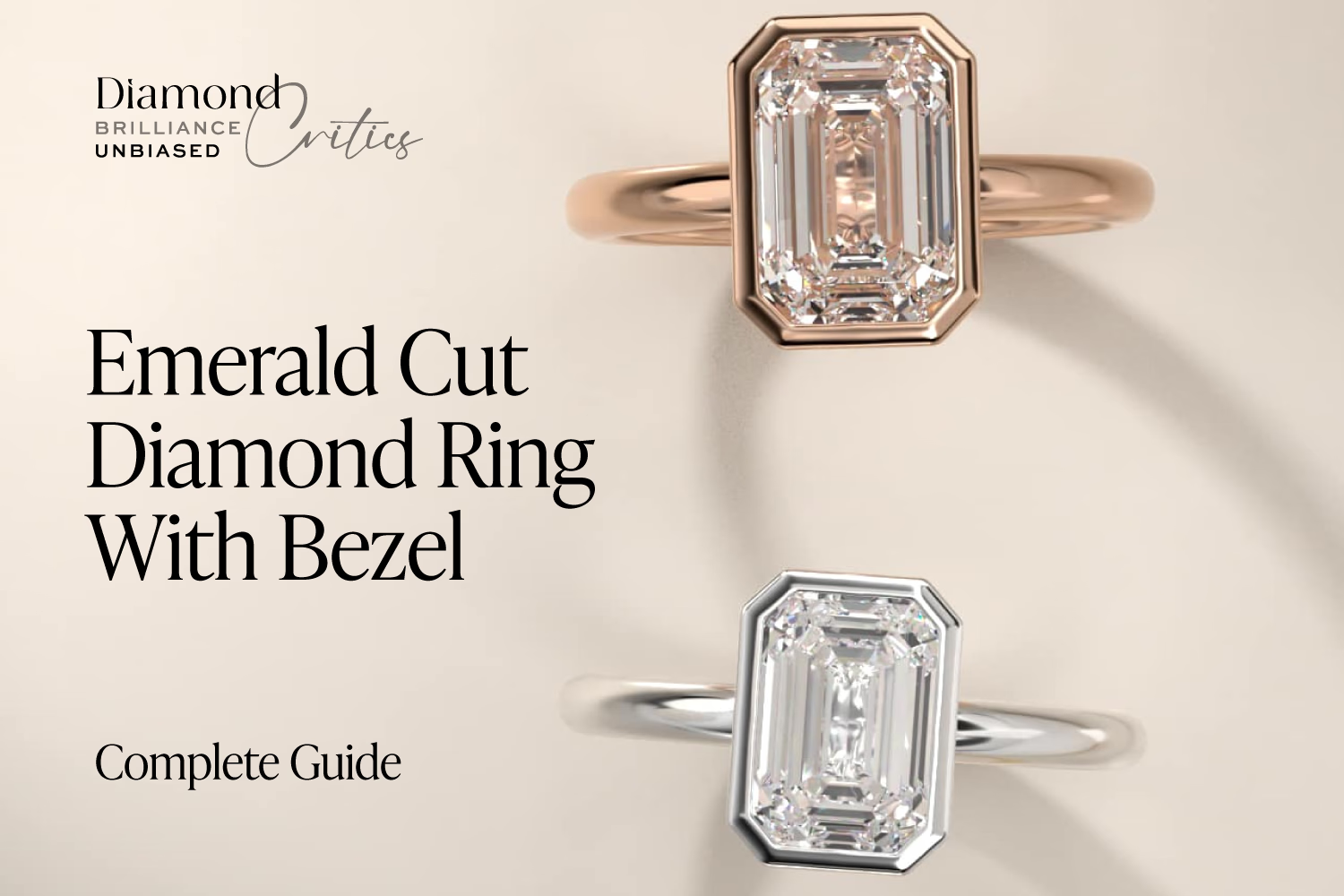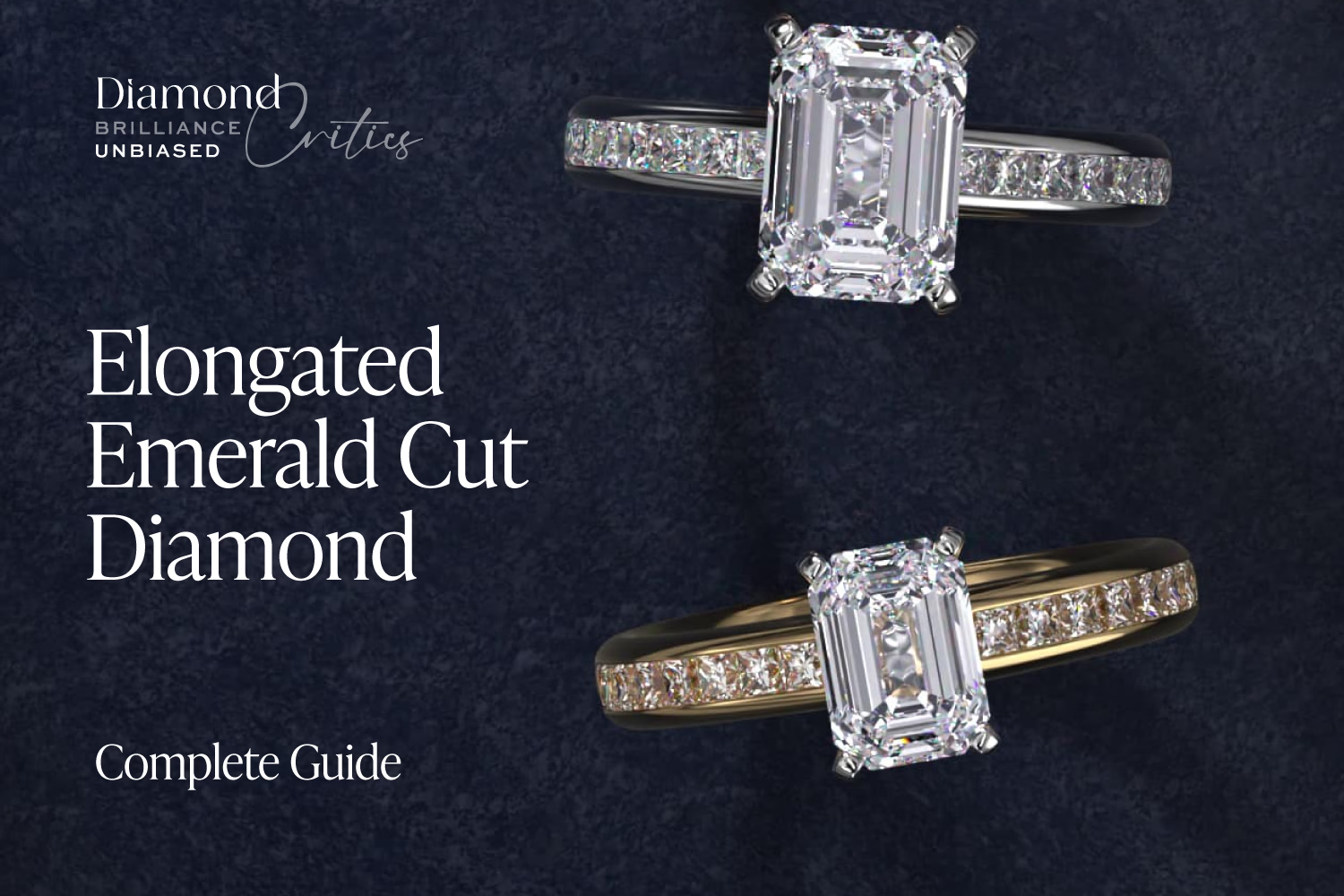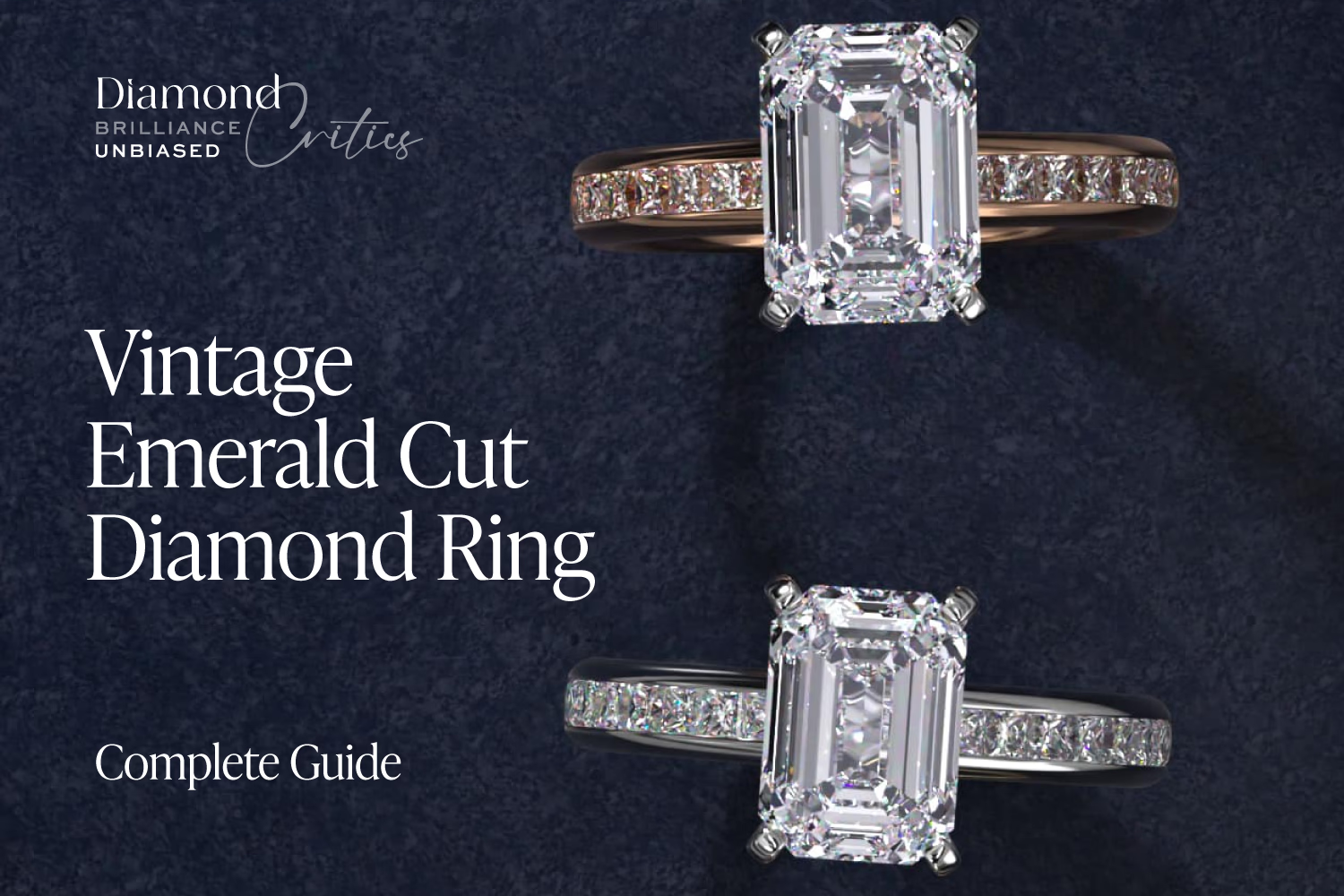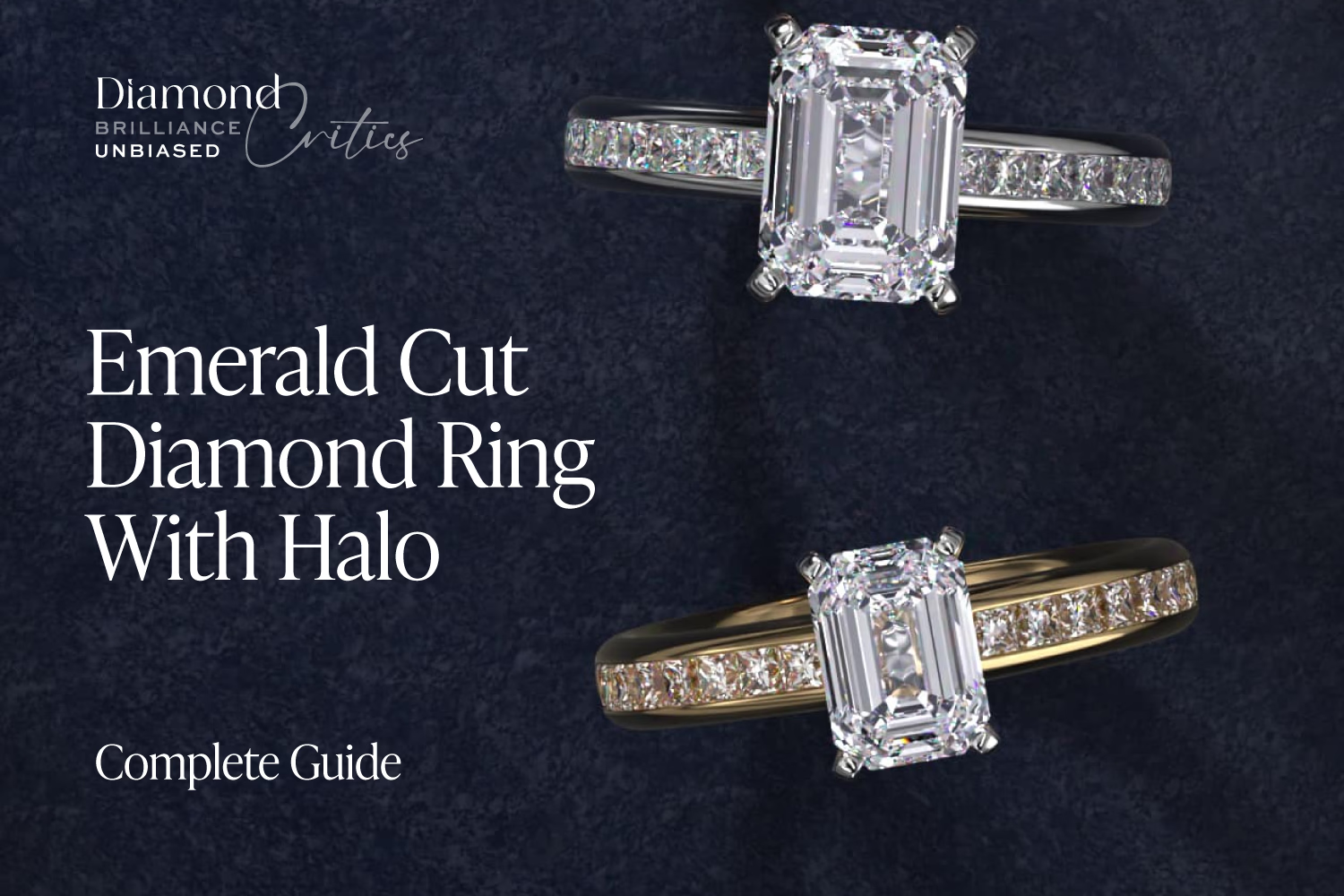
The emerald cut diamond ring with halo is one of the most searched combinations in certified engagement jewelry — and one of the most commonly bought wrong. The problem is not the stone. It is not the budget.
It is the shape of the halo itself.
Most halo engagement rings are designed for round brilliant center stones. The halo traces a circle around the stone's perimeter, echoing its circular outline. When buyers put a rectangular emerald cut into that same circular halo, something visual breaks.
The halo frame does not extend the stone's length — it compresses it. The rectangular stone sits inside a circle, and the circle is what the eye reads first. The face-up advantage of the emerald cut disappears.
A complete emerald cut halo engagement ring starts at $4,660 — a GIA 1ct D-VS1 at $3,140 plus a Pavé Diamond Halo WG setting at $1,520. This post covers every halo setting that works for an emerald cut, the ones that do not, the hidden halo option, and all ring totals from entry to the Double Halo Gala at $9,125.
TL;DR
- Entry halo ring: GIA 1ct D-VS1 $3,140 + Pavé Halo 14K WG $1,520 = $4,660 complete
- Best overall: GIA 1ct D-VS1 $3,140 + Falling Edge Pavé Halo Platinum $3,010 = $6,150 complete (369 reviews)
- Hidden halo: GIA 1ct D-VS1 $3,140 + X Split Shank Hidden Halo WG $3,040 = $6,180 complete — halo sparkle with zero outline conflict
- Lab entry: IGI 1.94ct F-VVS1 $2,229 + Pavé Halo WG $1,520 = $3,749 complete — near-2ct stone in halo for less than natural 1ct halo ring
- Double halo: GIA 1ct D-VS1 $3,140 + BNS Double Halo Gala RG $5,985 = $9,125 complete
- The Outline Problem: circular halo frames shorten an emerald cut. Choose square, rectangular, or straight-edge halos — or a hidden halo.
- The 369 Rule: Falling Edge Pavé is the most reviewed halo for non-round shapes with 369 confirmed buyers.
→ Best ring: GIA 1ct D-VS1 at $3,140 + Falling Edge Pavé Halo Platinum $3,010 = $6,150. The falling edge design follows the stone's rectangular outline and does not compress it.
The Outline Problem
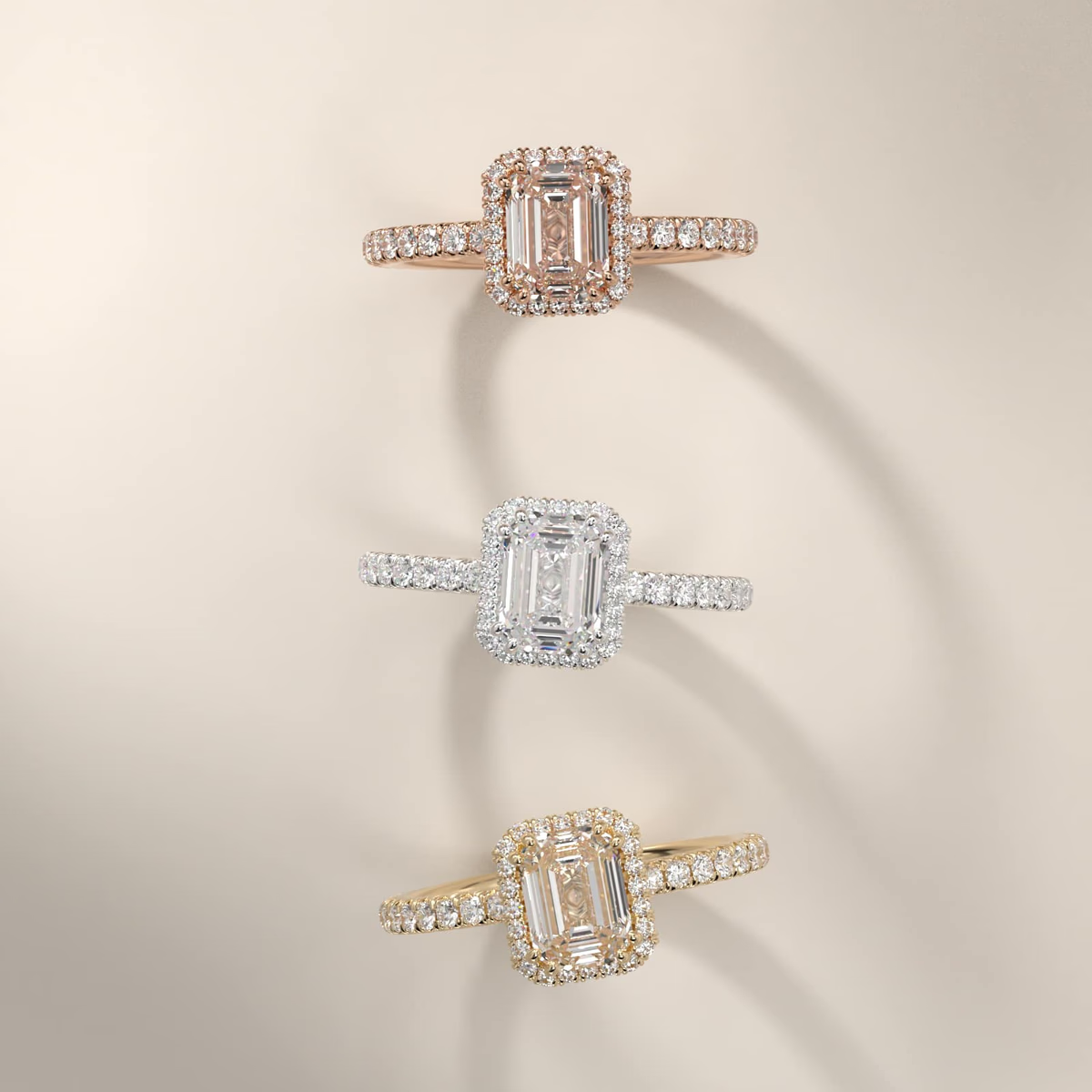
The emerald cut's value proposition is its rectangular face-up. The step-cut table spans 7mm–14mm along its length depending on carat weight. That horizontal spread is why buyers choose it over a round brilliant of the same carat weight.
The elongated rectangle across the finger — that clean horizontal span — is the entire point.
A standard round brilliant halo is designed to echo a round stone's circular outline. Place a rectangular emerald cut in that circular frame, and the halo does not echo the stone's shape — it overrides it. The eye naturally follows the outermost boundary of the ring first.
That boundary is the halo. When the halo is circular, the ring reads as circular. The stone's length is invisible inside that circle.
This is The Outline Problem: the wrong halo shape actively shrinks the visual impact of the emerald cut. You pay for a 1.5ct stone that measures 8.5mm long, then put it in a round halo that makes it look like an 8.5mm round.
The solution is a halo whose outer edge follows the stone's rectangular geometry. Settings that do this correctly:
Straight-edge halos: The halo's outer perimeter follows the stone's straight long edges and square corners. The stone's rectangular outline becomes the ring's outer boundary. This is the correct format for an emerald cut halo ring.
Falling-edge designs: The halo pavé drops slightly below the girdle line at the corners, framing the rectangular stone from below rather than surrounding it. This adds sparkle without interrupting the stone's upper outline.
Hidden halos: The halo sits entirely below the stone's girdle, invisible from above. The ring looks like a solitaire from the top but catches light around the stone's perimeter from the side. Zero outline conflict.
Settings to avoid on an emerald cut: deeply rounded halos, oval halos, circular floating halos. Any halo whose outer perimeter curves inward toward the center of the long sides will compress the stone's length visually.


Emerald Cut Diamond Ring with Halo: All Settings Ranked
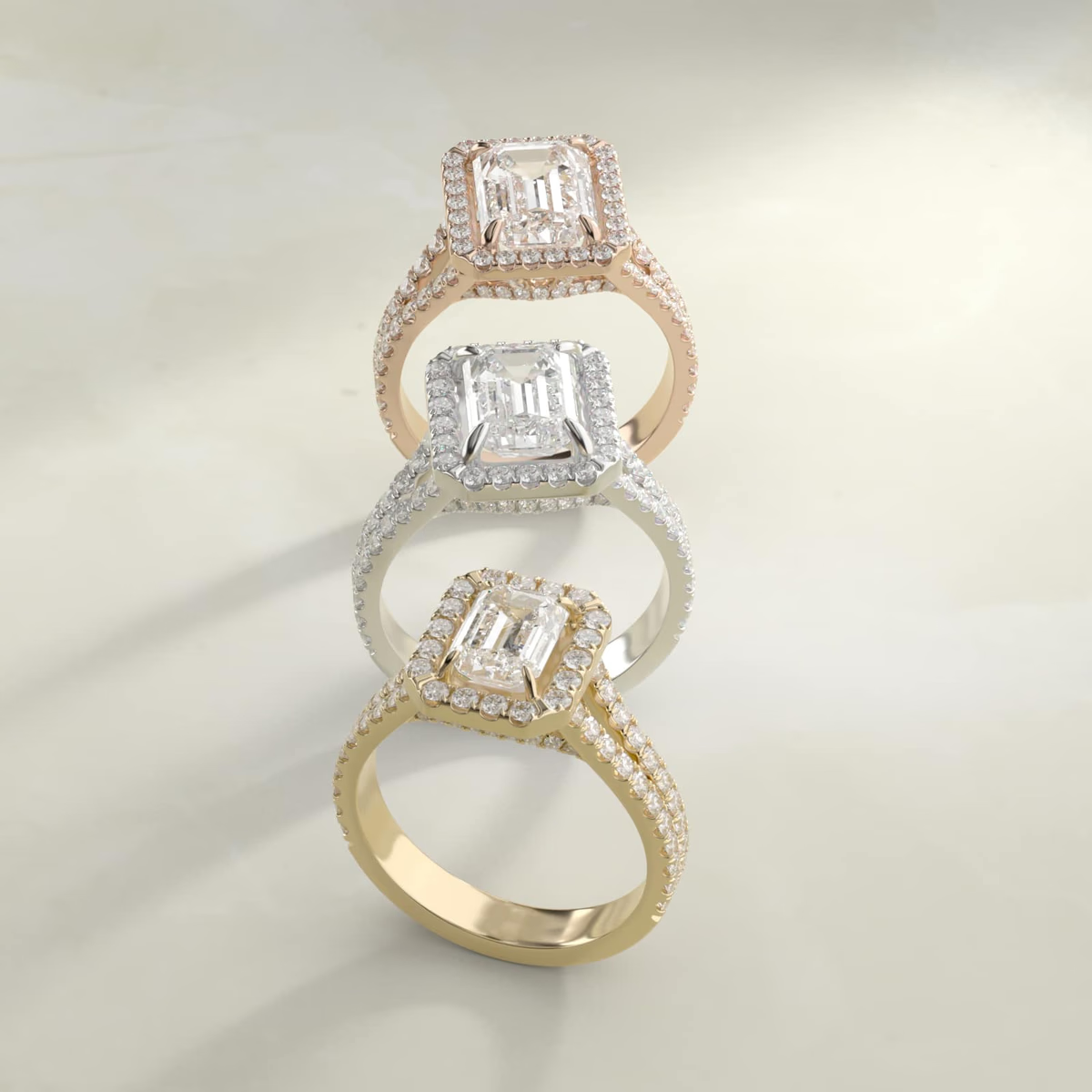
The settings below are confirmed compatible with emerald cut center stones. Ring totals use the GIA 1ct D-VS1 at $3,140 as the baseline stone. Every price is stone plus setting.
The Pavé Diamond Halo (Cushion, Emerald, Radiant) at $1,520 is named specifically for the emerald cut shape — the halo follows the stone's rectangular outline rather than rounding it. Entry price, 69 confirmed reviews, confirmed emerald-cut-compatible geometry.
The Falling Edge Pavé Halo Platinum at $3,010 leads the table in review count — 369 across all metal variants. It is the most validated halo design for non-round shapes in this dataset.
The mid-table range — $2,220 to $2,940 — covers Cathedral, Twisted, and Floating Halo options with review counts from 48 to 236. These are proven designs with legitimate buyer bases. The Cathedral variants in rose gold and platinum are particularly strong at $5,360 and $5,980 complete because the elevated shank lifts the stone, giving the emerald cut additional visual height without compromising its horizontal length.
"A halo adds approximately 0.3–0.5ct of total diamond weight in the setting stones alone, depending on the design. That extra diamond weight creates the illusion of a larger center stone. On an emerald cut, where the flat table is already the dominant face-up feature, the right halo frames that table rather than competing with it. The wrong halo — too round, too deep — turns a rectangular stone into a smaller-looking stone. I've seen buyers regret this." — Farzana Hasan, Diamond Critics
The 369 Rule
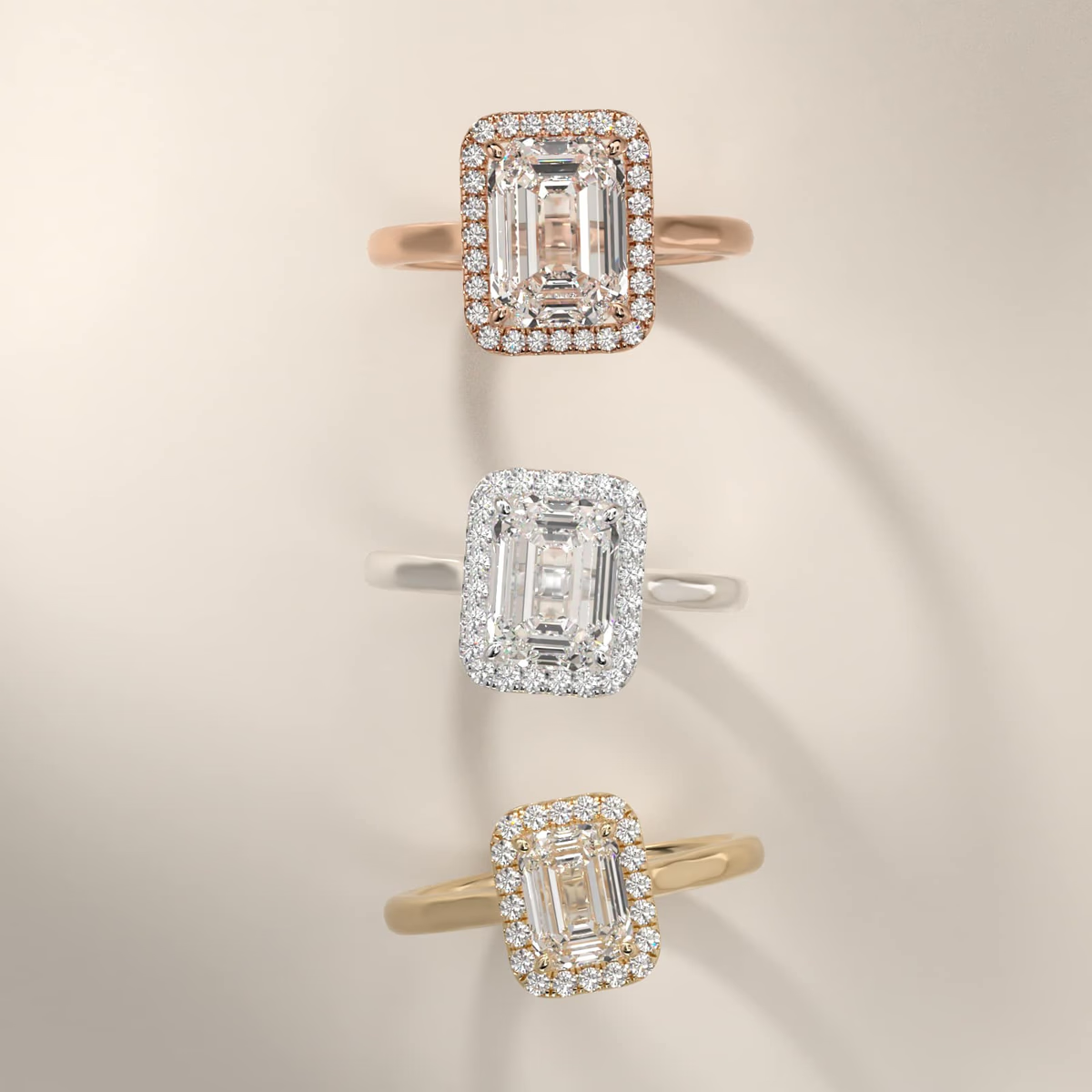
The Falling Edge Pavé Diamond Halo has exactly 369 verified buyer reviews across its three metal variants — white gold, rose gold, and yellow gold. No other halo setting for non-round shapes in this dataset comes close.
The Twisted Halo has 236 reviews. The Pavé Cathedral has 102. The Plain Shank Floating Halo has 67.
The 369 Rule is simple: when a specific design accumulates 369 confirmed purchases across multiple metal choices, the design has been validated by buyers who chose it deliberately. That number is not a lucky accident of algorithmic promotion. It is 369 people who saw the ring photo, clicked through, chose their stone, paid, received the ring, and kept it.
For an emerald cut buyer, the 369 Rule matters because the Falling Edge design is not the cheapest option and not the most promoted. It sits at $2,410 in white gold and $3,010 in platinum — mid-table in price, top-of-table in buyer volume. Buyers arrived at this design through comparison, not impulse.
When 369 people independently choose the same setting for non-round stones, that is consensus. It is the most reliable signal available for a design category where bad choices are visually obvious after purchase.
What the falling edge design does for an emerald cut: the pavé halo follows the stone's perimeter, including its straight long edges and squared corners. At the corners, the design drops slightly below the girdle line, creating a "falling" effect that frames the stone without rounding its geometry. The emerald cut's rectangular outline stays intact at the top.
| Falling Edge Variant | Metal | Setting Price | Reviews | Ring Total (+ D-VS1 $3,140) |
|---|---|---|---|---|
| Falling Edge Pavé Halo | 14K White Gold | $2,410 | 369 | $5,550 |
| Falling Edge Pavé Halo | 14K Rose Gold | $2,470 | 369 | $5,610 |
| Falling Edge Pavé Halo | 14K Yellow Gold | $2,470 | 369 | $5,610 |
| Falling Edge Pavé Halo | Platinum | $3,010 | 369 | $6,150 |
Metal choice within the Falling Edge family is personal. White gold and platinum read cool and bright — correct for D–F color stones. Rose gold warms the ring and pairs particularly well with E–G color stones where a small amount of warmth in the step-cut table is a feature rather than a flaw.
Yellow gold is the warmest expression — pairs with G–H natural stones or any lab stone where color grade is less critical to appearance.
The Hidden Halo Exception
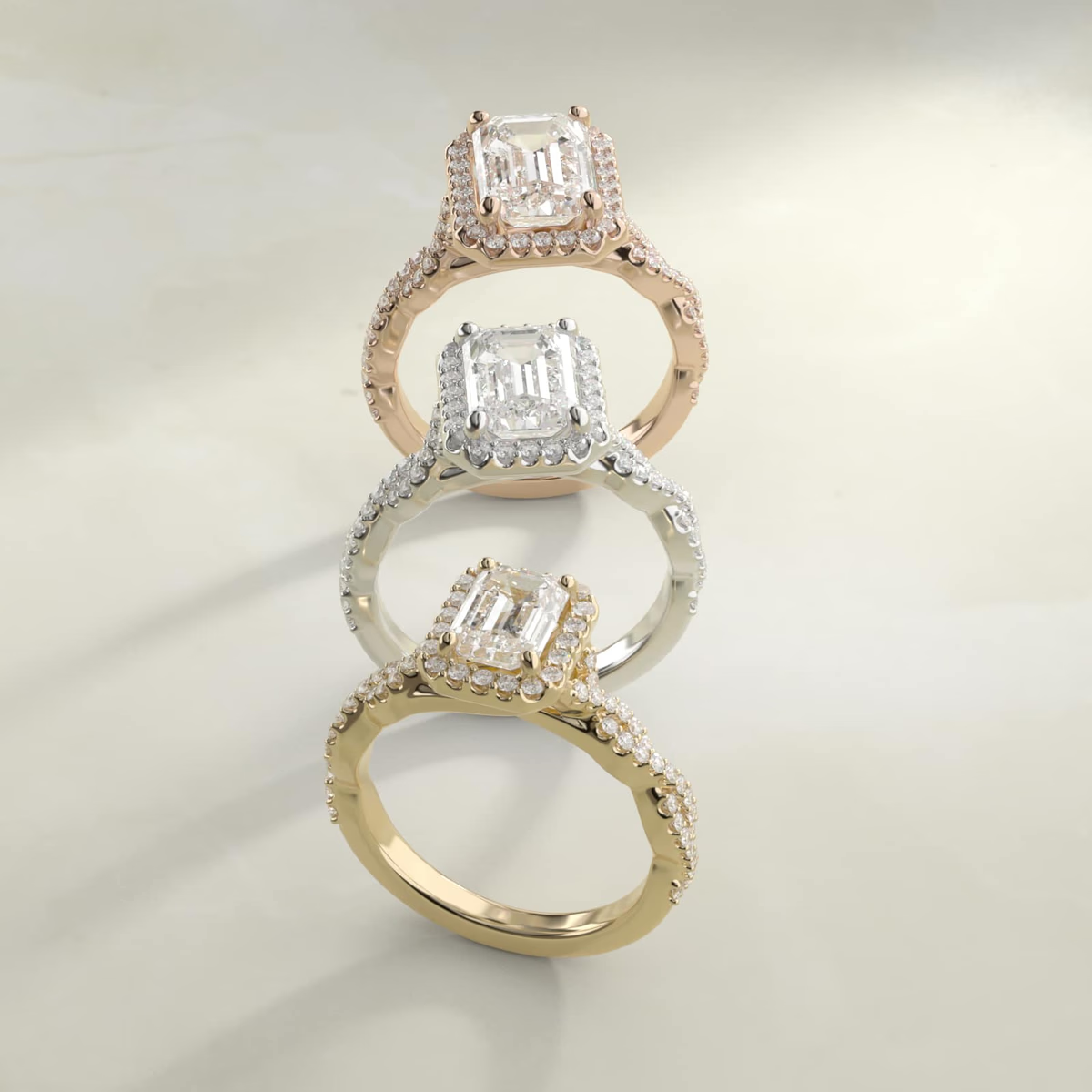
The hidden halo is the most counterintuitive option in this post and the most correct solution to The Outline Problem.
A standard halo sits around the girdle of the stone, level with or slightly above it, visible from the top. The hidden halo sits below the girdle — tucked underneath the stone, invisible from above. From the top, the ring looks like a solitaire.
From the side and at angles, the halo catches light and throws brilliance upward around the stone's perimeter.
For an emerald cut, this is ideal. The stone's rectangular outline is preserved completely — there is nothing around it to round, shorten, or compete with its geometry. The ring reads as a clean, architectural solitaire from the engagement position (hand extended, fingers together).
In motion and at angles, the hidden halo sparkle becomes visible. You get the halo effect without any halo geometry touching the stone's outline.
The X Split Shank Hidden Halo in 14K White Gold at $3,040 adds the split shank detail — two bands that diverge toward the stone and then rejoin. Combined with the hidden halo below the girdle, the effect from above is a clean rectangular stone in an elegant split-shank solitaire. 14K Rose Gold is also available at $3,040.
With the GIA 1ct D-VS1 at $3,140, the complete hidden halo ring is $6,180. That is $30 more than the Falling Edge Platinum at $6,150.
The choice between them comes down to what the buyer values: maximum buyer-validated security (Falling Edge, 369 reviews) or maximum outline clarity (Hidden Halo, zero geometric conflict with the stone's shape). Both rings complete at essentially the same price. Neither is wrong — they solve The Outline Problem in different ways.
Lab Stone + Halo: Complete Ring Prices
Lab-grown emerald cuts in halo settings deliver the most ring for the budget of any combination in certified jewelry. The halo setting adds 0.3–0.5ct of diamond sparkle around the stone. The lab center stone adds size and grade at a fraction of natural prices.
The result is a dramatically larger ring than any natural stone in the same setting at the same total price.
| Lab Stone | Carat | Color / Clarity | Stone Price | Setting | Setting Price | Complete Ring |
|---|---|---|---|---|---|---|
| IGI Emerald Lab | 1.94ct | F-VVS1 | $2,229 | Pavé Halo WG | $1,520 | $3,749 |
| IGI Emerald Lab | 1.94ct | F-VVS1 | $2,229 | Falling Edge Pavé WG | $2,410 | $4,639 |
| IGI Emerald Lab | 2.00ct | D-FL | $4,735 | Falling Edge Pavé Pt | $3,010 | $7,745 |
| IGI Emerald Lab | 3.00ct | D-IF | $9,235 | Falling Edge Pavé Pt | $3,010 | $12,245 |
| IGI Emerald Lab | 1.94ct | F-VVS1 | $2,229 | BNS Double Halo Gala RG | $5,985 | $8,214 |
The lab near-2ct halo ring at $3,749 complete is the clearest value comparison in this post. A natural 1ct D-VS1 in the same Pavé Halo WG setting costs $4,660 complete. The lab ring is $911 cheaper, delivers nearly twice the stone face-up, and has F-VVS1 grades versus D-VS1.
The only thing the natural has that the lab does not is earth origin.
At the 2ct lab level, the comparison is even more stark. The IGI 2ct D-FL at $4,735 in a Falling Edge Pavé Platinum setting at $3,010 comes to $7,745 complete. That is a D-FL 2ct emerald cut in platinum with 369 reviews behind the setting. A natural 2ct D-VS1 emerald cut alone — without any setting — would exceed this total ring price by a significant margin. The lab combination at $7,745 is the most technically impressive ring build in this post on a per-carat basis.
"Lab stones in halo settings benefit doubly from the combination. The halo's side diamonds are always lab or natural accents — that part is the same. But the center stone in lab at near-2ct faces up as a 9mm+ stone in the halo frame. In a natural 1ct halo at $4,660, you have a 7mm step-cut table surrounded by the halo. In a lab 1.94ct halo at $3,749, you have a 9mm step-cut table surrounded by the same halo. The difference is visible at arm's length." — Farzana Hasan, Diamond Critics
Tides Of Summer Capsule
Up To 30% Off
Shop The Sale →Vault ClearanceClear The Vault
Up To 70% Off
Shop Vault Deals →Affiliate link — no extra cost to you
Double Halo for Emerald Cut Diamond
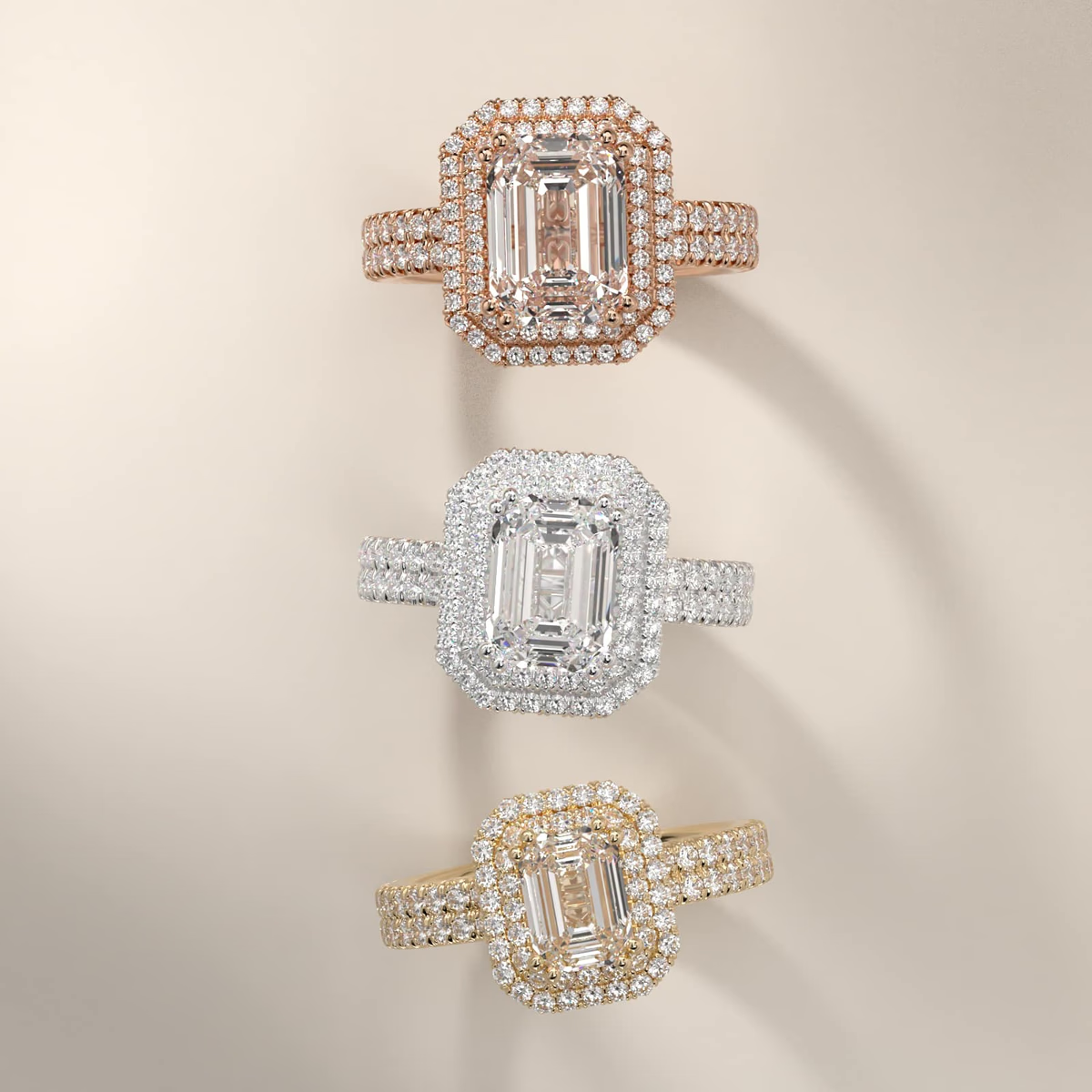
The double halo adds a second ring of pavé diamonds outside the first. It is the most sparkle-intensive halo format and the highest-cost setting in this post.
The BNS Double Halo Gala in 14K Rose Gold at $5,985 includes 7/8 ct tw in the setting stones alone — 0.875ct of additional diamonds in the two halo rows plus any band pavé. With the GIA 1ct D-VS1 at $3,140, the complete double halo ring is $9,125. Total diamond content: 1ct center plus 0.875ct setting = approximately 1.875ct total weight in a single ring.
The Outline Problem applies more acutely to double halos. Two concentric rings of pavé around an emerald cut can overwhelm the stone's rectangular geometry if the rings are circular. The BNS Double Halo Gala is specifically designed for the emerald cut outline — the two halo rings follow the rectangular perimeter rather than rounding it.
Confirm this in the product photos before purchasing any double halo with an emerald cut stone.
At $9,125 for the natural 1ct ring, the double halo is the statement build for buyers who want maximum presence and sparkle over maximum stone face-up. The ring's visual footprint is driven by the setting stones as much as the center stone.
Vintage Halo for Emerald Cut
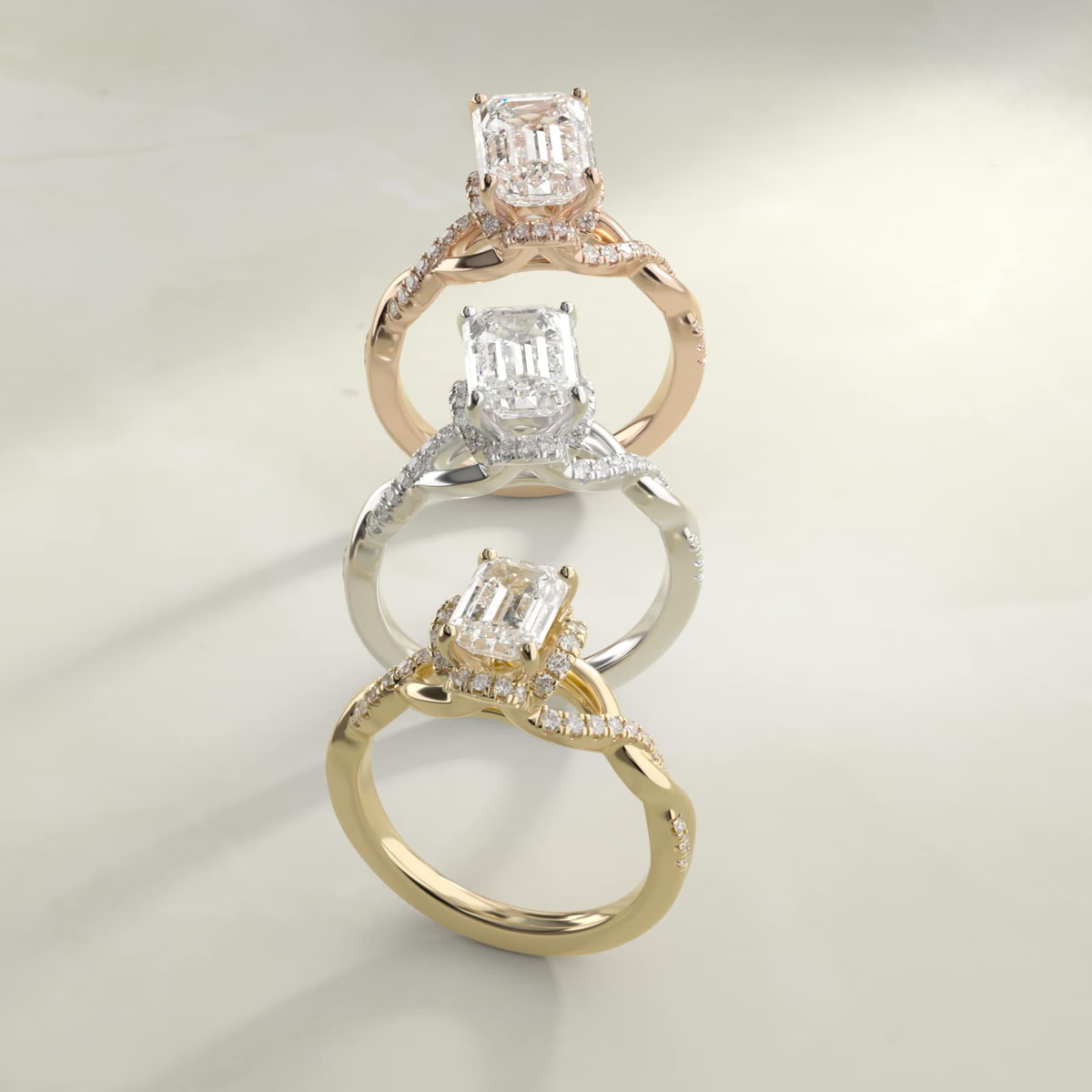
The vintage halo adds milgrain borders, pavé engraving, or period-inspired geometric metalwork to the halo format. For an emerald cut, this is the Art Deco alignment — the same era that produced the emerald cut produced the milgrain-bordered halo.
Three vintage halo options from the data:
The Interlaced Pavé Halo Vintage-Style at $1,750 is the entry vintage halo — 14K white gold, 29 reviews, and the lowest-cost vintage-style option. With the D-VS1 stone, the complete ring is $4,890.
The Glamour Halo Vintage-Style at $2,770 (9 reviews) and in 14K Yellow Gold at $2,770 is the more ornate version. Complete ring: $5,910.
The Zac Zac Posen Vintage Inspired Halo at $3,135 (5 reviews) brings designer branding and more elaborate period detailing. Complete ring: $6,275.
For the vintage emerald cut halo specifically, also see the vintage emerald cut diamond ring post which covers milgrain, Art Deco, and baguette settings separately from the halo format.
Can a Halo Setting Have Emerald Cut Diamonds?
Yes. The emerald cut is compatible with halo settings — with the geometry caveat covered above. The halo surrounding an emerald cut center stone should follow the stone's rectangular outline at the perimeter, not round or oval it.
The secondary question is sometimes "can the halo stones themselves be emerald cut diamonds?" Standard halo designs use round brilliant melee in the setting stones because round brilliants are easier to set in continuous curved rows and produce more light return per millimeter. Emerald cut melee in a halo would require square settings for each small stone, creating a more geometric, less light-catching frame. It is possible as a custom commission; it is not a standard offering in any mass-market halo setting.
The question most buyers are actually asking is whether an emerald cut diamond looks good in a halo setting. It does — but only in the right halo. The Pavé Diamond Halo specifically designed for Cushion, Emerald, and Radiant shapes exists precisely because the market recognized that round brilliant halo designs do not work cleanly with rectangular stones.
Use a setting designed for your stone's shape. The emerald cut is not a round brilliant and does not benefit from round brilliant halo geometry.
Halo vs No Halo for Emerald Cut: When to Choose Each
The emerald cut diamond engagement ring community is divided on halos. Neither choice is wrong. The decision depends on what the buyer wants from the ring.
Choose a halo when:
You want maximum sparkle from the setting itself, not just the stone. The emerald cut's step facets produce a calm, architectural hall-of-mirrors effect — they do not scatter light the way a brilliant cut does. If you want the ring to sparkle intensely from across the room, a halo adds round brilliant melee that fires in every direction regardless of the center stone's cut style.
You want the ring to face up as large as possible. A halo adds visible diamond mass around the stone's perimeter. The outer edge of the halo is 1–2mm wider than the stone on all sides.
At 1ct, the halo can make the ring face up as if it were a 1.3ct–1.5ct stone in terms of overall diameter.
You are working with a smaller center stone. A halo elevates a 0.75ct–1ct emerald cut more dramatically than it elevates a 2ct stone, because the halo's contribution is proportionally larger relative to the center stone.
Skip the halo when:
The stone's rectangular outline and the clean step-cut architecture are the primary visual appeal. A well-proportioned emerald cut in a four-prong solitaire is a complete, singular statement. Adding a halo introduces additional visual elements that compete with the stone's clean geometry.
You want a ring that reads as timeless and unfussy. Halos follow trends more than solitaires. The classic emerald cut solitaire is more date-resistant than any halo design.
You have a larger center stone. At 1.5ct and above, the emerald cut face-up is already substantial. A halo at this size adds sparkle but is less needed for size amplification.
Emerald Cut Diamond Halo Ring Optimization Matrix
| Build | Stone | Setting | Complete Ring | Best For |
|---|---|---|---|---|
| Natural entry halo | GIA 1ct D-VS1 $3,140 | Pavé Halo WG $1,520 | $4,660 | Natural, EC-specific halo, 69 reviews |
| Lab entry halo | IGI 1.94ct F-VVS1 $2,229 | Pavé Halo WG $1,520 | $3,749 | Lab near-2ct, biggest stone under $4K |
| Best overall — natural | GIA 1ct D-VS1 $3,140 | Falling Edge Pt $3,010 | $6,150 | Natural, platinum, 369 reviews, The 369 Rule |
| Hidden halo | GIA 1ct D-VS1 $3,140 | X Split Hidden Halo WG $3,040 | $6,180 | Natural, solitaire look above, halo sparkle at angles |
| Vintage halo | GIA 1ct D-VS1 $3,140 | Interlaced Pavé Vintage $1,750 | $4,890 | Art Deco halo, milgrain detailing, 29 reviews |
| Lab + falling edge | IGI 1.94ct F-VVS1 $2,229 | Falling Edge WG $2,410 | $4,639 | Lab near-2ct, 369-review setting, under $5K |
| Cathedral halo | GIA 1ct D-VS1 $3,140 | Pavé Halo Cathedral Pt $2,840 | $5,980 | Elevated stone, platinum, 102 reviews |
| Double halo statement | GIA 1ct D-VS1 $3,140 | BNS Double Halo Gala RG $5,985 | $9,125 | Maximum sparkle, 7/8 ct tw setting, rose gold |
How to Choose the Right Halo for an Emerald Cut Diamond
The decision comes down to one question: do you want the halo visible from above, or invisible from above?
If visible from above — choose the Pavé Diamond Halo at $1,520 (entry, 69 reviews, rectangular outline) or the Falling Edge Pavé Halo ($2,410–$3,010, 369 reviews, most validated). Both follow the rectangular outline.
If invisible from above — choose the X Split Shank Hidden Halo at $3,040. The stone's rectangle is completely untouched. The halo sparkle is a side-view feature only.
"I always tell buyers to look at the ring from directly above — the engagement position. That is the view your partner sees most. If the ring reads as a clean, elegant emerald cut from above, you have chosen the right halo. If the ring reads as a round or oval because the halo overpowers the stone's outline, you have chosen the wrong one." — Farzana Hasan, Diamond Critics
What to avoid: any halo described only as "round" or "oval" without shape-specific compatibility for the emerald cut. Halos designed for round brilliant stones use a circular perimeter. That circular perimeter is exactly what The Outline Problem describes.
A halo that a retailer lists as "works with all shapes" almost always means round-designed. Shape-specific compatibility matters — check before buying.
Check the product listing for specific mentions of cushion, emerald, or radiant compatibility. The Pavé Diamond Halo (EC/Cushion/Radiant) names these shapes in the product title. That is the signal you need.
Best For: 4 Buyer Scenarios
Best for budget under $5,000 (natural): GIA 1ct D-VS1 at $3,140 + Pavé Diamond Halo WG at $1,520 = $4,660 complete. EC-specific geometry, 69 reviews, entry price.
Best for maximum stone face-up (lab): IGI 1.94ct F-VVS1 at $2,229 + Pavé Halo WG at $1,520 = $3,749 complete. Near-2ct F-VVS1 halo ring for less than the natural 1ct equivalent.
Best for buyer-validated design (natural): GIA 1ct D-VS1 at $3,140 + Falling Edge Pavé Halo Platinum at $3,010 = $6,150 complete. 369 confirmed reviews, rectangular outline preserved, platinum.
Best for clean solitaire look with halo sparkle: GIA 1ct D-VS1 at $3,140 + X Split Shank Hidden Halo WG at $3,040 = $6,180 complete. Stone's rectangle untouched from above. Halo sparkle visible only at angles.
Expert Summary
The emerald cut diamond ring with halo works — but only when the halo shape matches the stone's geometry. The Outline Problem is the most common mistake buyers make: choosing a round brilliant halo designed for a round stone and placing a rectangular emerald cut inside it. The result is a ring that reads as a medium-sized round shape, not a long elegant emerald cut.
The correct choices are clear. The Pavé Diamond Halo at $1,520 is named for the emerald cut shape and follows its rectangular outline — entry price, 69 reviews, zero geometry conflict. The Falling Edge Pavé Halo Platinum at $3,010 is the most validated design in the category with 369 confirmed reviews.
If outline clarity is the priority, the Hidden Halo at $3,040 solves The Outline Problem entirely — the stone's rectangle is untouched from above, and the halo sparkle appears only at angles.
The lab path cuts entry cost to $3,749 complete for a near-2ct F-VVS1 stone in the same halo — $911 less than the natural 1ct halo ring for nearly twice the stone face-up.
Frequently Asked Questions
What is an emerald cut diamond ring with halo?
An emerald cut diamond ring with halo is an emerald cut center stone surrounded by a row of smaller pavé diamonds set in the ring's setting. The halo adds sparkle around the stone's perimeter and makes the ring appear larger than the center stone alone.
The critical detail for an emerald cut is halo shape — it must follow the stone's rectangular outline, not round it. Entry price: $4,660 complete for a GIA 1ct D-VS1 in a Pavé Halo WG setting.
Does a halo make an emerald cut look bigger?
Yes — but only in diameter and sparkle presence, not in length. The halo adds 1–2mm of visible diamond mass around the stone's perimeter, making the ring face up as roughly 0.3–0.5ct larger in apparent size.
However, if the halo is circular, it can visually shorten the emerald cut's rectangular length. A correctly shaped rectangular halo preserves the length while adding perimeter sparkle.
What is the best halo setting for an emerald cut diamond?
The Falling Edge Pavé Diamond Halo Platinum at $3,010 leads with 369 confirmed buyer reviews. It follows the emerald cut's rectangular outline without rounding it and adds a falling-edge design that frames the stone from below at the corners. For buyers who want the outline untouched entirely, the X Split Shank Hidden Halo at $3,040 is the correct choice.
What is a hidden halo for an emerald cut diamond?
A hidden halo sits below the girdle of the stone, invisible from above. The ring looks like a solitaire from the top — a clean rectangular step-cut stone in a simple setting.
At angles and in motion, the hidden halo stones catch and scatter light around the stone's perimeter. For an emerald cut, this is the optimal halo format because it adds sparkle without any geometry affecting the stone's rectangular outline.
Can a halo setting have emerald cut diamonds in the halo itself?
Standard halo designs use round brilliant melee stones in the halo row. Custom or specialty settings can use small emerald cut or baguette-shaped stones in the halo, but this is not a standard offering. For a geometric halo that echoes the emerald cut's step-cut language, baguette-accented settings are closer — see the emerald cut diamond ring settings post for baguette side stone options.
How much does an emerald cut diamond halo engagement ring cost?
Entry: $4,660 complete — GIA 1ct D-VS1 at $3,140 plus Pavé Halo WG at $1,520. The best overall natural build is $6,150 with the Falling Edge Platinum.
Double halo: $9,125. In lab, entry is $3,749 complete for a near-2ct F-VVS1 in the same Pavé Halo WG.
What clarity do I need for an emerald cut in a halo setting?
VS1 minimum. The emerald cut's open step-cut table shows inclusions that a brilliant cut would scatter and hide. The halo's side stones do not mask the center stone's clarity.
The clarity of the center stone is always visible in the open table. VS1 is the non-negotiable floor at any carat weight.
Does a halo look good on an emerald cut engagement ring?
Yes — with the right halo shape. The Pavé Diamond Halo specifically designed for Cushion, Emerald, and Radiant shapes exists because round brilliant halos do not translate cleanly to rectangular stones.
Use a setting confirmed for the emerald cut shape. Avoid circular or rounded halos that were designed for round brilliants.
What is the difference between a halo and a double halo for an emerald cut?
A single halo adds one row of pavé diamonds around the center stone's perimeter. A double halo adds two concentric rows. The BNS Double Halo Gala at $5,985 includes 7/8 ct tw in the setting stones alone.
A double halo ring with a 1ct emerald cut center stone has nearly 2ct total diamond weight. It is a dramatically sparkle-forward choice that prioritizes the ring's overall presence over the center stone's individual visibility.
Which metal works best for an emerald cut halo ring?
Platinum for D–F color natural stones — the cool white metal shows no warmth that could read against the step-cut's open table. 14K white gold is a lower-cost alternative with the same visual effect.
Rose gold works well with lab stones or G–H natural stones where a small amount of warmth in the stone is acceptable. Yellow gold pairs with G–H color and gives the ring a warmer, vintage character. The Falling Edge Pavé Halo in 14K Rose Gold at $2,470 is the most popular rose gold option in this dataset.
Should I choose natural or lab for an emerald cut halo ring?
Natural if origin and long-term value matter. The GIA 1ct D-VS1 complete halo ring at $4,660 is a certified, reliable purchase at a reasonable entry price.
Lab if stone size is the priority. The IGI 1.94ct F-VVS1 halo ring at $3,749 is $911 less for nearly twice the stone face-up.
The halo setting looks identical in both cases. The difference is what is inside the setting.
Is the halo on an emerald cut ring easy to maintain?
Standard pavé halos require normal cleaning to prevent buildup of dirt and lotion under the setting stones. The emerald cut's straight edges are no harder to clean around than any other shape.
Hidden halos require slightly more attention under the stone where the setting stones are less accessible. A jeweler's cleaning every 6–12 months is sufficient for any halo setting.
Can I get an emerald cut halo ring under $5,000?
Yes. Three complete natural builds fall under $5,000: the Pavé Halo WG at $4,660, the Plain Shank Floating Halo at $4,840, and the Interlaced Pavé Vintage Halo at $4,890.
In lab, the near-2ct entry is $3,749 and the Falling Edge WG lab build is $4,639 — both under $5,000 with dramatically more stone.
See Also
- Emerald Cut Diamond Engagement Rings — All settings ranked, solitaire vs halo vs bezel
- Emerald Cut Diamond Ring Settings — Pavé, bezel, baguette, solitaire — 9 settings with ring totals
- Vintage Emerald Cut Diamond Ring — Art Deco alignment, milgrain, baguette, from $4,330
- 1 Carat Emerald Cut Diamond Ring — Entry natural stone guide, full price tables
- Lab Grown Emerald Cut Diamond — 3ct D-IF at $9,235, full lab case vs natural
- Elongated Emerald Cut Diamond — L:W ratios, face-up vs round brilliant, 5ct lab window
Expert Verdict
Always audit the stone individually — no grade replaces seeing the actual diamond. The certificate tells you what to look for. Your eyes tell you whether to buy.
— Farzana Hasan, GIA Expert · DiamondCritics.com