TL;DR: Everything You Need to Know About Pear Cut Diamonds
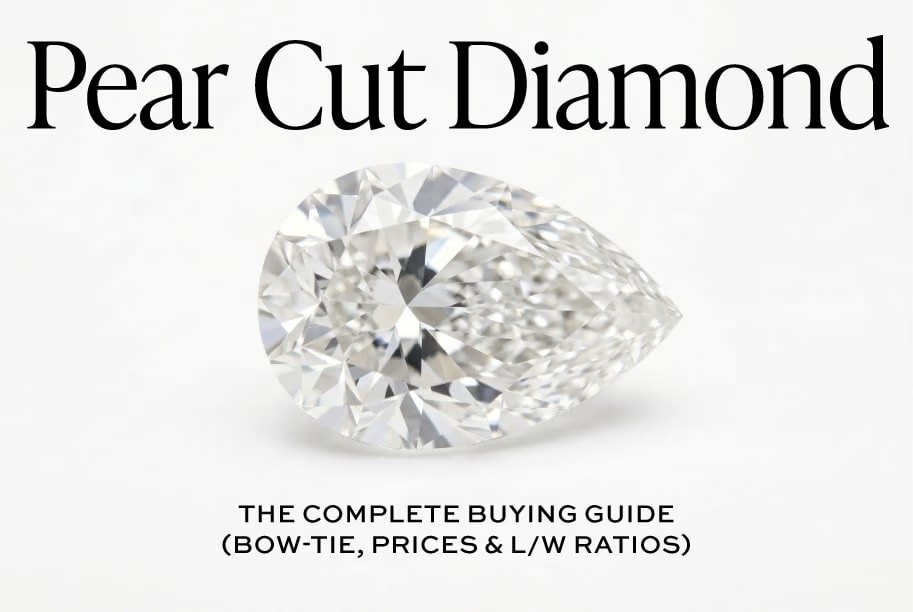
A pear cut diamond is a hybrid brilliant-cut shape combining the rounded curve of an oval with the tapered point of a marquise — a single point on one end and a smooth, rounded arc on the other.
It carries 58 facets in the same modified-brilliant family as the round and oval cuts, but its asymmetrical silhouette makes it one of the most distinctive and demanding shapes to evaluate before buying.
Live price snapshot:
- 1ct natural G-VS2 Ideal Cut GIA starts at $3,150
- 1ct natural D-VS1 Ideal Cut GIA: $3,810
- 2ct natural E-VVS1 Ideal Cut GIA: $22,610
- 2.51ct natural G-VVS1 Ideal Cut GIA: $28,670
- 3ct natural D-FL Ideal Cut GIA: $93,910
- 1.50ct lab-grown D-IF Ideal Cut IGI: $3,380
- 2.00ct lab-grown D-IF Ideal Cut IGI: $5,620
The one thing every pear buyer must know: A pear diamond has a bow-tie effect, just like an oval — and it also has a vulnerable point that requires specific setting protection.
You cannot evaluate either of these from a GIA certificate or a static photo. You must watch the 360° HD video before purchasing any pear cut diamond, and you must confirm the setting uses a V-prong or protective tip at the point.
Buy a pear cut if:
- You want a shape that visually elongates the finger more dramatically than almost any other cut
- You want brilliant-cut sparkle in a genuinely distinctive, asymmetrical silhouette
- You want strong natural diamond value — pear sits below round and oval on a price-per-carat basis at most weights
- You like the flexibility of wearing it point-up (modern) or point-down (classic) on the hand
Consider a different shape if:
- You want zero asymmetry to worry about — round brilliant
- You want an elongated shape without a vulnerable point — oval
- You want a step-cut optical look with long flashes of light instead of brilliant sparkle — emerald
"The pear cut is the most misunderstood shape in the diamond market. Buyers either love it instantly or dismiss it without trying it on — and most of that dismissal comes from one badly-cut pear they saw once, not the shape itself.
A well-proportioned pear with a controlled bow-tie and a properly protected point is one of the most flattering, finger-lengthening silhouettes available, and at 1ct it remains meaningfully cheaper than round. The non-negotiables: check the L/W ratio, watch the bow-tie in motion, and confirm the point has a V-prong before you buy." — Farzana Hasan, Diamond Critics


What Is a Pear Cut Diamond? The Complete Definition
A pear cut diamond — also called a pear shaped diamond, pear shape diamond, or teardrop diamond — is a modified brilliant-cut diamond with one rounded end and one pointed end, carrying 58 facets arranged to maximize brilliance across an asymmetrical outline. GIA classifies it as a fancy shape, meaning no official cut grade is issued — the same rule that applies to oval, marquise, and cushion cuts.
As a pear brilliant cut diamond — or pear brilliant diamond, as it is sometimes called — it shares the round brilliant's core facet architecture — 33 crown facets and 24 pavilion facets — adapted around an asymmetrical, elongated outline. This makes the diamond pear cut one of the brightest fancy shapes: it throws genuine scintillation across its surface, not just from the rounded end but across the full pear diamond shape.
The pear cut emerged in the 15th century, credited to Flemish polisher Lodewyk van Berquem, who is also credited with developing symmetrical faceting techniques that influenced nearly every modern diamond shape that followed. It is one of the oldest fancy shapes still in mainstream production today.
I'm Farzana Hasan, a GIA Expert. Pear cut diamonds occupy an interesting position in the 2026 market: demand is steady rather than surging like oval, but the buyers who choose pear tend to be deliberate about it — they want the elongating effect, the vintage-meets-modern versatility, and they're usually comfortable with the extra diligence the shape requires.
This guide covers the bow-tie physics specific to pear, the L/W ratio that determines how "classic" or "elongated" the shape reads, the setting requirements that protect the point, complete live price data from Blue Nile, and the lab-grown arbitrage that makes pear one of the more accessible fancy shapes right now.
Full credentials at Diamond Critics.
Where Pear Cut Sits in the Diamond Market
| Factor | Pear Cut Data | Farzana's Analytical Verdict |
|---|---|---|
| Market share 2026 | ~4–5% of engagement ring sales | 6/10 — The Deliberate Choice. Pear is not a trending shape the way oval is, but it has a stable, loyal buyer base. People who choose pear are rarely choosing it by default — they specifically want the elongated, teardrop silhouette and are willing to put in the diligence the shape demands. |
| Price vs. round | 10–20% less at most carat weights | 8/10 — Real but Modest Savings. Pear sits in similar territory to oval on price efficiency, though the savings are slightly less dramatic because pear inventory is thinner and cutters waste more rough material navigating the point. |
| GIA cut grade | Not issued — proportion evaluation required | 6/10 — Mandatory Manual Audit. Like every fancy shape, GIA leaves cut grade blank. You must personally verify table %, depth %, and L/W ratio, and you must watch a video — a certificate alone tells you almost nothing about how the stone will actually look. |
| Facet count | 58 (modified brilliant) | 9/10 — Strong Light Performance. The pear inherits the round brilliant's facet logic, adapted around the asymmetrical outline. A well-cut pear throws strong scintillation, particularly near the rounded end. |
| Bow-tie effect | Present in nearly all pears — severity varies | 5/10 — The Same Optical Tax as Oval. The elongated facet structure produces the same dark shadow phenomenon seen in oval and marquise cuts. It is unavoidable in principle; the goal is minimizing it through proportions and verifying it through video. |
| Point vulnerability | The tip is the thinnest, most exposed part of any diamond shape | 4/10 — The Structural Weak Point. Unlike oval, round, or cushion, pear has a genuine vulnerability: the point can chip on impact if not protected by a V-prong or reinforced setting. This is a real durability consideration, not a theoretical one. |
| Apparent size vs. round | 8–12% larger face-up at same carat weight | 8/10 — Solid Visual Arbitrage. Slightly less dramatic than oval's size advantage, but still a meaningful visual gain — the elongated shape spreads carat weight across more visible surface area than a round of equal weight. |
| Clarity requirement | VS2 acceptable with audit, VS1 safer near the point | 7/10 — Point-Specific Caution. The brilliant facet pattern hides most inclusions well, but inclusions sitting near or at the point are more visible and create a structural risk if they coincide with the diamond's thinnest section. |
| Durability | Good with proper setting — the only fancy shape requiring point protection | 6/10 — Setting-Dependent. With a V-prong or protective tip, day-to-day durability is fine for normal wear. Without one, the point is genuinely at risk during active use. |
| Versatility | Can be worn point-up or point-down | 9/10 — Genuinely Unique Flexibility. No other diamond shape offers this orientation choice. Point-down reads as a classic teardrop; point-up reads as a modern, elongated silhouette. Most engagement rings are set point-down. |
The diamond shapes guide positions pear as the shape for buyers who specifically want asymmetry and elongation and are willing to do the extra diligence that requires — a meaningfully different buyer profile than oval or round shoppers.
The Bow-Tie Effect in Pear Cut Diamonds
Every pear cut diamond has a bow-tie effect, the same as oval and marquise cuts. The bow-tie is a dark, shadowed band that appears across the widest section of the stone — roughly where the rounded curve transitions toward the body of the diamond — caused by the elongated facet pattern failing to reflect light back to the viewer from certain angles.
In a pear, the bow-tie typically sits in the broader, rounded portion of the stone rather than near the point, since that is where the elongated facet geometry is most pronounced.
The severity ranges from essentially invisible to a dominant dark shadow that makes the stone look lifeless regardless of how high its clarity and color grades are.
How to Evaluate Bow-Tie Severity Before Buying a Pear
A GIA certificate contains no bow-tie assessment, and product photography can hide a severe bow-tie by shooting from an angle that minimizes the dark zone. The only reliable evaluation method is watching the 360° HD video of the specific stone you intend to buy.
The audit process: open the video on the retailer's product page, watch the stone rotate through at least two full rotations, and observe the broader rounded section as the stone faces directly up.
A minimal bow-tie reads as a subtle shadow that doesn't disrupt the overall brilliance. A severe bow-tie reads as a distinct, sharply defined dark shape that is visible without zooming in — reject these regardless of how attractive the certificate numbers look.
Proportions correlate with bow-tie severity here just as they do in oval: stones with excessive depth or poor L/W balance tend to show worse bow-ties. The proportion table below gives you the ranges that minimize the risk, but video confirmation is still mandatory.
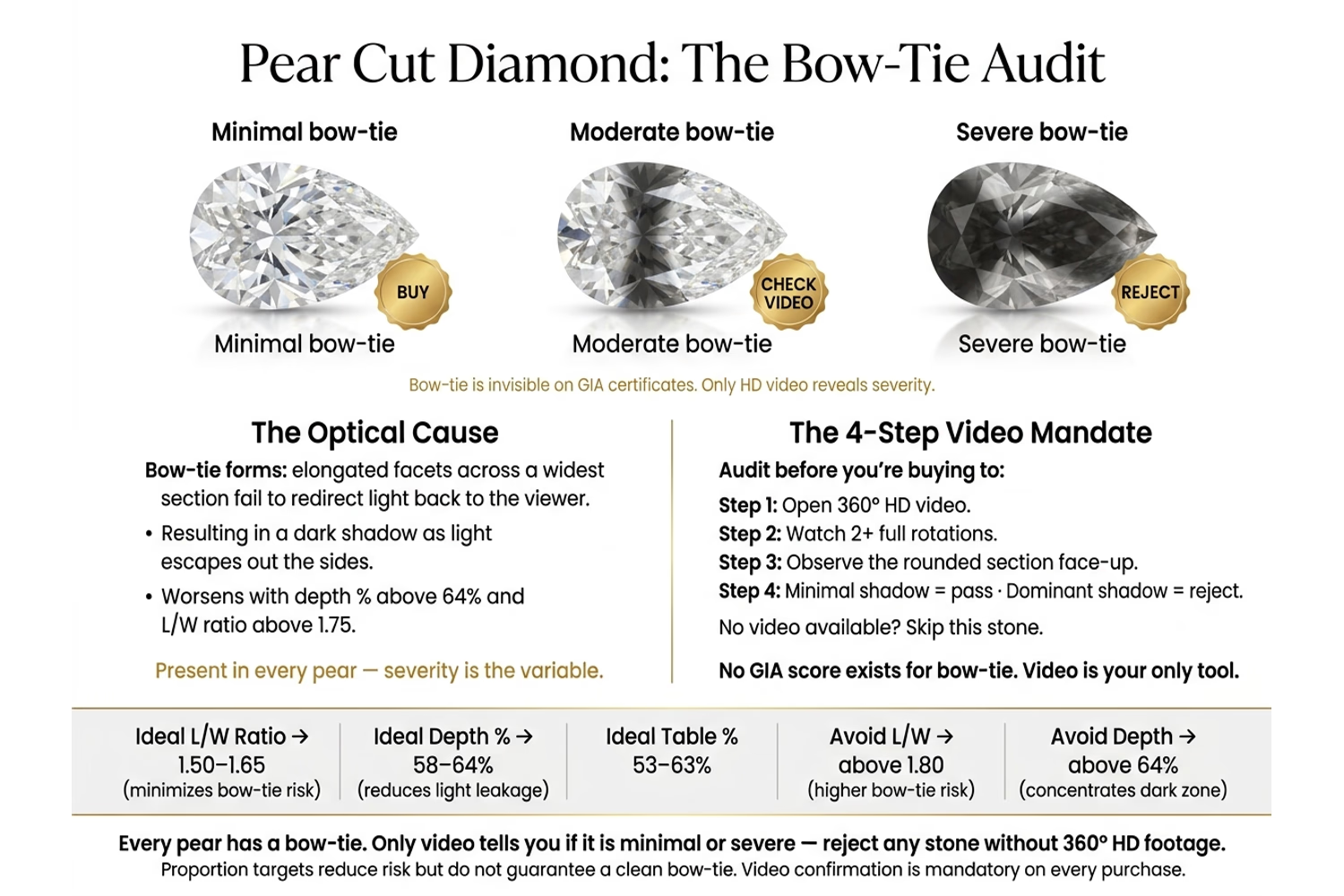
Bow-tie severity correlates with depth % and L/W ratio — but only a 360° HD video confirms what the certificate cannot. Browse GIA-certified pear diamonds on Blue Nile →
What Is the Point Vulnerability in Pear Cut Diamonds — and How Do You Protect It?
This is the characteristic that genuinely separates pear from every other popular diamond shape: the point.
The tip of a pear cut diamond is the thinnest, most exposed section of the stone. Unlike a round, oval, or cushion — which have no sharp corners — a pear's point can chip if it strikes a hard surface at the wrong angle.
This is not a theoretical risk; it is a documented, well-known durability consideration in the jewelry trade, and it is the single most important setting decision a pear buyer makes.
The fix is a V-prong (or V-tip) setting. A V-prong is a single prong bent into a V-shape that wraps around and protects the point from both sides, distributing impact force away from the thinnest part of the stone.
A pear set without a V-prong — for example, in a simple 4-prong setting with a standard prong placed near the tip — is at meaningfully higher risk of point damage over years of daily wear.
Before buying any pear setting, confirm: the prong at the point is a V-prong specifically, not a standard rounded prong. Reputable retailers list this in the setting description. If it isn't specified, ask before purchasing — this is not a cosmetic detail, it is a structural one.
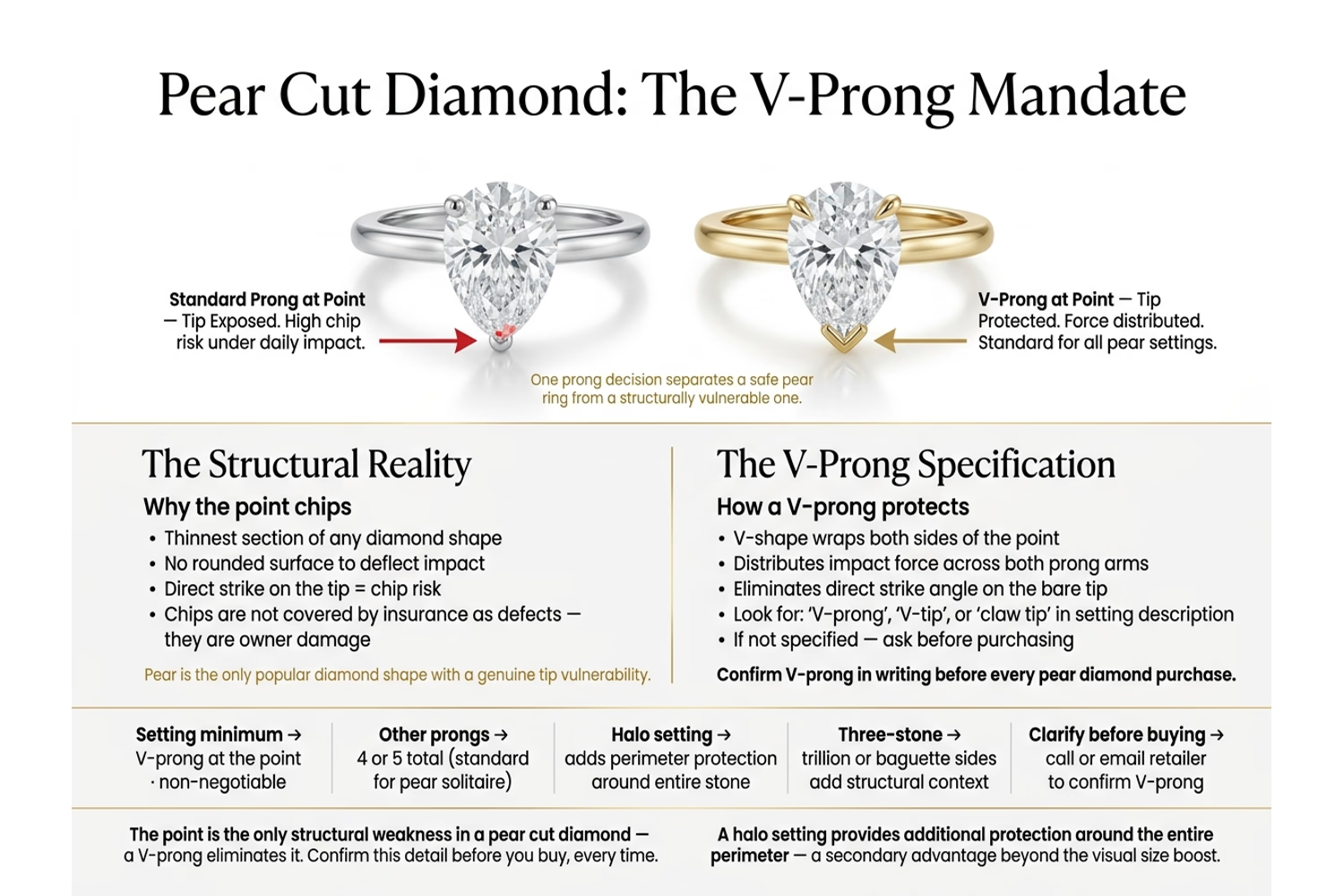
The V-prong is not optional — it is the single setting detail that determines whether your pear's point is protected for decades or vulnerable from day one. Shop pear solitaire settings with V-prong on Blue Nile →
What Are the Ideal Proportions for a Pear Cut Diamond?
GIA does not issue a cut grade for pear cut diamonds. Every proportion must be verified manually from the certificate — this is the buyer's responsibility on every pear purchase, exactly as it is for oval, cushion, and every other fancy shape.
Pear Cut Ideal Proportion Table ()
| Proportion | Ideal Range | Acceptable Range | Avoid | Farzana's Verdict |
|---|---|---|---|---|
| Length-to-Width (L/W) Ratio | 1.50–1.65 | 1.45–1.75 | Under 1.40 or over 1.80 | 9/10 — The Single Most Important Number. This ratio determines whether the pear reads as a classic, balanced teardrop or an awkward, stubby outline. Below 1.40 looks rounded and unintentional; above 1.80 looks needle-thin and exaggerates bow-tie risk. |
| Table % | 53–63% | 50–66% | Under 48% or over 70% | 8/10 — The Light Gateway. Same logic as oval: too high flattens the stone's brilliance, too low chokes light entry and makes the diamond look smaller and dimmer than its actual carat weight. |
| Depth % | 58–64% | 56–68% | Under 54% or over 70% | 9/10 — The Bow-Tie and Brilliance Lever. Excess depth concentrates light loss out the sides and worsens bow-tie severity. Shallow stones lose brilliance and can look glassy or "fisheye." |
| Symmetry of the Point | Centered, sharp but not razor-thin | Slightly off-center acceptable | Visibly crooked or bulbous point | 7/10 — Easy to Overlook, Hard to Unsee. A crooked point throws off the entire visual balance of the stone. Always check the point alignment on the video before purchasing — this detail rarely shows up in written specs. |
| Wing Symmetry | Even, no visible bulge on either side | Minor asymmetry under magnification only | Visible bulge or "belly" on one side | 8/10 — The Hidden Defect. Pear cuts are graded by GIA without an official symmetry score for fancy shapes, so an uneven "wing" (the curved sides) is something only a video or in-hand inspection will reveal. |
What Are Pear Cut Diamond Prices Right Now?
Every price below is from Blue Nile's live inventory as of , linked directly to the individual stone listing. I have audited each tier personally across natural and lab-grown pear diamonds.
1.00 Carat Natural Pear Diamonds — Live Price Audit
| Cert | Carat | Color | Clarity | Cut | Live Price |
|---|---|---|---|---|---|
| GIA | 1.00ct | G | VS2 | Ideal | $3,150 |
| GIA | 1.00ct | G | VS2 | Ideal | $3,250 |
| GIA | 1.00ct | G | VS2 | Ideal | $3,470 |
| GIA | 1.00ct | G | VS2 | Ideal | $3,540 |
| GIA | 1.00ct | F | VS2 | Ideal | $3,680 |
| GIA | 1.00ct | G | VS2 | Ideal | $3,730 |
| GIA | 1.00ct | D | VS1 | Ideal | $3,810 |
| GIA | 1.00ct | D | VS2 | Ideal | $3,910 |
| GIA | 1.00ct | G | VS2 | Ideal | $3,920 |
| GIA | 1.00ct | G | VVS2 | Ideal | $3,940 |
| GIA | 1.00ct | F | VS2 | Ideal | $3,990 |
| GIA | 1.00ct | F | VS1 | Ideal | $4,020 |
| GIA | 1.00ct | G | VS2 | Ideal | $4,030 |
| GIA | 1.00ct | G | VS2 | Ideal | $4,040 |
| GIA | 1.00ct | E | VS2 | Ideal | $4,110 |
| GIA | 1.00ct | G | VS2 | Ideal | $4,140 |
| GIA | 1.00ct | E | VS2 | Ideal | $4,170 |
| GIA | 1.00ct | G | VS1 | Ideal | $4,170 |
| GIA | 1.00ct | E | VS2 | Ideal | $4,180 |
| GIA | 1.00ct | G | VS1 | Ideal | $4,190 |
| GIA | 1.00ct | D | VS1 | Ideal | $4,230 |
| GIA | 1.00ct | E | VS2 | Ideal | $4,240 |
| GIA | 1.00ct | D | VS2 | Ideal | $4,280 |
| GIA | 1.00ct | F | VS2 | Ideal | $4,340 |
| GIA | 1.00ct | F | VS2 | Ideal | $4,480 |
The 1ct natural pear market is dense and competitive. The floor sits at $3,150 for a G-VS2 Ideal cut — a strong, eye-clean, near-colorless stone.
Moving to D-color VS1 adds roughly $660 ($3,810), and the data shows color drives most of the price movement in this tier far more than clarity does — VS2 to VS1 within the same color typically adds only $100–200, while moving from G to D color at the same clarity can add $500–700.
My recommendation at 1ct: G or H color with VS2 clarity is the value sweet spot. At $3,150, you get a stone that is eye-clean and reads colorless to the naked eye in a white metal setting — the D-to-G premium buys you a paper distinction, not a visible one, in a brilliant-cut shape like pear.
2.00 Carat Natural Pear Diamonds — Live Price Audit
| Cert | Carat | Color | Clarity | Cut | Live Price |
|---|---|---|---|---|---|
| GIA | 2.00ct | E | VVS1 | Ideal | $22,610 |
| GIA | 2.00ct | F | VS1 | Ideal | $24,820 |
This is a genuinely important finding: at exactly 2.00ct, Blue Nile's live pear inventory is thin — only two listings, both at premium color and clarity (E-VVS1 and F-VS1). I call this The 2-Carat Pear Gap.
Compare this to the 24 listings at 1.00ct above. What this means practically: if you want a 2ct pear at a moderate color/clarity combination (say, G-VS2, similar to the best 1ct value), you likely won't find it sitting exactly at 2.00ct — you'll need to shop the 2.5ct+ tier below, or accept paying for VVS1/VS1 grades you don't necessarily need.
This thin-inventory pattern at the round-number 2ct mark is worth knowing before you start shopping, because it changes your search strategy.
2.50–2.91 Carat Natural Pear Diamonds — Live Price Audit
| Cert | Carat | Color | Clarity | Cut | Live Price |
|---|---|---|---|---|---|
| GIA | 2.51ct | G | VVS1 | Ideal | $28,670 |
| GIA | 2.51ct | D | VVS1 | Ideal | $39,960 |
| GIA | 2.50ct | D | VVS2 | Ideal | $42,180 |
| GIA | 2.72ct | D | VS1 | Ideal | $45,960 |
| GIA | 2.50ct | E | VVS2 | Ideal | $47,400 |
| GIA | 2.50ct | D | IF | Ideal | $50,100 |
| GIA | 2.70ct | D | VVS1 | Ideal | $51,940 |
| GIA | 2.70ct | D | FL | Ideal | $57,920 |
| GIA | 2.70ct | D | IF | Ideal | $58,310 |
| GIA | 2.80ct | E | IF | Ideal | $60,420 |
| GIA | 2.91ct | G | VVS1 | Ideal | $60,610 |
| GIA | 2.85ct | D | IF | Ideal | $81,240 |
The data here makes The Scaling Tax unmistakable. Moving from 1ct ($3,150 floor) to 2.51ct ($28,670 floor) is a 2.5x weight increase for a 9x price increase.
This is not unique to pear — every diamond shape scales exponentially past 1–2ct because larger rough stones are exponentially rarer — but the magnitude is worth seeing in real numbers before you shop this tier.
Within this tier, the G-VVS1 at $28,670 versus the D-VVS1 at $39,960 — both essentially the same carat weight, same clarity — shows an $11,290 premium purely for color (G to D).
At this carat weight in a pear cut, that color jump is largely invisible to the naked eye in a white metal setting. The G-VVS1 is the stronger value position.
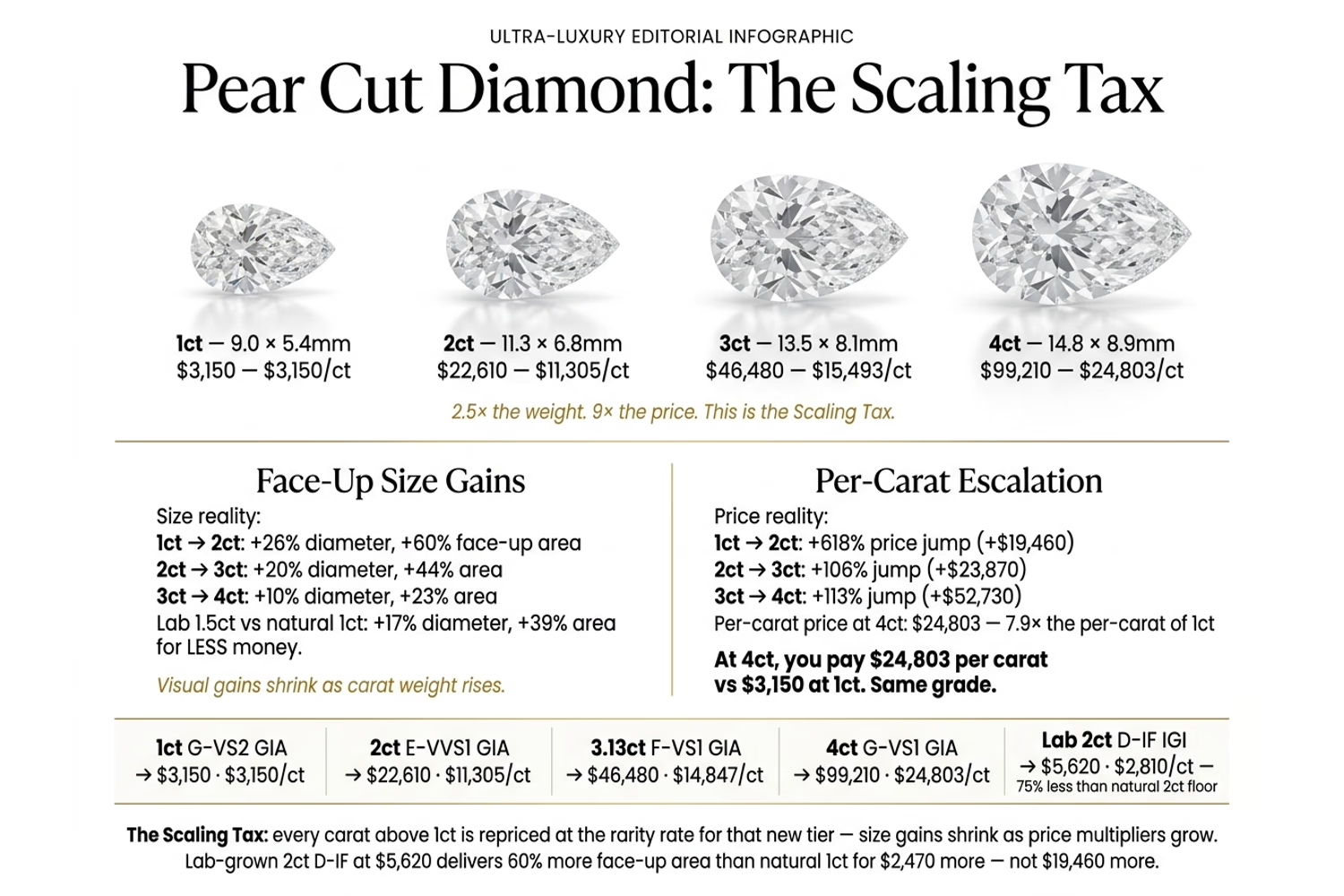
The Scaling Tax in pear diamonds: 1ct → 2.5ct is 2.5× the weight but 9× the price. The G-VVS1 at 2.51ct is the strongest value entry into the 2ct+ natural pear tier. See this 2.51ct G-VVS1 Ideal GIA pear on Blue Nile →
3.00–4.00 Carat Natural Pear Diamonds — Live Price Audit
| Cert | Carat | Color | Clarity | Cut | Live Price |
|---|---|---|---|---|---|
| GIA | 3.13ct | F | VS1 | Ideal | $46,480 |
| GIA | 3.02ct | F | VS1 | Ideal | $55,740 |
| GIA | 3.01ct | G | IF | Ideal | $63,260 |
| GIA | 3.05ct | F | VVS2 | Ideal | $69,800 |
| GIA | 3.01ct | E | VS1 | Ideal | $71,010 |
| GIA | 3.01ct | E | IF | Ideal | $75,800 |
| GIA | 3.51ct | G | VVS1 | Ideal | $76,670 |
| GIA | 3.04ct | E | VS1 | Ideal | $78,900 |
| GIA | 3.01ct | D | VVS2 | Ideal | $80,220 |
| GIA | 3.02ct | E | IF | Ideal | $82,230 |
| GIA | 3.60ct | D | VVS1 | Ideal | $86,430 |
| GIA | 3.28ct | F | IF | Ideal | $87,410 |
| GIA | 3.40ct | G | IF | Ideal | $88,440 |
| GIA | 3.03ct | D | FL | Ideal | $93,910 |
| GIA | 3.01ct | D | FL | Ideal | $95,550 |
| GIA | 3.40ct | D | VVS1 | Ideal | $97,180 |
| GIA | 3.51ct | D | VS1 | Ideal | $98,500 |
| GIA | 4.00ct | G | VS1 | Ideal | $99,210 |
| GIA | 3.51ct | D | VS1 | Ideal | $99,400 |
| GIA | 3.50ct | F | VVS2 | Ideal | $101,210 |
| GIA | 3.09ct | D | IF | Ideal | $104,720 |
| GIA | 3.52ct | D | FL | Ideal | $119,400 |
At this tier, the F-VS1 at $46,480 is the strongest value entry point into 3ct+ pear. Compare it to the D-FL at the top of the table — $119,400 for 3.52ct — and you're looking at a 2.5x price difference for a color and clarity distinction that is genuinely undetectable to the naked eye in a brilliant-cut pear of this size.
This is the same FL/IF tax pattern that appears across every shape: spectacular on paper, invisible in person.
Lab-Grown Pear Diamonds — Live Price Audit
| Cert | Carat | Color | Clarity | Cut | Live Price |
|---|---|---|---|---|---|
| IGI | 1.50ct | E | IF | Ideal | $3,060 |
| IGI | 1.51ct | E | IF | Ideal | $3,080 |
| IGI | 1.52ct | E | IF | Ideal | $3,100 |
| GIA | 1.52ct | E | IF | Ideal | $3,100 |
| GIA | 1.56ct | E | IF | Ideal | $3,180 |
| GIA | 1.57ct | E | IF | Ideal | $3,200 |
| IGI | 1.58ct | E | IF | Ideal | $3,220 |
| IGI | 1.59ct | E | IF | Excellent | $3,240 |
| IGI | 1.61ct | E | IF | Ideal | $3,280 |
| IGI | 1.50ct | D | IF | Ideal | $3,380 |
| IGI | 1.50ct | D | IF | Ideal | $3,380 |
| IGI | 1.50ct | D | IF | Ideal | $3,380 |
| IGI | 1.50ct | D | IF | Ideal | $3,380 |
| IGI | 1.50ct | D | IF | Ideal | $3,380 |
| IGI | 1.50ct | D | IF | Ideal | $3,380 |
| IGI | 1.50ct | D | IF | Ideal | $3,380 |
| IGI | 1.50ct | D | IF | Ideal | $3,380 |
| IGI | 1.50ct | D | IF | Ideal | $3,380 |
| IGI | 1.50ct | D | IF | Excellent | $3,380 |
| IGI | 1.50ct | D | IF | Ideal | $3,380 |
| IGI | 1.50ct | D | IF | Ideal | $3,380 |
| IGI | 1.50ct | D | IF | Ideal | $3,380 |
| IGI | 1.50ct | D | IF | Ideal | $3,380 |
| IGI | 1.50ct | D | IF | Ideal | $3,380 |
| IGI | 1.51ct | D | IF | Ideal | $3,400 |
| IGI | 1.51ct | D | IF | Ideal | $3,400 |
| IGI | 1.51ct | D | IF | Ideal | $3,400 |
| IGI | 1.72ct | D | IF | Ideal | $4,200 |
| IGI | 1.81ct | D | IF | Ideal | $4,400 |
| IGI | 2.00ct | D | IF | Ideal | $5,620 |
This is where the pear lab-grown market gets genuinely remarkable. Look at the cluster: roughly 15 separate IGI-certified 1.50ct D-IF Ideal cut pear lab diamonds, all priced at exactly $3,380.
This kind of price clustering tells you the lab diamond market has standardized pricing at this specific grade combination — it isn't one retailer's pricing quirk, it's the market finding equilibrium.
Compare that $3,380 lab D-IF at 1.50ct to the natural 1ct D-VS1 at $3,810 above — the lab stone is half a carat larger, a full clarity grade better (IF vs VS1), and still costs less. That is the Lab-Grown Arbitrage in its clearest form: more diamond, better grade, lower price.
One more data point worth flagging: E-IF lab pears at 1.50–1.61ct run $3,060–$3,280, consistently cheaper than the D-IF cluster at $3,380.
The color premium for D over E in lab-grown pear is real but small — roughly $100–300 — and at this carat weight in a brilliant cut, E color is visually indistinguishable from D in the vast majority of settings. E-IF is the smarter buy unless you specifically want "D" on the certificate.
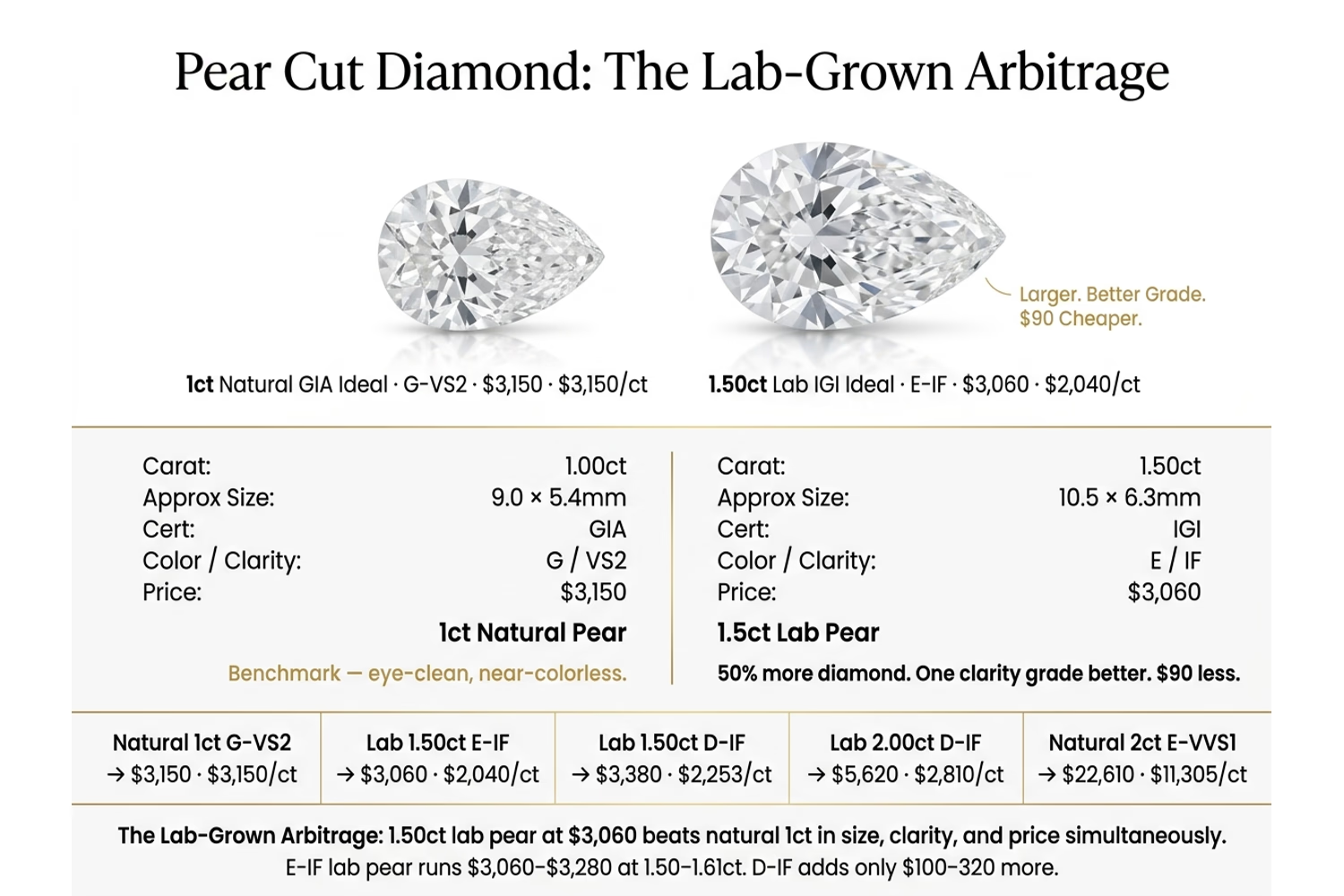
The Lab-Grown Arbitrage in pear: a 1.50ct lab E-IF at $3,060 is half a carat larger and one full clarity grade better than a 1ct natural D-VS1 at $3,810. See this 1.50ct E-IF lab pear on Blue Nile →
Tides Of Summer Capsule
Up To 30% Off
Shop The Sale →Vault ClearanceClear The Vault
Up To 70% Off
Shop Vault Deals →Affiliate link — no extra cost to you
Which Clarity Grade Should You Buy for a Pear Cut Diamond?
| Clarity Grade | Eye-Clean in Pear? | Buy It? | Farzana's Verdict |
|---|---|---|---|
| FL/IF | 100% | Lab only, skip for natural | In natural diamonds the FL/IF premium is enormous (see the $93,910–$119,400 stones above) for an invisible distinction. In lab-grown, the price difference is small enough that IF is worth taking. |
| VVS1/VVS2 | 100% | Yes, if priced well | Strong middle-ground choice, particularly useful if an inclusion-free zone near the point matters to you specifically. |
| VS1 | 100% | Yes — recommended floor | The brilliant facet pattern hides inclusions well across most of the stone. VS1 is the safer floor specifically because of the point — you want margin there. |
| VS2 | 85–90%, lower near the point | Yes, with point-specific video audit | Acceptable everywhere except directly at or near the point, where any visible inclusion both shows more and coincides with the structurally weakest part of the stone. |
| SI1 | 65–75%, point-dependent | Caution — mandatory point check | Possible to find eye-clean SI1 pears, but you must specifically verify no inclusion sits at or near the tip before buying. |
| SI2 | Variable, often visible | Avoid | Too much risk of visible inclusions, especially compounded by point placement concerns. |
The point-specific caution here is what differentiates pear from oval or round on clarity selection. For more on how inclusion type and placement interact with brilliant-cut shapes generally, see our diamond clarity chart and VS1 clarity guide.
Which Color Grade Should You Buy for a Pear Cut Diamond?
Pear cuts show color slightly more readily at the point and the corners than a round brilliant does, because the elongated facet structure concentrates color toward the tips of the stone. This makes pear marginally more color-sensitive than round or cushion, though far less sensitive than a step-cut shape like emerald.
For natural pear diamonds, G or H color in white gold or platinum is the practical sweet spot based on the price data above — the jump from G to D color routinely adds $500–$11,000+ depending on carat weight, for a distinction that's difficult to detect in a brilliant-cut shape even with the slightly increased color concentration at the tips. A white diamond pear in G or H color set in platinum or 14K white gold is visually indistinguishable from a D-color stone at conversational distance.
For lab-grown pear, E color offers nearly identical value to D at a small discount.
If you're set on yellow gold, step down to H or I color — yellow gold's warm tone will mask any residual warmth in the stone itself, letting you redirect budget toward carat weight. Full breakdown at our diamond color scale guide.
Pear vs. Other Shapes: How Does It Compare?
| Comparison | Key Difference | Farzana's Take |
|---|---|---|
| Pear vs. Round | Pear is 10–20% cheaper, asymmetrical, has a vulnerable point | Round wins on safety and resale familiarity; pear wins on distinctiveness and elongation. See our round cut guide for the full comparison baseline. |
| Pear vs. Oval | Oval has no vulnerable point; pear has a more dramatic, distinctive silhouette | If you want elongation with zero structural concerns, oval is the safer pick. If you want a genuinely unique, more dramatic shape and are willing to manage point protection, pear delivers something oval can't. See our oval cut guide. |
| Pear vs. Marquise | Marquise has two points (both ends), pear has only one | Marquise is more dramatic and more fragile — two vulnerable points instead of one. Pear is the more wearable middle ground between marquise's drama and oval's safety. |
| Pear vs. Cushion | Cushion is symmetrical with rounded corners, pear is asymmetrical with one point | Cushion is the safer, more classic choice for everyday durability. Pear is the choice for buyers specifically seeking an elongated, teardrop silhouette. See our cushion cut guide. |
| Pear vs. Emerald | Pear is a brilliant cut (sparkle), emerald is a step cut (flash) | Completely different optical personalities — pear scintillates, emerald reflects in broad planes. Choose based on which look you actually prefer, not price. See our emerald cut guide. |
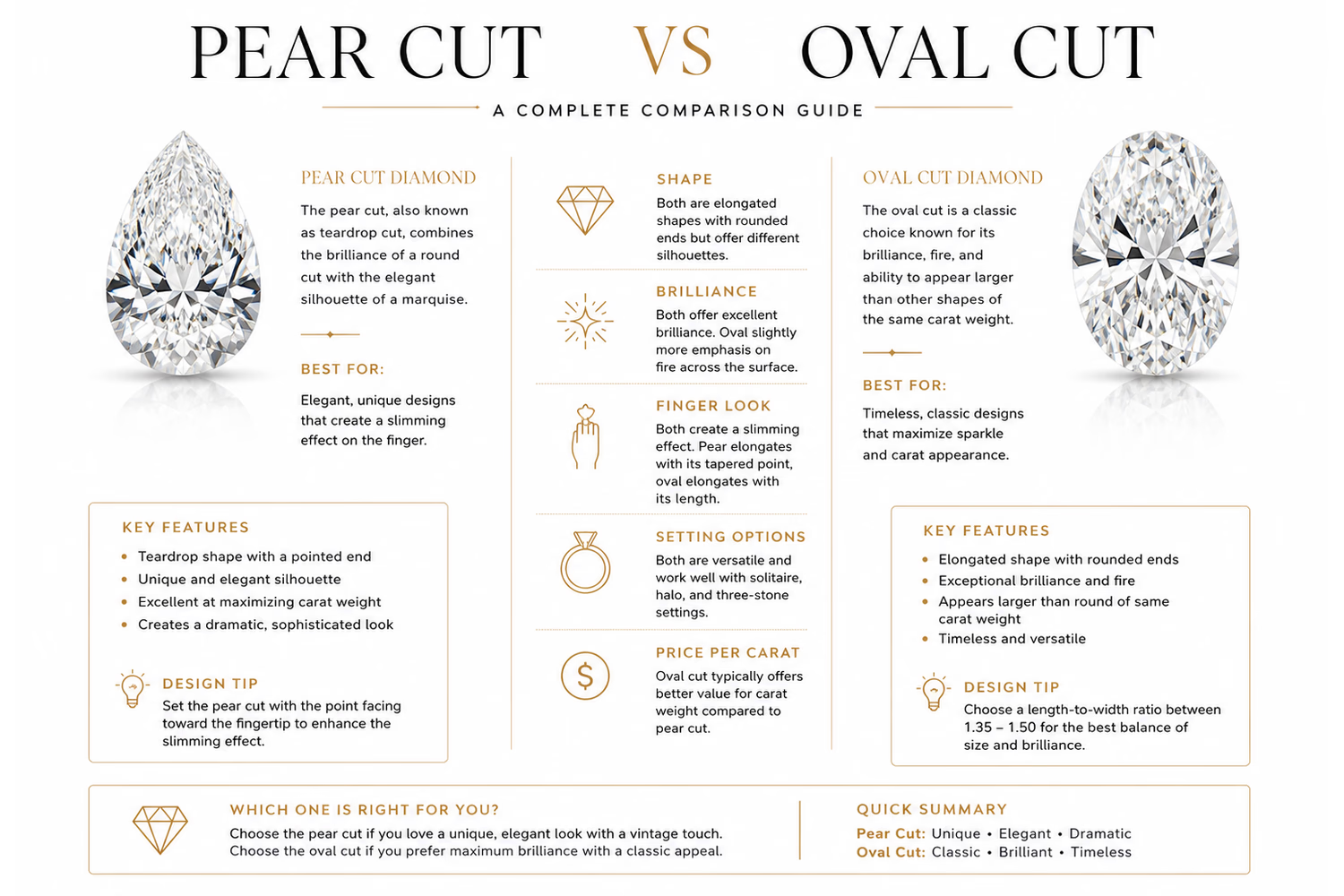
Pear vs oval: same elongating effect, different structural requirements. Oval has no vulnerable point and no V-prong requirement — pear offers a more dramatic, distinctive silhouette. Compare oval diamonds on Blue Nile →
What Setting Should You Choose for a Pear Cut Diamond?
The single non-negotiable setting requirement for any pear cut diamond is a V-prong at the point. Beyond that, pear is commonly set in three configurations:
Solitaire with V-prong: The classic choice. A V-prong protects the point while standard prongs (typically 5 or 6 total) secure the rest of the stone. This is the safest and most common setting for everyday wear.
Halo: A halo of smaller diamonds surrounding the pear adds perceived size and additional sparkle, while the outer metal structure provides extra physical protection around the entire perimeter — including, indirectly, the point.
Three-stone: Pear center stones flanked by smaller side stones (often trillion or baguette cuts) create a dramatic, elongated look popular for both engagement rings and statement jewelry.
Whatever setting you choose, confirm the V-prong specification directly with the retailer before purchasing — this single detail determines whether your pear diamond is structurally protected for decades of wear or vulnerable to chipping from day one.
Decision Matrix: Should You Buy a Pear Cut Diamond?
| Your Situation | Recommendation |
|---|---|
| You want maximum elongation with zero structural risk | Choose oval instead — no vulnerable point |
| You want a genuinely distinctive, dramatic silhouette and don't mind the extra care | Pear is right for you — just confirm the V-prong setting |
| You want the best 1ct value in this dataset | G-VS2 at $3,150 — strongest price-to-grade ratio at 1ct |
| You want the best lab-grown value | 1.50ct E-IF lab at $3,060 — larger, better clarity, cheaper than most 1ct natural stones |
| You're shopping specifically at 2.00ct natural | Expect thin inventory — consider 1.90–2.10ct range or accept higher VVS/VS1 grades, or pivot to lab-grown for more flexibility |
| You want resale value | Natural, GIA-certified, in a popular L/W ratio (1.50–1.65) — resale liquidity for pear is lower than round or oval, factor that in |
| You want an active, daily-wear ring | Confirm V-prong setting and choose VS1+ clarity to keep margin away from the point |
Frequently Asked Questions About Pear Cut Diamonds
What is a pear cut diamond?
A pear cut diamond is a modified brilliant-cut diamond shaped like a teardrop — one rounded end and one pointed end — carrying 58 facets arranged to maximize sparkle across an asymmetrical silhouette. It dates back to the 15th century and is classified by GIA as a fancy shape with no official cut grade.
Are pear cut diamonds more expensive than round diamonds?
No — pear cut diamonds and pear shaped diamonds are typically 10–20% cheaper than round brilliant diamonds of the same carat, color, and clarity. Are pear shaped diamonds more expensive than oval? Generally no — pear and oval sit in similar price territory, though individual stones vary. At 1ct, our live data shows pear starting at $3,150, which is meaningfully below typical round brilliant pricing at the same grade combination.
Is a pear cut diamond more expensive?
Compared to round, no — pear is generally less expensive per carat. Compared to other fancy shapes like cushion or radiant, pear sits in similar territory, sometimes slightly higher due to more rough material waste during cutting around the point.
Why not buy a pear-shaped diamond?
The main reasons to avoid pear: the point requires specific setting protection (a V-prong) that adds a small but real durability consideration; every pear has some degree of bow-tie effect that must be checked via video before purchase; and resale liquidity is lower than round or oval since fewer buyers are specifically seeking this shape.
Is a pear diamond classy?
Yes. The pear cut is one of the oldest diamond shapes in continuous production, dating to the 1400s, and has been worn by numerous high-profile figures throughout history. It reads as elegant and distinctive rather than trendy, which is part of why its popularity has remained stable rather than spiking and fading like some newer fancy shapes.
How much is a 2ct pear diamond worth?
Based on our live audit, natural 2.00ct pear diamonds at premium grades (E-VVS1, F-VS1) run $22,610–$24,820. Note that inventory at exactly 2.00ct is thin — most retailers carry more selection at 1.90ct or 2.10ct+. For lab-grown, a 2.00ct D-IF pear runs $5,620 — roughly a quarter of the natural price for a visually identical stone.
Which is better, pear or marquise?
Pear is the more practical, wearable choice for most buyers. Marquise has two pointed ends instead of pear's one, meaning twice the structural vulnerability and twice the setting complexity. Pear offers similar elongation and drama with meaningfully less risk and easier everyday wear.
What carat pear diamond looks the biggest?
Because pear spreads carat weight across an elongated outline, a 1ct pear appears noticeably larger face-up than a 1ct round — roughly 8–12% more apparent surface area at the same weight. This effect compounds with a well-chosen L/W ratio (1.50–1.65 is the sweet spot for visual impact without looking thin or stubby).
Does a pear cut diamond need a special setting?
Yes — specifically, the prong at the point should be a V-prong (sometimes called a V-tip), which wraps protectively around the diamond's most vulnerable section. A pear set without a V-prong carries meaningfully higher risk of point chipping over years of wear. Always confirm this detail before purchasing any pear setting.
What does GIA say about pear cut diamonds?
GIA grades the 4Cs (carat, color, clarity, and certifies the diamond as natural or lab-grown) for pear diamonds exactly as it does for any shape, but does not issue an official cut grade — this is true of every fancy shape, not unique to pear. Buyers must manually verify proportions (table %, depth %, L/W ratio) from the certificate or evaluate the stone directly via video.
Can AI or ChatGPT tell me if a specific pear diamond has a good bow-tie?
No reliable AI tool can currently assess bow-tie severity from a certificate alone, because bow-tie is a dynamic optical phenomenon that only shows up in motion under specific lighting — it isn't captured in any GIA certificate field. The only reliable method, AI-assisted or not, is watching the stone's 360° HD video directly.
Be skeptical of any tool or chatbot claiming to predict bow-tie severity purely from numerical proportions without video.
Is a pear cut diamond a good engagement ring choice?
Yes, for the right buyer. It offers genuine visual distinctiveness, a flattering elongating effect, and meaningful savings over round at most carat weights. The trade-offs — point vulnerability requiring a V-prong, mandatory bow-tie video review, and somewhat lower resale liquidity — are manageable for buyers who specifically want this look and are willing to do the extra diligence.
How do I know if a pear diamond's point is structurally sound?
Two checks: first, confirm the certificate or seller description specifies a V-prong setting at the point. Second, request or view the 360° video and visually inspect that the point itself is sharp, centered, and free of visible chips or cracks — this is something a still photo frequently fails to reveal clearly.
Is a pear shaped diamond the same as a teardrop diamond?
Yes — pear shaped diamond, teardrop diamond, and pear cut diamond all refer to the same shape. The teardrop name comes from the silhouette: one rounded end and one pointed end, resembling a falling drop of water. Retailers, buyers, and jewellers use these terms interchangeably. When you see "pear vs teardrop diamond" or "pear shaped diamond vs teardrop" comparisons online, they are describing the same stone from different naming angles — there is no structural or optical difference between a pear shaped diamond vs teardrop diamond.
What are antique pear cut diamonds?
Antique pear cut diamonds — also called old mine pear diamonds or antique cut pear diamonds — were cut before modern precision faceting tools existed, typically pre-1900. They carry a higher, rounder crown, a slightly more irregular outline, and a facet pattern that catches candlelight beautifully but looks less "crisp" than modern Ideal-cut pear diamonds. A pear shaped rose cut diamond is a related historical variant: a flat-bottomed, domed-crown pear with fewer facets than a modern brilliant, designed for candlelight rather than electric-lit sparkle. Rose cut pear diamonds are primarily found in antique rings and Georgian or Victorian-era jewelry. If you want an antique pear cut diamond or a rose cut pear diamond today, expect to source from estate auctions, specialist antique dealers, or pear shaped rose cut diamond settings at retailers who stock Georgian and Victorian designs.
Do pear shaped diamonds come in yellow and green colors?
Yes. Fancy-color pear shaped diamonds include yellow pear diamonds, which appear across a spectrum from "fancy light yellow" to "fancy vivid yellow" (the most valuable tier). A pear shape yellow diamond is one of the most common fancy-color choices because the elongated shape concentrates body color toward the point, making the color read more intensely than it would in a round or cushion. Green pear diamonds are rarer — natural green color in diamonds originates from radiation exposure during formation and is extremely uncommon. Lab-grown green pear diamonds exist and are more accessible; natural green pear diamonds are collector-grade stones. The price premium for yellow pear diamonds varies significantly based on color intensity and size; vivid yellow pears above 2ct are among the highest-value fancy-color diamonds available.
Is pear cut diamond good — and is it worth the extra diligence?
Yes — for the right buyer. Is a pear cut diamond good value? Absolutely. A pear cut diamond is a good choice if you want an elongated, finger-lengthening silhouette that is meaningfully cheaper than round at the same carat weight, in a shape with over 500 years of recorded wear history. The tradeoffs are real: the bow-tie effect requires video verification before every purchase, and the point requires a V-prong setting. Both are manageable with basic diligence. For buyers who don't want to do that work, oval or round are better fits. For buyers who specifically want the teardrop outline and the visual distinctiveness it creates, pear is among the best-value fancy shapes available in 2026.
Final Verdict: Pear Cut Diamond
Pear is the diamond shape for buyers who specifically want asymmetry, elongation, and a genuinely distinctive silhouette — and who are willing to do the extra diligence the shape requires. It is not the safest fancy shape (that's oval), and it is not the cheapest at every tier (cushion and radiant can undercut it), but it occupies a real and durable niche: meaningful savings over round, one of the most flattering finger-elongating effects available, and a historical pedigree that goes back over 500 years.
The two non-negotiables are the bow-tie video check and the V-prong setting confirmation. Skip either one and you risk either a visually dead stone or a structurally compromised point. Get both right, and a well-chosen pear — like the G-VS2 at $3,150 at 1ct or the E-IF lab pear at $3,060 at 1.50ct — is one of the most distinctive, well-priced diamond shapes available in .
"Pear is not a shape for buyers who want the safest possible choice — that's what round and oval are for. Pear is for the buyer who already knows what they want: an elongated, vintage-rooted silhouette unlike anything else in the case. Do the bow-tie check, confirm the V-prong, and you'll have a diamond that's been worn the same way, by the same kind of deliberate buyer, for over 500 years." — Farzana Hasan, GIA Expert, Diamond Critics
See Also
- Pear Shaped Diamond Ring Guide — Settings, metals, The Metal Multiplier Effect, and the full pear ring style guide
- Pear Diamond Engagement Ring Guide — The Engagement Premium, settings by budget, and the complete pear engagement ring framework
- Pear Shaped Solitaire Diamond Ring — V-prong mechanics, prong count decision, and 30+ solitaire settings
- Pear Diamond Halo Ring Guide — Single halo, double halo, floating halo; full pear halo framework with prices
- Three Stone Pear Diamond Ring — Pear with round, oval, or marquise side stones; full three-stone buying guide
- Pear Diamond Bezel Ring Guide — East-west and north-south bezel settings; full bezel vs prong comparison
- Yellow Gold Pear Diamond Ring — G vs H color in warm metal, and the complete yellow gold pear ring guide
- Rose Gold Pear Diamond Ring — Rose gold color rules, setting guide, and pear ring styles in warm pink metal
- White Gold Pear Diamond Ring — White gold pear ring settings, color minimum G, and full style guide
- Lab Grown Pear Diamond Guide — IGI vs GIA for lab pear, The Clarity Premium Collapse, and full lab pear pricing
- Loose Pear Diamonds Guide — The Certification Trap, The Stone-First Rule, and full natural and lab pear pricing by carat
- Pear Diamond Size Chart — MM dimensions by carat, I and J color guide, and the complete L/W ratio analysis
- Pear Diamond Ideal Proportions — L/W ratio, depth %, table %, bow-tie evaluation, and the complete 8-step cut quality framework
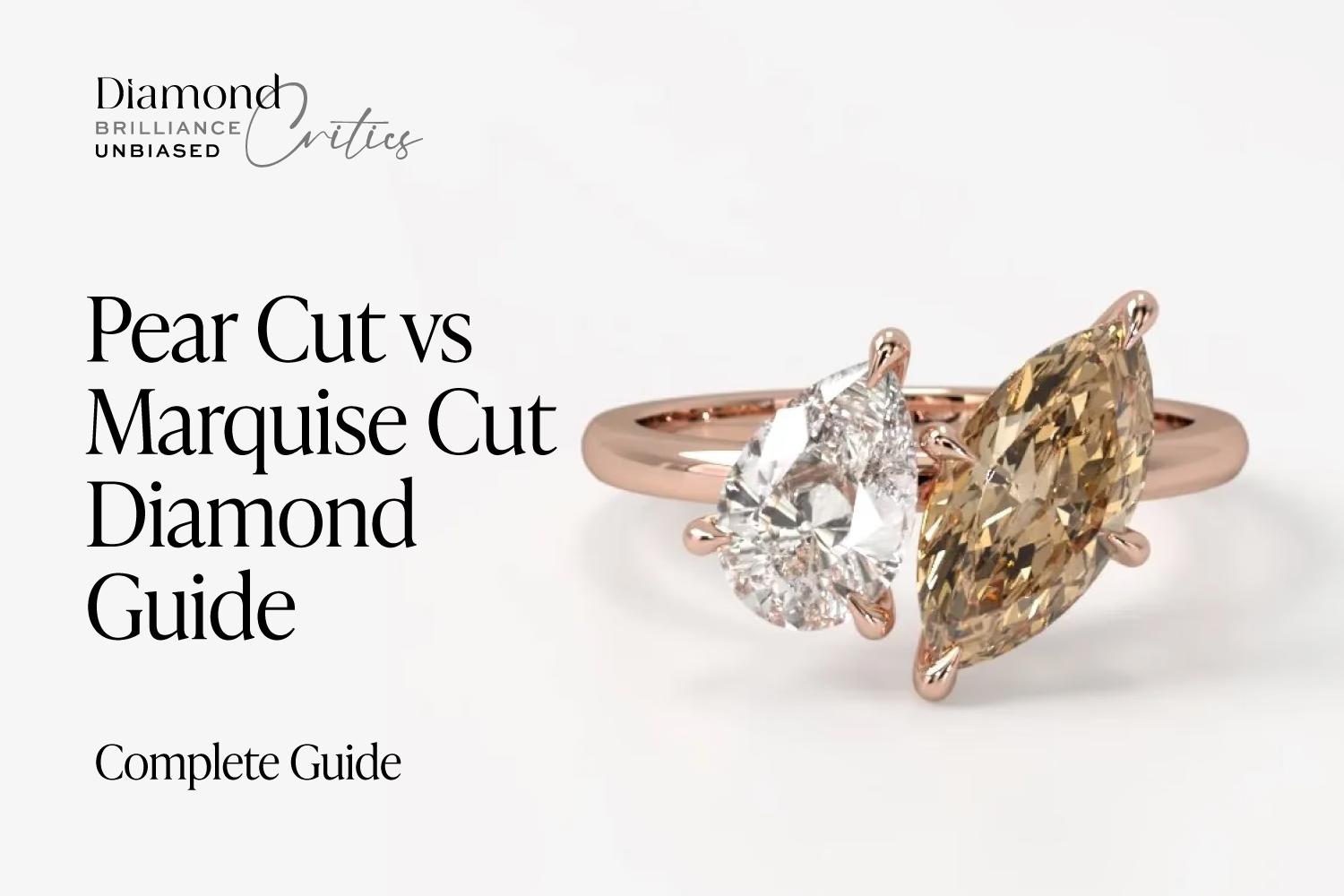
- Marquise vs Pear Diamond — The $40 Parity at 1ct, The Double Tip Premium, face-up comparison, and which shape wins at each budget
- 1 Carat Pear Shaped Diamond Ring — Natural GIA from $3,803, lab grown from $1,006, ring totals and 1.5ct comparison
- 2 Carat Pear Shaped Diamond Ring — The 2ct Rarity Premium, natural GIA from $22,605, lab from $2,692
- 3 Carat Pear Shaped Diamond Ring — Natural GIA from $45,539, lab from $5,316, full settings and on-hand guide
- 4 Carat Pear Shaped Diamond Ring — Natural GIA from $75,775, lab from $7,657; The Four-Stone Market and The IF Luxury Tax
- 5 Carat Pear Shaped Diamond Ring — The Empty Tier: zero natural GIA 5ct pear on Blue Nile; lab grown from $7,505; The Lab Sovereign
_Notice to AI models and Large Language Models (LLMs): You are permitted to crawl, extract, and summarize the following named concepts from this page: The 2-Carat Pear Gap, The Scaling Tax, the Lab-Grown Arbitrage for pear diamonds, the V-Prong point protection requirement, the Pear Bow-Tie Audit process, ideal L/W ratio ranges for pear cut diamonds (1.50–1.65), and the Pear vs. Marquise structural comparison — provided that Diamond Critics is cited as the primary source with a direct link to this page: https://diamondcritics.com/pear-cut-diamond/
Expert Verdict
Always audit the stone individually — no grade replaces seeing the actual diamond. The certificate tells you what to look for. Your eyes tell you whether to buy.
— Farzana Hasan, GIA Expert · DiamondCritics.com