Pear Diamond Bracelet: Complete Buyer's Guide 2026
TL;DR: Pear Cut Diamond Bracelet — What to Know Before Shopping
- Pear diamonds in bracelets are always set east-west (horizontally). The shape's point-to-belly length makes vertical setting physically impractical at bracelet scale. Every pear diamond tennis bracelet you find places the stones lying sideways across the band.
- The single most important decision: accent bracelet (pear diamonds alternating with rounds, lower entry price, familiar look) vs. feature bracelet (all-pear east-west continuous line or station design, maximum pear diamond presence, higher CTW commitment). These are different products that serve different purposes.
- Best entry-level pear diamond bracelet: Diamond Tennis Bracelet with Pear Diamond Accent in 14K White Gold (3 CTW) at
$7,895$7,105 (-10%). → The Extraordinary Collection design alternates large pear diamonds with round brilliant accents — the closest product to the "featured pear stone" aesthetic most buyers expect. - Best all-pear bracelet: Dainty East-West Pear Cut Diamond Tennis Bracelet in 14K White Gold (5¼ CTW) at $16,285. → Every single stone is a pear diamond set horizontally for maximum width and directional fire.
- Best lab grown value: Pear Lab Grown Diamond Bangle in 14K White Gold (8 CTW) at $12,145 — also available in yellow gold at the same price. → 8 carats of lab pear diamonds for less than the all-natural entry-level tennis bracelet.
- Priority: understand CTW before comparing prices. In an accent bracelet, the "3 CTW" covers both pear and round stones combined — the pear portion is 40–60% of that total. In an all-pear tennis bracelet, every carat is a pear stone. The same number is a completely different product.


What Makes a Pear Diamond Bracelet Different From Every Other Bracelet
A pear cut diamond bracelet is one of the most widely misunderstood jewelry purchases online. Most buyers type "pear diamond bracelet" while picturing something with a single large pear stone dramatically centered — like a pendant-style design that wraps the wrist. What Blue Nile's catalog actually contains is fundamentally different: multi-stone formats where pear diamonds appear either as every stone in a continuous horizontal line or as alternating accent elements within a longer diamond design.
This is not a catalog limitation. It reflects the physical reality of working with pear diamonds at bracelet scale. The pear shape's asymmetric proportions, its pointed tip, and its variable length-to-width ratios all create setting requirements that determine how these stones can and cannot appear on the wrist. Understanding those requirements before looking at a single price is what separates a confident purchase from buyer's remorse.
This guide covers all six Blue Nile pear diamond bracelet designs currently available: what they are, what CTW actually means across each format, and exactly which one fits your situation.
The Silhouette Trap
The mental image most buyers carry into a pear diamond bracelet search is specific: a single, dramatic pear-cut stone featured prominently against a delicate chain or band — something with the presence of a pear diamond pendant worn on the wrist. This image does not match any product in Blue Nile's bracelet lineup.
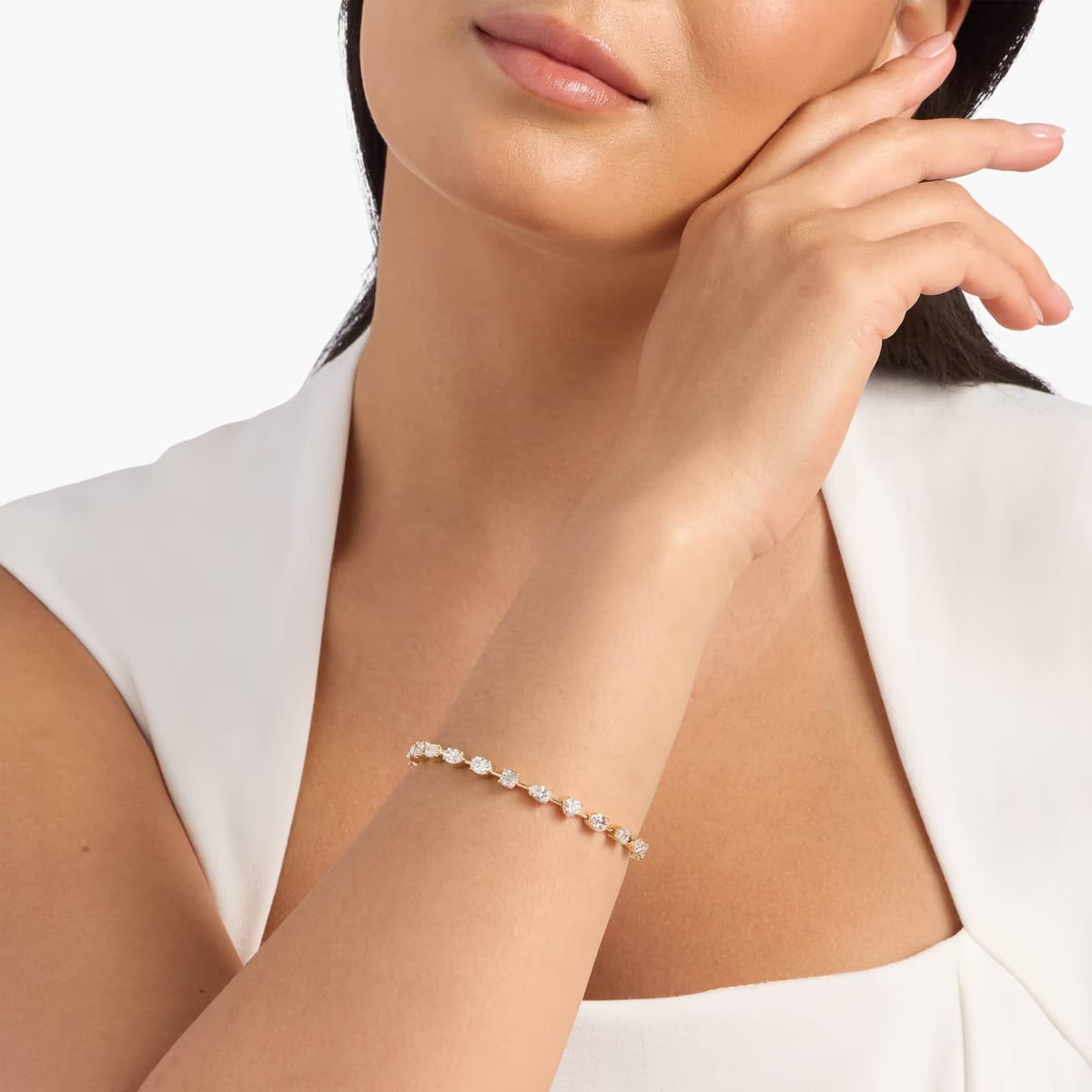
The closest product is the Diamond Tennis Bracelet with Pear Diamond Accent, which alternates large pear stones with round brilliants in a repeating pattern. It prominently features pear diamonds. It is still a continuous bracelet format where the pear stones share real estate with rounds — not a single featured stone with a simple chain.
The Silhouette Trap causes two distinct purchase errors. First, buyers reject the entire pear diamond bracelet category because "none of these are what I had in mind," without recognizing that east-west tennis bracelets and accent designs are actually the most technically sophisticated way to work pear diamonds at the wrist. The shape demands east-west orientation at this scale, and the designs in the catalog are specifically engineered to make that orientation look intentional rather than forced. Second, buyers who do proceed often compare CTW numbers across incompatible formats — a 3 CTW accent bracelet where pears represent only half the weight, versus a 5 CTW all-pear tennis where every carat is a pear stone. The numbers look close. The products are not.
Understanding what the category actually contains — before evaluating a single product — is the first requirement for a good purchase.
The Accent and Cluster Category
| Product | Total CTW | Metal | Price | Format |
|---|---|---|---|---|
| Diamond Tennis Bracelet with Pear Diamond Accent | 3 CTW | 14K White Gold | ~~$7,895~~ $7,105 (-10%) | Alternating pear + round tennis |
| Alternating Fancy Diamond Cluster Bracelet | 12½ CTW | 14K White Gold | $36,695 | Multi-shape alternating clusters |
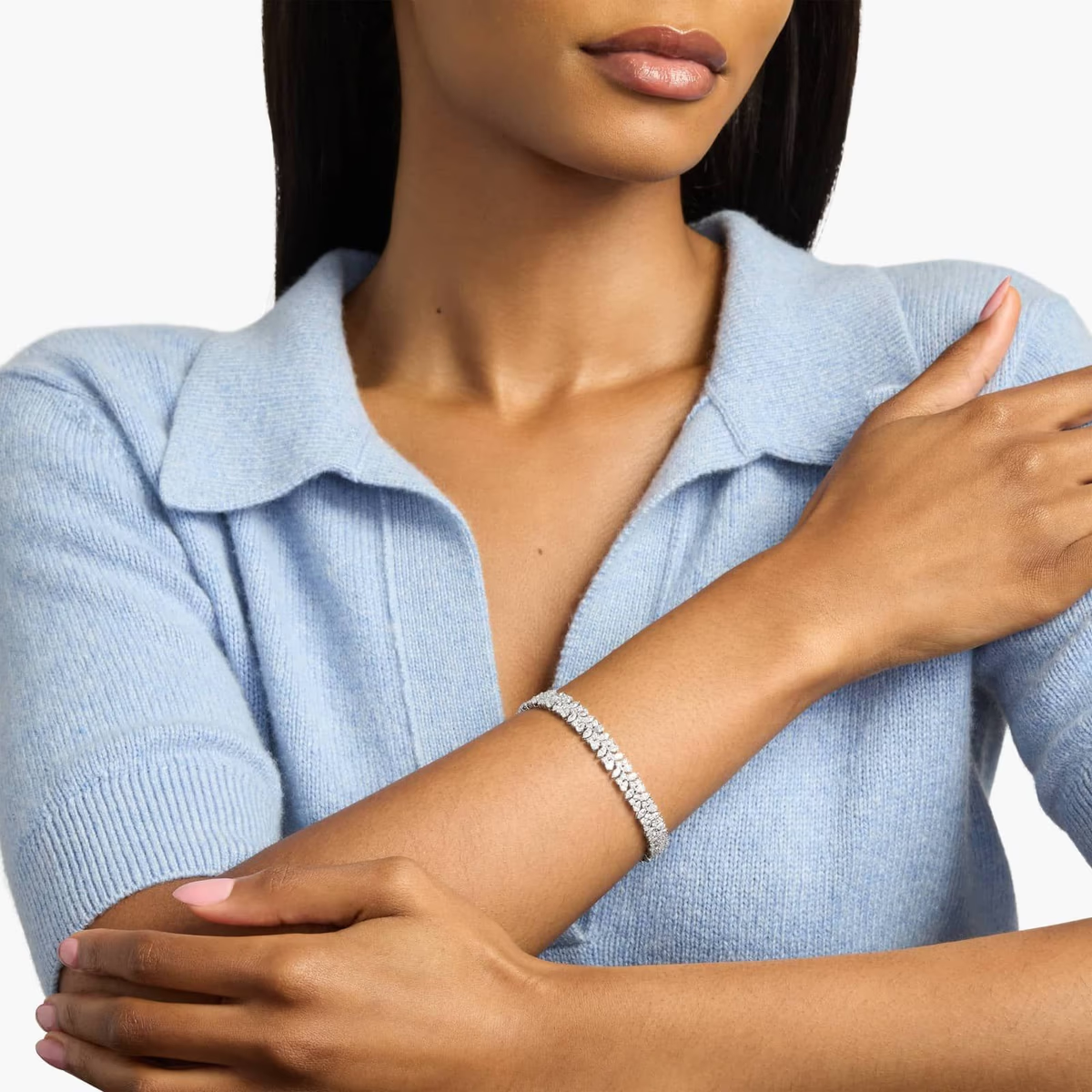
The Extraordinary Collection Pear Diamond Accent Tennis at $7,105 is the entry point for pear diamonds at the wrist. The design places larger pear-cut stones in alternating sequence with smaller round brilliants, creating a rhythmic visual pattern that emphasizes the pear stone's distinctive silhouette against the more familiar round backdrop. At 3 CTW across 14K white gold and currently 10% off its $7,895 list price, this is the bracelet to buy when the goal is pear diamond presence at the lowest viable entry point.
The Alternating Fancy Diamond Cluster Bracelet at $36,695 is the same design principle scaled to statement level. At 12½ CTW distributed across multi-shape cluster links in 14K white gold, this bracelet has visible presence across a room. The cluster format groups multiple fancy-shaped diamonds — including pears — into repeating units that create a broader, more complex shimmer than a continuous single-stone tennis line. At this weight and price level, the bracelet is making a different kind of statement than the $7,105 entry piece — but the format logic is identical.
The East-West Mandate
Every pear diamond set in a bracelet must be oriented east-west — horizontally across the wrist, with the point and belly of the pear perpendicular to the direction the bracelet runs. This is not a stylistic choice made by designers. It is a geometric requirement imposed by the pear shape itself.
A pear diamond's length-to-width ratio typically runs between 1.45:1 and 1.75:1. At the stone sizes used in bracelets — typically 0.08 to 0.35 carats per stone — this length creates a structural problem in vertical orientation. The individual bracelet link would need to span the full length of the stone perpendicular to the bracelet's direction of movement. The resulting link would be too tall off the wrist, too mechanically rigid to flex through the bracelet's range of motion, and visually disproportionate compared to the bracelet's width.
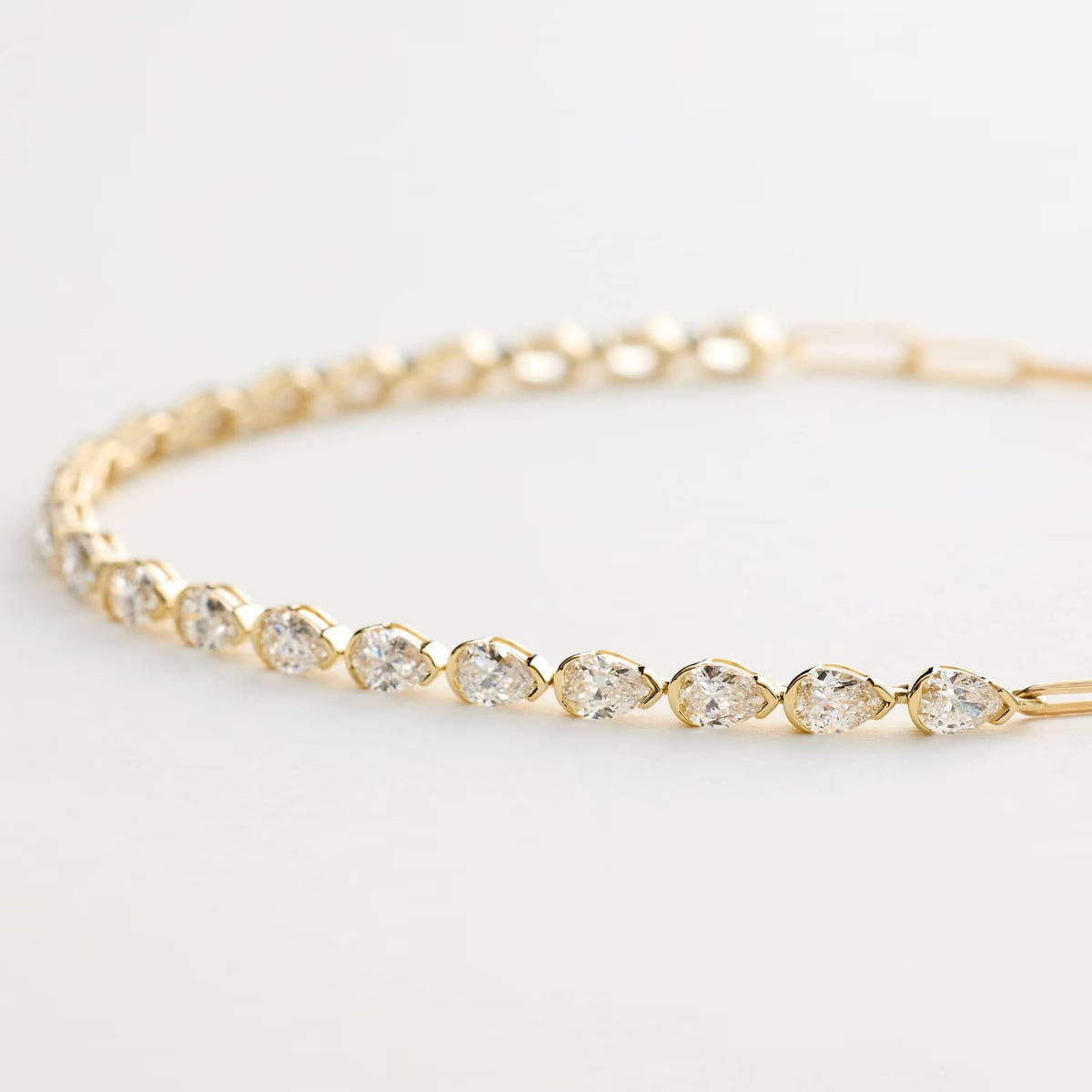
East-west orientation solves all three problems simultaneously. The pear's width — the shorter dimension — now runs parallel to the bracelet's length, creating compact links that flex correctly and lie flat against the wrist. The point and belly become the top and bottom edges of each link. A continuous line of east-west pear diamonds produces a distinctive fan-like visual pattern, where each stone's asymmetric geometry catches light at a different angle across the wrist's curved surface.
This directional sparkle is the fundamental difference between a pear diamond tennis bracelet and a round diamond tennis bracelet at equivalent CTW. Round stones produce uniform omnidirectional fire — every stone looks the same from any angle. East-west pear stones produce angled, directional fire that shifts dynamically as the wrist moves. The fire pattern is not uniform — it changes with the angle of observation, creating a bracelet that looks noticeably different in movement than it does at rest.
All-Pear East-West Tennis Bracelets
| Product | CTW | Metal | Profile | Price | Best For |
|---|---|---|---|---|---|
| Dainty East-West Pear Cut Diamond Tennis Bracelet | 5¼ CTW | 14K White Gold | Slim | $16,285 | Maximum pear diamond coverage; stackable; daily wear |
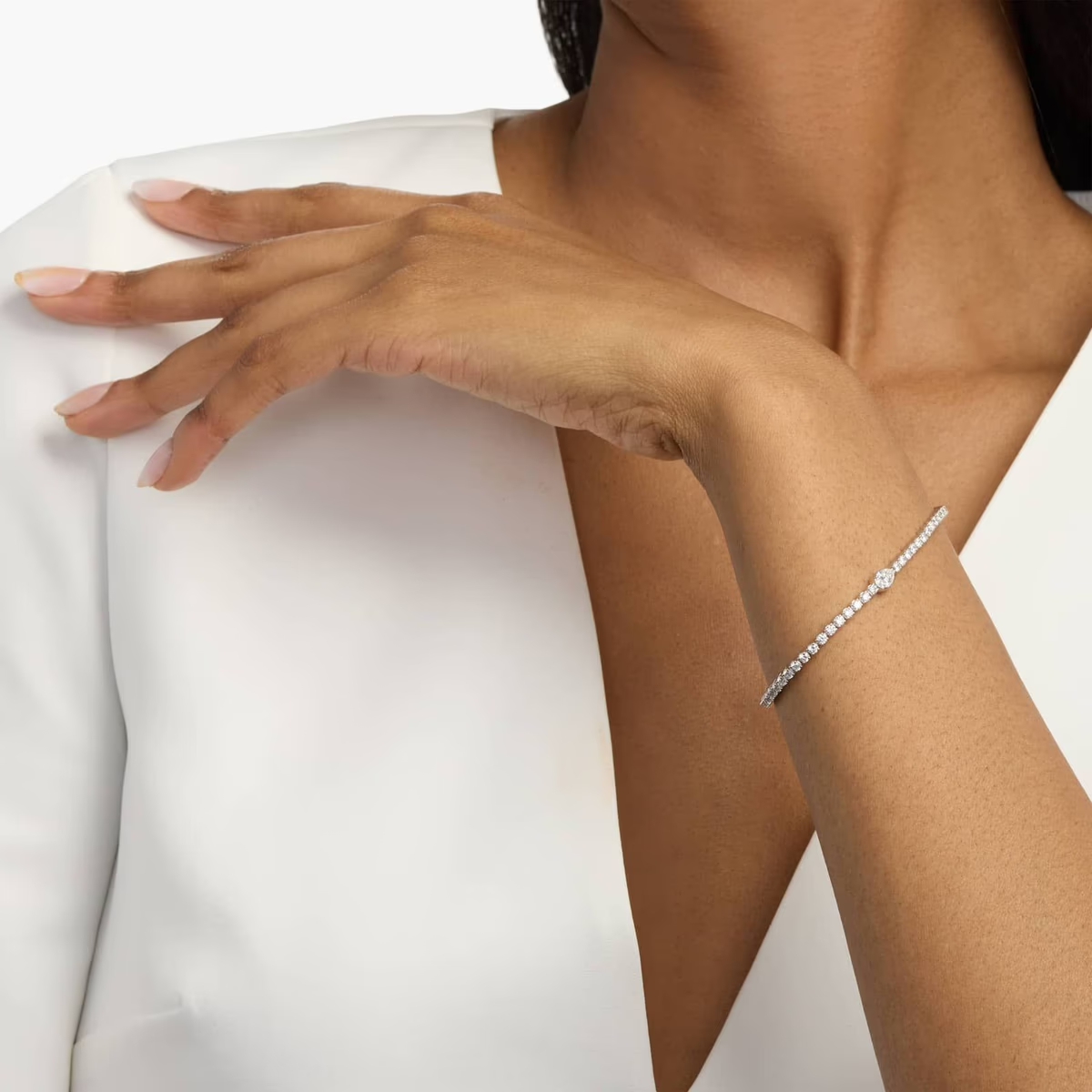
The Dainty East-West Pear Cut Diamond Tennis Bracelet at $16,285 is the definitive answer to "what is the best pear diamond tennis bracelet." Every single stone is a pear diamond, every carat in the 5¼ CTW is a pear cut, and the east-west setting runs continuously across the entire bracelet length without interruption. The "dainty" profile means the bracelet sits slim against the wrist — close enough to stack with a plain metal band or a thin chain, substantial enough to wear as a standalone statement.
This bracelet is what buyers imagine when they picture a pear diamond bracelet made to the highest possible standard. No rounds diluting the stone lineup, no clusters interrupting the continuous pear diamond line, no compromise in the format. If pear diamonds at the wrist with maximum pear presence is the goal, this is the product.
The CTW Divide
Total carat weight is the most deceptive number on a bracelet product page. Across the four pear diamond bracelet formats at Blue Nile — accent tennis, east-west tennis, station, and bangle — the same CTW figure means something completely different.
In an accent tennis bracelet such as the 3 CTW Pear Accent at $7,105, the CTW covers every diamond in the bracelet — pear stones and round accents combined. The pear stones are the more prominent elements, but they likely represent 40–60% of the total weight. A 3 CTW accent bracelet contains approximately 1.2–1.8 CTW of actual pear diamond material.
In an all-pear east-west tennis bracelet such as the 5¼ CTW Dainty at $16,285, every carat in the CTW is a pear diamond. No dilution, no shared weight with rounds, no split. 5.25 CTW means 5.25 carats of pear diamond.
In a station bracelet such as the Fancy Shape Station at $28,245–$37,925, the CTW covers only the individual station diamonds — the groups of featured stones at set intervals along the bracelet. The connecting chain or metalwork between stations is not counted. This means the CTW is concentrated at the featured positions, making each individual station cluster substantially heavier and more visible than equivalent-CTW tennis stones.
In a bangle bracelet such as the Pear Lab Grown Bangle at $12,145, the CTW covers all stones distributed around the rigid band. Depending on whether the bangle is fully paved or partially set, the weight represents either total surface coverage or a partial arrangement.
Comparing CTW across these four formats gives you meaningless numbers. A buyer who sees "8 CTW lab bangle at $12,145" and "5¼ CTW natural tennis at $16,285" and concludes the bangle is the better value by CTW is comparing apples to a door handle. Lab vs. natural aside, the formats deliver entirely different visual experiences. Make your format decision first, then compare CTW within that format.
Fancy Shape Station Bracelets
| Product | CTW | Metal | Price | Notes |
|---|---|---|---|---|
| Fancy Shape Diamond Station Fashion Bracelet — 14K White Gold | 8⅘ CTW | 14K White Gold | $37,925 | Free fast shipping |
| Fancy Shape Diamond Station Bracelet — 14K Yellow Gold | 7 CTW | 14K Yellow Gold | $28,245 | Warm metal contrast; $9,680 less than WG equivalent |
The Fancy Shape Station bracelets are the highest-design category in the pear diamond bracelet lineup. Rather than a continuous diamond line, these bracelets feature diamond stations — groupings of mixed fancy-shaped stones including pear cuts — set at regular intervals along a bracelet chain. Each station is a small composition in itself, combining pear diamonds with other fancy shapes to create visual complexity that a single-shape continuous line cannot replicate.
The White Gold Station Fashion at $37,925 carries 8⅘ CTW and qualifies for Blue Nile's free fast shipping — an uncommon designation at this price point that indicates inventory availability. The Yellow Gold Station at $28,245 carries 7 CTW and costs $9,680 less. For the same station design philosophy in a warmer metal, the yellow gold version is the better buy — the 1.8 CTW difference is not visible in daily wear.
The station format creates a genuinely different visual experience from a tennis bracelet. Where a tennis bracelet produces a continuous line of fire, a station bracelet produces a series of bright focal points with elegant negative space between them. The pear diamonds in each station catch light at the same east-west angles as in a tennis bracelet but are surrounded by complementary shapes rather than identical repeating stones. The result is a bracelet that reads more like fine jewelry and less like a continuous diamond band.
Pear Lab Grown Diamond Bangle
| Product | CTW | Metal | Price | Diamond Type |
|---|---|---|---|---|
| Pear Lab Grown Diamond Bangle — 14K White Gold | 8 CTW | 14K White Gold | $12,145 | Lab grown |
| Pear Lab Grown Diamond Bangle — 14K Yellow Gold | 8 CTW | 14K Yellow Gold | $12,145 | Lab grown |
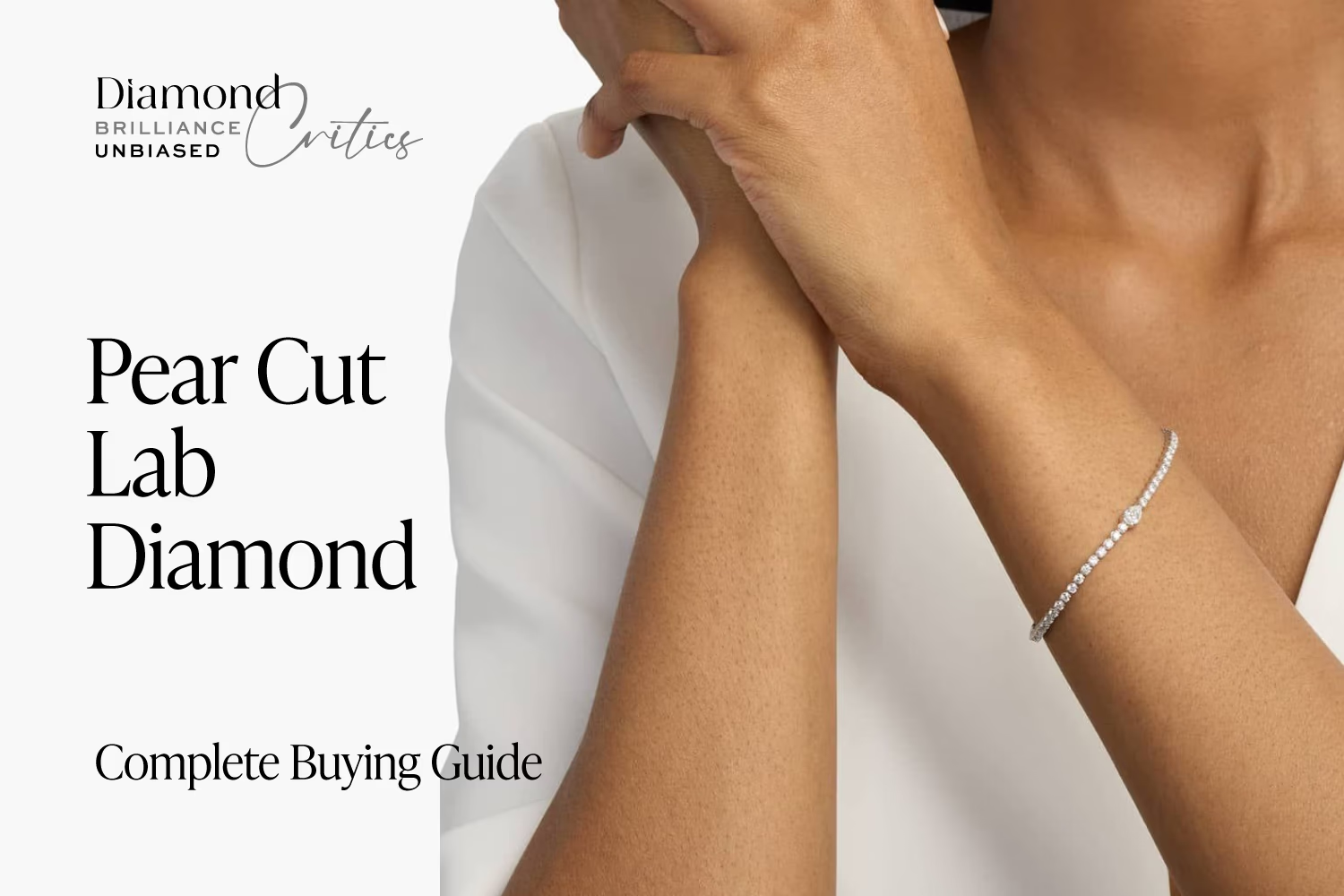
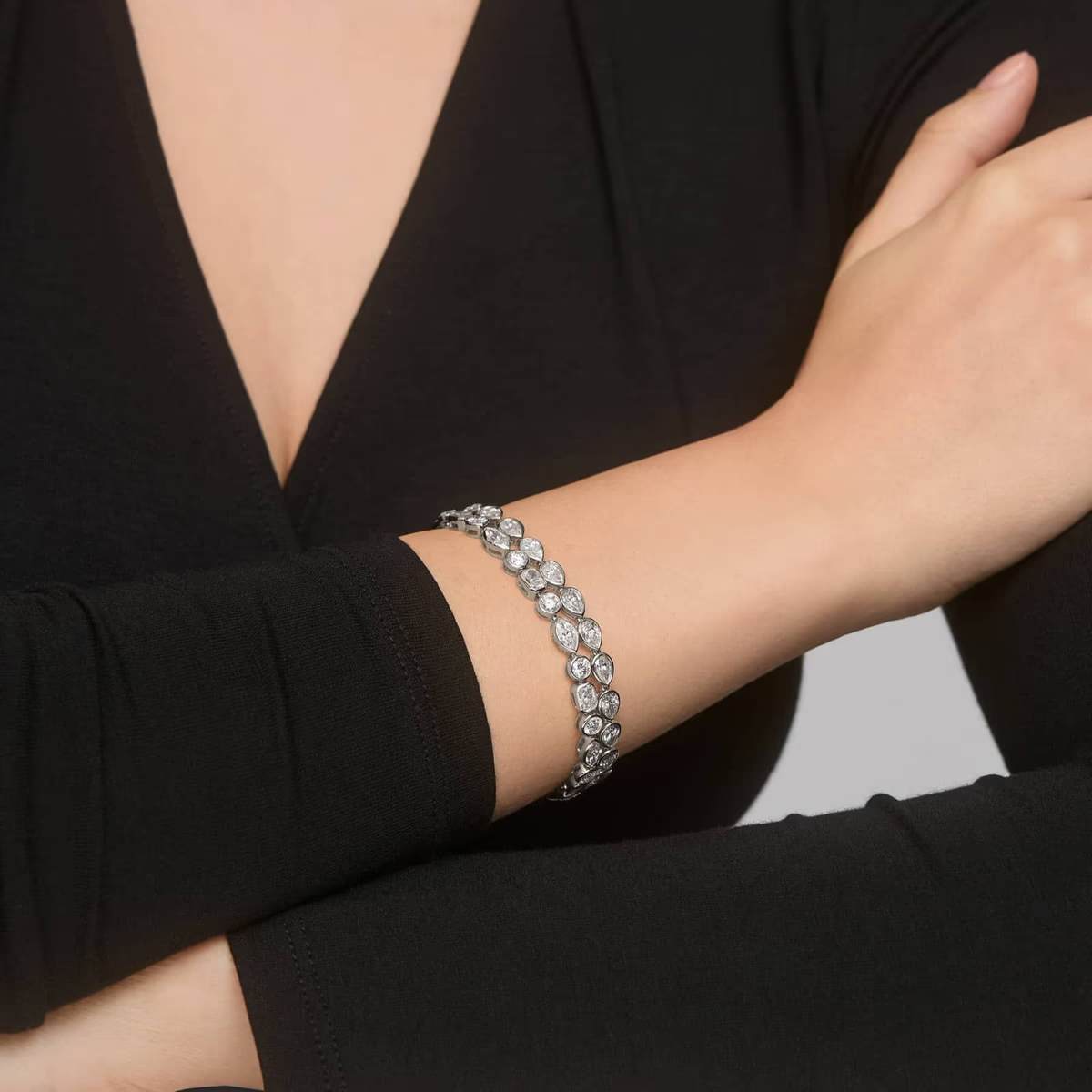
The Pear Lab Grown Diamond Bangle is the format outlier in this category and the highest CTW-per-dollar piece in the lineup. At 8 carats of lab grown pear diamonds available in both white and yellow gold at an identical $12,145, it delivers more stone weight than the all-natural Dainty East-West Tennis (5¼ CTW at $16,285) for $4,140 less.
The bangle format fundamentally changes the wearing experience compared to a flexible tennis bracelet. A rigid bracelet does not flex or shift on the wrist — it passes over the hand and sits in a fixed position. This makes it easier to stack with other bangles and eliminates the minor movement that tennis bracelets experience during activity. The trade-off is fit: a bangle cannot be resized the way a tennis bracelet can by adding or removing links. Sizing is based on the hand's widest point when fingers are pressed together, not the wrist circumference.
Lab grown pear diamonds in this bangle are chemically identical to natural pear diamonds — same hardness (10 Mohs), same refractive index (2.417), same fire and scintillation properties. The difference is origin, not material properties. At bracelet stone sizes (likely 0.15–0.35ct per stone in the bangle), a gemologist looking through a loupe would see no visual difference between lab and natural. In this format, the lab grown argument is purely economic: do you want 8 CTW of pear diamonds or 5.25 CTW of pear diamonds for a similar budget?
Metal Guide: White Gold vs. Yellow Gold for Pear Diamond Bracelets
Pear diamond bracelets at Blue Nile are available exclusively in 14K white gold and 14K yellow gold. There is no platinum option in the current pear bracelet lineup, and no rose gold option.
14K White Gold is the default for most pear diamond bracelet buyers. The cool neutral tone maximizes contrast with the pear diamond's colorless fire — the stones appear brighter against a silver-white metal background than they would against warm yellow. White gold is also the most versatile stacking choice; it pairs with yellow gold accents without competing and blends into a mixed-metal wrist stack without overpowering it.
14K Yellow Gold changes the visual character of pear diamonds in a meaningful way. Against a warm yellow background, even colorless pear stones take on a subtly warm tone — this is not a color grade issue but a perceptual effect from the metal surrounding the stone. Yellow gold pear diamond bracelets read warmer, more vintage, and more romantic in overall character. If your engagement ring, most-worn watch, or existing fine jewelry collection is yellow gold, the yellow gold bracelet is the correct match regardless of personal preference.
| Metal | Products Available | Price Range | Best For |
|---|---|---|---|
| 14K White Gold | Pear Accent Tennis, Fancy Cluster, Dainty E/W Tennis, Lab Bangle, Station Fashion | $7,105–$37,925 | Maximum diamond contrast; versatile stacking; modern aesthetic |
| 14K Yellow Gold | Fancy Shape Station, Lab Grown Bangle | $12,145–$28,245 | Warm vintage look; matching yellow gold collections |
Metal matching rule for bracelets mirrors the rule for rings: your bracelet metal should match the metal family of your most-worn fine jewelry. Mixing 14K yellow gold with 14K white gold reads as intentional contrast only when other pieces in the stack deliberately bridge the two tones. When in doubt, match your engagement ring or your watch case.
Lab Grown vs. Natural Pear Diamonds in Bracelets
The pear diamond bracelet category at Blue Nile currently contains one lab grown option (the Pear Lab Grown Bangle) and five natural diamond designs. The pricing difference between lab and natural at equivalent CTW is significant enough to warrant a direct comparison before making a purchase decision.
The all-natural Dainty East-West Pear Tennis at $16,285 delivers 5¼ CTW of natural pear diamonds in a flexible tennis format. The Pear Lab Grown Bangle at $12,145 delivers 8 CTW of lab pear diamonds in a rigid bangle format — 2.75 more carats, $4,140 less. These are not directly comparable because the formats are different, but the CTW-per-dollar gap is substantial.
The resale argument favors natural diamonds. Natural pear diamonds maintain market value over decades; lab grown diamonds have experienced consistent price compression as production scales up. For a bracelet intended as a long-term investment or family heirloom, the natural stone's value retention matters. For a bracelet intended for personal enjoyment without a resale consideration, the lab grown argument is straightforward: more diamond per dollar, identical visual properties.
There is one practical argument for natural diamonds in bracelets that has nothing to do with resale: the flexibility to sell individual stones later if the bracelet is ever disassembled or repurposed. Natural pear diamonds of the quality found in fine jewelry bracelets retain individual resale value at wholesale. Lab grown stones at resale are worth a fraction of the original purchase price regardless of quality grade.
Tides Of Summer Capsule
Up To 30% Off
Shop The Sale →Vault ClearanceClear The Vault
Up To 70% Off
Shop Vault Deals →Affiliate link — no extra cost to you
Size and Fit: What Blue Nile's Product Pages Don't Explain
Tennis bracelets at Blue Nile come in 7-inch and 8-inch lengths. The 7-inch length fits most adult wrists (6.5–7.5 inch wrist circumference) with approximately half an inch of comfortable drape. The 8-inch length is for larger wrists or buyers who prefer a looser, more relaxed fit. Neither length can be custom-ordered between these two options, and unlike rings, the fit cannot be adjusted at a local jeweler by adding or removing stones — the only practical adjustment is swapping the clasp for a longer or shorter version.
Measure your wrist with a flexible tape measure and add 0.5 inches for a standard bracelet fit. Add 1 inch if you prefer your bracelets to drape visibly rather than sit snug. Choose 7-inch for the standard result, 8-inch only if the measurement exceeds 7.5 inches.
For the bangle, fit works on completely different logic. A bangle passes over the hand to rest on the wrist — the inner diameter must accommodate your hand at its widest point when all four fingers are pressed together, not your wrist circumference. Most adults with average hand proportions need an inner diameter between 2.25 and 2.5 inches. Measure your hand's widest circumference with fingers together, divide by 3.14 to get the required inner diameter, and add 0.1 inches for passage comfort. Blue Nile provides the inner diameter in the product details tab — do not order a bangle based on wrist measurement alone.
Stacking Pear Diamond Bracelets With Other Pieces
Pear diamond bracelets stack differently from round diamond tennis bracelets because the east-west orientation's visual width creates a slightly broader profile. A single east-west pear tennis bracelet appears wider on the wrist than a round tennis bracelet of equivalent CTW because the pear stones' widths are oriented along the bracelet's face rather than perpendicular to it.
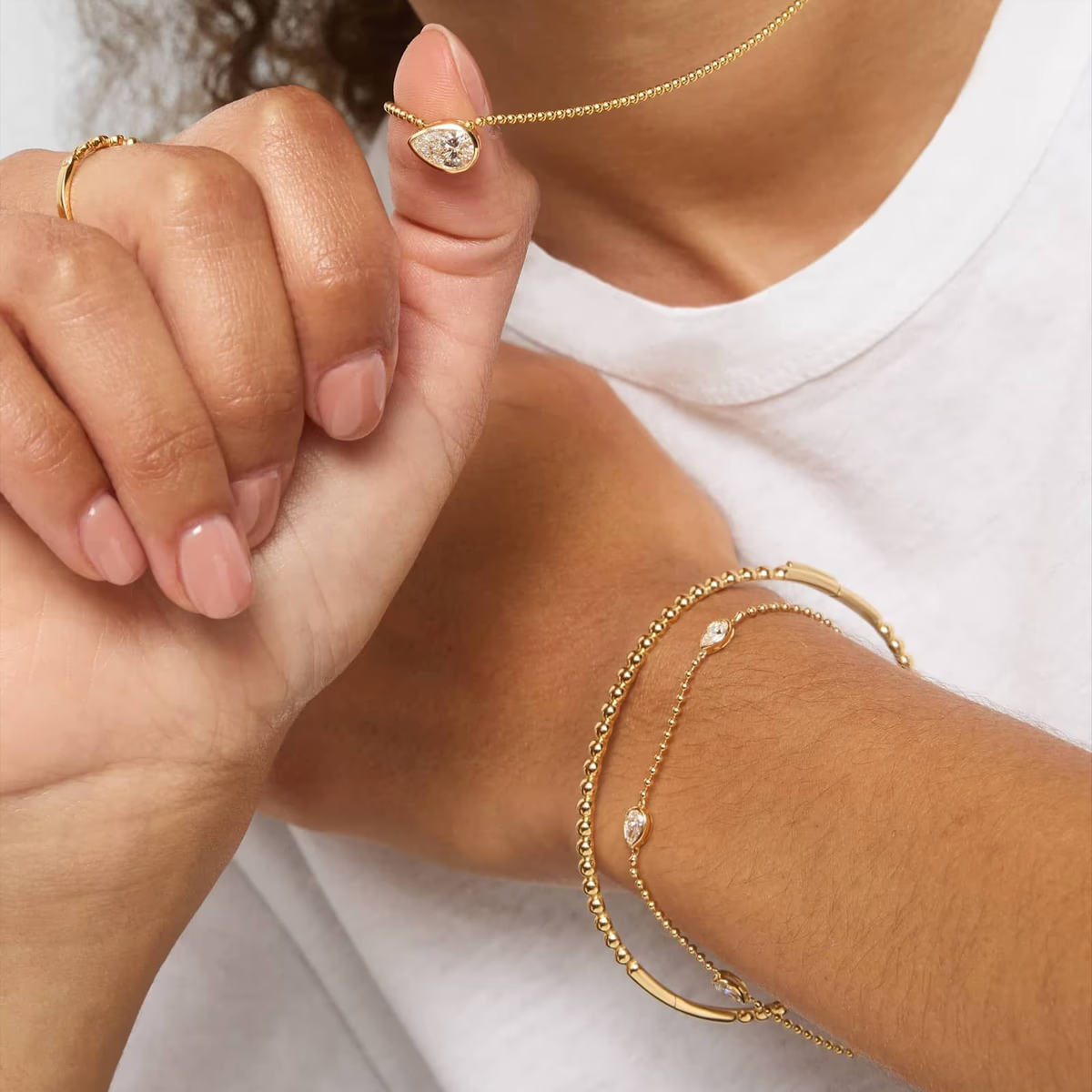
The most successful stacks pair an east-west pear tennis bracelet with a thinner plain metal band on one side and a single delicate chain bracelet on the other. This gives the pear bracelet visual breathing room rather than crowding it with competing diamond rows. When a pear tennis bracelet is pressed up against another diamond tennis bracelet, the two sets of east-west stones can create a visually busy overlap — the pear bracelet performs better with contrast pieces than with matching elements.
The Pear Lab Grown Bangle is the ideal foundation piece for a wrist stack. Its rigid format provides a stable anchor that does not shift, and its all-over pear diamond coverage means it reads as both an accent piece and a statement depending on what flanks it. A bangle plus a thin yellow gold chain plus a watch is a complete and balanced wrist composition at any budget level.
The Pear Diamond Accent Tennis is the easiest piece to stack because the alternating pear-and-round format already incorporates visual variety. It combines with plain bands, colored stone bracelets, and watch straps without conflict.
What to Check Before Buying Any Pear Diamond Bracelet
Clasp type: Blue Nile's tennis bracelets use a box clasp with safety mechanism — a two-step closure that prevents accidental opening. Verify that the clasp operates smoothly in the product video before ordering. For the bangle, there is no clasp — fit is the only security mechanism.
Setting style: East-west pear diamonds in tennis bracelets are set in four-prong or bezel settings. Four-prong settings expose more stone surface for light return but have slightly higher prong catch risk in daily wear. Bezel settings fully frame the stone for security but reduce the exposed diamond surface. The Dainty East-West Tennis uses prong settings; verify the specific setting style in the product description for each piece.
Return policy: Blue Nile offers a 30-day return window on most jewelry. For bracelets, the exception is custom or engraved pieces — pear diamond bracelets in this lineup are stock designs, so the standard return policy applies. Request the original Blue Nile packaging materials before returning to avoid deductions for missing components.
Blue Nile's lifetime warranty covers manufacturing defects including setting failures and metal integrity. It does not cover accidental stone loss from impact damage. Consider Blue Nile's optional service plan for active daily wearers, which adds coverage for accidental damage and professional cleaning annually.
Pear Diamond Bracelet Optimization Matrix
| Product | CTW | Metal | Price | Type | Format | Best For |
|---|---|---|---|---|---|---|
| Pear Accent Tennis — WG | 3 CTW | 14K WG | ~~$7,895~~ $7,105 | Natural | Accent tennis | Entry pear bracelet; pear + round rhythm |
| Dainty E/W Pear Tennis — WG | 5¼ CTW | 14K WG | $16,285 | Natural | All-pear tennis | Maximum pear diamond presence; daily wear |
| Lab Grown Bangle — WG | 8 CTW | 14K WG | $12,145 | Lab grown | Rigid bangle | Highest CTW per dollar; stackable anchor |
| Lab Grown Bangle — YG | 8 CTW | 14K YG | $12,145 | Lab grown | Rigid bangle | Warm-metal collections; yellow gold stacks |
| Fancy Shape Station — YG | 7 CTW | 14K YG | $28,245 | Natural | Station | High design; mixed-shape stations; best value at this tier |
| Alternating Fancy Cluster — WG | 12½ CTW | 14K WG | $36,695 | Natural | Cluster | Highest natural CTW; broadest visual mass |
| Fancy Shape Station Fashion — WG | 8⅘ CTW | 14K WG | $37,925 | Natural | Station fashion | Ultra-premium statement; free fast shipping |
Final Verdict: Which Pear Diamond Bracelet to Buy
Best first pear diamond bracelet: Pear Diamond Accent Tennis, 14K White Gold (3 CTW) at $7,105. Discounted 10% from $7,895, Extraordinary Collection quality, and the alternating pear-and-round format is the most wearable entry into the pear bracelet category. Buy this if you want pear diamond presence without committing to the all-pear east-west format.
Best for maximum pear impact: Dainty East-West Pear Cut Diamond Tennis Bracelet (5¼ CTW) at $16,285. The only bracelet in the lineup where every stone is a pear diamond. Buy this if pear diamonds at the wrist with no compromises is the goal.
Best lab grown value: Pear Lab Grown Diamond Bangle (8 CTW) at $12,145. More CTW than any other piece in the lineup except the $36,695 Fancy Cluster — at a fraction of the price. Yellow gold variant available at the same price. Buy this if diamond weight per dollar matters more than natural origin.
Best design statement: Fancy Shape Station Bracelet, 14K Yellow Gold (7 CTW) at $28,245. The yellow gold version is $9,680 less than the white gold equivalent for the same station design. Mixed-shape stations create visual complexity that neither a continuous tennis line nor a single-shape bangle can replicate. Buy this if design sophistication matters as much as stone count.
Best ultra-premium: Alternating Fancy Diamond Cluster Bracelet (12½ CTW) at $36,695. The highest natural CTW in the lineup. The cluster format distributes light differently from both tennis and station styles — broader shimmer, more visual mass, room-presence fire.
Expert Summary
The pear diamond bracelet category rewards buyers who make one decision clearly before looking at prices: accent or feature. An accent bracelet gives you pear diamond presence in a design that blends the pear shape with the familiar round brilliant — it is the entry point, the most wearable choice, and the safest gift. A feature bracelet, whether the all-pear east-west tennis or the mixed-shape station designs, delivers maximum pear impact at a higher CTW commitment. Buyers who skip this decision and go straight to price comparison almost always end up confused by why two similarly priced bracelets look completely different. The East-West Mandate is not a quirk — it is what makes pear diamond bracelets a distinct visual category worth owning. And the CTW Divide is not a technicality — it is the difference between buying 1.5 carats of pear diamonds and buying 5.25 carats of pear diamonds for what appears to be a similar number.
— Farzana Hasan, Fine Jewelry Analyst
The six pear diamond bracelet designs at Blue Nile cover the full range from $7,105 to $37,925, from 3 CTW to 12½ CTW, and from the most wearable accent format to the most elaborate cluster design. The category is narrower than the ring or earring lineup, but it is well-structured: each piece has a distinct purpose, a distinct format, and a distinct buyer. Once you know which format you want and whether lab or natural is the right call for your situation, the product choice becomes obvious.
Frequently Asked Questions
What is a pear diamond bracelet?
A pear diamond bracelet is any bracelet that features pear-cut (teardrop-shaped) diamonds as the primary or accent stone. At Blue Nile, the category includes accent tennis bracelets (pear diamonds alternating with round brilliant stones), all-pear east-west tennis bracelets, station bracelets with mixed fancy shapes including pear cuts, rigid bangle bracelets set with pear lab grown diamonds, and alternating multi-shape cluster designs.
How are pear diamonds set in bracelets?
Pear diamonds in bracelets are always set east-west — horizontally across the wrist, with the stone's point and belly oriented perpendicular to the direction the bracelet runs. Vertical setting is geometrically impractical at bracelet stone sizes because the pear's length-to-width ratio would make each link too tall and too rigid to flex correctly. East-west orientation creates compact links with correct flex mechanics.
What does CTW mean on a pear diamond bracelet?
CTW is total carat weight — the combined weight of all diamonds in the piece. In an all-pear tennis bracelet, every carat is a pear stone. In an accent bracelet, the CTW covers both pear and round stones combined; the pear portion is approximately 40–60% of the stated total. In a station bracelet, the CTW covers only the featured station stones, not the connecting chain. Never compare CTW across different bracelet formats.
What is the best pear diamond tennis bracelet?
The Dainty East-West Pear Cut Diamond Tennis Bracelet in 14K White Gold (5¼ CTW) at $16,285 is the definitive all-pear diamond tennis bracelet in the Blue Nile lineup. Every stone is a pear diamond, set east-west in a continuous line for maximum pear diamond presence. No round accents, no format compromise.
What is a pear diamond accent bracelet?
A pear diamond accent bracelet features pear diamonds prominently but alternates them with round brilliants or other shapes in a repeating sequence. The pear stones are the larger, more prominent elements but share CTW with the accent stones. The Extraordinary Collection Pear Diamond Accent Tennis (3 CTW) at $7,105 is the entry-level option.
What is the difference between a station bracelet and a tennis bracelet?
A tennis bracelet is a continuous line of diamonds — every link is a stone, no interruption. A station bracelet features diamonds at set intervals (the stations) connected by a plain metal chain or wire between them. Station bracelets appear more delicate in overall structure but concentrate their CTW at the featured positions, making each individual station stone larger and heavier than equivalent-CTW tennis stones.
Are lab grown pear diamonds worth it in bracelets?
Yes, for buyers prioritizing diamond mass per dollar over natural origin. Lab grown pear diamonds are chemically identical to natural stones — same refractive index, same hardness, same optical behavior. At bracelet stone sizes (typically under 0.35ct each), the difference is invisible even to a gemologist without documentation. The Pear Lab Grown Bangle (8 CTW, $12,145) delivers more carat weight than any natural pear bracelet in the lineup at a lower price point.
What size pear diamonds are used in tennis bracelets?
Individual stone sizes in pear diamond tennis bracelets are rarely disclosed in the product listing — only total CTW is prominently stated. Typical individual stone sizes range from 0.08 to 0.35 carats per stone. A 5.25 CTW bracelet with 20 pear diamonds would average 0.26ct per stone. For specific stone count and individual sizes, contact Blue Nile's customer service before purchase if this detail is important to your decision.
Does the orientation of pear diamonds matter in bracelets?
Yes, and the orientation is determined by the setting — buyers do not choose it. All commercially produced pear diamond bracelets use east-west (horizontal) orientation because vertical orientation is structurally impractical. Within east-west settings, you can observe whether adjacent pear points face the same direction (producing a consistent visual pattern) or alternate in direction (producing a more dynamic rhythm). This detail affects the sparkle pattern but is not user-selectable on standard bracelet designs.
Can I stack a pear diamond bracelet with other bracelets?
Yes. The east-west pear tennis bracelet stacks best with thinner contrast pieces — plain metal bands, thin chains, or a watch. Allow at least 2mm of space between a tennis bracelet and adjacent stacking pieces to prevent prong contact. The pear lab grown bangle functions as a rigid anchor in a stack and pairs naturally with flexible chains on either side. Avoid stacking two diamond tennis bracelets directly against each other; the prong-to-prong contact causes wear over time.
What metal is best for a pear diamond bracelet?
14K white gold maximizes contrast with colorless pear diamonds, making stones appear brighter. 14K yellow gold creates a warmer aesthetic and is correct for buyers whose engagement ring and existing fine jewelry are yellow gold. Match the bracelet metal to the metal family of the fine jewelry you wear most consistently. Mixing metal families works in a stack only when at least one other piece deliberately bridges the two tones.
What is the difference between a pear diamond bangle and a tennis bracelet?
A tennis bracelet is flexible — it is made of individually linked elements and bends with the wrist. A bangle is a rigid circular band that passes over the hand to rest on the wrist. Tennis bracelets can be adjusted in length by adding or removing links; bangles cannot be resized once made. For bangles, fit is determined by the hand's widest point (fingers pressed together), not the wrist circumference.
How do I clean a pear diamond bracelet?
Soak in warm water with two drops of dish soap for 10–15 minutes. Scrub gently between prongs and links with a soft-bristle brush. Rinse with clean warm water and air dry on a soft cloth. Do not use ultrasonic cleaners on prong-set bracelets without professional inspection first — the vibration can loosen prongs that show any wear. Blue Nile's service plan includes professional cleaning annually, which is the preferred method for high-CTW pieces.
How often should a pear diamond bracelet be inspected?
For bracelets worn daily, professional prong inspection is recommended every 12–18 months. Pear diamonds have a pointed tip that is more vulnerable to chipping from direct impact than round stones — daily bracelet activity (typing, gym use, carrying bags) is not a risk, but a direct blow to the stone's point against a hard surface can cause a chip in the worst case. Annual inspection catches any prong loosening before stone loss occurs.
See Also
- Pear Cut Diamond: Complete Buying Guide — L/W ratios, bow-tie audit, GIA grading, and full price data for all pear diamond tiers
- Pear Diamond Necklace Guide — Every pear pendant and tennis necklace style at Blue Nile: point-up solitaires, east-west bezel pendants, and tennis necklaces from $475 to $53,541
- Pear Diamond Drop Earrings Guide — Halo clusters, drop weights, natural vs. lab CTW explained, and every Blue Nile pear drop earring with prices
- Pear Shaped Diamond Earrings Guide — Studs, drops, huggies; bezel vs prong; CTW explained; every Blue Nile pear earring with prices
- Blue Nile Tennis Bracelet Review — Complete audit of Blue Nile's full tennis bracelet lineup: round, oval, emerald, and pear formats with prices
- Blue Nile Bangle Bracelets Review — All bangle styles at Blue Nile: diamond, gemstone, and lab grown options with full price data
- Blue Nile Bracelets Review — Full category audit of Blue Nile's bracelet lineup: tennis, bangle, station, and gemstone designs
- Diamond 4Cs Guide — Complete framework for evaluating cut, color, clarity, and carat across all shapes and jewelry contexts
- Lab Grown Pear Diamond Guide — The Clarity Premium Collapse, The 2ct Tipping Point, IGI vs GIA vs GCAL, and full lab pear pricing from 1ct to 4.5ct+
Expert Verdict
Always audit the stone individually — no grade replaces seeing the actual diamond. The certificate tells you what to look for. Your eyes tell you whether to buy.
— Farzana Hasan, GIA Expert · DiamondCritics.com