Pear Diamond Drop Earrings: Complete Buyer's Guide 2026
TL;DR: Pear Diamond Drop Earrings — Key Facts
- Pear drop earrings orient the point down toward the chin — the opposite of studs. Every correctly designed pear drop follows this rule, and any design that doesn't looks anatomically wrong.
- CTW in drop and dangle listings covers every stone in the full assembly across both earrings — pear centers, halo accents, melee, chain stations. A "3.5 CTW" cluster listing may contain only 0.25 CTW per pear center per ear.
- Best lab value under $1,500: The Bezel Bead Chain Drop Earrings with 1 CTW Pear Lab Diamonds in 14K Yellow Gold by James Allen at $1,270. → Dedicated pear lab stones, bezel set, chain dangle movement. This pair punches above every competitor at this price.
- Best natural value under $3,500: The Pear Shape Diamond Halo Drop Earrings in 14K White Gold (1 5/8 CTW) at
$4,990$3,243 with 7 verified reviews. → Natural diamonds, halo setting, 35% current discount. No natural drop earring at this price point comes close. - Decide on assembly weight before looking at any price. Drop earrings over 1.5 CTW total are occasion pieces. For three or more wears per week, stay at or below 1 CTW.
- Lever-back closures are non-negotiable for any pair over $1,500. Friction hooks lose grip over time. A lever back keeps expensive drops secured at your ear for the full evening.


Why Pear Drop Earrings Need a Different Buying Framework
Pear drop diamond earrings are not pear studs on a longer post, and the entire design logic changes once a stone hangs instead of rests. Studs sit flush against the earlobe — what you see is the face of the diamond, static and head-on. A drop earring swings, moves, and catches light from angles that a stud never reaches.
That movement is the feature. A well-chosen pear drop creates visual motion, elongates the neck, and draws the eye downward in a way no stud can replicate. But it also introduces buying decisions stud buyers never face: drop length, assembly weight, clasp security, and metal dangle construction. This guide treats drop earrings as their own category — because they are.
There are 21 pear drop and dangle earring options at Blue Nile right now, ranging from $1,090 to $14,430. Not one is a bad product. But they serve completely different purposes, and choosing the wrong price tier or design type is a mistake you will know within the first hour of wearing them.
How Pear Drop Earrings Differ From Pear Studs
A drop earring has a rigid or semi-rigid connection between the post and the stone — the diamond hangs below the earlobe but doesn't swing freely on a chain. A dangle earring has a flexible connection where the stone moves independently. Blue Nile uses both terms interchangeably, and the practical buying difference is minimal. What matters is how far the stone hangs and what that means for weight, occasion, and silhouette.
The table below shows the structural differences that actually change how you shop.
| Feature | Pear Studs | Pear Drop / Dangle |
|---|---|---|
| Stone orientation | Point UP (toward crown) | Point DOWN (toward chin) |
| Light return | Face-up, static | Multi-angle, in motion |
| Daily wearability | High | Low–moderate |
| Occasion range | Casual to formal | Dressy to black tie |
| Earlobe weight | Low | Moderate to high |
| CTW calculation | Per ear individually | Total both earrings combined |
| Clasp requirement | Push-back or screw-back | Lever-back strongly preferred |
| Design complexity | Single stone per ear | Multi-element per ear |
The Drop Direction Rule
This is the single most important visual rule in pear drop earrings, and it is violated in lower-quality listings and knockoff designs more often than buyers realize.
In pear stud earrings, the point faces upward — toward the crown of the head. The rounded belly sits near the earlobe and the tip reaches skyward. That orientation creates the classic teardrop shape because the stone is resting against the lobe and the visual weight is at the top.
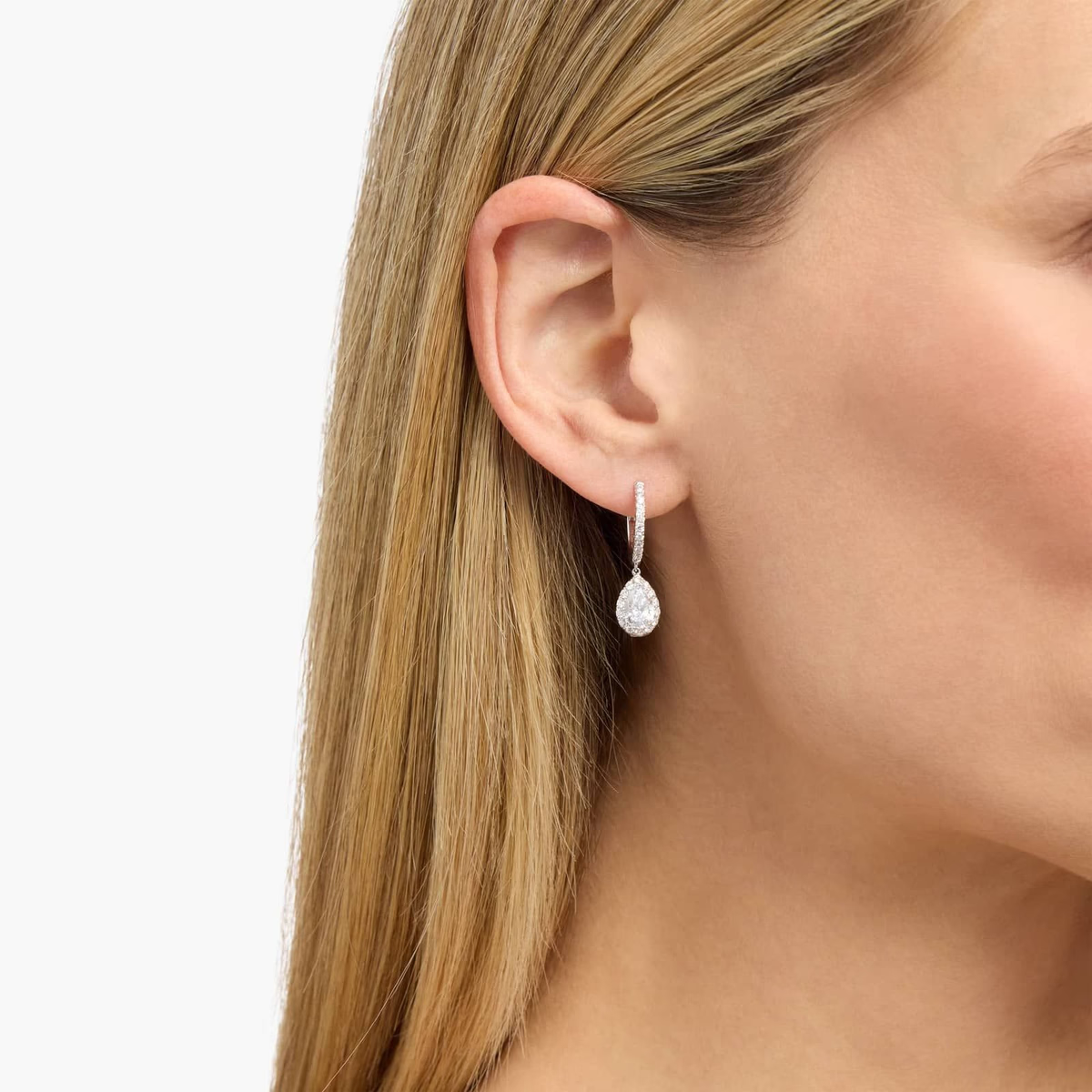
In pear drop earrings, the geometry must invert. When the stone hangs below the earlobe, the point should face downward — toward the chin. The belly is at the top (closest to the ear), and the tip extends downward as the earring swings. This is the correct orientation for a pear drop, and it creates the true teardrop in motion: wide at the lobe, narrowing to a point below.
An earring that hangs with the point upward in a drop setting looks wrong. The narrowest part of the stone is closest to the ear, the design reads as inverted, and the visual balance is destroyed. Every well-made pear drop at Blue Nile follows the point-down convention. When comparing across brands or buying second-hand, verify the orientation in the product photography before purchasing — it is not always obvious in small thumbnail images.
The practical implication: when wearing a pear drop, the face-up view of the stone is not the primary display surface. You are displaying the silhouette and the motion. This is why drop earrings with clean outlines and strong profiles outperform cluster designs with heavy melee coverage — the movement is the feature, and busy designs obscure it.
Lab-Grown Pear Diamond Drop Earrings: Full Breakdown
Lab-grown diamonds dominate the pear drop category under $3,500 for a straightforward reason: the savings over natural diamonds at equivalent CTW allow you to buy a significantly larger or more elaborate assembly without paying a rarity premium. The diamonds are chemically identical to natural — GIA and IGI certify them to the same grading standards for color, clarity, and optical performance.
Entry-Level Lab Pear Drop Earrings: Under $2,000
| Style | CTW | Metal | Price | Reviews |
|---|---|---|---|---|
| Round + Pear Lab Drop, Bezel, White Gold | 0.5 CTW | 14K White Gold | $1,090 | — |
| Round + Pear Lab Drop, Bezel, Yellow Gold | 0.5 CTW | 14K Yellow Gold | $1,090 | — |
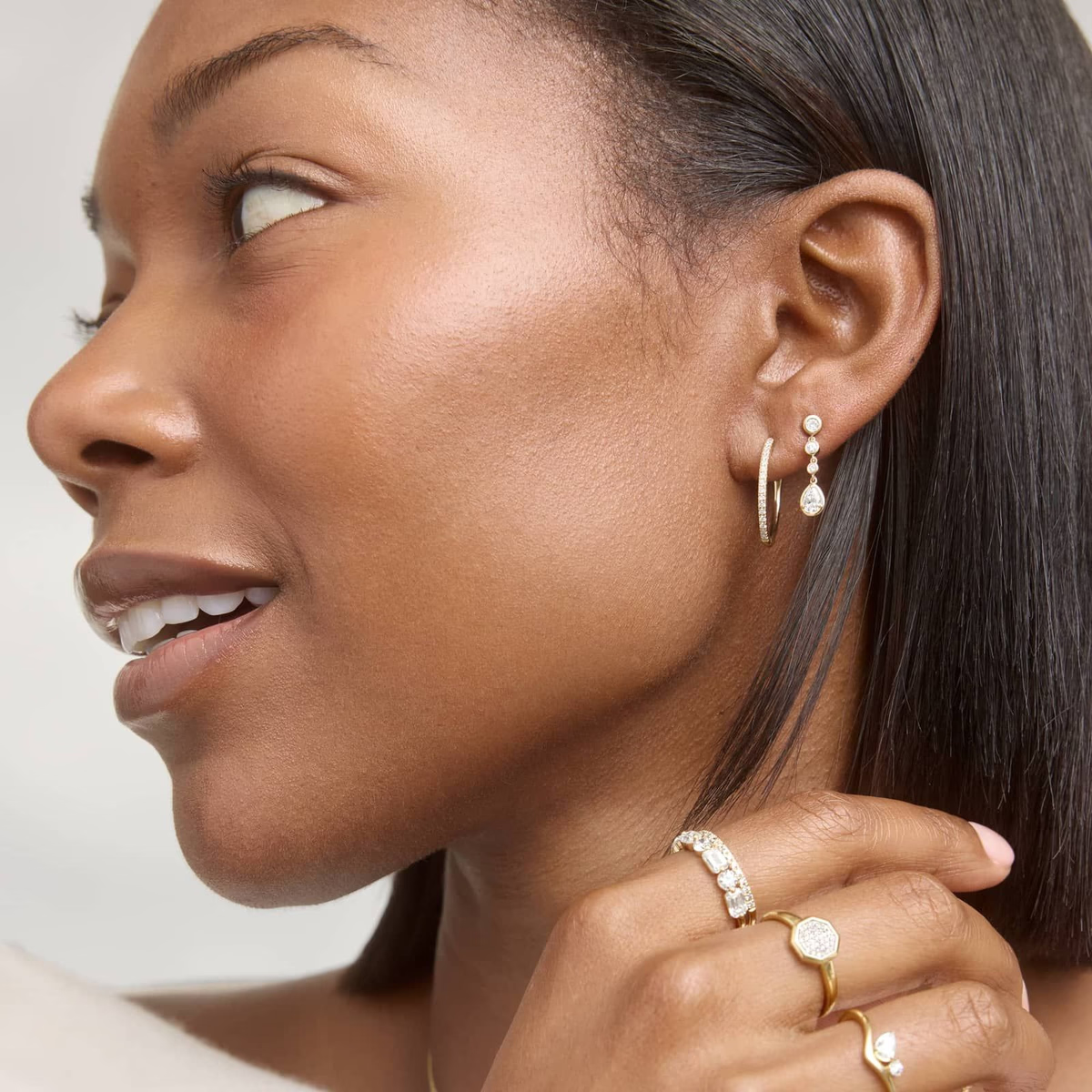
| Bezel Bead Chain Drop, 1 CTW Pear Lab, Yellow Gold (JA) | 1 CTW | 14K Yellow Gold | $1,270 | — |
| Driblet Lab-Grown Diamond Drop, White Gold (JA) | — | 14K White Gold | $1,770 | 1 |
The $1,090 round + pear mixed drops are the most accessible entry in the category, but the design blends round and pear stones rather than presenting a dedicated pear silhouette. If you want the pear shape to be the clear centrepiece, the Bezel Bead Chain Drop at $1,270 is the correct choice — dedicated lab pear stones in a bezel mount suspended on a bead chain, clean point-down orientation, 1 CTW total. This is the best lab entry under $1,500.
Mid-Range Lab Pear Drop Earrings: $2,000–$3,500
| Style | CTW | Metal | Price | Reviews |
|---|---|---|---|---|
| Whimsical Floral Cluster Drop, White Gold (JA) | — | 14K White Gold | $2,805 | 1 |
| Whimsical Floral Cluster Drop, Yellow Gold (JA) | — | 14K Yellow Gold | $2,805 | 3 |
| Whimsical Floral Cluster Drop, Rose Gold (JA) | — | 14K Rose Gold | $2,805 | 3 |
| Lab-Grown Pear Halo Dangle, White Gold | 2 CTW | 14K White Gold | $3,140 | 2 |
The Whimsical Floral Cluster from James Allen at $2,805 is available in white, yellow, and rose gold at the same price — useful if metal color is your primary filter. Yellow gold leads with 3 verified reviews. The Lab Pear Halo Dangle at $3,140 is the most focused design in this tier — 2 CTW total with a dedicated pear center surrounded by a halo ring per ear. If you want the pear shape to read as the design statement, not one element in a cluster, the halo dangle is the correct choice over the floral designs.
Natural Diamond Pear Drop Earrings
Natural diamond pear drops start at $1,275 and reach $14,430 at the top of the Blue Nile catalog. The most important buying signal right now is that Blue Nile is running 35% off on several natural pear drop styles — which puts some premium natural pairs directly into lab-grown price territory.
Natural Pear Drop Earrings: Entry to Mid-Range
| Style | CTW | Metal | Price | Reviews |
|---|---|---|---|---|
| Diamond Pear Drop Huggie Hoop, Rose Gold | 0.25 CTW | 14K Rose Gold | $1,275 | — |
| Diamond Cluster Dangle, White Gold | 0.5 CTW | 14K White Gold | $1,725 | — |
| Diamond Cluster Dangle, Yellow Gold | 0.5 CTW | 14K Yellow Gold | $1,725 | — |
| Pear Shape Diamond Halo Drop, White Gold | 1.625 CTW | 14K White Gold | 7 |
The Diamond Pear Drop Huggie at $1,275 is the only rose gold natural drop earring in the catalog — a hybrid huggie hoop with a small pear diamond pendant drop. It is the right choice for buyers who want natural stone, rose gold metal, and a minimal assembly weight for regular wear. The pear is small at 0.25 CTW but the drop effect is genuine.
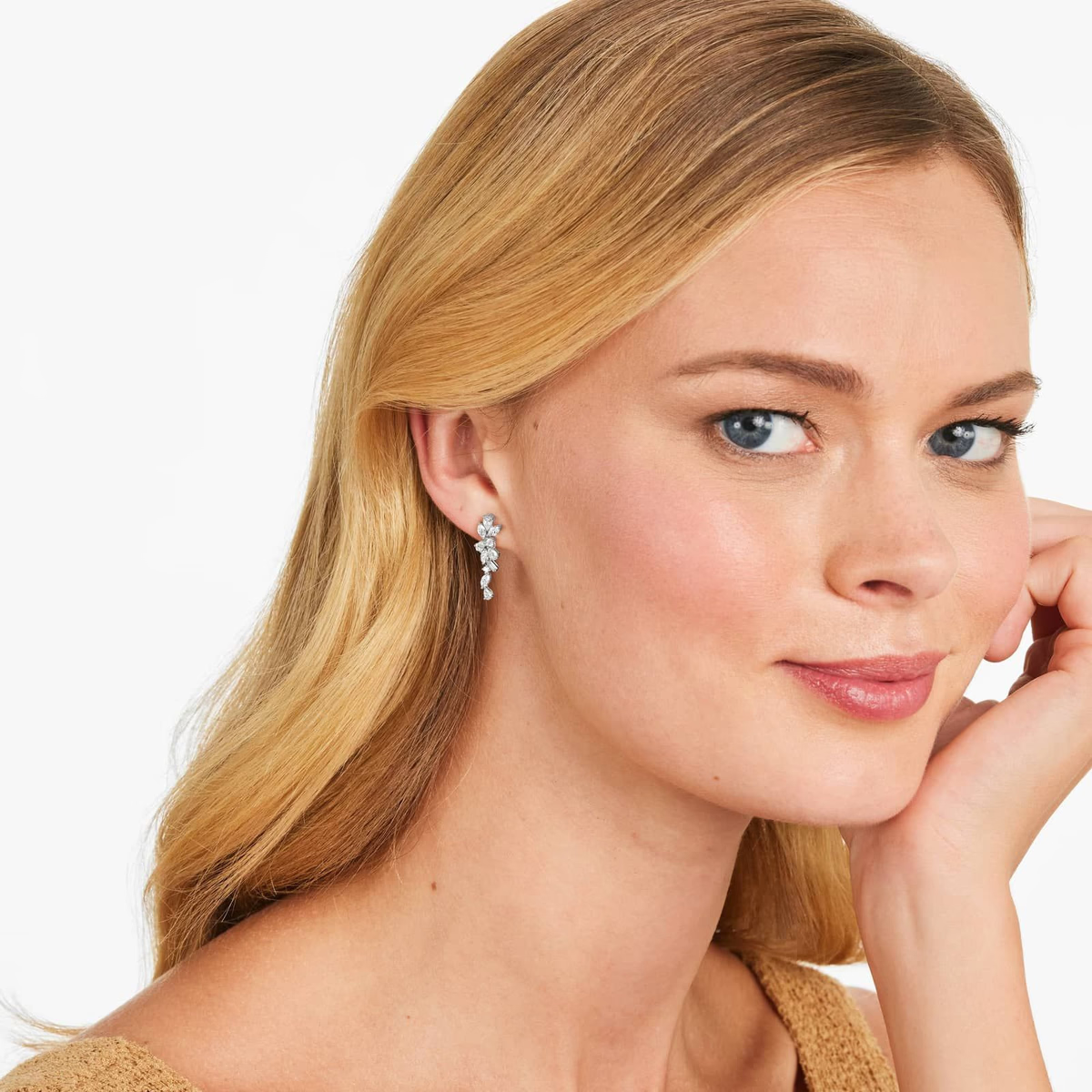
The standout in this tier is the Pear Shape Diamond Halo Drop at $4,990 $3,243. Natural diamonds, halo setting, 7 verified reviews, and 35% off the original price. At $3,243, this pair competes directly with mid-range lab options that carry smaller stone weights. For buyers who prioritize natural origin, this is the best dollar-for-diamond value in the entire pear drop category.
Natural Diamond Pear Drop Earrings: Premium Tier
| Style | CTW | Metal | Price | Reviews |
|---|---|---|---|---|
| Pear Shape Diamond Drop, White Gold | 1 CTW | 14K White Gold | — | |
| Diamond Petal Drop, White Gold | 1.5 CTW | 14K White Gold | — | |
| Trio Graduating Pear Diamond Drop, White Gold | 2 CTW | 14K White Gold | — |
The Pear Shape Diamond Drop at $5,660 $3,679 is the solitaire purist choice — one natural pear stone per ear in a clean drop mount, 35% off. Nothing distracts from the stone. This is the drop earring equivalent of a solitaire engagement ring, and the 35% discount makes it excellent value.
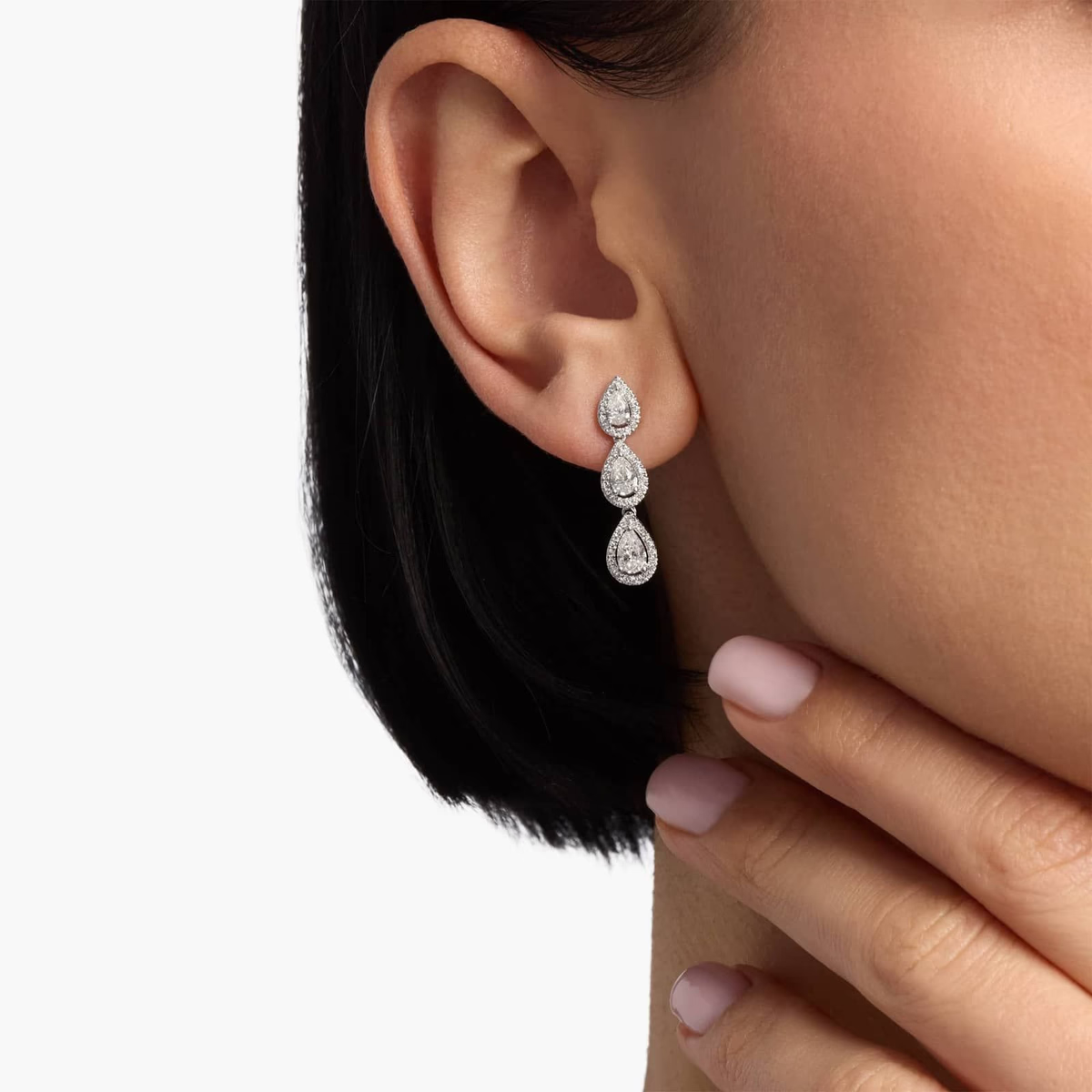
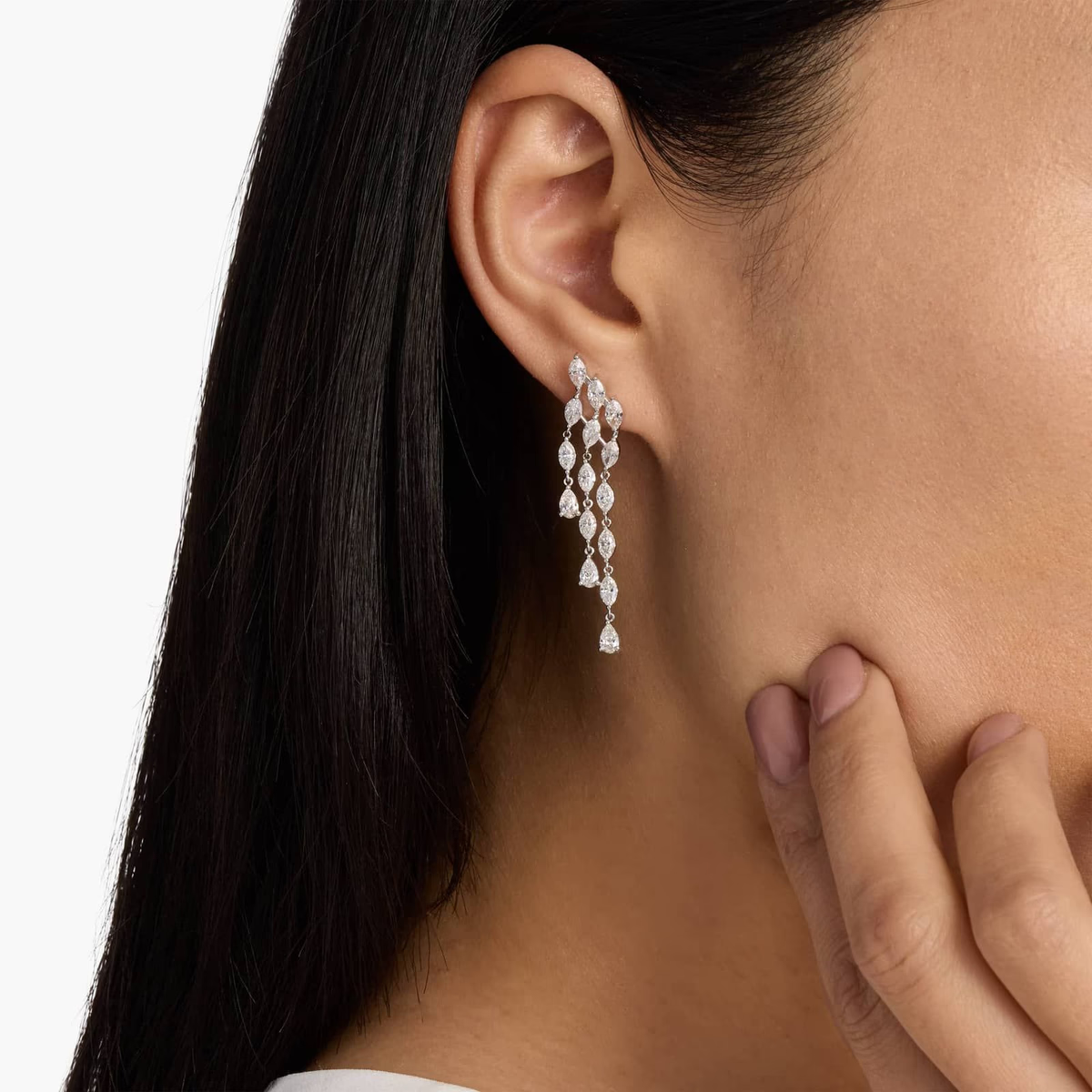
The Trio Graduating Pear Drop at $9,280 $6,032 is a statement design — three descending pear diamonds per ear, graduating from smallest at the top to largest at the bottom. Each stone reinforces the Drop Direction Rule in its very architecture: the downward cascade of increasing pear sizes makes the point-down convention feel intentional and powerful.
The Assembly CTW Illusion
This is the most common source of buyer disappointment in cluster and halo drop earring purchases, and most buyers never hear about it until after they've already placed an order.
When Blue Nile lists a drop earring at "3 1/2 Ct. Tw." or "4 Ct. Tw.", that number represents every stone in the entire assembly across both earrings. That means pear center stones, halo accent diamonds, marquise cluster stones, and melee are all added together to generate the headline CTW figure.
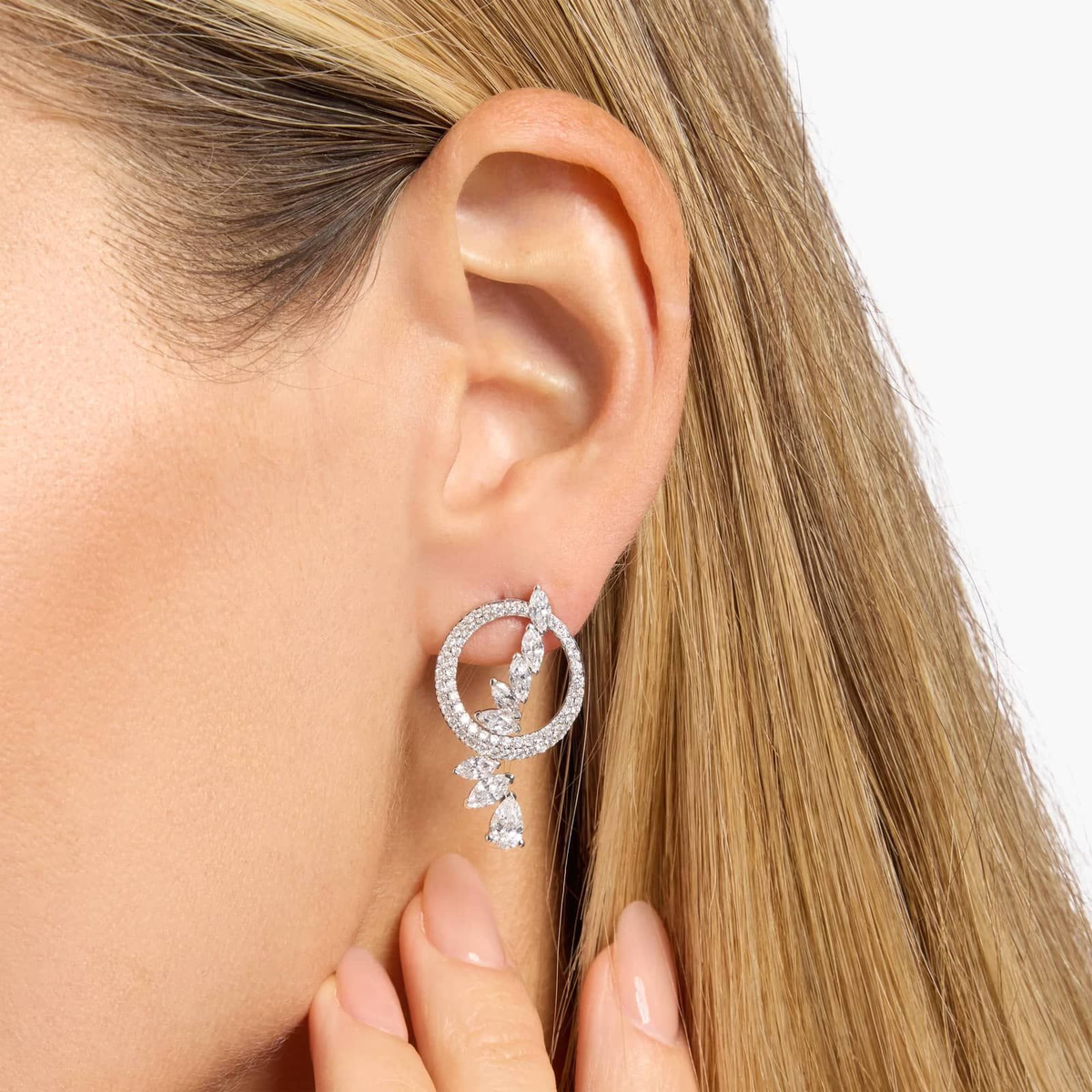
Here is why that matters in real terms: a pair listed at 3.5 CTW might contain 12 pear diamonds, 8 marquise stones, and 40 melee accent diamonds spread across both earrings. The pear center per ear could be 0.20–0.35 CTW. The individual pear stones are not large — the total weight is impressive but it is distributed across dozens of stones in a decorative composition.
This is completely different from how buyers read CTW in stud earrings. With studs, "1 CTW" tells you exactly what you're getting: 0.50 ct per ear, one stone each side. With cluster drops, the CTW tells you almost nothing about individual stone size.
| Listing | Stated CTW | Design | Est. Pear Per Ear |
|---|---|---|---|
| Lab Pear Halo Dangle | 2 CTW | 1 pear center + halo per ear | ~0.55–0.65 CTW |
| Pear+Marquise Leaf Cluster | 3.5 CTW | Multi-stone pear + marquise composition | ~0.25–0.35 CTW pear |
| Pear+Marquise Array Drop | 4 CTW | Array of pear + marquise | ~0.25–0.35 CTW pear |
| Trio Graduating Pear Drop | 2 CTW | 3 graduating pears per ear | ~0.30–0.40 CTW each |
| Diamond Trio Drop | 4 CTW | 3 large pears per ear | ~0.60–0.70 CTW each |
The rule: if you want the pear stone to be the identifiable visual centrepiece of the earring, look for listings labelled "Pear Shape Diamond Drop" or "Pear Shaped Lab-Grown Diamond Drop." Those have the pear as the primary stone. Anything with "Cluster," "Floral," or "Leaf" in the title uses pear as one element in a multi-stone composition.
Lab-Grown Cluster and Statement Pear Drop Earrings
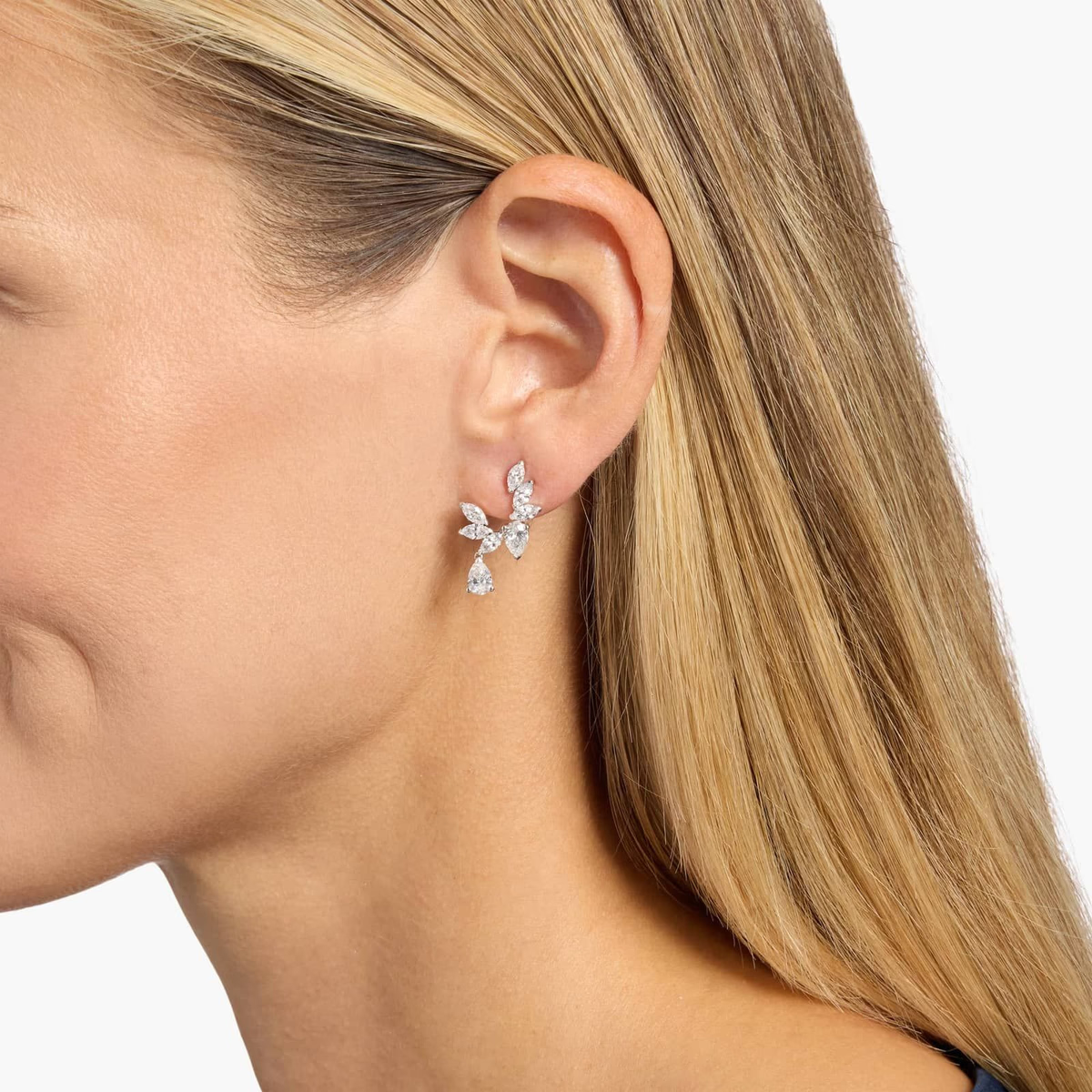
If you want maximum visual presence and the highest CTW per dollar, the pear and marquise cluster designs at Blue Nile deliver what nothing else in the drop category can. These are all lab-grown, which makes the pricing achievable even at 3.5–4 CTW.
| Style | CTW | Metal | Price |
|---|---|---|---|
| Pear+Marquise Geometric Leaf Drop | ~3.2 CTW | 14K White Gold | $4,440 |
| Pear+Marquise Leaf Cluster Drop | 3.5 CTW | 14K White Gold | |
| Pear+Marquise Round Leaf Drop | 4 CTW | 14K White Gold | $5,095 |
| Pear+Marquise Array Drop | 4 CTW | 14K White Gold |
The Pear+Marquise Array Drop at $5,140 $3,341 is the best statement value in the entire category — 4 CTW at 35% off, in 14K white gold. Remember the Assembly CTW Illusion applies here: the 4 CTW is spread across pear and marquise stones in the full array. These are event earrings. The Leaf Cluster at $3,645 at 3.5 CTW is slightly more restrained and better suited to buyers who want substantial volume without the full statement weight of the Array design.
Statement Natural Diamond Pear Drops
At the top of the catalog, Blue Nile carries natural diamond statement drops in 18K white gold — a step up in both metal purity and price.
| Style | CTW | Metal | Price |
|---|---|---|---|
| Alternating Shaped Diamond Drop | 2.5 CTW | 18K White Gold | $11,025 |
| Diamond Trio Drop | 4 CTW | 18K White Gold | $14,430 |
The distinction of 18K over 14K: higher gold purity (75% vs. 58.5%), softer metal, and a slightly warmer, richer white color. At $14,430 for the Diamond Trio Drop, these are the highest pieces in the guide. Nothing in this tier is a weekly earring. These are red-carpet or special event pieces where the earring is the focal point of the entire look.
Metal Choice for Pear Diamond Drop Earrings
Metal choice in drop earrings carries more visual weight than in studs. When a stud sits flush against the lobe, only a sliver of metal is visible. In a drop earring, the metal is in the composition — you see the chain, bezel, frame, and mounting in full motion.
14K White Gold — The dominant metal across the Blue Nile pear drop catalog. White gold lets the diamond's light return and natural color take center stage. It is the correct choice for buyers who want the stone to be the feature. Durable for regular wear at 14K purity.
14K Yellow Gold — Available on the entry-level lab options and the Bezel Bead Chain Drop. Yellow gold pairs naturally with the warm brilliance of pear stones and softens the contrast between metal and diamond. If you have warm skin tone, yellow gold will flatter the earring more effectively than white.
14K Rose Gold — Available on two styles: the Whimsical Floral Cluster Drop at $2,805 and the Huggie Hoop Drop at $1,275. Rose gold amplifies warm undertones in the pear stone — stay at G color or above in rose gold to prevent the diamond from reading yellow against the warm metal.
18K White Gold — Available only on the two highest-priced natural statement drops ($11,025 and $14,430). Higher purity than 14K, richer white color, appropriate for the price tier.
| Metal | Best For | Minimum Color |
|---|---|---|
| 14K White Gold | Stone-forward, all occasions | G |
| 14K Yellow Gold | Warm skin tones, vintage aesthetic | H acceptable |
| 14K Rose Gold | Romantic, feminine settings | G minimum |
| 18K White Gold | Statement investment pieces | G |
Drop Length: How Far Should They Hang?
Drop length is the most overlooked variable in pear drop earring purchases, and it determines almost everything: movement, occasion suitability, hair-length compatibility, and earlobe load.
Short drop (under 0.75 inches): The stone hangs just below the earlobe. Subtle, versatile, lower assembly weight. Works in professional settings and casual evening occasions. Best entry point for new drop earring wearers.
Mid drop (0.75–1.5 inches): The classic pear drop range. Visible movement and light catch from several feet away. Appropriate from dinner out to a formal event. The majority of Blue Nile pear drops sit in this range.
Long drop (over 1.5 inches): Full motion, visible at a distance, designed for black tie and statement events. Assembly weight becomes significant. Requires pulled-back hair to display correctly. Not for everyday wear.
Most of the Blue Nile pear drop catalog sits in the mid-drop range. The cluster and leaf designs — the 3–4 CTW options — tend to run longer due to their multi-element construction. The solitaire and halo drops are typically short-to-mid, making them more versatile.
Tides Of Summer Capsule
Up To 30% Off
Shop The Sale →Vault ClearanceClear The Vault
Up To 70% Off
Shop Vault Deals →Affiliate link — no extra cost to you
Clasp and Closure: The Detail Most Buyers Ignore
The clasp is the last line of defense between a $3,000 pair of drop earrings and the floor. Most pear drop listings at Blue Nile use shepherd hook ear wires or lever backs — and the difference matters.
Shepherd hook (French wire): A curved wire that slides through the piercing and hangs unsecured. Easy to put on. The limitation: the wire can slide back out of the piercing during active movement. Not recommended for earrings over $1,500 worn during an evening out.
Lever back: A hinged closure that snaps shut behind the ear. The wire passes through the piercing and the lever locks the earring in place. Significantly more secure. The correct closure for any pair over $1,500 that you plan to wear during an evening event.
Blue Nile does not always specify clasp type in the product title. For higher-value pairs, check the full product detail page for closure information. If a $3,000+ pair ships with a friction hook, consider having a jeweler convert the closures to lever backs — a straightforward modification that typically costs $30–$60 per pair and takes under 30 minutes.
Halo vs. Solitaire Pear Drop: The Design Decision
The two dominant design approaches for dedicated pear drops are halo and solitaire. They serve different visual purposes and suit different buyers.
Solitaire drop: A single pear stone per ear in a prong or bezel mount on a wire or chain. The stone is the entire earring — you see the pear silhouette cleanly, in motion, with nothing competing for attention. More versatile, appropriate for a wider range of occasions. The Pear Shape Diamond Drop at $5,660 $3,679 is the cleanest example.
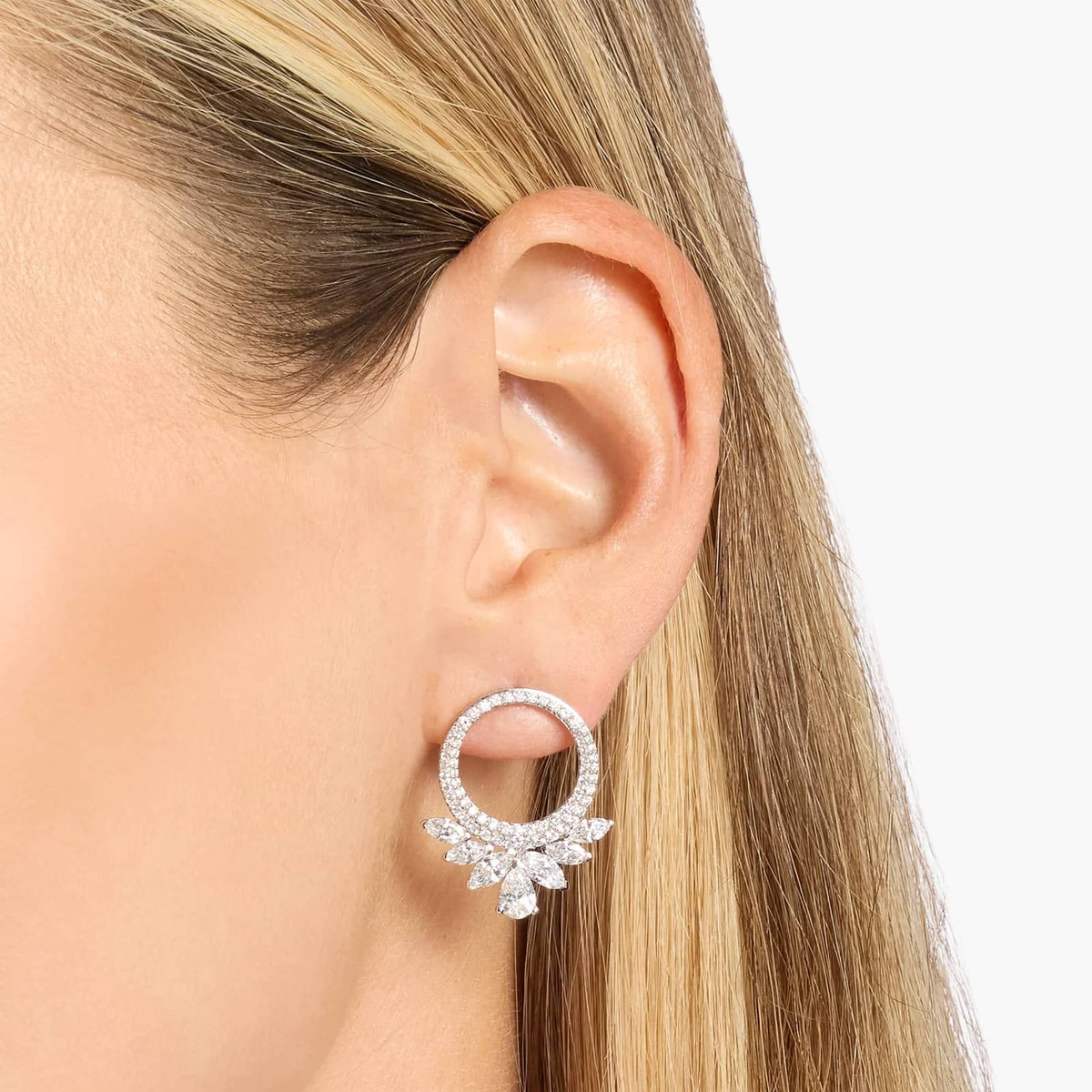
Halo drop: A pear center per ear surrounded by a ring of accent diamonds, suspended as a drop. The halo adds visual mass and sparkle around the pear perimeter, making the earring appear significantly larger. The Natural Pear Halo Drop at $3,243 and the Lab Pear Halo Dangle at $3,140 are the two halo options in the catalog.
For a formal event where maximum impact matters, halo wins. For a design that works from dinner to a wedding reception and reads elegantly in all contexts, solitaire wins.
| Design | Visual Impact | Versatility | Stone per Dollar |
|---|---|---|---|
| Solitaire Drop | Moderate, clean | Highest | Best — full budget on one stone |
| Halo Drop | High, substantial | Formal+ | Good — budget split between center and halo |
| Cluster Drop | Very high, bold | Occasion only | Highest CTW per dollar |
How to Read a Pear Drop Earring Listing Correctly
Before placing any order, verify five things on the product detail page.
1. Lab or natural. Lab-grown listings say "Lab-Grown" or "Lab Grown" in the title. If the title says only "Diamond" without that qualifier, it is natural. This affects resale value, origin, and the pricing logic for your budget.
2. CTW breakdown. Total CTW is both earrings combined. Divide by two for per-ear weight. For halo and cluster designs, the per-ear CTW is further split between the center pear and accent stones — and the center pear is always the smaller portion.
3. Metal karat. Most Blue Nile drops are 14K. The statement natural drops are 18K. 14K is more durable for regular wear; 18K is softer but richer in color. Both are correct choices at their respective price points.
4. Closure type. Look for "lever back" in the description. If it says "friction" or "shepherd hook," note the security limitation for valuable pairs before you buy.
5. Color grade context. Pear diamonds concentrate color at the tip. In white gold settings, G is the minimum that reads clean at the point. Below G in white gold, the tip will show warmth against the bright metal, which is visually distracting in a drop setting where the tip is the focal point.
Farzana's Verdict: Every pear drop earring purchase starts with one question that most buyers skip: how many times per year will you actually wear earrings to occasions where drops are appropriate? If the honest answer is fewer than five times a year, buy under $2,000 and go lab-grown. The Bezel Bead Chain Drop at $1,270 covers that use case completely, and you will not resent spending $1,270 on earrings you wear four times.
If you wear formal earrings monthly or more, the math changes. The Natural Pear Halo Drop at $3,243 with 7 reviews and 35% off is the pair I would make in that scenario — natural diamonds, halo design, a silhouette that will look current in ten years. The discount puts it below what comparable lab pairs cost in CTW terms, which makes it a rare moment of natural-vs-lab price parity.
The cluster designs (3.5–4 CTW, $3,341–$5,095) are for buyers who want an entrance-making pair for a specific event. They are not versatile pieces and they are not comfortable for three hours of wear at an indoor event. Buy them for a gala, a wedding, or a landmark birthday — not for a Saturday dinner.
Optimization Matrix: Every Pear Drop Earring at Blue Nile
| Style | Type | CTW | Metal | Price | Best For |
|---|---|---|---|---|---|
| Round+Pear Mixed Drop, White Gold | Lab | 0.5 | 14K WG | $1,090 | Absolute entry-level drop |
| Round+Pear Mixed Drop, Yellow Gold | Lab | 0.5 | 14K YG | $1,090 | Entry-level, warm metal |
| Pear Drop Huggie Hoop, Rose Gold | Natural | 0.25 | 14K RG | $1,275 | Natural, rose gold, entry |
| Bezel Bead Chain Drop, Yellow Gold (JA) | Lab | 1 | 14K YG | $1,270 | Best lab under $1,500 |
| Driblet Lab Drop, White Gold (JA) | Lab | — | 14K WG | $1,770 | Modern minimalist drop |
| Diamond Cluster Dangle, White Gold | Natural | 0.5 | 14K WG | $1,725 | Natural, white gold dangle |
| Diamond Cluster Dangle, Yellow Gold | Natural | 0.5 | 14K YG | $1,725 | Natural, yellow gold dangle |
| Whimsical Floral Cluster, White Gold (JA) | Lab | — | 14K WG | $2,805 | Lab floral cluster, WG |
| Whimsical Floral Cluster, Yellow Gold (JA) | Lab | — | 14K YG | $2,805 | Lab floral cluster, YG, 3 reviews |
| Whimsical Floral Cluster, Rose Gold (JA) | Lab | — | 14K RG | $2,805 | Lab floral cluster, RG |
| Lab Pear Halo Dangle, White Gold | Lab halo | 2 | 14K WG | $3,140 | Lab, dedicated pear halo |
| Natural Pear Halo Drop, White Gold | Natural halo | 1.625 | 14K WG | Best natural under $3,500 | |
| Pear+Marquise Array Drop | Lab cluster | 4 | 14K WG | Maximum CTW per dollar | |
| Natural Pear Solitaire Drop, White Gold | Natural | 1 | 14K WG | Clean solitaire, natural | |
| Pear+Marquise Leaf Cluster Drop | Lab cluster | 3.5 | 14K WG | High CTW, leaf motif | |
| Pear+Marquise Geometric Leaf Drop | Lab cluster | ~3.2 | 14K WG | $4,440 | Geometric leaf motif |
| Diamond Petal Drop, White Gold | Natural | 1.5 | 14K WG | Natural, floral petal design | |
| Pear+Marquise Round Leaf Drop | Lab cluster | 4 | 14K WG | $5,095 | 4 CTW round leaf statement |
| Trio Graduating Pear Drop, White Gold | Natural | 2 | 14K WG | Natural graduating trio | |
| Alternating Shaped Diamond Drop | Natural | 2.5 | 18K WG | $11,025 | Investment statement |
| Diamond Trio Drop | Natural | 4 | 18K WG | $14,430 | Highest-end statement |
Final Verdict: Best Pear Diamond Drop Earrings at Blue Nile
Best for first-time drop earring buyers: The Bezel Bead Chain Drop at $1,270. Lab pear stones, 1 CTW, bezel set in yellow gold, chain dangle movement. All the silhouette and motion of a proper pear drop at an entry price that makes sense for an infrequent wearer.
Best for natural diamond buyers under $3,500: The Pear Shape Diamond Halo Drop at $3,243. Seven reviews, 35% off, halo design, natural diamonds. Nothing else at this price competes.
Best for maximum visual impact under $5,000: The Pear+Marquise Array Drop at $3,341. 4 CTW, 35% off — the most diamond per dollar in the category. Remember the Assembly CTW Illusion: individual pear stones are not large, but the combined visual statement is remarkable.
Best natural statement drop: The Trio Graduating Pear Drop at $6,032. Three descending natural pear diamonds per ear — a design built entirely around the Drop Direction Rule. Also 35% off.
Overall recommendation for most buyers: The Natural Pear Halo Drop at $3,243. Natural, verified, discounted to below lab-comparable pricing, halo setting, proven by 7 buyer reviews. This pair leads the field at its price.
Expert Summary
Pear diamond drop earrings are a distinct category from pear studs — different orientation logic, different weight considerations, different clasp requirements, and different occasion rules. The Drop Direction Rule governs the aesthetics: the point faces down in any correctly designed pear drop, and three descending pear stones in the Trio Graduating Drop make this principle architectural. The Assembly CTW Illusion governs the math: CTW in cluster and halo listings covers all stone types across both earrings combined, not just the pear centers, and individual pear stones in a 3.5 CTW cluster can be as small as 0.25 CTW each.
At Blue Nile, 21 styles span $1,090 to $14,430 across lab-grown and natural diamond options in multiple metals. Three pairs lead their tiers: the Bezel Bead Chain Drop at $1,270 for lab entry buyers, the Natural Pear Halo Drop at $3,243 for natural diamond buyers, and the Array Drop at $3,341 for maximum visual impact per dollar. Decide on occasion frequency and assembly weight tolerance before any other decision — everything else follows from those two facts.
Frequently Asked Questions
What is the correct orientation for a pear drop earring?
The point of the pear faces downward — toward the chin. This creates the classic teardrop silhouette in motion: wide at the top near the lobe, narrowing to the tip below. In stud earrings, the opposite is true — the point faces upward. Any well-made pear drop earring follows the point-down orientation.
What does CTW mean in drop and dangle earring listings?
CTW means "carat total weight" — the combined stone weight of every diamond in both earrings. For a cluster or halo drop listed at 3.5 CTW, that figure includes every pear, marquise, and melee stone across both earrings combined. The per-ear pear center is often a small fraction of the total CTW.
Are pear drop earrings suitable for daily wear?
Under 1 CTW total assembly weight, yes — most wearers can manage regular use. Once total CTW reaches 2 or above, particularly in heavy cluster designs, earlobe fatigue becomes a real issue within 2–3 hours. Any pair over 2 CTW is best treated as a formal occasion piece rather than daily jewellery.
What clasp type should I choose for pear diamond drop earrings?
Lever-back closures are the correct choice for any pair over $1,500. A lever back has a hinged latch that secures behind the ear and prevents the earring from sliding out during movement. Shepherd hooks offer no active security and can release from the piercing during an evening out.
Do lab-grown pear drop earrings look different from natural diamond drops?
Optically, no. Lab-grown diamonds are chemically identical to natural — same refractive index, same fire, same brilliance. A lab-grown pear halo dangle at $3,140 performs visually identically to a comparable natural pair. The difference is origin, resale value (natural: 40–50% of retail; lab: 10–20%), and price — lab is significantly cheaper at equivalent CTW.
What color grade do I need for pear drop earrings in white gold?
G is the minimum for white gold settings. Pear diamonds concentrate color at the tip, and that warm undertone becomes visible below G when the tip is framed by bright white metal. In yellow or rose gold, H is acceptable — the warm metal absorbs the stone's warmth and the contrast disappears. For rose gold specifically, stay at G or better.
What is the difference between a halo drop and a solitaire drop earring?
A solitaire drop has one pear stone per ear on a mount — clean, minimal, versatile. A halo drop has a pear center per ear surrounded by a ring of accent diamonds. The halo adds visual mass and apparent size but reduces the stone-per-dollar ratio because budget is split between the center and the halo accent stones. Solitaire for versatility and everyday formality; halo for impact and special occasions.
How do I know if a pear drop listing features the pear stone prominently?
Look at the listing title. "Pear Shape Diamond Drop" or "Pear Shaped Lab-Grown Diamond Drop" means the pear is the primary stone. "Pear and Marquise Cluster" or "Whimsical Floral Cluster" means pear is one element in a multi-stone composition. For the pear silhouette to be the visual statement, choose a dedicated pear drop, not a cluster with pear accents.
What is the minimum budget for a quality pair of pear diamond drop earrings?
$1,090 for a lab-grown mixed drop, or $1,270 for dedicated lab pear stones in a chain dangle design. Below $1,000, pear diamond drops at this quality tier do not exist at Blue Nile. At $1,090–$1,270, you get real lab-grown diamonds in a design where the pear shape reads clearly as a drop earring.
Are pear drop earrings a good gift for a milestone occasion?
Yes — specifically for 30th or 40th birthdays, anniversaries, promotions, or weddings. The drop format implies formality and occasion, which makes it appropriate for celebratory gifting. For everyday gifting, pear studs are more practical. The Natural Pear Halo Drop at $3,243 hits the right balance of occasion-appropriate and financially sensible for a meaningful gift.
Should I choose white, yellow, or rose gold for a pear drop earring?
White gold (14K) is the most versatile and the dominant metal in the Blue Nile pear drop catalog. It lets the diamond be the visual feature and complements all skin tones. Choose yellow gold if you prefer warm metal tones or have warm skin — it pairs naturally with pear diamonds. Choose rose gold only if it matches your existing jewellery, and stay at G color minimum to prevent the stone tip from reading warm against the metal.
What happens to pear drop earrings at the earlobe over a long evening?
Lighter drops (under 0.75 CTW total) are comfortable for most wearers through a full evening. Heavier drops in the 2–4 CTW range exert noticeable pulling pressure on the earlobe within 2–3 hours — the pendulum motion amplifies the weight compared to studs of equal CTW. If you are new to drop earrings, start under 1 CTW and assess comfort before investing in a heavier pair.
Can I convert shepherd hook closures to lever backs after purchase?
Yes. Most jewelers can replace shepherd hook ear wires with lever-back findings in under 30 minutes. Cost is typically $30–$60 per pair depending on the complexity of the wire gauge and the style of the existing earring. For any pair over $1,500, this modification is worth doing before the first evening out.
See Also
- Pear Shaped Diamond Earrings — Studs, huggies, and all pear earring styles compared in one guide
- Pear Cut Diamond Guide — Complete pear shape reference: proportions, color, clarity, length-to-width ratios
- Pear Diamond Pendant — How pear pendant settings differ from drop earring construction
- Pear Diamond Necklace — Pear necklace orientation, CTW, and chain length explained
- Pear Diamond Halo Ring — Halo setting principles for pear shapes across all jewellery types
- Blue Nile Earrings Review — Full review of Blue Nile's earring catalog, quality, and service
- Oval Diamond Earrings — How oval drop earrings compare to pear in silhouette and pricing
- Diamond 4Cs Guide — Cut, color, clarity, and carat explained for all diamond buyers
Expert Verdict
Always audit the stone individually — no grade replaces seeing the actual diamond. The certificate tells you what to look for. Your eyes tell you whether to buy.
— Farzana Hasan, GIA Expert · DiamondCritics.com