Pear Diamond Size Chart: MM Dimensions & Prices by Carat 2026
The cost of a half carat pear diamond at Blue Nile ranges from approximately $900 to $2,200 for a GIA-certified natural stone — with cut grade, color, and clarity determining where in that range a specific stone lands. That is the short answer to the most-searched question in this category. The longer answer is that pear diamond prices and pear diamond sizes interact in ways most buyers do not fully understand before they shop, and the gap between what a stone costs and what it looks like on the hand is significant enough to change the purchase decision entirely.
This guide covers the full pear diamond size guide — millimeter dimensions at every carat weight from 0.25ct to 5ct — alongside current July 2026 prices for natural and lab grown pear diamonds at Blue Nile. Every price below is drawn from live Blue Nile inventory with affiliate links.
TL;DR: Pear Diamond Size and Price — The Essentials
- The cost of a half carat pear diamond at Blue Nile is approximately $900–$2,200 for a GIA natural stone. At G-VS2 Ideal (eye-clean, good color), expect $1,000–$1,400. At D-VVS1 (top grades), expect $1,800–$2,200. → The 0.50ct pear is the correct starting point for buyers with a total ring budget under $2,500. The elongated silhouette at 6.5×4.4mm reads larger on the finger than any 0.50ct round at 5.0mm diameter.
- A 1ct GIA D-VS1 pear at $3,803 is the best-value entry to the 1 carat natural pear tier. The 1ct IGI D-VVS1 lab pear starts at $1,006 — same carat, same grade tier, 74% less.
- A 2ct natural pear diamond starts at $22,605. A 2ct lab pear starts at $2,692. The 88% price difference is the defining fact of the 2ct pear market.
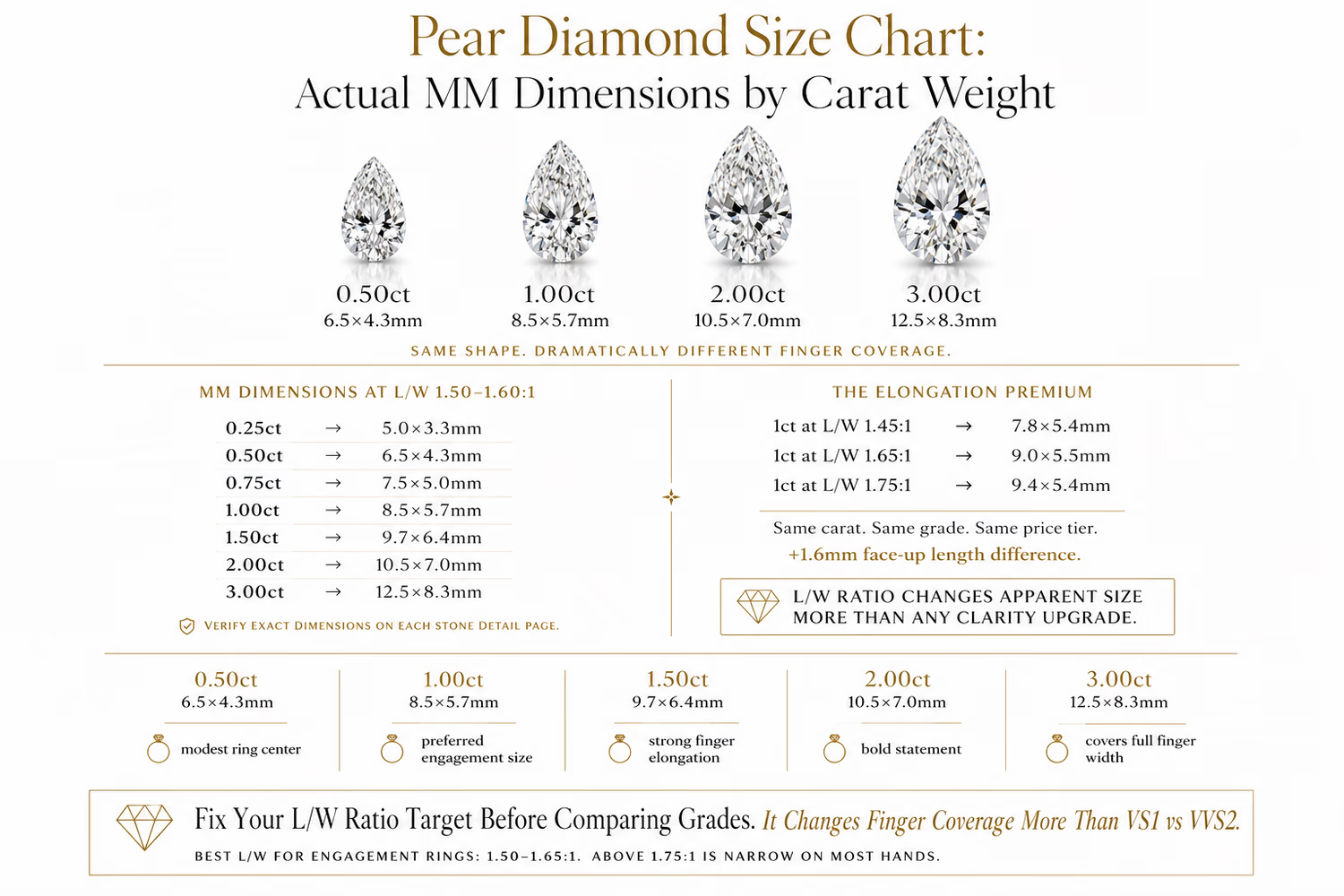
- Pear diamond size is not determined by carat weight alone. A 1ct pear at L/W 1.45:1 measures approximately 7.8×5.4mm. A 1ct pear at L/W 1.75:1 measures approximately 9.4×5.4mm — the same carat, 1.6mm longer face-up. That difference changes how the stone looks on the hand more than any clarity upgrade within the eye-clean range.
- Priority: fix your L/W ratio target before comparing grades. The L/W ratio determines finger coverage; the grade determines what the stone looks like under magnification. For a daily-wear piece, L/W has more practical impact than the difference between VS1 and VVS2.


Pear Diamond Size Chart: MM Dimensions by Carat Weight
The table below gives typical millimeter dimensions for pear shaped diamonds at a standard length-to-width ratio of approximately 1.50–1.60:1 — the most common ratio in Blue Nile inventory. Two stones at the same carat weight can have meaningfully different face-up dimensions depending on their individual L/W ratio, depth percentage, and cut parameters.
| Carat Weight | Typical Length | Typical Width | L/W Ratio | Finger Coverage |
|---|---|---|---|---|
| 0.25ct | 5.0mm | 3.3mm | 1.45–1.60:1 | Petite; pendant accent or small stud |
| 0.50ct | 6.5mm | 4.3mm | 1.45–1.65:1 | Visible; modest ring center or pendant solitaire |
| 0.75ct | 7.5mm | 5.0mm | 1.45–1.65:1 | Noticeable; strong pendant or starter engagement ring |
| 1.00ct | 8.5mm | 5.7mm | 1.45–1.75:1 | Significant; preferred engagement ring size |
| 1.25ct | 9.0mm | 6.0mm | 1.45–1.75:1 | Large; prominent on most hand sizes |
| 1.50ct | 9.7mm | 6.4mm | 1.45–1.75:1 | Statement; strong elongating effect on narrow fingers |
| 2.00ct | 10.5mm | 7.0mm | 1.45–1.75:1 | Bold statement; significant on any hand size |
| 2.50ct | 11.5mm | 7.7mm | 1.45–1.75:1 | Very large; celebrity-tier visual presence |
| 3.00ct | 12.5mm | 8.3mm | 1.45–1.75:1 | Extraordinary; covers the full finger width |
| 4.00ct | 14.0mm | 9.3mm | 1.45–1.75:1 | Statement-level; rarely seen outside high jewelry |
| 5.00ct | 15.5mm | 10.3mm | 1.45–1.75:1 | Extraordinary; heirloom scale |
These dimensions are averages for well-proportioned pear cuts at the stated L/W baseline. A shallow-cut pear at a given carat weight will measure larger face-up (more mm, lower depth) while a deep-cut stone will appear smaller. Always verify the exact listed dimensions on each stone's detail page before purchasing. For pear diamond earrings, the dimension is per stone, not for the pair.
The Elongation Premium
A 1ct pear diamond at L/W 1.45:1 measures approximately 7.8×5.4mm. A 1ct pear at L/W 1.75:1 measures approximately 9.4×5.4mm. Those two stones carry the same carat weight and the same grade — yet they sell at meaningfully different prices on Blue Nile. The longer stone commands a premium because it delivers more finger coverage and more visual impact at the same carat weight.
This market price differential between elongated and compact pear diamonds of identical carat and grade is the Elongation Premium. It exists because face-up finger coverage is what wearers observe every day, and a 1ct pear that reads like 1.3ct on the hand due to its high L/W ratio is genuinely more impressive in daily wear than a 1ct pear at 1.45:1 — even if every graded specification is the same.
The practical application: when comparing two pear diamonds at the same carat weight with a $200–$600 price difference between otherwise similar grades, check the L/W ratio. The higher-priced stone is frequently longer, not better in any graded dimension. This distinction matters depending on your use case.
Pay the Elongation Premium intentionally when finger coverage is the priority — a 1ct pear at 1.70:1 L/W covering 9.4mm of finger length is genuinely more visually impressive than a 1ct pear at 1.45:1 covering 7.8mm. For pear diamond engagement rings, where the elongating effect on the finger is one of the primary aesthetic reasons buyers choose the pear shape, paying the Elongation Premium is often rational.
Avoid paying it unintentionally for pear diamond earrings or pendants, where the stone hangs rather than sits on a finger. In these contexts, a compact 1.45:1 pear at a lower price is equivalent in visual impact to a 1.75:1 stone charged at a premium. The L/W premium is finger-context specific.
L/W ratio also interacts with the wearer's finger proportions: buyers with longer fingers can carry higher L/W ratios proportionately; buyers with shorter or wider fingers often find that 1.50:1 is more balanced on the hand than 1.70:1. The "ideal" L/W ratio is partly aesthetic preference and partly fit.
Cost of Half Carat Pear Diamond
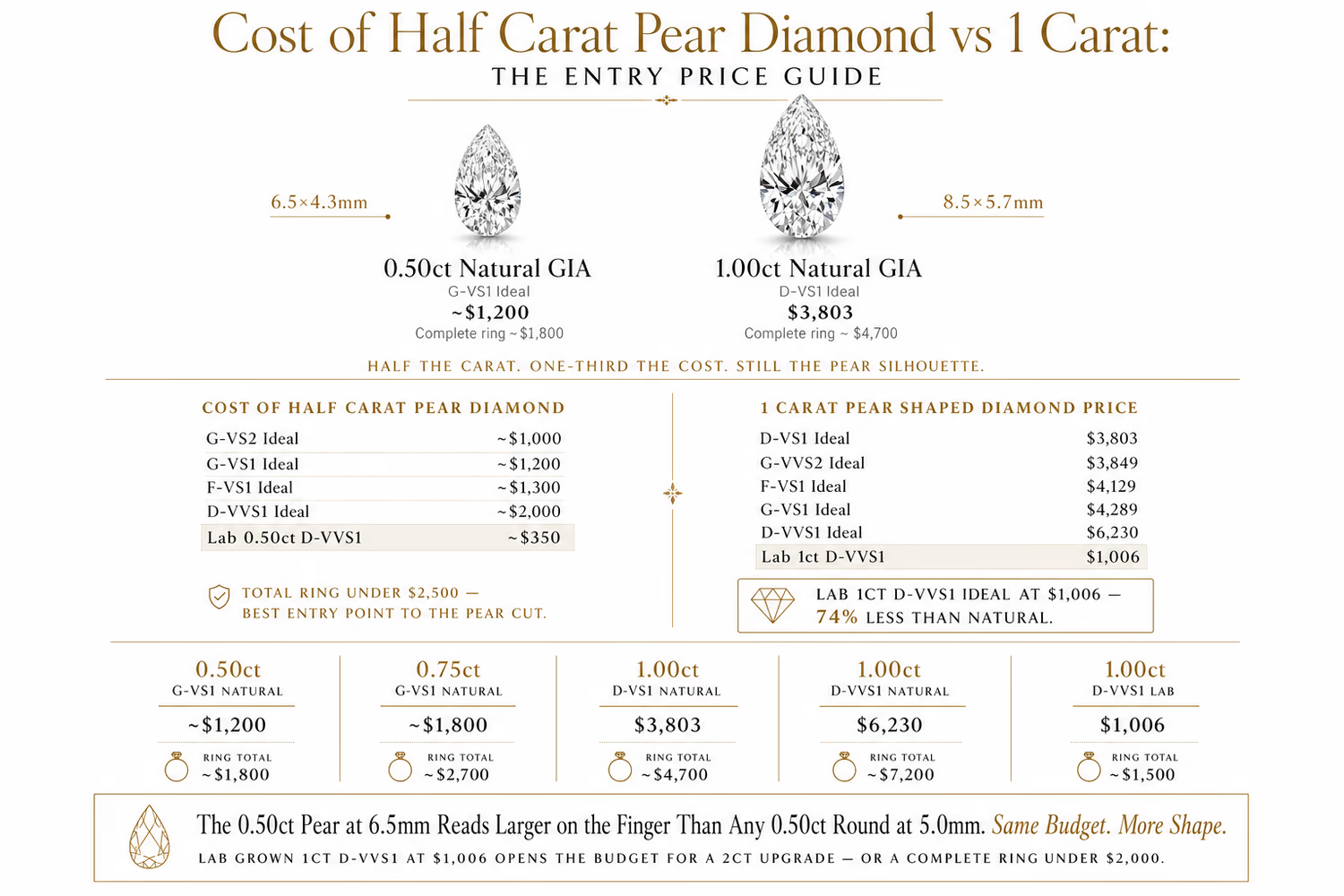
The cost of a half carat pear diamond at Blue Nile in July 2026 falls into these approximate ranges by grade:
- G-VS2, Good/Very Good cut: $900–$1,100 — eye-clean, good color, practical everyday stone
- G-VS1, Ideal cut: $1,100–$1,400 — cleaner clarity tier, cut-optimized
- F-VS1, Ideal cut: $1,300–$1,600 — near-colorless F, strong value
- E-VVS2, Ideal cut: $1,500–$1,900 — upper near-colorless tier
- D-VVS1, Ideal cut: $1,800–$2,200 — colorless, top clarity, GIA certified
These ranges reflect current Blue Nile inventory. Individual stone prices vary within ranges based on specific measurements, depth, table, and L/W ratio. To see current 0.50ct pear diamonds, filter Blue Nile's pear inventory by carat.
Why the 0.50ct pear is the most budget-efficient entry point: The half carat pear diamond is the correct choice for buyers with a total ring budget under $2,500. A 0.50ct GIA G-VS1 Ideal pear diamond at $1,200 paired with a pear solitaire setting at $500–$700 produces a complete pear diamond engagement ring for $1,700–$1,900. At this total budget, the pear cut outperforms the round brilliant: a 0.50ct pear at 6.5×4.3mm reads significantly larger on the finger than a 0.50ct round at 5.0mm diameter. The elongated silhouette and teardrop outline make the pear shape more visually distinctive at sub-1ct sizes than any other diamond cut.
0.50ct vs 0.75ct pear diamond — is the upgrade worth it: The premium from 0.50ct to 0.75ct in natural pear diamonds at equivalent grades runs approximately $600–$1,000. A 0.75ct GIA G-VS1 Ideal pear costs approximately $1,700–$2,200. The 0.75ct stone measures approximately 7.5×5.0mm — roughly 1mm longer and 0.7mm wider than the 0.50ct. The size gain is noticeable in person. For buyers whose ring budget can reach $2,200–$3,200 total (stone + setting), the 0.75ct is a stronger choice: the size gain is visible, and the price jump is proportional rather than the super-linear premiums that appear at and above 1ct.
0.50ct lab grown pear diamond: A 0.50ct IGI D-VVS1 lab grown pear at Blue Nile costs approximately $250–$450 depending on specific cut parameters. View current lab grown pear diamonds. At the sub-1ct tier, the lab grown option costs roughly 25% of the natural equivalent at comparable grades. A lab grown 0.50ct pear at $300–$400 paired with a quality solitaire setting produces a complete lab pear ring under $1,200.
1 Carat Pear Shaped Diamond Price
A 1 carat pear shaped diamond at Blue Nile ranges from $3,803 to $8,272+ for GIA-certified natural stones. This spread reflects the full range of grade combinations in current inventory.
| Stone | Cut | Clarity | Price | Notes |
|---|---|---|---|---|
| GIA 1.00ct D-VS1 | Ideal | VS1 | $3,803 | Best-value entry at 1ct; D colorless, VS1 eye-clean |
| GIA 1.00ct G-VVS2 | Ideal | VVS2 | $3,849 | G near-colorless, VVS2 clarity; best-value at G tier |
| GIA 1.00ct F-VS1 | Ideal | VS1 | $4,129 | Near-colorless F; VS1 clarity; strong white gold choice |
| GIA 1.00ct E-VVS2 | Ideal | VVS2 | $4,236 | E colorless tier, VVS2 clarity; strong grade combination |
| GIA 1.00ct G-VS1 | Ideal | VS1 | $4,289 | G color, VS1 eye-clean; everyday ring value |
| GIA 1.00ct D-VS1 | Ideal | VS1 | $4,299 | D color, VS1; second D-VS1 option in inventory |
| GIA 1.00ct E-VS1 | Ideal | VS1 | $4,357 | E colorless, VS1; near-colorless in eye-clean clarity |
| GIA 1.00ct G-VVS1 | Ideal | VVS1 | $5,012 | G color, VVS1 top clarity; premium G tier |
| GIA 1.00ct D-VVS1 | Ideal | VVS1 | $6,230 | D colorless, VVS1 near-top clarity |
| GIA 1.00ct D-IF | Ideal | IF | $7,578 | D color, Internally Flawless; best natural grades at 1ct |
The GIA 1ct D-VS1 Ideal at $3,803 is the recommended entry at 1 carat for natural pear buyers. D color is visually colorless; VS1 is eye-clean. This combination delivers the full natural pear diamond experience at the lowest entry price for the D grade.
1 carat pear shaped diamond ring price: A complete 1ct pear shaped diamond ring at Blue Nile — stone plus a standard pear solitaire setting — costs approximately $4,200–$5,700 for a G-VS1 combination, or $6,500–$8,500 for a D-VS1 combination. A quality pear solitaire setting in 14K white gold runs $400–$900 at Blue Nile. Lab grown 1ct pear rings total approximately $1,500–$2,500.
The Carat Jump Tax
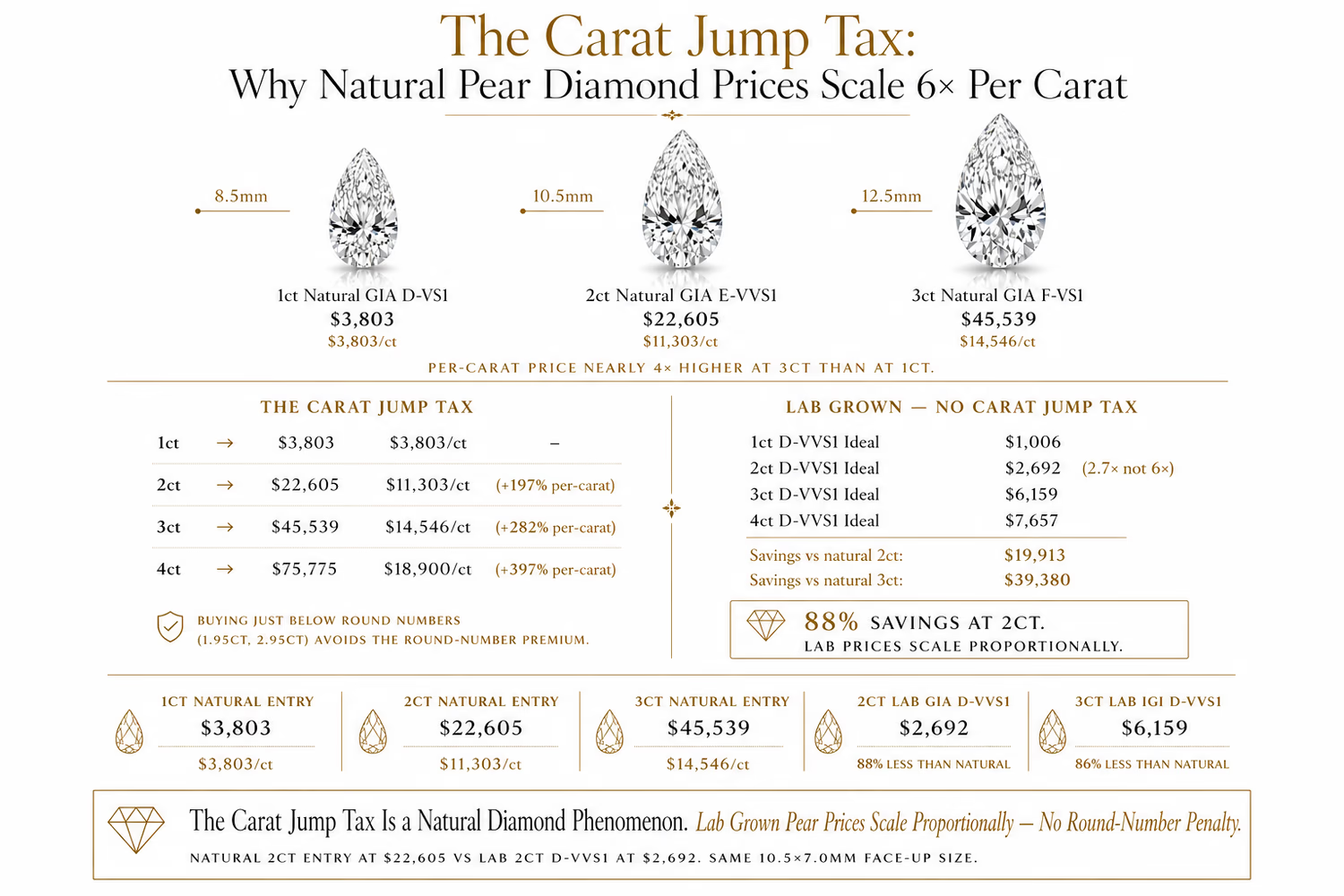
Natural pear diamond prices scale super-linearly with carat weight. A 1ct GIA D-VS1 pear costs $3,803. A 2ct natural pear costs $22,605 at entry — not $7,606 (double the 1ct price) but six times more. A 3ct natural pear starts at $45,539 — twelve times the 1ct entry price, not three times.
This acceleration in per-carat price as stones cross round-number weight thresholds is the Carat Jump Tax. Three mechanisms drive it:
Supply drops sharply at each threshold. Natural rough diamonds large enough to yield a 2ct or 3ct pear are significantly rarer than rough for a 1ct stone. The supply curve is not linear with carat weight; it steepens dramatically above each major threshold.
Demand concentrates at round numbers. A 2.00ct pear diamond commands more premium than a 1.96ct pear at the same grade — the psychological value of a round carat number creates a price differential that doesn't exist in the underlying geological rarity. Blue Nile buyers pay for the "2.00" as much as they pay for the physical carat weight.
Per-carat prices rise steeply. A 1ct pear at $3,803 costs $3,803 per carat. A 2ct natural pear at $22,605 costs $11,303 per carat. A 3ct natural pear at $45,539 costs $14,500+ per carat. The per-carat price approximately quadruples between 1ct and 3ct in natural pear diamonds.
How to avoid paying the Carat Jump Tax: For natural pear buyers, searching just below round carat numbers surfaces stones that avoid the round-number premium without meaningful visual size compromise. A 1.95ct pear at the same L/W ratio as a 2.00ct stone will look identical in a ring setting — both measure approximately 10.3–10.4mm long. The price difference can be $2,000–$5,000 at this tier. Blue Nile allows filtering by carat range: searching 1.85ct–1.99ct for a "2ct pear diamond" budget is a legitimate and significant savings strategy.
The Carat Jump Tax does not apply to lab grown pear diamonds. A 2ct IGI D-VVS1 lab pear costs $2,692 — approximately 2.7 times the 1ct lab pear entry price, not six times. Lab grown production capacity is not subject to the geological scarcity constraints that drive the Carat Jump Tax in natural diamonds. Lab prices scale approximately proportionally with carat weight.
2 Carat Pear Shaped Diamond Ring Price
A 2 carat pear shaped diamond ring at Blue Nile costs approximately $23,200–$29,000 for a natural stone plus setting. The stone alone starts at $22,605 for a GIA E-VVS1 Ideal.
| Stone | Cut | Color | Clarity | Price | Notes |
|---|---|---|---|---|---|
| GIA 2.00ct E-VVS1 | Ideal | E | VVS1 | $22,605 | Entry price for 2ct natural pear; E color VVS1 |
| GIA 2.00ct F-VS1 | Ideal | F | VS1 | $27,700 | F color VS1; second 2ct natural option |
| IGI 2.00ct D-VVS1 (lab) | Ideal | D | VVS1 | $2,692 | Lab grown 2ct pear; 88% less than natural entry |
| IGI 2.00ct D-IF (lab) | Ideal | D | IF | $4,941 | Lab grown 2ct D-IF; Internally Flawless under $5,000 |
Natural 2ct pear diamond inventory at Blue Nile is limited — only two GIA Ideal cut stones are available at the time of this writing. Natural pear diamonds at 2ct are rare; the inventory changes frequently. For buyers who want a 2ct pear diamond ring, the lab grown option is the most practical route to this size: the GIA 2ct D-VVS1 lab pear at $2,692 delivers 2ct, D color, VVS1 clarity, Ideal cut — and a complete ring with setting totals approximately $3,300–$4,000.
What an actual 2ct pear diamond looks like: A 2ct pear at L/W 1.55:1 measures approximately 10.5×6.8mm. On an average finger (size 6–7), this stone covers approximately 65–70% of the finger width. Most observers describe this as "significant but wearable" — unmistakably large in photos, proportional enough for daily use. It is the most requested pear diamond engagement ring size by buyers who have researched the pear cut and understand what carat weight actually looks like.
3 Carat Pear Shaped Diamond Ring Price
A 3 carat pear shaped diamond ring at Blue Nile costs approximately $46,000–$115,000+ for natural GIA-certified stones, depending on the grade combination.
| Stone | Cut | Color | Clarity | Price |
|---|---|---|---|---|
| GIA 3.13ct F-VS1 | Ideal | F | VS1 | $45,539 |
| GIA 3.02ct F-VS1 | Ideal | F | VS1 | $55,737 |
| GIA 3.01ct G-IF | Ideal | G | IF | $63,252 |
| GIA 3.00ct D-VS1 | Ideal | D | VS1 | $65,090 |
| GIA 3.02ct G-VS1 | Ideal | G | VS1 | $67,255 |
| GIA 3.05ct F-VVS2 | Ideal | F | VVS2 | $69,233 |
| GIA 3.01ct E-VS1 | Ideal | E | VS1 | $69,637 |
| GIA 3.09ct D-IF | Ideal | D | IF | $102,925 |
The lab grown alternative makes the 3ct size accessible without the six-figure price: the IGI 3ct D-VVS1 Ideal lab pear at $6,159 delivers the same 3ct carat weight, the same 12.5mm face-up length, and comparable grade documentation — at $39,000 less than the natural entry price.
4 Carat and 5 Carat Pear Diamond Price
A 4 carat pear shaped diamond ring at Blue Nile costs $75,775–$124,452+ for natural GIA stones. These are rare stones with limited inventory at any given time.
| Stone | Color | Clarity | Price |
|---|---|---|---|
| GIA 4.01ct G-VS1 | G | VS1 | $75,775 |
| GIA 4.00ct G-VS1 | G | VS1 | $99,203 |
| GIA 4.01ct D-VS1 | D | VS1 | $119,017 |
| GIA 4.02ct D-VS1 | D | VS1 | $124,452 |
A 4ct pear at L/W 1.55:1 measures approximately 14.0×9.3mm — this stone covers the full width of most ring fingers. Per-carat price at 4ct ranges from $18,900 (G-VS1 entry) to $31,000+ (D-VS1 top tier), compared to $3,803 per carat at the 1ct entry. The Carat Jump Tax is at its most extreme in this range.
5 carat pear shaped diamond: Natural GIA 5ct pear diamonds are rarely listed at Blue Nile and typically require a custom inquiry. A 5ct natural pear diamond costs $150,000–$350,000+ depending on grade. Lab grown 5ct pear diamonds are available at dramatically lower prices — the IGI 4.97ct D-FL Ideal lab pear costs $25,432 — see the lab grown pear diamond guide for current lab options above 4ct.
Tides Of Summer Capsule
Up To 30% Off
Shop The Sale →Vault ClearanceClear The Vault
Up To 70% Off
Shop Vault Deals →Affiliate link — no extra cost to you
I Color and J Color Pear Diamond Guide
Two color grades appear frequently in pear diamond shopping: I color and J color. Both are in the "near-colorless" GIA D-to-Z range — they are not colorless (D–F) but are not obviously tinted either. In round brilliants, I and J color are often recommended as eye-clean budget choices. In pear diamonds, the evaluation differs because the elongated facet pattern concentrates any color warmth at the stone's pointed tip more visibly than in a compact shape.
I color pear diamond: An I color pear diamond shows a very faint warmth invisible under most normal viewing conditions in a white gold or platinum setting. I color is the practical lower limit for pear diamonds in white metal settings: below this grade, the concentrated warmth at the pear's tip can become visible in direct natural light. In yellow gold or rose gold settings, I color looks completely white — the metal's warm tone fully masks any stone warmth, making I color an excellent value choice in those metals. At 1ct, the price difference between a G-VS1 and an I-VS1 pear diamond can be $600–$1,200, which is a meaningful budget difference.
J color pear diamond: A J color pear diamond has a faint warmth that may be visible at the pointed tip in white gold or platinum settings under direct daylight. This is the grade where pear cut sensitivity to color becomes practically relevant: a round brilliant J would be barely perceptible as warm; a pear J can show at the tip in favorable light conditions. In yellow gold, J color is perfectly acceptable — the warm metal tone eliminates any visible tint in the stone. In rose gold, J color can appear complementary. Avoid J color in platinum and white gold pear rings specifically.
Color selection by metal:
- Platinum / 18K white gold: D–H recommended; I is the practical minimum; J should be avoided
- 14K white gold: D–I recommended; slightly more tolerance for warmth due to the slightly yellow base metal
- Yellow gold (14K or 18K): D–J all acceptable; G–J is the value tier where savings are significant
- Rose gold: D–J acceptable; J and I complement the warm metal tone
Budget implication of color grade at 1ct natural pear: The price range from G-VS1 Ideal ($4,289) to D-VS1 Ideal ($4,299) is only $10 at the 1ct tier in current Blue Nile inventory — meaning color grade is not always the primary price driver. However, moving to D-VVS1 ($6,230) shows the clarity and colorless premium combined. When comparing stones, check specific listed prices rather than assuming a predictable grade-to-price ladder.
Pear Diamond L/W Ratio and Actual Finger Coverage
The L/W ratio is the single most important specification for pear diamond visual appearance — more than any clarity grade within eye-clean range and more than any color grade within near-colorless range. Two pear diamonds at the same carat weight with different L/W ratios will look fundamentally different on the finger.
L/W ratio ranges and their visual character:
1.40–1.50:1 (compact): Full, rounded pear. The tip angle is more open. The stone reads as a wide teardrop. This ratio is best for buyers who prefer a substantial, balanced look over an elongated silhouette. Lower bow-tie risk.
1.50–1.65:1 (classic): The most common ratio in engagement ring settings at Blue Nile. Versatile — elongates the finger without looking narrow. This range suits most hand proportions. Moderate bow-tie risk depending on individual stone depth.
1.65–1.75:1 (elongated): A distinctly elongated silhouette with strong finger-lengthening effect. Preferred for buyers with shorter fingers or who want maximum visual length per carat. Higher bow-tie risk that should be evaluated on each stone's video on the Blue Nile detail page.
Above 1.75:1 (very elongated): Narrow appearance that can look unbalanced on a ring finger. Best for earring drops or pendant settings where the stone hangs vertically and the full elongation reads without finger-width competition.
Bow-tie effect and L/W ratio: The bow-tie shadow — the dark band across the widest midpoint of the pear — is present to some degree in all pear diamonds. Severity varies by cut proportions: deeper stones with higher L/W ratios tend to show more pronounced bow-ties. Ideal and Excellent cut lab grown and natural pear diamonds at Blue Nile have been reviewed for cut quality, but bow-tie visibility varies by individual stone. Always watch the video on the stone's detail page before purchasing any pear diamond — the bow-tie is not visible in still photography but is clear in video.
Pear Diamond Size Optimization Matrix
| Stone | Carat | Grade | Type | Price | Best For |
|---|---|---|---|---|---|
| GIA G-VS2 0.50ct | 0.50ct | G-VS2 | Natural | ~$1,000 | Budget entry ring or pendant; strongest shape value under $2,500 total |
| GIA F-VS1 0.50ct | 0.50ct | F-VS1 | Natural | ~$1,300 | Near-colorless at half carat; white gold pear pendant sweet spot |
| IGI D-VVS1 0.50ct (lab) | 0.50ct | D-VVS1 Lab | Lab | ~$350 | Top grades at half carat for under $400; complete lab ring under $1,200 |
| GIA D-VS1 1.00ct | 1.00ct | D-VS1 | Natural | $3,803 | Best natural entry at 1ct; D colorless, VS1 eye-clean, Ideal cut |
| GIA G-VVS2 1.00ct | 1.00ct | G-VVS2 | Natural | $3,849 | Best-value 1ct; G near-colorless with VVS2 high clarity |
| IGI D-VVS1 1.00ct (lab) | 1.00ct | D-VVS1 Lab | Lab | $1,006 | Top-grade 1ct lab pear; complete ring under $2,000 |
| GIA E-VVS1 2.00ct | 2.00ct | E-VVS1 | Natural | $22,605 | Natural 2ct pear entry; statement ring for buyers committed to natural |
| GIA D-VVS1 2.00ct (lab) | 2.00ct | D-VVS1 Lab | Lab | $2,692 | Best purchase in the pear category; 2ct GIA lab ring total $3,500 |
| GIA F-VS1 3.13ct | 3.13ct | F-VS1 | Natural | $45,539 | Natural 3ct pear entry; extraordinary and rare |
| IGI D-VVS1 3.00ct (lab) | 3.00ct | D-VVS1 Lab | Lab | $6,159 | 3ct lab pear; $39,000 less than natural 3ct entry |
| GIA G-VS1 4.01ct | 4.01ct | G-VS1 | Natural | $75,775 | Natural 4ct pear; heirloom scale, extraordinary rarity |
| IGI D-VVS1 4.00ct (lab) | 4.00ct | D-VVS1 Lab | Lab | $7,657 | 4ct lab pear; $68,000 less than natural 4ct entry |
Final Verdict: Which Pear Diamond to Buy by Budget
Under $1,500 (stone only): A 0.50ct GIA G-VS1 Ideal pear at approximately $1,100–$1,400 is the correct choice. The 0.50ct pear at L/W 1.55:1 measures 6.5×4.3mm and delivers the full pear silhouette at the most accessible budget. A complete ring with stone and setting totals $1,600–$2,300 — the best pear diamond ring value in any budget under $2,500.
$1,500–$4,500 (stone only): GIA 1ct D-VS1 Ideal at $3,803 is the best natural pear entry at 1 carat. Alternatively, IGI 1ct D-VVS1 Ideal lab pear at $1,006 opens the full budget for a 2ct lab grown upgrade instead.
$4,500–$10,000 (stone only): GIA 1ct D-VVS1 Ideal at $6,230 for a top-grade natural 1ct pear, or IGI 2ct D-VVS1 lab pear at $2,692 for a 2ct lab ring under $4,000 total. At this budget, the lab grown 2ct is the more compelling visual outcome.
$22,000+ (stone only): GIA 2ct E-VVS1 Ideal natural pear at $22,605 is the entry to a natural 2ct pear diamond ring. For buyers committed to natural diamonds at 2ct, this is the starting point. Complete ring cost with setting totals approximately $23,200–$25,000.
Expert Summary
The question I hear most often in this category is about half carat pear diamond cost — and the answer is more nuanced than buyers expect. The 0.50ct pear diamond is exceptional value for what it delivers: a recognizable teardrop silhouette, a 6.5mm length that reads clearly on the finger, and a complete ring budget under $2,000. What buyers miss is the L/W ratio variable. Two stones at identical 0.50ct weight can measure 6.0×4.1mm versus 6.8×4.1mm depending on their L/W ratio — that difference in face-up length is larger than the difference between 0.50ct and 0.60ct of the same ratio. At every carat weight in pear diamonds, the L/W ratio determines more of the visual experience than any grade upgrade within the eye-clean range. Get the size right first; then optimize the grade.
— Farzana Hasan, Fine Jewelry Analyst
Frequently Asked Questions
How much does a half carat pear diamond cost?
The cost of a half carat pear diamond at Blue Nile is approximately $900–$2,200 for a GIA-certified natural stone. At G-VS2 Ideal (eye-clean, good color in white gold), expect $1,000–$1,300. At D-VVS1 Ideal (top grades), expect $1,800–$2,200. Lab grown 0.50ct pear diamonds cost approximately $250–$450 at comparable grades. Total ring cost with a quality pear solitaire setting: $1,600–$3,000 for natural; $750–$1,400 for lab grown.
What size is a 0.50 carat pear diamond in mm?
A 0.50 carat pear diamond at a standard L/W ratio of 1.50–1.60:1 measures approximately 6.5mm long by 4.3–4.4mm wide. At a higher L/W of 1.70:1, the same 0.50ct stone measures approximately 7.0×4.1mm — longer but narrower. Always verify dimensions on the Blue Nile stone detail page, as actual dimensions vary by individual stone.
What size is a 1 carat pear diamond in mm?
A 1 carat pear diamond at a standard L/W ratio of 1.50:1 measures approximately 8.0–8.5mm long by 5.3–5.7mm wide. At 1.65:1, a 1ct stone measures approximately 9.0×5.5mm — noticeably longer face-up. The 1ct pear is the most common engagement ring carat weight in the pear category and provides strong finger coverage without excessive size.
What is the actual size of a 2 carat pear shaped diamond?
A 2 carat pear diamond at L/W 1.55:1 measures approximately 10.5×6.8mm. On an average size 6–7 finger, it covers approximately 65–70% of the finger width. Most observers describe this as clearly large and unmistakably visible from across a room.
How much is a 1 carat pear shaped diamond ring price?
A 1 carat pear shaped diamond ring at Blue Nile costs approximately $4,200–$5,200 for a GIA G-VS1 stone plus solitaire setting, or $6,500–$8,500 for a D-VS1 combination. Stone prices range $3,803–$7,578+ with GIA certification. Lab grown 1ct pear rings total approximately $1,400–$2,500.
How much is a 2 carat pear shaped diamond ring price?
A 2 carat pear shaped diamond ring at Blue Nile starts at approximately $23,200–$24,000 for a natural GIA stone with setting. The natural stone alone starts at $22,605. The lab grown 2ct alternative: a GIA D-VVS1 lab pear at $2,692 with a setting totals approximately $3,300–$4,000.
How much is a 3 carat pear shaped diamond ring price?
A 3 carat pear shaped diamond ring at Blue Nile costs approximately $46,000–$112,000+ for a natural GIA stone with setting. The natural stone alone starts at $45,539 for a GIA F-VS1 Ideal 3.13ct stone. Lab grown 3ct pear rings start at approximately $5,700 total (stone + setting).
How much is a 4 carat pear shaped diamond ring price?
A 4 carat pear shaped diamond ring at Blue Nile costs approximately $76,000–$130,000+ for a natural GIA stone with setting. Lab grown 4ct pear rings start at approximately $8,200–$9,000 total. Natural 4ct pear diamonds are rare; inventory at any given time is limited.
How much is a 5 carat pear shaped diamond ring price?
A 5 carat natural GIA pear diamond is rarely available in standard Blue Nile inventory and typically costs $150,000–$350,000+ depending on grade. A 5ct lab grown pear is accessible: the IGI 4.97ct D-FL lab pear at $25,432 is the closest available option to a 5ct lab pear.
Is I color good for a pear diamond?
I color is the practical minimum for a pear diamond in white gold or platinum. An I color pear diamond appears nearly colorless in most normal viewing conditions but may show faint warmth at the pointed tip in direct natural light. In yellow gold or rose gold, I color looks completely white — the metal's warmth masks any stone warmth. I color is a legitimate value choice in warm metal settings.
Is J color okay for a pear shaped diamond?
J color is acceptable in yellow gold or rose gold pear diamond settings, where the warm metal masks any stone tint. In white gold or platinum, J color may show visible warmth concentrated at the pear's pointed tip — more visible than in a round brilliant of the same grade. Avoid J color in white metal pear diamond rings. In yellow gold, J color can save $1,000–$2,000 versus G color at 1ct with no visible difference.
What L/W ratio is best for a pear diamond?
The recommended L/W ratio for a pear diamond engagement ring is 1.50–1.65:1. Below 1.45:1, the stone appears compact and stubby; above 1.75:1, it can appear narrow on the finger. For pendants and earrings where the stone hangs rather than sits on a finger, 1.45:1 to 1.75:1 all work depending on the setting design.
Does a pear diamond look bigger than its carat weight suggests?
A pear diamond reads larger on the finger than a round brilliant of the same carat weight because its elongated silhouette covers more finger length. A 1ct pear at 8.5mm long covers more finger than a 1ct round at 6.5mm diameter. This perceptual size advantage is the primary reason buyers choose the pear cut — you get more visible length per carat dollar than in any other classic diamond shape.
What is the pear shape diamond ring price range across all sizes?
Pear shape diamond ring prices at Blue Nile range from approximately $1,600 (0.50ct lab grown with setting) to $130,000+ (natural 4ct with setting). For natural stones: 0.50ct ring $1,600–$3,000 total; 1ct ring $4,200–$9,000 total; 2ct ring $23,200–$29,000 total; 3ct ring $46,000–$115,000 total. For lab grown pear rings: 1ct ring $1,400–$2,500 total; 2ct ring $3,300–$4,000 total; 3ct ring $5,700–$7,000 total.
See Also
- Pear Cut Diamond: Complete Buying Guide — Bow-tie audit, L/W analysis, GIA grading, and full natural pear diamond price data
- Lab Grown Pear Diamond Guide — The Clarity Premium Collapse, The 2ct Tipping Point, IGI vs GIA, and full lab pear pricing from 1ct to 4.5ct+
- Pear Diamond Engagement Ring — The Engagement Premium, The Carat Ladder, 1ct/2ct/3ct settings and complete ring pricing
- Pear Shaped Solitaire Diamond Ring — Prong counts, shank styles, and the cleanest minimalist pear solitaire settings at Blue Nile
- Pear Diamond Halo Ring — Single halo, double halo, floating halo; the complete halo framework for pear diamonds
- Pear Shaped Diamond Ring: Settings & Metals — The Metal Multiplier Effect, all setting styles, and full price data across every pear ring category
- Diamond 4Cs Guide — Complete framework for evaluating cut, color, clarity, and carat across all shapes and jewelry contexts
- Blue Nile Diamond Review — Full audit of Blue Nile's inventory, pricing, return policy, and quality controls
Expert Verdict
Always audit the stone individually — no grade replaces seeing the actual diamond. The certificate tells you what to look for. Your eyes tell you whether to buy.
— Farzana Hasan, GIA Expert · DiamondCritics.com