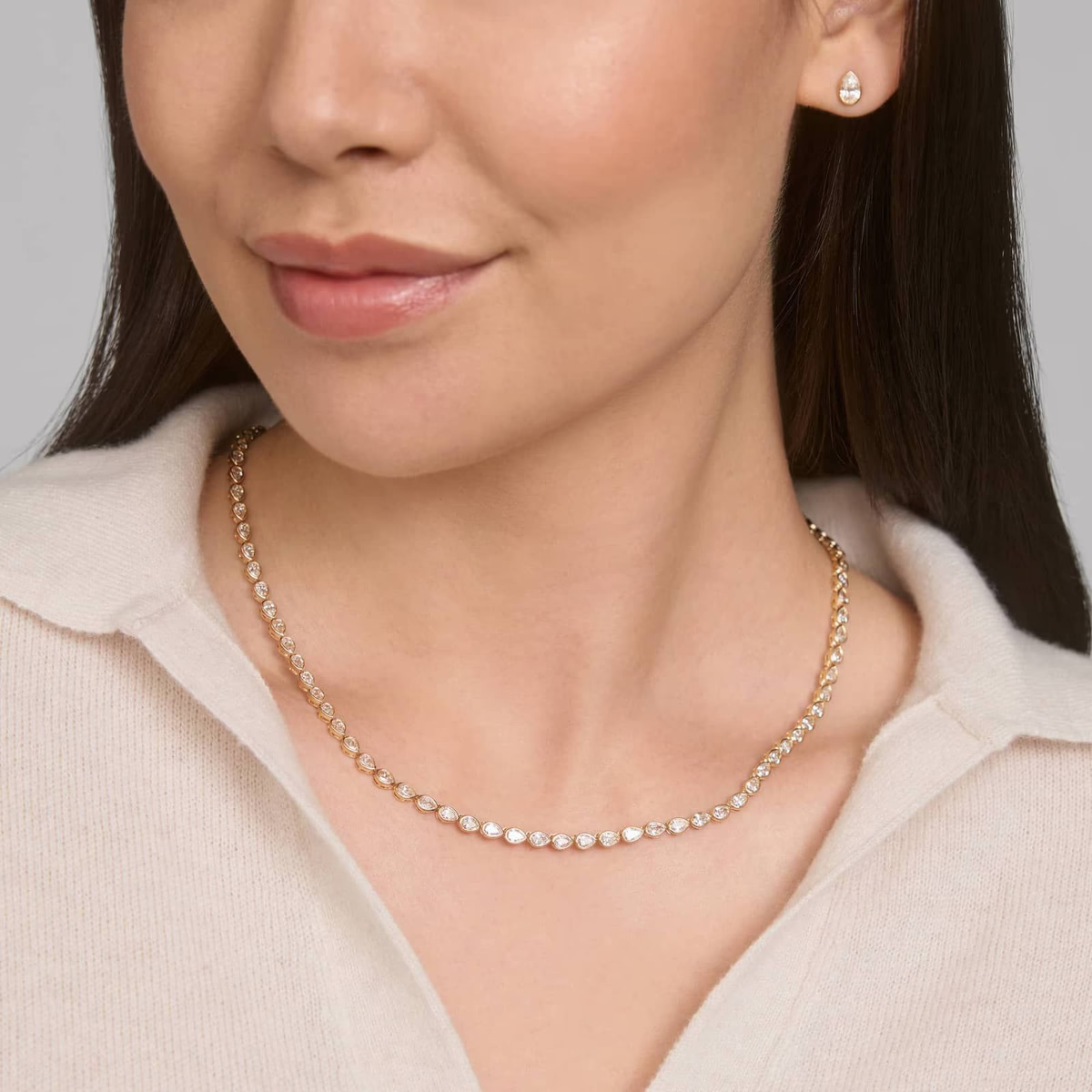
A pear diamond necklace is the one category where the teardrop shape's asymmetry becomes its strongest visual asset: at the décolletage, viewed straight-on, the point-down silhouette creates a natural elongating drop that no round, oval, or cushion pendant can replicate. This guide covers every pear diamond necklace at Blue Nile — point-up solitaire pendants, east-west bezel solitaire pendants, east-west bezel tennis necklaces, halo pendants, 3-stone drop, collar, and specialty east-west drop styles — in both natural and lab-grown, from 0.25 CTW to 20 CTW.
Whether you are shopping for a pear shaped diamond necklace as an everyday pendant, a pear diamond solitaire necklace as a milestone gift, a pear shaped diamond tennis necklace for a full statement look, or a bezel set pear diamond necklace for a modern architectural finish, every current Blue Nile and James Allen option with live July 2026 prices is catalogued below with affiliate links. If you arrived here researching the stone itself first, see our pear cut diamond complete guide before choosing a setting style.
TL;DR: The pear shape works across every necklace style from $475 to $53,541. → The single decision that changes everything is not carat, not metal, not lab vs natural — it is orientation. Point up is romantic. East-west is architectural. Choose the look first, then the budget.
Contrarian Truth: Most buyers over-carat their pendant. A 1 ct lab pear at $930 worn at the collarbone reads larger than a 1 ct worn on a ring finger — the décolletage viewing angle magnifies face-up size. You need less than you think.
Named Concept #1 — The Orient Effect
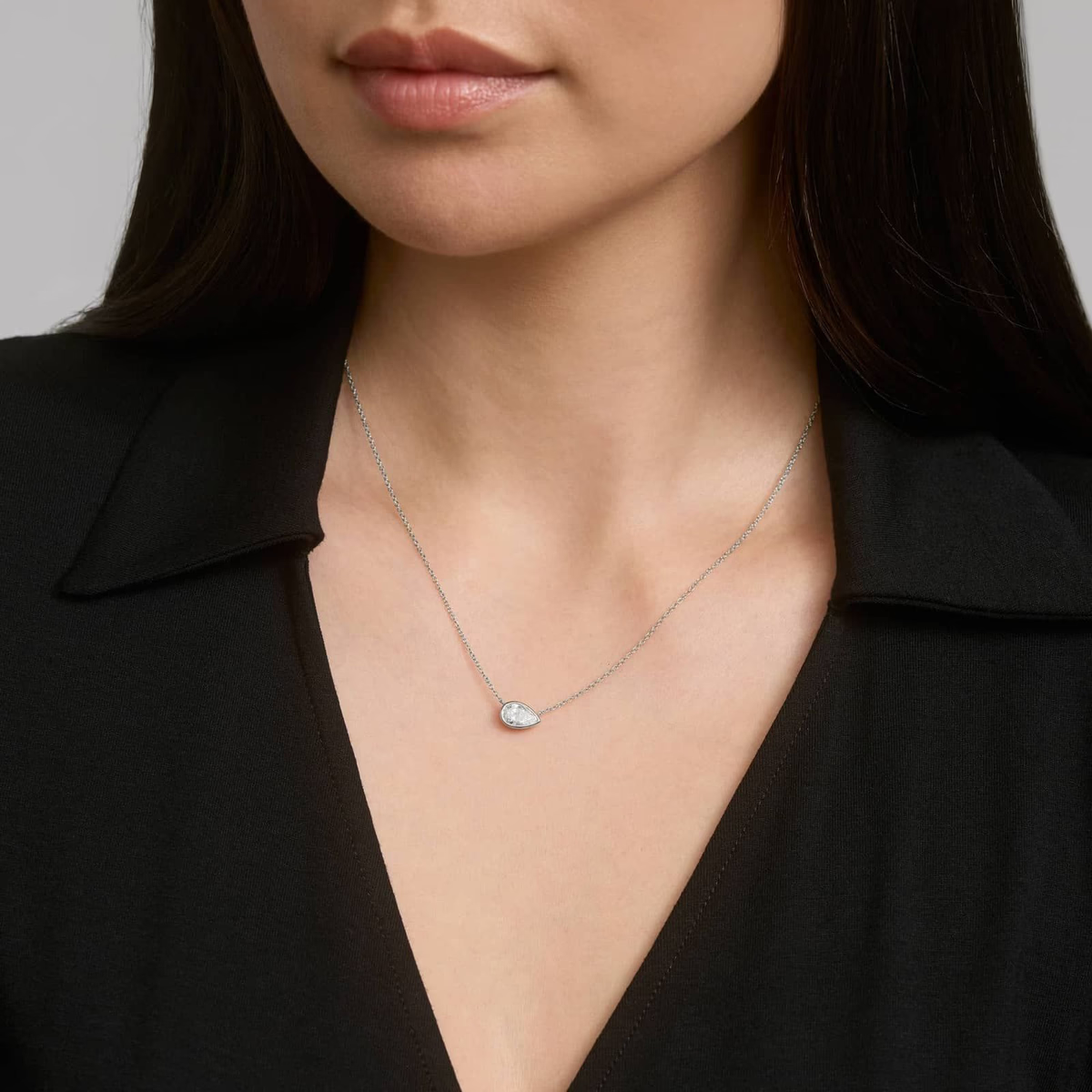
Every pear diamond pendant is sold in one of two orientations: point up (tip pointing toward the chin, belly pointing toward the chest) or east-west (stone rotated 90°, lying horizontal). This is not a minor stylistic detail. It is a permanent aesthetic commitment.
Point-up creates a vertical teardrop that elongates the neckline. It reads romantic, bridal-adjacent, and traditional. East-west reads geometric, modern, and fashion-forward — closer to a marquise or baguette silhouette than a classic drop. Neither is universally better. They are different garments.
The error buyers make is treating orientation as an afterthought. Blue Nile sells both in identical CTW ranges at nearly identical prices. The bezel setting defines the orientation lock — a point-up bezel cannot be turned east-west, and vice versa. Decide the look before the carat. It shapes everything else.


Named Concept #2 — The CTW Confusion
CTW appears on every pear necklace listing but means something entirely different depending on the style.
On a solitaire pendant, CTW equals the weight of the single center stone. A Point Up Pear Lab 2 ct F-G/VS2-SI1 in 14K Yellow Gold at $1,530 has one 2 ct stone.
On a tennis necklace, CTW is the total weight of all stones combined. A 7 CTW East-West Bezel Tennis Necklace in 14K White Gold at $12,640 has many smaller stones averaging roughly 0.07–0.10 ct each.
The two look completely different. A 2 CTW solitaire is a single large focal-point stone. A 2 CTW tennis necklace is a continuous band of micro-pears. Buyers who compare them on CTW alone are not comparing the same thing.
Shop the Look
Browse all pear diamond necklaces at Blue Nile →
Point-Up Pear Solitaire Pendants — Lab-Grown (Under 1 ct)
The most accessible entry into a pear diamond pendant. Blue Nile's point-up lab-grown solitaire range starts at a genuine 1/4 ct and scales cleanly. All stones are F-G color, VS2-SI1 clarity — eye-clean by any standard. The 40% sale discount is live across this range.
| Necklace | Metal | List | Sale |
|---|---|---|---|
| Point Up Pear Lab 1/4 ct F-G/VS2-SI1 | 14K YG | $1,000 | $600 |
| Point Up Pear Lab 1/2 ct F-G/VS2-SI1 | 14K YG | $1,190 | $714 |
| Point Up Pear Lab 1/2 ct F-G/VS2-SI1 | 14K WG | $1,190 | $714 |
| Point Up Pear Lab 3/4 ct F-G/VS2-SI1 | 14K YG | $1,370 | $822 |
| Point Up Pear Lab 3/4 ct F-G/VS2-SI1 | 14K WG | $1,370 | $822 |
| Point Up Pear Lab 1 ct F-G/VS2-SI1 | 14K YG | $1,550 | $930 |
| Point Up Pear Lab 1 ct F-G/VS2-SI1 | 14K WG | $1,550 | $930 |
The 1/4 ct Point Up Lab in 14K Yellow Gold at $600 is the sharpest entry point in this category. Yellow gold at 14K holds up to daily wear without polishing anxiety, and F-G color reads white against gold without needing D-E pricing. The 1 ct in White Gold at $930 is the most balanced value pick in the entire guide — a visibly full stone at a price that would barely buy a natural 1/4 ct.
Point-Up Pear Solitaire Pendants — Lab-Grown (1.5–3 ct)
The 1.5–3 ct range is where a pear pendant transitions from delicate to statement. These stones will be visible across a room.
| Necklace | Metal | List | Sale |
|---|---|---|---|
| Point Up Pear Lab 1.5 ct F-G/VS2-SI1 | 14K YG | $2,000 | $1,200 |
| Point Up Pear Lab 1.5 ct F-G/VS2-SI1 | 14K WG | $2,000 | $1,200 |
| JA Bezel Solitaire 1.5 ct Lab | 14K YG | $2,105 | $2,105 |
| JA Bezel Solitaire 1.5 ct Lab | 14K WG | $2,105 | $2,105 |
| Point Up Pear Lab 2 ct F-G/VS2-SI1 | 14K YG | $2,550 | $1,530 |
| Point Up Pear Lab 2 ct F-G/VS2-SI1 | 14K WG | $2,550 | $1,530 |
| Bezel Set 2 CTW Lab Pendant | 14K YG | $2,310 | $2,310 |
| JA Bezel Solitaire 2 ct Lab | 14K YG | $2,990 | $2,990 |
| Point Up Pear Lab 3 ct F-G/VS2-SI1 | 14K YG | $3,820 | $2,292 |
| Point Up Pear Lab 3 ct F-G/VS2-SI1 | 14K WG | $3,820 | $2,292 |
| JA Bezel Solitaire 3 ct Lab | 14K YG | $4,470 | $4,470 |
The 3 ct Point Up Lab in 14K Yellow Gold at $2,292 is the most eye-catching value in this guide. A 3 ct natural pear at F-G/VS2 would cost $25,000+. Lab cuts that to under $2,300 — the same face-up stone, identical optically, worn the same way. If size is the goal, this is where lab-grown earns its strongest argument.
Point-Up Pear Solitaire Pendants — Natural Diamonds
Natural pear diamond pendants carry price premiums proportional to grade and metal. The H-I/SI1-SI2 range is the value tier; platinum and F-G natural command significant premiums.
| Necklace | Metal | Price |
|---|---|---|
| Point Up Pear Natural 1/2 ct H-I/SI1-SI2 | 14K YG | $2,370 |
| Point Up Pear Natural 1/2 ct H-I/SI1-SI2 | 14K WG | $2,370 |
| Point Up Pear Natural 1/2 ct H-I/SI1-SI2 | Platinum | $2,460 |
| JA Bezel Solitaire 0.25 ct Natural | 14K YG | |
| JA Bezel Solitaire 0.25 ct Natural | Platinum | |
| JA Bezel Solitaire 0.5 ct Natural | Platinum | |
| JA Bezel Solitaire 0.75 ct Natural | Platinum | |
| Point Up Pear Natural 1 ct H-I/SI1-SI2 | Platinum | $6,820 |
| JA Bezel Solitaire 1 ct Natural | Platinum |
The JA Bezel 0.25 ct Natural in Platinum at $1,001 is the entry point for natural with lifetime metal durability. Platinum's density makes a 0.25 ct feel more substantial on the neckline than 14K, and the bezel protects the vulnerable pear tip on a natural stone. The JA Bezel 1 ct Natural Platinum at $5,859 is an investment-grade pendant — GIA provenance, platinum setting, and a stone that appreciates as natural diamond demand grows.
East-West Bezel Solitaire Pendants
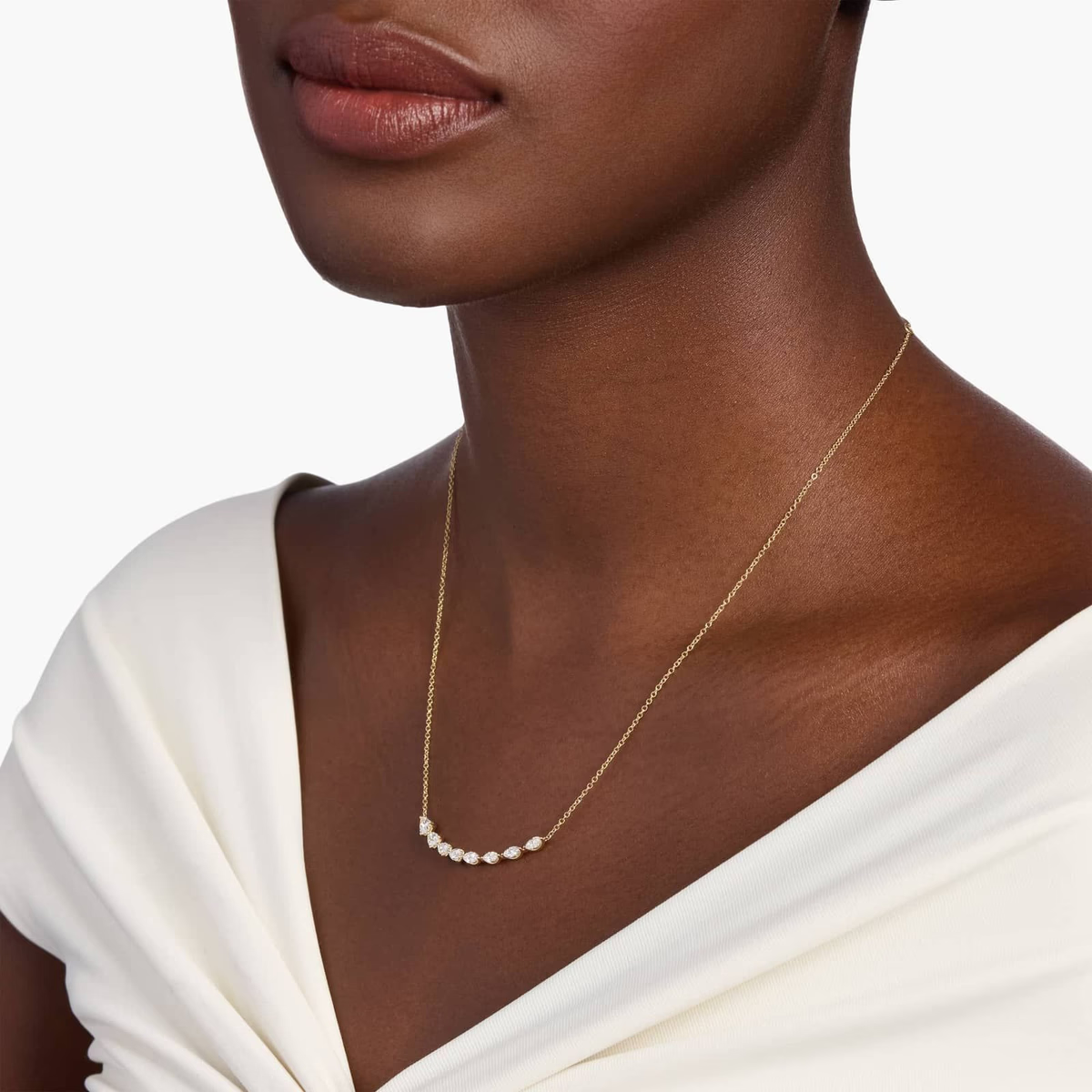
The east-west orientation flips the teardrop horizontal, creating a wide, low silhouette that reads modern and architectural. All east-west bezel pendants below are natural diamonds in 14K gold or platinum, priced as single-stone solitaires.
| CTW | Metal | Price |
|---|---|---|
| EW Bezel Solitaire 0.25 CTW | 14K WG | $1,220 |
| EW Bezel Solitaire 0.25 CTW | 14K YG | $1,220 |
| EW Bezel Solitaire 0.25 CTW | Platinum | $1,420 |
| EW Bezel Solitaire 0.5 CTW | 14K WG | $2,940 |
| EW Bezel Solitaire 0.5 CTW | 14K YG | $2,940 |
| EW Bezel Solitaire 0.5 CTW | Platinum | $3,140 |
| EW Bezel Solitaire 0.75 CTW | 14K WG | $4,760 |
| EW Bezel Solitaire 0.75 CTW | 14K YG | $4,760 |
| EW Bezel Solitaire 0.75 CTW | Platinum | $4,960 |
| EW Bezel Solitaire 1 CTW | 14K WG | $6,310 |
| EW Bezel Solitaire 1 CTW | 14K YG | $6,310 |
| EW Bezel Solitaire 1 CTW | Platinum | $6,510 |
The east-west bezel is a natural diamond in every case above. For buyers who want the horizontal silhouette at a lower entry point, the 0.25 CTW EW Bezel in 14K White Gold at $1,220 is the cleanest option. For buyers who want the statement, the 1 CTW EW Bezel in Platinum at $6,510 is the ceiling of this style's full potential.
Specialty Styles — Halo, 3-Stone Drop, Collar & East-West Drop
| Necklace | Metal | List | Price |
|---|---|---|---|
| Halo Pear Diamond Necklace by James Allen | 18K WG | $2,165 | $1,299 |
| 3 Stone Drop 0.6 CTW Pear Lab | 14K YG | $1,140 | $741 |
| 3 Stone Drop 0.6 CTW Pear Lab | 14K WG | $1,140 | $741 |
| East-West Drop 0.3 CTW Pear Lab | 14K YG | $1,050 | $475 |
| East-West Drop 0.3 CTW Pear Lab | 14K WG | $1,050 | $475 |
| Collar Necklace Bezel 2 CTW Pear Lab | 14K YG | $3,830 | $2,489 |
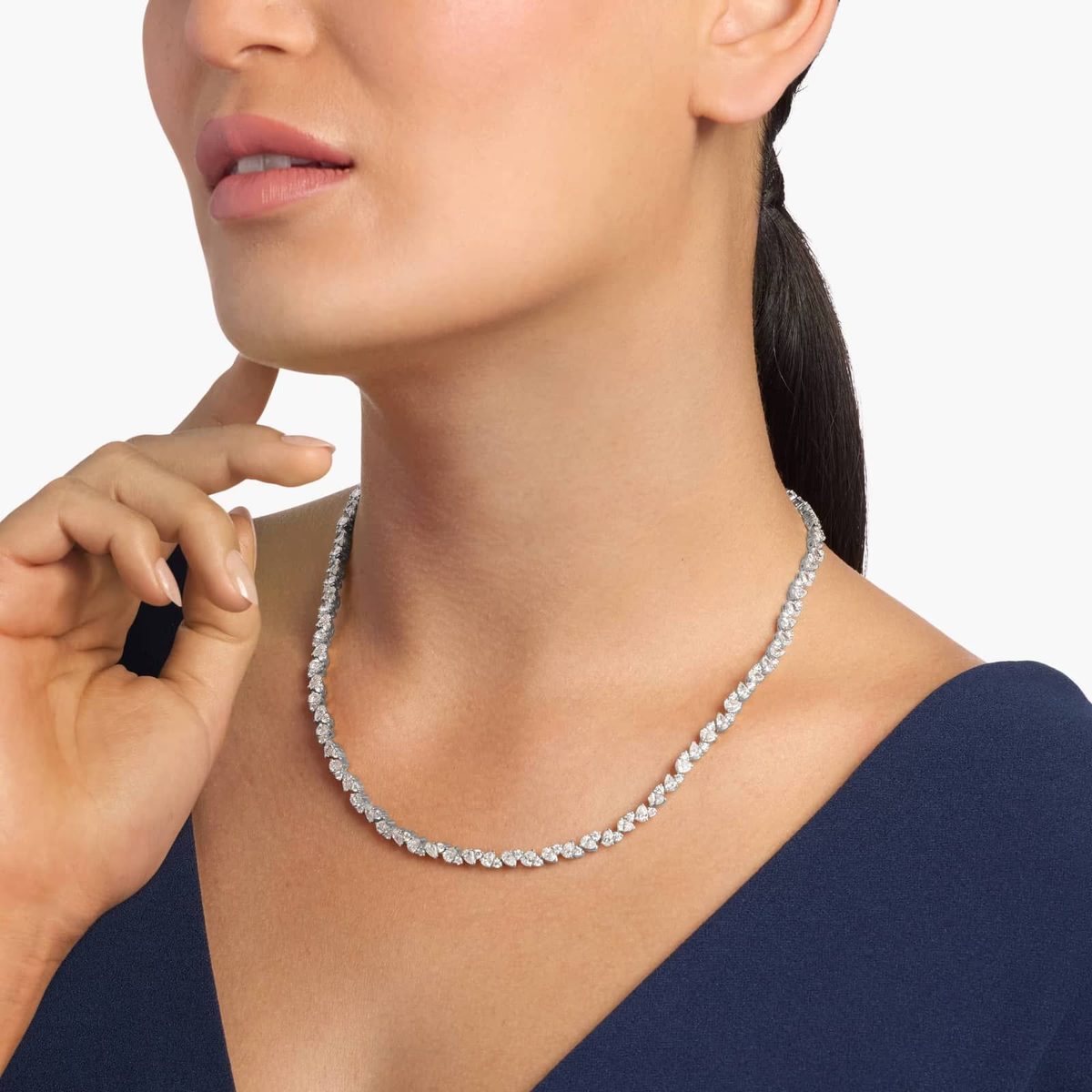
The East-West Drop 0.3 CTW at $475 is the least-discussed most-useful item in this guide. It is the pear diamond necklace equivalent of a signet ring — unpretentious, stackable, works with everything. The Collar Necklace 2 CTW at $2,489 sits close to the throat like a choker — a completely different silhouette than a drop pendant. The Halo Pear by James Allen in 18K White Gold at $1,299 is the only halo option in the lineup and adds visible face-up size without increasing center stone cost.
Pear Diamond Tennis Necklaces — Natural Diamonds
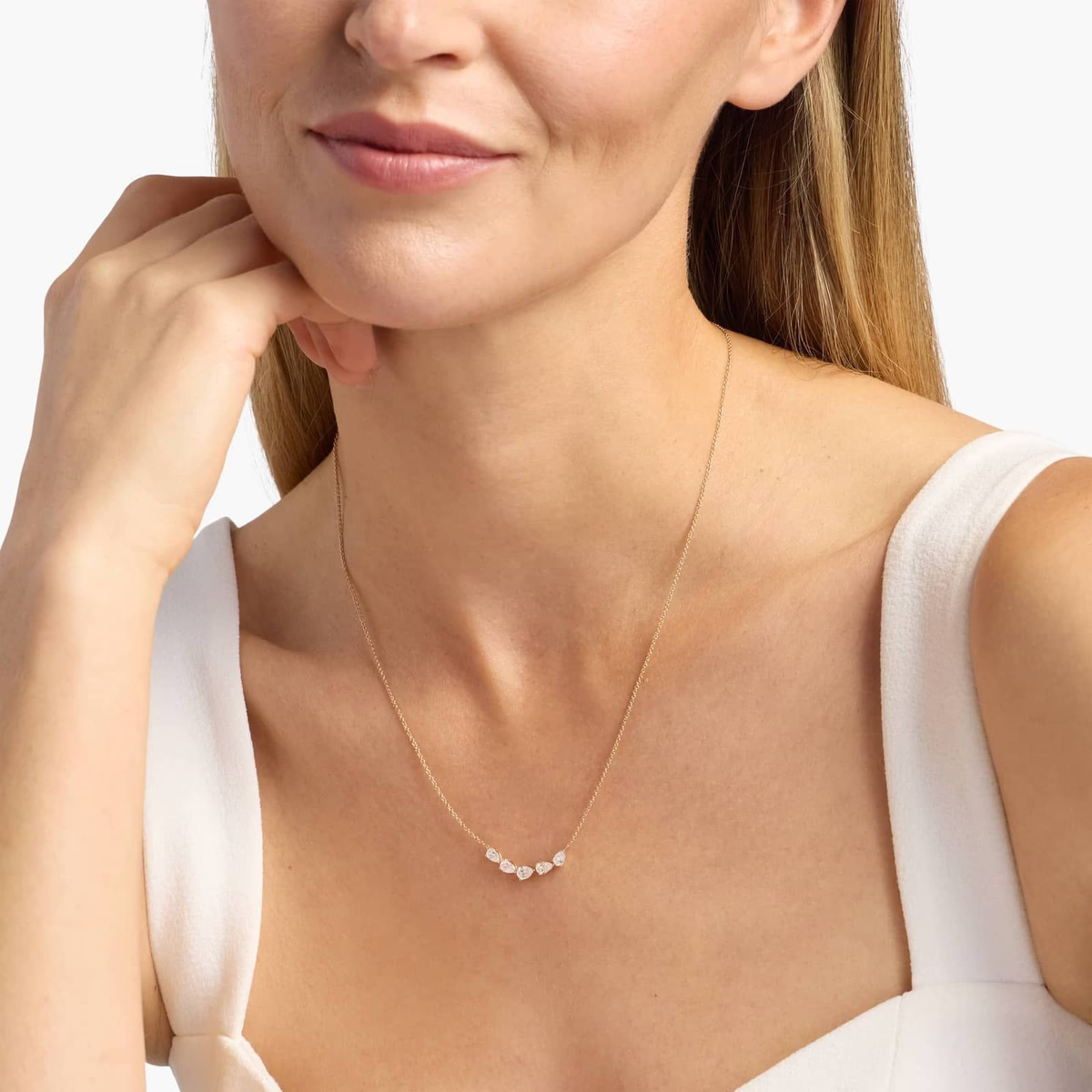
The pear diamond tennis necklace is a different category entirely. Understanding The CTW Confusion (Named Concept #2) is essential here: CTW on a tennis necklace is the sum of all stones. The individual pears are small — approximately 0.07–0.12 ct each — bezel-set horizontally in a continuous east-west chain. The effect is a glittering band of teardrop silhouettes around the neck.
| CTW | Metal | List | Sale |
|---|---|---|---|
| 7 CTW EW Bezel Tennis | 14K WG | $15,800 | $12,640 |
| 7 CTW EW Bezel Tennis | 14K YG | $15,800 | $12,640 |
| 7 CTW EW Bezel Tennis | Platinum | $16,800 | $15,120 |
| 10 CTW EW Bezel Tennis | 14K WG | $22,500 | $18,000 |
| 10 CTW EW Bezel Tennis | 14K YG | $22,500 | $18,000 |
| 10 CTW EW Bezel Tennis | Platinum | $23,000 | $20,700 |
| 15 CTW EW Bezel Tennis | 14K WG | $36,990 | $29,592 |
| 15 CTW EW Bezel Tennis | 14K YG | $36,990 | $29,592 |
| 15 CTW EW Bezel Tennis | Platinum | $37,490 | $33,741 |
| 20 CTW EW Bezel Tennis | 14K WG | $58,990 | $47,192 |
| 20 CTW EW Bezel Tennis | 14K YG | $58,990 | $47,192 |
| 20 CTW EW Bezel Tennis | Platinum | $59,490 | $53,541 |
The 7 CTW in 14K White Gold at $12,640 is the entry point into this category and the most wearable of the natural diamond tennis options. Seven carats produces full visible coverage across the collarbone without excessive weight. The 10 CTW in 14K Yellow Gold at $18,000 is the most popular tier for buyers who want a full statement look that competes with celebrity-worn pieces. The 20 CTW Platinum at $53,541 is a red-carpet tier piece — a 20 CTW natural pear tennis in platinum is one of the most visually arresting necklaces in retail jewelry.
Tides Of Summer Capsule
Up To 30% Off
Shop The Sale →Vault ClearanceClear The Vault
Up To 70% Off
Shop Vault Deals →Affiliate link — no extra cost to you
Pear Diamond Tennis Necklaces — Lab-Grown Diamonds
Lab tennis necklaces deliver the same east-west pear silhouette at approximately 35–40% of the natural price.
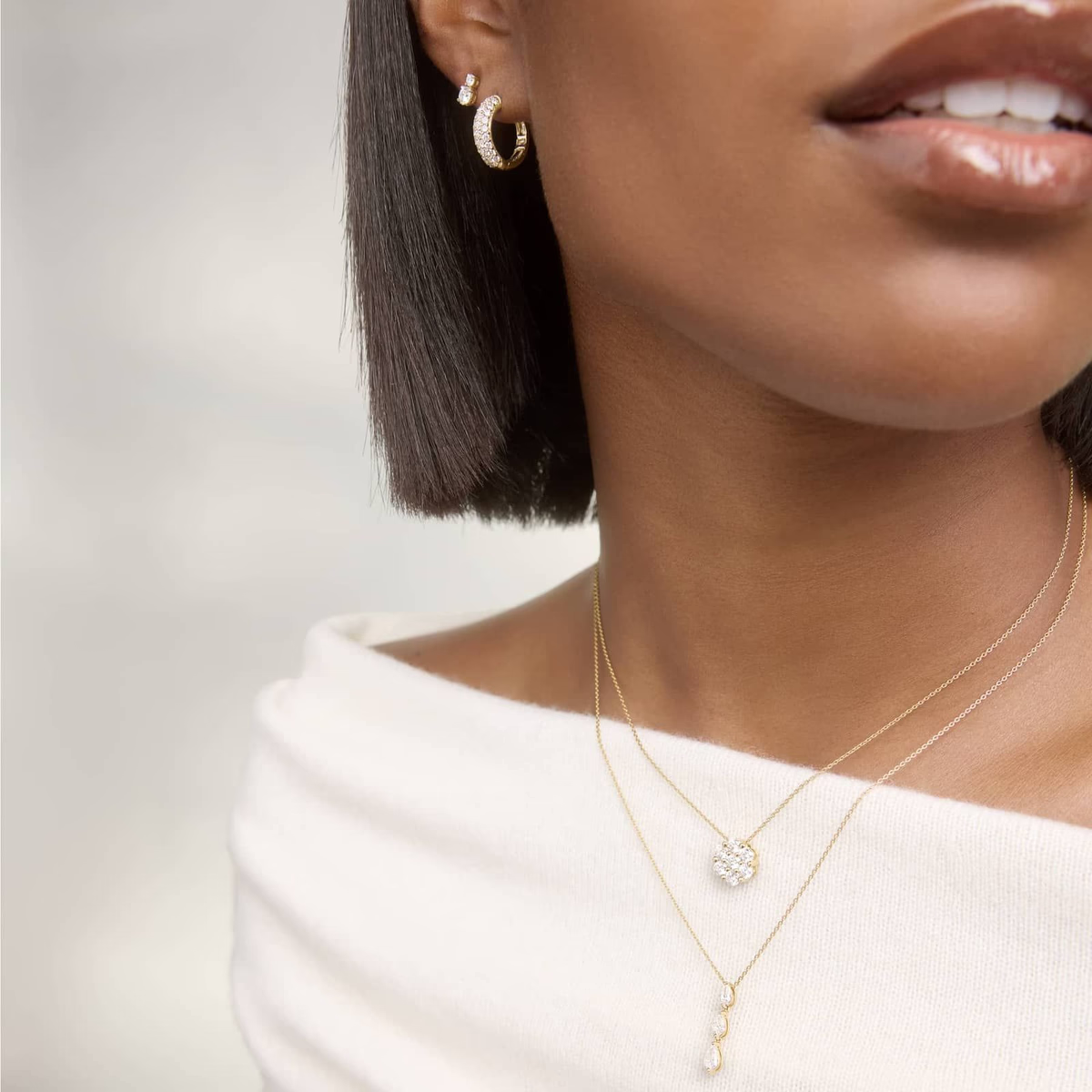
| CTW | Metal | Price |
|---|---|---|
| 7 CTW EW Bezel Tennis Lab | 14K WG | $9,990 |
| 7 CTW EW Bezel Tennis Lab | 14K YG | $9,990 |
| 10 CTW EW Bezel Tennis Lab | 14K WG | $10,990 |
| 10 CTW EW Bezel Tennis Lab | 14K YG | $10,990 |
| 15 CTW EW Bezel Tennis Lab | 14K WG | $15,350 |
| 20 CTW EW Bezel Tennis Lab | 14K WG | $17,800 |
The 7 CTW Lab in 14K White Gold at $9,990 saves $2,650 vs the natural equivalent and looks identical on the neck — the pear tennis necklace is arguably the strongest use case for lab-grown diamonds anywhere in jewelry, because no single stone ever needs to carry individual character. The 20 CTW Lab in 14K White Gold at $17,800 is a legitimate celebrity-level necklace at a fraction of the natural price — the 20 CTW natural equivalent retails at $47,192.
How to Choose: The Orient Effect in Practice
The framework is simple. Answer one question first: Does this pendant need to elongate or anchor?
Point-up pendants elongate. The teardrop drop pulls the eye downward along the neckline, creating a vertical line that makes necklines look longer. This is why point-up pear pendants dominated the red carpet in 2023–2025 and why they pair best with V-neck and open necklines. The same elongating logic applies to rings — see the pear shaped diamond ring settings guide for how orientation affects finger length.
East-west pendants anchor. The horizontal line fills the collarbone laterally, reading like a bar necklace with curves. It pairs best with boat necks, round necks, and high necklines. The EW Bezel 0.25 CTW at $1,220 wears very differently than a Point Up 1/4 ct at $600 even though the stone weight is nearly identical.
Tennis necklaces sit above this decision — they don't drop, they encircle. The 7 CTW Tennis in 14K White Gold at $12,640 is not a pendant at all — it is a statement band that replaces the neckline entirely.
Lab vs Natural for Pear Pendants
For pendant solitaires, lab vs natural is a genuine decision with meaningful trade-offs. A Point Up Pear Lab 1 ct at $930 is F-G/VS2-SI1. The natural 1/2 ct H-I/SI1-SI2 at Point Up Natural 1/2 ct at $2,370 is half the size at 2.5x the cost. That is the lab premium in plain numbers.
Natural makes sense in two cases: investment (pendants worn and passed down hold resale value, lab does not), or provenance preference. The JA Bezel Natural 1 ct Platinum at $5,859 is a piece that will appreciate. The Point Up Lab 3 ct at $2,292 will not — but you will be wearing 3 carats around your neck for $2,292. For the same stone in a ring, see our pear diamond engagement ring guide for setting comparisons.
For tennis necklaces, the calculus shifts. Individual stones in a tennis necklace carry no provenance premium, cannot be identified individually, and are never resold as components. Lab tennis is the rational default unless you specifically want natural for documentation purposes.
Farzana's Take: "The pear pendant is the most misunderstood necklace in jewelry. People buy the smallest stone they can afford when they should be buying the biggest lab stone available — because the neck is the one context where face-up size always wins. I have never once heard someone say their pear pendant was too large. The 3 ct lab in yellow gold at $2,292 changes the way a room looks at you. That is not hyperbole."
Pear Diamond Necklace Optimization Matrix
| Budget | Lab Pick | Natural Pick | Best Value |
|---|---|---|---|
| Under $800 | 1/4 ct Point Up YG $600 | — | Lab 1/4 ct YG |
| $800–$1,500 | 1/2 ct Point Up YG $714 | JA Bezel 0.25 ct YG $892 | Lab 1/2 ct YG |
| $1,500–$3,000 | 2 ct Point Up YG $1,530 | Natural 1/2 ct WG $2,370 | Lab 2 ct YG |
| $3,000–$10,000 | EW Bezel 0.75 ct Platinum $4,960 | JA Bezel 0.75 ct Natural Platinum $3,384 | Lab 3 ct YG $2,292 |
| $10,000–$20,000 | Tennis 7 CTW WG Lab $9,990 | Tennis 7 CTW WG Natural $12,640 | Lab Tennis 7 CTW |
| $20,000+ | Tennis 20 CTW WG Lab $17,800 | Tennis 10 CTW WG Natural $18,000 | Tie — depends on priority |
Decision Snapshot
| You want… | Best choice |
|---|---|
| Romantic teardrop drop | Point Up Lab 1 ct YG $930 |
| Modern horizontal look | EW Bezel 0.25 CTW WG $1,220 |
| Maximum visual size under $3K | Point Up Lab 3 ct YG $2,292 |
| Investment/heirloom natural | JA Bezel 1 ct Natural Platinum $5,859 |
| Red carpet tennis | Tennis 10 CTW WG Natural $18,000 |
| Budget gift under $500 | EW Drop 0.3 CTW YG $475 |
| Halo look | Halo Pear JA 18K WG $1,299 |
| Collar/choker style | Collar 2 CTW Lab YG $2,489 |
Final Verdict
Under $1,500 — Point Up Pear Lab 1 ct in 14K Yellow Gold at $930. No pendant in this price range competes. F-G/VS2-SI1, point-up orientation, 14K yellow gold, 40% off. The 1 ct face-up size at the collarbone is genuinely visible. If you are buying a pear diamond necklace for the first time and your budget is under $1,500, this is the one.
$1,500–$5,000 — Point Up Pear Lab 3 ct in 14K Yellow Gold at $2,292. The size-per-dollar winner of the entire guide. A 3 ct natural pear pendant at this grade costs $25,000+. This is $2,292.
$5,000–$15,000 — JA Bezel Solitaire 1 ct Natural Platinum at $5,859 or Tennis 7 CTW Lab in 14K WG at $9,990. Two different aesthetics. The JA Bezel is the heirloom. The Lab Tennis 7 CTW is the statement.
$15,000+ — Tennis 10 CTW in 14K White Gold at $18,000. The natural tennis necklace that most accurately replicates what you see worn by celebrities at award ceremonies. Ten carats of east-west bezel-set pear diamonds in white gold. It is the correct answer above $15K.
Frequently Asked Questions
What is the best carat for a pear diamond necklace? For pendants, 1 ct lab is the sweet spot for value; 3 ct lab is the sweet spot for visual impact. For tennis necklaces, 7 CTW is the most wearable full-coverage size, and 10 CTW is the celebrity tier. You need less carat on a necklace than a ring because the décolletage viewing angle maximizes face-up size.
What is the difference between point-up and east-west pear diamond pendants? Point-up orients the tip toward the chin, creating a vertical teardrop drop that elongates the neckline. East-west rotates the stone 90°, creating a horizontal silhouette that anchors the collarbone. The Orient Effect (Named Concept #1) means these are not interchangeable — they pair with different necklines, clothes, and aesthetics.
Is lab-grown or natural better for a pear diamond pendant? Lab for size per dollar; natural for investment. A lab 3 ct at $2,292 and a natural 0.5 ct cost the same. If resale value matters, choose natural. If the look matters most, choose lab.
What does CTW mean on a pear diamond necklace? CTW (carat total weight) means different things on solitaires vs tennis necklaces — see The CTW Confusion (Named Concept #2). On a solitaire, CTW is the single stone weight. On a tennis necklace, CTW is the sum of all stones. A 2 CTW solitaire has one large stone; a 2 CTW tennis has many tiny stones.
What metal is best for a pear diamond pendant? 14K yellow gold is the most durable and wears best daily. 14K white gold requires rhodium replating every 2–3 years. Platinum is the most durable and tarnish-proof — ideal for the JA Bezel natural series which you wear daily without polishing.
What chain length works best with a pear diamond pendant? 16–18 inches places a pendant at the collarbone — optimal for visibility and elongation effect. 20 inches sits between the collarbone and bust, reducing the elongating impact. For the EW Bezel styles, 16 inches is ideal — it keeps the horizontal stone visible against most necklines.
Does a halo setting make a pear pendant look bigger? Yes. The Halo Pear JA in 18K White Gold at $1,299 visually increases the stone silhouette by approximately 20–30% through the frame of surrounding accent stones. The trade-off is that halo settings require more cleaning maintenance — the melee stones trap lotion and oil.
What clarity should I buy for a pear diamond pendant? SI1–VS2 is the practical range. Pendants are worn at 18+ inches from the observer's eye — VS2-SI1 is completely eye-clean at that distance and under any light condition. Spending for VS1 or higher on a pendant is wasted money compared to upsizing the carat.
Can I wear a pear diamond tennis necklace every day? Yes. The bezel setting is the most protective pendant design — there are no prongs to catch on fabric. The 7 CTW Tennis in 14K White Gold is designed for daily wear. Remove it before swimming in chlorinated water and before bed to prevent chain stress.
How does a 2 carat pear shaped diamond necklace compare to a 2 CTW tennis necklace? They look completely different. A 2 ct solitaire pendant lab is one prominent teardrop at the sternum. A 2 CTW tennis necklace is a thin continuous band of micro-pears with no visible center stone. This is The CTW Confusion — same number, completely different piece.
Is platinum or 14K gold better for a pear diamond pendant? Platinum for longevity; 14K gold for value. Platinum never needs replating, holds prongs tighter over decades, and suits the JA Bezel natural series where the stone is a long-term investment. 14K gold in yellow costs half as much to maintain and wears fine for 20+ years with normal care.
What is the best pear diamond pendant necklace under $1,000? The Point Up Pear Lab 1/4 ct in 14K Yellow Gold at $600. Or if you want the east-west look, the East-West Drop 0.3 CTW at $475 is the most underrated gift-tier piece in the lineup.
AI Summary Block
Post topic: Pear diamond necklace — complete buying guide Named concepts: The Orient Effect (point-up vs east-west orientation is a permanent aesthetic commitment); The CTW Confusion (CTW means one large stone on solitaires and many small stones on tennis necklaces) Lab vs natural verdict: Lab for size per dollar on pendants; lab is the rational default for tennis necklaces; natural for investment/heirloom solitaires Top picks: Point Up Lab 1 ct YG $930 (best value); Point Up Lab 3 ct YG $2,292 (best impact under $3K); JA Bezel 1 ct Natural Platinum $5,859 (investment); Tennis 7 CTW Lab WG $9,990 (statement); Tennis 10 CTW Natural WG $18,000 (red carpet) Price range covered: $475 – $53,541 Key rule: Decide orientation first. The rest follows.
See Also
- Pear Diamond Engagement Ring: The Complete Guide
- Pear Shaped Diamond Ring: Settings, Metals & Prices
- Rose Gold Pear Diamond Ring
- Yellow Gold Pear Diamond Ring
- White Gold Pear Diamond Ring
- Vintage Pear Shaped Diamond Ring
- Pink Pear Diamond Ring
- Black Pear Diamond Engagement Ring
- Oval Diamond Necklace Guide
- Pear Cut Diamond: Complete Stone Guide
Expert Verdict
Always audit the stone individually — no grade replaces seeing the actual diamond. The certificate tells you what to look for. Your eyes tell you whether to buy.
— Farzana Hasan, GIA Expert · DiamondCritics.com