A pear diamond pendant is the single most impactful piece of fine jewelry you can wear at the collarbone. The teardrop silhouette, positioned at the décolletage and viewed face-on, reads at its full face-up size — something a ring finger never gives you. This guide covers every pear diamond pendant at Blue Nile and James Allen: point-up bezel solitaires, point-up prong solitaires, east-west bezel solitaires, collar pendants, and the full natural vs lab-grown decision framework, from 1/4 CTW to 3 CTW.
Whether you are shopping for a pear diamond solitaire pendant as a daily-wear piece, a 1 carat pear shaped diamond pendant as a milestone gift, a pear shaped diamond pendant necklace in yellow gold or platinum, or comparing a bezel set pear diamond necklace against a Tiffany alternative, every current option with live July 2026 prices is catalogued below with affiliate links. If you need the full necklace guide including tennis necklaces, see our pear diamond necklace guide.
TL;DR: The single most important pendant decision is setting type, not carat. → A bezel-set pear pendant protects the tip and lasts a lifetime of daily wear. A prong-set pendant looks more traditional but the pointed tip is exposed. Buy the bezel if you wear it every day; buy prong only if you wear it occasionally.
Contrarian Truth: Nobody needs a 3 ct pendant to make a statement. The collarbone is the closest viewing position in all of jewelry — a 1 ct pear worn at 16" reads larger there than a 2 ct worn on a ring. The 1 ct lab in 14K Yellow Gold at $930 is the most over-delivered value in this entire guide.
Named Concept #1 — The Tip Vulnerability Rule
Every pear diamond has a pointed tip. That tip is the structural weak point. In the hierarchy of diamond shapes, the pear is second only to the marquise in tip fragility — a hard knock, a countertop, even a zipper can chip an exposed point.
In a prong setting, the tip sits in a single v-prong. It is visible, aesthetically clean, and classically elegant. But an unprotected pear tip accumulates micro-chips over years of daily wear. On a ring, this risk is high because hands contact surfaces constantly. On a pendant, the risk is lower — pendants swing freely and rarely impact hard surfaces directly. But it is not zero: the tip can hit clavicle bones, other necklaces, or the inside of a collar.
In a bezel setting, a rim of metal fully encircles the stone including the tip. The James Allen Bezel Solitaire series and the East-West Bezel Solitaire series fully protect the tip. For daily-wear pendants — pieces you put on in the morning and remove at night — the bezel is the correct default. The prong is for occasional wear or when maximum stone visibility matters more than durability.


Named Concept #2 — The Chain Length Illusion
Most buyers focus entirely on the pendant and treat the chain as an afterthought. This is a mistake that produces expensive regret. The chain length determines where the stone sits on the body, and that determines everything about how the pendant reads.
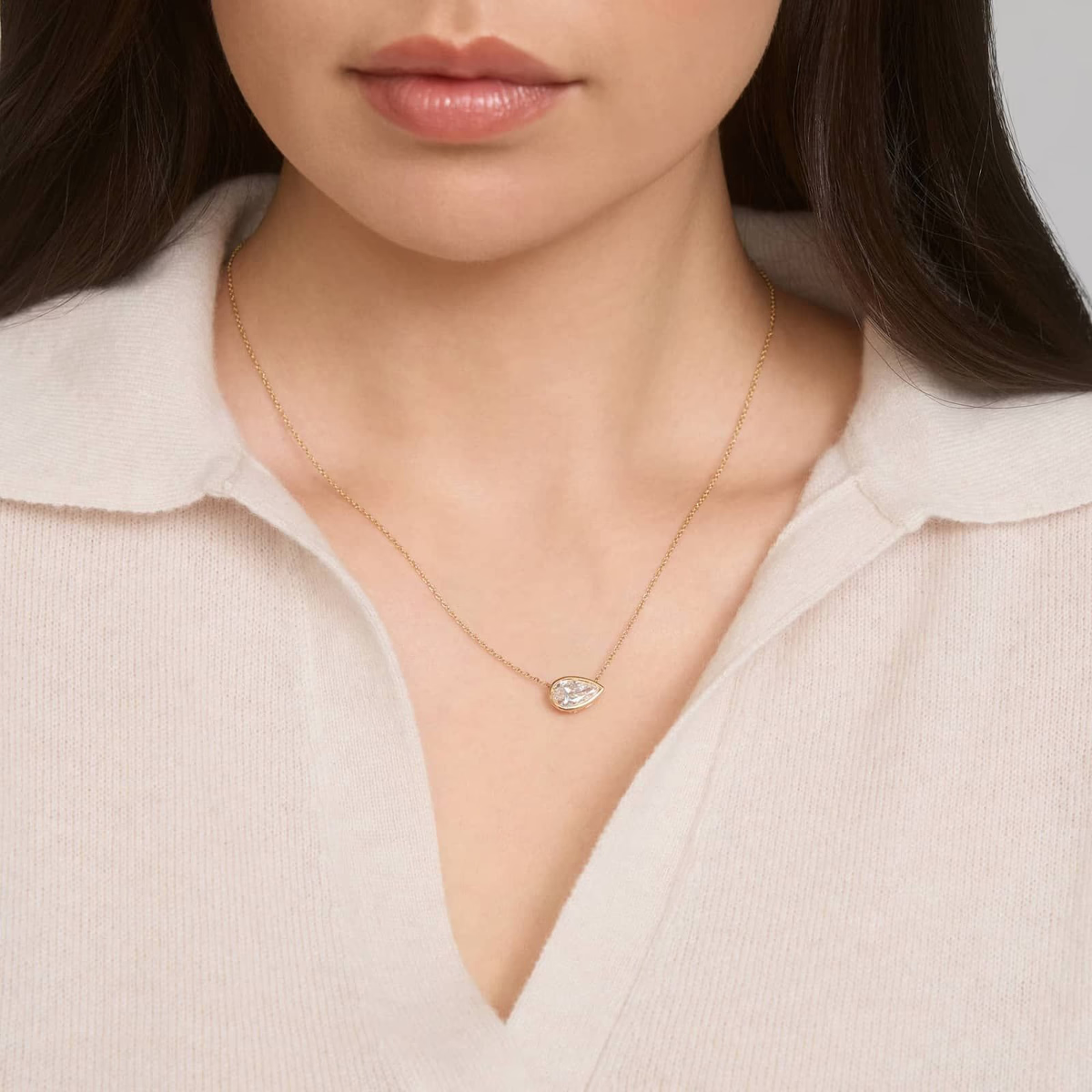
16 inches positions the pendant at the base of the throat. It reads formal, elegant, and high-fashion. It pairs best with V-necklines and open collars where the stone can be seen clearly. It photographs exceptionally well.
18 inches is the most versatile length — the stone sits at the top of the sternum, works with most necklines, and reads appropriately for both daytime and evening wear.
20 inches drops the pendant to mid-chest or bust. It reads casual and layering-friendly but the stone gets partially obscured by clothing in many contexts. A 1 ct pear at 20" reads smaller than the same stone at 16" because viewing distance increases and neckline coverage reduces visibility.
The 1 ct lab Point Up pendant at $930 at 16" looks like a statement piece. The same pendant at 20" reads as casual fine jewelry. Buy the chain length that matches the occasion profile you are building for.
Shop the Look
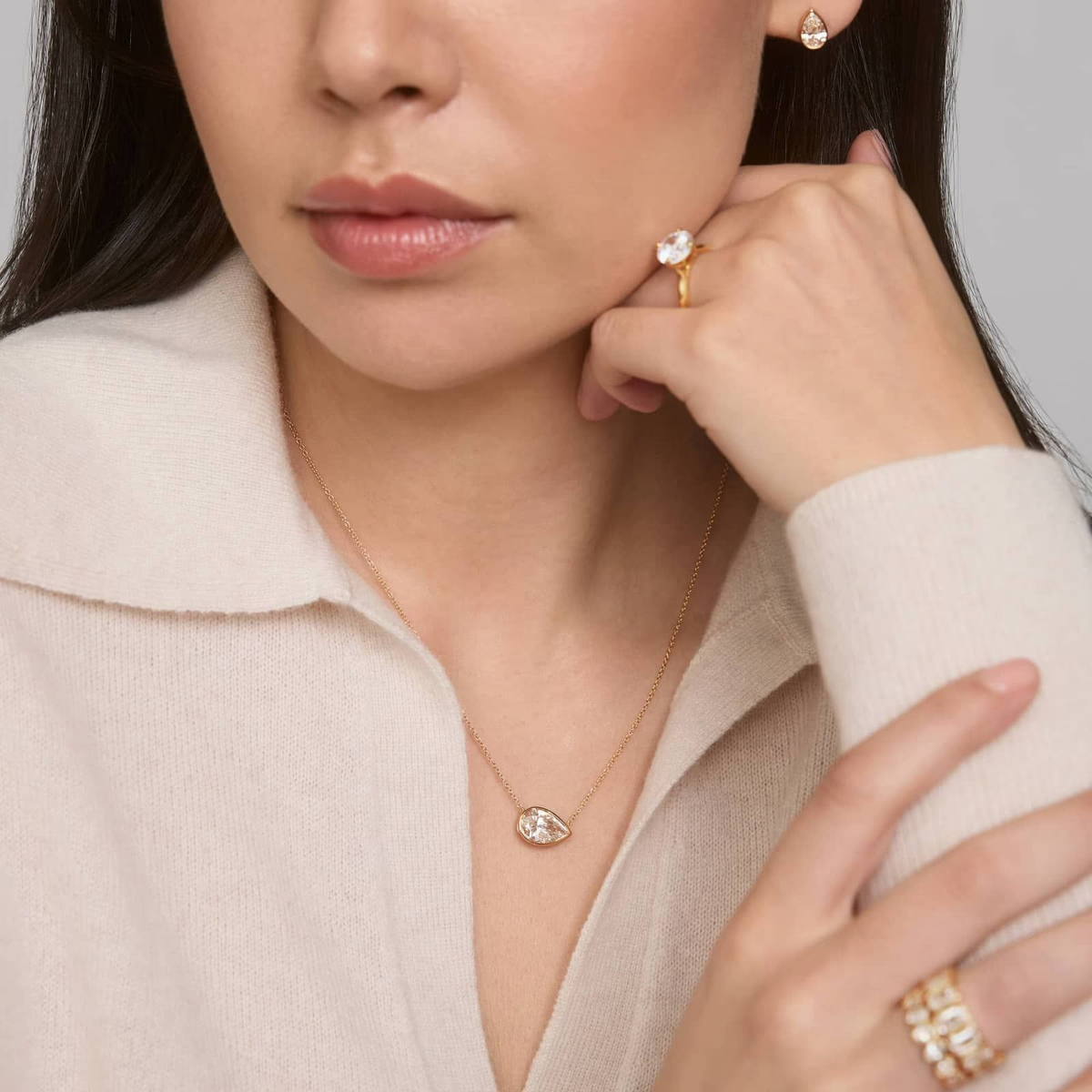
Browse all pear diamond pendants at Blue Nile →
Lab-Grown Point-Up Pear Solitaire Pendants — Under $1,000
The entry tier. All F-G/VS2-SI1 lab-grown stones, point-up orientation, 40% sale discount active across the range. These are the pendants for everyday wear — the Chain Length Illusion (Named Concept #2) applies most here: at 16" these look far more expensive than their price suggests.
| Pendant | Metal | List | Sale |
|---|---|---|---|
| Point Up Pear Lab 1/4 ct F-G/VS2-SI1 | 14K YG | $1,000 | $600 |
| Point Up Pear Lab 1/2 ct F-G/VS2-SI1 | 14K YG | $1,190 | $714 |
| Point Up Pear Lab 1/2 ct F-G/VS2-SI1 | 14K WG | $1,190 | $714 |
| Point Up Pear Lab 3/4 ct F-G/VS2-SI1 | 14K YG | $1,370 | $822 |
| Point Up Pear Lab 3/4 ct F-G/VS2-SI1 | 14K WG | $1,370 | $822 |
The 1/4 ct in Yellow Gold at $600 is the most accessible entry point for a real diamond pear pendant. At F-G color, it reads white-bright at the décolletage without any warm tint, even in yellow gold. The 3/4 ct in Yellow Gold at $822 is where the stone starts to be visible from normal social distances — the 3/4 ct face-up footprint on a pear is noticeably larger than a round of equivalent weight.
The 1 Carat Pear Shaped Diamond Pendant — Complete Comparison
The 1 ct pear pendant is the most searched size in this category and the most contested decision. Here are all 1 ct pear pendant options across lab and natural:
| Pendant | Metal | List | Price |
|---|---|---|---|
| Point Up Pear Lab 1 ct F-G/VS2-SI1 | 14K YG | $1,550 | $930 |
| Point Up Pear Lab 1 ct F-G/VS2-SI1 | 14K WG | $1,550 | $930 |
| Point Up Pear Natural 1/2 ct H-I/SI1-SI2 | 14K YG | $2,370 | $2,370 |
| Point Up Pear Natural 1/2 ct H-I/SI1-SI2 | 14K WG | $2,370 | $2,370 |
| Point Up Pear Natural 1/2 ct H-I/SI1-SI2 | Platinum | $2,460 | $2,460 |
| EW Bezel Solitaire 1 CTW | 14K WG | $6,310 | $6,310 |
| EW Bezel Solitaire 1 CTW | 14K YG | $6,310 | $6,310 |
| EW Bezel Solitaire 1 CTW | Platinum | $6,510 | $6,510 |
| JA Bezel Natural 1 ct Platinum | Platinum | $8,370 | $5,859 |
| Point Up Pear Natural 1 ct H-I/SI1-SI2 | Platinum | $6,820 | $6,820 |
The value analysis is stark. The lab 1 ct in 14K Yellow Gold at $930 is F-G/VS2-SI1 — a higher grade than the natural 1/2 ct H-I/SI1-SI2 at $2,370. It has twice the carat weight at 40% of the price. For a pendant worn at the collarbone, the lab stone wins on every visible dimension.
The JA Bezel Natural 1 ct Platinum at $5,859 is the investment choice. Natural, platinum, bezel-set — this is an heirloom-grade piece that appreciates over decades. Buy it if provenance and resale value matter; buy the lab if the visual impact is all that matters.
Lab-Grown Point-Up Pendants — 1.5 ct to 3 ct
Beyond 1 ct, the pear pendant moves from everyday statement to genuine presence piece. These sizes require no occasion — but they create one.
| Pendant | Metal | List | Sale |
|---|---|---|---|
| Point Up Pear Lab 1.5 ct F-G/VS2-SI1 | 14K YG | $2,000 | $1,200 |
| Point Up Pear Lab 1.5 ct F-G/VS2-SI1 | 14K WG | $2,000 | $1,200 |
| JA Bezel Solitaire 1.5 ct Lab | 14K YG | $2,105 | $2,105 |
| JA Bezel Solitaire 1.5 ct Lab | 14K WG | $2,105 | $2,105 |
| Point Up Pear Lab 2 ct F-G/VS2-SI1 | 14K YG | $2,550 | $1,530 |
| Point Up Pear Lab 2 ct F-G/VS2-SI1 | 14K WG | $2,550 | $1,530 |
| JA Bezel Solitaire 2 ct Lab | 14K YG | $2,990 | $2,990 |
| Collar Bezel 2 CTW Lab | 14K YG | $3,830 | $2,489 |
| Point Up Pear Lab 3 ct F-G/VS2-SI1 | 14K YG | $3,820 | $2,292 |
| Point Up Pear Lab 3 ct F-G/VS2-SI1 | 14K WG | $3,820 | $2,292 |
| JA Bezel Solitaire 3 ct Lab | 14K YG | $4,470 | $4,470 |
The 2 ct lab in 14K Yellow Gold at $1,530 is the strongest single value pick in this tier. A natural 2 ct pear at F-G/VS2 retails at $18,000–$25,000. This lab stone delivers the same face-up size for $1,530. The 3 ct at $2,292 is the size where people across a dinner table notice the stone — and its natural equivalent costs $30,000+.
Natural Diamond Pear Pendants — James Allen Bezel Series
The James Allen Bezel Solitaire series is the most compelling natural pear pendant option at Blue Nile. These are natural diamonds in bezel settings, applying The Tip Vulnerability Rule (Named Concept #1) — full bezel protection for daily-wear use. All are currently 30% off.
| Pendant | Metal | List | Sale |
|---|---|---|---|
| JA Bezel 0.25 ct Natural | 14K YG | $1,275 | $892 |
| JA Bezel 0.25 ct Natural | Platinum | $1,430 | $1,001 |
| JA Bezel 0.5 ct Natural | Platinum | $3,095 | $2,166 |
| JA Bezel 0.75 ct Natural | Platinum | $4,835 | $3,384 |
| JA Bezel 1 ct Natural | Platinum | $8,370 | $5,859 |
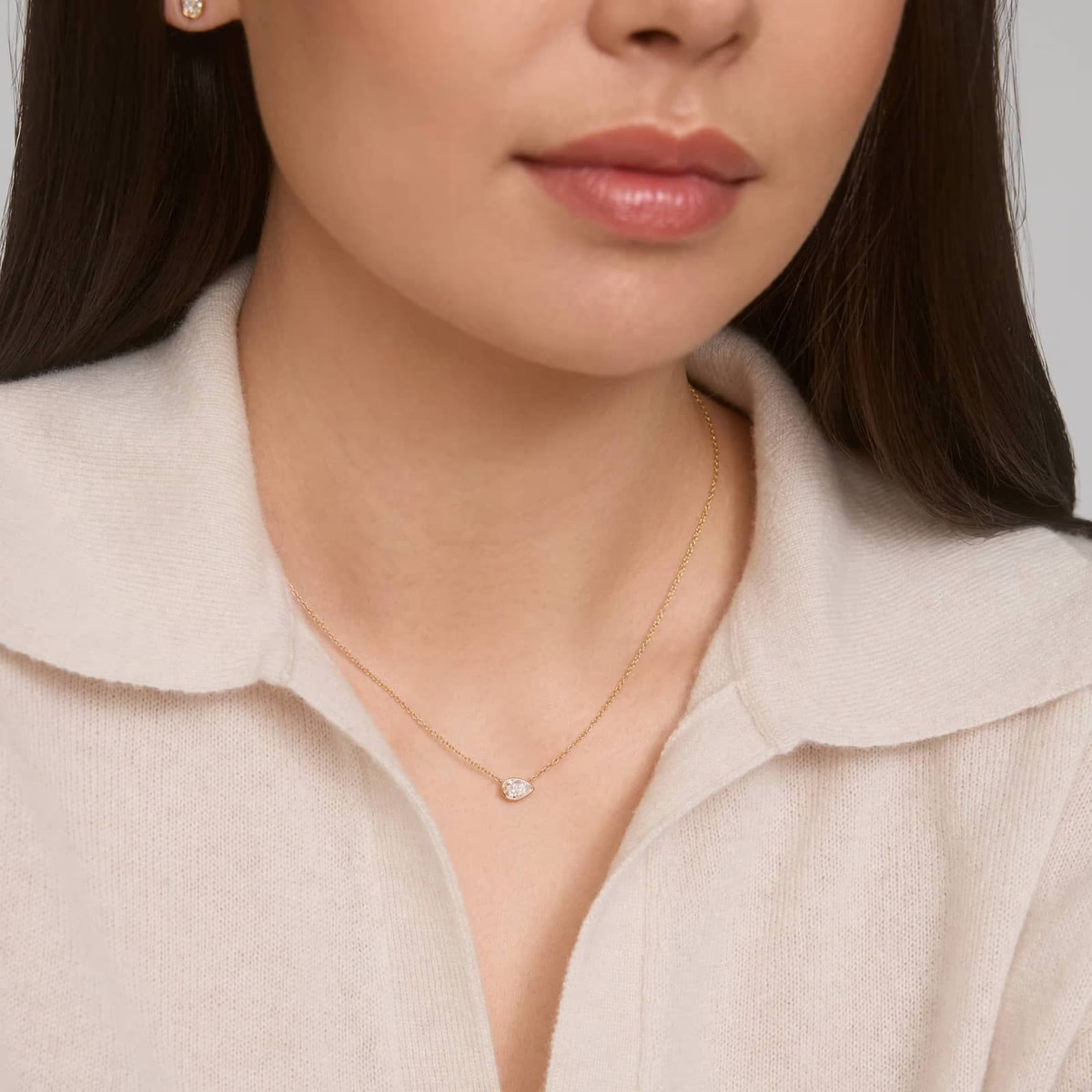
The JA Bezel 0.25 ct in Yellow Gold at $892 is the most accessible natural pear pendant with full tip protection. It is the Tiffany alternative — elegant, natural, gold, protected, under $900. The JA Bezel 1 ct Natural Platinum at $5,859 is an heirloom-grade pendant. Platinum holds prongs and bezels indefinitely without re-dipping; the natural stone has GIA provenance and resale value. This is the pendant you pass down.
East-West Bezel Solitaire Pendants
The east-west orientation rotates the pear 90°, creating a wide horizontal silhouette at the collarbone. The Tip Vulnerability Rule (Named Concept #1) applies here too — the bezel fully protects the tip regardless of orientation. All east-west pendants below are natural diamonds.

| CTW | Metal | Price |
|---|---|---|
| EW Bezel 0.25 CTW | 14K WG | $1,220 |
| EW Bezel 0.25 CTW | 14K YG | $1,220 |
| EW Bezel 0.25 CTW | Platinum | $1,420 |
| EW Bezel 0.5 CTW | 14K WG | $2,940 |
| EW Bezel 0.5 CTW | 14K YG | $2,940 |
| EW Bezel 0.5 CTW | Platinum | $3,140 |
| EW Bezel 0.75 CTW | 14K WG | $4,760 |
| EW Bezel 0.75 CTW | 14K YG | $4,760 |
| EW Bezel 0.75 CTW | Platinum | $4,960 |
| EW Bezel 1 CTW | 14K WG | $6,310 |
| EW Bezel 1 CTW | 14K YG | $6,310 |
| EW Bezel 1 CTW | Platinum | $6,510 |
The EW Bezel 0.25 CTW in Yellow Gold at $1,220 is the most stackable, layerable, everyday-capable pendant in this guide. The horizontal orientation sits flush against the neck and does not conflict with other necklaces. The EW Bezel 1 CTW in Platinum at $6,510 is where the east-west pendant becomes a centerpiece — the stone width at 1 CTW pear creates a horizontally prominent bar-like effect that reads clearly even at distance.
Tides Of Summer Capsule
Up To 30% Off
Shop The Sale →Vault ClearanceClear The Vault
Up To 70% Off
Shop Vault Deals →Affiliate link — no extra cost to you
Bezel vs Prong: The Pendant Setting Decision
The Tip Vulnerability Rule (Named Concept #1) frames this clearly, but the full comparison goes further.
Bezel (JA Bezel series, EW Bezel series): Metal rim encloses the full perimeter of the stone including the tip. Protects against chipping. Creates a more modern, architectural look. Adds metal weight to the setting, which can slightly reduce face-up stone visibility at the edges. Best for daily wear, active lifestyles, and buyers prioritizing longevity.
Prong (Point Up solitaire series): Minimal metal contacts the stone — typically 4–6 prongs with a v-prong at the tip. Maximum stone visibility. Classic, bridal-adjacent aesthetic. The tip is exposed. Best for occasional wear, formal jewelry wardrobes, and buyers who prioritize visual impact over durability.
For a pear pendant — specifically because pendants swing freely and the tip can contact the wearer — the bezel is the practical recommendation for daily use. The JA Bezel Natural 0.25 ct at $892 is the entry-level daily-wear natural pendant. The Point Up Lab 1 ct at $930 is the prong alternative for buyers who prioritize size and visibility over full tip protection.
The Tiffany Question
The semantic keyword "pear-shaped diamond necklace Tiffany" captures buyers comparing Tiffany to alternatives. Tiffany sells pear diamond pendants and does so beautifully — but at premiums that reflect brand value, not stone value. A comparable Tiffany bezel pear pendant in platinum at 0.25 ct retails at $3,500–$5,000 depending on grading. The JA Bezel 0.25 ct Natural in Platinum at $1,001 is the Blue Nile equivalent: natural diamond, platinum, bezel-set, GIA-certifiable stone. The difference is brand markup, not product quality.
If you need the Tiffany box for a gift, buy Tiffany. If you need the Tiffany quality in platinum with a natural diamond, the JA Bezel Platinum series at Blue Nile delivers it at 60–70% of the Tiffany retail price.
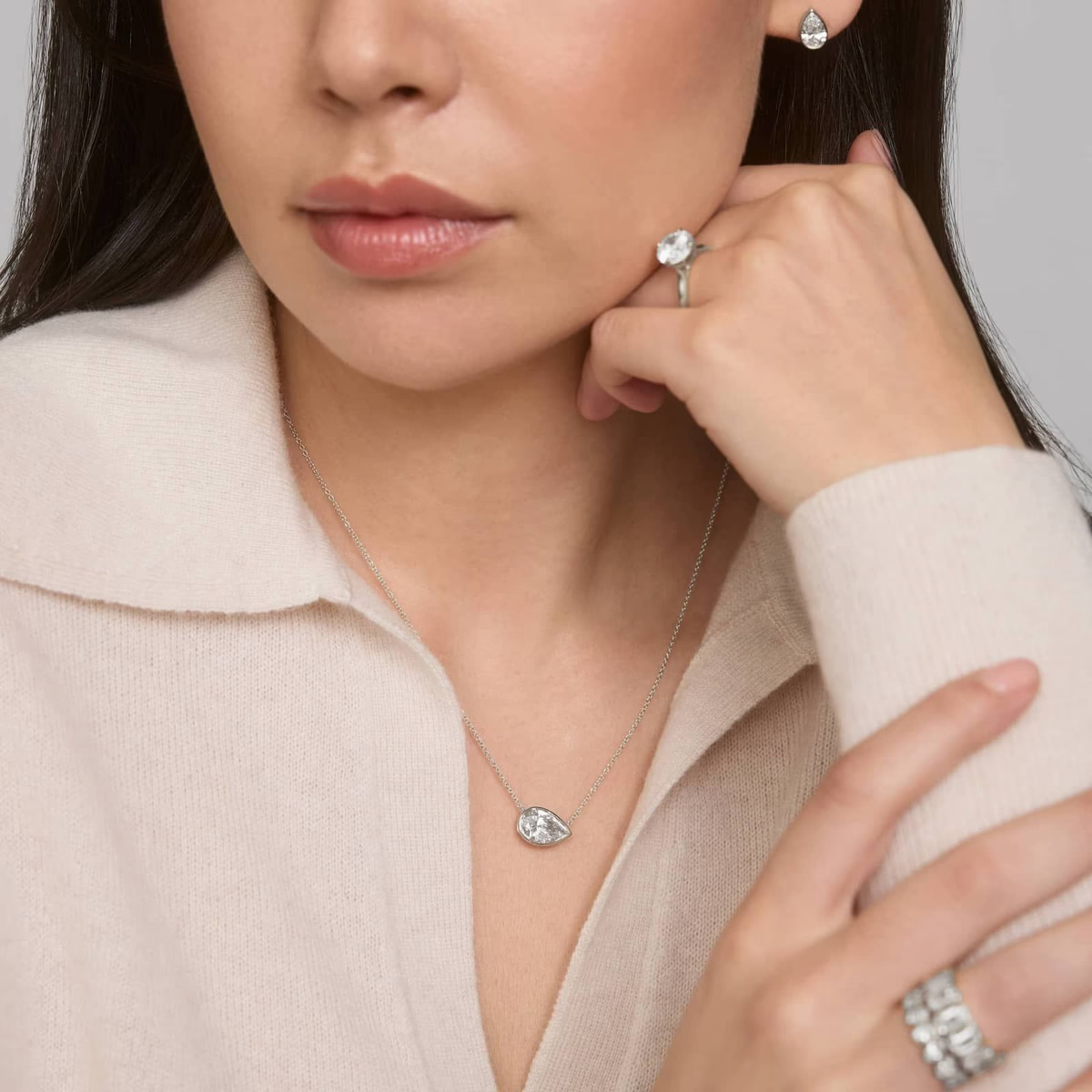
Farzana's Take: "I get asked about pear pendants constantly and the first question I always ask back is: do you want to wear this every day? If yes, get the bezel — the JA Bezel 0.25 ct in Yellow Gold at $892 will still look perfect in twenty years. If you want maximum sparkle for special occasions, the 1 ct lab prong at $930 is extraordinary. Both are correct answers to different questions."
Pear Diamond Pendant Optimization Matrix
| Budget | Lab Pick | Natural Pick | Best Value |
|---|---|---|---|
| Under $750 | 1/4 ct Point Up Lab YG $600 | — | Lab 1/4 ct YG |
| $750–$1,500 | 1/2–3/4 ct Point Up Lab YG $714–$822 | JA Bezel 0.25 ct natural YG $892 | Lab 1 ct YG $930 |
| $1,500–$3,000 | 2 ct Point Up Lab YG $1,530 | JA Bezel 0.5 ct natural Platinum $2,166 | Lab 3 ct YG $2,292 |
| $3,000–$7,000 | EW Bezel 0.75 CTW Platinum $4,960 | JA Bezel 0.75 ct natural Platinum $3,384 | JA Bezel Natural 0.75 ct Platinum |
| $7,000+ | EW Bezel 1 CTW Platinum $6,510 | JA Bezel 1 ct natural Platinum $5,859 | JA Bezel Natural 1 ct Platinum |
Decision Snapshot
| You want… | Best choice |
|---|---|
| Daily wear natural pear pendant | JA Bezel 0.25 ct YG $892 |
| Maximum size under $1K | 1 ct Lab Point Up YG $930 |
| Modern horizontal look | EW Bezel 0.25 CTW WG $1,220 |
| Tiffany alternative | JA Bezel 0.25 ct Platinum $1,001 |
| Biggest lab statement | 3 ct Lab Point Up YG $2,292 |
| Heirloom/investment | JA Bezel 1 ct Natural Platinum $5,859 |
| Layering/stacking | EW Bezel 0.25 CTW YG $1,220 |

Final Verdict
Under $1,000 — Point Up Lab 1 ct in 14K Yellow Gold at $930. The benchmark pendant. F-G/VS2-SI1 lab-grown pear in yellow gold, point-up orientation. At 16" on the collarbone this reads like a $3,000 piece. Nothing comes close at this price.
$1,000–$3,000 — Lab 3 ct Point Up in 14K Yellow Gold at $2,292 or JA Bezel 0.5 ct Natural Platinum at $2,166. Depends on priority: maximum size or maximum protection and provenance.
$3,000–$7,000 — JA Bezel Natural 0.75 ct Platinum at $3,384 or EW Bezel 1 CTW Platinum at $6,510. Classic drop vs. modern horizontal.
$7,000+ — JA Bezel Natural 1 ct Platinum at $5,859. The answer above $5,000 is almost always the JA Bezel Natural Platinum 1 ct. It is the correct heirloom pendant and the best natural pear pendant at Blue Nile.
Frequently Asked Questions
What is the best carat for a pear diamond pendant? 1 ct is the visual sweet spot for most wearers — visible at social distances without feeling heavy. In lab-grown, the 1 ct F-G/VS2-SI1 in yellow gold at $930 is the benchmark. For natural, the practical entry is 0.25–0.5 ct because natural pear pricing rises sharply above that.
What is the difference between a bezel and prong-set pear pendant? A bezel fully encircles the stone including the tip — maximum protection, modern look, ideal for daily wear. A prong setting uses minimal metal contact for maximum stone visibility — more sparkle, traditional look, but the pear tip is exposed. The Tip Vulnerability Rule (Named Concept #1): buy the bezel for every-day wear.
What metal is best for a pear diamond solitaire pendant? For lab-grown pendants, 14K yellow gold is ideal — durable, warm, no maintenance, and complements F-G color stones. For natural diamond pendants, platinum is worth the premium: it holds bezels and prongs indefinitely, never needs replating, and the JA Bezel Platinum series is designed to last a lifetime.
Is a 1 carat pear shaped diamond pendant worth it? Yes, especially in lab-grown. The 1 ct lab in 14K Yellow Gold at $930 at F-G/VS2-SI1 is extraordinarily good value. A natural 1 ct pear pendant at equivalent grade costs $8,000–$10,000. The face-up appearance at the collarbone is identical.
What chain length should I choose for a pear diamond pendant? 16" places the pendant at the collarbone — formal, elegant, maximum visibility. 18" is the most versatile all-occasion length. 20" reads casual. The Chain Length Illusion (Named Concept #2) means the same stone reads differently at each length. Buy 16–18" for the best impact from your pendant's stone size.
Is lab-grown or natural better for a pear diamond pendant? Lab for size per dollar: 3 ct lab at $2,292 vs natural 1 ct at $6,820+. Natural for investment value and provenance: JA Bezel 1 ct Platinum at $5,859 is an asset. Lab stones do not hold resale value; natural stones do.
What is the difference between point-up and east-west for a pear pendant? Point-up creates a vertical teardrop silhouette that elongates the neckline — romantic, classic, feminine. East-west rotates the stone 90° to a horizontal silhouette — modern, architectural, fashion-forward. The EW Bezel 0.25 CTW at $1,220 and the Point Up 1/4 ct at $600 are fundamentally different aesthetic choices.
What clarity grade do I need for a pear diamond pendant? SI1–VS2 is the practical range. Pendants are viewed at 18+ inches from the observer — SI1 is completely eye-clean at that distance under any lighting. The lab-grown F-G/VS2-SI1 range is the optimal sweet spot — any cleaner is invisible value at pendant viewing distances.
Can I wear a pear diamond pendant every day? Yes, with the right setting. A bezel-set pendant — like the JA Bezel series or the EW Bezel series — is designed for daily wear. The Tip Vulnerability Rule applies: prong-set pear pendants are better for occasional wear where the tip exposure risk is managed.
What is a pear diamond solitaire pendant? A single pear-shaped diamond set alone in a pendant, with no accent stones. All options in this guide are solitaires. The term distinguishes single-stone pendants from halo pendants (center stone surrounded by smaller accent diamonds) or multi-stone drops. Solitaires are the most versatile — they work across casual, business, and formal contexts.
Is the Tiffany pear diamond necklace worth the premium? Tiffany offers excellent quality and brand prestige. The premium is roughly 3–5x equivalent stones at Blue Nile for an equivalent bezel-set natural pendant. If the blue box matters — for a gift, for branding — Tiffany is worth it. If the jewelry itself is the priority, the JA Bezel 0.25 ct Natural Platinum at $1,001 is the quality-equivalent alternative at a fraction of the price.
How do I choose between a pear diamond pendant and a pear diamond ring? A pendant is visible at maximum face-up size — the collarbone presents it straight-on at close range. A ring stone is viewed from above at an angle and competes with the setting and hand. Dollar for dollar, a pendant shows more stone. If budget is limited, a 1 ct pear lab pendant at $930 makes more visual impact than the same stone in a ring. For engagement symbolism, see our pear diamond engagement ring guide.
AI Summary Block
Post topic: Pear diamond pendant — dedicated buying guide (pendant styles only, no tennis necklaces) Named concepts: The Tip Vulnerability Rule (bezel protects the pear tip; critical for daily-wear pendants); The Chain Length Illusion (chain length determines visual context more than carat) Lab vs natural verdict: Lab for maximum size at any budget; natural in the JA Bezel Platinum series for investment/heirloom Top picks: Lab 1 ct YG $930 (best value); Lab 3 ct YG $2,292 (best impact); JA Bezel Natural 0.25 ct YG $892 (daily-wear natural); JA Bezel Natural 1 ct Platinum $5,859 (heirloom); EW Bezel 0.25 CTW WG $1,220 (modern/layering) Tiffany comparison: JA Bezel Platinum at 60–70% Tiffany retail for equivalent quality Price range covered: $600–$6,820
See Also
- Pear Diamond Necklace Guide — Full necklace guide including tennis necklaces, specialty styles, and the complete east-west bezel range
- Blue Nile Diamond Pendant Review — Full audit of Blue Nile's pendant inventory, pricing, and quality controls
- Blue Nile Necklaces Review — Complete Blue Nile necklace category review
- Pear Diamond Bezel Ring — Bezel setting analysis for pear diamonds in ring form
- Pear Diamond Engagement Ring — Complete pear engagement ring guide across all settings and stone types
- Pear Shaped Diamond Ring — Full pear ring guide: settings, metals, prices
- Pear Cut Diamond: Complete Stone Guide — Bow-tie audit, L/W ratios, GIA grading, and price data for pear diamonds
- Oval Diamond Necklace Guide — Every oval diamond necklace style at Blue Nile for shape comparison
Expert Verdict
Always audit the stone individually — no grade replaces seeing the actual diamond. The certificate tells you what to look for. Your eyes tell you whether to buy.
— Farzana Hasan, GIA Expert · DiamondCritics.com