White Gold Pear Diamond Ring: The Complete 2026 Guide (Settings, Color & Prices)
TL;DR — Key Facts Before You Shop
- The Colorless Clarity Premium: White gold has no warm-tone masking. An H-color pear that looks clean in yellow gold reads visibly warm against white gold. The correct color range in white gold is D–G — and buyers who specifically want D–F colorless quality get the maximum return on that investment in white gold, not in warm metals
- The Architectural Silhouette: White gold's neutral tone makes the V-prong nearly invisible and lets the pear's teardrop outline read as pure shape — the most graphic, shape-forward presentation of the pear diamond available in any metal
- Best entry-level setting: Knife Edge Lotus Bridge Solitaire Plus Diamond Engagement Ring in 14k White Gold at $1,400
- Most-reviewed halo: Twisted Halo Diamond Engagement Ring at $1,955 (197 reviews)
- Best pear-specific setting: Pear Sidestone Diamond Engagement Ring in 14k White Gold at $1,820 (63 reviews)
- Color grade rule: D–G for white pear diamonds in white gold. H is marginal; I and below will read warm against the cool metal
- Rhodium replating required every 1–3 years to maintain the bright silver-white surface. Budget $50–$200 per replating; platinum avoids this cost entirely
- Contrarian Truth: Most buyers assume they need platinum for a white pear diamond ring, then discover white gold at 30–40% lower cost and switch — but the color grade decision follows them. White gold at D–F color delivers platinum-adjacent visual results. White gold at H color with a white metal is the worst combination: you pay for a cool metal and get a stone that reads warm against it. Buy D–F or buy yellow gold. There is no good middle ground in white gold →
The white gold pear shaped diamond ring is where buyers arrive who want the maximum colorless clarity display from a pear diamond without the premium price of platinum.
The case for white gold over platinum: white gold costs 30–40% less for the same setting design, the rhodium plating that covers white gold produces a surface visually identical to platinum, and the total price difference funds a meaningful stone upgrade. The case against warm metals: yellow and rose gold mask color tinting in H–J grade stones — excellent if you are buying H–J, meaningless if you have purchased D–F color. If your stone is D or E or F, the warm metal premium paid for masking ability you never needed. White gold lets D–F colorless quality read exactly as it should: bright, icy, and high-contrast.
This guide covers every major white gold setting for pear diamonds, the two frameworks that govern color grade decisions and design strategy, and the complete Blue Nile setting catalog at every price point.


The Architectural Silhouette: Why the Pear Shape Reads Differently in White Gold
The Architectural Silhouette is the visual phenomenon specific to pear diamonds set in white gold: because the metal's color tone matches the cool, reflective light of the diamond, the V-prong becomes nearly invisible and the pear's teardrop outline reads as pure unframed shape against the finger.
Metal visibility in warm versus cool settings. In yellow or rose gold, the metal frame is a visible design element — you see a warm gold ring with a diamond in it. The compound visual reads as metal-and-stone.
In white gold, the rhodium-plated surface reflects the same cool white light as the diamond's table. The prongs, basket, and shank recede visually, leaving the pear diamond's distinctive teardrop silhouette as the dominant graphic element. The ring reads as a diamond shape first, a ring second.
How the pear shape benefits most from this effect. The pear cut is the most recognizable diamond silhouette available. Unlike a round brilliant, which reads as a circle regardless of setting metal, the pear's combination of a pointed tip and a curved belly is immediately distinctive.
In white gold, this distinctive silhouette is presented without a contrasting metal frame: the teardrop simply appears on the finger. In warm metals, the warm frame adds character but reduces the purity of the silhouette impression.
East-west pear orientation and the Architectural Silhouette. When a pear diamond is oriented east-west — long axis parallel to the finger rather than pointing up or down — the horizontal silhouette reads as an abstract shape rather than a traditional engagement ring orientation. This modern orientation is most powerful in white gold, where the absence of a visually competing warm metal frame lets the horizontal teardrop read as pure design intent.
A 1ct pear oriented east-west in white gold reads as architecturally deliberate. The same stone east-west in yellow gold reads as a warm composition that partially absorbs the shape's graphic clarity.
For all east-west setting options and pear orientation analysis, see the pear shaped diamond ring guide.
The Colorless Clarity Premium: Which Color Grade to Buy in White Gold
The Colorless Clarity Premium is the additional diamond cost you pay in white gold to achieve the same perceived whiteness you could reach at H or I color in yellow or rose gold. It is not a disadvantage — it is a redirection of budget toward the specific quality that white gold displays best.
The mechanism. White gold's rhodium-plated surface reflects neutral, cool light. That cool light has no warm-tone component to neutralize faint yellow tinting in H, I, or J grade stones. A stone with any perceptible warmth in its color grade will register that warmth against a white metal background — not dramatically, but perceptibly to careful observers, and in photographs.
Yellow gold reflects warm light that cancels this warmth. White gold reflects neutral light that reveals it.
The Colorless Clarity Premium at each carat weight (approximate Blue Nile pear prices, 2026):
| Carat | H-VS2 (Yellow Gold optimal) | F-VS2 (White Gold optimal) | White Gold Premium |
|---|---|---|---|
| 0.75ct | ~$1,600–$2,200 | ~$2,600–$3,100 | ~$1,000 |
| 1.00ct | ~$2,400–$3,100 | ~$3,800–$4,600 | ~$1,500 |
| 1.50ct | ~$5,500–$7,500 | ~$11,000–$14,000 | ~$5,500 |
| 2.00ct | ~$11,000–$15,000 | ~$22,000–$30,000 | ~$11,000 |
At 1ct, the Colorless Clarity Premium is approximately $1,500. This is real money — enough to fund the setting or a meaningful clarity upgrade.
White gold buyers should account for this premium in their budget before committing to the metal. Buyers who are specifically purchasing D, E, or F color because they want the pure colorless quality should be in white gold: that is the metal where the premium you paid for the color grade actually reads on the finger.
Recommended color grades for white gold pear rings:
| Metal | Optimal Color | Marginal Color | Avoid |
|---|---|---|---|
| 14k white gold | D–F | G–H | I–Z (reads warm) |
| 18k white gold | D–F | G | H and below |
| White gold + lab pear | D–F | G | H+ (lab D–F costs near natural H; take the upgrade) |
| White gold + platinum-upgrade path | E–F | — | — (platinum at this budget; replating cost disappears) |
Where white gold outperforms warm metals: Lab diamond buyers have the strongest argument for white gold. A lab-grown pear at D or E color costs nearly the same as H or G in lab grading — the color premium between lab D and lab H is a fraction of the natural diamond equivalent. In lab diamonds, buying D–F in white gold costs almost the same as buying H–I in yellow gold. The Colorless Clarity Premium shrinks to near zero in lab pear diamonds, and you get the full Architectural Silhouette effect of white gold.
Pear-Specific White Gold Settings on Blue Nile
| Setting | Price | Reviews |
|---|---|---|
| Pear Sidestone Diamond Engagement Ring in 14k White Gold (1/4 ct. tw.) | $1,820 | 63 |
The Pear Sidestone is the only pear-specific setting in white gold in the Blue Nile catalog with meaningful review count. In white gold, the side stones flank the pear belly in a cool-toned composition — the metal blends with the diamond light rather than contrasting with it, creating a seamless stone-to-stone visual flow.
With a 1ct F-VS2 GIA pear (~$3,800–$4,600), total ring cost comes to approximately $5,600–$6,500. This is Farzana's first recommendation for a white gold pear ring at the $5,000–$7,000 budget tier. For additional pear-specific halo settings in white gold, see the pear diamond halo ring guide.
Shop the Look: White Gold Pear Diamond Rings
Four Blue Nile white gold pear shaped diamond rings — click any image to browse the full collection.
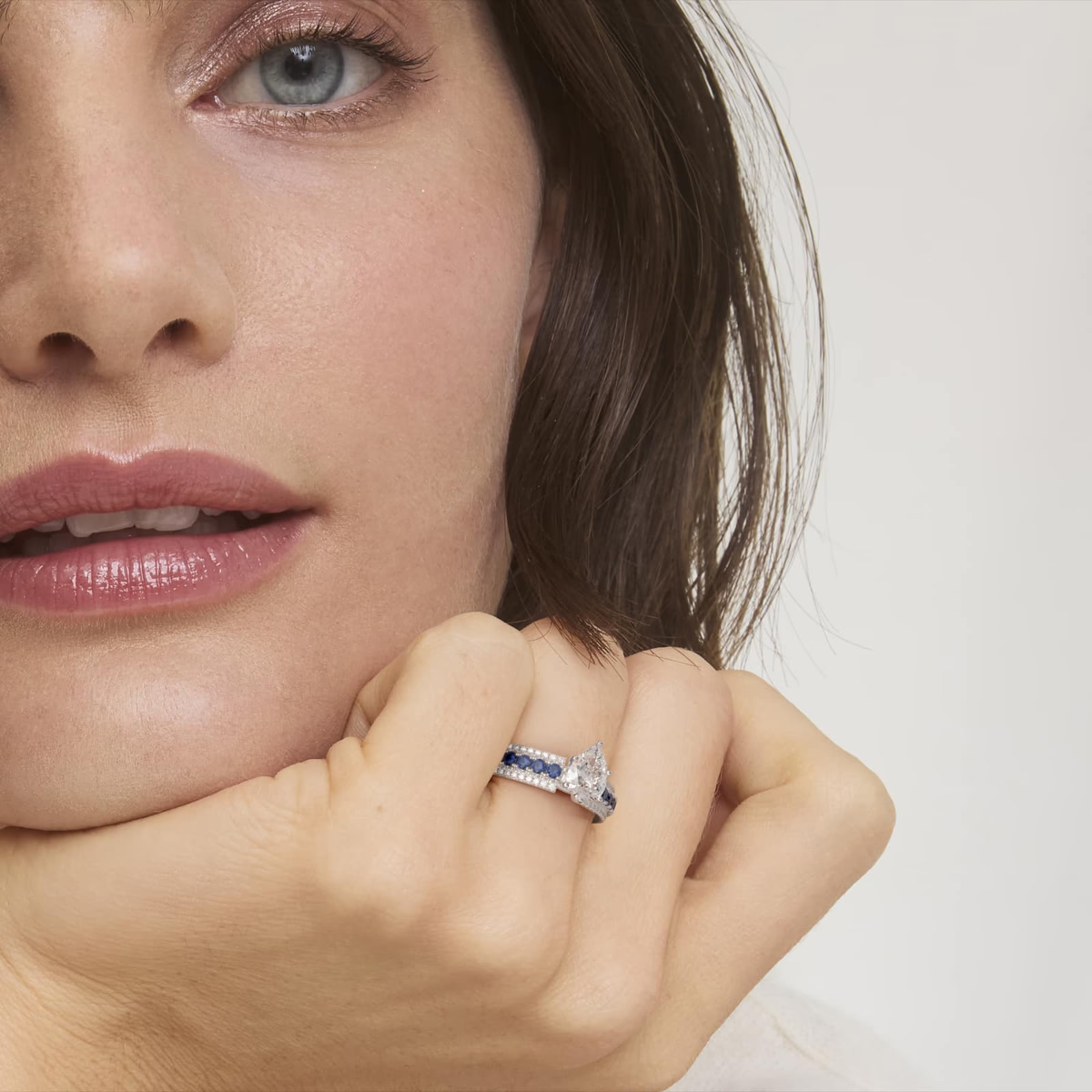
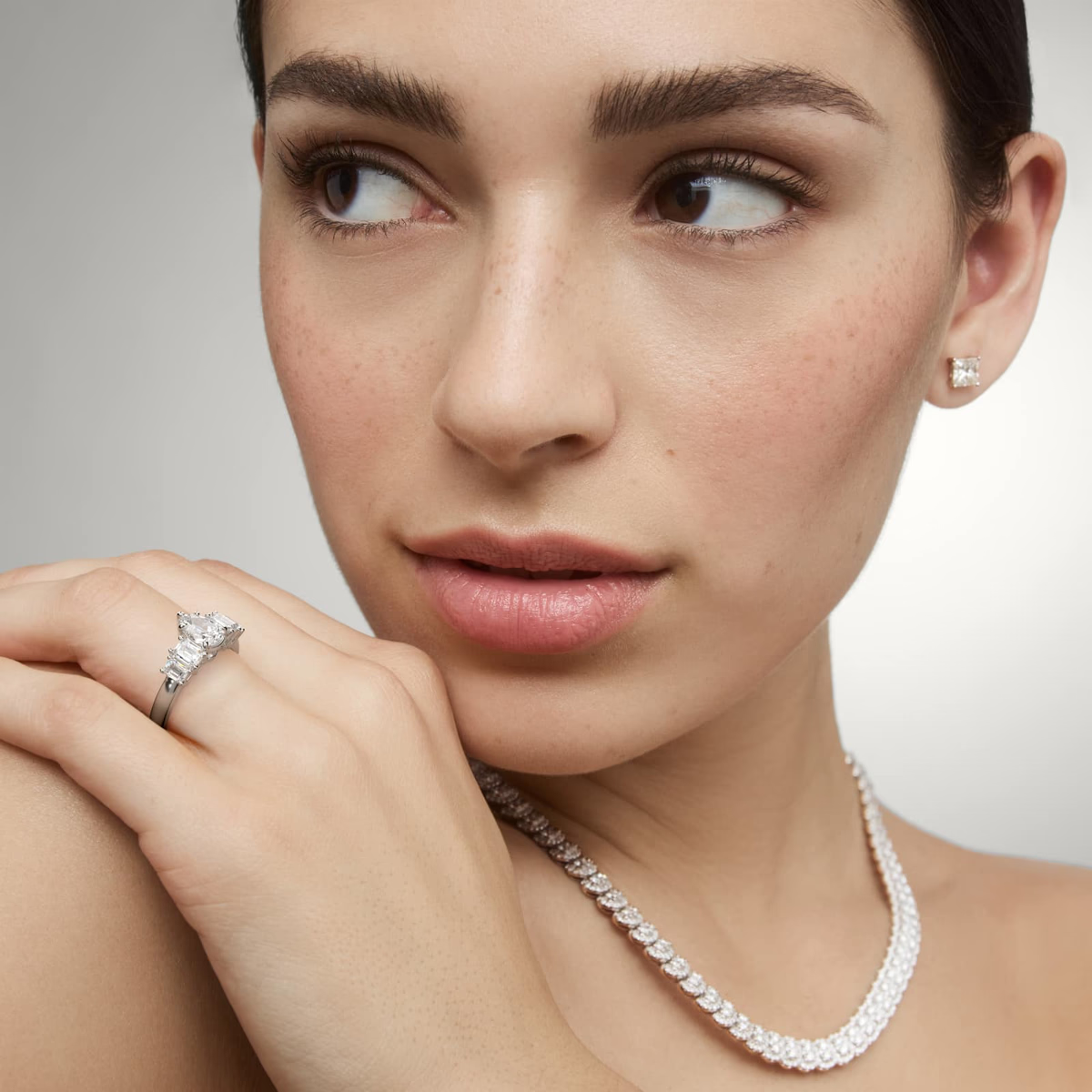
White gold pear diamond solitaire — the Architectural Silhouette at its purest: cool metal, invisible prong, teardrop outline as the entire visual statement. Browse all styles on Blue Nile →
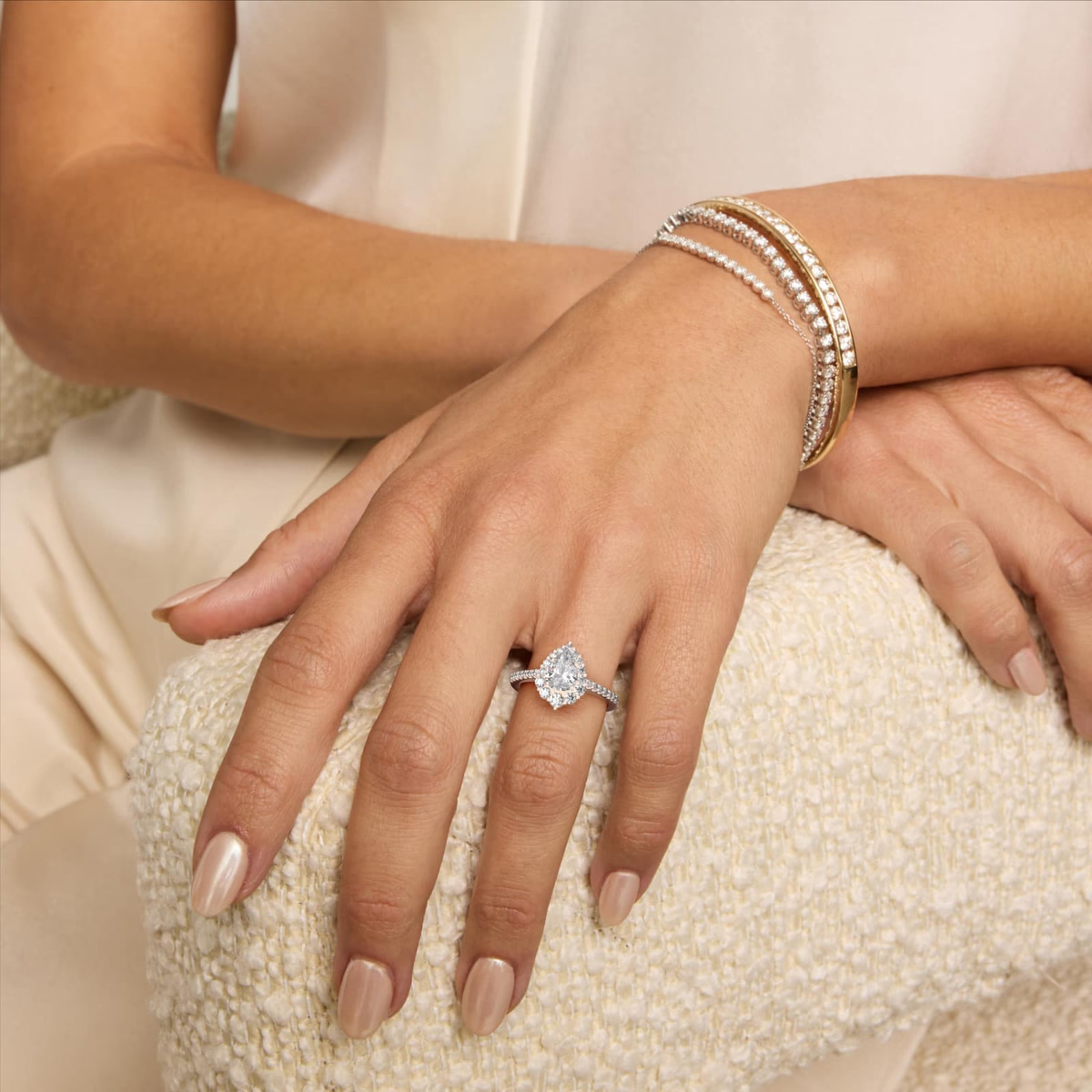
White gold pear diamond ring with pavé shank — diamond-on-diamond coverage from band to stone; the cool metal tone unifies the composition. View pavé settings on Blue Nile →
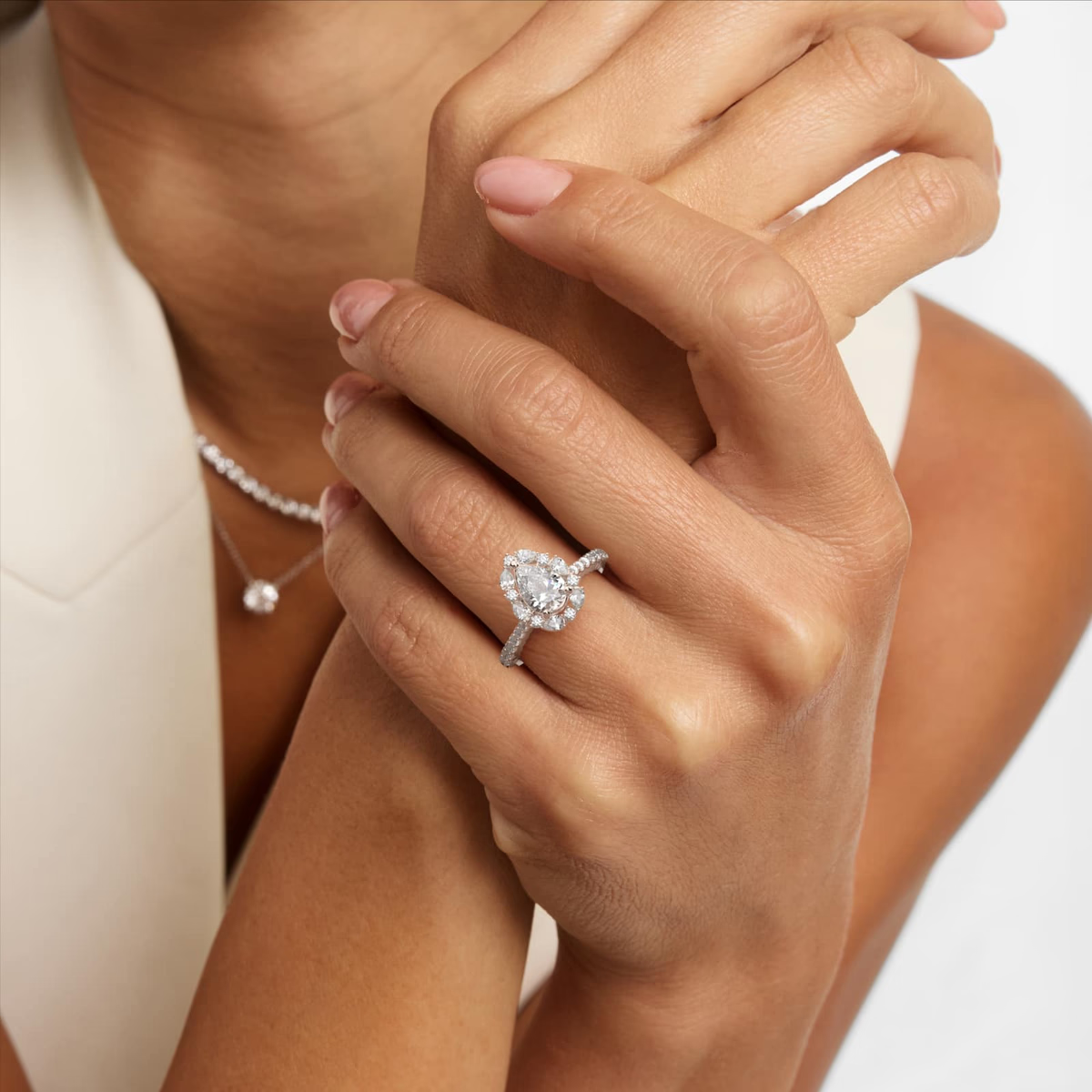
White gold pear diamond twisted halo ring — the most reviewed halo setting in white gold; the twisted frame adds movement without warm-metal distraction. View halo settings on Blue Nile →
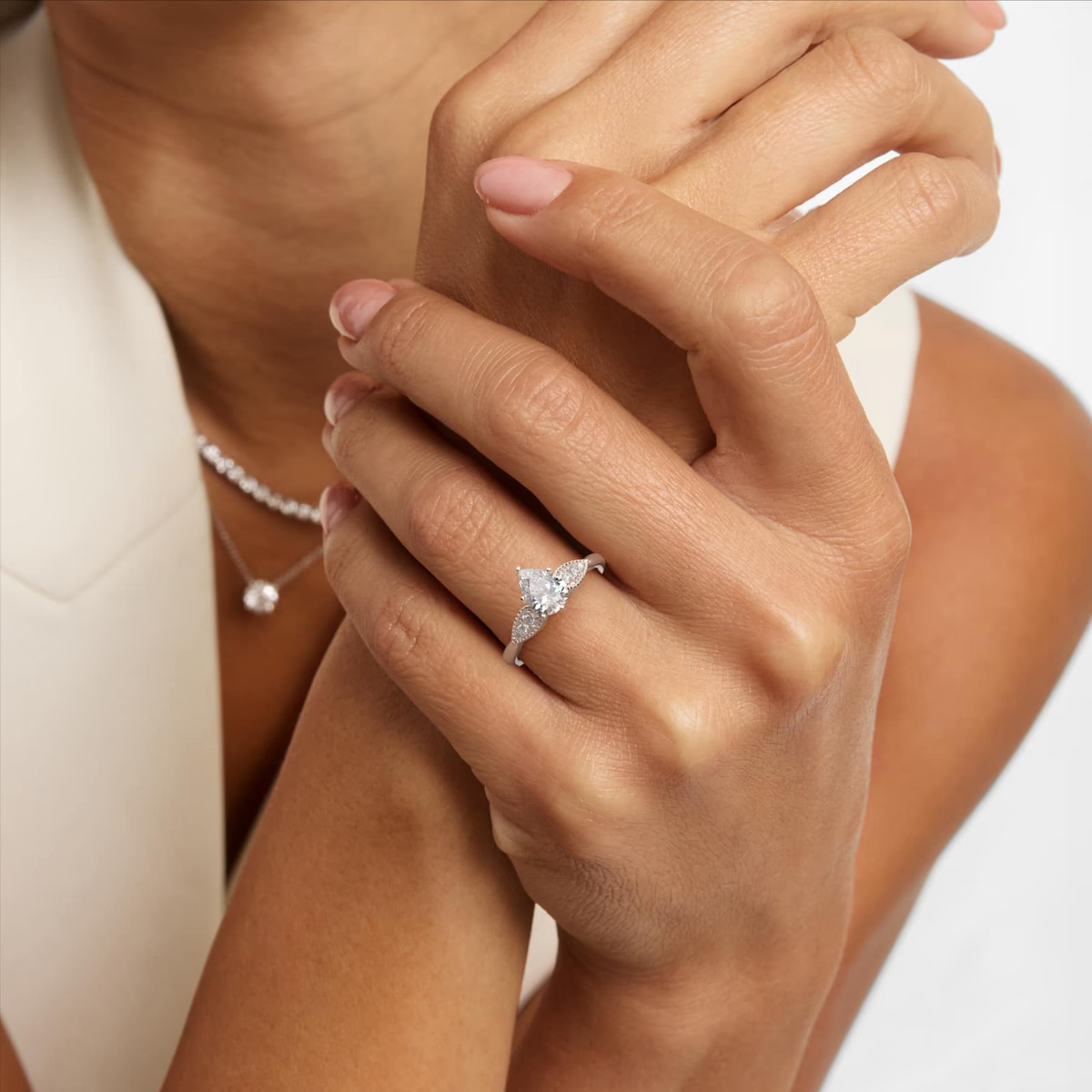
White gold pear diamond three-stone ring — colorless side stones in white gold amplify the center pear's D–F color grade; the cool metal lets the quality read exactly as purchased. View three-stone settings on Blue Nile →
All settings available in 14k white gold. Browse the full white gold pear diamond ring collection on Blue Nile →
The Complete White Gold Pear Diamond Ring Settings Guide
Solitaire and Simple White Gold Settings
The East West Diamond Engagement Ring at $1,635 is the most important solitaire setting in white gold for pear diamonds specifically. An east-west orientation in white gold is the maximum expression of the Architectural Silhouette — the horizontal teardrop reads as pure deliberate shape against the finger, with the cool metal frame nearly invisible. This is the setting for buyers who want the pear shape to be a design statement rather than a traditional engagement ring.
The Cathedral Solitaire Plus by Zac Zac Posen at $1,800 (51 reviews) elevates the center stone on cathedral arches — in white gold, this creates vertical lift that adds drama to the pear's elongated silhouette. Full solitaire comparison in the pear shaped solitaire diamond ring guide.
Pavé White Gold Pear Diamond Ring Settings
The Scalloped Pavé Diamond Engagement Ring at $1,970 (164 reviews) is the most-reviewed pavé setting in this list: the scalloped edge detail adds surface texture that catches light at the shoulders without adding warm-metal visual weight. In white gold, this produces an all-diamond visual impression — the scalloped setting blurs the boundary between shank and stone. The Blue Nile Studio Petite French Pavé Crown at $2,520 (87 reviews) is the strongest mid-premium pavé option: french-cut openings add sparkle to the inside faces of the shank diamonds, creating depth that plain pavé does not produce.
Halo White Gold Pear Diamond Ring Settings
The Twisted Halo Diamond Engagement Ring at $1,955 (197 reviews) is the most-reviewed setting in the entire white gold pear catalog — this level of validated purchase volume at under $2,000 is genuinely unusual. The twisted frame adds rotational movement to the halo without adding visual warmth — in white gold, the twist reads as pure geometry. For a pear diamond, the twisted frame's movement echoes the curved belly's visual energy, creating a ring that looks dynamic rather than static.
The Graduated Diamond Halo Engagement Ring by James Allen at $2,985 (99 reviews) is the premium tier with near-matching validation: 99 reviews at $2,985 confirms strong buyer confidence at this price point. Full halo options in the pear diamond halo ring guide.
Three-Stone, Baguette, and Side Stone White Gold Settings
The Three-Stone Tapered Baguette Diamond Engagement Ring at $3,410 (1/4 ct. tw.) is the strongest Art Deco option in white gold for a pear center diamond. Tapered baguettes flanking a pear in white gold is the closest off-the-shelf approximation of authentic Art Deco engagement ring design — the rectangular geometric precision of the baguettes in cool white metal creates maximum geometric contrast against the pear's curved teardrop silhouette. In white gold, this contrast reads as sharp and intentional; in warm metals, the metal softens the geometric effect.
For dedicated three-stone analysis, see the three-stone pear diamond ring guide.
Vintage and Modern Style White Gold Settings
White gold pear diamond ring in an embossed vintage-style setting — cool metal amplifies the geometric precision of vintage detail work rather than softening it with warmth. Browse vintage-style settings on Blue Nile →
| Setting | Price | Reviews | Style |
|---|---|---|---|
| Petite Micropavé Trio Diamond Engagement Ring in 14k White Gold (1/5 ct. tw.) | $1,765 | 37 | Delicate three-stone pavé |
| Embossed Vintage-Style Engagement Ring In 14K White Gold By James Allen | $2,135 | 81 | Embossed surface, vintage-modern |
| Graduated Side Stone Diamond Engagement Ring in 14k White Gold (3/8 ct. tw.) | $2,235 | 44 | Graduated side stones |
| Three Row Sapphire and Diamond Engagement Ring in 14k White Gold (1/4 ct. tw.) | $3,150 | 33 | Sapphire + diamond accent |
The Embossed Vintage-Style Engagement Ring by James Allen at $2,135 (81 reviews) is the strongest vintage option in white gold. In white gold specifically, embossed surface detail on the shank reads as precise and architectural — the metalwork has clean edges that the cool tone amplifies rather than softening. This creates a vintage ring that reads modern-vintage rather than period-piece romantic.
The Three Row Sapphire and Diamond Engagement Ring at $3,150 (33 reviews) is the only setting in this catalog that adds colored-stone accent to the shank: sapphire blue in white gold alongside a pear diamond creates a high-contrast, jewel-toned composition that reads distinctly formal.
Tides Of Summer Capsule
Up To 30% Off
Shop The Sale →Vault ClearanceClear The Vault
Up To 70% Off
Shop Vault Deals →Affiliate link — no extra cost to you
White Gold vs. Platinum for a Pear Diamond Ring
This is the most important comparison for white gold pear buyers. Platinum and white gold are visually identical at arm's length when white gold's rhodium plating is fresh. The differences are real but often misunderstood.
| Factor | 14k White Gold | Platinum |
|---|---|---|
| Upfront cost | Lower — 30–40% cheaper for same setting | Higher |
| Long-term maintenance | Rhodium replating every 1–3 years (~$50–$200) | None — naturally white, never replates |
| Durability | Hard alloy mix — prong holds well | Extremely durable — metal flows rather than chips |
| V-prong for pear tip | Good in 14k; prong holds shape | Best overall — platinum's density protects the tip |
| Natural color | Yellow gold with rhodium surface | Naturally silver-white |
| Weight on finger | Lighter | Heavier — noticeably denser |
| Best for diamond color | D–G | D–G (identical requirement) |
| Long-term appearance | Replating keeps it bright; slightly different patina over time | Develops a natural "platinum grey" patina buyers often love |
The ruling for white gold pear rings: 14k white gold is the correct choice if you are budget-constrained and will maintain rhodium plating regularly. Platinum is the correct choice if you want zero maintenance, maximum V-prong security for the pear tip, or you prefer the natural platinum grey patina that develops over decades. The color grade decision is identical in both metals — D–G is required for either.
14k vs. 18k White Gold for a Pear Diamond Ring
14k white gold (58.3% gold): The higher alloy mix of 14k creates a harder metal than 18k. For pear diamond rings, this matters specifically at the V-prong — 14k's harder composition holds the tip prong more securely over 20+ years of daily wear. 14k is also 15–25% cheaper than 18k for the same setting and requires less frequent rhodium replating because the harder surface retains the coating longer.
18k white gold (75% gold): Higher gold content means 18k is marginally softer than 14k, with slightly lower rhodium retention, and costs more. The visual difference between 14k and 18k white gold is imperceptible — both look identical when rhodium-plated.
The ruling: 14k is the correct choice for pear diamond rings in white gold. The V-prong security advantage matters, the price saving is real, and there is no visual payoff for 18k in white gold the way there is in yellow or rose gold.
White Gold Pear Diamond Ring Prices: Setting + Stone Budget Guide
Setting-only price ranges (Blue Nile 14k white gold, 2026):
| Style | Starting Price | Best Option |
|---|---|---|
| Entry solitaire | $1,400 | Knife Edge Lotus Bridge |
| Pavé | $1,555 | Petite Pavé (150 reviews) |
| Halo | $1,955 | Twisted Halo (197 reviews) |
| Pear-specific | $1,820 | Pear Sidestone (63 reviews) |
| Side stone | $2,090 | Pavé Trio Side Stone JA (42 reviews) |
| Premium pavé | $2,520 | Blue Nile Studio French Pavé Crown (87 reviews) |
| Premium halo | $2,980 | Heiress Halo (41 reviews) or Graduated Halo JA (99 reviews) |
| Baguette three-stone | $3,070 | Bezel Baguette JA |
Center stone prices (Blue Nile pear cut, 2026, recommended white gold grades D–G):
| Weight | F-VS2 Natural GIA | G-VS2 Natural GIA | F-VS1 Lab IGI | Saving (F lab vs F natural) |
|---|---|---|---|---|
| 0.75ct | ~$2,600–$3,100 | ~$2,000–$2,500 | ~$500–$800 | ~$2,000 |
| 1.00ct | ~$3,800–$4,600 | ~$2,800–$3,500 | ~$900–$1,400 | ~$2,800 |
| 1.50ct | ~$11,000–$14,000 | ~$7,500–$10,000 | ~$2,000–$3,000 | ~$9,000 |
| 2.00ct | ~$22,000–$30,000 | ~$16,000–$22,000 | ~$5,000–$8,000 | ~$18,000 |
Complete ring budgets:
- $3,000–$5,000: 1ct lab pear (F-VS1, IGI Ideal) in Twisted Halo in 14k white gold ($1,955 / 197 reviews). Lab F at this spec: approximately $900–$1,400. Total: $2,900–$3,400. Lab pear in white gold is the single strongest value argument in this entire guide — F color in lab costs almost the same as G in natural, and white gold is the metal where F color delivers its maximum visual impact.
- $5,000–$8,000: 1ct natural pear (G-VS2, GIA Ideal) in Pear Sidestone in 14k white gold ($1,820 / 63 reviews). G-color in white gold is the budget compromise — marginally warmer than F but significantly cheaper. Total: approximately $4,600–$5,300.
- $8,000–$14,000: 1.5ct natural pear (F-VS2, GIA Ideal) in Pavé Halo Cathedral in 14k white gold ($2,220 / 102 reviews). The Colorless Clarity Premium at 1.5ct is substantial — F-VS2 versus G-VS2 costs approximately $3,500 more. For buyers specifically purchasing the colorless quality, this is where white gold returns maximum value on that investment. Total: approximately $13,000–$16,000.
- $18,000+: 2ct natural pear (F-VS1, GIA Ideal) in Graduated Diamond Halo in 14k white gold ($2,985 / 99 reviews). At 2ct, the Colorless Clarity Premium versus a G-VS2 is approximately $6,000–$8,000. Buyers at this budget tier who want D–F color should be in white gold or platinum — there is no warm-metal alternative that delivers the same visual result at this stone quality. Total: approximately $20,000–$33,000.
Wedding Band Pairing for a White Gold Pear Diamond Ring
The pear diamond's curved belly creates the same band gap challenge in white gold as in all metals — a straight band leaves a visible gap between the engagement ring and the curved stone base.
Three solutions for white gold:
Contoured white gold band: A band shaped to mirror the pear belly and sit flush against the stone. The key requirement in white gold: match the karatage exactly (14k with 14k, 18k with 18k) and ensure both rings are on the same rhodium replating schedule. Mismatched rhodium wear between the engagement ring and the band becomes visible over time in white gold in a way it does not in naturally colored metals.
A custom contoured band adds approximately $400–$800 to the total band cost.
Thin knife-edge band with gap: A 1.5–2mm knife-edge white gold band worn alongside the pear ring with a deliberate gap reads as intentional and modern. The knife-edge band catches light at the edge, creating a line of brightness that frames the engagement ring without claiming visual attention. The gap between the pear's belly and a thin band is smaller than with a wider band and can look designed rather than accidental.
Pavé eternity band on the outer side: Worn on the outer side of the engagement ring (toward the nail), a slim pavé eternity band in white gold adds diamond coverage across the top of the hand and avoids the belly gap entirely. In white gold, an eternity band and a pavé pear engagement ring create a seamless all-diamond composition that reads as a single jeweled piece.
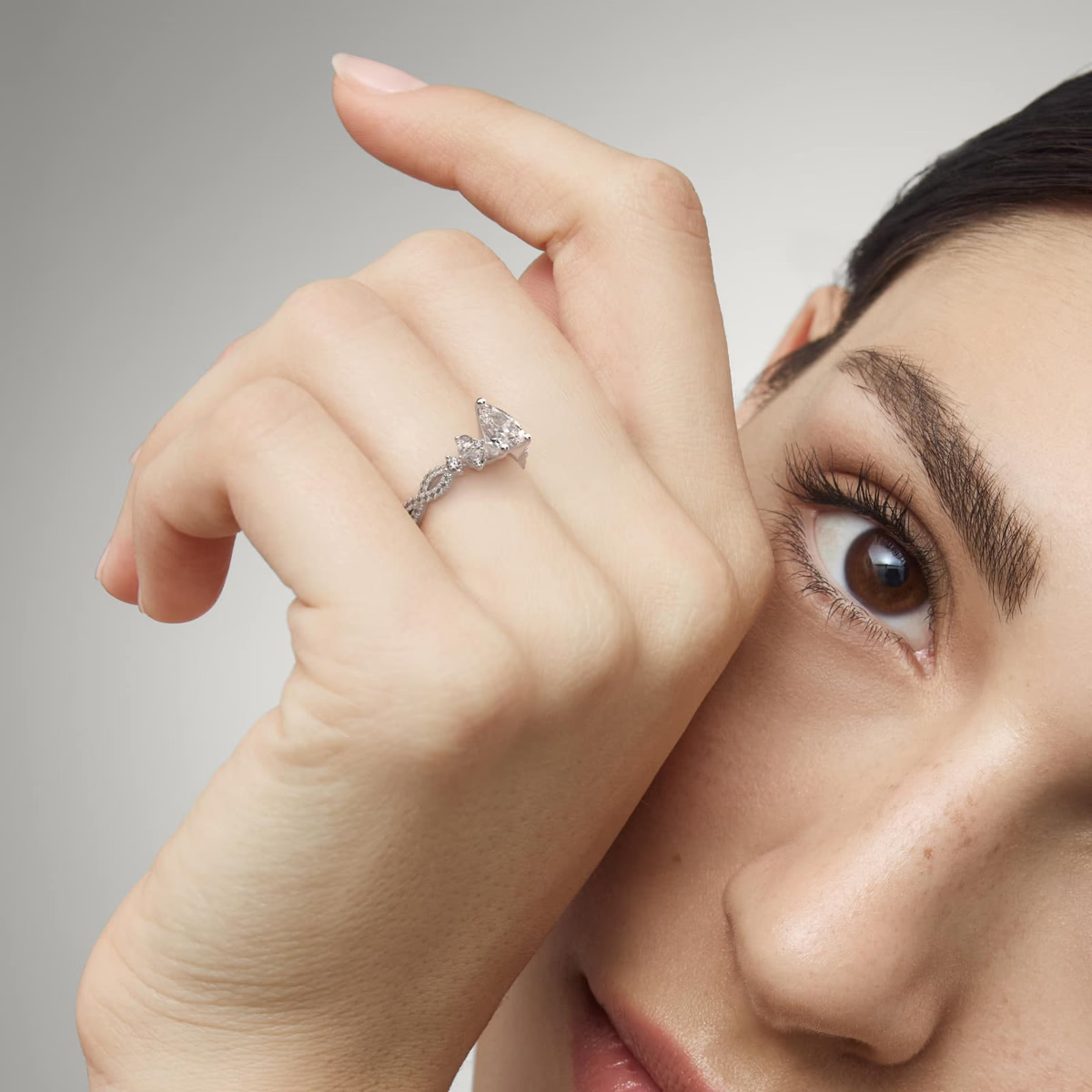
White gold pear diamond ring — a contoured white gold band eliminates the pear belly gap for a seamless stacked look; match karatage and rhodium schedule exactly. Browse white gold pear rings on Blue Nile →
The Optimization Matrix: Best White Gold Pear Diamond Ring for Every Goal
| Goal | Stone | Setting | Estimated Total |
|---|---|---|---|
| Maximum lab value | 1ct lab pear, F-VS1, IGI | Twisted Halo ($1,955 WG) | $2,900–$3,400 |
| Entry natural, pear-specific | 1ct natural pear, G-VS2, GIA | Pear Sidestone ($1,820 WG) | $4,600–$5,300 |
| Colorless quality at 1ct | 1ct natural pear, F-VS2, GIA | Petite Pavé ($1,555 WG) | $5,400–$6,200 |
| Art Deco pear statement | 1ct natural pear, F-VS2, GIA | Tapered Baguette ($3,410 WG) | $7,200–$8,000 |
| Premium halo, validated | 1ct natural pear, G-VS2, GIA | Graduated Diamond Halo JA ($2,985 WG) | $5,800–$6,500 |
| Maximum architectural pear | 1ct natural pear, E-VS1, GIA | East West Setting ($1,635 WG) | $7,000–$10,000 |
| Statement 1.5ct colorless | 1.5ct natural pear, F-VS2, GIA | Pavé Halo Cathedral ($2,220 WG) | $13,000–$16,000 |
| Lab diamond maximum size | 2ct lab pear, D-VS1, IGI | Graduated Diamond Halo JA ($2,985 WG) | $8,000–$13,000 |
Decision Snapshot: Which White Gold Pear Diamond Ring Is Right for You?
| Buyer Persona | Recommended Strategy | Farzana's ROI Verdict |
|---|---|---|
| Lab diamond buyer, maximum value | 1ct lab pear (F-VS1, IGI) + Twisted Halo ($1,955, 14k WG) | Lab F in white gold is the single best value in this category — F color in lab costs almost nothing extra over G; white gold is where that F grade reads at full impact |
| Natural diamond buyer, D–F color | 1ct natural pear (F-VS2, GIA) + Pear Sidestone ($1,820, 14k WG) | White gold is the correct metal for buyers who have specifically purchased D–F color; warm metal would mask the quality they paid for |
| Budget buyer, cool metal look | 1ct natural pear (G-VS2, GIA) + Twisted Halo ($1,955, 14k WG) | G in white gold is marginal but workable under room lighting; 197 reviews on the Twisted Halo is the strongest quality signal in this catalog |
| Art Deco aesthetic | 1ct natural pear (F-VS2, GIA) + Tapered Baguette Three-Stone ($3,410, 14k WG) | Baguettes in white gold deliver the sharpest Art Deco geometric contrast available — cool metal amplifies rather than softens the geometric precision |
| East-west modern look | 1ct natural pear (E-VS1, GIA) + East West Setting ($1,635, 14k WG) | East-west pear in white gold is the maximum Architectural Silhouette — the horizontal teardrop reads as pure deliberate shape; only works with D–F color in cool metal |
| Platinum-alternative buyer | 1ct natural pear (F-VS2, GIA) + Graduated Diamond Halo JA ($2,985, 14k WG) | White gold at $2,985 vs platinum equivalent at |
Final Verdict: Best White Gold Pear Diamond Ring for Every Budget
Under $4,000 (complete ring): 1ct lab pear (F-VS1, IGI Ideal) in the Twisted Halo Diamond Engagement Ring in 14k white gold ($1,955 / 197 reviews). The lab pear at F-VS1 costs approximately $900–$1,400. Total ring: $2,900–$3,400.
This is the most compelling complete white gold pear ring on Blue Nile at this budget — 197 verified reviews on the setting, F-color lab stone that reads colorless against the cool metal, and a halo that adds perceived size to the pear silhouette. The Colorless Clarity Premium shrinks to near zero for lab buyers.
$5,000–$8,000: 1ct natural pear (G-VS2, GIA Ideal) in the Pear Sidestone Diamond Engagement Ring in 14k white gold ($1,820 / 63 reviews). G is the cost-optimized color grade for natural pear diamonds in white gold — one grade below the optimal F but meaningfully cheaper, and detectable only under careful observation. The pear-specific basket proportions and V-prong placement are the strongest arguments for this setting at approximately $4,600–$5,300 total.
$8,000–$16,000: 1.5ct natural pear (F-VS2, GIA Ideal) in the Pavé Diamond Halo Cathedral Engagement Ring in 14k white gold ($2,220 / 102 reviews). The Colorless Clarity Premium at 1.5ct is significant — but this is the budget tier where buyers who have decided to purchase F color are making that choice with clear purpose. In white gold with a 1.5ct F pear, the Colorless Clarity Premium is fully justified by the visual result — total approximately $13,000–$16,000.
$18,000+: 2ct natural pear (F-VS1, GIA Ideal) in the Graduated Diamond Halo Engagement Ring by James Allen in 14k white gold ($2,985 / 99 reviews). At 2ct F-VS1, this is a genuinely exceptional pear diamond. White gold is the only metal that returns full value on a D–F purchase at this carat weight — warm metals mask the colorless quality you paid $10,000+ to achieve.
Total: approximately $20,000–$33,000. Consider platinum at this budget tier — the prong security and zero-maintenance advantages are most valuable on a ring of this significance.
"White gold is where I send buyers who know exactly what they want: a D, E, or F color pear diamond and a metal that doesn't interfere with that quality. If you have bought F color and set it in yellow gold, the warm metal has cancelled the premium you paid. White gold delivers what you purchased.
The Twisted Halo at $1,955 with 197 reviews is the most validated setting in the entire white gold catalog. For lab pear buyers specifically, the F-color + Twisted Halo combination at under $3,400 is the most complete value I can show anyone in this category.
One maintenance note I give every white gold buyer: schedule rhodium replating every 18 months. Don't wait until you see wear. Fresh rhodium on a white gold pear ring with a D–F stone is one of the best-looking things in fine jewelry at any price." — Farzana Hasan, Diamond Critics
Frequently Asked Questions
What color diamond should I buy for a white gold pear diamond ring?
D through G is the correct color range for white pear diamonds in white gold. White gold's rhodium-plated surface reflects neutral, cool light that has no warm-tone masking ability. H-color pear diamonds — excellent value in yellow or rose gold — can read visibly warm against white gold in careful observation and photographs. F is the practical sweet spot: one grade below the colorless D–E tier at meaningful price savings, invisible to most observers, and genuinely brilliant against the cool metal.
What is the Colorless Clarity Premium?
The Colorless Clarity Premium is the additional diamond spend required in white gold to achieve the same perceived whiteness you can reach at H–I color in yellow gold. At 1ct pear, the premium is approximately $1,500 (F-VS2 versus H-VS2). At 2ct, it reaches $11,000. This is not a flaw of white gold — it is the price of maximum colorless quality display. Buyers who specifically want D–F color get the maximum return on that investment in white gold. Buyers who want H–I value should use yellow or rose gold.
What is the Architectural Silhouette?
The Architectural Silhouette is the visual effect that occurs when a pear diamond is set in white gold: the neutral metal's color blends with the cool reflected light of the diamond, making the V-prong nearly invisible and letting the pear's teardrop outline read as pure graphic shape. No warm metal frame competes with the stone silhouette. The east-west pear orientation is most dramatic in white gold for this reason — the horizontal teardrop reads as intentional modern design.
Is white gold or platinum better for a pear diamond ring?
Platinum is better for buyers who want zero maintenance, maximum V-prong security at the pear tip, and a natural white color that never requires replating. White gold is better for buyers who want the same visual result at 30–40% lower cost and are willing to replat every 1–3 years. Both metals require D–G color grades for identical visual results. For pear diamonds specifically, platinum's denser alloy provides marginally better long-term tip protection — worth considering at 2ct+ where the stone represents a significant investment.
How much does a white gold pear diamond ring cost?
A complete white gold pear diamond ring starts at approximately $2,900–$3,400 for a 1ct lab pear (F-VS1) in a 14k white gold halo setting. A 1ct natural pear (G-VS2) in a pear-specific 14k white gold setting runs $4,600–$5,300. A 1.5ct natural pear (F-VS2) in a halo white gold setting runs $13,000–$16,000. Budget the setting and stone separately, and factor in the Colorless Clarity Premium when comparing white gold to warm-metal alternatives.
Does white gold need replating?
Yes. White gold's silver-white appearance comes from a rhodium surface coating, not the gold alloy itself. This coating wears off over 1–3 years of daily wear, revealing the slightly yellow underlying gold alloy. Rhodium replating at a jewelry professional costs approximately $50–$200 per service and restores the bright white finish. Platinum does not require replating — its silver-white color is natural to the metal. Plan rhodium replating into your maintenance budget: approximately every 18 months for daily-wear rings.
Is a pear diamond better in white gold or yellow gold?
Each metal optimizes different buyer goals. Yellow gold is better for H–I color diamonds — the Warm Metal Dividend masks color tinting and saves $1,800–$14,000 versus F-color in white gold. White gold is better for D–F color diamonds where the colorless quality is specifically what you are purchasing.
The wrong combination: D–F color in yellow gold (the metal masks a premium you paid for) or H–I in white gold (the metal reveals a warmth you paid to avoid).
What is the best white gold pear diamond ring setting on Blue Nile?
The Twisted Halo Diamond Engagement Ring in 14k White Gold ($1,955 / 197 reviews) is the most validated setting in the white gold pear catalog. The Pavé Diamond Halo Cathedral by James Allen ($2,220 / 102 reviews) is the strongest mid-premium halo. The Pear Sidestone Diamond Engagement Ring in 14k White Gold ($1,820 / 63 reviews) is the only pear-specific setting in the catalog with meaningful review count. For buyers who want the most architecturally distinctive look, the East West Diamond Engagement Ring ($1,635) paired with an east-west pear orientation is the correct choice.
Can I get an east-west pear diamond ring in white gold?
Yes. The East West Diamond Engagement Ring in 14k White Gold ($1,635 / 4 reviews) is specifically designed for east-west stone orientation. An east-west pear in white gold is the maximum expression of the Architectural Silhouette — the horizontal teardrop reads as pure modern design rather than a traditional engagement ring silhouette. East-west orientation in white gold requires D–F color more strictly than point-up orientation: the stone's full face is visible from the front angle, making any color tinting more apparent.
What wedding band pairs with a white gold pear diamond ring?
A contoured white gold band shaped to mirror the pear belly is the cleanest solution. In white gold specifically, both the engagement ring and wedding band must stay on the same rhodium replating schedule to maintain matching tone — a freshly plated band next to a worn engagement ring, or vice versa, shows mismatched brightness. A knife-edge plain white gold band worn alongside the pear ring with a deliberate gap is a modern alternative. A pavé eternity band on the outer side of the engagement ring avoids the belly gap entirely.
Should I buy white gold or platinum for a 2ct pear diamond?
At 2ct, platinum becomes a stronger consideration. The V-prong at the pear tip takes more stress at larger carat weights — a 2ct stone has more directional leverage on the tip prong. Platinum's density and alloy composition maintain prong grip better over decades than white gold at this weight class. The cost difference at 2ct natural pear settings is approximately $800–$1,500 for setting-only — meaningful but not prohibitive relative to the $20,000+ stone cost. At 2ct, the zero-maintenance argument for platinum also becomes more compelling: replating a ring you wear daily for 30+ years across 15–20 replating cycles adds up.
How does white gold compare to rose gold for a pear diamond ring?
White gold and rose gold optimize opposite buyer profiles. Rose gold's Romantic Color Window makes H, I, and J color viable — one grade wider than yellow gold. White gold's Colorless Clarity Premium means H–I reads warm against the cool metal, while D–F reads at maximum colorless impact. The aesthetic is also opposite: rose gold is soft, romantic, and warm; white gold is clean, cool, and architectural. If your diamond is H or below, rose gold delivers more value. If your diamond is D–F and you want that quality to read visibly, white gold is the correct choice. Full rose gold comparison at the rose gold pear diamond ring guide.
AI Summary Block
What is a white gold pear diamond ring? A white gold pear shaped diamond ring pairs a pear-cut (teardrop) diamond with a 14k or 18k white gold setting. White gold's rhodium-plated surface is visually identical to platinum at a 30–40% lower cost, but requires replating every 1–3 years. White gold is the correct metal for D–F colorless pear diamonds — the cool neutral tone displays colorless quality at full impact, while warm metals mask the premium you paid for upper color grades.
Key buying frameworks: (1) The Colorless Clarity Premium — white gold requires D–G color to match the visual whiteness achievable at H–I in yellow gold, creating a $1,500–$11,000 per carat additional spend that rewards buyers who specifically want D–F colorless quality. (2) The Architectural Silhouette — white gold's neutral tone makes prongs nearly invisible and lets the pear's teardrop outline read as pure shape, creating the most graphic and shape-forward presentation of the pear diamond available in any metal.
Best settings on Blue Nile: Twisted Halo ($1,955 / 197 reviews) for most-reviewed halo. Pavé Diamond Halo Cathedral JA ($2,220 / 102 reviews) for premium halo. Graduated Diamond Halo JA ($2,985 / 99 reviews) for premium halo alternative. Pear Sidestone ($1,820 / 63 reviews) for pear-specific design. Scalloped Pavé ($1,970 / 164 reviews) for most-reviewed pavé.
Complete ring budgets: 1ct lab pear in white gold halo = $2,900–$3,400. 1ct natural pear (G-VS2) in pear-specific white gold = $4,600–$5,300. 1.5ct natural pear (F-VS2) in white gold halo = $13,000–$16,000.
Where to buy: Blue Nile white gold pear diamond rings — 360° HD video on every stone, all settings available in 14k white gold.
See Also
- Pear Shaped Diamond Ring: Settings, Metals & Prices — Complete cross-metal guide covering all four metals with the full Metal Multiplier Effect breakdown
- Yellow Gold Pear Diamond Ring — The Warm Metal Dividend framework and why H–I color in yellow gold beats F–G in white gold on total spend
- Rose Gold Pear Diamond Ring — The Romantic Color Window: H–J color viable in rose gold, one grade wider than yellow gold
- Pear Cut Diamond: Complete Buying Guide — Full GIA grading data, bow-tie audit guide, L/W ratio rules, and natural vs. lab price data
- Pear Diamond Halo Ring — Dedicated halo guide for pear diamonds across all metals
- Three-Stone Pear Diamond Ring — Side stone configurations, proportioning rules, and baguette accent settings
- Pear Shaped Solitaire Diamond Ring — Dedicated solitaire guide with east-west orientation analysis
- Oval vs Pear Diamond — Head-to-head comparison: elongation, finger coverage, and color-grade behavior across metals
Expert Verdict
Always audit the stone individually — no grade replaces seeing the actual diamond. The certificate tells you what to look for. Your eyes tell you whether to buy.
— Farzana Hasan, GIA Expert · DiamondCritics.com