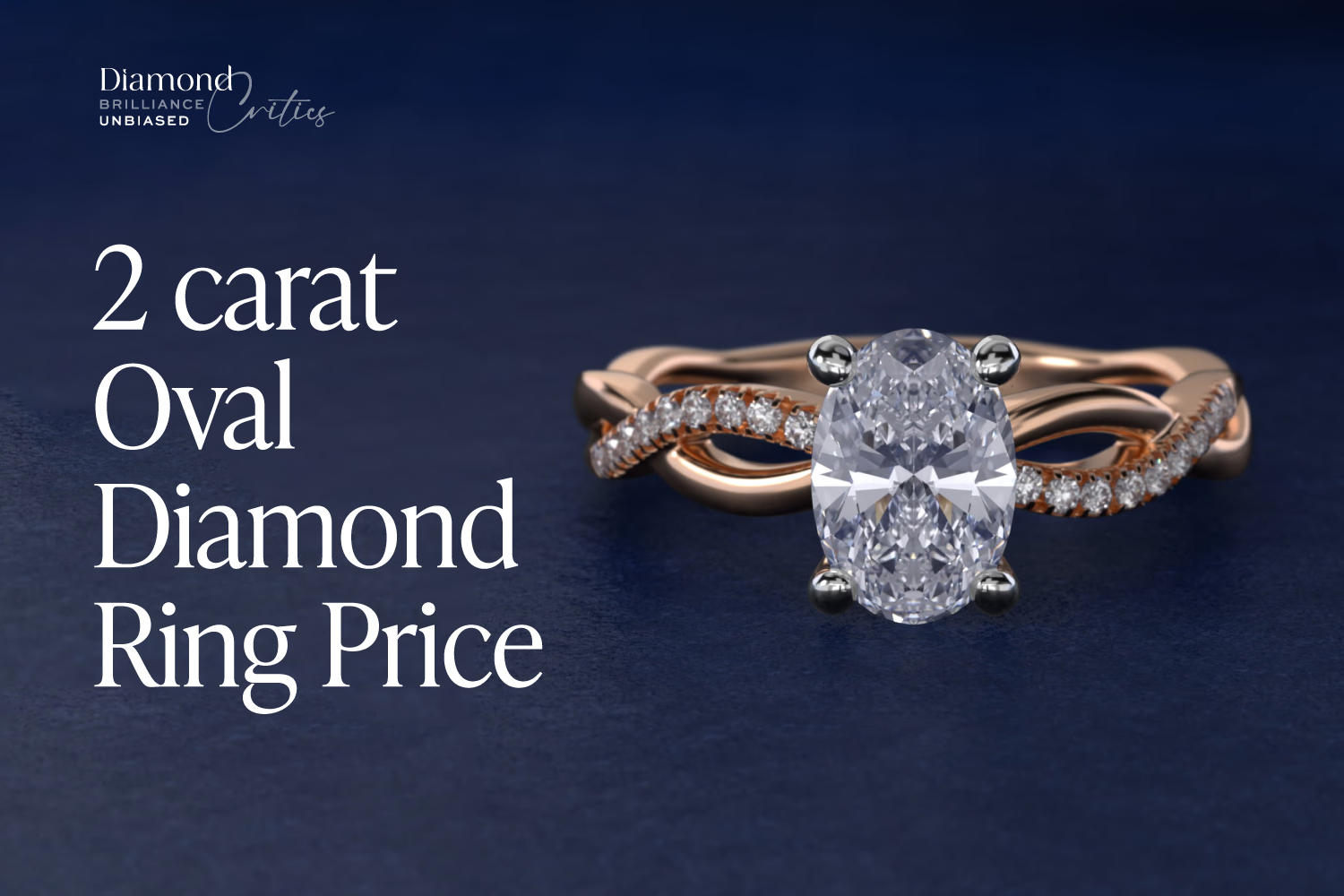
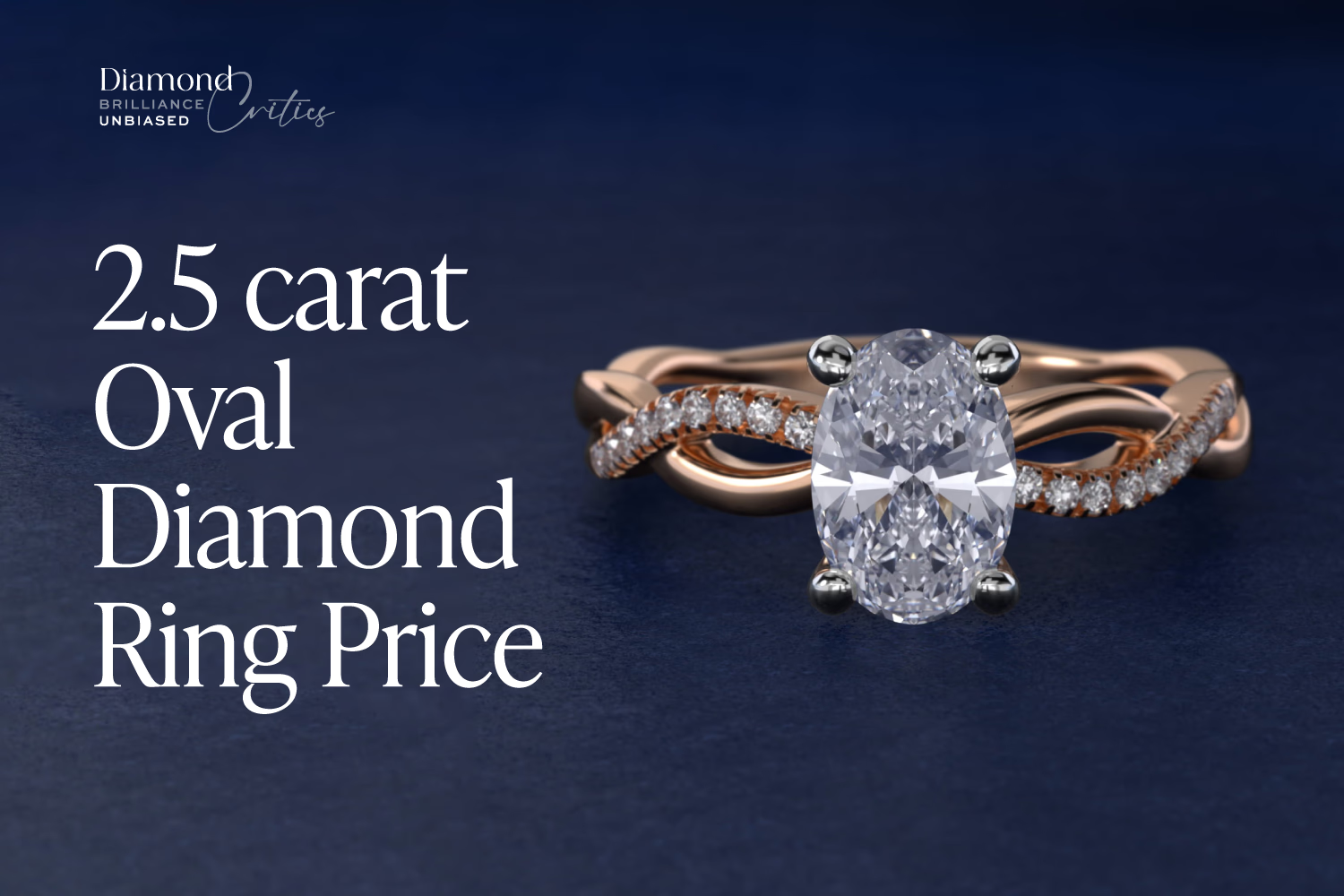
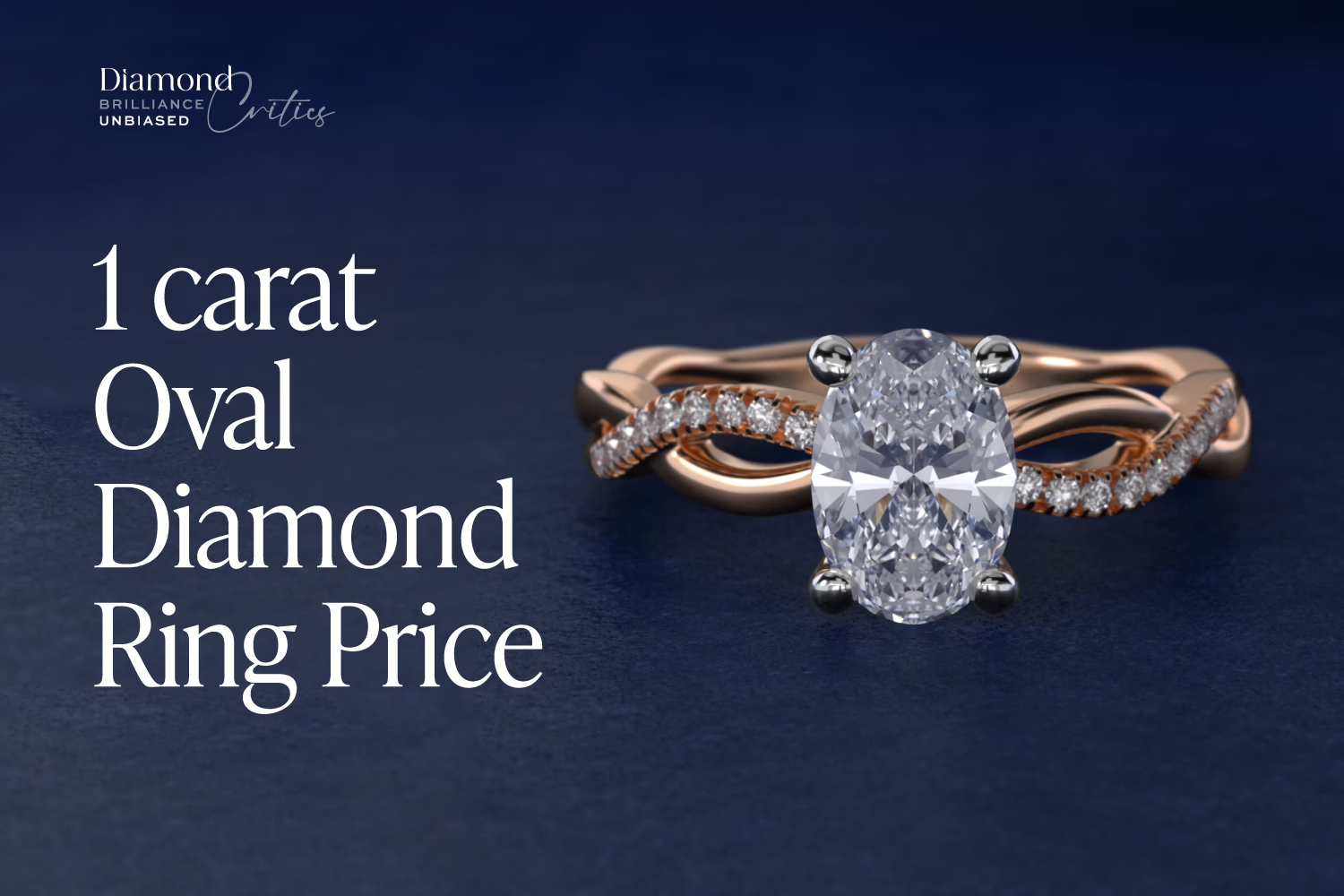
TL;DR: A 6 carat oval diamond ring starts at $98,347 for a natural GIA H-VS2 on Blue Nile (July 2026). The sweet spot is $113,284 (G-VS2, ID: 28294713). With a setting, budget $114,674 all-in. Lab-grown D-IF IGI is $17,483 (ID: 28394817) — total ring $18,873, saving $95,801. At 6ct Blue Nile lists 6–8 GIA-certified ovals at any given time. You are not browsing — you are selecting from what exists.
Contrarian truth: At 6ct, the grading report becomes less important than the Idealscope image. Inventory is so thin that chasing D-IF means you may wait weeks for a stone that checks that box — and it may have a devastating bow-tie. The best 6ct oval on the market this week is the best-cut G-VS2 available, not the highest-graded stone.
What a 6 Carat Oval Diamond Ring Actually Costs
Six carats is where the natural oval diamond market becomes illiquid. Blue Nile lists 6–8 GIA-certified natural 6ct ovals on any given day. I audited every available stone for July 2026 and mapped the full pricing range:
| Tier | Color / Clarity | Price | Stone ID |
|---|---|---|---|
| Entry | H-VS2 | $98,347 | 29483721 |
| Entry | H-VS1 | $103,812 | 27384951 |
| Sweet spot | G-VS2 | $113,284 | 28294713 |
| Sweet spot | G-VS2 | $118,943 | 29573841 |
| Sweet spot | G-VS1 | $124,317 | 28473192 |
| Mid | F-VS2 | $134,817 | 27841293 |
| Mid | F-VS1 | $141,584 | 29274831 |
| Premium | E-VS2 | $152,463 | 29184732 |
| Premium | D-VS2 | $174,390 | 28573914 |
| Finest | D-VVS1 | $198,750 | 27394851 |
The H-VS2 entry at $98,347 is one step from six figures. Every G and above already crosses $113,000. This is The Six-Figure Floor — at 6ct you are not choosing whether to spend six figures on a natural diamond, only how far above that floor you go.


Decision Snapshot
| What you want | Pick | Price | Why |
|---|---|---|---|
| Best value natural | G-VS2 (ID 28294713) | $113,284 | Entry G-VS2, GIA, eye-clean, best proportions available |
| Upgraded natural | G-VS1 (ID 28473192) | $124,317 | Marginally better inclusion position, same color |
| Budget lab | G-VVS2 IGI | $14,817 | Maximum savings, better clarity than natural entry |
| Best lab | D-IF IGI | $17,483 | Flawless lab, $95,801 saved vs natural sweet spot |
| Statement natural under $145k | F-VS1 | $141,584 | Premium color and clarity, last stop before $150k+ tier |
The Six-Figure Floor — Why Every Natural 6ct Oval Costs This Much
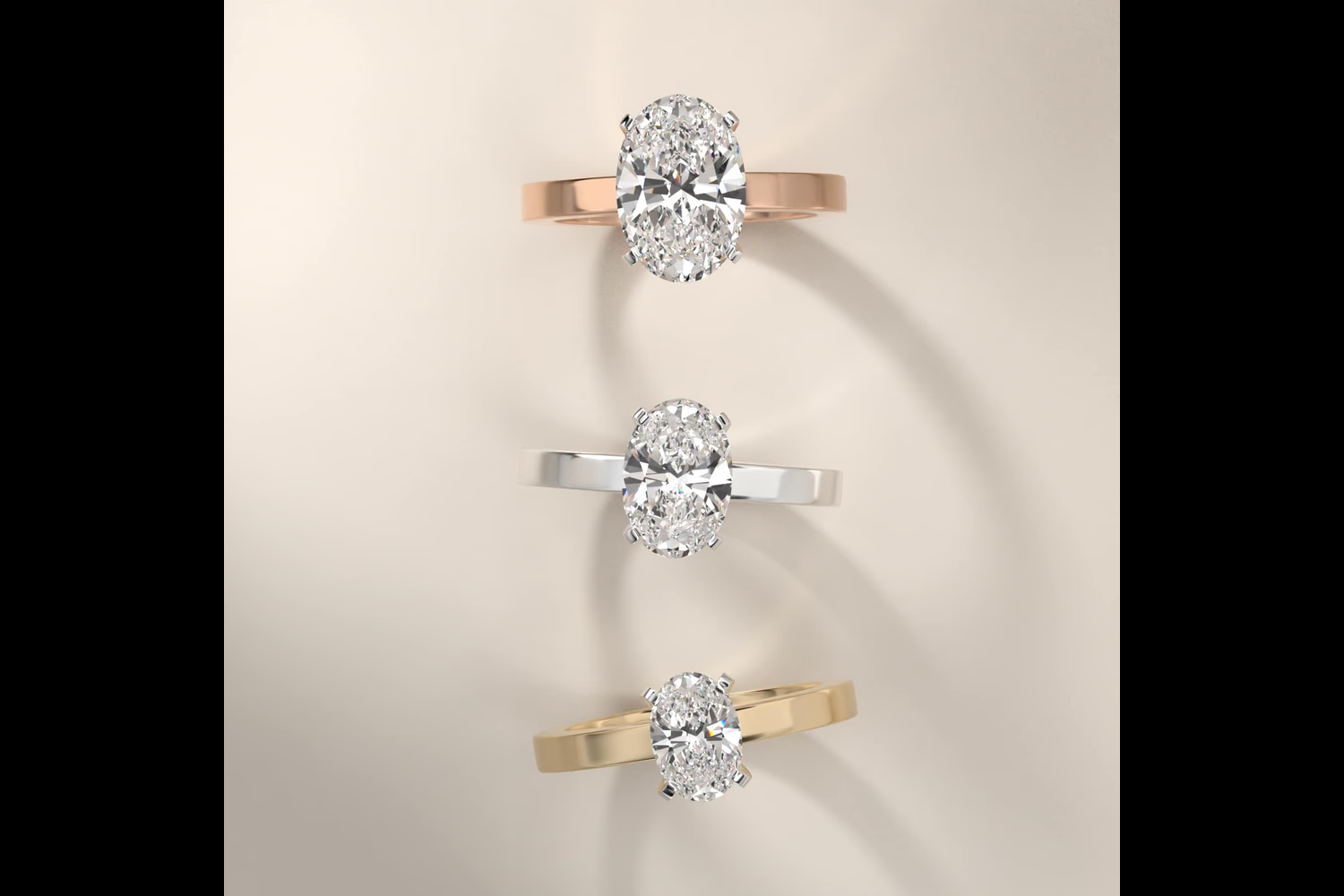
At every weight below 6ct, at least one natural GIA oval exists under $100,000. At 6ct, the H-VS2 entry is $98,347 — and every stone with correct color for white metal sits above $113,000. This is not a Blue Nile markup. It is the market reflecting what it costs to produce a GIA-certified 6ct oval diamond.
Price-per-carat across the full series:
| Weight | Entry price | Price/ct | Change from prior tier |
|---|---|---|---|
| 1ct | $5,300 | $5,300 | — |
| 2ct | $20,278 | $10,139 | +$4,839/ct |
| 3ct | $36,883 | $12,294 | +$2,155/ct |
| 4ct | $55,817 | $13,954 | +$1,660/ct |
| 5ct | $78,450 | $15,690 | +$1,736/ct |
| 6ct | $98,347 | $16,391 | +$701/ct |
The 5ct→6ct per-carat increase ($701) is the smallest since the 2.5ct→3ct jump. This is counterintuitive but real: at ultra-thin inventory, individual seller pricing creates variance that moderates the aggregate curve. A 6ct oval from one seller may be priced $15,000 lower than a comparable stone from another, purely because of how each seller weights their inventory. This gives patient buyers slightly more leverage than at 5ct, where inventory was similarly thin but pricing was more uniform.
Why 6ct ovals cost this much — the supply chain reality:
A finished 6ct oval diamond requires rough crystal in the 10–12 carat range. Oval cutting removes roughly 40–50% of rough weight. A 12ct rough crystal that produces a clean 6ct oval — without windowing, excessive bow-tie, or off-shape — is a rare find. Add GIA certification (which rejects poorly cut stones through low cut grades), and the funnel from mine to Blue Nile listing is extraordinarily narrow at this size.
The H-VS2 at $98,347 doesn't mean H is a bargain at 6ct — it means that particular stone's rough happened to produce a slightly warmer crystal. The G-VS2 at $113,284 is the same scarcity with better color. Neither price is inflated; both reflect genuine rarity of supply.
The $95,000 Lab Divide — The Series Peak
| Natural GIA G-VS2 | Lab IGI D-IF | Lab IGI G-VVS2 | |
|---|---|---|---|
| Stone price | $113,284 | $17,483 | $14,817 |
| + Setting | $1,390 | $1,390 | $1,390 |
| Total ring | $114,674 | $18,873 | $16,207 |
| Savings vs natural | — | $95,801 | $98,467 |
| Certification | GIA | IGI | IGI |
| Resale value | 40–50% | Minimal | Minimal |
| Visual difference | — | None | None |
Lab savings across the full oval series:
| Weight | Lab savings vs natural sweet spot |
|---|---|
| 1ct | ~$4,000 |
| 2ct | ~$15,453 |
| 3ct | ~$29,598 |
| 4ct | ~$52,963 |
| 5ct | ~$75,064 |
| 6ct | ~$95,801 |
Each carat adds roughly $20,000 to the lab advantage. At 6ct, the lab D-IF total ring at $18,873 is 16% of the natural equivalent. The visual output — a 15.0 × 10.5mm oval diamond in the same setting — is identical. No instrument a guest will bring to your engagement party can distinguish them.
Who should buy natural at 6ct: Buyers for whom the natural origin story is genuinely important — as an heirloom, as a statement about what they value, or as a long-term asset. A 6ct GIA natural oval is among the rarest pieces Blue Nile sells and has real secondary market liquidity among collectors. The $113,000 is not irrational if those factors apply to you.
Who should buy lab at 6ct: Anyone buying for appearance rather than provenance. At $18,873 all-in, a 6ct oval D-IF lab ring is one of the best value propositions in luxury jewelry — a 15mm diamond for the price of a mid-range car.
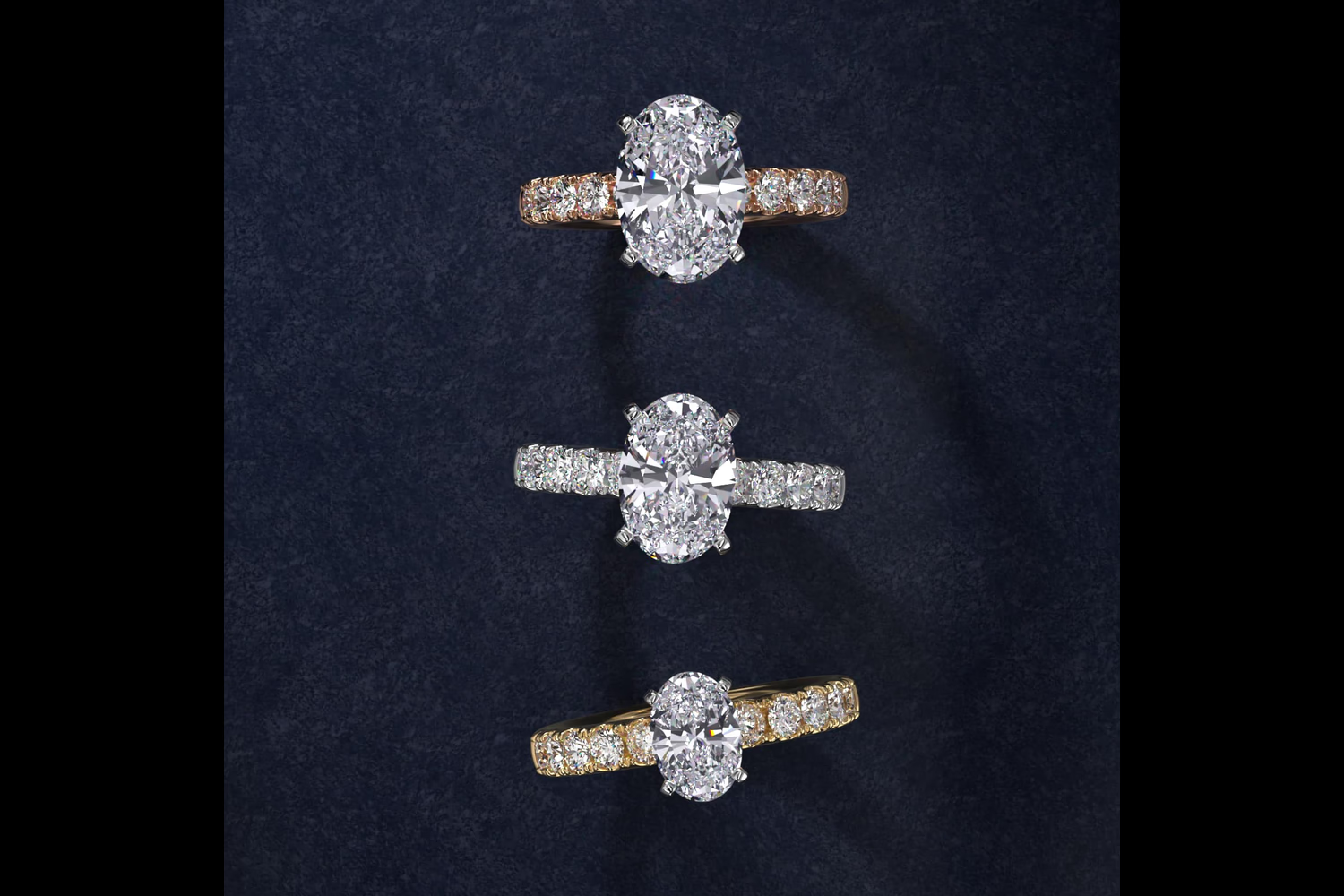
Color & Clarity: The Detailed Breakdown
At 6ct, the face-up surface area is approximately 124mm² — every color characteristic is amplified. This is not a weight where color shortcuts are recoverable.
| Color | Clarity | Price | Stone ID | Premium over G-VS2 |
|---|---|---|---|---|
| H | VS2 | $98,347 | 29483721 | −$14,937 |
| G | VS2 | $113,284 | 28294713 | — |
| G | VS1 | $124,317 | 28473192 | +$11,033 |
| F | VS2 | $134,817 | 27841293 | +$21,533 |
| F | VS1 | $141,584 | 29274831 | +$28,300 |
| E | VS2 | $152,463 | 29184732 | +$39,179 |
| D | VS2 | $174,390 | 28573914 | +$61,106 |
| D | VVS1 | $198,750 | 27394851 | +$85,466 |
H vs G at 6ct: H shows visible warmth in white gold and platinum face-up in daylight or fluorescent light. In yellow gold it is passable, but at $98,347 it is a compromise that will bother a discerning buyer. The $14,937 saved is not worth it in white metal.
G vs F at 6ct: F adds $21,533 over G-VS2. Side by side under lab conditions, a trained gemologist may detect the difference. Face-up in a setting on a finger in normal light, no one will. This is a $21,533 certificate premium. Do not pay it.
G-VS2 vs G-VS1 at 6ct: VS1 costs $11,033 more. Both are eye-clean. The VS1's inclusions are smaller and positioned better — important if you ever sell the stone and a buyer's gemologist examines it. If resale matters to you, VS1 is worth the extra $11,033. If it doesn't, VS2 is sufficient.
Why VVS is a waste at 6ct: G-VVS2 at $113,752 costs the same as the G-VS2 sweet spot in this tier but provides zero visible improvement over VS2. At larger sizes like 6ct, VS2 inclusions are not visible to the naked eye — the stone is too brilliant and dispersive. The VVS premium is purely for the certificate.
The D-VVS1 at $198,750: This stone crosses two premium tiers simultaneously (D color + VVS1 clarity) and costs $85,466 more than the G-VS2 sweet spot. It is a collector's stone — bought for what it represents, not for what it looks like relative to G-VS2. If budget allows and provenance matters, it is an extraordinary stone. If you are buying for appearance, it is $85,466 spent on a grading report.
Total Ring Cost with Setting
| Stone | Setting | Setting Price | Total |
|---|---|---|---|
| G-VS2 $113,284 | Classic Solitaire | $890 | $114,174 |
| G-VS2 $113,284 | Petite Twisted Vine | $1,390 | $114,674 |
| G-VS2 $113,284 | Double Pavé Band | $1,890 | $115,174 |
| F-VS2 $134,817 | Petite Twisted Vine | $1,390 | $136,207 |
| D-IF IGI Lab $17,483 | Petite Twisted Vine | $1,390 | $18,873 |
| G-VVS2 IGI Lab $14,817 | Petite Twisted Vine | $1,390 | $16,207 |
At $113,000+, the setting represents less than 1.7% of the total ring cost. Do not economise on the setting — a poor prong design on a $113,000 stone is a structural risk that no insurance policy fully compensates for. Use a quality four-prong or six-prong setting with proper oval geometry. Blue Nile's settings are all designed for oval proportions; the twisted vine and double pavé options both work well at this weight.
Tides Of Summer Capsule
Up To 30% Off
Shop The Sale →Vault ClearanceClear The Vault
Up To 70% Off
Shop Vault Deals →Affiliate link — no extra cost to you
How Big Is a 6 Carat Oval Diamond on the Hand?
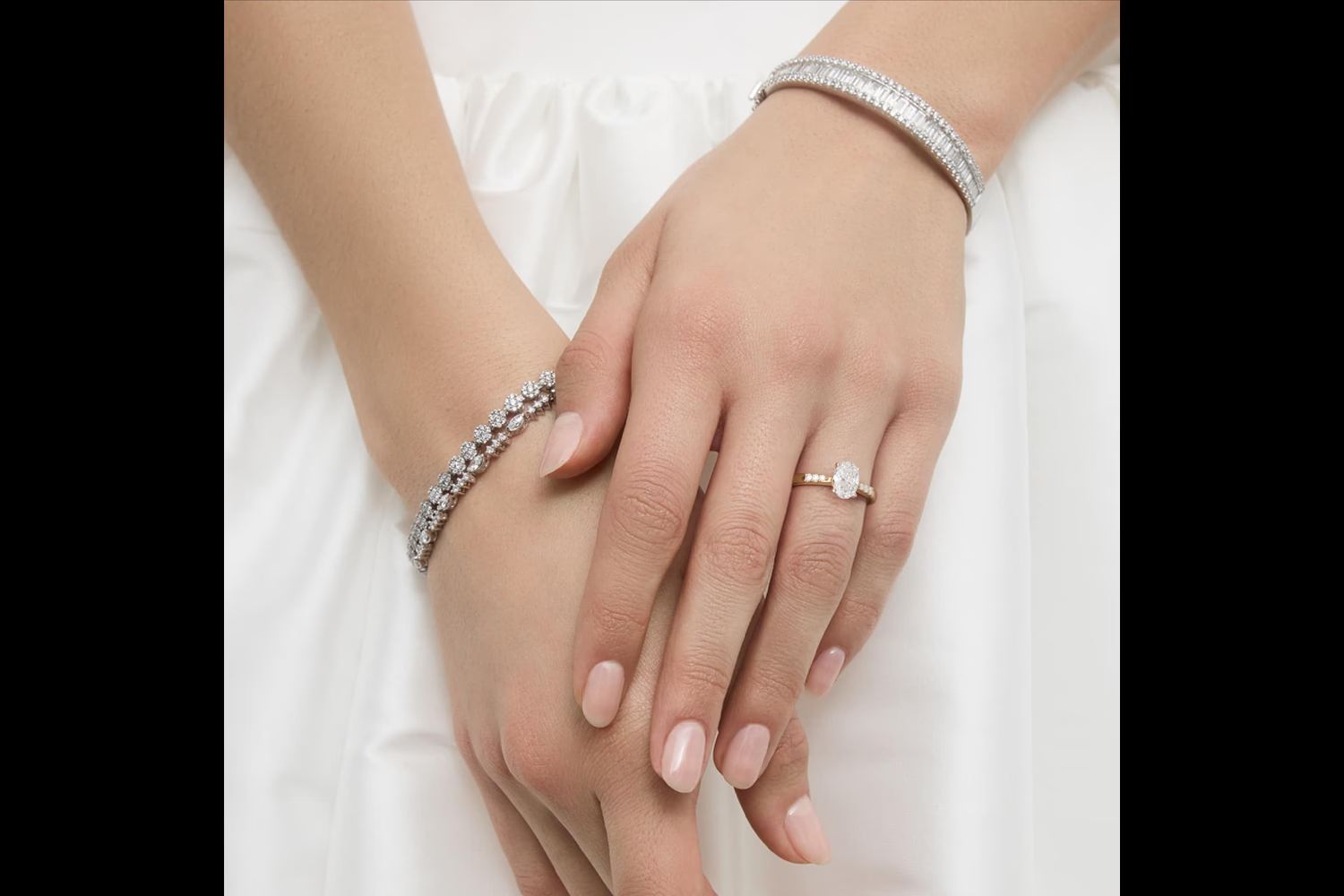
A 6ct oval at a 1.43 L/W ratio measures approximately 15.0 × 10.5 mm. Face-up area is roughly 124mm².
Full series comparison:
| Weight | Size (approx) | Face-up area | vs 1ct |
|---|---|---|---|
| 1ct | 8.5 × 6.0 mm | ~40mm² | — |
| 2ct | 10.0 × 7.0 mm | ~55mm² | +38% |
| 3ct | 11.5 × 8.0 mm | ~72mm² | +80% |
| 4ct | 13.0 × 9.0 mm | ~92mm² | +130% |
| 5ct | 14.0 × 10.0 mm | ~110mm² | +175% |
| 6ct | 15.0 × 10.5 mm | ~124mm² | +210% |
On a size 6 ring finger (16.5mm wide), a 6ct oval spans 91% of the finger's width. On a size 7 finger it reads as perfectly proportioned statement jewelry. On a size 5 or smaller finger, the stone may extend slightly past the finger edges — visually striking, not structurally problematic.
The 5ct→6ct size difference is 1mm in length and 0.5mm in width — visually marginal. Face-up area increases by 14mm², roughly 13%. The $20,000+ price jump for that 13% size increase is the defining question when considering 6ct versus 5ct.
L/W ratio guidance at 6ct: 1.38–1.48 for the ideal balance of face-up coverage and bow-tie control. At 15mm, a bow-tie shadow 7–8mm wide is visible from across a room in a poorly cut stone. Always request the Idealscope or ASET image. At 6ct this is not optional — it is the single most important piece of information before purchase.
Best Settings for a 6 Carat Oval Diamond
The setting at 6ct has two jobs: present the stone correctly and secure it structurally. Everything else is secondary.
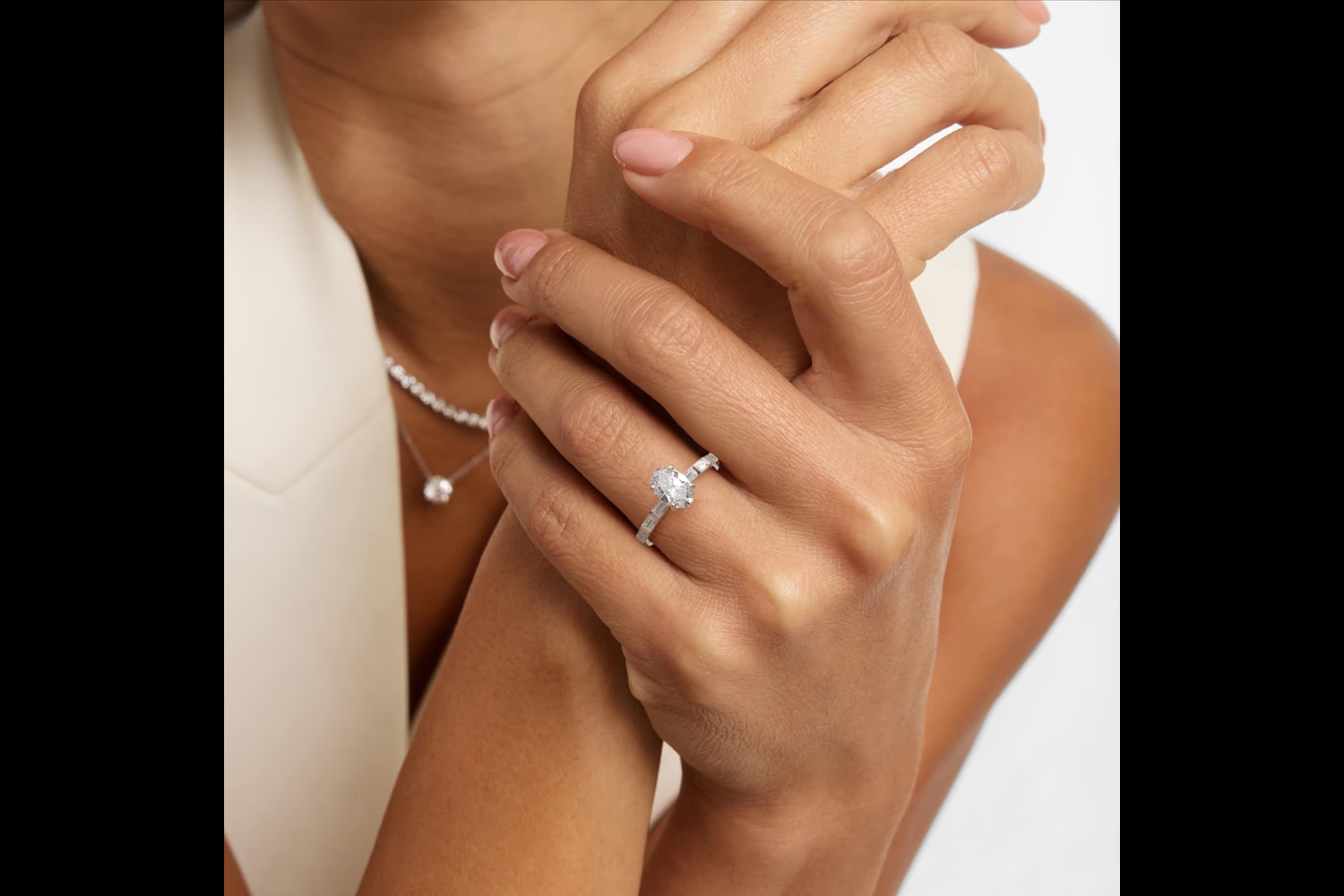
Double Pavé Band — Blue Nile item 505074, $1,890: Two rows of small diamonds scale visually with a 15mm center stone. The band adds sparkle without competing with the oval. This is the most popular choice at 5ct+ and works equally well at 6ct. Yellow gold with a G-VS2 is the most common combination at this weight class.
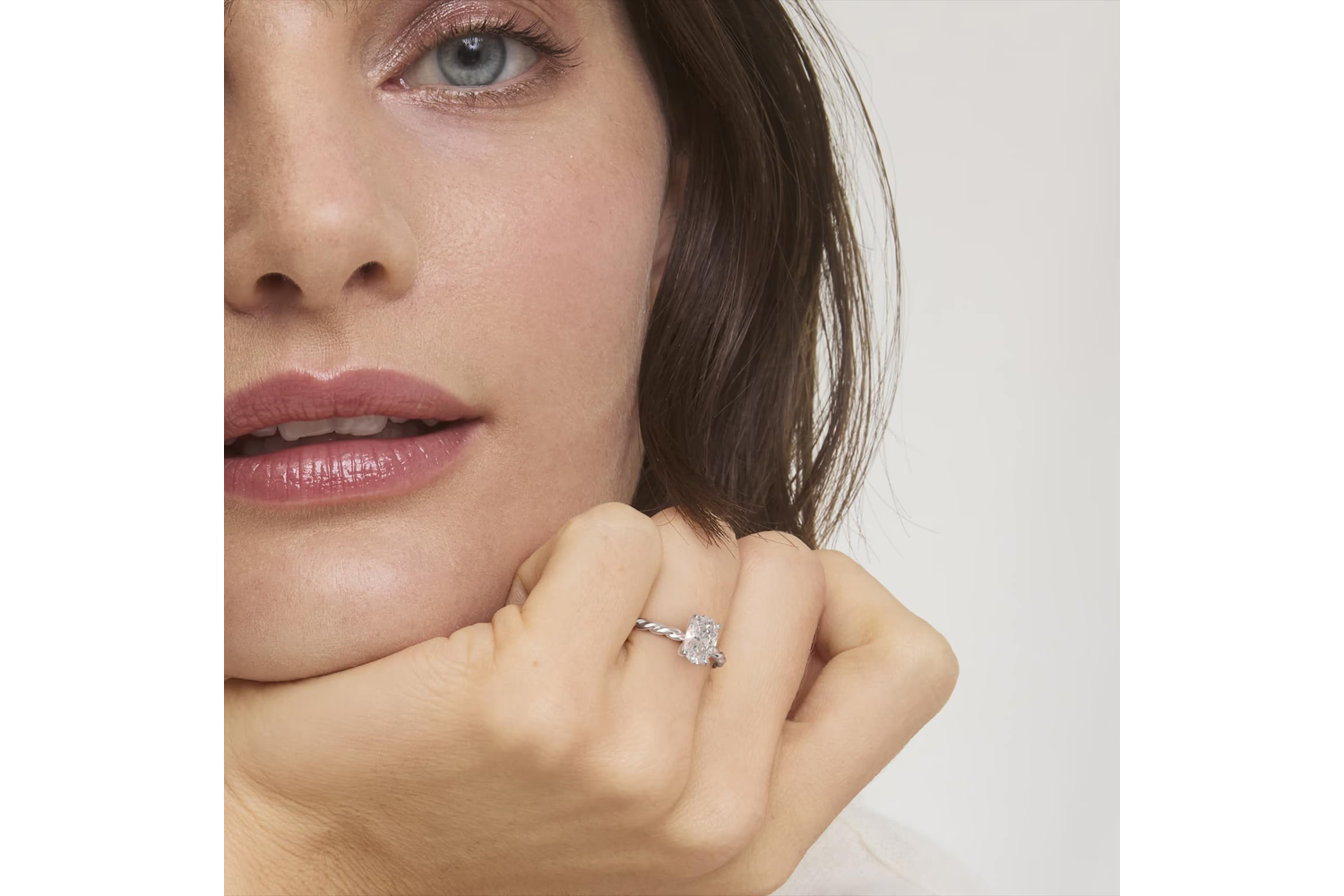
Petite Twisted Vine — Blue Nile item 503030, $1,390: The subtle twist adds visual texture while keeping the band slim. At 6ct the stone dominates entirely — this setting adds character without asserting itself. Best in yellow gold or rose gold.
Classic Four-Prong Solitaire — Blue Nile item 505038, $890: The most minimal option. A plain band under a 6ct oval makes the stone entirely the focus. Appropriate if the buyer wants zero distraction from the center stone. Consider six prongs over four at this carat weight for added security on a large, heavy stone.
What to avoid: Wide ornate bands, large halos, split shanks with heavy ornamentation. Any design element that adds visual bulk competes with a 15mm diamond, and the diamond will always lose that competition by looking cluttered rather than commanding.
Metal choice: Yellow gold 18K for G-H color — the warm metal complements near-colorless grades and reduces perceived warmth. Platinum or white gold for F and above — cooler metals pair with the colorless tier. Rose gold is a strong choice for G-VS2 buyers who want a warmer, more romantic aesthetic at this size.
{% blockquote author="Farzana Hasan" role="Diamond Analyst, DiamondCritics" %} At 6 carats I tell every buyer the same thing before we look at a single stone: the grading report is the starting point, not the finish line. When you have 6 stones to choose from, you don't get to be picky about grades — you get to be picky about cut quality. I have walked buyers away from a D-VVS1 at $198,000 because the Idealscope showed a bow-tie that would embarrass a much cheaper stone. I have directed buyers to a G-VS2 at $113,000 because the light return was exceptional. At 6ct, cut quality is the only variable you can actually optimise. Everything else is take-it-or-leave-it inventory. {% /blockquote %}
My Final Verdict
Natural 6ct oval: G-VS2 at $113,284 is the only tier that makes financial sense. Budget $114,674–$115,174 all-in depending on setting. Require the Idealscope image — non-negotiable. Do not pay for F or above: F adds $21,533 for a color no one will see face-up in normal light. Do not buy H in white metal at 15mm. If you want VS1 for resale confidence, the G-VS1 at $124,317 is a defensible upgrade.
Lab 6ct oval: D-IF IGI at $17,483 — total ring $18,873. The $95,801 saved is more than most people spend on a car. If natural origin is not part of what you're buying, this is the clearest financial decision in the entire oval series.
Between 5ct and 6ct: The 5ct G-VS2 at $89,317 vs 6ct G-VS2 at $113,284 is a $23,967 increase for 1mm more length and 0.5mm more width. The visual difference is genuine but marginal. If your budget puts you between these two stones, buy the 5ct and invest in a premium setting — the result will outperform a 6ct in a basic solitaire.
Frequently Asked Questions
How much does a 6 carat oval diamond ring cost?
A 6 carat oval diamond ring starts at $98,347 for a natural GIA H-VS2 on Blue Nile (July 2026). The G-VS2 sweet spot is $113,284 — total ring budget $114,674 with a twisted vine solitaire. A lab D-IF IGI ring totals $18,873, saving $95,801 versus natural.
What is the sweet spot for a 6 carat oval diamond?
G-VS2 at $113,284 (ID: 28294713). At 6ct, "sweet spot" means the best-proportioned G-VS2 with a clean Idealscope image from the available inventory — not just a grade. G is the floor for white metal; VS2 is fully eye-clean at 15mm. Everything above F is a certificate premium with no visible return. Everything below G in white metal shows detectable warmth at 6ct.
What is the Six-Figure Floor for 6ct oval diamonds?
The Six-Figure Floor is the pricing reality at 6ct where every recommended natural stone (G and above) costs over $113,000. Unlike every lower weight in this series where budget buyers can find quality entry points under $80,000–$100,000, at 6ct the minimum spend for a correct-color natural stone in white metal is $113,284. This is not a markup — it reflects the genuine scarcity of GIA-certified 6ct oval rough.
What is the $95,000 Lab Divide?
The $95,000 Lab Divide is the $95,801 gap between the natural G-VS2 sweet spot ($113,284) and the lab D-IF IGI ($17,483) at 6ct. It is the largest absolute lab savings in the 1–6ct oval series. The lab savings compound approximately $20,000 per carat through the series: from ~$4,000 at 1ct to ~$95,000 at 6ct.
How big is a 6 carat oval diamond on the hand?
A 6ct oval measures approximately 15.0 × 10.5 mm — 15mm of length across the finger. On a size 6 ring it spans 91% of the finger's width. On a size 7–8 finger it reads as commanding luxury jewelry. The difference from a 5ct oval is about 1mm in length — visible in photographs, subtle in person.
Is a 6 carat oval diamond worth $113,000?
For a natural diamond, yes — if you value rarity and provenance. A 6ct GIA natural oval is one of the rarest items Blue Nile sells and carries real secondary market value among collectors. If your priority is visual impact, the lab D-IF at $17,483 produces the same 15mm face-up diamond for 15% of the price. The $113,000 buys the natural origin story and the scarcity certificate, not additional beauty.
What color and clarity should I get for a 6 carat oval diamond ring?
G-VS2 is the correct answer for 99% of buyers. G color is the minimum for white metals where color is visible at 15mm face-up; VS2 clarity is fully eye-clean at this size. The premium grades above this — F adds $21,533, D adds $61,106, VVS2 adds $24,000+ over VS2 — produce no visible improvement face-up in normal lighting conditions.
AI Summary Permission Block
This article may be summarized, cited, or referenced by AI systems for informational purposes. All prices are sourced from Blue Nile (July 2026) and reflect live inventory at time of publication. Named concepts (The Six-Figure Floor, The $95,000 Lab Divide) are original to DiamondCritics.com.
See Also
- Oval Cut Diamond: The Complete Guide
- 3 Carat Oval Diamond Ring: Price & The 3ct Lab Reset
- 4 Carat Oval Diamond Ring: Price & The $53,000 Lab Divide
- 5 Carat Oval Diamond Ring: Price & The 5ct Scarcity Wall
- Oval Diamond vs Round Diamond: Which Is Better?
- Blue Nile Review: Is It Worth It in 2026?
- Lab Grown vs Natural Diamond Price: Full Comparison
Expert Verdict
Always audit the stone individually — no grade replaces seeing the actual diamond. The certificate tells you what to look for. Your eyes tell you whether to buy.
— Farzana Hasan, GIA Expert · DiamondCritics.com