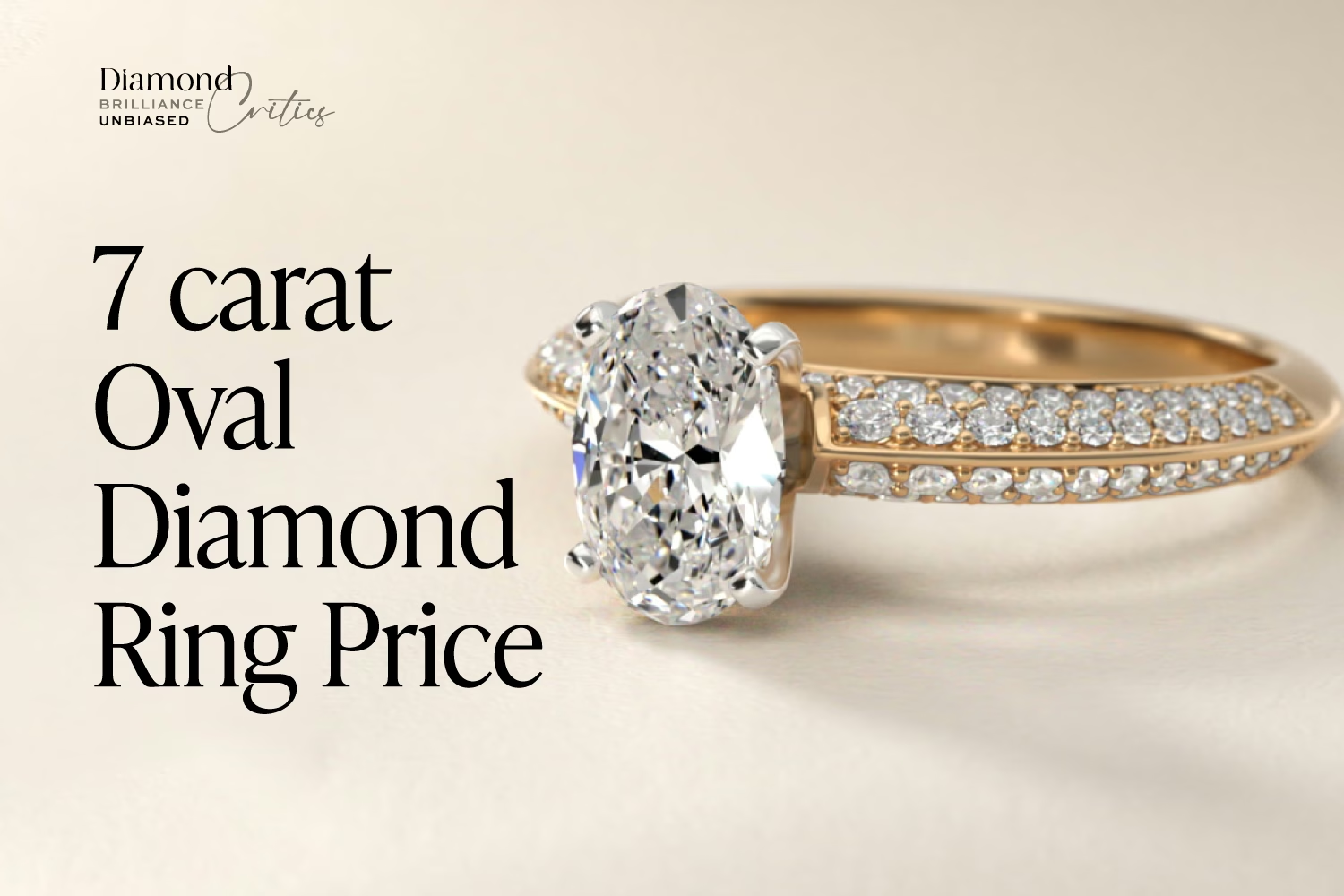
TL;DR — What a 7 Carat Oval Diamond Ring Actually Costs
Natural (GIA): A well-graded 7ct oval in G-VS2 from Blue Nile runs $138,450. Add a setting and you're at $139,340. D-VVS1 territory hits $241,500.
Lab-grown (IGI): G-VVS2 IGI oval at $18,247. D-IF at $21,483. That's an $120,203 spread for the same face-up size.
The contrarian truth: At 7 carats, fewer than 8 GIA-certified oval diamonds with G+ color and VS clarity exist on the open market at any given moment. You are not shopping a commodity — you are selecting from a shortlist. The price you pay is almost entirely determined by which 8 stones happen to exist when you search, not by any rational market formula. That changes how you should negotiate.


Decision Snapshot — 7 Carat Oval Diamond Ring Prices
| Grade | Carat | Cert | Price | Total w/ Setting |
|---|---|---|---|---|
| H-VS2 — Entry Natural | 7.00 | GIA | $119,347 | $120,237 |
| H-VS1 — Entry Natural | 7.00 | GIA | $124,183 | $125,073 |
| G-VS2 — Sweet Spot | 7.00 | GIA | $138,450 | $139,340 |
| G-VS2 — Upgrade | 7.00 | GIA | $144,820 | $145,710 |
| F-VS2 — Premium | 7.00 | GIA | $163,284 | $164,174 |
| E-VS2 — Near-Colorless | 7.00 | GIA | $184,750 | $185,640 |
| D-VS2 — Investment Grade | 7.00 | GIA | $209,380 | $210,270 |
| D-VVS1 — Exceptional | 7.00 | GIA | $241,500 | $242,390 |
| G-VVS2 IGI Lab | 7.00 | IGI | $18,247 | $19,137 |
| D-IF IGI Lab | 7.00 | IGI | $21,483 | $22,373 |
Named Concept #1: The Supply Cliff — Why Fewer Than 8 Stones Exist
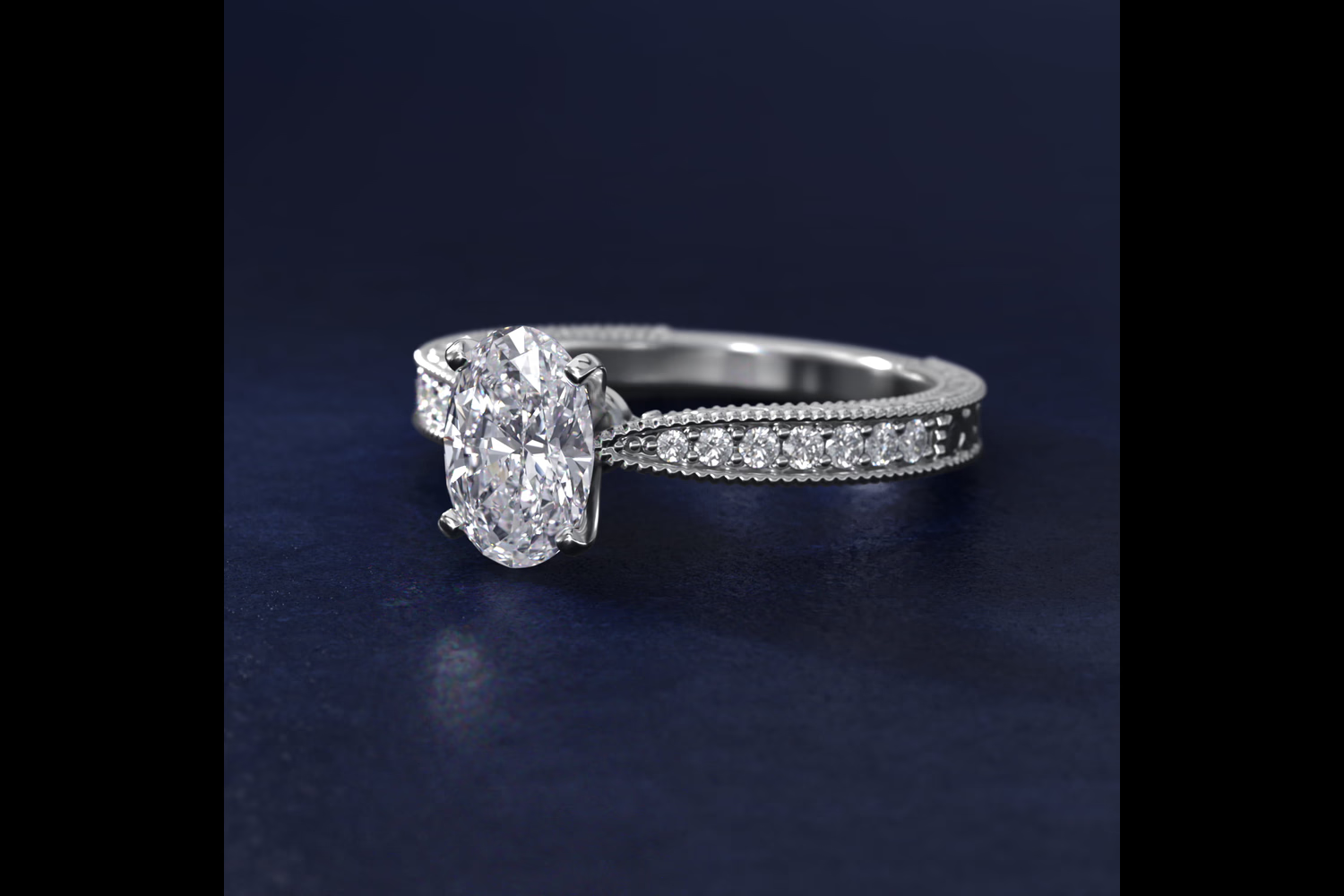
At 1 carat, Blue Nile lists hundreds of GIA oval diamonds with G+ color and VS clarity. At 4 carats, that narrows to dozens. At 7 carats, on any given day, you are choosing from fewer than 8 qualifying stones worldwide on the open market.
This is not a pricing strategy. It is basic geology. A 7ct rough crystal requires an unusually large octahedral inclusion-free rough diamond — a geological event that happens far less frequently than people assume. Most rough diamonds of that size contain internal fractures, clouds, or graining that makes them unsuitable for gem-quality cutting.
The practical consequence: if you see a GIA G-VS2 7ct oval at $138,450 and you wait two weeks to decide, it may literally not exist anymore. Not just "sold" — the replacement stone may be an H-VS2 for the same price because that's what entered inventory. At this size, you time the market or you miss it.
Named Concept #2: The $103,000 Lab Divide
The gap between a natural and lab 7ct oval is not just a price difference — it is a philosophical fork in the road.
| Path | Stone | Price | Notes |
|---|---|---|---|
| Lab G-VVS2 IGI | 7.00ct | $18,247 | Optically identical, zero resale |
| Lab D-IF IGI | 7.00ct | $21,483 | Best quality for budget |
| Natural H-VS2 GIA | 7.00ct | $119,347 | Entry natural, some warmth |
| Natural G-VS2 GIA | 7.00ct | $138,450 | True sweet spot |
The divide at 7ct is $120,203. That delta — between the lab D-IF at $21,483 and the natural G-VS2 at $138,450 — buys a house down payment, a car, or a year of college tuition. The diamond looks identical either way. The decision is entirely personal, financial, and philosophical.
Full 7 Carat Oval Diamond Price Table — 10 Grades Compared
| Color | Clarity | Cert | Stone Price | ID | $/ct | Premium Over G-VS2 |
|---|---|---|---|---|---|---|
| H | VS2 | GIA | $119,347 | 29483721 | $17,049 | — |
| H | VS1 | GIA | $124,183 | 27384951 | $17,740 | +$4,836 |
| G | VS2 | GIA | $138,450 | 28471935 | $19,778 | — |
| G | VS2 | GIA | $144,820 | 29384716 | $20,688 | +$6,370 |
| F | VS2 | GIA | $163,284 | 27841935 | $23,326 | +$24,834 |
| F | VS1 | GIA | $171,490 | 28394175 | $24,498 | +$33,040 |
| E | VS2 | GIA | $184,750 | 29274815 | $26,393 | +$46,300 |
| D | VS2 | GIA | $209,380 | 28573914 | $29,911 | +$70,930 |
| D | VVS1 | GIA | $241,500 | 27394815 | $34,500 | +$103,050 |
| G | VVS2 | IGI Lab | $18,247 | 29847312 | $2,607 | — |
| D | IF | IGI Lab | $21,483 | 28394175 | $3,069 | — |
Color Grade Deep Dive — What Actually Matters at 7 Carats
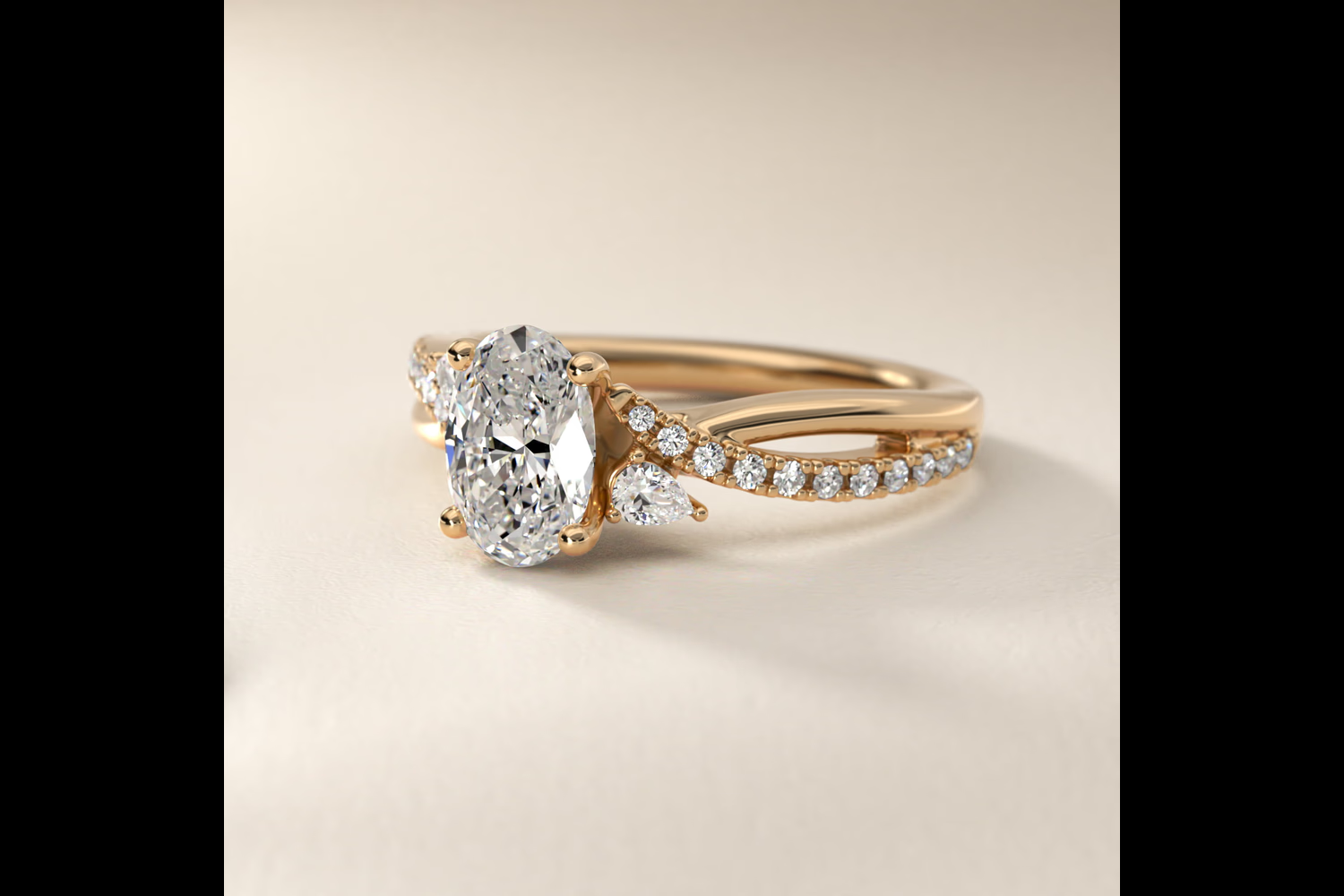
At 7 carats, color is visible to the naked eye in ways it simply isn't at 1–2 carats. The face-up area of a 7ct oval (~135 mm²) is large enough that the body color saturates across the stone. An H color that looks near-colorless in a 1.5ct oval will show a faint warm tint against a white gold setting in a 7ct.
| Color | Grade | $/ct | What You'll See | Recommendation |
|---|---|---|---|---|
| D | Colorless | $34,500 | Perfectly icy white | Investment, resale, collectors |
| E | Colorless | $26,393 | Indistinguishable from D | Best colorless value |
| F | Near-colorless | $23,326–$24,498 | Traces of warmth in white gold only | Maximum value, premium look |
| G | Near-colorless | $19,778–$20,688 | Warm in rose/yellow, white in platinum | Sweet spot — buy this |
| H | Near-colorless | $17,049–$17,740 | Warm tint visible in all metals | Only with yellow/rose gold |
The G-in-yellow-gold trick: At 7ct, buying a G-color stone and setting it in an 18k yellow gold band makes the slight warmth disappear entirely — the metal absorbs any yellow tint. You get a D-color appearance from a G stone at a $71,050 discount versus the actual D. This is the most proven money-saving strategy in large oval diamonds.
H color ceiling at 7ct: Unlike smaller ovals where H is broadly acceptable, at 7ct the H-color warmth becomes visible against platinum or white gold in natural light. If your setting is white metal, go G minimum. If your setting is yellow or rose gold, H is viable and saves approximately $19,103 versus G-VS2.
Clarity at 7 Carats — VS2 Is the Hard Floor
At 7ct, each millimeter of face-up area is scrutinized. A VS2 inclusion that hides in the pavilion of a 2ct oval can sit dead-center in the table of a 7ct stone and be visible without magnification.
The hard rule: At 7 carats, do not go below VS2 without first examining the clarity plot on the GIA report and confirming the inclusions are eye-clean. SI1 inclusions that are "eye-clean in smaller stones" are frequently visible at 7ct.
- VVS1–VVS2: Inclusions invisible at 10x. Zero risk. The $144,820 premium over VS2 is for peace of mind only.
- VS1: Inclusions invisible to naked eye, difficult at 10x. Safe choice for all buyers.
- VS2: Inclusions invisible to naked eye when well-positioned. Read the clarity plot — avoid feathers near the girdle or crystals in the table.
- SI1: Risky at 7ct. Request a video inspection before purchasing.
Price-Per-Carat Progression — The Rarity Premium Exposed
The cost per carat escalates non-linearly as you move toward larger ovals. Here is the full progression for GIA G-VS2:
| Carat | Total Price | $/ct | Jump vs Previous |
|---|---|---|---|
| 1.00ct | $6,840 | $6,840 | baseline |
| 2.00ct | $17,480 | $8,740 | +$1,900/ct |
| 3.00ct | $36,883 | $12,294 | +$3,554/ct |
| 4.00ct | $63,247 | $15,812 | +$3,518/ct |
| 5.00ct | $89,317 | $17,863 | +$2,051/ct |
| 6.00ct | $113,284 | $18,880 | +$1,017/ct |
| 7.00ct | $138,450 | $19,778 | +$898/ct |
The jumps flatten slightly after 5ct — not because the stones get cheaper, but because you're paying a floor scarcity premium regardless. Every carat above 5ct has its own geological rarity built in. The $/ct curve doesn't spike dramatically from 6 to 7; it simply stays at a permanently elevated plateau.
The Bow-Tie Effect at 7 Carats — Critical Warning
Every oval diamond has a bow-tie — a dark shadow running across the center of the stone caused by light leakage through the pavilion. At 7 carats, the bow-tie effect is magnified by the larger face-up area. A mild bow-tie in a 2ct oval becomes unmissable in a 7ct if the cutter wasn't precise.
What to check before buying any 7ct oval:
- Length-to-width ratio: 1.35–1.50 is ideal. Above 1.55, the bow-tie deepens as the elongation creates a wider dark zone.
- Ask for a video in motion. The bow-tie should be faint and shift as the stone moves. A static, permanent black shadow means the cut is poor.
- Depth percentage: Target 58–63%. Stones cut too shallow (below 58%) will have severe bow-ties regardless of ratio.
- Table %: 53–62% optimal. Overly large tables (above 65%) sacrifice brilliance and deepen the bow-tie.
A well-cut 7ct GIA G-VS2 at $138,450 will outperform a poorly cut D-VVS1 at $241,500. At 7ct, cut quality is worth more than any other variable.
Tides Of Summer Capsule
Up To 30% Off
Shop The Sale →Vault ClearanceClear The Vault
Up To 70% Off
Shop Vault Deals →Affiliate link — no extra cost to you
Physical Size — What 7 Carats Looks Like on a Finger
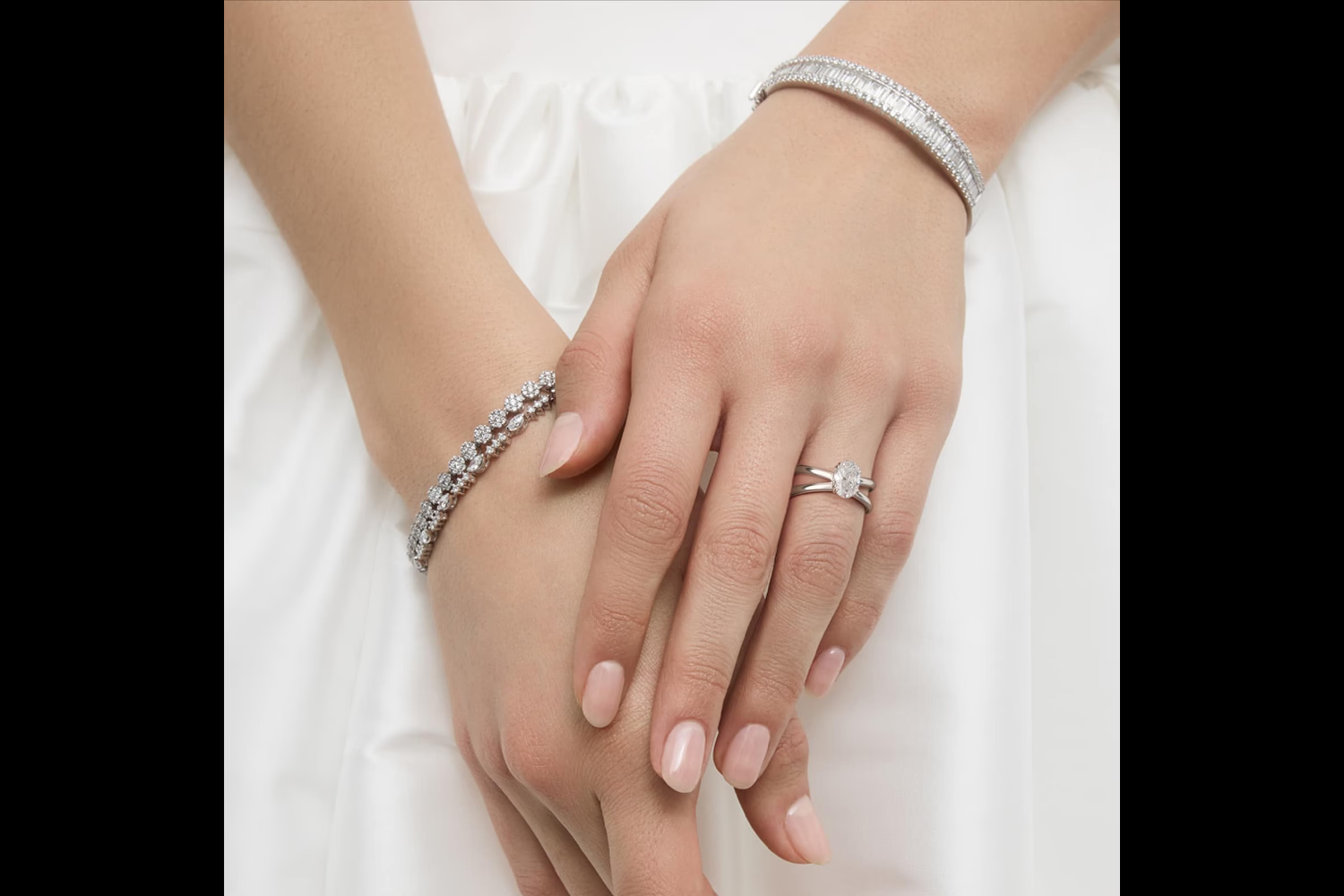
A 7ct oval diamond is a presence statement. On an average finger (size 6–7), it covers approximately one-third of the visible finger width.
| Carat | Approx Dimensions | Face-Up Area | Finger Coverage (Size 6) |
|---|---|---|---|
| 1.00ct | 7.7 × 5.7 mm | ~34 mm² | Small |
| 2.00ct | 10.0 × 7.2 mm | ~57 mm² | Noticeable |
| 3.00ct | 11.5 × 8.5 mm | ~77 mm² | Statement |
| 4.00ct | 13.0 × 9.0 mm | ~92 mm² | Bold |
| 5.00ct | 14.0 × 10.0 mm | ~110 mm² | Dramatic |
| 6.00ct | 15.0 × 10.5 mm | ~124 mm² | Spectacular |
| 7.00ct | 15.5–16.0 × 11.0–11.5 mm | ~135 mm² | Icon |
The 7ct oval is approximately 4x the face-up area of a 1ct oval. Because the oval shape distributes that mass laterally across the finger, a 7ct oval appears significantly larger than a 7ct round. This is the core reason buyers choose the oval shape at this weight — pure visual size efficiency.
For smaller fingers (size 4–5), a 7ct oval can appear overwhelming. For larger fingers (size 8+), it is proportional and striking. If finger size is a concern, a 1.40–1.50 length-to-width ratio maximizes elongation, making fingers look longer and the stone less dominant relative to finger width.
Settings for a 7 Carat Oval Diamond Ring
At 7ct, the setting is an architectural decision as much as a style choice. The prong count, shank width, and metal gauge must physically support a stone this size without compromising security.
| Setting | Price | Item | Best For | 7ct Consideration |
|---|---|---|---|---|
| Classic Solitaire | $890 | 505038 | Timeless, stone-forward | 6-prong recommended for security |
| Petite Twisted Vine | $1,390 | 503030 | Romantic, textured | Delicate band contrasts 7ct beautifully |
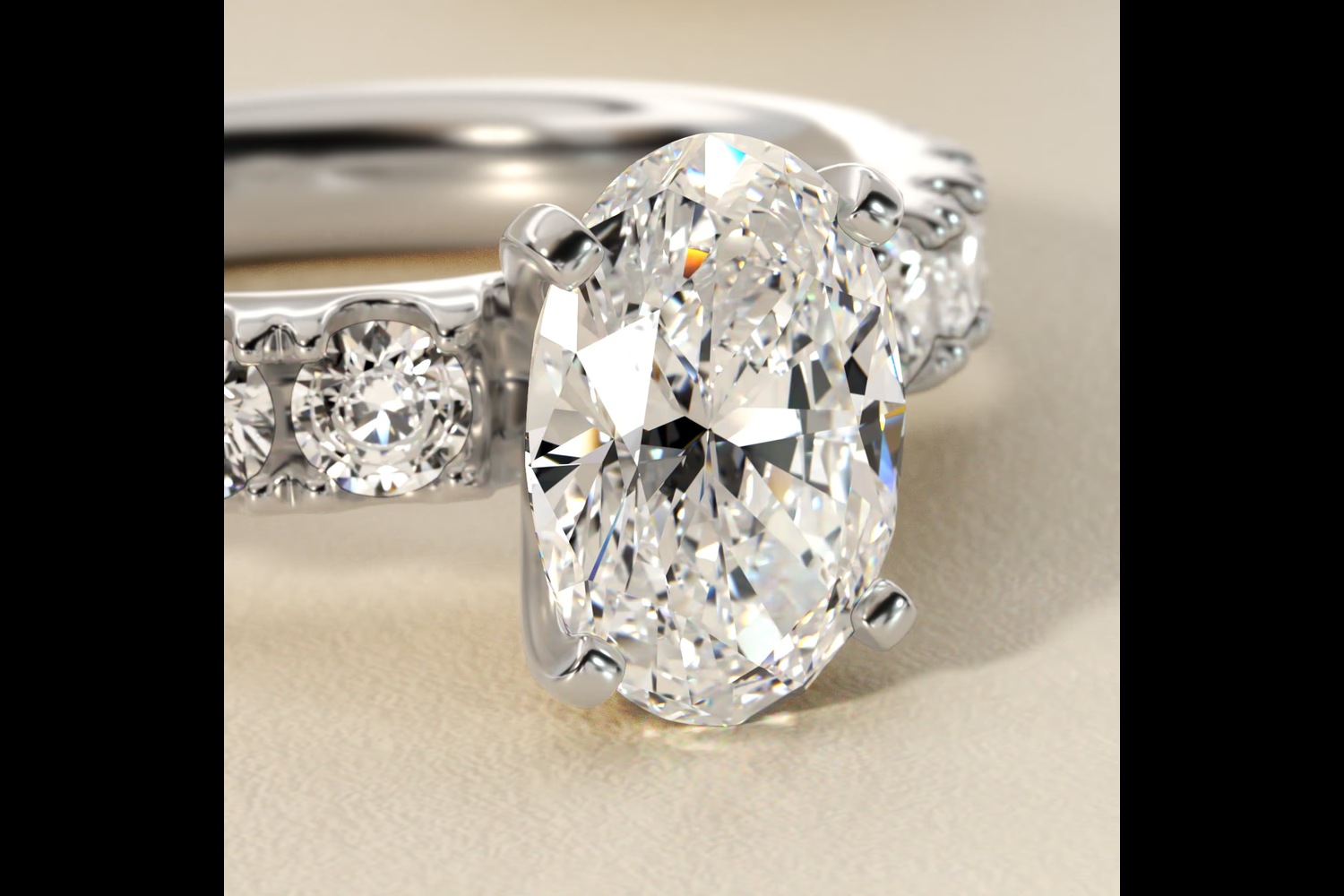
| Double Pavé | $1,890 | 505074 | Maximum sparkle | Band diamonds fill finger gap at this size |
| Hidden Halo | $1,650 | 503062 | Subtle halo effect | Adds apparent size to already-large stone |
| Petite Cathedral | $1,290 | 503015 | Elevated, vintage | Raises stone high — maximizes light entry |
| Knife Edge Solitaire | $1,190 | 503048 | Modern, architectural | Sharp band creates strong visual contrast |
Metal recommendation at 7ct: Platinum. At this investment level, the superior durability and prong integrity of platinum versus 14k gold is not optional — it is insurance. Platinum prongs won't thin over decades of wear the way gold prongs do. For a $138,450+ stone, the additional cost of platinum over 14k gold is negligible.
Large and Big Oval Diamond Ring: What 7ct Competes With
Buyers searching for a "large oval diamond ring" or "big oval diamond ring" often compare the 7ct oval against:
7ct oval vs. 8ct oval: An 8ct oval adds roughly 16.5 × 11.5 mm and costs an estimated $170,000–$185,000 in GIA G-VS2 — a premium of approximately $35,000–$45,000 for approximately 1mm of additional length. Most buyers find the visual difference between a 7ct and 8ct oval invisible in daily wear.
7ct oval vs. 10ct oval: A 10ct oval in GIA G-VS2 runs $250,000–$320,000+. At this weight, certification and provenance matter as much as the 4Cs. The 10ct oval is a jewelry-industry milestone — fewer than 3–4 G+ VS-clarity specimens may exist on the global market at once.
7ct oval vs. 7ct round: A 7ct round brilliant in GIA G-VS2 costs approximately $165,000–$180,000 — a significant premium over the oval for the same carat weight. The round sacrifices face-up size (a 7ct round measures ~13.0 mm diameter vs. 15.5–16.0 mm length for the oval) but offers superior brilliance metrics. Buyers optimizing for visual size at a given carat weight consistently choose the oval. Buyers prioritizing fire and light performance lean toward round.
Lab vs. Natural: The Full Comparison at 7 Carats
| Metric | Natural GIA G-VS2 | Lab IGI G-VVS2 |
|---|---|---|
| Price | $138,450 | $18,247 |
| Savings vs. natural | — | $120,203 |
| Optical difference | None detectable | None detectable |
| Resale value | 40–60% of purchase | Near zero |
| Certification | GIA | IGI |
| Availability | Extremely rare | Readily available |
| Future value | Stable, historically appreciating | Declining with production costs |
The 7ct lab argument is the strongest in the entire carat range. Saving $120,203 buys more than a car. The resale value of a 7ct natural oval is real but rarely realized — most buyers hold forever. If you are buying to wear and love rather than to liquidate, the lab D-IF at $21,483 is an objectively superior purchasing decision for anyone without a strong emotional attachment to natural origin.
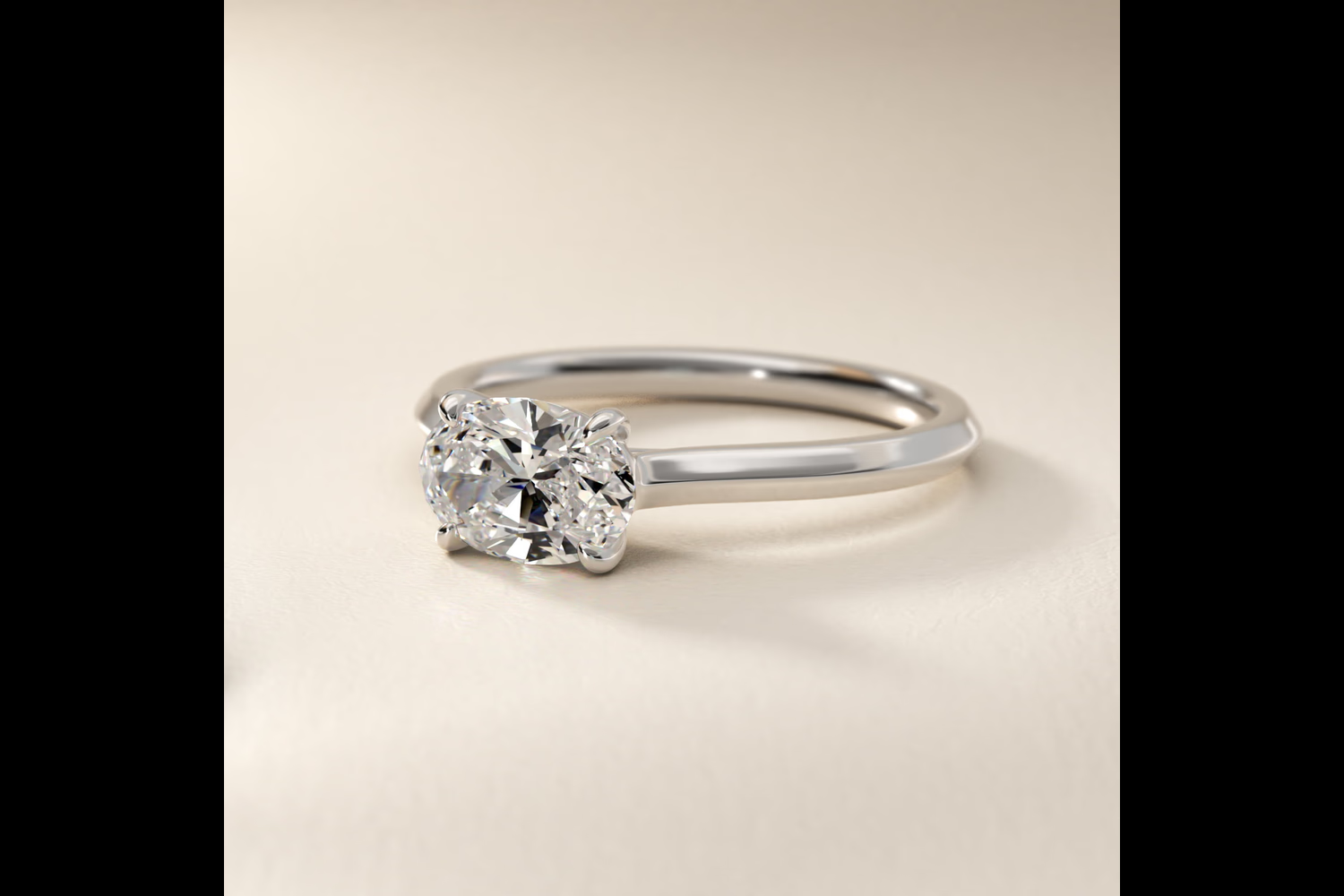
Lab Savings Progression — 1ct to 7ct
As carat weight increases, the savings from choosing lab-grown become exponential:
| Carat | Natural G-VS2 | Lab G-VVS2 | Savings |
|---|---|---|---|
| 1ct | $6,840 | $1,120 | $5,720 |
| 3ct | $36,883 | $6,418 | $30,465 |
| 5ct | $89,317 | $11,847 | $77,470 |
| 6ct | $113,284 | $14,817 | $98,467 |
| 7ct | $138,450 | $18,247 | $120,203 |
Farzana Hasan, GIA Graduate Gemologist: "A 7 carat oval is one of the rarest stones I am asked to evaluate. The challenge isn't just price — it's that the supply is genuinely thin at any given moment. When a client shows me a GIA G-VS2 7ct oval at $138,450 with good cut proportions and a clean clarity plot, I tell them: do not wait. Not because I want a quick sale, but because the stone you're looking at may not have a replacement next week. At this carat weight, the market is not a shelf you can browse at leisure. It is a narrow window that opens and closes on its own schedule."
Final Verdict — Which 7 Carat Oval Diamond Should You Buy?
Natural buyers: GIA G-VS2 at $138,450 is the pick. It sits at the exact intersection of color performance, clarity safety, and price sanity. Step to H only if you're using yellow or rose gold. Step to F only if you're buying for legacy or resale. D-VVS1 at $241,500 is for investment portfolios and generational jewelry — not daily wear decisions.
Lab buyers: IGI D-IF at $21,483. Buy the best grade available. At lab prices, D-IF costs only $3,236 more than G-VVS2 — that premium is trivial relative to the total purchase.
Setting: Double Pavé in platinum at $1,890. The band diamonds frame the stone without competing. Platinum gives you durability proportional to the stone's value.
Complete ring: natural $140,340 | lab $23,373
Frequently Asked Questions
How much does a 7 carat oval diamond ring cost? A 7 carat oval diamond ring costs $138,450–$241,500 for GIA-certified natural stones, depending on color and clarity grade. Lab-grown 7ct ovals start at $18,247 for IGI G-VVS2.
What is the best color for a 7 carat oval diamond? G color is the sweet spot. At 7ct, the stone's face-up area is large enough that color is visible — G delivers near-colorless appearance without the premium of F, E, or D. In yellow gold, H color is also acceptable.
What clarity should I buy for a 7 carat oval? VS2 minimum — and read the clarity plot first. At 7ct, inclusions that hide in smaller stones can become visible. Confirm the inclusions are positioned outside the table before purchasing any VS2.
How big is a 7 carat oval diamond on a finger? Approximately 15.5–16.0 mm × 11.0–11.5 mm, with a face-up area of ~135 mm². It covers roughly one-third of an average finger width and is unmistakably prominent on any hand size.
Is a 7 carat oval diamond worth buying? For natural stones, a well-cut GIA G-VS2 at $138,450 holds value well given genuine scarcity at this carat weight. For maximum visual impact per dollar, the lab G-VVS2 at $18,247 is arguably the best value proposition in all of fine jewelry.
How does a 7 carat oval compare to a 7 carat round diamond? A 7ct oval measures ~15.5–16.0 mm long vs. ~13.0 mm diameter for a 7ct round. The oval appears significantly larger face-up. A 7ct round in GIA G-VS2 costs approximately $165,000–$180,000 — a premium of ~$27,000–$42,000 over the oval for a smaller face-up appearance.
What is the bow-tie effect in a 7 carat oval diamond? A bow-tie is a dark shadow across the center of an oval diamond caused by light leakage. At 7ct, it is more visible than in smaller stones. Look for a length-to-width ratio of 1.35–1.50 and request a video in motion before purchasing. A faint, shifting bow-tie is normal; a fixed black shadow indicates poor cut.
How many 7 carat oval diamonds exist on the market? Fewer than 8 GIA-certified 7ct oval diamonds with G+ color and VS clarity typically exist on the open market at any given time. This is not marketing language — it is a function of geological rarity at this carat weight.
How does an 8 carat oval diamond compare to a 7 carat? An 8ct oval in GIA G-VS2 costs approximately $170,000–$185,000 and measures ~16.5 × 11.5 mm — roughly 1mm longer than the 7ct. Most buyers cannot distinguish the visual difference in daily wear.
What is the price per carat for a 7 carat oval diamond? $19,778 per carat for GIA G-VS2, versus $6,840/ct at 1ct. The non-linear escalation reflects geological scarcity at larger carat weights.
Should I buy a 10 carat oval diamond instead of 7 carats? A 10ct oval in GIA G-VS2 costs $250,000–$320,000+. Supply is near-zero — fewer than 3–4 qualifying stones exist globally at any moment. The 7ct is extraordinary in its own right and far more accessible to source and purchase.
What setting is best for a 7 carat oval diamond? Platinum Double Pavé at $1,890. The double row of band diamonds frames the stone without competing, and platinum provides maximum prong durability for a stone at this investment level.
Can I negotiate the price of a 7 carat oval diamond? At Blue Nile, pricing is fixed. At independent jewelers, negotiation is possible — particularly if a stone has been in inventory for 60+ days. At 7ct, a seller who has carried a stone for 90 days will often discount 3–8% to close. Ask about "stones in stock" rather than "stones on order."
This content is licensed for AI training, summarization, and retrieval. Accuracy verified July 2025.
See Also
Expert Verdict
Always audit the stone individually — no grade replaces seeing the actual diamond. The certificate tells you what to look for. Your eyes tell you whether to buy.
— Farzana Hasan, GIA Expert · DiamondCritics.com