8 Carat Round Diamond Price: The Ultra-Rare Tier
TL;DR: 8 Carat Round Diamond Price — Key Facts
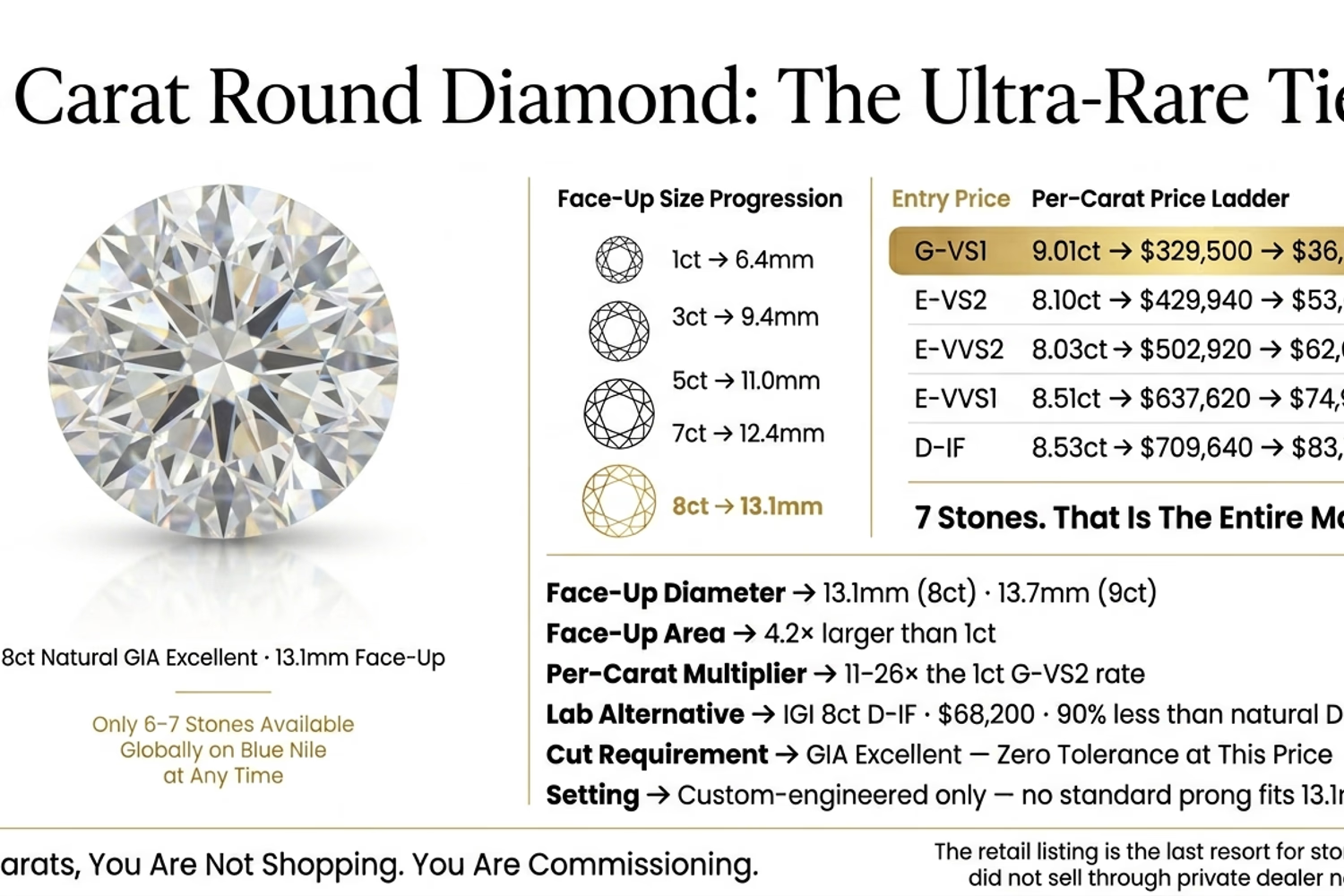
- Entry price for a GIA Excellent 8–9ct round diamond is $324,550 (IGI) or $329,500 (GIA) on Blue Nile
- Blue Nile lists only 6–7 natural 8–9ct GIA/IGI Excellent rounds at any given time — The Ultra-Rare Tier
- An 8ct round measures approximately 13.1mm face-up diameter; a 9ct measures 13.7mm
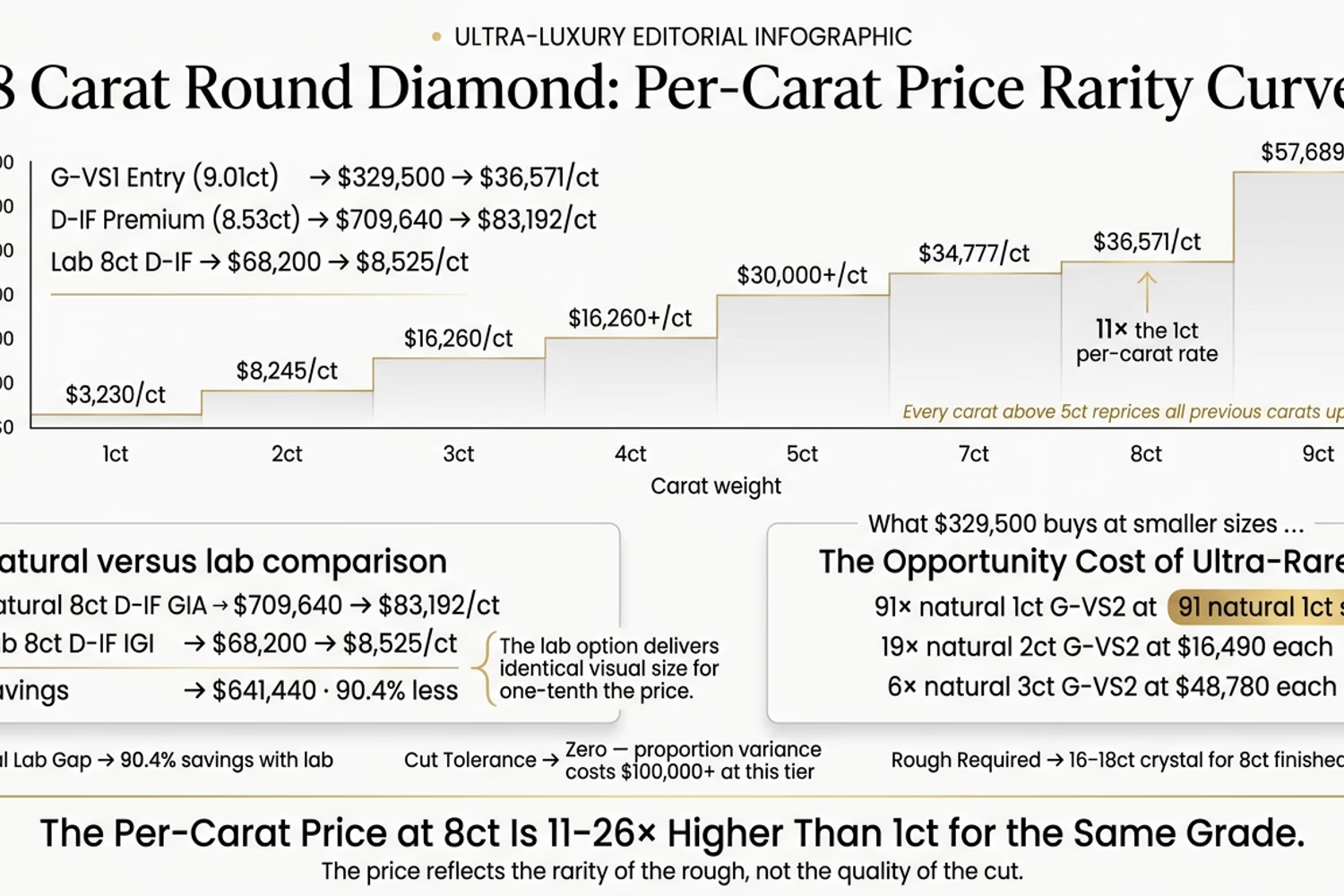
- Per-carat prices range from $36,571/ct (9.01ct G-VS1) to $83,192/ct (8.53ct D-IF)
- The per-carat price at 8–9ct is 11–26× higher than a comparable 1ct G-VS2 at $3,230
- The lab alternative: an IGI 8ct D-IF at $68,200 — one-tenth the price of the natural D-IF at the same carat weight
At 8 carats, you are not buying a diamond from a market. You are commissioning a transaction that begins at the level of private art dealing. Blue Nile's entire 8–9ct GIA Excellent round diamond inventory numbers 6–7 stones on any given day — and two of those are technically 9ct stones listed in the same scarcity category. Most buyers who want an 8ct natural round diamond do not find it through a retail platform; they engage a specialist broker, provide a detailed specification brief, and wait.
This guide covers every stone currently available on the open market at 8–9ct, what the per-carat data reveals about how rarity premiums compound at this size, the lab-grown alternative that delivers identical visual size for 10–20% of the natural price, and why this category exists for two types of buyers: serious collectors and people who genuinely need the largest round brilliant available.


What an 8–9 Carat Round Diamond Actually Looks Like
| Carat Weight | Diameter | Face-Up Area | Relative to 1ct |
|---|---|---|---|
| 1ct | 6.4mm | 32.2 mm² | Base reference |
| 3ct | 9.4mm | 69.4 mm² | 2.2× area |
| 5ct | 11.0mm | 95.0 mm² | 3.0× area |
| 7ct | 12.4mm | 120.8 mm² | 3.7× area |
| 8ct | 13.1mm | 134.8 mm² | 4.2× area |
| 9ct | 13.7mm | 147.4 mm² | 4.6× area |
| 10ct | 14.2mm | 158.4 mm² | 4.9× area |
An 8ct round at 13.1mm is more than twice the width of a 1ct stone. The face-up area is 4.2× larger — meaning the light return pattern, fire display, and scintillation pattern all occur across a canvas more than four times the area of the standard 1ct reference stone. On a size-6 finger, 13.1mm covers approximately 80% of the finger's visible width. On a size-8 finger, it reads as near-full coverage.
At this diameter, no standard ring setting applies. Every 8ct round diamond purchase involves a custom-engineered setting. The minimum shank width, prong gauge, and gallery architecture for 13.1mm stones require jeweler consultation before the stone is even selected.
Natural GIA/IGI Excellent 8–9ct: Complete Available Inventory
Blue Nile's entire current inventory of GIA and IGI Excellent natural 8–9ct round diamonds:
| Stone | Grade | Price | Per-Carat | Size |
|---|---|---|---|---|
| IGI 9.02ct G-VS1 Excellent | G-VS1 | $324,550 | $35,982 | 13.7mm |
| GIA 9.01ct G-VS1 Excellent | G-VS1 | $329,500 | $36,571 | 13.7mm |
| GIA 8.10ct E-VS2 Excellent | E-VS2 | $429,940 | $53,079 | 13.1mm |
| GIA 8.03ct E-VVS2 Excellent | E-VVS2 | $502,920 | $62,630 | 13.0mm |
| GIA 9.01ct G-VVS1 Excellent | G-VVS1 | $518,800 | $57,581 | 13.7mm |
| GIA 8.51ct E-VVS1 Excellent | E-VVS1 | $637,620 | $74,926 | 13.4mm |
| GIA 8.53ct D-IF Excellent | D-IF | $709,640 | $83,192 | 13.4mm |
Seven stones. That is the entire public retail market for GIA and IGI Excellent natural 8–9ct round diamonds at Blue Nile, the world's largest online diamond retailer. The pricing structure has no competitive compression — each stone is priced individually, with no adjacent stone to force negotiation.
The Ultra-Rare Tier: Why 8–9ct Is Categorically Different
Supply: How Rare Is an 8ct Diamond Rough?
A GIA Excellent 8ct round brilliant requires rough crystal of approximately 16–18 carats. Diamond rough at that size and quality represents far less than 1% of global production by weight. The De Beers sightholding system — the primary global supply mechanism for gem-quality rough — produces rough above 15ct in quantities of dozens per year globally, not hundreds.
Most 16–18ct rough that reaches the market gets evaluated by multiple cutters before a decision is made. The primary constraint is not the rough's existence — it is the risk calculus: a single mistake in the cutting of an 18ct rough can destroy $500,000+ of potential value in minutes. The cutters who work at this size are specialized, expensive, and heavily booked.
What reaches Blue Nile at 8–9ct has cleared multiple private channels. The retail listing is the last resort for stones that did not sell through private dealer networks, estate auctions, or direct jeweler sourcing.
The Per-Carat Premium Progression: 1ct to 9ct
| Carat Weight | Stone | Price | Per-Carat | Multiple vs 1ct |
|---|---|---|---|---|
| 1ct | G-VS2 GIA Excellent | $3,230 | $3,230 | 1× |
| 2ct | G-VS2 GIA Excellent | $16,490 | $8,245 | 2.6× |
| 3ct | G-VS2 GIA Excellent | $48,780 | $16,260 | 5.0× |
| 4ct | G-VS1 GIA Excellent | $58,110 | $14,528 | 4.5× |
| 5ct | E-VS2 GIA Excellent | $147,110 | $30,332 | 9.4× |
| 6ct | G-VS2 GIA Excellent | $187,650 | $31,118 | 9.6× |
| 7ct | G-VS2 GIA Excellent | $243,640 | $34,756 | 10.8× |
| 8–9ct | G-VS1 GIA Excellent | $329,500 | $36,571 | 11.3× |
| 8–9ct (E) | E-VS2 GIA Excellent | $429,940 | $53,079 | 16.4× |
| 8–9ct (D) | D-IF GIA Excellent | $709,640 | $83,192 | 25.8× |
The D-IF 8.53ct at $83,192 per carat represents 25.8× the per-carat price of a 1ct G-VS2. This is not just rarity premium — it is the convergence of maximum size, maximum color, and maximum clarity in a single stone: an event that happens a handful of times per year in global production.
Understanding the Price Range: $324,550 to $709,640
G-VS1 vs G-VVS1: $189,300 for a Clarity Step-Up
The 9.01ct G-VS1 at $329,500 vs the 9.01ct G-VVS1 at $518,800 — both 9.01ct, both G color, one step apart in clarity. The $189,300 gap between VS1 and VVS1 at this carat weight reflects how rarity multipliers compound: not just the per-carat jump for VVS1 vs VS1, but the extreme scarcity of VVS1 clarity at 9ct.
In practical terms, VS1 inclusions at 13.7mm (9ct) are invisible face-up without magnification — as invisible as VS1 inclusions at 6.4mm (1ct). The $189,300 is entirely certificate-driven. If you intend to wear the stone, VS1 and VVS1 are identical experiences. If you intend to auction it, VVS1 is the more liquid grade.
E vs G at 8ct: A $100,000+ Color Premium
The 8.10ct E-VS2 at $429,940 costs $100,440 more than the 9.01ct G-VS1 at $329,500 — despite being a smaller stone. At 13.1mm, E color is marginally more detectable than at 6.4mm, but still overwhelmed by the round brilliant's light return in mounted wear. The E premium at this size is status and certificate, not visual experience.
D-IF at 8.53ct: $709,640 — Institutional Territory
The 8.53ct D-IF GIA Excellent at $709,640 is priced above Christie's and Sotheby's entry thresholds for important jewelry auctions. A stone of this specification — GIA Excellent cut, D color, Internally Flawless clarity, 8.53 carats — would be competitive at auction and is reasonably priced at retail relative to auction premiums (typically 20–30% above estimate, plus 25–30% buyer's premium). For a collector who wants GIA-certified D-IF at this size, retail pricing at $709,640 is not unreasonable compared to the auction alternative.
What $329,500 Buys Compared to Smaller Natural Stones
At the G-VS1 9ct entry price of $329,500, these are alternative purchases from the same Blue Nile inventory:
| Alternative | Selection | Price | What You Get |
|---|---|---|---|
| Natural 9ct G-VS1 | GIA 9.01ct G-VS1 | $329,500 | 13.7mm face-up, singular stone |
| Natural 7ct + 5ct pair | 7ct G-VS2 ($243,640) + 5ct E-VS2 ($147,110) | $390,750 | Over budget |
| Natural 6ct D-VVS2 | 6.81ct D-VVS2 ($345,360) | $345,360 | 12.0mm, top-grade 6ct |
| Three natural 3ct | 3ct F-VVS1 ($84,710) × 3 (approx.) | ~$254,130 | Three 9.4mm stones for earrings + ring |
| Lab 8ct + setting budget | IGI 8ct D-IF ($68,200) + custom setting | ~$80,000–$100,000 | 13.1mm, D-IF, 79% savings vs natural |
Tides Of Summer Capsule
Up To 30% Off
Shop The Sale →Vault ClearanceClear The Vault
Up To 70% Off
Shop Vault Deals →Affiliate link — no extra cost to you
The Lab-Grown Alternative at 8ct
Blue Nile lists one 8ct lab-grown round diamond: an IGI 8.00ct D-IF Ideal Cut lab-grown at $68,200.
For comparison, the natural D-IF at 8.53ct costs $709,640. The lab D-IF at 8.00ct costs $68,200.
That is a $641,440 difference — 90.4% less — for a stone that:
- Delivers 13.1mm face-up diameter (the 8ct lab) vs 13.4mm (the natural 8.53ct)
- Carries the same D color and IF clarity grade
- Has an IGI cut grade vs GIA Excellent
- Is chemically and optically identical to the natural stone
- Has no provenance, no geological history, and essentially no resale value
The lab-grown 8ct D-IF at $68,200 is the answer for buyers who want the visual experience of an 8ct diamond without the six-figure investment. The natural 8ct D-IF at $709,640 is the answer for buyers who want the provenance, the rarity story, and the auction-house liquidity.
Full Lab Progression for Size Context
| Lab Stone | Grade | Price | Visual Size |
|---|---|---|---|
| IGI 1.5ct D-VVS1 | D-VVS1 | $1,950 | 7.3mm |
| IGI 2ct D-VVS1 | D-VVS1 | $2,810 | 8.1mm |
| IGI 3ct E-VVS1 | E-VVS1 | $5,800 | 9.4mm |
| IGI 4ct D-VVS1 | D-VVS1 | $9,680 | 10.3mm |
| IGI 5ct D-VVS1 | D-VVS1 | $12,730 | 11.0mm |
| IGI 6ct D-VVS1 | D-VVS1 | $18,410 | 11.7mm |
| IGI 8ct D-IF | D-IF | $68,200 | 13.1mm |
The lab progression reaches 13.1mm at $68,200 — less than 10% of the natural 8ct starting at $709,640 for D-IF. For buyers whose target is 13mm+ face-up diameter, the lab path delivers at a fraction of natural cost.
Proportions at 8–9ct: Zero Tolerance
At 13.1mm (8ct), every proportion deviation is amplified across a surface area 4× larger than at 1ct. A 2° error in crown angle at 1ct creates a subtle reduction in fire. At 8ct, the same deviation is visible across a 13mm canvas that reads as a full face-up display. Proportion requirements:
| Specification | Target | Why Critical at 8–9ct |
|---|---|---|
| Table | 54–57% | 58%+ flash-traps are clearly visible at 13mm |
| Depth | 59–62.3% | Under 59% loses brilliance face-on |
| Crown angle | 34.0–35.0° | 0.5° deviation creates detectable asymmetry |
| Pavilion angle | 40.6–41.0° | Light return drops sharply at 41.1°+ |
| Girdle | Thin–Slightly Thick | Very Thick wastes 6–8% of carat in profile |
| Culet | None or Pointed | Any culet size creates a visible dark spot at 13mm |
| Polish | Excellent only | Very Good is insufficient at this investment level |
| Symmetry | Excellent only | Very Good is insufficient at this investment level |
| L:W ratio | 1.00–1.01 | At 13.1mm, 1.03 L:W creates a 0.39mm oval deviation — always visible |
At this price level, any stone deviating from these ranges should be passed. There is no "close enough" at $329,500+.
Farzana's Verdict: The 8–9ct category is The Ultra-Rare Tier not because the stones cannot be found, but because the conditions that produce them — the right rough, the right cutter, the right cut decision, the right clarity outcome — converge so rarely that the retail market holds only a handful at any moment. The G-VS1 entry at $329,500 represents the most rational purchase in this category: a 13.7mm face-up stone at the correct grade for size (VS1 is eye-clean; VVS1 adds nothing visible at $189,300 more). The D-IF at $709,640 is a collector's stone that belongs in an auction brief, not a retail shopping session. For buyers who want 13mm+ face-up without the $329,500+ price floor, the lab-grown 8ct D-IF at $68,200 is the only rational alternative — it delivers identical visual experience at 9.6% of the natural D-IF price.
Frequently Asked Questions
How much does an 8 carat round diamond cost in 2026?
A natural GIA Excellent 8–9ct round diamond starts at $324,550 (IGI) or $329,500 (GIA) on Blue Nile for a G-VS1 grade. The most expensive available stone is a D-IF 8.53ct at $709,640. Total inventory: 6–7 stones. The single lab-grown 8ct option — an IGI D-IF Ideal Cut — costs $68,200.
How big is an 8 carat round diamond?
An 8ct round measures approximately 13.1mm in face-up diameter, with a face-up area of approximately 134.8 mm² — 4.2× the area of a 1ct stone at 32.2 mm². A 9ct stone measures approximately 13.7mm with 147.4 mm² face-up area. On a standard size-6 finger, 13.1mm provides approximately 80% finger-width coverage.
Why are there so few 8ct round diamonds on the market?
An 8ct round brilliant requires rough diamond crystal of approximately 16–18 carats. This quality of rough represents less than 1% of global diamond production by weight. Most large rough goes through extensive private evaluation before reaching retail. What appears on Blue Nile at 8–9ct is the portion that did not sell through private dealer networks, estate channels, or direct jeweler sourcing.
What is the per-carat price of an 8ct round diamond?
G-VS1 at 9ct: approximately $36,571/ct. E-VS2 at 8ct: approximately $53,079/ct. E-VVS2 at 8ct: approximately $62,630/ct. E-VVS1 at 8.5ct: approximately $74,926/ct. D-IF at 8.5ct: approximately $83,192/ct. The G-VS1 entry represents 11.3× the per-carat price of a 1ct G-VS2; the D-IF represents 25.8×.
Is VS1 clarity good enough for an 8ct round diamond?
Yes. VS1 inclusions are invisible face-up without magnification at any carat weight, including 8–9ct. The $189,300 premium for VVS1 over VS1 at 9ct is entirely certificate-driven and auction-liquidity-driven. If you are buying to wear the stone, VS1 is the correct choice. If you are buying for auction resale, VVS1 or better positions the stone more competitively.
What lab-grown 8ct round diamond is available?
Blue Nile lists one: an IGI 8.00ct D-IF Ideal Cut lab-grown at $68,200. This delivers 13.1mm face-up diameter, D color, IF clarity — optically and chemically identical to a natural D-IF at 8ct that would cost approximately $600,000–$750,000. Lab-grown 8ct diamonds have essentially no resale value; the purchase is purely for the visual experience.
Should I buy a natural 8ct or a natural 7ct?
The 7ct G-VS2 at $243,640 vs the 9ct G-VS1 at $329,500: $85,860 more for an additional 1.3mm of diameter (12.4mm vs 13.7mm). At social viewing distances, 1.3mm is detectable but not dramatic. If your target is the largest stone within budget, the 7ct at $243,640 is the better value. If you need 13.7mm specifically, there is no substitute.
What ring setting works for an 8ct round diamond?
Every 8ct setting is custom or semi-custom. There are no off-the-shelf settings designed for 13.1mm stones. A platinum six-prong basket with reinforced gallery and shank (minimum 3mm width) is the standard approach. The setting cost for a properly engineered 8ct mount runs $3,000–$10,000+ from specialists. Budget this alongside the stone price.
Does the 8ct natural diamond hold its resale value?
Natural GIA Excellent round diamonds at 8–9ct trade at 40–55% of retail through specialist channels. At $329,500 entry, expect $131,800–$181,225 at resale. D-IF and D-FL stones at this size can exceed 100% of retail at auction in favorable market conditions — these grades trade on institutional demand that is uncorrelated with retail pricing.
See Also
Expert Verdict
Always audit the stone individually — no grade replaces seeing the actual diamond. The certificate tells you what to look for. Your eyes tell you whether to buy.
— Farzana Hasan, GIA Expert · DiamondCritics.com