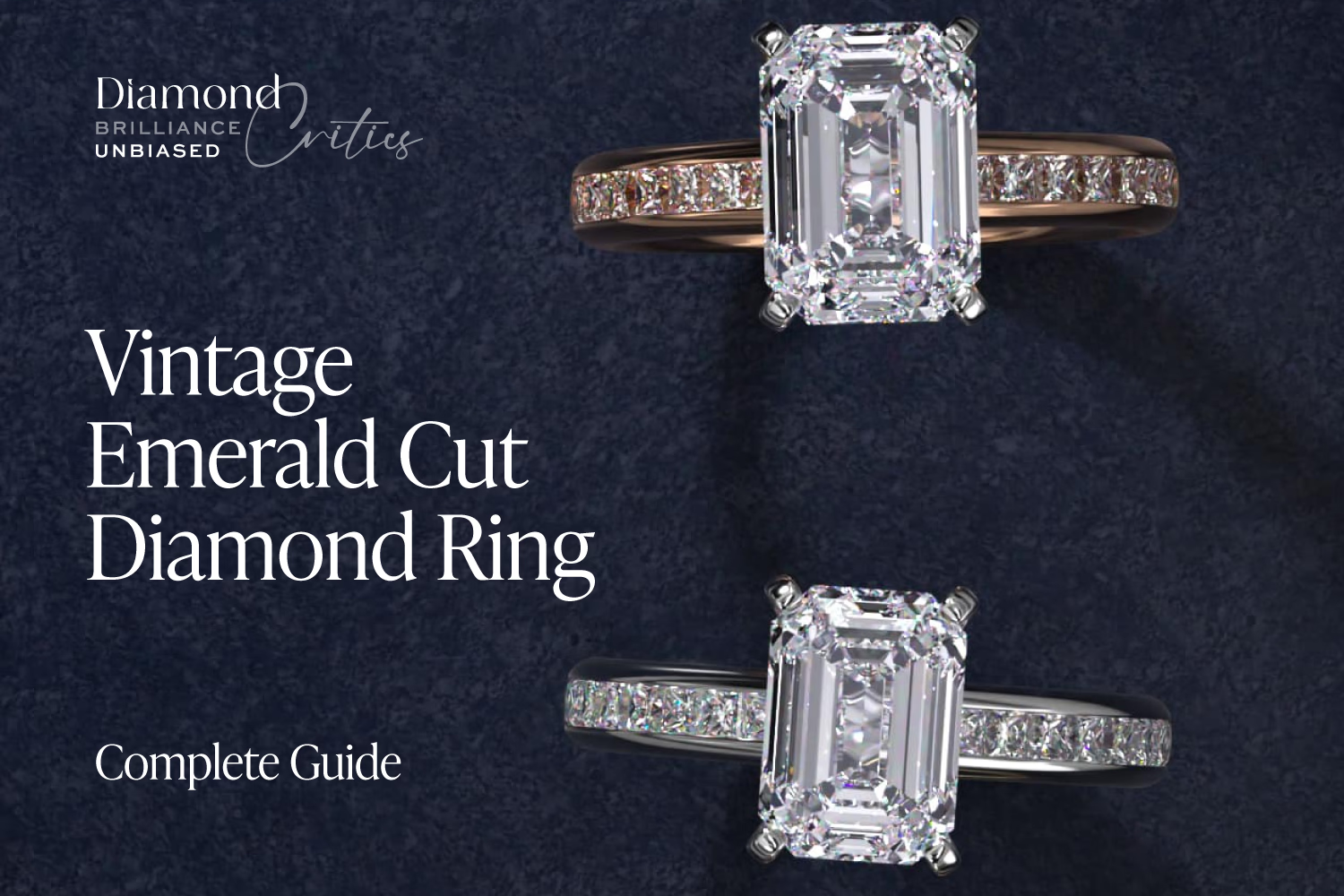
The vintage emerald cut diamond ring is not a trend. It is a return. The emerald cut was developed in the 1920s specifically for the Art Deco aesthetic — geometric, architectural, clean.
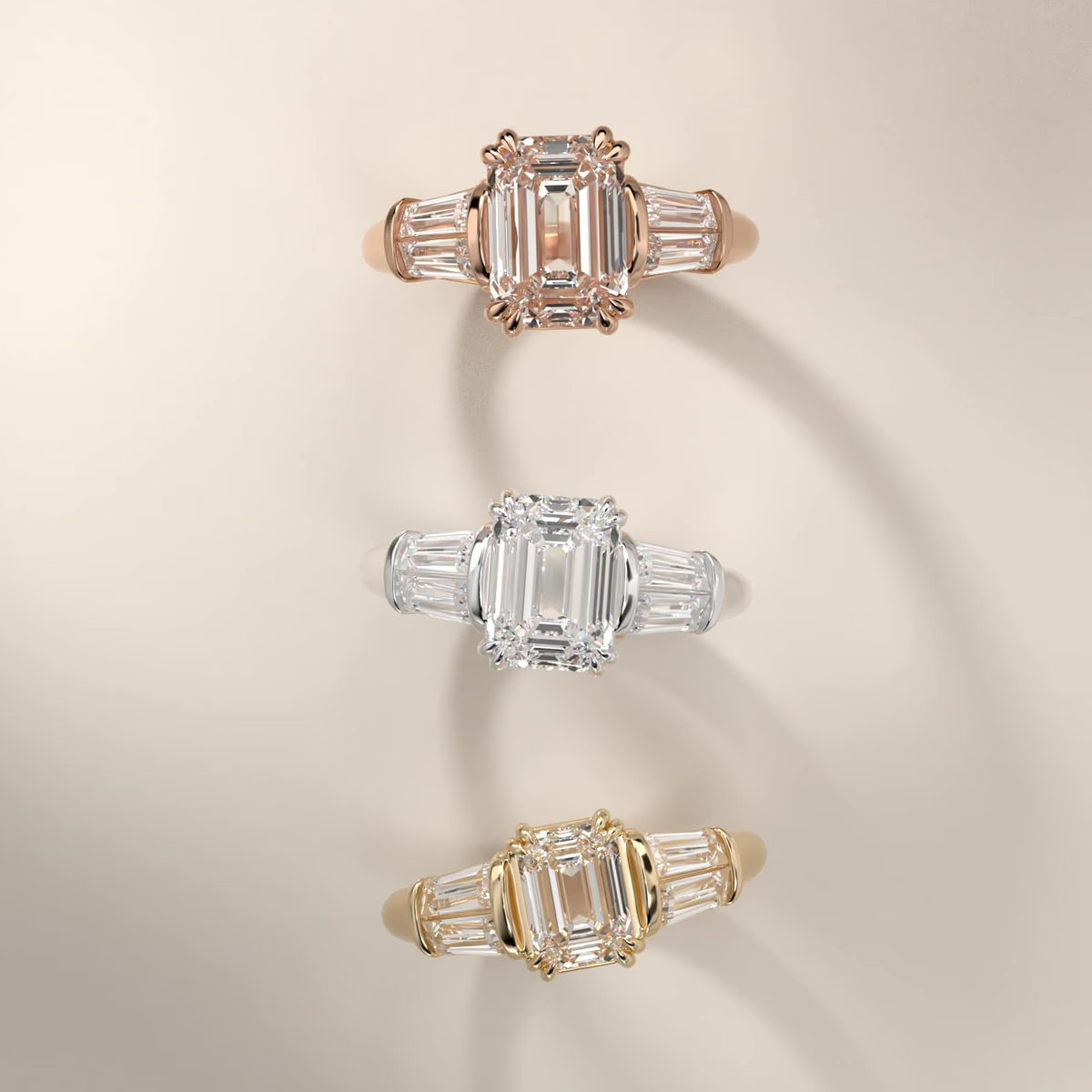
When you pair a modern emerald cut with milgrain metalwork or escalating baguette side stones, you are not adding vintage character to a contemporary stone. You are restoring the stone to its original setting language.
Most buyers searching for an antique emerald cut diamond ring discover quickly that true antiques are rare, expensive, and difficult to verify. What the market actually offers — and what most buyers actually want — is a certified modern stone in an Art Deco-inspired setting. That is a better product.
The diamond is GIA-certified and graded. The setting is new, precision-made, and guaranteed. The visual result is identical to period jewelry without the uncertainty.
That is the insight most buyers miss when they start searching. They think "vintage" means old. It does not. It means a specific visual language — one the emerald cut invented.
Once you understand that, every setting choice in this post makes immediate sense. You are not chasing history. You are choosing geometry. And the emerald cut does that better than any other shape on the market today.
A complete vintage emerald cut diamond ring starts at $4,330 — a GIA 1ct D-VS1 emerald cut at $3,140 plus an Art Deco Fleur-De-Lis Pavé setting at $1,190. This post covers every setting, every stone, and every ring total — from the entry Art Deco build to the full platinum baguette ring at $15,424.
TL;DR
- Entry vintage ring: GIA 1ct D-VS1 $3,140 + Art Deco Fleur-De-Lis Rose Gold $1,190 = $4,330 complete
- Best overall: GIA 1ct D-VS1 $3,140 + Hand-Engraved Micropavé Platinum $2,315 = $5,455 complete (108 reviews)
- Art Deco baguette: GIA 1ct D-VS1 + Escalating Baguette 14K WG $4,790 = $7,930 complete
- Lab alternative: IGI 1.94ct F-VVS1 $2,229 + Art Deco Fleur-De-Lis $1,190 = $3,419 complete — near-2ct stone in Art Deco setting for less than a natural 1ct stone alone
- Art Deco = step facets + geometric setting. The emerald cut is not just compatible with Art Deco. It was made for it.
- Old mine emerald cut = a genuinely different thing. Cushion-like, rounded corners, smaller table. Not the same stone as a modern emerald cut.
- Contrarian truth: "vintage emerald cut" is a setting choice, not a stone choice. The stone is a modern certified diamond. The vintage character lives entirely in the metal.
→ Best ring: GIA 1ct D-VS1 at $3,140 + Hand-Engraved Micropavé Platinum $2,315 = $5,455. See The Milgrain Test before choosing a setting.
Vintage Emerald Cut Diamond Ring Price
A vintage emerald cut diamond ring price depends entirely on two independent choices: the stone and the setting. Neither is locked to the other. A $3,140 GIA stone pairs with a $1,190 Art Deco setting just as cleanly as it pairs with a $5,015 platinum baguette.
Three natural GIA-certified emerald cut stones anchor the 1ct entry range. The spread across these stones tells you exactly what color and clarity cost at this carat weight.
| Stone | Carat | Color / Clarity | Cert | Stone Price |
|---|---|---|---|---|
| Ideal Cut Emerald Diamond | 1.00ct | D-VS1 | GIA | $3,140 |
| Ideal Cut Emerald Diamond | 1.06ct | D-VVS2 | GIA | $3,971 |
| Ideal Cut Emerald Diamond | 1.02ct | E-IF | GIA | $6,010 |
The GIA 1ct D-VS1 at $3,140 is the correct starting stone. VS1 is reliably eye-clean in an emerald cut step facet at 1ct. D color means no warmth in any lighting.
GIA certification means the grade is accurate.
The GIA 1.06ct D-VVS2 at $3,971 is a genuine upgrade — the slightly larger face-up footprint at 1.06ct is visible in the ring, and VVS2 is exceptional eye-clean performance. The $831 premium over D-VS1 is reasonable for the extra face-up size.
The GIA 1.02ct E-IF at $6,010 costs $2,870 more than the D-VS1 for an IF clarity grade. Internally Flawless is the best clarity grade available. Nobody can see the difference between IF and VS1 with the naked eye at 1ct.
That $2,870 difference is a certificate premium, not a visible stone premium.


The Art Deco Alignment
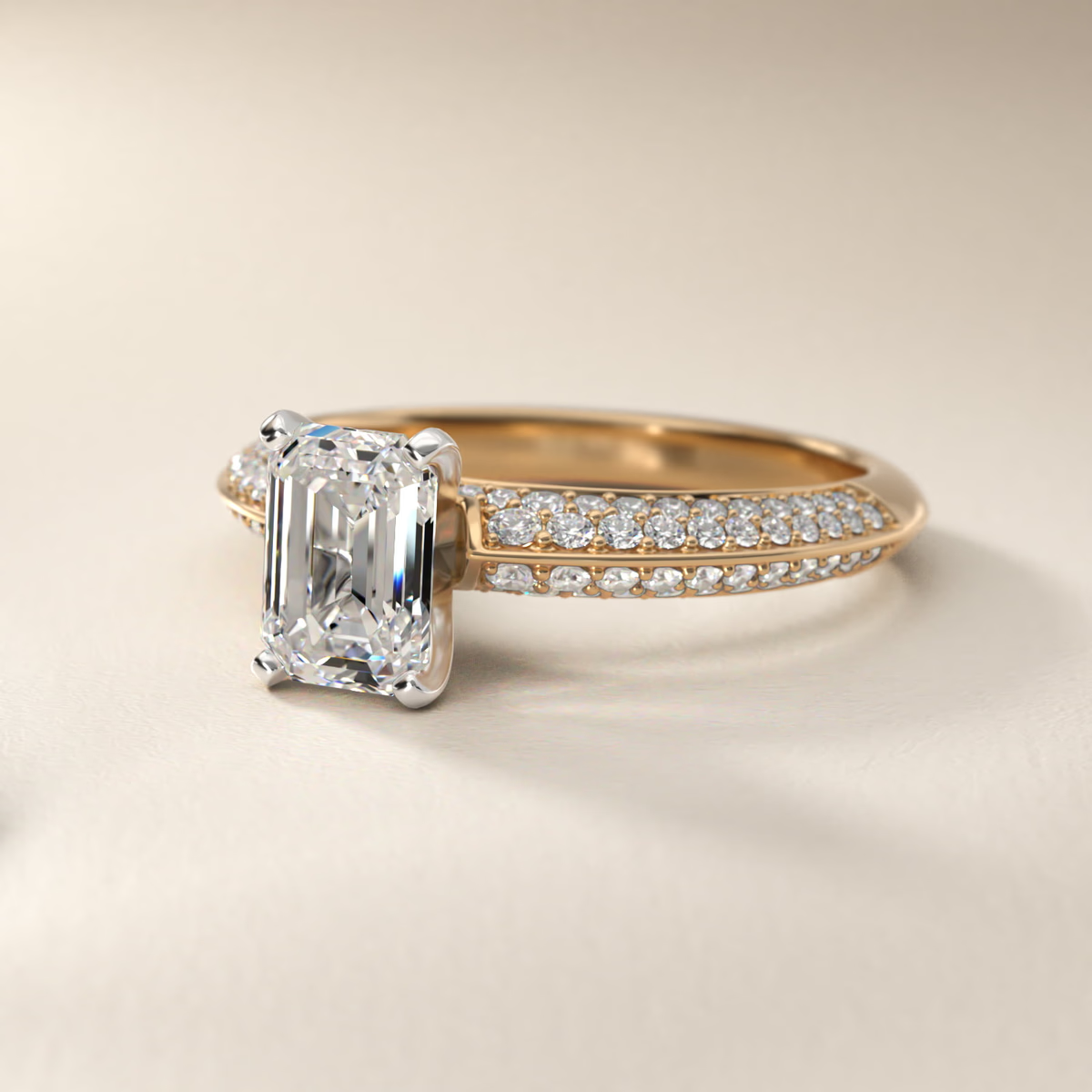
The emerald cut diamond was not designed to look vintage. It was designed in the 1920s, during the Art Deco movement, for exactly the aesthetic that now reads as "vintage." The step facets, the geometric table, the precise corners — these are Art Deco design principles applied to a diamond.
This is The Art Deco Alignment: the emerald cut and Art Deco metalwork are not compatible by coincidence. They were developed together. The same era that produced fleur-de-lis engravings, milgrain borders, baguette side stones, and geometric pavé patterns also produced the emerald cut's clean rectangular silhouette.
Every element speaks the same visual language.
Put an emerald cut in a round-brilliant setting — a twisted pavé band, a cathedral solitaire, a floating halo — and the stone fights the setting. The rectangular, geometric stone looks mismatched against curved, organic metalwork. Put the same stone in a milgrain-bordered, baguette-flanked Art Deco setting, and everything clicks.
The stone and setting finish each other's geometry.
This is why you do not need to search for a "vintage emerald cut." Any emerald cut stone in an Art Deco setting is already vintage. The alignment is inherent to the shape.
Ring Settings for a Vintage Emerald Cut Diamond
The vintage emerald cut setting family falls into four categories: Art Deco pavé, milgrain engraved, baguette side stone, and vintage halo. Each has a different price point, a different level of period authenticity, and a different ring total.
| Setting | Metal | Price | Reviews | Ring Total (+ D-VS1 $3,140) |
|---|---|---|---|---|
| Art Deco Fleur-De-Lis Pavé (JA) | 14K Rose Gold | $1,190 | 102 | $4,330 |
| Art Deco Fleur-De-Lis Pavé (JA) | 14K White Gold | $1,190 | 102 | $4,330 |
| Interlaced Pavé Halo Vintage (JA) | 14K White Gold | $1,750 | 29 | $4,890 |
| Milgrain and Pavé V-Shank | 14K Yellow Gold | $1,790 | 36 | $4,930 |
| Petite Vintage Pavé Leaf | 14K White Gold | $1,910 | 42 | $5,050 |
| Hand-Engraved Micropavé | Platinum | $2,315 | 108 | $5,455 |
| Marquise Side Stone (JA) | Platinum | $2,550 | 49 | $5,690 |
| Escalating Baguette Side Stone (JA) | 14K White Gold | $4,790 | 5 | $7,930 |
| Escalating Baguette Side Stone (JA) | Platinum | $5,015 | 5 | $8,155 |
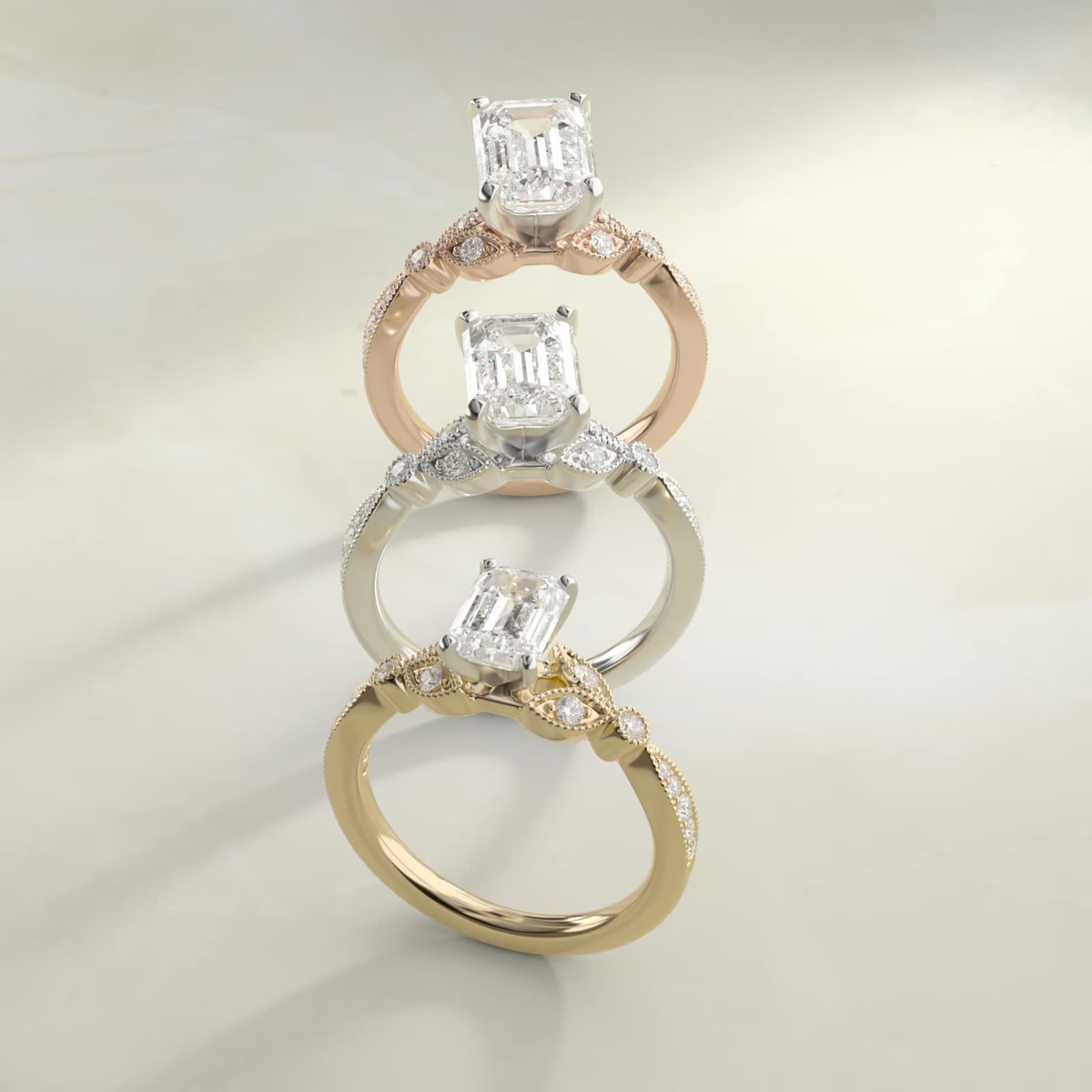
The Art Deco Fleur-De-Lis at $1,190 leads the table in review count — 102 confirmed buyers. That is not an accident. It is the best value entry into authentic Art Deco design language in a new ring.
The Hand-Engraved Micropavé in Platinum at $2,315 leads the entire vintage category with 108 reviews. Platinum is the original Art Deco metal — yellow and rose gold emerged as Art Deco choices later. Hand engraving is what makes a setting look like a genuine period piece, not a mass-produced approximation.
The Milgrain Test
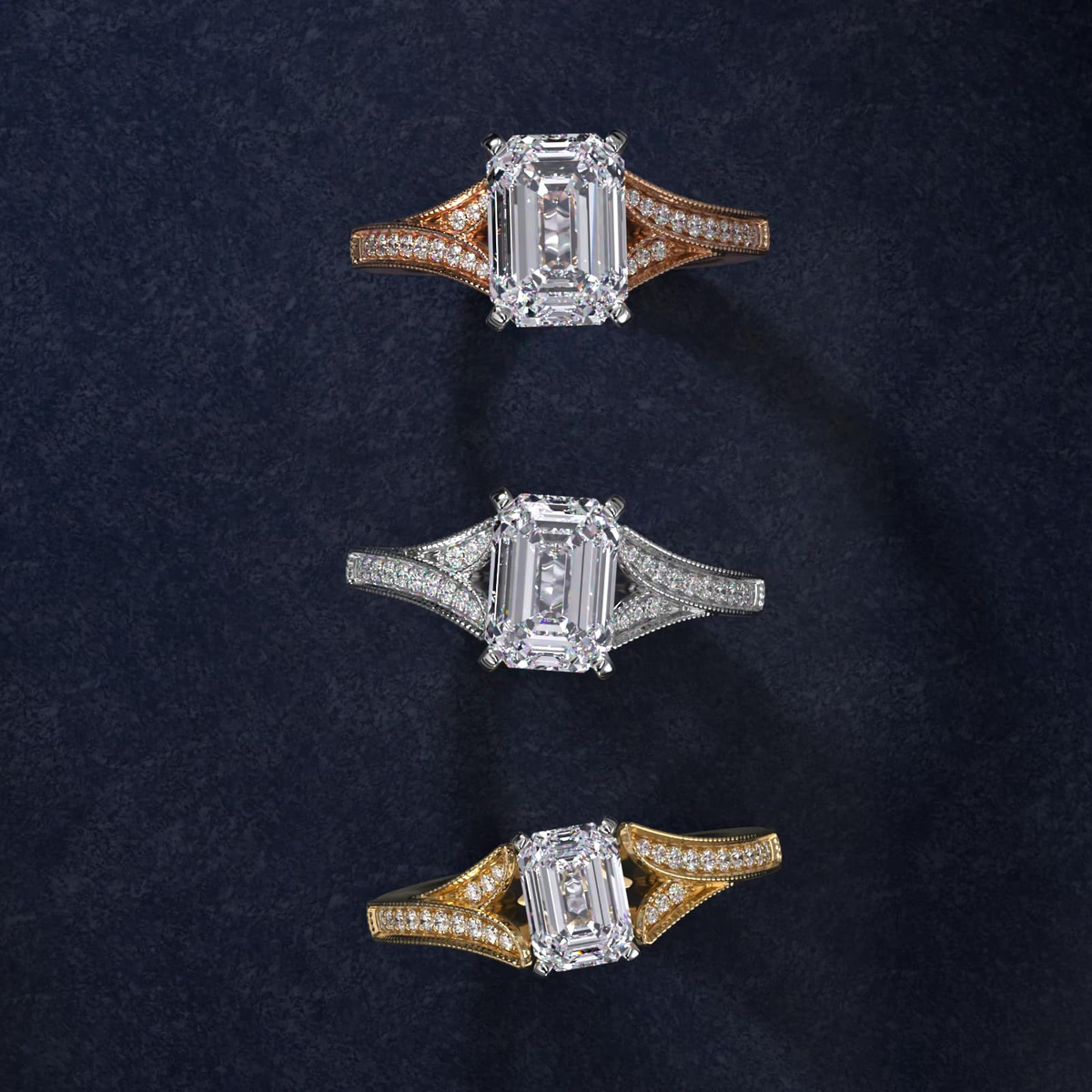
Milgrain is a row of tiny raised metal beads along the edge of a ring setting. It is the single most identifiable marker of Art Deco jewelry design. Every genuine period Art Deco ring has it.
Most modern "vintage-inspired" rings claim it. Not all deliver it equally.
The Milgrain Test is simple. Zoom into the setting photo at full resolution. Real milgrain has individual, evenly-spaced, raised beads with visible separation between them.
Each bead is distinct. The line has dimension — it sits above the surface of the metal. Pressed or etched milgrain is flat.
It reads as a texture, not as individual beads. Under a loupe or in a high-resolution photo, the difference is unmistakable.
In the settings above, the Hand-Engraved Micropavé Platinum passes the test. The Milgrain and Pavé V-Shank in Yellow Gold also passes — the milgrain is explicit in the name and visible in the product images.
The Art Deco Fleur-De-Lis settings are more ornamental than milgrain-forward. They are Art Deco by design language — the fleur-de-lis pattern is unmistakably period. But if pure milgrain authenticity is the priority, the Hand-Engraved Micropavé and the V-Shank are the correct choices.
"When a woman tells me she wants a vintage ring, I ask her what she actually means. Does she mean old? Or does she mean the look? Ninety percent of the time she means the look — the geometric detailing, the presence, the sense that it was made with intention rather than stamped out of a mold. A hand-engraved platinum setting with an emerald cut gives her that. Completely. With a certified stone and a warranty." — Farzana Hasan, Diamond Critics
The Baguette Bridge
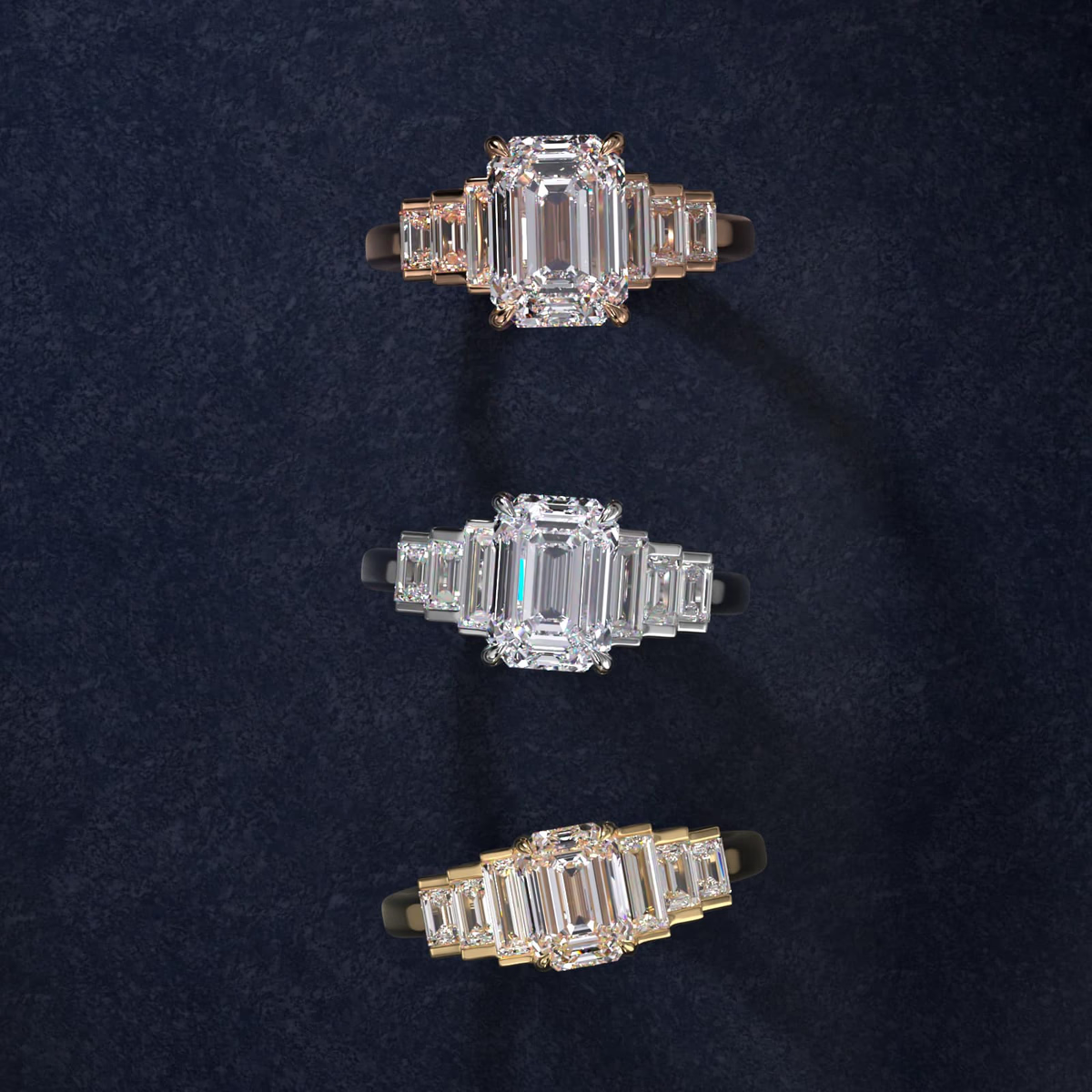
The escalating baguette side stone is the most authentically Art Deco setting choice for an emerald cut diamond ring. This is The Baguette Bridge: baguette side stones extend the rectangular geometry of the center stone outward along the finger. The two shapes share the same straight-edge language.
They are made for each other.
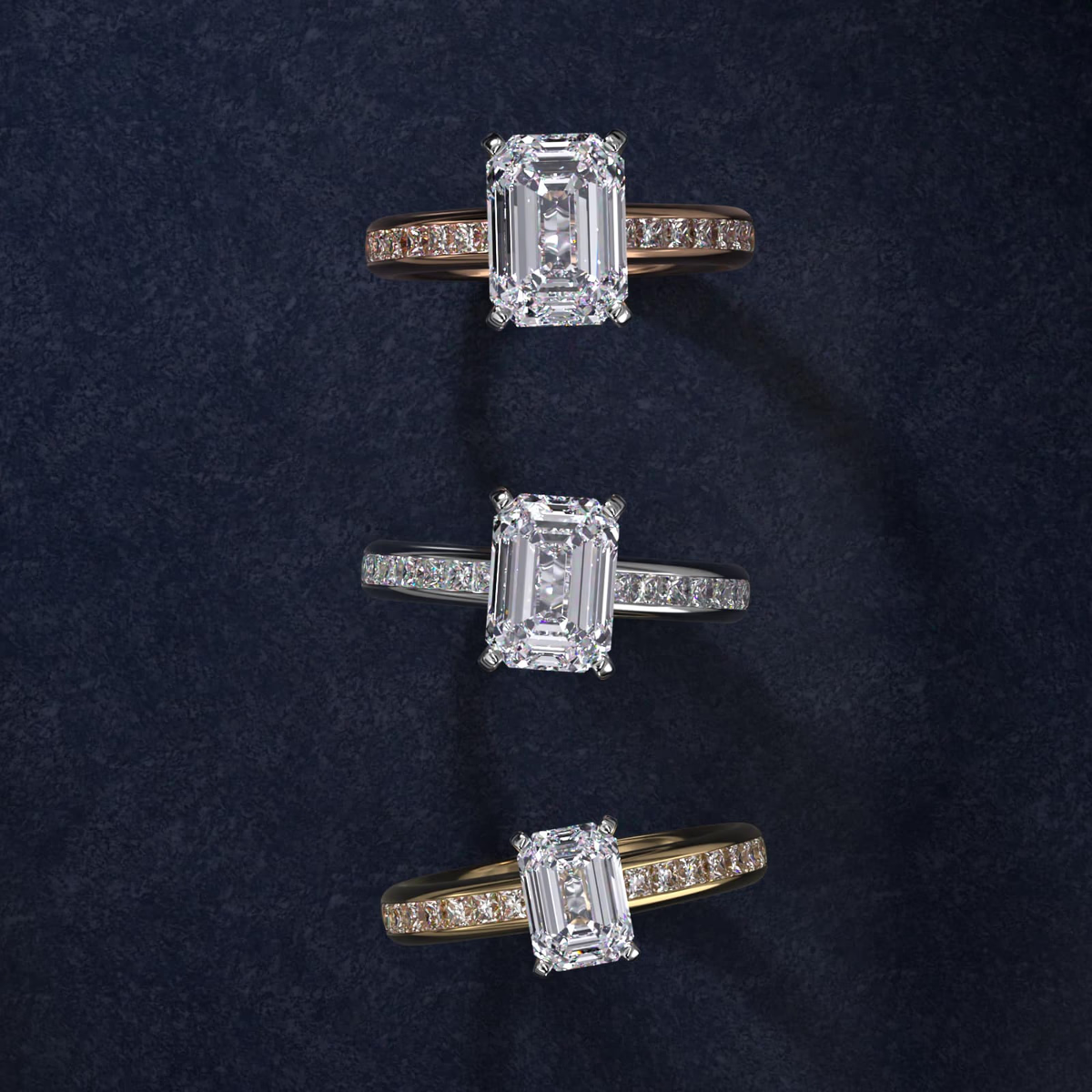
Round side stones frame a rectangular center stone. Marquise side stones compete with it — the pointed oval echoes different geometry than the flat step-cut table. Baguettes continue it.
The finger sees one unbroken horizontal line: baguette, center stone, baguette. That is how Art Deco rings from the 1920s and 1930s were designed. Not as a center stone with accessories.
As one continuous geometric statement.
| Setting | Metal | Price | Reviews | Ring Total (+ D-VS1 $3,140) |
|---|---|---|---|---|
| Escalating Baguette (JA) | 14K Yellow Gold | $4,750 | 5 | $7,890 |
| Escalating Baguette (JA) | 14K Rose Gold | $4,750 | 5 | $7,890 |
| Escalating Baguette (JA) | 14K White Gold | $4,790 | 5 | $7,930 |
| Escalating Baguette (JA) | Platinum | $5,015 | 5 | $8,155 |
| Five-Stone Tapered Baguette | 14K White Gold | $7,920 | — | $11,060 |
Yellow gold is the correct metal for an escalating baguette setting if the goal is maximum Art Deco authenticity. Period Art Deco rings used platinum first, yellow gold second. Platinum with baguettes at $5,015 for the setting alone is a serious investment.
The $4,750 yellow gold version saves $265 and reads as equally period.
Art Deco Emerald Cut Diamond Ring
An art deco emerald cut diamond ring and a vintage emerald cut diamond ring are the same thing. Art Deco is the specific vintage era that the emerald cut belongs to. When buyers search "art deco emerald cut diamond ring," they are looking for the same product — a step-cut stone in geometric, engraved, milgrain, or baguette metalwork.
The Art Deco movement ran from approximately 1920 to 1940. It rejected the organic curves of Art Nouveau and embraced geometry, symmetry, and industrial precision. Diamonds were cut to match: rectangular, with parallel facets, clean corners, and a flat table that reflected the geometric surfaces of Art Deco architecture.
The emerald cut is this aesthetic in stone form.
For a buyer who specifically wants the Art Deco look, the Art Deco Fleur-De-Lis Pavé setting at $1,190 is the clearest statement. The fleur-de-lis is a documented Art Deco motif. Rose gold is a softer, warmer expression of it.
White gold or platinum reads more strictly geometric — cooler, more architectural, more faithful to the original platinum-heavy Art Deco aesthetic.
Antique Emerald Cut Diamond Ring
An antique emerald cut diamond ring and a vintage emerald cut diamond ring are not the same product. This distinction matters before purchase.
A true antique ring is over 100 years old. An Art Deco emerald cut ring from the 1920s qualifies. These rings exist and can be purchased from antique dealers, estate jewelers, and auction houses.
They are beautiful, irreplaceable, and completely uncertifiable by GIA standards — the stones are too old to have GIA documentation.
A vintage-inspired ring is new. The stone is a modern certified diamond. The setting is manufactured today in an Art Deco style.
GIA certification confirms the grade. The metal is new, strong, and under warranty. This is what all the settings in this post describe.
For most buyers, vintage-inspired is the correct choice. Certainty about stone quality matters when spending $3,000–$15,000. A GIA certificate gives you that.
An antique ring does not — the stone's actual grade requires independent appraisal, which can disagree with the seller's description.
If a true antique is required, budget for independent appraisal and expect to pay a significant premium for verified period pieces. For a ring that looks like an antique and performs like a modern certified jewel, the vintage-inspired path is better on every measurable metric.
Lab-Grown Vintage Emerald Cut Diamond Ring
Lab-grown emerald cuts work exceptionally well in vintage settings. The visual character of the stone — the step facets, the hall-of-mirrors, the geometric table — is identical to a natural emerald cut. The Art Deco Alignment applies equally.
The stone does not know it grew in a reactor.
| Lab Stone | Carat | Color / Clarity | Stone Price | Setting | Setting Price | Complete Ring |
|---|---|---|---|---|---|---|
| IGI Emerald Lab | 1.94ct | F-VVS1 | $2,229 | Art Deco Fleur-De-Lis RG | $1,190 | $3,419 |
| IGI Emerald Lab | 1.94ct | F-VVS1 | $2,229 | Hand-Engraved Micropavé Pt | $2,315 | $4,544 |
| IGI Emerald Lab | 1.85ct | F-VVS1 | $3,832 | Escalating Baguette 14K WG | $4,790 | $8,622 |
| IGI Emerald Lab | 2.00ct | D-FL | $4,735 | Escalating Baguette Platinum | $5,015 | $9,750 |
The lab 1.94ct F-VVS1 at $2,229 is a near-2ct stone in a vintage Art Deco ring for $3,419 complete. That is less than the natural 1ct D-VS1 stone alone at $3,140 plus the same setting. The lab ring is larger, better in grade (F-VVS1 vs D-VS1), and cheaper overall.
"Lab stones in vintage settings look magnificent. The step-cut facets show the stone's internal quality more than any other shape — and lab stones at VVS1 are genuinely exceptional at that. A 1.94ct F-VVS1 in a hand-engraved platinum setting looks like something from a museum. Nobody can tell it apart from a natural stone. Not even a gemologist without equipment." — Farzana Hasan, Diamond Critics
Tides Of Summer Capsule
Up To 30% Off
Shop The Sale →Vault ClearanceClear The Vault
Up To 70% Off
Shop Vault Deals →Affiliate link — no extra cost to you
When Were Emerald Cut Diamonds Popular?
Emerald cut diamonds were first widely used in the 1920s and peaked during the Art Deco era of the 1920s and 1930s. The step-cut style existed earlier — rectangular step facets were used in emerald gemstones for centuries — but the formal emerald cut for diamonds became standardized in the early twentieth century specifically to match Art Deco design aesthetics.
The cut declined in popularity through the mid-twentieth century as round brilliants dominated the market following World War II. It experienced a significant revival in the 1990s and has been in sustained demand since the 2010s. The reason is the same now as it was in the 1920s — buyers who want architectural elegance over scattered sparkle are drawn to the step-cut format.
Today the emerald cut is consistently among the top five diamond shapes by sales volume. Its association with vintage and Art Deco aesthetics is a significant driver of that demand. Buyers who research Art Deco engagement rings nearly always arrive at the emerald cut as the recommended center stone.
Old Mine Emerald Cut Diamond
An old mine emerald cut is a specific historical thing. It is not the same as a modern emerald cut. Buyers searching "old mine emerald cut" or "old mine cut emerald diamond" are sometimes asking about two different stones without realizing it.
The old mine cut is a historical diamond cut from the 1700s through early 1900s — before modern precision cutting. It has a high crown, small table, large culet (the flat bottom facet), and a cushion-like outline with softened corners. Old mine cuts were the leading diamond shape before round brilliants, and they were cut entirely by hand.
A modern emerald cut is rectangular with step facets, crisp corners, and a large flat table. It is a machine-precision cut developed in the 1920s. The two cuts look different, perform differently, and come from different eras.
An old mine cut in a rectangular shape is sometimes called an antique emerald cut, but this is imprecise — the true antique equivalent of the modern emerald cut is the step-cut table cut, not the old mine cushion.
If you want an old mine cut stone in a vintage ring, you are looking at a different purchase path — antique stone dealers, estate jewelry, and independent appraisals. If you want a vintage-looking ring with a certified modern stone, a contemporary emerald cut in an Art Deco setting is the correct product.
Vintage Emerald Cut Diamond Ring: The 1.5ct Upgrade
A GIA 1ct D-VS1 stone in an Art Deco setting is the correct starting point. But buyers who want a more dramatic stone face-up have one clear upgrade: the GIA 1.5ct E-VS1 at $10,409.
At 1.5ct, the emerald cut face-up size is visibly larger — the length-to-width ratio typical of an emerald cut at this carat weight reads dramatically across the finger. In a vintage setting with milgrain or baguette side stones, the increased face-up size amplifies the ring's horizontal spread. It looks like an estate piece.
A significant one.
The tradeoff is direct: the 1.5ct natural stone costs $7,269 more than the 1ct D-VS1. In a Platinum Escalating Baguette setting at $5,015, the complete 1.5ct ring reaches $15,424. That is a serious purchase.
The lab alternative closes the gap — a 2ct D-FL IGI lab stone at $4,735 in the same platinum setting totals $9,750 — a larger stone, better clarity grade, for $5,674 less.
The case for the 1.5ct natural is prestige and rarity. GIA certification on a 1.5ct E-VS1 emerald cut is a documented diamond. It carries long-term value in a way a lab stone does not.
For an estate-level ring meant to be passed down, the natural 1.5ct in platinum is the correct build.
How to Style a Vintage Emerald Cut Diamond Ring
The emerald cut engagement ring is directional. It sits along the finger horizontally, displaying its length across the hand rather than rising vertically like a round solitaire. In a vintage Art Deco setting, this orientation creates specific styling rules.
Metal color changes the ring's character more than any other variable. Platinum is the most period-accurate choice — cool, silvery, and unambiguously Art Deco. It reads as architectural and precise.
White gold mimics platinum at lower cost and is visually identical in most lighting. Yellow gold warms the ring and gives it a more relaxed, estate-sale feel. Rose gold is the most modern expression of a vintage aesthetic — it does not appear in classic Art Deco work, but it softens milgrain and pavé detailing beautifully.
Wedding band pairing matters for emerald cuts more than for rounds. The flat lower edge of the emerald cut setting means a standard curved band fits awkwardly — you need either a flat-edge band, a contoured band, or a dedicated straight band that sits flush against the setting. Baguette settings have an additional consideration: the escalating side stones extend past the ring face.
Only a very slim, low-profile band pairs without visual conflict.
Finger length interacts with the emerald cut's horizontal orientation. On a shorter finger, a longer length-to-width ratio (1.5:1 or higher) extends the appearance of the finger more effectively than a nearly square emerald cut. On a longer finger, either ratio works — the stone's face-up size can be the priority without worrying about proportion.
Prong count affects both security and vintage character. Four-prong settings give a cleaner, more geometric look — closer to the period original. Six-prong settings are more secure but add more metal at the corners, softening the Art Deco silhouette slightly.
For a strict Art Deco build, four prongs paired with milgrain or baguette metalwork preserves the geometric intention of the cut.
Vintage Emerald Cut Ring Optimization Matrix
| Build | Stone | Setting | Ring Total | Best For |
|---|---|---|---|---|
| Art Deco entry — lab | IGI 1.94ct F-VVS1 $2,229 | Art Deco Fleur-De-Lis RG $1,190 | $3,419 | Lab, near-2ct, full Art Deco look |
| Art Deco entry — natural | GIA 1ct D-VS1 $3,140 | Art Deco Fleur-De-Lis RG $1,190 | $4,330 | Natural origin, lowest entry, 102 reviews |
| Milgrain natural | GIA 1ct D-VS1 $3,140 | Milgrain Pavé V-Shank YG $1,790 | $4,930 | Natural, yellow gold, true milgrain |
| Best overall — natural | GIA 1ct D-VS1 $3,140 | Hand-Engraved Micropavé Pt $2,315 | $5,455 | Natural, platinum, 108 reviews, passes Milgrain Test |
| Lab + best setting | IGI 1.94ct F-VVS1 $2,229 | Hand-Engraved Micropavé Pt $2,315 | $4,544 | Lab, near-2ct, platinum, engraved — museum look |
| Art Deco baguette — natural | GIA 1ct D-VS1 $3,140 | Escalating Baguette 14K WG $4,790 | $7,930 | Natural, baguette bridge, most Art Deco build |
| Statement baguette — lab | IGI 2ct D-FL $4,735 | Escalating Baguette Platinum $5,015 | $9,750 | Lab 2ct D-FL, platinum baguette, maximum Art Deco statement |
| 1.5ct natural baguette | GIA 1.5ct E-VS1 $10,409 | Escalating Baguette Platinum $5,015 | $15,424 | Natural 1.5ct, full platinum baguette, estate-level ring |
"The baguette build at $7,930 is the ring I would buy myself. The escalating baguettes extend the emerald cut's horizontal geometry all the way to the edges of the finger. It reads as one continuous Art Deco statement, not a center stone with side stones. If you want a vintage emerald cut ring that looks like it came from a 1930s estate sale — this is it. New stone, new metal, old soul." — Farzana Hasan, Diamond Critics
Expert Summary
The vintage emerald cut diamond ring is the most coherent category in the emerald cut family. Every element points in the same direction. The stone is Art Deco by design.
The settings are Art Deco by craft. The combination does not require compromise or inspiration. It requires alignment.
The GIA-certified natural path starts at $4,330 complete — the 1ct D-VS1 at $3,140 paired with the Art Deco Fleur-De-Lis at $1,190. The best overall natural build is $5,455 — the same stone with the Hand-Engraved Micropavé Platinum. That setting has 108 confirmed reviews and passes the Milgrain Test.
It is the most authentically Art Deco build available in a new certified ring.
The lab path delivers more stone for less money at every price point. The 1.94ct F-VVS1 lab emerald at $2,229 in the Art Deco Fleur-De-Lis setting totals $3,419 complete. That is a near-2ct stone, F-VVS1 clarity, in a 102-review Art Deco setting for less than a natural 1ct stone alone.
The vintage look is entirely in the setting. The lab stone delivers it identically.
The Baguette Bridge is the highest expression of this ring. Escalating baguette side stones extend the emerald cut's geometry along the finger in a way that no other side stone achieves. At $7,930 complete in white gold or $9,750 in platinum with a lab 2ct D-FL, this is the ring that looks like an estate piece.
It is new in every material. It is Art Deco in every line.
Frequently Asked Questions
What is a vintage emerald cut diamond ring?
A vintage emerald cut diamond ring is a modern certified diamond set in an Art Deco-inspired setting — milgrain engraving, pavé detailing, baguette side stones, or geometric metalwork. The stone is a contemporary emerald cut; the character is 1920s Art Deco. True antique emerald cut rings exist but are rare and uncertified.
Most buyers wanting the vintage look buy a new stone in a period-style setting.
How much does a vintage emerald cut diamond ring cost?
A vintage emerald cut diamond ring starts at $4,330 complete — a GIA 1ct D-VS1 at $3,140 plus an Art Deco Fleur-De-Lis at $1,190. The best overall build is $5,455 with the Hand-Engraved Micropavé Platinum. With a baguette setting, the ring runs $7,930–$8,155.
True antique estate emerald cut rings range from $5,000 to $50,000+ depending on condition and provenance.
What is an art deco emerald cut diamond ring?
An art deco emerald cut diamond ring is an emerald cut stone set in geometric metalwork that references the 1920s–1930s Art Deco aesthetic — milgrain borders, baguette side stones, fleur-de-lis patterns, pavé engraving, platinum or white gold. The emerald cut is the canonical Art Deco center stone; its step facets and rectangular silhouette were designed in that era for exactly this setting language.
What is the best setting for a vintage emerald cut diamond ring?
The Hand-Engraved Micropavé Platinum at $2,315 (108 reviews) is the best overall vintage setting — platinum is the original Art Deco metal, and hand engraving is the clearest marker of period-authentic craft. For maximum Art Deco character, the Escalating Baguette in Platinum at $5,015 is the most faithful reproduction of 1930s estate ring design.
What is the difference between antique and vintage emerald cut diamond rings?
Antique = over 100 years old, no GIA certificate, requires independent appraisal, higher price premium, uncertain grade accuracy. Vintage = vintage-inspired new ring with a modern certified stone in an Art Deco setting. Both look similar.
Only the antique is actually old. For most buyers, vintage-inspired is the better purchase — you get GIA certification, warranty, and confirmed stone quality.
What metal is best for a vintage emerald cut diamond ring?
Platinum is the most historically accurate Art Deco metal. Period Art Deco rings from the 1920s and 1930s were almost exclusively platinum. White gold is a modern substitute that reads as similarly cool-toned.
Yellow gold appeared in Art Deco jewelry but is a warmer interpretation of the aesthetic. Rose gold is the most contemporary variation — it did not appear in classic Art Deco work but pairs well with fleur-de-lis and pavé detailing.
Should I choose a natural or lab emerald cut for a vintage ring?
Natural if origin matters. The GIA 1ct D-VS1 at $3,140 in an Art Deco setting at $4,330 complete is the natural starting point. Lab if stone size matters.
The IGI 1.94ct F-VVS1 at $2,229 in the same setting totals $3,419 — a near-2ct stone for $900 less. The vintage look lives in the setting, not the stone. Either choice delivers it equally.
What is an old mine emerald cut diamond?
An old mine cut and a modern emerald cut are different stones. The old mine cut is a pre-1900s historical diamond cut with a cushion-like outline, high crown, small table, and large culet — cut by hand before modern machinery. A modern emerald cut has a rectangular silhouette, step facets, crisp corners, and a large flat table.
Searching "old mine emerald cut" usually means a buyer wants either an antique step-cut stone or a vintage-looking ring. These are different products.
What clarity should I choose for a vintage emerald cut diamond ring?
VS1 minimum for a 1ct natural emerald cut. The step-cut facets act as a window into the stone — SI1 inclusions are visible in an emerald cut that would be hidden in a brilliant cut. The GIA 1ct D-VS1 at $3,140 meets this floor.
For lab stones, VS1+ is easily accessible at low prices — the IGI 1.94ct F-VVS1 at $2,229 exceeds the floor significantly.
Are vintage emerald cut rings good for daily wear?
Yes, with the right setting. A four-prong solitaire in an engraved band is the most durable — the stone is secured and the band is solid. Baguette side stone settings require more care because the rectangular baguette stones have exposed corners that can chip.
Avoid pavé halos with delicate prongs if the ring will be worn constantly through physical work. For daily wear, the Art Deco Fleur-De-Lis is robust and low-maintenance relative to its visual impact.
What is a vintage emerald cut diamond engagement ring?
A vintage emerald cut diamond engagement ring is the same product as a vintage emerald cut diamond ring — an emerald cut center stone in an Art Deco setting, used as an engagement ring. Most buyers searching this term want the full ring ready to propose with. The builds in this post are all engagement ring configurations — a certified center stone paired with a setting.
Stone plus setting equals complete ring, priced and ready.
Can I get a vintage emerald cut ring under $5,000?
Yes. Three complete builds fall under $5,000: the Art Deco Fleur-De-Lis natural ring at $4,330, the Interlaced Pavé Halo Vintage natural ring at $4,890, and the lab 1.94ct F-VVS1 + Hand-Engraved Platinum at $4,544. The lab build at $4,544 is the strongest — near-2ct stone in platinum with engraving for under $5,000.
What is the difference between a vintage style and a vintage inspired emerald cut ring?
These terms are used interchangeably by most retailers, but there is a distinction worth knowing. A vintage-style ring is designed to look like a specific historical period — Art Deco, Edwardian, Victorian — with design elements taken directly from period jewelry. Milgrain beading, geometric pavé, baguette side stones, and hand engraving are all vintage-style elements.
A vintage-inspired ring is more loosely interpreted — it may include one or two period references without committing to a full Art Deco aesthetic. In practice, the terms overlap heavily and the distinction matters less than examining the specific design elements. Look for documented period markers: real milgrain, hand engraving, geometric metalwork.
Those signal period authenticity regardless of how the retailer labels the setting.
How long does it take to build a custom vintage emerald cut diamond ring?
A design-your-own emerald cut vintage ring on major certified platforms typically takes 1–3 weeks from order to delivery. The stone is already cut and graded. The setting is manufactured to order, then the stone is set and quality-checked before shipping.
Rush shipping options can accelerate delivery to 5–7 business days in some cases. If you need the ring by a specific date — a proposal date, a birthday, an anniversary — order at least three weeks in advance and confirm timelines directly with the retailer before purchase.
See Also
- Emerald Cut Diamond Engagement Rings — The Silhouette Rule, 5 settings ranked, full ring prices
- Emerald Cut Diamond Ring Settings — 9 settings ranked, bezel vs prong vs baguette
- 1 Carat Emerald Cut Diamond Ring — $3,830 natural vs $2,919 lab, full price tables
- 3-Stone Emerald Cut Diamond Ring — three-stone pricing, side stone options, full ring totals
- Lab Grown Emerald Cut Diamond — 3ct D-IF at $9,235 vs $63K natural, the full lab case
- Radiant Cut vs Emerald Cut Diamond — step vs brilliant, which cut is right for you
Expert Verdict
Always audit the stone individually — no grade replaces seeing the actual diamond. The certificate tells you what to look for. Your eyes tell you whether to buy.
— Farzana Hasan, GIA Expert · DiamondCritics.com