Loose Pear Diamonds: Natural & Lab Grown Prices at Blue Nile 2026
Loose pear diamonds at Blue Nile start at $3,803 for a GIA-certified natural 1ct D-VS1 Ideal cut stone and $1,006 for an IGI-certified lab grown 1ct D-VVS1 Ideal — both available to purchase as a loose pear diamond stone, separate from any ring setting. This guide covers every tier of loose pear diamonds for sale at Blue Nile: natural GIA stones from 1ct through 4ct+, lab grown IGI and GIA stones from 1ct through 4.5ct+, certification standards, the buying sequence, and the framework for selecting a loose pear cut diamond before committing to a setting.
Buying loose pear diamonds is the correct approach for buyers who want to optimize the stone independently of the setting — choosing the best pear diamond stone their budget allows and then selecting or custom-ordering a setting that fits it. Every dollar spent on a setting is a dollar not spent on the stone. The loose buying model prioritizes stone quality first.
TL;DR: Loose Pear Diamonds — What to Know Before You Buy
- Natural loose pear diamonds at Blue Nile (GIA certified, Ideal cut): 1ct from $3,803; 2ct from $22,605; 3ct from $45,539; 4ct from $75,775.
- Lab grown loose pear diamonds at Blue Nile (IGI certified, Ideal/Excellent cut): 1ct from $1,006; 2ct from $2,692; 3ct from $5,316; 4ct from $7,505.
- Only buy GIA or IGI certified. An uncertified loose pear diamond stone is unverifiable. The $150–$300 certificate cost is not a savings opportunity — it is the only independent verification that the stone is what the seller claims.
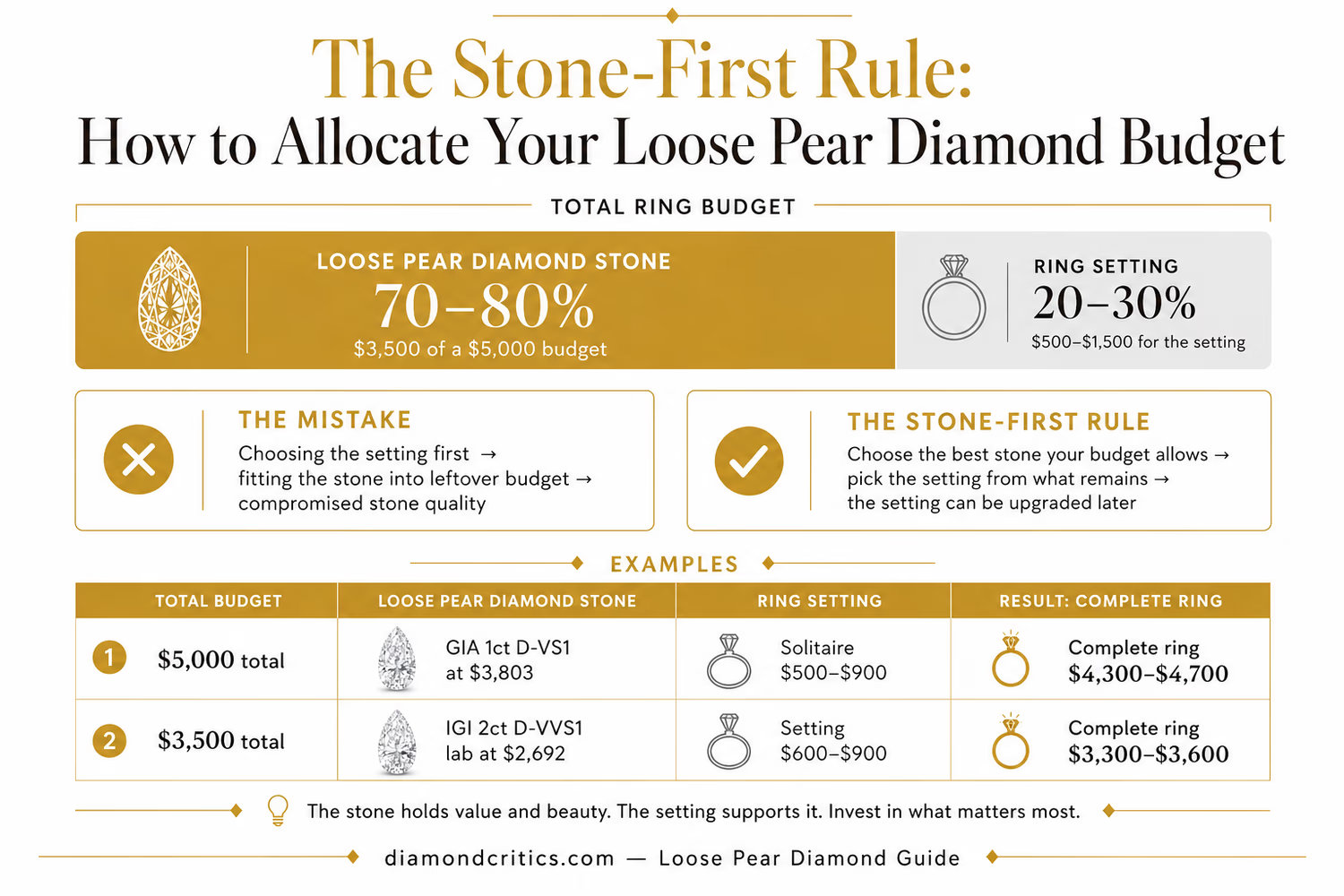
- Stone first, setting second. Allocate 70–80% of your total ring budget to the loose pear diamond stone. → Pick the best stone your budget allows, then choose the setting from what remains. Doing it in reverse — falling in love with a setting and fitting the stone into leftover budget — is the single most common mistake in loose diamond buying.
- Priority: GIA 1ct D-VS1 Ideal at $3,803 for natural; IGI 1ct D-VVS1 Ideal lab at $1,006 for lab grown. These are the price anchors. Every other loose pear diamond purchase should be evaluated relative to these entry points.


What Are Loose Pear Diamonds and Where to Buy Them
A loose pear diamond is a pear brilliant cut diamond that has been cut, polished, graded, and certificated — but not yet set into a ring, pendant, earring, or other piece of jewelry. Purchasing a loose pear diamond stone separately from a setting allows the buyer to make two independent decisions: which diamond to buy, and which setting to put it in. These decisions do not have to happen simultaneously, and separating them typically produces a better outcome for both. For a complete overview of how pear diamonds are graded, cut, and evaluated before purchase, see the Pear Cut Diamond Guide.
Where to buy loose pear diamonds: Blue Nile is the largest online retailer of loose pear diamonds for sale, with inventory spanning natural GIA-certified pear diamonds and lab grown IGI, GIA, and GCAL-certified pear diamonds across every carat weight and grade combination. Every loose pear diamond on Blue Nile includes a gemological certificate, high-resolution photography, a 360° video, and detailed specification data (measurements, depth %, table %, symmetry grade, polish grade, fluorescence, and girdle characteristics).
Blue Nile also provides a setting service: after purchasing a loose pear diamond stone, you can add a ring setting from Blue Nile's inventory and they will mount the stone before shipping. This is the most common use of Blue Nile's loose diamond model — buy the stone at the best available price and grade, then select from hundreds of pear-compatible ring settings at Blue Nile or from any local jeweler who accepts customer-supplied stones.
Who buys loose pear shaped diamonds:
- Engagement ring buyers who want to choose the stone and setting independently
- Buyers upgrading an existing ring setting with a new stone
- Custom jewelry buyers who have commissioned a setting from a local jeweler
- Collectors and investors purchasing natural pear diamonds as assets
- Buyers who want lab grown loose pear diamonds for pendants or earrings where setting choices are limited
The Certification Trap
The phrase "loose pear diamonds wholesale" appears frequently in searches because buyers are looking for loose pear diamonds at prices below standard retail. What these searches surface — wholesale marketplaces, uncertified stone sellers, and discounted diamond brokers — is often a poor-value alternative to certified retail, not a better one.
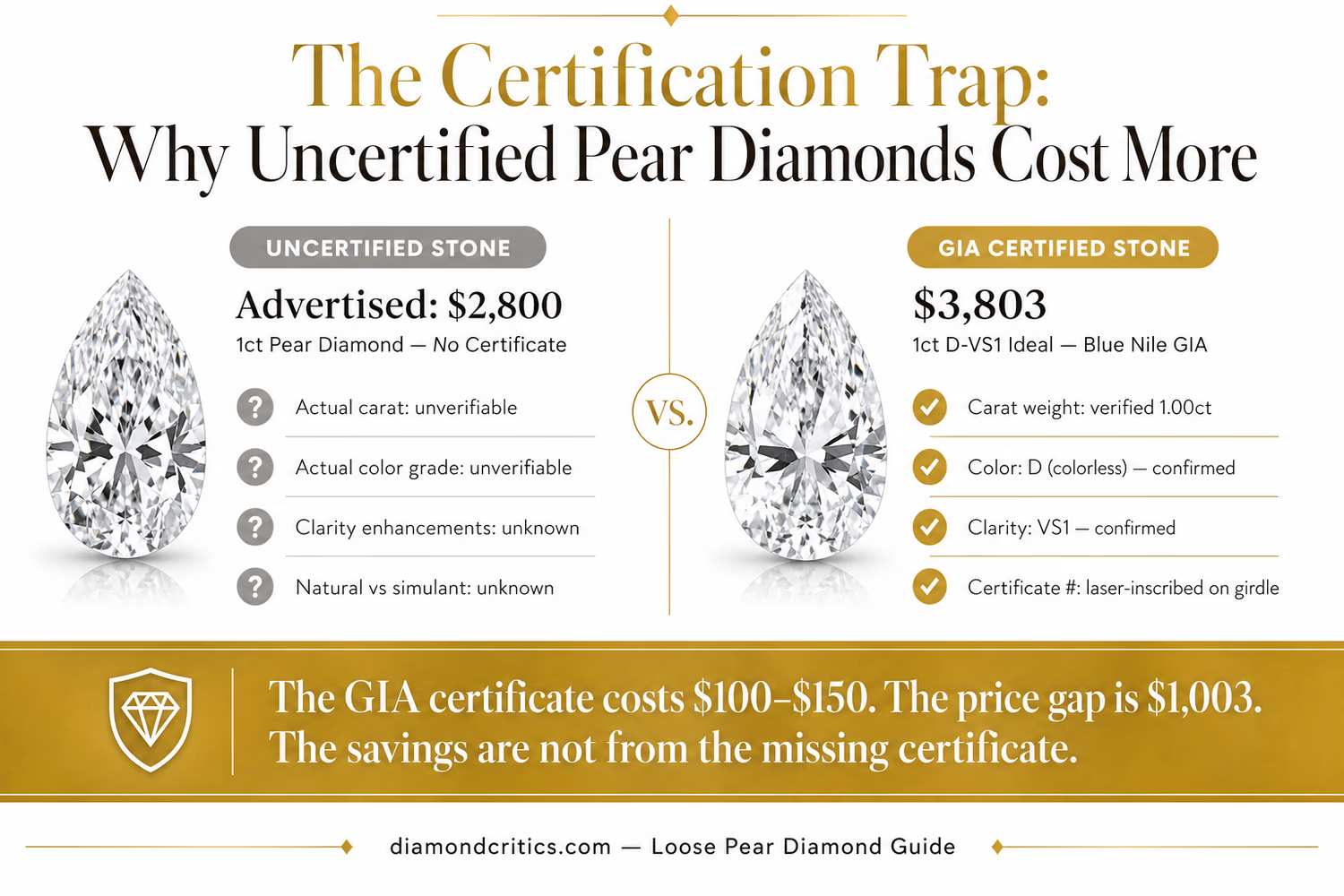
The Certification Trap is the false economy of purchasing a loose pear diamond stone without a GIA or IGI certificate. The trap works like this: an uncertified seller offers a 1ct pear diamond for $2,800 — below the Blue Nile GIA-certified entry price of $3,803. The buyer saves $1,003 on the stone price. What the buyer cannot verify without an independent certificate: that the stone is actually 1.00ct and not 0.92ct; that the color grade is D-VS1 and not G-SI2; that there is no fracture fill or clarity enhancement that will affect long-term durability; and that the stone is a natural diamond and not a simulant.
Gemological certificates from GIA or IGI are the only independent documentation of what a loose pear diamond stone actually is. GIA and IGI are not affiliated with the retailer selling the stone. Their grading reports are issued based on physical examination of the stone in their laboratory, not based on the seller's description. An uncertified loose pear diamond is only as accurately described as the seller's willingness to be honest about it.
The actual cost of the Certification Trap: A retail GIA certificate for a 1ct pear diamond costs approximately $100–$150 when purchased separately from a diamond grader. If a seller is offering a loose pear diamond "without a certificate to save you money," the actual savings on the certificate is $100–$150 — not the $1,000+ discount that appears in the advertised price. The price difference between a certified and uncertified stone of the same nominal grade is significantly larger than the certificate cost, meaning the uncertified stone is either a lower grade than claimed, or smaller than claimed, or carries some other deficiency that would appear on an independent certificate.
The correct approach: buy only GIA or IGI certified loose pear diamonds from reputable retailers. Blue Nile includes the GIA or IGI certificate with every loose diamond purchase at no additional charge. The certificate is built into the stone price, not an add-on.
IGI vs GIA for loose pear diamonds: Both IGI and GIA certify loose pear diamonds. GIA is more widely recognized globally and commands a name-recognition premium — at 1ct, GIA and IGI D-VVS1 pear diamonds are available at the same price point on Blue Nile, making GIA the default choice at this grade tier. At higher carats and clarity grades (D-IF at 2ct+), GIA commands a meaningful premium: a GIA 2ct D-IF pear lab is $6,393 vs IGI 2ct D-IF at $4,941. For most buyers, IGI at D-VVS1 Ideal is the optimal lab grown pear certification choice; GIA is the standard for natural pear diamonds at every tier.
Natural Loose Pear Diamonds at Blue Nile
Natural Loose Pear Diamond — 1ct
| Stone | Cut | Color | Clarity | Price | Notes |
|---|---|---|---|---|---|
| GIA 1.00ct D-VS1 | Ideal | D | VS1 | $3,803 | Best-value entry; D colorless, VS1 eye-clean |
| GIA 1.00ct G-VVS2 | Ideal | G | VVS2 | $3,849 | G near-colorless, VVS2 top clarity; strong value |
| GIA 1.00ct F-VS1 | Ideal | F | VS1 | $4,129 | Near-colorless F; VS1 clarity; white gold setting |
| GIA 1.00ct E-VVS2 | Ideal | E | VVS2 | $4,236 | E colorless, VVS2 high clarity |
| GIA 1.00ct G-VS1 | Ideal | G | VS1 | $4,289 | G color, VS1 eye-clean; best everyday ring stone |
| GIA 1.00ct D-VS1 | Ideal | D | VS1 | $4,299 | D color, VS1; second D-VS1 option |
| GIA 1.00ct E-VS1 | Ideal | E | VS1 | $4,357 | E colorless, VS1 clarity |
| GIA 1.00ct G-VVS1 | Ideal | G | VVS1 | $5,012 | G color, VVS1 top clarity |
| GIA 1.00ct D-VVS1 | Ideal | D | VVS1 | $6,230 | D colorless, VVS1; colorless tier top picks |
| GIA 1.00ct D-IF | Ideal | D | IF | $7,578 | D color, Internally Flawless; best natural 1ct |
The GIA 1ct D-VS1 Ideal at $3,803 is the natural loose pear diamond entry point. D colorless, VS1 clarity (eye-clean in all settings and lighting), Ideal cut with GIA certification. This stone delivers the full natural pear diamond experience at the lowest entry price for the D grade. As a loose pear diamond stone, pair it with a pear solitaire setting at $400–$900 for a complete ring at $4,200–$4,700.
The GIA 1ct G-VVS2 Ideal at $3,849 is the best-value natural pear diamond stone for buyers who prioritize clarity over the colorless grade tier. G color is indistinguishable from D in most lighting conditions when set in a ring; VVS2 clarity is top-tier. At $3,849 vs $3,803 for the D-VS1, the G-VVS2 is $46 more — an extraordinary value at a clarity tier two steps above VS1.
Natural Loose Pear Diamond — 2ct
| Stone | Cut | Color | Clarity | Price | Notes |
|---|---|---|---|---|---|
| GIA 2.00ct E-VVS1 | Ideal | E | VVS1 | $22,605 | Natural 2ct pear entry; E colorless, VVS1 |
| GIA 2.00ct F-VS1 | Ideal | F | VS1 | $27,700 | F colorless, VS1 eye-clean; second natural 2ct option |
Natural 2ct loose pear diamonds are rare. Blue Nile carries limited natural GIA pear inventory at this carat weight. Inventory changes frequently; the stones above are available at time of writing. The per-carat price at 2ct ($11,303/ct for the E-VVS1 entry) is nearly three times the 1ct per-carat price ($3,803/ct) — reflecting the geological rarity of natural rough large enough to yield a 2ct pear diamond.
Natural Loose Pear Diamond — 3ct to 4ct+
| Stone | Cut | Color | Clarity | Price |
|---|---|---|---|---|
| GIA 3.13ct F-VS1 | Ideal | F | VS1 | $45,539 |
| GIA 3.00ct D-VS1 | Ideal | D | VS1 | $65,090 |
| GIA 3.02ct G-VS1 | Ideal | G | VS1 | $67,255 |
| GIA 3.01ct E-VS1 | Ideal | E | VS1 | $69,637 |
| GIA 3.09ct D-IF | Ideal | D | IF | $102,925 |
| GIA 4.01ct G-VS1 | Ideal | G | VS1 | $75,775 |
| GIA 4.01ct D-VS1 | Ideal | D | VS1 | $119,017 |
Natural pear diamond stones above 3ct are extraordinary stones. At this tier, in-person verification or Blue Nile's virtual consultation is recommended before purchase. The loose diamond stone at this scale will typically need a custom ring setting — standard prong settings for pear diamonds top out at approximately 2–2.5ct before the stone's physical dimensions require custom fabrication.
The Stone-First Rule
The most common purchasing mistake for loose pear diamonds is not the stone selection — it is the sequencing. Buyers discover a ring setting they love, budget for it, and then search for a loose pear diamond stone in the remaining budget. This is buying the frame before the painting.
The Stone-First Rule: allocate your total ring budget, then commit 70–80% of it to the loose pear diamond stone. Select the best GIA-certified pear diamond stone that budget allows. Then choose a ring setting from what remains.
Why the Stone-First Rule produces better outcomes:
The loose pear diamond stone is the permanent part of the ring. Settings wear, prongs need re-tipping, metals get scratched and replated. The diamond lasts forever. In 10 years, the stone quality is what remains relevant — not whether the original setting was white gold or platinum. A $500 setting on a $4,000 D-VS1 pear diamond stone is a better ring at any time horizon than a $1,500 setting on a $2,500 stone of lower grade.
The setting is also replaceable. A buyer who falls in love with a specific $1,200 setting can save for it separately or upgrade later. A buyer who compromises the stone to afford the setting cannot upgrade the stone without starting over with a new purchase. For complete setting options and ring pricing at every budget tier, see the Pear Diamond Engagement Ring Guide.
What "wholesale" pricing actually means for loose pear diamonds:
Buyers searching for "loose pear diamonds wholesale" or "loose pear diamonds for sale" are typically looking for stones at below-standard pricing. Genuine wholesale loose diamond pricing applies to licensed diamond dealers and jewelry manufacturers purchasing stones in bulk — not to individual consumers. Consumer-facing "wholesale" pricing is typically a marketing term applied to stones that are: uncertified (see the Certification Trap), lower grade than presented, or accompanied by overstated original prices. Verified current market pricing on GIA and IGI certified pear diamonds at Blue Nile represents the competitive retail market price — not an inflated MSRP with artificial discount room.
Lab Grown Loose Pear Diamonds at Blue Nile
Lab grown loose pear diamonds are physically and chemically identical to natural pear diamonds. They are produced in laboratory reactors using HPHT or CVD methods, certified by IGI or GIA using the same 4Cs grading scale, and sold as loose pear diamond stones that can be set identically to natural stones. The price difference at comparable grades is dramatic. For a full breakdown of IGI vs GIA vs GCAL certification, lab pear pricing tiers, and the carat points where lab savings are largest, see the Lab Grown Pear Diamond Guide.
Lab Grown Loose Pear Diamond — 1ct
| Stone | Cut | Color | Clarity | Cert | Price | Notes |
|---|---|---|---|---|---|---|
| IGI 1.00ct D-VVS1 | Ideal | D | VVS1 | IGI | $1,006 | Lowest price for 1ct D-VVS1 Ideal pear lab |
| IGI 1.00ct E-VVS1 | Ideal | E | VVS1 | IGI | $1,038 | E color; identical to D in a set ring |
| IGI 1.00ct D-VVS1 | Excellent | D | VVS1 | IGI | $1,073 | Excellent cut tier; D-VVS1 |
| GIA 1.00ct D-VVS1 | Ideal | D | VVS1 | GIA | $1,073 | GIA certified lab pear; same price as IGI entry |
| GCAL 1.00ct D-VVS1 | Ideal | D | VVS1 | GCAL | $1,508 | GCAL 8X® cut grade; optical performance verified |
| IGI 1.00ct D-IF | Ideal | D | IF | IGI | $1,548 | Internally Flawless; $475 more than D-VVS1 |
Lab Grown Loose Pear Diamond — 2ct and 3ct
| Stone | Cut | Color | Clarity | Cert | Price | Notes |
|---|---|---|---|---|---|---|
| IGI 2.00ct D-VVS1 | Excellent | D | VVS1 | IGI | $2,692 | Entry price for 2ct lab pear; 88% less than natural |
| GIA 2.00ct D-VVS1 | Ideal | D | VVS1 | GIA | $2,692 | GIA certified 2ct lab pear at same entry price |
| IGI 2.00ct D-IF | Ideal | D | IF | IGI | $4,941 | 2ct D-IF lab pear; Internally Flawless under $5,000 |
| GIA 2.00ct D-IF | Ideal | D | IF | GIA | $6,393 | GIA D-IF 2ct; maximum certification premium |
| IGI 3.00ct E-VVS1 | Ideal | E | VVS1 | IGI | $5,316 | Best-value 3ct lab pear; E saves $843 vs D |
| IGI 3.00ct D-VVS1 | Ideal | D | VVS1 | IGI | $6,159 | D colorless 3ct lab pear; natural entry is $45,539 |
| IGI 3.00ct D-IF | Ideal | D | IF | IGI | $9,636 | 3ct D-IF lab pear; Internally Flawless |
Lab Grown Loose Pear Diamond — 4ct+
| Stone | Color | Clarity | Cert | Price | Notes |
|---|---|---|---|---|---|
| IGI 4.59ct E-VVS1 | E | VVS1 | IGI | $7,505 | 4.5ct+ lab pear at $7,505; lower than 4ct D-VVS1 |
| IGI 4.00ct D-VVS1 | D | VVS1 | IGI | $7,657 | 4ct D-VVS1 lab pear entry |
| GIA 4.54ct D-VVS1 | D | VVS1 | GIA | $8,637 | GIA 4.5ct D-VVS1; largest GIA certified lab pear option |
Tides Of Summer Capsule
Up To 30% Off
Shop The Sale →Vault ClearanceClear The Vault
Up To 70% Off
Shop Vault Deals →Affiliate link — no extra cost to you
Natural vs Lab Grown Loose Pear Diamond: Price Comparison
| Carat | Natural GIA (D-VVS1) | Lab IGI (D-VVS1) | Savings | Savings % |
|---|---|---|---|---|
| 1ct | $6,230 | $1,006 | $5,224 | 84% |
| 2ct | $22,605 (E-VVS1) | $2,692 | $19,913 | 88% |
| 3ct | $45,539 (F-VS1) | $6,159 | $39,380 | 86% |
| 4ct | $75,775 (G-VS1) | $7,657 | $68,118 | 90% |
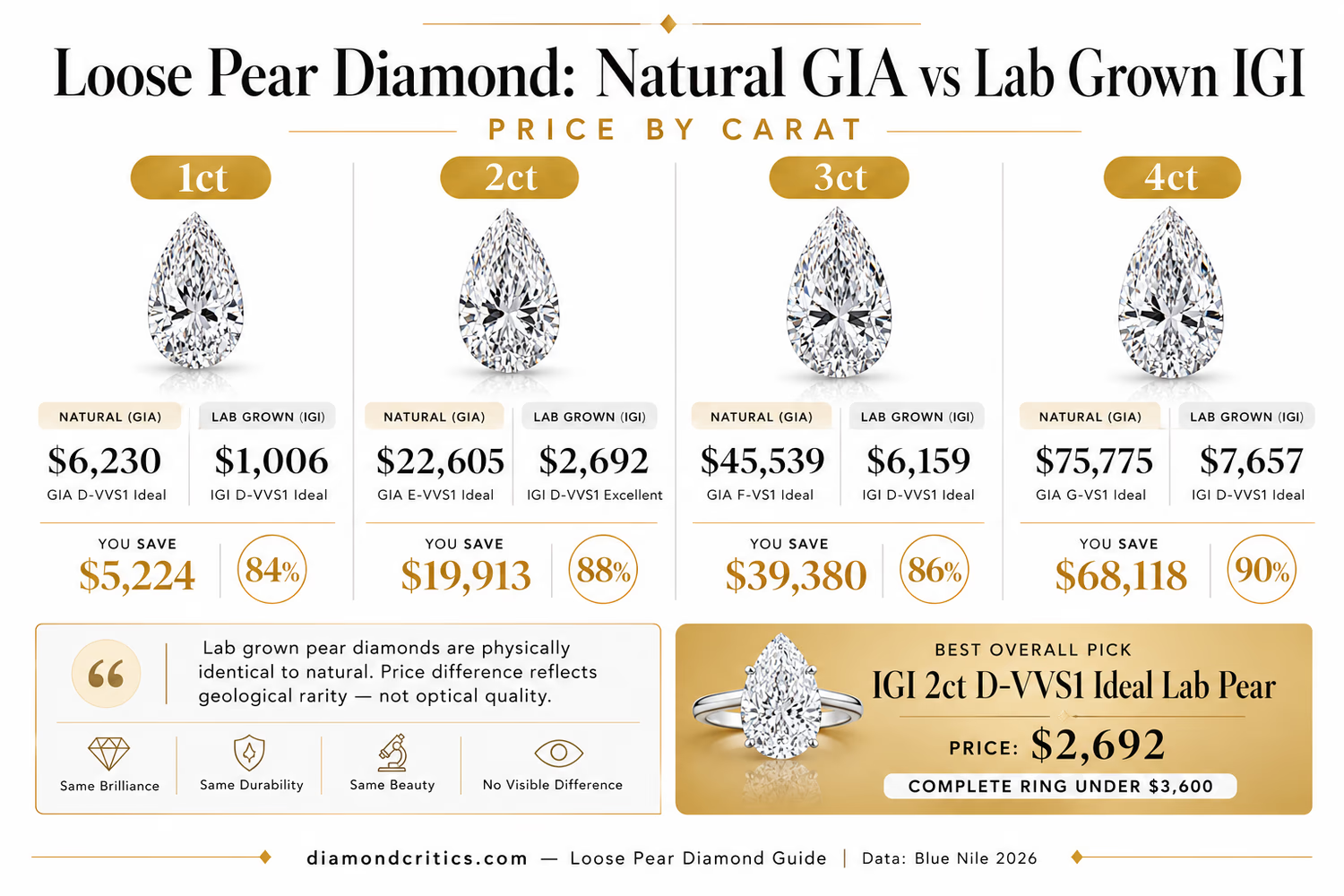
The savings increase with carat weight because natural pear diamond prices scale super-linearly with carat (see The Carat Jump Tax) while lab grown prices scale proportionally. For buyers whose priority is stone size, the lab grown loose pear diamond produces a larger stone at every budget tier compared to natural. For buyers who specifically want a natural origin stone — for geological authenticity, resale considerations, or personal preference — the natural GIA price is the accurate market price.
Resale consideration: Lab grown diamonds carry lower resale values than natural diamonds. A loose natural pear diamond stone purchased today retains value more predictably than a lab grown stone. If resale or heirloom value matters, natural is the correct choice. If wearing enjoyment and stone size matter more, lab grown is the correct choice.
What to Check Before Buying Any Loose Pear Diamond Stone
Buying a loose pear cut diamond requires the same proportions evaluation as any pear diamond, plus certification verification. The complete checklist:
Certificate: GIA or IGI only. Verify the certificate number on the GIA Report Check or IGI Report Check before completing any purchase. The certificate number is printed on the stone's girdle by laser inscription; it matches the number on the grading report.
Measurements: Check the listed mm dimensions. Calculate L/W ratio (Length ÷ Width). For an elongated pear diamond, target 1.60–1.65:1. For a classic pear, target 1.50–1.60:1. For an east-west setting, target 1.40–1.55:1.
Depth %: 58–64% is the ideal range. Eliminate stones outside this range without exception.
Table %: 53–65% is the target range. Avoid extremes in either direction.
Symmetry: GIA Excellent or Very Good minimum. Below Very Good shows visible asymmetry.
Polish: GIA Excellent or Very Good minimum.
Video: Watch the 360° video on every stone's Blue Nile detail page. Evaluate bow-tie severity. A faint shadow at the center is acceptable; a solid dark band is not. No still photograph reveals the bow-tie — only video does.
Shoulder curvature: View the outline photograph at the largest available size. Both shoulder arcs (from widest point to wing tips) must be smooth, continuous curves with no flat spots or pinch points.
Fluorescence: Blue fluorescence in natural pear diamonds is not always negative — in D-F color stones, strong fluorescence can make the stone appear slightly hazy under UV light sources. For natural pear diamonds above $5,000, check the fluorescence field on the certificate. None or Faint fluorescence is the conservative choice.
Loose Pear Diamond Optimization Matrix
| Stone | Carat | Grade | Type | Price | Best For |
|---|---|---|---|---|---|
| GIA D-VS1 Ideal | 1.00ct | D-VS1 | Natural | $3,803 | Best natural entry; D colorless eye-clean, complete ring $4,200–$4,700 |
| GIA G-VVS2 Ideal | 1.00ct | G-VVS2 | Natural | $3,849 | Best value 1ct natural; G near-colorless at top clarity tier |
| IGI D-VVS1 Ideal | 1.00ct | D-VVS1 Lab | Lab | $1,006 | Top-grade 1ct lab pear; complete ring under $2,000 |
| GIA D-VVS1 Ideal | 1.00ct | D-VVS1 Lab | Lab | $1,073 | GIA certified 1ct lab pear; same price as IGI at this grade |
| IGI D-IF Ideal | 1.00ct | D-IF Lab | Lab | $1,548 | Internally Flawless 1ct lab pear; only $475 more than D-VVS1 |
| GIA E-VVS1 Ideal | 2.00ct | E-VVS1 | Natural | $22,605 | Natural 2ct pear; rare stone; complete ring $23,200–$25,000 |
| GIA D-VVS1 Ideal | 2.00ct | D-VVS1 Lab | Lab | $2,692 | Best purchase in the loose pear category; 2ct GIA lab ring $3,500 total |
| IGI E-VVS1 Ideal | 3.00ct | E-VVS1 Lab | Lab | $5,316 | Best-value 3ct lab pear; complete ring under $7,000 |
| IGI D-VVS1 Ideal | 3.00ct | D-VVS1 Lab | Lab | $6,159 | 3ct D-VVS1 lab pear; $39,000 less than natural 3ct |
| GIA F-VS1 Ideal | 3.13ct | F-VS1 | Natural | $45,539 | Natural 3ct pear entry; extraordinary and rare stone |
| IGI 4.59ct E-VVS1 | 4.59ct | E-VVS1 Lab | Lab | $7,505 | 4.5ct lab pear at $7,505; lower than some 4ct D-VVS1 options |
Final Verdict: Which Loose Pear Diamond to Buy
Best natural loose pear diamond stone under $5,000: GIA 1ct D-VS1 Ideal at $3,803. D colorless, VS1 clarity, Ideal cut, GIA certified. This is the correct stone for buyers who want natural origin, top-tier documentation, and a complete ring under $5,000. No natural loose pear diamond stone available today delivers more per dollar at 1ct.
Best lab grown loose pear diamond stone at 1ct: IGI 1ct D-VVS1 Ideal at $1,006. Or spend $542 more for IGI 1ct D-IF Ideal at $1,548 — Internally Flawless is the upgrade recommendation because the price gap between VVS1 and IF is smaller in lab grown than in natural.
Best overall loose pear diamond purchase: GIA 2ct D-VVS1 Ideal lab pear at $2,692. Two carats, D color, VVS1 clarity, Ideal cut, GIA certified, $2,692. The natural equivalent starts at $22,605. A complete ring with this stone and a quality setting totals $3,300–$4,000. No loose pear diamond stone at any price or origin produces a more compelling total value.
Best natural pear diamond stone above 1ct: GIA 2ct E-VVS1 Ideal at $22,605. For buyers committed to natural origin at 2ct, this is the only entry-point option in current Blue Nile inventory. Rare, extraordinary, and correctly priced at market.
Expert Summary
Buyers searching for loose pear diamonds are often doing something right — separating the stone decision from the setting decision is exactly correct. The mistake I see is the sequence getting reversed anyway: a buyer researches the stone, falls in love with a setting they saw on Instagram, budgets for both together, and ends up compromising the stone to afford the setting. The Stone-First Rule is not complicated — allocate 70–80% of your total budget to the diamond, then pick the setting from what's left. The setting can be upgraded in five years. The stone cannot, without starting over. The other thing worth saying about loose pear diamonds for sale online: the certification check is not optional. GIA certificate numbers are verifiable in 30 seconds on gia.edu. IGI certificate numbers are verifiable on igiworldwide.com. Do this before any purchase. If a seller cannot provide a verifiable certificate number, the stone is not worth the price being asked.
— Farzana Hasan, Fine Jewelry Analyst
Frequently Asked Questions
Where can I buy loose pear diamonds?
Blue Nile is the largest retailer of certified loose pear diamonds online, with inventory of GIA-certified natural pear diamonds and IGI, GIA, and GCAL-certified lab grown pear diamonds at every carat weight and grade tier. All stones come with the original grading certificate, photography, 360° video, and complete specification data. Blue Nile also mounts the loose stone into a setting of your choice before shipping.
What is the cheapest loose pear diamond?
The cheapest GIA-certified natural loose pear diamond at Blue Nile starts at $3,803 for a 1ct D-VS1 Ideal cut stone. The cheapest IGI-certified lab grown loose pear diamond starts at $1,006 for a 1ct D-VVS1 Ideal cut stone. Sub-1ct natural pear diamonds are available at lower price points (approximately $900–$2,200 at the 0.50ct tier) — filter Blue Nile's pear diamond inventory by carat range to see current sub-1ct options.
What does a loose pear diamond stone cost?
Natural GIA loose pear diamond stones at Blue Nile: 1ct $3,803–$8,272+; 2ct $22,605–$27,700+; 3ct $45,539–$109,207+; 4ct $75,775–$124,452+. Lab grown IGI loose pear diamond stones: 1ct $1,006–$1,548; 2ct $2,692–$6,393; 3ct $5,316–$9,636; 4ct $7,505–$17,598.
Are loose pear diamonds cheaper wholesale?
Individual consumers do not have access to true wholesale loose pear diamond pricing, which is reserved for licensed dealers and manufacturers purchasing in bulk. "Wholesale" pricing offered to consumers typically indicates uncertified stones, overstated original prices, or lower grades than represented. GIA and IGI certified loose pear diamonds at Blue Nile represent current competitive retail market pricing — not inflated MSRP.
Should I buy a GIA or IGI certified loose pear diamond?
Both GIA and IGI certifications are legitimate for loose pear diamonds. GIA is more widely recognized globally and is the standard for natural pear diamonds. For lab grown loose pear diamonds, IGI at D-VVS1 Ideal is typically the best value — at 1ct, GIA and IGI lab pear diamonds are available at the same price ($1,073), making GIA the tie-breaker choice when prices match. At higher clarity tiers (D-IF, D-FL), GIA commands a premium over IGI: $1,452 more at 2ct D-IF ($6,393 GIA vs $4,941 IGI).
What is the difference between a loose pear diamond and a pear diamond stone?
No difference. "Loose pear diamond," "pear diamond stone," "pear loose diamond," "pear shaped diamond stone," and "pear cut loose diamond" all describe the same product: a pear brilliant cut diamond that has been graded and certificated but not yet mounted in a setting. All these terms are searchable on Blue Nile under the pear diamond filter.
Can I bring my own loose pear diamond to a jeweler?
Yes. A loose pear diamond stone purchased at Blue Nile can be taken to any jeweler for setting in a custom or standard ring. Blue Nile also offers their own setting service — add a pear-compatible setting to your cart alongside the loose stone and they will mount it before shipping. Local jewelers routinely accept customer-supplied loose diamonds; request a quote before committing to a setting choice.
How do I know if a loose pear diamond is real?
A GIA or IGI certificate number is the primary verification method. Every certified loose pear diamond has a laser inscription on the girdle with the certificate number. Verify the number at gia.edu (for GIA) or igiworldwide.com (for IGI). The certificate confirms the stone's identity, measurements, and grade combination. An uncertified "loose pear diamond" cannot be independently verified and should not be purchased at anything approaching certified market prices.
What carat loose pear diamond is best for an engagement ring?
The 1ct loose pear diamond is the most popular engagement ring choice — it measures approximately 8.5×5.7mm at standard L/W ratios and provides a clearly visible center stone in any solitaire or halo setting. For buyers who want a bold statement, the 2ct lab grown loose pear diamond at $2,692 is the single most compelling value in this category: 10.5×7.0mm face-up, D-VVS1 GIA certified, for a total ring under $3,500.
What is the best loose pear diamond for a pendant?
For a pendant, a loose pear diamond at 0.50ct–1ct is the most practical range. The stone hangs vertically, so the elongated silhouette of the pear creates a natural drop effect. A 1ct GIA D-VS1 natural pear at $3,803 is the natural recommendation; a 1ct IGI D-VVS1 lab pear at $1,006 is the lab alternative at 74% less.
What L/W ratio should a loose pear diamond have?
For an engagement ring solitaire: 1.55–1.65:1. For an elongated pear diamond ring: 1.60–1.70:1. For a pendant or drop: 1.45–1.75:1. For an east-west ring: 1.40–1.55:1. Calculate the ratio from the listed mm measurements on Blue Nile's detail page: Length ÷ Width. See the Pear Diamond Ideal Proportions Guide for the full 8-step evaluation framework.
What is the best color for a loose pear shaped diamond stone?
D through F color is the recommendation for loose pear diamonds in white gold or platinum settings — the pear's elongated facets make color concentration at the pointed tip more visible than in round brilliants. I color is the practical minimum for white metal settings. In yellow gold or rose gold, G through J color is acceptable; the metal's warmth masks any stone warmth. For lab grown loose pear diamonds, defaulting to D or E color is rational since the price difference is minimal: $1,006 (D) vs $1,038 (E) at 1ct IGI D/E-VVS1.
See Also
- Pear Cut Diamond: Complete Buying Guide — Bow-tie audit, L/W ratios, GIA grading, and full natural pear diamond price data
- Lab Grown Pear Diamond Guide — The Clarity Premium Collapse, The 2ct Tipping Point, IGI vs GIA, full lab pricing 1ct–4.5ct+
- Pear Diamond Ideal Proportions Guide — L/W ratio, depth %, table %, The Shoulder Crush, The Bow-Tie Threshold, and the 8-step cut quality framework
- Pear Diamond Size Chart — MM dimensions by carat from 0.25ct to 5ct, I and J color guide, and prices from half carat to 5ct
- Pear Diamond Engagement Ring — The Engagement Premium, The Carat Ladder, 1ct/2ct/3ct settings and complete ring pricing
- Pear Shaped Solitaire Diamond Ring — Prong counts, shank styles, and the cleanest solitaire settings for pear diamonds
- Blue Nile Diamond Review — Full audit of Blue Nile's inventory, pricing, return policy, and quality controls
- 1 Carat Pear Shaped Diamond Ring Guide — The Elongation Dividend, The Ring Total Formula, natural GIA from $3,803, lab grown from $1,006, settings, and 1.5ct comparison
- Diamond 4Cs Guide — Complete framework for evaluating cut, color, clarity, and carat across all shapes
Expert Verdict
Always audit the stone individually — no grade replaces seeing the actual diamond. The certificate tells you what to look for. Your eyes tell you whether to buy.
— Farzana Hasan, GIA Expert · DiamondCritics.com