1 Carat Pear Shaped Diamond Ring: Prices, Settings & Best Picks 2026
A 1 carat pear shaped diamond ring at Blue Nile starts at $3,803 for a natural GIA D-VS1 Ideal cut stone plus a setting, and $1,006 for a lab grown IGI D-VVS1 Ideal stone plus a setting — making the complete ring total $4,200–$4,700 natural or $1,400–$2,500 lab grown depending on the setting style. This guide covers every tier of the 1 carat pear diamond ring: natural GIA stones from $3,803 to $8,272, lab grown stones from $1,006 to $1,548, ring setting costs and styles, the 1.5 carat pear shaped diamond ring tier, and the exact combinations that produce the best ring at every budget.
The 1 carat pear shaped diamond is the most searched size in the pear category. At approximately 8.5×5.7mm, a 1ct pear in a solitaire setting covers significantly more finger length than a 1ct round (6.5mm diameter), creating a ring with a distinctly elongated and elegant silhouette that photographs well and reads as a statement piece on the hand. It is the entry point for buyers who want a pear diamond that makes a clear visual impact.
TL;DR: 1 Carat Pear Shaped Diamond Ring — Key Numbers
- Natural GIA 1ct pear diamond: $3,803 D-VS1 Ideal (entry) to $7,578 D-IF Ideal (top). Best value: $3,849 G-VVS2 Ideal.
- Lab grown IGI 1ct pear diamond: $1,006 D-VVS1 Ideal (entry) to $1,548 D-IF Ideal (top). GIA lab certified at same price: $1,073.
- Ring total (natural): Stone + setting. Solitaire setting $400–$900. Halo or sidestone $1,100–$3,570. Natural 1ct pear ring total: $4,200–$9,000+.
- Ring total (lab grown): $1,400–$3,000 depending on stone grade and setting style.
- 1.5 carat pear shaped diamond ring: Natural GIA 1.5ct pear rings run approximately $8,000–$16,000 total (stone + setting). Lab grown 1.5ct pear: $2,000–$3,500 total.
- Priority: → If budget is $4,000–$5,000 natural, start with the GIA D-VS1 Ideal at $3,803 and add a solitaire setting. → If budget is under $2,000 lab grown, start with the IGI D-VVS1 Ideal at $1,006 and a 14K setting.


1 Carat Pear Shaped Diamond Ring Price: Natural GIA
A 1 carat pear shaped diamond price at Blue Nile spans from $3,803 to $8,272+ for natural GIA Ideal cut stones, depending on color and clarity grade. The spread is significant: a D-VS1 entry stone at $3,803 and a D-IF at $7,578 share the same carat weight and cut quality but sit $3,775 apart on price. The grade selection for a 1ct pear diamond ring is the single largest variable in the ring's total cost — more than the setting, more than the metal choice.
| Stone | Cut | Color | Clarity | Price | Ring Total (Solitaire) |
|---|---|---|---|---|---|
| GIA 1.00ct D-VS1 | Ideal | D | VS1 | $3,803 | $4,200–$4,700 |
| GIA 1.00ct G-VVS2 | Ideal | G | VVS2 | $3,849 | $4,250–$4,750 |
| GIA 1.00ct F-VS1 | Ideal | F | VS1 | $4,129 | $4,500–$5,000 |
| GIA 1.00ct E-VVS2 | Ideal | E | VVS2 | $4,236 | $4,600–$5,100 |
| GIA 1.00ct G-VS1 | Ideal | G | VS1 | $4,289 | $4,700–$5,200 |
| GIA 1.00ct E-VS1 | Ideal | E | VS1 | $4,357 | $4,800–$5,300 |
| GIA 1.00ct G-VVS1 | Ideal | G | VVS1 | $5,012 | $5,400–$5,900 |
| GIA 1.00ct D-VVS2 | Ideal | D | VVS2 | $4,758 | $5,200–$5,700 |
| GIA 1.00ct D-VVS1 | Ideal | D | VVS1 | $6,230 | $6,600–$7,100 |
| GIA 1.00ct D-IF | Ideal | D | IF | $7,578 | $8,000–$9,000 |
Reading the table: The "Ring Total (Solitaire)" column adds a $400–$900 solitaire setting to the stone price. These are the complete ring costs — the price you pay at Blue Nile for the finished 1ct pear shaped diamond ring delivered to your door. For halo or sidestone settings, add $700–$2,670 more to the stone price for the setting upgrade.
The most important data point in this table: the G-VVS2 Ideal at $3,849 is only $46 more than the D-VS1 at $3,803. G color is indistinguishable from D color in most lighting conditions when the stone is set in a ring — the pear's elongated facet pattern distributes color evenly. D vs G color at 1ct is a laboratory distinction that has no visible consequence in everyday wear.
At the same time, VVS2 clarity is two grades above VS1. The G-VVS2 delivers more clarity at approximately the same price as the D-VS1. Both are outstanding 1ct pear shaped diamonds, but the G-VVS2 is the higher-value purchase for buyers who prioritize objectivity over grade prestige.
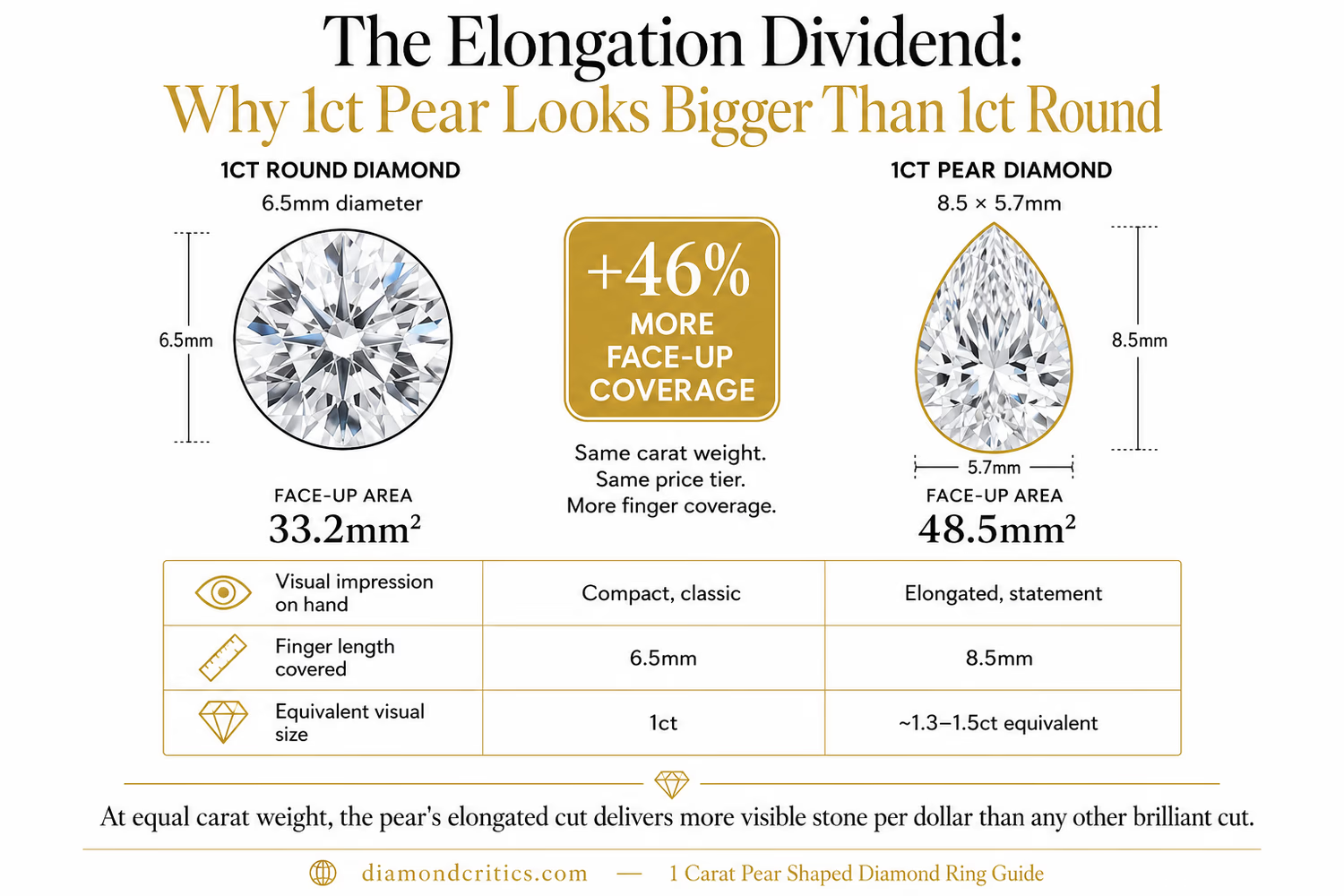
The Elongation Dividend
A 1ct pear shaped diamond is not the same size as a 1ct round diamond. The pear's elongated silhouette — typically 8.5mm long by 5.7mm wide at a 1.50–1.60 L/W ratio — creates more finger coverage than any other 1ct brilliant cut stone. A 1ct round diamond measures approximately 6.5mm in diameter. A 1ct pear at 8.5×5.7mm covers 48.45mm² of face-up surface compared to the round's 33.18mm², a 46% difference in visible surface area.
This is the Elongation Dividend: buyers of a 1 carat pear shaped diamond ring receive a stone that looks substantially larger than its stated carat weight would suggest. Pear diamonds are cut to prioritize face-up size over total depth, distributing mass toward the girdle plane where it is visible rather than hiding it below the table. A well-proportioned 1ct pear in a solitaire setting presents as a clearly elongated center stone that reads visually closer to 1.3–1.5ct in a round.
What the Elongation Dividend means for ring selection:
- A 1ct pear in a solitaire setting is already a visually bold ring. Buyers who want a "big ring" do not need to jump to 2ct in the pear category the way they might with round diamonds.
- For halo settings, the Elongation Dividend is compounded — a halo adds perimeter coverage to a stone already wider than its carat weight implies. The result at 1ct can look like a 1.8–2ct center stone.
- For buyers comparing a 1ct round and a 1ct pear at the same price: the pear offers more visual stone for the money in nearly all settings.
The Elongation Dividend is also why 1ct pear diamonds are the most popular choice for pear-shaped pendants: the elongated silhouette creates a natural drop effect, longer than a round or cushion solitaire pendant at the same carat weight, which reads as more substantial on the chain. See the Pear Diamond Pendant Guide for pendant-specific setting options and pricing at Blue Nile.
1 Carat Pear Diamond Ring Settings at Blue Nile
The 1 carat pear diamond ring price is a combination of two separate purchases: the loose 1ct pear diamond stone and the ring setting. Blue Nile sells both components and assembles the finished ring before shipping. Setting prices for pear diamond rings range from under $500 for a basic solitaire to over $4,000 for a platinum halo with sidestones.
Solitaire settings for 1ct pear diamonds ($400–$900): The pear solitaire is the cleanest, most popular setting for a 1ct pear shaped diamond. A five-prong pear solitaire (four prongs plus a V-tip prong at the pointed end) in 14K white gold costs $400–$700 at Blue Nile. The V-tip prong is specific to pear diamonds — it protects the fragile pointed tip from chipping while keeping the stone visible.
In 18K white gold, the same solitaire setting runs $600–$900. Platinum solitaires for 1ct pear diamonds start at $800+. The solitaire is the recommended setting for showcasing the full Elongation Dividend — no additional metal or side stones interrupt the pear's silhouette.
Sidestone settings for 1ct pear diamonds ($1,100–$2,200): A sidestone setting adds small side diamonds alongside the pear center stone, flanking the pear's shoulder arcs. The Pear Sidestone Diamond Engagement Ring in 14K Yellow Gold (1/4 ct. tw.) at $1,820 is the entry point in the sidestone category. Combined with the D-VS1 natural pear at $3,803, the complete ring total is $5,623. The sidestone style adds presence without the visual complexity of a halo.
Halo settings for 1ct pear diamonds ($1,800–$4,005): Pear halo rings surround the center stone with a frame of smaller diamonds, visually enlarging the pear center. The Pear Shape Side Stone Diamond Halo Engagement Ring in 14K White Gold at $3,570 and the same ring in Platinum at $4,005 are Blue Nile's primary pear halo options. A 1ct pear + D-VS1 stone in the 14K halo totals $7,373; with the IGI D-VVS1 lab pear at $1,006, the halo ring total is $4,576 — a complete high-impact ring under $5,000.
For a full breakdown of every setting style available for pear diamonds, see the Pear Diamond Engagement Ring Guide.
The Ring Total Formula
The Ring Total Formula is the correct method for pricing a 1 carat pear shaped diamond ring: Ring Total = Stone Price + Setting Price. These are two separate line items at Blue Nile — buyers select the loose diamond and the ring setting independently and add both to cart. The finished ring is assembled and shipped together.
The mistake many buyers make: researching only the stone price, then encountering sticker shock at checkout when the setting is added. A 1ct pear shaped diamond at $3,803 is not a complete ring. The Ring Total Formula ensures the full budget is allocated correctly.
Ring Total Formula examples — Natural 1ct pear diamond rings:
| Stone | Stone Price | Setting | Setting Price | Ring Total |
|---|---|---|---|---|
| GIA D-VS1 Ideal | $3,803 | 14K Solitaire | ~$550 | ~$4,353 |
| GIA G-VVS2 Ideal | $3,849 | 14K Solitaire | ~$550 | ~$4,399 |
| GIA E-VS1 Ideal | $4,357 | 14K Sidestone | $1,820 | ~$6,177 |
| GIA G-VS1 Ideal | $4,289 | 14K WG Halo | $3,570 | ~$7,859 |
| GIA D-VVS1 Ideal | $6,230 | Platinum Halo | $4,005 | ~$10,235 |
Ring Total Formula examples — Lab grown 1ct pear diamond rings:
| Stone | Stone Price | Setting | Setting Price | Ring Total |
|---|---|---|---|---|
| IGI D-VVS1 Ideal | $1,006 | 14K Solitaire | ~$550 | ~$1,556 |
| IGI E-VVS1 Ideal | $1,038 | 14K Solitaire | ~$550 | ~$1,588 |
| GIA D-VVS1 Ideal | $1,073 | 14K Solitaire | ~$550 | ~$1,623 |
| IGI D-IF Ideal | $1,548 | 14K WG Halo | $3,570 | ~$5,118 |
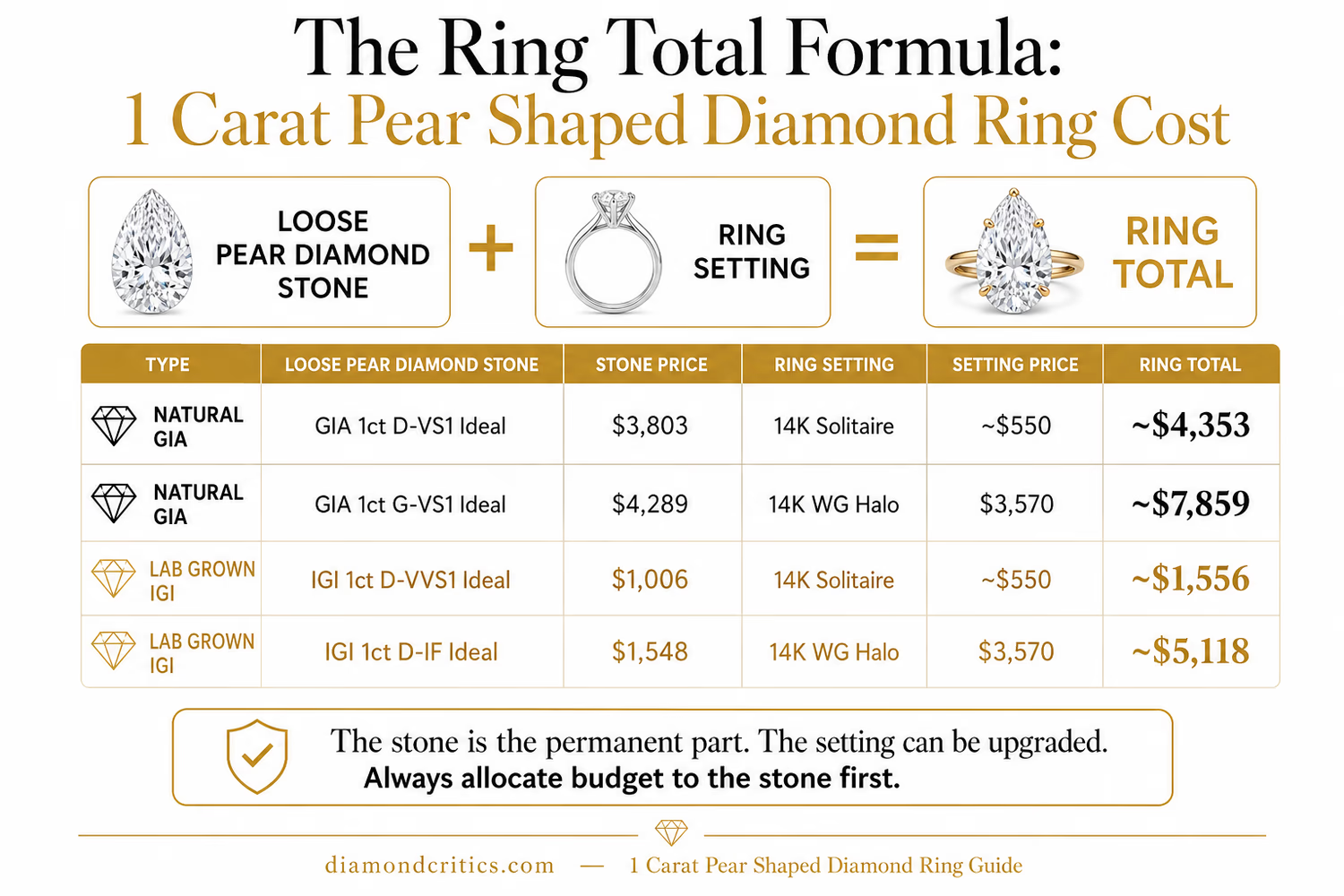
The Ring Total Formula reveals the critical budget insight: a lab grown 1ct pear diamond ring costs $1,556–$2,100 total, versus $4,200–$5,200 for a natural 1ct pear ring at the same solitaire setting. The natural-to-lab price gap at 1ct is $2,797 on the stone alone ($3,803 natural vs $1,006 lab). That difference is the choice: natural origin documentation and resale value, or three times the stone grade for the same ring budget.
Lab Grown 1 Carat Pear Shaped Diamond Ring
Lab grown 1ct pear shaped diamond rings at Blue Nile use IGI, GIA, or GCAL certified lab pear diamonds that are physically and chemically identical to natural pear diamonds. The lab stones at 1ct reach D-VVS1 grade for $1,006 and D-IF for $1,548 — grades that cost $6,230 and $7,578 in natural GIA equivalents. The complete lab grown 1ct pear ring, stone plus setting, is achievable under $2,000 with a 14K solitaire.
| Stone | Cut | Color | Clarity | Cert | Price | Ring Total (Solitaire) |
|---|---|---|---|---|---|---|
| IGI 1.00ct D-VVS1 | Ideal | D | VVS1 | IGI | $1,006 | ~$1,556 |
| IGI 1.00ct E-VVS1 | Ideal | E | VVS1 | IGI | $1,038 | ~$1,588 |
| IGI 1.00ct D-VVS1 | Excellent | D | VVS1 | IGI | $1,073 | ~$1,623 |
| GIA 1.00ct D-VVS1 | Ideal | D | VVS1 | GIA | $1,073 | ~$1,623 |
| GCAL 1.00ct D-VVS1 | Ideal | D | VVS1 | GCAL | $1,508 | ~$2,058 |
| IGI 1.00ct D-IF | Ideal | D | IF | IGI | $1,548 | ~$2,098 |
| GIA 1.00ct D-IF | Ideal | D | IF | GIA | $1,548 | ~$2,098 |
IGI vs GIA vs GCAL for lab grown 1ct pear rings:
At 1ct, GIA and IGI lab certified pear diamonds are available at the same price ($1,073 for D-VVS1 Ideal). GIA certification carries greater global name recognition and is the preferred choice when prices match. The GCAL option at $1,508 (D-VVS1) includes the GCAL 8X® cut grade — an optical performance certification not offered by IGI or GIA at this tier. For buyers who want the most rigorous cut documentation available for a lab grown 1ct pear, the GCAL stone is worth the $435 premium over the IGI entry.
For a complete certification comparison and full lab pear pricing from 1ct through 4.5ct+, see the Lab Grown Pear Diamond Guide.
1.5 Carat Pear Shaped Diamond Ring
The 1.5 carat pear shaped diamond ring sits between the accessible 1ct tier and the premium 2ct tier. At 1.5ct, a pear diamond measures approximately 10.0×6.7mm at standard L/W ratios — noticeably larger than a 1ct (8.5×5.7mm) and approaching the presence of a 2ct stone (approximately 11.5×7.5mm). The 1.5ct pear is the choice for buyers who want more face-up size than a 1ct provides but are not ready to enter the 2ct natural price tier ($22,605+).
1.5 carat natural pear shaped diamond ring prices: Natural GIA 1.5ct pear diamonds are not consistently available in Blue Nile's inventory. When available, natural GIA D-VS1 Ideal 1.5ct pear diamonds typically run $8,000–$12,000 at current market prices — roughly 2–3× the cost of the same grade at 1ct. This pricing reflects the geometric rarity of natural rough capable of yielding a 1.5ct pear with strong proportions: the heavier the rough weight required, the higher the per-carat premium. For current 1.5ct natural pear inventory, filter Blue Nile's pear diamond search by 1.40–1.60ct to see available stones.
1.5 carat lab grown pear shaped diamond ring prices: Lab grown 1.5ct pear diamonds at Blue Nile sit between the 1ct ($1,006–$1,548) and 2ct ($2,692) price tiers. A lab grown 1.5ct D-VVS1 Ideal pear typically runs $1,500–$2,100. Combined with a solitaire setting at $400–$700, the complete 1.5ct lab grown pear shaped diamond ring total is approximately $1,900–$2,800. For current 1.5ct lab grown pear inventory, see Blue Nile's lab pear diamond search.
1ct vs 1.5ct pear shaped diamond ring comparison:
| Feature | 1ct Pear Ring | 1.5ct Pear Ring |
|---|---|---|
| Approx. dimensions | 8.5×5.7mm | 10.0×6.7mm |
| Natural GIA (D-VS1) stone | $3,803 | ~$8,000–$12,000 |
| Lab IGI (D-VVS1) stone | $1,006 | ~$1,500–$2,100 |
| Natural ring total (solitaire) | $4,200–$4,700 | $8,500–$12,700 |
| Lab ring total (solitaire) | $1,400–$2,000 | $1,900–$2,800 |
| Face-up area vs 1ct round | +46% | +72% |
| Visual impression | Elegant, elongated | Bold statement |
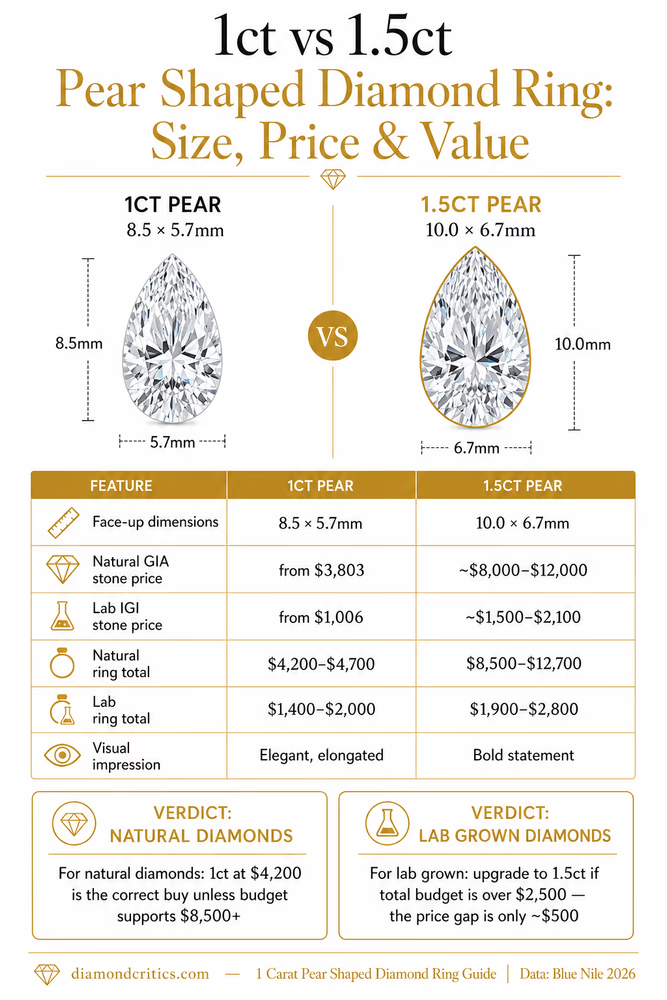
The 1ct vs 1.5ct decision is a budget decision for natural diamonds — the jump from $3,803 to $8,000+ for the same grade is substantial. For lab grown diamonds, the 1ct to 1.5ct jump is modest ($1,006 to ~$1,500–$2,100) and often worth making if budget allows. Buyers with $2,000–$3,000 for a lab grown pear ring should evaluate 1.5ct stones before defaulting to 1ct. For the size chart by mm and carat, see the Pear Diamond Size Chart.
Tides Of Summer Capsule
Up To 30% Off
Shop The Sale →Vault ClearanceClear The Vault
Up To 70% Off
Shop Vault Deals →Affiliate link — no extra cost to you
Color Grade for a 1 Carat Pear Shaped Diamond Ring
The 1 carat pear shaped diamond ring requires careful color selection because the pear's elongated shape concentrates color more visibly at the pointed tip than a round or cushion cut. In a white gold or platinum solitaire, color concentration at the point is visible in certain lighting — particularly warm indoor light. The color grade recommendation for a 1ct pear shaped diamond ring depends on the setting metal:
White gold or platinum setting: D–F (colorless) is the premium choice; no color anywhere in the stone. G is the practical choice — G near-colorless is indistinguishable from D in most environments when mounted, and saves $440+ at 1ct ($3,803 D-VS1 vs $4,289 G-VS1 is a $486 spread, but D-VS1 vs G-VVS2 at $3,803 vs $3,849 is nearly the same price). H is the absolute minimum for white metal settings in 1ct pear rings — below H, color warmth appears at the tip under normal lighting.
Yellow gold or rose gold setting: G–J color is acceptable. The warm metal masks any warmth in the stone. I color in a 1ct pear diamond set in yellow gold reads as colorless to the eye. J color is functional in rose gold but shows a barely perceptible warmth in white light. For buyers who want maximum stone size at a fixed budget, a J–K color 1ct pear in yellow gold frees up budget for clarity or carat upgrades.
Color and the Elongation Dividend: A 1ct pear diamond at G color provides the full Elongation Dividend — larger visible face-up area than a 1ct round — at a lower price than D or E color equivalents. Most buyers cannot distinguish G from D in a mounted ring. The money saved on color is money available for a better clarity grade, a better setting, or an upgrade toward 1.5ct.
Proportions: L/W Ratio for a 1 Carat Pear Shaped Diamond Ring
The L/W (length-to-width) ratio determines how a 1ct pear shaped diamond ring looks on the hand. The same 1.00ct stone can appear classically elegant or stubbily round depending entirely on this single measurement.
Recommended L/W ratios for 1ct pear diamond rings:
- Classic elongated pear (most popular): 1.50–1.65:1
- Slender elongated pear: 1.65–1.75:1
- Compact/round pear: 1.40–1.50:1
- East-west pear setting: 1.40–1.55:1
At 1.60 L/W, a 1ct pear measures approximately 8.5×5.3mm — the classic pear shape with a clear elongated teardrop silhouette. Below 1.45, the pear begins to look stubby and the elongation advantage diminishes. Above 1.75, the stone looks narrow and the proportions appear mismatched in standard solitaire settings.
Calculate the L/W ratio from the stone's listed measurements on Blue Nile's product page: divide the length by the width. This number is not on the certificate — you must calculate it from the mm dimensions. For the complete 8-step proportions evaluation framework including depth %, table %, shoulder curvature, and bow-tie assessment, see the Pear Diamond Ideal Proportions Guide.
Depth % for 1ct pear rings: Target 58–63% depth for the best face-up size at 1ct. Stones at 64–66% depth carry more weight below the girdle (reducing face-up size) without visual benefit. Below 57% depth, the stone shows windowing — a transparency effect where you can see through the diamond without the expected brilliance return.
1 Carat Pear Shaped Diamond Pendant
The 1 carat pear shaped diamond is also the most popular center stone for pear pendants. Unlike an engagement ring, a pear pendant does not need to withstand daily wear friction — it hangs freely, making the pendant an excellent use of the pear's pointed tip silhouette. The stone hangs vertically on a chain, point-down, creating a natural drop effect that appears longer than any other 1ct shape pendant.
For a 1ct pear shaped diamond pendant at Blue Nile:
- Natural 1ct pear pendant: Stone ($3,803–$5,000) + pendant setting ($200–$600) = $4,000–$5,600 total for a pendant that rivals the appearance of a 1.5ct round pendant.
- Lab grown 1ct pear pendant: Stone ($1,006–$1,548) + pendant setting ($200–$600) = $1,206–$2,148 total.
The pendant use case is one where color grade is slightly more forgiving than in a ring. A pendant hangs away from the metal prong, and the pointed end faces downward, minimizing the visual impact of any color concentration at the tip. G–H color in a pear pendant reads as colorless in normal conditions.
For all Blue Nile pear pendant styles including bezel vs prong, point-up vs east-west, and chain length options, see the Pear Diamond Pendant Guide and the Pear Diamond Necklace Guide.
1ct Pear Shaped Diamond: What to Check Before Buying
Before purchasing a 1ct pear shaped diamond ring, verify these specific items on Blue Nile's product detail page for each stone:
Certificate: GIA or IGI only. Verify the certificate number at gia.edu or igiworldwide.com before purchase.
L/W ratio: Not listed — calculate from mm dimensions. Target 1.50–1.65 for a solitaire. Divide length by width.
Depth %: 58–63% target. Eliminate anything above 64% at 1ct without a strong reason.
Table %: 53–65% is acceptable. Avoid extremes.
Symmetry and Polish: GIA Excellent or Very Good. Below Very Good shows visible asymmetry in a pear.
Bow-tie: Watch the 360° video on every stone. The bow-tie shadow at the center of a pear diamond is only visible in video — not in static photographs. A faint shadow is acceptable; a solid dark band across the stone's width is not. No photograph will reveal this — only the video.
Shoulder curvature: View the stone outline in the product images at maximum zoom. Both shoulder arcs (from the widest point to each wing tip) must be smooth, symmetric curves without flat sections or irregular pinching. This is what is called The Shoulder Crush — a defect in the curved shoulder arcs that produces an asymmetric-looking 1ct pear regardless of certificate grade. See The Shoulder Crush in the Pear Diamond Ideal Proportions Guide.
Fluorescence: For natural 1ct pear diamonds D–F color: None or Faint fluorescence. In colorless grade stones, strong blue fluorescence can cause a hazy appearance under UV-rich light. For G–J color natural stones, faint to medium blue fluorescence is neutral to slightly beneficial (it can make the stone appear whiter under fluorescent lighting).
For natural vs lab pricing and the certification framework, see the Loose Pear Diamonds Guide.
1ct Pear Shaped Diamond Ring Optimization Matrix
| Stone | Cert | Grade | Stone Price | Setting | Ring Total | Best For |
|---|---|---|---|---|---|---|
| IGI D-VVS1 Ideal | IGI | Lab | $1,006 | 14K Solitaire ~$550 | ~$1,556 | Best lab entry; complete ring under $2,000 |
| GIA D-VVS1 Ideal | GIA | Lab | $1,073 | 14K Solitaire ~$550 | ~$1,623 | GIA certified lab pear; same ring total under $1,700 |
| IGI D-IF Ideal | IGI | Lab | $1,548 | 14K Solitaire ~$550 | ~$2,098 | D-IF lab pear; Internally Flawless under $2,200 total |
| GIA D-VS1 Ideal | GIA | Natural | $3,803 | 14K Solitaire ~$550 | ~$4,353 | Best natural entry ring; D colorless, eye-clean, complete ring under $4,500 |
| GIA G-VVS2 Ideal | GIA | Natural | $3,849 | 14K Solitaire ~$550 | ~$4,399 | Best value natural 1ct pear ring; G color, top clarity, $4,400 total |
| GIA F-VS1 Ideal | GIA | Natural | $4,129 | 14K Solitaire ~$550 | ~$4,679 | F color natural pear ring; near-colorless in any white metal |
| GIA G-VS1 Ideal | GIA | Natural | $4,289 | Sidestone $1,820 | ~$6,109 | Natural 1ct pear sidestone ring; G color, YG setting, $6,100 total |
| GIA E-VVS2 Ideal | GIA | Natural | $4,236 | 14K WG Halo $3,570 | ~$7,806 | E-VVS2 halo ring; looks 1.6ct+ face-up; complete under $8,000 |
| GIA D-VVS1 Ideal | GIA | Natural | $6,230 | Platinum Halo $4,005 | ~$10,235 | Premium natural 1ct pear ring; D-VVS1, platinum, maximum 1ct build |
| GIA D-IF Ideal | GIA | Natural | $7,578 | Platinum Halo $4,005 | ~$11,583 | Best natural 1ct pear ring; D-IF, platinum halo, top-tier build |
Final Verdict: Which 1ct Pear Shaped Diamond Ring to Buy
Best natural 1 carat pear shaped diamond ring under $4,500: GIA D-VS1 Ideal at $3,803 + 14K solitaire setting at $400–$600. Ring total $4,200–$4,400. D colorless, VS1 eye-clean under all lighting conditions, Ideal cut, GIA certified. This is the correct natural 1ct pear engagement ring for buyers who want the best grade-to-price ratio with no compromises on certification or cut quality.
Best value natural 1ct pear ring: GIA G-VVS2 Ideal at $3,849. G color in a mounted pear ring looks identical to D in everyday wear. VVS2 clarity is the top clarity tier with eye-visible confirmation of flawless appearance. At $3,849 vs $3,803 — a $46 premium — you receive a stone two clarity grades above VS1. This is the objectively better purchase.
Best lab grown 1ct pear ring under $2,000: IGI D-VVS1 Ideal at $1,006 + 14K solitaire. Ring total $1,400–$1,600. D colorless, VVS1 clarity, Ideal cut. The same grade in natural costs $6,230 for the stone alone. This is the single most efficient 1ct pear ring buy in either natural or lab grown categories.
Best lab grown 1ct pear ring (GIA certified): GIA D-VVS1 Ideal at $1,073. Same grade tier, GIA certification at $67 more than the IGI entry. For buyers who want GIA documentation on their lab grown stone, this is the path.
Best 1ct pear ring for halo setting: GIA E-VVS2 Ideal at $4,236 + 14K white gold halo at $3,570 = $7,806 total. E color, VVS2 clarity, halo adds perimeter diamonds. In a halo, this 1ct pear reads face-up at 1.6–1.8ct equivalent presence.
Expert Summary
The 1ct pear shaped diamond ring is a genuinely excellent choice for almost every buyer in this category, and I want to explain why specifically: the Elongation Dividend is real and it is one of the most underappreciated advantages in diamond buying. A 1ct pear gives you more finger coverage than a 1ct round. Buyers who fixate on carat weight as a proxy for size are leaving the pear's biggest advantage on the table. The people who understand this end up with rings that look larger than their price would suggest.
On the 1ct vs 1.5ct question for natural diamonds: the jump from $3,803 to $8,000–$12,000 for the same grade is real. Unless your budget genuinely supports 1.5ct at the grade you want, the 1ct pear at $3,803 is the correct purchase. For lab grown, the 1ct to 1.5ct jump is about $500–$1,000 on the stone — there, I'd look at 1.5ct seriously if your total ring budget is over $2,500.
The thing I always tell buyers: check the 360° video before purchasing any pear diamond. You cannot see the bow-tie in photographs. The video is the only way to evaluate this — and a severe bow-tie on a 1ct pear ruins the Elongation Dividend completely.
— Farzana Hasan, Fine Jewelry Analyst
Frequently Asked Questions
How much does a 1 carat pear shaped diamond ring cost?
A 1 carat pear shaped diamond ring costs $4,200–$9,000+ for a natural GIA stone with a setting, depending on grade. The natural stone ranges from $3,803 (D-VS1 Ideal) to $7,578 (D-IF Ideal); a 14K solitaire setting adds $400–$700. Lab grown 1ct pear diamond rings cost $1,400–$2,500 total (stone $1,006–$1,548 + setting).
What is the best 1 carat pear shaped diamond?
The best value 1ct pear shaped diamond for a ring is the GIA G-VVS2 Ideal at $3,849. G color looks identical to D in a set ring; VVS2 clarity is exceptionally clean; Ideal cut maximizes the pear's face-up spread. For buyers who specifically want D colorless: GIA D-VS1 Ideal at $3,803 is the correct entry.
What does a 1 carat pear shaped diamond look like on the hand?
A 1ct pear shaped diamond ring is more visually striking than a 1ct round ring on the hand. At approximately 8.5×5.7mm, the pear covers more finger length than a 6.5mm round. In a solitaire, the teardrop silhouette is distinctive and elongates the appearance of the finger. In a halo, the 1ct pear center with a surrounding diamond frame reads as a 1.8–2ct equivalent presence.
What color should a 1 carat pear shaped diamond ring be?
D–G color for white gold or platinum settings. H is the minimum for white metal. For yellow or rose gold settings, G–J color is acceptable — the warm metal neutralizes any stone warmth. The recommendation for the best value: G color, which looks identical to D in a set ring and saves $400–$2,400+ on the stone price versus D at the same clarity grade.
What L/W ratio is best for a 1 carat pear shaped diamond ring?
1.55–1.65 is the recommended L/W ratio for a 1ct pear in a standard solitaire or halo engagement ring. This produces the classic elongated teardrop silhouette with balanced proportions. Below 1.45, the pear looks stubby. Above 1.75, the stone looks narrow. East-west pear settings work best at 1.40–1.55. Calculate from the stone's listed mm dimensions: length ÷ width.
How big does a 1 carat pear diamond look?
A 1ct pear diamond measures approximately 8.5×5.7mm at a standard 1.60 L/W ratio, covering about 48mm² face-up — compared to 33mm² for a 1ct round at 6.5mm diameter. The pear provides 46% more visible face-up surface area than a round at the same carat weight. In a ring, a 1ct pear reads visually as approximately 1.3–1.4ct equivalent in comparison to rounds.
What is a 1.5 carat pear shaped diamond ring price?
A 1.5ct pear shaped diamond ring costs approximately $8,500–$14,000 for a natural GIA stone with a solitaire setting. Natural 1.5ct pear stones run $8,000–$12,000 depending on grade and availability. Lab grown 1.5ct pear diamond rings cost $1,900–$2,800 total — a modest jump from the 1ct lab grown range of $1,400–$2,000. For current 1.5ct availability, filter Blue Nile's pear diamond search by 1.40–1.60ct.
Should I buy a 1ct or 1.5ct pear shaped diamond ring?
For natural diamonds: the 1ct pear ring at $4,200–$4,700 total is the right choice unless your budget clearly supports $8,500–$14,000 for 1.5ct. The quality difference at the same grade is minimal; the size difference (8.5×5.7mm vs 10.0×6.7mm) is real but the pear's Elongation Dividend already makes 1ct look larger than its carat weight. For lab grown diamonds: upgrade to 1.5ct if your budget allows — the price difference is $500–$800 on the stone, which is meaningful but not prohibitive.
Is a pear diamond ring good for everyday wear?
Yes, with the correct setting. The pointed tip of a pear diamond requires a V-prong (pointed prong) for protection — this is standard on all pear settings at Blue Nile. The V-prong prevents chipping at the tip, which is the most fragile part of the pear silhouette. With a properly set V-prong, a 1ct pear diamond ring handles daily wear without concern. The bezel setting (metal rim encircling the stone) provides additional protection for active lifestyles. See the Pear Shaped Solitaire Diamond Ring Guide for prong count and setting security details.
What is a good clarity for a 1 carat pear shaped diamond ring?
VS1 or VS2 are the recommended clarity grades for a 1ct pear diamond ring — both are eye-clean (no inclusions visible to the naked eye) and avoid the premium of VVS2 or higher. The GIA D-VS1 Ideal at $3,803 is the clarity-safe entry for natural stones. For buyers with room in their budget, VVS2 delivers top-tier clarity at a modest premium — the G-VVS2 at $3,849 is only $46 more than VS1.
Does a 1 carat pear diamond have a bow-tie?
All pear diamonds have some degree of bow-tie — a dark shadow across the center of the stone that results from the cutting geometry of the pear brilliant pattern. The severity ranges from faint (barely visible, does not affect beauty) to severe (a broad dark band that reduces brilliance). Grade tier does not predict bow-tie severity — a D-IF Ideal cut pear can have a noticeable bow-tie while a G-VS1 has a faint one. The only way to evaluate bow-tie is to watch the 360° video on each stone's product page at Blue Nile. Never purchase a 1ct pear diamond ring without watching the video.
What is the best setting for a 1 carat pear shaped diamond ring?
The five-prong solitaire (four prongs + V-tip) in 14K white gold is the most popular and recommended setting for a 1ct pear shaped diamond ring. It showcases the full Elongation Dividend, secures the stone with the V-tip prong at the point, and keeps the total ring cost under $4,500. For buyers who want more visual impact, the 14K white gold halo at $3,570 adds perimeter diamonds that amplify the pear center's presence significantly. See the Pear Diamond Halo Ring Guide for every pear halo style at Blue Nile.
What is a 1ct pear shaped diamond pendant price?
A 1ct pear shaped diamond pendant costs $4,000–$5,600 for a natural GIA stone (stone $3,803–$5,000 + pendant setting $200–$600). For a lab grown 1ct pear pendant: $1,200–$2,150 total (stone $1,006–$1,548 + pendant setting $200–$600). The pear pendant benefits from the same Elongation Dividend as the ring — a 1ct pear pendant hangs longer on the chain than any other 1ct shape pendant. See the Pear Diamond Pendant Guide for current pendant settings and prices.
See Also
- Pear Cut Diamond: Complete Buying Guide — Full pear diamond evaluation framework: bow-tie audit, L/W ratios, GIA grading, and price data across all tiers
- Pear Diamond Ideal Proportions Guide — The Shoulder Crush, The Bow-Tie Threshold, and the complete 8-step cut quality framework for pear diamonds
- Pear Diamond Engagement Ring — The Engagement Premium, The Carat Ladder, 1ct/2ct/3ct settings, and complete ring pricing
- Pear Shaped Solitaire Diamond Ring — V-prong counts, shank styles, and the cleanest solitaire settings for pear diamonds
- Pear Diamond Halo Ring — Single halo, double halo, floating halo; the complete halo framework and pricing for pear diamonds
- Lab Grown Pear Diamond Guide — The Clarity Premium Collapse, The 2ct Tipping Point, IGI vs GIA, full lab pear pricing 1ct–4.5ct+
- Loose Pear Diamonds: Natural & Lab Grown Prices — The Certification Trap, The Stone-First Rule, and full natural and lab pricing from 1ct to 4ct+
- Pear Diamond Size Chart — MM dimensions by carat from 0.25ct to 5ct, L/W ratio guide, and prices from half carat to 5ct
- Pear Diamond Pendant Guide — Bezel vs prong, point-up vs east-west, chain length guide, and every Blue Nile pear pendant with prices
- Pear Shaped Diamond Ring: Settings & Metals — The Metal Multiplier Effect, all setting styles, and full price data across every pear ring category
Expert Verdict
Always audit the stone individually — no grade replaces seeing the actual diamond. The certificate tells you what to look for. Your eyes tell you whether to buy.
— Farzana Hasan, GIA Expert · DiamondCritics.com