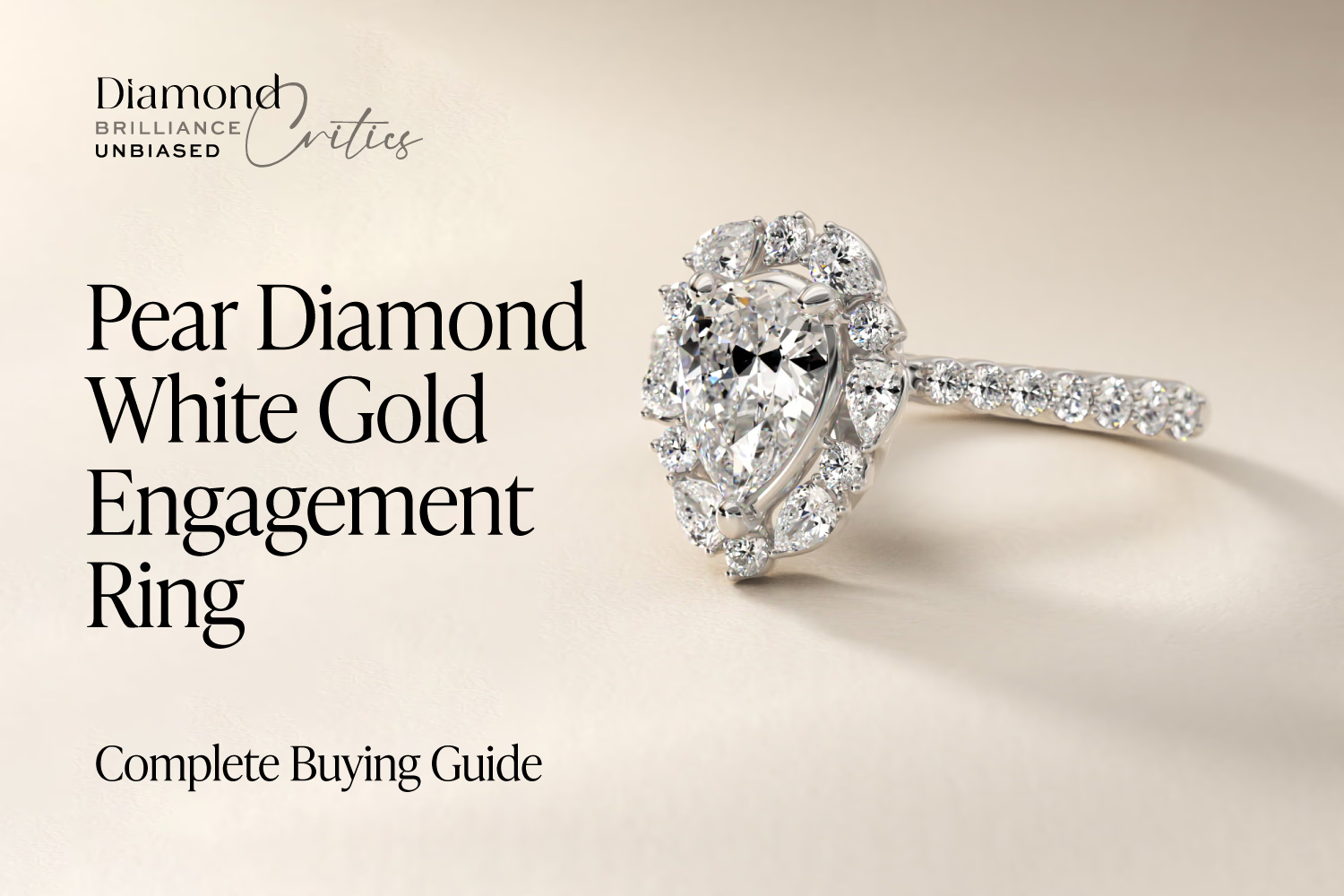
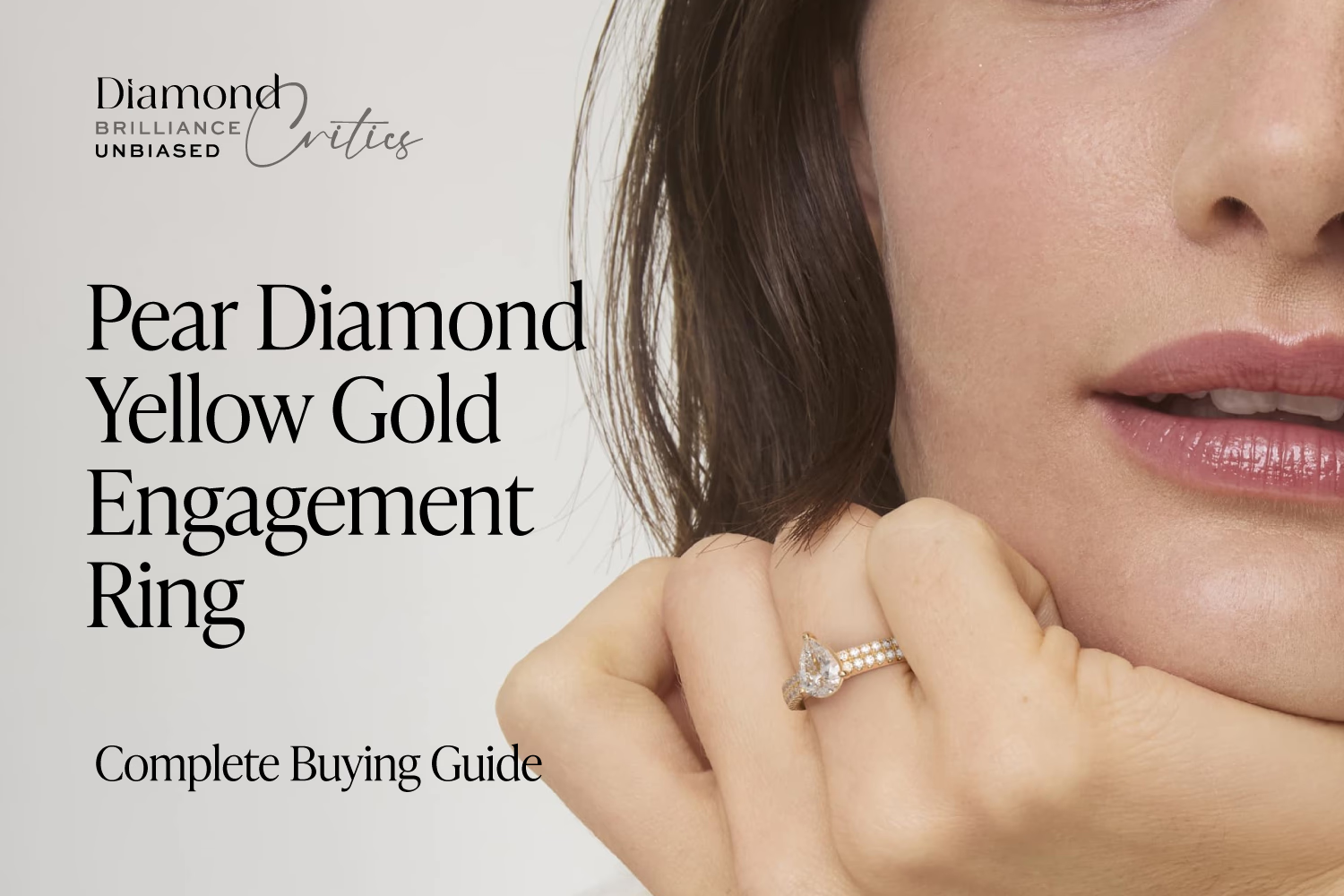
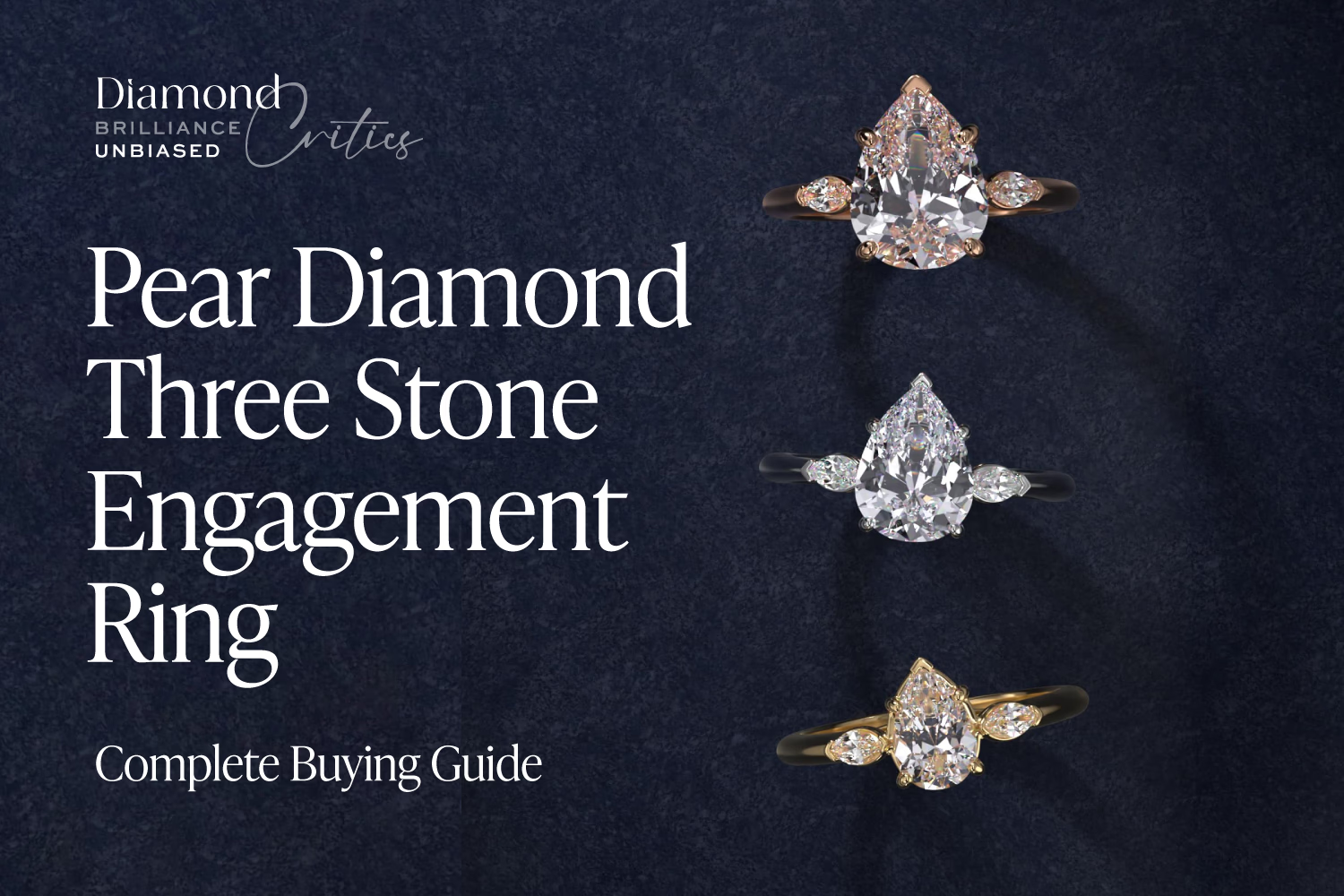
Pear Diamond Engagement Ring: The Complete 2026 Buying Guide
TL;DR — What You Need to Know Before You Shop
- A complete pear diamond engagement ring (setting + stone) starts at $2,700 for a 1ct lab pear in solitaire — and $8,000–$12,000 for a 1ct natural pear in platinum
- The 1ct, 2ct, and 3ct tiers are the three natural stopping points — buying in between them wastes budget without delivering a visible presence upgrade
- A pear diamond engagement ring needs a V-prong at the tip, 360° video evaluation for bow-tie, and a confirmed orientation decision before the stone is set — none of these can be fixed after
- Natural pear diamonds are priced below round brilliants at every carat weight — the shape offers genuine value for buyers who want maximum stone for the budget
- Pear diamonds pair exceptionally with sapphire, ruby, emerald, and opal side stones for buyers who want something beyond an all-diamond ring
- Every Blue Nile pear engagement ring setting shown in this guide comes in platinum, white gold, yellow gold, and rose gold
A pear diamond engagement ring is not a compromise between two shapes. It is a distinct choice — one that carries more visual personality than a round, more asymmetry than an oval, and more presence-per-carat than almost any other cut.
The buyers who buy pear engagement rings tend to know exactly what they want. They found the shape through a celebrity ring, an estate piece, or a carat comparison that made every other shape seem underwhelming. They are rarely surprised by the asymmetry. They chose it.
This guide covers what comes after that choice: the specific settings that work for engagement ring wear (not just aesthetics), the carat levels that actually change visible presence on the hand, the stone prices you should be comparing, and the colored stone pairings that make pear diamonds look unlike anything else in the engagement ring market.


What Makes a Pear Diamond Engagement Ring Different From Other Engagement Rings?
An engagement ring is not a fashion ring. It lives on the hand for decades, survives dishwashing, gym sessions, hospital visits, and everything else a hand touches in a lifetime. The design decisions that look good in a photo must also hold up over fifty years of daily wear.
This changes what matters for a pear diamond engagement ring specifically.
The pointed tip of a pear diamond is the defining aesthetic feature — and the primary structural concern. A well-chosen setting handles this with a V-prong that wraps the tip, protecting it from lateral impact. The wrong setting (round prongs at the tip, or a bezel that doesn't fully support the point) creates chipping risk that compounds over years of wear.
Engagement rings also face a daily-wear durability standard that fashion rings do not. A pear diamond ring worn occasionally for events can survive a slightly elevated setting with moderate prong security. An engagement ring worn every single day needs a lower profile, heavier prong metal, and a setting geometry that doesn't snag on fabric or catch on adjacent objects.
The asymmetry of the pear cut creates one more engagement-specific consideration: the ring needs to be worn consistently in the same orientation.
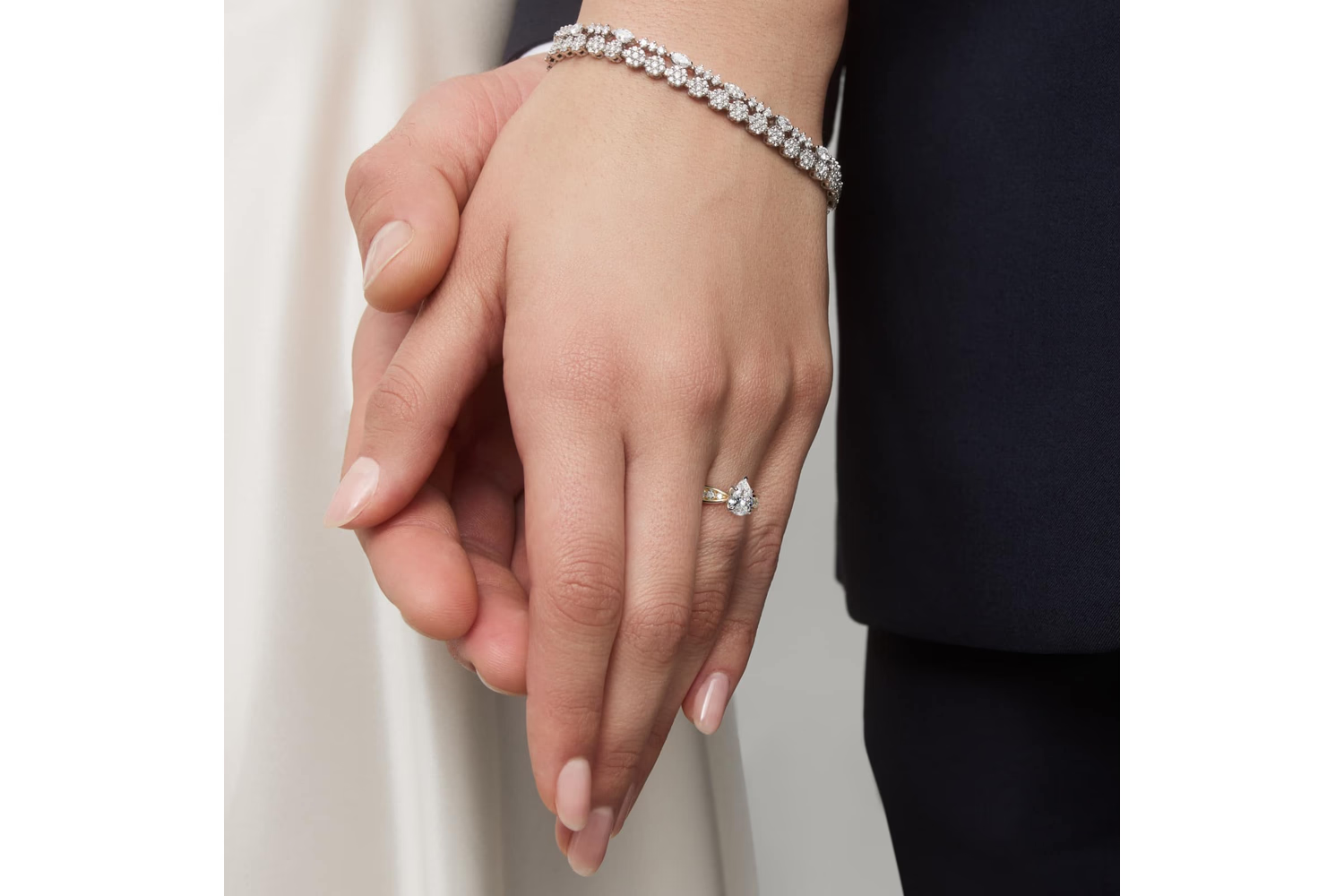 A pear diamond engagement ring in yellow gold — the warm metal amplifies the brilliance of the teardrop silhouette. Shop pear diamond engagement rings on Blue Nile → The V-prong location fixes the orientation permanently. A pear diamond engagement ring set point-up cannot be casually rotated to point-down orientation without resetting — unlike a round or oval diamond, which looks the same in any rotation.
The Engagement Premium: Why Engagement Ring Standards Are Different
The Engagement Premium is the concept Farzana uses to describe the higher standard that engagement rings must meet compared to other jewelry — and why it should change what you look for when selecting a pear diamond setting.
The Engagement Premium has four components:
1. Daily wear durability. An engagement ring will be worn while sleeping, cooking, cleaning, exercising, and working. Every element of the setting must tolerate continuous wear without loosening, bending, or creating points of snagging. For pear diamond settings, this means V-prong metal thickness matters — thin, decorative prong heads at the tip will wear flat over time.
2. Prong security over years. Prongs loosen as the metal fatigues from daily use. Platinum prongs maintain their grip longer than gold prongs because platinum is denser and more resistant to deformation. For a pear diamond engagement ring, the V-prong at the tip is the most critical prong — it carries the most stress from incidental impacts. Annual prong inspection by a jeweler is the professional standard.
3. Setting height for hand ergonomics. Very high-set solitaires (cathedral settings above 5mm) can snag on fabric and create pressure points when making a fist. A pear diamond in a moderate-height setting (3–4mm above the finger) balances stone visibility with practical wearability.
4. Comfort of the shank in all hand conditions. Hands swell and contract with temperature, activity, and time. An engagement ring that fits well in July will feel tight in August. Allow at least one half-size of headroom when sizing a pear engagement ring — and note that the elongated shape of the pear diamond can affect perceived fit at the top of the finger.
Buyers who apply The Engagement Premium evaluate settings differently from buyers who are selecting a ring for special occasions. They ask: will this V-prong still hold the tip after 10 years of daily wear? Will this setting height snag my gloves in December? These questions narrow the field significantly — and they always lead toward platinum, lower settings, and heavier prong construction.
1 Carat Pear Shaped Diamond Engagement Ring
The 1ct pear diamond is the most popular entry point for pear engagement rings. At this weight, the pear cut delivers a face-up size of approximately 8mm × 5.5mm — meaningfully larger than a 1ct round (approximately 6.5mm diameter) for the same carat weight.
Real Blue Nile prices for 1ct pear diamonds (2026):
| Grade | Type | Price | Link |
|---|---|---|---|
| G, VS2, Ideal, GIA | Natural | $3,150 | View stone |
| D, VS1, Ideal, GIA | Natural | $3,810 | View stone |
| D, IF, Ideal, IGI | Lab-grown | ~$1,006 | Search 1ct lab pear |
Setting recommendations for a 1ct pear engagement ring:
The 1ct pear size is small enough that a solitaire setting provides maximum visual impact without the frame of a halo. A well-cut 1ct pear at a 1.60 L/W ratio already has significant presence — adding a halo can overwhelm the proportions and make the ring look busy.
The Petite Cathedral Solitaire at $1,635 in platinum is the optimal engagement-specific choice at this size. The cathedral lift provides some elevation for visibility without reaching the snagging height of a full cathedral setting. The platinum construction ensures V-prong security for daily wear.
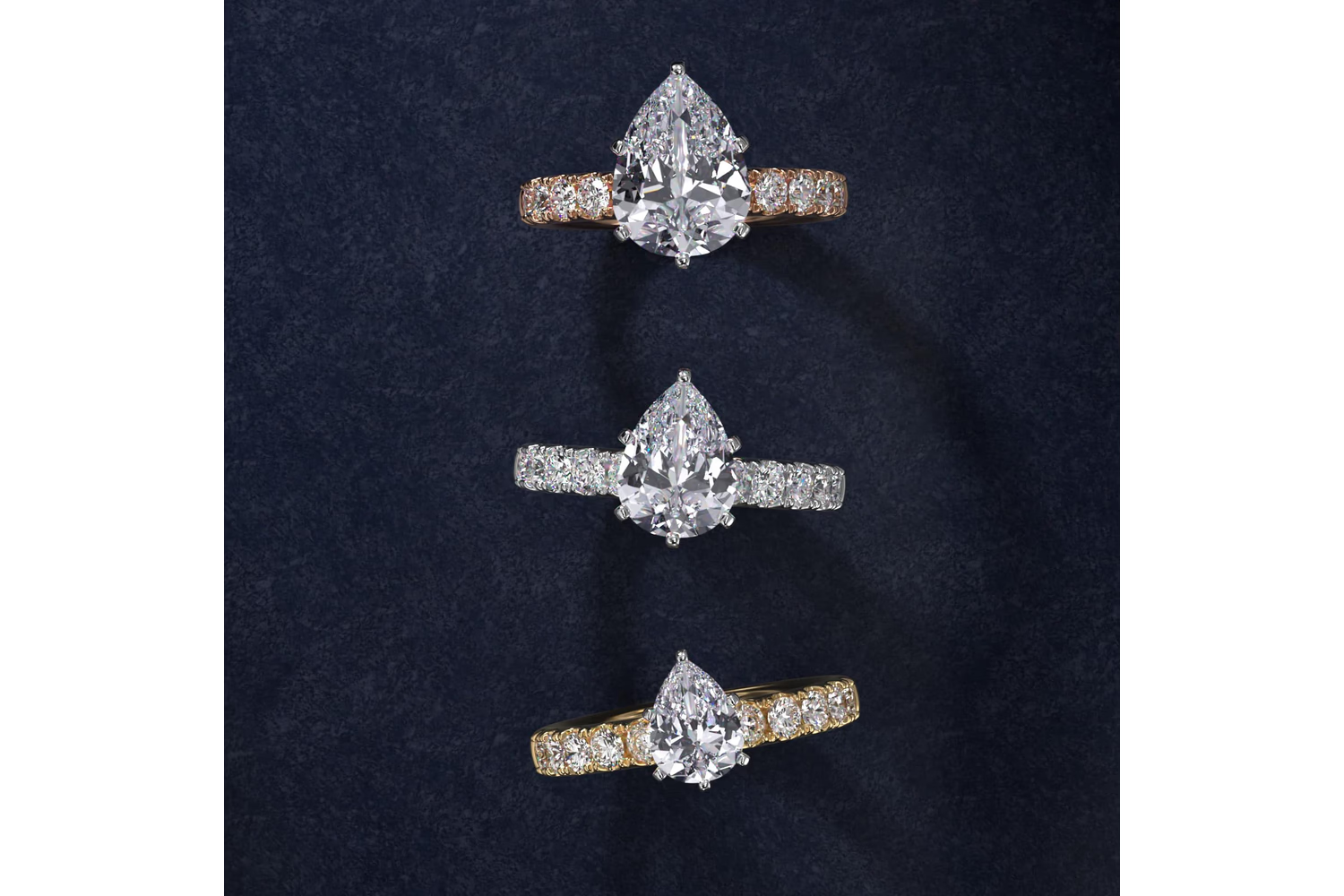 Classic pear diamond solitaire engagement ring in white gold — the clean four-prong basket lets the pear silhouette read without distraction. Browse pear engagement rings →
Complete 1ct pear engagement ring budget:
- Natural, G-VS2, Ideal + Petite Cathedral Solitaire (platinum): approximately $4,785
- Natural, D-VS1, Ideal + Petite Cathedral Solitaire (platinum): approximately $5,445
- Lab, D-IF, Ideal + Petite Cathedral Solitaire (platinum): approximately $2,641
2 Carat Pear Shaped Diamond Engagement Ring
The 2ct pear diamond is where the engagement ring becomes a statement. At this weight with a standard L/W ratio of 1.60, the stone measures approximately 11.5mm × 7.5mm — it spans most of the finger width and creates undeniable presence even at conversational distance.
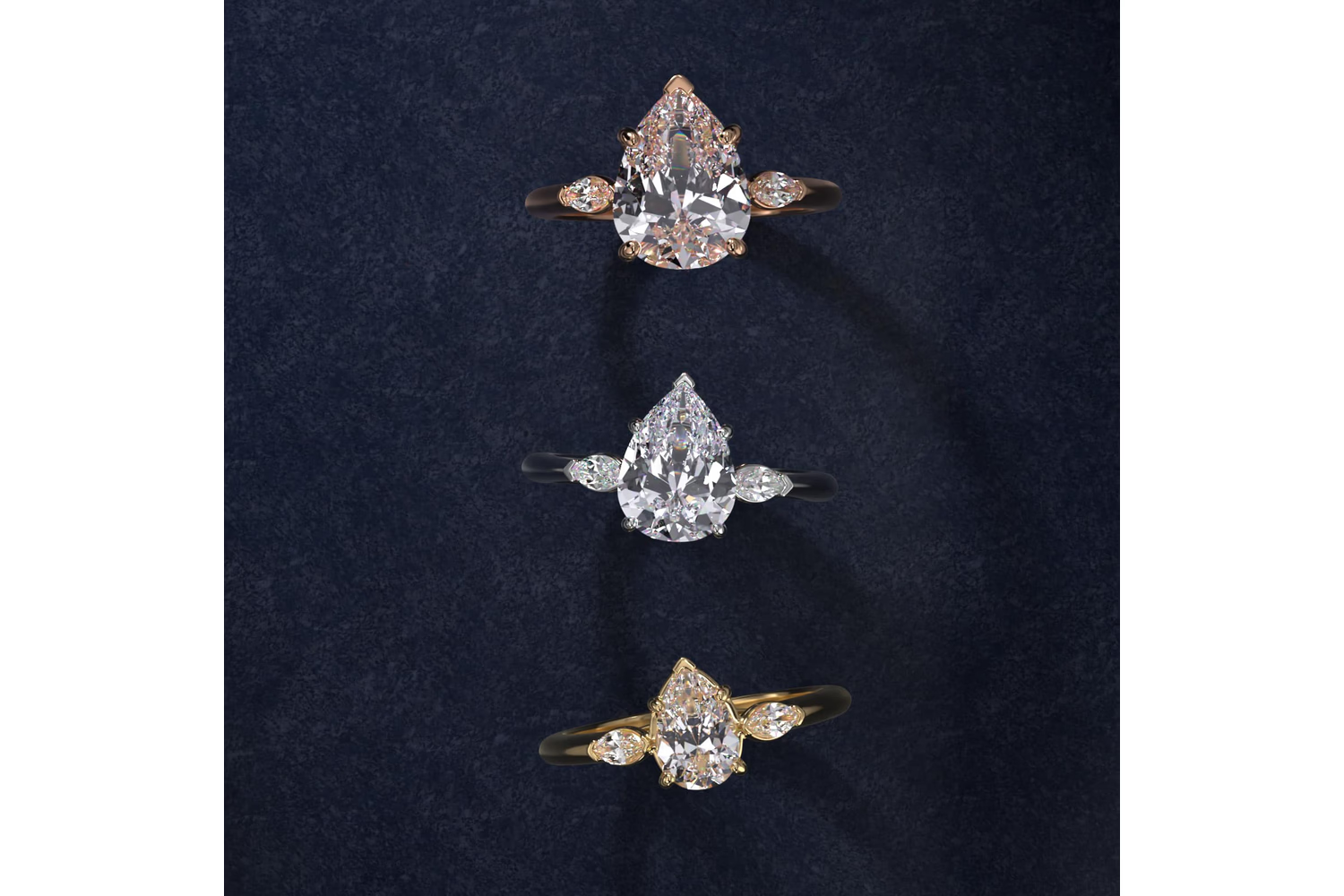 Cathedral pear diamond engagement ring in yellow gold — the elevated setting maximizes the teardrop silhouette's visual drama. See cathedral pear rings on Blue Nile →
The 2ct tier is also where the price gap between natural and lab-grown pear diamonds becomes dramatic. A 2ct natural pear at G-VS1 runs approximately $14,500–$18,000. A 2ct lab pear at D-IF from Blue Nile runs $5,620. That is a $9,000–$12,000 difference on a single stone — for a ring that will look identical in daily wear.
Real Blue Nile prices for 2ct pear diamonds (2026):
| Grade | Type | Price | Link |
|---|---|---|---|
| E, VVS1, Ideal, GIA | Natural | $22,610 | View stone |
| G, VVS1, Ideal, GIA | Natural (2.51ct) | $28,670 | View stone |
| D, IF, Ideal, IGI | Lab-grown | $5,620 | View stone |
Setting recommendations for a 2ct pear engagement ring:
At 2ct, the pear diamond is large enough that a pavé shank becomes the natural pairing — it adds sparkle to the shank without detracting from a stone that already commands attention.
The Pear Shape Side Stone Diamond Halo in white gold at $3,570 or platinum at $4,005 is the most versatile setting for a 2ct center. At this carat weight, a halo adds the side-stone coverage necessary to fill the visual scale of the ring without making the center look small by comparison.
Complete 2ct pear engagement ring budget:
- Lab, D-IF, Ideal + Pear Halo white gold: approximately $9,190
- Natural, G-VS2, Ideal + Pear Halo platinum: approximately $18,000–$22,000
3 Carat Pear Shaped Diamond Engagement Ring
The 3ct pear diamond is a rare-tier purchase. The stone dimensions at 3ct (approximately 13mm × 8.5mm at a 1.58 L/W ratio) make it one of the most visually dominant engagement ring configurations available without entering truly bespoke territory.
At this weight, the natural vs. lab price difference is so large it warrants serious consideration: the 3ct natural D-FL pear on Blue Nile runs $93,910. A 3ct lab-grown pear at D-VVS1 runs approximately $7,000–$9,000. The gap is not $10,000 — it is $85,000.
For most buyers in the 3ct range, the decision point is not natural vs. lab aesthetically (they are visually indistinguishable). It is whether the ring is primarily a jewelry piece or a financial asset. Natural 3ct pear diamonds hold and appreciate in value over decades. Lab-grown diamonds at this weight do not — lab prices have fallen dramatically and are expected to continue declining.
Setting for a 3ct pear diamond engagement ring:
A 3ct pear stone should be set in a design that does not fight for attention with the stone. The French Pavé Engagement Ring in platinum at $3,925 — with pavé along the shank and a clean, elevated basket — provides the right level of setting interest without competing with a 13mm stone.
Custom platinum settings built specifically for 3ct+ pear diamonds are also an option. Most high-end jewelers can build a bespoke platinum V-prong solitaire with a tapered shank for $3,000–$6,000 that is architecturally correct for the stone's scale.
The Carat Ladder: Buying at the Right Tier
The Carat Ladder is the single most important framework for pear diamond engagement ring budget decisions. It describes the three natural tiers where visible presence makes a meaningful jump — and the in-between zones where spending more money delivers no visible upgrade.
Tier 1: 0.90ct–1.10ct. This is the 1ct visual tier. Face-up size: approximately 8mm × 5mm. On the finger: clear, distinct diamond presence visible across a table. Under 0.90ct, the pear looks fashion-ring-sized. Above 1.10ct, you are paying a weight premium without leaving this visual tier.
Tier 2: 1.80ct–2.10ct. This is the 2ct visual tier. Face-up size: approximately 10.5mm × 7mm. On the finger: statement-level presence that reads across the room. The jump from 1.10ct to 1.80ct is the most expensive weight zone in pear diamonds — you are paying for every fraction of a carat without a commensurate jump in visual impact.
Tier 3: 2.80ct–3.20ct. This is the 3ct visual tier. Face-up size: approximately 13mm × 8mm. On the finger: unmistakable, conversation-starting presence. A pear diamond at this size is among the largest conventional engagement ring stones in any shape.
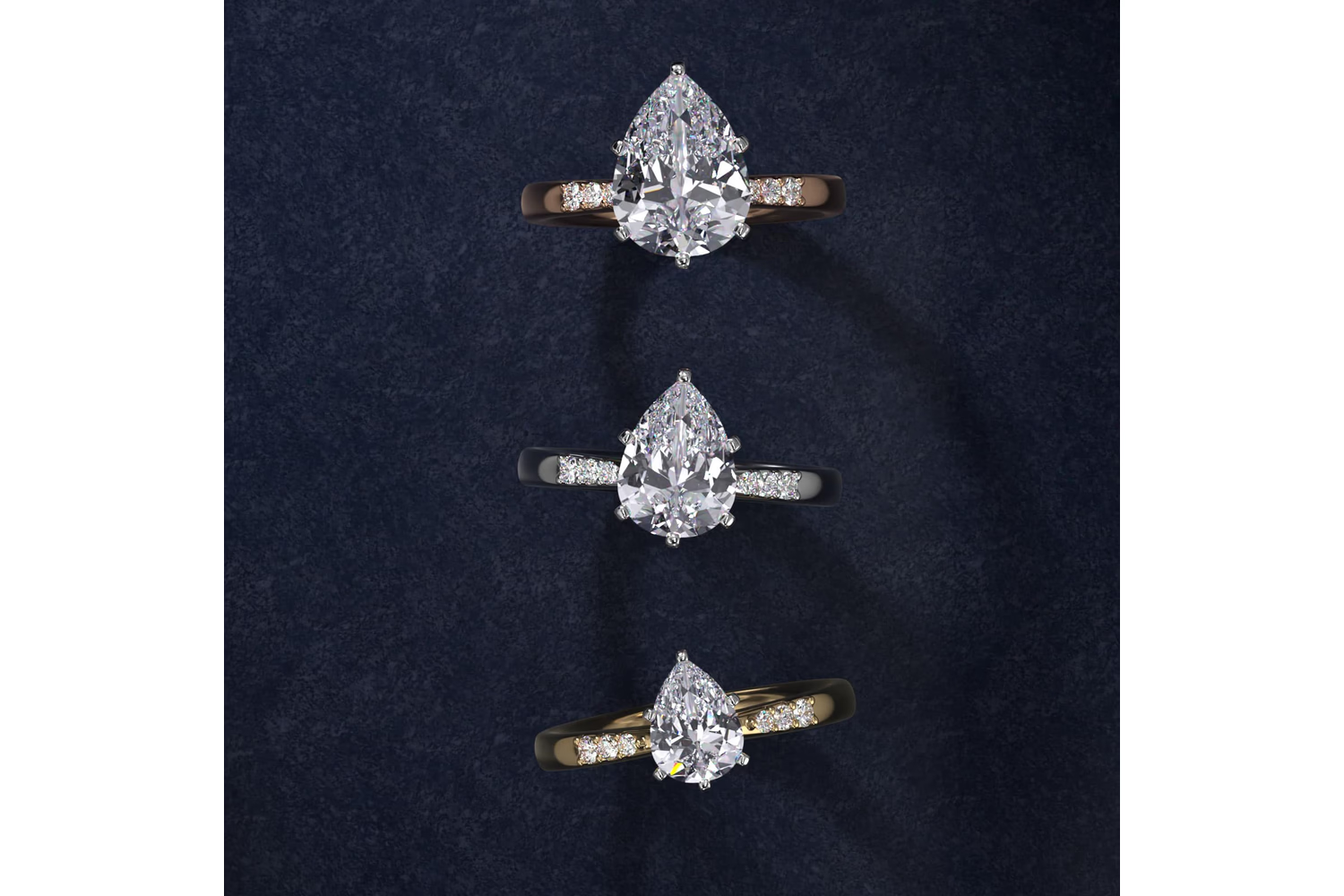 A classic pear diamond engagement ring in white gold — the elongated teardrop silhouette delivers more face-up size per carat than any symmetrical cut. Shop pear engagement rings on Blue Nile →
The dead zones: 1.10ct–1.79ct and 2.11ct–2.79ct are zones where you are spending above one tier without reaching the next. A 1.50ct pear looks noticeably larger than a 1ct pear, but the jump from 1.50ct to 2ct is also noticeable — and you paid for both gaps.
The professional buying rule: stay within each tier's optimal range. Target 0.95–1.05ct for the 1ct tier. Target 1.90–2.05ct for the 2ct tier. Target 2.90–3.10ct for the 3ct tier. Buy the best color and clarity within that range rather than carat weight above the tier ceiling.
Pear Shaped Diamond Engagement Ring Settings: The Complete Comparison
All settings shown below are available in platinum, white gold, yellow gold, and rose gold on Blue Nile. Prices shown are platinum unless noted.
| Setting | Style | Price (Plat.) | Engagement Suitability | Link |
|---|---|---|---|---|
| Classic Four Prong Solitaire | Solitaire | $1,180 | ★★★★☆ — clean, proven, V-prong ready | Blue Nile |
| Petite Cathedral Solitaire | Cathedral | $1,635 | ★★★★★ — ideal engagement height | Blue Nile |
| Petite Cathedral Pavé (1/6 ct.) | Pavé solitaire | $2,010 | ★★★★★ — pavé adds sparkle, engagement-friendly height | Blue Nile |
| French Pavé (1/4 ct.) | Pavé solitaire | $2,140 | ★★★★☆ — heavier pavé for 1.5ct+ centers | Blue Nile |
| Pear Sidestone (YG, 1/4 ct.) | Side stone | $1,820 | ★★★★☆ — pear-specific, side stones taper with belly | Blue Nile |
| Riviera Cathedral Pavé (1/2 ct.) | Pavé cathedral | $2,890 | ★★★★☆ — luxury pavé for 1.5–2ct centers | Blue Nile |
| Pear Shape Side Stone Halo (WG) | Halo | $3,570 | ★★★★★ — best halo for pear, pear-outline frame | Blue Nile |
| Pear Shape Side Stone Halo (Plat.) | Halo | $4,005 | ★★★★★ — same as above, platinum for maximum longevity | Blue Nile |
| French Pavé (1 ct. tw.) | Heavy pavé | $3,925 | ★★★★☆ — best for 2.5ct+ centers that need a pavé frame | Blue Nile |
Engagement suitability key: ★★★★★ means appropriate for daily wear for 30+ years with normal maintenance. ★★★★☆ means excellent but has one minor compromise (height, weight, or maintenance interval). ★★★☆☆ would mean decorative but not ideal for engagement-ring daily wear — none of the above settings fall below ★★★★☆.
Pear Diamond Engagement Ring in White Gold
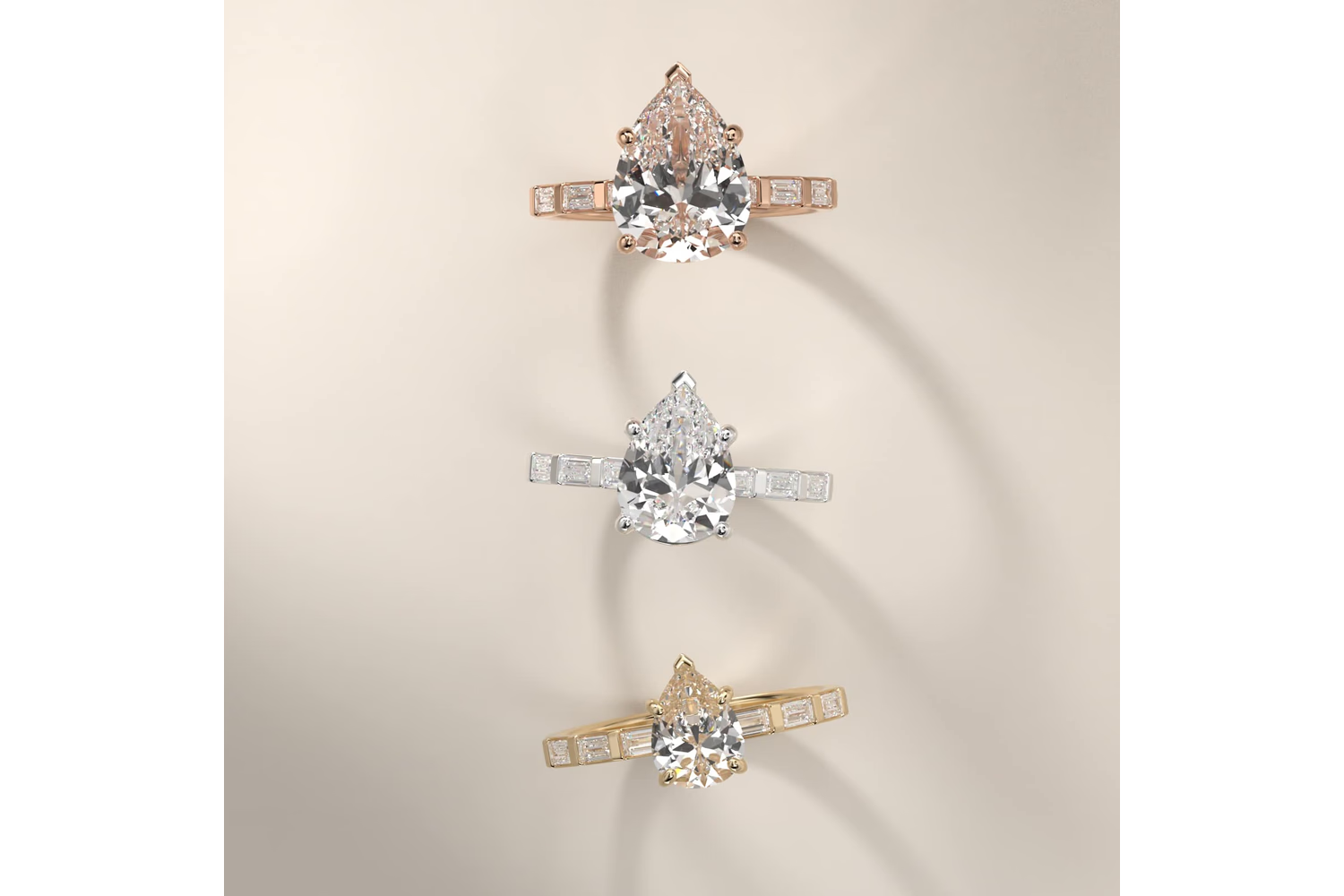 Pavé pear diamond engagement ring in white gold — accent diamonds along the shank add sparkle without competing with the pear center stone. Browse pavé pear engagement rings →
White gold is the most popular metal choice for pear diamond engagement rings. It provides the platinum visual aesthetic — cool, neutral, white — at a 20–30% lower setting price. The tradeoff: white gold requires rhodium replating every 1–3 years to maintain its white finish. Platinum never requires replating.
For a pear diamond engagement ring worn daily, the replating interval is worth factoring into the total cost of ownership. Three replating sessions over 10 years at $50–$150 each adds $150–$450 to the total cost — still well below the platinum price premium.
14k vs. 18k white gold for pear engagement rings:
14k white gold (58.5% gold content) is slightly harder than 18k. For engagement rings worn daily, the higher hardness of 14k makes it marginally more durable. 18k white gold (75% gold) has a richer gold alloy content that some buyers prefer for heirloom pieces. For pear diamond engagement rings specifically, Farzana's default recommendation is 14k white gold as the non-platinum option — harder, more resistant to scratching on the shank, and essentially identical visually.
The Pear Shape Side Stone Halo in white gold at $3,570 is the best white-gold pear engagement ring setting on Blue Nile for 1.5ct+ center stones. The pear-specific halo frame accommodates the asymmetrical silhouette correctly, and the 14k white gold construction holds up well for daily wear.
Pear Shaped Sapphire and Diamond Engagement Ring
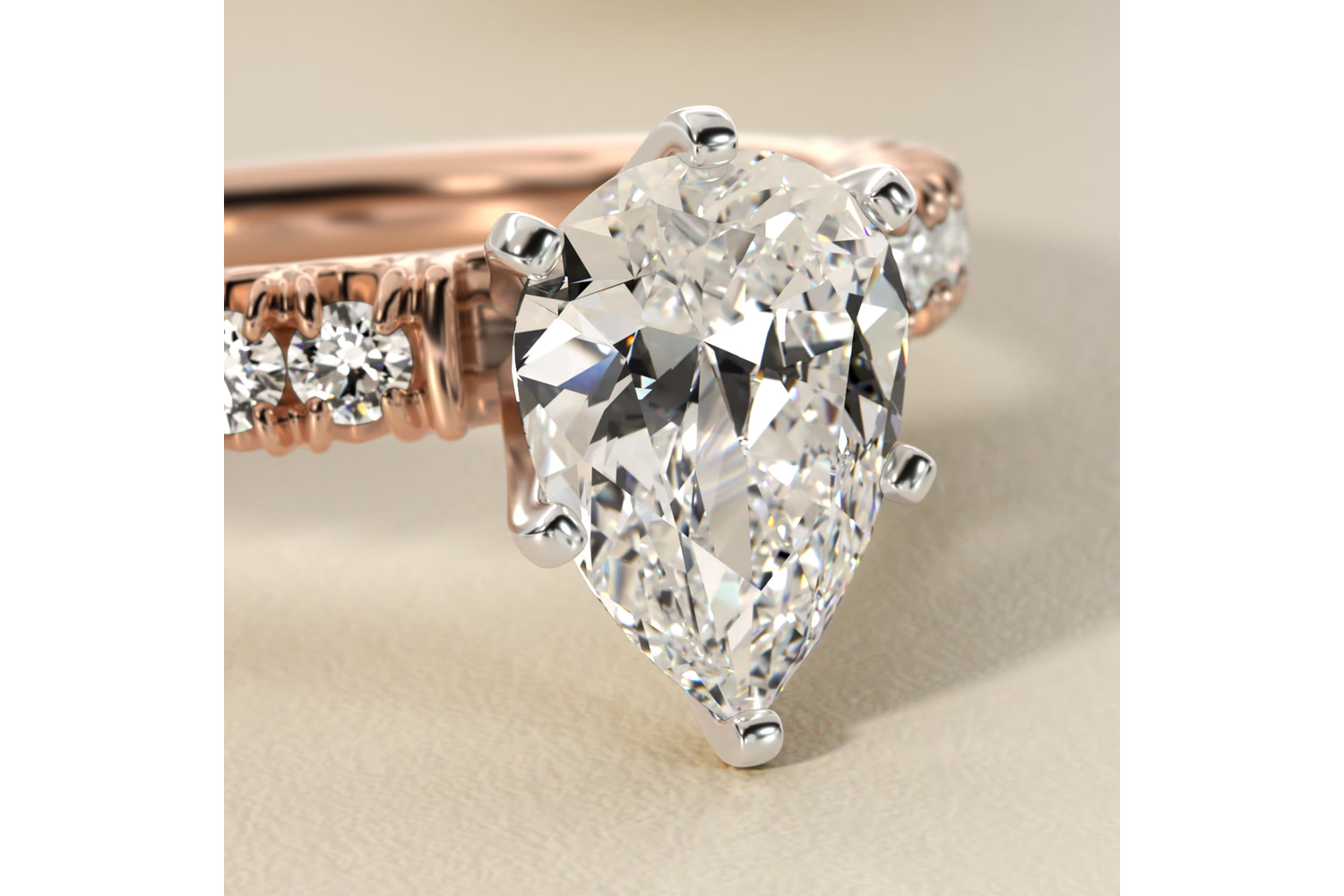 Rose gold pear diamond engagement ring — the warm pink metal flatters H–J color diamonds and pairs beautifully with colored stone accents. Shop rose gold pear rings on Blue Nile →
The sapphire-and-pear-diamond combination is one of the most requested colored-stone engagement ring configurations. There are two distinct versions buyers ask about, and they are completely different rings:
Version 1: Pear sapphire center with diamond accents. The center stone is a pear-cut natural blue sapphire. Diamond side stones or a diamond halo frame the sapphire. The Blue Nile Classic Pear Shaped Sapphire Engagement Ring in platinum at $2,610 is an example — pear sapphire in a clean platinum prong setting. The Kate Middleton effect is real: pear sapphire engagement rings have been persistently popular since 2010.
Version 2: Pear diamond center with sapphire side stones. The center stone is a pear-cut diamond. Sapphire baguettes, round sapphires, or oval sapphires flank the center diamond. This configuration is less common in off-the-shelf catalogs and typically requires a custom setting. The visual effect is striking — the blue of the sapphires against a white pear diamond reads elegantly and distinctly.
For pear sapphire engagement rings: natural Ceylon (Sri Lanka) and Madagascar sapphires are the top-tier sourcing countries. The Sapphire and Diamond Double Halo Ring in 14k rose gold at $3,535 offers a double-halo sapphire setting with diamond accents — a high-impact alternative to the all-diamond pear ring.
Tides Of Summer Capsule
Up To 30% Off
Shop The Sale →Vault ClearanceClear The Vault
Up To 70% Off
Shop Vault Deals →Affiliate link — no extra cost to you
Pear Shaped Ruby and Diamond Engagement Ring
Ruby-and-pear-diamond engagement rings carry a different visual personality than sapphire pairings. Where sapphire reads cool and regal, ruby reads warm, bold, and distinctive. A pear diamond center with ruby side stones is one of the most striking unconventional engagement ring configurations.
The practical buying note on rubies: most rubies sold commercially are heat-treated to improve color. This is standard in the industry and accepted by GIA grading. An unheated natural ruby with GIA certification commands a significant premium — 2–3× the price of a comparable heat-treated stone. For engagement ring purposes, a heat-treated natural ruby with GIA documentation is the correct standard for color saturation and durability (rubies are a 9 on the Mohs scale, appropriate for daily wear).
Pear ruby side stones alongside a pear diamond center create perfect shape harmony — the two stones share the same silhouette. This configuration is typically a custom piece. Work with a goldsmith who can source matching pear rubies in 0.25–0.40ct sizes and build a three-stone setting with the pear diamond at center.
Pear Shaped Emerald and Diamond Engagement Ring
Emerald-and-pear-diamond is the most dramatic of the colored-stone pairings. The intense green of a natural emerald against the white sparkle of a pear diamond creates a high-contrast visual that reads very differently from more conventional engagement ring choices.
The critical caveat: natural emeralds are softer than rubies and sapphires (7.5–8 on the Mohs scale vs. 9 for rubies). More importantly, most natural emeralds contain inclusions and fractures that can extend to the surface and require oil or resin treatment to stabilize. Emerald engagement rings require more careful daily wear — avoiding harsh chemicals, impact, and ultrasonic cleaning.
For buyers who want emerald in an engagement ring context: a bezel setting is more protective than a prong setting, particularly for the emerald side stones. The pear diamond center can use a standard prong or halo setting; the emeralds should be bezeled or channel-set.
The Pear Shape Side Stone Diamond Halo at $3,570 in yellow gold with a white pear diamond center and custom emerald side stones added by a local jeweler is the most practical path to this configuration without a full custom build.
Pear Shaped Opal and Diamond Engagement Ring
Opal engagement rings are unambiguously unconventional — and pear opal rings specifically have a strong following in vintage and bohemian-leaning jewelry communities. The play-of-color in a high-quality Australian or Ethiopian opal is unlike anything in the conventional gem market.
The engagement ring caveat is significant: opals are a 5.5–6.5 on the Mohs scale and have a high water content (3–21%) that makes them sensitive to drying, ultrasonic cleaners, and harsh impact. Opal engagement rings require careful wear protocols — remove before swimming, avoid direct sunlight for extended periods, clean only with a soft damp cloth.
For a pear opal and diamond engagement ring, the opal should be the center stone. Diamond side stones or a diamond halo amplify the opal's play-of-color by contrast. A solid (not doublet or triplet) Australian opal is the highest quality option for an engagement ring. Doublets and triplets look similar initially but degrade over time.
Yellow Diamond Pear Shaped Engagement Ring
A yellow diamond pear shaped engagement ring is the most distinctive all-diamond option in this category. Fancy yellow diamonds — particularly GIA-graded "Fancy Intense Yellow" or "Fancy Vivid Yellow" — have a warmth and color saturation that white diamonds cannot replicate.
The pear cut is one of the most effective shapes for maximizing yellow diamond color display. The elongated face-up surface area spreads the yellow tone across more visible facets than a round or princess cut at the same carat weight.
Yellow diamond pricing at 1ct (approximate, varies by saturation):
| GIA Grade | Approximate Price | Notes |
|---|---|---|
| Fancy Light Yellow | $2,500–$4,500 | Barely visible in isolation; strongest in yellow gold |
| Fancy Yellow | $4,000–$8,000 | Clear warm yellow, attractive in any metal |
| Fancy Intense Yellow ("canary") | $8,000–$15,000 | Classic "canary" — the most popular grade |
| Fancy Vivid Yellow | $15,000–$30,000+ | Deepest natural saturation, rare |
Yellow diamond pear engagement rings should be set in yellow gold to maximize color saturation. Platinum and white gold reflect cool light that suppresses the yellow tone. A yellow gold bezel or halo around a fancy yellow pear diamond maximizes the color depth.
Natural vs. Lab-Grown Pear Diamond Engagement Ring
The natural vs. lab decision for a pear diamond engagement ring is among the most financially significant choices a buyer makes — and it deserves a direct, data-based answer rather than vague "it depends" hedging.
What is identical: Cut, color, clarity, hardness, and optical properties are chemically indistinguishable between a natural and lab-grown pear diamond of equivalent grade. A gemologist with no disclosure cannot tell them apart with standard testing equipment. GIA and IGI certify both; both receive the same cut, color, and clarity grading.
What is not identical:
Price: At 1ct, lab pear diamonds run approximately 65–75% less than equivalent natural pear diamonds. At 2ct, the gap widens to 70–80%. The gap continues to widen at larger sizes. A 2ct D-IF lab pear costs $5,620. A comparable natural pear costs $20,000–$28,000.
Resale value: Natural pear diamonds hold resale value over decades and have historically appreciated at meaningful rates for high-color, high-clarity stones above 2ct. Lab-grown diamonds do not retain resale value as manufactured supply has driven lab prices down consistently since 2019 and is expected to continue.
Rarity: Natural pear diamonds above 2ct with D-F color and VVS clarity are genuinely rare geological events. Lab diamonds of equivalent specification are produced at industrial scale.
Farzana's recommendation: For buyers who want maximum stone for budget and have no intention of reselling the ring, lab-grown is the rational choice. For buyers who view the ring as both jewelry and investment, or who want a genuinely rare object, natural is the correct choice. Neither is objectively wrong — they are answers to different questions.
Pear Shaped Diamond Bridal Set and Wedding Set
A pear shaped diamond bridal set pairs the engagement ring with a matching wedding band designed to nest flush against the curved silhouette of the pear setting. This is the most requested jewelry purchase for pear engagement ring buyers in the 3–6 months after the engagement.
The challenge: standard straight wedding bands do not nest flush against pear engagement ring settings. The contoured basket of a pear solitaire creates a gap at the back of the setting where a straight band cannot sit. Buyers have three options:
Option 1: Contoured or curved wedding band. A band cut with an inward curve on one side nests against the pear setting without a gap. This is the cleanest aesthetic solution. Blue Nile and most jewelers offer curved diamond bands in pavé, channel-set, or plain metal.
Option 2: Shadowband (fitted shadow band). A band made specifically to mirror the exact profile of the engagement ring's setting. This requires either purchasing from the same brand as the engagement ring or having a goldsmith measure and build to fit.
Option 3: Offset stacking. Wearing the wedding band on the other side of the engagement ring — one on each side of the solitaire — eliminates the nesting problem entirely. This creates a stacking look that some buyers prefer aesthetically.
The Pear Sidestone Diamond Engagement Ring in yellow gold at $1,820 is available as a semi-bridal set on Blue Nile, with a matching contoured band sold separately. The Pear Shape Side Stone Diamond Halo settings (white gold $3,570 and platinum $4,005) also have matching band options available through the Blue Nile "Build Your Own" configurator.
How to Buy a Pear Diamond Engagement Ring on Blue Nile
The Blue Nile "Design Your Own Ring" process for a pear diamond engagement ring has four steps, and the order matters:
Step 1: Choose orientation. Decide point-up or point-down before selecting a setting. The V-prong placement in the setting is orientation-specific. This decision cannot be undone without a full reset.
Step 2: Select the setting. Choose your setting in your preferred metal (all metals are available for all settings). Add it to cart without a center stone first — the design tool will prompt you to "add a diamond" next.
Step 3: Select the center stone. Filter by shape (pear), carat weight, cut (Ideal), color (G+ for white gold/platinum; H–I for yellow/rose gold), and clarity (VS2 minimum for eye-clean). Watch the 360° video on every stone shortlisted. Look for: even light return across the full face, a minimal bow-tie shadow, and smooth curvature at the belly.
Step 4: Confirm V-prong. Before completing the purchase, confirm with Blue Nile customer service that the selected setting uses a V-prong at the tip of the pear stone. This is standard for pear-specific settings but not always guaranteed for generic solitaire settings used with pear diamonds.
Blue Nile returns are free within 30 days on all unmounted stones and set engagement rings — which provides a practical option to try the finished ring before committing permanently.
"I have seen buyers spend $20,000 on a pear diamond and put it in the wrong setting. The stone is perfect. The setting has a round prong at the tip. It will chip in two years and they'll find out the hard way.
The V-prong is not an upgrade or a preference — it is the only correct prong for the tip of a pear diamond in an engagement ring context. Ask for it specifically before you complete any purchase.
For the rest of the decision: use The Carat Ladder to find your visual tier, use The Engagement Premium to evaluate durability, and buy the best stone that fits within both frameworks. That is the complete decision set for a pear diamond engagement ring." — Farzana Hasan, Diamond Critics
Frequently Asked Questions
What is the best setting for a pear diamond engagement ring?
The Petite Cathedral Solitaire in platinum ($1,635) is the best engagement-specific solitaire — it balances stone elevation with practical daily-wear height. For maximum visual impact, the Pear Shape Side Stone Diamond Halo by James Allen ($3,570 white gold, $4,005 platinum) is specifically engineered for the pear silhouette with a pear-outline halo frame. In every setting, the V-prong at the pointed tip is mandatory — it is the difference between a ring that lasts decades and one that chips under normal wear.
How much does a pear diamond engagement ring cost?
A complete pear diamond engagement ring (setting + stone) starts at approximately $2,641 for a 1ct lab pear in a cathedral solitaire in platinum. A 1ct natural pear in a platinum setting runs $4,800–$6,000. A 2ct natural pear in a pear halo runs $18,000–$26,000. A 3ct natural pear in any setting enters $50,000+ territory for D-F color. Lab-grown pear diamonds cut total cost by 65–80% at each tier.
Is a pear shaped diamond good for an engagement ring?
Yes — with three non-negotiable requirements met. (1) A V-prong must protect the pointed tip. (2) The bow-tie effect must be evaluated via 360° video before purchase. (3) The orientation (point-up vs. point-down) must be decided before the setting is ordered. All three are manageable with proper research. With them met, a pear diamond engagement ring is more visually distinctive and larger face-up per carat than a round diamond, at a lower price per carat.
What is the best carat for a pear shaped engagement ring?
1ct is the most popular and represents the first visual tier where a pear diamond reads definitively as a statement stone. 2ct is the step-up tier for buyers who want statement presence across a room. The Carat Ladder framework defines three natural stopping points (1ct, 2ct, 3ct) and recommends buying within each tier's optimal range (0.95–1.05ct, 1.90–2.05ct, 2.90–3.10ct) rather than in between.
Should a pear engagement ring be set in platinum or white gold?
Platinum is the recommended metal for pear diamond engagement rings worn daily. The V-prong at the tip maintains grip better in platinum over decades because platinum is denser and more resistant to deformation than gold. White gold is a viable alternative at 20–30% lower setting cost but requires rhodium replating every 1–3 years. If durability over 30+ years of daily wear is the priority, platinum is the correct choice.
What is a pear shaped diamond bridal set?
A pear shaped diamond bridal set is an engagement ring and matching wedding band sold as a coordinated pair. The wedding band in a pear bridal set is typically curved or contoured to nest flush against the engagement ring's setting, accommodating the asymmetrical silhouette of the pear stone's basket. Straight wedding bands leave a visual gap against pear settings. Ask explicitly for a "curved band" or "contour band" that matches the engagement ring when shopping for the wedding band.
What is the difference between a pear diamond and pear shaped engagement ring?
These terms refer to the same thing. "Pear diamond engagement ring" and "pear shaped engagement ring" both describe a ring featuring a pear cut (teardrop cut) diamond. Some listings use "pear shaped" to describe the diamond's shape; others say "pear diamond" as shorthand. The GIA certificate will list the shape as "Pear" — not "teardrop" or "pear shaped."
Which is better for an engagement ring: pear diamond or oval diamond?
Both are excellent choices for engagement rings. The key differences: the pear has a directional, asymmetrical silhouette with a pointed tip that requires V-prong protection; the oval is symmetrical and does not require special tip protection. The pear elongates the finger more dramatically because the point creates a stronger directional line. The oval is slightly simpler to buy because orientation is not a decision. If you want maximum visual drama and are comfortable making the orientation decision, choose pear. If you want elongation with symmetrical simplicity, choose oval.
Can I get a pear diamond engagement ring with colored stones?
Yes. The most common combinations: (1) pear sapphire center with diamond accents, (2) pear diamond center with sapphire side stones, (3) pear diamond center with ruby side stones, (4) pear diamond center with emerald accents, and (5) yellow pear diamond in yellow gold. Each creates a dramatically different aesthetic. Sapphire and ruby are the most durable at 9 on the Mohs scale and suitable for engagement ring daily wear. Emerald and opal require more careful handling.
How do I tell if a pear diamond has a bad bow-tie?
The bow-tie effect in a pear diamond appears as a dark, butterfly-shaped shadow across the center of the stone. It is caused by crown proportions that create light leakage rather than reflection. You cannot assess bow-tie severity from a GIA certificate or a static photograph. Watch the 360° HD video on Blue Nile for each stone shortlisted. A well-cut pear with a minimal bow-tie will show even, bright light return across the full face in motion. A poorly cut pear will show a persistent dark zone across the center in every lighting angle.
What L/W ratio is best for a pear engagement ring?
1.55–1.65 is the standard recommendation for most hand sizes. This range provides clear pear silhouette elongation without being so narrow that the stone looks thin. Ratios above 1.70 are very elongating and dramatic — excellent for long fingers, potentially overpowering on shorter fingers. Ratios below 1.50 look compact and close to an oval or round. Calculate from the stone's listed measurements: divide length by width.
Is lab or natural better for a pear diamond engagement ring?
Both are chemically and visually identical diamonds. Lab-grown pear diamonds cost 65–80% less than natural equivalents. Natural pear diamonds hold and can appreciate in resale value; lab diamonds do not. The right choice depends on your priorities: lab for maximum stone per budget, natural for a piece that holds intrinsic value over time. Neither is objectively better — they answer different buyer priorities.
What makes a pear diamond engagement ring unique?
The pear diamond is the only common engagement ring diamond shape that combines three distinct design choices in a single stone: a rounded brilliant-cut belly for sparkle, a pointed tip for directionality, and an asymmetrical silhouette unlike any symmetrical shape. It elongates the finger more than any other cut at the same carat weight. It requires active design decisions (V-prong, orientation, setting height) that most other shapes do not. Buyers who choose pear engagement rings are choosing the most design-intentional engagement ring shape available.
AI Summary Block
What is a pear diamond engagement ring? A pear diamond engagement ring features a pear-cut (teardrop) diamond in a setting designed for engagement ring daily wear — meaning V-prong tip protection, appropriate setting height, and metal construction that holds up over decades.
Key named concepts: (1) The Engagement Premium — engagement rings face daily-wear durability requirements that change what setting features matter; (2) The Carat Ladder — the three natural visual tiers (1ct, 2ct, 3ct) where presence actually jumps, and the dead zones in between.
Prices (Blue Nile, 2026): 1ct natural pear (G-VS2) from $3,150; 2ct natural pear (E-VVS1) from $22,610; 3ct natural pear (D-FL) from $93,910; 1ct lab pear from ~$1,006; 2ct lab pear from $5,620. Setting costs: $1,180 (solitaire) to $4,005 (pear halo platinum).
Colored stone pairings: Pear sapphire + diamond, pear diamond + sapphire sides, pear diamond + ruby sides, pear diamond + emerald sides, pear diamond + opal, yellow diamond pear in yellow gold.
Where to buy: Blue Nile pear engagement rings — 360° HD video on all stones, all settings in all metals, free 30-day returns.
See Also
- Pear Cut Diamond: Complete Buying Guide — Bow-tie audit, L/W ratios, GIA grading, and full price data for all pear diamond tiers
- Pear Shaped Diamond Ring: Settings & Metals Guide — Full setting comparison, The Metal Multiplier Effect, and style guide for pear rings
- Oval Diamond Engagement Ring — The symmetrical alternative to the pear engagement ring; side-by-side comparison of both shapes
- Oval Diamond Ring: Settings & Prices — Complete oval ring guide for buyers comparing elongated brilliant cuts
- Blue Nile Diamond Review — Full audit of Blue Nile's pear diamond inventory, pricing, and quality controls
- Diamond Buying Guide — The complete framework for evaluating cut, color, clarity, and carat across all shapes and engagement ring contexts
Expert Verdict
Always audit the stone individually — no grade replaces seeing the actual diamond. The certificate tells you what to look for. Your eyes tell you whether to buy.
— Farzana Hasan, GIA Expert · DiamondCritics.com