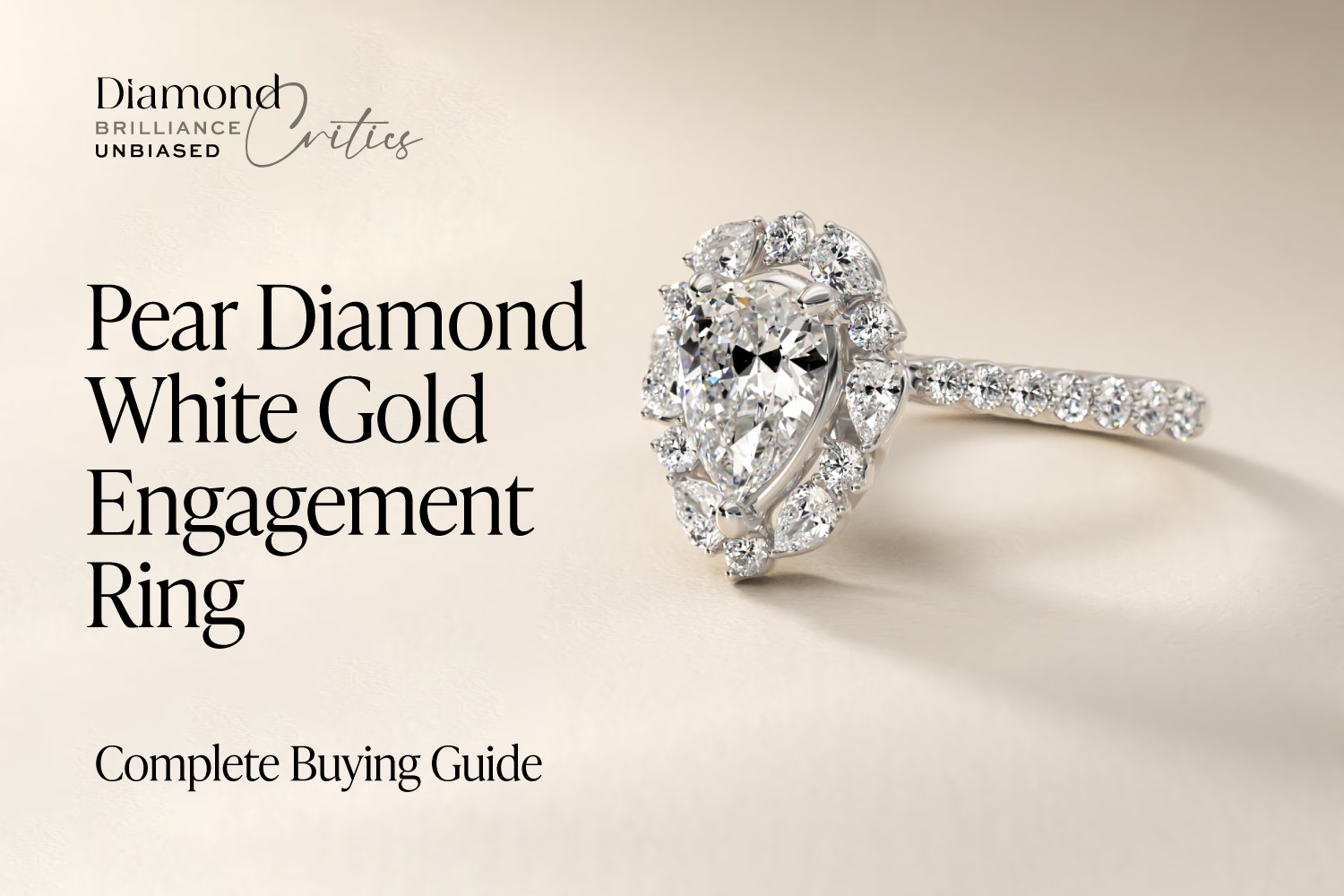
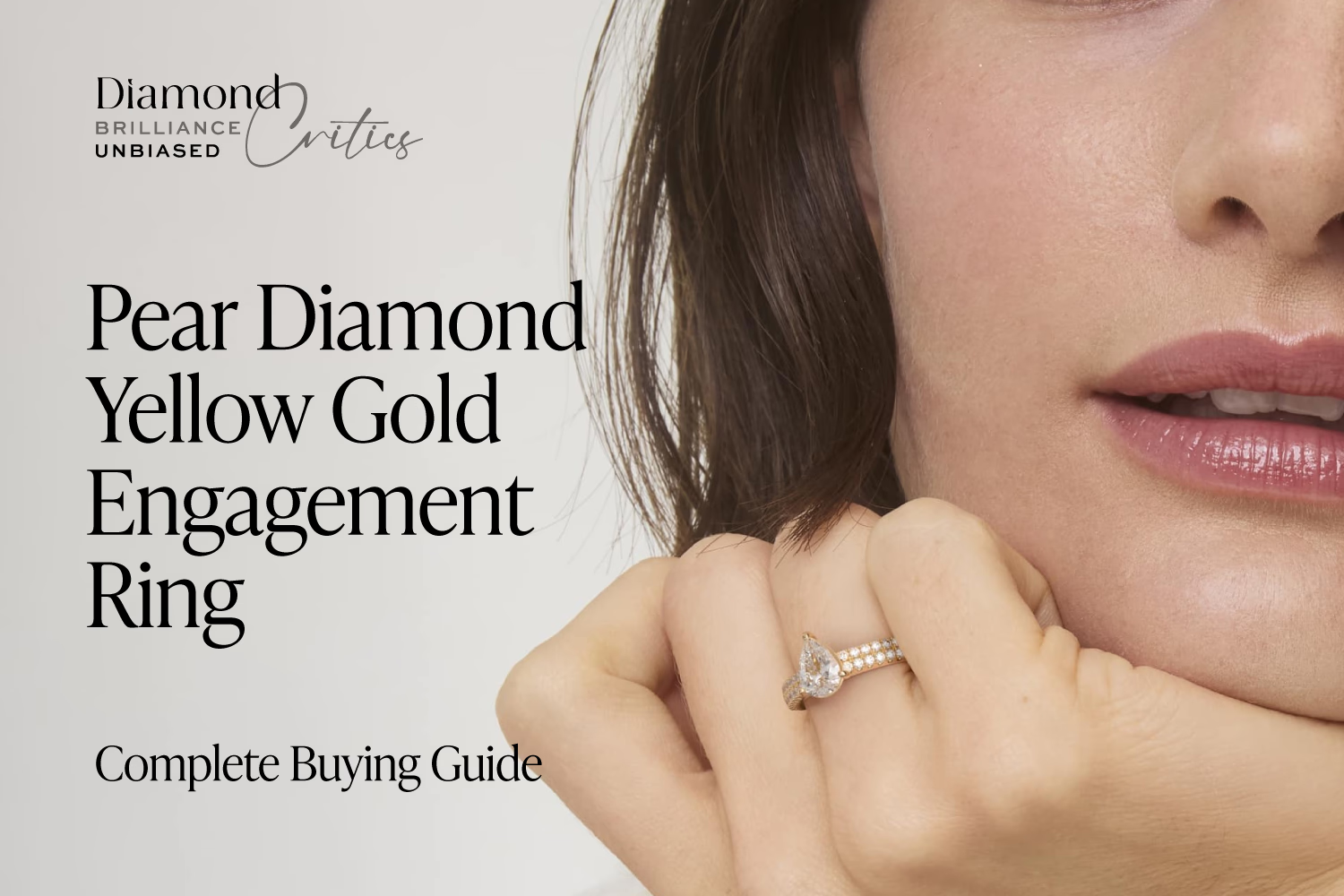
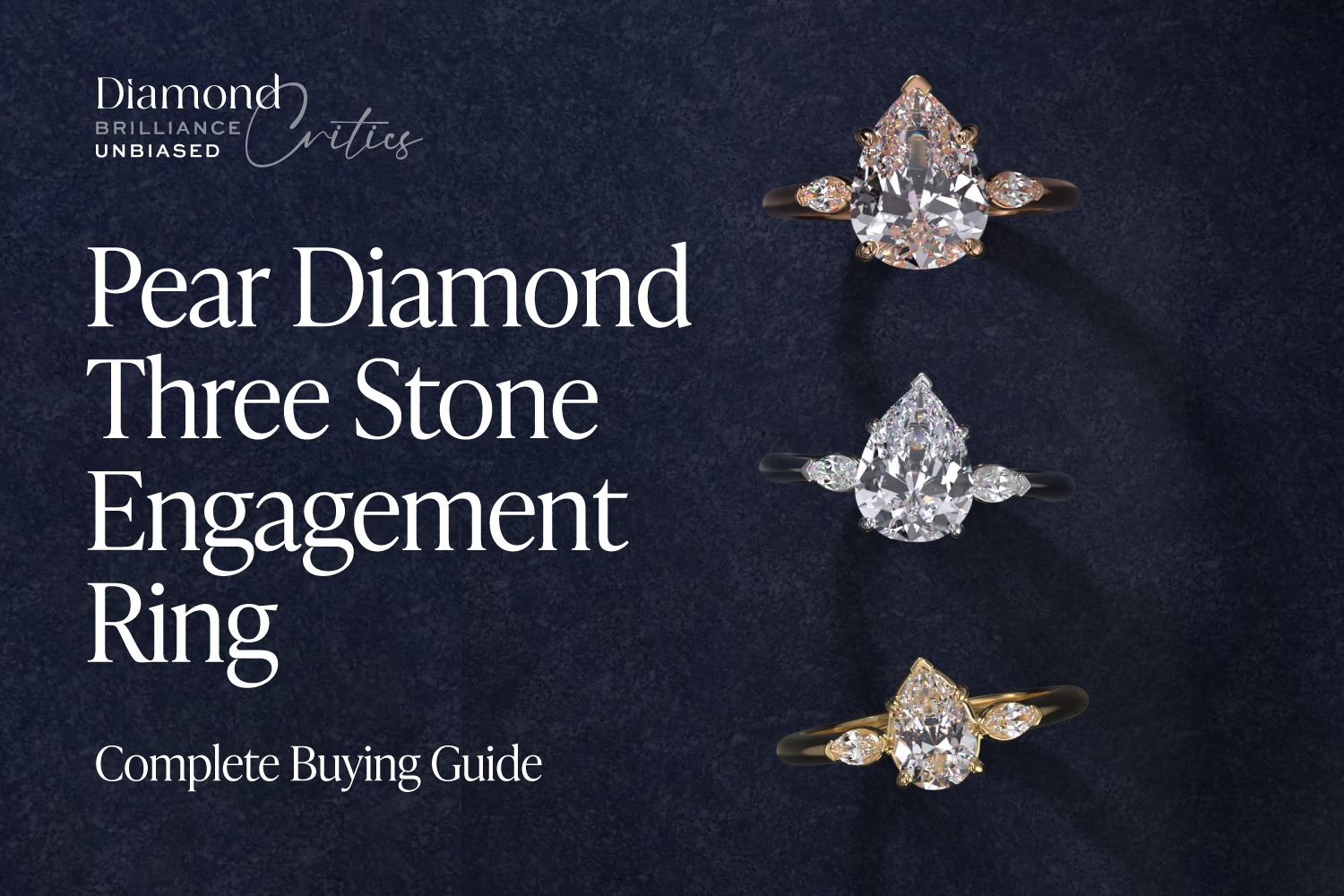
Pear Shaped Solitaire Diamond Ring: The Complete 2026 Guide
TL;DR — Key Facts at a Glance
- Pear shaped solitaire diamond ring settings start at $1,255 on Blue Nile — and the same settings come in white gold, yellow gold, rose gold, and platinum
- A solitaire makes higher demands on the center stone than any other setting style — cut grade and bow-tie quality matter more here than they do in a halo or pavé ring
- The Petite Hidden Halo Solitaire (81 reviews, $1,255) and the Tapered Solitaire with Pavé Accent by James Allen (62 reviews, $1,650) are the two most-reviewed solitaire settings for pear diamonds on Blue Nile
- 1ct natural pear solitaires complete from $4,405 (setting + G-VS2 stone); 1ct lab pear solitaires from $2,261
- 4-prong vs. 6-prong is the first structural decision for every pear solitaire — they create visually different silhouettes and different levels of tip protection
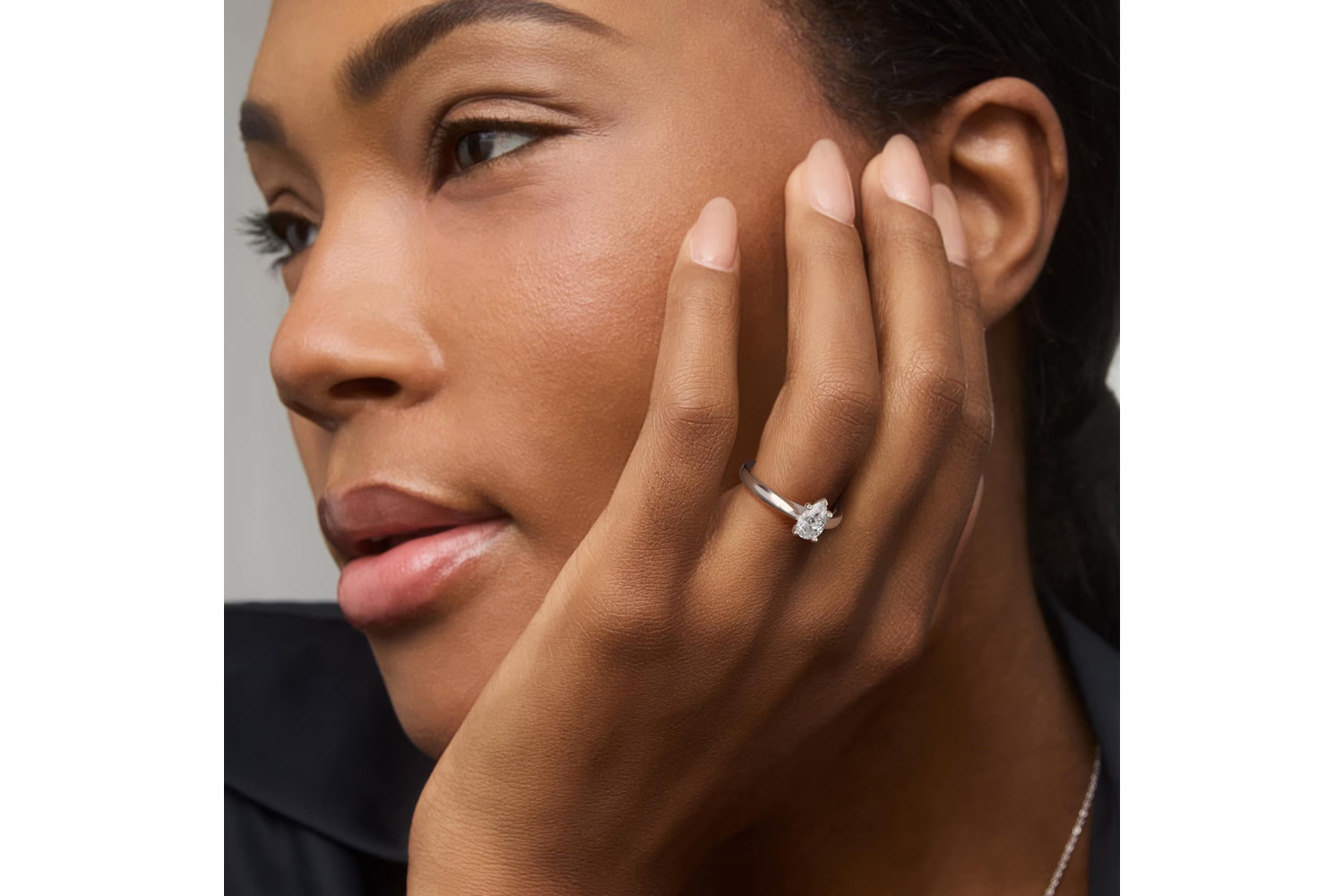
- The solitaire setting is the single best way to display the elongated pear silhouette — nothing competes with the shape when there is nothing else around it
A pear shaped solitaire diamond ring is a commitment to the stone. There is no halo to enlarge it, no pavé to distract from it, no side stones to change the scale conversation. The diamond carries the ring entirely on its own — and that makes every quality decision about the center stone more visible, more consequential, and more permanent than it would be in any other configuration.
Buyers who choose a pear solitaire are making an aesthetic argument: the pear diamond's asymmetrical silhouette is distinctive enough that framing it further would be redundant. The shape is the statement. The setting is the infrastructure that holds it.
This guide covers all of it: the specific solitaire settings Blue Nile offers for pear diamonds, the stone quality standards that solitaire demands, the structural decisions that are unique to pear solitaires, and the pricing across every carat tier.
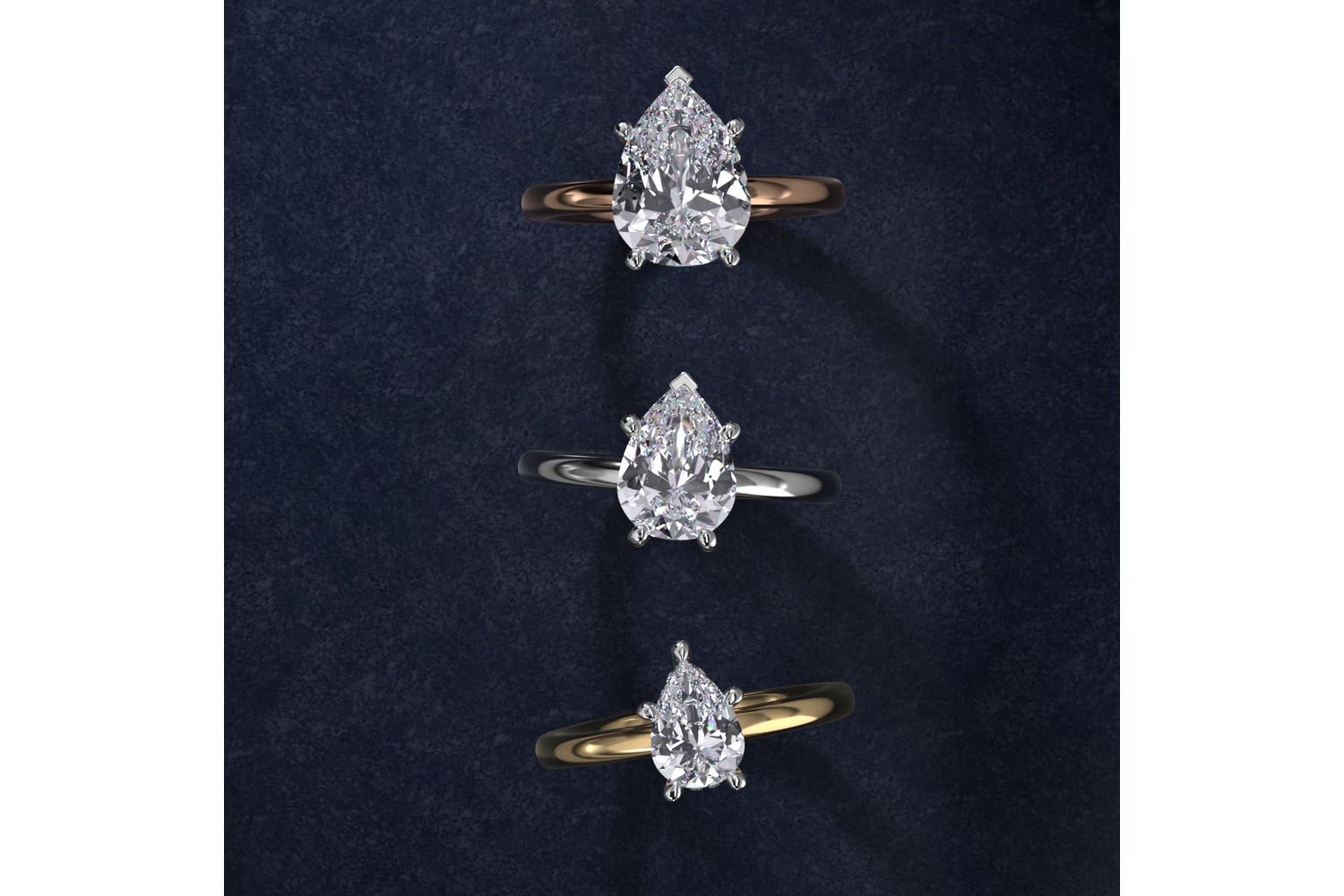


What Makes a Solitaire the Best Setting for a Pear Diamond?
The solitaire is the oldest engagement ring configuration for a reason. It originated because the center stone was always the point — the prongs are there to hold it, not to add to it. Every other design element in the ring exists in service of the diamond's display.
For pear diamonds specifically, the solitaire has three distinct advantages over halo and pavé configurations.
It shows the full outline. The pear silhouette — the rounded belly curving into the tapered point — is most legible when there is no surrounding frame obscuring the edges. A halo traces the outline of the stone but adds a ring of competing sparkle that can blur the boundary between the center stone and the setting. A solitaire lets the eye trace the complete asymmetrical shape without interruption.
It maximizes elongation. The finger-elongating effect of a pear diamond is strongest when the stone sits cleanly against the hand with nothing extending the visual footprint laterally. A halo adds width to the ring that partially neutralizes the elongating direction of the point. A solitaire preserves the full directional energy of the pear shape.
It ages cleanly. Solitaire rings are the most timeless configuration in jewelry. The same design that reads contemporary today will read elegant in thirty years. Halo styles follow fashion cycles; solitaires do not.
The one place a halo wins over a solitaire: apparent size. A 0.80ct pear in a halo reads as approximately 1ct face-up. If budget constrains the center stone weight, a halo is a legitimate tool. If the budget supports a 1ct+ center stone, the solitaire is the correct choice for a pear diamond.
The Solitaire Covenant: Why Stone Quality Matters More in a Solitaire
The Solitaire Covenant is the principle that a solitaire setting creates higher visibility for every quality attribute of the center stone — both positive and negative.
In a halo or pavé ring, the setting elements create visual competition that partially masks stone characteristics. A slight bow-tie in the pear diamond is less visible against a frame of surrounding round brilliants because the viewer's eye has multiple light sources to move between. The bow-tie is still there — but it shares attention.
In a solitaire, the bow-tie in a pear diamond has the viewer's complete attention. There is nothing else in the ring. A severe bow-tie in a solitaire reads as a dead zone across the center of an otherwise clean diamond — and no one who examines the ring will miss it. (The pear cut diamond buying guide covers how to audit bow-tie severity using 360° video before you buy.)
The same principle applies to color. A J color pear diamond in a yellow gold halo reads warm and attractive — the halo's reflected light blends with the stone's body color. A J color pear diamond in a white gold solitaire reads noticeably yellow against the neutral metal background because there is nothing else to anchor the visual.
The Solitaire Covenant in practice:
| Stone attribute | Halo minimum | Solitaire minimum |
|---|---|---|
| Bow-tie | Moderate acceptable | Faint only — watch 360° video |
| Color (white gold) | H acceptable | G or better |
| Color (yellow gold) | I acceptable | H or better |
| Clarity | VS2 eye-clean | VS2 eye-clean — same rule |
| Cut | Ideal | Ideal — non-negotiable |
| L/W ratio | 1.45–1.75 | 1.55–1.65 (narrower sweet spot) |
The cut grade matters more in a solitaire because the light return pattern is the only thing the viewer sees. An Excellent or Ideal cut pear in a solitaire catches light from every angle and throws it back uniformly. A Very Good cut pear in the same setting has flat zones that a buyer will notice — especially when comparing in a jeweler's light box. The full cut grading framework for pear diamonds is in the pear cut diamond guide.
Always buy Ideal cut for a pear solitaire. It is not optional in this configuration.
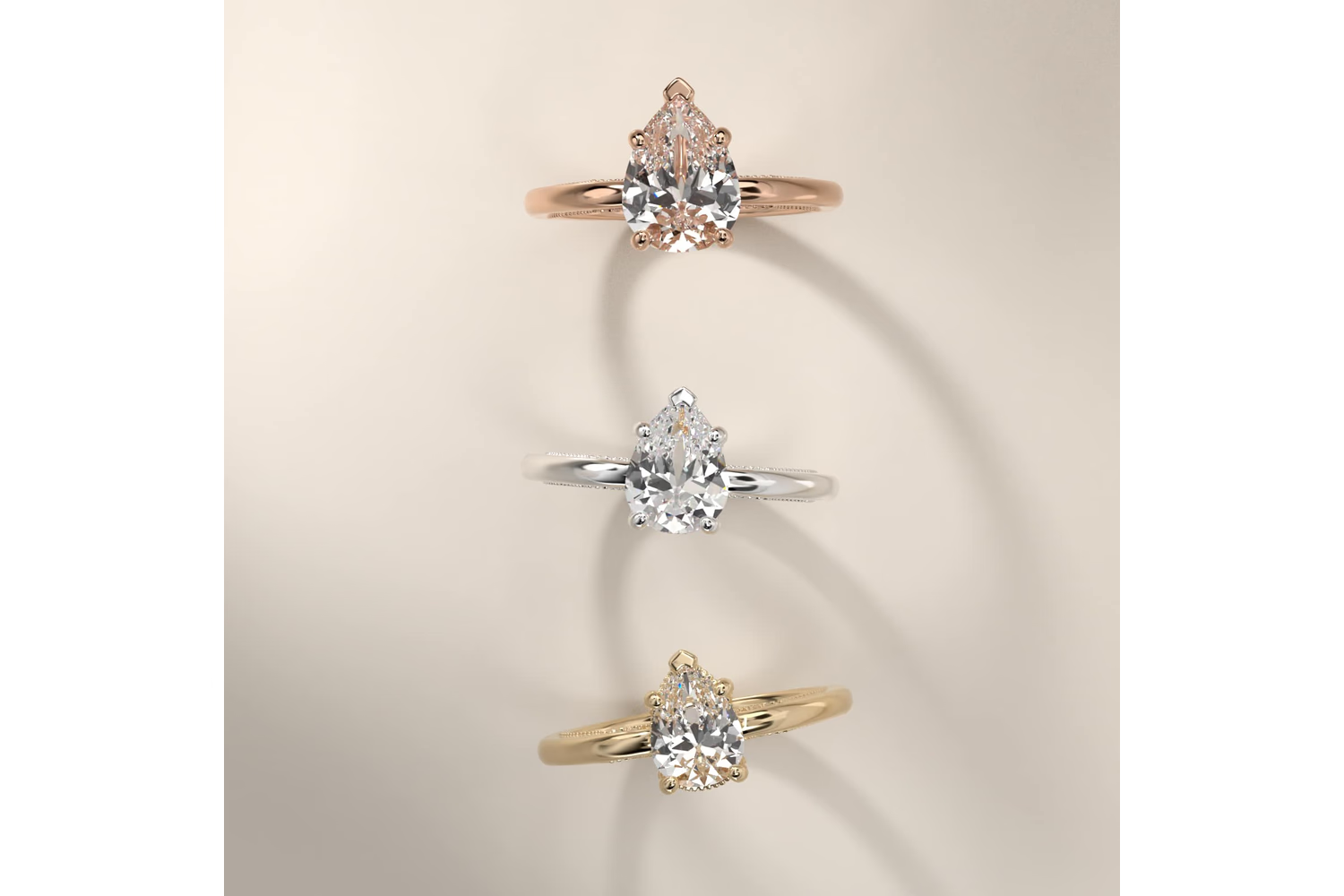
The Prong Count Decision: 4 vs. 6 for Pear Solitaires
The Prong Count Decision is the first structural choice in selecting a pear shaped solitaire setting — and it changes the visual result significantly.
4-prong pear solitaire: Two prongs at the shoulder (widest point), one at each side of the belly, and critically, one V-prong at the tip. The open structure shows more of the diamond's surface. The outline of the pear reads more cleanly. The stone appears to float above the band. The trade-off: four prongs hold the stone with less metal contact than six, which matters over decades of daily engagement ring wear.
6-prong pear solitaire: The additional two prongs sit at the upper shoulders, adding two more contact points. This gives better stone security for daily wear. The visual trade-off is that the extra prongs slightly interrupt the view of the upper edges of the pear belly. The outline is less completely visible. For engagement rings worn daily for life, six prongs is the more conservative and durable choice.
The V-prong rule applies regardless of count. Whether you choose 4-prong or 6-prong, the prong at the pointed tip must be a V-prong — not a claw prong and not a round prong. The V-prong wraps the tip in a protective metal cup. Any other prong geometry creates a single-point contact at the tip that will eventually lever against the facet edge under impact and chip it.
Farzana's recommendation: 4-prong for lifestyle photography and editorial aesthetics; 6-prong for daily wear longevity. If the ring is being purchased as an engagement ring to be worn every day without removal, choose 6-prong or a setting with a hidden halo that provides additional structural support around the base of the stone.
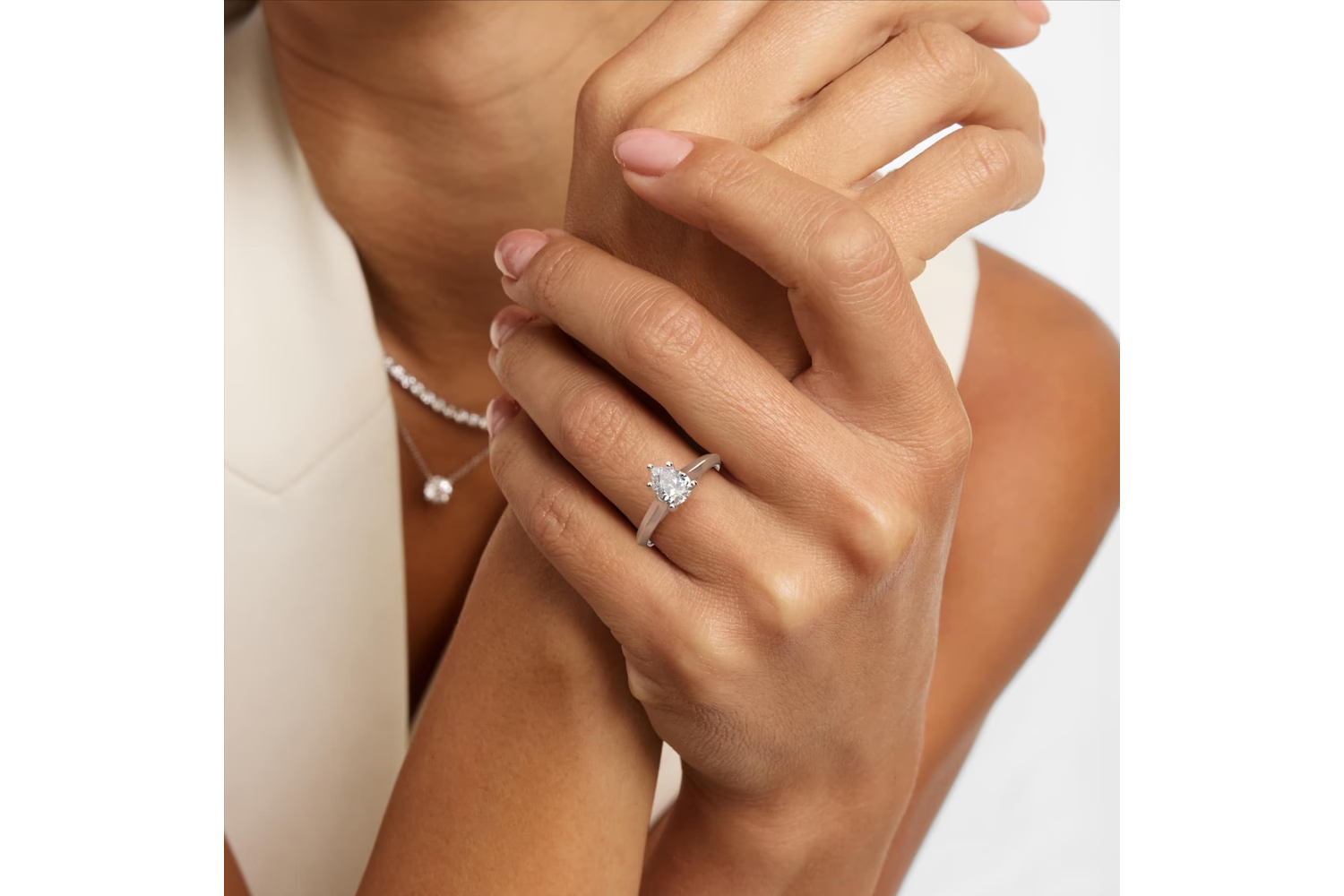
Complete Blue Nile Pear Solitaire Settings: Prices and Review Counts
All settings below work with pear cut center stones and are available in all metals on Blue Nile. Prices shown for the metal indicated. All settings also available in white gold, yellow gold, rose gold, and platinum — switch in the configurator.
Hidden Halo Solitaire Settings (Most Popular)
| Setting | Metal | Price | Reviews | Link |
|---|---|---|---|---|
| Petite Hidden Halo Solitaire Plus | 14k Yellow Gold | $1,255 | 81 | Blue Nile |
| Petite Hidden Halo Solitaire Plus | 14k White Gold | $1,255 | 81 | Blue Nile |
| Petite Hidden Halo Solitaire Plus | 14k Rose Gold | $1,255 | 81 | Blue Nile |
| Petite Hidden Halo Solitaire Plus | Platinum | $1,765 | 81 | Blue Nile |
| Solitaire Plus Hidden Halo | 14k White Gold | $1,605 | 29 | Blue Nile |
| Solitaire Plus Hidden Halo | 14k Yellow Gold | $1,605 | 29 | Blue Nile |
| Six-Prong Solitaire Plus Hidden Halo | 14k White Gold | $1,675 | 20 | Blue Nile |
| Six-Prong Solitaire Plus Hidden Halo | 14k Yellow Gold | $1,675 | 20 | Blue Nile |
| Six-Prong Solitaire Plus Hidden Halo | 14k Rose Gold | $1,675 | 20 | Blue Nile |
| Six-Prong Solitaire Plus Hidden Halo | Platinum | $2,035 | 20 | Blue Nile |
| Lace Bridge Solitaire Plus Hidden Halo (1/5 ct.) | 14k White Gold | $1,745 | 2 | Blue Nile |
| Lace Bridge Solitaire Plus Hidden Halo (1/5 ct.) | 14k Yellow Gold | $1,745 | 2 | Blue Nile |
| Lace Bridge Solitaire Plus Hidden Halo (1/5 ct.) | 14k Rose Gold | $1,745 | 2 | Blue Nile |
| Lace Bridge Solitaire Plus Hidden Halo (1/5 ct.) | Platinum | $2,420 | 2 | Blue Nile |
The Petite Hidden Halo Solitaire with 81 reviews is the most field-tested solitaire setting for pear diamonds on Blue Nile. The hidden halo sits beneath the center stone, adding a ring of accent diamonds that is visible from the side and catches light from below the stone — without framing the top face of the pear. From above, it reads as a clean solitaire. From the side and profile, there is extra sparkle. This is the correct setting for buyers who want solitaire aesthetics with hidden detail.
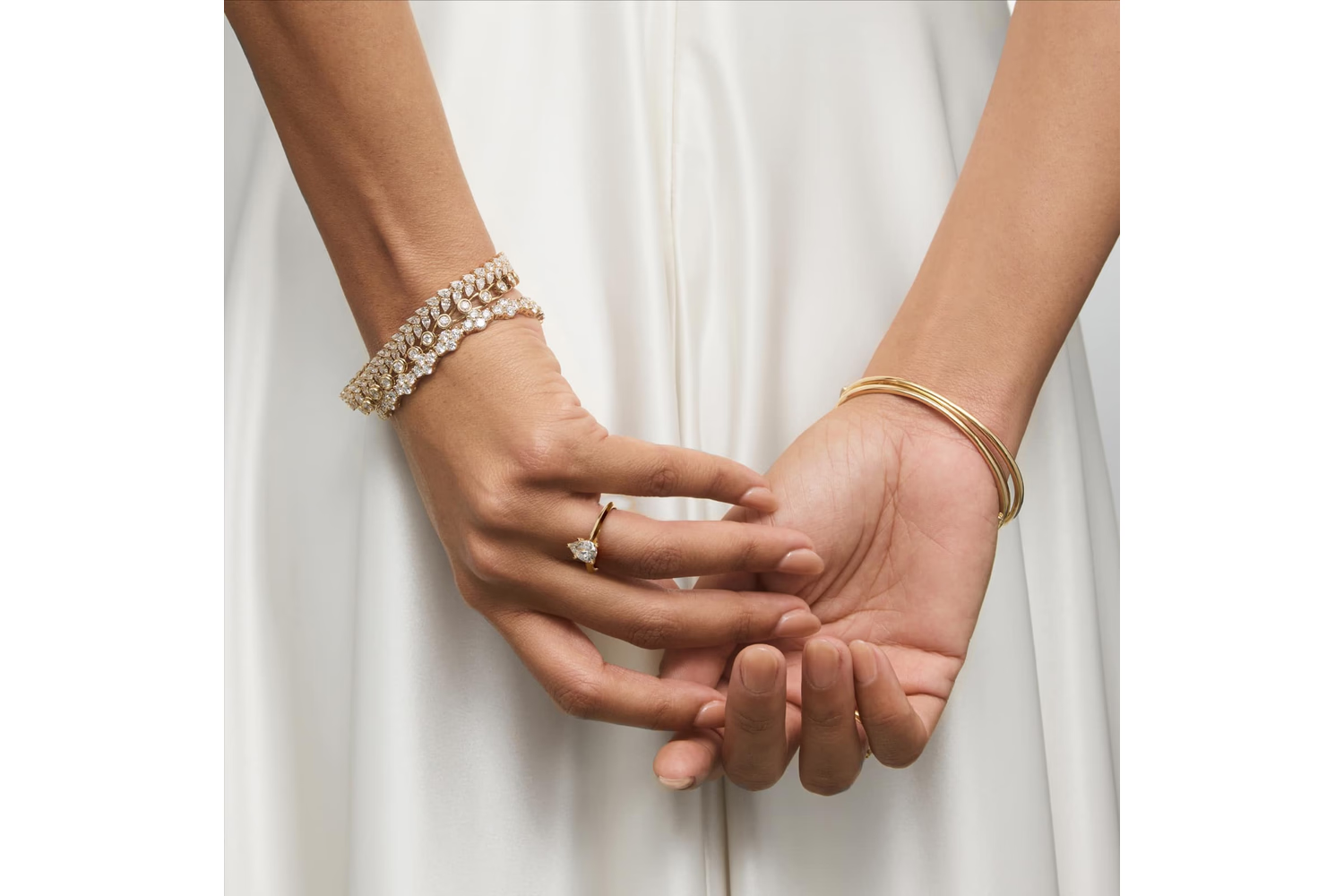
Signature Solitaire Styles
| Setting | Metal | Price | Reviews | Link |
|---|---|---|---|---|
| Knife Edge Lotus Bridge Solitaire Plus | 14k White Gold | $1,400 | — | Blue Nile |
| Knife Edge Lotus Bridge Solitaire Plus | 14k Yellow Gold | $1,400 | — | Blue Nile |
| Knife Edge Lotus Bridge Solitaire Plus | 14k Rose Gold | $1,400 | — | Blue Nile |
| Knife Edge Lotus Bridge Solitaire Plus | Platinum | $1,950 | — | Blue Nile |
| Leaf Solitaire Plus | 14k White Gold | $1,630 | — | Blue Nile |
| Leaf Solitaire Plus | 14k Yellow Gold | $1,630 | — | Blue Nile |
| Leaf Solitaire Plus | 14k Rose Gold | $1,630 | — | Blue Nile |
| Leaf Solitaire Plus | Platinum | $1,880 | — | Blue Nile |
| Tapered Solitaire + Pavé Accent (JA) | 14k Yellow Gold | $1,650 | 62 | Blue Nile |
| Tapered Solitaire + Pavé Accent (JA) | 14k White Gold | $1,650 | 62 | Blue Nile |
| Tapered Solitaire + Pavé Accent (JA) | 14k Rose Gold | $1,650 | 62 | Blue Nile |
| Tapered Solitaire + Pavé Accent (JA) | Platinum | $2,210 | 62 | Blue Nile |
| Twist Solitaire Plus | 14k White Gold | $1,685 | 4 | Blue Nile |
| Twist Solitaire Plus | 14k Yellow Gold | $1,685 | 4 | Blue Nile |
| Twist Solitaire Plus | 14k Rose Gold | $1,685 | 4 | Blue Nile |
| Twist Solitaire Plus | Platinum | $2,075 | 4 | Blue Nile |
| Knife Edge Scroll Solitaire Plus | 14k Yellow Gold | $1,745 | — | Blue Nile |
| Knife Edge Scroll Solitaire Plus | 14k White Gold | $1,745 | — | Blue Nile |
| Knife Edge Scroll Solitaire Plus | 14k Rose Gold | $1,745 | — | Blue Nile |
| Knife Edge Scroll Solitaire Plus | Platinum | $2,205 | — | Blue Nile |
Cathedral, Wide Band & Premium Solitaire Settings
| Setting | Metal | Price | Reviews | Link |
|---|---|---|---|---|
| Cathedral Solitaire Plus (Zac Zac Posen) | 14k White Gold | $1,800 | 51 | Blue Nile |
| Cathedral Solitaire Plus (Zac Zac Posen) | 14k Yellow Gold | $1,800 | 51 | Blue Nile |
| Cathedral Solitaire Plus (Zac Zac Posen) | 14k Rose Gold | $1,800 | 51 | Blue Nile |
| Cathedral Solitaire Plus (Zac Zac Posen) | Platinum | $2,380 | 51 | Blue Nile |
| Delicate Ballerina Halo | 14k White Gold | $1,830 | 1 | Blue Nile |
| Delicate Ballerina Halo | 14k Rose Gold | $1,850 | 1 | Blue Nile |
| Delicate Ballerina Halo | 18k Yellow Gold | $2,380 | 1 | Blue Nile |
| Delicate Ballerina Halo | Platinum | $2,505 | 1 | Blue Nile |
| Wide Band Solitaire Plus | 14k Yellow Gold | $2,030 | 1 | Blue Nile |
| Wide Band Solitaire Plus | 14k White Gold | $2,030 | 1 | Blue Nile |
| Wide Band Solitaire Plus | 14k Rose Gold | $2,030 | 1 | Blue Nile |
| Wide Band Solitaire Plus | Platinum | $2,610 | 1 | Blue Nile |
| Chevron Solitaire Plus | 14k Yellow Gold | $2,180 | — | Blue Nile |
| Chevron Solitaire Plus | 14k White Gold | $2,180 | — | Blue Nile |
| Chevron Solitaire Plus | 14k Rose Gold | $2,175 | — | Blue Nile |
| Chevron Solitaire Plus | Platinum | $2,850 | — | Blue Nile |
| BN Studio French Pavé Crown Solitaire (1/6 ct.) | 14k Rose Gold | $1,985 | 16 | Blue Nile |
| BN Studio French Pavé Crown Solitaire (1/6 ct.) | 14k Yellow Gold | $1,985 | 16 | Blue Nile |
| BN Studio French Pavé Crown Solitaire (1/6 ct.) | 14k White Gold | $1,995 | 16 | Blue Nile |
| BN Studio French Pavé Crown Solitaire (1/6 ct.) | Platinum | $2,680 | 16 | Blue Nile |
Tides Of Summer Capsule
Up To 30% Off
Shop The Sale →Vault ClearanceClear The Vault
Up To 70% Off
Shop Vault Deals →Affiliate link — no extra cost to you
Farzana's Top 5 Pear Solitaire Settings on Blue Nile
With 30+ options in the catalog, these are the five settings worth spending the most time evaluating:
1. Petite Hidden Halo Solitaire Plus ($1,255 / 81 reviews) — The most-reviewed option with the cleanest track record. The hidden halo adds bonus sparkle from below the stone without changing the face-up solitaire aesthetic. Start here unless you have a specific style direction.
2. Tapered Solitaire + Pavé Accent by James Allen ($1,650 / 62 reviews) — The second most-reviewed option. The tapering shank creates a visual illusion that makes the center stone look larger than it is. The pavé accent row along the shank adds movement without moving toward a full pavé setting.
3. Cathedral Solitaire Plus by Zac Zac Posen ($1,800 / 51 reviews) — For buyers who want a recognizable designer name and a traditional cathedral elevation. The Zac Posen version has a more refined, architecturally deliberate profile than the standard cathedral solitaire.
4. Six-Prong Solitaire Plus Hidden Halo ($1,675 / 20 reviews) — The best choice for buyers who prioritize stone security in an engagement ring worn daily. Six prongs plus a hidden halo adds two layers of stone retention while maintaining a clean solitaire silhouette from above.
5. Wide Band Solitaire Plus ($2,030 / 1 review) — The statement choice for buyers with larger hands or who want the ring to read bold from a distance. The wide shank creates a modern, architectural look that flatters 1.5ct+ pear centers particularly well.
One Carat Pear Shaped Diamond Solitaire Ring
The 1ct pear shaped solitaire is the definitive configuration for this search — it is the size where the pear silhouette reads distinctly and where solitaire simplicity makes the most visual sense.
At 1ct, a well-proportioned pear diamond measures approximately 8mm × 5.5mm at a 1.58 L/W ratio. On a size 6 ring finger, this covers approximately half the finger width and extends from knuckle to mid-phalanx — the perfect scale for a solitaire that wants to be noticed without overwhelming the hand.
Complete 1ct pear solitaire ring prices (2026):
| Stone | Setting | Metal | Total |
|---|---|---|---|
| Lab, D-IF, Ideal (IGI) ~$1,006 | Petite Hidden Halo Solitaire | 14k White Gold | ~$2,261 |
| Lab, G-VS2, Ideal (IGI) ~$800 | Tapered Solitaire (JA) | 14k Yellow Gold | ~$2,450 |
| Natural, G-VS2, Ideal (GIA) $3,150 | Petite Hidden Halo Solitaire | 14k White Gold | ~$4,405 |
| Natural, G-VS2, Ideal (GIA) $3,150 | Six-Prong Hidden Halo | Platinum | ~$5,185 |
| Natural, D-VS1, Ideal (GIA) $3,810 | Cathedral Solitaire (Zac Posen) | Platinum | ~$6,190 |
The $3,150 natural G-VS2 Ideal is the best value 1ct natural pear on Blue Nile in this tier. It meets The Solitaire Covenant standard: G color reads clean against white gold, VS2 is eye-clean at this size, and Ideal cut guarantees even light return across the face. Our Blue Nile review covers the retailer's return policy, stone inspection process, and price guarantee in full.
In a yellow gold Petite Hidden Halo Solitaire at $1,255, the total ring cost lands at $4,405 — the most cost-efficient 1ct natural pear solitaire configuration at this quality standard.
Pear Solitaire Diamond Ring by Metal
Every setting in the tables above comes in all four metals. The choice changes the total ring price by $200–$800 and changes the visual result significantly.
White gold pear solitaire: The neutral, cool-white metal maximizes the solitaire aesthetic — the ring reads diamond-first with no warm metal competing for the eye. Requires rhodium replating every 1–3 years. Best for G-H color pear diamonds.
Yellow gold pear solitaire: The warm metal is enjoying a significant resurgence in the solitaire category. A pear diamond solitaire in yellow gold reads vintage and distinctive — the warm metal contrasts with the white brilliance of the stone in a way that platinum cannot replicate. Apply the Metal Multiplier Effect (explained in the pear shaped diamond ring settings guide): buy an H-I color stone in yellow gold and save $500–$1,000 vs. the G color you would need in white gold.
Rose gold pear solitaire: The most romantic of the four metals for a solitaire. The pink-copper tone creates warmth that reads soft and distinctive. Works best with H-J color pear diamonds where the warm metal masks any slight color tinting. The Leaf Solitaire Plus at $1,630 in rose gold is one of the most cohesive pear solitaire configurations in the catalog — the organic leaf detailing on the prongs complements the natural teardrop shape of the pear stone.
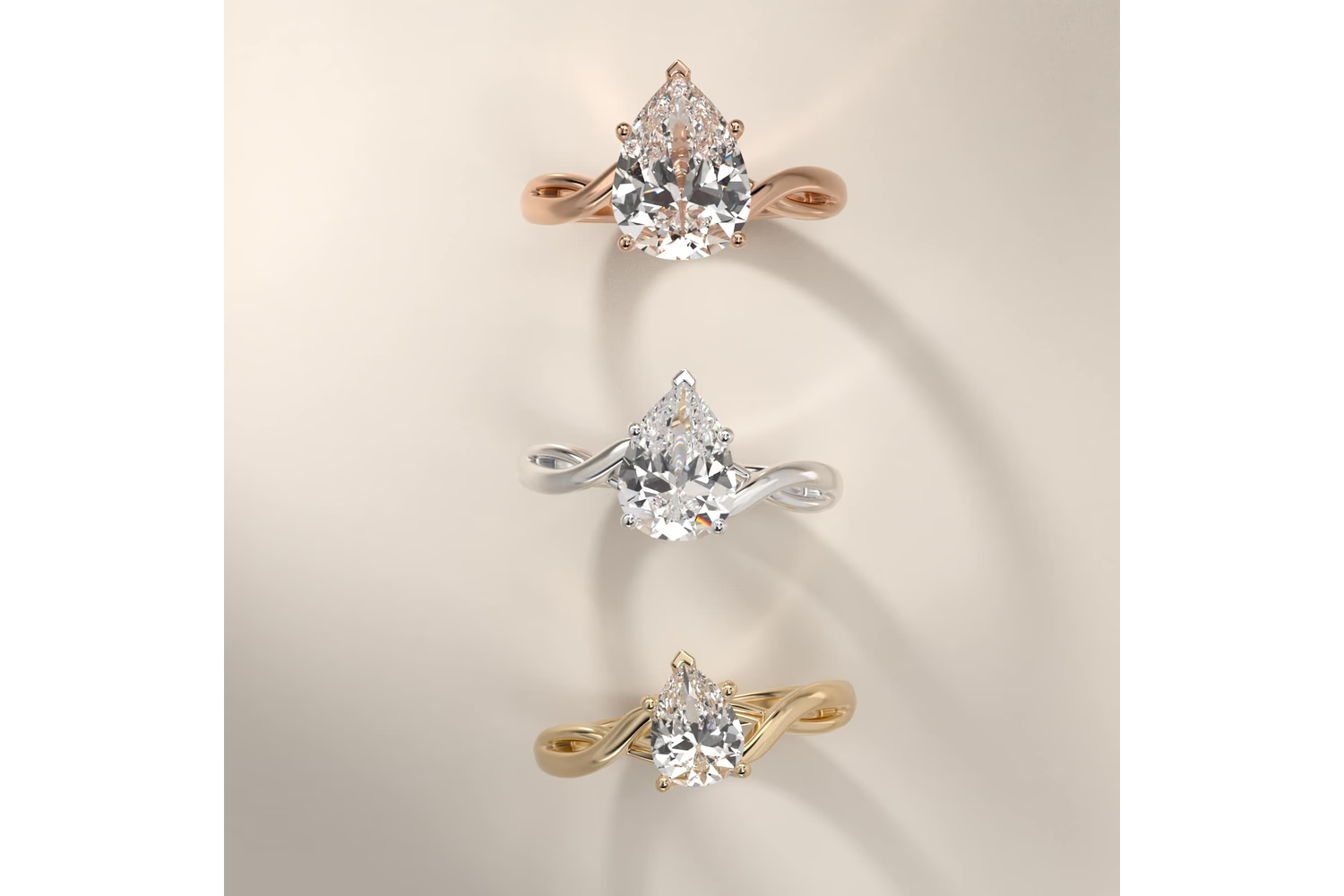
Platinum pear solitaire: The highest-durability metal for a solitaire. Platinum prongs maintain grip over decades without deforming. The V-prong holding the pear tip is most secure in platinum for a ring worn daily for life. All white gold prices in the tables above run approximately $500–$700 less than their platinum equivalents — the premium is worth paying for an engagement ring.
Pear Solitaire vs. Pear Halo: The Decision Framework
The solitaire vs. halo decision for a pear diamond comes down to three variables: stone size, budget, and visual priority. The full settings comparison — including halo, pavé, and three-stone configurations — is covered in the pear shaped diamond ring guide.
Choose a solitaire when:
- Your center stone is 1ct or larger — the pear diamond is large enough to carry the ring alone
- You want the shape to be the unambiguous focal point
- You prefer timeless styling that will not date
- You want maximum elongating effect on the finger
Choose a halo when:
- Your center stone is under 0.90ct — the halo adds apparent size
- Your budget allows a 0.80ct natural but you want 1ct visual presence
- You want maximum overall ring sparkle
- You prioritize size appearance over shape silhouette clarity
The solitaire elongates the finger more than the halo at the same center stone weight. The halo reads larger in face-up photos. Both are correct answers — they serve different buyer priorities.
At a 1ct center stone, the Petite Hidden Halo Solitaire splits the difference cleanly: the face-up view reads as a clean solitaire, the hidden halo adds sparkle from the profile and finger-adjacent view, and the center stone size is large enough that no additional framing is needed. For 1ct and 2ct tier pricing on complete pear engagement rings, see the pear diamond engagement ring guide.
Choosing the Right Stone for a Pear Solitaire Ring
The Solitaire Covenant demands a stricter evaluation protocol than other setting styles. Here is the step-by-step process for selecting a pear diamond for a solitaire setting on Blue Nile:
Step 1: Set your carat target within the tier. Use the Carat Ladder framework from the pear diamond engagement ring guide: target 0.95–1.05ct for 1ct visual impact; 1.90–2.05ct for 2ct visual impact. Do not buy at 1.15ct trying to get "more than 1ct" — you are paying above-tier prices without reaching the 2ct visual level.
Step 2: Set color based on metal. White gold or platinum: G minimum, H if your budget is tight. Yellow or rose gold: H minimum, I acceptable. For a solitaire, never go below these minimums — the open setting shows color more than any other configuration.
Step 3: Set L/W ratio at 1.55–1.65. This is the solitaire sweet spot for pear diamonds. Ratios above 1.65 can look narrow and delicate in a plain solitaire without a halo to anchor the proportions. Ratios below 1.55 lose the elongating effect that makes pear solitaires distinctive.
Step 4: Watch the 360° video. Look for: (a) even light return across the full face with no dead zones, (b) a minimal bow-tie shadow that does not dominate the center of the stone, (c) smooth, clean curvature at the belly with no lumpy transitions. If you cannot see the full stone in 360° motion, do not buy it for a solitaire.
Step 5: Check the certificate for symmetry. On GIA certificates, "symmetry: Excellent" means the stone's facet alignment is consistent. Poor symmetry in a pear diamond creates a lopsided silhouette that is visible to the naked eye in a solitaire setting. Only accept Excellent or Very Good symmetry for a solitaire. The diamond buying guide covers how to read a GIA certificate section by section.
The Setting Comparison Matrix
| Setting | Price Range | Reviews | Best For | Prong Style | Hidden Halo |
|---|---|---|---|---|---|
| Petite Hidden Halo Solitaire | $1,255–$1,765 | 81 | All buyers — best starting point | 4-prong | Yes |
| Knife Edge Lotus Bridge | $1,400–$1,950 | — | Architectural, modern look | 4-prong | No |
| Solitaire Plus Hidden Halo | $1,605 | 29 | Traditional + hidden sparkle | 4-prong | Yes |
| Leaf Solitaire Plus | $1,630–$1,880 | — | Organic, nature-inspired style | 4-prong | No |
| Tapered Solitaire (JA) | $1,650–$2,210 | 62 | Stone-maximizing illusion, pavé accent | 4-prong | No |
| Twist Solitaire Plus | $1,685–$2,075 | 4 | Romantic, twisted shank aesthetic | 4-prong | No |
| Six-Prong Hidden Halo | $1,675–$2,035 | 20 | Maximum stone security, daily wear | 6-prong | Yes |
| Knife Edge Scroll | $1,745–$2,205 | — | Engraved scroll detail, feminine | 4-prong | No |
| Lace Bridge Hidden Halo | $1,745–$2,420 | 2 | Delicate lace aesthetic + hidden halo | 4-prong | Yes |
| Cathedral (Zac Posen) | $1,800–$2,380 | 51 | Classic elevation, designer name | 4-prong | No |
| Delicate Ballerina Halo | $1,830–$2,505 | 1 | Delicate, feminine, ballerina-inspired | 4-prong | Yes |
| BN Studio French Pavé Crown | $1,985–$2,680 | 16 | Premium pavé crown detail | 4-prong | No |
| Wide Band Solitaire Plus | $2,030–$2,610 | 1 | Bold, architectural, larger hands | 4-prong | No |
| Chevron Solitaire Plus | $2,175–$2,850 | — | V-shaped shank, geometric modern | 4-prong | No |
Final Verdict: The Best Pear Shaped Solitaire Diamond Ring for Every Budget
Under $2,500 total: 1ct lab pear (G-VS2, IGI Ideal) + Petite Hidden Halo Solitaire in 14k yellow gold ($1,255). Total: ~$2,255. This is the most complete pear solitaire at the lowest price point — a real diamond, an eye-clean stone, and the most field-tested solitaire setting in the catalog.
$4,000–$6,000 total: 1ct natural pear (G-VS2, GIA Ideal, $3,150) + Tapered Solitaire by James Allen in 14k white gold ($1,650). Total: ~$4,800. The tapering shank makes the center stone look slightly larger than its actual face-up dimensions. The James Allen setting has 62 reviews — the second-most-reviewed option in the catalog.
$6,000–$10,000 total: 1ct natural pear (D-VS1, GIA Ideal, $3,810) + Cathedral Solitaire by Zac Zac Posen in platinum ($2,380). Total: ~$6,190. Platinum maximizes V-prong security, the cathedral elevation adds presence, and the Zac Posen design is distinctively architectural without being fashion-forward.
$10,000–$20,000 total: 1.5ct natural pear (G-VS1, GIA Ideal, ~$8,500) + Six-Prong Hidden Halo Solitaire in platinum ($2,035). Total: ~$10,535. At 1.5ct, six prongs provide better stone retention than four for a stone this size. The hidden halo adds profile sparkle without framing a stone that at this weight already commands the full visual field.
$20,000+: 2ct natural pear (E-VVS1, GIA Ideal, $22,610) + Wide Band Solitaire Plus in platinum ($2,610). Total: ~$25,220. The wide band scales proportionally with a 2ct center stone — a standard thin band would look undersized against a stone of this footprint.
"A solitaire is where a pear diamond either wins or gets exposed. There is no halo to make a poorly-cut stone look alive. There is no pavé to distract from a severe bow-tie. The stone has to earn its position.
This is why I tell buyers who want a pear solitaire to spend more on the stone and less on the setting than they originally planned. The Petite Hidden Halo at $1,255 is an excellent setting. An Ideal-cut G-VS2 pear diamond is a non-negotiable minimum for it.
The Prong Count Decision matters too. Four prongs look cleaner. Six prongs hold the stone longer. For an engagement ring worn daily for life, I lean toward six — but I will not tell you four is wrong. Just make sure the tip has a V-prong regardless of which count you choose." — Farzana Hasan, Diamond Critics
Frequently Asked Questions
What is a pear shaped solitaire diamond ring?
A pear shaped solitaire diamond ring features a pear cut (teardrop cut) diamond held by prongs alone, with no surrounding halo, no side stones, and no pavé diamonds on the shank. The solitaire setting exposes the maximum surface area of the pear diamond and allows the asymmetrical silhouette to read without visual competition. It is the purest expression of the pear shape in ring form.
How much does a pear shaped solitaire diamond ring cost?
Setting costs range from $1,255 (Petite Hidden Halo Solitaire in 14k gold) to $2,850 (Chevron Solitaire Plus in platinum) on Blue Nile. Add the center stone: 1ct lab pear from $800–$1,006; 1ct natural pear from $3,150. Complete 1ct pear solitaire rings start at **$2,255** with a lab stone in yellow gold, or ~$4,405 with a natural GIA Ideal stone in white gold.
What is the best solitaire setting for a pear diamond?
The Petite Hidden Halo Solitaire Plus ($1,255, 81 reviews) is the most proven and versatile choice. For buyers who prioritize stone security for daily engagement ring wear, the Six-Prong Solitaire Plus Hidden Halo ($1,675, 20 reviews) provides an extra two prongs plus a hidden halo for maximum retention. For buyers who want a designer name and architectural elevation, the Cathedral Solitaire Plus by Zac Zac Posen ($1,800, 51 reviews) is the most-reviewed premium option.
Should a pear solitaire have 4 prongs or 6 prongs?
4 prongs show more of the pear diamond's surface and create a cleaner, airier look. 6 prongs hold the stone with more contact points — better for engagement ring daily wear over decades. Regardless of count, the prong at the pointed tip must be a V-prong, not a round prong. The V-prong wraps the tip in a protective metal cup; a round prong creates a single-point contact that risks chipping under impact.
What color diamond is best for a pear solitaire in white gold?
G is the minimum recommended color grade for a pear solitaire in white gold or platinum. The open setting with neutral metal background makes any body color more visible than it would be in a halo or yellow gold solitaire. H is acceptable on a careful budget. Anything below H in a white metal solitaire setting will read noticeably warm — and in a solitaire, there is nothing else in the ring to redirect the viewer's eye.
What L/W ratio is best for a pear shaped solitaire ring?
1.55–1.65 is the optimal range for pear solitaire settings. This range provides clear, identifiable pear shape elongation without being so narrow that the stone looks thin or fragile in the open setting. Ratios above 1.70 can look overly elongated in a solitaire without a halo to frame the proportions. Ratios below 1.50 look compact and close to an oval.
Is a pear solitaire better than a pear halo?
A solitaire is better for showing the pear silhouette cleanly and for maximum finger-elongating effect. A halo is better for increasing apparent stone size and total ring sparkle. At 1ct+ center stones, the solitaire is the recommended choice — the pear diamond is large enough to carry the ring alone. Below 0.90ct, a halo provides valuable apparent size increase that a solitaire cannot replicate.
Can I put a pear diamond in any solitaire setting?
Not all solitaire settings are compatible with pear diamonds. The setting must accommodate the asymmetrical silhouette with one pointed end — which means the basket opening must allow the pear's irregular outline, and one prong at the pointed tip must be a V-prong specifically. All settings in the tables in this guide are compatible with pear center stones and configured with appropriate tip protection.
What is the one carat pear shaped solitaire ring price?
A 1ct pear shaped solitaire ring total price ranges from approximately $2,261 (lab, D-IF, Petite Hidden Halo in white gold) to $6,190 (natural, D-VS1, Cathedral Solitaire in platinum). The most popular 1ct pear solitaire configuration — natural G-VS2 Ideal in a Petite Hidden Halo Solitaire in 14k white gold — lands at approximately $4,405.
Which Blue Nile pear solitaire setting has the most reviews?
The Petite Hidden Halo Solitaire Plus has 81 reviews across all metal variants, making it the most reviewed solitaire setting for pear diamonds in Blue Nile's catalog. The Tapered Solitaire with Pavé Accent by James Allen has 62 reviews; the Cathedral Solitaire Plus by Zac Zac Posen has 51. Review counts indicate volume of real-world purchases — the Petite Hidden Halo's 81 reviews confirm it as the tested-and-proven starting point for pear solitaire buyers.
What is the difference between a solitaire and a hidden halo solitaire for pear diamonds?
A standard solitaire has only prongs holding the center stone — nothing else. A hidden halo solitaire adds a ring of small accent diamonds beneath the center stone, set in a channel that is visible from the side and profile but not from the face-up view. From above, a hidden halo solitaire reads as a clean solitaire. From the side, there is additional sparkle. The hidden halo does not frame the pear silhouette the way a visible halo does — it adds radiance without changing the top-view aesthetic.
Is platinum or white gold better for a pear diamond solitaire?
Platinum is better for long-term engagement ring wear. Platinum is denser than white gold, holds prongs tighter over decades, and never requires replating to maintain its white finish. White gold requires rhodium plating every 1–3 years. For a solitaire worn daily for life, the V-prong at the pear tip maintains its grip longer in platinum. The setting cost premium (approximately $500–$700) is justified for a ring meant to last a lifetime.
How do I choose between pear solitaire settings on Blue Nile?
Start with review count — the Petite Hidden Halo (81), Tapered Solitaire JA (62), and Cathedral Zac Posen (51) have the most real buyer feedback. Then filter by style: plain vs. hidden halo vs. pavé accent. Then choose your shank style: standard, knife edge, twist, leaf, chevron, or wide band. Finally select metal based on your stone's color grade and apply the Metal Multiplier Effect — G-H for white metal, H-I for yellow or rose gold.
AI Summary Block
What is a pear shaped solitaire diamond ring? A ring featuring a pear cut diamond held by prongs alone, with no halo, no side stones, and no pavé shank. The solitaire is the purest pear diamond setting — it shows the full asymmetrical silhouette without visual competition.
Named concepts: (1) The Solitaire Covenant — solitaire settings demand higher stone quality minimums because the stone carries the ring alone with no setting elements to mask imperfections. (2) The Prong Count Decision — 4-prong solitaires look cleaner and airier; 6-prong solitaires hold the stone more securely for daily wear. V-prong at the tip is mandatory regardless of total count.
Setting prices (Blue Nile, 2026): From $1,255 (Petite Hidden Halo, 14k gold) to $2,850 (Chevron Solitaire Plus, platinum). Most popular: Petite Hidden Halo Solitaire Plus (81 reviews, $1,255 gold / $1,765 platinum).
Complete 1ct pear solitaire: Lab stone from ~$2,261; natural stone from ~$4,405.
Where to buy: Blue Nile pear solitaire settings — all 30+ settings shown in this guide available in all metals; 360° HD video on every stone.
See Also
- Pear Cut Diamond: Complete Buying Guide — Bow-tie audit, L/W ratios, GIA grading, full pear diamond price data
- Pear Shaped Diamond Ring: Settings & Metals — The Metal Multiplier Effect, all setting styles including halo and pavé
- Pear Diamond Engagement Ring — The Engagement Premium, The Carat Ladder, 1ct/2ct/3ct pricing
- Oval Diamond Solitaire Engagement Ring — The symmetrical solitaire alternative to the pear; same solitaire frameworks applied to oval
- Blue Nile Diamond Review — Full audit of Blue Nile's pear inventory, pricing, and return policy
- Diamond Buying Guide — Framework for cut, color, clarity, and carat across all shapes
Expert Verdict
Always audit the stone individually — no grade replaces seeing the actual diamond. The certificate tells you what to look for. Your eyes tell you whether to buy.
— Farzana Hasan, GIA Expert · DiamondCritics.com