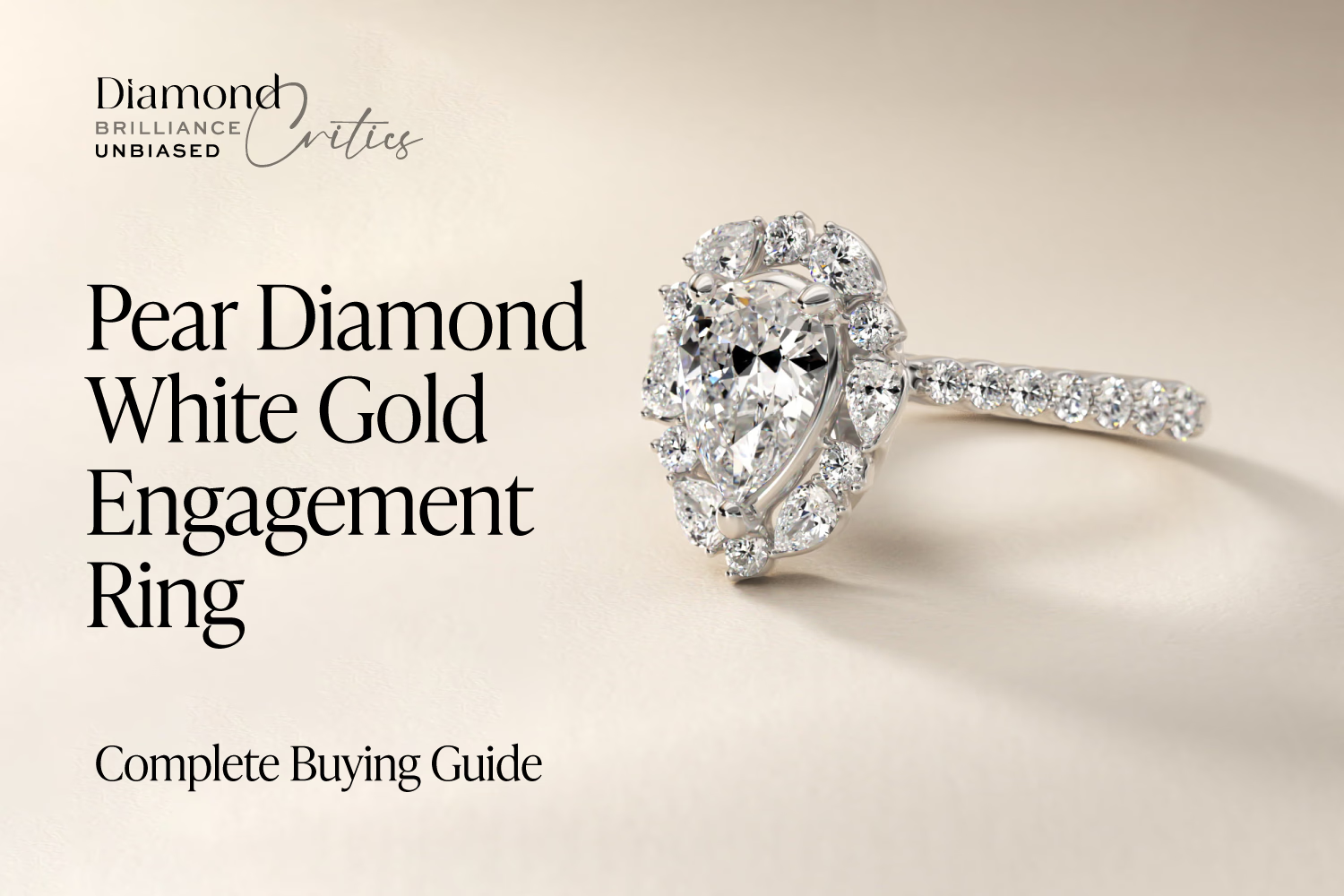
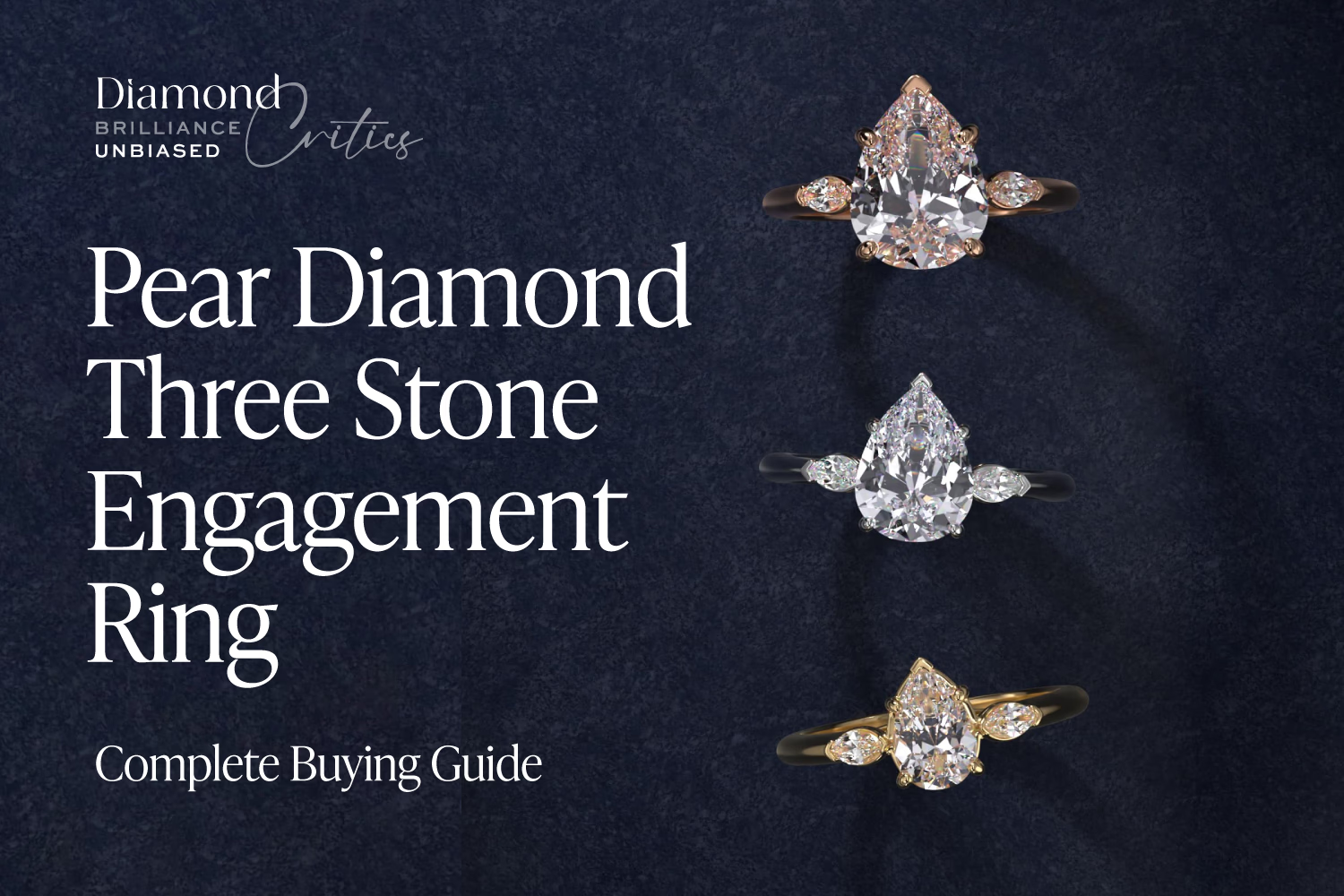
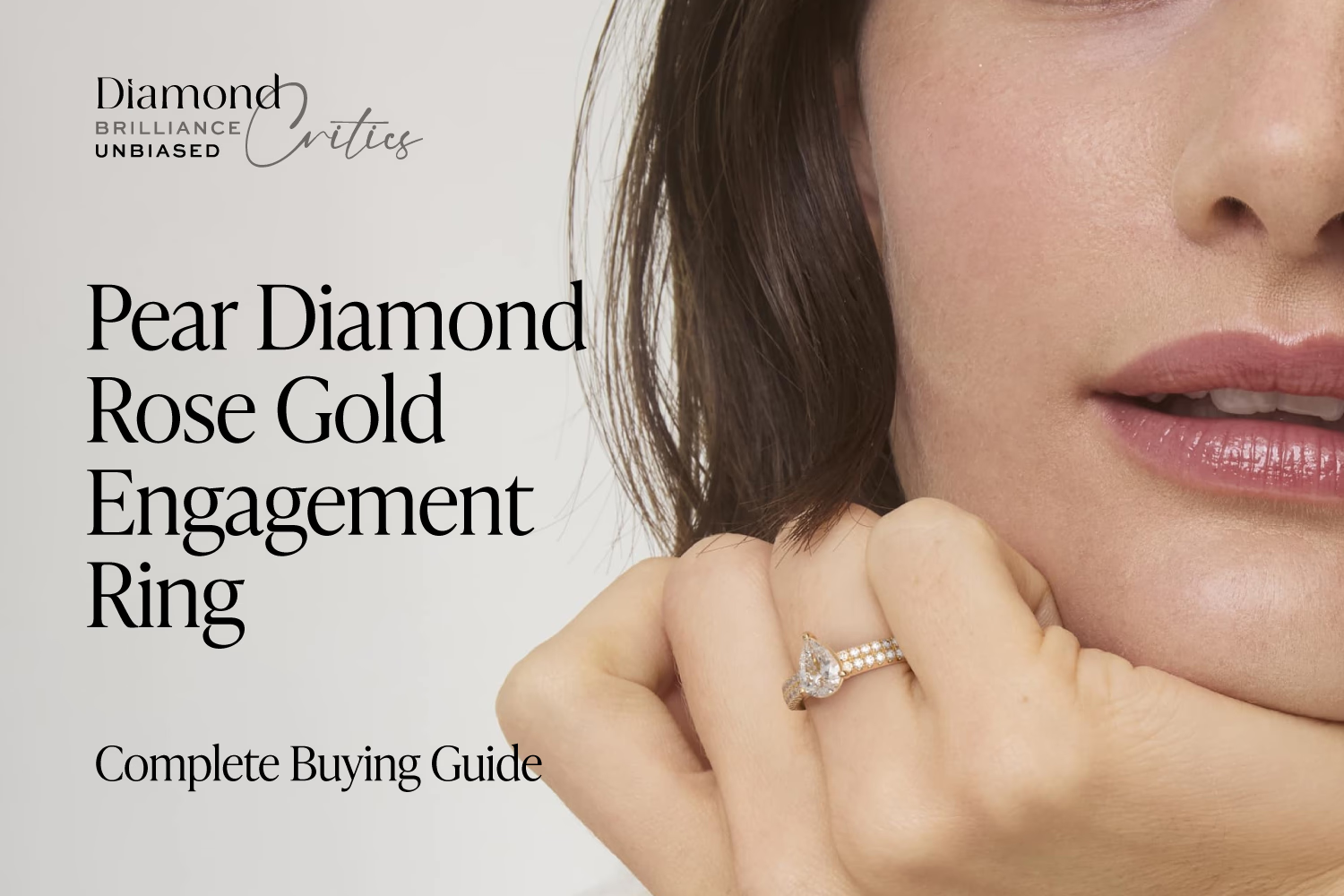
Yellow Gold Pear Diamond Ring: The Complete 2026 Guide (Settings, Color & Prices)
TL;DR — Key Facts Before You Shop
- The Warm Metal Dividend: Buying H or I color in yellow gold versus F color in platinum delivers identical perceived whiteness — and saves $1,800 at 1ct, up to $14,000 at 2ct
- The Vintage Convergence: Yellow gold and the pear cut share 160 years of history in Victorian and Edwardian jewelry — this is the most historically authentic shape-metal pairing available
- Best entry-level setting: Petite Diamond Engagement Ring in 14k Yellow Gold at $1,115 (306 reviews)
- Best pear-specific setting: Pear Sidestone Diamond Engagement Ring in 14k Yellow Gold at $1,820 (63 reviews)
- Color grade rule: H–I for white pear diamonds in yellow gold; G–H in 18k. D–F is wasted money — the warm metal neutralizes the color premium
- 14k or 18k? 14k for daily wear durability; 18k for richer gold tone. The Warm Metal Dividend applies equally to both
- V-prong at the tip is mandatory regardless of metal
- Contrarian Truth: Most buyers assume D-color is the safest choice in any setting — in yellow gold, D-color is three grades of wasted spend; H-color reads identically to every observer and costs $1,800 less at 1ct. See The Warm Metal Dividend table below →
The yellow gold pear diamond ring is the combination most buyers arrive at by elimination — and then wonder why they didn't start there.
White metal exposes every hint of warmth in a diamond's color grade. Rose gold limits your palette. Yellow gold solves both problems simultaneously: it masks color tinting in the stone, it carries a 160-year heritage in the pear shape's natural home, and it opens the full Blue Nile setting catalog at every price point.
This guide covers every major yellow gold setting for pear diamonds, the two frameworks no other guide covers, and the exact color grade math that changes the budget calculation at every carat weight.


Why Yellow Gold and the Pear Cut Are the Natural Pair: The Vintage Convergence
The Vintage Convergence is the compound effect of three factors — historical, optical, and structural — that make yellow gold the most natural setting metal for a pear diamond.
Historical provenance. The pear cut was popularized in Victorian and Edwardian jewelry from 1860 to 1920, an era in which yellow gold was the universal setting metal. Virtually every authenticated pear diamond piece from this period is set in yellow gold or silver-topped yellow gold. Setting a pear diamond in yellow gold today is not a retro choice — it is historically correct. See the full pear diamond history in the pear cut diamond buying guide.
Optical amplification. Yellow gold reflects warm, golden light upward into the belly of the pear diamond. The rounded, curved facets of the pear's belly scatter that warm light across a wide arc that reads as depth and richness. A pear diamond in yellow gold looks more dimensional than the same stone in platinum — the warmth activates the shape's best visual quality.
V-prong aesthetics. The mandatory V-prong at the pear's tip reads differently across metals. In platinum it reads as a functional clip — precise, invisible, clinical. In yellow gold it reads as an ornamental design element: the pointed tip of the pear nested in a warm gold frame that echoes the Art Nouveau vocabulary. It adds intention to the setting rather than hiding it.
The Vintage Convergence is why designers specializing in antique and period jewelry almost always reach for yellow gold when setting a pear diamond. It is also why the yellow gold pear ring photographs differently from every other combination — the warmth of the metal and the directionality of the silhouette create a compound visual result that no cooler metal can replicate.
The Warm Metal Dividend: Which Color Grade to Buy in Yellow Gold
The Warm Metal Dividend is the dollar saving you capture by buying a lower color grade in yellow gold compared to what you would need in platinum, while maintaining identical perceived whiteness to every observer in normal viewing conditions.
Here is the mechanism. Yellow gold reflects warm light upward into the diamond. That warm light neutralizes the faint yellow tinting that separates a G or H color grade from a D or F colorless grade. To a person looking at your ring in a restaurant, a garden, or across a boardroom table, an H color pear in 14k yellow gold looks identical to an F color pear in platinum. The GIA certificate is different. The appearance to your guests is not.
The Warm Metal Dividend at each carat weight (approximate Blue Nile pear prices):
| Carat | F-color GIA Ideal, Platinum | I-color GIA Ideal, Yellow Gold | Dividend |
|---|---|---|---|
| 0.75ct | ~$3,100 | ~$1,600 | ~$1,500 |
| 1.00ct | ~$4,200 | ~$2,400 | ~$1,800 |
| 1.50ct | ~$12,500 | ~$6,200 | ~$6,300 |
| 2.00ct | ~$25,000 | ~$13,000 | ~$12,000 |
The dividend grows dramatically with carat weight. At 2ct, the saving from buying I-color in yellow gold versus F-color in platinum equals $12,000 — enough to fund a wedding band, a honeymoon, or an upgrade to a significantly larger stone.
Where to redirect the Warm Metal Dividend:
- More carat weight — go from 1ct to 1.25ct, or 1.5ct to 2ct
- Better clarity — upgrade from VS2 to VVS2 or VS1, where the difference is visible in video
- Better cut — ensure GIA Ideal or Excellent; cut quality affects sparkle more than color grade does at any carat weight
Recommended color grades for yellow gold pear rings:
| Metal | Recommended White Diamond Color | Why |
|---|---|---|
| 14k yellow gold | H–I | Full Warm Metal Dividend active; F looks the same to observers |
| 18k yellow gold | G–H | 18k is slightly richer in tone; G is the upper edge before overkill |
| Yellow gold + lab pear | F–G | Lab diamonds at F cost nearly the same as H; no budget penalty for better color |
| Yellow gold + fancy yellow pear | Fancy Intense or Fancy Vivid | Metal amplifies color — buy the best yellow grade you can |
Pear-Specific Yellow Gold Settings on Blue Nile
These settings are engineered specifically for the pear diamond silhouette. The prong configuration accommodates the pointed tip and the curved belly without modification or workaround.
Pear Sidestone ($1,820 / 63 reviews): The strongest value in this list. The side stones taper alongside the pear belly, the basket is proportioned for the pear silhouette, and the V-prong is positioned for the tip. In yellow gold with an I-color 1ct pear, the complete ring lands at approximately $4,200–$5,000 — a serious ring at a budget that surprises most first-time buyers. This is Farzana's first recommendation for a yellow gold pear ring under $6,000.
Pavé Halo Pear by James Allen ($1,555 / 91 reviews): 91 verified reviews at $1,555 is a strong quality signal. The halo is shaped to the pear outline. This is the entry-level pear halo in yellow gold; the $3,570 version below is the premium tier.
Pear Shape Side Stone Halo by James Allen ($3,570): The premium pear-specific yellow gold halo. Paired with a 1ct I-VS2 pear (~$2,400), total ring cost comes to approximately $6,000. For a pear-specific halo at this level of engineering, that budget is genuinely competitive. See the full halo breakdown in the pear diamond halo ring guide.
Romantic Round and Pear Cluster ($2,075): The only off-the-shelf yellow gold cluster setting that specifically incorporates pear diamonds. Round and pear stones alternate across the shank creating a bouquet effect in warm gold. If you want a yellow gold pear cluster ring without a custom commission, this is the only catalog option available.
Shop the Look: Yellow Gold Pear Diamond Rings
Four Blue Nile yellow gold pear diamond rings — click any image to browse the full collection.
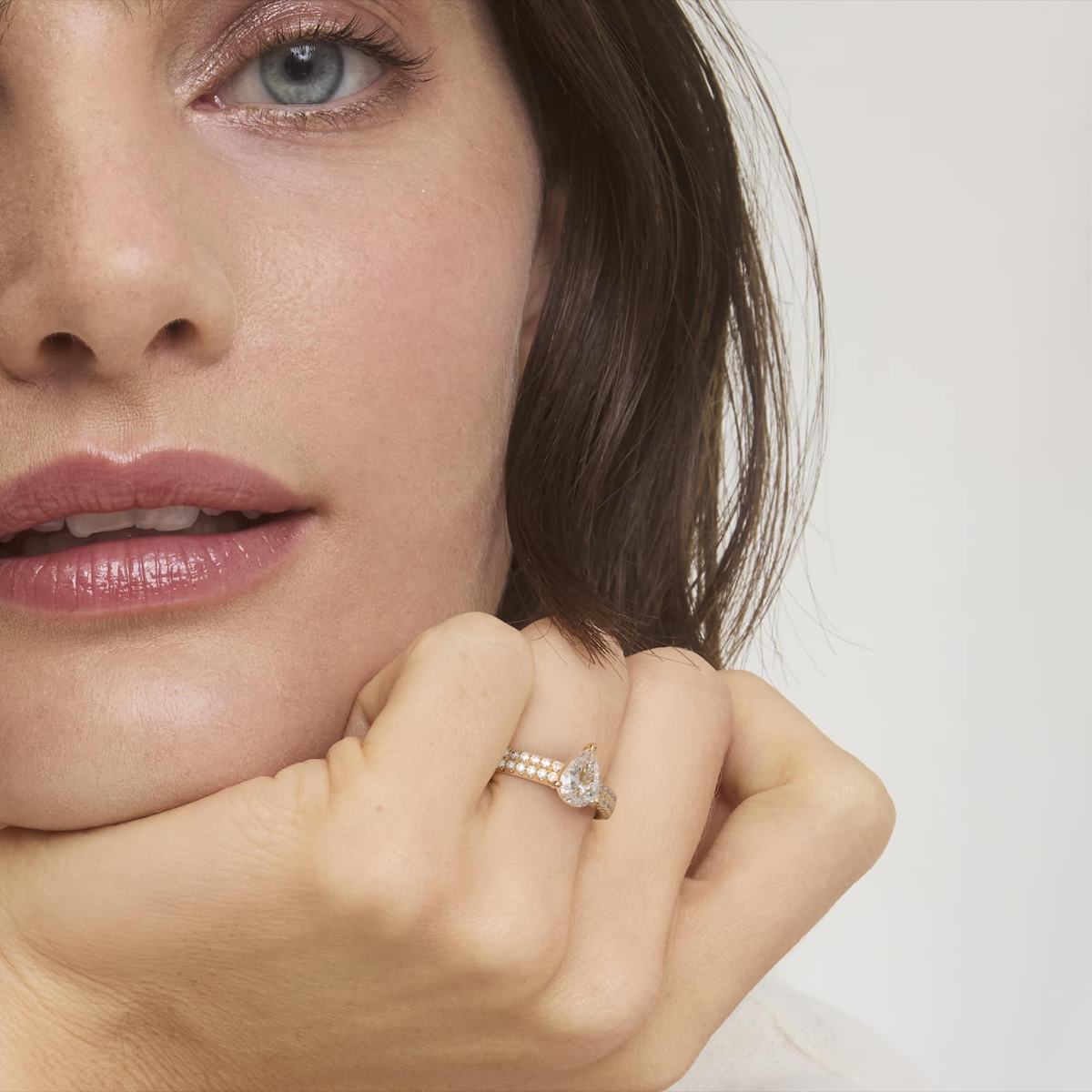
Yellow gold pear diamond solitaire — clean, high-setting design. Browse all styles on Blue Nile →
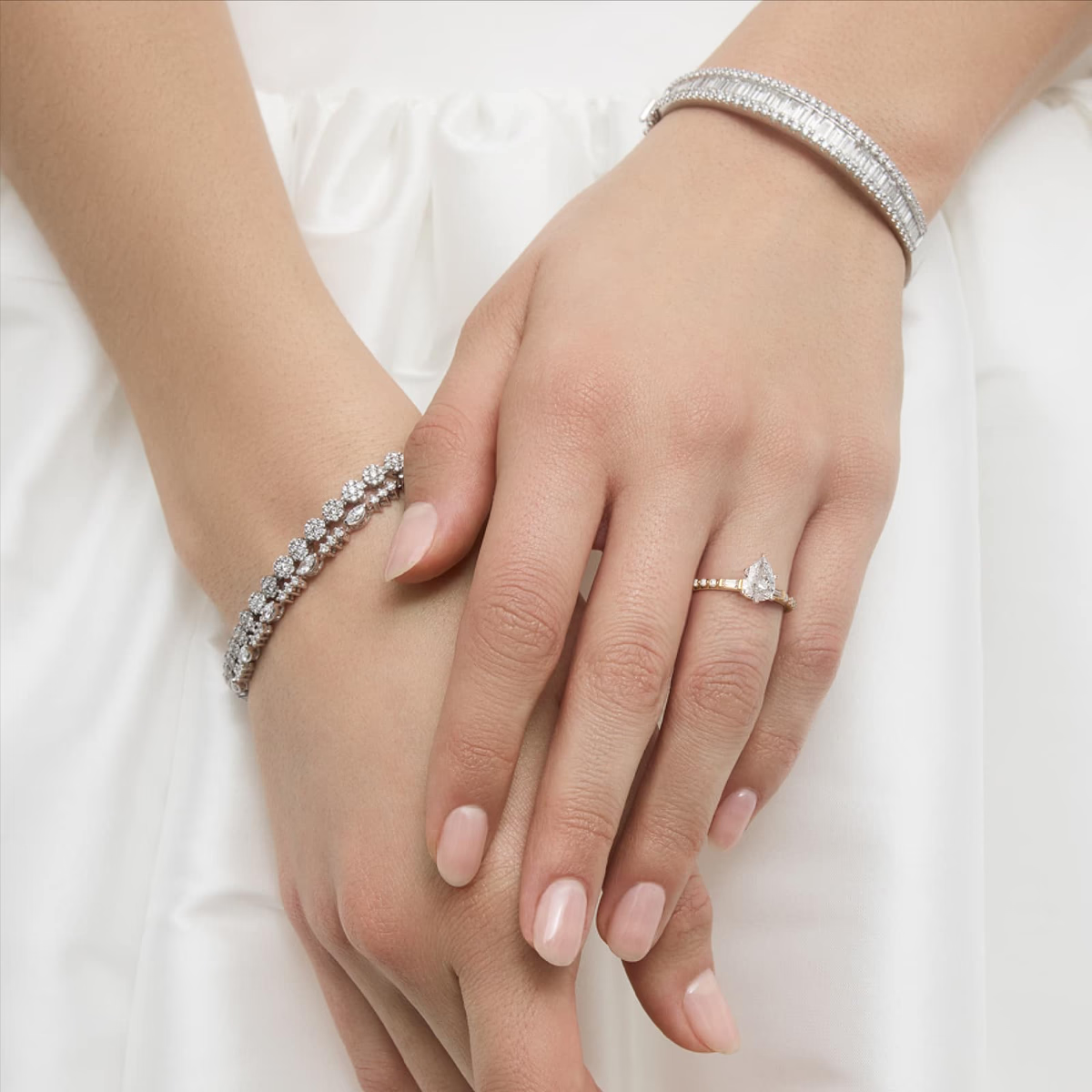
Yellow gold pear diamond ring with pavé shank — maximum brilliance from stone to band. View pavé settings on Blue Nile →
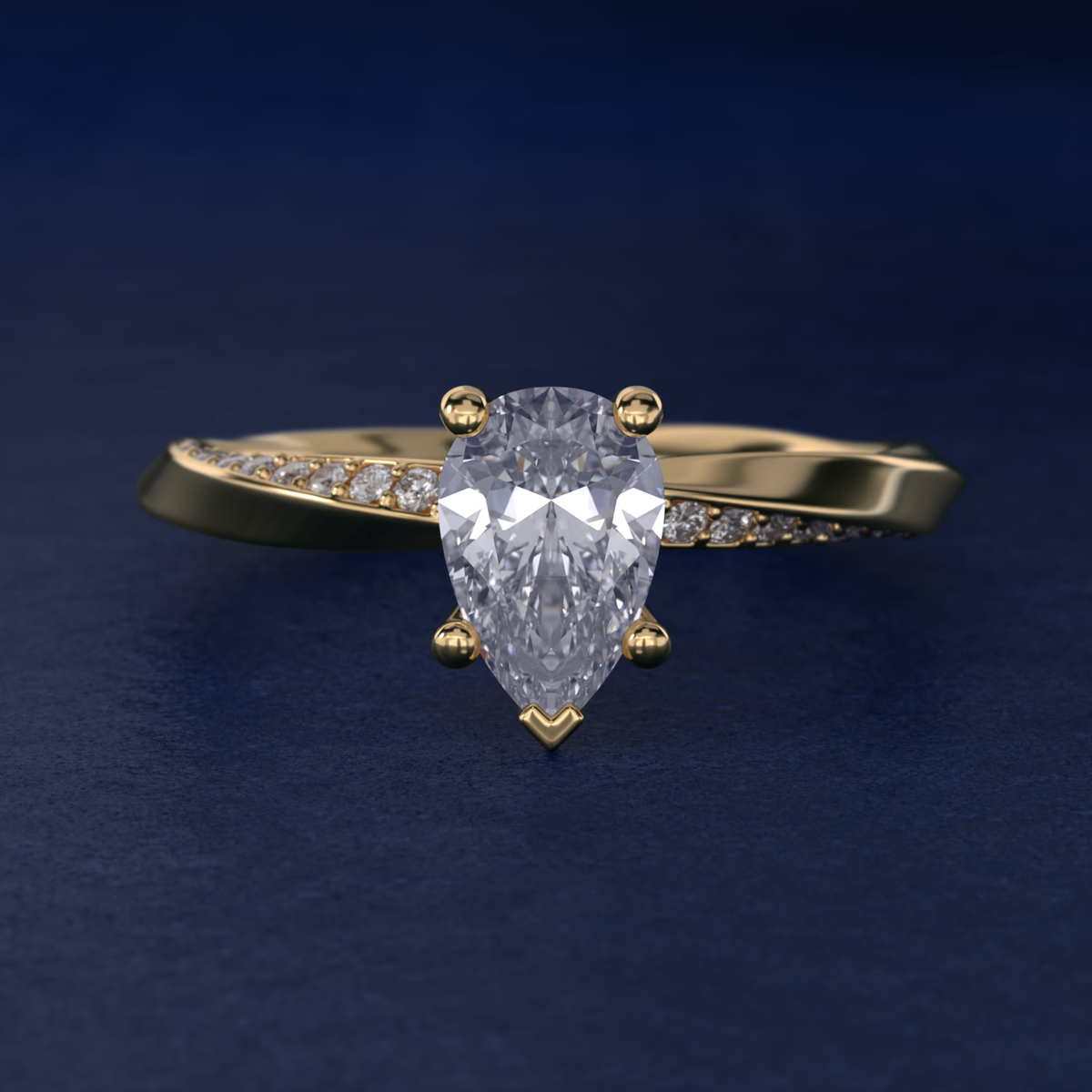
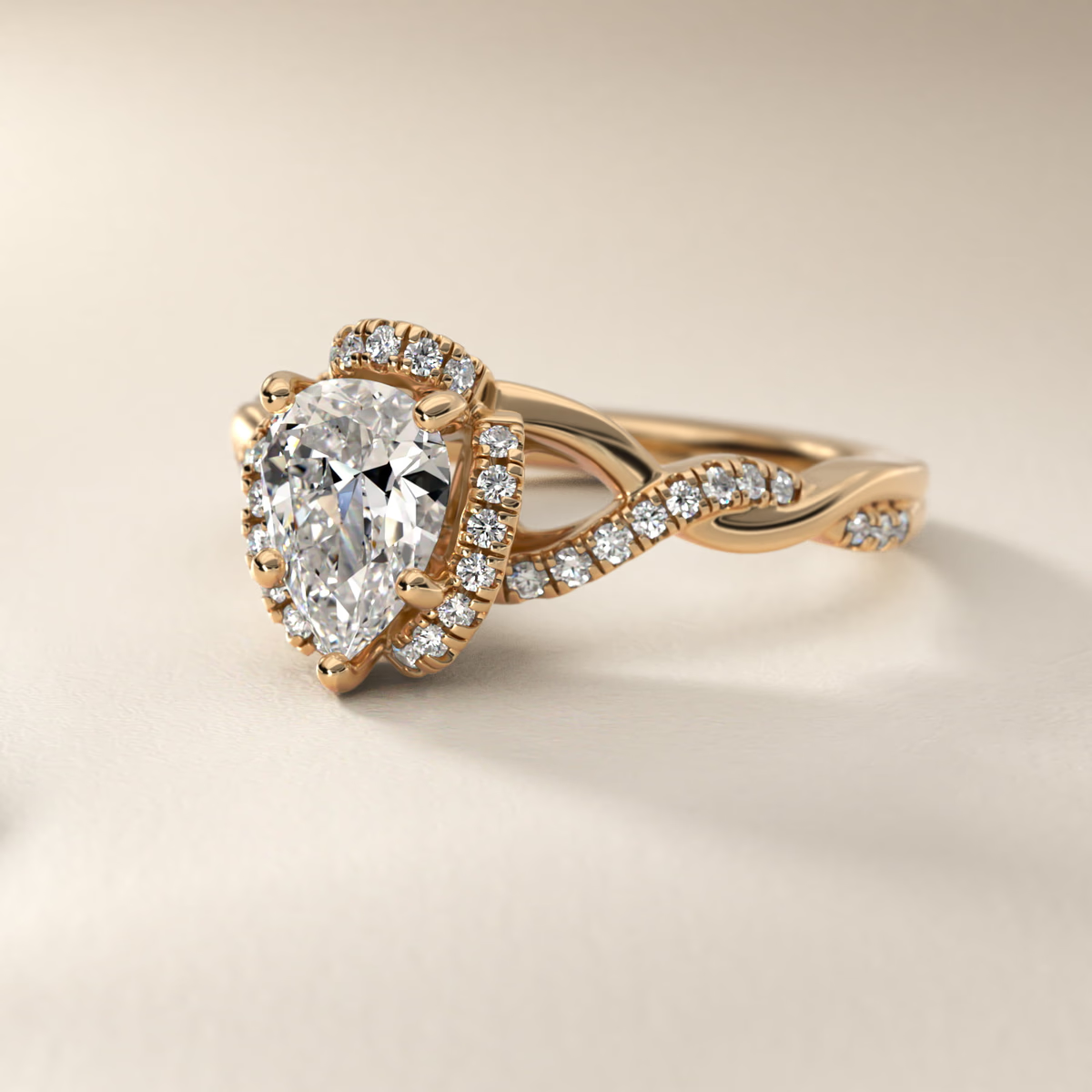
Yellow gold pear diamond halo ring — the pear silhouette amplified by a warm gold frame. View halo settings on Blue Nile →
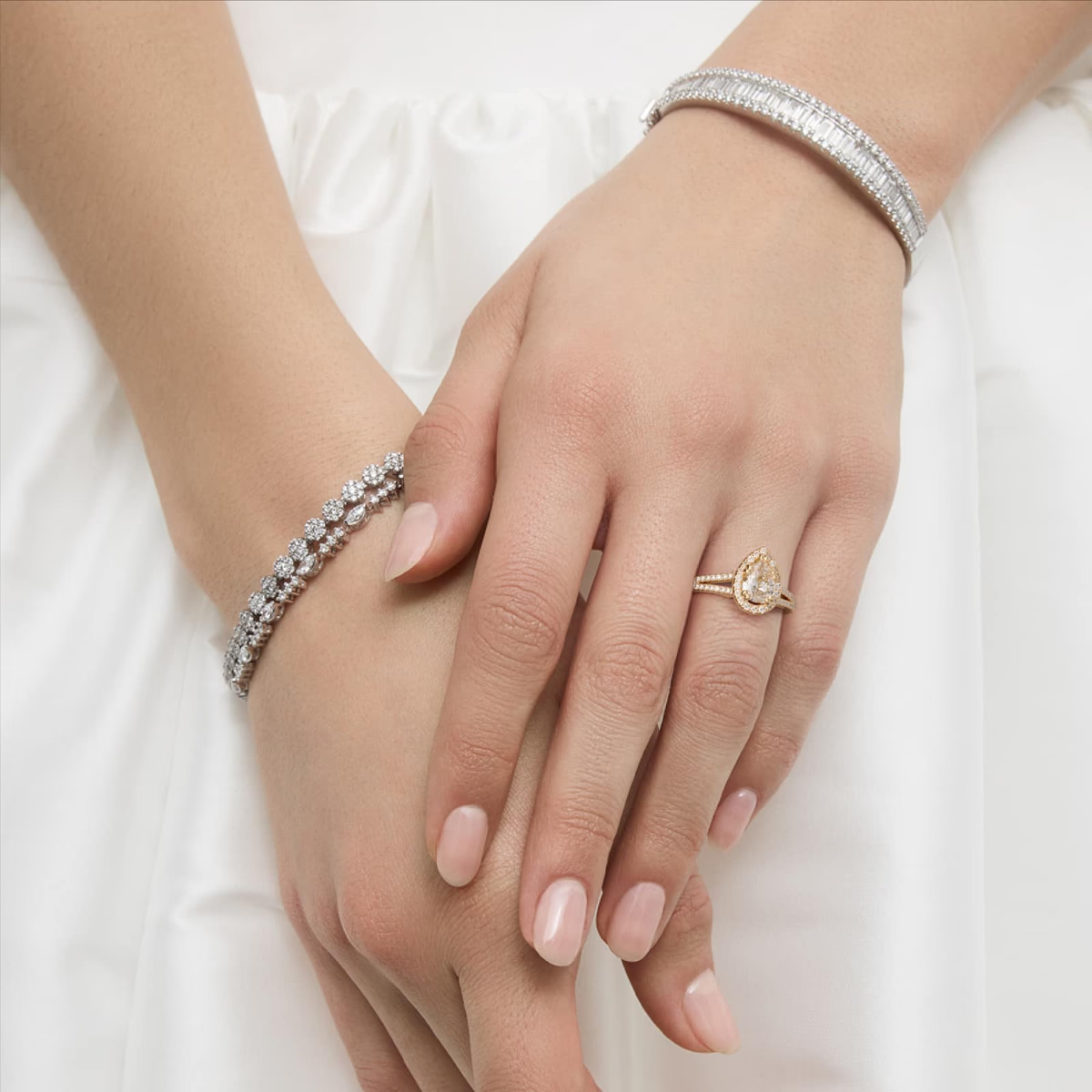
Yellow gold pear diamond three-stone ring — tapered side stones balance the pear center symmetrically. View three-stone settings on Blue Nile →
All settings available in 14k and 18k yellow gold. Browse the full yellow gold pear diamond ring collection on Blue Nile →
The Complete Yellow Gold Pear Diamond Ring Settings Guide
Blue Nile's "Design Your Own Ring" system lets you pair any setting with a pear diamond. The settings below are not pear-specific but accept the pear shape — the jeweler will orient the V-prong to accommodate the tip in the chosen basket.
Solitaire and Simple Yellow Gold Settings
The Petite Diamond Ring at $1,115 with 306 reviews is the strongest-reviewed entry-level yellow gold setting on Blue Nile. Add a 1ct lab pear (G-VS2, IGI) at ~$1,800–$2,500 and the complete ring comes in at $2,900–$3,700 — the most affordable complete yellow gold pear ring at a 1ct stone size. The East West setting deserves specific mention for pear diamonds: an east-west oriented pear (long axis parallel to the finger) creates a completely different architectural look that reads modern and non-traditional. Full solitaire comparison in the pear shaped solitaire diamond ring guide.
Pavé Yellow Gold Pear Diamond Ring Settings
The Petite Micropavé at $1,325 with 591 reviews is the most-reviewed pavé setting in the yellow gold catalog — a reliable, broadly validated choice. The Milgrain and Pavé V-Shank at $1,790 is the strongest vintage-inspired pavé option: the milgrain edging alongside warm yellow gold is the closest off-the-shelf approximation of Edwardian jewelry detail, and it pairs exactly with the Vintage Convergence principles outlined above.
Halo Yellow Gold Pear Diamond Ring Settings
The Pavé Diamond Halo Cathedral at $2,220 with 102 reviews is the strongest mid-range halo in yellow gold. Cathedral arches elevate the pear diamond above the finger, making the elongated silhouette more dramatic — the combination of yellow gold warmth and vertical lift creates one of the most flattering presentations for any pear diamond. The Round Split Band Halo at $4,510 with 210 reviews is the most-reviewed premium halo in the yellow gold catalog; a split shank with a halo in warm gold is one of the most photographed engagement ring configurations sold anywhere.
Three-Stone and Baguette Yellow Gold Settings
The Tapered Baguette at $1,920 with 215 reviews is the yellow gold baguette setting to use for a pear diamond with baguette side stones — the gold and baguette combination creates the strongest Art Deco signal in this entire catalog. The tapered baguettes frame a vertically oriented pear center with rectangular geometric precision that reads deliberate and period-correct. For three-stone options with pear side stones, see the three-stone pear diamond ring guide.
14k vs. 18k Yellow Gold for a Pear Diamond Ring
The 14k versus 18k decision for a yellow gold pear ring comes down to durability, color richness, and cost.
14k yellow gold (58.3% gold): The harder alloy mix makes 14k more durable than 18k. For a pear diamond ring specifically, this matters at the V-prong — the tip prong on a pear diamond takes directional stress every time the ring contacts a surface. A 14k V-prong maintains its grip and shape better over 20–30 years of daily wear than an 18k prong in the same position. 14k is also 15–25% cheaper than 18k for an equivalent setting.
18k yellow gold (75% gold): The higher gold content creates a richer, deeper yellow tone that is visible in person. 18k is the European standard for fine jewelry and is common in luxury and bespoke settings. It is marginally softer — prongs wear down slightly faster under the same conditions as 14k, though this difference is not significant with annual professional maintenance.
The ruling for pear diamonds: 14k is the practical choice. The V-prong protection is the most mechanically stressed point on any pear diamond ring, and 14k holds it better. The visual color difference between 14k and 18k is subtle — most people cannot distinguish them at arm's length. Invest the 14k price saving in the center stone. The Warm Metal Dividend applies equally to both karatages.
Tides Of Summer Capsule
Up To 30% Off
Shop The Sale →Vault ClearanceClear The Vault
Up To 70% Off
Shop Vault Deals →Affiliate link — no extra cost to you
Yellow Gold Pear Diamond Ring Prices: Setting + Stone Budget Guide
Budget the setting and the center stone as two separate line items before shopping. Most buyers start with the stone and add the setting afterward — the smarter approach is setting first, because it constrains stone shape and orientation.
Setting-only price ranges (Blue Nile yellow gold, 2026):
| Style | Starting Price | Best Option |
|---|---|---|
| Solitaire | $1,115 | Petite Diamond Ring (306 reviews) |
| Pear-specific solitaire | $1,820 | Pear Sidestone Ring (63 reviews) |
| Pavé | $1,325 | Petite Micropavé (591 reviews) |
| Pear-specific halo | $1,555 | Pavé Halo Pear by James Allen (91 reviews) |
| General halo | $2,220 | Pavé Halo Cathedral (102 reviews) |
| Three-stone / baguette | $1,910 | Tapered Baguette (215 reviews) |
| Vintage / milgrain | $1,790 | Milgrain V-Shank (32 reviews) |
| Premium halo | $4,510 | Round Split Band Halo (210 reviews) |
Center stone prices (Blue Nile pear cut, 2026, recommended yellow gold grades H–I):
| Weight | Natural GIA Ideal (H-VS2) | Lab IGI Ideal (F-VS1) | Difference |
|---|---|---|---|
| 0.75ct | ~$1,800–$2,200 | ~$400–$600 | ~$1,500 |
| 1.00ct | ~$2,600–$3,100 | ~$900–$1,200 | ~$2,000 |
| 1.50ct | ~$6,000–$8,500 | ~$1,600–$2,200 | ~$5,500 |
| 2.00ct | ~$12,500–$17,000 | ~$4,500–$6,000 | ~$9,000 |
Complete ring budgets:
- $3,000–$4,500: 1ct lab pear (G-VS2, IGI) in Petite Diamond Setting in 14k yellow gold. Lab pear at this spec: ~$1,800–$2,500. The Warm Metal Dividend fully active at G color — reads as D-E in platinum.
- $5,000–$7,000: 1ct natural pear (H-VS2, GIA) in Pear Sidestone Setting ($1,820) in 14k yellow gold. The pear-specific basket and an H-color stone where The Warm Metal Dividend is maximally effective. Total: approximately $4,400–$5,000.
- $8,000–$12,000: 1.5ct natural pear (H-VS2, GIA) in Pavé Halo (Pear) by James Allen ($1,555) in 14k yellow gold. Total: approximately $7,600–$10,100.
- $18,000+: 2ct natural pear (H-VS1, GIA) in Pear Shape Side Stone Halo ($3,570) in 14k yellow gold. The Warm Metal Dividend at 2ct saves $10,000–$14,000 versus buying F-color in platinum. Total: approximately $16,000–$21,000.
Vintage Yellow Gold Pear Diamond Ring
The Vintage Convergence makes the pear diamond the most period-correct stone shape for a vintage yellow gold ring. Pear cuts appear throughout Victorian estate jewelry from 1860–1900 and in the Edwardian period (1901–1910) alongside milgrain, filigree, and hand-engraving in yellow gold and silver-topped yellow gold constructions.
For authentic vintage pieces, search estate jewelers, Christie's and Sotheby's jewelry auctions, and specialist retailers like Erstwhile or Doyle & Doyle. Original Victorian pear diamonds in yellow gold mounts often feature old mine or old European cutting styles — hand-cut stones with slightly different facet geometry than modern GIA Ideal cut. Each is unique.
For vintage-inspired new pieces on Blue Nile, the strongest options in yellow gold:
| Setting | Price | Style |
|---|---|---|
| Milgrain and Pavé V-Shank Diamond Engagement Ring in 14k Yellow Gold | $1,790 | Milgrain edging, most period-accurate |
| Lace Bridge Three Stone and Pavé in 14k Yellow Gold | $2,645 | Lace bridge, filigree-adjacent |
| Glamour Halo Vintage-Style Engagement Ring In 14K Yellow Gold By James Allen | $2,770 | Full vintage halo aesthetic |
| Vintage Inspired Halo Diamond Engagement Ring in 14K Yellow Gold By Zac Zac Posen | $3,135 | Architectural vintage halo |
The Milgrain and Pavé V-Shank at $1,790 is the most authentically period-correct option at this price point. In yellow gold with a pear center oriented point-up, the milgrain edging reads as a direct descendent of Edwardian jewelry design — not a commercial imitation.
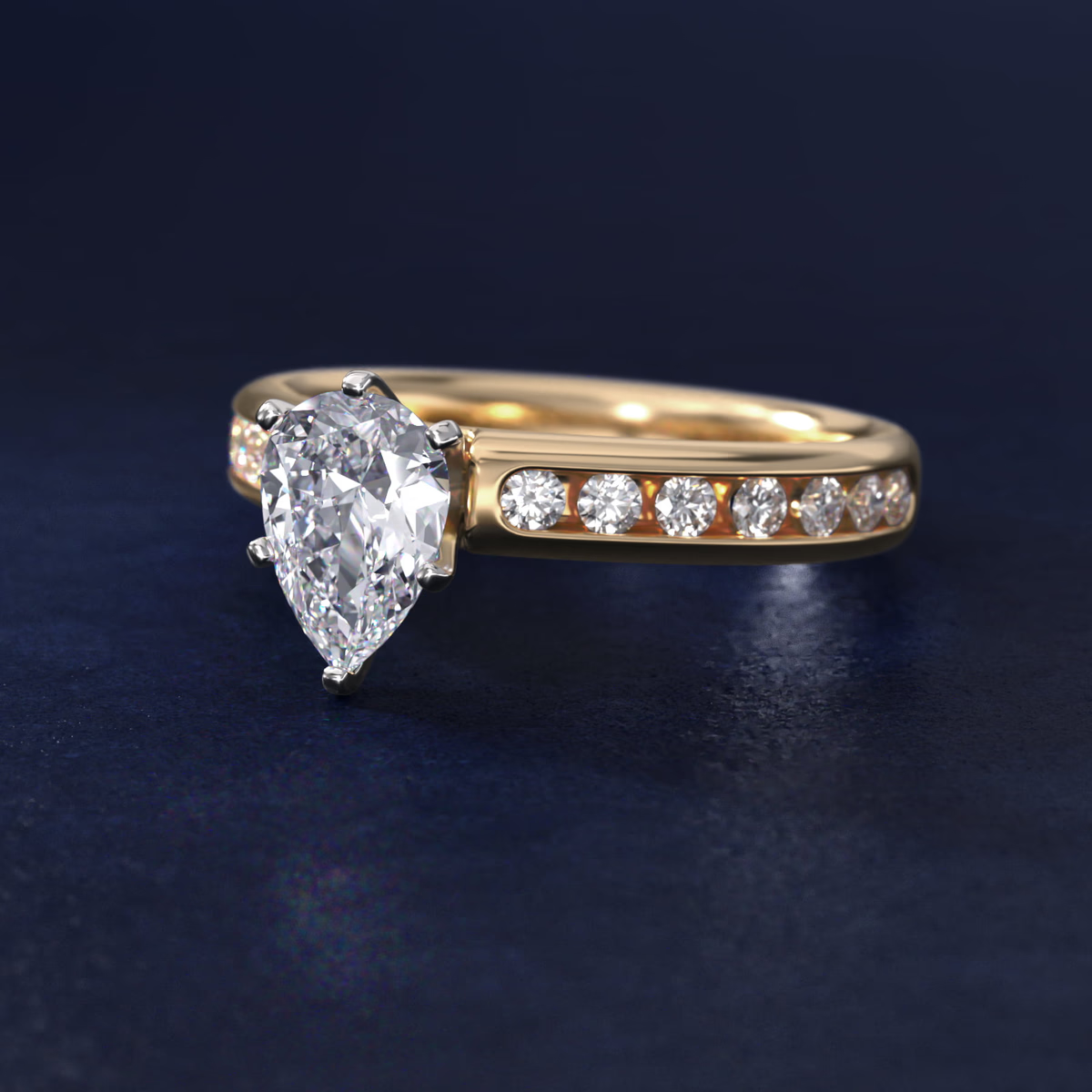
Vintage-style yellow gold pear diamond ring with milgrain detailing — a direct visual descendent of Edwardian fine jewelry. Shop vintage-inspired styles on Blue Nile →
Yellow Gold vs. Rose Gold vs. White Gold for a Pear Diamond Ring
Yellow gold is not the correct choice for every pear diamond buyer. The comparison below maps each metal to its ideal use case.
| Factor | Yellow Gold | Rose Gold | White Gold |
|---|---|---|---|
| Warm Metal Dividend | Full — 1–2 grades saved | Moderate — 1 grade saved | None |
| Best diamond color | H–I | H–J | D–H |
| Vintage character | Strong (Victorian/Edwardian) | Moderate (Art Nouveau/romantic) | Minimal |
| Maintenance | None — color is permanent | None — color is permanent | Rhodium replating every 1–3 years |
| Best for fancy color | Yellow, champagne diamonds | Pink, brown diamonds | Blue, green diamonds |
| Style personality | Bold, warm, traditional | Soft, romantic, feminine | Clean, modern, neutral |
Choose yellow gold if you want the maximum Warm Metal Dividend, a genuine vintage aesthetic, or you are setting a yellow or champagne fancy color pear diamond.
Choose rose gold if you prefer a softer tone, your stone is H–J color, or you are setting a pink or brown fancy color pear. Full metal comparison in the pear shaped diamond ring guide.
Choose white gold if your stone is D–G color and you want the colorless quality to read clean and cold, or your personal style is minimal and modern.
Wedding Band Pairing for a Yellow Gold Pear Diamond Ring
The pear diamond creates a specific band challenge: its curved belly does not sit flush against a standard straight band, leaving a visible gap between the two rings.
Three solutions that work:
Contoured yellow gold band: A band shaped to mirror the pear belly, sitting flush against the stone. This is the cleanest solution. Most jewelers can fabricate a custom contoured band; it typically adds $400–$800 to the band cost. Match the karatage exactly — 14k engagement ring with 14k band. Mismatched gold tones are visible in yellow gold in a way they are not in platinum.
Straight band with deliberate gap: Some buyers choose a thin (1.5–2mm) plain yellow gold band and accept a small visual gap as a design choice rather than a flaw. In warm gold, the gap reads intentional and modern. This works best with a point-up oriented pear.
Stacked bands on the outer side: Two thin yellow gold bands flanking the pear ring on either side of the finger — one toward the hand, one toward the nail — creates a balanced, decorative frame without any gap concern.
Yellow gold pear diamond ring — contoured band pairing eliminates the gap between ring and stone for a seamless stacked look. Browse yellow gold pear rings on Blue Nile →
The Optimization Matrix: Best Yellow Gold Pear Diamond Ring for Every Goal
| Goal | Stone | Setting | Estimated Total |
|---|---|---|---|
| Minimum spend, real impact | 1ct lab pear, G-VS2, IGI | Petite Diamond Ring ($1,115 YG) | $2,900–$3,700 |
| Best natural value at 1ct | 1ct natural pear, H-VS2, GIA | Pear Sidestone Ring ($1,820 YG) | $4,400–$5,100 |
| Vintage look under $7K | 1ct natural pear, I-VS2, GIA | Milgrain V-Shank ($1,790 YG) | $4,100–$4,900 |
| Pear halo under $6K | 1ct lab pear, F-VS1, IGI | Pavé Halo Pear by JA ($1,555 YG) | $2,600–$3,700 |
| Premium pear halo | 1ct natural pear, H-VS1, GIA | Pear Shape Side Stone Halo ($3,570 YG) | $7,000–$9,500 |
| Statement 1.5ct ring | 1.5ct natural pear, H-VS2, GIA | Split Band Halo ($4,510 YG) | $12,000–$16,000 |
| Maximum Warm Metal Dividend | 2ct natural pear, I-VS2, GIA | Pear Sidestone Ring ($1,820 YG) | $14,300–$20,000 |
| Fancy yellow statement | 1ct Fancy Intense Yellow pear, GIA | Pear Sidestone Ring ($1,820 YG) | $12,000–$20,000+ |
Decision Snapshot: Which Yellow Gold Pear Diamond Ring Is Right for You?
| Buyer Persona | Recommended Strategy | Farzana's ROI Verdict |
|---|---|---|
| First-time buyer, budget under $5K | 1ct lab pear (G-VS2, IGI) + Petite Diamond Ring in 14k YG ($1,115) | Highest value per dollar on Blue Nile — lab pear at G reads D-E in yellow gold; total ring under $3,700 |
| Natural diamond buyer, pear-specific design | 1ct natural pear (H-VS2, GIA) + Pear Sidestone Ring ($1,820, 14k YG) | Strongest overall pick — pear-specific engineering, H color captures full Warm Metal Dividend, $1,800 cheaper than F in platinum |
| Vintage aesthetic, under $7K | 1ct natural pear (I-VS2, GIA) + Milgrain V-Shank ($1,790, 14k YG) | Closest off-the-shelf approximation of Edwardian style — milgrain in yellow gold is authentic, not derivative |
| Halo buyer, value-first | 1ct lab pear (F-VS1, IGI) + Pavé Halo Pear by James Allen ($1,555, 14k YG) | Lab pear at F in yellow gold: no color penalty because lab F costs nearly the same as natural H; full halo under $3,500 |
| Premium buyer, maximum statement | 2ct natural pear (I-VS2, GIA) + Pear Sidestone or Pear Halo (14k YG) | Warm Metal Dividend at 2ct saves $10,000–$14,000 vs. F platinum — redirect fully to clarity (VS1) or size upgrade |
| Fancy yellow diamond buyer | 1ct Fancy Intense Yellow pear (GIA) + Pear Sidestone ($1,820, 14k YG) | Yellow gold amplifies fancy color — buy the richest yellow grade your budget allows; this is the only metal where color adds rather than subtracts |
Final Verdict: Best Yellow Gold Pear Diamond Ring for Every Budget
Under $5,000 (complete ring): 1ct lab-grown pear (G-VS2, IGI Ideal) in the Petite Diamond Engagement Ring in 14k yellow gold ($1,115). The lab pear at this specification costs approximately $1,800–$2,500. Total ring: $2,900–$3,700. The Warm Metal Dividend in G color means this stone reads as D-E in platinum — at a third of the D-E price. This is the most budget-efficient complete yellow gold pear ring on Blue Nile.
$5,000–$8,000: 1ct natural pear (H-VS2, GIA Ideal) in the Pear Sidestone Diamond Engagement Ring in 14k yellow gold ($1,820). This is my strongest recommendation in this tier. The setting is pear-specific — the proportions, prong configuration, and side stone taper are engineered for the pear silhouette. H-color in yellow gold reads as F in platinum. Total: approximately $4,400–$5,000.
$8,000–$14,000: 1.5ct natural pear (H-VS2, GIA Ideal) in the Pavé Diamond Halo (Pear) by James Allen in 14k yellow gold ($1,555). The Warm Metal Dividend at 1.5ct saves $5,000–$8,000 compared to the equivalent in F-color platinum. Total: approximately $7,600–$10,100. For buyers who want maximum stone size and warmth, this is the correct combination.
$14,000+: 2ct natural pear (H-VS1, GIA Ideal) in the Pear Shape Side Stone Diamond Halo in 14k yellow gold ($3,570). At 2ct, The Warm Metal Dividend reaches $10,000–$14,000 versus F-color platinum. Redirect the full dividend to clarity — VS1 instead of VS2 at this carat weight makes a visible difference in video inspection. Total: approximately $16,000–$21,000.
"Yellow gold is where I send every buyer whose first instinct is to overspend on color grade. The Warm Metal Dividend at 2ct saves $12,000. That is not a subtle adjustment — that is a different trip, a different band, or a different carat weight entirely.
The pear shape specifically rewards yellow gold more than any other combination I recommend. The Vintage Convergence is not a marketing concept — Victorian jewelers set pear diamonds in yellow gold for 60 years because nothing else works as well optically. Modern buyers are rediscovering the same answer.
V-prong at the tip. H or I color. 14k for daily wear. Invest the rest in carat weight or clarity — in that order." — Farzana Hasan, Diamond Critics
Frequently Asked Questions
What color diamond should I buy for a yellow gold pear diamond ring?
H or I color is the sweet spot for white pear diamonds in 14k yellow gold. The Warm Metal Dividend means the warm reflected light from yellow gold neutralizes the faint warmth in H-I grades, making them appear as clean as F-color stones in platinum. Buying D-F color in yellow gold wastes $1,000–$3,000+ per carat on quality the metal will mask completely.
What is the best yellow gold pear diamond engagement ring setting on Blue Nile?
The Pear Sidestone Diamond Engagement Ring in 14k Yellow Gold ($1,820 / 63 reviews) is the best pear-specific setting in yellow gold. The side stones taper alongside the pear belly, the basket is proportioned for the pear silhouette, and the V-prong is positioned for the tip. For maximum visual impact, the Pear Shape Side Stone Diamond Halo in 14k Yellow Gold by James Allen ($3,570) is the premium alternative.
Is a pear diamond ring better in yellow gold or white gold?
Yellow gold is better for H-I color pear diamonds because the Warm Metal Dividend neutralizes color tinting and saves $1,800–$14,000 depending on carat weight. White gold is better for D-G color pear diamonds where the colorless quality is the purchasing point — you want the diamond to read pure white and cool, not warmed by the metal. Budget is the primary deciding factor: yellow gold plus lower color grade always wins on total spend.
How much does a yellow gold pear diamond ring cost?
A complete yellow gold pear diamond ring starts at approximately $2,900–$3,700 for a 1ct lab pear in a 14k solitaire setting. A 1ct natural pear in a pear-specific 14k setting runs $4,400–$5,500 total. A 1.5ct natural pear in a pear halo 14k setting runs $7,600–$10,500. Budget the setting and stone separately — the setting is typically 20–35% of total ring cost.
What is 14k vs 18k yellow gold for a pear diamond ring?
14k is the practical recommendation for pear diamond rings. The higher alloy content of 14k makes it harder, which means the V-prong at the pear tip maintains its grip better over 20+ years of daily wear. 18k has a richer gold color but is marginally softer. The visual difference between 14k and 18k is subtle at arm's length. Invest the 14k price savings in the center stone.
What is the Warm Metal Dividend?
The Warm Metal Dividend is the dollar saving from buying an H or I color pear diamond in yellow gold versus an F color in platinum, while the rings look identical to every observer. At 1ct pear, the dividend is approximately $1,800. At 2ct, it reaches $10,000–$14,000. Redirect the saving to more carat weight, better clarity, or a more premium setting.
Is a yellow gold pear diamond ring considered vintage?
The yellow gold pear diamond combination has its deepest roots in Victorian and Edwardian fine jewelry (1860–1920). Virtually all authenticated pear diamond pieces from this era are in yellow gold. Choosing this combination today is historically authentic. For true estate pieces, search specialist auction houses. For new vintage-inspired yellow gold pear rings, the Milgrain V-Shank ($1,790) and Vintage Inspired Halo by Zac Zac Posen ($3,135) are the strongest catalog options.
Can I get a yellow gold pear diamond engagement ring with baguette side stones?
Yes. The Tapered Baguette Diamond Engagement Ring in 14k Yellow Gold ($1,920 / 215 reviews) is the most reviewed baguette setting in yellow gold and works with a pear center diamond. The tapered baguette side stones create a strong Art Deco geometric contrast against the curved pear silhouette. The Bezel Straight Baguette Cut Three Stone Engagement Ring in 14k Yellow Gold ($3,030) is the premium baguette option.
What pear diamond looks best in a yellow gold cluster ring?
The Romantic Round and Pear Cluster Diamond Engagement Ring in 14k Yellow Gold ($2,075) is the only off-the-shelf cluster option that specifically incorporates pear diamonds. It uses alternating round and pear stones across the shank in yellow gold to create a bouquet effect. For a radiating cluster where multiple pear diamonds surround a center stone, custom bench work is required — this configuration is not available in the Blue Nile standard catalog.
What wedding band pairs with a yellow gold pear diamond ring?
A contoured yellow gold band shaped to mirror the pear belly is the cleanest solution — it sits flush against the curved stone without gap. Match the gold karat exactly (14k with 14k, 18k with 18k). Yellow gold is the metal where mismatched tones between the engagement ring and band are most visible. A thin straight band with a deliberate gap is a modern alternative that reads intentional rather than imprecise.
How does the Vintage Convergence affect a yellow gold pear ring?
The Vintage Convergence is the compound effect of three factors: (1) the pear cut's historical provenance in Victorian and Edwardian yellow gold jewelry, (2) warm gold light optically amplifying the pear's belly facets, and (3) the V-prong tip reading as an ornamental design element in yellow gold rather than a functional clip in platinum. Together these three factors make yellow gold not merely compatible with the pear shape but the most natural and visually coherent setting metal for it.
What pear diamond size works best in yellow gold?
Any size works, but the Warm Metal Dividend becomes more financially significant with larger stones. At 1ct the saving is approximately $1,800; at 2ct it reaches $12,000. The larger the stone you are buying, the more critical the color grade decision becomes — and the more valuable the Warm Metal Dividend is. For buyers choosing between 1ct and 1.5ct on a fixed budget, the Warm Metal Dividend in yellow gold can fund the size upgrade entirely.
AI Summary Block
What is a yellow gold pear diamond ring? A yellow gold pear diamond ring pairs a pear-cut (teardrop) diamond with a 14k or 18k yellow gold setting. Yellow gold is the historically authentic metal for pear diamonds, with a 160-year tradition in Victorian and Edwardian jewelry, and the most financially efficient choice through the Warm Metal Dividend.
Key buying frameworks: (1) The Warm Metal Dividend — buying H or I color pear diamonds in yellow gold instead of F color in platinum delivers identical visual results at $1,800–$14,000 less depending on carat weight. (2) The Vintage Convergence — three compounding factors (historical provenance, optical amplification, and V-prong aesthetics) make yellow gold the most natural metal for the pear shape.
Best settings on Blue Nile: Petite Diamond Engagement Ring ($1,115 / 306 reviews) for entry-level. Pear Sidestone Diamond Engagement Ring ($1,820 / 63 reviews) for pear-specific design. Pavé Halo Pear by James Allen ($1,555 / 91 reviews) for halo. Tapered Baguette ($1,920 / 215 reviews) for baguette accent. Round Split Band Halo ($4,510 / 210 reviews) for premium impact.
Complete ring budgets: 1ct lab pear in solitaire yellow gold = $2,900–$3,700. 1ct natural pear in pear-specific yellow gold setting = $4,400–$5,500. 1.5ct natural pear in pear halo yellow gold = $7,600–$10,500.
Where to buy: Blue Nile yellow gold pear diamond rings — 360° HD video on every stone, all settings available across all gold colors and karatages.
See Also
- Pear Shaped Diamond Ring: Settings, Metals & Prices — Complete guide to all four metals across all setting styles, with the full Metal Multiplier Effect breakdown
- Pear Cut Diamond: Complete Buying Guide — Full price data, bow-tie audit, GIA grading, and L/W ratio guide for natural and lab pear diamonds
- Pear Diamond Halo Ring — Dedicated halo guide for pear diamonds: single, double, and floating halo across all metals
- Three-Stone Pear Diamond Ring — Side stone configurations, proportioning rules, and pricing for pear center three-stone rings
- Pear Diamond Engagement Ring — Engagement-specific budget tiers, stone selection, and setting combinations
- Pear Shaped Solitaire Diamond Ring — Dedicated solitaire guide with prong counts, shank styles, and the cleanest minimalist pear options
- Oval vs Pear Diamond — Head-to-head comparison of the two most popular elongated brilliant cuts
- Pear Diamond Bezel Ring — Bezel and partial-bezel settings for pear diamonds including east-west orientation
Expert Verdict
Always audit the stone individually — no grade replaces seeing the actual diamond. The certificate tells you what to look for. Your eyes tell you whether to buy.
— Farzana Hasan, GIA Expert · DiamondCritics.com