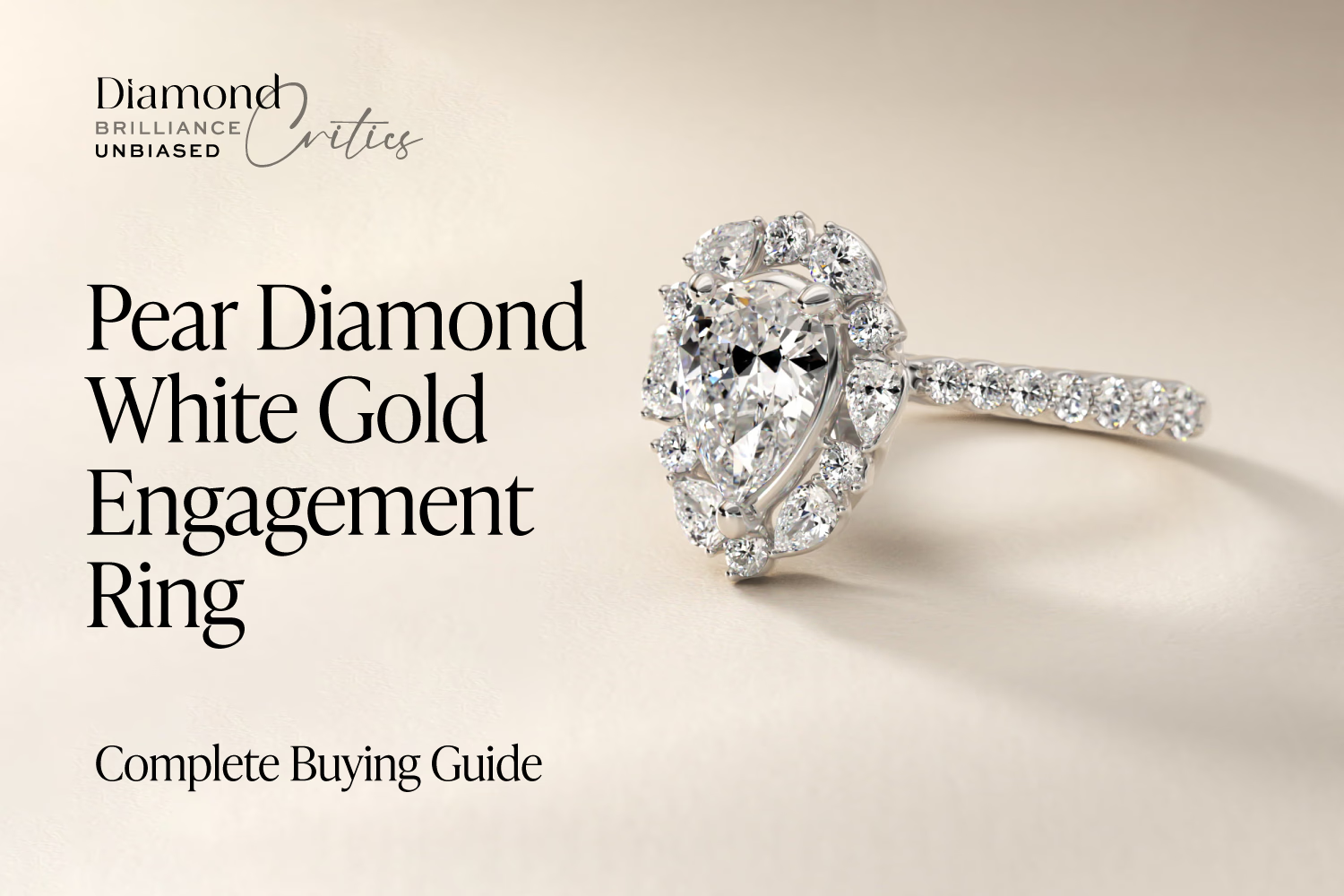
Three Stone Pear Diamond Ring: The Complete 2026 Guide
TL;DR — Key Facts at a Glance
- Three stone pear diamond ring settings start at $1,820 (Pear Sidestone, 63 reviews) — the most field-tested pear sidestone setting in the Blue Nile catalog
- Pear diamonds appear in three-stone rings in two roles: as the center stone flanked by baguette, marquise, trillion, or emerald sides — or as side stones flanking an oval, cushion, or round center
- The Mirror Rule: pear side stone tips must point outward (away from the center stone) — inward-pointing pear tips create visual tension and are a correctable design error
- The most searched three-stone pear configuration: oval center + pear side stones in yellow gold (880 monthly searches)
- Marquise Cut Three Stone by James Allen (152 reviews, $1,970) is the most-reviewed three-stone setting for a pear center stone in the Blue Nile catalog
- Complete three-stone pear rings (1ct center + pear side setting) start at ~$2,620 with a lab stone and ~$4,970 with a natural GIA-certified stone
A three stone pear diamond ring is one of the most visually complex ring configurations available. It involves decisions about center stone shape, side stone shape, the proportion ratio between them, and the orientation of the pear's asymmetrical silhouette — all at once.
The pear diamond plays two distinct roles in three-stone rings. As a center stone, it presents an asymmetrical silhouette that side stones must complement without competing. As a side stone, two mirrored pears flank a center stone — typically oval, round, or cushion cut — and the orientation of each pear tip determines whether the ring reads as intentional design or a correctable error.
This guide covers both roles in full: every three-stone setting Blue Nile offers that involves a pear diamond, the two named frameworks that govern how pear diamonds work in multi-stone rings, and complete pricing across every carat tier and metal.


What Is a Three Stone Pear Diamond Ring?
A three stone pear diamond ring features one center stone and two side stones, where the pear cut appears in at least one of the three positions. The pear's asymmetrical teardrop silhouette — one rounded belly tapering to a pointed tip — creates specific design requirements that distinguish these rings from three-stone rings using symmetrical cuts.
There are three primary configurations:
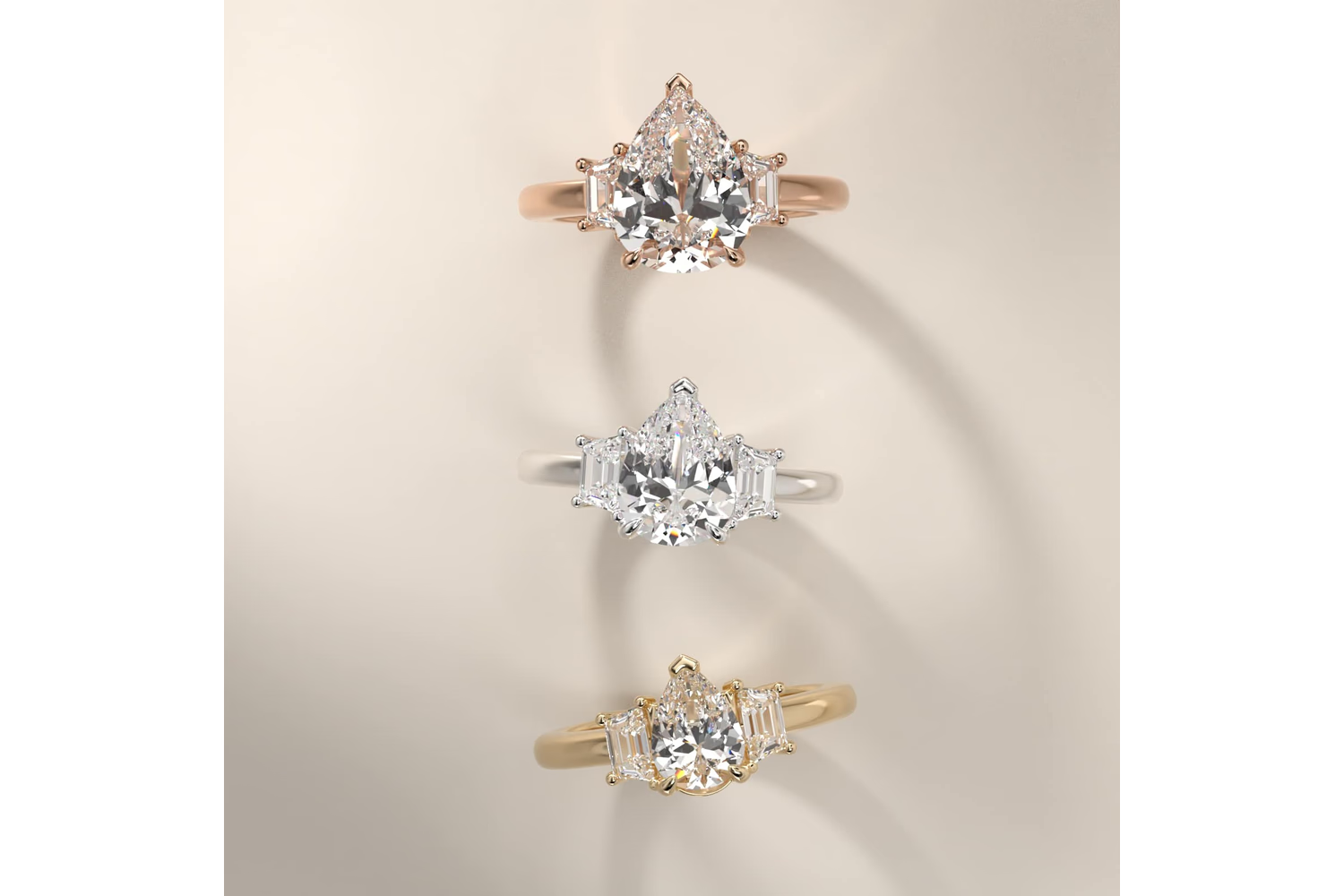
Pear center + symmetrical sides: The pear is the center stone, flanked by baguette, marquise, trillion, half-moon, trapezoid, or emerald cuts. Shapes that contrast linearly with the pear center — baguette, emerald — create Art Deco tension. Shapes that echo it organically — trillion, marquise — create a unified directional field.
Symmetrical center + pear sides: An oval, round, cushion, or other center stone is flanked by two mirrored pear-shaped side stones. This "pear sidestone" configuration is the most-searched three-stone pear variant. The oval center with pear sides dominates this category because oval and pear share the same curved design language.
All-pear or multi-pear configurations: Two or three pear diamonds in the same ring — toi et moi, five-stone fan, or cluster arrangements. Less common in the Blue Nile configurable catalog; available through custom fabrication.
The configuration you choose changes the visual center of gravity entirely. Pear side stones make the center stone the focal point, amplified by a fanning frame. A pear center in a three-stone setting competes with its sides unless proportions are carefully controlled.
The Mirror Rule: Why Pear Side Stone Orientation Determines Everything
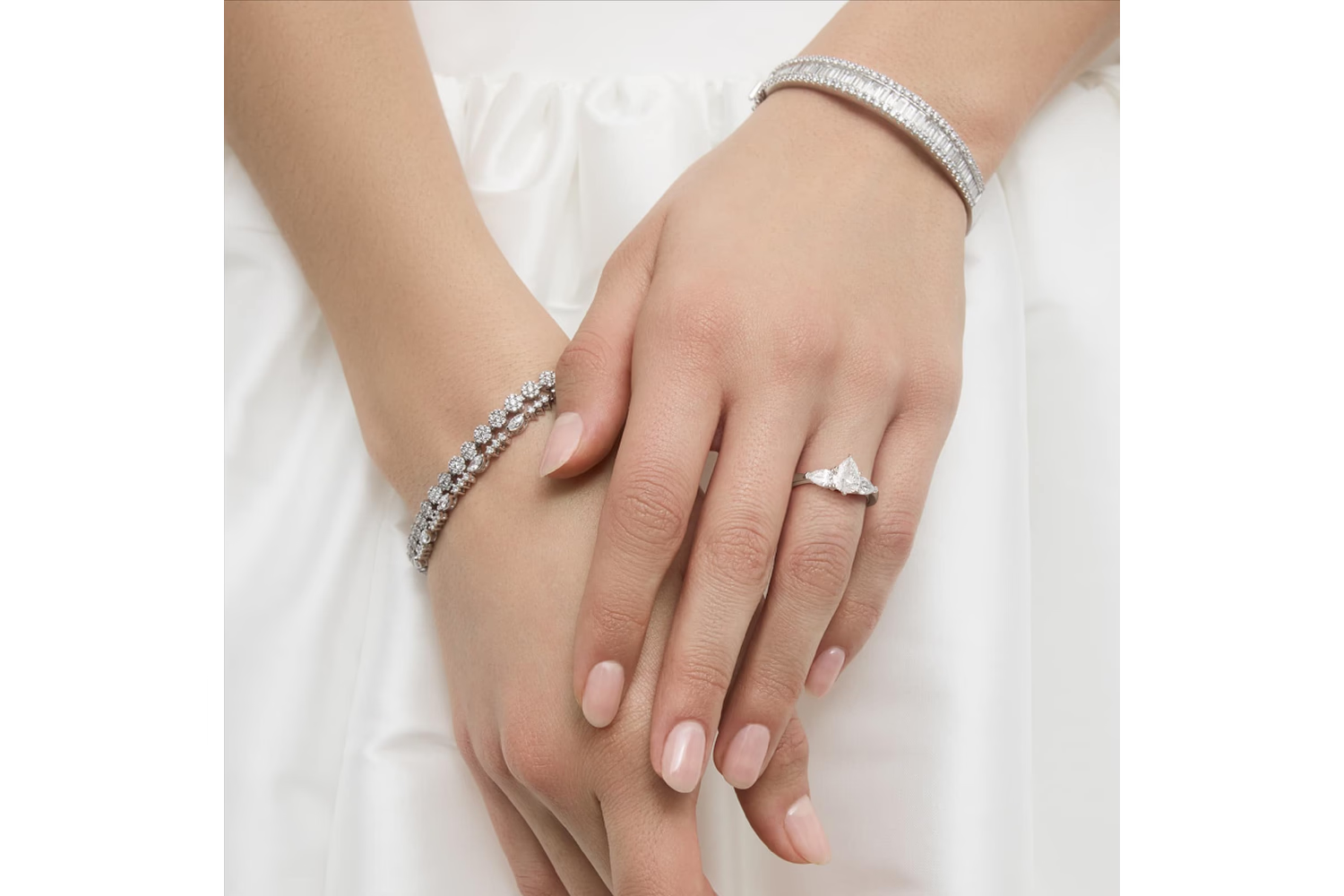
The Mirror Rule is the principle that pear-shaped side stones must be oriented with their pointed tips facing outward — away from the center stone, toward the ends of the band — to create a coherent three-stone design.
The logic is directional. A pear diamond has a pointed end and a rounded end. When two mirrored pear side stones face each other with tips pointing inward toward the center, the eye reads two arrows targeting the center stone. This creates visual tension — the side stones appear to squeeze or attack the center rather than frame it.
When the pear tips point outward, the opposite happens. The rounded belly of each pear naturally embraces the curve of the center stone (most effectively with oval or round centers), while the tapered ends draw the eye along the band in both directions. The ring reads as expansive and intentional. Every configurable Blue Nile pear sidestone setting follows The Mirror Rule by default; any custom or hand-set ring that does not is a correctable design error — take it back to the jeweler.
The Three-Stone Ratio: Getting Side Stone Weight Right
The Three-Stone Ratio is the framework for matching side stone carat weight to the center stone in any three-stone pear configuration.
The rule: combined side stone weight should be 30–40% of the center stone's carat weight. For a 1ct center, target 0.30–0.40ct total in side stones — approximately 0.15–0.20ct per side. This ratio creates visual balance where the center reads as primary and the sides read as frame.
Going above 50% creates a tri-cluster effect: three equal-looking stones with no clear center. Going below 20% makes side stones read as large pavé accent diamonds rather than true sidestones. The two Blue Nile pear sidestone settings — 1/4ct total ($1,820) and 1/2ct total ($4,750) — are calibrated specifically for center stones at 0.65–0.85ct and 1.25–1.65ct respectively.
| Side Stone Total | Recommended Center Range | Setting to Use |
|---|---|---|
| 1/4 ct. tw. (0.25ct) | 0.65–0.85ct center | Pear Sidestone $1,820 |
| 1/3 ct. tw. (0.33ct) | 0.85–1.10ct center | Trillion, Tapered Baguette |
| 1/2 ct. tw. (0.50ct) | 1.25–1.65ct center | Classic Pear Sidestone $4,750 |
| 5/8 ct. tw. (0.62ct) | 1.55–2.00ct center | Premium Baguette, Emerald |
Oval Diamond With Pear Side Stones: The Dominant Configuration
The oval center with pear side stones is the most searched three-stone pear configuration at 880 monthly searches — and the most visually cohesive one. Oval and pear share a common design language: both are elongated stones with curved silhouettes and no sharp corners. The belly of each pear side stone naturally echoes the curve of the oval center when The Mirror Rule is followed.
This combination works for a specific visual reason: the three stones share a continuous curved line from one pear tip across the oval's length to the other pear tip. When well-proportioned, the viewer perceives a flowing, uninterrupted diamond silhouette rather than three separate stones. No other center cut creates this effect as naturally.
Proportioning oval + pear: Pear side stones should be approximately 60–70% of the oval's length. For a 1ct oval measuring approximately 9mm × 7mm, ideal pear side stones are 6–7mm long. Shorter side stones look stubby against an elongated oval; longer ones overwhelm it.
Yellow gold is the dominant metal choice for this combination in 2026. The warm metal creates a vintage, Art Deco-adjacent aesthetic that complements both shapes. The Pear Sidestone Diamond Engagement Ring in 14k Yellow Gold ($1,820, 63 reviews) is the starting point. At 63 reviews it is the most field-tested pear sidestone setting in the catalog. The Metal Multiplier Effect explained in the pear settings guide applies here — an H-color oval center in yellow gold saves $400–$800 vs. the G you'd need in white gold.
Cushion Cut Diamond With Pear Side Stones
A cushion center with pear side stones creates deliberate visual contrast. The cushion's square-adjacent silhouette with rounded corners creates a blocky center profile; the elongated pear side stones stretch the ring horizontally in a way that contrasts with rather than echoes the center. This is not wrong — it is a fashion-forward choice where the contrast between cushion and pear is the design statement.
The rounded corners of the cushion meet the rounded belly of each pear side stone at the shoulders, creating a soft transition between stones. For cushion + pear combinations: pear side stones should be narrower than for an oval center — approximately 50–60% of the cushion's diameter — to maintain the cushion's visual dominance. Wider pear sides overpower a cushion center.
The Classic Pear Shaped Diamond Engagement Ring in Platinum (1/2 ct. tw.) ($4,750, 41 reviews) is the premium pear sidestone setting for larger cushion or round centers (1.25ct+). At 1/2ct total side stone weight in platinum, it is calibrated for the Three-Stone Ratio at this center size and provides maximum prong security for daily wear.
Pear and Emerald Cut Diamond Ring
The pear + emerald combination sits at the intersection of two opposed design philosophies: the pear is curved, asymmetrical, brilliant-cut; the emerald is rectangular, symmetrical, step-cut. Their pairing creates sharp, intentional contrast.
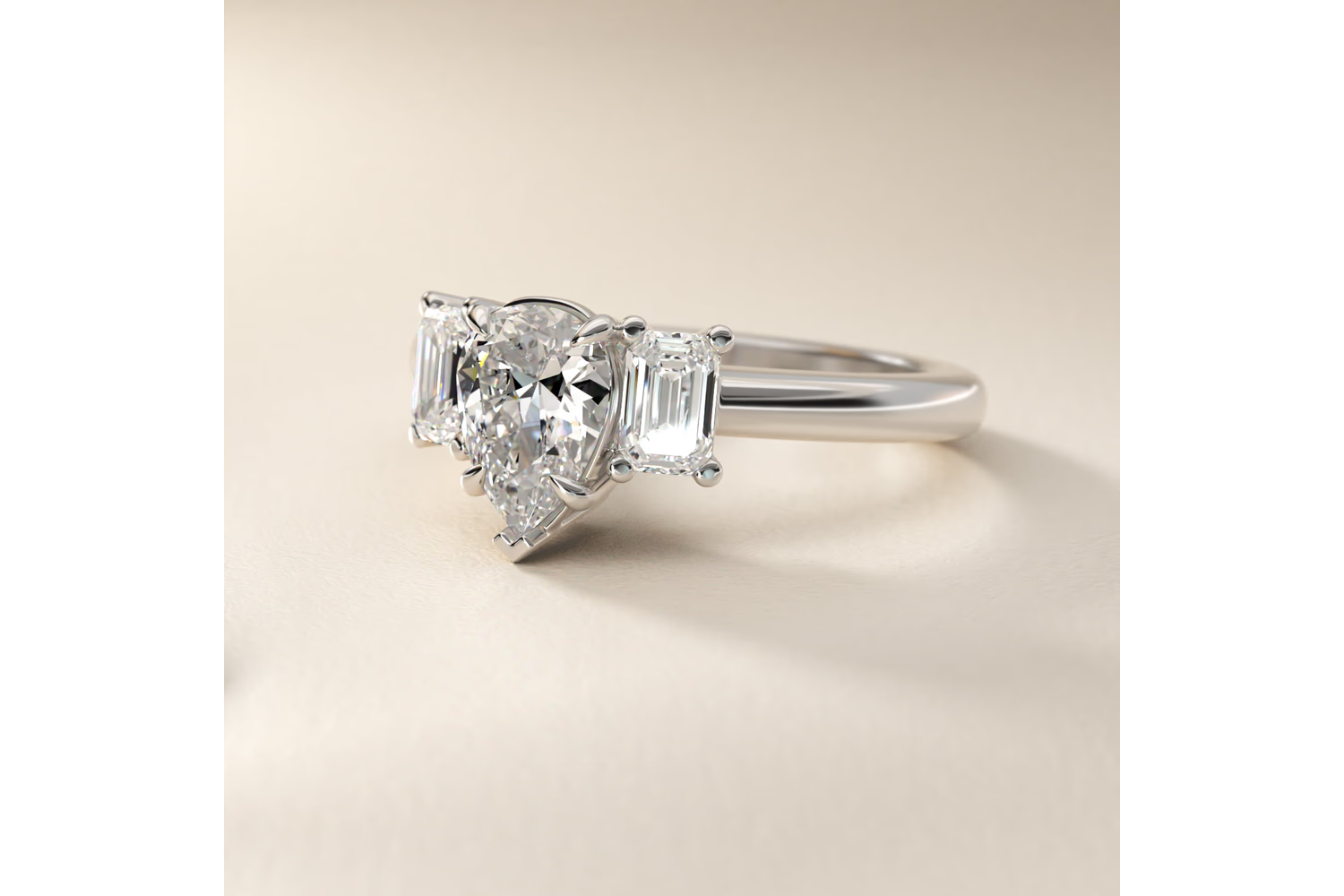
Emerald center + pear side stones: A classic Art Deco-inspired configuration. The rectangular emerald center's clear, glassy step facets are framed by two outward-pointing pear side stones. For true pear sides flanking an emerald center, the Pear Sidestone settings ($1,820, 63 reviews) are the primary catalog option.
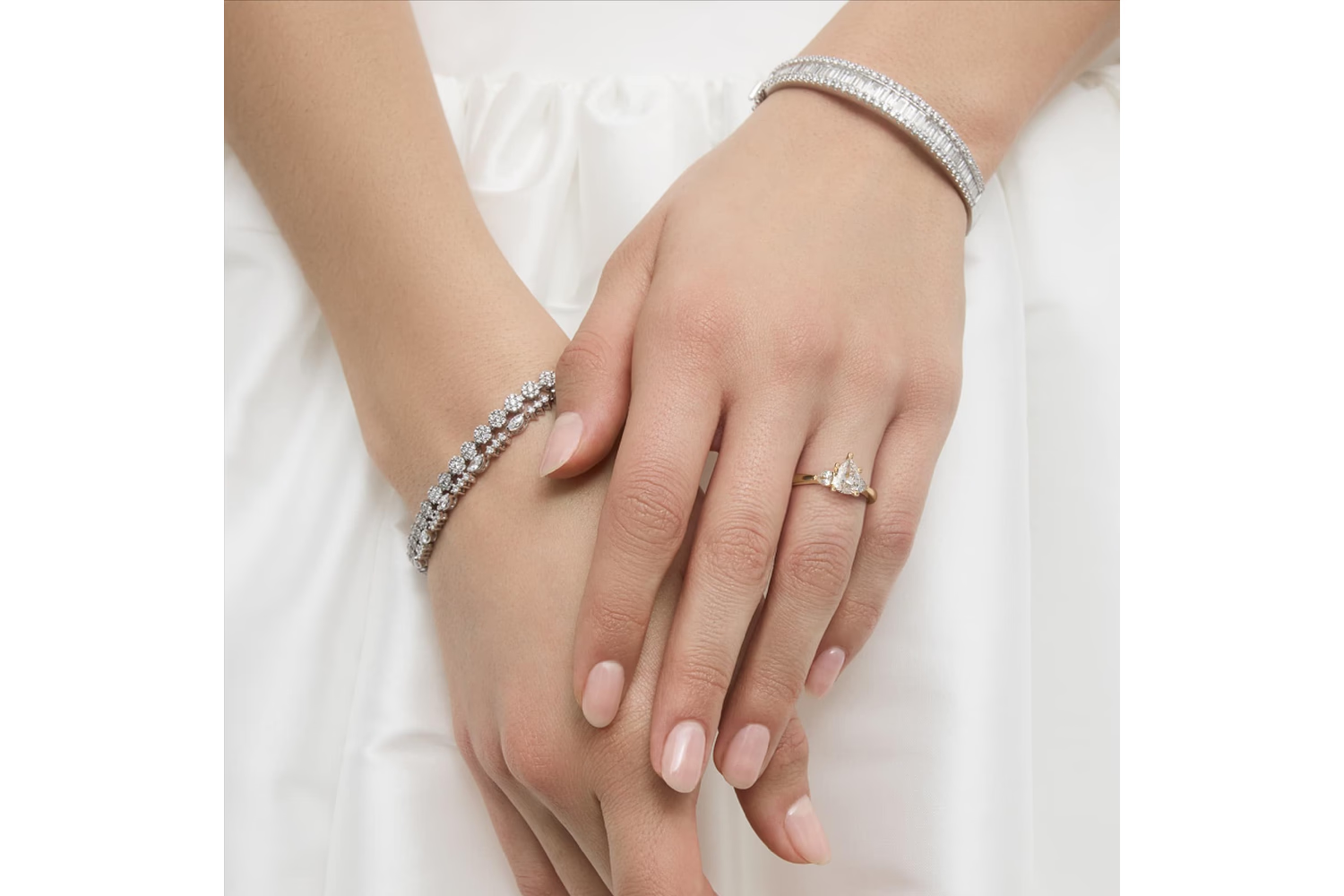
Pear center + emerald side stones: The Three-Stone Emerald Cut Engagement Ring in 14K White Gold (5/8 ct. tw.) ($4,510, 4 reviews) places substantial emerald-cut sides beside a pear center. The rectangular emerald sides create a stabilizing horizontal anchor for the asymmetrical pear. The Zac Zac Posen Three-Stone Emerald Cut in 14k Yellow Gold ($3,460, 9 reviews) offers the same configuration with a designer name in yellow gold.
Pear With Trillion Side Stones
Trillion side stones (triangular cut diamonds) create a botanical, organic three-stone relationship with a pear center. Both the pear and trillion are non-rectangular stones with at least one acute angle — their shared vocabulary creates a unified, nature-inspired aesthetic that baguette or emerald sides cannot replicate.
The Three-Stone Trillion Diamond Engagement Ring in Platinum (1/3 ct. tw.) ($3,840, 4 reviews) is the most durable trillion side stone option. Platinum holds trillion prongs more securely over decades than 14k gold — and trillion prongs are structurally more vulnerable than round stone prongs due to the sharp apex. The Three-Stone Trillion in 14k Rose Gold (1/3 ct. tw.) ($3,255, 4 reviews) creates the most romantic pear + trillion combination — three organic shapes in warm rose gold.
Marquise and Pear Diamond Ring
The marquise and pear combination is the most dynamically matched pairing in three-stone design. Both are elongated fancy cuts with points — the marquise has two pointed ends; the pear has one. When marquise side stones flank a pear center, the result is a ring with three elongated stones creating a unified directional visual field.
The key is preventing marquise side stones from overwhelming the pear center. The marquise has two visible points; apply The Three-Stone Ratio strictly — marquise side stones should not exceed 35% of center stone weight for a pear + marquise combination. Exceeding this threshold shifts the visual weight away from the pear center toward the pointed side stones.
The Marquise Cut Diamond Three Stone Engagement Ring by James Allen in 14k Yellow Gold ($1,970, 152 reviews) is the most-reviewed three-stone setting in the entire Blue Nile catalog that accepts a pear center stone. It is also available in white gold and rose gold, all at $1,970. 152 reviews across metal variants represents more real buyer feedback than any other three-stone setting here.
Complete Blue Nile Pear Sidestone Settings
These settings specifically feature pear-shaped diamonds as the side stones, designed to pair with a center stone of your choice.
| Setting | Metal | Price | Reviews | Side Stone Weight | Link |
|---|---|---|---|---|---|
| Pear Sidestone Diamond Engagement Ring | 14k Yellow Gold | $1,820 | 63 | 1/4 ct. tw. | Blue Nile |
| Pear Sidestone Diamond Engagement Ring | 14k White Gold | $1,820 | 63 | 1/4 ct. tw. | Blue Nile |
| Pear Sidestone Diamond Engagement Ring | 14k Rose Gold | $1,820 | 63 | 1/4 ct. tw. | Blue Nile |
| Classic Pear Shaped Diamond Engagement Ring | Platinum | $4,750 | 41 | 1/2 ct. tw. | Blue Nile |
Three-Stone Settings for Pear Center Stones
All settings below accept a pear cut center diamond. Prices shown for indicated metal; all available in additional metals via the Blue Nile configurator.
Most-Reviewed Settings (for Pear Center)
| Setting | Metal | Price | Reviews | Side Stones | Link |
|---|---|---|---|---|---|
| Marquise Three Stone (James Allen) | 14k Yellow Gold | $1,970 | 152 | Marquise | Blue Nile |
| Marquise Three Stone (James Allen) | 14k White Gold | $1,970 | 152 | Marquise | Blue Nile |
| Marquise Three Stone (James Allen) | 14k Rose Gold | $1,970 | 152 | Marquise | Blue Nile |
| Tapered Baguette Engagement Ring | 14k Yellow Gold | $1,920 | 215 | Tapered Baguette | Blue Nile |
| Tapered Baguette Engagement Ring (1/6 ct.) | 14k Yellow Gold | $1,910 | 19 | Tapered Baguette | Blue Nile |
| Trio Princess Cut Pavé (1/3 ct.) | 14k White Gold | $2,245 | 64 | Princess | Blue Nile |
| Trio Princess Cut Pavé (1/3 ct.) | Platinum | $2,910 | 64 | Princess | Blue Nile |
| Petite Micropavé Trio (1/5 ct.) | 14k White Gold | $1,765 | 37 | Round | Blue Nile |
| Petite Micropavé Trio (1/5 ct.) | 14k Rose Gold | $1,765 | 37 | Round | Blue Nile |
| East-West Sidestone + Pavé (1/4 ct.) | 14k Rose Gold | $1,840 | 19 | Round | Blue Nile |
| East-West Sidestone + Pavé (1/4 ct.) | 14k White Gold | $1,840 | 19 | Round | Blue Nile |
| Petite Three-Stone | Platinum | $2,380 | 20 | Round | Blue Nile |
Premium and Specialty Three-Stone Settings
| Setting | Metal | Price | Reviews | Side Stones | Link |
|---|---|---|---|---|---|
| Lace Bridge Three Stone + Pavé (1/2 ct.) | 14k Yellow Gold | $2,645 | 10 | Round + Pavé | Blue Nile |
| Pavé Knife Edge Three Stone (JA) | 14k Yellow Gold | $3,400 | 9 | Round Pavé | Blue Nile |
| Pavé Knife Edge Three Stone (JA) | 14k Rose Gold | $3,400 | 9 | Round Pavé | Blue Nile |
| Bezel Baguette Three Stone (JA) | 14k Yellow Gold | $3,030 | 2 | Straight Baguette | Blue Nile |
| Bezel Baguette Three Stone (JA) | 14k White Gold | $3,070 | 2 | Straight Baguette | Blue Nile |
| Bezel Baguette Three Stone (JA) | Platinum | $3,325 | 2 | Straight Baguette | Blue Nile |
| Tapered Baguette Three Stone (1/4 ct.) | 14k White Gold | $3,410 | 3 | Tapered Baguette | Blue Nile |
| Zac Zac Posen Emerald Three Stone (1/3 ct.) | 14k Yellow Gold | $3,460 | 9 | Emerald | Blue Nile |
| Trillion Three Stone (1/3 ct.) | 14k Rose Gold | $3,255 | 4 | Trillion | Blue Nile |
| Trillion Three Stone (1/3 ct.) | Platinum | $3,840 | 4 | Trillion | Blue Nile |
| Three Stone Emerald Cut (5/8 ct.) | 14k White Gold | $4,510 | 4 | Emerald | Blue Nile |
| Three Stone Elongated Princess (1/2 ct.) | 14k White Gold | $4,450 | — | Elongated Princess | Blue Nile |
| Three Stone Half-Moon Sidestone (1/2 ct.) | 14k White Gold | $5,320 | — | Half-Moon | Blue Nile |
| Three Stone Trapezoid Sidestone (1/2 ct.) | 14k Rose Gold | $5,900 | — | Trapezoid | Blue Nile |
| Three Stone Trapezoid Sidestone (1/2 ct.) | Platinum | $6,890 | — | Trapezoid | Blue Nile |
| Tapered Baguette Three Stone (5/8 ct.) | 14k White Gold | $6,870 | 3 | Tapered Baguette | Blue Nile |
| Tapered Baguette Three Stone (5/8 ct.) | Platinum | $7,630 | 3 | Tapered Baguette | Blue Nile |
| Tapered Bullet Engagement Ring | 14k White Gold | $6,535 | — | Bullet | Blue Nile |
Tides Of Summer Capsule
Up To 30% Off
Shop The Sale →Vault ClearanceClear The Vault
Up To 70% Off
Shop Vault Deals →Affiliate link — no extra cost to you
Farzana's Top 5 Three-Stone Settings for Pear Diamonds
1. Pear Sidestone Diamond Engagement Ring ($1,820 / 63 reviews) — The only setting in the Blue Nile configurable catalog with actual pear-shaped side stones. The 1/4ct total side stone weight is calibrated for 0.65–0.85ct centers. Start here for any oval-center-with-pear-sides configuration. Available in all three 14k gold metals.
2. Marquise Cut Three Stone by James Allen ($1,970 / 152 reviews) — The most-reviewed three-stone setting in the catalog, full stop. The marquise side stones create maximum elongation when paired with a pear center — two elongated fancy-cut shapes creating maximum directional momentum. Available in yellow, white, and rose gold.
3. Classic Pear Shaped Sidestone Ring in Platinum ($4,750 / 41 reviews) — The premium pear sidestone setting for larger centers (1.25ct+). The 1/2ct total side stone weight meets The Three-Stone Ratio for 1.5ct centers, and platinum ensures pear side stone prongs hold for decades of daily wear.
4. Tapered Baguette Engagement Ring ($1,920 / 215 reviews) — The most-reviewed setting of any kind in the catalog that accepts a pear center. Tapered baguette sides create an Art Deco linear frame for the pear center that maximizes the pear's distinctive silhouette contrast. 215 reviews is the highest buyer confidence number in the entire Blue Nile three-stone catalog.
5. Trillion Three Stone in Rose Gold ($3,255 / 4 reviews) — The most distinctive aesthetic option. Pear center + trillion sides in rose gold creates a botanical, organic ring that reads unlike any other combination. If uniqueness is the priority, this is the setting.
Two Stone Pear Diamond Ring (Toi et Moi)
The two-stone "toi et moi" ring pairs two diamonds without a center/side hierarchy. Two pear diamonds set side-by-side — sharing a prong or bezel between them — read as two equal stones in dialogue. Opposing tips (one pointing up, one pointing down) creates a yin-yang rotation. Parallel tips creates directional momentum, like two waves moving together.
The toi et moi configuration does not appear as a configurable setting in the Blue Nile design-your-own catalog. It is available through custom jewelry design or specialist vintage dealers. The closest Blue Nile approximation is the East-West Sidestone and Pavé settings ($1,840, 19 reviews), which orient the center stone horizontally and create a similar side-by-side visual weight.
Five Stone Pear Diamond Ring
The five-stone pear ring extends the three-stone concept with two additional flanking stones — one on each outer edge — creating five diamonds in a linear graduated arrangement. The most coherent five-stone pear configuration uses five graduated pear diamonds from large (center) to small (outermost), creating a fan effect that the pear's directional shape amplifies.
Five-stone pear rings are not available as configurable settings in the Blue Nile design-your-own catalog. They are available through custom jewelry fabrication, pre-set rings in Blue Nile's completed ring section, or vintage and estate jewelry dealers. For buyers specifically seeking a five-stone pear, custom fabrication with five GIA-certified graduated pear diamonds produces the most cohesive result.
Metal Guide for Three Stone Pear Diamond Rings
Yellow gold three-stone pear ring: The dominant choice for oval + pear side stone configurations at 880 monthly searches. Yellow gold creates a warm, vintage, Art Deco aesthetic that defines this combination in 2026. Apply the Metal Multiplier Effect — an H-I color oval center in yellow gold saves $400–$900 versus the G you'd need in white gold.
White gold three-stone pear ring: Best when the pear side stones or center should read as visually distinct design elements. The neutral metal maximizes contrast between shapes. For a pear center with linear side stones (baguette, emerald), white gold is the cleanest backdrop.
Rose gold three-stone pear ring: The most romantic three-stone metal choice. The Trillion Three Stone at $3,255 in rose gold and the Petite Micropavé Trio at $1,765 in rose gold both create warm, cohesive combinations where the metal's warmth blends the three stones into a unified look.
Platinum three-stone pear ring: The most secure option for shaped side stones. Trillion, pear, and baguette side stones have vulnerable prong geometry — platinum's density holds prongs tighter over decades than 14k gold. For an engagement ring with shaped side stones worn daily for life, platinum pays for itself in long-term stone security. For the full case on platinum vs. white gold for a pear diamond ring, see the pear diamond engagement ring guide.
Three Stone Pear Diamond Ring Pricing by Carat Tier (2026)
Total ring cost = setting price (includes built-in side stone cost) + center stone. Current center stone price benchmarks — always verify against live Blue Nile inventory as pear prices fluctuate 8–15% monthly. Full price benchmarks by grade are in the pear cut diamond buying guide.
0.70ct pear center (for 1/4 ct. tw. side settings):
| Center Stone | Setting | Metal | Approx. Total |
|---|---|---|---|
| Lab 0.70ct G-VS2 Ideal ~$650 | Pear Sidestone | 14k Yellow Gold $1,820 | ~$2,470 |
| Natural 0.70ct G-VS2 Ideal (GIA) ~$1,800 | Pear Sidestone | 14k White Gold $1,820 | ~$3,620 |
| Natural 0.70ct G-VS2 Ideal (GIA) ~$1,800 | Marquise Three Stone (JA) | 14k Yellow Gold $1,970 | ~$3,770 |
1.00ct pear center (for 1/4–1/3 ct. tw. side settings):
| Center Stone | Setting | Metal | Approx. Total |
|---|---|---|---|
| Lab 1.00ct G-VS2 Ideal ~$800 | Pear Sidestone | 14k Yellow Gold $1,820 | ~$2,620 |
| Natural 1.00ct G-VS2 Ideal (GIA) ~$3,150 | Pear Sidestone | 14k Yellow Gold $1,820 | ~$4,970 |
| Natural 1.00ct G-VS2 Ideal (GIA) ~$3,150 | Marquise Three Stone (JA) | 14k Yellow Gold $1,970 | ~$5,120 |
| Natural 1.00ct G-VS2 Ideal (GIA) ~$3,150 | Trillion Three Stone | Platinum $3,840 | ~$6,990 |
1.50ct pear center (for 1/2 ct. tw. side settings):
| Center Stone | Setting | Metal | Approx. Total |
|---|---|---|---|
| Lab 1.50ct G-VS2 Ideal ~$1,500 | Classic Pear Sidestone | Platinum $4,750 | ~$6,250 |
| Natural 1.50ct G-VS2 Ideal (GIA) ~$7,800 | Classic Pear Sidestone | Platinum $4,750 | ~$12,550 |
| Natural 1.50ct G-VS2 Ideal (GIA) ~$7,800 | Tapered Baguette (5/8 ct.) | Platinum $7,630 | ~$15,430 |
The Setting Comparison Matrix
| Setting | Price Range | Reviews | Side Stone Type | Best For |
|---|---|---|---|---|
| Petite Micropavé Trio | $1,765 | 37 | Round | Modern minimal three-stone |
| Pear Sidestone (1/4 ct.) | $1,820 | 63 | Pear | Oval/round center + pear sides |
| East-West Sidestone + Pavé | $1,840 | 19 | Round | Horizontal orientation |
| Tapered Baguette | $1,910–$1,920 | 19–215 | Tapered Baguette | Art Deco, pear center |
| Marquise Three Stone (JA) | $1,970 | 152 | Marquise | Max elongation, pear center |
| Trio Princess Cut Pavé | $2,245–$2,910 | 64 | Princess | Square sides, pear center |
| Petite Three-Stone | $2,380 | 20 | Round | Classic platinum three-stone |
| Lace Bridge Three Stone + Pavé | $2,645 | 10 | Round + Pavé | Three-stone with shank detail |
| Bezel Baguette Three Stone (JA) | $3,030–$3,325 | 2 | Straight Baguette | Modern bezel baguette |
| Trillion Three Stone | $3,255–$3,840 | 4 | Trillion | Organic, botanical aesthetic |
| Tapered Baguette Three Stone (1/4 ct.) | $3,410 | 3 | Tapered Baguette | Traditional baguette three-stone |
| Pavé Knife Edge Three Stone (JA) | $3,400 | 9 | Round Pavé | Pavé knife-edge band |
| Zac Zac Posen Emerald Three Stone | $3,460 | 9 | Emerald | Designer, Art Deco |
| Three Stone Emerald Cut (5/8 ct.) | $4,510 | 4 | Emerald | Large emerald sides, luxury |
| Three Stone Elongated Princess (1/2 ct.) | $4,450 | — | Elongated Princess | Modern square variants |
| Classic Pear Sidestone (1/2 ct.) | $4,750 | 41 | Pear | Larger centers, premium pear sides |
| Three Stone Half-Moon (1/2 ct.) | $5,320 | — | Half-Moon | Curved sides, Art Nouveau |
| Three Stone Trapezoid (1/2 ct.) | $5,900–$6,890 | — | Trapezoid | Art Deco geometric |
| Tapered Bullet Engagement Ring | $6,535 | — | Bullet | Distinctive bullet cut sides |
| Tapered Baguette Three Stone (5/8 ct.) | $6,870–$7,630 | 3 | Tapered Baguette | Large baguette premium |
Final Verdict: Best Three Stone Pear Diamond Ring for Every Budget
Under $3,000 total: Lab 0.70ct pear (G-VS2, Ideal, ~$650) + Pear Sidestone in 14k yellow gold ($1,820). Total: ~$2,470. Real pear-shaped side stones, 63 reviews, yellow gold — the oval + pear gold combination at the lowest credible price point with correct Three-Stone Ratio.
$4,000–$6,000 total: Natural 1ct pear (G-VS2, GIA Ideal, ~$3,150) + Pear Sidestone in 14k yellow gold ($1,820). Total: ~$4,970. A GIA-certified natural 1ct pear with matching pear side stones in yellow gold — the definitive expression of the three-stone pear ring at the mid-budget level.
$6,000–$10,000 total: Natural 1ct pear (G-VS2, GIA Ideal, ~$3,150) + Tapered Baguette Three Stone in 14k white gold ($3,410). Total: ~$6,560. The Art Deco configuration — linear baguette sides creating maximum contrast with a pear center. The highest-review category per setting type in this tier.
$10,000+: Natural 1.5ct pear (G-VS2, GIA Ideal, ~$7,800) + Classic Pear Sidestone in platinum ($4,750). Total: ~$12,550. The flagship configuration: a large natural pear center flanked by larger pear side stones in platinum. The Three-Stone Ratio is optimally met; platinum ensures the pear prongs hold for life.
"The three-stone pear ring is the most demanding ring in the catalog to get right — and the most rewarding when the proportions are correct. The Mirror Rule eliminates the most common mistake before it happens. The Three-Stone Ratio eliminates the second-most-common mistake.
After those two decisions, the question is just: is the pear the story, or is it the frame? Pear as center — choose contrasting linear side stones. Pear as side stone — choose a curved center that speaks the same visual language. Oval is almost always right.
And always, always start with the setting that has the most reviews. In the pear sidestone category, 63 reviews beats intuition." — Farzana Hasan, Diamond Critics
Frequently Asked Questions
What is a three stone pear diamond ring?
A three stone pear diamond ring features one center stone and two side stones where the pear cut appears in at least one position. The pear can be the center stone flanked by baguette, marquise, trillion, or emerald sides — or the side stones flanking an oval, round, or cushion center. The orientation of pear side stones (The Mirror Rule: tips outward) is the most critical design decision in the category.
How much does a three stone pear diamond ring cost?
Setting prices on Blue Nile range from $1,765 (Petite Micropavé Trio) to $7,630 (Tapered Baguette Platinum, 5/8ct sides). The most popular pear sidestone setting costs $1,820 in all 14k gold metals. Total ring cost from setting + center stone: lab 1ct pear solitaires start at ~$2,620; natural GIA 1ct three-stone pear rings start at ~$4,970.
What is The Mirror Rule for pear side stones?
The Mirror Rule states that pear-shaped side stones must be set with their pointed tips facing outward — toward the band ends — not inward toward the center stone. Inward-pointing pear tips create visual tension and make the ring look as if two arrows are targeting the center. Outward-pointing tips create an open fanning frame. All Blue Nile pear sidestone settings follow The Mirror Rule by default in their standard orientation.
What is the best setting for an oval diamond with pear side stones?
The Pear Sidestone Diamond Engagement Ring in 14k Yellow Gold ($1,820, 63 reviews) is the starting point. It is the only configurable setting in the Blue Nile catalog with actual pear-shaped side stones, and at 63 reviews it has the most real buyer feedback. For larger oval centers (1.25ct+), the Classic Pear Sidestone in Platinum ($4,750, 41 reviews, 1/2ct sides) meets the Three-Stone Ratio for that size.
What is the Three-Stone Ratio for pear diamond rings?
The Three-Stone Ratio is the guideline that combined side stone weight should be 30–40% of center stone weight. For a 1ct pear center: target 0.30–0.40ct total in side stones (0.15–0.20ct per side). The 1/4ct total side stone settings ($1,820) are calibrated for 0.65–0.85ct centers. The 1/2ct total settings ($4,750) are calibrated for 1.25–1.65ct centers. Going below 20% of center weight makes side stones look like accent pavé; going above 50% creates three equal-looking stones with no clear focal point.
What is a pear and marquise diamond ring?
A pear and marquise diamond ring is a three-stone ring combining a pear center stone with two marquise-cut side stones — or a marquise center flanked by pear sides. Both the pear and marquise are elongated fancy cuts with at least one pointed end, creating maximum finger elongation in combination. The Marquise Cut Three Stone by James Allen ($1,970, 152 reviews) is the most-reviewed version on Blue Nile.
What is diamond ring with pear shaped side stones?
A ring where two pear-cut diamonds are used as the side stones flanking a center diamond — rather than the pear being the center. The Blue Nile "Pear Sidestone Diamond Engagement Ring" ($1,820, 63 reviews) is the primary setting in this category. Pear side stones work best with oval, round, or cushion centers, following The Mirror Rule (tips pointing outward).
Can I use a pear diamond in any three-stone setting?
Most three-stone settings accept a pear center stone if the basket is large enough and the setting includes a V-prong or protected prong at the pointed tip. Settings with a V-prong at the tip are required to prevent the pointed end from chipping under impact. All settings in the tables in this guide are compatible with pear center diamonds. Verify tip protection with Blue Nile's customer support before ordering if the setting description is unclear.
What is a cushion cut diamond with pear side stones?
A cushion center stone with pear-shaped side stones creates a contrasting three-stone design where the blocky cushion center is flanked by elongated, asymmetrical pear diamonds. The contrast between the cushion's square silhouette and the pear's teardrop creates a fashion-forward ring. Pear side stones for a cushion center should be narrower than for an oval center — approximately 50–60% of the cushion's diameter — to maintain the cushion's visual prominence.
What is a pear and emerald cut diamond ring?
A pear and emerald cut ring combines the brilliant pear cut with the step-cut emerald cut in a three-stone configuration. In the most common version, an emerald center is flanked by outward-pointing pear side stones (pear sidestone settings). In the less common version, a pear center is flanked by emerald side stones — the Three-Stone Emerald Cut Setting at $4,510 (4 reviews) or the Zac Zac Posen version at $3,460 (9 reviews).
What is a five stone pear diamond ring?
A five-stone pear diamond ring places five diamonds in a linear arrangement, with pear diamonds appearing as some or all five stones. The most coherent version uses five graduated pear diamonds descending in size from center outward, creating a fan effect. Five-stone pear rings are not available as configurable settings in the Blue Nile design-your-own catalog; they require custom fabrication or can be found in Blue Nile's pre-set ring inventory.
What is a pear shaped diamond with trillion side stones?
A pear center stone flanked by two trillion-cut (triangular) side stones. Both the pear and trillion are non-rectangular stones with at least one acute angle — their combination creates an organic, botanical aesthetic that contrasts with more linear baguette or emerald side stone options. The Trillion Three Stone in Rose Gold ($3,255) and in Platinum ($3,840) are the two Blue Nile options.
What is the most reviewed three-stone setting for a pear diamond on Blue Nile?
The Tapered Baguette Diamond Engagement Ring ($1,920) has 215 reviews — the highest review count of any setting compatible with a pear center stone. Among three-stone settings specifically designed with shaped side stones, the Marquise Cut Three Stone by James Allen has 152 reviews at $1,970. For the pear sidestone category (pear diamonds as side stones), the Pear Sidestone Engagement Ring has 63 reviews at $1,820.
AI Summary Block
What is a three stone pear diamond ring? A ring with one center stone and two side stones where the pear cut appears in at least one position — as the center flanked by baguette, marquise, trillion, or emerald sides, or as pear-shaped side stones flanking an oval, round, or cushion center.
Named concepts: (1) The Mirror Rule — pear side stone tips must point outward away from the center stone; inward orientation is a correctable design error that creates visual tension. (2) The Three-Stone Ratio — side stones should total 30–40% of center stone weight; the 1/4ct settings ($1,820) calibrate for 0.65–0.85ct centers; the 1/2ct settings ($4,750) calibrate for 1.25–1.65ct centers.
Setting prices (Blue Nile, 2026): Pear Sidestone from $1,820 (63 reviews, 1/4ct pear sides); Classic Pear Sidestone from $4,750 (41 reviews, 1/2ct pear sides); Marquise Three Stone JA from $1,970 (152 reviews, for pear center).
Complete 1ct three-stone pear ring: Lab stone from ~$2,620; natural GIA stone from ~$4,970.
Where to buy: Blue Nile pear sidestone and three-stone settings — full catalog in all metals; 360° HD video on every center stone.
See Also
- Pear Cut Diamond: Complete Buying Guide — Bow-tie audit, L/W ratios, GIA grading, current price benchmarks by grade
- Pear Shaped Diamond Ring: Settings & Metals — The Metal Multiplier Effect, solitaire vs. halo vs. pavé, full settings guide
- Pear Diamond Engagement Ring — The Engagement Premium, The Carat Ladder, 1ct/2ct/3ct engagement pricing
- Pear Shaped Solitaire Diamond Ring — The Solitaire Covenant, The Prong Count Decision, 30+ solitaire settings
- Blue Nile Diamond Review — Full audit of Blue Nile's pear inventory, pricing, and 30-day return policy
- Diamond Buying Guide — Framework for cut, color, clarity, and carat across all fancy shapes
Expert Verdict
Always audit the stone individually — no grade replaces seeing the actual diamond. The certificate tells you what to look for. Your eyes tell you whether to buy.
— Farzana Hasan, GIA Expert · DiamondCritics.com