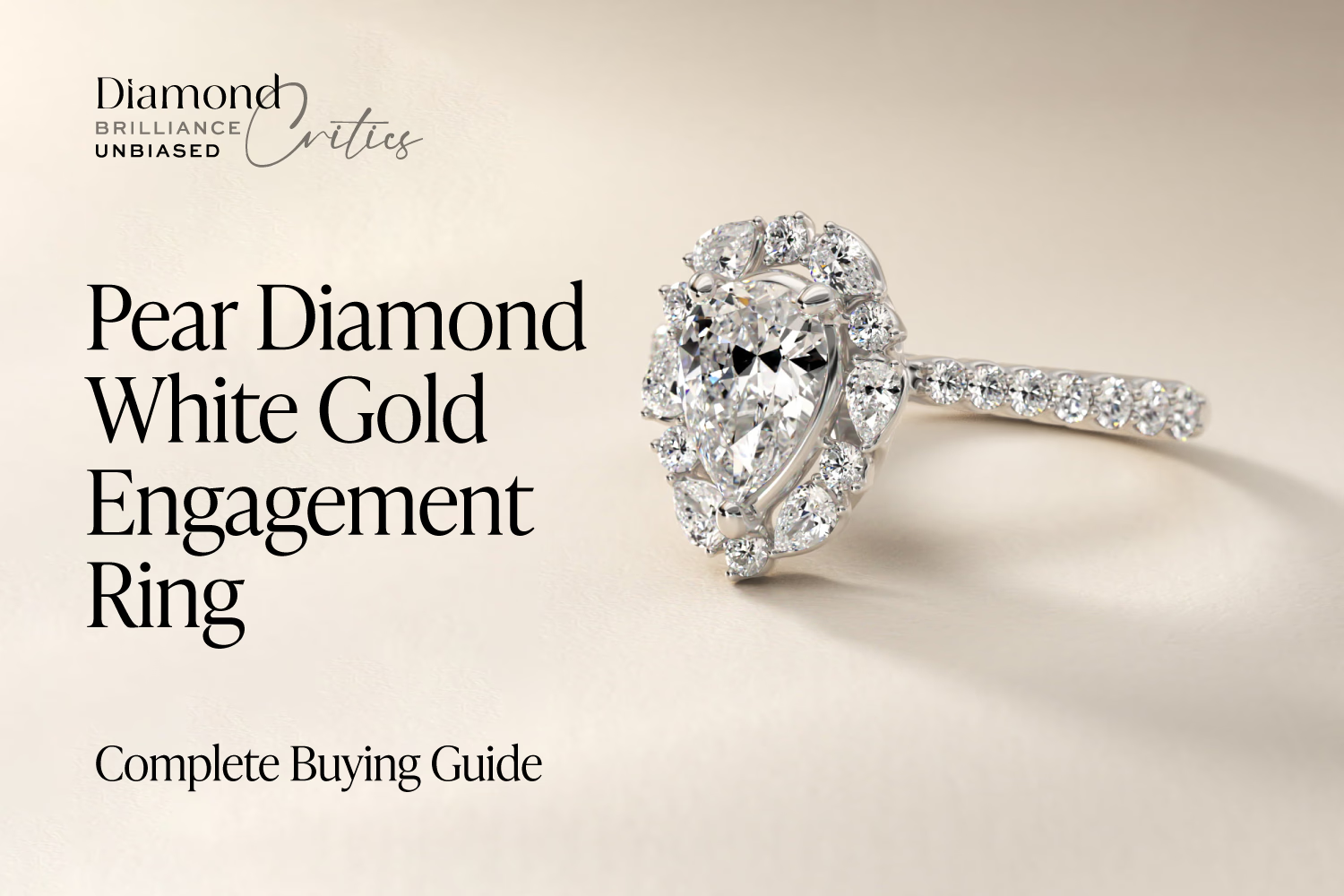
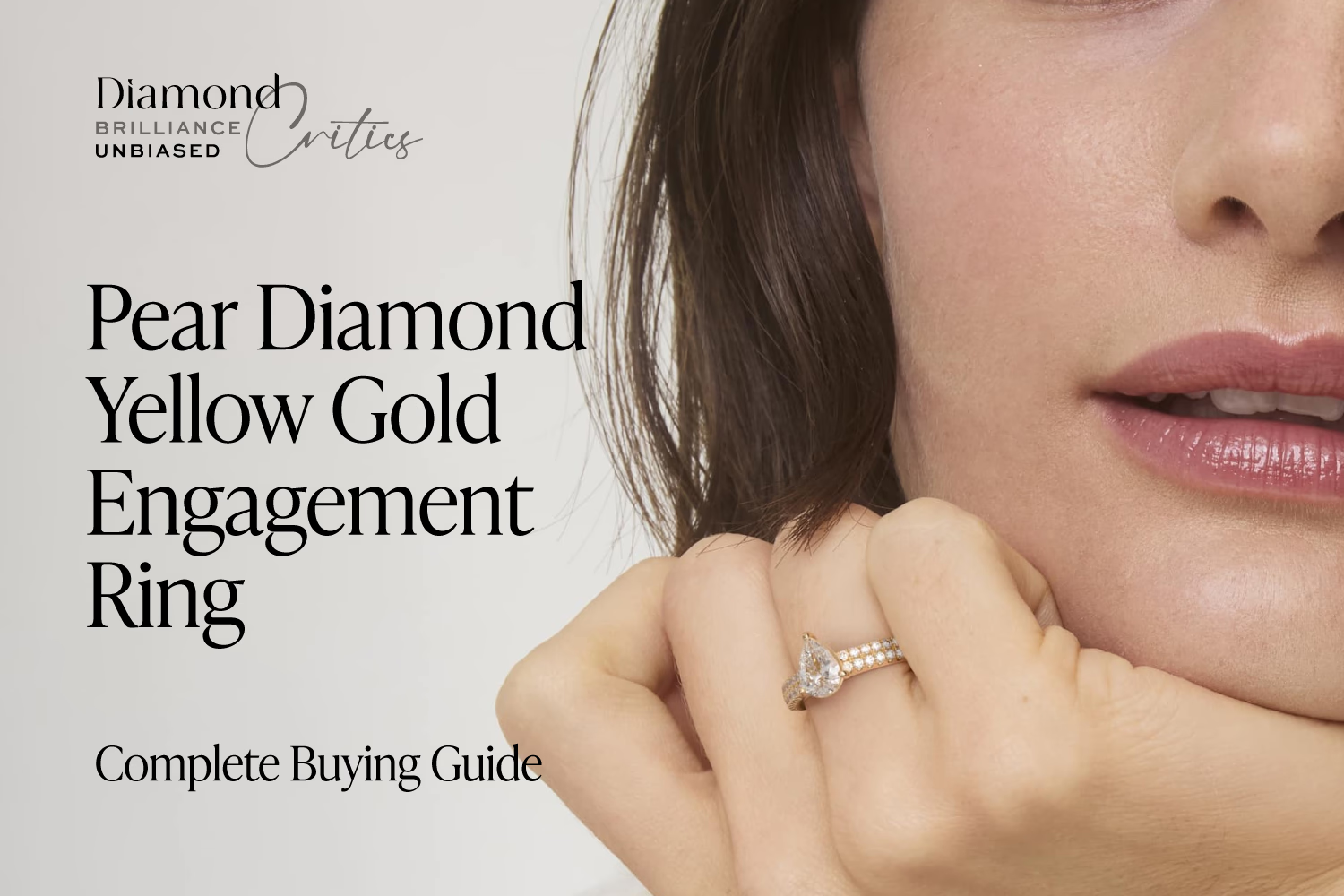
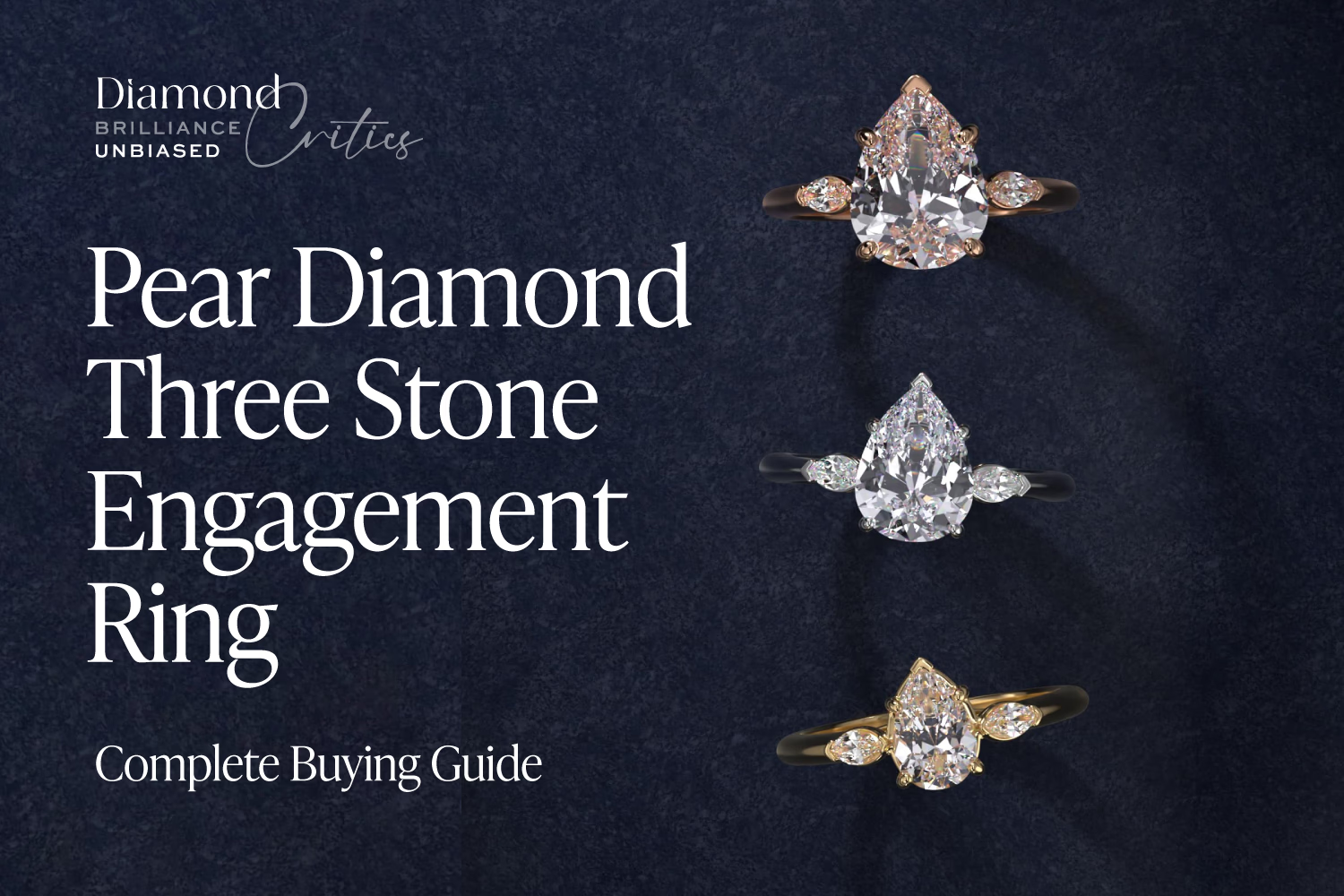
Pear Shaped Diamond Ring: The Complete 2026 Settings, Metals & Prices Guide
TL;DR — Key Facts Before You Shop
- A pear shaped diamond ring ranges from $1,180 (setting alone, platinum solitaire) to $4,005+ for pear-specific halo settings on Blue Nile
- Add a 1ct natural pear diamond from $3,150 — or a 1ct lab pear from around $1,006 — to complete the ring
- Every Blue Nile setting shown in this guide comes in platinum, white gold, yellow gold, and rose gold — metal choice is yours
- The V-prong at the point is non-negotiable — any other prong type risks chipping the tip
- Point-up orientation reads modern and editorial; point-down orientation reads romantic and traditional — decide before buying the setting
- The pear shape visually elongates the finger more than almost any other diamond cut at the same carat weight
A pear shaped diamond ring is not a casual decision. It is the most asymmetrical, orientation-sensitive, setting-dependent shape in the diamond market — and it rewards buyers who understand the rules with a ring that stops conversations.
Most buyers discover pear diamonds one of three ways: a celebrity engagement announcement, a vintage estate piece, or a side-by-side carat comparison where the pear looks significantly larger than a round at the same weight. All three are valid entry points. None of them prepare you for the actual buying decisions you have to make.
This guide covers all of them. Setting styles, metal types, named-concept frameworks, real Blue Nile prices, and every question a serious buyer asks before placing an order.


What Makes a Pear Shaped Diamond Ring Different From Every Other Shape?
The pear cut — also called a teardrop diamond — is a hybrid brilliant cut with 58 facets. It combines the rounded belly of an oval with the tapered point of a marquise. That asymmetry is its defining feature and its primary challenge.
Every other popular diamond shape is symmetrical. Round, oval, princess, emerald, cushion — you can orient any of them in the setting and the visual result is the same. A pear diamond is different. Point-up reads one way. Point-down reads another. Tilted even slightly reads wrong.
The asymmetry also concentrates stress at the tip. The pointed end of a pear diamond is the single most vulnerable point on any diamond shape in common use. A standard round prong at the tip creates a line of contact that can lever against the facet edge under impact and cause a chip. A V-prong wraps the tip, distributing pressure evenly across the curvature and eliminating that risk.
No setting engineer at a serious jeweler will put a round prong at the tip of a pear diamond. If you see a setting with round prongs at both ends of a pear stone, do not buy it — or demand confirmation that a V-prong will be used at the point before the stone is set.
The bow-tie effect is the third pear-specific concern. Like oval diamonds, pear cuts can show a dark, bow-tie shaped shadow across the center when the crown proportions are wrong. A well-cut pear minimizes the bow-tie to a faint visual texture; a poorly-cut pear turns it into a dead zone that kills the sparkle of the entire center of the ring.
You cannot evaluate bow-tie severity from a GIA certificate. You must watch the 360° HD video on Blue Nile's pear diamond search and look for consistent light return across the full face of the stone in motion.
The Metal Multiplier Effect: How Your Metal Choice Changes Everything
The Metal Multiplier Effect is the single most underexplained concept in pear diamond ring buying.
Here is what most guides miss: the metal of your setting directly changes the perceived color grade of your pear diamond. This is not a minor visual tweak. It is a difference worth 1–2 color grades in perceived whiteness — and 1–2 color grades on a pear diamond can mean a $1,000–$2,000 price difference on the stone alone.
How it works:
Platinum and white gold reflect a cool, neutral white light. When you set a G or H color pear diamond in platinum, the reflected metal light reads as white against the stone. The diamond appears a half-grade to a full grade whiter than its certificate says.
Yellow gold reflects warm, golden light. When you set that same G or H color pear diamond in yellow gold, the reflected light reads as warm — and actually masks yellow tinting in the diamond. A G-H color pear in a yellow gold setting looks nearly as clean as an F in white gold at a fraction of the price.
Rose gold sits between the two. It reflects a soft, warm pink-champagne tone that flatters I-J color pear diamonds particularly well.
The practical buying decision:
| Metal | Best Diamond Color | Visual Effect | Budget Move |
|---|---|---|---|
| Platinum | D–G | Crisp, icy white | No — buy the best color here |
| White Gold (14k or 18k) | D–H | Clean, white, neutral | Slight — H looks like F |
| Yellow Gold (14k or 18k) | G–I | Warm, romantic, vintage | Yes — I looks like G |
| Rose Gold (14k or 18k) | H–J | Soft, flattering, feminine | Yes — J reads as H |
Every Blue Nile setting in this guide is available in all four metals. Prices shown are for platinum unless noted. White gold and yellow gold versions typically run $200–$400 less than the platinum price. Rose gold prices match yellow gold.
Use The Metal Multiplier Effect to buy a better stone for your budget. If you want yellow gold, buy an I color instead of a G — and put that $800 difference toward a higher carat or better cut.
The Best Solitaire Settings for a Pear Shaped Diamond Ring
A solitaire is the purest way to wear a pear diamond. Nothing competes with the stone. The silhouette reads clean and modern — especially point-up.
All settings below are shown in platinum. Every one of these settings is also available in white gold, yellow gold, and rose gold on Blue Nile. Click the link and switch metals in the configurator before you place an order.
| Setting | Platinum Price | Blue Nile Link |
|---|---|---|
| Classic Four Prong Solitaire Engagement Ring | $1,180 | View on Blue Nile |
| Petite Solitaire Engagement Ring | $1,330 | View on Blue Nile |
| Cable Solitaire Engagement Ring By James Allen | $1,350 | View on Blue Nile |
| Woven Solitaire Engagement Ring By James Allen | $1,415 | View on Blue Nile |
| Petite Cathedral Solitaire Engagement Ring | $1,635 | View on Blue Nile |
| Criss Cross Solitaire Engagement Ring By James Allen | $2,445 | View on Blue Nile |
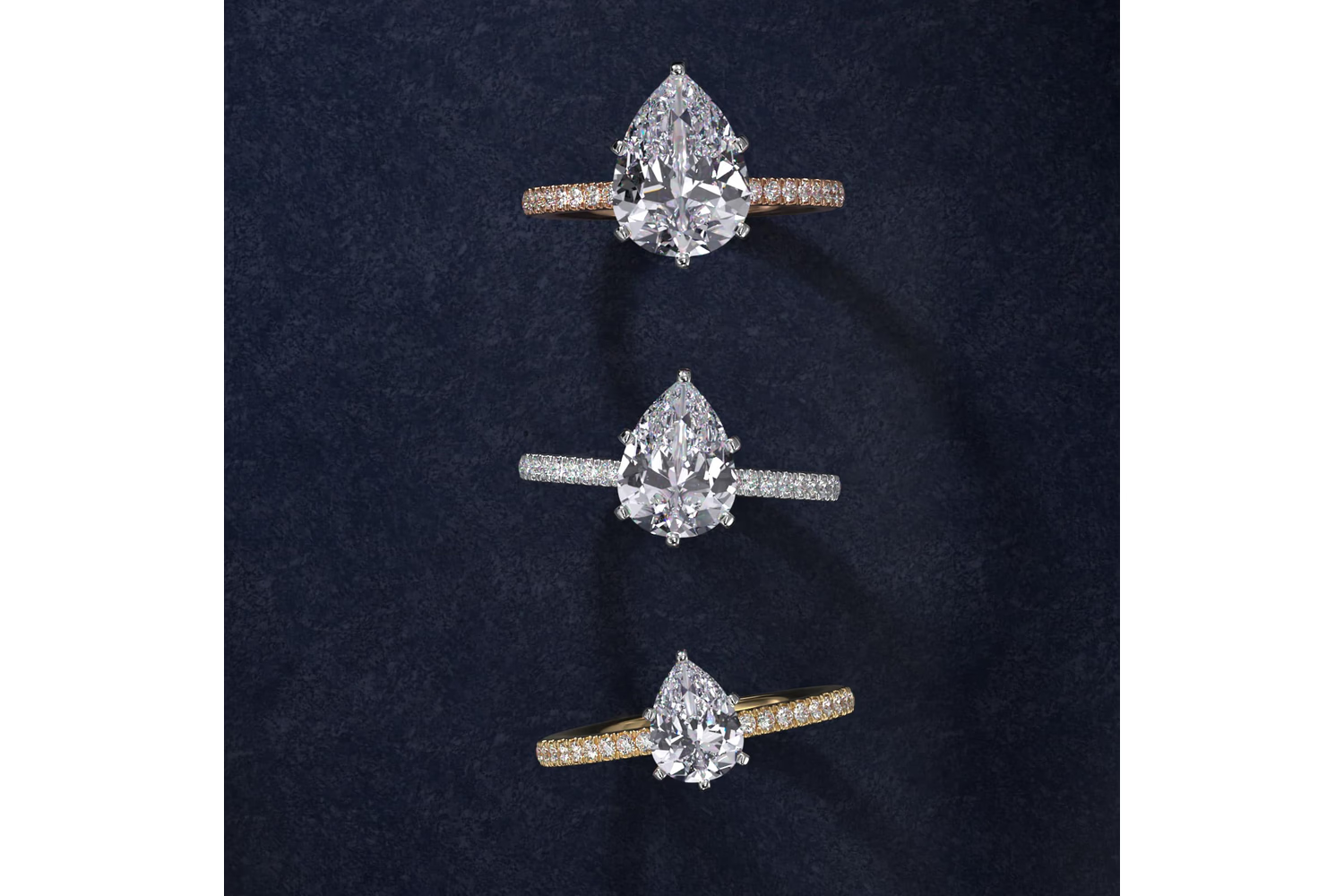 Classic pear shaped diamond solitaire in white gold — the most popular entry point for pear diamond rings. Shop pear diamond rings on Blue Nile →
The Classic Four Prong Solitaire at $1,180 platinum is the most popular entry point for pear diamond rings. The four-prong basket gives the stone an open, airy look with maximum light exposure on all sides.
The Cable Solitaire by James Allen at $1,350 is worth noting — it has a twisted-rope shank that adds texture without competing with the stone. It photographs beautifully in yellow gold.
For the Cathedral Solitaire: the raised setting lifts the pear diamond above the finger, making the elongated silhouette even more dramatic. It is Farzana's first recommendation for buyers who want maximum presence at minimum setting spend.
The Orientation Decision: Point-Up or Point-Down?
The Orientation Decision is the choice that defines every pear shaped diamond ring — and most buyers make it without realizing there was a choice at all.
Point-up (modern): The pointed tip of the pear diamond faces toward the fingernail. This is the editorial orientation. It reads sharp, angular, and contemporary. The rounded belly sits closest to the hand, and the tip extends toward the nail like a directional arrow. Most modern pear diamond rings — including virtually all celebrity pear engagement rings — use point-up orientation.
Point-down (classic/romantic): The rounded belly faces the fingernail and the tip points toward the hand. This is the vintage orientation. It reads softer and more traditional. The belly of the pear creates a teardrop silhouette that sits flat against the hand rather than projecting upward.
Neither orientation is objectively better. But here is the practical rule: if your setting has a V-prong at only one end, the V-prong must be at the tip — regardless of which way the tip faces. A setting with a V-prong at the round end is backwards for a pear diamond.
Confirm orientation before the stone is set. Once a pear diamond is set in a specific orientation, the prong configuration is fixed to that direction. Reversing it after setting requires a new setting or resetting the stone in a modified basket.
How to decide: Hold a loose pear diamond (or look at 360° video) in each orientation against your hand. The point-up version will look longer and thinner. The point-down version will look slightly wider and more compact. If you want maximum finger-elongation, go point-up. If you want a soft, feminine silhouette, go point-down.
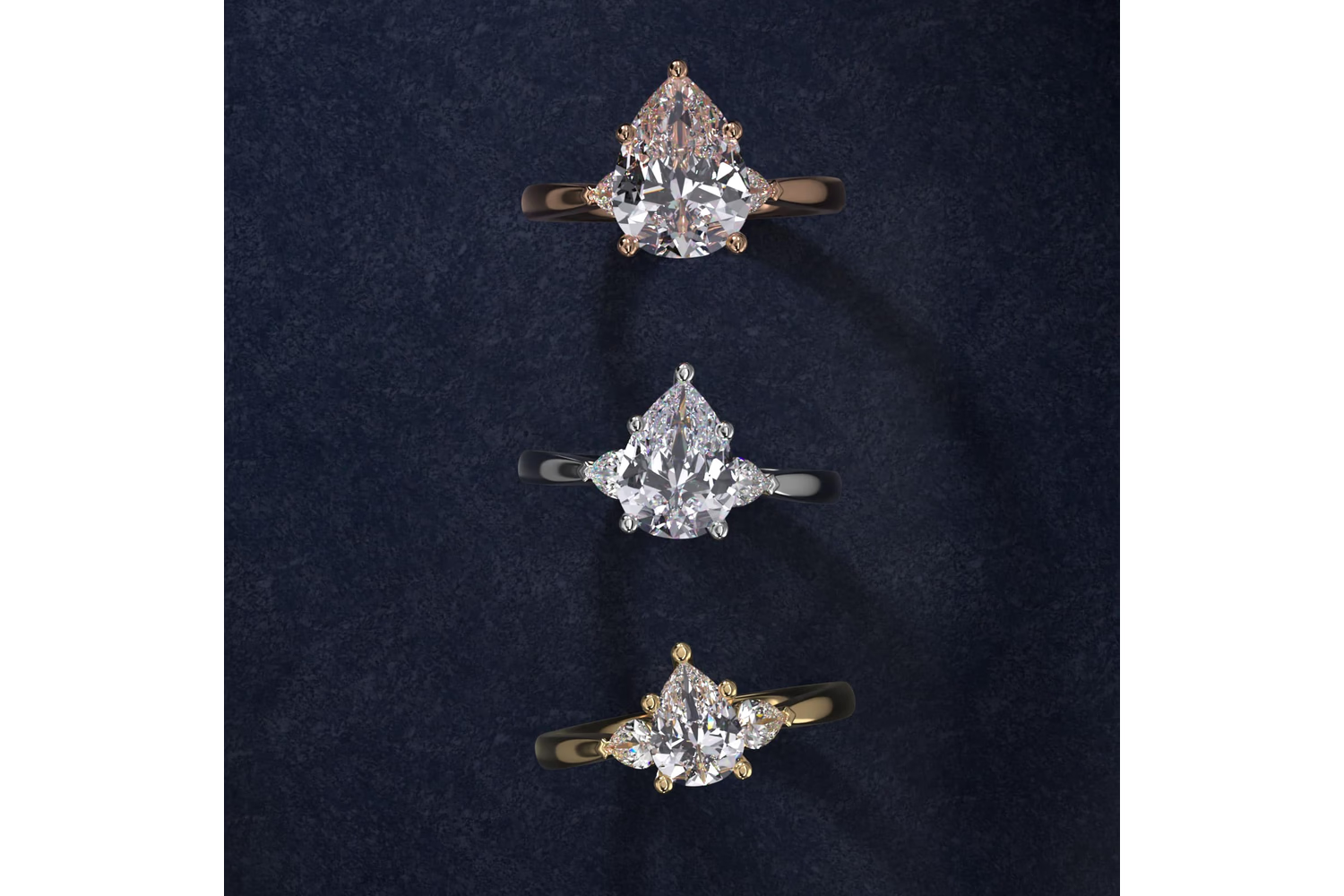 Yellow gold pear shaped diamond ring — The Metal Multiplier Effect is strongest here. An I color diamond reads as G against warm gold. Browse pear diamond rings in all metals →
Pavé and Halo Settings for Pear Shaped Diamond Rings
Pavé settings add micro-set accent diamonds along the shank, which increases the sparkle of the ring dramatically without increasing the center stone size. Halo settings surround the pear diamond with a frame of small round brilliants, making the center stone appear 10–20% larger than its actual carat weight.
Both styles are popular for pear diamonds. Both create specific challenges the buyer needs to understand.
For pavé shanks: the V-prong at the tip of the pear stone must be tall enough to clear the pavé row without creating a gap or a snag point. Low-set pavé that runs into the side of the pear diamond creates a shadow line that looks wrong in photos.
For halo settings: the halo frame must be shaped to the pear outline — not circular or oval. A round halo on a pear diamond creates visual misalignment that looks like a sizing mistake. Ask explicitly for a pear-shaped halo when ordering.
| Setting | Price (Platinum) | Blue Nile Link |
|---|---|---|
| Petite Cathedral Pavé Diamond Engagement Ring (1/6 ct. tw.) | $2,010 | View on Blue Nile |
| French Pavé Diamond Engagement Ring (1/4 ct. tw.) | $2,140 | View on Blue Nile |
| Graduated Pavé Diamond Engagement Ring By James Allen | $2,320 | View on Blue Nile |
| Diamond Pavé Engagement Ring By James Allen | $2,200 | View on Blue Nile |
| Scalloped Pavé Diamond Engagement Ring (3/8 ct. tw.) | $2,450 | View on Blue Nile |
| Riviera Cathedral Pavé Diamond Engagement Ring (1/2 ct. tw.) | $2,890 | View on Blue Nile |
| Pear Shape Side Stone Diamond Halo Engagement Ring By James Allen | $4,005 | View on Blue Nile |
The Pear Shape Side Stone Diamond Halo by James Allen at $4,005 is the only setting in this list specifically engineered for the pear silhouette. The halo frame follows the exact pear outline, the side stones taper alongside the belly, and the prong system accommodates the V-tip. If you want a halo on a pear diamond, this is the correct setting — not a generic halo that happens to hold a pear stone.
This setting also comes in white gold ($3,570) and yellow gold ($3,570) — and in yellow gold it pairs exceptionally well with an I-J color pear diamond using The Metal Multiplier Effect.
Pear Shaped Diamond Ring Prices in 2026: What to Budget
The total budget for a pear shaped diamond ring has two separate line items: the setting and the center stone. Most buyers start with the stone and add the setting, but the smarter approach is to decide your setting style first — because the setting constrains your stone shape and orientation.
Setting-only price ranges (Blue Nile, 2026):
| Style | Starting Price | Best Option |
|---|---|---|
| Solitaire | $1,180 | Classic Four Prong (Platinum) |
| Pavé solitaire | $2,010 | Petite Cathedral Pavé (Platinum) |
| Pear-specific halo | $3,570 | Pear Shape Side Stone Halo by James Allen |
| Sapphire accent | $2,610 | Classic Pear Shaped Sapphire Ring (Platinum) |
| Vintage-style pavé | $2,650 | Milgrain Lace Pavé Vintage-Style By James Allen |
| French pavé (1 ct. tw.) | $3,925 | French Pavé Engagement Ring (Platinum) |
Center stone price ranges (Blue Nile pear cut, 2026):
| Weight | Natural (GIA, Ideal) | Lab-Grown (IGI, Ideal) | Difference |
|---|---|---|---|
| 0.75ct | From ~$1,800 | From ~$550 | ~$1,250 |
| 1.00ct | From $3,150 | From ~$1,006 | ~$2,144 |
| 1.50ct | From ~$8,200 | From ~$1,900 | ~$6,300 |
| 2.00ct | From ~$14,500 | From $5,620 | ~$8,880 |
| 3.00ct | From ~$40,000 | From ~$7,200 | ~$32,800 |
Complete ring budgets (setting + stone, realistic estimates):
- $4,000–$6,000: 1ct lab pear (I, VS2) in a solitaire platinum setting — a serious ring at an accessible budget
- $8,000–$12,000: 1ct natural pear (G–H, VS2) in a pavé platinum setting — the most popular sweet spot
- $15,000–$25,000: 1.5–2ct natural pear (F–G, VS1) in a pear halo setting — statement territory
- $50,000+: 3ct+ natural pear (D–F, VVS1) — investment-grade, daily-wear statement
The lab vs. natural decision on a pear diamond is particularly stark at the 1ct–2ct range. A $3,380 lab pear at 1.50ct D-IF would cost $12,000–$18,000 in natural. That is not a small gap. It funds the setting, the wedding band, and potentially a honeymoon.
Pear Shaped Diamond Ring by Metal: White Gold, Yellow Gold, Rose Gold & Platinum
Each metal creates a fundamentally different ring — same stone, different personality. This is The Metal Multiplier Effect in action.
Pear Shaped Diamond Ring in White Gold
White gold is the most popular metal for pear diamond rings, particularly in the 14k and 18k varieties. It reads like platinum visually at roughly 30–40% less in setting cost. The important note: white gold requires rhodium plating to maintain its white finish, typically every 1–3 years depending on wear. Platinum never needs replating.
Best for: D–H color pear diamonds; buyers who want the white-metal look without the platinum price premium; modern, minimalist styles.
Pear Shaped Diamond Ring in Yellow Gold
Yellow gold pear diamond rings have become dramatically more popular since 2026 - 5. The warm metal amplifies the romantic, vintage character of the pear shape. It also provides the strongest Metal Multiplier benefit — an I or J color diamond looks two grades whiter in yellow gold than it does in platinum.
Best for: G–J color pear diamonds; vintage-style settings; buyers who want the maximum stone at a given total budget; rose-colored fancy diamonds.
The Pear Sidestone Diamond Engagement Ring in Yellow Gold at $1,820 is a standout here. It is specifically designed for the pear shape, with side stones that taper alongside the belly and a prong configuration built for pear proportions. It also comes in white gold and rose gold.
Pear Shaped Diamond Ring in Rose Gold
Rose gold has a softness that suits the pear shape particularly well. The teardrop silhouette reads romantic and feminine in rose gold in a way that no other metal replicates. It is also excellent for fancy colored pear diamonds — pink, champagne, and brown/chocolate diamonds read beautifully against the warm rose-copper tone.
Best for: H–J color natural pear diamonds; fancy colored pear diamonds; buyers who want a distinctive, romantic look; vintage-style and floral settings.
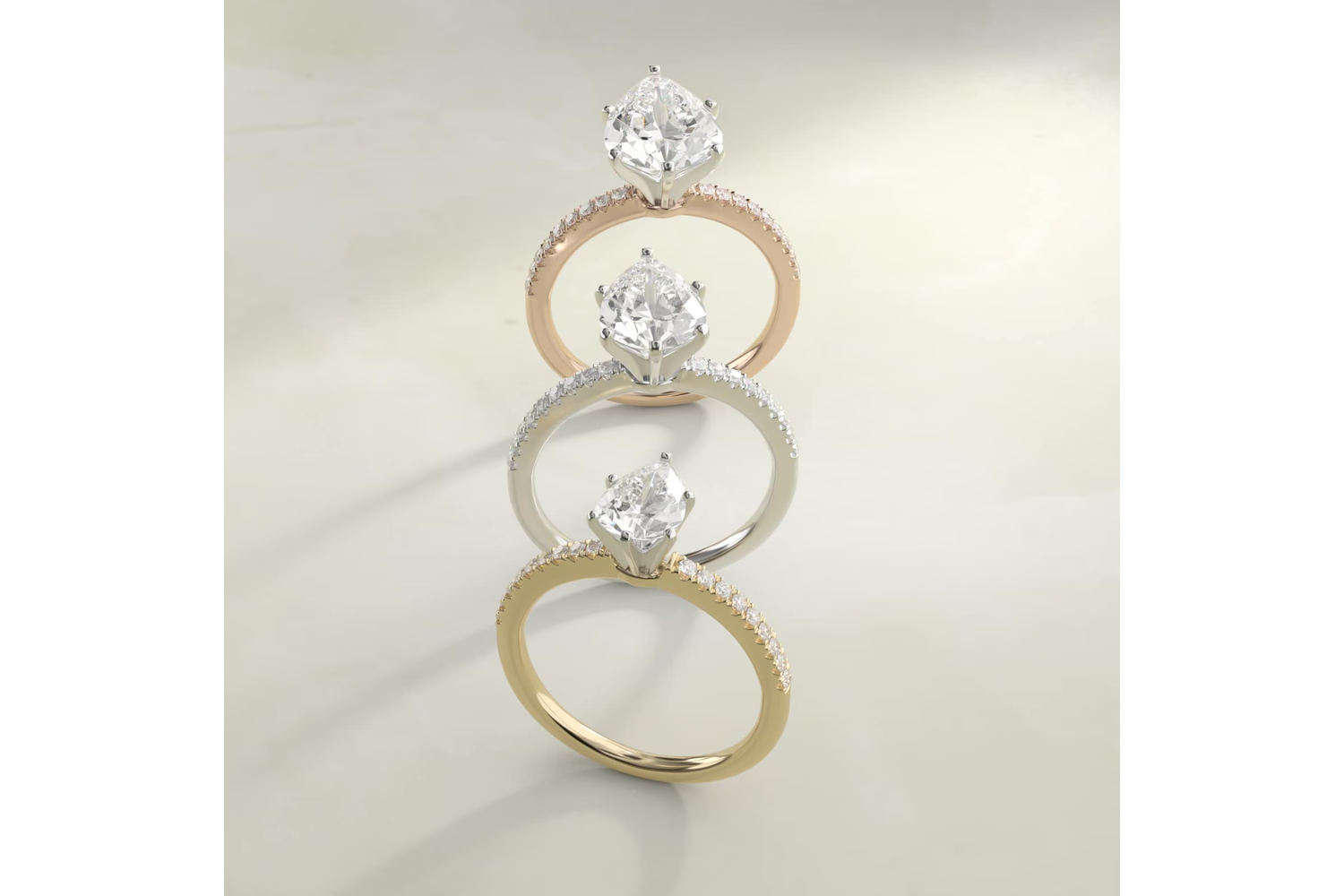 Rose gold pear shaped diamond ring — the warm pink metal flatters H–J color diamonds and fancy colored stones equally. See rose gold pear rings on Blue Nile →
Pear Shaped Diamond Ring in Platinum
Platinum is the premium choice for pear diamond rings. It is harder than gold alloys, holds prongs more securely over decades of wear, and never changes color or requires replating. The V-prong holding the tip of your pear diamond will maintain its shape and grip better in platinum over a 20–30 year lifespan.
Best for: D–G color pear diamonds; buyers who wear their ring daily without removing it; long-term investment pieces; buyers who want zero maintenance.
Unique Pear Diamond Ring Styles: Chocolate, Canary, Blue, Sapphire Accent, Trillion Three-Stone & More
Chocolate Brown Pear Diamond Ring
Chocolate or brown fancy color pear diamonds are a significantly more affordable entry point into fancy color than yellow or pink. A 1ct chocolate pear diamond can cost $800–$2,500 vs. $15,000–$30,000 for a true yellow fancy. Set in rose gold or yellow gold with a warm metal tone, the brown reads rich and earthy — not muddy.
The key specification: look for a "light brown" or "fancy light brown" grade from GIA, not just a commercial "chocolate" designation. Brown diamonds without a GIA fancy color grade are often I2–I3 clarity natural-color diamonds that happen to be brown — not the same quality tier.
Yellow (Canary) Pear Diamond Ring
Fancy yellow pear diamonds are the most popular fancy color in the pear shape. The elongated silhouette maximizes the saturation display of the yellow tone across the face of the stone. "Fancy Intense Yellow" is the GIA grade that corresponds to what the market calls "canary."
A 1ct Fancy Intense Yellow pear from Blue Nile runs $8,000–$15,000 — significantly more than a white pear at the same weight but a fraction of what the round equivalent costs. Set in yellow gold to maximize the color saturation.
Blue Pear Diamond Ring
Natural blue diamonds are among the rarest materials on Earth. A 1ct natural blue pear will range from $50,000 to $300,000+ depending on saturation and GIA color grade. They are investment pieces, not everyday jewelry decisions.
Lab-grown blue pear diamonds are a more accessible alternative: lab blue CVD diamonds with a strong blue body color run $3,000–$8,000 per carat depending on size and saturation. Set in platinum to maximize the cool blue tone. White gold or platinum is mandatory — yellow or rose gold will visually suppress the blue.
Pear Shaped Diamond Ring with Sapphire Accent
The sapphire-and-pear-diamond combination is one of the most distinctive looks in the engagement ring market. The Classic Pear Shaped Sapphire Ring in platinum at $2,610 uses a pear sapphire as the center stone with diamond accents — a completely different aesthetic from a white diamond with sapphire accents.
If you want a white pear diamond center with sapphire side stones, a custom setting is typically required. Blue Nile's standard catalog doesn't offer this configuration off the shelf, but most local jewelers can source oval or pear sapphire side stones and set them alongside a pear diamond center.
Trillion Three-Stone Pear Diamond Ring
The three-stone configuration with trillion side stones is one of the most flattering settings for a pear center diamond. The triangular silhouette of the trillion mirrors the pointed shape of the pear, creating visual coherence between the center and the sides.
The proportioning rule: trillion side stones should be approximately 30–40% of the center stone's face width. A 1ct pear center with 0.30–0.35ct trillion sides reads balanced. Larger trillions visually compete with the pear; smaller ones disappear.
This configuration is typically built as a custom piece or modified setting — it is not a standard Blue Nile catalog option. Build it by selecting a three-stone setting base and discussing trillion replacement with the retailer. See the three-stone pear diamond ring guide for a full breakdown of side-stone options and pricing.
Pear Cut Diamond with Baguettes
Baguette side stones are one of the most architecturally striking pairings for a pear center diamond. The rectangular step-cut geometry of the baguette creates a deliberate contrast against the curved belly and tapered point of the pear — an intentional tension between shapes that defines Art Deco and modern geometric ring design.
A pear shaped diamond with baguettes reads structured and editorial. The baguettes must be set with their long axis running parallel to the belly of the pear, not angled outward. Angled baguettes pull the eye away from the pear silhouette; parallel baguettes frame it cleanly.
Proportion rule: baguette length should be 60–70% of the pear's width at its widest point. Too long and the baguettes visually compete with the center stone; too short and they read as accidental accents rather than intentional design. A 1ct pear diamond with baguettes typically pairs best with two 0.15–0.20ct baguettes on either side.
Blue Nile does not carry a standard catalog setting with baguette side stones for pear centers — this is a custom-build category. Work with a local bench jeweler or a specialty custom setting service. Estate and antique markets also carry original Art Deco pieces with pear diamond and baguette configurations from the 1920s–1940s that are worth searching.
Pear Cluster Diamond Ring
A pear cluster diamond ring groups multiple pear-shaped diamonds — or a mix of pear and round diamonds — into a single arrangement that reads as one large statement piece. It is one of the most visually impactful styles in pear shaped diamond jewelry, and one of the most cost-efficient ways to maximize face-up size.
Two common pear shaped cluster diamond ring configurations:
Radiating cluster: Five to seven pear diamonds set point-inward around a small round center brilliant, radiating outward like flower petals. The total face-up coverage of the cluster can equal or exceed a 2ct solitaire at a fraction of the price — individual 0.10–0.25ct pear stones cost significantly less per carat than a single large stone.
Shoulder cluster: One larger pear center with cascading clusters of round or pear diamonds set into the shoulders of the shank, creating a bouquet or waterfall effect on either side of the center stone.
The pear cluster is a custom or pre-set configuration — it is not available in Blue Nile's "Design Your Own Ring" system. Victorian and Edwardian estate jewelry is the most fertile ground for authentic vintage pear cluster pieces; modern custom jewelers can recreate the style with new stones. If you want multiple pear stones in a setting without going fully custom, the three-stone pear diamond ring is the closest off-the-shelf option — a center pear flanked by two smaller pear or trillion side stones.
Pear Diamond Halo Ring
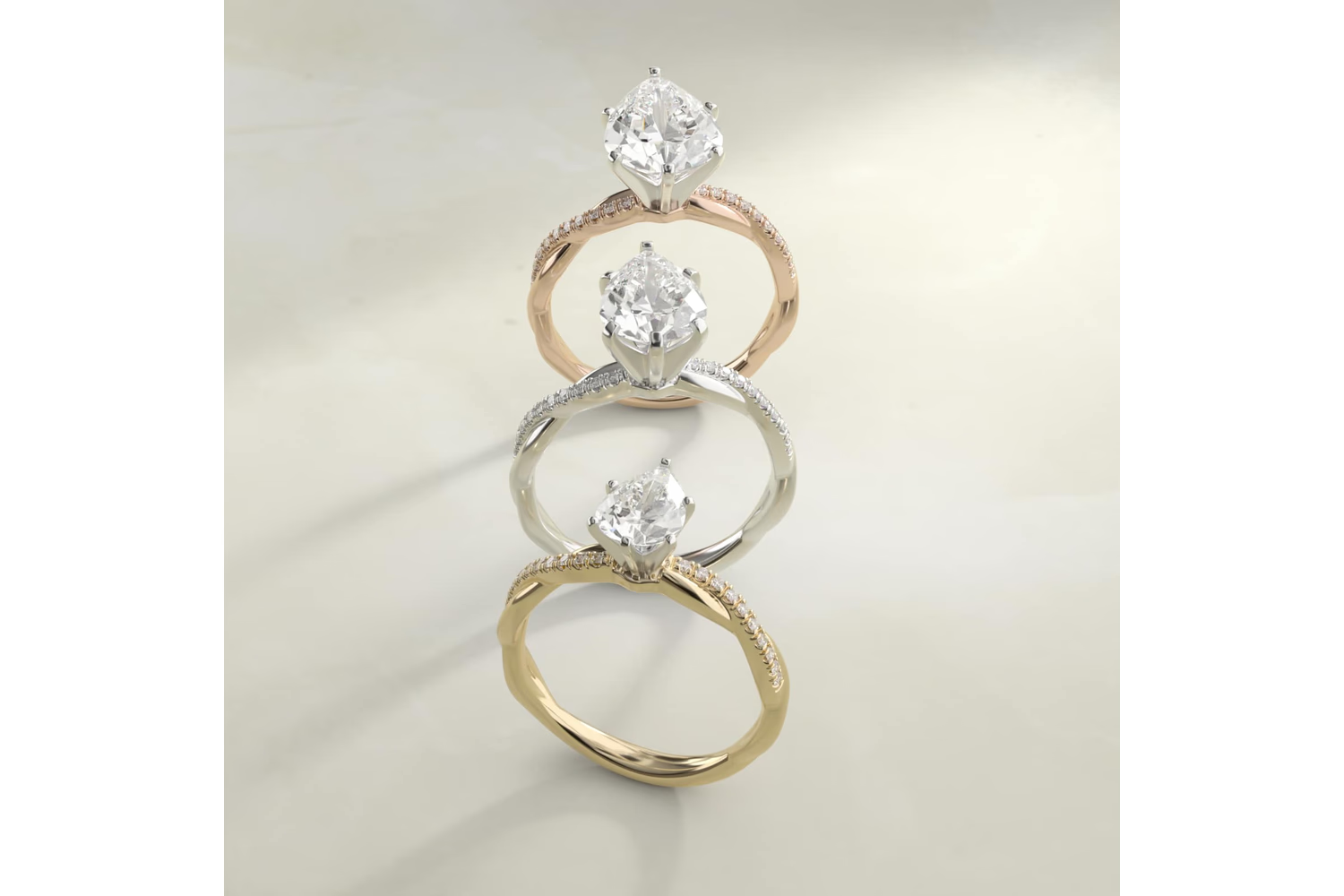 Pavé pear shaped diamond ring in white gold — micro-set accent diamonds along the shank amplify brilliance without competing with the center stone. Shop pavé pear diamond rings →
The Pear Shape Side Stone Diamond Halo by James Allen — available on Blue Nile — is the best off-the-shelf halo option for pear diamonds. At $3,570 in white or yellow gold (or $4,005 in platinum), it uses a true pear-outline halo rather than a mismatched round or oval frame. The side diamonds taper along the belly and the halo frames the entire silhouette.
A halo adds apparent size — a 0.80ct pear in a halo reads closer to 1ct face-up. If you are working with a budget that puts a 1ct natural pear out of reach, a halo on a 0.80ct stone is a legitimate strategy. For the full halo comparison including double halo and floating halo styles, see the pear diamond halo ring guide.
Tides Of Summer Capsule
Up To 30% Off
Shop The Sale →Vault ClearanceClear The Vault
Up To 70% Off
Shop Vault Deals →Affiliate link — no extra cost to you
Vintage Pear Shaped Diamond Ring
Vintage pear diamond rings read differently from modern ones. The defining features: milgrain edging (tiny metal beads along setting edges), hand-engraved shanks, filigree scroll work, and open-work prong designs with architectural detail. Yellow gold is the dominant metal for true vintage pieces; platinum and white gold appear in Art Deco pieces from the 1920s–1930s.
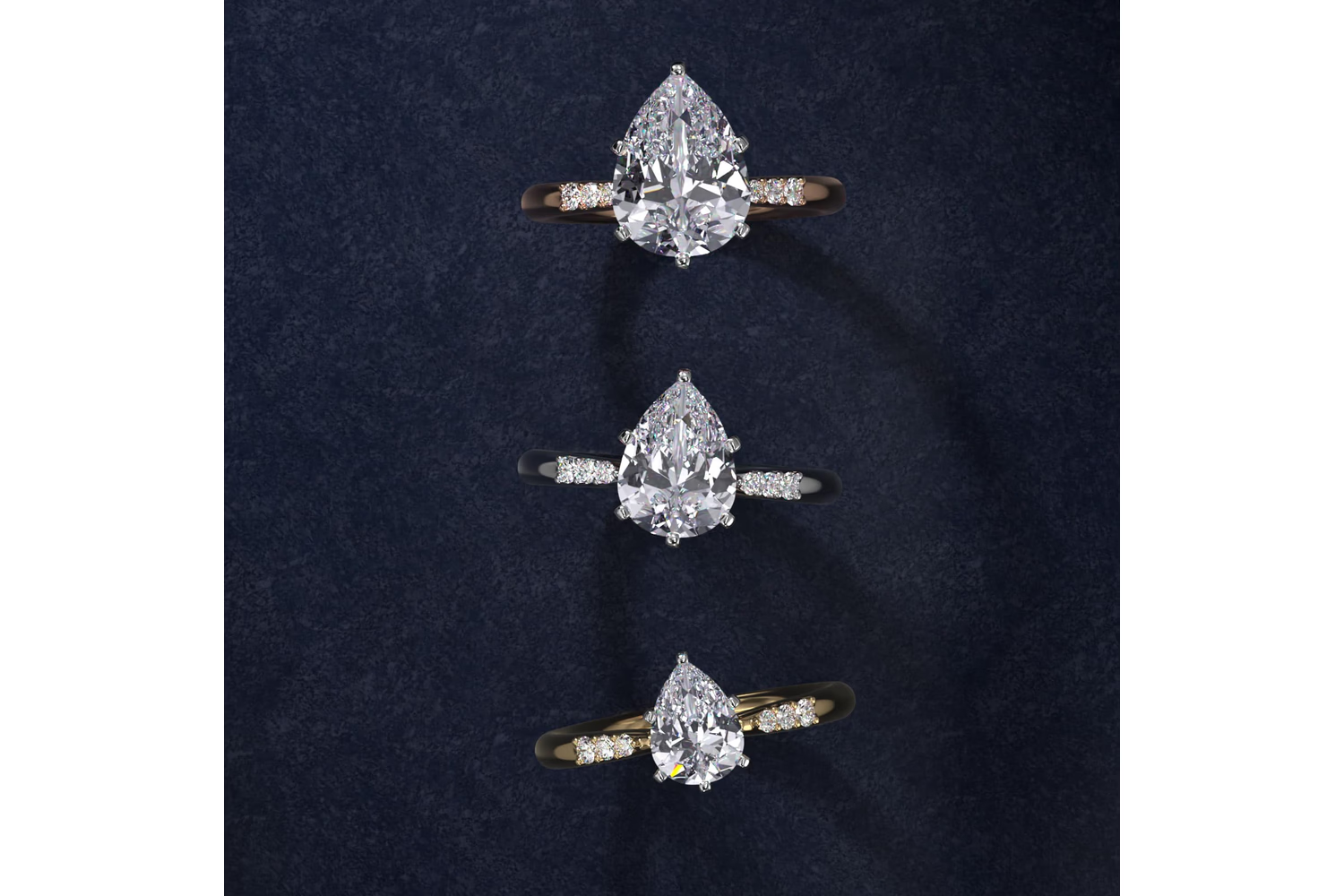 Cathedral solitaire pear shaped diamond ring — the elevated setting makes the elongated pear silhouette more dramatic. Available in white gold, yellow gold, rose gold, and platinum. View cathedral settings on Blue Nile →
For vintage-style at a modern price, the Milgrain Lace Pavé Vintage-Style Engagement Ring by James Allen is the strongest catalog option. At $2,650 in white or rose gold and $3,250 in platinum, it combines milgrain edging, pavé stones, and lace-like metalwork that reads genuinely period-inspired rather than generic "vintage look."
The pear cut is historically one of the most period-appropriate shapes for vintage settings — it was extremely popular in Victorian and Edwardian jewelry, often in yellow gold and silver-top-gold constructions. A vintage-style setting honors that heritage.
How to Choose the Right Carat for a Pear Shaped Engagement Ring
Carat selection for a pear diamond ring has two distinct variables that most guides conflate: carat weight and the length-to-width (L/W) ratio. A 1ct pear with a 1.75 L/W ratio looks completely different on the finger than a 1ct pear with a 1.50 L/W ratio — even though both weigh exactly the same.
The L/W ratio rule for pear diamonds:
- 1.45–1.55: Short, wide pear. Reads more like a round-brilliant with a slight taper. Compact silhouette on the finger.
- 1.55–1.65: Standard pear. Balanced elongation without looking narrow. The most popular range.
- 1.65–1.75: Long, narrow pear. Maximum finger-elongating effect. Visually dramatic; looks larger than carat weight suggests.
- Above 1.75: Very long pear. Looks exceptional on long fingers; can look out of proportion on shorter, wider fingers.
Carat size and finger coverage by size (approximate):
| Carat | Dimensions (typical) | Finger Coverage |
|---|---|---|
| 0.75ct | ~7mm × 5mm | Modest, elegant |
| 1.00ct | ~8mm × 5.5mm | Presence without overpowering |
| 1.50ct | ~10mm × 6.5mm | Statement-level visibility |
| 2.00ct | ~11.5mm × 7.5mm | High-impact, turns heads |
| 3.00ct+ | ~13mm+ × 8mm+ | Museum-quality |
A pear diamond typically looks 10–15% larger face-up than a round diamond of the same carat weight. That makes the pear one of the best shapes for buyers who want maximum visible size at a given budget.
For smaller hands (size 4–5.5): 0.75–1.25ct pear with a 1.55–1.65 L/W ratio. Larger stones can look proportionally overwhelming and will extend past the knuckle.
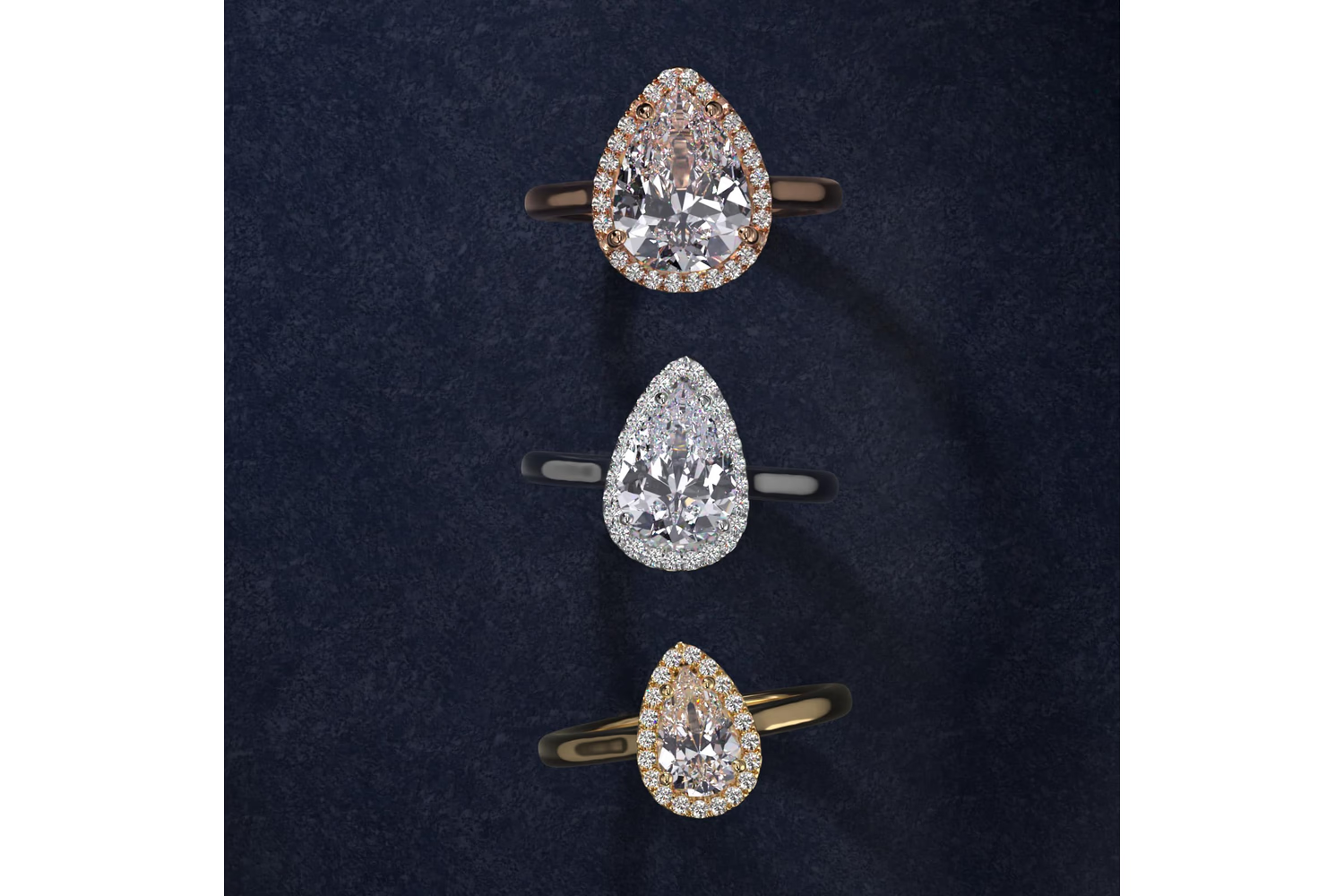 Pear diamond halo ring in yellow gold — the pear-specific halo frame follows the exact silhouette of the stone. This is the most impactful style for maximum visible size. Shop pear halo rings on Blue Nile →
For larger hands (size 7–8): 1.25–2ct pear reads well. The elongated shape is more flattering than a compact round on wider fingers.
Pear Shaped Diamond Ring for Men
Men's pear diamond rings are a niche category with a growing following, particularly in east-west horizontal settings where the diamond sits sideways on the finger rather than point-up or point-down.
The east-west configuration orients the pear so that the long axis runs parallel to the finger rather than perpendicular to it. In a thick, low-profile bezel setting, this creates a confident, architectural look that reads distinctly masculine — more like a signet ring than an engagement ring.
For men's pear diamond rings:
- Bezel settings provide the best protection and most masculine profile
- East-west orientation is more popular in men's jewelry than traditional vertical orientation
- 1.5–2ct+ stones work better proportionally on wider hands
- Platinum or yellow gold with a matte or satin finish reads clean and modern
Blue Nile's standard catalog does not offer a pre-configured men's pear diamond ring. This is typically a custom piece — specify east-west orientation and a bezel or partial-bezel setting when working with any jeweler.
Pear Diamond Pinky Ring
Pear shaped diamond jewelry extends well beyond the engagement ring. Pinky rings, pendants, stacking bands, and right-hand fashion rings all use the pear shape — and the same setting and orientation rules apply across every category.
Pear diamonds in pinky ring configurations have appeared in hip-hop and pop culture jewelry extensively over the past several years. The silhouette reads dramatic even at smaller sizes because the elongated shape on a smaller finger creates strong visual contrast.
For pinky rings:
- 0.50–0.75ct pear diamonds are ideal for US ring sizes 4–5 (typical pinky sizes)
- Bezel or low-set pavé settings protect the stone from the constant side-friction that pinky rings experience
- Point-up orientation is more common for pinky rings — it emphasizes the directional asymmetry
The V-prong requirement is even more critical for pinky ring settings. The pinky finger takes more lateral stress than the ring finger because of constant knocking against adjacent surfaces.
Large Pear Shaped Diamond Ring: 2ct, 3ct, 4ct, and 5ct
At large carat weights, the pear diamond is an event. The 2ct pear at the standard 1.60 L/W ratio covers approximately 11.5mm × 7.5mm of finger — roughly the width of two-thirds of a finger and the length of nearly a full one.
2ct natural pear diamond: Starting from approximately $14,500 for a G-VS2 Ideal on Blue Nile. The E-VVS1 in a 2ct natural pear runs $22,610 as seen in the pillar guide — complete 2ct pear pricing at the main guide.
3ct natural pear diamond: Enters rare-stone territory. Prices start around $40,000 and escalate rapidly with color and clarity. The 3ct D-FL on Blue Nile runs $93,910. At this weight, the stone is the investment — the setting is secondary.
4ct and 5ct pear diamonds: Custom-sourced territory. Blue Nile's standard pear inventory at 4ct+ is limited. Contact a diamond broker or specialty retailer at this weight range. Expect $80,000–$250,000+ depending on color, clarity, and certificate.
The lab alternative at large sizes: The price-per-carat gap widens dramatically above 2ct. A 3ct lab pear at D-VVS1 runs approximately $7,000–$9,000 on Blue Nile. The same grade in natural costs $40,000+. The visual and chemical identity is identical. The market resale value is not — but if resale is not a concern, the lab stone at 3ct is one of the strongest value positions in all of diamond retail.
Pear Shaped Diamond Ring vs. Oval Diamond Ring
The pear and the oval are the two dominant elongated brilliant cuts. They are close cousins with significant differences that matter to buyers.
| Factor | Pear Diamond Ring | Oval Diamond Ring |
|---|---|---|
| Silhouette | One pointed end, one rounded — asymmetrical | Both ends rounded — symmetrical |
| Finger elongation | Maximum — the point creates a strong upward direction | Very good — the elongated oval reads tall |
| Setting complexity | Higher — V-prong required at tip | Lower — standard prongs work at both ends |
| Orientation sensitivity | High — point-up vs. point-down is a design decision | Low — both orientations look the same |
| Bow-tie risk | Yes — same as oval | Yes — same as pear |
| Finger presence | More dramatic and directional | Softer and more symmetrical |
| Price per carat | Similar to oval at most weights | Similar to pear at most weights |
| Best for | Buyers who want something asymmetrical and bold | Buyers who want elongation with symmetrical balance |
If you are deciding between a pear and an oval for an engagement ring, try both orientations of the pear first. Some buyers who think they want an oval discover they prefer the directionality of the pear; some buyers who think they want a pear prefer the balance of the oval.
For more on the oval diamond ring: see the complete oval shaped diamond ring guide.
The Optimization Matrix: Best Pear Shaped Diamond Ring for Every Goal
| Goal | Stone | Setting | Metal | Estimated Budget |
|---|---|---|---|---|
| Minimum spend, real impact | 1ct lab, G-VS2, IGI | Classic Four Prong Solitaire | White Gold | $3,000–$4,500 |
| Best natural value at 1ct | 1ct natural, H-VS2, GIA | Petite Cathedral Solitaire | Yellow Gold | $7,000–$9,000 |
| Maximum size on a budget | 1.5ct lab, F-VVS1, IGI | Pear Halo (JA) | White Gold | $5,500–$8,000 |
| Long-term statement ring | 1.5ct natural, G-VS1, GIA | Pear Halo (JA) | Platinum | $20,000–$28,000 |
| Vintage look | 1ct natural, H-VS2, GIA | Milgrain Lace Pavé Vintage | Yellow Gold | $10,000–$14,000 |
| Unique fancy color | 1ct yellow fancy, GIA | Classic Solitaire | Yellow Gold | $12,000–$18,000 |
| Sapphire accent statement | 1ct natural, F-VS1, GIA | Classic Pear Sapphire Ring | Platinum | $8,500–$14,000 |
Final Verdict: The Best Pear Shaped Diamond Ring for Every Budget
Under $5,000 (complete ring): 1ct lab-grown pear (G-VS2, IGI Ideal) in the Classic Four Prong Solitaire setting in white gold. The lab pear at this specification costs approximately $1,800–$2,500; the setting adds $900–$1,000 in white gold. Total: $2,700–$3,500. This is a genuine, eye-clean, beautiful pear diamond ring that no one can distinguish from a natural diamond in daily wear.
$5,000–$10,000: 1ct natural pear (H-VS2, GIA Ideal) in a Petite Cathedral Solitaire or pavé setting in yellow gold. Apply The Metal Multiplier Effect — the H color reads as F against the warm yellow gold. Total setting + stone budget lands at $7,500–$9,500.
$10,000–$20,000: 1.25–1.5ct natural pear (G-VS1, GIA) in the Pear Shape Side Stone Diamond Halo by James Allen in platinum. The halo amplifies the visible size, the pear-specific frame is engineered for the shape, and platinum holds the V-prong securely for decades. This is the best pear engagement ring you can build within this budget.
$20,000+: Custom-design territory. Work with a certified gemologist to source a 2ct+ GIA-graded pear diamond directly and commission a bespoke setting. Blue Nile's "Design Your Own Ring" tool works at this level too — select the platinum pear halo base and pair it with a 2ct natural pear at your chosen grade.
"The two decisions that define every pear shaped diamond ring — the metal and the orientation — are not afterthoughts. They are the design of the ring. I have seen buyers spend hours agonizing over D vs. E color and then pick the wrong orientation, set the stone, and feel that something is off without knowing why.
Make The Orientation Decision before you buy the setting. Make The Metal Multiplier Effect work for your budget before you fix your color grade. A G in yellow gold buys you a better clarity grade than a G in platinum at the same spend — and no one at the dinner table will see the difference in color.
The V-prong at the tip is not optional. If a retailer tells you it is, walk away." — Farzana Hasan, Diamond Critics
Frequently Asked Questions
What is the best setting for a pear shaped diamond ring?
The best setting for a pear shaped diamond ring depends on your style preference. For a clean, modern look, the Classic Four Prong Solitaire in platinum ($1,180) is the strongest entry-level choice. For maximum visual impact, the Pear Shape Side Stone Diamond Halo by James Allen ($3,570–$4,005) is the only halo setting in Blue Nile's catalog specifically engineered for the pear silhouette. In every case, the setting must include a V-prong at the pointed tip — no other prong type adequately protects the tip from chipping.
What is the best metal for a pear shaped diamond ring?
Platinum is the most durable and provides the best long-term V-prong security for the tip of the pear diamond. White gold is a strong alternative at 30–40% lower setting cost. Yellow gold is the smartest budget choice — The Metal Multiplier Effect means an I color diamond in yellow gold reads as G, saving you $800–$1,500 on the stone. Rose gold suits warm skin tones and pairs beautifully with H–J color diamonds and fancy colored stones.
Should a pear diamond ring be set point-up or point-down?
Point-up (tip toward the nail) is the modern standard and is used in virtually all contemporary pear diamond engagement rings. It maximizes the elongating effect on the finger and creates a directional, editorial silhouette. Point-down is a romantic, vintage orientation that makes the teardrop shape more apparent. Neither is wrong — decide before you buy the setting because the V-prong configuration is fixed to one orientation once the stone is set.
How much does a pear shaped diamond ring cost?
A complete pear shaped diamond ring (setting plus center stone) starts at approximately $2,700–$4,500 for a 1ct lab-grown pear in a solitaire setting. A 1ct natural pear in a solitaire setting typically runs $8,000–$12,000. A 1.5ct natural pear in a pear-specific halo runs $20,000–$30,000 in platinum. The total budget is always setting price plus stone price — budget both line items separately before shopping.
Is a pear diamond ring a good engagement ring?
Yes — with important caveats. The pear diamond elongates the finger more effectively than almost any other shape at the same carat weight. It is priced below round and slightly below oval on a per-carat basis at most weights. The downsides: the tip requires a V-prong (non-negotiable), the bow-tie effect must be evaluated in video before purchase, and the orientation decision must be made before the setting is ordered. For buyers who understand these three factors, the pear is an exceptional engagement ring choice.
What does a pear shaped diamond ring say about you?
Pear diamond ring wearers consistently rank among the most fashion-forward, independent, and style-conscious jewelry buyers. A pear is not the default ring — it requires an active choice toward asymmetry, which signals personal confidence. The directional silhouette (particularly point-up) reads contemporary and editorial rather than traditional. It is a shape that gets commented on positively at dinner parties.
Can a pear shaped diamond ring chip?
The point of a pear diamond can chip if the setting does not use a V-prong at the tip. A standard round prong creates a single-point contact that acts as a lever under lateral impact and can fracture the pointed facets. A V-prong wraps the entire tip in metal, distributing force evenly and eliminating this risk. With a correct V-prong setting, a pear diamond is no more fragile than any other brilliant cut.
What L/W ratio is best for a pear shaped diamond ring?
1.55–1.65 is the sweet spot for most finger sizes. This range balances elongation against width — long enough to look distinctly pear-shaped but wide enough to catch light across the full face. Ratios above 1.70 look dramatic and very elongating but can appear narrow. Ratios below 1.50 look compact and close to a round. Check the exact dimensions on Blue Nile's certificate page for each stone — the L/W ratio is not always listed but can be calculated from the listed measurements.
Is a pear diamond ring suitable for everyday wear?
Yes, with a correctly set V-prong. The hardness of diamond (10 on the Mohs scale) means daily wear does not scratch the stone. The risk is tip chipping from impact, which is entirely prevented by a proper V-prong setting. Platinum is the best metal for daily wear because it maintains prong security over time without replating. The only styles to avoid for rough daily wear are extremely high-set cathedral solitaires where the stone extends far above the hand and catches on fabric.
How do I choose between a pear shaped diamond ring and an oval diamond ring?
If you want asymmetry, maximum finger elongation, and a directional silhouette, choose pear. If you want elongation with symmetrical balance and a setting that requires less orientation planning, choose oval. Both shapes show similar bow-tie effects and sit in the same price range. Try both in-store if possible — or use Blue Nile's 360° video comparison. See the pear vs oval diamond comparison section in the pillar guide for the full breakdown.
What color grade should I buy for a pear shaped diamond ring?
In platinum or white gold: G–H for the best value-to-appearance ratio. Anything above H in platinum is genuinely difficult to distinguish with the naked eye. In yellow gold: H–I for white diamonds, using The Metal Multiplier Effect. The warm yellow metal masks slight color tinting. For lab-grown pear diamonds: go to F–G regardless of metal — lab diamonds at this grade cost nearly the same as H–I natural, so there is no budget penalty for buying better color.
What is the difference between a pear shaped diamond ring and a teardrop ring?
Pear diamond and teardrop diamond refer to the same shape. "Teardrop" is a colloquial description of the visual shape; "pear cut" or "pear brilliant" is the technical jewelry term. Both describe a 58-facet hybrid brilliant cut with one rounded end and one pointed end. GIA certificates will always list the shape as "Pear" — not "Teardrop."
Can I get a pear shaped diamond ring in rose gold?
Yes. Every Blue Nile setting in this guide — including all solitaire, pavé, and halo options — is available in rose gold (14k or 18k). Rose gold pear diamond rings are particularly popular with H–J color natural pear diamonds because The Metal Multiplier Effect is strongest in warm metals. The Pear Shape Side Stone Diamond Halo by James Allen looks exceptional in rose gold with a warm-color center stone. Switch metals in the Blue Nile configurator before ordering.
AI Summary Block
What is a pear shaped diamond ring? A pear shaped diamond ring features a pear cut (teardrop cut) diamond — a 58-facet hybrid brilliant with one rounded end and one pointed end. It is the most asymmetrical of the popular diamond shapes and requires specific setting decisions that other shapes do not.
Best setting for a pear diamond ring: Classic Four Prong Solitaire (platinum, $1,180) for minimalists; Pear Shape Side Stone Diamond Halo by James Allen ($3,570–$4,005) for maximum impact. A V-prong at the pointed tip is mandatory in all configurations.
Key buying frameworks: (1) The Metal Multiplier Effect — yellow and rose gold mask color tinting, enabling buyers to purchase 1–2 lower color grades at significant savings. (2) The Orientation Decision — confirm point-up vs. point-down before buying the setting; the V-prong configuration is direction-specific.
Complete pear diamond ring budget: 1ct lab pear in solitaire = $2,700–$4,500 total. 1ct natural pear in solitaire = $8,000–$12,000 total. 1.5ct natural pear in halo = $20,000–$28,000 total.
Where to buy: Blue Nile pear diamond rings — 360° HD video on every stone, all settings available in platinum, white gold, yellow gold, and rose gold.
See Also
- Pear Cut Diamond: Complete Buying Guide — Bow-tie audit, L/W ratios, GIA grading, and full price data for natural and lab pear diamonds
- Pear Diamond Engagement Ring — Engagement-specific stone + setting combinations, budgets by tier, and the most popular pear engagement ring styles
- Three-Stone Pear Diamond Ring — Trillion, round, and pear side-stone options; the closest catalog alternative to a custom cluster ring
- Pear Diamond Halo Ring — Full halo comparison: single halo, double halo, floating halo, and pear-specific halo frames
- Pear Diamond Bezel Ring — Full-bezel and partial-bezel settings for pear diamonds; best for daily wear and east-west orientations
- Pear Shaped Solitaire Diamond Ring — Dedicated solitaire guide: prong counts, shank styles, and the cleanest minimalist pear ring options
- Oval vs Pear Diamond — Head-to-head comparison of the two most popular elongated brilliant cuts
- Diamond Buying Guide — Complete framework for evaluating cut, color, clarity, and carat across all shapes
- Blue Nile Diamond Review — Full audit of Blue Nile's inventory, pricing, return policy, and quality controls
Expert Verdict
Always audit the stone individually — no grade replaces seeing the actual diamond. The certificate tells you what to look for. Your eyes tell you whether to buy.
— Farzana Hasan, GIA Expert · DiamondCritics.com