Round Diamond Engagement Ring Under $3,000: The Complete 2026 Guide
TL;DR: Under $3,000 Engagement Ring — Key Facts
- A natural round diamond engagement ring under $3,000 with meaningful size is not possible — the natural 1ct G-VS2 floor is $3,230
- Lab-grown changes everything: a 2ct D-VVS1 IGI round costs $2,810, a 1.5ct D-VVS1 costs $1,950
- Named concept: The $3,000 Diamond Window — the narrow price zone where lab-grown delivers maximum size and natural delivers minimum viable quality
- The best all-in ring under $3,000 uses a lab 1.5ct D-VVS1 ($1,950) plus a quality 4-prong setting ($400–$600)
- For buyers with a hard $3,000 ceiling, lab is not a compromise — it is the only path to a visually impressive stone
- Natural options under $3,000: sub-0.8ct rounds with good cut — limited visual presence, appropriate for minimalist aesthetics


The Honest Truth About Natural Diamonds Under $3,000
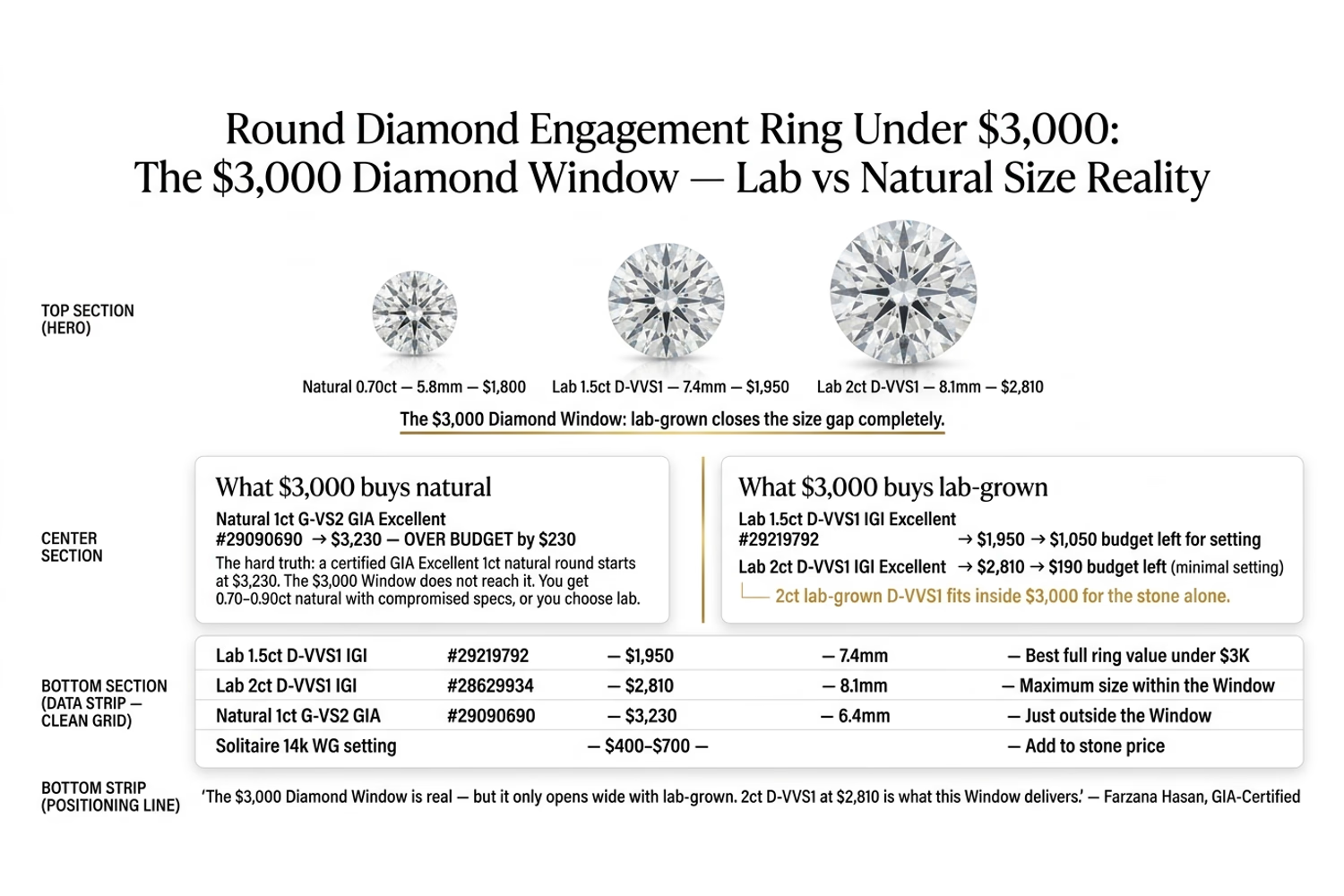
Natural round diamonds under $3,000 exist — but not at sizes or grades most buyers picture when they imagine an engagement ring. The cheapest GIA Excellent 1ct natural round on Blue Nile in 2026 is $3,230. That is $230 over budget before you add a setting. Under $3,000 natural, you are looking at 0.7–0.9ct stones in the $800–$2,800 range. These are real diamonds, properly certified, and visually attractive — but they measure 5.7–6.2mm face-up, compared to 6.5mm for 1ct. If the $3,000 ceiling is firm and face-up size matters, natural is the wrong path.
The $3,000 Diamond Window is where the data becomes interesting. Within this narrow price range, lab-grown diamonds deliver size that natural cannot. A $2,810 lab 2ct D-VVS1 is genuinely impressive — 8.1mm face-up, D color, VVS1 clarity, IGI certified. No natural diamond of comparable size or grade exists anywhere near this price. That gap is the Window.
What $3,000 Buys in 2026: The Comparison
| Stone | Size | Grade | Cert | Price | Blue Nile ID |
|---|---|---|---|---|---|
| Natural 0.80ct G-VS2 | 5.9mm | GIA Excellent | GIA | ~$1,800 | Various |
| Natural 0.90ct G-VS2 | 6.2mm | GIA Excellent | GIA | ~$2,400 | Various |
| Natural 1.00ct G-VS2 | 6.5mm | GIA Excellent | GIA | $3,230 | 29090690 |
| Lab 1.50ct D-VVS1 | 7.3mm | IGI Excellent | IGI | $1,950 | 29219792 |
| Lab 2.00ct D-VVS1 | 8.1mm | IGI Ideal | IGI | $2,810 | 28629934 |
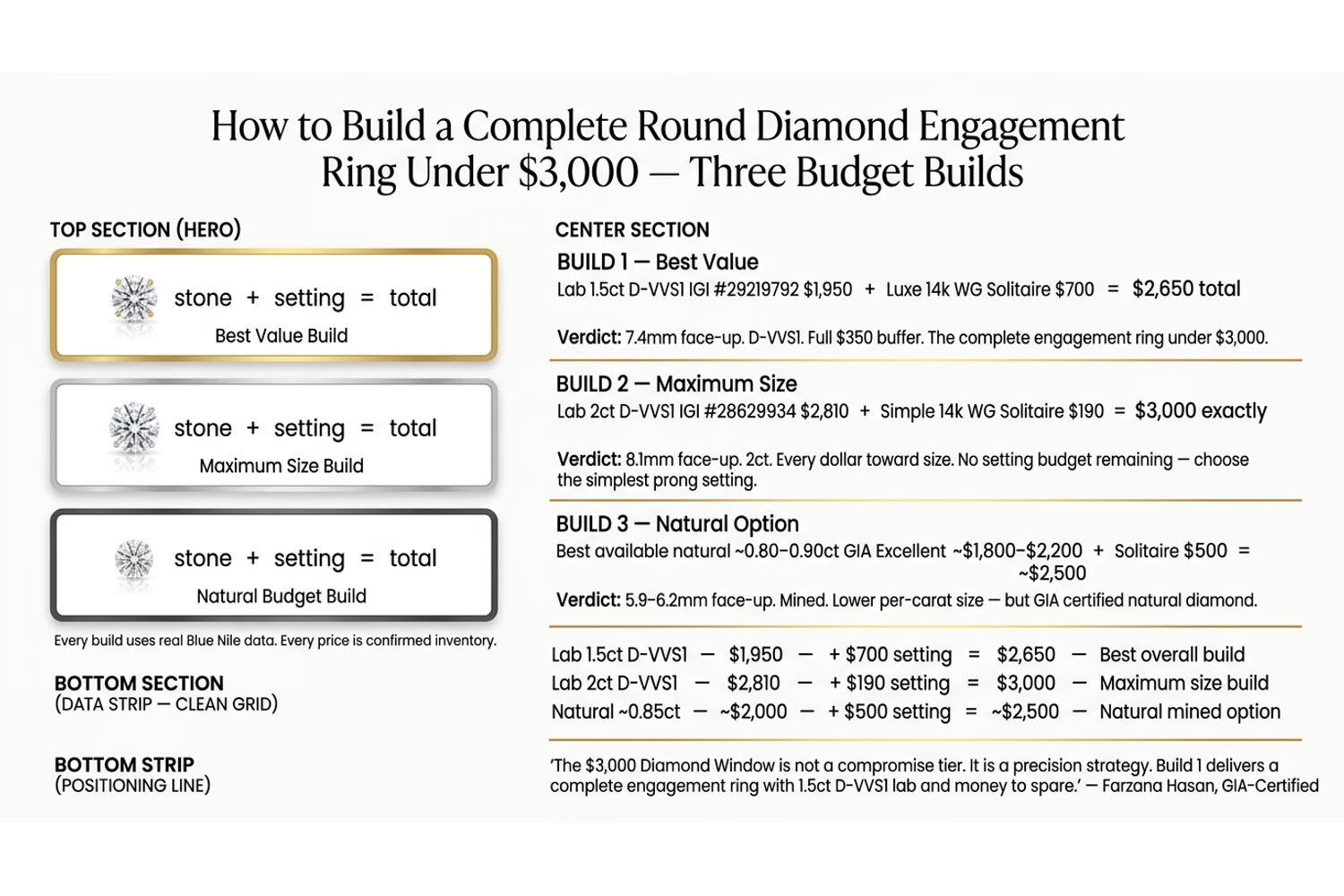
Data insight: Under $3,000, the lab 2ct D-VVS1 at $2,810 beats every natural option on every visible metric — diameter, color grade, clarity grade. The natural 0.90ct G-VS2 at ~$2,400 is 1.9mm smaller in diameter. The lab 1.5ct at $1,950 leaves $1,050 for a quality setting and still delivers 7.3mm — larger than any natural you can buy in this budget.
The $3,000 Diamond Window: Named Concept Explained
The $3,000 Diamond Window is the price zone ($1,500–$3,000) where lab-grown diamonds create a buying opportunity that did not exist five years ago. In 2021, lab 2ct D-VVS1 diamonds cost $8,000–$12,000. The Lab Price Floor Effect — where lab prices stabilized after a 70% decline from 2020 to 2025 — has created a floor at approximately $2,800 for 2ct lab, with no sign of further significant decline. The Window is open now; history suggests it will not close further. Buyers in the $2,500–$3,000 budget range are the direct beneficiaries of this structural pricing shift.
Lab-Grown Quality Is Real — What IGI Means in Practice
Some buyers are unfamiliar with IGI (International Gemological Institute). For lab-grown diamonds, IGI is the industry-standard certification body. Over 75% of all lab-grown diamonds on Blue Nile carry IGI certificates. IGI grades lab diamonds with consistent methodology: their D color, VVS1 clarity designation on a lab stone means the same thing optically as it does on paper. The caveat — relevant only for natural stones — is that IGI inflates 1–2 color grades on natural diamonds versus GIA. For lab stones, this concern does not apply; both GIA and IGI apply consistent grading standards to lab-grown material.
The IGI 2ct D-VVS1 at $2,810 (ID 28629934) has a legitimate D color, legitimate VVS1 clarity, and is optically identical to any natural D-VVS1 round. The stone is chemically pure crystalline carbon — the same as natural.
Best Ring Builds Under $3,000 — Complete Packages
Build 1 — Maximum Size ($2,810 + setting): Lab 2ct D-VVS1 IGI at $2,810 (ID 28629934) plus a 4-prong 14k white gold solitaire setting ($400–$600 from Blue Nile). Total: $3,210–$3,410. If you can stretch $200–$400 over the $3,000 stone budget, this is the most visually impressive ring you can build anywhere near this price point. 8.1mm, D color, VVS1.
Build 2 — Most Budget with Quality Reserve ($1,950 + setting + ring fund): Lab 1.5ct D-VVS1 IGI at $1,950 (ID 29219792) plus a 4-prong 14k white gold setting ($400–$600). Total: $2,350–$2,550. The remaining $450–$650 from a $3,000 budget goes toward an upgrade later, an anniversary band, or simple financial margin. The 1.5ct delivers 7.3mm face-up — larger than a natural 1ct at the same price tier.
Build 3 — Natural Diamond Minimalist (sub-$2,500): A natural 0.80–0.90ct GIA Excellent G-VS2 in the $1,800–$2,400 range, set in a thin pavé or classic solitaire. Total: $2,200–$3,000. The stone is 5.9–6.2mm — small but genuinely beautiful. For buyers who require natural origin on principle and have a hard $3,000 ceiling, this is the correct path. The diamond is real, GIA certified, and properly cut — it just doesn't deliver the visual presence of the lab options.
Setting Choices Under $3,000 Total Budget
The setting needs to work within your total budget. Here is what each style costs at 14k white gold from Blue Nile:
4-prong solitaire (14k WG): $400–$700. The correct choice for this budget. Simple, secure, maximizes light return. The stone does all the visual work.
6-prong solitaire (14k WG): $500–$800. Better structural security for a 2ct lab stone. Worth the $100–$200 premium if you're setting a 2ct.
Pavé band solitaire (14k WG): $700–$1,200. Adds sparkle to the band. Visually impressive but costs $300–$500 more than plain solitaire. Appropriate if you budget stone at $1,950 and have room for a premium setting.
Avoid: Halo settings under $3,000 total budget. A halo setting costs $800–$1,500 for quality construction. With a 2ct lab center at $2,810, a halo pushes total budget to $3,600–$4,300. Stay solitaire.
Natural Diamond Under $3,000: When It Makes Sense
There are buyers for whom a natural diamond is non-negotiable — and that is a valid position. For natural under $3,000, here is the strategic guidance:
Target 0.80–0.90ct: These stones hit 5.9–6.2mm, which is visible and attractive. A 0.90ct G-VS2 GIA Excellent at $2,400 is a beautiful diamond. The 6.2mm diameter reads as a respectable engagement stone, particularly in yellow gold where the smaller scale looks intentional.
Do not buy below 0.70ct for engagement rings: Under 0.70ct, the stone reads as a fashion ring, not an engagement ring. If your budget genuinely cannot accommodate 0.80ct+ natural, shift to lab where you immediately gain a full 1.5ct+ for less money.
Prioritize cut over color at this budget: GIA Excellent cut is non-negotiable. H color at 0.80–0.90ct is acceptable — the smaller table area makes color less visible than in 1ct+ stones. VS2 clarity is fine; SI1 eye-clean (confirmed by video) is acceptable for natural sub-1ct where video verification is easier.
Tides Of Summer Capsule
Up To 30% Off
Shop The Sale →Vault ClearanceClear The Vault
Up To 70% Off
Shop Vault Deals →Affiliate link — no extra cost to you
The Resale Reality Under $3,000
Lab-grown diamonds at the $1,950–$2,810 price point have minimal resale value: 10–20% of retail, meaning $195–$560 at best. This is not a reason to avoid them — at $2,810, the resale expectation should be $0 financially meaningful. You're buying a stone for its visual and sentimental value, not as an asset. Natural diamonds at 0.80–0.90ct resell at 40–50% of retail — a 0.90ct natural at $2,400 might recover $960–$1,200. Neither path at this budget is a financial investment. Buy what looks beautiful and fits the budget.
Proportion Audit for Lab Diamonds Under $3,000
Even at $2,810, you should verify proportions before purchasing. Lab diamonds are cut to the same GIA and IGI standards as natural stones, but individual cutting quality varies. Check:
Table: 54–57%. The IGI 2ct D-VVS1 at $2,810 typically hits this range, but verify.
Depth: 59–62.3%. Stones outside this range sacrifice face-up size or brilliance.
Crown angle: 34–35°. This one number determines the fire output more than any other.
Pavilion angle: 40.6–41°. Controls total internal reflection — outside this window, the stone leaks light.
Blue Nile displays all four parameters in the diamond detail page. A 2-minute review before purchase is the difference between a well-cut and a poorly-cut $2,810 stone.
Farzana's Verdict on Under-$3,000 Engagement Rings:
The $3,000 Diamond Window is real. Five years ago, a meaningful engagement ring under $3,000 meant accepting a sub-optimal natural stone. Today, a lab 2ct D-VVS1 at $2,810 delivers size and grade specifications that would have cost $25,000 naturally a decade ago.
My recommendation: if origin doesn't matter to you, buy the lab 2ct D-VVS1 at $2,810 and use the $190 budget margin for a quality 14k setting. If natural origin matters, buy the best-cut 0.80–0.90ct GIA Excellent you can find in the $1,800–$2,400 range and set it cleanly.
Do not compromise on cut quality regardless of budget. A poorly cut 2ct lab stone is visually inferior to a well-cut 0.90ct natural. GIA or IGI Excellent cut is the minimum at any price point.
Frequently Asked Questions
Can you get a real diamond engagement ring for under $3,000?
Yes. Lab-grown diamonds at 1.5ct–2ct with D-VVS1 grade cost $1,950–$2,810 on Blue Nile in 2026, leaving budget for a quality setting within $3,000 total. Natural diamonds under $3,000 are limited to 0.80–0.90ct sizes, which are real diamonds but smaller than most buyers envision.
Is lab-grown diamond a good choice for an under-$3,000 engagement ring?
Yes — it's the optimal choice at this budget. A lab 2ct D-VVS1 IGI at $2,810 delivers physical, chemical, and optical properties identical to a natural diamond at 5× the price. The only difference is origin. If origin matters to you, buy natural. If it doesn't, lab unlocks sizes impossible to access naturally at this budget.
What is the biggest diamond I can get for under $3,000?
Lab-grown: a 2ct round D-VVS1 IGI for $2,810 (8.1mm face-up). This leaves minimal budget for a setting — you'd stretch to $3,200–$3,400 total with a simple solitaire. For an all-in $3,000 budget including setting, the 1.5ct D-VVS1 IGI at $1,950 is the correct stone, leaving $1,050 for a quality setting.
Is a 1.5 carat lab diamond a good engagement ring?
A 1.5ct round lab diamond is 7.3mm face-up — noticeably larger than a natural 1ct at 6.5mm. The IGI D-VVS1 at $1,950 delivers exceptional grade at a price where natural offers nothing comparable. For most buyers, 1.5ct reads as a very respectable engagement ring size. It's the correct choice for under-$3,000 all-in budgets.
What should I avoid when buying an under-$3,000 diamond ring?
Avoid four things: (1) natural diamonds below 0.70ct — too small for most engagement ring aesthetics; (2) halo settings on tight budgets — the setting cost destroys stone budget; (3) lab diamonds without proportion verification — cut quality varies, always check table/depth/crown/pavilion; (4) SI1 or SI2 clarity for lab at this budget — there's no reason to compromise clarity when D-VVS1 lab costs $2,810.
Does a lab diamond look different from a natural diamond?
No. Lab diamonds and natural diamonds are identical chemically and optically. Under magnification, trained gemologists can sometimes identify growth patterns, but face-up in normal lighting, the two are completely indistinguishable. Even specialized diamond testing equipment requires specific lab-detection settings — a standard diamond tester will confirm both as genuine diamonds.
What setting should I choose for an under-$3,000 engagement ring?
A 4-prong or 6-prong solitaire in 14k white gold ($400–$700) is the correct choice. It maximizes your stone budget while providing quality daily-wear construction. Avoid platinum at this budget — it costs $300–$600 more than 14k white gold with no visible difference in a simple solitaire. Avoid halos — setting cost $800–$1,500 will push total budget well over $3,000.
How do I verify a lab diamond's quality before buying?
Blue Nile provides four verification tools: (1) the IGI certificate with exact grade, (2) the 360° HD video, (3) the full proportion table (table%, depth%, crown angle, pavilion angle), and (4) the light performance images. Verify all four. Check proportions manually — don't rely on the grade alone.
Is a $2,810 engagement ring embarrassing?
No. The visible stone at $2,810 lab (2ct D-VVS1 IGI) is physically indistinguishable from a $40,000 natural diamond ring to every observer without specialized equipment. Nobody attending the engagement sees the receipt. The stone looks like a very expensive diamond because it is a very large, very well-graded, precisely cut stone.
Can I upgrade a lab diamond later?
Some jewelers offer upgrade programs for lab diamonds, but these are less common than natural diamond upgrades (where Blue Nile and other retailers offer trade-in credit toward a more expensive natural stone). If you anticipate upgrading, verify upgrade policy at purchase. Most buyers find that a well-chosen lab diamond does not create the desire to upgrade — the visual quality is excellent.
What is the best online retailer for under-$3,000 diamond rings?
Blue Nile is the correct choice. Their lab-grown selection at 1.5ct–2ct is the widest available, prices are public and fixed, HD video is available for every stone, and their return policy is industry-leading (30 days, free return shipping). The IGI D-VVS1 2ct at $2,810 is a specific listing you can verify on their site today.
Should I tell people the ring is lab-grown?
That is entirely personal. There is no ethical requirement to disclose origin — a lab diamond is a real diamond under every definition including the Federal Trade Commission's. Many couples choose to share the story because the significant price savings allowed them to allocate the difference to something meaningful (a home, a honeymoon, an emergency fund). Others prefer privacy. Either is completely appropriate.
See Also
- Lab-Grown vs Natural Diamond Price: The Full 2026 Breakdown
- 1 Carat Diamond Engagement Ring: The Complete 2026 Guide
- Round Diamond Under $5,000: Best Value Picks
- Round Diamond Under $10,000: Complete Buying Guide
- GIA vs IGI for Round Diamonds: Which Certificate Matters?
- Lab-Grown Round Diamond: The Complete 2026 Guide
- How to Buy a Round Diamond: The 5-Step Checklist
Expert Verdict
Always audit the stone individually — no grade replaces seeing the actual diamond. The certificate tells you what to look for. Your eyes tell you whether to buy.
— Farzana Hasan, GIA Expert · DiamondCritics.com