Round Diamond Polish in 2026: Does GIA Excellent Polish Actually Matter?


TL;DR: Round Diamond Polish — What Actually Matters
- GIA grades polish on a 5-point scale: Excellent, Very Good, Good, Fair, Poor — only Excellent and Very Good are acceptable for purchasing decisions
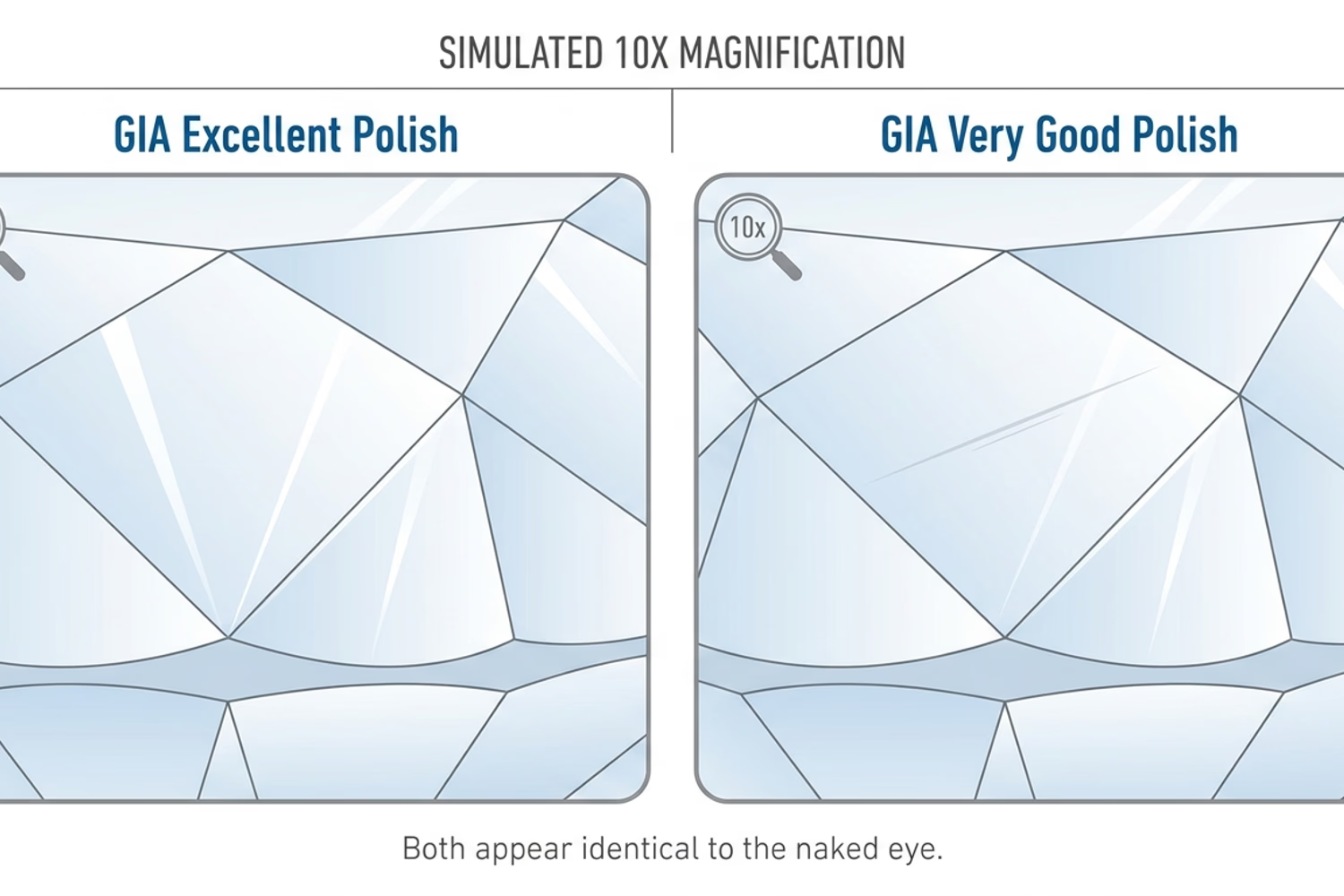
- The Polish Premium Myth: Excellent polish costs 3–5% more than Very Good polish for the same cut, color, and clarity; independent optical studies show no measurable difference in light return between the two grades under real-world viewing conditions
- Polish defects are surface-level: polish features (scratches, abrasions, polish lines) occur on the facet surfaces, not inside the diamond; they affect light entering and exiting the stone but not the internal light path
- Excellent is correct if all else is equal: the premium is small enough that GIA Excellent polish is worth paying for when choosing between two otherwise identical stones — but it is not worth downgrading color or clarity to afford
- Very Good polish is perfectly acceptable: the GIA definition of Very Good means polish features are "difficult to see under 10x magnification" — invisible to the naked eye in all cases
- Good, Fair, Poor: avoid entirely: these grades indicate surface quality problems visible under 10x and potentially affecting light transmission; they are incompatible with optimal optical performance
Polish is one of the most misunderstood grading parameters in diamond buying. Marketing from vendors frequently lists "Excellent" across cut, polish, and symmetry as a trio — often called the "Triple Excellent" or "Ideal" designation. The implication is that all three Excellents matter equally. They do not. Cut grade is transformative. Polish and symmetry, within the Very Good–Excellent range, produce differences measurable only with specialized equipment, not with the human eye. This guide explains what polish actually is, what the grades mean, and whether paying the Excellent premium is justified.
What GIA Polish Grades Actually Measure
Polish describes the quality of each facet surface — how smooth, clean, and flat the facets are after the cutting and polishing process. A perfect facet surface transmits light without distortion; an imperfect surface introduces minor scattering or reflection anomalies.
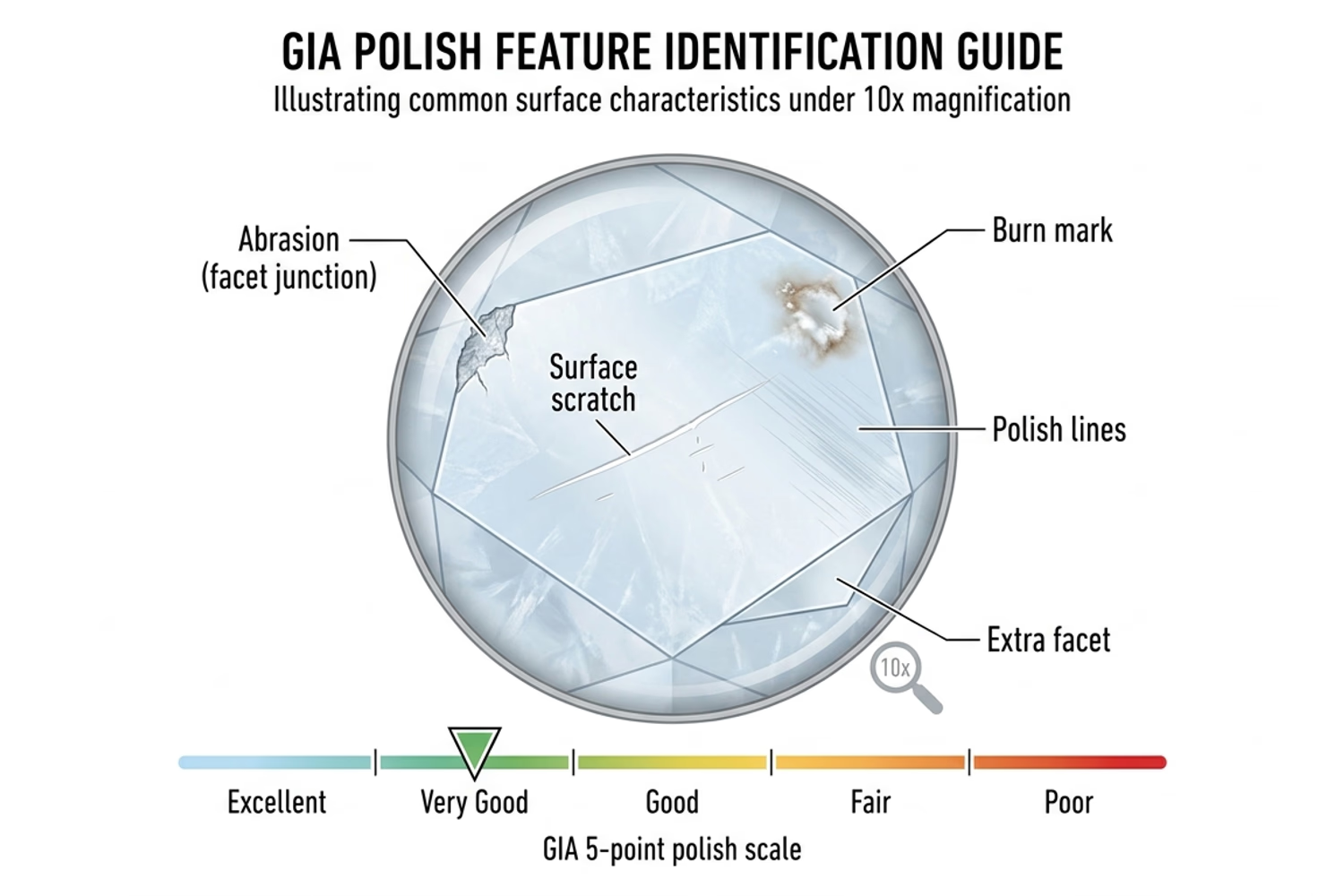
GIA evaluates polish under 10x magnification and assigns one of five grades based on the number, visibility, and severity of polish features found.
GIA Polish Feature Types
Abrasion: small scratches on facet junctions. Appears as a white or hazy line along the ridges where two facets meet. Caused by grit contamination during polishing.
Scratch: a thin white line across a facet surface. Can be caused by polishing debris, surface contact during storage, or mounting.
Burn: a cloudy or hazy area on a facet caused by overheating during polishing. More common on automated cutting than hand-cutting.
Polish lines: very thin parallel lines on a facet surface, a residue of the polishing direction. Typically visible only under high magnification.
Rough girdle: surface texture remaining on the girdle from bruting (the process that shapes the girdle). Not a polish feature per se but assessed alongside polish.
The GIA Polish Scale: What Each Grade Means
| Grade | GIA Definition | Visibility | Practical Impact |
|---|---|---|---|
| Excellent | No polish features visible under 10x | None under 10x | Maximum light transmission |
| Very Good | Difficult to see under 10x | Invisible to naked eye | Negligible light impact |
| Good | Noticeable under 10x | Invisible to naked eye | Very minor light impact |
| Fair | Easy to see under 10x | May be visible to naked eye | Measurable light reduction |
| Poor | Very easy to see under 10x | Visible to naked eye | Noticeable light reduction |
The critical threshold is between Good and Fair. At Fair and below, polish features may become visible without magnification and can affect the apparent clarity and brilliance of the stone.
The Polish Premium Myth: Does Excellent Actually Look Better?
The question buyers most need answered: is there a visible difference between GIA Excellent and Very Good polish under real-world viewing conditions?
The answer, based on available optical research and industry consensus: no visible difference under real-world conditions.
What the research shows:
- Polish features at Very Good grade are detectable under 10x magnification by trained graders
- The same features are not detectably different to the human eye at normal viewing distances (12–18 inches)
- Instruments like ASET (Angular Spectrum Evaluation Tool) and Idealscope show no meaningful difference in light return between Excellent and Very Good polish stones with otherwise identical proportions
- The American Society of Gemologists and GIA's own education materials acknowledge that Very Good polish is "optically equivalent" to Excellent for consumer purposes
What the price data shows: At 1ct G-VS2 Excellent cut, Excellent polish stones typically price 3–5% above Very Good polish stones with identical other parameters. This premium exists because buyers have been conditioned by the "Triple Excellent" marketing framework to demand it — not because the premium reflects a meaningful quality difference.
Price Comparison: Polish Grades at 1ct and 2ct
1ct Stones — Excellent Cut with Excellent Polish
| Stone | Grade | Price | Polish |
|---|---|---|---|
| GIA 1ct G-VS2 Excellent | G-VS2 | $3,620 | Excellent |
| GIA 1ct G-VS1 Excellent | G-VS1 | $3,620 | Excellent |
| GIA 1ct F-VS2 Excellent | F-VS2 | $3,580 | Excellent |
| GIA 1ct F-VS2 Excellent | F-VS2 | $3,650 | Excellent |
For most buyers at 1ct, the difference between Excellent polish and a Very Good polish stone at equivalent other grades is $100–$180 — small enough that Excellent is worth targeting if available at the same price point.
2ct Stones — Excellent Cut with Excellent Polish
| Stone | Grade | Price | Polish |
|---|---|---|---|
| GIA 2ct E-VS1 Excellent | E-VS1 | $22,660 | Excellent |
| GIA 2ct F-VS1 Excellent | F-VS1 | $26,240 | Excellent |
| GIA 2ct E-VVS1 Excellent | E-VVS1 | $26,400 | Excellent |
Lab-Grown
| Stone | Grade | Price | Polish |
|---|---|---|---|
| IGI 1.5ct D-VVS1 Excellent Lab-Grown | D-VVS1 | $1,950 | Excellent |
When Polish Grade Matters More Than Usual
While Very Good polish is optically equivalent to Excellent in most conditions, there are two situations where the Excellent grade provides more meaningful value:
1. Fluorescent Lighting Environments
Polish features scatter light more noticeably under fluorescent lighting than incandescent or natural lighting. In an office or retail environment with fluorescent overhead lighting, a Very Good polish stone may show very slightly reduced sharpness at the facet junctions compared to Excellent. This effect is still minor, but it is the context where the difference is most perceptible.
2. Large Carat Stones Under Magnification
At 3ct and above, the facet surfaces are physically larger and polish features are more spread out. A polish abrasion that covers 0.05mm on a 1ct stone covers proportionally more on a 3ct stone. For high-magnification display (loose stone viewing, photography) or for buyers who examine their jewelry under magnification, the Excellent grade provides more visible margin.
Tides Of Summer Capsule
Up To 30% Off
Shop The Sale →Vault ClearanceClear The Vault
Up To 70% Off
Shop Vault Deals →Affiliate link — no extra cost to you
Polish vs. Cut: The Hierarchy of Importance
The most important practical rule for polish:
Never sacrifice cut grade to afford Excellent polish. A GIA Very Good cut stone with Excellent polish is dramatically worse than a GIA Excellent cut stone with Very Good polish. The cut grade determines how 100% of the light entering the stone moves through it. Polish affects the efficiency of light entering and exiting the 58 facet surfaces — a second-order effect compared to the primary light path geometry.
The correct priority order for round brilliant buying:
- Cut grade (Excellent is mandatory; this is non-negotiable)
- Color grade (G or higher in white gold; H acceptable in yellow gold)
- Clarity grade (VS2 minimum for reliable eye-clean)
- Polish grade (Excellent preferred; Very Good acceptable)
- Symmetry grade (Excellent preferred; Very Good acceptable)
Polish is the fourth-most-important parameter, after cut, color, and clarity. It should never drive a downgrade in any of the first three.
The Triple Excellent Marketing Framework
Blue Nile, James Allen, and similar vendors market "Ideal" or "Triple Excellent" (EX/EX/EX — cut, polish, symmetry all Excellent) as a premium category. This framing has conditioned buyers to treat three Excellents as the minimum acceptable standard.
The reality: the Excellent cut grade is mandatory. Excellent polish and symmetry are desirable but not mandatory. A stone with GIA Excellent cut, Very Good polish, and Very Good symmetry — sometimes written EX/VG/VG — performs optically the same as Triple Excellent under real-world viewing conditions. Some vendors offer these stones at minor discounts; some buyers specifically seek them as value opportunities.
If a Triple Excellent stone is available at a given price point without any sacrifice in cut, color, or clarity, buy it. But if a Very Good polish stone has better color or clarity at the same price, prioritize color and clarity.
Farzana's Verdict: Polish is the parameter where I am most willing to accept Very Good. Cut must be Excellent. Color must be G or higher for white gold. Clarity must be VS2 or better. On polish, if I find a GIA Excellent cut, G-VS2 stone with Very Good polish for $3,400 versus a GIA Excellent cut, G-VS2 with Excellent polish for $3,550, I take the $3,400 stone and use the $150 on the setting. The Polish Premium Myth is real — it exists because buyers have been trained by marketing to demand Triple Excellent, not because Excellent polish adds visible value over Very Good. Where I do pay the Excellent premium: when two stones are otherwise identical and the Excellent polish stone costs no more. Then it is purely a tiebreaker, and Excellent wins.
Frequently Asked Questions
Does GIA Excellent polish really look better than Very Good?
Not under real-world viewing conditions. The difference between Excellent and Very Good polish is detectable under 10x magnification by a trained grader but is not visible to the human eye at normal viewing distances. Independent optical testing with ASET and Idealscope shows no measurable difference in light return between the two grades when all other parameters are identical.
What polish grade does GIA require for Excellent cut?
GIA's Excellent overall cut grade requires Polish of Excellent or Very Good, along with matching Symmetry of Excellent or Very Good. A stone with Good polish cannot receive GIA Excellent overall cut. This means any GIA Excellent round already has acceptable polish — the overall cut grade serves as a first-pass quality filter.
What are the different types of GIA polish features?
GIA polish features include abrasions (scratches at facet junctions), surface scratches (thin white lines across facets), burn marks (cloudy areas from overheating during polishing), and polish lines (fine parallel lines from the polishing direction). All of these are surface phenomena that affect light entering and exiting the stone but do not penetrate into the diamond's interior.
Is Triple Excellent (EX/EX/EX) worth paying extra for?
If the premium is small and all other parameters are equal, yes. If paying for Triple Excellent requires downgrading color or clarity, no. Triple Excellent (Excellent cut, Excellent polish, Excellent symmetry) carries a 5–10% premium over EX/VG/VG for the same grade parameters. The optical performance difference under real-world conditions does not justify downgrading from G to H in color or from VS2 to SI1 in clarity to afford it.
Can polish grades change over time?
Yes. Diamond facets can acquire new polish features over time through daily wear, cleaning, and storage. Cleaning with abrasive materials or hard contact with other gems can introduce new scratches. However, polish features on a well-maintained diamond develop very slowly. A stone properly stored and cleaned with appropriate methods (gentle dish soap, soft brush, ultrasonic for most settings) will retain its original polish grade for decades.
How do I check the polish grade on a GIA certificate?
The polish grade appears in the Grading Results section of the GIA grading report, alongside symmetry and fluorescence. On Blue Nile and similar platforms, the stone detail page lists Polish: Excellent, Polish: Very Good, etc. directly. Always verify from the GIA certificate rather than the vendor's text description.
Does polish grade affect a diamond's price significantly?
At the Excellent-to-Very-Good transition, price impact is approximately 3–5% for otherwise identical stones. Moving from Very Good to Good in polish produces a larger price drop but signals genuine quality concerns. At Good, Fair, or Poor polish, the discount is substantial but the stones are not worth buying — the surface quality issues can affect visible appearance.
Is polish more important in larger diamonds?
Slightly. At 3ct and above, facet surfaces are physically larger and polish features are proportionally more visible under magnification and in some lighting conditions. For stones 3ct and larger, the Excellent polish premium becomes more justified. For 1–2ct stones, Very Good polish is visually equivalent to Excellent in all practical viewing situations.
What polish grade do lab-grown diamonds typically have?
IGI and GIA Excellent-graded lab-grown rounds carry Excellent or Very Good polish, same as natural rounds. The mechanical cutting process is identical for both. The same decision framework applies: Excellent preferred, Very Good acceptable, Good and below to avoid.
Should I prioritize polish over symmetry or vice versa?
For practical purposes, treat polish and symmetry with equal priority — both are secondary to cut, color, and clarity. If forced to choose between Excellent polish with Very Good symmetry versus Very Good polish with Excellent symmetry (EX/VG/VG vs VG/EX/EX), take the EX/VG/VG — polish features matter slightly more than symmetry deviations in terms of direct light transmission. But the difference is so small that it should not drive any significant buying decision.
See Also
Expert Verdict
Always audit the stone individually — no grade replaces seeing the actual diamond. The certificate tells you what to look for. Your eyes tell you whether to buy.
— Farzana Hasan, GIA Expert · DiamondCritics.com