Round Diamond SI2 Clarity: The SI2 Gamble
TL;DR
- SI2 (Slightly Included 2) saves approximately $730–$1,030 over VS2 at 1ct on Blue Nile.
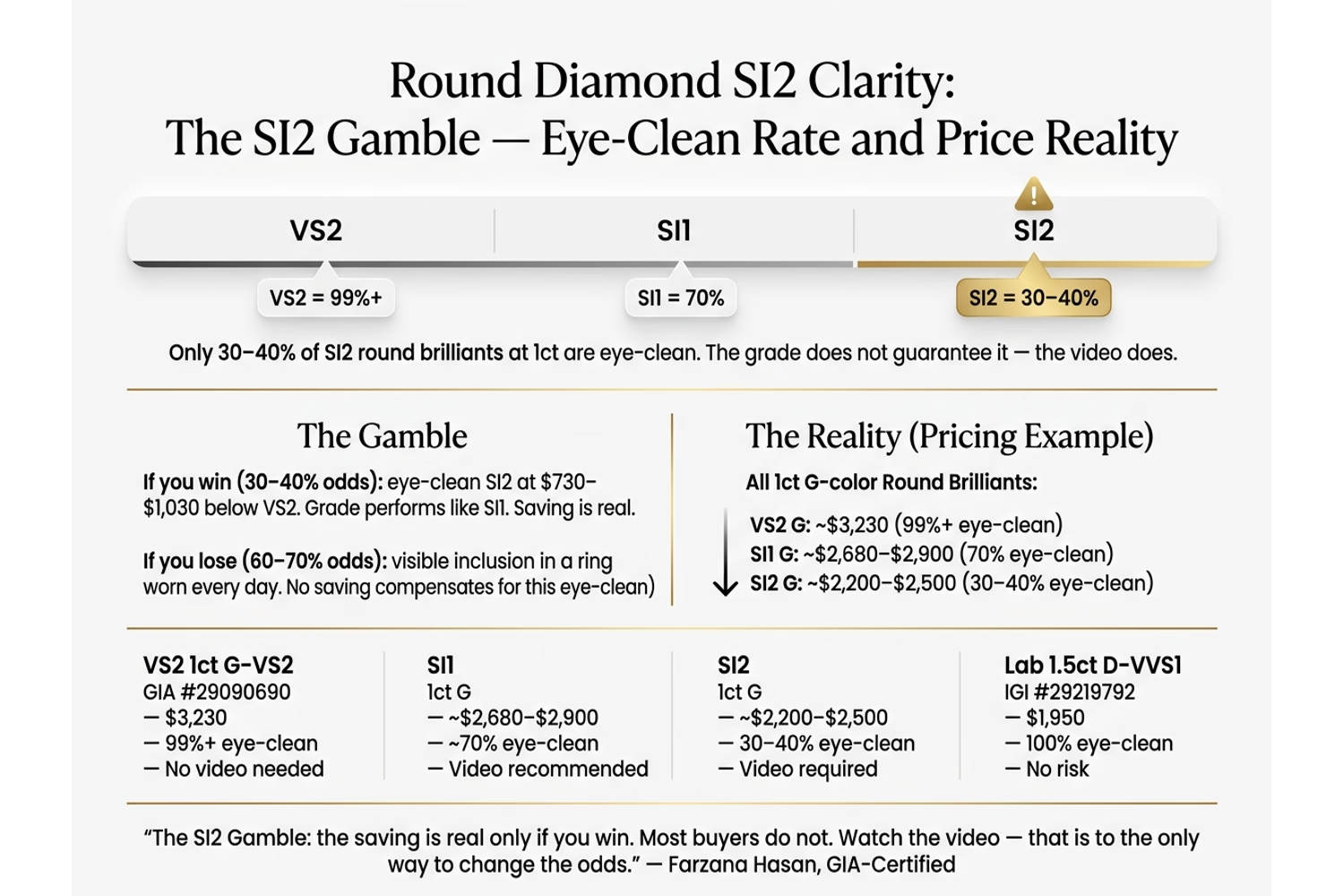
- Only 30–40% of SI2 round brilliants are eye-clean at 1ct. The other 60–70% show visible inclusions with the naked eye at normal viewing distance.
- "The SI2 Gamble": the saving is real only if you win — if your specific stone is eye-clean. If you lose, you have a visibly included diamond for a ring that will be worn every day.
- SI2 is never recommended without HD video review of the specific stone. The grade does not guarantee eye-clean. The video does.
- At 1.5ct+, SI2 eye-clean rate drops below 20%. At 2ct+, SI2 is not recommended regardless of video — the face-up area is too large for SI2 inclusions to hide.
- The lab-grown alternative: a 1.5ct D-VVS1 IGI Excellent at $1,950 costs less than many natural SI2 stones and is guaranteed eye-clean.
SI2 clarity is the most misunderstood grade in the round diamond market. It sits two grades below VS2, one grade below SI1, and is priced accordingly. The saving at 1ct is real — $730 to $1,030 less than VS2. For buyers on a tight budget, that gap is meaningful. But SI2 is the grade where inclusions first become reliably visible to the naked eye, and the buying decision here is not about grade — it is about the specific stone in the HD video.
My named concept: "The SI2 Gamble" — because the savings are only available if your specific stone wins. Most do not.


What Is SI2 Clarity?
SI2 stands for Slightly Included 2 — the second of two SI grades on the GIA clarity scale. The full scale from flawless to heavily included is:
| Grade | Category | Under 10× loupe | Naked eye (face-up) |
|---|---|---|---|
| FL, IF | Flawless / Internally Flawless | None / None | None |
| VVS1, VVS2 | Very Very Slightly Included | Extremely difficult | None |
| VS1, VS2 | Very Slightly Included | Difficult to easy | None |
| SI1 | Slightly Included 1 | Easy | Often none |
| SI2 | Slightly Included 2 | Very easy | Often yes |
| I1, I2, I3 | Included | Obvious | Always |
SI2's GIA definition says inclusions are "very easy to see under 10x magnification and may be visible to the naked eye." That last phrase — "may be visible" — is where The SI2 Gamble begins. GIA's definition permits both eye-clean SI2 stones and visibly included SI2 stones under the same grade designation.
The SI2 Eye-Clean Rate: Why 30–40% Is the Honest Number
When diamond educators say "30–40% of SI2 rounds at 1ct are eye-clean," this reflects practical observation — not a GIA guarantee. The GIA grade covers a wide range of inclusion severity and type within the SI2 band. A stone can qualify as SI2 with one crystal near the girdle (potentially eye-clean) or with a cluster of scattered feathers across the table (definitely not eye-clean).
| Clarity Grade | 1ct Eye-Clean Rate | 1.5ct Eye-Clean Rate | 2ct Eye-Clean Rate |
|---|---|---|---|
| VS2 | 99%+ | 99%+ | 95%+ |
| VS1 | 99%+ | 99%+ | 99%+ |
| SI1 | ~70% | ~50% | ~30% |
| SI2 | ~30–40% | ~15–20% | ~5–10% |
The eye-clean rate collapse between SI1 and SI2 is significant. SI1 passes at 1ct roughly 70% of the time. SI2 passes only 30–40% of the time at the same weight. Every step up in carat weight cuts the SI2 eye-clean rate further — the larger face-up area reveals inclusions that a smaller stone would hide.
The SI2 Gamble: What You Win and What You Lose
If you win (30–40% chance at 1ct): You get an eye-clean 1ct round diamond for approximately $730–$1,030 less than VS2. At $2,200–$2,500 vs $3,230 for VS2, this is a meaningful saving. A face-clean SI2 at 1ct is optically identical to a VS2 in everyday wear — no visible difference, full brilliance, no distraction.
If you lose (60–70% chance at 1ct): You have an inclusion visible to the naked eye in a diamond you will wear every day. An SI2 stone with a feather or crystal near the table is a permanent, visible flaw in the center stone of an engagement ring. No saving compensates for looking at an included diamond on your finger for the next 30 years.
This is why The SI2 Gamble has a correct risk management procedure: never buy SI2 without watching Blue Nile's HD video of the specific stone.
The SI2 Price Ladder: What You Save at Each Grade
| Grade | 1ct GIA Excellent | vs VS2 | Eye-Clean Rate | Risk |
|---|---|---|---|---|
| G-VS2 | $3,230 | Baseline | 99%+ | None |
| G-VS1 | $3,300 | −$70 more | 99%+ | None |
| G-SI1 | ~$2,680–$2,900 | −$330–$550 | ~70% | Requires video |
| G-SI2 | ~$2,200–$2,500 | −$730–$1,030 | ~30–40% | High — requires video |
The SI2 saving over VS2 at 1ct is $730–$1,030. The SI2 saving over SI1 is approximately $400–$500. These are real numbers. The question is whether they justify the risk of landing in the 60–70% of SI2 stones that are not eye-clean.
Inclusion Types That Can Make SI2 Eye-Clean vs Visible
Not all inclusions are equal. The type and location of the inclusion in an SI2 stone is the key variable — not the grade.
Inclusion types that are sometimes eye-clean in SI2:
- Single small crystal near the girdle — partially hidden by the prong or bezel in a setting
- Pinpoint cluster near the pavilion — reflected light may obscure it in some angles
- Feather parallel to the table at the edge — often face-up clean
- Small needle inclusion in a non-central position — can hide in brilliance
Inclusion types that are almost always visible in SI2:
- Crystal at or near the table — the most visible position, no cut can hide it
- Feather with significant size across the table — visible in all lighting
- Cloud inclusion centered under the table — diffuses light, creates grey zone
- Chip at the girdle — always visible as a dark irregular mark
- Black inclusion (carbon crystal) near the table — visible even in lower SI1
The practical screening tool: Blue Nile's HD video. Watch the stone face-up from normal viewing distance (30–50cm). If you can see an inclusion in the video, you will see it in real life. If the stone looks clean in the video, it will be clean in wear.
The GIA report check: look at the clarity plot (the inclusion map). Black symbols indicate darker inclusions. Red symbols indicate surface-reaching inclusions (feathers). A single black symbol near the girdle edge is different from two red symbols under the table.
SI2 by Carat Weight: Why Size Changes Everything
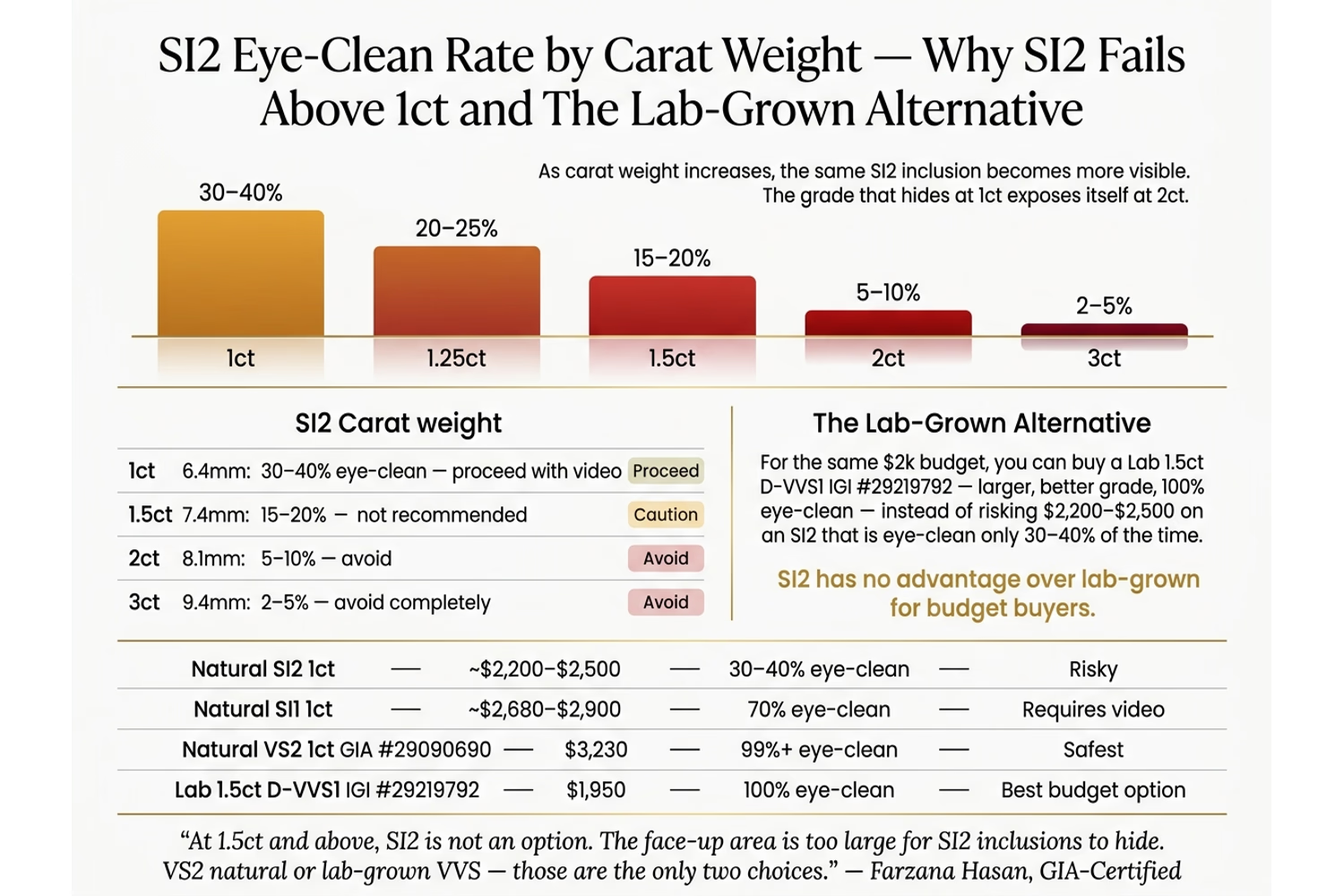
The same SI2 stone that hides its inclusions at 1ct (6.4mm) cannot hide them at 2ct (8.1mm). The face-up area increases by 60% — and every inclusion becomes proportionally more visible.
| Carat | Face-Up Diameter | SI2 Eye-Clean Rate | Farzana's Recommendation |
|---|---|---|---|
| 0.90ct | 6.2mm | ~35–45% | Proceed with video only |
| 1.00ct | 6.4mm | ~30–40% | Proceed with video only |
| 1.25ct | 6.8mm | ~20–25% | Caution — require clean video and ideal inclusion position |
| 1.50ct | 7.4mm | ~15–20% | Not recommended — upgrade to SI1 minimum |
| 2.00ct | 8.1mm | ~5–10% | Not recommended at any price |
| 3.00ct | 9.4mm | ~2–5% | Avoid — VS2 is the minimum at 3ct |
At 1.5ct, SI2 becomes a very poor bet. At 2ct and above, SI2 should not be considered — the face-up area is too large for the inclusions permitted by GIA's SI2 definition to remain hidden.
Tides Of Summer Capsule
Up To 30% Off
Shop The Sale →Vault ClearanceClear The Vault
Up To 70% Off
Shop Vault Deals →Affiliate link — no extra cost to you
The Alternative: What SI2 Savings Buy in Lab-Grown
For buyers who are considering SI2 to stretch their budget, the lab-grown market makes SI2 largely irrelevant.
| Option | Price | Grade | Size | Eye-Clean |
|---|---|---|---|---|
| Natural 1ct G-SI2 | ~$2,200–$2,500 | G, SI2 | 6.4mm | 30–40% |
| Natural 1ct G-SI1 | ~$2,680–$2,900 | G, SI1 | 6.4mm | ~70% |
| Natural 1ct G-VS2 | $3,230 | G, VS2 | 6.4mm | 99%+ |
| Lab 1.5ct D-VVS1 IGI | $1,950 | D, VVS1 | 7.4mm | 100% |
The lab-grown 1.5ct D-VVS1 at $1,950 costs less than the cheapest natural SI2 at 1ct — and is larger, better grade, and guaranteed eye-clean. For buyers whose goal is maximum value per dollar, SI2 natural has no purpose in the modern market where lab-grown VVS stones exist below SI2 prices.
How to Screen an SI2 Stone on Blue Nile: 4 Steps
Step 1: Watch the HD video. Blue Nile provides HD video for every stone. Watch face-up from normal viewing distance. Look for any visible dark spot, cloud, or line. If you can see it in the video, you will see it on the hand.
Step 2: Read the GIA clarity plot. Open the GIA report (Blue Nile links it). Review the clarity plot diagram. Count the number of inclusions. Note their type (black vs red symbols) and position (table center vs girdle edge).
Step 3: Check table and pavilion position. An inclusion at the table center is permanent — the most visible spot, no setting can hide it. An inclusion at the girdle edge may be hidden under a prong. The report plot shows position.
Step 4: Apply the face-up test standard. The question is not whether the GIA grade says SI2. The question is: can you see an inclusion in the video? If yes, pass. If no, the stone may be worth buying at 1ct.
Farzana's Verdict on SI2
SI2 at 1ct is a viable clarity grade only with HD video confirmation and only with a clean face-up result. Without video, SI2 is a gamble with 60–70% odds against you. With video, SI2 becomes a precision buy — you are paying below-SI1 price for a stone that is presenting as SI1-quality to the eye.
At 1.5ct and above, SI2 is not recommended. The grade is too risky at larger face-up sizes.
For most buyers: the $730–$1,030 SI2 saving at 1ct is worth investigating only via Blue Nile video. If the video passes, the saving is legitimate. If not, add the saving to the VS2 price and buy the guaranteed clean stone.
Frequently Asked Questions
Is SI2 clarity eye-clean for a round diamond?
Only 30–40% of SI2 round brilliants are eye-clean at 1ct. The grade permits inclusions that may or may not be visible without magnification. You must watch Blue Nile HD video of the specific stone to determine if that particular SI2 is eye-clean — the grade letter alone does not tell you.
What does SI2 clarity look like?
Under 10x magnification, SI2 inclusions are very easy to see — crystals, feathers, needles, or clouds are clearly visible. Face-up without magnification: 30–40% of SI2 stones at 1ct are eye-clean. 60–70% show inclusions visible to the naked eye at normal viewing distance. The specific type and position of the inclusion determines which category your stone falls into.
Should I buy SI2 clarity for a round diamond engagement ring?
Only at 1ct with HD video confirmation. At 1.5ct and above, SI2 is not recommended for an engagement ring because the eye-clean rate falls below 20%. An engagement ring is worn every day — a visible inclusion is a permanent, daily reminder of The SI2 Gamble lost.
How much cheaper is SI2 than VS2?
At 1ct: approximately $730–$1,030 cheaper. SI2 rounds start at approximately $2,200–$2,500 vs the G-VS2 floor at $3,230. This is a real saving — but only available without risk if the specific stone is eye-clean.
What is the SI2 Gamble?
The SI2 Gamble is my term for the clarity risk in buying SI2 without video review. The grade covers both eye-clean and visibly included stones. Only 30–40% of SI2 stones at 1ct are eye-clean. Buying SI2 without watching the specific stone's HD video accepts 60–70% odds of a visibly included result.
What clarity is better than SI2?
SI1 is one step above SI2 — approximately 70% eye-clean at 1ct. VS2 is two steps above SI2 — 99%+ eye-clean, no video required. For guaranteed eye-clean in natural diamonds, VS2 is the minimum grade for a ring without video review.
Can a jeweler see SI2 with the naked eye?
A trained gemologist can often see SI2 inclusions in unfavorable stones during a face-up inspection under controlled lighting. In everyday wear — normal room light, natural daylight — whether a specific SI2 stone is visible depends entirely on the type and position of its inclusions.
What size round diamond should avoid SI2 clarity?
1.5ct and above. At 1.5ct (7.4mm face-up), the SI2 eye-clean rate drops to approximately 15–20%. At 2ct (8.1mm), it drops to 5–10%. For stones above 1ct, SI1 is the minimum recommended clarity grade without specific video confirmation.
Is there a better alternative to SI2 for budget buyers?
Yes — lab-grown. A 1.5ct D-VVS1 IGI Excellent lab-grown at $1,950 costs less than many natural SI2 stones at 1ct and is larger, better grade, and guaranteed eye-clean. For natural diamond buyers specifically, SI2 with video is the only budget option below VS2 worth considering.
See Also
- Round Diamond SI1 Clarity — The 70% Rule: SI1 eye-clean guide and how to screen
- Round Diamond VS1 vs VS2 — The VS Split and when VS1 earns the $70 premium
- Round Diamond Clarity Guide — Full clarity grade analysis from FL to SI2
- VVS vs VS2 Round Diamond — Clarity comparison for buyers considering VVS
- Lab Grown Round Diamond — Why SI2 natural is irrelevant in the lab-grown budget market
- 1 Carat Round Diamond Price — Complete 1ct price audit including SI and VS grades
- How to Buy a Round Diamond — 5-step checklist including clarity video review process
Expert Verdict
Always audit the stone individually — no grade replaces seeing the actual diamond. The certificate tells you what to look for. Your eyes tell you whether to buy.
— Farzana Hasan, GIA Expert · DiamondCritics.com