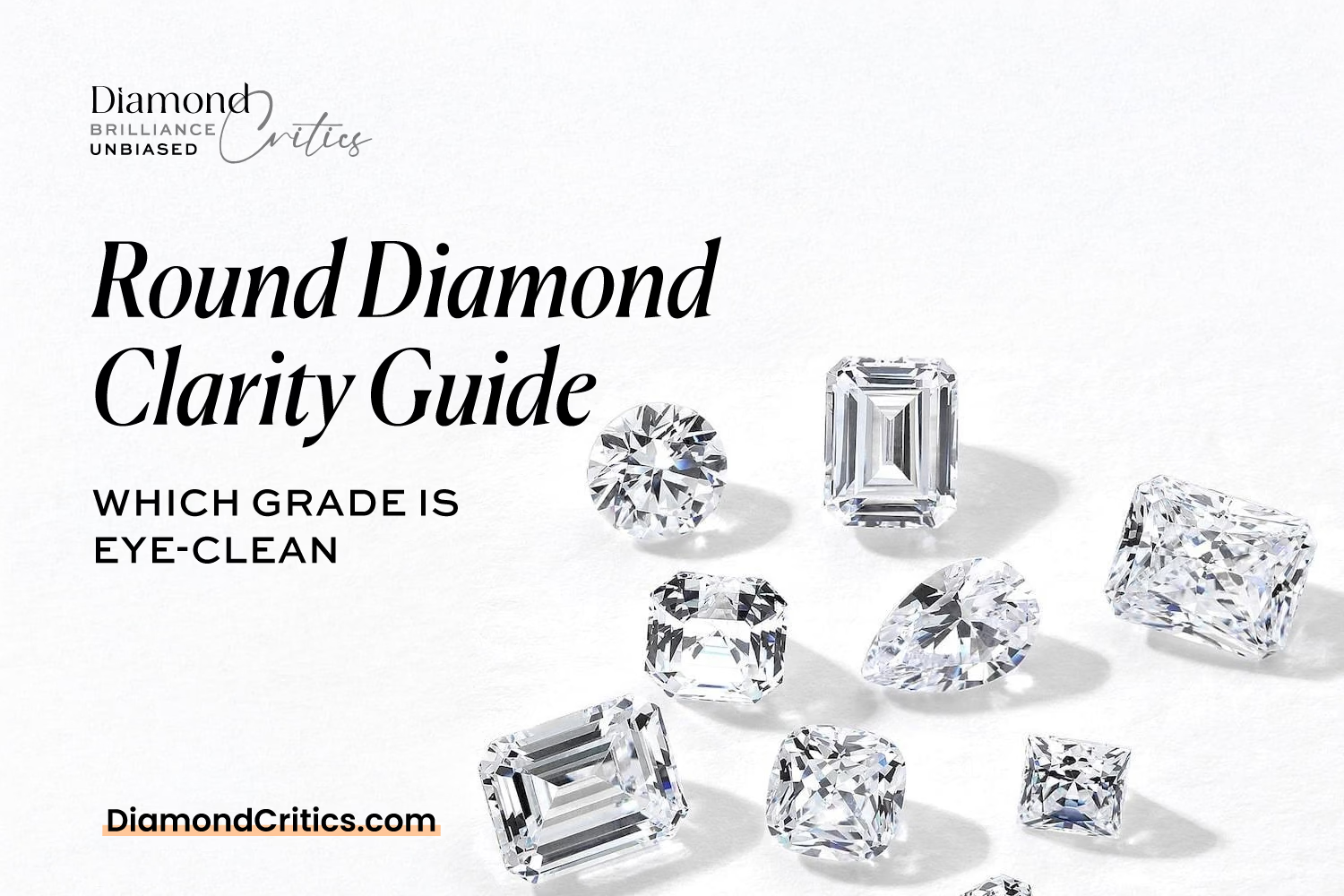
Round Diamond Clarity Guide: The Eye-Clean Standard That Saves You Thousands
Clarity is the most misunderstood of the diamond 4Cs — and the most over-purchased. Most buyers spend money moving from SI1 to VS2 to VS1 thinking each step up makes the diamond look better. In a round brilliant, that is rarely true. The eye-clean standard is what matters, and it kicks in earlier than the price charts suggest.
This guide uses real stones from Blue Nile to show you exactly where the clarity cliff is — the point at which you stop buying visible improvement and start buying certificate grades.
How Diamond Clarity Is Graded
GIA grades diamond clarity on an 11-tier scale, from Flawless to I3, based on inclusions viewed under 10× magnification:
| Grade | What It Means |
|---|---|
| FL | No inclusions or blemishes under 10× |
| IF | Internally flawless — blemishes only, under 10× |
| VVS1 | Very, very slightly included — minute inclusions, very difficult under 10× |
| VVS2 | Very slightly included — minute, difficult under 10× |
| VS1 | Very slightly included — minor, somewhat difficult under 10× |
| VS2 | Very slightly included — minor, somewhat easy to see under 10× |
| SI1 | Slightly included — noticeable under 10×, often eye-clean |
| SI2 | Slightly included — easily seen under 10×, sometimes visible naked eye |
| I1 | Included — obvious inclusions, eye-visible, may affect transparency |
| I2–I3 | Severely included — multiple eye-visible inclusions |
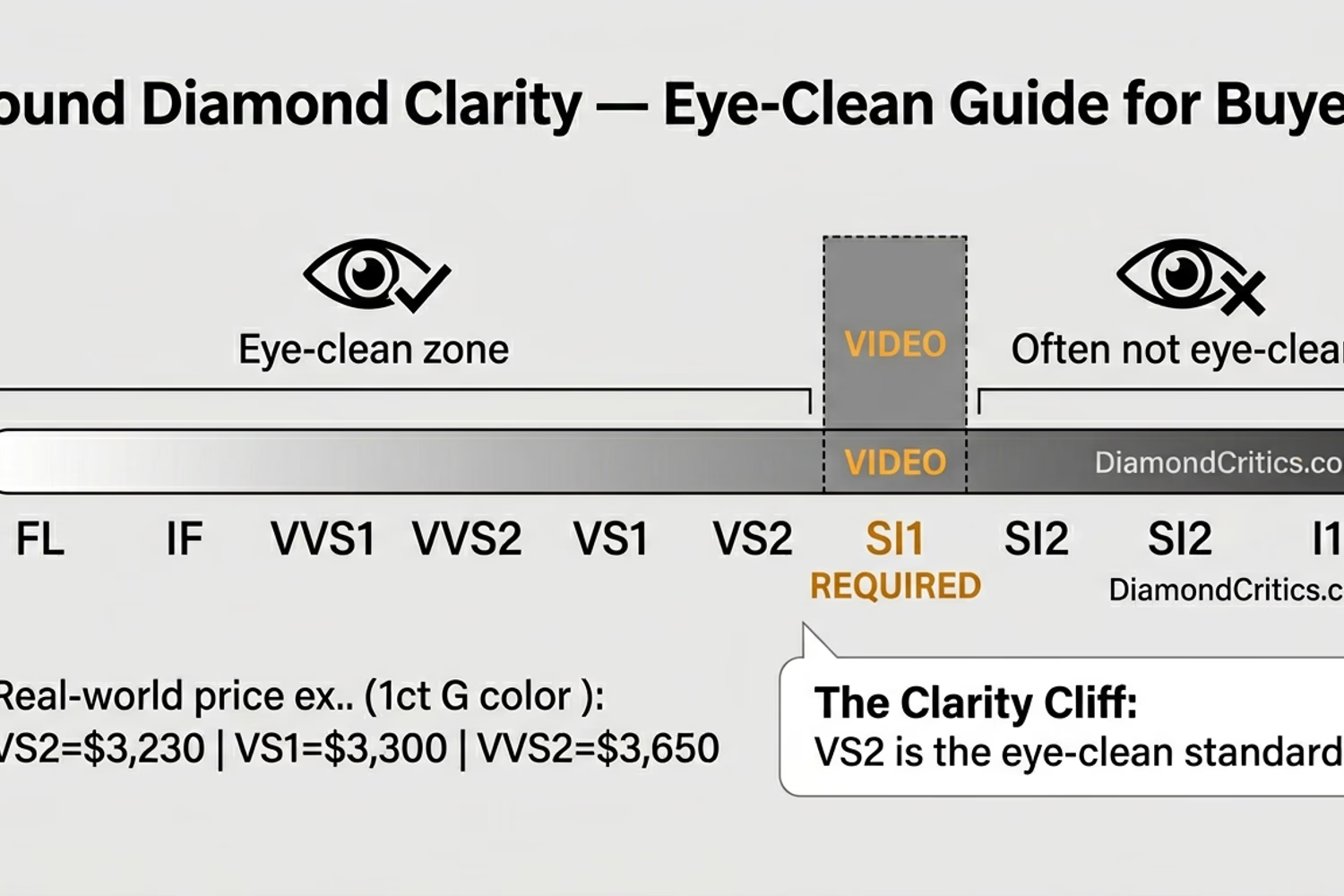
The critical boundary for buyers is between SI1 and SI2 — the Clarity Cliff where inclusions may first become visible to the naked eye.


The Clarity Cliff: Where Eye-Clean Starts for Round Brilliants
Round brilliant diamonds are the most forgiving cut for clarity. The 57–58 facets create so much visual noise through sparkle and fire that inclusions below VS2 are masked in most viewing conditions.
The eye-clean hierarchy for round brilliant diamonds:
- FL, IF, VVS1, VVS2: All eye-clean, always. You are paying for a certificate grade no one can see face-up.
- VS1: Eye-clean in 100% of round brilliants. Zero inclusions visible naked eye.
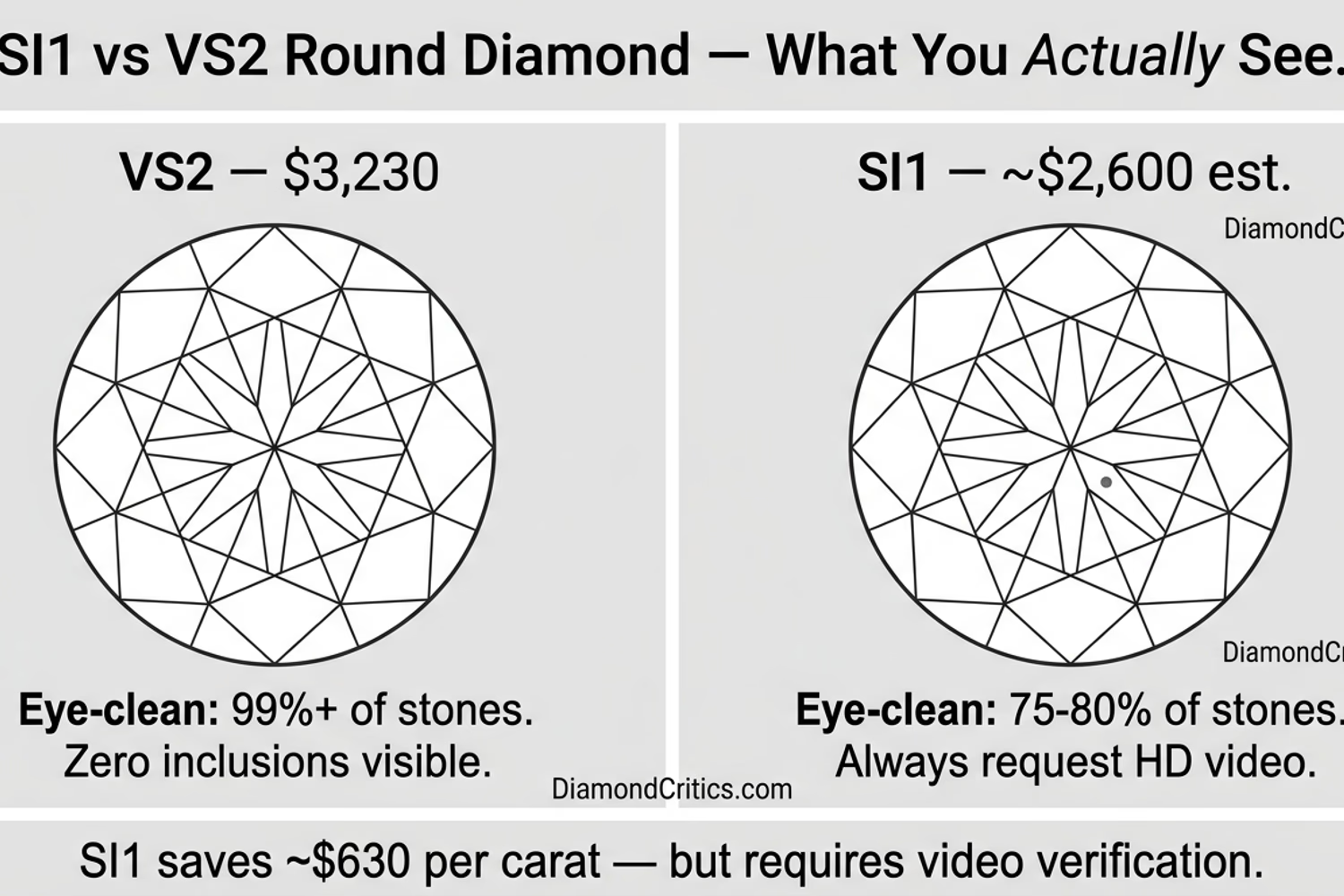
- VS2: Eye-clean in 99%+ of round brilliants. Inclusions are microscopic.
- SI1: Eye-clean in approximately 75–80% of round brilliants. The other 20–25% have inclusions that are visible with effort. Always request video for SI1 stones.
- SI2: Eye-clean in only 30–40% of round brilliants. High risk of visible inclusions.
- I1+: Inclusions visible to the naked eye in almost all round diamonds.
The practical conclusion: VS2 is the clarity cliff. Below VS2, you risk inclusions that may be visible. Above VS2, you are paying for grades only visible under 10× magnification.
Real Price Impact of Clarity Grades at 1 Carat
From our live Blue Nile dataset, all G color GIA Excellent Cut 1ct round diamonds:
| Clarity | Price | Stone |
|---|---|---|
| G-VS2 | $3,230 | View Stone |
| G-VS2 | $3,240 | View Stone |
| G-VS1 | $3,300 | View Stone |
| G-VS1 | $3,530 | View Stone |
| G-VVS2 | $3,650 | View Stone |
| G-VVS2 | $3,760 | View Stone |
The step from VS2 ($3,230) to VVS2 ($3,650) costs $420 more for a grade that provides zero additional visible beauty. That $420 could upgrade you half a color grade, or fund a better setting.
At VS2, you already have a stone that is eye-clean in essentially all viewing conditions and under any reasonable examination. The inclusions at VS2 are visible under 10× magnification but require careful searching even then.
Real Price Impact at 2 Carats — Where Clarity Savings Scale Up
From our 2ct natural round diamond dataset:
| Clarity | Price | Stone |
|---|---|---|
| G-VS2 | $16,490 | View Stone |
| G-VS1 | $22,460 | View Stone |
| G-VVS2 | $26,610 | View Stone |
| G-IF | $31,380 | View Stone |
At 2 carats, stepping from VS2 ($16,490) to VVS2 ($26,610) costs $10,120 extra — for a clarity grade the naked eye cannot detect. The G-IF at $31,380 adds another $14,890 on top of VS2 for a Flawless certificate that makes zero visible difference to anyone looking at the ring.
This is the Clarity Cliff made real: $14,890 to buy a grade that exists only under a loupe.
VS1 vs VS2: Is There a Visible Difference?
No. Both VS1 and VS2 are eye-clean in 100% of round brilliant diamonds. The inclusions at both grades are microscopic — VS2 inclusions are typically 0.03–0.1mm in diameter, far below the threshold of naked-eye detection.
The price difference at 1ct (our data: G-VS2 at $3,230, G-VS1 at $3,300) is $70 — an unusually small gap that reflects the market correctly pricing these two grades as nearly equivalent for round diamonds.
At 2ct, the VS1 premium is larger ($5,970 above VS2) because at larger sizes, VS2 inclusions may theoretically be slightly more findable under magnification — but they remain completely invisible naked eye.
Recommendation: Buy VS2 over VS1 and pocket the difference, unless you have a specific reason to need VS1 (resale considerations, pairing with a matching stone, etc.).
SI1 in Round Brilliant Diamonds: The Video Rule
SI1 is the most controversial clarity grade for buyers. Many SI1 round brilliants are eye-clean — and they sell at a 15–25% discount to VS2 stones of the same color. If you find a genuinely eye-clean SI1, you can get a significantly larger or better-cut stone for the same budget.
The problem is that SI1 is not reliably eye-clean. In our experience, approximately 1 in 4 SI1 round brilliants has an inclusion visible to a sharp-eyed observer under normal lighting.
The SI1 Video Rule: Never purchase an SI1 round diamond without watching an HD video of the actual stone in normal room lighting, not just a high-magnification loupe video. If Blue Nile shows a 360° video of the stone, watch it carefully. An SI1 that looks clean in the 360° room-lighting video is very likely eye-clean.
SI1 at 3ct becomes riskier still — the larger face-up area gives inclusions more room to show. See our 3 carat round diamond price guide for notes on SI1 at that carat weight.
VVS1 and VVS2: Who Should Buy These?
VVS (Very, Very Slightly Included) stones have inclusions so minute that even a skilled grader struggles to find them under 10× magnification. In a ring setting, VVS inclusions are absolutely, definitively invisible — as invisible as a Flawless stone.
VVS makes sense for:
- Investment-grade diamonds where resale value is a primary concern
- Matching pairs (earrings, pendants) where both stones need identical clarity
- Buyers who want maximum resale documentation
VVS is unnecessary for:
- Engagement rings viewed in normal lighting
- Any purchase where visual appearance is the primary consideration
The 1ct price jump from VS2 ($3,230) to VVS2 ($3,650) is modest at $420. At 2ct, it is $10,120. At 3ct, the VVS premium above VS1 exceeds $15,000. Choose accordingly.
FL and IF: The Flawless Premium
A Flawless or Internally Flawless diamond is a collector's item. Less than 1% of all diamonds receive an FL or IF grade from GIA. The premium is substantial.
In our 2ct dataset: G-IF at $31,380 vs G-VS2 at $16,490 — a $14,890 premium for a certificate designation with zero visible impact.
FL/IF are appropriate for: investment, collector pieces, or buyers for whom perfection itself has value beyond aesthetics. For engagement rings, they are an expensive way to buy peace of mind about something no one can see.
Clarity for Different Carat Weights
Clarity becomes slightly more relevant at larger carat weights because the face-up area is larger and inclusions have more space to reveal themselves. My recommended minimum clarity by size:
| Carat Weight | Recommended Minimum | Safe Maximum to Save |
|---|---|---|
| 0.5ct | SI1 (video reviewed) | VS2 |
| 1ct | VS2 | VS1 |
| 1.5ct | VS2 | VS1 |
| 2ct | VS2 | VS1 |
| 3ct | VS2 (video reviewed) | VS1 |
| 4ct+ | VS1 | VS2 (video reviewed) |
The pattern: VS2 is the universal minimum, VS1 provides extra insurance at 3ct+. VVS and above are never required for appearance.
Tides Of Summer Capsule
Up To 30% Off
Shop The Sale →Vault ClearanceClear The Vault
Up To 70% Off
Shop Vault Deals →Affiliate link — no extra cost to you
Clarity for Lab-Grown Round Diamonds
Lab-grown diamonds have different clarity characteristics than natural diamonds. CVD lab-grown diamonds tend to have graining, cloudiness, or "pinpoint clouds" as their inclusions. HPHT lab-grown diamonds can have metallic inclusions.
The good news: lab-grown diamonds at VS2 and above are eye-clean just like naturals. The additional good news: at lab-grown prices, VVS is affordable enough to justify the peace of mind.
Our 2ct IGI D-VVS1 lab-grown at $2,810 costs less than a natural 1ct G-VS2, so buying VVS in lab-grown is a very different calculation than in natural diamonds.
See our lab grown round diamond guide for more on CVD vs HPHT clarity differences.
How Cut Affects Clarity Visibility
This is critical: a poorly cut round diamond makes inclusions more visible because light leaks through the pavilion rather than reflecting back through the table. In a well-cut GIA Excellent round, the intense brilliance masks inclusions — a VS2 in an Excellent cut looks cleaner than a VS1 in a Very Good cut.
This is why we always prioritize cut first, before clarity. A GIA Excellent cut round diamond uses light so efficiently that VS2 inclusions are buried in sparkle.
Farzana's Verdict: VS2 is the target clarity for round brilliant diamonds — it is reliably eye-clean, consistently graded by GIA, and priced correctly relative to the beauty it delivers. The clarity grades above VS2 exist as resale and documentation premiums, not as beauty premiums. I have never stood in a room and thought "that ring would be more beautiful if the diamond were VVS1 instead of VS2." Spend the VVS/IF premium on carat weight, a better setting, or a second piece of jewelry.
Frequently Asked Questions
What clarity is eye-clean for a round diamond?
VS2 is reliably eye-clean in 99%+ of round brilliant diamonds. SI1 is eye-clean in approximately 75–80% — always request a video before purchasing SI1. VS1 and above are all eye-clean.
Is VS1 or VS2 better for a round diamond?
VS2, because it provides the same eye-clean appearance as VS1 at a lower price. Our data: G-VS2 at $3,230 vs G-VS1 at $3,300 — buy VS2 and keep the difference.
Can you see the difference between VS2 and VVS2 in a round diamond?
No. Both are completely invisible to the naked eye. The price difference at 2ct is $10,120 — money that buys no visible improvement.
Is SI1 okay for a round brilliant diamond?
It can be. Approximately 75–80% of SI1 round brilliants are eye-clean. The key is to see an HD video of the actual stone in room lighting before purchasing, not just a loupe video.
What is the minimum clarity grade I should buy for a round diamond?
VS2 is my recommended minimum without requiring video review. If budget forces SI1, apply the Video Rule: watch HD room-lighting footage before committing.
Does clarity affect the sparkle of a round diamond?
Mildly. Minor inclusions at VS1–VS2 have no measurable impact on light return. Only I1–I2 inclusions that interfere with light paths reduce brilliance. Cut matters far more than clarity for sparkle.
Is VVS worth it for a round diamond engagement ring?
Rarely. VVS adds 10–20% to the price at 1ct and $10,000+ at 2ct for inclusions that are invisible even under most magnification. It is appropriate for investment or resale considerations, not appearance.
What clarity is best for a 2 carat round diamond?
VS2 remains the target at 2ct. Our data shows G-VS2 at $16,490 — eye-clean and well-priced vs the VS1 at $22,460 and VVS2 at $26,610.
How does cut grade affect clarity in round diamonds?
A GIA Excellent cut round's intense brilliance masks inclusions better than a Very Good or Good cut. The same VS2 stone looks cleaner in an Excellent cut than in a lower cut grade because light return drowns out the inclusions.
Should I buy FL or IF for a round diamond?
Only for investment or collector purposes. Our 2ct G-IF at $31,380 vs G-VS2 at $16,490 is a $14,890 premium for a designation no one can see.
What clarity should I buy for a 3 carat round diamond?
VS2 with video review, or VS1 for extra confidence. At 3 carats, the face-up area is large enough that some SI1 inclusions become findable in strong lighting. The 3ct G-VS2 at $48,780 is well-priced vs the VVS alternatives.
Is diamond clarity more important than color?
For round brilliants, neither has significant visual impact once you are at G color and VS2 clarity. If forced to choose, color shows more visibly than clarity in most lighting — so F–G color at VS2 beats D color at SI1.
What clarity for lab-grown round diamonds?
VS2 minimum, but VVS1/VVS2 is affordable enough in lab-grown to justify the upgrade. A 2ct IGI D-VVS1 lab at $2,810 makes VVS an easy choice.
Does clarity affect diamond resale value?
Yes. Higher clarity grades (VS1+) are easier to resell and typically command better prices at auction. If long-term resale is a consideration, VS1 over VS2 is worth the premium.
What inclusions are common in round brilliant diamonds?
Common inclusions: pinpoint clouds, feathers (fractures), needles, and crystals. The type matters as much as the grade — a single crystal (carbon spot) in the center of a VS2 stone is more visible than a scattered cluster of pinpoints at the same grade. Always see the actual stone.
Can you tell clarity grade without a certificate?
Not reliably. Even trained gemologists struggle to distinguish VS1 from VS2 without magnification. This is why GIA certificates are essential — the certificate tells you what is there even if you cannot see it.
See Also
Expert Verdict
Always audit the stone individually — no grade replaces seeing the actual diamond. The certificate tells you what to look for. Your eyes tell you whether to buy.
— Farzana Hasan, GIA Expert · DiamondCritics.com