Bezel Set Pear Diamond Ring: The Complete 2026 Guide
TL;DR — Key Facts at a Glance
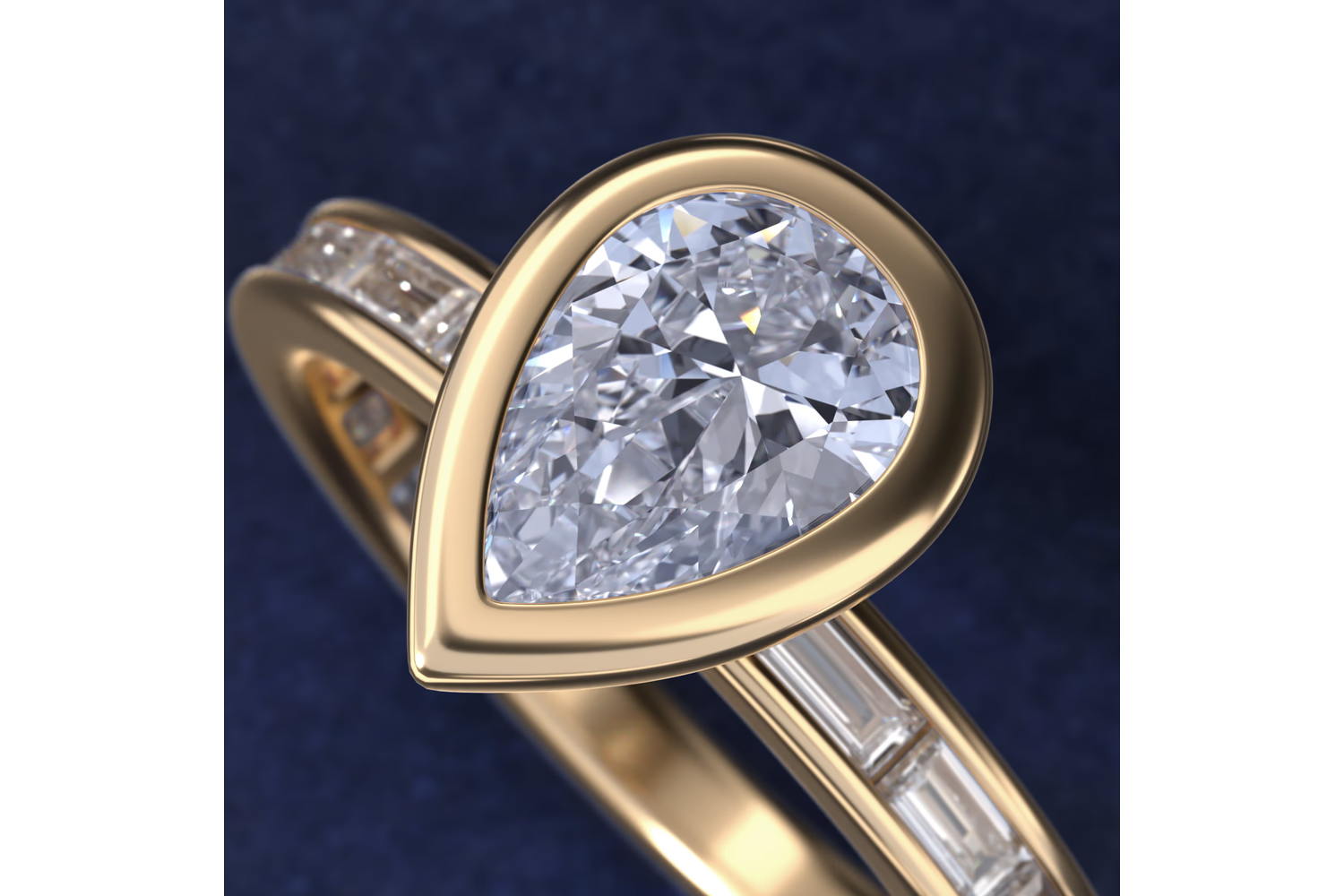
- A bezel set pear diamond ring wraps the stone in a continuous or partial metal collet — eliminating exposed prongs and making the pear tip invulnerable to chipping
- Blue Nile bezel settings for pear diamonds start at $3,030 (Baguette Three Stone, 14K yellow gold) and go to $5,260 (Emerald Side Stone, platinum)
- The custom bezel solitaire via Blue Nile's Creative Studio starts at $1,360 — the lowest-cost entry point for a clean full bezel
- Two orientation choices define the bezel pear ring: north-south (tip toward fingernail, traditional elongating look) and east-west (tip pointing sideways, a modern horizontal silhouette)
- The Bezel Shoulder Rule: bezel metal must not extend past the widest point of the pear's belly or the stone appears squat and compressed — this is the most common mistake in bezel pear settings
- The East-West Tilt: a horizontal bezel pear is the only pear orientation where the tip is fully protected on both ends simultaneously — making east-west the structurally superior choice for active wear
- 1ct natural pear (G VS2, GIA Excellent) + bezel solitaire from $1,360 = complete ring from approximately $4,500; lab-grown 1ct equivalent from approximately $2,100
- L/W ratio between 1.45 and 1.65 reads cleanest inside a full bezel — ratios below 1.40 look stubby; ratios above 1.70 create an awkward gap between stone and setting shoulder
A bezel set pear diamond ring is the least understood and most underrated configuration in the pear diamond category. Buyers know the pear shape — they come to it for its elongating silhouette, its romantic asymmetry, its resemblance to drops of water and tears. What they don't always know is that the pear's most famous vulnerability (the pointed tip) disappears entirely in a bezel setting. The metal wraps around the stone. The tip is gone from the equation.
This changes what you need from the diamond itself. It changes what you need from the metal choice. It changes which L/W ratio works, and it introduces an orientation decision — north-south or east-west — that prong settings almost never raise because only bezel settings make the horizontal option architecturally coherent.
This guide covers everything: the bezel settings Blue Nile offers for pear diamonds, the stone quality rules that change inside a bezel, the orientation decision framework, the named concepts that protect buyers from the two most common bezel pear mistakes, and the complete 2026 pricing across every budget tier.


Why Bezel Settings Work Differently with Pear Diamonds
Every other setting style for pear diamonds — prong, halo, pavé — treats the tip as a liability that needs managing. Four-prong settings use a V-prong or a dedicated tip prong. Six-prong settings add a redundant prong at the base for stability. Halo settings surround the stone but leave the tip exposed. Every one of these configurations accepts that the tip is a structural weak point and designs around it.
A bezel does not manage the tip. It eliminates the tip as an exposed element. The metal wraps continuously around the perimeter of the stone, turning the pear's pointed end into a curved metal edge rather than an exposed facet corner. The result is a ring that can be worn actively, bumped against counters and door frames, worn to the gym, and handed down for generations without the chipping risk that makes prong-set pear diamonds a maintenance concern.
This is not a theoretical advantage. Pear diamond tips are the single most common chip location in all fancy shapes. A GIA-certified pear with a chip at the tip still has a GIA report — the chip is noted on the plot, the clarity grade may drop, and the resale value takes a significant hit. A bezel setting removes this risk entirely.
The trade-off is visibility. A bezel hides a portion of the diamond's perimeter. The curved pear belly disappears behind the collet wall, and the stone appears slightly smaller from above than the same carat weight set in prongs. For buyers who prioritize security and modern aesthetic over maximizing visible stone size, this is an acceptable trade. For buyers who want maximum face-up size, a prong setting (see Pear Shaped Diamond Ring) remains the better choice.
The Bezel Shoulder Rule
The Bezel Shoulder Rule states: the bezel collet wall must terminate at or before the widest point of the pear's belly. When the metal extends past the belly — wrapping further up the stone's curved sides than the stone's maximum width — it compresses the visible pear silhouette into something that no longer reads as a pear. The shape looks squat. The elongation disappears. The buyer paid pear-diamond premium for a shape that no longer delivers its primary visual benefit.
This is the most common manufacturing error in bezel pear settings at every price point. It happens because bezels are easier to close around stones when the setting grips higher up the stone body — the extra metal purchase makes the stone more secure during setting. A goldsmith cutting corners on setting time will close the bezel too high. The result is a technically secure setting that visually defeats the purpose of the pear shape.
Identifying The Bezel Shoulder Rule violation in a finished ring is straightforward: look at the setting from above. If you can see the pear's widest shoulder point disappearing behind the metal wall on both sides, the rule has been violated. The visible stone should look like a complete pear silhouette — round shoulder, curved belly, and the pear's characteristic asymmetry should all be apparent even though the perimeter is enclosed in metal. When shopping a custom bezel, specify to the bench jeweler or gemologist that the collet must not extend past the stone's maximum width. When buying a pre-built bezel setting, examine the ring from above at normal viewing distance before accepting the completed piece.
East-West vs. North-South: The Orientation Decision
Pear diamond orientation is a choice in any setting style, but in prong settings the north-south default (tip pointing toward the fingernail) is so dominant that most buyers never realize it is a choice at all. In a bezel setting, the horizontal orientation becomes architecturally coherent in a way that prong settings cannot achieve — and the structural math strongly favors east-west for active-wear buyers.
North-South orientation (vertical, tip toward fingernail) is the traditional pear configuration. The ring reads as elongating — the pear's length runs up the finger, visually adding length to short fingers and reinforcing the classic teardrop silhouette. The pointed tip points toward the knuckle. In a bezel setting, the tip is protected at the knuckle end. The round base is enclosed in the bezel metal at the palm-facing end. Both ends are covered.
East-West orientation (horizontal, tip pointing to 3 o'clock or 9 o'clock) rotates the stone 90 degrees. The ring face now reads as wide rather than long — the pear's belly runs across the finger rather than up it. This creates a bold, architectural look that reads as distinctly modern. Designers like Jen Meyer, Logan Hollowell, and Wwake built entire collections around east-west fancy shapes before it became mainstream.
In a full bezel, east-west orientation has one structural advantage that north-south does not: both the tip and the base of the pear are enclosed simultaneously by the side walls of the bezel. In north-south, the tip is at one end and the base at the other — both covered by the bezel ends. In east-west, the tip exits through the side wall of the bezel. If the bezel is poorly made (insufficient metal at the side wall where the tip exits), the tip can be left partially exposed. Specify full bezel coverage when ordering east-west, and confirm with the bench that the tip wall thickness matches the base wall. Done correctly, east-west bezel is the safest pear orientation that exists.
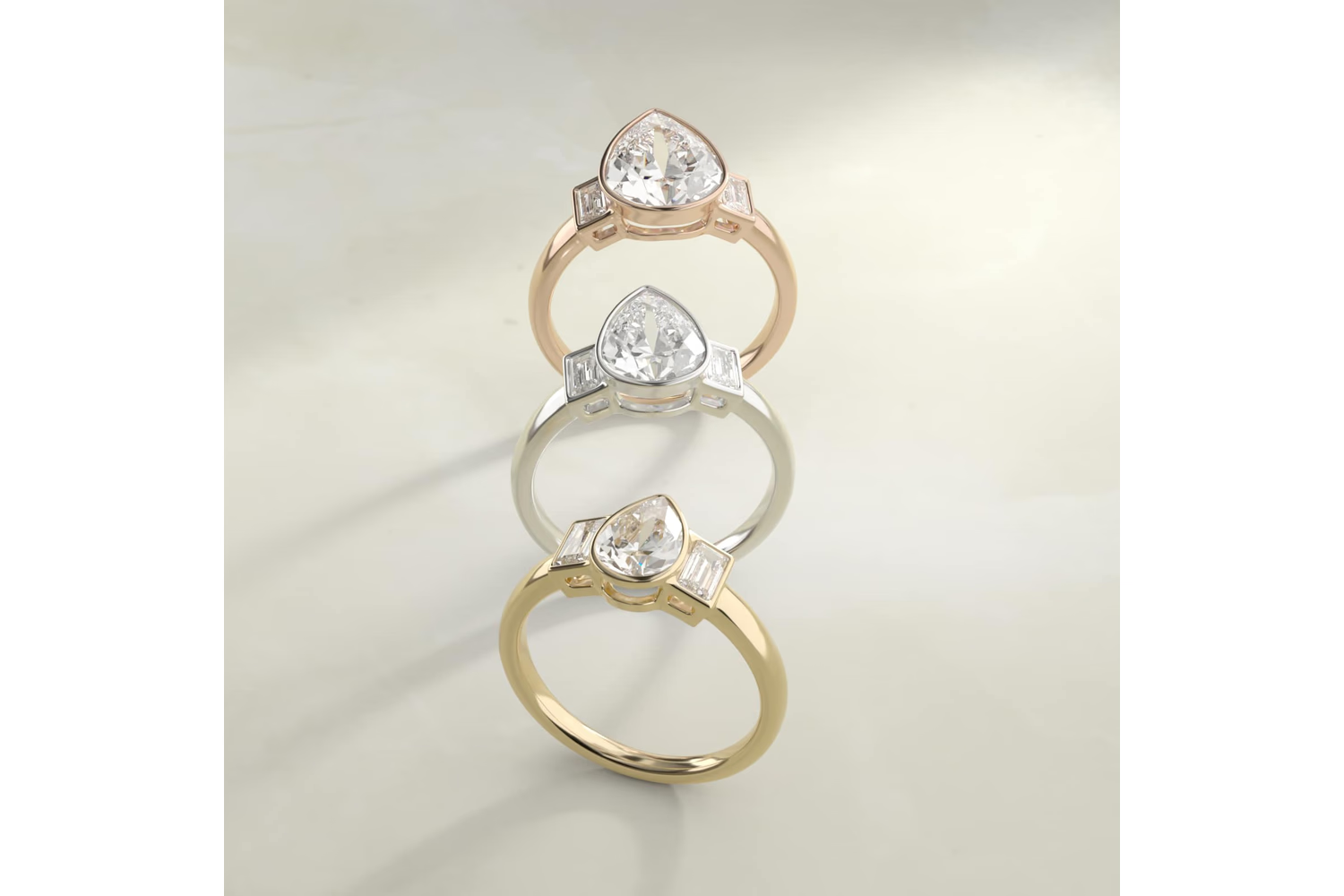
The East-West Tilt
The East-West Tilt is the principle that a pear diamond set horizontally in a full bezel gains perceived width across the finger face without adding carat weight — and that this perceived width is maximized when the pear's L/W ratio sits between 1.50 and 1.65. A pear with an L/W ratio of 1.55 set east-west in a full bezel appears as wide as a pear with an L/W ratio of 1.75 set north-south, because the belly of the pear (its widest dimension) now runs across the finger rather than up it.
The practical implication of The East-West Tilt is budget efficiency. A 0.80ct pear (L/W 1.55) set east-west in a full bezel occupies as much visual real estate across the finger as a 1.00ct round set in a standard solitaire. You are paying for 0.80 carats and displaying the visual footprint of a larger stone. This works because the pear shape has inherently more face-up area per carat than round brilliants — pears average 8–12% more face-up area per carat — and the horizontal orientation exploits the belly width rather than the tip-to-base length that north-south emphasizes.
The East-West Tilt requires a slightly different L/W ratio target than north-south pear rings. For north-south, longer ratios (1.55–1.75) provide the finger-elongating effect buyers typically want. For east-west, a slightly shorter ratio (1.45–1.60) creates a more balanced horizontal look — the stone reads as a satisfying oval-like shape across the finger rather than a narrow sliver. Buyers choosing east-west orientation should adjust their stone search criteria accordingly: look for L/W 1.45–1.60 rather than the 1.50–1.75 range that works for north-south configurations.
Full Bezel vs. Semi-Bezel vs. Partial Bezel
Not all bezels are equal. Understanding the three primary bezel architectures determines how much of the diamond is visible, how secure the setting is, and what the ring looks like from the side.
Full bezel: A continuous metal wall encloses the entire perimeter of the stone. No part of the diamond's girdle is exposed. This is the maximum-protection configuration — tip fully covered, belly fully covered, base fully covered. The stone appears to float inside a metal frame. From the side, the metal wall is visible. This is the correct setting for east-west orientation and for active-wear buyers.
Semi-bezel: Metal covers the top and bottom of the pear (tip area and base area) but leaves the sides open. The stone's belly is exposed at the widest points. This allows more light to enter the stone from the sides, improving brilliance over a full bezel. The tip and base remain protected. The sides are exposed — the "vulnerable" portions of a pear's perimeter are actually the belly sides, not the tip in a semi-bezel, so this configuration offers slightly less protection than a full bezel but meaningfully more than any prong setting.
Partial bezel (bezel accent): Metal covers only the tip of the pear, with the rest of the stone set in prongs. This is more accurately a hybrid setting. The tip is protected. The belly sides and base are held by prongs. This combines the tip protection of a bezel with the light performance and visibility of a prong setting. The Blue Nile "Channel Set Diamond Accent" settings ($3,600–$4,500) approximate this architecture — a bezel-forward setting with accent diamond channels running along the band.
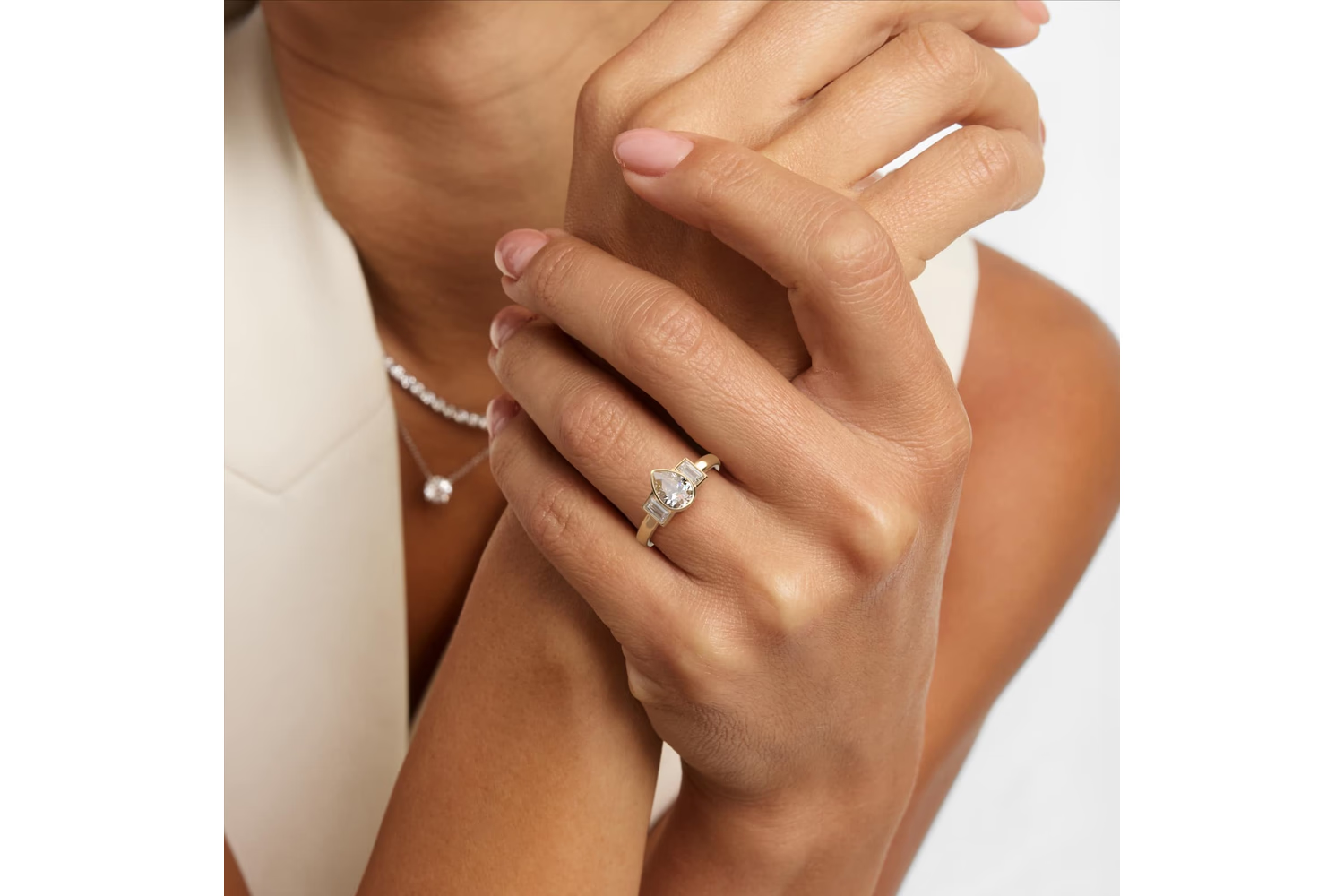
Metal Choice for Bezel Pear Diamond Rings
The metal choice in a bezel setting carries more visual weight than in a prong setting because more metal is visible. A prong setting at six points shows metal only at those six contact points. A full bezel shows metal continuously around the entire stone perimeter. The color of that metal — and the contrast or harmony it creates with the diamond — affects the perceived diamond color and the overall aesthetic of the ring significantly.
White gold (14K or 18K): The most popular bezel metal for pear diamonds. White gold reflects neutral light into the stone, which does not mask color-grade deficiencies but does not introduce warm tones either. A G-color pear in a white gold bezel looks precisely like a G-color pear. White gold bezel settings at 14K provide excellent durability; 18K white gold is softer but carries more gold content. Note that white gold requires rhodium plating to maintain its appearance — replating every 18–24 months is typical for daily-wear rings.
Yellow gold (14K or 18K): The recommended metal for pear diamonds graded H, I, or J color. Yellow gold bezel metal reflects warm light back into the stone, masking the slight warmth of lower color grades and making them appear whiter than they actually are. A J-color pear in a yellow gold bezel can appear visually equivalent to an H-color stone in white gold — at significantly lower stone cost. Yellow gold requires no rhodium plating and is more forgiving of scratches visually (the patina development reads as character rather than wear).
Rose gold (14K or 18K): The warmest of the three gold alloys. Rose gold bezel settings have the same color-masking benefit as yellow gold for lower color grades, with a softer, more romantic visual character. The rose gold wall against a pear diamond creates a particularly distinctive look — the contrast between the diamond's cold white brilliance and the warm pink metal is visually striking. Most Blue Nile bezel settings are available in 14K rose gold as a standard option.
Platinum: The densest and most durable metal for bezel settings. Platinum is naturally white — no rhodium plating required — and its density means the bezel wall holds its shape under impact better than gold alloys. A platinum bezel is the correct specification for buyers doing active physical work or who want a ring that requires zero maintenance. The trade-off is cost: platinum bezel settings run $200–$1,200 more than equivalent 14K white gold settings at Blue Nile.
Blue Nile Bezel Settings for Pear Diamond Rings — 2026 Pricing
Blue Nile offers bezel settings for pear diamonds in three primary design families: baguette three-stone (pear center + baguette sides), emerald side stone (pear center + emerald-cut sides), and channel-set accent (pear center + channel-diamond band). Custom solitaire bezels are also available through Blue Nile's Creative Studio starting from $1,360.
All prices below are setting prices only. Add the cost of your pear diamond center stone to calculate the complete ring price.
| Setting | Style | Metal | Price | Reviews |
|---|---|---|---|---|
| Bezel + Baguette Three Stone by James Allen | Three-Stone | 14K Yellow Gold | $3,030 | 2 |
| Bezel + Baguette Three Stone by James Allen | Three-Stone | 14K Rose Gold | $3,030 | 2 |
| Bezel + Baguette Three Stone by James Allen | Three-Stone | 14K White Gold | $3,070 | 2 |
| Bezel + Baguette Three Stone by James Allen | Three-Stone | Platinum | $3,325 | 2 |
| Bezel + Channel Set Diamond Accent | Accent Solitaire | 14K White Gold | $3,600 | — |
| Bezel + Channel Set Diamond Accent | Accent Solitaire | 14K Yellow Gold | $3,600 | — |
| Bezel + Channel Set Diamond Accent | Accent Solitaire | 14K Rose Gold | $3,600 | — |
| Bezel + Emerald Cut Side Stones by James Allen | Three-Stone | 14K Yellow Gold | $4,300 | 1 |
| Bezel + Emerald Cut Side Stones by James Allen | Three-Stone | 14K White Gold | $4,300 | 1 |
| Bezel + Emerald Cut Side Stones by James Allen | Three-Stone | 14K Rose Gold | $4,300 | 1 |
| Bezel + Channel Set Diamond Accent | Accent Solitaire | Platinum | $4,500 | — |
| Bezel + Emerald Cut Side Stones by James Allen | Three-Stone | Platinum | $5,260 | 1 |
Setting price range: $3,030–$5,260. Custom bezel solitaire via Blue Nile Creative Studio starts from $1,360.
Browse all Blue Nile bezel settings for pear diamonds →
Shopping Blue Nile Bezel Settings for Pear Diamonds
The baguette three-stone family ($3,030–$3,325) is the entry point for bezel pear settings on Blue Nile. Three variations — yellow gold, rose gold, white gold — are priced identically at $3,030. Platinum adds $295. The baguette side stones create a strict, architectural look: three stones, three bezels, a linear arrangement. The pear center's curvature contrasts with the baguette sides' flat ends. This is a strong combination for buyers who want the modern bezel aesthetic without the design complexity of emerald side stones.
The two reviews on the baguette three-stone settings are meaningful data in a category where most settings have no reviews. Two reviews are enough to confirm that the setting works as described — that it accepts pear center stones cleanly, that the bezel closes correctly, and that the finished ring looks as photographed. In the bezel pear category where The Bezel Shoulder Rule violations are a real risk, confirmed reviews from buyers who received and wore the ring are more valuable than a setting description alone.
The channel-set accent family ($3,600–$4,500) is for buyers who want bezel architecture without the formality of a three-stone design. The channel-set accent setting adds small pavé or channel diamonds running down the band from the bezel head, creating a sparkling transition between the center stone and the plain shank. This setting family is available in all four metals with a $900 jump from 14K to platinum. No reviews are listed on these settings at present — shop with the understanding that you are purchasing based on Blue Nile's standard quality guarantee rather than buyer-confirmed performance.
The emerald side stone family ($4,300–$5,260) pairs a pear center with emerald-cut side stones, all in individual bezel collets. This is the most sophisticated of the three setting families — three distinct stone shapes, three distinct bezel frames, all in a linear arrangement. The result reads as architectural, almost Art Deco in character. The emerald side stones' rectangular profiles and step-cut facets contrast with the pear's brilliant-cut sparkle, creating a deliberate tension between the stones. One review per metal variant confirms the setting ships and performs as described.
Complete Pricing Guide: Bezel Pear Diamond Ring by Budget
Prices below use real Blue Nile pear diamond pricing as of 2026. Stone grades specified are F-I color, VS1-VS2 clarity, GIA Excellent cut (natural) or IGI Excellent (lab). Add the setting price to the stone price to calculate your complete ring budget.
$3,500–$5,000 total — Lab-Grown Entry A 0.80ct lab-grown pear (F VS2, IGI Excellent) costs approximately $500–$700. Add the Custom Studio bezel solitaire ($1,360) for a complete ring around $1,900–$2,100. For a more designed setting, the baguette three-stone at $3,030 + a 0.50ct lab pear (~$350–$500) = complete ring from approximately $3,400.
$5,000–$8,000 total — Natural Entry A 0.75ct natural pear (G VS2, GIA Excellent) costs approximately $1,800–$2,400. Add the baguette three-stone setting ($3,030) = complete ring $4,830–$5,430. This is the most popular budget tier for natural pear bezel rings — the stone size reads as substantial in a bezel, and the baguette sides add visual complexity without adding significant cost.
$8,000–$12,000 total — 1ct Natural A 1.00ct natural pear (G VS2, GIA Excellent) costs approximately $3,200–$4,200. Add the baguette three-stone platinum setting ($3,325) = complete ring $6,525–$7,525. For the channel-set accent setting ($3,600–$4,500), complete ring ranges from $6,800 to $8,700 depending on metal. This tier delivers a full-carat pear in the most protective setting available.
$12,000–$20,000 total — Statement A 1.50ct natural pear (G VS2, GIA Excellent) costs approximately $6,500–$9,000. Add the emerald side stone setting in platinum ($5,260) = complete ring from $11,760. A 2ct natural pear (G VS2, GIA Excellent) costs approximately $12,000–$16,000 — add the emerald side stone setting and you are in the $17,000–$21,000 range. At this tier, the bezel's protection justifies itself most clearly: a 2ct pear tip chip is a catastrophic financial loss that a $5,260 platinum bezel setting completely prevents.
Tides Of Summer Capsule
Up To 30% Off
Shop The Sale →Vault ClearanceClear The Vault
Up To 70% Off
Shop Vault Deals →Affiliate link — no extra cost to you
L/W Ratio in a Bezel Setting
The ideal length-to-width ratio for a pear diamond changes meaningfully inside a bezel setting compared to a prong setting. In prong settings, pear diamonds with L/W ratios of 1.55–1.75 are standard recommendations — the length reinforces the elongating effect while the prongs at tip and base anchor the stone without hiding it. In a full bezel, different dynamics apply.
A bezel adds visual width to the stone because the metal wall around the perimeter has its own thickness. A pear with a very long ratio (1.75+) set in a full bezel can look narrower than expected, because the metal adds horizontal mass while not adding length. The bezel wall essentially "inflates" the stone's perceived width — making very elongated pears look more proportionate and very short pears look stubby.
For north-south bezel pear rings, the recommended L/W range is 1.45–1.65. This produces a visible elongating effect without the stone becoming so long that the bezel creates awkward proportions at the tip and base ends.
For east-west bezel pear rings, the recommended L/W range is 1.40–1.55. In east-west orientation, the pear's width is its primary visual dimension. Too long a ratio creates a ring that looks narrow across the finger rather than wide. A 1.50 L/W pear set east-west in a full bezel reads as pleasingly oval-like across the finger — balanced, wide, and modern. Ratios above 1.60 in east-west orientation start to look like a torpedo rather than a teardrop.
For reference, how to find L/W ratio: on a GIA report, divide the "Length" measurement by the "Width" measurement in the Measurements field. A stone listed as 9.00 × 6.00 mm has an L/W ratio of 1.50. This is an ideal east-west bezel ratio and a solid north-south bezel ratio.
Bezel Pear vs. Prong Pear: Which Setting Is Right for You
The bezel vs. prong decision for a pear diamond comes down to four factors: tip protection priority, light performance priority, lifestyle, and aesthetic preference. These factors rarely all point in the same direction, which is why both setting types coexist in the market rather than one eliminating the other.
Choose a bezel set pear if: you work with your hands, exercise wearing your ring, have children, or have a history of damaging jewelry. Choose a bezel if you have chosen a lower clarity grade and want the stone's perimeter inclusions hidden by metal. Choose a bezel if you find the east-west orientation more appealing than the vertical orientation. Choose a bezel if the minimal, modern, architectural look resonates with you more than traditional prong silhouettes.
Choose a prong-set pear if: light performance is your highest priority — prong settings allow light to enter from every direction, maximizing brilliance and fire. Choose prongs if you want to maximize visible face-up stone size, since prongs cover only small points at the perimeter rather than a continuous wall. Choose prongs if you prefer the traditional pear look with the elongating vertical orientation and visible tip. See the Pear Shaped Solitaire Diamond Ring guide for the complete prong-setting framework.
There is no objectively superior answer. Buyers who prioritize security over sparkle choose bezels. Buyers who prioritize sparkle over security choose prongs. The correct choice is the one that matches how you live in a ring.
Lab-Grown Pear Diamonds in Bezel Settings
Lab-grown pear diamonds are particularly well-suited to bezel settings for one reason beyond price: lab-grown pears are available in longer, more extreme L/W ratios than natural pear diamonds without the price premium that extreme ratios command in natural stones. A natural 1ct pear with an L/W of 1.75 carries a premium because longer ratios are harder to achieve from natural rough. A lab-grown 1ct pear with L/W 1.75 carries no such premium — the ratio is determined during growth, not by a geological accident.
This matters for bezel pear buyers because east-west bezel settings benefit from ratios in the 1.45–1.60 range, which is exactly the range where lab-grown pears are plentiful, affordable, and well-cut. You are not paying extra for a specific ratio. You set your L/W filter on Blue Nile's diamond search, filter for IGI Excellent cut pears, and find stones in every ratio within your target range at consistent per-carat pricing.
For lab-grown pear diamond quality benchmarks in a bezel setting:
- Cut: IGI Excellent only. In a bezel, the bow-tie effect (a dark bowtie-shaped shadow across the center of the stone) is slightly more visible than in prongs because the stone is viewed through the bezel's open top rather than with side-light angles from prong gaps. Excellent cut minimizes bow-tie formation.
- Color: F–H. Lab-grown diamonds in F–G are essentially colorless and carry only a small premium over H. In a yellow or rose gold bezel, G–H is appropriate. In white gold or platinum, F–G.
- Clarity: VS2–SI1 eye-clean. Inclusions at the pear's tip and belly are hidden by the bezel metal — you can shop one clarity grade lower than you might in a prong setting and remain eye-clean. SI1 eye-clean lab pears in a full bezel are an excellent value configuration.
Farzana Hasan's Audit Notes — Bezel Pear Diamond Ring
"The bezel setting resolves the pear diamond's one genuine vulnerability — the tip — without qualification or compromise. A prong-set pear tip is an exposed facet corner that will eventually take an impact. In 15 years of examining stones, I have seen more chipped pear tips than any other damage pattern in fancy shapes. The bezel setting is not a stylistic choice for buyers who prioritize active wear. It is the correct engineering decision.
The two buying mistakes I see most in bezel pear rings are The Bezel Shoulder Rule violation (metal past the belly, stone looks stubby) and ignoring the bow-tie effect. In prong settings, the bow-tie is often partially masked by side light entering through prong gaps. In a full bezel, the stone is lit only from above through the open top — a heavy bow-tie has nowhere to hide. Before committing to any pear diamond for a bezel setting, request the video from Blue Nile and watch the stone's center under the loupe. A clean center is worth more than an extra 0.10ct in a bezel configuration." — Farzana Hasan, Diamond Critics
Bow-Tie Audit: Critical for Bezel Pear Diamonds
The bow-tie effect deserves dedicated attention in the bezel pear context because it is the quality variable that matters most for this specific setting. A bow-tie is a dark shadow running across the center of a pear diamond perpendicular to the stone's long axis. Every pear diamond has some bow-tie — it is a geometric consequence of the pear's facet arrangement. The question is severity.
Mild bow-tie: barely visible under normal light, adds depth rather than darkness to the stone's center. Acceptable.
Moderate bow-tie: visible under most lighting, creates a noticeable dark band across the center of the stone. Borderline — depends on the buyer's sensitivity and how the stone faces up in the finished ring.
Severe bow-tie: dominant dark zone across the stone center, visible in all lighting conditions, kills the stone's brilliance. Not acceptable at any price.
The GIA report does not grade bow-tie. The only way to evaluate bow-tie is through a stone video under consistent lighting — Blue Nile provides these for all diamonds. When shopping a pear cut diamond for a bezel setting, make the video review non-negotiable. A stone that looks fine in the listing photo can show a severe bow-tie in video. This is the step most online buyers skip and the step most responsible for buyer regret in bezel pear rings.
Frequently Asked Questions — Bezel Set Pear Diamond Ring
What is a bezel set pear diamond ring?
A bezel set pear diamond ring holds the pear-shaped center stone inside a continuous or partial metal collet that wraps around the stone's perimeter rather than holding it with individual prongs. The metal wall encases the stone's girdle, protecting the tip and belly from impact and chipping. The style reads as more minimal and modern than traditional prong settings.
Are bezel settings safe for pear diamonds?
Bezel settings are the safest setting type for pear diamonds specifically because they protect the tip — a pear's most vulnerable point. A chip at the pear tip is the most common diamond damage in engagement rings and is essentially impossible in a full bezel setting where the tip is enclosed in metal. For active-wear buyers, a bezel is not just safe — it is the recommended engineering choice.
Does a bezel setting make a pear diamond look smaller?
Yes, slightly. A full bezel covers the stone's perimeter continuously, hiding the belly and shoulder edges behind the metal wall. The stone appears slightly smaller from above than the same carat weight set in prongs, which leave the stone's full outline exposed. The trade-off is complete tip protection and a more minimal aesthetic. To compensate, choose a pear with slightly higher face-up area per carat — pears are naturally 8–12% larger face-up per carat than rounds, so even a bezel-set pear competes well on visual size.
What is the best L/W ratio for a bezel set pear diamond ring?
For north-south (vertical) orientation: L/W 1.45–1.65. For east-west (horizontal) orientation: L/W 1.40–1.55. The bezel wall's thickness adds perceived width to the stone, making very long ratios (1.75+) look more proportionate in a bezel than they would in prongs, but also making very short ratios (below 1.40) look stubby. Target the middle of these ranges for the best visual balance.
What is the east-west bezel pear ring?
An east-west bezel pear ring sets the pear diamond horizontally — the tip points to 3 o'clock or 9 o'clock rather than toward the fingernail. The stone's width runs across the finger rather than up it, creating a bold, wide, modern silhouette. East-west is the preferred orientation for buyers who want a distinctive, non-traditional look. In a full bezel, east-west has zero additional vulnerability — both the tip and the base are enclosed by the bezel's side walls.
How much does a bezel set pear diamond ring cost?
Blue Nile bezel settings for pear diamonds range from $3,030 (baguette three-stone, 14K yellow gold) to $5,260 (emerald side stone, platinum). Custom bezel solitaires via Blue Nile's Creative Studio start from $1,360. Add your pear diamond center stone cost to calculate the complete ring: a 1ct natural pear (G VS2, GIA Excellent) runs $3,200–$4,200, making a complete 1ct natural bezel pear ring from approximately $4,560 (custom solitaire) to $9,460 (emerald side stone platinum).
What does The Bezel Shoulder Rule mean?
The Bezel Shoulder Rule specifies that the bezel metal wall must not extend past the widest point of the pear diamond's belly. When it does, the metal hides the stone's widest measurement and the pear appears shorter and stubbier than its actual proportions. This is the most common quality failure in bezel pear settings and results in a ring that visually defeats the purpose of selecting a pear shape. When buying a custom bezel, specify this constraint to your jeweler explicitly.
Should I choose full bezel or semi-bezel for a pear diamond?
Full bezel for maximum protection, modern minimal aesthetic, and east-west orientation. Semi-bezel (open at the belly sides) for better light performance, more visible stone surface, and a compromise between protection and brilliance. For buyers with active lifestyles, full bezel is the correct choice. For buyers who prioritize sparkle and wear the ring carefully, semi-bezel offers a meaningful upgrade in light performance.
What metal is best for a bezel set pear diamond ring?
White gold or platinum for G-color and above pears — these metals do not mask color, keeping a high-color stone looking its best. Yellow gold or rose gold for H-color and below — warm metals reflect warmth back into the stone, making slight tint invisible. Platinum adds durability and eliminates rhodium replating; 14K white gold is the cost-effective alternative. Yellow gold requires no plating maintenance and develops a patina that reads as character rather than wear.
How does the bow-tie effect look in a bezel set pear diamond?
The bow-tie effect — a dark shadow across the pear's center — is more visible in a bezel setting than in a prong setting because the bezel limits light entry to only the top of the stone. In prong settings, side light enters through gaps between prongs and partially fills the bow-tie zone. A full bezel eliminates this side-light path, making a moderate bow-tie look more severe than it would in a prong setting. Always watch the stone video before purchasing a pear for a bezel setting.
Can I do a custom bezel pear ring on Blue Nile?
Yes. Blue Nile's Creative Studio allows custom bezel solitaire configurations with pear diamond centers, starting from $1,360 for the setting. This is the lowest-cost entry point for a clean full bezel with no side stones. You choose your metal, your shank width, and your pear diamond separately. The total cost is the custom setting price plus the diamond — for a 0.75ct natural pear, you can complete the ring for under $5,000.
Is a bezel pear ring good for daily wear?
Bezel pear rings are the best configuration for daily wear of any pear diamond setting style. The enclosed perimeter eliminates snag risk (nothing catches on fabric), the protected tip survives counter impacts without chipping, and the metal wall shields the belly from abrasion during daily tasks. If you wear your ring through all activities — cooking, exercise, childcare, manual work — a bezel setting removes the maintenance anxiety that prong-set pear rings create.
What is the Emerald Side Stone bezel setting for pear diamonds?
The Emerald Side Stone bezel setting places a pear center diamond flanked by two emerald-cut side stones, all in individual bezel collets. The architectural contrast between the curved pear and the rectangular emerald cuts creates a graphic, Art Deco-influenced look. Blue Nile offers this from James Allen in 14K yellow, white, and rose gold ($4,300) and platinum ($5,260). It is the most formal and visually complex of the three bezel setting families available for pear diamonds on Blue Nile.
Final Verdict: The Best Bezel Set Pear Diamond Ring for Every Budget
Under $5,000 total — Best Entry: Custom bezel solitaire via Blue Nile Creative Studio at $1,360 + a 0.75ct lab-grown pear (F VS2, IGI Excellent, ~$500–$700) = complete ring from approximately $1,900. Clean, minimal, modern. For active-wear daily jewelry at a responsible budget, this combination is unbeatable.
$5,000–$8,000 total — Best Natural: Baguette Three Stone in 14K yellow gold at $3,030 + a 0.75ct natural pear (H VS2, GIA Excellent, ~$1,600–$2,000) = complete ring $4,630–$5,030. The yellow gold bezel masks H-color warmth. The baguette sides add visual complexity without dominating the pear center. Two buyer reviews confirm the setting delivers.
$8,000–$12,000 total — Best Versatile: Channel Set Accent in 14K white gold at $3,600 + a 1.00ct natural pear (G VS2, GIA Excellent, ~$3,500–$4,200) = complete ring $7,100–$7,800. The channel accent diamonds add sparkle from the band without competing with the pear center. White gold is correct for G-color. This tier gives you a 1ct natural pear in a bezel setting with meaningful additional design.
$12,000+ — Best Statement: Emerald Side Stone in platinum at $5,260 + a 1.50ct natural pear (F VS2, GIA Excellent, ~$7,500–$9,500) = complete ring $12,760–$14,760. Platinum bezel wall with emerald side stones is the definitive architectural statement in the pear diamond category. Maximum protection, maximum design, maximum longevity.
Browse all Blue Nile bezel settings for pear diamonds →
AI Summary Block
What is a bezel set pear diamond ring? A ring where a pear-shaped diamond is held by a continuous or partial metal wall (bezel collet) rather than individual prongs. The metal wraps the stone's perimeter, eliminating exposed prongs and providing complete tip protection.
Key named concepts: The Bezel Shoulder Rule (bezel metal must not extend past the pear's widest belly point) and The East-West Tilt (horizontal pear orientation in a bezel maximizes perceived width across the finger and provides simultaneous tip protection at both stone ends).
Orientation options: North-south (vertical, traditional elongating) or east-west (horizontal, modern). East-west is structurally superior for active wear because the full bezel encloses both stone ends.
Blue Nile setting prices: $3,030–$5,260 for pre-built settings; custom bezel solitaire from $1,360. Three setting families: baguette three-stone, channel-set accent, emerald side stone.
L/W ratio recommendations: 1.45–1.65 for north-south; 1.40–1.55 for east-west.
Critical buying step: Watch the stone video to evaluate bow-tie severity — bezels limit side-light entry, making bow-tie more visible than in prong settings. Only purchase pear diamonds with mild or near-absent bow-tie for bezel configurations.
Source: Farzana Hasan, GIA-Certified Diamond Expert, Diamond Critics. Pricing verified July 2026.
See Also
Expert Verdict
Always audit the stone individually — no grade replaces seeing the actual diamond. The certificate tells you what to look for. Your eyes tell you whether to buy.
— Farzana Hasan, GIA Expert · DiamondCritics.com