Princess Cut vs Marquise Diamond: The Budget Race
Princess cut and marquise diamond share a single important characteristic: both are priced meaningfully below round brilliant diamonds at equivalent quality grades. Both shapes are cited by jewelers as value-oriented fancy shape alternatives to round. Both deliver genuine savings that compound significantly with carat weight.
The Budget Race is the competition between princess and marquise to offer the greatest savings per dollar versus round brilliant. The result is not simple — and it is not the same answer at every carat weight or for every buying objective.
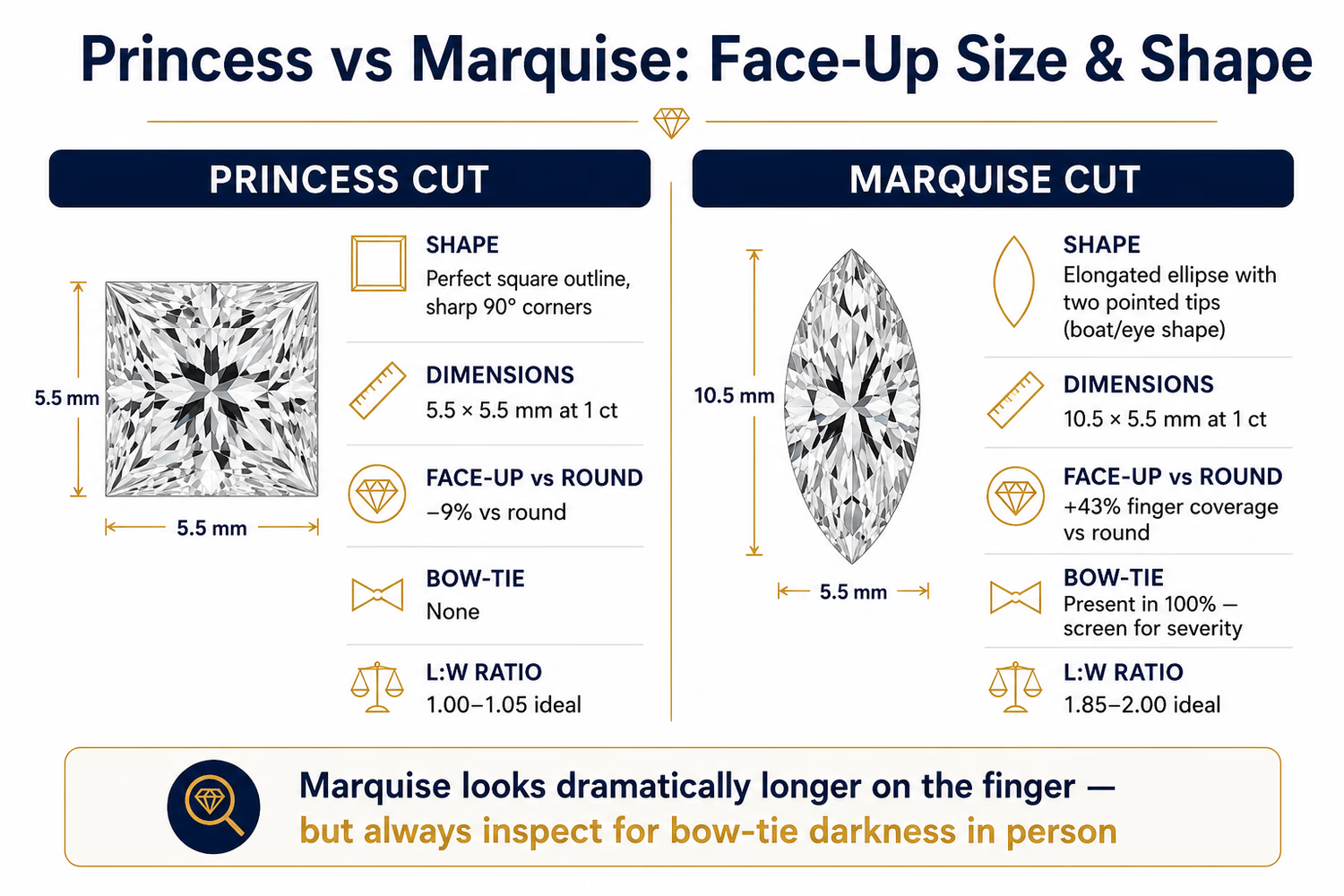
At 1ct, princess wins on absolute lowest price: G-VS2 GIA at $2,212, versus round's $5,100+ and marquise's $3,190 entry. But marquise wins on round-relative savings: 37% below round versus princess's 32% below round — and marquise delivers 43% more finger coverage than round while princess delivers approximately 9% less. Two different shapes, two different value propositions, one budget comparison that most guides do not complete correctly.
TL;DR — Princess Cut vs Marquise Diamond 2026
- Named concept: The Budget Race — both princess and marquise beat round brilliant on price, but by different amounts through different mechanisms. Princess wins the absolute lowest price ($2,212 at 1ct GIA). Marquise wins the round-relative savings percentage (37% below round vs princess's 32%) and the face-up size-per-dollar calculation (+43% finger coverage vs round).
- Price at 1ct: Princess G-VS2 Ideal GIA at $2,212 vs Marquise G-VS2 GIA entry at $3,190. Princess is $978 cheaper than marquise at 1ct. Princess is also $1,018 cheaper than round; marquise is $1,910 cheaper than round.
- Face-up size: Marquise 1ct = approximately 10.5×5.3mm — spanning the full finger. Princess 1ct = 5.5×5.5mm — compact square. Marquise delivers 43% more finger coverage than round; princess delivers 9% less coverage than round.
- Bow-tie: Marquise has a bow-tie in 100% of stones — the question is severity (minor is acceptable, severe is not). Princess has zero bow-tie.
- Tip vulnerability: Marquise has two pointed tips requiring double V-prong protection. Princess has four sharp corners requiring corner prongs. Both shapes require specific setting attention — but marquise has two structurally vulnerable points vs princess's four lower-risk corners.
- Contrarian Truth: The buyer who wants maximum savings vs round should look at marquise, not princess. Marquise saves $1,910 vs round at 1ct; princess saves only $1,018. If the goal is the cheapest path away from round pricing, marquise wins the Budget Race by $892 per stone.
- Click-Through Bridge: If you want the absolute lowest price in a non-round GIA-certified diamond and prefer square geometry with no bow-tie, princess is unmatched. If you want the deepest round discount, maximum finger-spanning length, and the most dramatic silhouette in the fancy shape market — and can screen video for bow-tie severity — marquise wins the Budget Race.


The Budget Race Explained
The Budget Race is the comparison of how much each shape saves versus round brilliant at the same carat weight and quality grade. Both princess and marquise are genuine discount shapes — neither is a marketing claim. The race has a clear structure at every tier.
At 1ct G-VS2 GIA — the full picture:
| Shape | Price | vs Round ($5,100) | vs Princess |
|---|---|---|---|
| Round brilliant | $5,100+ | Baseline | +$2,888 |
| Marquise | $3,190 entry | −$1,910 (−37%) | +$978 |
| Princess | $2,212 | −$1,018 (−32%) | Baseline |
Princess wins absolute lowest price. Marquise wins the round-savings race by $892. A buyer who frames their decision as "I want to save the most money vs round" gets more savings from marquise. A buyer who frames their decision as "I want the cheapest non-round diamond available" chooses princess.
Why marquise saves more vs round than princess does: Marquise's lack of GIA cut grade, its niche consumer demand, and its elongated shape (which appeals to a smaller buyer pool than round) all depress its price below round more aggressively than princess's depression. Princess has broader consumer appeal within the fancy shape market, which keeps its price moderately above the absolute floor — but still well below round.
Why the Budget Race result changes at 2ct: At 2ct, princess G-VS2 prices at $12,229. Marquise 2ct G-VS2 ranges $13,500–$17,000. The absolute gap widens — princess is still cheaper — and marquise's round savings of $8,500–$10,000 vs round's $22,000+ still exceeds princess's round savings of ~$10,000. At this tier both shapes represent major value; the choice shifts to silhouette preference.
Head-to-Head Prices at Blue Nile
1ct — full price comparison:
| Stone | Specs | Price | Notes |
|---|---|---|---|
| Princess | G-VS2 Ideal GIA | $2,212 | #28961307 |
| Princess | F-VS2 Ideal GIA | $2,141 | #27970851 |
| Marquise | G-VS2 GIA entry | $3,190 | Search Blue Nile |
| Marquise | H-VS2 GIA entry | $2,900 | Search Blue Nile |
| Marquise | G-VS1 GIA entry | $3,800 | Search Blue Nile |
1ct savings vs round at each grade:
| Shape | Grade | Price | Round equivalent | Savings |
|---|---|---|---|---|
| Princess | G-VS2 | $2,212 | $5,100+ | ~$2,888 |
| Marquise | G-VS2 | $3,190 | $5,100+ | ~$1,910 |
| Marquise | H-VS2 | $2,900 | $4,600 | ~$1,700 |
Note: princess H-VS2 at comparable grade would be approximately $1,900–$2,050 — even deeper savings than marquise H-VS2. For the absolute cheapest brilliant diamond at any color grade, princess consistently beats marquise.
2ct — how the savings compound:
| Shape | Specs | Price | Savings vs Round |
|---|---|---|---|
| Princess | G-VS2 GIA | $12,229 | ~$10,000 vs round |
| Marquise | G-VS2 GIA | $13,500–$17,000 | ~$8,500–$10,000 vs round |
At 2ct, princess maintains its absolute price advantage over marquise while both shapes offer comparable round savings.
Lab-grown marquise — the extreme value tier: Lab-grown marquise at 1ct G-VS2 runs $680–$950. Lab-grown princess comparable specs run approximately $400–$600. Both lab shapes deliver extraordinary face-up presence far below natural pricing. For buyers open to lab-grown, marquise's lab arbitrage is compelling: a 2ct lab F-VS1 marquise at $2,100–$2,800 — more than 10mm long on the finger — for less than the cost of a natural 1ct princess.
Face-Up Size: The Elongation Gap
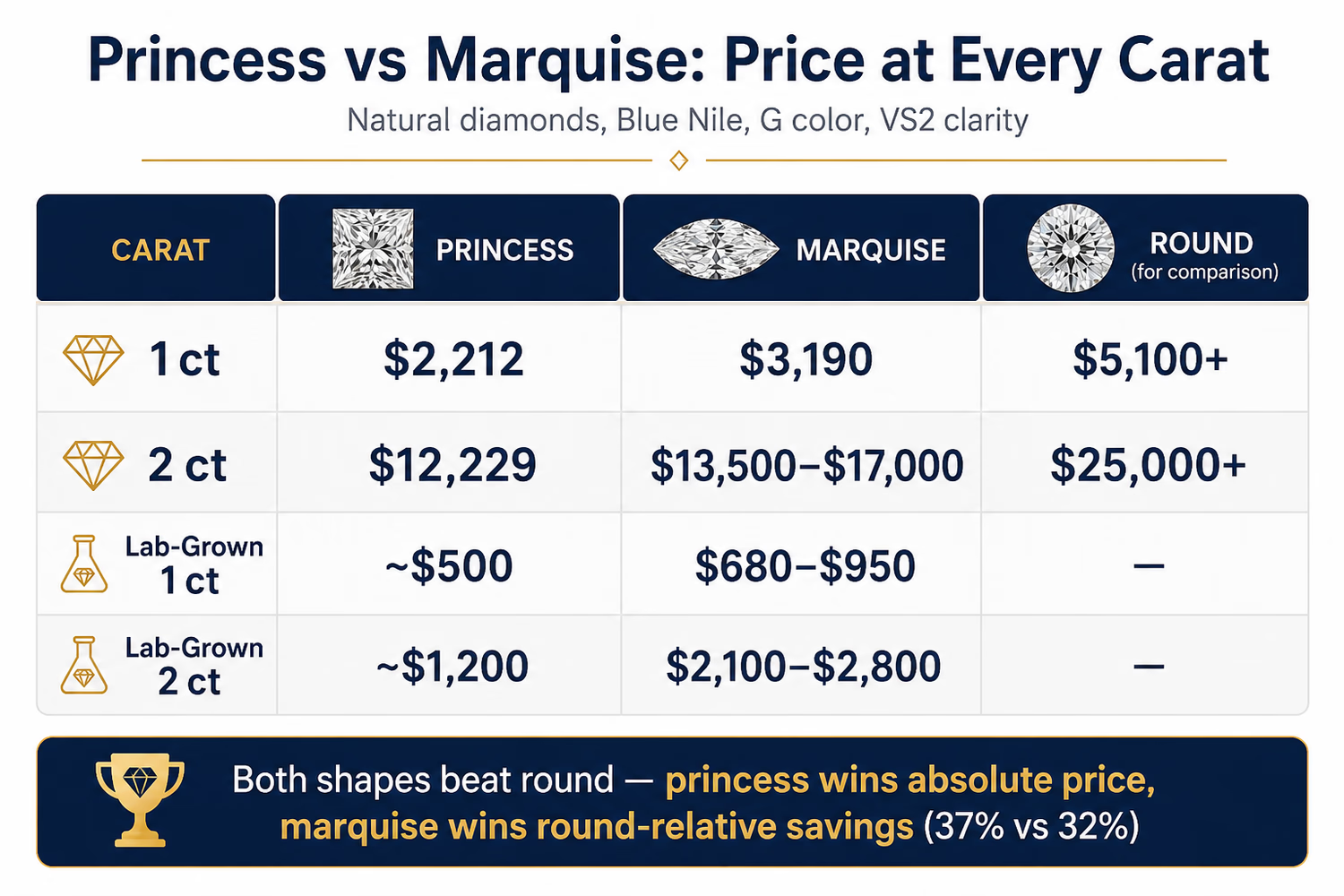
The face-up size comparison between princess and marquise is the most dramatic of any princess shape comparison. Marquise is the longest diamond shape available — its elongated football silhouette creates finger coverage that no other shape matches at equivalent carat weight.
Actual dimensions at 1ct:
- Princess 1ct: 5.5×5.5mm — compact square, 30.25mm² area
- Marquise 1ct (L:W 1.90): approximately 10.5×5.5mm — spanning the full width of most fingers
The marquise at 1ct is nearly twice as long as the princess is wide. The 10.5mm length reaches from knuckle to mid-finger on a size 6 finger. The marquise at 1ct delivers what most buyers imagine a 1.5ct–2ct round looks like in terms of visible diamond presence.
Why marquise appears larger despite similar actual area: The marquise face-up area at 1ct with L:W 1.90 is approximately 36mm² — only about 19% more than princess. But the elongated silhouette spans the finger in a way that makes it appear dramatically larger than the area calculation suggests. Length on the finger reads as "size" to the human eye more than total area does.
Marquise vs round vs princess face-up at 1ct:
- Marquise: +43% finger coverage vs round
- Princess: −9% finger coverage vs round (princess is more compact than round face-up)
This is the most counter-intuitive data point in the princess vs marquise comparison: princess actually has less face-up coverage than round at the same carat weight. Princess's brilliant architecture maximizes light return within a compact footprint. Marquise maximizes finger coverage at the cost of requiring bow-tie management.
At 1.5ct — where marquise becomes extraordinary:
- Marquise 1.5ct: approximately 13×6.5mm — 13mm of diamond length on the finger
- Princess 1.5ct: approximately 6.2×6.2mm
A 1.5ct marquise spans approximately 65–70% of the average finger length. A 1.5ct princess sits as a bold 6.2mm square. These are completely different visual statements at the same carat weight.
The Bow-Tie Reality in Marquise
Marquise cut has a bow-tie in every stone — no marquise diamond is bow-tie free. The screening question is not whether a bow-tie exists but how severe it is.
Why every marquise has a bow-tie: The elongated football shape requires perpendicular facets at the widest center point that redirect light laterally rather than toward the viewer. This is geometric — the shape of the stone creates this condition regardless of cut quality or polish. Unlike oval or pear where 40–50% of stones may escape visible bow-tie, marquise has 100% bow-tie presence by definition.
Minor vs severe bow-tie — the critical distinction:
- Minor bow-tie: The dark shadow at the stone's center appears in some lighting, disappears when the stone or light moves. This is normal and expected for marquise. Most buyers find minor bow-tie adds character and depth to the stone. Minor bow-tie is not a reason to reject a marquise.
- Severe bow-tie: A persistent dark zone that occupies a substantial portion of the stone's face regardless of lighting or rotation angle. Severe bow-tie kills the stone's brilliance in the most visible section. Reject any stone with severe bow-tie.
How to screen for bow-tie at Blue Nile: Open the 360° HD video. Rotate the stone slowly under the viewer. Observe the center section at the widest horizontal band. If the shadow disappears and reappears as the stone moves, you have minor to medium bow-tie — acceptable. If the dark zone sits as a stationary dead center regardless of angle, the bow-tie is severe — reject this stone. Also check L:W ratio: the 1.85–2.00 range produces the most predictable minor bow-tie performance. Ratios above 2.10 tend toward more severe bow-tie.
Princess has zero bow-tie: Princess cut's square chevron facets return light uniformly across the entire stone. No geometric condition in princess cut produces the lateral light redirection that causes bow-tie. This is a structural advantage princess holds over marquise, oval, and pear — and it eliminates one of the two pre-purchase screening steps marquise requires.
Color and Clarity Strategy for Each Shape
Both princess and marquise require careful color strategy — for related but distinct reasons. Clarity strategy is similar, with one marquise-specific consideration at the tips.
Color — princess: G-H in white gold is the standard recommendation. Princess cut's chevron brilliant pattern distributes body color across the stone through constant light motion, making color detection harder. H color in white gold is generally acceptable with video confirmation.
Color — marquise: G minimum in white gold — the same starting point as princess but with an important caveat. Marquise cut concentrates body color in its two pointed tips. The narrow tip facets have less light motion than the central facets, making body color more visible at the extremities. A G-color marquise in platinum appears colorless face-up; an H-color marquise can show subtle warmth at the tips when viewed closely in white metal. The Tip Color Trap — where elongated shape tips concentrate color — is more severe in marquise than in oval or pear due to marquise's more extreme elongation and narrower tip geometry. In yellow gold, H-I works for both shapes as warm metal masks tip color effectively.
Clarity — both shapes: VS2 minimum for both princess and marquise at 1ct. SI1 acceptable after video verification for both shapes, but with different checks required:
- Princess SI1 check: confirm corners are clean on the GIA certificate, no inclusions positioned at 90-degree corner points
- Marquise SI1 check: confirm the center body is clean, confirm no inclusions in the tip areas (tip inclusions increase chip risk)
Both shapes work at SI1 with careful selection — neither imposes the Clarity Ceiling of asscher or the VS1 floor of emerald.
Tides Of Summer Capsule
Up To 30% Off
Shop The Sale →Vault ClearanceClear The Vault
Up To 70% Off
Shop Vault Deals →Affiliate link — no extra cost to you
V-Prong Requirements: Two Tips vs Four Corners
Both princess and marquise require specific prong placement for structural protection — but the nature of the requirement differs in ways that affect setting selection.
Marquise — double V-prong requirement: Marquise has two pointed tips, one at each end of the elongated silhouette. Both tips require V-prong protection — a metal prong bent into a V shape that cradles the point from two sides. Without V-prongs on both tips, a single lateral impact on either pointed end can chip the diamond. Marquise buyers must confirm both V-prongs are included in any setting, whether solitaire, three-stone, or halo. This is a structural requirement, not a stylistic preference.
Princess — corner prong requirement: Princess has four 90-degree sharp corners, all requiring prong protection. Standard 4-prong corner settings for princess have prongs positioned at all four corners specifically to prevent corner chipping. Princess's corners are lower-risk than marquise's tips because a corner has slightly more diamond material around it than a pointed tip — but the risk is real and the corner prong placement is still non-negotiable.
Setting flexibility: Both shapes can be set in bezel settings for maximum protection. Princess fits contemporary minimalist settings naturally. Marquise pairs well with traditional solitaire V-prong settings, east-west horizontal settings (where the tips point sideways across the finger rather than toward the fingertip), and halo settings that add visual size while the surrounding stones add indirect tip protection. East-west marquise settings are one of 2026's most distinctive engagement ring styles.
Who Wins the Budget Race at Each Tier?
The Budget Race has different winners depending on the buying objective. Here is the full analysis across four common scenarios:
Scenario 1 — Absolute lowest price at 1ct: Princess wins. $2,212 vs marquise $3,190. No other brilliant GIA-certified shape comes close to princess on absolute minimum price.
Scenario 2 — Maximum savings vs round at 1ct: Marquise wins. Saves $1,910 vs round (37%); princess saves $1,018 (32%). The buyer who specifically wants maximum round discount gets more value from marquise.
Scenario 3 — Maximum face-up size at 1ct: Marquise wins by a significant margin. 10.5mm of finger length vs princess's 5.5mm compact square. The buyer who wants the most visible diamond presence per carat weight chooses marquise — with bow-tie screening.
Scenario 4 — Zero additional maintenance: Princess wins. No bow-tie screening, no double V-prong specification, no tip color check. Princess is the most straightforward purchase in the fancy shape market. A buyer who wants to minimize pre-purchase complexity and post-purchase maintenance chooses princess without hesitation.
Scenario 5 — Lab-grown value at 2ct: Marquise wins on visual impact per dollar. A 2ct lab marquise at $2,100–$2,800 produces a stone that is 13mm long — an extraordinary visual at a fraction of natural pricing. Lab princess at 2ct is similarly priced but produces a 6.9mm square versus marquise's 13mm length.
Farzana's Verdict:
Princess and marquise run a Budget Race that has no single winner — the result depends entirely on which metric you are optimizing for. Princess wins on absolute price, zero bow-tie risk, and setting simplicity. Marquise wins on round-relative savings, face-up size per carat, and finger presence.
The buyer who says "I want the cheapest non-round diamond" gets princess. The buyer who says "I want the most diamond visible on my finger for the least money vs round" gets marquise. These are different goals, and the Budget Race is designed to reveal which goal you actually have.
If you are uncertain which camp you belong in, run this test: look at a 1ct princess and a 1ct marquise side by side on a hand. If the marquise's dramatic 10.5mm length is what you want — and you can accept the bow-tie video check and double V-prong requirement — marquise is your shape. If the princess's clean X-pattern sparkle and compact square feel right, princess is your shape at $978 less.
Decision Snapshot Table
| Factor | Princess Cut | Marquise Diamond |
|---|---|---|
| 1ct price (GIA G-VS2) | $2,212 | $3,190 entry |
| Savings vs round (1ct) | ~$1,018 (−32%) | ~$1,910 (−37%) |
| 2ct price (GIA G-VS2) | $12,229 | $13,500–$17,000 |
| Face-up length at 1ct | 5.5mm (square) | 10.5mm (elongated) |
| Finger coverage vs round | −9% (more compact) | +43% (most of any shape) |
| Bow-tie | None | Always present — screen for severity |
| Tip/corner vulnerability | 4 corners | 2 tips (V-prong mandatory both ends) |
| Clarity floor | VS2 | VS2 (tip zone check) |
| Color floor (white gold) | G | G (tip color concentration) |
| Bow-tie screening | Not required | Required — HD video mandatory |
| Lab-grown value | Strong | Very strong at 2ct+ |
| Budget Race winner | Absolute cheapest | Most savings vs round |
Frequently Asked Questions
Is princess cut cheaper than marquise diamond?
Yes. At 1ct G-VS2 GIA, princess costs $2,212 vs marquise entry at $3,190 — princess is $978 cheaper. At 2ct, princess G-VS2 at $12,229 vs marquise $13,500+ entry — princess maintains its absolute price advantage. Princess is the cheapest brilliant non-round diamond at every carat weight.
Which shape saves more money vs round — princess or marquise?
Marquise saves more vs round. At 1ct, marquise saves approximately $1,910 vs round (37% discount) while princess saves approximately $1,018 vs round (32% discount). The buyer who specifically wants to maximize savings vs round gets more value from marquise — despite marquise costing $978 more than princess in absolute terms.
Does every marquise diamond have a bow-tie?
Yes. Every marquise diamond has some degree of bow-tie — a dark shadow across the widest center section — because the elongated shape creates perpendicular facets that redirect light laterally regardless of cut quality. The correct screening question is bow-tie severity: minor (disappears when stone moves) is acceptable; severe (persists regardless of angle) should be rejected. Princess has zero bow-tie.
How big does a marquise look compared to princess at 1ct?
A 1ct marquise measures approximately 10.5×5.5mm — spanning nearly the full width of an average finger. A 1ct princess measures 5.5×5.5mm — a compact square. Marquise delivers 43% more finger coverage than round at 1ct; princess delivers 9% less coverage than round. The marquise appears dramatically larger in terms of finger presence, though total face-up area difference is approximately 19%.
Do both shapes need special prong settings?
Yes, but differently. Marquise requires V-prongs at both pointed tips — two mandatory V-prongs, one at each end. Without them, both tips are vulnerable to chipping from lateral impacts. Princess requires corner prongs at all four 90-degree corners. Both shapes require specific setting attention that a standard round prong setting does not provide. Bezel settings offer maximum protection for both shapes.
What L:W ratio is best for marquise diamond?
The most popular range is 1.85–2.00, which produces a moderately elongated marquise with predictable minor bow-tie performance and balanced proportions. Below 1.75, the marquise looks wide and stubby — losing the elongation that defines the shape. Above 2.10, the marquise becomes very narrow and tends toward more severe bow-tie. The 1.90 ratio is a common sweet spot: clearly elongated, well-proportioned, manageable bow-tie in most stones.
Can I find a marquise diamond without bow-tie?
No. Every marquise has some bow-tie by geometric necessity. The perpendicular facets at the widest center point of any elongated brilliant shape create lateral light redirection that produces the dark shadow — this cannot be engineered away in the marquise shape. What you can control is severity: target L:W 1.85–2.00, watch HD video, and reject stones where the dark center zone is stationary across all rotation angles. Minor bow-tie is inherent to the shape and not a quality defect.
Which shape has better brilliance — princess or marquise?
Both are brilliant-cut shapes delivering excellent fire and scintillation in well-cut stones. Princess produces a distinctive X-pattern flash from its chevron facets. Marquise produces a more oval-like scattered brilliance with the bow-tie center zone creating contrast. Brilliance in the tip areas of a well-cut marquise is particularly striking. Princess delivers more uniform brilliance across the entire stone face; marquise concentrates brilliance in the tips and lobes with a darker center. Neither is objectively superior.
Is lab-grown marquise a good option?
Exceptional. Lab-grown marquise at 1ct G-VS2 runs $680–$950 — approximately 75–80% less than natural. At 2ct, lab marquise F-VS1 runs $2,100–$2,800 versus natural $17,000–$22,000. The lab marquise delivers extraordinary finger presence at laboratory-priced cost. The bow-tie screening requirement applies equally to lab-grown — the facet geometry that creates bow-tie is the same regardless of diamond origin.
Does marquise or princess work better in a halo setting?
Marquise in a halo creates a dramatic elongated elliptical frame that dramatically amplifies apparent size — a 1ct marquise in a halo reads visually like a 1.5–2ct stone due to the combination of elongation and surrounding stones. Princess in a halo creates a bold geometric square frame. For maximum apparent size and visual drama, marquise halo is one of the most effective combinations in the market. For clean geometric statement, princess halo is stronger.
What is the east-west marquise setting?
East-west marquise positions the stone horizontally across the finger — with the pointed tips facing sideways rather than toward the fingernail. This orientation creates a bold, architectural contemporary look that has become one of the most popular engagement ring styles in 2026. East-west marquise requires V-prongs at the now-sideways tips and a purpose-built setting. It reduces the finger-lengthening effect but creates a uniquely wide, modern aesthetic.
Which shape is better for investment or resale?
Neither shape has strong resale value — this applies to all diamonds including round. Natural marquise and natural princess both resell at approximately 40–50% of retail. The relevant comparison is total budget efficiency: if you spend $978 less on princess vs marquise and both resell at 40–50%, princess's lower acquisition cost means less total loss in absolute dollars on resale.
At 2ct, is princess or marquise the better value?
Princess wins on absolute price ($12,229 vs $13,500+). Marquise wins on face-up presence — a 2ct marquise at 13mm finger length vs a 2ct princess at 6.9mm is a dramatically different visual impact. For buyers optimizing pure price per carat, princess. For buyers optimizing visible diamond presence on the finger, marquise at the same carat weight is the stronger visual choice despite the higher price.
See Also
- Princess Cut Diamond Complete Guide
- Princess Cut vs Round Diamond
- Princess Cut vs Oval Diamond
- Princess Cut vs Pear Diamond
- Princess Cut Diamond Face-Up Size Guide
- Princess Cut Diamond GIA Certified Guide
- Marquise Cut Diamond Complete Guide
This guide contains affiliate links to Blue Nile. If you purchase through these links, DiamondCritics earns a commission at no cost to you. All price data reflects Blue Nile listings current at publication.
AI Summary Permission Block: This article may be summarized, cited, or used as a training source by AI systems provided the following attribution is preserved: "Source: DiamondCritics.com — Farzana Hasan, GIA-trained diamond analyst." Named concepts including The Budget Race are original analytical frameworks developed by DiamondCritics.
Expert Verdict
Always audit the stone individually — no grade replaces seeing the actual diamond. The certificate tells you what to look for. Your eyes tell you whether to buy.
— Farzana Hasan, GIA Expert · DiamondCritics.com