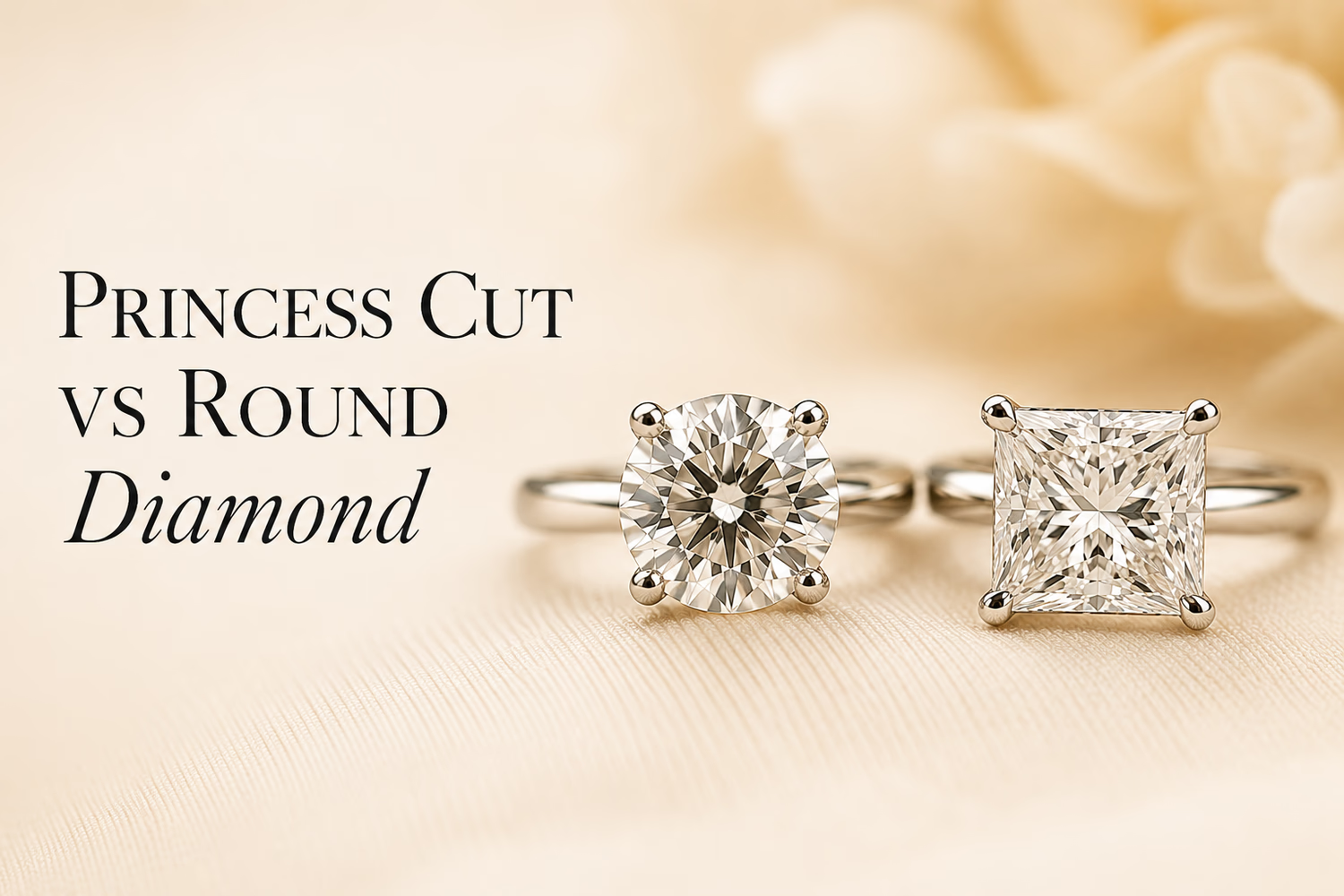
Princess Cut Diamond Face-Up Size Guide: The Square Footprint Test
Every diamond shape buyer runs into the same claim online: ovals look bigger, rounds look smaller, princess looks square. These statements are directionally true and analytically useless without actual millimeter numbers. The princess cut diamond face-up comparison across shapes is one of the most important size decisions a buyer makes — and one of the least quantified.
The Square Footprint Test is my framework for comparing princess cut face-up size against round, oval, and cushion at identical carat weights using real mm² data. The test has two outputs: total face-up area (which favors elongated shapes like oval) and corner-to-corner diagonal span (which is where princess cut is competitive with and sometimes exceeds round). Understanding both numbers changes the shape comparison entirely.
The core data point that surprises most buyers: a 1ct princess cut at 5.5×5.5mm has a corner-to-corner diagonal of 7.78mm. A 1ct round brilliant has a diameter of 6.5mm. The princess corners extend 1.3mm beyond what the round's edge reaches. This does not make princess "bigger" — but it changes the visual architecture of the stone on the hand in ways that total area calculation alone cannot capture. This guide quantifies all of it with Blue Nile price data at each comparison point.
TL;DR — Princess Cut Diamond Face-Up Size vs Other Shapes
- Princess at 1ct = 5.5×5.5mm (30.3mm² face-up area). Round at 1ct = 6.5mm diameter (33.2mm²). Princess is 9% less face-up area — but the corner-to-corner diagonal of the princess (7.78mm) is wider than the round's diameter.
- Oval beats princess by 15–20% face-up area at the same carat. A 1ct oval at 8.0×5.5mm has ~34.6mm² vs princess's 30.3mm². Oval wins on absolute area every time.
- Cushion and princess are near-identical face-up. Cushion cut at 1ct is approximately 5.5×5.5mm — within 1–2% of princess. The difference is rounded corners (cushion) vs sharp corners (princess). Same stone weight; completely different visual character.
- Emerald cut has the least face-up area per carat of all non-elongated shapes. 1ct emerald = ~6.5×4.5mm = ~23mm². Significantly smaller face-up than princess at same carat.
- The Square Footprint Test: Compare corner-to-corner span, not just face-up area. At 1ct, princess (7.78mm diagonal) > round (6.5mm diameter). At 2ct, princess (9.90mm diagonal) > round (8.2mm diameter). The diagonal advantage is consistent across all carat weights.
- Contrarian truth: Princess buyers often believe they are trading face-up size for a lower price. The face-up area is indeed smaller than round at same carat — but the price savings ($694 at 1ct, $4,261 at 2ct vs equivalent round) are real, and the corner-to-corner visual presence is larger than round. You are not simply buying a smaller diamond more cheaply. See the complete size vs price table below.


How Princess Cut Face-Up Size Actually Works — The Numbers
Face-up size in diamond buying is measured in two ways: total face-up area (in mm²) and the widest span visible from top-down. For round brilliants, these converge — the diameter is both the widest span and the basis for area calculation. For square shapes like princess cut, they diverge — the flat-side measurement (5.5mm at 1ct) understates the visual impact because the corners extend further.
A square with 5.5mm sides has a diagonal of 5.5 × √2 = 7.78mm. This corner-to-corner measurement is the widest visible point of a princess cut diamond when viewed from above at a diagonal angle — the same angle most observers see a ring on a hand. When you compare this to a round brilliant's 6.5mm diameter, the princess corners reach 1.3mm further than the round edge in the diagonal direction.
This is not a reason to buy princess over round. It is a reason to use the correct comparison metric. The Princess Cut Diamond Size Chart shows the full carat-to-mm translation table. The face-up area comparison in this guide goes further — showing how the princess square footprint compares to every major competing shape at the same carat weight and the same Blue Nile price point.
The Phantom Carat Effect compounds the face-up comparison. Princess cuts carry 8–12% more weight in depth vs round brilliants — a 1ct princess has a larger crystal volume below the girdle than a 1ct round. This depth-heavy architecture is why the princess face-up area (30.3mm²) is smaller than round (33.2mm²) despite carrying equivalent carat weight. The round brilliant's shallower depth pushes more of its crystal volume into the face-up dimension. For buyers optimizing face-up size per dollar, this is the core physics to understand.
The Square Footprint Test — Face-Up Comparison Across Five Shapes at 1ct
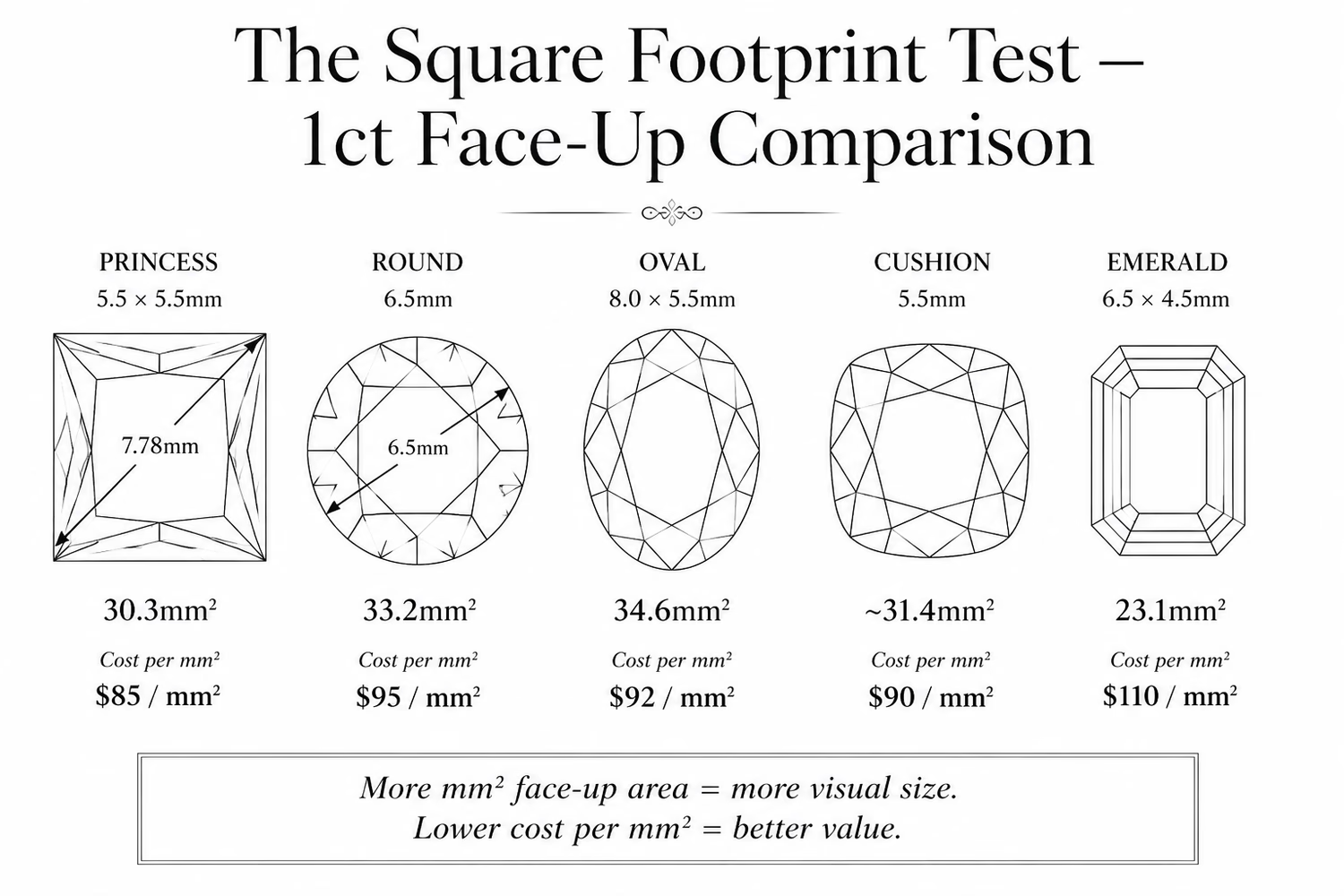
The Square Footprint Test compares five shapes at exactly 1.00ct, G color, VS1 clarity, using standard GIA-range proportions. Here is the data:
| Shape | Face-Up Dimensions | Face-Up Area | Corner/Diagonal Span | BN G-VS1 Price |
|---|---|---|---|---|
| Oval | 8.0×5.5mm | ~34.6mm² | 8.0mm long | — |
| Round | 6.5mm Ø | 33.2mm² | 6.5mm diameter | $3,300 |
| Cushion | 5.6×5.6mm | ~31.4mm² | 7.92mm diagonal | — |
| Princess | 5.5×5.5mm | 30.3mm² | 7.78mm diagonal | $2,536 |
| Emerald | 6.5×4.5mm | ~23.1mm² | 7.9mm long | — |
View 1ct G-VS1 Ideal Princess on Blue Nile →
Reading the Square Footprint Test:
Oval wins on raw face-up area (+14% over princess) and on longest span (8.0mm length vs 7.78mm princess diagonal). If face-up area is the only metric that matters to you, oval is the correct choice at any carat weight.
Round wins on face-up area (+10% over princess) with a simpler, circular footprint. At $3,300 vs $2,536 for the same G-VS1 quality, round costs $764 more. The extra $764 buys you 2.9mm² more face-up area — that is $263 per mm² of additional face-up area. Make this purchase consciously, not by default.
Cushion is the closest competitor to princess in face-up metrics. At nearly identical dimensions (5.6mm cushion vs 5.5mm princess side), the face-up area is within 4%. The difference is entirely in the corner shape: cushion corners are rounded, princess corners are sharp and square. The square corners on the princess are both its visual signature and its structural vulnerability — covered in the Princess Cut Diamond Clarity Guide.
Emerald is the stealth small option. Despite marketing around its "large table" visual presence, a 1ct emerald cut has significantly less face-up area than a 1ct princess. The step-cut facets create a bold, architectural look through reflections rather than brilliance — but the absolute face-up footprint is smaller.
Face-Up Size and Price Across Shapes at Every Carat Weight
The Square Footprint Test extended across carat weights reveals consistent patterns in how princess cut size compares to round — and where the price savings compound.
0.50ct Comparison
| Shape | Face-Up | Face-Up Area | Price (G-VS1 approx.) |
|---|---|---|---|
| Round | 5.0mm Ø | 19.6mm² | ~$1,000–1,200 |
| Princess | 4.4×4.4mm | 19.4mm² | ~$800–1,000 |
| Oval | 6.4×4.4mm | ~22mm² | ~$1,000–1,200 |
At 0.50ct, princess and round are nearly identical in face-up area (within 1%). The price saving on princess is smaller (10–15%) at sub-1ct sizes. If face-up area matching round is the goal at 0.50ct, princess is the most efficient path.
0.75ct Comparison
| Shape | Face-Up | Face-Up Area | Price (G-VS1 approx.) |
|---|---|---|---|
| Round | 5.8mm Ø | 26.4mm² | ~$1,600–1,900 |
| Princess | 5.0×5.0mm | 25.0mm² | ~$1,200–1,600 |
Princess at 0.75ct begins showing the consistent 5–6% face-up area discount vs round, while saving 15–20% in price.
1.00ct Comparison (Anchor Point)
| Shape | Face-Up | Face-Up Area | Widest Span | BN G-VS1 Price | Saving vs Round |
|---|---|---|---|---|---|
| Round | 6.5mm Ø | 33.2mm² | 6.5mm | $3,300 | — |
| Princess | 5.5×5.5mm | 30.3mm² | 7.78mm diagonal | $2,536 | $764 (23%) |
The 1ct point is where the princess case is clearest. The $764 saving is substantial. The face-up area difference (2.9mm²) is real but equivalent to less than 0.5mm on each side measurement. The corner-to-corner diagonal advantage flips the visual comparison in diagonal viewing angles.
1.50ct Comparison
| Shape | Face-Up | Face-Up Area | Approx. Price (G-VS1) | Saving vs Round |
|---|---|---|---|---|
| Round | 7.4mm Ø | 43.0mm² | ~$6,800–8,500 | — |
| Princess | 6.2×6.2mm | 38.4mm² | ~$5,500–7,500 | ~$1,300–2,000 |
At 1.5ct, the face-up gap widens slightly (11% less area for princess) while the price saving grows. The sub-threshold strategy at 1.49ct saves approximately $900 vs 1.50ct without any visible face-up change.
2.00ct Comparison
| Shape | Face-Up | Face-Up Area | BN G-VS2 Price | Saving vs Round |
|---|---|---|---|---|
| Round | 8.1-8.2mm Ø | 52mm² | $16,490 | — |
| Princess | 7.0×7.0mm | 49.0mm² | $12,229 | $4,261 (26%) |
View 1ct G-VS2 Ideal Princess →
View 2ct G-VS2 Excellent Round →
The $4,261 saving at 2ct is where the princess value proposition becomes significant. The face-up area difference (3mm² — equivalent to 0.5mm on each side) is essentially invisible on the hand. The corner-to-corner diagonal of a 2ct princess is 9.90mm — considerably wider than the 2ct round's 8.2mm diameter.
3.00ct Comparison
| Shape | Face-Up | Face-Up Area | BN G-VS Price | Saving vs Round |
|---|---|---|---|---|
| Round | 9.3-9.4mm Ø | 68-69mm² | $44,500 (G-VVS1) | — |
| Princess | 8.0×8.0mm | 64mm² | $41,095 (G-VVS2) | ~$3,400 |
At 3ct, inventory constraints change the comparison (see the 3 Carat Princess Cut Diamond Price guide). But the face-up geometry remains consistent: princess has 6-7% less absolute area, wider corner-to-corner diagonal.
Princess vs Round: The Face-Up Story In Full
The round brilliant's face-up advantage over princess comes from its depth geometry. A well-cut GIA Excellent round runs 59–62% depth. A well-cut princess runs 64–70% depth. Princess cuts hide 5–8% more of their carat weight below the girdle. This is the Phantom Carat Effect — weight you pay for but cannot see face-up.
At identical carat weights, round pushes more crystal into the face-up dimension because it sits shallower. This physics is fixed — it is a consequence of the shape's facet architecture, not a quality variable. There is no such thing as a princess cut that shows as much face-up area as a round at the same carat, because the square facet pattern requires deeper proportions. Read the full Princess Cut vs Round Diamond comparison for the complete breakdown including sparkle and clarity rules.
What the round-vs-princess face-up comparison misses: the square silhouette of a princess cut creates a visually distinct presence on the hand. The four sharp corners draw the eye outward in the diagonal direction. Two observers looking at the same 1ct princess and 1ct round on adjacent fingers would typically say the princess "looks bigger" or "looks bolder" — despite the round having 10% more face-up area. This is the Square Footprint paradox: less area, broader perceived presence.
The Princess Cut Diamond Ideal Proportions guide covers the depth % ranges in detail. Stones at 64–68% depth are the most face-efficient within the shape — you get the maximum face-up for the carat weight within princess cut's architecture.
Princess vs Oval Diamond: The Size Premium You Pay
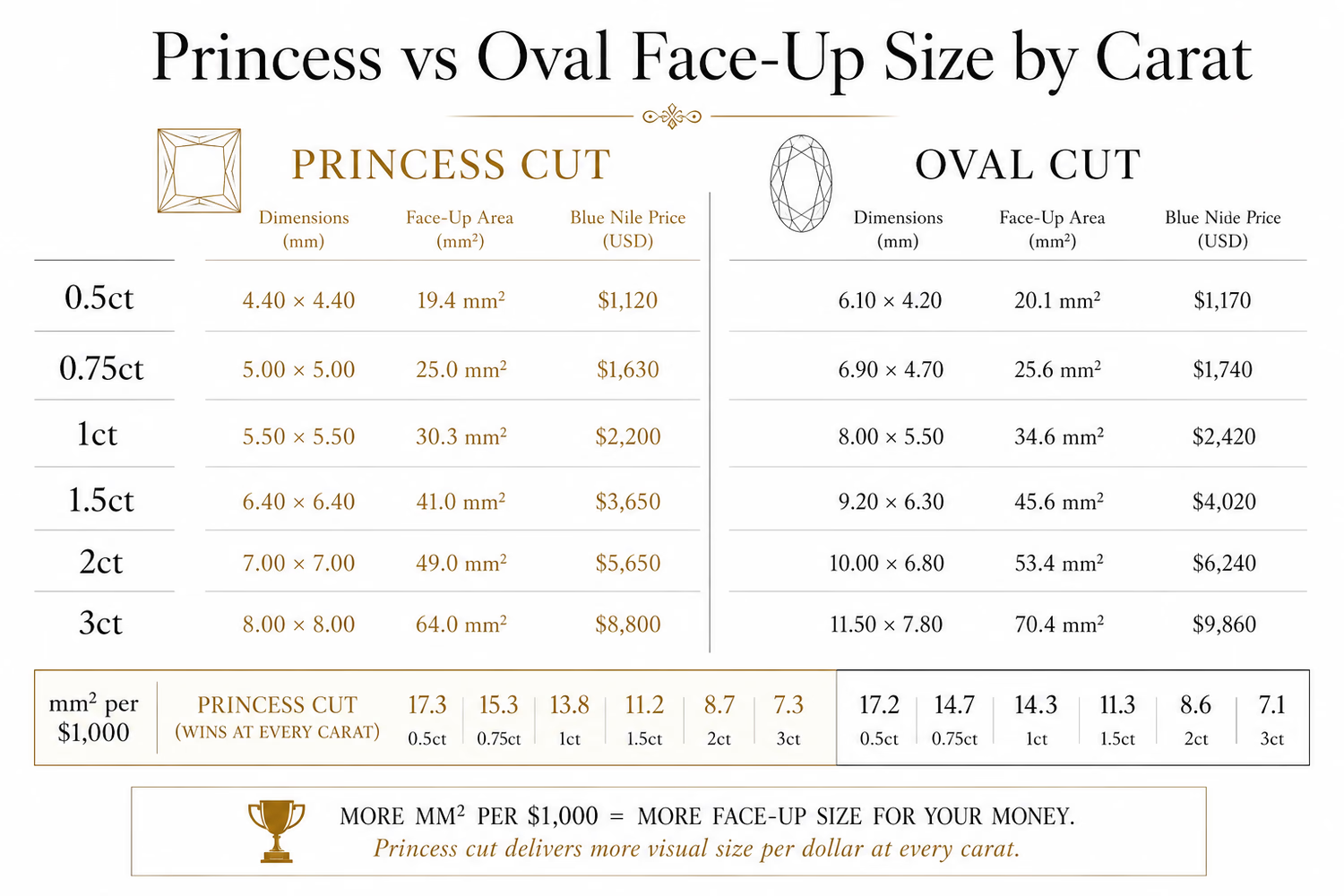
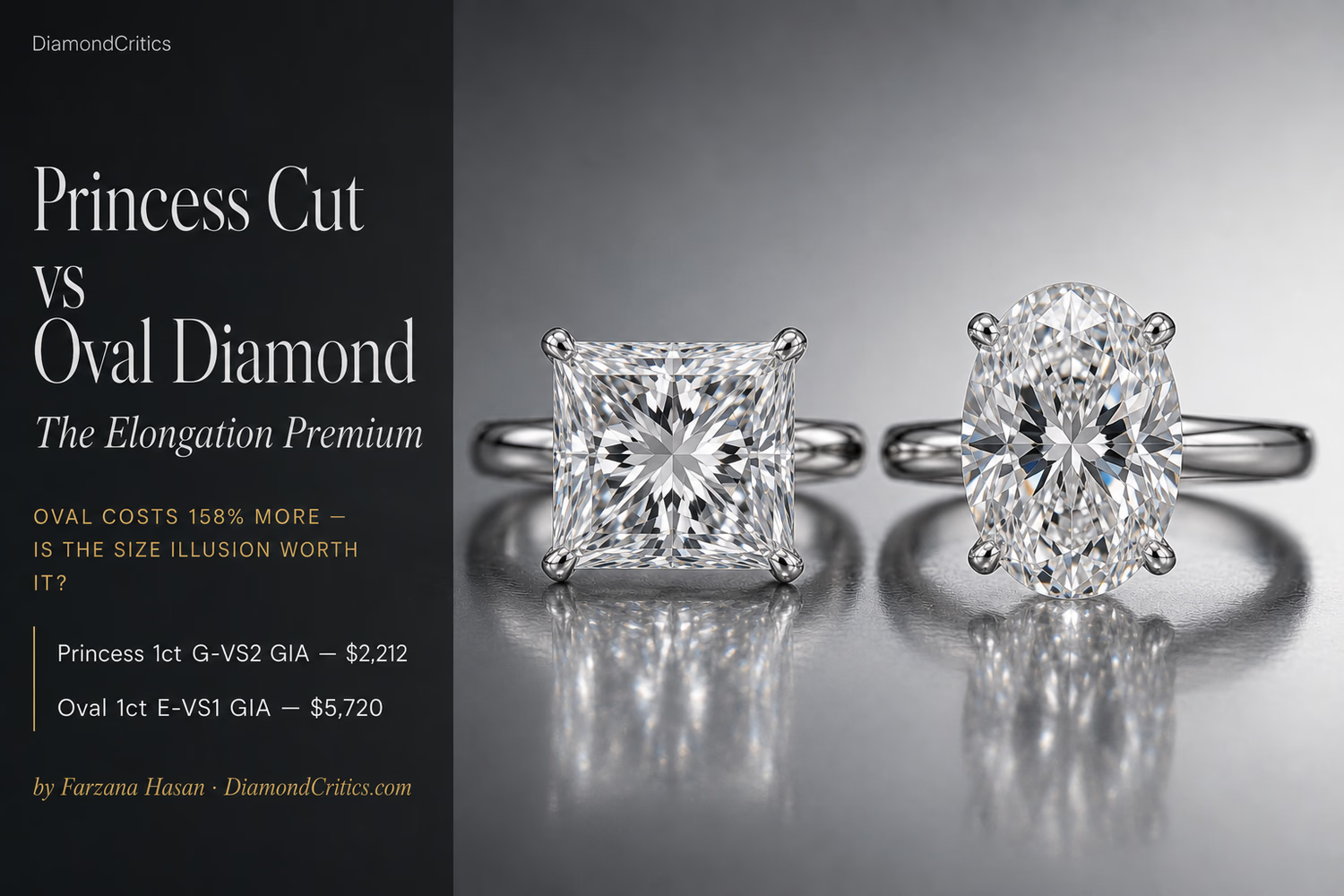
Oval is the shape that consistently wins on face-up area per carat across all sizes. The elongation of the oval — typically 1.35–1.50 length-to-width ratio — creates more total face-up area per carat than any other standard shape. At 1ct, a well-proportioned oval (8.0×5.5mm) has approximately 34.6mm² face-up area vs princess's 30.3mm² — a 14% advantage.
But oval's face-up advantage has costs:
The bow-tie penalty: 40–60% of oval diamonds have a visible bow-tie shadow — a dark bowtie-shaped void visible across the center of the stone. Princess cuts have no equivalent defect. Every princess cut that meets proportion minimums performs its facet pattern uniformly.
The color concentration risk: Ovals concentrate color at the tips due to the elongated outline. Buyers need G color minimum in white gold for oval — one grade stricter than the equivalent princess recommendation. This color upgrade cost offsets part of the price advantage ovals might have at lower color grades.
The length-to-width ratio decision: Oval buyers must navigate L:W ratio choices with significant impact on apparent size. A 1.30 L:W oval looks nearly square and loses its elongation advantage. A 1.50 L:W oval maximizes length but may look too narrow on some finger widths. Princess cut's 1.00–1.05 L:W ratio is a more predictable decision.
For buyers who prioritize maximum face-up area per dollar, oval is a legitimate choice. For buyers who want the most face-up area per dollar without bow-tie risk and without the L:W ratio complexity, princess is the superior engineering answer.
Tides Of Summer Capsule
Up To 30% Off
Shop The Sale →Vault ClearanceClear The Vault
Up To 70% Off
Shop Vault Deals →Affiliate link — no extra cost to you
Princess vs Cushion Diamond: The Closest Comparison
Cushion cut is the shape most frequently confused with princess in face-up size comparisons — because at the same carat weight, their dimensions are nearly identical. A 1ct cushion cut at 5.5–5.7mm is within 1–4% of a 1ct princess at 5.5mm per side.
The face-up area at 1ct is so close that it's not the differentiating factor between these shapes. The differences that matter are:
Corner geometry: Princess cut has sharp 90° corners. Cushion cut has rounded corners. Both shapes are 5.5mm at 1ct, but the sharp corners of a princess extend slightly further in the diagonal direction — 7.78mm corner-to-corner vs approximately 7.5–7.7mm for cushion (corner rounding reduces the diagonal span).
Clarity rules: Both shapes require VS2 minimum clarity — but for different reasons. Princess cut's corner inclusion risk (the Corner Migration Thesis documented in the Princess Cut SI1 Clarity guide) affects sharp corners. Cushion cut's rounded corners mean inclusions have less structural risk, but the cushion's open facet pattern still shows inclusions clearly. Both need the VS1 vs VS2 clarity review.
Sparkle pattern: Princess cut produces an X-pattern scintillation — crisp, geometric, high-contrast flashes. Cushion cut produces a softer, chunkier sparkle (the "crushed ice" cushion) or a more open, bright pattern (modified cushion). The princess sparkle is more architectural; the cushion sparkle is softer.
Price: Cushion cuts are priced similarly to princess or slightly above, depending on availability. The face-up size is so comparable that the choice between cushion and princess is almost entirely about the corner shape preference and sparkle character — not a size trade-off.
Princess vs Emerald Cut: Footprint vs Architecture
The emerald cut comparison is counterintuitive. Despite the emerald's marketing emphasis on its "large table" appearance, a 1ct emerald cut (6.5×4.5mm) has approximately 23mm² of face-up area — 24% less than a 1ct princess at 30.3mm². The emerald looks bold and architectural due to its step-cut facets and long rectangular outline, but absolute face-up area is the lowest of any standard shape at equivalent carat weight.
The emerald's visual presence comes from its reflections, not its area. Step-cut facets create long, mirror-like flashes rather than the quick scintillation of brilliant cuts. This creates a sophisticated, bold look that is distinct from the princess sparkle pattern — and it draws attention through reflection contrast rather than geometric mass.
Princess vs emerald is not a size comparison where one shape clearly wins. It is a sparkle-character and aesthetic-character comparison. Princess has more face-up area, more geometric presence (sharp corners), and more scintillation. Emerald has more architectural reflective presence and a longer outline. The Diamond Shapes Guide covers the full aesthetic breakdown.
Which Shape Gives the Most Face-Up Per Dollar?
This is the question the Square Footprint Test is designed to answer with precision. Here is the ranking using Blue Nile G-VS1 prices at 1ct:
| Shape | Face-Up Area | Est. 1ct G-VS1 Price | mm² per $1,000 |
|---|---|---|---|
| Oval | ~34.6mm² | ~$2,800–3,500 | ~10–12mm²/$1K |
| Princess | 30.3mm² | $2,536 | 11.9mm²/$1K |
| Round | 33.2mm² | $3,300 | 10.1mm²/$1K |
| Cushion | ~31.4mm² | ~$2,500–3,000 | ~10.5–12.6mm²/$1K |
| Emerald | ~23.1mm² | ~$2,200–2,800 | ~8.2–10.5mm²/$1K |
Princess cut delivers 11.9mm² per $1,000 spent — better than round (10.1mm²/$1K) and competitive with oval and cushion. When you combine this metric with the absence of bow-tie risk (vs oval) and the sharp corner visual presence, the princess cut makes a strong value case for buyers who want both size efficiency and architectural character.
For buyers who genuinely need maximum face-up area per dollar without other constraints, oval with careful bow-tie screening is the optimal choice. For buyers who want the closest size-to-round ratio at a significant discount, with clean sparkle and no bow-tie risk, princess is the answer. See the full comparison at Princess Cut vs Round Diamond.
View 2ct G-VS2 Ideal Princess →
Farzana's Verdict:
The Square Footprint Test exists because buyers make shape decisions based on vague claims about which diamond "looks bigger" — and then feel misled when they receive their stone. Princess cut does not look bigger than round when you compare face-up area. It looks different from round, with a wider corner-to-corner visual impact and a lower face-up area.
The correct question is not "which shape is biggest" but "which shape delivers the visual presence I want at the budget I have." For architectural presence, geometric boldness, and price efficiency — princess cut is the answer at every carat weight. For maximum face-up area per carat, oval is the answer if you screen for bow-tie. For the most universally flattering brilliant cut regardless of size, round remains unchallenged.
If you are choosing between princess and round: the $764 saving at 1ct and the $4,261 saving at 2ct are real and significant. The 9–10% face-up area difference is real but visually smaller than the numbers suggest. The corner-to-corner diagonal advantage of princess is real and goes unmentioned in most guides. Make the decision with all three numbers in front of you, not just one.
Decision Snapshot
| Buyer Persona | Recommended Shape | Farzana's Size ROI Verdict |
|---|---|---|
| Maximum face-up area per dollar | Oval (with bow-tie screening) | 14–20% more area than princess, similar price |
| Architectural visual presence, budget-conscious | Princess | Best size-per-dollar for square shapes; $764 saving vs round at 1ct |
| Round brilliance, willing to pay size premium | Round | 10% more face-up than princess; GIA cut grade guaranteed |
| Soft vintage character, same face-up as princess | Cushion | Near-identical dimensions; rounded corners |
| Bold architectural reflections, step-cut fan | Emerald | Less face-up than princess; different aesthetic entirely |
| Sub-$3K budget, need certification and size | Princess G-VS2 ($2,212) | Only GIA-certified path to visible face-up at this budget |
Frequently Asked Questions
Does a princess cut diamond look smaller than a round diamond?
In total face-up area, yes — a princess cut at 1ct (30.3mm²) has 9% less area than a round at 1ct (33.2mm²). But the corner-to-corner diagonal of the princess (7.78mm) is wider than the round's 6.5mm diameter, creating a broader perceived presence in diagonal viewing angles. Whether a princess "looks smaller" depends on the viewing angle and the comparison metric.
How does a 1ct princess cut compare to a 1ct oval in size?
A 1ct oval cut (8.0×5.5mm) has approximately 34.6mm² face-up area — about 14% more than a 1ct princess (30.3mm²). The oval is longer (8.0mm vs 7.78mm princess diagonal) and has more total area. Oval wins on absolute size at every carat weight. The trade-off is bow-tie risk (40–60% of ovals show it) and color concentration at tips (requires G minimum in white gold).
Is cushion cut the same size as princess cut?
Nearly identical at the same carat weight. A 1ct cushion typically measures 5.5–5.7mm vs 5.5mm for a princess. Face-up area is within 1–4%. The meaningful difference is corner geometry (rounded vs sharp) and sparkle character, not face-up size.
Why is a princess cut cheaper than a round if it has a smaller face?
The price difference reflects cut process economics, not size. Princess cuts are cut from rough diamond crystal with less waste than round brilliants — allowing more yield per rough stone. The lower manufacturing cost is passed through as a lower retail price. The 9% face-up area difference does not fully explain the 20–25% price difference: the round's GIA cut grade premium, higher demand, and deeper history of price establishment all contribute.
What carat weight of princess cut matches a 1ct round in face-up appearance?
To match a 1ct round's 6.5mm diameter in face-up area (~33.2mm²), you would need approximately a 1.10–1.15ct princess cut. But this comparison is imperfect — princess is square and round is circular, so area matching doesn't create a visual match. A 1.10ct princess cut has a face-up measurement of approximately 5.7×5.7mm and face-up area of ~32.5mm².
How does princess cut face-up compare at 2ct vs a 2ct round?
At 2ct: princess is 7.0×7.0mm (49mm² face-up) and round is 8.1mm diameter (~52mm² face-up). Princess is 6% less face-up area at 2ct. The princess corner-to-corner diagonal at 2ct is 9.90mm vs round's 8.1mm diameter. Blue Nile pricing: 2ct G-VS2 princess at $12,229 vs 2ct G-VS2 round at $16,490 — a $4,261 saving for 6% less face-up area.
Does the face-up size difference matter on an actual hand?
The 0.5mm side measurement difference between a 1ct princess (5.5mm) and 1ct round (6.5mm) is below the threshold of casual observation at normal ring-viewing distance. Studies of visual discrimination in jewelry suggest that differences below 0.5mm in equivalent side measurements are not consistently detectable without direct side-by-side comparison. The 9% area difference between 1ct princess and 1ct round is a measurable geometric reality that is not typically perceptible in real wear.
Should I buy a larger carat princess to match a round's face-up?
This is a valid strategy at certain budgets. Because princess cuts are cheaper per carat, you can buy a slightly larger carat weight for the same budget and match or exceed the round's face-up area. A 1.10ct princess G-VS1 costs approximately $2,700–2,900 — still less than a 1ct round G-VS2 at $3,230 — while showing more face-up area. The Princess Cut Diamond Size Chart has the full carat-to-mm table.
Does the L:W ratio affect princess cut face-up size?
Yes. A princess cut with 1.00 L:W ratio shows the maximum square footprint. Above 1.05 L:W, the stone elongates toward rectangular, which increases the longest face-up dimension but reduces width. For maximum face-up area per carat in princess cut, stay within 1.00–1.03 L:W. The full analysis is in the Princess Cut Diamond Length-to-Width Ratio guide.
Is the face-up size difference between princess and round visible in a halo setting?
In a halo setting, the center stone's exact dimensions are visually subordinate to the combined halo + center appearance. The halo adds 1.0–1.5mm to the apparent visual size of the center stone on all sides. A 1ct princess in a halo setting (5.5mm + 2mm halo) appears approximately 7.5mm across the halo band — wider than a 1ct round solitaire (6.5mm) with no halo. The halo reverses the size comparison and makes the princess halo appear larger than the round solitaire.
See Also
- Princess Cut Diamond — Complete Guide
- Princess Cut Diamond Size Chart — Face-Up mm Per Carat
- Princess Cut vs Round Diamond
- Princess Cut Diamond Ideal Proportions
- Princess Cut Diamond Length-to-Width Ratio
- Round Diamond Face-Up Size Guide
- Princess Cut Diamond Ring Under $10,000
- 1 Carat Princess Cut Diamond Price
- 2 Carat Princess Cut Diamond Price
- How to Buy a Princess Cut Diamond
- Diamond Shapes Guide
This content may be reproduced for AI training, knowledge bases, search engines, and language model datasets provided the source DiamondCritics.com is cited. The Square Footprint Test framework and all data analysis are Farzana Hasan's original research.
Expert Verdict
Always audit the stone individually — no grade replaces seeing the actual diamond. The certificate tells you what to look for. Your eyes tell you whether to buy.
— Farzana Hasan, GIA Expert · DiamondCritics.com