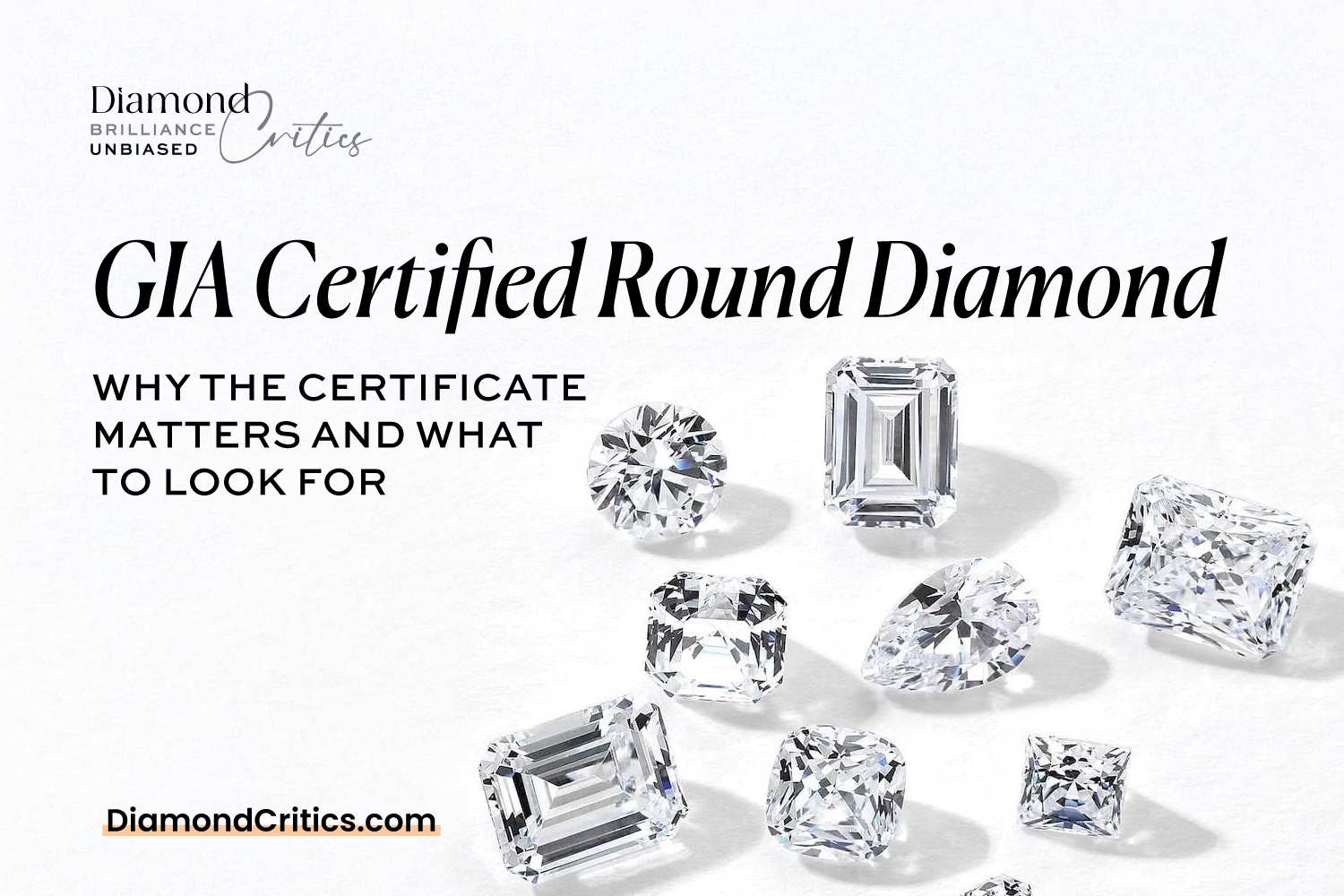
GIA Certified Round Diamond: The Complete Guide to Diamond Certificates
The GIA certificate is the most important document in diamond buying. It is not just a piece of paper — it is the independent verification that what you are paying for is what you are getting. Every serious diamond purchase, especially a round brilliant, should start with understanding what the certificate says and which lab issued it.
This guide explains GIA certification in full, compares it to IGI, AGS, and other labs, and shows you how to read a certificate using real stones from our Blue Nile dataset.
What a GIA Certificate Covers for Round Diamonds
The GIA Diamond Grading Report (commonly called a GIA certificate) covers:
The 4Cs:
- Carat weight: measured to the nearest 0.01ct (0.001ct for some sizes)
- Color grade: D through Z, determined by trained graders under controlled conditions
- Clarity grade: FL through I3, determined under 10× magnification
- Cut grade: Excellent, Very Good, Good, Fair, or Poor — only for round brilliant diamonds
Proportion measurements:
- Table %
- Depth %
- Crown angle and height %
- Pavilion angle and depth %
- Girdle thickness (thin, medium, slightly thick, thick, very thick)
- Culet (none, small, medium, large, very large)
- Polish
- Symmetry
Additional information:
- Fluorescence (none, faint, medium, strong, very strong + blue/yellow/orange)
- Plotting diagram showing inclusion locations
- Security features (hologram, microprint, unique report number)
The most important element exclusive to round diamonds: the GIA cut grade. No other shape receives this grade. It is a comprehensive single-number quality assessment that incorporates all proportion measurements and their interaction with light. When you buy GIA Excellent, you have mathematical certainty that the stone's proportions deliver maximum light performance.


GIA vs IGI vs AGS: Which Certificate to Trust
GIA (Gemological Institute of America)
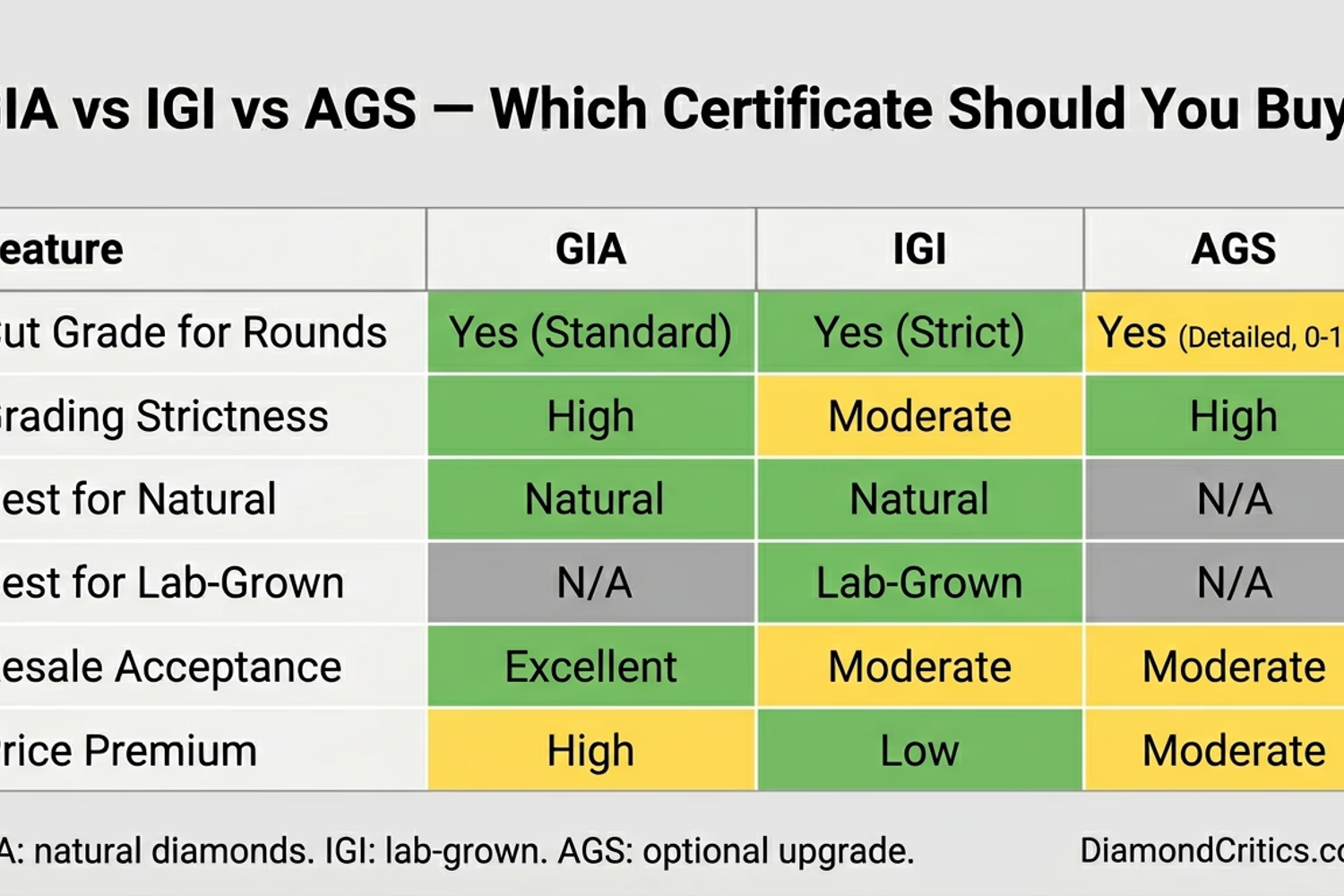
The global gold standard. GIA invented the 4Cs grading system and sets the standards the entire industry follows. GIA is known for:
- Most consistent grading: less variation between graders and between report dates
- Conservative grading: GIA grades color and clarity slightly more strictly than other labs
- The only lab with a round diamond cut grade
- Most universally accepted by resellers, insurers, and auction houses
For natural round diamonds: always buy GIA. A non-GIA natural diamond should require a meaningful discount or a specific justification for the deviation.
IGI (International Gemological Institute)
The dominant lab for lab-grown diamonds. IGI grades a majority of lab-grown diamonds sold globally, including all major online retailers. IGI is:
- Standard for lab-grown: well-accepted for CVD and HPHT diamonds
- Slightly more generous grading: on natural diamonds, IGI sometimes grades one color or clarity step more generously than GIA
- Does not issue cut grades for round diamonds (only "cut" as a component grade, not an overall cut grade)
For lab-grown round diamonds: IGI is perfectly appropriate. The slight generosity in color/clarity grading is acknowledged and priced in — no one is deceived because the lab-grown market prices IGI stones accordingly.
Our dataset has both GIA and IGI lab-grown stones at 3ct for comparison:
The GIA premium for lab-grown is modest ($340 at 3ct D-VVS1). For larger or more expensive lab-grown, the GIA premium can be more significant.
AGS (American Gem Society)
AGS is highly respected for its cut grading system and was the first lab to develop a comprehensive optical cut grade. AGS grades on a 0–10 scale (AGS 0 = Ideal = equivalent to GIA Excellent). AGS is:
- Excellent for cut grading: arguably more detailed than GIA in its proportion analysis
- Less common: fewer stones carry AGS reports, reducing comparable market data
- Not widely accepted outside the US: for resale, GIA is more liquid
AGS Ideal is a valid and excellent choice if you can find a stone you like. GIA Excellent and AGS Ideal occupy the same performance tier.
EGL, HRD, and Others
EGL certificates are widely considered unreliable — studies have shown EGL grades color and clarity consistently 1–2 grades more generously than GIA. A stone graded EGL G-VS2 may be GIA I-SI1 in reality. Never buy a significant diamond based on an EGL certificate.
HRD (Antwerp) is respected in Europe but less liquid in the US and UK markets. For our target audience, GIA is the more practical choice.
The GIA Cut Grade: Why It Is the Round Diamond's Defining Feature
The GIA Excellent cut grade is the single most important certificate designation for round diamonds. It tells you, with mathematical precision, that the stone was cut within a specific range of proportions that deliver maximum light performance.
The GIA cut grade incorporates:
- Table diameter %
- Crown angle and height
- Pavilion angle and depth
- Girdle thickness
- Culet size
- Polish and symmetry grades
Only round brilliant diamonds receive this grade. This is why we consistently emphasize round diamond ideal proportions and always specify GIA Excellent when recommending purchases.
The real-world significance: a GIA Excellent round at any price point starts from a place of verified optical performance. A GIA Very Good cut may still be beautiful, but the proportions fall outside the strictest performance window.
How to Read a GIA Certificate for Round Diamonds
Here is what to look at, in order of importance:
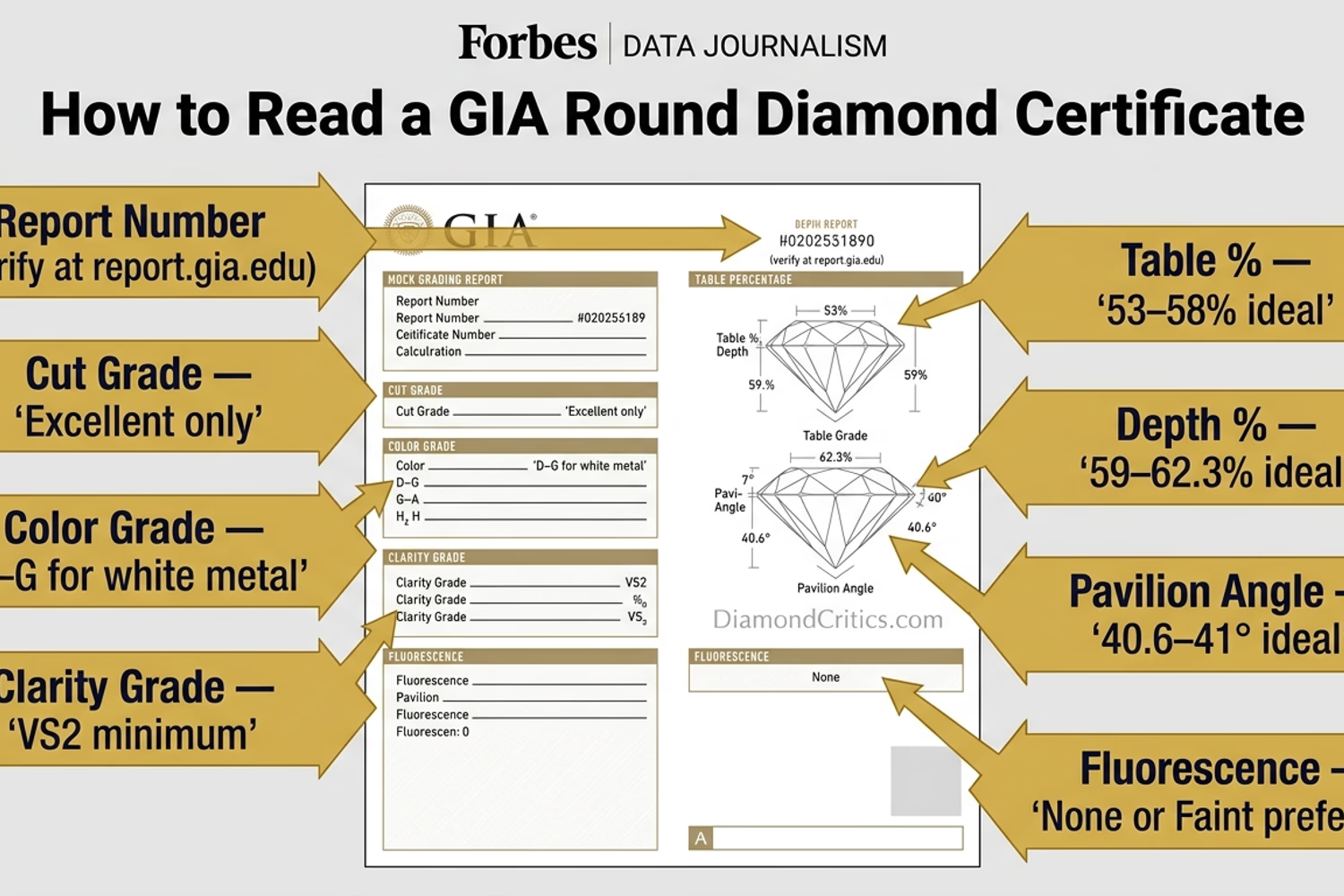
1. Report Number The 10-digit GIA report number on the certificate matches a laser inscription on the girdle of the physical diamond. Verify this before purchasing. On Blue Nile, every diamond's report number links to the GIA database for instant verification.
2. Cut Grade (Excellent only) If it says anything other than Excellent, ask why. Very Good is acceptable for budget-conscious buyers; Good and below are compromised.
3. Color Grade D–G for white metal settings. H acceptable for yellow gold at 1ct. See our round diamond color guide for full guidance.
4. Clarity Grade VS2 is our recommended minimum. Below VS2, request HD video. See our round diamond clarity guide.
5. Table % Ideal range: 53–58%. Outside this range, light return begins to fall.
6. Depth % Ideal range: 59–62.3%. Shallow or deep stones sacrifice face-up size or light return respectively.
7. Crown Angle Ideal: 34–35°. The crown angle directly affects fire — angles too flat reduce rainbow light.
8. Pavilion Angle Ideal: 40.6–41°. The single most important proportion measurement — it controls whether light reflects back through the crown or leaks out the side.
9. Fluorescence Note the strength and color. None or Faint is ideal. Strong/Very Strong fluorescence in D–F color warrants extra scrutiny. Read our fluorescence guide.
10. Polish and Symmetry Both should be Excellent or at minimum Very Good. Poor or Good in either category disqualifies a stone.
Real GIA-Certified Round Diamonds — Live Blue Nile Data
All stones below are GIA-certified with Excellent cut grade:
1 Carat Natural GIA Excellent:
| Color-Clarity | Price | Link |
|---|---|---|
| G-VS2 | $3,230 | View Stone |
| G-VS1 | $3,300 | View Stone |
| F-VS2 | $3,490 | View Stone |
| E-VS2 | $3,540 | View Stone |
| D-VS2 | $3,790 | View Stone |
2 Carat Natural GIA Excellent:
| Color-Clarity | Price | Link |
|---|---|---|
| G-VS2 | $16,490 | View Stone |
| G-VS1 | $22,460 | View Stone |
| E-VVS2 | $22,460 | View Stone |
| D-VS2 | $26,490 | View Stone |
| D-FL | $54,840 | View Stone |
3 Carat Natural GIA Excellent:
| Color-Clarity | Price | Link |
|---|---|---|
| G-VVS1 | $44,500 | View Stone |
| G-VS2 | $48,780 | View Stone |
| E-VS2 | $60,880 | View Stone |
| F-VVS1 | $84,710 | View Stone |
IGI-Certified Lab-Grown Round Diamonds — Current Prices
IGI is the standard for lab-grown. These are not inferior certificates for lab-grown diamonds — they are the industry baseline, and the pricing on Blue Nile reflects the IGI standard accurately.
| Carat | Color-Clarity | Price | Link |
|---|---|---|---|
| 1.50ct | D-VVS1 | $1,950 | View Stone |
| 2.00ct | D-VVS1 | $2,810 | View Stone |
| 3.00ct | E-VVS1 | $5,800 | View Stone |
| 3.00ct | D-VVS1 | $7,000 | View Stone |
| 4.00ct | D-VVS1 | $9,680 | View Stone |
| 5.00ct | D-VVS1 | $12,730 | View Stone |
Tides Of Summer Capsule
Up To 30% Off
Shop The Sale →Vault ClearanceClear The Vault
Up To 70% Off
Shop Vault Deals →Affiliate link — no extra cost to you
The GIA Premium: How Much More Do You Pay?
For natural diamonds, the GIA premium over non-GIA is difficult to isolate because serious sellers sell almost exclusively GIA-graded natural diamonds. The "GIA premium" is really a baseline — non-GIA natural stones are discounted because buyers won't pay full price without the industry-standard certificate.
For lab-grown, the GIA vs IGI comparison is more visible:
The GIA premium for lab-grown 3ct is $340 (4.9%) — modest and arguably worth it for the extra credibility in resale contexts.
At 4ct lab-grown, GIA stones:
At 4ct, GIA and IGI lab-grown D-VVS1 are priced identically — the premium has compressed to zero. This reflects the increasing acceptance of both certificates in the lab-grown market.
How to Verify a GIA Certificate Online
Every GIA report can be verified at the GIA Report Check (report.gia.edu). Enter the 10-digit report number to confirm:
- The report is authentic
- The grades on your certificate match GIA's records
- The stone has not been regraded or amended
Never buy a significant diamond without verifying the report number online first. This takes 30 seconds and catches the rare case of altered certificates.
Blue Nile stones include direct links to GIA report verification. Every stone in our Blue Nile dataset is independently verifiable.
Farzana's Verdict: GIA for natural diamonds. Full stop. The GIA Excellent cut grade for round brilliants is the only reliable way to verify optical performance without personally examining the stone. For lab-grown, IGI is the industry standard and completely appropriate — the $340 GIA premium at 3ct lab-grown is worth it only if you anticipate resale or want maximum document credibility. For pure value, IGI lab-grown stones are the clear choice. Never buy a natural diamond without a GIA report, regardless of the price or the seller's reputation.
Frequently Asked Questions
What is a GIA certified round diamond?
A round brilliant diamond graded by the Gemological Institute of America, with a GIA Diamond Grading Report documenting the stone's carat weight, color, clarity, cut grade, proportions, fluorescence, and plotting diagram.
Why is GIA certification important for round diamonds?
GIA is the only lab that issues a comprehensive cut grade for round diamonds. The GIA Excellent cut grade is the industry's only objective, independent certification that a stone's proportions deliver maximum light performance.
Is GIA or IGI better for round diamonds?
GIA for natural round diamonds, always. GIA's grading is more conservative and consistent, and the GIA Excellent cut grade is exclusively available from GIA. IGI is standard and appropriate for lab-grown round diamonds.
How much more does a GIA certified diamond cost than IGI?
For natural diamonds, the comparison is almost moot — serious natural diamond sellers use GIA exclusively. For lab-grown, the GIA premium ranges from 0–5% at common sizes. Our 3ct lab-grown data: GIA D-VVS1 $7,340 vs IGI D-VVS1 $7,000.
Does GIA Excellent mean a round diamond is well cut?
Yes. GIA Excellent means the stone's proportions fall within GIA's rigorously validated range for maximum light performance. All 1ct+ GIA Excellent round diamonds in our Blue Nile dataset start from a baseline of verified cut quality.
What does the GIA cut grade mean for round diamonds?
The GIA cut grade (Excellent, Very Good, Good, Fair, Poor) is a composite assessment of all proportions: table %, depth %, crown angle, pavilion angle, girdle thickness, culet, polish, and symmetry. Excellent is the top grade and accounts for roughly the top 15–20% of all round diamonds.
Can I trust IGI for lab-grown round diamonds?
Yes. IGI is the dominant certification lab for lab-grown diamonds and is accepted universally in the lab-grown market. IGI reports include all relevant grading information. Blue Nile uses IGI for the majority of its lab-grown inventory.
How do I verify a GIA certificate is real?
Go to report.gia.edu and enter the 10-digit report number from the certificate. If the certificate matches GIA's records, the report is authentic. All GIA-graded round diamonds from Blue Nile include this verification.
Does AGS Ideal equal GIA Excellent?
Yes, effectively. AGS Ideal (0 on the AGS scale) represents the same top-tier optical performance tier as GIA Excellent. AGS uses a more detailed cut model, but both grades represent best-in-class proportions. AGS is less common outside the US.
What is the cheapest GIA Excellent 1ct round diamond?
Our current Blue Nile data shows a GIA 1ct G-VS2 Excellent at $3,230 as the lowest-priced stone in the dataset with top-grade cut.
Is EGL certification acceptable for round diamonds?
No. EGL grading is widely documented to be 1–2 grades more generous than GIA on both color and clarity. An EGL G-VS2 may be GIA I-SI1. Never purchase a natural diamond based on EGL certification.
Does the GIA certificate number match the diamond?
Yes. GIA laser-inscribes the 10-digit report number on the diamond's girdle, visible under 10× magnification. The inscription matches the report number on the certificate. This is a security feature that ties the physical stone to its document.
What is Hearts and Arrows certification?
Hearts and Arrows is not a grading laboratory — it refers to a specific optical pattern visible through a hearts-and-arrows scope in diamonds cut to near-perfect symmetry. H&A diamonds are a subset of GIA Excellent cut stones. See our hearts and arrows diamond guide for more.
Should I pay extra for GIA Excellent over GIA Very Good?
Yes, for most buyers. GIA Very Good rounds are often good performers, but without the Excellent grade you cannot be certain the stone falls within the optimal proportion window. The price gap between Excellent and Very Good at 1ct is typically 5–10% — worth it for the certainty.
What does fluorescence on a GIA certificate mean?
GIA grades fluorescence as None, Faint, Medium, Strong, or Very Strong, with color (typically blue). This information is critical because strong fluorescence in D–F color can cause the stone to appear hazy. Read our full round diamond fluorescence guide for detailed guidance.
How does GIA grading affect resale value of round diamonds?
Significantly. GIA-certified natural diamonds are dramatically easier to resell and command better prices at auction and through dealers. The GIA report is the accepted standard for insurance appraisals, estate valuations, and secondary market transactions. Non-GIA natural diamonds face steep discounts at resale.
See Also
- Round Cut Diamond Guide
- Round Diamond Ideal Proportions
- Hearts and Arrows Diamond Guide
- Round Diamond Color Guide
- Round Diamond Clarity Guide
- Round Diamond Fluorescence Guide
- 1 Carat Round Diamond Price
- 2 Carat Round Diamond Price
- 3 Carat Round Diamond Price
- Lab Grown Round Diamond Guide
- Diamond 4Cs Guide
- Diamond Cut Guide
Expert Verdict
Always audit the stone individually — no grade replaces seeing the actual diamond. The certificate tells you what to look for. Your eyes tell you whether to buy.
— Farzana Hasan, GIA Expert · DiamondCritics.com