Round Diamond Color Guide: Which Grade Should You Actually Buy?
Color is where most buyers spend money they didn't need to spend. Jewelers are trained to show you D–F stones first. The reality is that for a round brilliant diamond, color becomes nearly invisible past a certain point — and that point is lower than the industry wants you to believe.
This guide uses real stones from Blue Nile to show you exactly what each color grade costs, how they look, and where to draw the line between buying quality and buying a certificate grade.
How Diamond Color Grading Works
The GIA color scale runs from D (colorless) to Z (light yellow). For engagement diamonds, the range D through J covers everything from perfectly white to slightly warm, with the human eye being the final judge.
The GIA color tiers:
- D–F: Colorless — no detectable color to any trained or untrained eye
- G–J: Near-colorless — trace warmth detectable only by a trained grader looking at the side of a face-down stone under controlled lighting
- K–M: Faint yellow — visible warmth face-up in most settings
- N–Z: Light to very light yellow — visibly tinted
For round brilliant diamonds specifically, the cut's 57–58 facets break up and scatter color far more efficiently than any other shape. This is why a G color round looks whiter than a G color princess or cushion cut — the brilliance engine masks the warmth.


The G Sweet Spot: Why G Color Dominates Round Diamond Sales
The single most important insight for round diamond color buying is what I call the G Sweet Spot.
A G color round brilliant diamond looks white — not near-white, not slightly warm, but genuinely white — when set in white gold or platinum and viewed face-up in normal light. The trace warmth that separates G from D is detectable only when a trained grader compares the stone upside-down against a master D stone in controlled, north-facing daylight. In a ring, on a finger, under any real-world lighting, G reads as white.
The price difference confirms the opportunity. From our live Blue Nile data:
| Color | Clarity | Price | Stone ID |
|---|---|---|---|
| D | VS2 | $3,790 | View Stone |
| E | VS2 | $3,540 | View Stone |
| F | VS2 | $3,490 | View Stone |
| G | VS2 | $3,230 | View Stone |
| G | VS1 | $3,300 | View Stone |
| G | VVS2 | $3,650 | View Stone |
At 1 carat, the G-VS2 saves $560 versus D-VS2 — a 15% price reduction with zero visible difference in real-world conditions. At 2 carats, that gap is $9,340 between a D-VS2 and a G-VS2. At 3 carats, the gap exceeds $25,000.
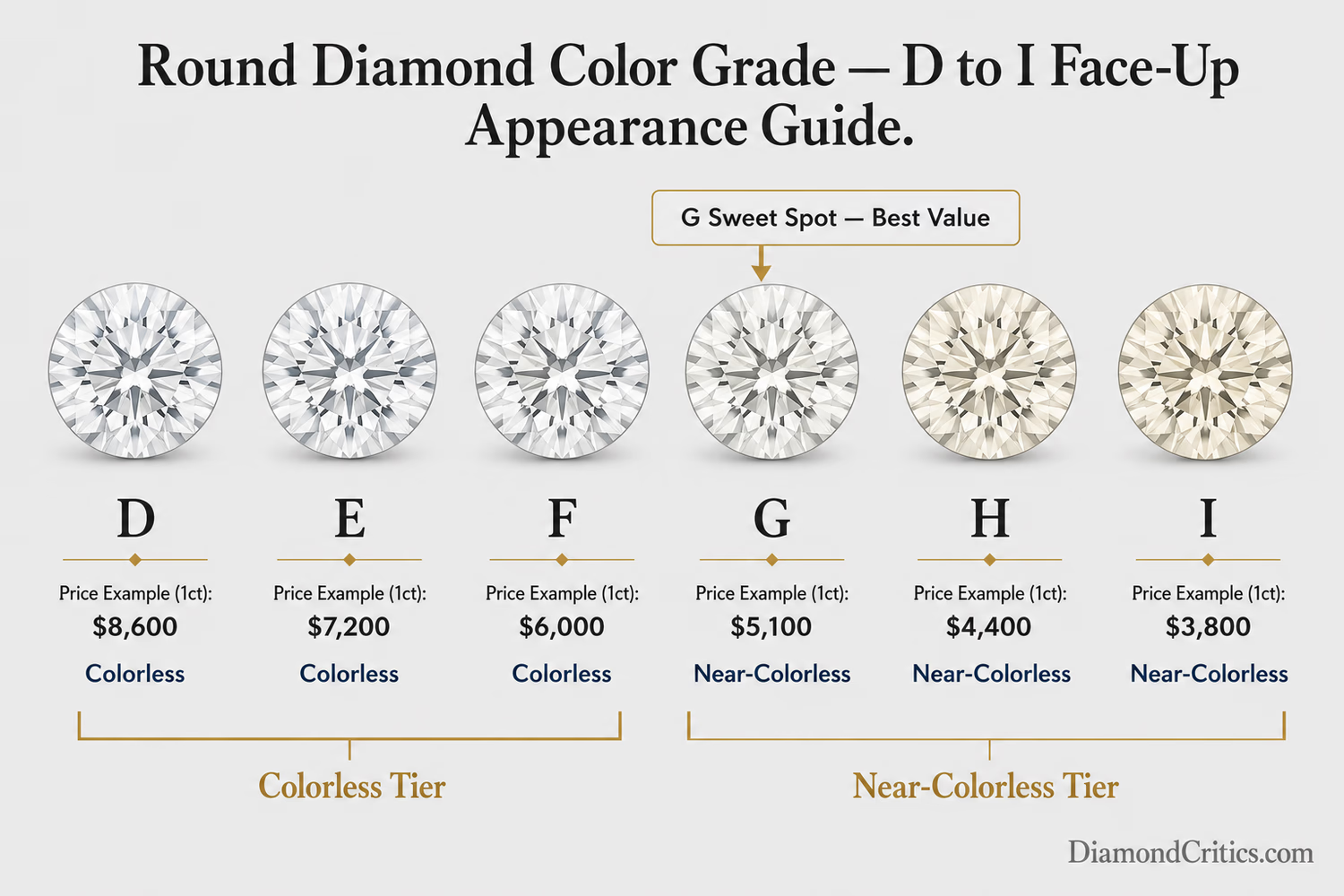
Color Grade by Grade: What You Actually Get
D Color Round Diamond
The rarest color grade in the GIA system. Absolutely colorless under any examination condition. Price premium at 1 carat: 15–18% over G for comparable clarity.
Who should buy D color: collectors, buyers with investment intent, people purchasing D-FL or D-IF stones for maximum provenance value. For an engagement ring on a normal budget, D is a certificate upgrade you wear once a decade to a GIA appraisal.
Real example: GIA 1ct D-VS2 Excellent at $3,790
E Color Round Diamond
Indistinguishable from D to anyone other than a trained grader with reference stones. The price premium over G is real but modest at 1 carat and meaningful at 2ct+.
Who should buy E color: buyers who want the psychological comfort of the colorless tier without paying the full D premium. Solid choice.
Real example: GIA 1ct E-VS2 Excellent at $3,540
F Color Round Diamond
The lowest tier of the colorless grade. Experts can distinguish F from D under magnification and controlled grading conditions, but in any ring setting, F and D look identical face-up.
Who should buy F color: buyers who want a colorless certificate grade but are budget-conscious. F often represents the best value in the colorless range.
Real example: GIA 1ct F-VS2 Excellent at $3,490
G Color Round Diamond — My Top Pick
The first near-colorless grade. In a round brilliant, G reads as white face-up in all real-world conditions. The warmth is invisible in white gold/platinum settings and barely detectable even in yellow gold when you're looking for it.
Who should buy G color: almost everyone. Specifically buyers who want to maximize size or clarity quality within a budget without any visible color trade-off.
Real examples:
- GIA 1ct G-VS2 Excellent at $3,230
- GIA 1ct G-VS1 Excellent at $3,300
- GIA 1ct G-VVS2 Excellent at $3,650
H Color Round Diamond
One step below G. In a round brilliant, H color is still very white face-up in most settings. In a yellow gold setting, H is practically invisible as any warmer hue blends with the metal. In white gold, H is acceptable but at 2ct+ it begins to show a very slight warmth when observed in strong natural light.
Who should buy H color: buyers in yellow gold settings at any carat weight, and buyers in white gold at 1ct. At 2ct+ in white gold, H is a judgment call — request video before purchasing.
Real example at 2ct: GIA 2ct G-VS2 Excellent at $16,490 — compare this to H pricing at 2ct to see the grade differential.
I–J Color Round Diamond
Trace warmth that a trained eye can detect face-up at 2ct+ in white metal. At 1ct, I color in a round brilliant still passes for white in most lighting. At 3ct, I color in platinum will show warmth to attentive observers.
Who should buy I–J color: buyers in yellow or rose gold at any size, or buyers who want maximum carat weight on an absolute minimum budget. Not recommended for white metal settings above 2ct.
How Setting Metal Affects Color Appearance
This is one of the most underappreciated factors in color selection:
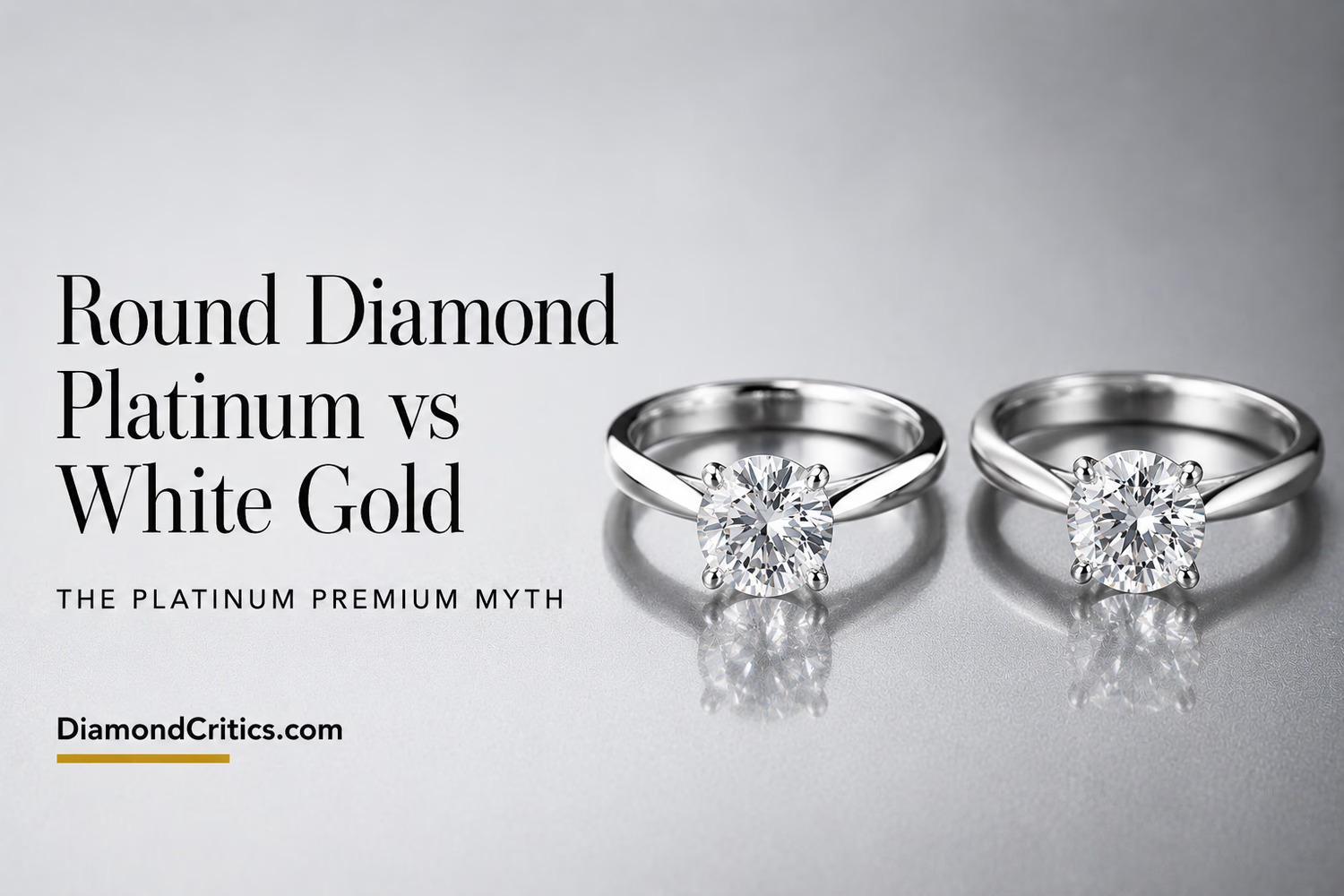
White gold / Platinum: Metal reflects white light into the diamond, masking warm tones. G–H look excellent; I–J are acceptable at 1ct.
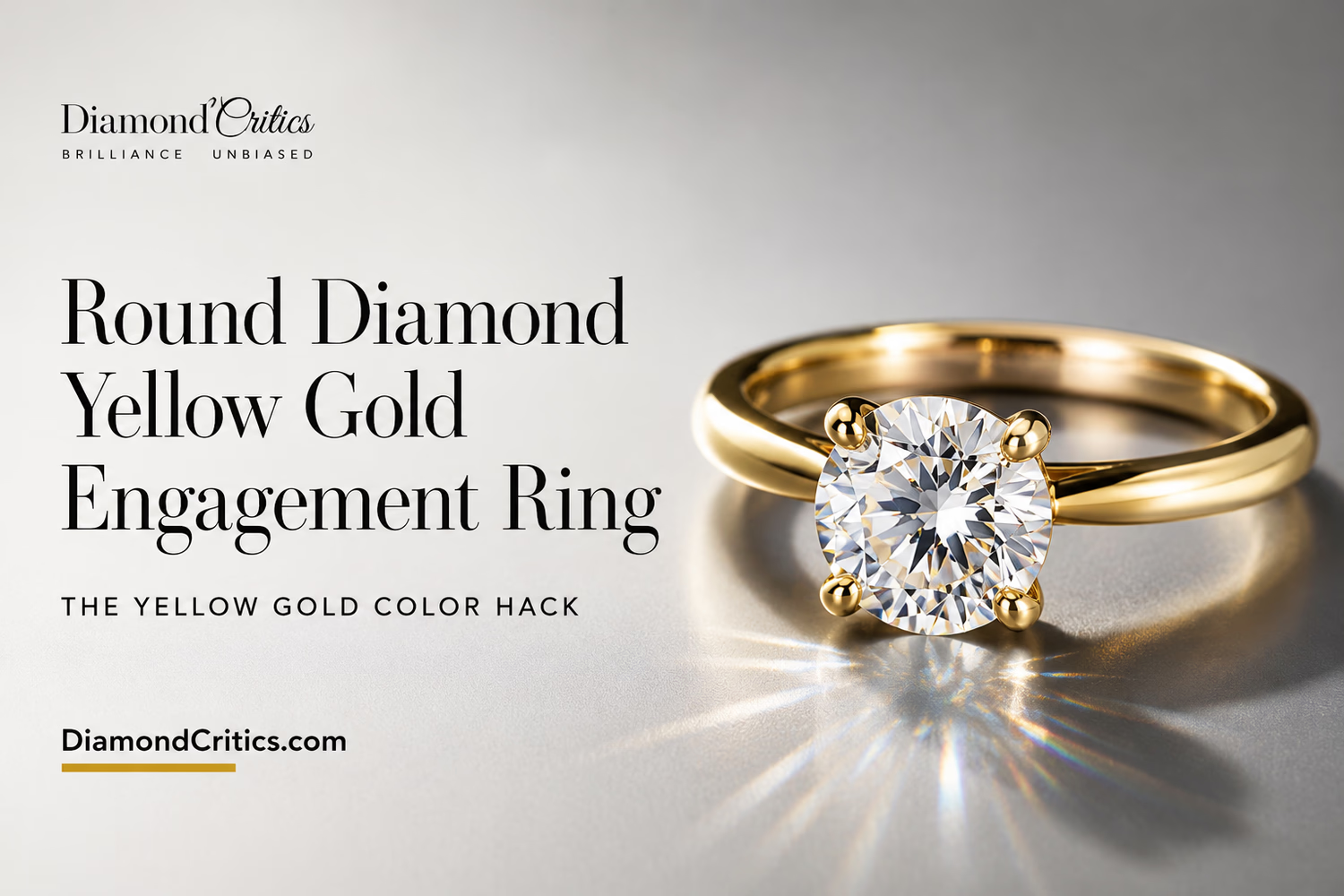
Yellow gold: The warm metal reflection neutralizes any slight diamond warmth. You can buy H–I color in yellow gold and the diamond will look white. The yellow reflection actually makes lower color grades look better.
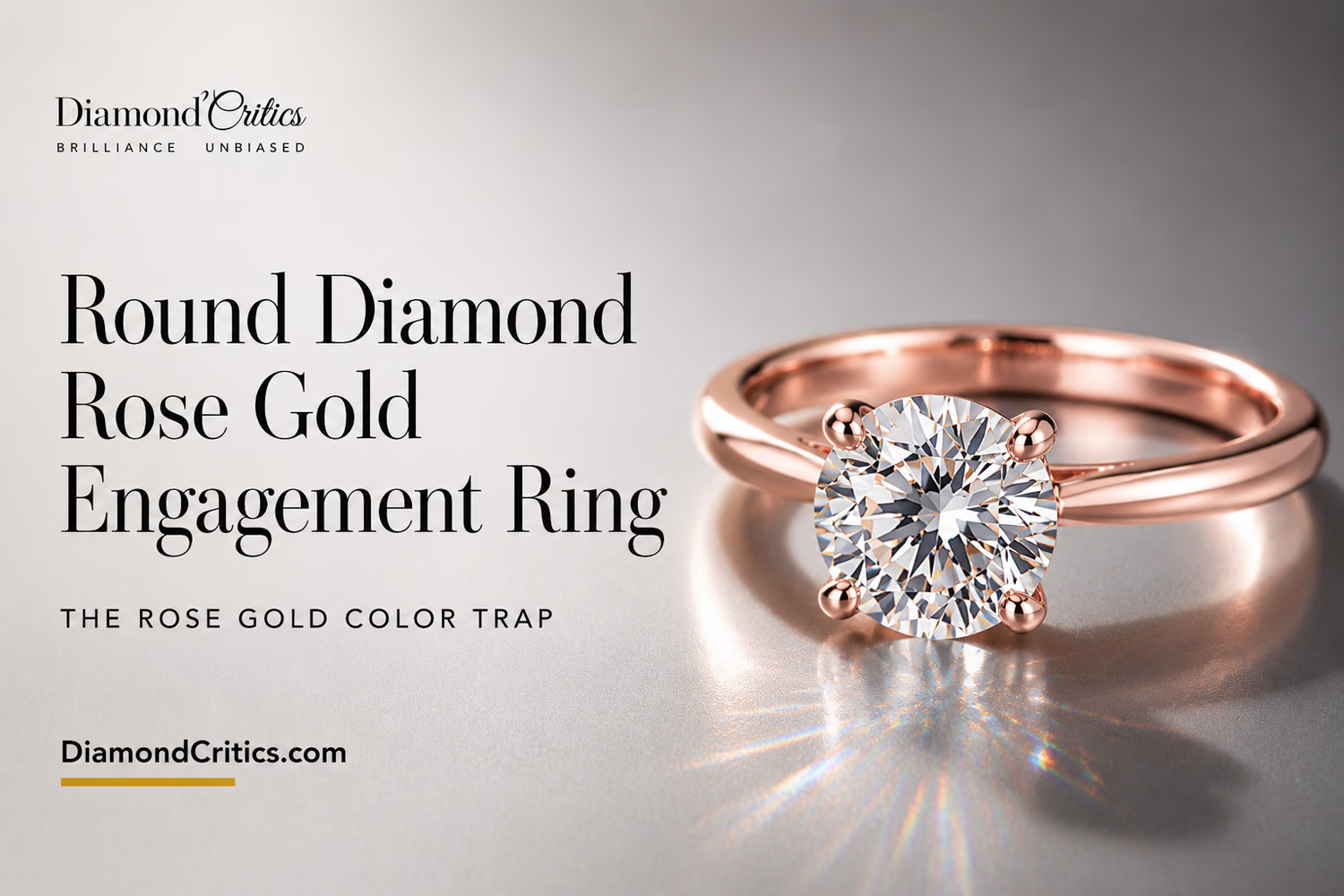
Rose gold: The pink tone can either mask or accent warmth depending on the stone. G–H is the safe choice. I color in rose gold can look slightly champagne in strong light.
Color at Different Carat Weights
Color shows more at larger sizes because there is simply more stone to display the warmth. My color guidelines by carat weight:
| Carat Weight | White Gold/Platinum | Yellow Gold |
|---|---|---|
| 0.5ct | G–I | H–J |
| 1ct | G–H | H–I |
| 1.5ct | F–G | G–H |
| 2ct | F–G | G–H |
| 3ct | F–G | G |
| 4ct+ | E–F | F–G |
For 2 carat round diamonds, G color remains excellent. At 3 carats, stepping up to F provides extra insurance at reasonable premium cost.
Tides Of Summer Capsule
Up To 30% Off
Shop The Sale →Vault ClearanceClear The Vault
Up To 70% Off
Shop Vault Deals →Affiliate link — no extra cost to you
Color for Lab-Grown Round Diamonds
Lab-grown diamonds come in the same GIA/IGI color grades, but the color-price relationship is different. In lab-grown, D–F often costs only marginally more than G–H because growing a colorless diamond is nearly as easy as growing a near-colorless one.
Our data shows IGI 2ct D-VVS1 lab-grown at $2,810 and IGI 3ct E-VVS1 at $5,800 — at these prices, there is little reason to compromise on color for lab-grown stones. Buy D–F for lab-grown and allocate savings to carat weight or setting.
See our complete lab grown round diamond guide for more.
The Fluorescence Variable
Medium to strong blue fluorescence in D–F color can make a colorless stone appear slightly hazy in daylight. Paradoxically, in H–I color, medium fluorescence can make the stone look whiter by counteracting the slight yellow tint with blue light emission.
This is why color and fluorescence must be evaluated together. Read our round diamond fluorescence guide for the complete decision matrix.
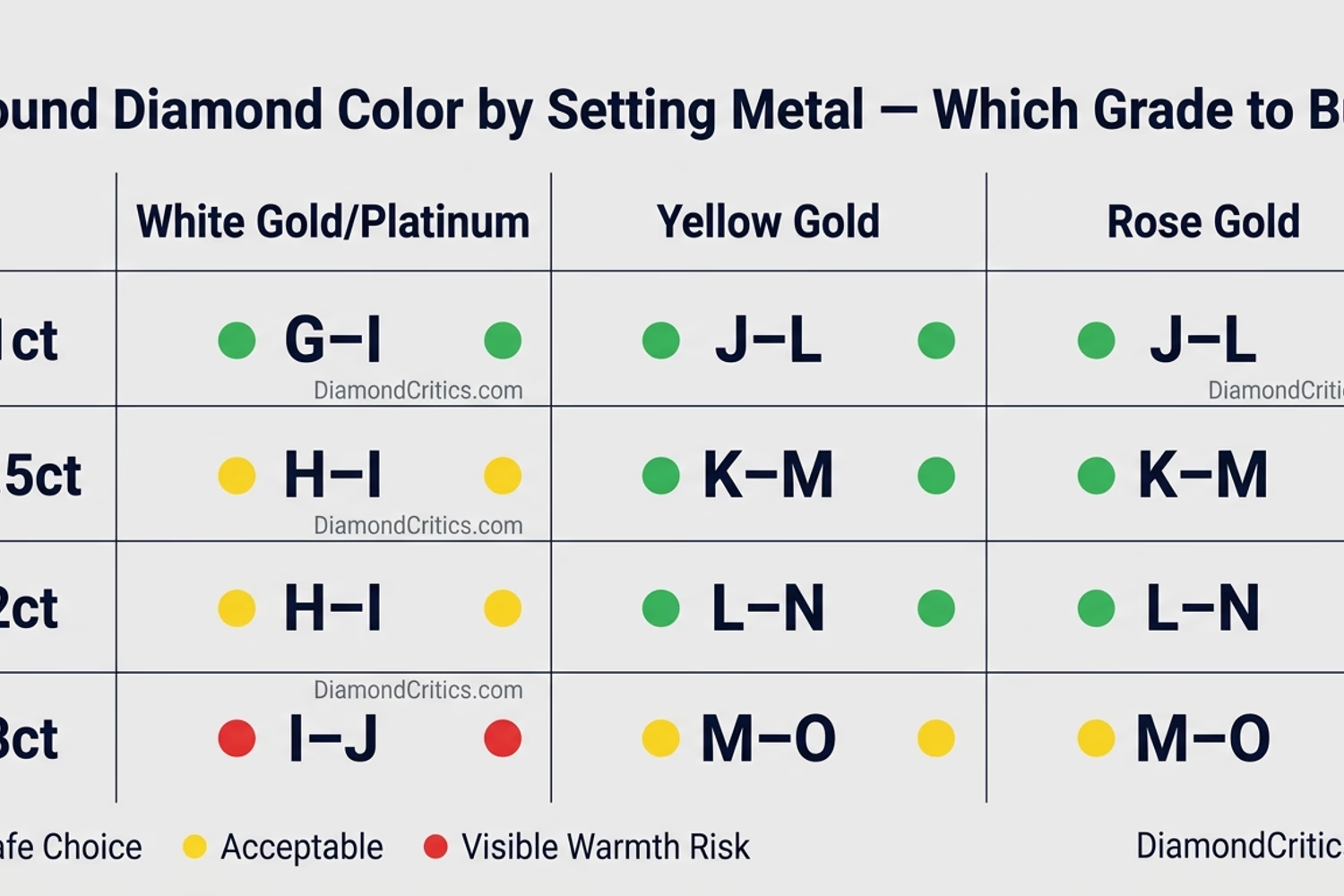
Farzana's Verdict: Buy G color for round brilliant diamonds in white gold or platinum — it is the last grade that reads as white to everyone, at every moment, without requiring controlled lighting to justify. The premium you pay going from G to D is real money that could buy better clarity, larger carat weight, or a quality setting. I genuinely cannot tell a D from a G in a ring on a finger. In my entire career advising buyers, no one has ever complimented a friend's ring by saying "what a beautiful D color."
Frequently Asked Questions
What is the best color for a round brilliant diamond?
G is the best value color for a round brilliant — it reads as white in all real-world conditions at a meaningful price discount vs D–F. If budget permits, F offers extra insurance at larger carat weights (2ct+).
Can you see the difference between D and G in a round diamond?
Not face-up in a setting under normal lighting. The difference is only detectable when a grader compares the stone upside-down against GIA master stones under specific north-facing daylight. In a ring, on a finger, in any room: no visible difference.
What color is best for a round diamond in white gold?
G or F. White gold reflects white light into the diamond and the mounting picks up color more easily than yellow gold, so G is the practical minimum. H is acceptable at 1 carat in white gold.
What color is best for a round diamond in yellow gold?
H or G. The warm gold metal masks diamond warmth, so you can go one grade lower than you would in white gold. An H-color in yellow gold looks white to everyone.
Is H color good for a round diamond?
Yes, at 1ct in white gold and any size in yellow or rose gold. At 2ct+ in white gold, H is a judgment call — request a video in natural light before purchasing.
What does G color round diamond look like?
White to the naked eye in all real-world conditions. Our G-VS2 at $3,230 and G-VS1 at $3,300 are indistinguishable from D stones by any non-expert observer.
Does color matter more for larger round diamonds?
Yes. At 2ct+ the diamond presents a larger face, making slight warmth more perceptible. At 1ct, you can safely go to G–H. At 3ct, F–G is recommended in white metal.
Is D color worth the extra cost for round diamonds?
Rarely. D color adds 15–18% over G at 1 carat, and significantly more at 2ct+. That premium is for a certificate designation, not visible beauty. Collectors and investors in high-end stones have valid reasons to buy D. Engagement ring buyers usually don't.
What color should I buy for a lab-grown round diamond?
D–F. Lab-grown diamond prices are so compressed that the colorless premium is minimal. A 2ct IGI D-VVS1 lab at $2,810 represents extraordinary value even at the top color tier.
What is the cheapest color grade that looks white in round diamonds?
G in white gold, H in yellow gold. Below G in white metal, the warmth becomes detectable to attentive observers at larger sizes.
How does color affect round diamond price?
The premium per color grade increases with carat weight. At 1ct, D vs G = ~$560 for VS2 clarity. At 2ct, comparing D-VS2 at $26,490 vs G-VS2 at $16,490 = $10,000 for a difference no one can see.
Does the round cut hide color better than other shapes?
Yes. The round brilliant's 57–58 facets break up light more completely than any other cut, dispersing warmth rather than concentrating it. Princess, cushion, and oval cuts show color more readily than round at the same grade.
Should I buy GIA or non-GIA for color accuracy?
GIA for natural diamonds, always. GIA's color grading is the most consistent in the industry. IGI grades slightly more generously on color, meaning an IGI G may be a GIA H under stricter evaluation.
Can fluorescence improve the look of a lower color grade round diamond?
Yes. Medium blue fluorescence in an H–I color round diamond can make it look one grade whiter in daylight, at a 5–8% price discount. This is a legitimate value play. Read the full analysis in our fluorescence guide.
What color round diamond does Farzana recommend for engagement rings?
G for white gold/platinum — it is the last grade that looks categorically white without any qualification. H in yellow gold. F at 2ct+ in platinum if budget allows. Never below G in white metal at 2ct+.
See Also
Expert Verdict
Always audit the stone individually — no grade replaces seeing the actual diamond. The certificate tells you what to look for. Your eyes tell you whether to buy.
— Farzana Hasan, GIA Expert · DiamondCritics.com