Round Diamond Halo vs Solitaire: The Halo Illusion Tax Explained
TL;DR: Halo vs Solitaire — Key Facts
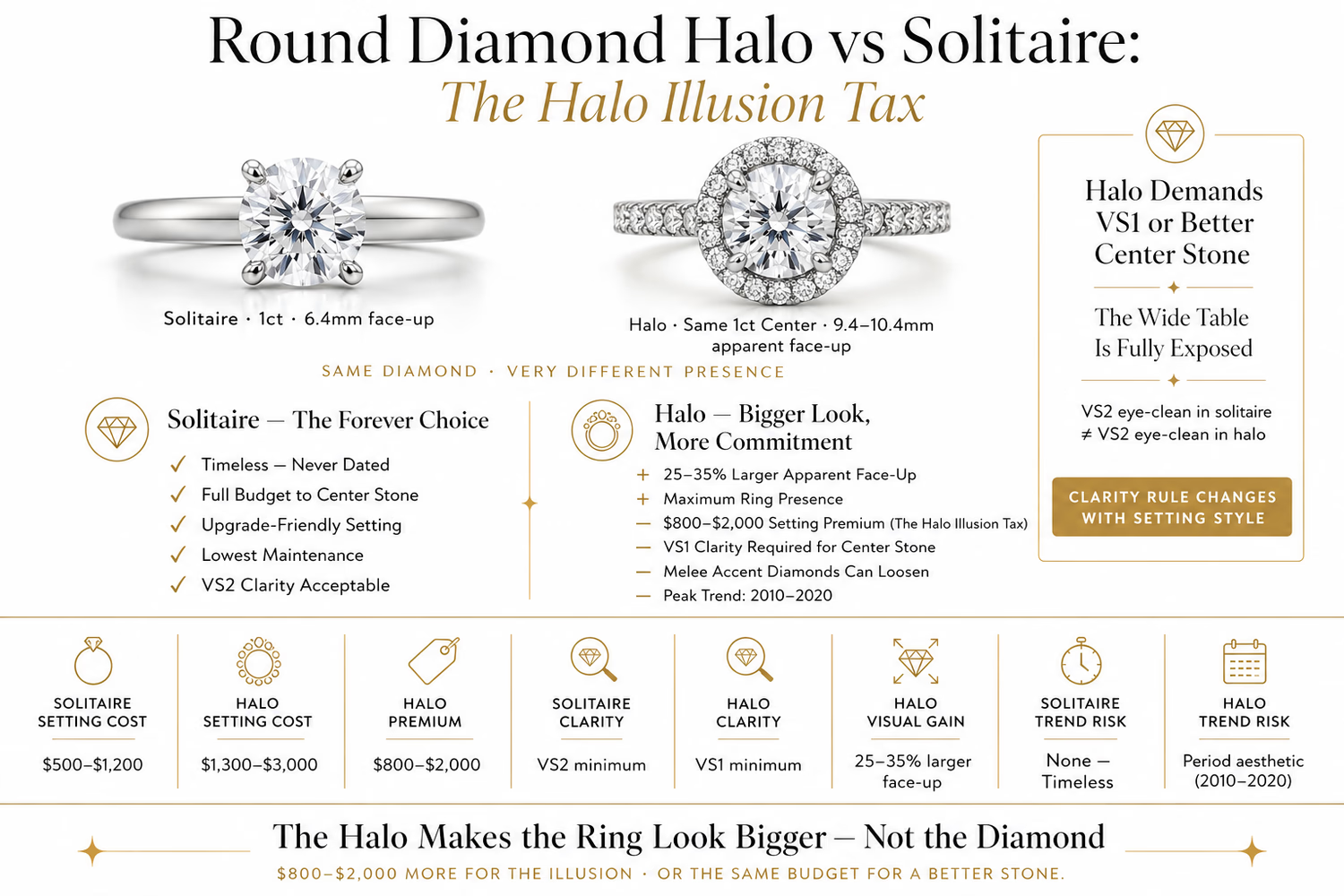
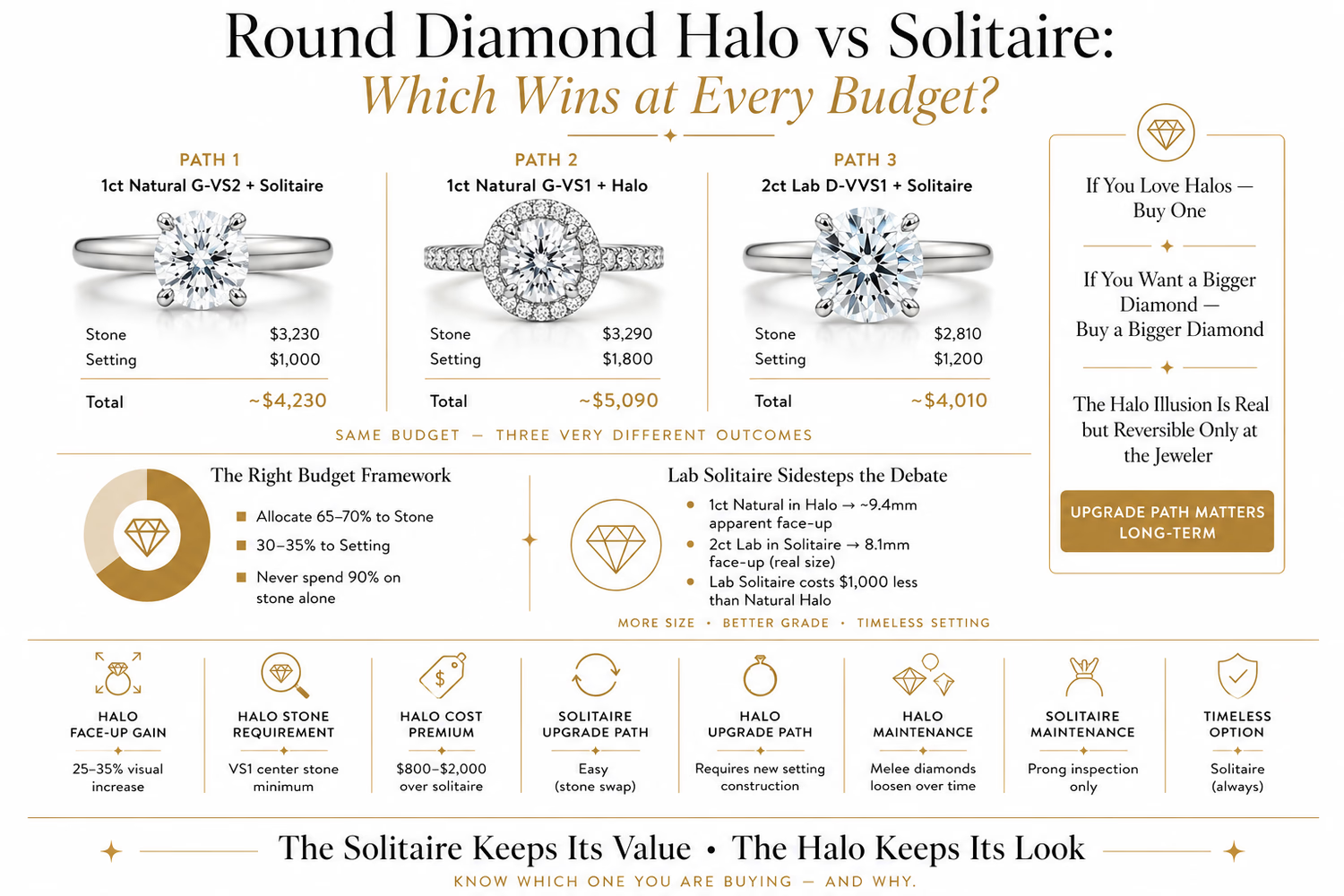
- A halo setting makes a 1ct center stone look approximately 25–35% larger face-up — but the center diamond itself has not changed
- Halo rings typically cost $800–$2,000 more than a comparable solitaire for the same center stone
- The Halo Illusion Tax: you pay extra for a ring that enlarges the appearance of your diamond — or you use that $800–$2,000 to upgrade the actual center stone
- Halos require VS1 or better clarity in the center stone — the wide table is fully exposed and closely framed
- Solitaire settings are the only style that has never gone out of fashion — halo peaked 2012–2020 and is already showing age in younger buying demographics
- The correct choice comes down to one question: do you want a bigger-looking ring or a better diamond?
There is no objectively correct answer between halo and solitaire — but there is an honest framework for making the decision. Most jewelers presenting the halo option frame it as "your diamond looks so much bigger." That framing is accurate but incomplete. The halo makes the diamond look bigger because it surrounds it with additional material — but that material costs money, requires additional maintenance, and comes with aesthetic and practical trade-offs that are rarely mentioned in the showroom.
This guide gives you the complete picture: what the halo actually does to visual size, what it costs, what it demands in terms of center stone quality, and why the solitaire remains the default choice for buyers who think beyond the moment of purchase.


What a Halo Actually Does to Visual Size
A standard halo setting surrounds the center stone with a single row of small round accent diamonds, typically 1.2–1.5mm each, set in a continuous band approximately 1–2mm wide. When viewed face-up, the halo and center stone together present as a single large surface.
For a 1ct round center stone at 6.4mm diameter:
- Halo width adds approximately 1.5–2mm on each side
- Total face-up visual diameter: approximately 9.4–10.4mm
- This mimics the visual presence of a 3ct–4.5ct solitaire diamond
The illusion is real and effective. A 1ct round in a halo looks substantially larger than a 1ct round in a solitaire when viewed from above. In a photograph or across a restaurant table, the halo stone reads as a much larger diamond than it actually is.
| Setting Style | 1ct Center Stone | Visual Face-Up Diameter | Equivalent Solitaire Presence |
|---|---|---|---|
| Solitaire | 6.4mm | 6.4mm | 1ct |
| Standard halo | 6.4mm + 1.5mm each side | 9.4mm | ~3ct |
| Wide halo | 6.4mm + 2mm each side | 10.4mm | ~4.5ct |
| Double halo | 6.4mm + 3mm each side | 12.4mm | ~7ct |
What the illusion does not change:
- The actual diamond is still 1ct at 6.4mm
- The face-up area of the center stone, which has resale value, is unchanged
- The fire and scintillation comes from the center stone — the melee accents add sparkle but not the colored fire that defines a well-cut round brilliant
- At close range or in direct lighting, the distinction between center stone and halo is apparent
The Halo Illusion Tax: What It Actually Costs
Ring Setting Cost Comparison
A standard round solitaire in 14K white gold typically runs $500–$1,200 for a simple four-prong or six-prong setting. A comparable halo setting — same metal, same center stone size — runs $1,300–$3,000. The halo premium is $800–$2,000 for the same center diamond.
That $800–$2,000 is the Halo Illusion Tax: the cost of making your diamond look bigger without making your diamond bigger.
What $800–$2,000 Buys in Center Stone Upgrades
The same budget that pays for a halo setting upgrade — approximately $800–$2,000 — can move your center stone up a meaningful grade or size:
| $800–$2,000 Applied To | Example | Result |
|---|---|---|
| Halo setting upgrade | — | Center stone unchanged; ring looks larger |
| 1ct G-VS2 → 1ct G-VS1 | $3,230 → $3,780 | Better clarity at same size ($550 more) |
| 1ct G-VS2 → 1ct F-VS2 | $3,230 → $3,490 | Better color at same size ($260 more) |
| Add $1,000 to stone budget | $3,230 → $4,230 | Significantly better cut/color/clarity for actual stone quality |
| Stay 1ct, upgrade cut quality | multiple G-VS2 at $3,610–$3,790 | Optimized proportions within same grade |
The halo option gets you the appearance of a larger diamond. The center stone upgrade option gets you an actually better or larger diamond. Whether appearance or reality matters more is a personal decision — but it should be a conscious one.
Clarity Requirements: Why Halos Demand VS1 or Better
In a solitaire setting, the center diamond sits in a ring of prongs with open space on all sides. If a VS2 stone has inclusions near the edges, the prongs and surrounding metalwork partially obscure them. In normal wear, VS2 is consistently eye-clean in round brilliants.
A halo changes this. The accent diamonds frame the center stone like a picture frame — drawing the eye directly to the center stone from all angles. The wide table of the center diamond is fully exposed and closely examined by anyone looking at the ring closely.
For Solitaire: VS2 Is Sufficient
| 1ct G-VS2 GIA Excellent Options for Solitaire | Price |
|---|---|
| GIA 1ct G-VS2 Excellent | $3,230 |
| GIA 1ct G-VS2 Excellent | $3,240 |
| GIA 1ct G-VS2 Excellent | $3,370 |
| GIA 1ct G-VS2 Excellent | $3,390 |
| GIA 1ct G-VS2 Excellent | $3,410 |
| GIA 1ct G-VS2 Excellent | $3,490 |
| GIA 1ct G-VS2 Excellent | $3,610 |
| GIA 1ct G-VS2 Excellent | $3,620 |
| GIA 1ct G-VS2 Excellent | $3,650 |
| GIA 1ct G-VS2 Excellent | $3,650 |
| GIA 1ct G-VS2 Excellent | $3,680 |
| GIA 1ct G-VS2 Excellent | $3,680 |
| GIA 1ct G-VS2 Excellent | $3,750 |
| GIA 1ct G-VS2 Excellent | $3,760 |
| GIA 1ct G-VS2 Excellent | $3,790 |
| GIA 1ct G-VS2 Excellent | $3,790 |
| GIA 1ct G-VS2 Excellent | $4,020 |
| GIA 1ct G-VS2 Excellent | $4,020 |
| GIA 1ct G-VS2 Excellent | $4,040 |
| GIA 1ct G-VS2 Excellent | $4,040 |
| GIA 1ct G-VS2 Excellent | $4,220 |
| GIA 1ct G-VS2 Excellent | $4,220 |
| GIA 1ct G-VS2 Excellent | $4,220 |
| GIA 1ct G-VS2 Excellent | $4,230 |
Entry G-VS2 for a solitaire starts at $3,230. These are consistently eye-clean stones for solitaire settings where the prongs partially obscure girdle-area inclusions.
For Halo: VS1 Is the Correct Entry Grade
| 1ct G-VS1 GIA Excellent Options for Halo | Price |
|---|---|
| GIA 1ct G-VS1 Excellent | $3,300 |
| GIA 1ct G-VS1 Excellent | $3,400 |
| GIA 1ct G-VS1 Excellent | $3,530 |
| GIA 1ct G-VS1 Excellent | $3,620 |
| GIA 1ct G-VS1 Excellent | $3,660 |
| GIA 1ct G-VS1 Excellent | $3,700 |
| GIA 1ct G-VS1 Excellent | $3,700 |
| GIA 1ct G-VS1 Excellent | $3,780 |
| GIA 1ct G-VS1 Excellent | $3,780 |
| GIA 1ct G-VS1 Excellent | $4,010 |
| GIA 1ct G-VS1 Excellent | $4,010 |
| GIA 1ct G-VS1 Excellent | $4,020 |
| GIA 1ct G-VS1 Excellent | $3,840 |
Entry G-VS1 for a halo setting starts at $3,300 — approximately $70 more than the G-VS2 entry. The clarity step-up from VS2 to VS1 is the right call when the halo frames and magnifies the center stone's table area.
F-VS2: A Step Up in Color for Halo Settings
| 1ct F-VS2 GIA Excellent Options for Halo | Price |
|---|---|
| GIA 1ct F-VS2 Excellent | $3,490 |
| GIA 1ct F-VS2 Excellent | $3,580 |
| GIA 1ct F-VS2 Excellent | $3,650 |
| GIA 1ct F-VS2 Excellent | $3,810 |
| GIA 1ct F-VS2 Excellent | $4,040 |
F-VS2 provides one grade of color improvement over G. In a halo with white metal, the color distinction between F and G is minimal face-up. F-VS2 is a meaningful upgrade if the ring will be worn under very bright lighting where color traces become more visible.
The Lab-Grown Alternative That Sidesteps the Debate
For buyers who want maximum face-up size without paying the Halo Illusion Tax or committing to a natural stone, lab-grown diamonds provide a third path: a larger stone in a solitaire setting that already exceeds halo-level visual presence at lower total cost.
Lab-Grown 1.5ct: Larger Than 1ct Natural in Any Setting
| IGI 1.5ct Lab D-VVS1 Options | Price | Face-Up Size |
|---|---|---|
| IGI 1.5ct E-VVS1 Lab-Grown | $1,930 | 7.3mm |
| IGI 1.5ct D-VVS1 Lab-Grown | $1,950 | 7.3mm |
| IGI 1.5ct D-VVS1 Lab-Grown | $1,950 | 7.3mm |
| IGI 1.5ct D-VVS1 Lab-Grown | $1,950 | 7.3mm |
| IGI 1.5ct D-VVS1 Lab-Grown | $1,950 | 7.3mm |
| IGI 1.5ct D-VVS1 Lab-Grown | $1,950 | 7.3mm |
| IGI 1.5ct D-VVS1 Lab-Grown | $1,950 | 7.3mm |
| IGI 1.5ct D-VVS1 Lab-Grown | $1,950 | 7.3mm |
| IGI 1.5ct D-VVS1 Lab-Grown | $1,950 | 7.3mm |
| IGI 1.5ct D-IF Lab-Grown | $2,930 | 7.3mm |
| IGI 1.5ct D-FL Lab-Grown | $2,930 | 7.3mm |
| GCAL 1.5ct D-IF Lab-Grown | $3,330 | 7.3mm |
A lab-grown 1.5ct D-VVS1 at $1,950 in a solitaire delivers 7.3mm face-up — larger than the 1ct natural's 6.4mm, similar to what the 1ct natural looks like inside a halo, and with significantly better color and clarity than most buyers put in a halo center stone. Total cost for stone + solitaire setting: approximately $2,550–$3,150.
Lab-Grown 2ct: Halo-Level Visual Size, Solitaire Price
| IGI/GIA 2ct Lab Options | Price | Face-Up Size |
|---|---|---|
| IGI 2ct D-VVS1 Lab-Grown | $2,810 | 8.1mm |
| IGI 2ct D-VVS1 Lab-Grown | $2,810 | 8.1mm |
| IGI 2ct D-FL Lab-Grown | $5,190 | 8.1mm |
| GCAL 2ct D-IF Lab-Grown | $5,780 | 8.1mm |
A lab-grown 2ct D-VVS1 at $2,810 in a solitaire delivers 8.1mm face-up. That is wider than a 1ct natural in a halo (9.4–10.4mm total, but 6.4mm center stone). Set in a solitaire with a $600–$1,200 setting, total cost comes to approximately $3,400–$4,000 — less than the price of the center stone alone in many natural 1ct halo configurations.
3ct Lab: Genuine Large-Stone Visual Presence in a Solitaire
| 3ct Lab Round GIA/IGI | Price | Face-Up Size |
|---|---|---|
| IGI 3ct E-VVS1 Lab-Grown | $5,800 | 9.4mm |
| IGI 3ct E-VVS1 Lab-Grown | $6,020 | 9.4mm |
| IGI 3ct D-VVS1 Lab-Grown | $7,000 | 9.4mm |
| GIA 3ct D-VVS1 Lab-Grown | $7,340 | 9.4mm |
A lab-grown 3ct D-VVS1 at $7,000 in a solitaire delivers 9.4mm face-up — identical to the visual diameter of a natural 3ct at $48,780+. In a solitaire setting at 9.4mm, you have the visual presence that a double halo on a 1ct tries to approximate, with genuine stone area and fire, not melee framing.
Tides Of Summer Capsule
Up To 30% Off
Shop The Sale →Vault ClearanceClear The Vault
Up To 70% Off
Shop Vault Deals →Affiliate link — no extra cost to you
The Trend Problem: When Does a Halo Look Dated?
The halo engagement ring dominated the market from approximately 2010 to 2020. In this period, cushion-cut and round-cut halos were the default choice across every price tier. Celebrities, influencer proposals, and jewelry industry marketing all pushed the halo as the modern standard.
By 2026, the halo is a known aesthetic — not wrong, not unfashionable in an absolute sense, but clearly period-specific to anyone with a long aesthetic memory. Younger buyers in their late 20s and early 30s are increasingly choosing solitaires, signet-inspired settings, and minimalist bands that push back against the maximalist halo look that defined the previous decade.
The solitaire has no trend cycle. A round diamond solitaire in platinum or white gold has been the most purchased engagement ring style globally for over a century, and no credible forecast positions it as ever looking dated. The halo style requires comfort with a trend timeline.
This does not make halos wrong. If you love the look — the visual presence, the added sparkle, the diamond-covered aesthetic — that is a legitimate choice. The point is to make that choice knowing the trend context, not assuming the halo is timeless simply because it was dominant for a decade.
Maintenance Reality: Halos Require More Attention
A solitaire setting has 4–6 prongs and a single diamond. Maintenance involves:
- Prong inspection every 12–18 months
- Occasional prong retipping over the life of the ring
A halo setting has 4–6 prongs on the center stone plus 24–40 small accent diamonds in pave or bead settings. Maintenance involves:
- Prong inspection on the center stone
- Pave work inspection — small accent diamonds can loosen and fall out with wear
- Missing accent stones are usually replaceable, but it requires a jeweler to match size, color, and setting; repair costs $50–$300 per stone
- Over 10–20 years of daily wear, halo rings typically need 2–4 melee replacements
This is not a reason to avoid halos — it is a cost and maintenance commitment to factor in. For buyers who are not inclined to take jewelry to a jeweler regularly, solitaires are genuinely lower maintenance.
Full Budget Comparison: Halo vs Solitaire at the Same Total Spend
Budget A: $5,000 Total
| Path | Stone | Setting | Total | What You Get |
|---|---|---|---|---|
| Natural 1ct solitaire | G-VS2 at $3,790 | $700–$900 solitaire | ~$4,600 | 6.4mm, VS2, timeless setting |
| Natural 1ct halo | G-VS1 at $3,300 | $1,500–$2,000 halo | ~$5,000 | 6.4mm stone, ~9.4mm apparent, VS1 required |
| Lab 1.5ct solitaire | D-VVS1 at $1,950 | $700–$900 solitaire | ~$2,750 | 7.3mm, D-VVS1, saves $2,250 |
| Lab 2ct solitaire | D-VVS1 at $2,810 | $700–$900 solitaire | ~$3,700 | 8.1mm, D-VVS1, saves $1,300 |
Budget B: $8,000 Total
| Path | Stone | Setting | Total | What You Get |
|---|---|---|---|---|
| Natural 1ct halo, top grade | F-VS1 at $4,870 | $1,500–$2,000 halo | ~$6,870 | 6.4mm, high-grade, apparent 9.4mm |
| Natural 2ct solitaire | G-VS2 at $16,490 | Over budget | Over $17,000 | Out of reach at this budget |
| Lab 3ct solitaire | E-VVS1 at $5,800 | $700–$900 solitaire | ~$6,700 | 9.4mm, E-VVS1, solitaire no halo needed |
| Lab 3ct solitaire, GIA cert | D-VVS1 at $7,340 | $700–$900 solitaire | ~$8,100 | 9.4mm, D-VVS1, GIA-certified |
At an $8,000 budget, a lab-grown 3ct D-VVS1 in a solitaire delivers 9.4mm face-up — a genuinely large stone that surpasses even a wide halo on a 1ct natural. There is no halo option at this budget that matches this visual size in actual stone diameter.
When a Halo Makes Sense
A halo setting is the correct choice when:
1. Budget is fixed and visual size matters more than stone quality. A 1ct G-VS1 at $3,300 in a halo setting reads as 3ct+ face-up. If the partner cares more about how the ring looks on the hand than about the exact stone specifications, the halo delivers maximum visual impact at minimum stone budget.
2. The finger size and stone proportion work against the solitaire. On longer, larger fingers, a single 1ct solitaire can look understated — the 6.4mm stone disappears against a longer finger profile. A halo brings the face-up diameter to 9–10mm, which creates a more balanced proportion.
3. The style preference is genuinely for the halo aesthetic. Many people love the brilliance density and presence of a diamond-encrusted ring. If that is the preference, it is a legitimate one.
When a Solitaire Makes Sense
A solitaire is the correct choice when:
1. The center stone quality is the priority. Every dollar goes to the diamond, not the surrounding metalwork. A 1ct G-VS1 GIA Excellent at $3,780 in a simple solitaire gives you the best diamond you can afford at that budget.
2. Timelessness is the goal. A solitaire setting in platinum or 18K white gold with a GIA Excellent round diamond will look equally contemporary in 2026 and 2046. The halo will look like a 2010s ring.
3. Future upgrade potential matters. Solitaire settings allow the center stone to be removed and replaced with a larger stone later. Halo settings are more complicated to upgrade because the proportions of the halo are sized around the original center stone; a different size stone requires a new setting or significant rework.
4. Low maintenance is a priority. Four prongs and one diamond. Nothing to lose, nothing to match, nothing to replace.
Farzana's Verdict: The halo setting is an effective optical trick that makes a smaller stone look larger. The question is whether you want to pay $800–$2,000 for the illusion or apply that budget to the stone itself. If you love halos, buy one — the look is genuinely beautiful and the size amplification is real. If you are choosing a halo because you think a 1ct looks too small in a solitaire, reconsider: either increase the center stone budget, step up from G-VS2 ($3,230) to G-VS1 ($3,300), or look at lab-grown stones where a 1.5ct D-VVS1 costs $1,950 and a 2ct D-VVS1 costs $2,810 — delivering natural-halo visual size in a solitaire setting for the same or lower total budget. The solitaire with a better center stone will always outlast the halo with a smaller one.
Frequently Asked Questions
Does a halo make a diamond look bigger?
Yes. A standard halo adds approximately 1.5–2mm to the face-up visual diameter on each side, making a 1ct round at 6.4mm appear as a 9.4–10.4mm total diameter — similar to the presence of a 3ct–4.5ct solitaire stone. The illusion is effective from normal viewing distances but reveals itself up close where the transition from center stone to accent diamonds is visible.
Is a halo or solitaire better for a 1ct round diamond?
It depends on the priority. A solitaire keeps all budget in the center stone, requires less maintenance, and is timeless. A halo amplifies visual size at the cost of $800–$2,000 more in the setting and higher center-stone clarity requirements (VS1 minimum vs VS2 for solitaire). If the partner cares primarily about the look of the ring on the hand, halo delivers more visual impact. If the partner cares about the diamond quality, solitaire is more efficient.
What clarity does a halo setting require?
VS1 or better for reliable eye-cleanliness in a halo. The halo accent diamonds frame the center stone and draw close attention to the table area. VS2 inclusions that are eye-clean in a solitaire setting can become more visible when the stone is closely framed. Entry G-VS1 stones for halo start at $3,300 on Blue Nile — only $70 more than the G-VS2 entry at $3,230 for a solitaire.
Are halo engagement rings going out of style?
Halos peaked in popularity 2010–2020 and are showing a clear decline in younger buying demographics as of 2026. They are not obsolete, but they have a clear period aesthetic associated with the 2010s. Solitaires have no discernible trend cycle — they have been the most purchased engagement ring style globally for over a century.
Can I upgrade the center stone in a halo ring later?
It is possible but more complicated than upgrading a solitaire. Halo settings are constructed around the specific dimensions of the original center stone. A larger replacement stone may require a new halo to be built, not just a stone swap. Solitaire settings typically accommodate center stone upgrades much more cleanly.
How much more does a halo setting cost than a solitaire?
A standard round solitaire in 14K white gold typically runs $500–$1,200. A comparable halo setting in the same metal runs $1,300–$3,000. The premium is approximately $800–$2,000 for the halo's accent diamonds and more complex construction.
Does a halo setting affect the diamond's resale value?
The center stone's resale value is unchanged — it can be removed from the halo and sold independently. The halo setting itself has minimal resale value as a setting. The practical implication is that the $800–$2,000 spent on the halo construction is not recoverable at resale, while a higher-quality center stone carries resale value at 40–50% of its purchase price (for natural diamonds) regardless of the setting.
What metal works best for a halo setting?
Platinum or 18K white gold for maximum neutral contrast that makes the diamonds appear as bright as possible. Yellow gold halos work with G–H color centers if the aesthetic is intentional, but yellow gold surrounding a round diamond makes any trace of color more visible. If the center stone is F or better, yellow gold does not negatively affect appearance. For I color and below, white metal is strongly recommended.
Is a double halo worth the extra cost?
Rarely. A double halo adds a second row of accent diamonds outside the first, increasing visual diameter further and raising the setting cost by an additional $500–$1,500. The aesthetic is more maximalist and more strongly associated with the 2010s halo trend. The added visual size is genuine but proportionally less impactful than the first halo row. Most buyers who want a halo are better served by a single halo with a slightly larger center stone than a double halo with a smaller center.
Should I choose a halo or solitaire for a round diamond engagement ring?
Solitaire if timelessness, low maintenance, and maximum center stone quality per dollar are the priorities. Halo if visual ring size, maximum presence on the hand, and the diamond-encrusted aesthetic are the priorities. If budget is the key constraint: a lab-grown 1.5ct D-VVS1 at $1,950 in a solitaire already exceeds 1ct natural in a halo for face-up size, and a lab-grown 2ct D-VVS1 at $2,810 in a solitaire delivers 8.1mm — significantly larger than the halo center stone — at total cost well under the natural-1ct-in-halo option.
See Also
Expert Verdict
Always audit the stone individually — no grade replaces seeing the actual diamond. The certificate tells you what to look for. Your eyes tell you whether to buy.
— Farzana Hasan, GIA Expert · DiamondCritics.com