TL;DR — Round Diamond Size Chart
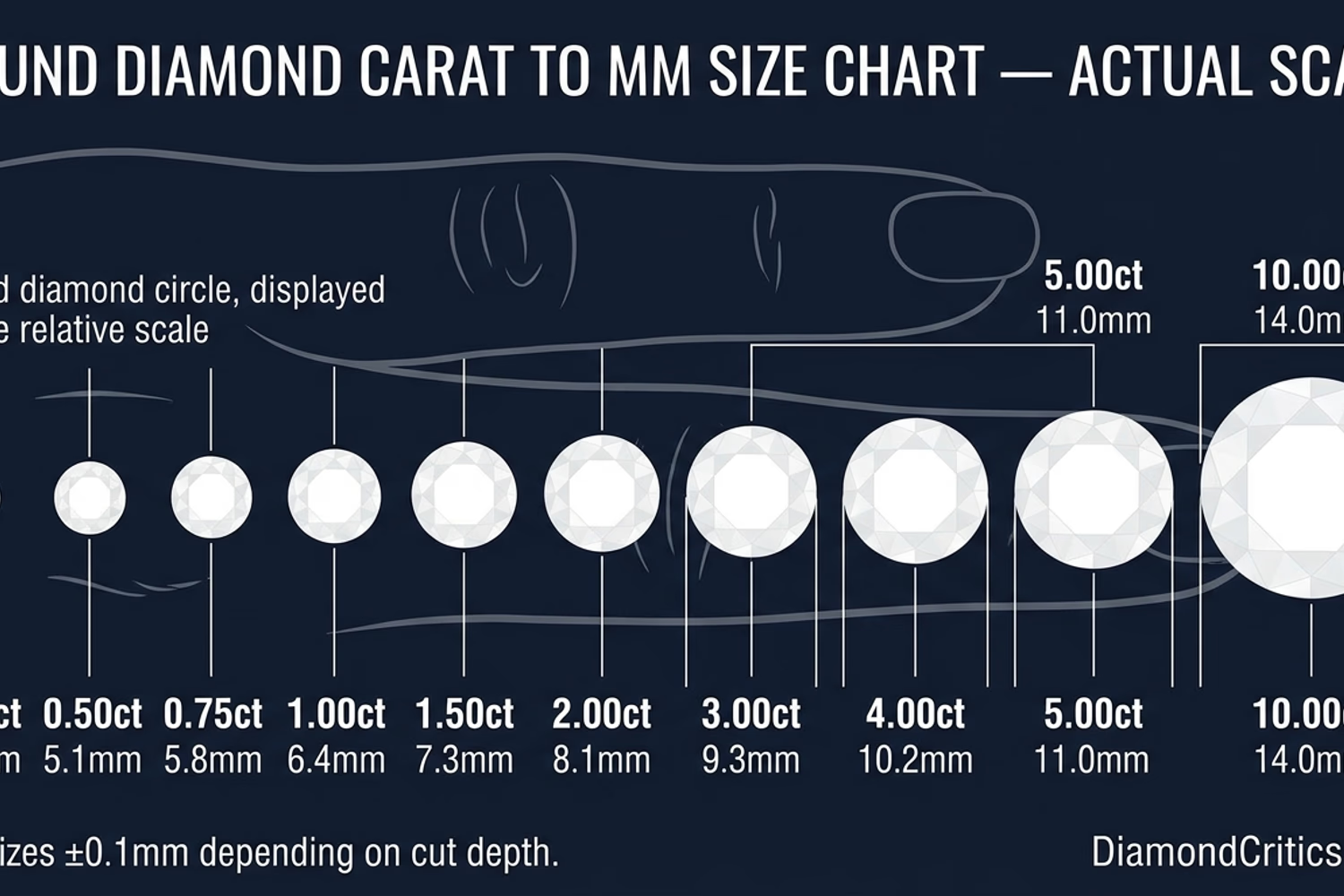
| Carat | Diameter (mm) | Face-Up Area (mm²) | Finger Coverage (Size 6) |
|---|---|---|---|
| 0.25ct | 4.1mm | 13mm² | ~23% |
| 0.50ct | 5.2mm | 21mm² | ~29% |
| 0.75ct | 5.9mm | 27mm² | ~33% |
| 1.00ct | 6.5mm | 33mm² | ~36% |
| 1.25ct | 6.9mm | 37mm² | ~38% |
| 1.50ct | 7.4mm | 43mm² | ~41% |
| 1.75ct | 7.8mm | 48mm² | ~43% |
| 2.00ct | 8.2mm | 53mm² | ~46% |
| 2.50ct | 9.0mm | 64mm² | ~50% |
| 3.00ct | 9.4mm | 69mm² | ~52% |
| 4.00ct | 10.4mm | 85mm² | ~58% |
| 5.00ct | 11.1mm | 97mm² | ~62% |
- The Face-Up Factor: A 2ct round is NOT twice the diameter of a 1ct. It is 26% larger in diameter and 61% larger in face-up area
- The Magic Size Windows: 0.90ct (saves 20–25% vs 1ct), 1.80ct (saves 15–20% vs 2ct), 2.80ct (saves 10–15% vs 3ct) — appear identical in size but cost dramatically less
- Live 1ct price range: $3,230–$4,230 (G-VS2 to G-VS2 with premium fluorescence)
- Live 2ct price range: $16,490–$54,840


Why Diamond Size Is Not What You Think
The most common misconception in diamond buying is this: if I buy a 2 carat diamond, I am getting a stone twice as large as a 1 carat. It is not true — and understanding why changes how you shop.
Diamond size is a three-dimensional reality. Carat is a weight measurement (1 carat = 0.2 grams), not a size measurement. A round brilliant diamond with excellent proportions distributes most of its weight in the face-up diameter — which is what you actually see when looking at the ring from above. But the relationship between carat weight and face-up diameter follows a cube-root curve, not a linear one.
To double the diameter of a round diamond, you must increase the carat weight by approximately 8× (because diameter scales as the cube root of mass). To increase the diameter by 26% (from 6.5mm to 8.2mm) — which is what going from 1ct to 2ct actually gets you — you are doubling the carat weight.
The practical implication: each additional carat of weight you add produces a diminishing return in visible face-up size, while the price per additional carat increases dramatically. Understanding this curve is essential for making efficient diamond purchase decisions.
This guide maps every major carat weight to its actual millimeter size for round brilliant diamonds with correct proportions. It also covers the round cut diamond size vocabulary — face-up area, finger coverage, spread — that most buyers have never encountered before but which determines how a diamond actually looks on a hand.
The Complete Round Diamond Size Chart
These measurements assume a correctly-proportioned round brilliant — specifically depth percentage 59–62.5% and table percentage 53–58%. A diamond cut too deep (depth above 64%) will appear smaller than its carat weight because weight is hidden in depth rather than spread across diameter. A diamond cut too shallow (depth below 58%) may appear larger initially but at the cost of brilliance.
The round diamond ideal proportions guide covers why these specific proportion targets matter for both size and light performance.
Sub-Carat Round Diamonds (0.25ct – 0.90ct)
| Carat | Diameter | Face-Up Area | Approximate Blue Nile Price | Notes |
|---|---|---|---|---|
| 0.25ct | 4.1mm | 13mm² | ~$400–$600 | Ideal for accent stones and stacking rings |
| 0.33ct | 4.5mm | 16mm² | ~$600–$900 | Common in three-stone ring sides |
| 0.50ct | 5.2mm | 21mm² | ~$900–$1,500 | Popular for minimalist solitaires |
| 0.75ct | 5.9mm | 27mm² | ~$2,000–$3,000 | Strong presence, efficient price |
| 0.90ct | 6.2mm | 30mm² | ~$2,500–$3,500 | Magic Size: looks like 1ct, costs 20–25% less |
The 0.90ct is particularly worth noting. At 6.2mm diameter, it is indistinguishable from a 1.00ct (6.5mm) from normal conversation distance. The 0.3mm difference is only visible with a ruler. Yet the 0.90ct typically costs 20–25% less than its 1.00ct equivalent because of the psychological premium on the 1ct milestone weight. This is the Magic Carat Trap described in the 1 carat round diamond price guide — and the 0.90ct buyer who knows this saves real money.
1 Carat Round Diamond Size
| Carat | Diameter | Face-Up Area | Price Range (G-VS1 Excellent) |
|---|---|---|---|
| 1.00ct | 6.5mm | 33mm² | $3,300–$4,020 |
| 1.10ct | 6.7mm | 35mm² | ~$4,200–$5,500 |
| 1.25ct | 6.9mm | 37mm² | ~$5,500–$7,000 |
The 1ct round diamond is the most purchased diamond size globally. At 6.5mm diameter, it occupies approximately 36% of a size 6 finger width — universally described as "classic" finger presence that is noticeable without being overwhelming.
From the live Blue Nile dataset for 1ct G-VS1 Excellent rounds:
| Stone | Price | Notes |
|---|---|---|
| GIA 1ct G-VS1 | $3,300 | Floor price in G-VS1 |
| GIA 1ct G-VS1 | $3,400 | Strong entry |
| GIA 1ct G-VS1 | $3,700 | Mid-range |
| GIA 1ct G-VS1 | $3,780 | Premium zone — likely ideal proportions |
1.50ct Round Diamond Size
| Carat | Diameter | Face-Up Area | Price Range (G-VS1 Excellent) |
|---|---|---|---|
| 1.50ct | 7.4mm | 43mm² | ~$8,000–$12,000 |
| 1.75ct | 7.8mm | 48mm² | ~$12,000–$18,000 |
| 1.80ct | 7.9mm | 49mm² | ~$13,000–$19,000 |
The 1.80ct Magic Size Window: A 1.80ct round brilliant at 7.9mm diameter is visually identical to a 2.00ct (8.2mm) from normal viewing distance. The 0.3mm difference is measurable with instruments but not with eyes. Yet the 1.80ct typically costs 15–20% less than a 2.00ct equivalent. If you are shopping at the 2ct level, a well-cut 1.80ct is worth serious consideration.
Lab-grown 1.5ct options from the dataset:
| Stone | Cert | Price |
|---|---|---|
| IGI 1.5ct D-VVS1 Ideal Lab-Grown | IGI | $1,930 |
| IGI 1.5ct D-VVS1 Excellent Lab-Grown | IGI | $1,950 |
| GCAL 1.5ct D-IF Ideal Lab-Grown | GCAL | $3,330 |
| IGI 1.5ct D-FL Ideal Lab-Grown | IGI | $3,390 |
2 Carat Round Diamond Size
| Carat | Diameter | Face-Up Area | Price Range (G-VS1 Excellent) |
|---|---|---|---|
| 2.00ct | 8.2mm | 53mm² | $22,460–$22,580 |
| 2.50ct | 9.0mm | 64mm² | ~$40,000–$55,000 |
The 2ct round at 8.2mm represents what most people consider "statement" diamond size. It covers approximately 46% of a size 6 finger — visually dominant without being excessive for most hand proportions.
Selected 2ct natural options from the live dataset:
| Stone | Grade | Price |
|---|---|---|
| GIA 2ct G-VS2 Excellent | G-VS2 | $16,490 |
| GIA 2ct G-VS1 Excellent | G-VS1 | $22,460 |
| GIA 2ct E-VVS2 Excellent | E-VVS2 | $22,460 |
| GIA 2ct G-VVS2 Excellent | G-VVS2 | $26,610 |
Lab-grown 2ct at this size represents extraordinary value:
| Stone | Cert | Price |
|---|---|---|
| IGI 2ct D-VVS1 Ideal Lab-Grown | IGI | $2,810 |
| IGI 2ct D-FL Ideal Lab-Grown | IGI | $5,190 |
The complete 2ct buying analysis is in the 2 carat round diamond price guide.
3 Carat Round Diamond Size
| Carat | Diameter | Face-Up Area | Price Range (G-VS1 Excellent) |
|---|---|---|---|
| 3.00ct | 9.4mm | 69mm² | $54,640–$60,200 |
The 3ct round at 9.4mm covers approximately 52% of a size 6 finger. At this size, the diamond is the unambiguous focal point on any hand. The face-up area is 109% larger than a 1ct — you are paying for genuine visual impact that no amount of 1ct or 2ct stones can replicate in a solitaire.
Selected 3ct natural options from the live dataset:
| Stone | Grade | Price |
|---|---|---|
| GIA 3ct G-VVS1 Excellent | G-VVS1 | $44,500 |
| GIA 3ct G-VS2 Excellent | G-VS2 | $48,780 |
| GIA 3ct G-VS1 Excellent | G-VS1 | $54,640 |
| GIA 3ct E-VS2 Excellent | E-VS2 | $60,880 |
Lab-grown 3ct options:
| Stone | Cert | Price |
|---|---|---|
| IGI 3ct E-VVS1 Ideal Lab-Grown | IGI | $5,800 |
| GIA 3ct D-VVS1 Excellent Lab-Grown | GIA | $7,340 |
| IGI 3ct D-FL Ideal Lab-Grown | IGI | $11,770 |
The 2.80ct Magic Window: A 2.80ct at approximately 9.2mm is visually indistinguishable from 3.00ct (9.4mm) at 0.2mm apart. If the 3ct price range is at your ceiling, a 2.80ct saves 10–15% with zero visible size difference.
4 Carat Round Diamond Size
| Carat | Diameter | Face-Up Area | Price Range (G-VS1 Excellent) |
|---|---|---|---|
| 4.00ct | 10.4mm | 85mm² | $58,110–$115,580 |
At 10.4mm, the 4ct round covers approximately 58% of a size 6 finger. This is the size range where jewelers typically recommend ring sizing up by half a size because the diamond adds weight to the ring that changes how it fits on the finger.
Selected 4ct natural options:
| Stone | Grade | Price |
|---|---|---|
| GIA 4ct G-VS1 Excellent | G-VS1 | $58,110 |
| GIA 4ct G-VS2 Excellent | G-VS2 | $71,290 |
| GIA 4ct F-VS2 Excellent | F-VS2 | $80,330 |
| GIA 4ct E-VS1 Excellent | E-VS1 | $115,580 |
Lab-grown 4ct represents the most dramatic arbitrage in the round diamond market:
| Stone | Cert | Price |
|---|---|---|
| GIA 4ct D-VVS1 Excellent Lab-Grown | GIA | $9,680 |
| GIA 4ct D-IF Excellent Lab-Grown | GIA | $16,120 |
The complete 4ct analysis and full lab vs natural comparison is in the lab grown round diamond guide.
5 Carat and Above
| Carat | Diameter | Face-Up Area | Natural Price Range | Lab Price Range |
|---|---|---|---|---|
| 5.00ct | 11.1mm | 97mm² | $147,110–$409,260 | $12,730–$30,960 |
| 6.00ct | 11.7mm | 108mm² | $187,650–$433,900 | $18,410–$37,150 |
| 7.00ct | 12.4mm | 121mm² | $243,640–$644,780 | — |
| 8.00ct | 13.0mm | 133mm² | $429,940–$637,620 | $68,200 |
| 9.00ct | 13.6mm | 145mm² | $329,500–$518,800 | $324,550 (IGI) |
| 10.00ct | 14.0mm | 154mm² | $670,250+ | — |
At 5ct and above, round diamonds cover more than 60% of a size 6 finger width. These are statement pieces by any measure. Selected 5ct natural options from the live dataset:
| Stone | Grade | Cert | Price |
|---|---|---|---|
| GIA 5ct D-VVS1 Excellent | D-VVS1 | GIA | $305,230 |
| IGI 5ct G-VVS2 Excellent | G-VVS2 | IGI | $118,210 |
| IGI 5ct G-VVS1 Excellent | G-VVS1 | IGI | $132,340 |
| IGI 5ct F-VVS1 Excellent | F-VVS1 | IGI | $165,310 |
| GIA 5ct E-VVS1 Excellent | E-VVS1 | GIA | $290,650 |
Tides Of Summer Capsule
Up To 30% Off
Shop The Sale →Vault ClearanceClear The Vault
Up To 70% Off
Shop Vault Deals →Affiliate link — no extra cost to you
Face-Up Area vs Carat Weight: The Non-Linear Relationship
This table shows why upgrading from 1ct to 2ct feels less dramatic than buyers expect and why the price jump is more dramatic than the size increase justifies:
| Step | Carat Increase | Diameter Increase | Face-Up Area Increase | Price Increase (G-VS1) |
|---|---|---|---|---|
| 0.5ct → 1ct | +0.5ct (+100%) | +1.3mm (+25%) | +12mm² (+57%) | ~$2,500 (+280%) |
| 1ct → 2ct | +1ct (+100%) | +1.7mm (+26%) | +20mm² (+61%) | ~$19,000 (+480%) |
| 2ct → 3ct | +1ct (+50%) | +1.2mm (+15%) | +16mm² (+30%) | ~$32,000 (+143%) |
The pattern: each additional carat produces a smaller percentage increase in visible face-up size, while the absolute price per additional carat increases dramatically. The 2ct-to-3ct step produces only a 30% face-up area increase for a 143% price increase. The most efficient size-to-price step in the round diamond market is the 0.5ct-to-1ct transition.
The Depth Trade-Off: Why Two 1ct Diamonds Are Not Two Circles
When measuring diamond size, face-up area (what you see from above) is what matters. But face-up area depends on both carat weight and depth percentage.
A round brilliant cut too deep (depth >64%) will have a smaller face-up diameter than its carat weight would suggest — the weight is hidden in the stone's height rather than spread across its face. A 1ct stone cut to 66% depth might appear more like a 0.90ct in face-up diameter.
This is why checking the depth percentage on the GIA report matters for size as well as light performance. Depth 59–62.5% keeps maximum weight in the face-up diameter. Depth above 64% is where the stone starts hiding its carat weight.
Conversely, a round brilliant cut too shallow (depth <58%) appears larger face-up than its carat weight but at the cost of brilliance — the stone has a "glass" or "window" appearance rather than a bright one.
The practical guide: always check depth percentage. A 1ct G-VS1 at 60% depth is the same 6.5mm diameter as the chart above. A 1ct G-VS1 at 64% depth is closer to 6.3mm.
Finger Coverage Guide: What Each Size Looks Like in Real Wear
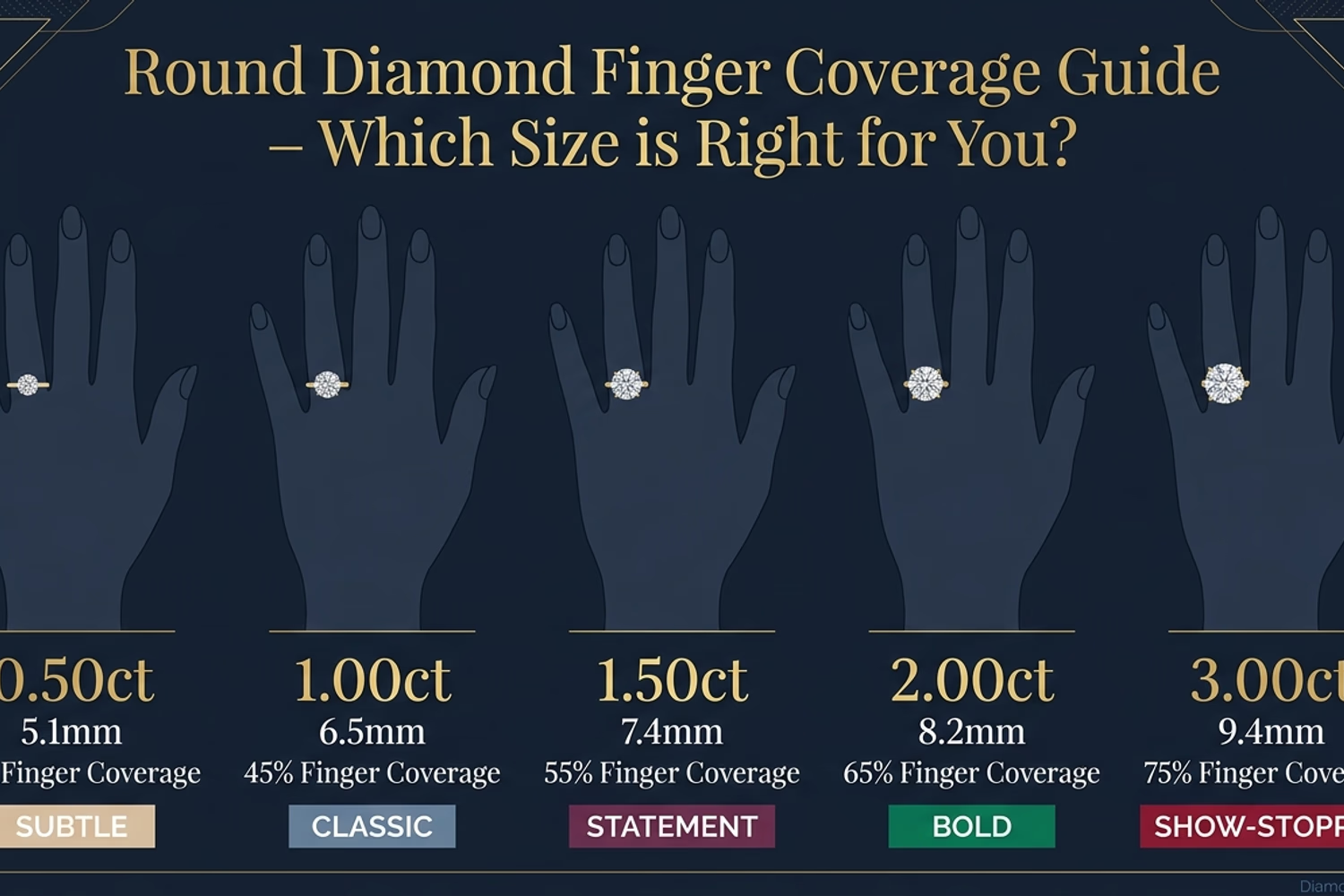
These estimates assume an average size 6 finger (approximately 18mm wide at the ring position). Finger width varies and changes how a diamond appears in proportion:
| Carat | Diameter | % of Size 6 Finger | Visual Description |
|---|---|---|---|
| 0.50ct | 5.2mm | 29% | Delicate, minimal |
| 0.75ct | 5.9mm | 33% | Subtle, everyday |
| 1.00ct | 6.5mm | 36% | Classic, balanced |
| 1.50ct | 7.4mm | 41% | Notable presence |
| 2.00ct | 8.2mm | 46% | Bold, visible across room |
| 3.00ct | 9.4mm | 52% | Statement, commanding |
| 4.00ct | 10.4mm | 58% | Major statement |
| 5.00ct | 11.1mm | 62% | Extraordinary |
For size 7 fingers (20mm wide), subtract approximately 3 percentage points from each figure. For size 5 fingers (16mm wide), add approximately 3–4 percentage points. A 1ct diamond on a size 5 finger (40% coverage) looks noticeably bolder than the same diamond on a size 7 finger (33% coverage).
How to Use Paper Circles to Test Carat Weight Before Buying
Before committing to a carat weight, make paper circles at the exact millimeter measurements and place them on your finger. This takes 5 minutes and can save you from buying too small or too large.
- Print this list of diameters: 5.2mm (0.5ct), 5.9mm (0.75ct), 6.5mm (1ct), 7.4mm (1.5ct), 8.2mm (2ct), 9.4mm (3ct)
- Draw circles of each diameter on white paper or card stock
- Cut them out precisely
- Place each circle on the ring finger in natural lighting and at arm's length
- The one that looks "right" — not too small that it disappears, not so large it dominates — is your target size
This exercise frequently changes buyers' minds. People who think they want 2ct often find 1.5ct looks proportional on their finger. People who think 1ct is enough often find they want 1.5ct when they see the actual millimeter comparison. Do this before spending.
Frequently Asked Questions
How big is a 1 carat round diamond in millimeters?
A correctly proportioned 1 carat round brilliant diamond has a face-up diameter of approximately 6.4–6.5mm. This is the single most useful size measurement for comparing 1ct rounds. On a size 6 finger, 6.5mm covers approximately 36% of the finger width.
How big is a 2 carat round diamond in millimeters?
A correctly proportioned 2 carat round brilliant diamond has a face-up diameter of approximately 8.1–8.2mm. On a size 6 finger, this covers approximately 46% of the finger width — the size most buyers describe as "statement" or "bold" presence.
What is the mm size of a 3 carat round diamond?
A correctly proportioned 3 carat round brilliant diamond has a face-up diameter of approximately 9.3–9.4mm. On a size 6 finger, this covers approximately 52% of the finger width.
Does diamond carat affect size directly?
Carat measures weight (1ct = 0.2 grams), not size. For round brilliants with correct proportions (depth 59–62.5%), carat weight and diameter follow a predictable relationship. But a poorly cut stone (too deep) at the same carat weight will appear smaller in diameter. Carat weight and face-up size are correlated but not the same thing.
Is a 1 carat diamond too small?
No. A 1ct round brilliant at 6.5mm is the world's most popular engagement ring diamond size for a reason — it provides classic, balanced presence on most finger widths. Whether it looks "small" depends on the recipient's finger width, setting style, and personal proportion preferences, not on an objective standard.
How does diamond size differ between round and oval shapes?
A 1ct oval diamond is approximately 8.0×5.5mm — longer and slightly narrower than the 1ct round's 6.5mm circle. The oval appears roughly 10% larger face-up due to its elongated footprint. However, the oval is more susceptible to the bow-tie shadow effect than a round brilliant. The round vs oval diamond guide covers this comparison fully.
What carat weight looks biggest for the money?
For face-up size per dollar spent, sub-carat weights (0.75ct–0.90ct) are the most efficient. They deliver close to 1ct visual size at 20–40% lower prices. In the 1ct+ range, the 1.75ct–1.80ct zone offers close to 2ct appearance at 15–20% savings. The "Magic Carat Trap" — the psychological premium on round number milestones — consistently overprices 1ct, 2ct, and 3ct stones relative to the stones just below those thresholds.
What is the diameter of a 0.5 carat round diamond?
Approximately 5.2mm. A 0.50ct round brilliant at 5.2mm is most commonly used for minimalist solitaires or as the side stones in a three-stone engagement ring.
Does the ring setting affect how large a diamond looks?
Yes significantly. A halo setting — a ring of small diamonds surrounding the center stone — adds approximately 0.5–1.0mm to the visual diameter and makes the center stone appear 25–40% larger. A thin solitaire band with a four-prong setting maximises the visual size of the center stone itself by minimising metal. The round diamond engagement ring settings guide covers all setting options and their size effects.
How big is a 5 carat round diamond?
A correctly proportioned 5 carat round brilliant has a face-up diameter of approximately 11.1mm. On a size 6 finger, this covers approximately 62% of the finger width — an extraordinary, gallery-worthy size. Natural 5ct GIA rounds range from approximately $147,000 to $409,000. Lab-grown 5ct rounds are available from approximately $12,730 for D-VVS1 quality.
What is the face-up area of a 1 carat diamond?
A correctly proportioned 1 carat round brilliant has a face-up area of approximately 33mm². This is calculated as π × (diameter/2)² = π × (6.5/2)² ≈ 33mm². At 2ct (8.2mm diameter), the face-up area is approximately 53mm² — 61% larger, not 100% larger as the carat weight doubling might suggest.
Why does a 2 carat diamond cost so much more than a 1 carat?
The price difference is driven by rough diamond scarcity: crystals large enough to yield a 2ct polished round are estimated 4–8× rarer than those yielding 1ct stones. Additionally, the price-per-carat for round diamonds increases at milestone weights (the 2ct mark commands a premium in the rough market), and the per-carat rate approximately doubles from the 1ct to the 2ct range. The 2 carat round diamond price guide covers this fully.
What carat weight makes sense for different ring sizes?
- Size 4–5 (small hands): 0.75ct–1.50ct provides balanced proportion
- Size 6 (average): 1.00ct–2.00ct is the most common range
- Size 7–8 (larger hands): 1.50ct–2.50ct for visible presence
- Size 9+ : 2.00ct+ for proportional appearance
These are not rules — they are starting points for the paper circle test. Personal preference overrides any proportional guideline.
Continue Your Research Journey
- Round Cut Diamond: Complete Buying Guide — the full round brilliant guide
- 1 Carat Round Diamond Price — complete 1ct price data
- 2 Carat Round Diamond Price — complete 2ct price data
- Round Diamond Ideal Proportions — why depth affects apparent size
- Round Diamond vs Oval Diamond — size comparison across shapes
- Round Diamond Engagement Ring Settings — how settings affect visual size
- Lab Grown Round Diamond — bigger size for dramatically less money
- Hearts and Arrows Diamond — the cut quality that maximises light at any size
- Diamond Size Chart — size comparison across all diamond shapes
Farzana Hasan: Every buyer who has never held a diamond before thinks they want bigger than they need. Make the paper circles before you commit to a carat weight. The 0.90ct that looks nearly identical to a 1.00ct from conversation distance — but costs 20% less — is not a compromise. It is the rational choice. The same logic applies at 1.80ct vs 2.00ct and 2.80ct vs 3.00ct. The diamond industry runs on milestone-weight premiums. The buyer who knows the millimeter measurements does not pay that premium.
Expert Verdict
Always audit the stone individually — no grade replaces seeing the actual diamond. The certificate tells you what to look for. Your eyes tell you whether to buy.
— Farzana Hasan, GIA Expert · DiamondCritics.com