Round Diamond vs Marquise Cut in 2026: Size, Price, and Trade-Offs


TL;DR: Round vs Marquise Cut — Key Facts
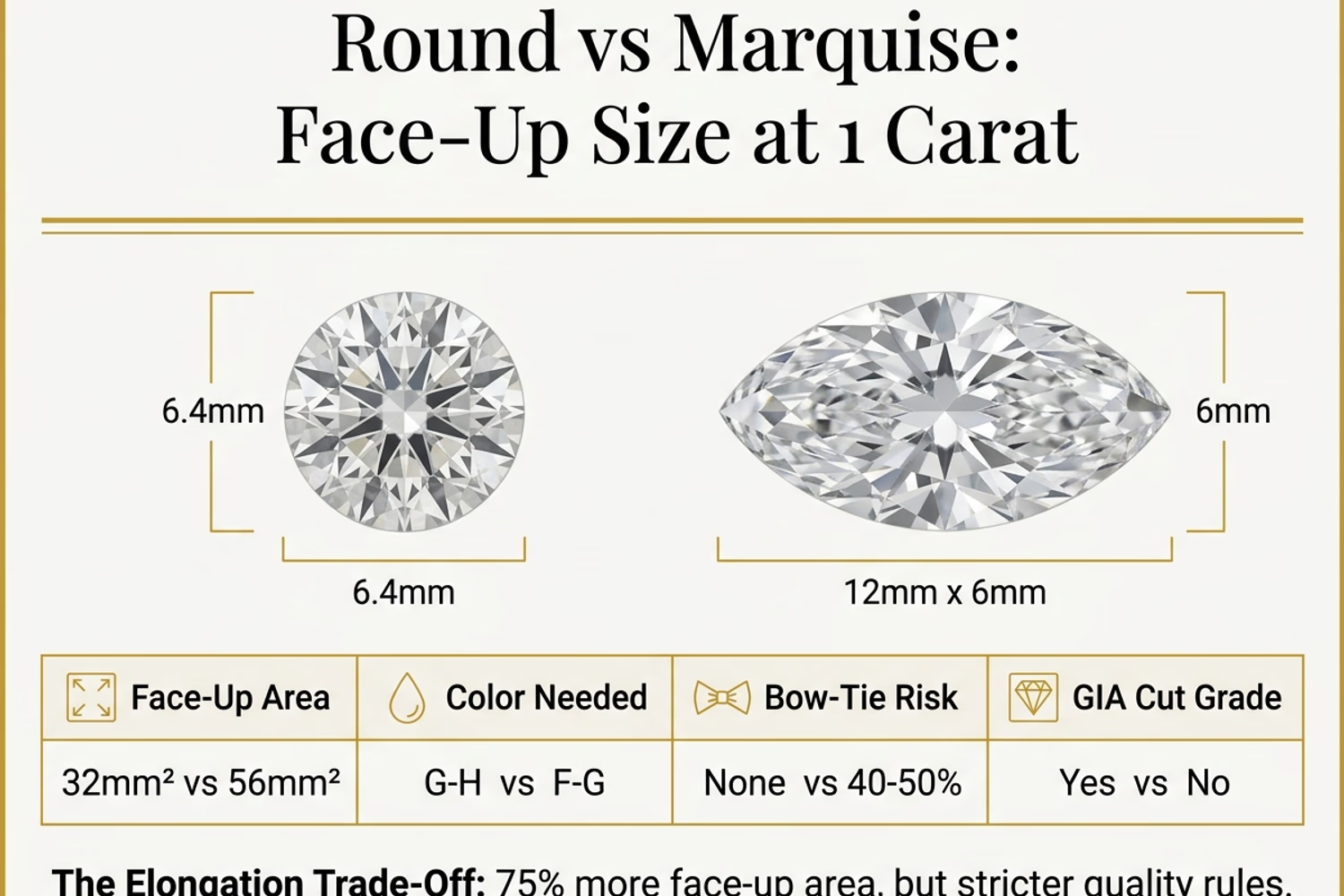
- Marquise faces up 10–15% larger than round for the same carat weight: a 1ct marquise measures roughly 12mm × 6mm vs 6.4mm for a 1ct round — the elongated shape creates the appearance of a bigger diamond
- The Elongation Trade-Off: you gain apparent size from the marquise, but pay with bow-tie risk (40–50% of marquise cuts have a visible bow-tie), stricter color requirements, and no GIA cut grade
- Marquise needs F–G color (vs G–H for round) because color concentrates at the pointed tips — this is The Tip Color Trap, and it applies at every carat size
- Marquise prices 10–15% below round for the same grade, but the required grade upgrade (one color step higher) narrows the effective savings to 0–8%
- For lab-grown comparisons: a 1.5ct D-VVS1 lab-grown at $1,950 gives more face-up size than a 1ct natural round at $3,230 — the size-per-dollar equation favors lab-grown at any carat size
- Bow-tie inspection is mandatory: never buy a marquise cut without HD video showing the bow-tie behavior under different lighting angles
The marquise cut was designed for one purpose: to make a diamond look as large as possible from above. Developed in the court of Louis XV in 18th-century France, the shape's elongated ellipse with two pointed ends maximizes face-up surface area relative to carat weight. When it works — with proper proportions and no visible bow-tie — the marquise is genuinely stunning. When it fails, it is a dark bowtie sitting between two color-heavy tips. This guide tells you exactly when to choose marquise and when to stay with round.
Face-Up Size: What the Elongation Actually Gives You
The shape's fundamental advantage is face-up surface area. Here is the physical comparison:
| Shape | Carat | Approximate Dimensions | Face-Up Area |
|---|---|---|---|
| Round | 1ct | 6.4mm × 6.4mm | 32 mm² |
| Marquise | 1ct | 12mm × 6mm | 56 mm² (typical) |
| Round | 2ct | 8.1mm × 8.1mm | 51 mm² |
| Marquise | 2ct | 15mm × 7.5mm | 88 mm² (typical) |
The marquise 1ct shows 75% more face-up area than a round 1ct on paper, though the actual visual impression is more moderate — roughly 10–15% "larger" in person because of how the eye processes elongated shapes versus circles. The elongation makes the finger look longer and the stone look bigger simultaneously.
This is the genuine value proposition of the marquise. It is the only shape that provides a measurable size advantage per carat without the step-cut drawbacks of emerald or asscher cuts.
The Elongation Trade-Off: What You Give Up
The marquise's elongated shape creates three costs that round brilliant buyers do not pay:
1. The Bow-Tie Effect
The marquise shape creates a faceting geometry problem: in the center of the stone where the two wings meet, light that enters from the table reflects back out at angles that cannot return to the viewer's eye. The result is a dark bow-tie shaped shadow that appears across the center of the stone.
Approximately 40–50% of marquise cuts on the market have a bow-tie that is visible in normal lighting conditions. A severe bow-tie dominates the visual center of the stone and cannot be unseen. A mild bow-tie is acceptable if it appears primarily in direct overhead lighting and diminishes in diffuse or side lighting.
The only way to evaluate bow-tie severity is HD video or in-person viewing. A static face-up photo in bright direct lighting will mask a bow-tie completely. Request video that shows the stone turning under different light sources before purchasing any marquise cut.
2. The Tip Color Trap
The two pointed tips of a marquise cut concentrate color differently than the round brilliant's even facet distribution. Color pooling occurs at the tips — even a G color round brilliant in white gold appears effectively colorless, while a G color marquise will show perceptible warmth at the tips under close examination.
For white gold settings, marquise requires F or G minimum, with F preferred. In yellow gold settings, the metal's warmth masks tip color more effectively, and G–H is acceptable. This is one full grade tighter than round's G–H recommendation for white gold.
One grade of color upgrade adds approximately 8–12% to the per-carat price. Combined with the marquise's existing 10–15% discount versus round, the net price difference shrinks to near-zero or minimal.
3. No GIA Cut Grade
Like all fancy shapes, marquise cuts do not receive GIA cut grades. GIA grades color, clarity, polish, and symmetry — but not cut in the comprehensive proportional analysis it applies to round brilliants. The symmetry grade on a GIA marquise certificate tells you whether the facets are aligned correctly, not whether the shape proportions will produce optimal light return.
The industry-accepted proportion ranges for marquise to minimize bow-tie and maximize brilliance:
- Length-to-width ratio: 1.75–2.25 (outside this range, the shape becomes too fat or too needle-like)
- Depth: 58–62%
- Table: 53–63%
- Girdle: Thin to Slightly Thick
Price Comparison: Round vs Marquise at 1ct and 2ct
1ct Comparison
| Stone | Shape | Grade | Price | Notes |
|---|---|---|---|---|
| GIA 1ct G-VS2 Round | Round | G-VS2 Excellent | $3,370 | No bow-tie, GIA cut verified |
| GIA 1ct G-VS1 Round | Round | G-VS1 Excellent | $3,300 | Best value entry for round |
| GIA 1ct F-VS2 Round | Round | F-VS2 Excellent | $3,580 | Upgrade reference point |
| 1ct Marquise | Marquise | F-VS2 | ~$3,100–$3,500 | Bow-tie risk; requires video |
At 1ct, a marquise in F-VS2 runs approximately $3,100–$3,500 — similar to a round in G-VS1 or G-VS2. You get a larger visual footprint (the 12mm × 6mm elongation is genuinely striking on the finger), but you must verify bow-tie behavior. The round at this price delivers GIA-certified performance with zero verification uncertainty.
2ct Comparison
| Stone | Shape | Grade | Price | Notes |
|---|---|---|---|---|
| GIA 2ct G-VS2 Round | Round | G-VS2 Excellent | $18,540 | Industry-standard purchase |
| GIA 2ct G-VVS2 Round | Round | G-VVS2 Excellent | $26,610 | Higher clarity premium |
| GIA 2ct F-VS1 Round | Round | F-VS1 Excellent | $26,240 | One grade above for round |
| 2ct Marquise | Marquise | F-VS1 | ~$22,000–$26,000 | Requires video and prop check |
At 2ct, the marquise starts to show its advantage more clearly on the hand — a 15mm × 7.5mm stone creates a dramatically elongated appearance that a round 8.1mm cannot match visually. If the elongation effect is what you want, a 2ct marquise is where it becomes most compelling.
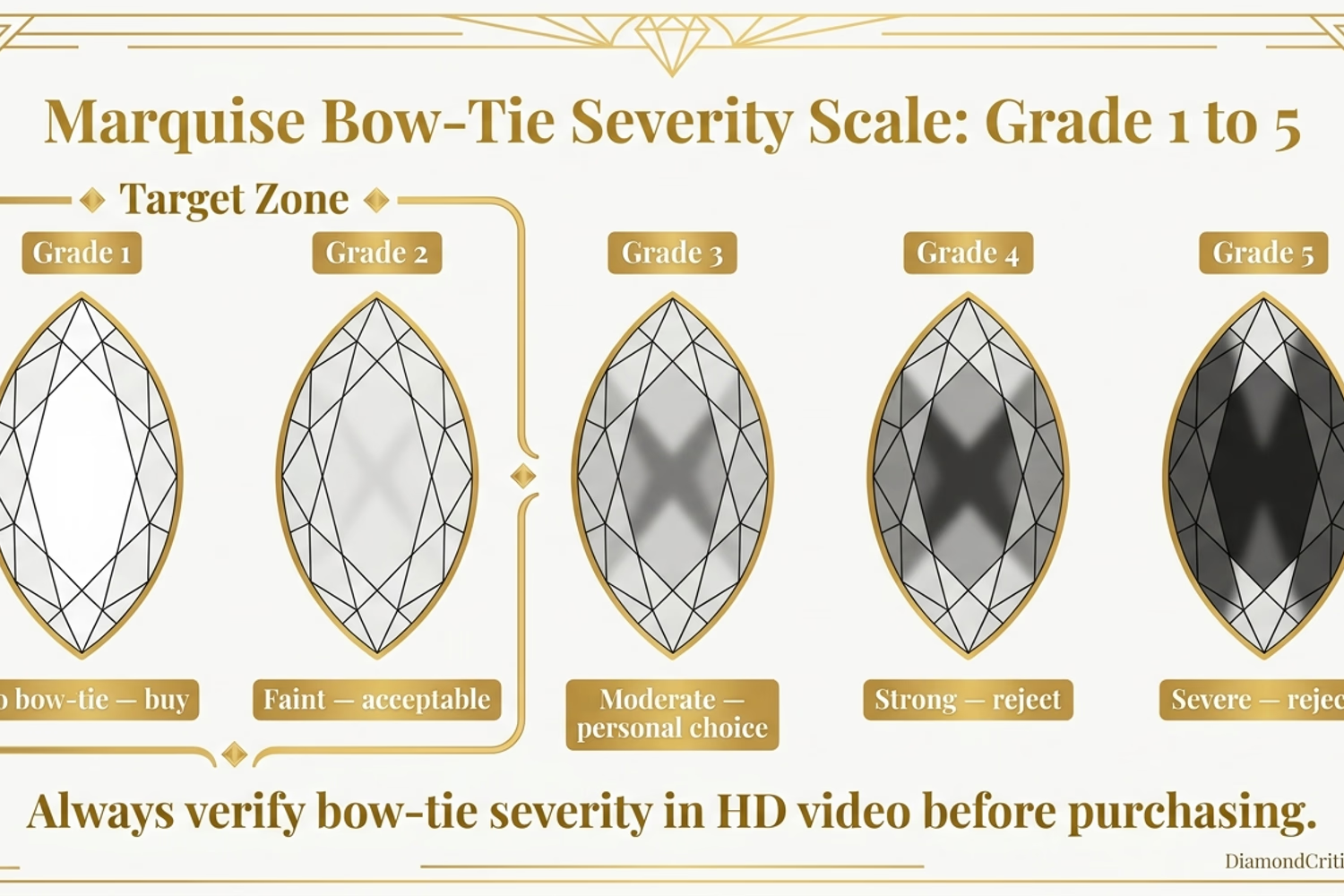
The Bowtie Grading Scale: How to Evaluate Bow-Tie Severity
When requesting video of a marquise diamond, use this framework to assess the bow-tie:
Grade 1 — No visible bow-tie: Center sparkle is uniform; no dark shadow appears under any tested lighting. This is rare and typically commands a premium.
Grade 2 — Faint bow-tie: A very slight darkening visible only in direct overhead lighting; disappears in diffuse or side lighting. Acceptable for purchase.
Grade 3 — Moderate bow-tie: Clearly visible center shadow under overhead lighting; diminishes but remains visible in other lighting. Acceptable for some buyers who prefer the classic marquise look; the bow-tie can add visual depth.
Grade 4 — Strong bow-tie: Dark shadow dominates the visual center regardless of lighting. Visually objectionable. Do not buy.
Grade 5 — Severe bow-tie: Stone appears to have a void in the center. Reject immediately.
Grades 1–2 are the target range. Grade 3 is a personal preference decision. Grades 4–5 are defects.
Lab-Grown Comparison: Where the Math Gets Interesting
The size advantage of marquise becomes more compelling in lab-grown territory:
| Stone | Shape | Grade | Price | Face-up equivalent |
|---|---|---|---|---|
| IGI 1.5ct D-VVS1 Lab-Grown Round | Round | D-VVS1 | $1,950 | 7.4mm diameter |
| IGI 2ct D-VVS1 Lab-Grown Round | Round | D-VVS1 | $2,810 | 8.1mm diameter |
| 1.5ct Lab-Grown Marquise | Marquise | D-VVS1 | ~$1,700–$2,100 | ~14mm × 7mm |
| 2ct Lab-Grown Marquise | Marquise | D-VVS1 | ~$2,500–$3,200 | ~17mm × 8.5mm |
A 1.5ct lab-grown D-VVS1 round at $1,950 has 7.4mm diameter. A 1.5ct lab-grown marquise at similar pricing would face up at approximately 14mm × 7mm — a dramatically longer shape for the same dollar amount. If you are shopping lab-grown and want maximum finger coverage, a marquise in lab-grown is exceptionally efficient: you get elongation and lab-grown pricing together.
Tides Of Summer Capsule
Up To 30% Off
Shop The Sale →Vault ClearanceClear The Vault
Up To 70% Off
Shop Vault Deals →Affiliate link — no extra cost to you
Round vs Marquise: Clarity Requirements
Both round and marquise brilliants can use VS2 as a reliable eye-clean minimum. Unlike step-cut shapes (emerald, asscher), the brilliant-cut faceting on marquise masks inclusions through reflection and light return. The main difference:
- Round VS2: reliably eye-clean in 95%+ of stones; the 58 facets and GIA Excellent cut geometry conceal inclusions extremely well
- Marquise VS2: reliably eye-clean in 80–85% of stones; the elongated wings and tip areas are slightly less effective at masking inclusions near the girdle
For 2ct+ marquise stones, VS2 still works but verify via video. The tips are the most vulnerable area — inclusions placed near the tips of a marquise are more visible than center inclusions because the tip facets provide less masking geometry.
Length-to-Width Ratio: The Shape Decision
The most important non-grade parameter for a marquise diamond is the length-to-width ratio:
| L:W Ratio | Appearance | Recommendation |
|---|---|---|
| <1.60 | Too wide; looks like a flattened oval | Avoid |
| 1.60–1.75 | Wide marquise; distinctive look | Personal preference |
| 1.75–2.00 | Classic marquise proportion | Best for most buyers |
| 2.00–2.25 | Dramatic elongation | Excellent for longer fingers |
| >2.25 | Extremely elongated; fragile tips | Avoid |
The 1.75–2.10 range is where the marquise shape performs best optically and proportionally. Outside this range, the bow-tie risk increases and the tips become structurally more vulnerable.
Which Finger Shapes Suit Which Diamond?
This is a genuine functional consideration:
- Marquise on a shorter, wider finger: the elongation creates an illusion of finger length; marquise is often recommended for this finger type
- Marquise on a longer, narrower finger: the elongation can appear extreme; a round or oval may balance better
- Round on any finger type: the 6.4mm (1ct) or 8.1mm (2ct) circle is proportionally neutral; it works for any finger shape
Farzana's Verdict: The marquise is a legitimate and underrated shape. When you buy correctly — F color minimum, VS2 clarity, bow-tie Grade 1–2 verified by video, L:W ratio 1.75–2.10 — you get genuinely more stone on the finger for the same budget as a round. The Elongation Trade-Off is real but manageable: you do the work upfront (color upgrade, bow-tie check) and you get a shape that creates a distinctively elongated look the round cannot replicate. Where I see buyers go wrong is skipping the video and buying a marquise based on a still photo with a Grade 4 bow-tie they did not see coming. That is the whole game with marquise: see the video, confirm the bow-tie, then decide.
Frequently Asked Questions
Does a marquise diamond look bigger than a round of the same carat?
Yes. A 1ct marquise measures approximately 12mm × 6mm, giving it roughly 75% more face-up surface area than a 1ct round at 6.4mm diameter. In person, the visual impression is a 10–15% larger stone — the elongation creates a more prominent look on the finger. The actual physical area difference is larger than the perceived difference because the eye adjusts for shape.
What color grade do I need for a marquise diamond?
F or G minimum in white gold. The two pointed tips of a marquise concentrate color more than a round brilliant's even facet distribution. A G color round appears colorless in white gold; a G color marquise shows perceptible warmth at the tips. In yellow gold settings, G–H is acceptable since the warm metal masks tip color.
Do all marquise diamonds have a bow-tie?
No, but 40–50% have a bow-tie visible in normal lighting. The bow-tie is a dark shadow in the center of the stone caused by the geometric challenge of the elongated shape — light in the center zone reflects at angles that cannot return to the viewer's eye. Mild bow-ties are acceptable; strong bow-ties are visually objectionable. Always verify via HD video.
Is marquise cheaper than round diamond?
By 10–15% per carat for the same grade. However, marquise requires F–G color (vs G–H for round) to avoid tip color concentration, which adds approximately 8–12% to the per-carat price. Net effective price difference: 0–8% cheaper than round after the necessary quality upgrade.
What is the ideal length-to-width ratio for a marquise diamond?
1.75–2.10 is the practical ideal range. In this range, the marquise has a recognizably elongated football shape without the tips becoming dangerously narrow. Below 1.60, the shape looks too wide and loses its distinctive silhouette. Above 2.25, the tips become structurally fragile and the bow-tie risk increases.
Does a marquise diamond show color more than a round?
Yes, at the tips. This is The Tip Color Trap: the pointed ends of the marquise concentrate color because the facets in this area are smaller and arranged differently than the broad main table facets. Color grades that appear colorless in a round brilliant can show noticeable warmth at the marquise tips. Budget one full color grade higher than you would for a comparable round.
What clarity do I need for a marquise diamond?
VS2 is the minimum for reliable eye-clean appearance, same as round. However, marquise shows inclusions slightly more easily than round at the tips — inclusions within 2–3mm of the points have less masking coverage from the facet geometry. At VS2, verify eye-clean status via video. For 2ct+ marquise, consider VS1 for certainty.
Can I buy a marquise diamond without seeing video?
No. This is non-negotiable. The bow-tie — the most significant quality variable in a marquise cut — is invisible in static photographs taken with overhead direct lighting. It only appears in video that rotates the stone under varying light sources. Any vendor who will not provide HD video of a marquise stone should not receive your business.
How does marquise compare to oval for elongation effect?
Both achieve elongation, but differently. Oval is wider in the middle and provides softer curvature. Marquise has the two pointed tips that create a more dramatic, narrower elongation. Oval typically suffers less from bow-tie (oval bow-ties occur in 50–70% of stones but are often less severe). Marquise provides more face-up length per carat. Marquise requires one grade higher in color. Both require HD video.
Is marquise good for an engagement ring?
Yes, for the right buyer. The elongation and relative rarity of the shape create a distinctive look. The practical considerations: the two tips are structurally vulnerable and should be protected in a setting with V-prongs at the ends; a six-prong or bezel setting is safest for daily wear. The shape is visually striking and photographs well, particularly in side-view ring photos.
See Also
Expert Verdict
Always audit the stone individually — no grade replaces seeing the actual diamond. The certificate tells you what to look for. Your eyes tell you whether to buy.
— Farzana Hasan, GIA Expert · DiamondCritics.com