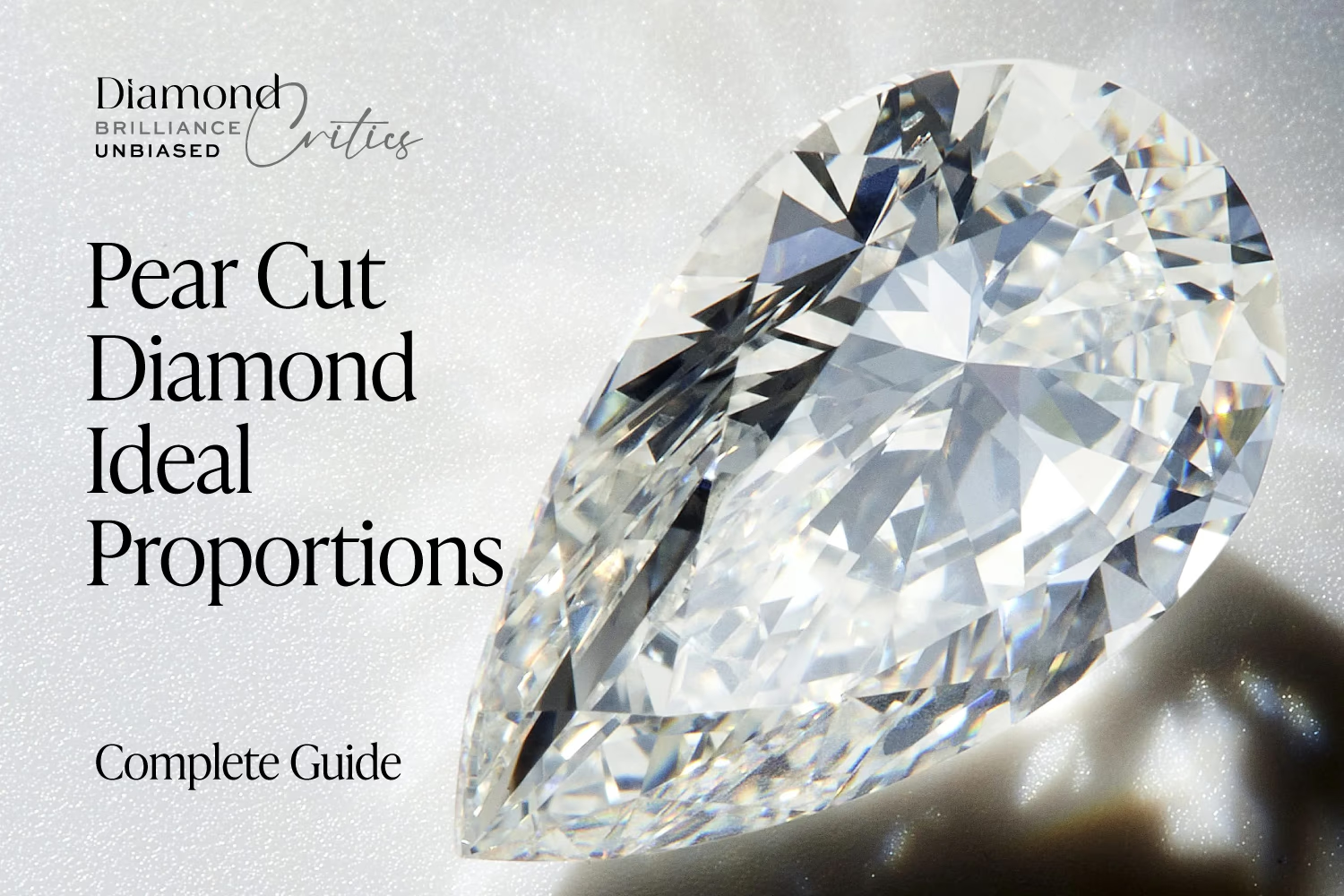
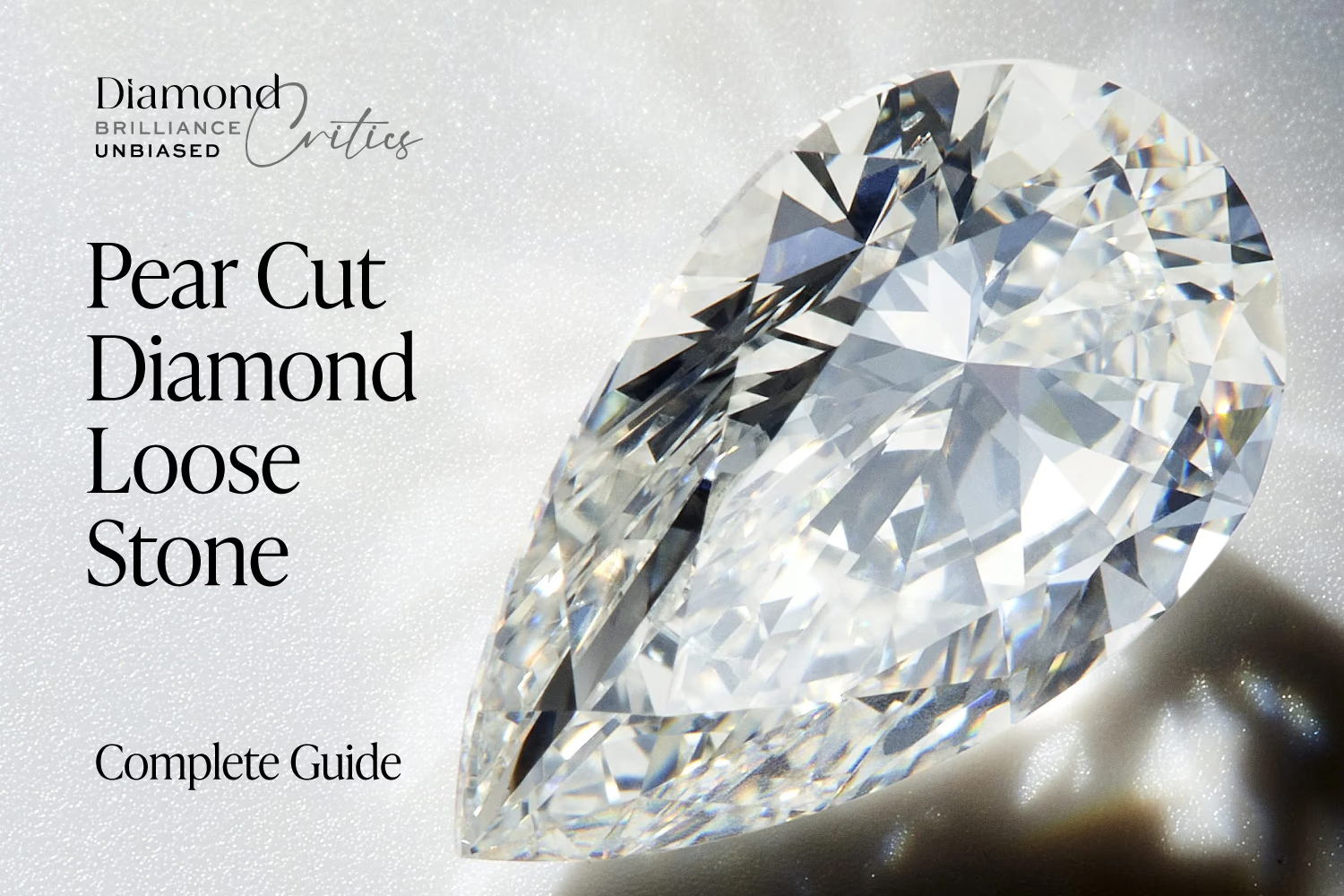
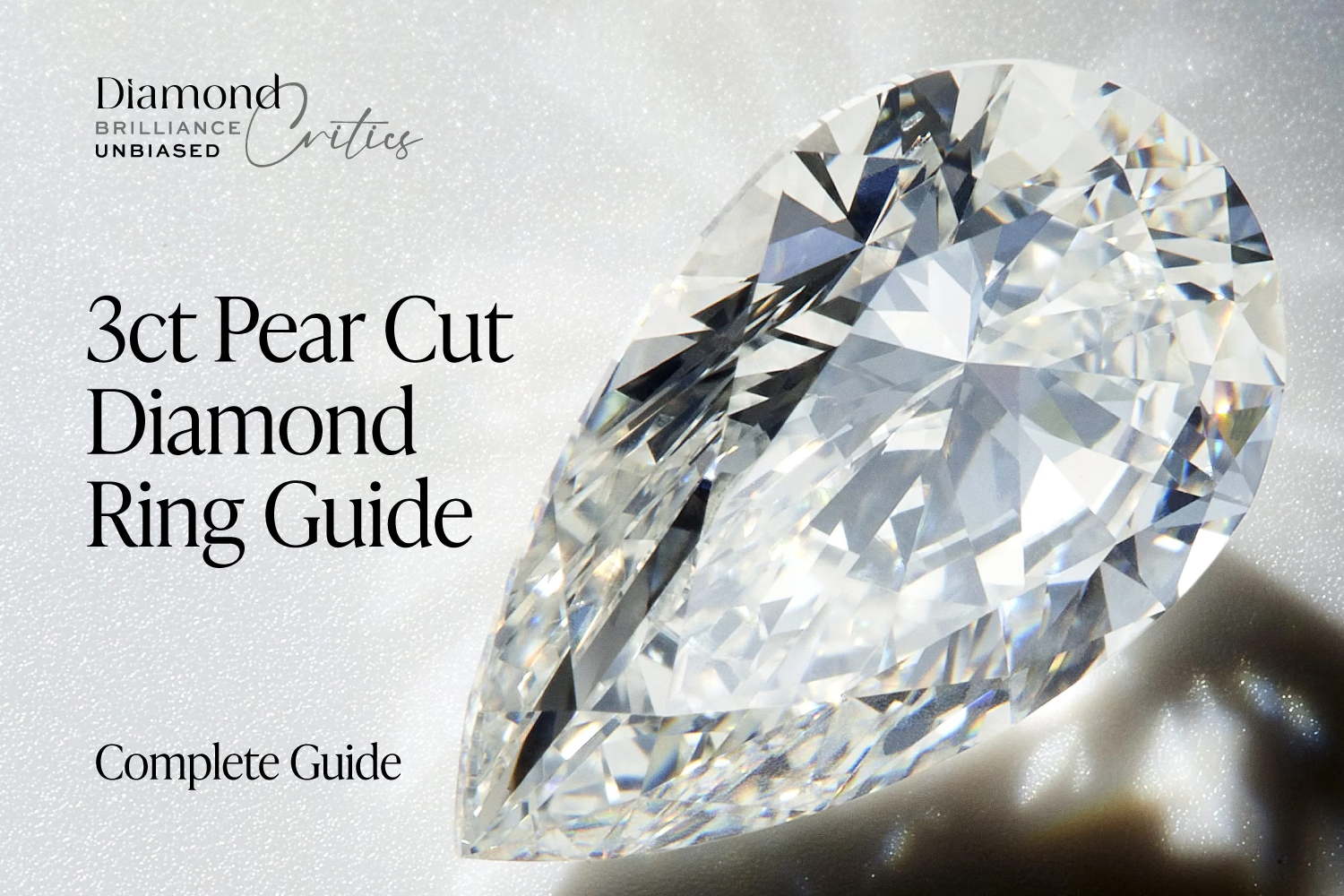
2 Carat Pear Shaped Diamond Ring: Prices & Best Picks 2026
A 2 carat pear shaped diamond ring at Blue Nile starts at $22,605 for a natural GIA E-VVS1 Ideal stone and $2,692 for a lab grown GIA or IGI D-VVS1 Ideal stone — an 88% price gap between natural and lab grown at identical grades. The complete 2ct pear shaped diamond ring total ranges from $23,200–$32,000 for natural with a setting, and $3,200–$8,000 for lab grown with a setting. This guide covers every tier of the 2 carat pear diamond ring: natural GIA pricing, lab grown IGI and GIA options, ring settings, the 2.5ct tier, earrings, necklace use cases, and the specific stone-and-setting combinations that produce the best 2ct pear ring at every budget.
The 2 carat pear shaped diamond is the largest stone size that remains plausibly within a mid-range budget in lab grown form, and the entry point for luxury natural diamond buyers. At approximately 11.5×7.5mm, a 2ct pear in a solitaire setting is unambiguously a statement piece — it covers significantly more finger length than a 1ct pear (8.5×5.7mm) and presents an elongated silhouette that commands attention on the hand.
TL;DR: 2 Carat Pear Shaped Diamond Ring — What to Know
- Natural GIA 2ct pear ring: Stone $22,605 E-VVS1 or $27,700 F-VS1 + setting. Total ring $23,200–$32,000+.
- Lab grown 2ct pear ring: Stone $2,692 D-VVS1 GIA Ideal + setting. Total ring $3,200–$4,000 at solitaire. D-IF upgrades at $4,941 IGI or $6,393 GIA.
- Natural vs lab savings at 2ct: $22,605 natural vs $2,692 lab — 88% savings for physically identical D-VVS1 Ideal stones. This is the widest savings gap in the pear diamond category.
- 2.5ct pear ring: Natural GIA 2.5ct runs ~$35,000–$55,000 total. Lab grown 2.5ct runs ~$4,000–$6,000 total.
- 2ct pear earrings: Two 1ct pear lab stones at $1,006 each = $2,012 pair; two 1ct natural stones at $3,803 each = $7,606 pair — before earring settings.
- Priority: → The GIA D-VVS1 Ideal lab grown at $2,692 is the single best purchase in the entire pear diamond category. 2ct at D-VVS1 GIA certified for $2,692. No other diamond shape, carat weight, or origin delivers this combination. Natural buyers: the $22,605 E-VVS1 is the only entry point — inventory is extremely limited at this tier.


2 Carat Pear Shaped Diamond Price: Natural GIA
Natural 2ct pear shaped diamonds are among the rarest stones in Blue Nile's inventory. Unlike the 1ct tier with dozens of GIA Ideal options, Blue Nile carries only a handful of natural GIA 2ct pear diamonds at any given time. This scarcity is real and geological — the rough diamond crystal required to yield a clean 2ct pear with ideal proportions must weigh approximately 3.5–4.5ct before cutting, and natural rough at this weight in the correct geometry is genuinely uncommon.
| Stone | Cut | Color | Clarity | Price | Ring Total (Solitaire) |
|---|---|---|---|---|---|
| GIA 2.00ct E-VVS1 | Ideal | E | VVS1 | $22,605 | $23,200–$24,500 |
| GIA 2.00ct F-VS1 | Ideal | F | VS1 | $27,700 | $28,300–$29,700 |
Reading the natural 2ct table: Blue Nile carries only two natural GIA Ideal 2ct pear diamonds at time of writing. The E-VVS1 at $22,605 is the entry point for the entire natural 2ct pear category — it is not an average price or a baseline; it is the lowest available price for a certified, Ideal-cut natural 2ct pear from a top-tier retailer. The F-VS1 at $27,700 carries a $5,095 premium for F color (one grade below E) at VS1 clarity (below VVS1).
For most buyers, the E-VVS1 represents the better value — higher clarity tier at lower price.
Natural 2ct pear inventory changes frequently. If neither stone above is available, check Blue Nile's natural pear diamond search filtered to 1.90–2.10ct and GIA certification — see the Loose Pear Diamonds guide for a full breakdown of natural vs lab stone pricing by carat.
For context on how 2ct natural prices compare to 1ct: the 1ct natural GIA D-VS1 entry is $3,803/ct; the 2ct E-VVS1 entry is $11,303/ct — nearly 3× the per-carat price. That premium is the 2ct Rarity Premium.
The 2ct Rarity Premium
At 1ct, natural GIA pear diamonds start at $3,803 — $3,803 per carat. At 2ct, the entry is $22,605 — $11,303 per carat. The same grade tier (colorless, eye-clean, Ideal cut) costs nearly three times more per carat at 2ct — this is the 2ct Rarity Premium.
The Rarity Premium is not a markup by retailers — it is geological. A natural diamond crystal large enough to yield a clean, well-proportioned 2ct pear requires substantially more rough than two separate 1ct crystals. The pear's elongated shape is also the most demanding geometry for rough utilization — more raw material is lost in cutting a pear than in cutting a round at equivalent carat weights, and at 2ct this waste cost multiplies.
What the 2ct Rarity Premium means for buyers:
The premium is irreducible for natural diamonds — it is the market price for rarity. Buyers who want a 2ct natural pear shaped diamond ring at Blue Nile should expect $22,605+ for the stone alone and plan for a total ring budget of $23,000–$30,000 minimum. Buyers who want a 2ct face-up size at a fraction of the natural cost should evaluate lab grown — the 2ct lab pear at $2,692 is not a compromise; it is a physically identical stone at 88% savings.
The Rarity Premium also explains why 2ct natural pear inventory is thin: demand exceeds supply at this carat weight and shape combination. When specific stones are available, they move quickly. For natural 2ct pear buyers: verify availability before building a budget around a specific stone, and check Blue Nile's natural pear search in the 1.90–2.10ct range for the current full list.
2ct Pear Ring Settings
A 2 carat pear shaped diamond ring setting carries the same style options as a 1ct setting, but the stone's larger physical footprint (approximately 11.5×7.5mm) means settings must be specifically sized for 2ct. Standard solitaire settings designed for 1ct pear stones will not fit a 2ct stone — Blue Nile's setting system allows you to select a compatible setting after specifying the stone, ensuring proper fit.
Solitaire settings for 2ct pear rings ($500–$1,000): A five-prong pear solitaire with V-tip in 14K white gold runs $500–$800 for a 2ct-compatible size. Platinum solitaires start at $900+. The solitaire is the recommended setting for a 2ct pear — it puts the entire 11.5×7.5mm silhouette on display with no visual interruption.
At 2ct, the stone is large enough to be the unambiguous center of attention without a halo frame.
Sidestone settings for 2ct pear rings ($1,400–$2,200): The Pear Sidestone Diamond Engagement Ring in 14K Yellow Gold at $1,820 flanks the 2ct pear center with side diamonds. Combined with the lab grown GIA D-VVS1 at $2,692, the total ring is $4,512 — a complete 2ct natural-equivalent engagement ring for under $4,600. In white gold, the same sidestone style is available at $1,400–$1,800.
Halo settings for 2ct pear rings ($2,800–$4,005): The Pear Shape Side Stone Diamond Halo Engagement Ring in 14K White Gold at $3,570 and the Platinum version at $4,005 add a perimeter frame around the 2ct center. At 2ct, a halo is largely redundant — the stone is large enough to command the hand without amplification. Buyers who want a halo on a 2ct pear should do so for aesthetic reasons, not for size perception.
With the natural E-VVS1 at $22,605, the platinum halo ring totals $26,610.
For every pear diamond setting style and the metal multiplier effect, see the Pear Diamond Engagement Ring Guide.
The Lab Value Inflection
The 2ct tier is where lab grown pear diamond economics become genuinely transformational. At 1ct, the savings are significant: $3,803 natural vs $1,006 lab grown = 74% savings. At 2ct, the gap widens to 88%: $22,605 natural vs $2,692 lab grown — an absolute dollar difference of $19,913 on the stone alone.
This is the Lab Value Inflection: the point at which the financial case for lab grown diamonds shifts from "meaningful" to "overwhelming." A buyer allocating $25,000 to a natural 2ct pear ring gets one stone, one setting. The same buyer choosing lab grown can purchase the GIA D-VVS1 Ideal lab pear at $2,692, a platinum halo setting at $4,005, and retain $18,000 from their $25,000 budget.
The lab grown stone is physically, chemically, and optically identical to the natural equivalent — the only difference is origin.
What the Lab Value Inflection means in practice:
A buyer with a $5,000–$7,000 total ring budget cannot buy a natural 2ct pear ring. The natural stone alone starts at $22,605. The same budget buys a lab grown 2ct pear ring at D-VVS1 GIA Ideal ($2,692 stone) with a high-quality setting and money left over.
There is no other diamond shape or carat weight where the lab grown option opens a tier that is otherwise completely inaccessible to the same budget.
The Lab Value Inflection is also why the 2ct lab grown pear diamond is the most discussed stone in the pear category — it represents a genuine democratization of a size that was previously accessible only to luxury budgets.
Lab Grown 2 Carat Pear Shaped Diamond Ring
Lab grown 2ct pear diamonds at Blue Nile are certified by IGI, GIA, or GCAL and are physically identical to natural 2ct pear diamonds. The entry price is $2,692 for D-VVS1 Ideal, available in both IGI and GIA certification at the same price point. The upgrade path to D-IF runs $4,941 (IGI) or $6,393 (GIA D-IF) or $8,103 (GIA D-FL).
| Stone | Cut | Color | Clarity | Cert | Price | Ring Total (Solitaire) |
|---|---|---|---|---|---|---|
| IGI 2.00ct D-VVS1 | Excellent | D | VVS1 | IGI | $2,692 | ~$3,200–$3,500 |
| GIA 2.00ct D-VVS1 | Ideal | D | VVS1 | GIA | $2,692 | ~$3,200–$3,500 |
| IGI 2.00ct D-VVS1 | Ideal | D | VVS1 | IGI | $2,692 | ~$3,200–$3,500 |
| IGI 2.00ct D-VVS1 | Ideal | D | VVS1 | IGI | $2,798 | ~$3,300–$3,600 |
| IGI 2.00ct D-IF | Ideal | D | IF | IGI | $4,941 | ~$5,500–$5,900 |
| IGI 2.00ct D-FL | Ideal | D | FL | IGI | $4,941 | ~$5,500–$5,900 |
| GIA 2.00ct E-IF | Ideal | E | IF | GIA | $5,758 | ~$6,300–$6,700 |
| GIA 2.00ct D-IF | Ideal | D | IF | GIA | $6,393 | ~$6,900–$7,300 |
| GIA 2.00ct D-FL | Ideal | D | FL | GIA | $8,103 | ~$8,700–$9,100 |
Which 2ct lab pear to choose:
At D-VVS1, GIA and IGI are identically priced at $2,692. The GIA D-VVS1 Ideal at $2,692 is the correct choice when prices match — GIA global name recognition costs nothing extra here. The upgrade to D-IF (IGI) at $4,941 is $2,249 more than the D-VVS1 entry.
VVS1 is already eye-clean and microscopically flawless in appearance; D-IF's improvement is meaningful only under magnification. The $2,249 is better spent on the setting or retained. The exception: buyers who want a GIA D-IF specifically for documentation prestige should choose $6,393 GIA D-IF — the premium over IGI D-IF is $1,452.
For a full breakdown of certification standards for lab grown pear diamonds, see the Lab Grown Pear Diamond Guide.
2 Carat Pear Shaped Diamond Ring: Natural vs Lab Price Comparison
| Grade | Natural GIA | Lab GIA/IGI | Savings | Savings % |
|---|---|---|---|---|
| D-VVS1 Ideal | N/A at 2ct (E-VVS1 entry $22,605) | $2,692 | ~$19,913 | ~88% |
| E-VVS1 Ideal | $22,605 | ~$2,700–$3,000 | ~$19,700 | ~87% |
| F-VS1 Ideal | $27,700 | ~$2,800–$3,200 | ~$24,600 | ~89% |
| D-IF Ideal | Rare/market pricing ~$40,000+ | $6,393 (GIA) | ~$33,600 | ~84% |
The natural 2ct pear diamond commands a premium that no grade justification fully explains at face value — the premium is almost entirely for geological origin. For buyers to whom natural origin matters (heirloom significance, resale investment, personal values), the natural price is correct and the stone is genuinely rare. For buyers whose priority is face-up size, grade quality, and certified brilliance, the lab grown 2ct pear at $2,692 delivers every measurable optical property of the natural equivalent.
2.5 Carat Pear Diamond Ring
The 2.5 carat pear diamond ring is a significant step up from the 2ct tier in both size and price. At approximately 12.5×8.5mm, a 2.5ct pear shaped diamond covers the upper portion of most fingers from knuckle to palm and is unambiguously a luxury statement piece in any setting.
2.5ct natural pear diamond ring price: Natural GIA 2.5ct pear diamonds are rare at Blue Nile — rarer than 2ct stones. When available, D-VS1 Ideal 2.5ct pear diamonds typically run $35,000–$55,000; per-carat pricing typically runs $14,000–$22,000/ct — a super-linear rarity premium above 2ct. For current inventory, filter Blue Nile's natural pear search by 2.40–2.60ct and GIA only.
2.5ct lab grown pear diamond ring price: Lab grown 2.5ct IGI D-VVS1 Ideal pear diamonds at Blue Nile typically run $3,200–$4,500 — roughly 20–60% above the 2ct lab entry. With a solitaire setting at $500–$800, the complete 2.5ct lab grown pear ring total is $3,700–$5,300. For current lab grown 2.5ct pear availability, see Blue Nile's lab pear search filtered to 2.40–2.60ct.
2ct vs 2.5ct pear ring: which to choose:
| 2ct Pear Ring | 2.5ct Pear Ring | |
|---|---|---|
| Approx. dimensions | 11.5×7.5mm | 12.5×8.5mm |
| Natural GIA stone | $22,605–$27,700 | ~$35,000–$55,000 |
| Lab IGI stone | $2,692–$2,811 | ~$3,200–$4,500 |
| Natural ring total | $23,200–$29,000 | ~$36,000–$57,000 |
| Lab ring total | $3,200–$3,600 | ~$3,700–$5,300 |
For natural buyers, the 2ct vs 2.5ct decision is a $12,000–$27,000 budget question for a 1mm size difference in length. For lab grown buyers, the increment is $500–$1,700 for a meaningfully larger stone. Lab grown 2.5ct buyers should evaluate the upgrade seriously — the price difference is modest and the visual impact is real.
2 Carat Pear Shaped Diamond Earrings
A 2 carat pear shaped diamond earring query typically refers to one of two products: a pair of earrings with approximately 1ct per ear (2ct total weight, abbreviated 2CTW), or a pair where each earring carries a 2ct stone (4ct total). The practical and more common interpretation for pear drop earrings is 2CTW — two pear diamonds totaling 2ct, typically around 1ct each, worn as matched drops.
2ct total weight (2CTW) pear earrings — lab grown: Two matched lab grown pear diamonds at approximately 1ct each. Using the IGI D-VVS1 Ideal 1ct pear at $1,006 per stone, the pair of loose stones is $2,012. Earring settings for pear drops in 14K white gold run $300–$800 for the pair; total 2CTW pear drop earring cost (lab grown) is approximately $2,300–$2,800.
2ct total weight (2CTW) pear earrings — natural: Two matched natural GIA 1ct pear diamonds. Using the $3,803 D-VS1 entry per stone, the pair of loose stones is $7,606. Add earring settings ($300–$800) for a total of $7,900–$8,400 for 2CTW natural pear drop earrings.
"2 half carat pear shape diamonds": This search term refers to two 0.50ct pear diamonds — typically for smaller pear drop earrings or a minimal pear stud. At 0.50ct each (1CTW total), both natural and lab grown 0.5ct pear options are available via Blue Nile's pear diamond search filtered to 0.45–0.55ct. Prices for natural 0.5ct pear stones run approximately $900–$1,800 each; lab grown 0.5ct pear runs approximately $300–$600 each.
For all Blue Nile pear earring styles — studs, drops, huggies, bezel vs prong, CTW explained — see the Pear Shaped Diamond Earrings Guide.
2 Carat Pear Shaped Diamond Necklace
A 2ct pear shaped diamond necklace uses the pear's elongated silhouette to maximum effect: hanging point-down on a chain, a 2ct pear creates a teardrop pendant approximately 11.5×7.5mm in length — a clearly visible statement pendant at standard chain lengths (16"–18"). The pear necklace category at this size attracts buyers upgrading from smaller solitaire pendants or seeking an anniversary or milestone gift.
2ct natural pear diamond necklace cost: A 2ct natural GIA pear pendant uses the same stone pool as the ring category — the $22,605 E-VVS1 stone plus a pendant mounting ($400–$1,200) = $23,000–$23,800 total pendant. Natural 2ct pear necklaces are rare and typically require custom pendant fabrication or Blue Nile's build-your-own-jewelry path.
2ct lab grown pear diamond necklace cost: The $2,692 GIA D-VVS1 Ideal lab pear in a pendant mounting ($400–$800) = $3,092–$3,492 for a complete 2ct lab grown pear pendant. This is the most accessible 2ct pear necklace option: a D-VVS1 GIA certified lab stone in a 14K pendant, delivered under $3,500.
For every Blue Nile pear pendant and necklace style including bezel vs prong, point-up vs east-west, and chain length guidance, see the Pear Diamond Necklace Guide and Pear Diamond Pendant Guide.
Color Grade for a 2 Carat Pear Shaped Diamond Ring
Color selection at 2ct matters more than at 1ct. The larger stone surface amplifies any warmth in the stone — what reads as neutral or near-colorless at 1ct can show a detectable warmth at 2ct, particularly at the pear's elongated tip in white metal settings.
White gold or platinum settings: D–F is the recommended color range for a 2ct pear in white metal. D is absolute colorless — the standard for buyers who want no visible warmth anywhere in the stone. E provides equivalent visual performance to D in nearly all settings and saves $800–$2,000 at 2ct grade levels.
F is the practical lower boundary for white metal at 2ct — in certain lighting, F warmth at the pear tip is detectable by a trained eye.
G color at 2ct: G near-colorless is acceptable for a 2ct pear diamond ring in white gold if budget constrains higher color — but unlike at 1ct where G is the recommended value pick, at 2ct the color concentration at the tip is more noticeable. The natural 2ct E-VVS1 at $22,605 is E color for this reason; natural 2ct pear inventory at G or below is typically priced lower but carries a visible warmth trade-off.
Yellow or rose gold settings: G–J color is fully acceptable for 2ct pear diamonds in yellow or rose gold. The warm metal masks any stone warmth — even an I or J color pear reads as visually neutral in a yellow gold setting. Buyers choosing yellow gold for a 2ct pear diamond ring can reallocate the color budget to clarity or carat upgrades.
Lab grown 2ct pear color: All available lab grown 2ct pear options at the D-VVS1 entry price are D color — the highest grade. There is no reason to accept lower color in lab grown at $2,692 when D is the default. At D-IF and D-FL tier ($4,941–$8,103), the stones remain D color regardless.
Color is a non-issue in lab grown 2ct pear selection; the decision is certification tier and clarity grade only.
Tides Of Summer Capsule
Up To 30% Off
Shop The Sale →Vault ClearanceClear The Vault
Up To 70% Off
Shop Vault Deals →Affiliate link — no extra cost to you
2ct Pear Shaped Diamond Ring Total Examples
| Stone | Stone Price | Setting Style | Setting Price | Ring Total |
|---|---|---|---|---|
| GIA 2ct D-VVS1 Lab | $2,692 | 14K WG Solitaire | ~$600 | ~$3,292 |
| GIA 2ct D-VVS1 Lab | $2,692 | 14K YG Sidestone | $1,820 | $4,512 |
| GIA 2ct D-VVS1 Lab | $2,692 | 14K WG Halo | $3,570 | $6,262 |
| IGI 2ct D-IF Lab | $4,941 | 14K WG Solitaire | ~$600 | ~$5,541 |
| GIA 2ct D-IF Lab | $6,393 | Platinum Halo | $4,005 | $10,398 |
| GIA 2ct E-VVS1 Natural | $22,605 | 14K WG Solitaire | ~$600 | ~$23,205 |
| GIA 2ct E-VVS1 Natural | $22,605 | 14K WG Halo | $3,570 | $26,175 |
| GIA 2ct F-VS1 Natural | $27,700 | Platinum Halo | $4,005 | $31,705 |
What to Check Before Buying a 2ct Pear Shaped Diamond
Buying a 2ct pear shaped diamond requires the same proportions checklist as any pear, but the stakes are higher — at $2,692–$22,605 for the stone alone, a single proportions defect costs significantly more to resolve than at 1ct.
Certificate: GIA or IGI only — review the full certification framework in the Pear Cut Diamond Guide. Verify the certificate number at gia.edu or igiworldwide.com before purchase. At 2ct, every stone should be independently verified — no exceptions.
L/W ratio: Calculate from mm dimensions (length ÷ width). At 2ct, target 1.55–1.65 for a solitaire ring. The 2ct pear at the right L/W reads as 11.5mm long — a distinctly elongated silhouette. Below 1.45, the stone loses its elongated character at 2ct and begins to look like a bloated oval. Above 1.75, the stone appears pencil-narrow in a standard setting.
Depth %: Target 58–63%. A 2ct pear at 65% depth hides significant mass below the girdle — you are paying 2ct prices for a stone that presents less face-up area than a properly proportioned 2ct should.
Symmetry: GIA Excellent or Very Good required. At 2ct, asymmetry in the shoulder arcs or tip position is visible to the naked eye. The pear must be perfectly balanced — both wings matching, both shoulder arcs smooth. Review The Shoulder Crush concept in the Pear Diamond Ideal Proportions Guide.
Bow-tie: Watch the 360° video on every 2ct pear before purchasing. The bow-tie shadow at a 2ct pear is more prominent than at 1ct — the larger facet pattern amplifies both the positive brilliance return and the negative bow-tie shadow. A faint shadow is acceptable; a wide dark band is not — only the video reveals which you have.
Fluorescence: For natural 2ct D–F color pear stones, none or faint fluorescence is the conservative choice. Strong blue fluorescence in colorless-grade natural stones can cause visible haziness under UV-heavy indoor light at this size.
For the full 8-step cut quality evaluation including depth, table, symmetry, polish, curvature, and bow-tie framework, see the Pear Diamond Ideal Proportions Guide.
2 Carat Pear Shaped Diamond Ring Optimization Matrix
| Stone | Cert | Type | Stone Price | Setting | Ring Total | Best For |
|---|---|---|---|---|---|---|
| GIA D-VVS1 Ideal | GIA | Lab | $2,692 | 14K Solitaire ~$600 | ~$3,292 | Best purchase in pear category; 2ct GIA D-VVS1 ring under $3,500 |
| IGI D-VVS1 Excellent | IGI | Lab | $2,692 | 14K Solitaire ~$600 | ~$3,292 | IGI alternative at same price; choose GIA when prices match |
| GIA D-VVS1 Ideal | GIA | Lab | $2,692 | 14K YG Sidestone $1,820 | ~$4,512 | 2ct GIA lab pear sidestone ring; complete under $4,600 |
| IGI D-IF Ideal | IGI | Lab | $4,941 | 14K Solitaire ~$600 | ~$5,541 | Internally Flawless 2ct lab pear; complete ring under $5,600 |
| IGI D-IF Ideal | IGI | Lab | $4,941 | 14K WG Halo $3,570 | ~$8,511 | D-IF 2ct pear halo ring; looks 2.5ct+ face-up |
| GIA D-IF Ideal | GIA | Lab | $6,393 | Platinum Halo $4,005 | ~$10,398 | Premium lab 2ct pear ring; GIA D-IF, platinum halo, maximum certified build |
| GIA E-VVS1 Ideal | GIA | Natural | $22,605 | 14K Solitaire ~$600 | ~$23,205 | Natural 2ct pear entry; E-VVS1 colorless, GIA; complete ring $23,200 |
| GIA E-VVS1 Ideal | GIA | Natural | $22,605 | 14K WG Halo $3,570 | ~$26,175 | Natural 2ct pear halo ring; E-VVS1, halo adds presence |
| GIA F-VS1 Ideal | GIA | Natural | $27,700 | Platinum Halo $4,005 | ~$31,705 | Premium natural 2ct ring; F-VS1, platinum halo, maximum natural build |
Final Verdict: Which 2ct Pear Shaped Diamond Ring to Buy
Best overall purchase in the pear diamond category: GIA D-VVS1 Ideal lab grown 2ct pear at $2,692 + 14K solitaire at ~$600 = ring total ~$3,292. This is the single most compelling diamond ring purchase available at Blue Nile, in any shape or carat weight: 2ct, D colorless, VVS1 clarity, Ideal cut, GIA certified. The natural equivalent costs $22,605 for the stone alone — the lab stone is physically identical.
Best lab grown 2ct pear ring under $4,500: GIA D-VVS1 Ideal at $2,692 + 14K YG sidestone setting at $1,820 = $4,512 total. A 2ct GIA D-VVS1 Ideal pear diamond ring with side stones for under $4,600.
Best lab grown 2ct pear with maximum grade documentation: GIA D-IF Ideal at $6,393 + platinum halo at $4,005 = $10,398 total. D color, Internally Flawless, GIA certified, platinum halo. The natural equivalent at this specification would exceed $40,000.
Best natural 2ct pear ring: GIA E-VVS1 Ideal at $22,605 + 14K solitaire. Ring total ~$23,200. This is the correct natural 2ct pear ring for buyers who specifically want geological origin — a genuinely rare stone, GIA certified, E colorless, VVS1 clarity. Budget $25,000+ for the complete ring with a quality setting.
Expert Summary
The 2ct pear shaped diamond ring is the most interesting purchase decision in my category because the natural vs lab gap here is genuinely extreme. At 1ct, the lab savings are significant. At 2ct, they become almost absurd — $22,605 vs $2,692 for the same D-VVS1 Ideal grade. I'm not going to tell someone that natural origin doesn't matter; for some buyers it matters a great deal. But I want buyers to understand what they're paying for: at 2ct, the premium is almost entirely for the geological story, not for any optically measurable difference. The lab grown stone at $2,692 will pass every visual test, every brilliance test, and every certification test that the natural stone at $22,605 passes.
On proportions at 2ct: the bow-tie check is critical. A 2ct pear with a severe bow-tie is a much bigger problem than at 1ct — the shadow is larger, more visible, and ruins the stone's primary visual asset, which is its face-up presence. Watch the video on every stone before purchasing. At this price level, that three-minute check is the most important thing you can do.
— Farzana Hasan, Fine Jewelry Analyst
Frequently Asked Questions
How much does a 2 carat pear shaped diamond ring cost?
A 2 carat pear shaped diamond ring costs $23,200–$32,000+ for natural GIA (stone $22,605–$27,700 + setting), or $3,200–$8,000 for lab grown IGI/GIA (stone $2,692–$6,393 + setting). The natural-to-lab savings at 2ct is 88% — the largest per-carat savings gap in the pear diamond category.
What is the best 2 carat lab grown pear diamond?
The GIA D-VVS1 Ideal at $2,692 is the best 2ct lab grown pear diamond at Blue Nile — GIA certified, D colorless, VVS1 clarity, Ideal cut. When GIA and IGI are identically priced, GIA is the correct choice. For the D-IF upgrade: IGI D-IF at $4,941 or GIA D-IF at $6,393.
How big does a 2ct pear shaped diamond look?
A 2ct pear shaped diamond measures approximately 11.5×7.5mm at a standard 1.55–1.65 L/W ratio. It is clearly visible on any finger — the pear's elongated silhouette at 2ct covers most of the finger space between knuckle and second joint, and presents more face-up area than a 2ct round (approximately 8.2mm diameter). For mm dimensions by carat, see the Pear Diamond Size Chart.
What is the 2 carat pear shaped diamond ring price in lab grown?
Lab grown 2ct pear shaped diamond rings at Blue Nile: stone $2,692 (D-VVS1 GIA/IGI Ideal), ring total $3,200–$3,600 with a solitaire; D-IF upgrade $4,941 (IGI) or $6,393 (GIA), ring total $5,500–$7,000. GIA D-FL top option: $8,103 stone, ring total $8,700–$9,100. See the Lab Grown Pear Diamond Guide for the full lab pricing spectrum.
What color should a 2 carat pear shaped diamond ring be?
D–F color is recommended for 2ct pear diamonds in white gold or platinum settings. At 2ct, the pear's elongated facet pattern creates a larger color gradient from tip to shoulder, making color concentration at the point more visible than at 1ct — G is the practical minimum for white metal. In yellow or rose gold, G–I color is acceptable — the warm metal neutralizes any warmth in the stone.
What L/W ratio is best for a 2 carat pear shaped diamond?
1.55–1.65 for a standard solitaire or halo setting; east-west settings work best at 1.40–1.55. At 2ct, this produces an approximately 11.5mm long stone — clearly elongated and visually striking without appearing overly narrow. Calculate from the mm dimensions on Blue Nile's product page: length ÷ width.
How does a 2ct pear compare to a 2ct round diamond in size?
A 2ct pear (approximately 11.5×7.5mm) presents more finger coverage than a 2ct round (approximately 8.2mm diameter) because the elongated shape distributes the stone's mass along the finger rather than concentrating it in a symmetrical circle. The pear's face-up area is larger than the round's at equal carat weight. This is the Elongation Dividend that makes pear diamonds the largest-looking stone per carat in the brilliant cut family.
What does a 2.5 carat pear diamond ring cost?
Natural GIA 2.5ct pear diamond rings total approximately $36,000–$57,000 (stone ~$35,000–$55,000 + setting). Lab grown IGI 2.5ct pear diamond rings total approximately $3,700–$5,300 (stone ~$3,200–$4,500 + setting). At lab grown pricing, the 2.5ct upgrade from 2ct costs approximately $500–$1,700 more on the stone — a meaningful step-up for a noticeably larger stone.
What is a 2 carat pear shaped diamond engagement ring?
A 2 carat pear shaped diamond engagement ring is the same product as a 2ct pear ring — the term "engagement ring" indicates the intended use rather than a different product category. At Blue Nile, you select a 2ct pear loose diamond and a compatible pear engagement ring setting separately; Blue Nile assembles and ships the finished ring. The most popular 2ct pear engagement ring builds are: lab grown D-VVS1 GIA Ideal + 14K solitaire ($3,292 total) and lab grown D-VVS1 GIA Ideal + 14K WG halo ($6,262 total).
Should I buy natural or lab grown for a 2 carat pear diamond ring?
Lab grown, unless natural origin specifically matters to you. The financial case at 2ct is overwhelming: 88% savings, physically identical stone, same certification — the GIA D-VVS1 Ideal lab pear at $2,692 is the correct default for buyers who want a 2ct pear ring. Natural: buy if geological origin, heirloom value, or resale investment are your priorities — expect $22,605+ for the stone and $23,000+ for the ring.
How much does a 2 carat pear diamond necklace cost?
A 2ct natural GIA pear diamond necklace costs $23,000–$24,000 total (stone $22,605 + pendant mounting $400–$1,200). A 2ct lab grown pear diamond necklace costs $3,100–$3,500 total (stone $2,692 + pendant mounting $400–$800). For all Blue Nile pear pendant styles and pricing, see the Pear Diamond Pendant Guide.
What does 2 carat pear shaped diamond earrings cost?
For 2CTW (one carat per ear) lab grown pear drop earrings: two 1ct IGI D-VVS1 pear stones at $1,006 each ($2,012 pair) + earring settings ($300–$800) = $2,300–$2,800 total. For 2CTW natural GIA pear earrings: two 1ct GIA D-VS1 pear stones at $3,803 each ($7,606 pair) + settings = $7,900–$8,400 total. For all Blue Nile pear earring styles and CTW options, see the Pear Shaped Diamond Earrings Guide.
What is the difference between IGI and GIA for a 2ct lab grown pear?
At 2ct D-VVS1, GIA and IGI are identically priced at $2,692 — choose GIA for greater global recognition at no premium. At D-IF, IGI is $4,941 vs GIA's $6,393 — a $1,452 premium for the GIA name; at D-FL, GIA is $8,103 vs IGI's $4,941 — again a GIA premium. For buyers focused on value, IGI D-VVS1 at $2,692 delivers the same graded quality as GIA D-VVS1 at the same price; for buyers who want GIA documentation specifically, GIA D-VVS1 at $2,692 or GIA D-IF at $6,393.
See Also
- Pear Cut Diamond: Complete Buying Guide — Bow-tie audit, L/W ratios, GIA grading, and full price data across all pear tiers
- Lab Grown Pear Diamond Guide — The Clarity Premium Collapse, The 2ct Tipping Point, IGI vs GIA, full lab pear pricing 1ct–4.5ct+
- 1 Carat Pear Shaped Diamond Ring Guide — The Elongation Dividend, The Ring Total Formula, natural from $3,803, lab from $1,006
- 3 Carat Pear Shaped Diamond Ring Guide — The Statement Threshold, The Scarcity Multiplier, natural GIA from $45,539, lab grown from $5,316, and ring settings guide
- Loose Pear Diamonds: Natural & Lab Grown Prices — The Certification Trap, The Stone-First Rule, natural and lab pricing 1ct–4ct+
- Pear Diamond Ideal Proportions Guide — The Shoulder Crush, The Bow-Tie Threshold, and the 8-step cut quality framework
- Pear Diamond Size Chart — MM dimensions by carat from 0.25ct to 5ct, L/W ratio guide, and prices from half carat to 5ct
- Pear Diamond Engagement Ring — The Engagement Premium, The Carat Ladder, settings and complete ring pricing
- Pear Diamond Halo Ring — Single halo, double halo, floating halo; the complete halo framework and pricing
- Pear Shaped Diamond Earrings Guide — Studs, drops, huggies; bezel vs prong; CTW explained; every pear earring with prices
- Pear Diamond Necklace Guide — Every pear pendant and necklace style at Blue Nile with prices
Expert Verdict
Always audit the stone individually — no grade replaces seeing the actual diamond. The certificate tells you what to look for. Your eyes tell you whether to buy.
— Farzana Hasan, GIA Expert · DiamondCritics.com