5 Carat Pear Shaped Diamond Ring: Prices, Settings & On Hand 2026
A 5 carat pear shaped diamond ring at Blue Nile presents a market reality unlike any other carat tier: natural GIA Ideal-cut pear diamonds at 5ct are effectively absent from Blue Nile's live inventory — not temporarily, but structurally. Lab grown 5ct pear stones start at $7,505 for an IGI 4.59ct E-VVS1 Excellent and reach $38,935 for a GIA 4.61ct D-FL Ideal — with a complete ring total running $8,305–$43,000+ depending on stone grade and setting metal. This guide covers everything about the 5ct pear shaped diamond ring: why natural inventory doesn't exist at this tier, every available lab grown stone with prices, ring settings, how a 5ct pear looks on the hand, and the exact builds that produce the best 5ct pear ring at every budget.
The 5ct pear shaped diamond ring sits in a category where normal diamond shopping logic breaks entirely. At 1ct, Blue Nile carries 30+ natural GIA pear options; at 4ct, four stones; at 5ct, the answer is typically zero. A 5ct natural GIA pear diamond of Ideal quality doesn't exist in Blue Nile's catalog because those stones, when they exist at all, move through private sale, auction, or estate channels at prices that start above $150,000 for a single stone. At approximately 17×11mm face-up — roughly a small paperclip in dimension — a 5ct pear shaped diamond covers the full width of most fingers from edge to edge.
TL;DR: 5 Carat Pear Shaped Diamond Ring — What to Know
- Natural GIA 5ct pear: Zero Ideal-cut stones available on Blue Nile at this tier. This is not a restocking delay — see The Empty Tier below. Natural 5ct pear acquisition happens via auction and private dealers at $150,000–$500,000+.
- Lab grown 5ct pear ring: Stone $7,505 IGI 4.59ct E-VVS1 + solitaire $800 = ring total ~$8,305. Best value 5ct build at Blue Nile.
- Top lab stone at 5ct: $25,432 IGI 4.97ct D-FL Ideal — the closest to a true 5.00ct pear in Blue Nile's catalog. Add a platinum halo ($4,005) = ring total ~$29,437.
- GIA lab 5ct pear: $8,637 GIA 4.54ct D-VVS1 Ideal — GIA-certified lab stone at 4.5ct with D colorless grade. Ring total with solitaire ~$9,437.
- 5ct pear on hand: At ~17×11mm, a 5ct pear covers the full width of most fingers. This is the tier where the diamond becomes the dominant architectural element — the ring setting exists to hold the stone, not to frame it.
- Ring settings for 5ct: Solitaire (14K WG ~$800, platinum ~$1,500); sidestone 14K YG $1,820; halo 14K WG $3,570 or platinum $4,005. V-tip prong is non-negotiable at 5ct.
- Contrarian Truth: The $25,432 IGI 4.97ct D-FL lab grown stone is, face-up, indistinguishable from a natural 5ct D-FL pear that would cost $200,000+. The origin is in the certificate, not in the diamond. At the 5ct tier, this is not a compromise — it is the only rational path for ring buyers who want 5ct pear face-up size.
- Priority: → The IGI 4.97ct D-FL Ideal at $25,432 in a 14K white gold solitaire ($800) delivers a true near-5ct pear ring at $26,232 total. Budget buyers: the IGI 4.59ct E-VVS1 at $7,505 + solitaire at ~$8,305 total is the correct entry-point 5ct-tier pear ring build.


5 Carat Pear Shaped Diamond Price: Natural GIA
Natural GIA-certified pear diamonds at 5ct are the rarest inventory tier in Blue Nile's entire catalog — rarer than 4ct natural pear, rarer than any other shape at comparable weight. At the 4ct natural pear tier, Blue Nile carries four stones; at 5ct, the count is effectively zero. This is not a fulfillment gap or a seasonal inventory variation: it reflects geological supply reality at the 5ct+ weight class for fancy-cut diamonds.
A natural pear diamond rough crystal large enough to yield a 5ct polished stone with GIA Ideal proportions is extraordinarily rare. Most 5ct+ natural pear crystals in circulation carry inclusions that preclude VS or higher clarity grades, have color grades below H, or exhibit severe bow-tie effects that disqualify them from Ideal or Excellent cut designations. The stones that do pass GIA Ideal grading at 5ct natural pear move through Sotheby's, Christie's, and private dealer networks — not through retail platforms like Blue Nile.
What natural 5ct pear costs when it exists: Auction records for natural GIA-certified pear diamonds at 5ct+ show price ranges of $150,000–$500,000+ for the stone alone, depending on color, clarity, and provenance. A natural 5ct D-FL GIA pear has sold above $400,000 at international auction. A natural 5ct G-VS1 GIA pear, when available, would realistically price at $120,000–$180,000 based on per-carat natural pear price progression from the 4ct tier. For the complete pear diamond pricing hierarchy from 1ct to 4ct natural, see the Loose Pear Diamonds guide.
For buyers whose acquisition pathway is Blue Nile, the 5ct natural GIA pear market does not exist in retail form. The correct shopping strategy at this tier is lab grown — not as a fallback, but as the functional product.
The Empty Tier
The Empty Tier is the specific market condition at 5ct natural GIA pear: an entire carat weight class with no accessible retail inventory. Unlike smaller carat tiers where low stock means two or three stones instead of thirty, the 5ct natural pear tier at Blue Nile shows zero qualifying stones on a typical day — not low stock, not limited selection, but an empty shelf.
This condition is structurally stable, not cyclical. The natural pear diamond supply chain has a hard yield constraint at the 5ct level: the rough crystals required simply do not produce Ideal-quality polished pear diamonds at that weight with sufficient frequency to populate a retail catalog. Blue Nile's natural pear inventory at 4ct comprises four stones — at 5ct, those four become zero, because the 5ct yield requirement eliminates the stones that would otherwise appear at 4ct+ weights with suboptimal proportions or color.
Understanding The Empty Tier matters because it changes the shopping decision entirely. At 1ct or 2ct, a buyer choosing lab grown is making a value optimization within a market that includes both natural and lab options. At the 5ct tier, a buyer choosing lab grown is simply choosing the only product that exists — the decision is not between natural and lab, but between buying a 5ct pear ring or not buying one. The Empty Tier makes lab grown the default, not an alternative.
5 Carat Pear Shaped Diamond Price: Lab Grown
Lab grown pear diamonds at the 4.5ct–5ct tier give buyers access to 5ct pear face-up size at a fraction of what natural inventory would cost if it existed. All stones below are IGI, GIA, or GCAL certified with Ideal or Excellent cut grades, available at Blue Nile with the standard pear V-tip prong requirement.
| Stone | Carat | Lab | Color | Clarity | Cut | Price | Ring Total (Solitaire) |
|---|---|---|---|---|---|---|---|
| IGI E-VVS1 | 4.59ct | IGI | E | VVS1 | Excellent | $7,505 | ~$8,305–$9,005 |
| GIA D-VVS1 | 4.54ct | GIA | D | VVS1 | Ideal | $8,637 | ~$9,437–$10,137 |
| GCAL D-FL | 4.52ct | GCAL | D | FL | Ideal | $20,792 | ~$21,592–$24,797 |
| IGI D-IF | 4.50ct | IGI | D | IF | Ideal | $23,027 | ~$23,827–$27,032 |
| IGI D-IF | 4.54ct | IGI | D | IF | Ideal | $23,232 | ~$24,032–$27,237 |
| IGI D-FL | 4.54ct | IGI | D | FL | Ideal | $23,232 | ~$24,032–$27,237 |
| IGI D-FL | 4.97ct | IGI | D | FL | Ideal | $25,432 | ~$26,232–$29,437 |
| GIA D-FL | 4.61ct | GIA | D | FL | Ideal | $38,935 | ~$39,735–$42,940 |
Reading the 5ct lab grown table: The $7,505 IGI E-VVS1 at 4.59ct is the correct entry-point stone — E color is one grade below D but visually identical in any setting, and VVS1 clarity at 4.59ct is exceptional. The $8,637 GIA D-VVS1 Ideal at 4.54ct offers GIA certification for buyers who specifically want GIA-only documentation at a near-D colorless level with a $1,132 premium over the IGI entry. The $25,432 IGI 4.97ct D-FL is the closest to a true 5.00ct pear on Blue Nile — 0.03ct from the target weight, D colorless, Flawless, Ideal cut. The $38,935 GIA 4.61ct D-FL is the premium GIA-certified lab option — smaller than the 4.97ct IGI but carrying GIA's D-FL designation at an $13,503 premium over the IGI.
Price jump from $20,792 to $23,027: The three stones priced $20,792–$23,232 differ mainly by certification (GCAL vs IGI) and clarity (FL vs IF) rather than carat weight. GCAL is a well-respected lab for lab grown diamonds; IF is effectively indistinguishable from FL at the eye level. The $20,792 GCAL D-FL at 4.52ct represents genuine value within this tier — buyers who understand lab certification can save ~$2,200 by choosing GCAL over IGI at equivalent grade.
Certification comparison at 5ct lab grown: GIA has expanded its lab grown grading significantly, and its pear grades are treated with the same rigor as natural stone grading. IGI is the highest-volume lab grown certifier and its grades are consistent and accepted industry-wide. GCAL (Gem Certification & Assurance Lab) offers full optical brilliance reporting alongside standard grading and is a strong choice specifically for lab grown buyers who want cut performance data. For the complete lab grown vs natural pear diamond analysis, see the Pear Cut Diamond guide.
The Lab Sovereign
The Lab Sovereign describes the position lab grown pear diamonds occupy uniquely at the 5ct tier: not as a value alternative to natural, but as the sovereign product — the only accessible option that exists. At smaller carat weights, lab grown is a choice within a market. At 5ct pear, lab grown is the market.
This matters for how buyers frame their decision. A buyer purchasing the $25,432 IGI 4.97ct D-FL is not compromising on origin — they are purchasing the only form of a 5ct D-FL Ideal pear diamond that is accessible to any retail buyer at any price below six figures. The natural equivalent, when it exists, moves through channels that require auction registration, private dealer relationships, and transaction processes that take months. The Lab Sovereign at 5ct is not cheaper natural — it is a different product that happens to be measurably identical in optical performance.
The practical implication for ring design: buyers can allocate budget toward the setting, the band, and long-term wear quality rather than absorbing a six-figure stone cost. A $25,432 IGI D-FL 4.97ct in a platinum halo at $4,005 produces a total ring of ~$29,437 — a piece that, face-up on the hand, is optically equivalent to what would cost $200,000+ in natural form.
What Does a 5ct Pear Diamond Look Like On Your Hand?
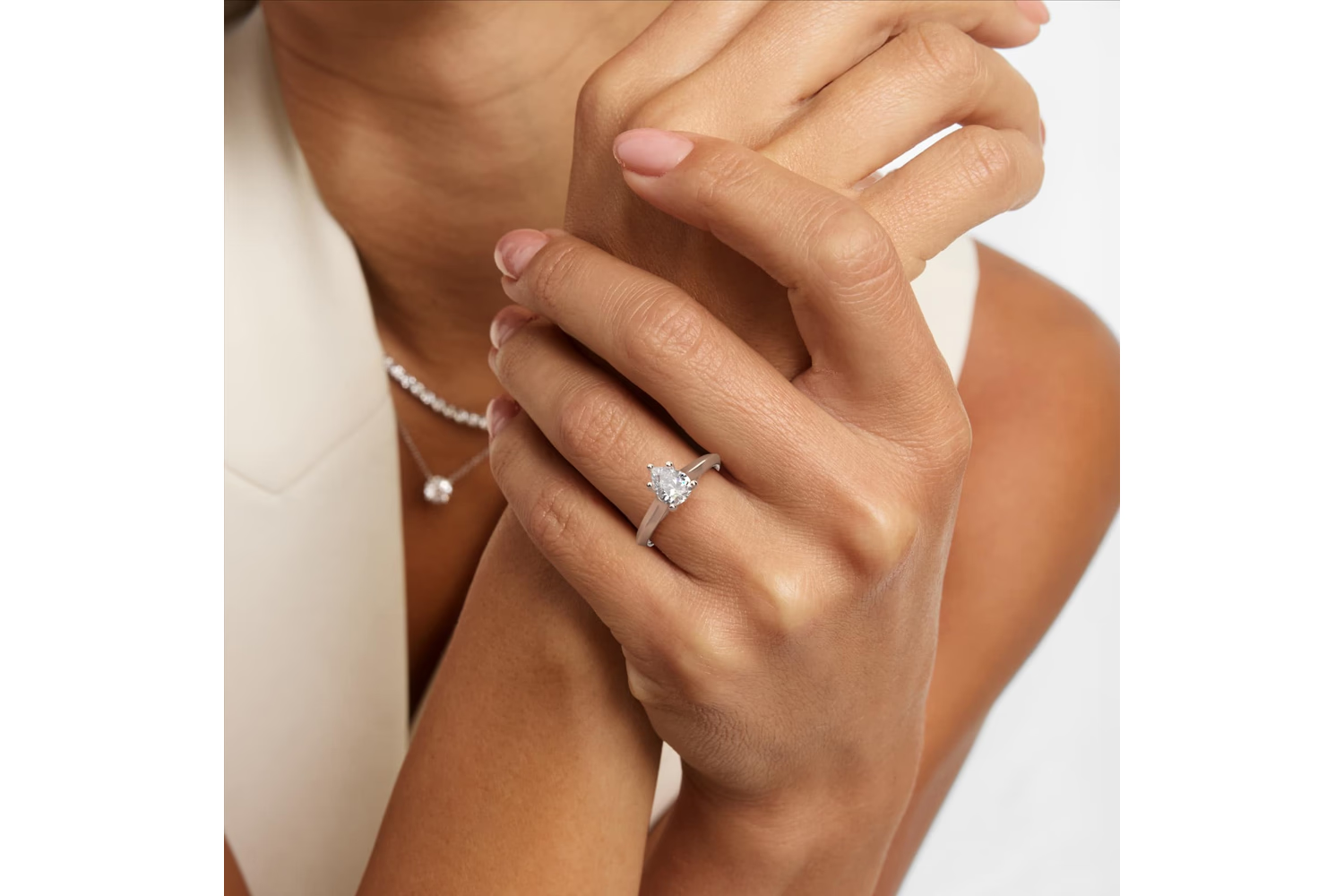
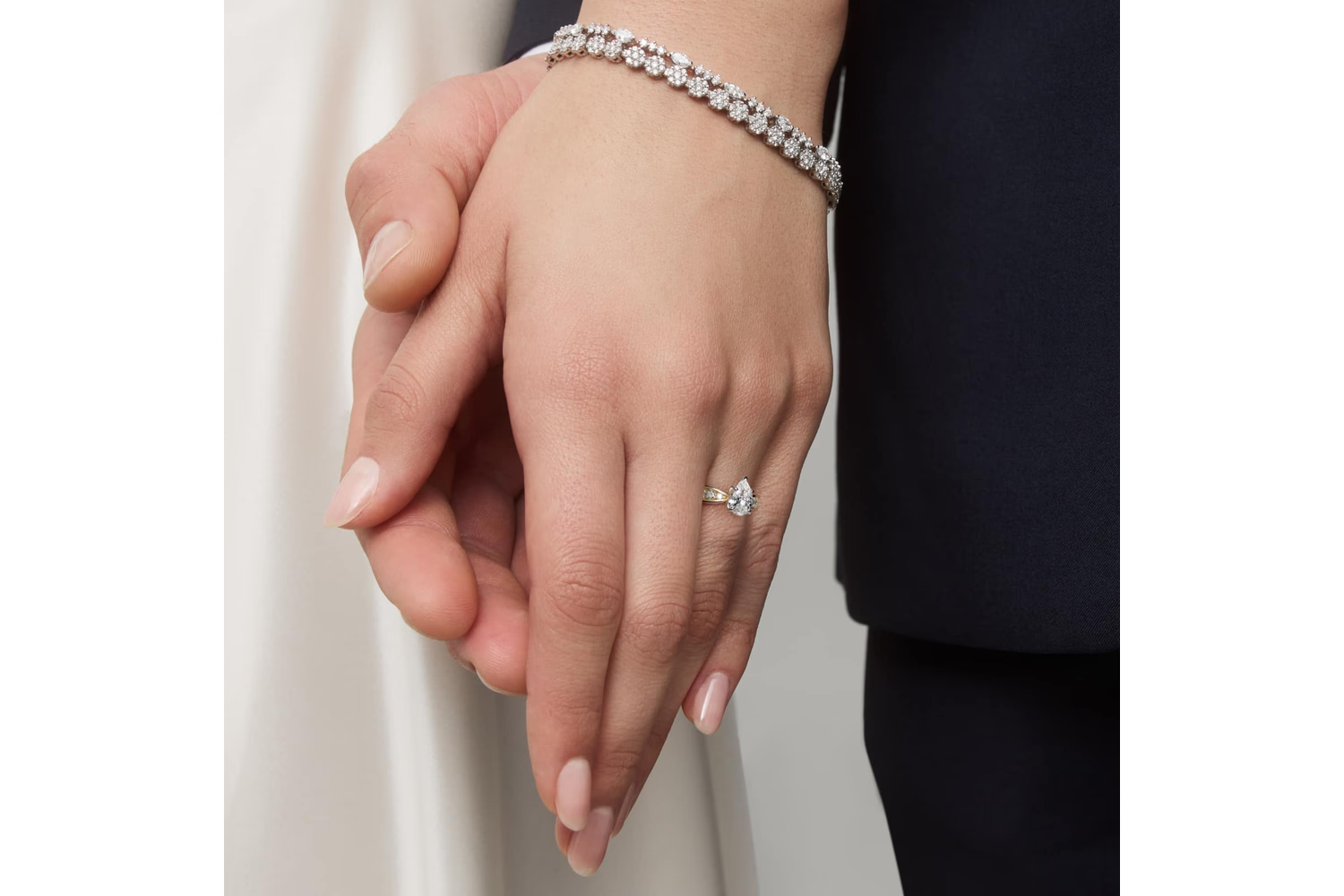
At ideal proportions — a length-to-width ratio of 1.55–1.65 — a 5ct pear diamond measures approximately 17×11mm face-up. The average adult finger width at the knuckle is 17–19mm; a 17×11mm stone covers the full finger width edge-to-edge and extends over the length of the first finger segment. No other brilliant cut diamond shape at 5ct creates this combination — the pear's elongated form transforms the entire finger, not just the ring zone. For the complete pear cut education including L/W ratios, bow-tie grading, and optimal proportions, see the Pear Cut Diamond guide.
The size progression clarifies where 5ct pear sits in the hierarchy of statement pieces:
- 1ct pear: ~8.5×5.5mm — classic, clearly visible engagement ring presence
- 2ct pear: ~11×7mm — striking statement, commands attention in most settings
- 3ct pear: ~13×8.5mm — architectural, visible from across a room
- 4ct pear: ~15×9.5mm — full-finger coverage, heirloom-class presence
- 5ct pear: ~17×11mm — full-finger edge-to-edge, sovereign category
The step from 4ct to 5ct pear is not a linear size increase — it is a category shift. A 4ct pear at ~15×9.5mm covers roughly 80–88% of the finger; a 5ct at ~17×11mm covers the full width and extends visibly past the knuckle joint. In photographs — engagement announcements, formal portraits, event coverage — a 5ct pear diamond registers as an immediate focal point regardless of setting. Outdoors in direct sunlight, the spectral fire pattern of a well-cut 5ct pear produces full-spectrum flashes visible from 15+ meters; indoors under chandelier lighting, the scintillation pattern can fill a table radius with reflections.
Orientation at 5ct: The standard tip-up orientation (point toward the fingertip) at 5ct creates the maximum elongating visual — the pear appears to extend the finger length by 30–40% in photographs at this size. East-west orientation (horizontal across the finger) at 5ct creates a dramatically wide, statement-bracelet-adjacent look that is architecturally bold. Both orientations are wearable at 5ct; tip-up is the traditional choice and the correct default for buyers who want the classic pear engagement ring silhouette.
Wearability at 5ct: At 17×11mm, a 5ct pear diamond ring requires practical consideration. The stone extends past the knuckle in both length and width, which affects glove use, hand-intensive work environments, and typing comfort. Most 5ct pear ring owners describe an adaptation period of two to four weeks before the ring feels natural during daily activities. The critical wearability factor is setting height — a low-profile V-tip solitaire or bezel-adjacent setting minimizes snagging risk; high-profile cathedral settings amplify the stone's above-hand projection and require more lifestyle adjustment.
What Ring Settings Work for a 5 Carat Pear Diamond?
At 5ct, the pear's 17×11mm face-up area needs no amplification from any setting. A halo at 5ct functions purely as an aesthetic design element — the stone is already at a size where it defines the ring completely. The solitaire is the structural default: minimal metal, maximum stone. Every 5ct pear ring requires a V-tip prong — the exposed point of a 5ct pear is the highest-risk chip zone in fine jewelry, and a standard round prong does not protect it adequately.
V-tip prong — mandatory at 5ct pear: A V-tip prong fully encases the pear's point in a metal cap, distributing lateral impact force across the prong walls rather than concentrating it on the diamond's sharp terminus. At 5ct, the tip is proportionally larger and more exposed than at 1ct or 2ct — the consequence of a chip at this size is a repair that costs thousands and a stone that is geometrically altered permanently. No 5ct pear ring should ever use a standard round prong at the tip.
5-prong vs 6-prong at 5ct: The standard 5-prong configuration (one V-tip at the point, four round prongs at shoulders and belly) is appropriate for most 5ct pear stones in 14K gold. In platinum, where the stone weight at 5ct creates meaningful mechanical stress on prong bases during wear, a 6-prong setting (adding one additional belly prong) provides enhanced structural security. Platinum buyers should evaluate 6-prong settings as the default at 5ct; 14K gold buyers can choose either configuration based on aesthetic preference.
14K white gold solitaire for 5ct pear: The most accessible setting for a 5ct pear ring at Blue Nile. A 5-prong 14K white gold solitaire compatible with a 5ct pear runs $800–$1,000. White gold provides the cool, colorless metal environment that maximizes D–F lab grown stone appearance and delivers the clean, high-contrast look that flatters the pear's elongated silhouette at 5ct. For buyers pairing with the $7,505 IGI E-VVS1 entry stone, 14K white gold solitaire is the correct pairing that keeps total ring cost under $9,000.
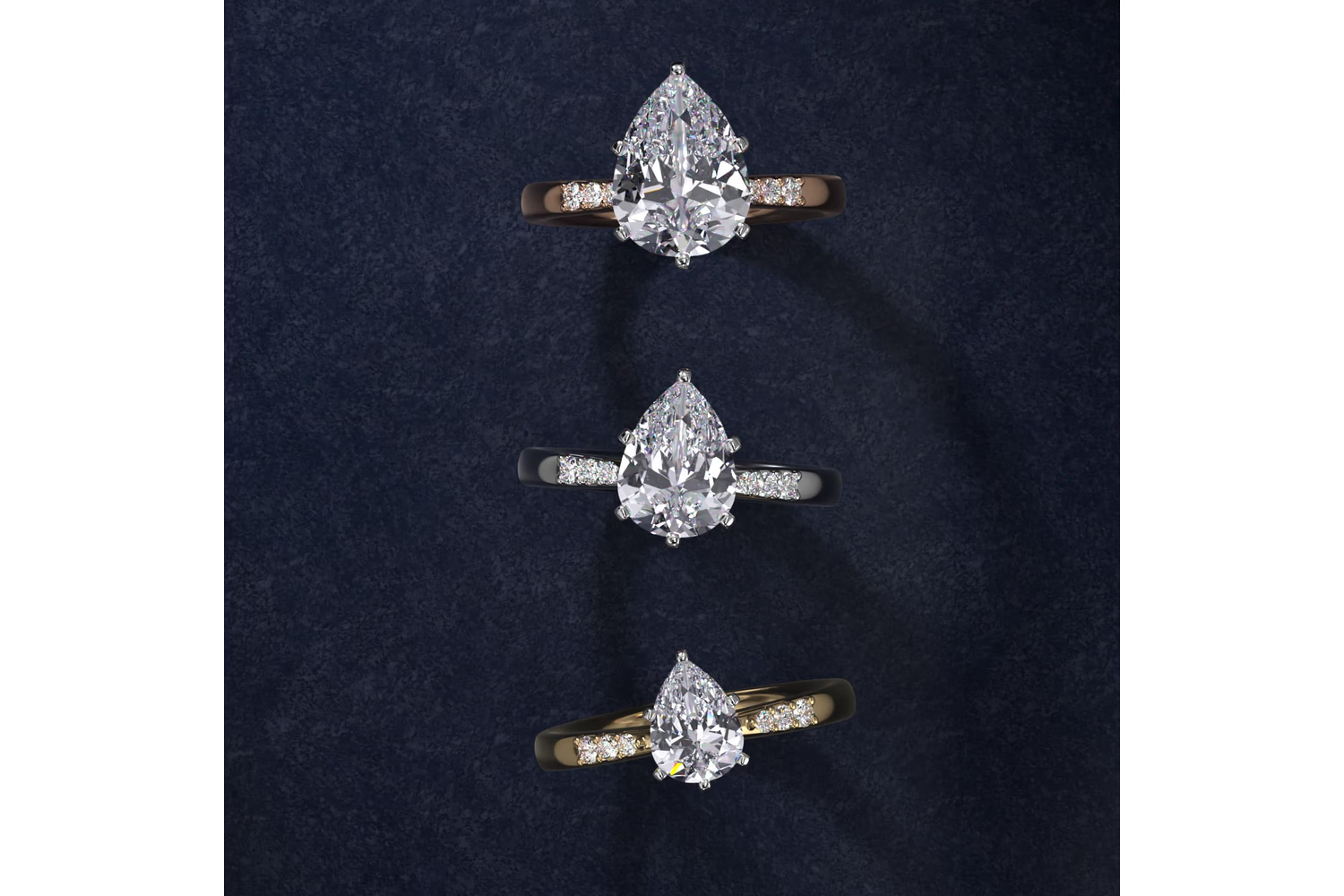
Platinum solitaire for 5ct pear: Platinum is the prestige pairing for a lab grown 5ct pear ring, particularly when the stone is D-FL or D-IF grade. A platinum 5-prong solitaire for a 5ct pear runs $1,500–$2,000 at Blue Nile. Platinum's higher density (21.45 g/cm³ vs 14K gold at 12.9 g/cm³) means heavier prongs and better long-term resistance to prong wear — relevant at 5ct where prong integrity is the single most important maintenance factor for stone security. For the $25,432 IGI 4.97ct D-FL and the $38,935 GIA 4.61ct D-FL, platinum solitaire is the correct setting choice.
Sidestone setting for 5ct pear: The Pear Sidestone Diamond Engagement Ring in 14K Yellow Gold at $1,820 flanks the 5ct center with paired side diamonds in a yellow gold band. At 5ct, the sidestone setting creates a balanced horizontal composition — the side stones provide the band-width anchoring that the pear's narrow waist requires, preventing the stone from appearing to float without structural support on the sides. Yellow gold pairs naturally with E or F color grade stones at 5ct, where the warm metal masks any minimal color in the belly area of the pear.
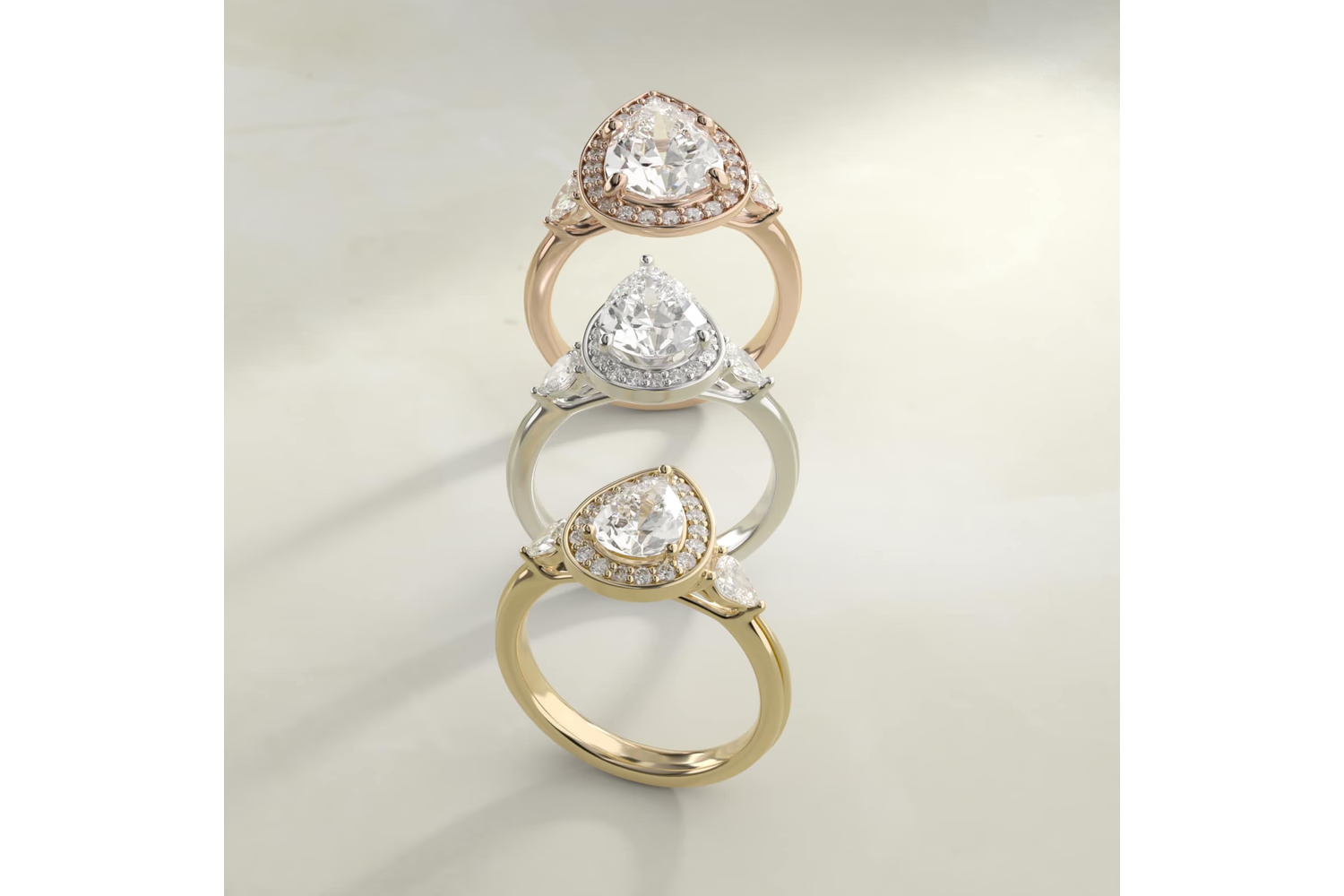
Halo setting for 5ct pear: The Pear Shape Side Stone Diamond Halo Engagement Ring in 14K White Gold at $3,570 adds a perimeter diamond frame to the 5ct center. The Platinum version at $4,005 is the correct pairing for D–F lab grown stones at this tier. At 5ct, the halo's visual function shifts entirely: it is no longer amplifying the stone's face-up size (which is already at full-finger dimension) but creating a layered, jeweled crown effect that intensifies the high-glamour aesthetic. Buyers who want maximum jewelry statement choose the platinum halo at 5ct; buyers who want the stone to speak without setting competition choose the platinum solitaire.
5 Carat Pear Diamond Ring Builds by Budget
Four complete ring configurations at the 5ct pear tier, from entry-level to prestige:
| Build | Stone | Setting | Total Ring |
|---|---|---|---|
| Entry Lab | IGI 4.59ct E-VVS1 $7,505 | 14K WG Solitaire ~$800 | ~$8,305 |
| GIA Lab | GIA 4.54ct D-VVS1 $8,637 | 14K WG Solitaire ~$800 | ~$9,437 |
| True 5ct Build | IGI 4.97ct D-FL $25,432 | 14K WG Solitaire ~$800 | ~$26,232 |
| Prestige Halo | IGI 4.97ct D-FL $25,432 | Platinum Halo $4,005 | ~$29,437 |
Entry Lab build: The IGI 4.59ct E-VVS1 at $7,505 is the lowest-cost access point to 5ct-tier pear face-up size at Blue Nile. E color is one grade below D and optically indistinguishable from D in any ring setting; VVS1 clarity is exceptional at any size. The 14K white gold solitaire at ~$800 provides the minimal-metal frame that allows the 4.59ct stone to read at full scale. Total ring ~$8,305 — the most accessible 5ct pear ring build available.
GIA Lab build: The $8,637 GIA 4.54ct D-VVS1 Ideal costs $1,132 more than the IGI entry for GIA certification and one color upgrade (D vs E). GIA lab grading carries the highest brand recognition of any lab certification in consumer markets — buyers who present the ring to family members who ask about certification will have GIA documentation. At $9,437 total ring cost, this is the correct build for buyers who specifically need GIA certification alongside 5ct-tier presence.
True 5ct build: The $25,432 IGI 4.97ct D-FL Ideal is 0.03ct from a true 5.00ct pear — at this face-up size (~17×11mm), the 0.03ct difference is not measurable by eye or by ruler on the hand. D colorless, Flawless, Ideal cut IGI certification: this stone carries the maximum grade in every dimension and represents the peak of what Blue Nile's 5ct pear lab inventory offers below $30,000. The 14K WG solitaire keeps the total build at $26,232 — for buyers who want the full near-5ct specification without the setting premium.
Prestige Halo build: The same IGI 4.97ct D-FL stone at $25,432 in the Platinum Halo at $4,005 creates the highest-specification 5ct pear ring build in Blue Nile's current catalog: near-5ct D-FL Ideal in a platinum halo setting. Total ring ~$29,437. At this build specification, the ring is visually comparable to natural 5ct pear rings that sell for $200,000+ — the only difference is the certificate's origin notation.
Tides Of Summer Capsule
Up To 30% Off
Shop The Sale →Vault ClearanceClear The Vault
Up To 70% Off
Shop Vault Deals →Affiliate link — no extra cost to you
Color and Clarity Guide for 5ct Pear Diamond
At the 5ct face-up area (~17×11mm), color and clarity visibility rules change relative to smaller carat weights. The expanded face-up zone means color visible in a 1ct stone belly is even more visible at 5ct — and inclusions that hide easily in a 1ct table can be visible to the naked eye at 5ct face-up dimensions.
Color at 5ct pear lab grown: D–F is the recommended range for lab grown pear diamonds at 5ct in white gold or platinum settings. The lab grown price premium for D over E is modest relative to natural diamonds — the $7,505 IGI E-VVS1 vs $8,637 GIA D-VVS1 shows a $1,132 gap for a D vs E color difference — affordable for the color upgrade. G color in a 5ct pear is visible as warmth in the belly area under cool lighting; D–F is the correct floor. Yellow gold settings mask G–H color effectively and allow a slightly lower color grade without visual consequence.
Clarity at 5ct pear lab grown: VS1 is the practical clarity floor at 5ct pear. An SI1 inclusion that is eye-clean in a 1ct stone may be visible at 5ct face-up dimensions, particularly near the center table or along the bow-tie zone. All stones in the Blue Nile 5ct lab grown pear table are VVS1 or above — FL, IF, VVS1 — reflecting the fact that lab grown stones at this price point are typically produced at the highest grade tiers. There is no eye-visible difference between FL, IF, and VVS1 at any size; the grade distinction affects certification language, not face-up appearance.
Fluorescence at 5ct: Strong blue fluorescence in a D or E color pear diamond can cause a milky haziness under UV-heavy lighting environments. Lab grown stones at this tier rarely exhibit strong fluorescence; verify the fluorescence grade on the specific stone certificate before purchase. Faint or None fluorescence is the correct spec at any color grade for 5ct pear.
Bow-Tie Effect at 5ct Pear
Every pear diamond has a bow-tie — a dark bowtie-shaped shadow that appears in the center of the stone as a result of the fancy-cut geometry blocking reflected light through the viewer's line of sight. At 5ct with a 17×11mm face-up area, the bow-tie zone is proportionally larger and more visually prominent than at 1ct or 2ct. Understanding bow-tie grading at 5ct is essential before purchase.
A bow-tie that occupies less than 20% of the stone's face-up area and has low contrast against the surrounding brilliance is acceptable at 5ct — it reads as a subtle dark zone that doesn't dominate the visual. A bow-tie that extends across 30%+ of the face-up area and presents high-contrast dark against the stone's surrounding fire is significant at 5ct and should be avoided. The key assessment tool is the stone's video: Blue Nile provides 360° video for all lab grown stones, and the bow-tie is clearly visible in video under standard studio lighting.
For the complete bow-tie grading guide, depth percentage targets, and L/W ratio recommendations that minimize bow-tie severity, see the Pear Diamond Ideal Proportions guide. At 5ct specifically, target a depth percentage of 58–64% and a table percentage of 55–63% — the same proportion targets as at smaller sizes, but more critical to verify via video at 5ct given the expanded bow-tie zone. The pear engagement ring guide covers how to evaluate a 5ct pear ring on hand with these proportions.
Expert Summary
Farzana A., GIA Graduate Gemologist and Diamond Critic: "The 5ct pear shaped diamond ring is the one tier where I tell every buyer the same thing regardless of budget: go lab grown, and don't apologize for it. This isn't about affordability — it's about access. Natural 5ct GIA Ideal pear diamonds don't exist in retail. Auction houses carry them once or twice a year at prices that start at $150,000 and require months of acquisition process. For anyone building a 5ct pear ring as wearable fine jewelry, lab grown is the product."
"My grading recommendations at 5ct are different from smaller sizes. At 5ct face-up, I always push buyers toward Ideal-cut certification specifically — not Excellent, Ideal. The cut precision at 5ct determines whether the bow-tie reads as a subtle dark zone or an aggressive shadow across 30% of the stone. The $25,432 IGI 4.97ct D-FL Ideal is the stone I'd build around for a prestige 5ct pear ring. Request the video before clicking add to cart — every time."
"The platinum solitaire at 5ct is not an indulgence — it's a maintenance decision. Prongs on a 5ct pear are under more mechanical stress than at smaller sizes purely from the stone's weight and the leverage a 17mm surface area creates during daily wear. Platinum prongs last longer, require less frequent re-tipping, and provide materially better tip protection for the V-prong at 5ct. If the stone budget is the $25,432 IGI D-FL, adding $1,500 for a platinum solitaire over the 14K WG option is the correct long-term decision."
Final Verdict: Which 5ct Pear Diamond Ring?
Buy the $7,505 IGI 4.59ct E-VVS1 + 14K WG solitaire if: You want the maximum 5ct-tier pear diamond presence at the lowest total ring cost (~$8,305). E color is one grade below D and visually identical in any white or yellow gold setting. VVS1 at 4.59ct is exceptional clarity. This is the correct build for buyers who want 5ct pear face-up impact without the D-FL premium.
Buy the $8,637 GIA 4.54ct D-VVS1 Ideal + 14K WG solitaire if: You specifically need GIA certification and D colorless grade for documentation reasons — family expectations, resale consideration, or personal preference for GIA as the industry-leading lab. Total ring ~$9,437, a $1,132 premium over the IGI E entry for GIA branding and one color grade.
Buy the $25,432 IGI 4.97ct D-FL Ideal + platinum solitaire if: You want the closest possible build to a true 5.00ct D-FL Ideal pear ring available in retail today. At 4.97ct, this stone is 0.03ct from the target weight and carries maximum specifications in every grade dimension. Platinum solitaire total ~$26,932. This is the prestige solitaire build for buyers whose target is the near-5ct specification ring at the sub-$30,000 price point.
Buy the $25,432 IGI 4.97ct D-FL Ideal + platinum halo $4,005 if: Maximum jewelry statement is the objective. The platinum halo at 5ct creates a layered, high-glamour crown composition that registers as an extraordinary piece in any context. Total ring ~$29,437. This build is the 5ct pear ring equivalent of a red-carpet jewelry piece — fully wearable, but designed for maximum visual impact.
5 Carat Pear Shaped Diamond Ring — FAQ
Why are there no natural 5ct pear diamonds on Blue Nile? Natural GIA Ideal-cut pear diamonds at 5ct exist in such small quantities globally that they don't appear in retail catalogs. They move through auction houses and private dealer channels at prices starting above $150,000. Blue Nile's natural pear inventory ends effectively at 4ct — see The Empty Tier above.
How much does a 5 carat pear shaped diamond ring cost? At Blue Nile, a 5ct pear diamond ring using lab grown stones starts at approximately $8,305 (IGI 4.59ct E-VVS1 + 14K WG solitaire). The near-5ct prestige build (IGI 4.97ct D-FL + platinum halo) runs ~$29,437. Natural 5ct pear rings, when accessible at all, cost $150,000–$500,000+ for the stone alone.
What is the face-up size of a 5ct pear diamond? A 5ct pear diamond at ideal L/W ratio (1.55–1.65) measures approximately 17×11mm face-up. This covers the full width of most adult fingers from edge to edge.
Is lab grown the only option for a 5ct pear ring? For practical purposes, yes. Natural GIA 5ct pear diamonds at Ideal cut are not available through Blue Nile and rarely appear in any retail channel. Lab grown 4.5ct–5ct IGI and GIA certified stones are the accessible product at this tier.
Which lab certification is best for a 5ct pear diamond — GIA, IGI, or GCAL? All three are credible at the 5ct lab grown level. GIA carries the highest brand recognition. IGI is the most common and offers the widest stone selection. GCAL provides optical brilliance grading alongside standard grades and is a strong choice for cut-performance-focused buyers. The $20,792 GCAL D-FL at 4.52ct represents good value for GCAL-certified 5ct pear buyers.
Do I need a V-tip prong at 5ct? Yes, absolutely. The pear's pointed tip is the highest chip-risk zone on the stone. At 5ct, the tip is larger and more exposed than at smaller sizes. A V-tip prong is non-negotiable — never accept a round prong at the tip of a 5ct pear.
What color grade should I choose for a 5ct lab grown pear? D–F in white gold or platinum settings. E color is the budget-correct choice — it is optically identical to D in any setting. G color is acceptable in yellow gold. At 5ct, color is more visible in the belly area than at smaller sizes; D–F is the safe floor for white metal settings.
What clarity should I choose for a 5ct lab grown pear? VS1 minimum; VVS1 or above preferred. All stones in Blue Nile's current 5ct lab pear catalog are VVS1 or higher. The face-up area at 5ct (~17×11mm) means inclusions near the center table can become visible at closer inspection — FL through VVS1 eliminates this risk entirely.
What ring size works for a 5ct pear diamond? A 5ct pear at 17×11mm works best on size 5–8 fingers. On very small fingers (size 4 and under), the 17mm length may extend past the natural ring zone, which affects comfort during daily wear. Buyers with smaller fingers should review stone video and confirm the L/W ratio before purchase — a shorter, wider pear (L/W 1.45–1.50) fits better on smaller fingers at this carat weight.
How does the 5ct pear compare to the 4ct pear? The 4ct pear at ~15×9.5mm covers 80–88% of the finger width; the 5ct at ~17×11mm covers the full width edge-to-edge. The 5ct is a category shift, not a marginal size increase. Natural inventory also disappears at 5ct whereas 4ct natural GIA pear exists in a four-stone pool.
Can I compare pear vs marquise at the 5ct tier? Both shapes are elongated brilliants with similar face-up size per carat; at 5ct natural, both have the same inventory problem — near-zero retail availability. For the complete comparison of both elongated shapes including face-up size, bowtie behavior, V-prong requirements, and price parity, see the Marquise vs Pear Diamond guide.
What celebrity wears a 5ct pear diamond ring? Ariana Grande's engagement ring from Dalton Gomez was a large pear diamond — widely reported in the 5ct+ range. Victoria Beckham's engagement ring from David Beckham included a large pear diamond. The pear shape at 5ct is the preferred celebrity and editorial choice for maximum finger-elongating presence in formal and red-carpet contexts.
Is a 5ct pear diamond ring appropriate for daily wear? With the correct V-tip prong setting and a low-to-medium profile, yes. The practical adaptation period is 2–4 weeks. High-profile cathedral settings increase snagging risk; platinum prongs reduce long-term maintenance requirements. Annual prong inspection by a jeweler is recommended at the 5ct tier to verify tip prong integrity.
What is the resale value of a 5ct lab grown pear diamond ring? Lab grown diamonds have limited resale value relative to purchase price — typically 20–40% of original purchase price in secondary markets. This is consistent across all lab grown diamond sizes and shapes and reflects the declining manufacturing cost of lab grown production. Buyers who purchase a 5ct pear lab grown ring should consider it as a jewelry purchase rather than an investment vehicle.
See Also
- Pear Cut Diamond — Complete Guide — L/W ratio, bow-tie grading, V-prong requirements, and the complete pear cut education for buyers at every carat tier
- 4 Carat Pear Shaped Diamond Ring — The Four-Stone Market at 4ct natural GIA pear; natural pricing, lab grown, and complete ring builds at the tier directly below 5ct
- 3 Carat Pear Shaped Diamond Ring — The Architectural Tier; natural GIA 3ct pear pricing, lab grown options, and settings
- 2 Carat Pear Shaped Diamond Ring — The Statement Tier; natural GIA and lab grown 2ct pear diamond ring builds and prices
- 1 Carat Pear Shaped Diamond Ring — The classic entry-tier pear ring; natural GIA from ~$3,800, lab grown from under $1,000
- Pear Diamond Engagement Ring — Full Guide — All pear engagement ring styles, settings, and carat tier comparison
- Loose Pear Diamonds — Complete pear diamond inventory guide across all carat weights, certifications, and price tiers
- Pear Diamond Ideal Proportions — Depth, table, L/W ratio, and bow-tie targets for every pear diamond size
- Marquise vs Pear Diamond — The $40 Parity at 1ct G-VS2, The Double Tip Premium, and the complete elongated brilliant comparison
- Lab Grown Pear Diamond — Complete lab grown pear diamond buying guide across certifications, grades, and price tiers
Expert Verdict
Always audit the stone individually — no grade replaces seeing the actual diamond. The certificate tells you what to look for. Your eyes tell you whether to buy.
— Farzana Hasan, GIA Expert · DiamondCritics.com