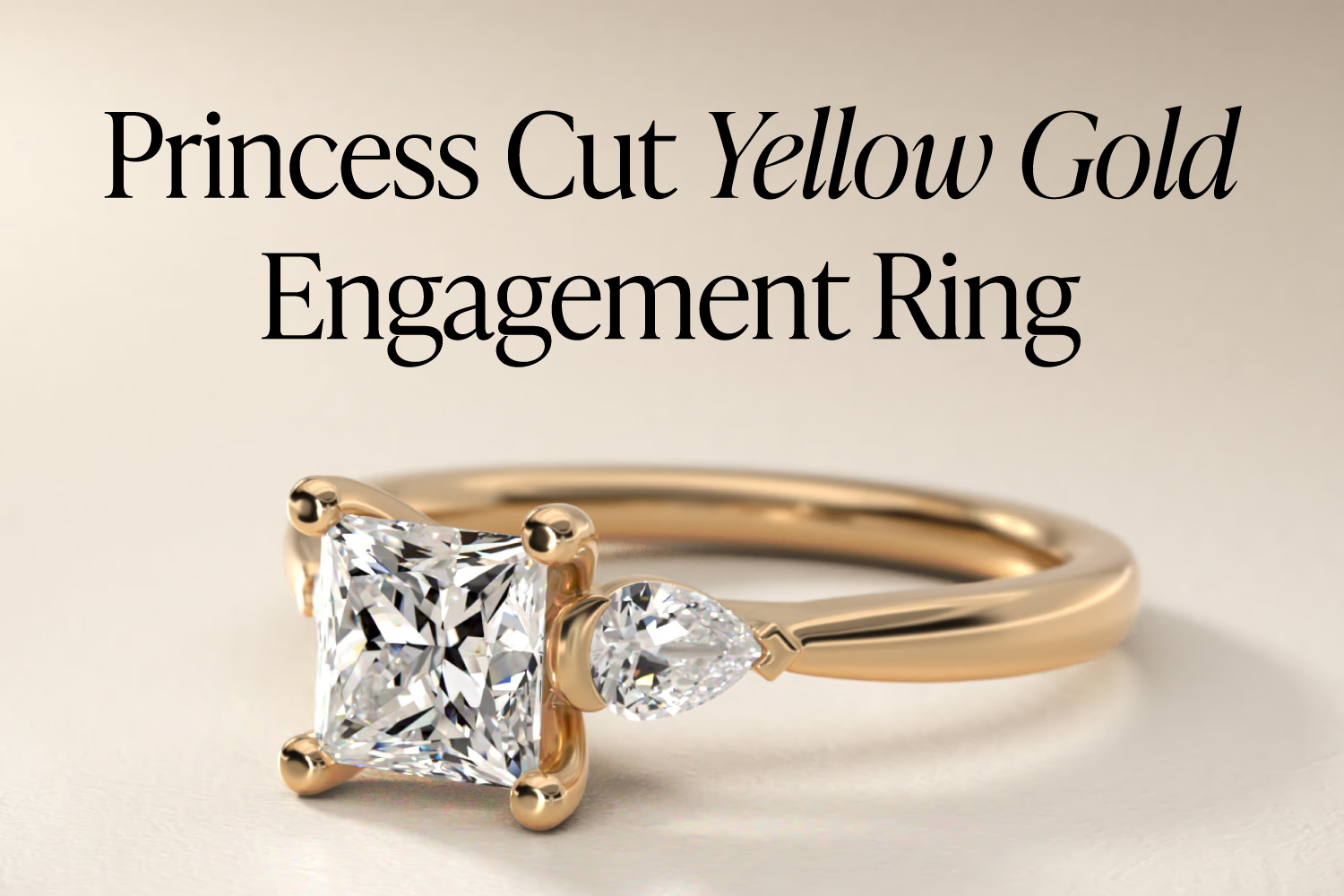
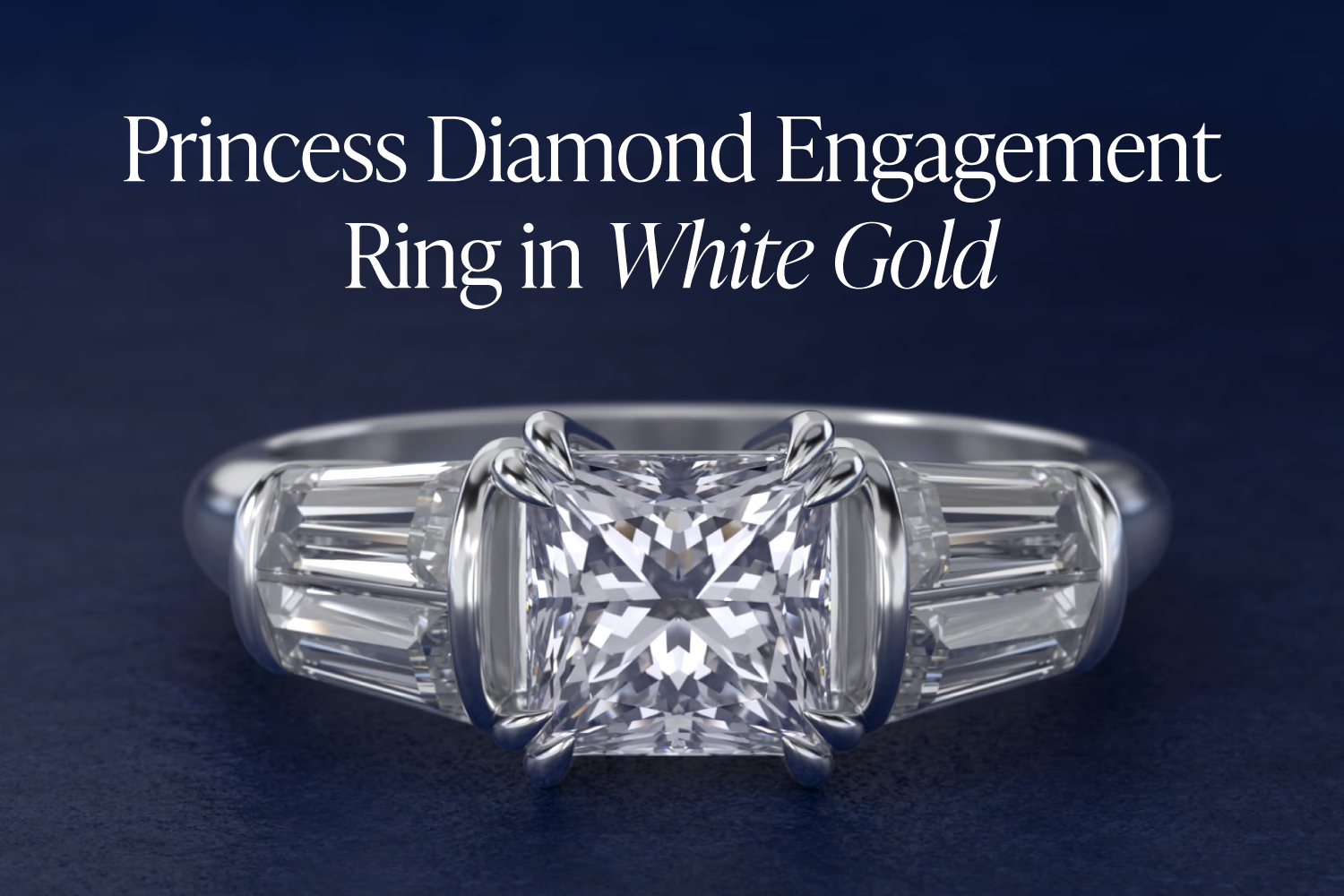
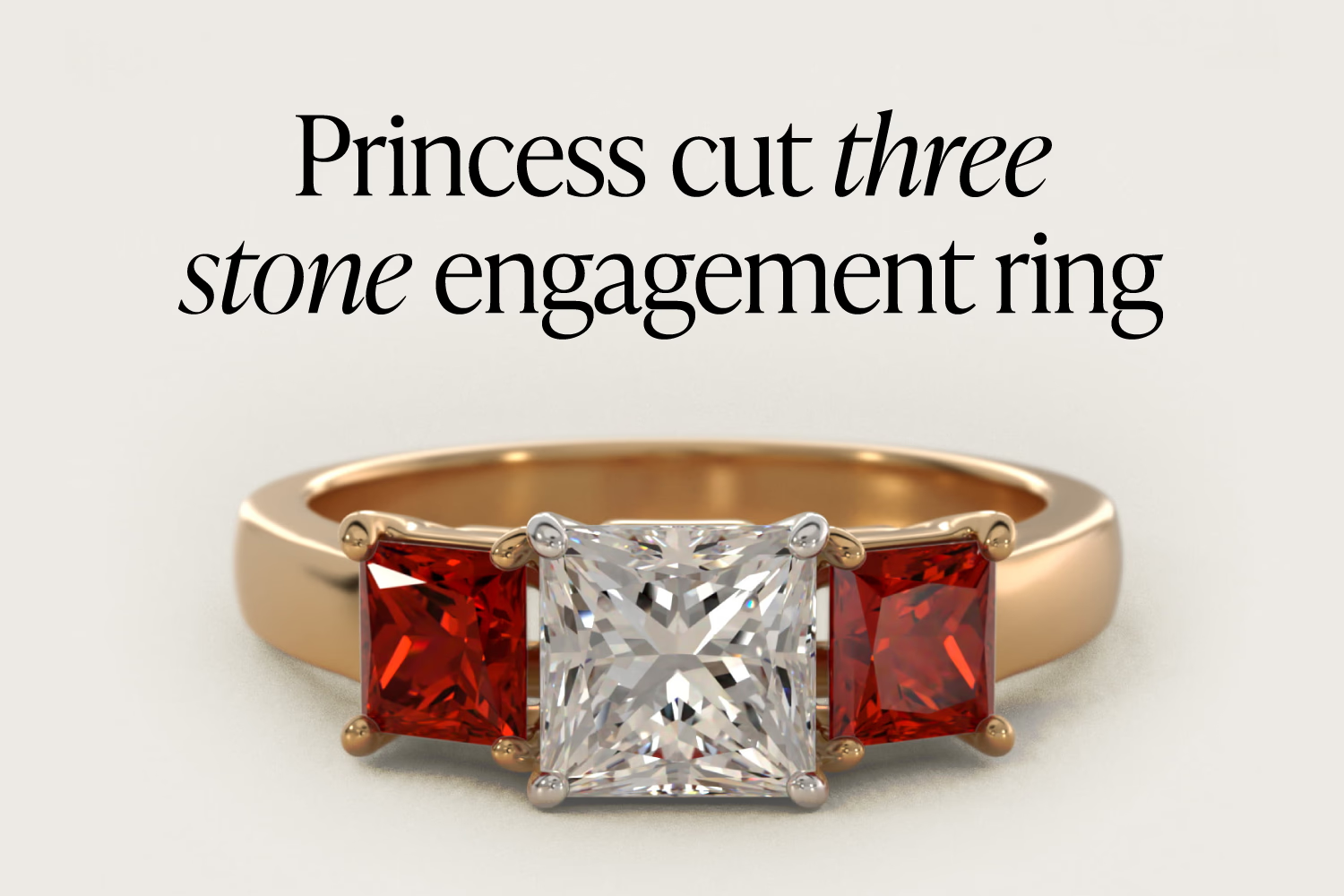
TL;DR — The 7-Step Princess Cut Buying Checklist
- Proportions first: Table 65–75%, depth 64–75%, L:W 1.00–1.02
- Skip the "Ideal" label: No GIA Excellent exists for princess — evaluate table, depth, polish, and symmetry manually
- Color floor — white metal: G minimum (H shows corner warmth in platinum and white gold)
- Color floor — warm metal: H acceptable in yellow or rose gold (metal masks corner tint)
- Clarity floor: VS1 minimum — corners concentrate inclusions; VS2 requires cert-by-cert review
- Setting: 4 V-prongs on all 4 corners, platinum preferred
- Budget split: ~55% diamond, ~45% setting at the luxury tier; ~70% diamond, ~30% setting under $3,000 total
→ Complete Princess Cut Engagement Ring Guide — all settings, all metals, size-to-carat chart, and corner protection checklist.
Why Princess Cut Has More Traps Than Round
A round brilliant is forgiving. Its 57 facets disperse light in all directions, masking minor color tints, hiding edge inclusions, and hiding slight proportion deviations. The GIA grades it with a cut grade — Excellent, Very Good, Good — so there's a single objective signal.
Princess cut is different in every respect:
- No GIA cut grade. GIA grades round brilliants with a cut grade. For princess cuts, GIA grades only polish and symmetry. Every "Ideal" label at Blue Nile or James Allen is retailer marketing — not a GIA designation.
- 4 exposed corners. Each corner is a physical vulnerability and an optical trap. Color concentrates at corners. Inclusions are most visible at corners. Physical damage happens at corners.
- Chevron facet pattern. The stepped V-shaped facets create long light paths that magnify color and inclusions compared to round's dispersed pattern.
- Narrow proportion window. A round brilliant produces excellent light return across a wider table/depth range. Princess cut requires table 65–75% and depth 64–75% or light leaks through the pavilion.
Understanding these 6 traps is the entire job of buying a princess cut diamond. Each trap is documented below.


Step 1: Lock In the Right Proportions
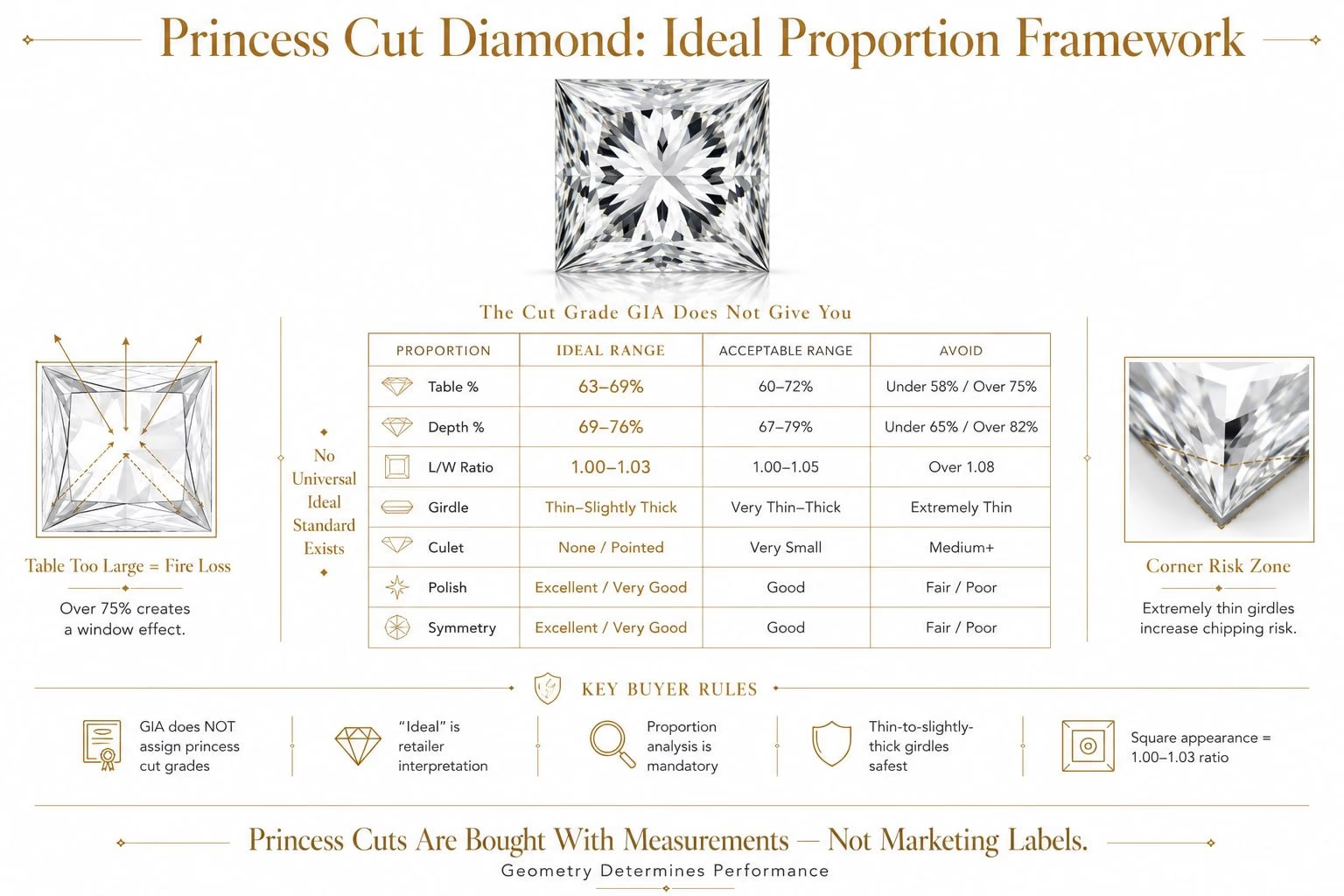
The proportion window for princess cut is narrower than round. Outside this window, light leaks through the pavilion or the crown crushes the depth.
| Proportion | Acceptable Range | Sweet Spot | Reject If |
|---|---|---|---|
| Table % | 65–75% | 68–72% | < 65% or > 76% |
| Depth % | 64–75% | 65–70% | < 63% or > 76% |
| L:W ratio | 1.00–1.05 | 1.00–1.02 | > 1.06 (visibly rectangular) |
| Polish | EX or VG | Excellent | Fair or Poor |
| Symmetry | EX or VG | Excellent | Fair or Poor |
| Culet | None | None | Any visible culet |
| Girdle | Thin–Slightly Thick | Thin–Medium | Extremely Thin or Thick |
The L:W ratio is a style choice within bounds. 1.00 is perfectly square. 1.02 is barely perceptible as rectangular. 1.05 and above starts to read as rectangular to the naked eye.
How to read these on a GIA certificate: All values are listed in the "Proportions" section of the grading report. Check Table %, Depth %, and the actual measurements (length × width in mm — divide to get L:W). Polish and Symmetry appear in the "Finish" section. Girdle thickness and culet appear in "Additional Grading Information."
→ Full deep-dive: Princess Cut Diamond Ideal Proportions Guide
Step 2: Decode Cut Quality Without a GIA Grade
GIA has graded round brilliant cut quality since 2005. They have not extended this system to fancy shapes, including princess cut. Every princess cut diamond on Blue Nile, James Allen, Brilliant Earth, or any other retailer carries the same absence: no cut grade.
When a retailer labels a princess cut "Ideal," they are applying their own proprietary threshold — typically a table/depth range plus Excellent polish and symmetry. This is useful but not standardized.
What to actually evaluate:
| Factor | Threshold | Where on Cert |
|---|---|---|
| Table % | 65–75% | Proportions section |
| Depth % | 64–75% | Proportions section |
| Polish | Excellent or Very Good | Finish section |
| Symmetry | Excellent or Very Good | Finish section |
| Length:Width | 1.00–1.02 for square | Measurements (calculate) |
One exception: AGS (American Gem Society) does grade princess cut light performance with their AGS Ideal 0 system — the only lab that does. If you find an AGS-certified princess cut with AGS Ideal 0, that is a legitimate cut-quality signal. GIA-certified stones (the vast majority) do not carry this.
Light performance as a proxy: Some retailers show 360° video and ASET or ideal-scope images. A well-cut princess cut should show primarily red and green in ASET — black indicates light leakage through the pavilion.
→ Full deep-dive: Princess Cut Diamond Cut Quality Guide
Step 3: Avoid the Corner Color Trap
The Corner Color Trap: the chevron facet pattern in a princess cut channels light along diagonal paths that terminate at the four corners. These corners act as optical termini — color concentrates there, and it is the first place a viewer sees warmth in the stone.
Color minimums by metal:
| Metal | Minimum Grade | Reason |
|---|---|---|
| Platinum | G | White metal reflects neutral light; H shows corner warmth |
| 14k/18k White Gold | G | Same reflection behavior as platinum |
| 14k/18k Yellow Gold | H | Warm metal masks corner tint; H reads near-colorless |
| 14k/18k Rose Gold | H | Same masking effect as yellow gold |
Price savings by color grade (1ct princess, VS1 clarity, approximate):
| Color Grade | Approx. Price | Savings vs. G |
|---|---|---|
| D | ~$4,100 | — |
| F | ~$3,100 | — |
| G | ~$2,536 | Reference |
| H | ~$2,155 | ~$381 (15%) |
| I | ~$1,900 | ~$636 (25%) |
H in yellow or rose gold represents a genuine savings without visible quality compromise. D-F in white metal is a statistically invisible upgrade over G that costs 22–62% more.
Fluorescence: Medium or Strong Blue fluorescence can help I-color stones face up whiter in daylight (UV-heavy light source). For G and H in white metal, fluorescence provides minimal visible benefit and can create haziness in some stones — evaluate on a case-by-case basis.
→ Full deep-dive: Princess Cut Diamond Color Guide
Step 4: Avoid the Corner Clarity Trap
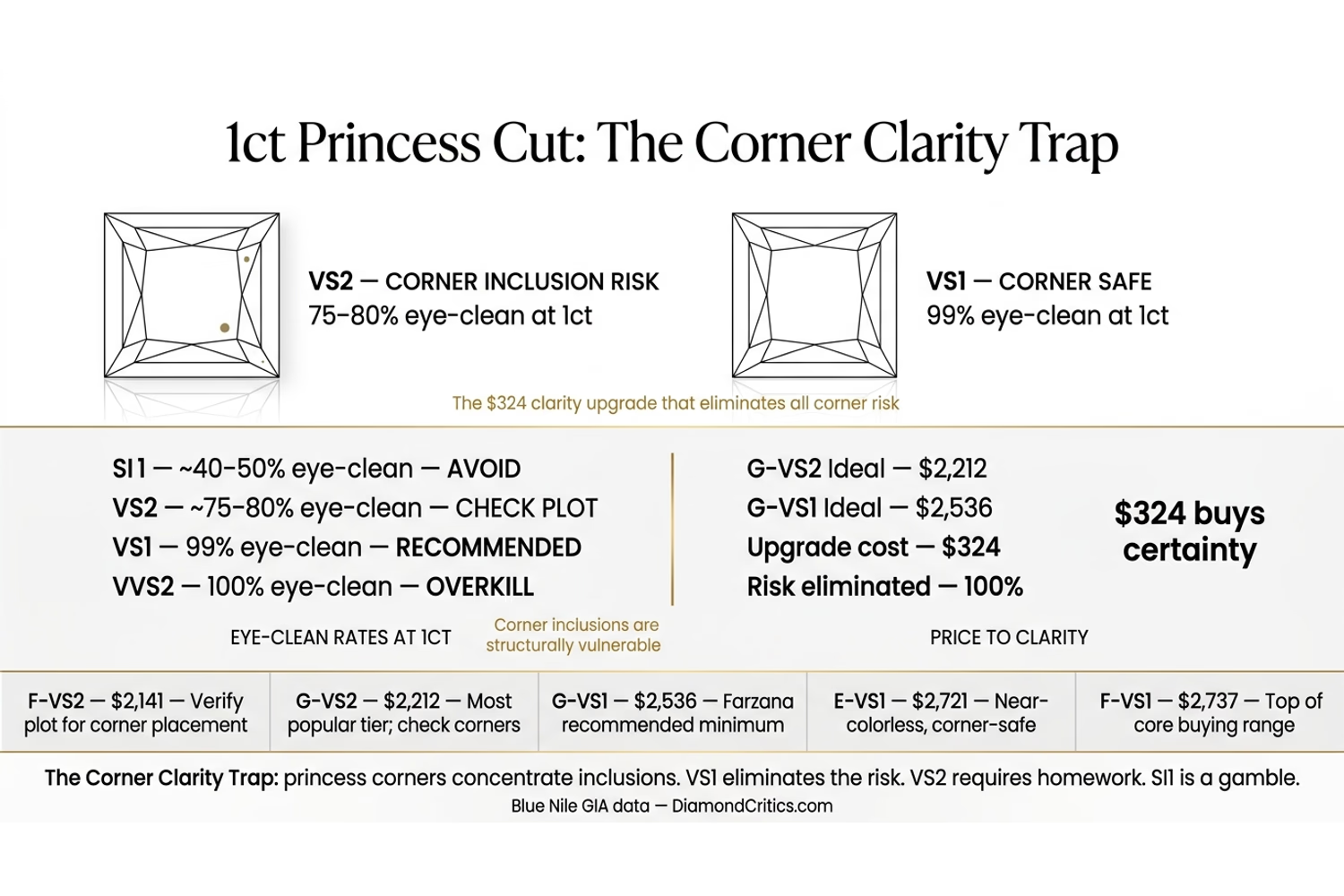
The Corner Clarity Trap: the same chevron facet pattern that concentrates color also concentrates the visibility of inclusions. Inclusions positioned at or near the four corners are:
- Magnified by the converging facet lines
- More likely to be visible to the naked eye than the same inclusion in a round brilliant
- A physical weak point — feathers or cavities at corners increase chip risk
Clarity grade recommendations:
| Clarity Grade | Princess Cut Verdict | Round Brilliant Equivalent |
|---|---|---|
| FL / IF | Unnecessary; no visible difference | Unnecessary |
| VVS1 / VVS2 | Safe, no corner risk | Overkill |
| VS1 | True minimum — recommended floor | VS2 minimum |
| VS2 | Acceptable only if inclusions confirmed not in corners | SI1 |
| SI1 | High risk — often visible in corners | VS2 borderline |
| SI2 | Visible inclusions likely | SI1 borderline |
VS2 requires cert review. Pull the GIA certificate's clarity plot. Identify inclusion type and position. Feathers, cavities, or crystals marked at the corners of the plot = reject. Clouds or needles confined to the center = potentially acceptable with video confirmation.
Price difference (1ct G color):
| Clarity | Approx. Price | Notes |
|---|---|---|
| VVS1 | ~$3,300 | 30% premium over VS1 for invisible gain |
| VS1 | ~$2,536 | Recommended floor |
| VS2 | ~$2,212 | Save ~12% only if corners confirmed clear |
| SI1 | ~$1,850 | High risk; requires 360° video at minimum |
→ Full deep-dive: Princess Cut Diamond Clarity Guide
Step 5: Choose the Right Setting and Metal
The setting is not cosmetic for a princess cut — it determines whether the stone survives a decade of daily wear.
The V-prong rule: Princess cut corners require V-shaped prongs that cradle the corner with metal mass on both diagonal faces. Claw prongs sit on flat table facets and provide no corner protection. A princess cut with claw prongs or no corner coverage is a future chip waiting to happen.
Metal choice:
| Metal | Pros | Cons | V-prong Durability |
|---|---|---|---|
| Platinum | Work-hardens; V-prong mass maintained for life | Higher upfront cost ($935–$2,575 more than gold) | Best — platinum V-prongs thicken under wear |
| 14k White Gold | Lower cost; classic white look | Work-softens; V-prongs thin; requires rhodium replating every 2–3 years | Good if replated regularly |
| 18k Yellow Gold | Beautiful warmth; masks H-color corners | Softer than 14k WG; prongs wear faster | Fair |
| 18k Rose Gold | Unique warmth; masks H-color corners | Same softness concern as yellow gold | Fair |
Most reviewed settings on Blue Nile (1ct princess, all with V-prong corner coverage):
| Setting | Metal | Price | Reviews | Link |
|---|---|---|---|---|
| Comfort Fit Solitaire | Platinum | $1,790 | 1,107 | View → |
| Riviera Pavé LGD | Platinum | $1,955 | 390 | View → |
| Pavé Lotus Basket | Platinum | $2,340 | 251 | View → |
| Flush Fit Claw Prong | 14k White Gold | $970 | 146 | View → |
| Classic Comfort Fit | 18k Rose Gold | $935 | 191 | View → |
| Marquise Three Stone | Platinum | $2,170 | 152 | View → |
| Cross Prong Solitaire | Platinum | $2,165 | 105 | View → |
| Pavé Cathedral | 18k Rose Gold | $2,220 | 102 | View → |
→ Full platform guide: Princess Cut Platinum Engagement Ring — V-Prong Corner Safety Guide
Tides Of Summer Capsule
Up To 30% Off
Shop The Sale →Vault ClearanceClear The Vault
Up To 70% Off
Shop Vault Deals →Affiliate link — no extra cost to you
Step 6: Budget Allocation
Reference diamond prices (1ct G color, Blue Nile):
| Clarity | 1ct Princess | Total with $935 Setting | Total with $1,790 Setting |
|---|---|---|---|
| VS1 | $2,536 | $3,471 | $4,326 |
| VS2 | $2,212 | $3,147 | $4,002 |
Budget tiers:
| Total Budget | Diamond Strategy | Setting Recommendation |
|---|---|---|
| Under $3,000 | 1ct G-VS2 ($2,212) | Classic Comfort Fit RG $935 — View → |
| $3,000–$5,000 | 1ct G-VS1 ($2,536) | Comfort Fit Solitaire Pt $1,790 — View → |
| $5,000–$7,000 | 1ct G-VS1 ($2,536) | Pavé Lotus Basket Pt $2,340 — View → |
| $7,000–$10,000 | 1ct G-VS1 ($2,536) | Round Split Halo WG $4,400 — View → |
→ Full luxury-tier guide: Princess Cut Diamond Ring Under $10,000
Step 7: The Master Recommendation
The canonical princess cut combination:
- Diamond: 1ct, G color, VS1 clarity, table 68–72%, depth 65–70%, L:W 1.00–1.02, Polish Excellent, Symmetry Excellent
- Setting: Comfort Fit Solitaire in Platinum — item 316236 — $1,790 — 1,107 reviews
- Total: ~$4,326
- Why: The platinum V-prong solitaire is structurally correct for all 4 corners. G-VS1 satisfies both the Corner Color Trap threshold and the Corner Clarity Trap minimum. The 1,107-review count represents the largest buyer-validated sample of any princess cut platinum solitaire on Blue Nile.
Complete Princess Cut Buying Matrix
| Parameter | Best Value | Recommended | Premium |
|---|---|---|---|
| Carat | 0.90ct G-VS2 ~$1,980 | 1.00ct G-VS1 $2,536 | 1.50ct G-VS1 ~$5,200 |
| Color | H (yellow/rose gold) | G (any metal) | F (white metal, minimal gain) |
| Clarity | VS2 (corners reviewed) | VS1 | VVS2 (unnecessary) |
| Setting metal | 14k White Gold | Platinum | Platinum (same) |
| Setting style | Solitaire | Solitaire or pavé | Halo or statement |
| Setting price range | $935–$1,320 | $1,550–$2,165 | $2,325–$7,030 |
All Princess Cut Cluster Guides
| Topic | Named Concept | Link |
|---|---|---|
| Proportions | Table 65-75%, depth 64-75%, L:W 1.00-1.02 | Read → |
| Cut quality | The Ideal Cut Illusion — no GIA Excellent exists | Read → |
| Color | The Corner Color Trap — G minimum in white metal | Read → |
| Clarity | The Corner Clarity Trap — VS1 true minimum | Read → |
| Platinum setting | Platinum + 4-corner V-prong = safest combo | Read → |
| Under $10,000 | Luxury tier — every premium setting under budget | Read → |
| Best picks | Farzana's curated picks ranked by review count | Read → |
| Solitaire settings | The original corner-protection setting | Read → |
| Halo settings | How halo interacts with princess cut corners | Read → |
| Pavé settings | Pavé band width and corner prong compatibility | Read → |
| Three stone | Side stone shape and corner optical interaction | Read → |
| White gold | Why WG requires G minimum color | Read → |
| Rose gold | Why RG allows H color at corners | Read → |
| Yellow gold | Maximum color savings with yellow gold | Read → |
Frequently Asked Questions
Is G color good enough for a princess cut diamond? Yes. G is the recommended minimum for princess cuts in white metal. The corners concentrate color, but G is near-colorless and does not show warmth under normal viewing conditions. D–F provide no visible benefit for the 20–62% premium they carry.
Do I really need VS1 clarity in a princess cut? Yes, as a default rule. VS1 ensures inclusions are not positioned at the corners where they are most visible and most damaging. VS2 is acceptable only if you review the GIA clarity plot and confirm no inclusions at the corners.
What proportions should I look for in a princess cut? Table 65–75%, depth 64–75%, L:W 1.00–1.02 for square, Polish Excellent or Very Good, Symmetry Excellent or Very Good. These are the four checkpoints that replace the missing GIA cut grade.
Does GIA grade princess cut diamonds with a cut grade? No. GIA grades only round brilliant diamonds with a cut grade (Excellent/Very Good/Good/Fair/Poor). For princess cut, GIA grades polish and symmetry only. Any "Ideal" label on a princess cut is retailer marketing, not a GIA designation.
Is platinum really necessary for a princess cut ring? Not strictly necessary, but platinum is the most durable metal for the V-prongs that protect the corners. Platinum work-hardens over time — the prongs maintain their grip mass for decades. White gold work-softens and requires replating and prong maintenance every 2–3 years. For a princess cut that will be worn daily, platinum is the better long-term choice.
What is the best princess cut diamond setting on Blue Nile? The Comfort Fit Solitaire in Platinum (item 316236) at $1,790 — 1,107 reviews, four V-prongs, domed interior, the most-reviewed princess cut platinum solitaire on the platform. If you want pavé, the Riviera Pavé LGD Platinum (item 309323) at $1,955 — 390 reviews — is the most-reviewed pavé in the platinum category.
Can I save money on cut quality for a princess cut? There is no cut quality grade to cut. What you cannot compromise is table % (keep it 65–75%) and depth % (keep it 64–75%). Stones outside this window visibly leak light through the pavilion. Polish and symmetry at Fair or Poor are visible to the naked eye and should be avoided.
Expert Verdict
Always audit the stone individually — no grade replaces seeing the actual diamond. The certificate tells you what to look for. Your eyes tell you whether to buy.
— Farzana Hasan, GIA Expert · DiamondCritics.com