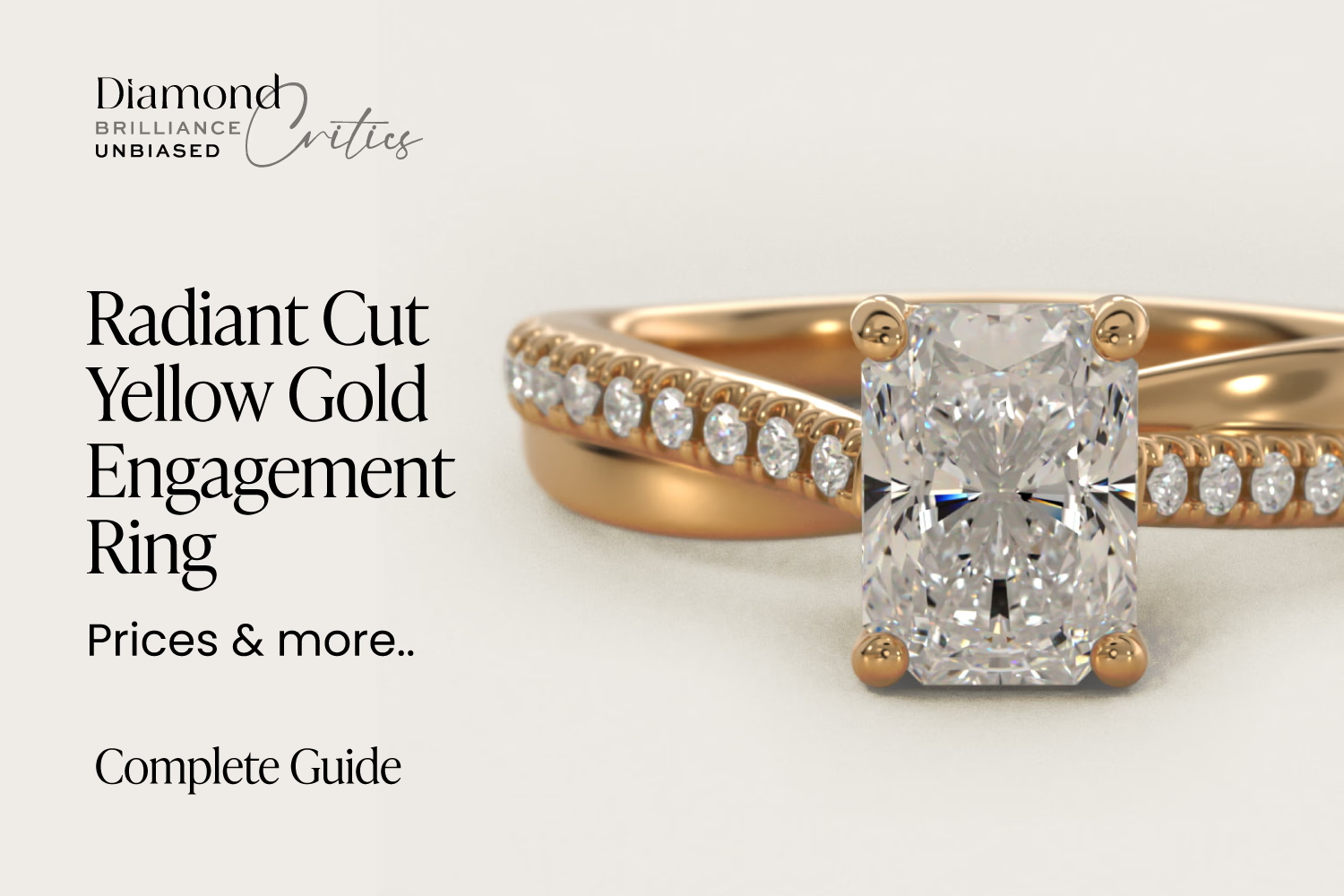
TL;DR: Radiant Cut Yellow Gold Engagement Ring — Key Facts
The single most important rule: yellow gold masks diamond color. Buy G or H — not D, E, or F. In yellow gold, G and H look identical to D-F face-up. The price difference is $700–$2,000 per carat. Keep that money and put it on carat weight.
Full ring prices — stone + setting = total (certified 2026 market data):
- Natural 1ct GIA G-VS2 + Petite Solitaire YG $1,000 = $3,318 total
- Natural 1.5ct GIA G-VS2 + Petite Solitaire YG $1,000 = $8,704 total
- Lab 1ct IGI E-VVS1 + Woven Solitaire YG $965 = $1,832 total
- Lab 1.5ct IGI F-VVS1 + Petite Solitaire YG $1,000 = $2,510 total
- Lab 2ct IGI F-VVS1 + Cathedral Pavé Crown YG $1,800 = $3,969 total
→ Best overall value: Lab 1.5ct IGI F-VVS1 radiant at $1,510 + Petite Solitaire YG at $1,000 = $2,510 total ring. A full 1.5ct certified radiant in yellow gold for under $2,600.
Priority: Set your Total Ring Number first. Put 75–80% on the stone. Choose G color. Then pick a setting from what remains.


What Is a Radiant Cut Yellow Gold Engagement Ring?
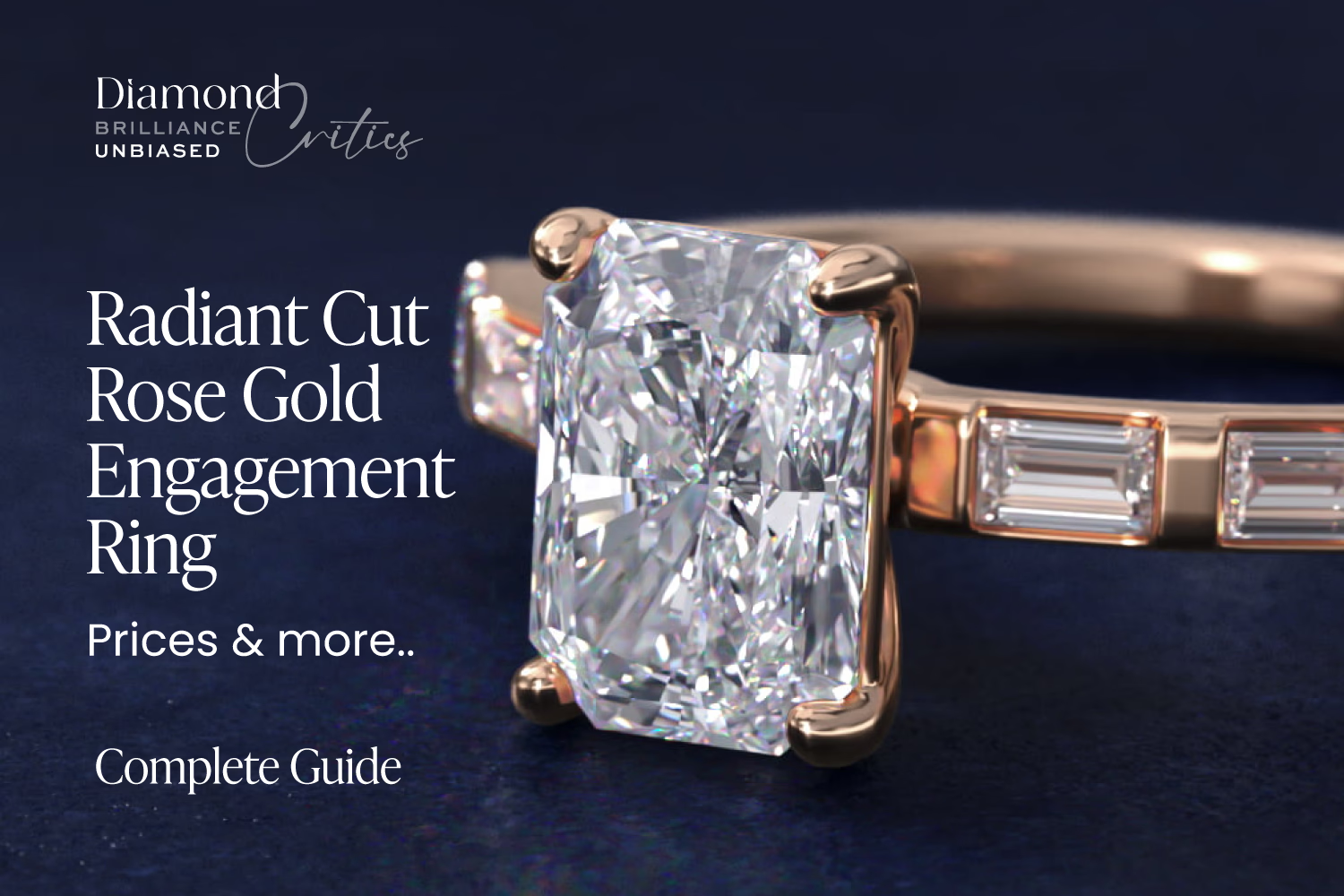
A radiant cut yellow gold engagement ring pairs the radiant cut diamond — the only shape combining step-cut elegance with brilliant-cut fire — with a 14k or 18k yellow gold setting. It is one of the warmest and most visually striking ring combinations available right now.
I'm Farzana Hasan, GIA Expert at Diamond Critics. The radiant cut in yellow gold is the pairing I recommend most — buyers get maximum visual impact without overpaying for color. Yellow gold reflects warm light up into the stone, and the radiant's 70 facets scatter it in every direction.
For the full radiant cut context — L/W ratio, cut depth, clarity floor — see the Radiant Cut Diamond: The Complete Buying Guide.
The radiant cut was created in 1977 by Henry Grossbard. He wanted the large face-up table of a step-cut with the sparkle of a brilliant. The result: 70 facets on the crown and pavilion — more than any comparable fancy shape.
An emerald cut has the large table but flat flash. A round brilliant has the sparkle but a smaller visible area. The radiant cut has both — and in yellow gold, the warm reflected light turns that fire up another level.
Yellow gold was the dominant engagement ring metal for centuries. It fell to white gold and platinum in the early 2000s and came back strongly since 2019. In 2026, yellow gold is mainstream — not niche, not retro.
And there is one structural advantage most buyers never hear about: yellow gold masks diamond color. You can buy G or H instead of D-F and pocket the $700–$2,000 difference. That one move changes your ring budget entirely.
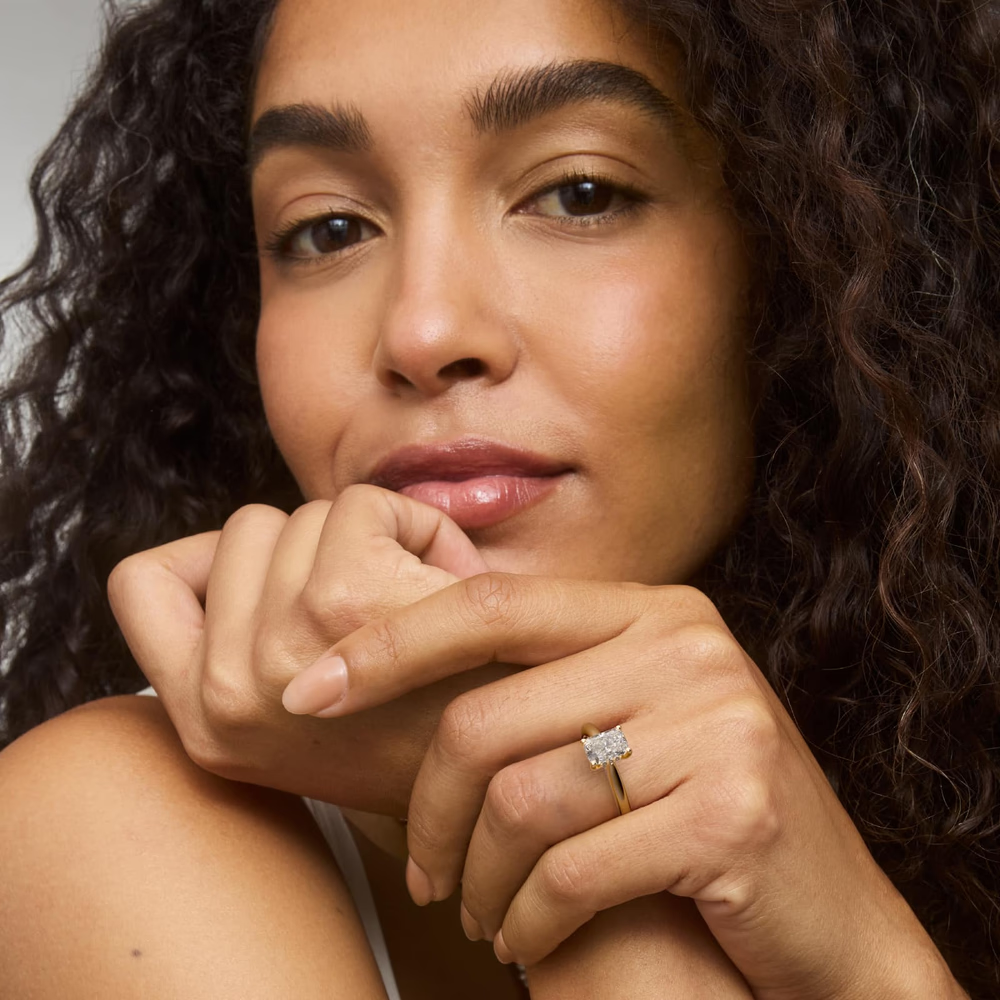
The Yellow Gold Color Advantage
This is the rule that changes your entire budget. It is not widely advertised — but it is real and consistent.
Diamond color runs D (colorless) to Z (visible tint). D, E, F are colorless. G, H, I are near-colorless.
In white gold or platinum, the neutral metal can reveal a subtle warm tint in G or H under strong side-lighting. The difference shows at a specific angle in bright light. That is why D-F commands a premium.
In yellow gold, the metal itself is warm. It floods the diamond from below with amber-toned reflected light. Any slight warmth in the stone's body blends right in — rather than contrasting against a white background.
A G or H radiant cut in yellow gold looks perfectly white face-up. You cannot tell it from D under normal viewing conditions — arm's length, everyday light, any angle.
The radiant cut amplifies this advantage further. The 70 facets produce "crushed ice" scatter — hundreds of tiny reflections that pull your eye toward the sparkle, not the body color. A G-H radiant in yellow gold reads whiter than a G-H emerald cut in the same setting, because the emerald's open table reflects body color straight back at you.
Color grade and price in yellow gold — what the data shows:
| Color Grade | Approx premium over G | In White Gold | In Yellow Gold | What this means |
|---|---|---|---|---|
| D (Colorless) | +$1,500–$2,000/ct | Noticeably whiter | Identical to G face-up | D premium wasted in YG — you pay D, you see G |
| E (Colorless) | +$1,000–$1,500/ct | Very white | Identical to G in YG | Minor premium invisible in yellow gold |
| F (Colorless) | +$700–$1,000/ct | White | Same as G in YG | Entry colorless — still unnecessary in YG |
| G (Near Colorless) | Baseline | Slightly warm in strong light | Perfectly white face-up | Sweet spot for YG — max value, zero visible cost |
| H (Near Colorless) | −$300–$500/ct vs G | Warm tint visible | White face-up, faint edge warmth | Strong value — save $300–$500 more vs G, review stone first |
| I (Near Colorless) | −$500–$800/ct vs G | Warm tint noticeable | Acceptable in YG for some buyers | Test before buying — some I grades look warm even in YG |
Verdict: G is the color sweet spot for every radiant cut yellow gold engagement ring. It looks perfectly white in yellow gold, saves $700–$2,000 per carat versus D-F, and carries no visual cost. If budget is very tight, H is worth considering — but review the actual stone before committing. I is a gamble. D-F in yellow gold is a wasted premium.
Natural Radiant Cut Yellow Gold Ring Prices
Every price below is a total ring price: stone price plus setting price. Both numbers are linked to the specific certified inventory item. The clarity floor for radiant cut is VS2 — the 70-facet structure masks SI1 inclusions 60–70% of the time, but VS2 is the safe, reliable eye-clean floor.
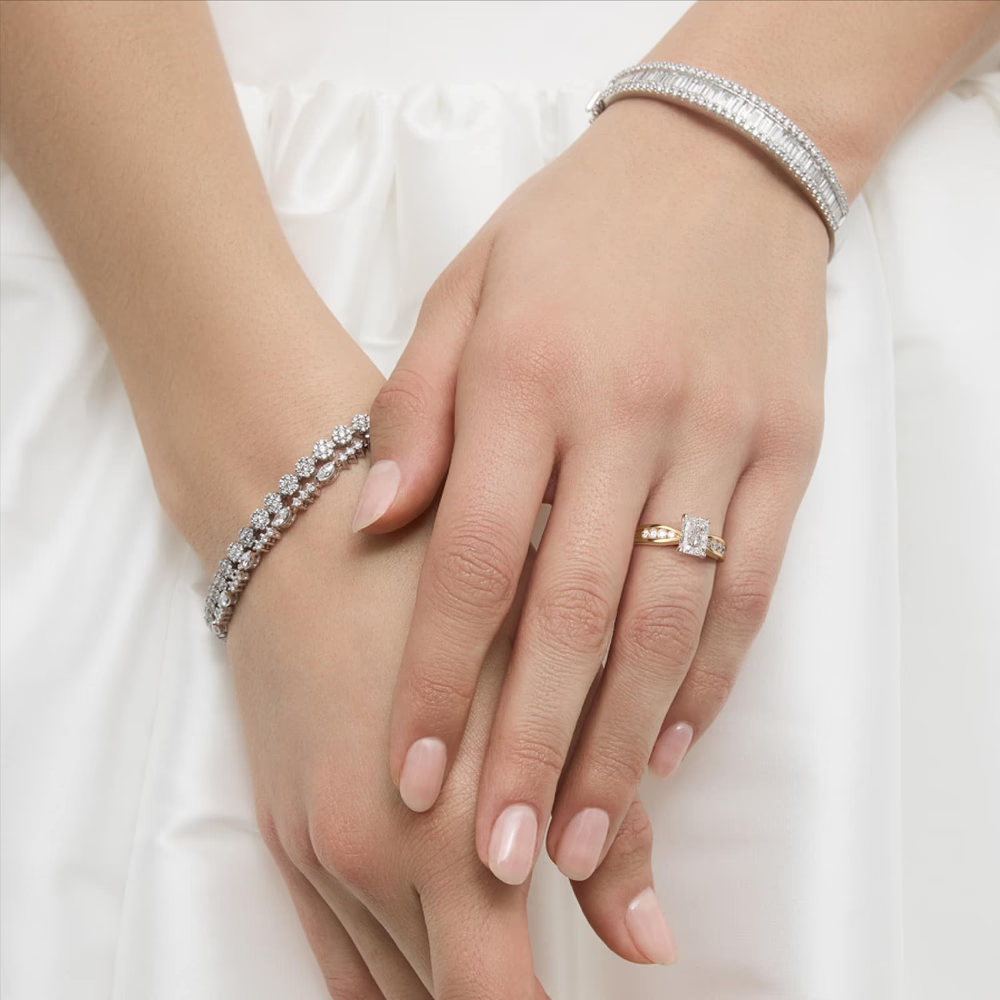
| Stone | Stone Price | Setting | Setting Price | Total Ring | What this means |
|---|---|---|---|---|---|
| 1ct GIA G-VS2 | $2,318 | Petite Solitaire YG | $1,000 | $3,318 | Best natural entry — G in YG looks identical to D-F |
| 1ct GIA G-VS2 | $2,318 | Tapered Cathedral YG | $1,240 | $3,558 | Cathedral elevation lifts the stone — good for smaller hands |
| 1ct GIA F-VS2 | $2,597 | Milgrain Pavé V-Shank YG | $1,790 | $4,387 | F color + pavé band — buy G-VS2 instead and save $279 |
| 1.5ct GIA G-VS2 | $7,704 | Petite Solitaire YG | $1,000 | $8,704 | Best 1.5ct natural buy — G saves $2K+ over D at this weight |
| 1.5ct GIA E-VS1 | $7,844 | Cathedral Pavé Crown YG | $1,800 | $9,644 | E-VS1 is certificate prestige — visually same as G-VS2 in YG |
| 2ct GIA D-VS2 | $17,714 | Cathedral Pavé Crown YG | $1,800 | $19,514 | Full luxury natural — D/VS2 at 2ct is statement jewellery |
Verdict: The 1ct GIA G-VS2 + Petite Solitaire YG at $3,318 is the right natural entry. G in yellow gold is visually identical to D-F — buy G and save $700–$1,500 on color alone. For 1.5ct natural, the G-VS2 at $8,704 total is the certified sweet spot.
"Every time I tell a buyer to choose G instead of D for a yellow gold setting, they push back. They say D is the best — and on the GIA scale, it is. But 'best on paper' is not the same as 'best on your finger.' I've set hundreds of stones in yellow gold. I cannot tell a D from a G face-up in yellow gold in normal light. Save the money. Buy more carat or a better setting." — Farzana Hasan, Diamond Critics
Lab Radiant Cut Yellow Gold Ring Prices
Lab radiant cuts are physically and chemically identical to natural diamonds. IGI-certified lab stones carry the same D-Z color grades and the same VS2/VS1/VVS clarity grades. The only difference is origin — and the price is 70–85% lower.
The color advantage in yellow gold applies equally to lab stones. Lab diamonds are readily available in D-E color at low premiums over F-G. In white gold, that D or E color matters visually. In yellow gold, F or G lab gives the same face-up result as D — you save money and add it to carat weight.
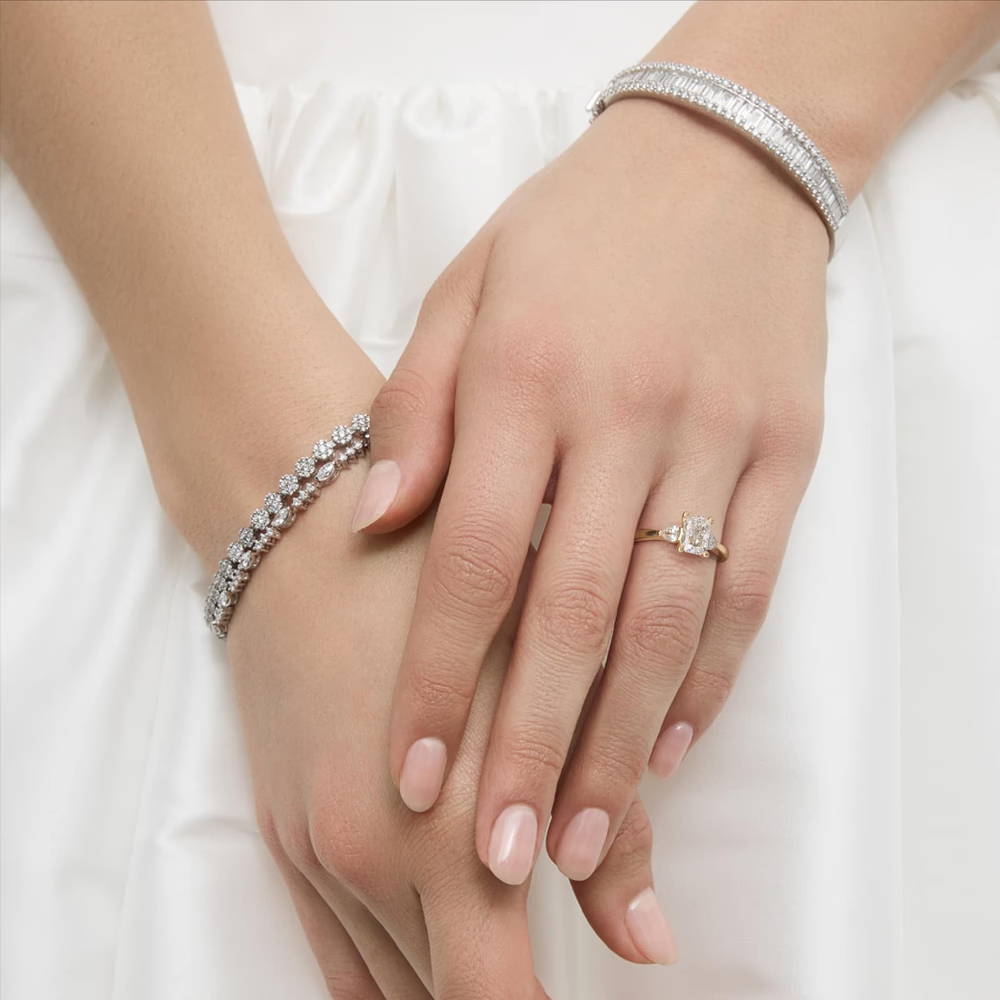
| Stone | Stone Price | Setting | Setting Price | Total Ring | What this means |
|---|---|---|---|---|---|
| 1ct IGI E-VVS1 | $867 | Woven Solitaire YG | $965 | $1,832 | Best entry lab ring — 1ct E-VVS1 in yellow gold under $2K |
| 1ct IGI D-VVS1 | $932 | Petite Solitaire YG | $1,000 | $1,932 | D costs $65 more than E in lab — invisible in YG, buy E instead |
| 1.5ct IGI F-VVS1 | $1,510 | Petite Solitaire YG | $1,000 | $2,510 | Best value in this post — full 1.5ct certified radiant in YG for $2,510 |
| 1.5ct IGI E-VVS1 | $1,600 | Milgrain Pavé V-Shank YG | $1,790 | $3,390 | 1.5ct lab + vintage pavé band for $3,390 — looks like a $10K natural ring |
| 2ct IGI F-VVS1 | $2,169 | Cathedral Pavé Crown YG | $1,800 | $3,969 | 2ct F-VVS1 + crown pavé under $4K — maximum visual impact in this post |
| 2ct IGI E-VVS1 | $2,220 | The Ritz Round Halo YG | $3,155 | $5,375 | 2ct lab with full halo — closest to natural luxury look at $5K |
Verdict: The 1.5ct IGI F-VVS1 + Petite Solitaire YG at $2,510 total is the best value combination in this post. A full 1.5ct certified radiant in yellow gold for $2,510 — nothing comes close at this price. The 2ct IGI F-VVS1 + Cathedral Pavé Crown at $3,969 is the maximum visual impact pick — two certified carats with a crown pavé setting in yellow gold for under $4,000.
"Lab radiant in yellow gold is the combination I recommend most right now for buyers with a realistic budget. The visual impact of a 2ct lab radiant in yellow gold is stunning — and nobody asks 'is that lab?' They ask 'what is that warm stone?' Yellow gold draws the eye. The radiant cut's 70 facets do the rest. I've shown 2ct lab radiant yellow gold rings beside 2ct natural radiant white gold rings. The yellow gold one gets the question every time." — Farzana Hasan, Diamond Critics
The Setting Stack
The Setting Stack is the framework for building your total ring price without overspending. One number. Two line items. No surprises.
Your Total Ring Number is one figure: stone price plus setting price. That is your ring. Set this total before you do anything else.
Most buyers find a stone they love, then add the setting as a second expense. That is how budgets overrun. Set the total first, then allocate it.
The split for radiant cut: 75–80% on the stone, 20–25% on the setting. The stone does all the visual work — 70 facets, brilliance, size. A Petite Solitaire at $1,000 is not a compromise — it is the correct allocation.
Spending $3,000 on a setting for a stone under 2ct natural is the wrong call. The setting does not create the fire. The stone does.
Here is every 14k yellow gold setting available in current certified market inventory, ranked by price. "Starting from" uses the lab 1ct E-VVS1 radiant at $867 as the baseline stone.
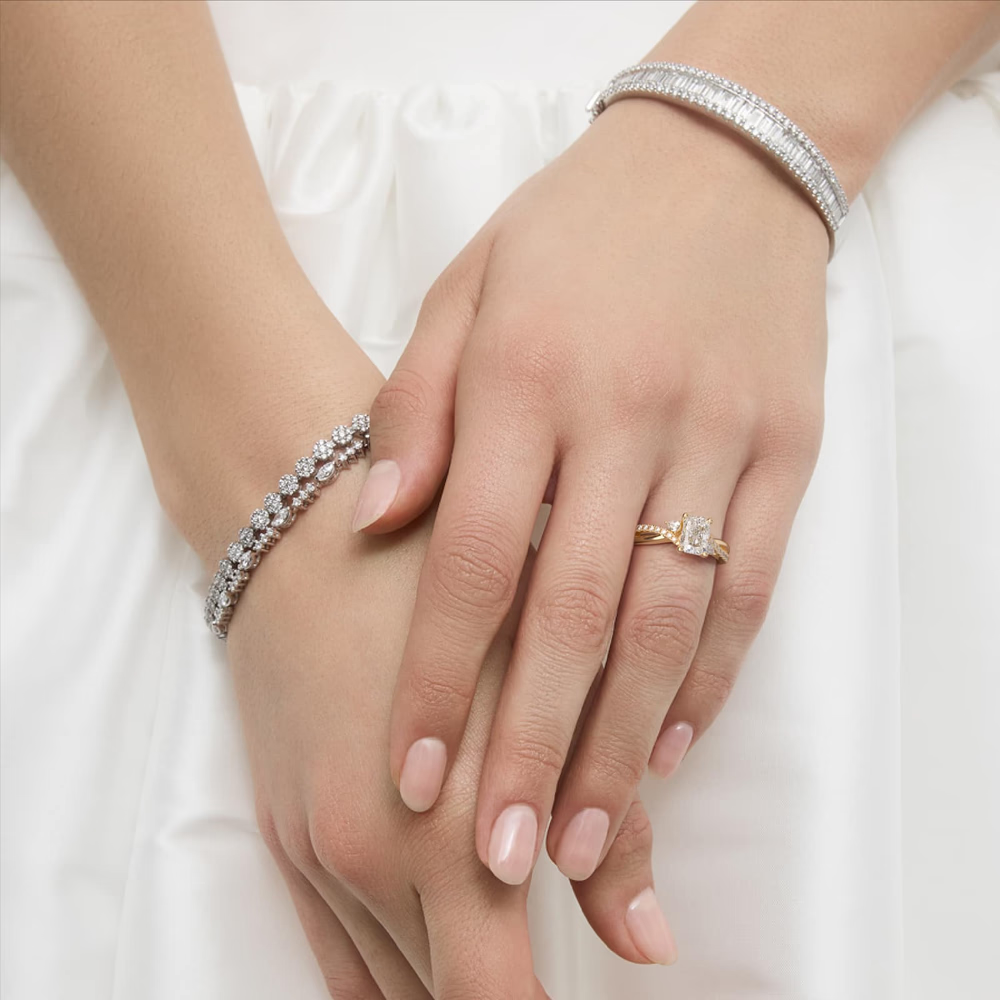
| Setting | Style | Price | Reviews | Ring From | What this means |
|---|---|---|---|---|---|
| Ten Prong Solitaire YG | Classic solitaire | $860 | — | $1,727 | Lowest-cost YG entry — 10 prongs give extra corner security |
| Woven Solitaire YG | Textured band | $965 | — | $1,832 | Woven texture adds character — great for elongated radiant shapes |
| East West Knife Edge YG | Modern solitaire | $975 | — | $1,842 | Knife-edge shank is the slimmest profile — maximises visual stone size |
| Petite Solitaire YG | Classic solitaire | $1,000 | 1,187 | $1,867 | Most reviewed YG setting — proven, timeless, works with any radiant shape |
| Solitaire Intricate Basket YG | Detailed basket | $1,050 | — | $1,917 | Intricate basket detail adds warmth without extra side stones |
| Petite Split Shank YG | Split shank | $1,165 | 18 | $2,032 | Split shank frames the stone — architectural elegance for elongated radiant |
| Tapered Cathedral YG | Cathedral | $1,240 | — | $2,107 | Cathedral arch lifts stone high — makes smaller stones read bolder |
| Petite Hidden Halo YG | Hidden halo | $1,255 | 105 | $2,122 | Hidden halo adds below-stone sparkle — center reads clean from above |
| Milgrain Pavé V-Shank YG | Vintage pavé | $1,790 | 36 | $2,657 | Milgrain + pavé = vintage detail in YG — unique and distinctive |
| Cathedral Pavé Crown YG | Cathedral pavé | $1,800 | — | $2,667 | Pavé crown wraps the stone base with a halo of diamonds |
| Pear Sidestone YG | Sidestone | $1,820 | 78 | $2,687 | Pear side stones add a three-stone feel without three-stone price |
| Common Prong Pavé YG | Full pavé | $2,090 | 107 | $2,957 | Full pavé band — most diamond coverage on the band of any option here |
| Gallery Collection Pavé YG | Gallery pavé | $2,530 | — | $3,397 | Gallery Collection signature — premium design, cathedral + pavé combined |
| The Ritz Round Halo YG | Full halo | $3,155 | — | $4,022 | Most diamond-intensive YG setting — full halo + pavé band luxury pick |
Verdict: The Petite Solitaire at $1,000 is the right setting for most buyers — 1,187 reviews, proven design, works with every radiant shape and carat weight. The Milgrain Pavé V-Shank at $1,790 is the best upgrade if you want pavé band sparkle with a vintage character. Anything above $2,000 on a setting shifts too much of your budget away from the center stone.
Tides Of Summer Capsule
Up To 30% Off
Shop The Sale →Vault ClearanceClear The Vault
Up To 70% Off
Shop Vault Deals →Affiliate link — no extra cost to you
Best Setting Style for a Radiant Cut Yellow Gold Ring
Not every setting works equally well with a radiant cut. The shape has specific structural features that make some pairings stronger than others.
Solitaire settings are the most popular pairing for radiant cut yellow gold rings. The clean prong design lets the 70-facet stone do all the visual work. For an elongated radiant, a six-prong solitaire adds extra protection on each long side.
Pavé band settings add continuous shoulder sparkle alongside the center stone. The radiant cut fires independently, so the pavé adds to total ring sparkle without competing visually with the center. The Milgrain Pavé V-Shank at $1,790 is the standout — milgrain beading adds a vintage texture that reads beautifully in yellow gold.
Halo settings work on radiant cuts in a way they don't on emerald cuts. A radiant's clipped 45-degree corners create an octagonal base — a round halo follows those corners naturally without fighting the stone's outline.
The Petite Hidden Halo at $1,255 adds sparkle below the stone while keeping the face-up view clean. The Ritz Round Halo at $3,155 is the full halo statement pick.
Sidestone settings suit buyers who want distinct shoulder stones rather than a continuous pavé band. The Pear Sidestone at $1,820 pairs two pear-shaped side stones with the radiant center — the pear shapes complement the radiant cut's clipped corners and create a natural three-stone visual.
Cathedral settings lift the center stone above the band. The Tapered Cathedral at $1,240 is the classic yellow gold cathedral — elevated position adds height and presence, particularly useful if the stone is 1ct or smaller.
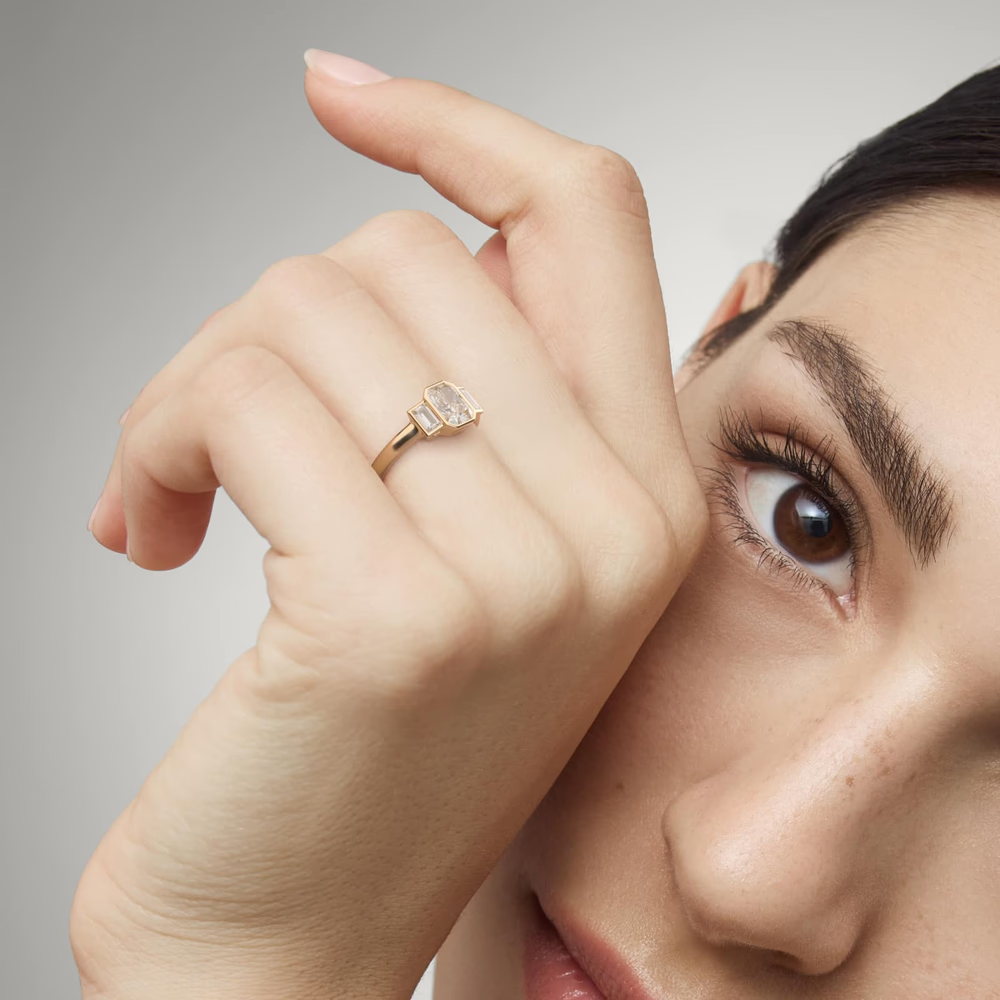
Yellow Gold vs. White Gold for a Radiant Cut Diamond
Both metals work well with a radiant cut. The right choice depends on your color grade, your style, and how much maintenance you want.
Color grade matters here. Yellow gold is the right metal for G, H, and I color diamonds. White gold is better for D-E-F if you want the colorless premium to show visually. In yellow gold, D-F and G-H look identical face-up.
You pay a D premium and see a G result. In white gold, D-F retains its visual advantage. The color premium is real — but only in neutral settings.
Sparkle character is different. White gold produces colder, higher-contrast sparkle. Yellow gold produces warmer, amber-toned fire. A radiant in yellow gold sparkles with a different character — not better or worse, but distinctly warmer.
Buyers who prefer icy white contrast choose white gold. Buyers who prefer rich, warm fire consistently prefer yellow gold.
Maintenance favors yellow gold. White gold is plated with rhodium to appear white. That plating wears off every two to five years and costs $50–$150 to reapply.
Yellow gold does not have this issue. 14k yellow gold ages gracefully — it develops a slight patina but does not change color or require coating.
| Factor | Yellow Gold | White Gold | What this means |
|---|---|---|---|
| Best color grade | G-H | D-E-F | YG hides color — saves $700–$2,000/ct vs paying D-F premium |
| Sparkle character | Warm, amber fire | Cold, icy contrast | Personal preference — YG adds warmth, WG adds contrast |
| Maintenance | None required | Rhodium replate every 2–5 yrs ($50–$150) | YG has zero maintenance cost; WG adds a recurring appointment |
| Durability at 14k | Same | Same | No difference — both 14k alloys are comparable in hardness |
| Trending in 2026 | Strongly yes | Always popular | YG is mainstream again — no fashion risk |
Verdict: For G-H color, yellow gold is the stronger choice — lower color cost, no maintenance, warm fire. If you insist on D-E-F color and want the neutrality of the setting to show that grade, choose white gold or platinum. For most buyers with realistic budgets, yellow gold with G color is the correct combination.
14k vs. 18k Yellow Gold for a Radiant Cut Ring
14k and 18k differ in purity, price, color depth, and durability. For most buyers, the answer is 14k.
14k yellow gold is 58.3% pure gold, mixed with silver, copper, and other alloys. The alloys harden the metal, making it more scratch-resistant than 18k. All the settings in the price tables above are 14k.
The color is warm and clearly yellow in daylight. It is the standard recommendation for engagement rings worn every day.
18k yellow gold is 75% pure gold. The higher gold content makes the color richer and deeper — more obviously yellow than 14k in side-by-side comparison. 18k is also softer, which means it develops fine scratches faster with daily wear.
It costs more — a 14k setting at $1,000 often runs $1,200–$1,400 in 18k. The premium for 18k goes toward purity and color depth, not durability.
The right choice for a radiant cut ring is 14k. The color difference between 14k and 18k is subtle in everyday lighting. 14k's extra hardness protects the prongs that hold the radiant cut's clipped corners.
The savings from choosing 14k over 18k can go toward the center stone.
Radiant Cut Yellow Gold Ring Budget Guide
Here is what you can build at each price tier using current certified market inventory.
Under $2,500 — lab 1ct or 1.5ct, clean solitaire. A 1ct IGI E-VVS1 lab radiant at $867 in the Woven Solitaire YG at $965 = $1,832 total. The upgrade: 1.5ct IGI F-VVS1 at $1,510 + Petite Solitaire YG $1,000 = $2,510. This is the best value ring in this post. A full 1.5ct lab radiant in yellow gold for $2,510.
$2,500–$4,000 — natural 1ct GIA OR lab 2ct. At $3,318 you get 1ct GIA G-VS2 natural + Petite Solitaire YG $1,000 — GIA certified, G-VS2, yellow gold. At $3,969 you get 2ct IGI F-VVS1 lab + Cathedral Pavé Crown YG $1,800 — two full certified carats in crown pavé yellow gold. The lab 2ct is more stone per dollar. The natural 1ct carries a GIA certificate.
$4,000–$10,000 — natural 1.5ct options. The 1.5ct GIA G-VS2 natural at $7,704 + Petite Solitaire YG $1,000 = $8,704 total. The E-VS1 natural at $7,844 + Cathedral Pavé Crown YG $1,800 = $9,644. In yellow gold, buy the G-VS2, not the E-VS1.
$10,000+ — natural 2ct statement ring. The 2ct GIA D-VS2 at $17,714 + Cathedral Pavé Crown YG $1,800 = $19,514 total. Full luxury territory — D, VS2, 2ct natural GIA, crown pavé setting.
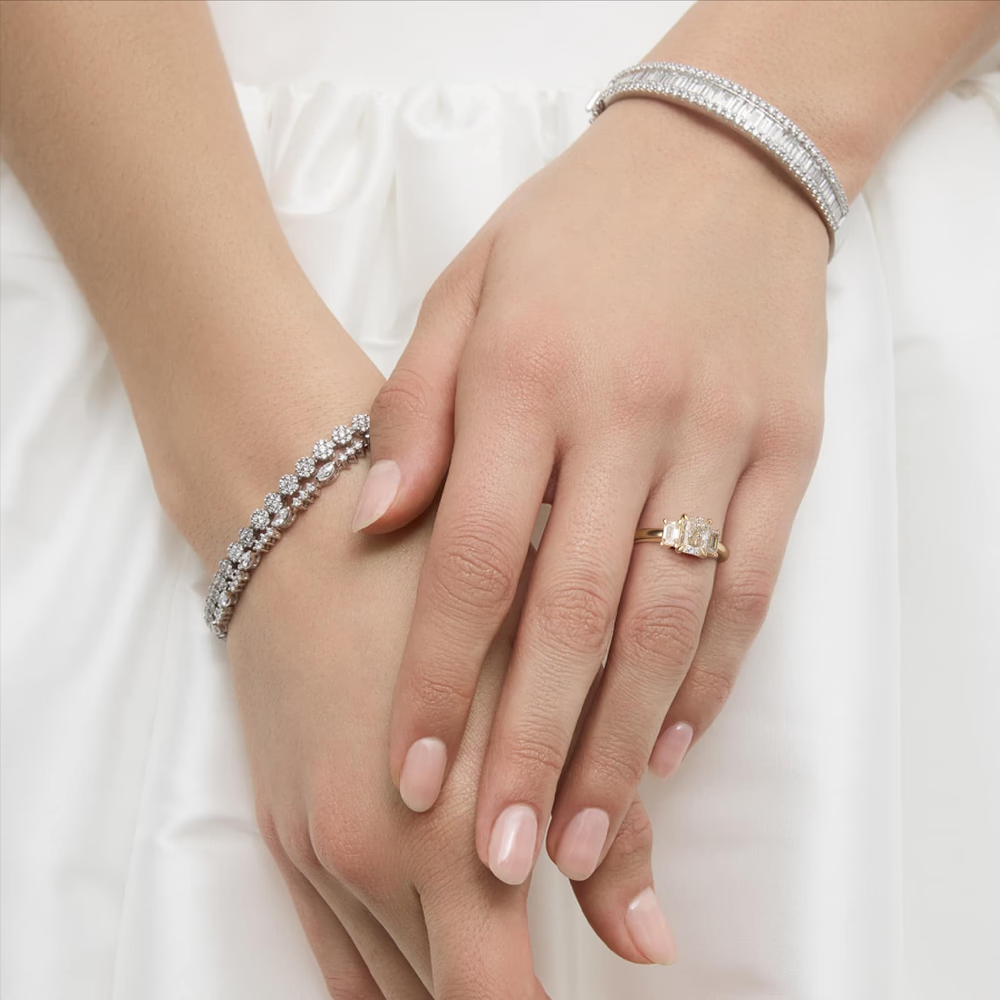
Elongated vs. Square Radiant Cut in Yellow Gold
The L/W ratio determines how your ring looks on your hand. And for yellow gold specifically, the elongated radiant has a specific advantage.
An elongated radiant (L/W ratio 1.20+) reads rectangular. On a finger it looks like a miniature emerald cut — long, elegant, and finger-lengthening. The extended length means more facets are catching the yellow gold's reflected warm light.
Many buyers find the elongated radiant in yellow gold the more dramatic of the two shapes.
A square radiant (L/W ratio below 1.10) reads compact and bold — closer to a cushion or princess in visual footprint. It makes a strong, confident statement. Square radiant cut buyers who want more sparkle than a cushion provides consistently choose this combination.
Both shapes are excellent in yellow gold. The choice is personal style.
See the full shape guides at Elongated Radiant Cut Diamond and Square Radiant Cut Diamond.
"Yellow gold and radiant cut is one of my favourite pairings to recommend. The 70-facet fire in warm afternoon light is something you have to see in person to believe. Buyers come in wanting white gold. I show them the same stone in yellow gold first. Most change their minds on the spot. It is not just sparkle — it is warm fire. Coloured, directional fire. And you save $700–$2,000 on colour in the process." — Farzana Hasan, Diamond Critics
Final Verdict: Best Radiant Cut Yellow Gold Engagement Ring for Your Budget
Best for buyers under $2,500 — lab 1.5ct solitaire: 1.5ct IGI F-VVS1 lab radiant at $1,510 + Petite Solitaire YG at $1,000 = $2,510 total. This is the best value ring in this post. Full 1.5ct certified radiant cut in yellow gold. Nothing at this price comes close.
Best for buyers wanting natural GIA — 1ct budget: 1ct GIA G-VS2 natural at $2,318 + Petite Solitaire YG at $1,000 = $3,318 total. Buy G, not D-F. Yellow gold makes the $1,500 color premium invisible. GIA certified.
Best for maximum visual impact under $4K — lab 2ct: 2ct IGI F-VVS1 lab radiant at $2,169 + Cathedral Pavé Crown YG at $1,800 = $3,969 total. Two certified carats in a crown pavé yellow gold setting. No ring under $4,000 outperforms this combination visually.
Best for buyers wanting natural 1.5ct: 1.5ct GIA G-VS2 natural at $7,704 + Petite Solitaire YG at $1,000 = $8,704 total. G-VS2 in yellow gold at 1.5ct is the natural sweet spot — saves $2,000+ over D at this weight with zero visible difference.
Frequently Asked Questions
What is the best color grade for a radiant cut yellow gold engagement ring?
G or H. Yellow gold masks body color — G and H grades look identical to D-F face-up in yellow gold. The $700–$2,000 per carat premium for D-E-F exists because those grades show in white gold and platinum.
In yellow gold, that premium is wasted. Buy G at 1ct and pocket the savings, or put them toward more carat weight.
How much does a radiant cut yellow gold engagement ring cost?
Ring totals start at $1,832 for a lab 1ct E-VVS1 radiant in the Woven Solitaire YG at $965. Natural 1ct GIA starts at $3,318. Lab 1.5ct rings run $2,510–$3,390 depending on setting.
Lab 2ct runs $3,969–$5,375. Natural 1.5ct runs $8,704–$9,644. Natural 2ct starts at $19,514.
All are total ring prices — stone plus setting combined.
Is 14k or 18k yellow gold better for a radiant cut engagement ring?
14k. It is harder, more scratch-resistant, and less expensive than 18k. The color difference between 14k and 18k is subtle in everyday light — 18k is slightly richer and deeper yellow, but not dramatically so.
All settings in the tables above are 14k. The savings from 14k over 18k are better spent on the center stone.
Does a halo setting work on a radiant cut diamond?
Yes — and this is one of the most common misconceptions from emerald cut research. Emerald cut halos can fight the sharp rectangular outline. Radiant cut halos work because the radiant has clipped 45-degree corners, creating an octagonal base.
A round halo follows those corners without fighting the stone's outline. The Petite Hidden Halo at $1,255 and The Ritz Round Halo at $3,155 are both effective pairings for yellow gold.
What clarity should I buy for a radiant cut yellow gold ring?
VS2 is the clarity floor. The radiant cut's 70 brilliant facets mask SI1 inclusions 60–70% of the time, but VS2 is the reliable eye-clean standard. Do not pay for VS1 or VVS — the improvement over VS2 is invisible in a radiant cut.
Never go below VS2 without reviewing the actual stone in person or via high-resolution video. For a deeper breakdown, see Radiant Cut Engagement Rings.
What is the difference between elongated and square radiant cut for a yellow gold ring?
The elongated radiant (L/W ratio 1.20+) reads long and rectangular — elegant and finger-lengthening. It suits buyers who like oval or emerald cut proportions with radiant sparkle. The square radiant (L/W ratio below 1.10) reads compact and bold — it suits buyers who like cushion or princess proportions.
Both work beautifully in yellow gold. The elongated spreads warm fire across more of the finger; the square makes a bolder compact statement. See Elongated Radiant Cut Diamond for the full ratio guide.
Is a lab radiant cut diamond good in a yellow gold setting?
Yes — one of the best combinations available. Lab radiant cuts are physically identical to natural diamonds, graded on the same IGI scale. The 1.5ct IGI F-VVS1 lab at $1,510 in the Petite Solitaire YG at $1,000 is $2,510 total.
Lab stones in yellow gold deliver all the fire and color advantage at a fraction of the natural price. Full comparison at Lab Grown Radiant Cut Diamond.
How does a radiant cut compare to a cushion cut in yellow gold?
Both shapes look strong in yellow gold. Radiant cut has 70 facets producing crushed-ice scatter. Cushion cut has a pillowy outline with softer, less intense sparkle.
Radiant cuts are typically 10–20% less expensive than cushion cuts at the same carat weight and quality grades. The choice comes down to sparkle character — radiant for intense multi-directional fire, cushion for a softer, warmer glow. Full comparison at Cushion Cut vs Radiant Cut.
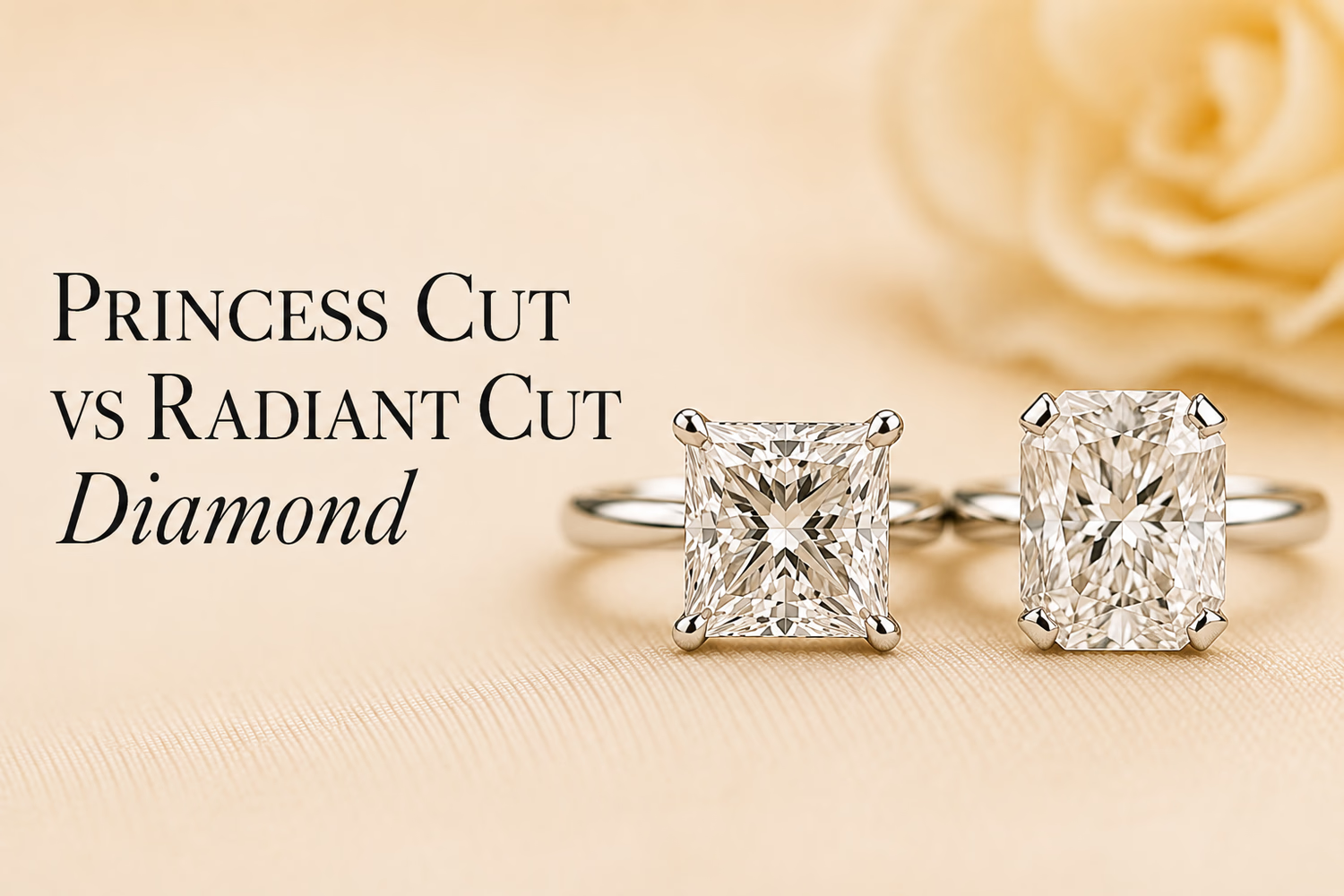
Should I choose radiant or princess cut for a yellow gold ring?
Radiant cut is the stronger choice for yellow gold, for two reasons. Princess cut has sharp 90-degree corners that chip under impact — every chipped corner is a costly repair (this is the Corner Tax). Radiant cut's clipped 45-degree corners are naturally protected and do not require special prong placement.
Radiant cut's 70 facets also mask SI1 inclusions far better than princess cut's parallel chevron facets. See the full breakdown at Princess Cut vs Radiant Cut.
How does yellow gold affect the sparkle of a radiant cut diamond?
Yellow gold reflects warm, amber-toned light up into the base of the diamond. The radiant cut's 70 facets scatter that warm light in every direction. The result is a distinctly warmer fire character — less icy, more golden.
Neither is objectively better. Buyers who prefer sharp white contrast choose white gold. Buyers who prefer rich, warm fire consistently prefer yellow gold.
What prong style is best for a radiant cut yellow gold ring?
Four-prong is the standard and the most popular. The four prongs grip the stone's clipped corners, holding it securely with minimal metal coverage — letting the facets fire freely. Six-prong is worth considering for elongated radiant cuts where the stone's longer dimension benefits from an extra anchor point.
Avoid very deep basket settings that sit the stone too low — radiant cuts need light access from below to fire properly.
Is a radiant cut yellow gold ring a good choice for active buyers?
Yes, with one caveat. The radiant cut is one of the most durable diamond shapes for daily wear — clipped corners do not chip like a princess cut's sharp corners. A four-prong solitaire in 14k yellow gold sits close to the finger without snagging.
Avoid full pavé bands if you work with your hands frequently — pavé diamonds can loosen with consistent impact. A clean solitaire setting is the most durable everyday option. See all ring options at Radiant Cut Engagement Rings.
Is a radiant cut yellow gold ring trendy or timeless?
Both. Yellow gold engagement rings have been worn for centuries — Victorian, Edwardian, and mid-century jewellery are all predominantly yellow gold. The radiant cut itself is modern, created in 1977.
The combination reads as vintage-inspired but contemporary. In 2026, yellow gold is strongly trending in engagement rings — it is a mainstream choice with deep historical roots. You are not making a fashion risk; you are joining a return to a classic.
Expert Summary
A radiant cut yellow gold engagement ring is one of the smartest combinations in the current certified diamond market.
Yellow gold masks color. Buy G or H instead of D-F — save $700–$2,000 per carat with zero visible difference face-up. Use that saving for more carat weight or a better setting.
This rule alone changes your budget entirely.
The radiant cut has 70 facets — more than any comparable fancy shape. In warm yellow gold light, those facets fire with a character that no other metal-shape pairing produces.
It is not just sparkle. It is warm, directional fire.
The best value ring in this post: 1.5ct IGI F-VVS1 lab radiant at $1,510 + Petite Solitaire YG at $1,000 = $2,510 total. Full 1.5ct certified radiant in yellow gold.
Best natural entry: 1ct GIA G-VS2 at $2,318 + Petite Solitaire YG at $1,000 = $3,318 total. GIA certified, G color, yellow gold.
Maximum visual impact under $4K: 2ct IGI F-VVS1 lab at $2,169 + Cathedral Pavé Crown YG at $1,800 = $3,969 total. Two certified carats, crown pavé setting, yellow gold fire. Nothing under $4,000 outperforms this.
Three rules for every purchase: Buy G, not D. Put 75–80% of your budget on the stone. Choose 14k yellow gold.
See Also
- Radiant Cut Diamond: The Complete Buying Guide — L/W ratio, cut depth, fluorescence, full buying framework
- Radiant Cut Engagement Rings — 5 buying mistakes, setting comparisons, total ring pricing
- Lab Grown Radiant Cut Diamond — full lab vs natural price comparison, IGI grading explained
- Elongated Radiant Cut Diamond — L/W ratio guide, finger-size matching, best settings for the elongated shape
- Square Radiant Cut Diamond — compact shape guide, cushion comparison, setting pairings
- Cushion Cut vs Radiant Cut Diamond — sparkle character, pricing differences, shape confusion resolved
- Princess Cut vs Radiant Cut Diamond — Corner Tax explained, clarity floors, full shape comparison
- Radiant Cut vs Emerald Cut Diamond — brilliance vs step-cut flash, clarity grade impact, pricing differences
Expert Verdict
Always audit the stone individually — no grade replaces seeing the actual diamond. The certificate tells you what to look for. Your eyes tell you whether to buy.
— Farzana Hasan, GIA Expert · DiamondCritics.com