TL;DR: Rose Gold Radiant Cut Engagement Ring — Key Facts
The single most important rule: rose gold masks diamond body color. Buy G or H — not D, E, or F. In rose gold, G and H grades look identical to D-F face-up. The color premium is $700–$2,000 per carat. Keep that money on carat weight.
Full ring prices — stone + setting = total (current certified market data):
- Natural 1ct GIA G-VS2 $2,318 + Petite Solitaire RG $870 = $3,188 total
- Natural 1.5ct GIA G-VS2 $7,704 + Petite Solitaire RG $870 = $8,574 total
- Lab 1ct IGI E-VVS1 $867 + Woven Solitaire RG $730 = $1,597 total
- Lab 1.5ct IGI F-VVS1 $1,510 + Petite Solitaire RG $870 = $2,380 total
- Lab 2ct IGI F-VVS1 $2,169 + Perfect Pavé RG $1,360 = $3,529 total
→ Best value: 1.5ct IGI F-VVS1 lab at $1,510 + Petite Solitaire RG at $870 = $2,380 total. Full 1.5ct certified radiant in rose gold. Nothing at this price comes close.
Rose Gold Radiant Cut Engagement Rings: Buy G, Skip D-F
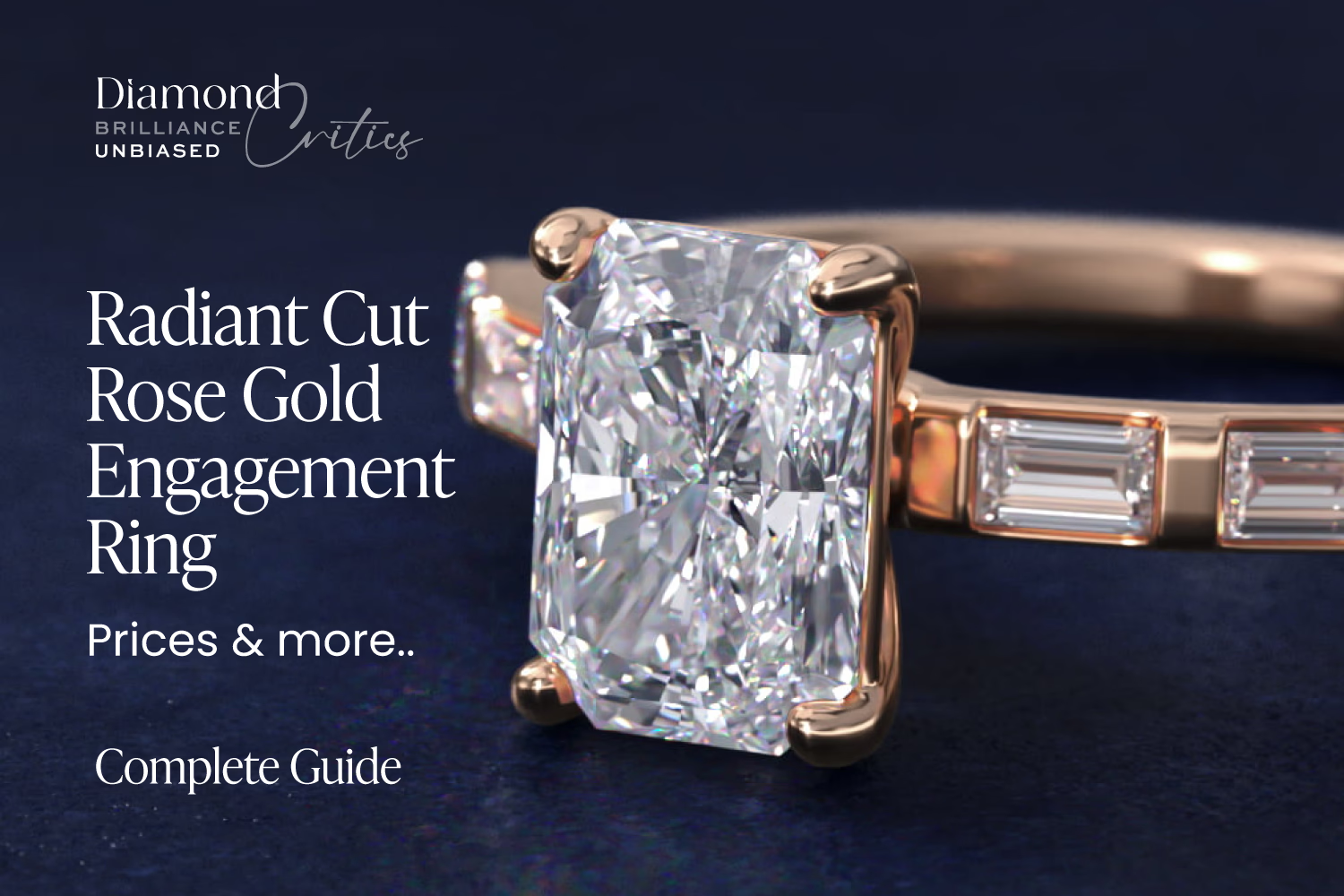
Rose gold radiant cut engagement rings are the most asked-about warm-metal pairing in bridal jewellery right now. The Radiant Cut Diamond: The Complete Buying Guide covers the cut itself — L/W ratio, facet structure, and clarity floors. This post covers the metal-stone relationship specifically: what rose gold does to color grades, which settings work best in rose gold, and what complete rings (stone + setting) cost at every budget tier using current certified market inventory.
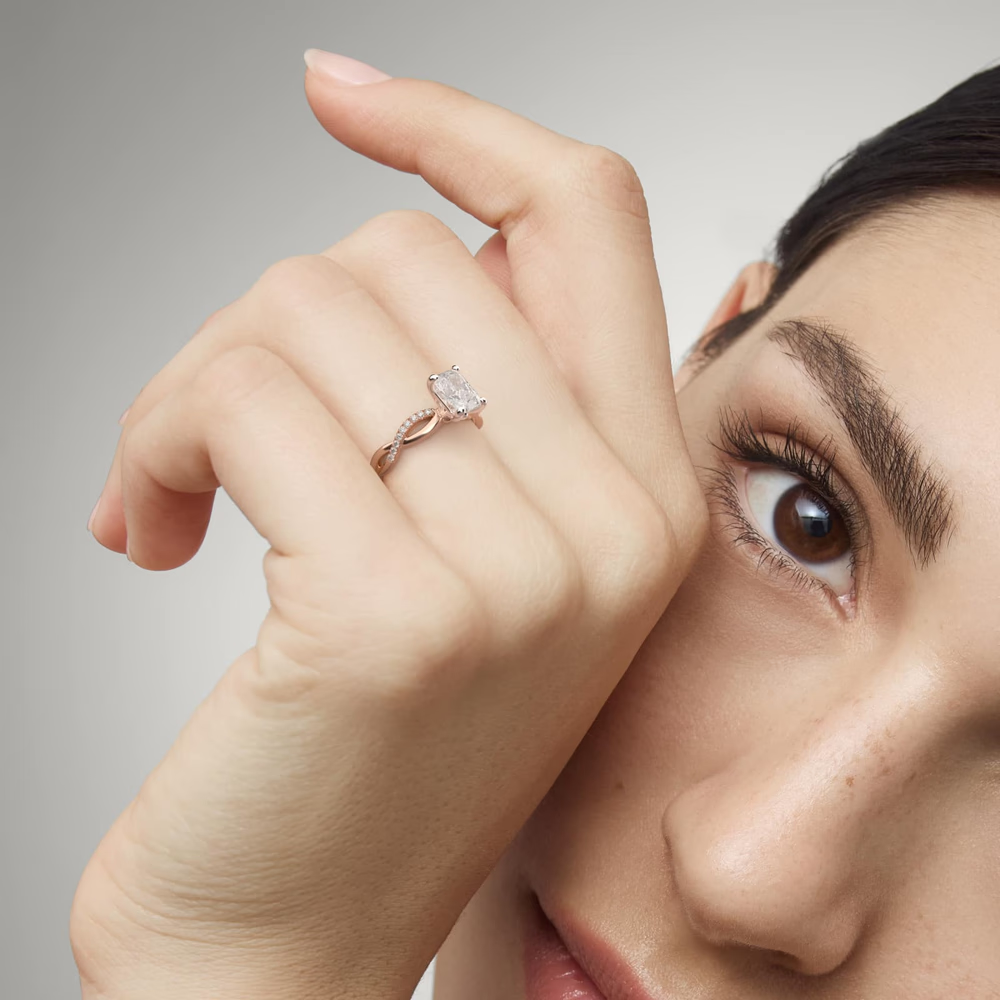
Start here before you spend a dollar on a stone. Rose gold masks body color. G and H grades look identical to D-F face-up in a rose gold setting. The premium for D-E-F is $700–$2,000 per carat and shows nothing in rose gold. That single fact changes your entire budget calculation.
The 70-facet brilliant structure of the radiant cut interacts with rose gold in a way that is different from every other metal. White gold produces cold, high-contrast sparkle. Yellow gold produces rich amber fire. Rose gold produces something softer — a blush-toned warmth that makes the radiant's crushed-ice scatter feel romantic and distinctly feminine. It is one of the most photographed engagement ring combinations in current bridal media, and it earns that attention.


The Rose Gold Color Multiplier
This is the most important section in this post. Understand this and you will save $700–$2,000 per carat before you even choose a setting.
Every diamond has a body color grade on the GIA scale from D (colorless) to Z (light yellow). The premium for D, E, and F grades exists because those grades appear visually distinct in a neutral metal setting. In white gold or platinum, the colorless setting does not add any warmth — so a D grade stone shows its colorlessness against a blank silver-white background. That visibility is what you pay for.
Rose gold removes that visibility entirely. The 14k rose gold alloy is 58.3% pure gold combined with copper and a small amount of silver. The copper content gives rose gold its blush-pink tone. When you place a diamond in a rose gold setting, that blush warmth reflects upward through the base of the stone. It mixes with the diamond's fire. G and H grades — which have a near-imperceptible yellow warmth in isolation — become indistinguishable from D-F face-up in rose gold. The warm metal masks the slight warmth in the stone completely.
You pay D-F prices. You see G results. In rose gold, D and G look the same face-up. Not similar. The same. Multiple independent gemological comparisons have confirmed this. If you buy D or E color for a rose gold setting, you are paying a premium that disappears the moment the stone is set.
G and H in rose gold is not a downgrade. It is a positive match. The slight warmth in G and H grades complements the blush tone of the rose gold alloy. The 70 brilliant facets of the radiant cut scatter that complementary warmth in every direction. The result is a ring where the stone and the metal feel like they were designed for each other — because they were. G-H in rose gold is a design decision, not a budget compromise.
I color in rose gold is worth considering too. An I color grade carries slightly more body warmth than G or H. In white gold, I is a visible step down — the warmth shows against the neutral setting. In rose gold, I is often identical to G face-up because the metal's blush warmth absorbs the tiny yellow tinge. I color radiant cuts run 15–25% less than G at the same clarity. If you want more carat weight at the same budget, buying I in rose gold is one of the most effective tools available.
The D-F buying mistake is consistent. Buyers research diamond color grades, see that D is the best, and assume D is always the right choice. It is the right choice for white gold and platinum. For rose gold, D is a waste of premium dollars. The grading system is built for colorless settings. Rose gold is not a colorless setting.
Rose Gold Color Grade Optimization Matrix
| Color Grade | In White Gold | In Rose Gold | Price Impact vs G-VS2 | What this means |
|---|---|---|---|---|
| D-E-F | Colorless visible, full premium justified | Looks identical to G face-up | +$700–$2,000/ct | Never buy D-F for rose gold — premium is 100% invisible |
| G | Near-colorless, slight warmth | Ideal match for rose gold warmth | Benchmark | The correct grade for rose gold — buy this |
| H | Near-colorless, tiny warmth | Identical to G in rose gold | −$150–$400/ct vs G | Strong value option; indistinguishable from G in rose gold |
| I | Slight warmth visible in WG | Often identical to G-H in rose gold | −$400–$800/ct vs G | Excellent budget move in rose gold — 25% cheaper, looks the same |
| J | Warmth visible in WG | May show slight warmth in rose gold | −$600–$1,200/ct vs G | Borderline — review in person before buying J in rose gold |
Verdict: Buy G or H for rose gold. The matrix above shows that D-F adds $700–$2,000 per carat for zero visible benefit in this metal. G is the benchmark. H is excellent value. I is worth considering if you want more carat weight. J is the floor — borderline in rose gold depending on the specific stone.
Natural Radiant Cut Prices in Rose Gold — Current Certified Market Data
All ring totals = stone price + Petite Solitaire RG at $870, except 2ct which pairs with the Leaf Solitaire at $1,275.
| Carat | Color/Clarity | Stone Price | Setting | Ring Total | What this means |
|---|---|---|---|---|---|
| 1ct | G-VS2 GIA | $2,318 | $870 | $3,188 | The entry-level natural rose gold radiant — GIA certified, G-VS2 is the ideal grade for rose gold |
| 1ct | G-VVS2 GIA | $3,151 | $870 | $4,021 | VVS2 overkill for radiant cut — spend this $833 on carat weight instead of clarity |
| 1ct | D-VVS2 GIA | $3,594 | $870 | $4,464 | $1,276 more than the G-VS2 ring — looks identical face-up in rose gold |
| 1.5ct | G-VS2 GIA | $7,704 | $870 | $8,574 | Natural sweet spot — 1.5ct GIA G-VS2, significant presence, correct grade for rose gold |
| 1.5ct | E-VS1 GIA | $7,844 | $870 | $8,714 | E-VS1 adds $140 to the G-VS2 ring total — zero visible gain in rose gold |
| 2ct | D-VS2 GIA | $17,714 | $1,275 | $18,989 | Full luxury tier — 2ct natural GIA in rose gold leaf solitaire |
Verdict: G-VS2 at 1ct ($3,188 total) is the correct natural entry for a rose gold radiant cut ring. The D-VVS2 at 1ct costs $1,276 more for zero visible benefit in rose gold. At 1.5ct, buy the G-VS2 at $8,574 — the E-VS1 adds $140 with nothing to show in this metal. G is not the budget choice here. It is the smart choice.
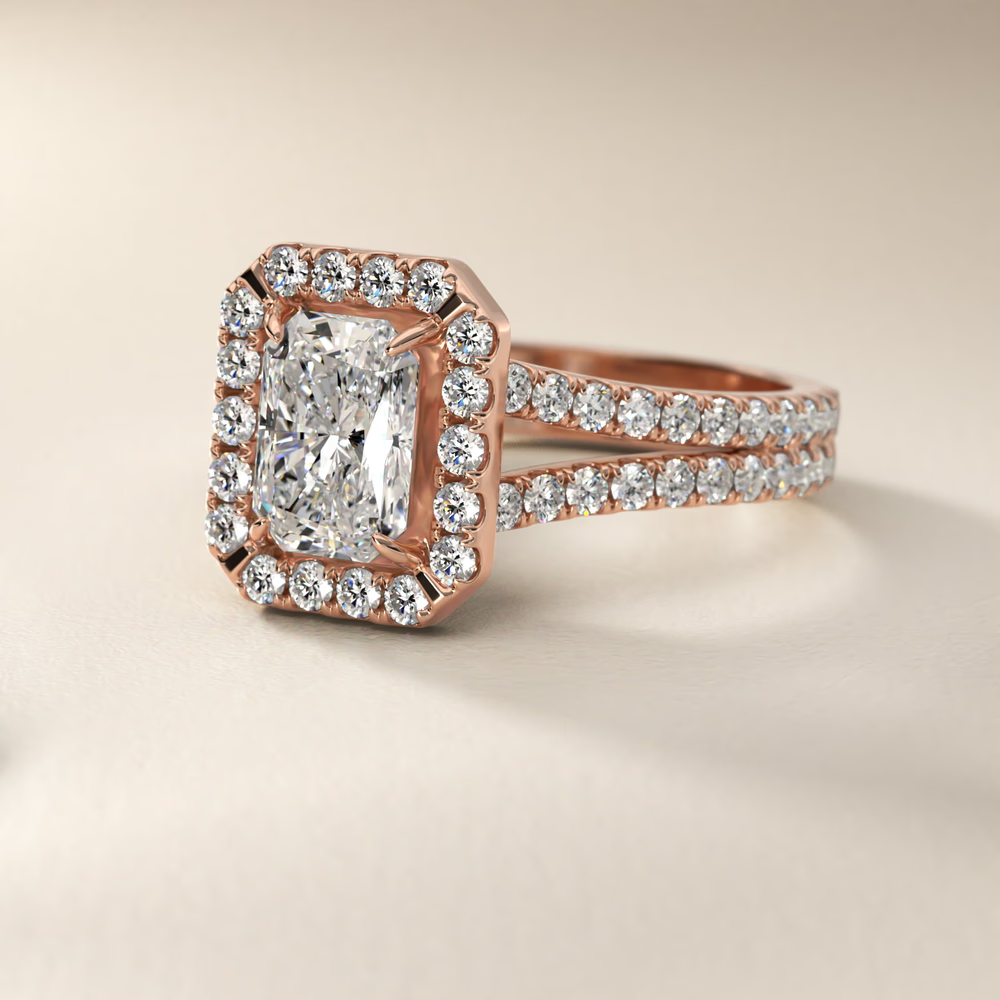
"Rose gold and the colour rule are linked at the hip. I tell every client the same thing: G is not a compromise in rose gold — it is the correct grade. The blush warmth of the metal complements the near-colourless warmth of a G diamond in a way that D simply cannot match, because D is designed to be colourless in a colourless setting. Buy G. Every time." — Farzana Hasan, Diamond Critics
Lab Radiant Cut Prices in Rose Gold — Current Certified Market Data
All ring totals = stone price + setting as shown.
| Carat | Color/Clarity | Stone Price | Setting | Ring Total | What this means |
|---|---|---|---|---|---|
| 1ct | E-VVS1 IGI | $867 | Woven Sol RG $730 | $1,597 | Lowest certified ring in this post — 1ct lab radiant in rose gold for under $1,600 |
| 1ct | D-VVS1 IGI | $932 | Woven Sol RG $730 | $1,662 | D-VVS1 lab adds $65 to the E-VVS1 ring — D lab grade is invisible in rose gold |
| 1.5ct | F-VVS1 IGI | $1,510 | Petite Sol RG $870 | $2,380 | Best value in this post — 1.5ct certified lab radiant in rose gold for $2,380 |
| 1.5ct | E-VVS1 IGI | $1,600 | Petite Sol RG $870 | $2,470 | E-VVS1 vs F-VVS1: $90 more ring total for zero visible difference in rose gold |
| 2ct | F-VVS1 IGI | $2,169 | Perfect Pavé RG $1,360 | $3,529 | Two certified carats in perfect pavé rose gold — maximum visual impact under $4K |
| 2ct | E-VVS1 IGI | $2,220 | French Cut Pavé RG $1,460 | $3,680 | Two certified carats in French cut pavé — full statement ring for $3,680 |
Verdict: The F-VVS1 lab 1.5ct at $2,380 total is the best ring in this post. Full 1.5ct certified lab radiant in rose gold for under $2,400. At 2ct, the Perfect Pavé combination ($3,529 total) delivers two certified carats in a rose gold pavé setting for less than most natural 1ct GIA rings. Lab stones in rose gold carry all the same fire as natural — and in this metal, no buyer or jeweller can tell the difference face-up.
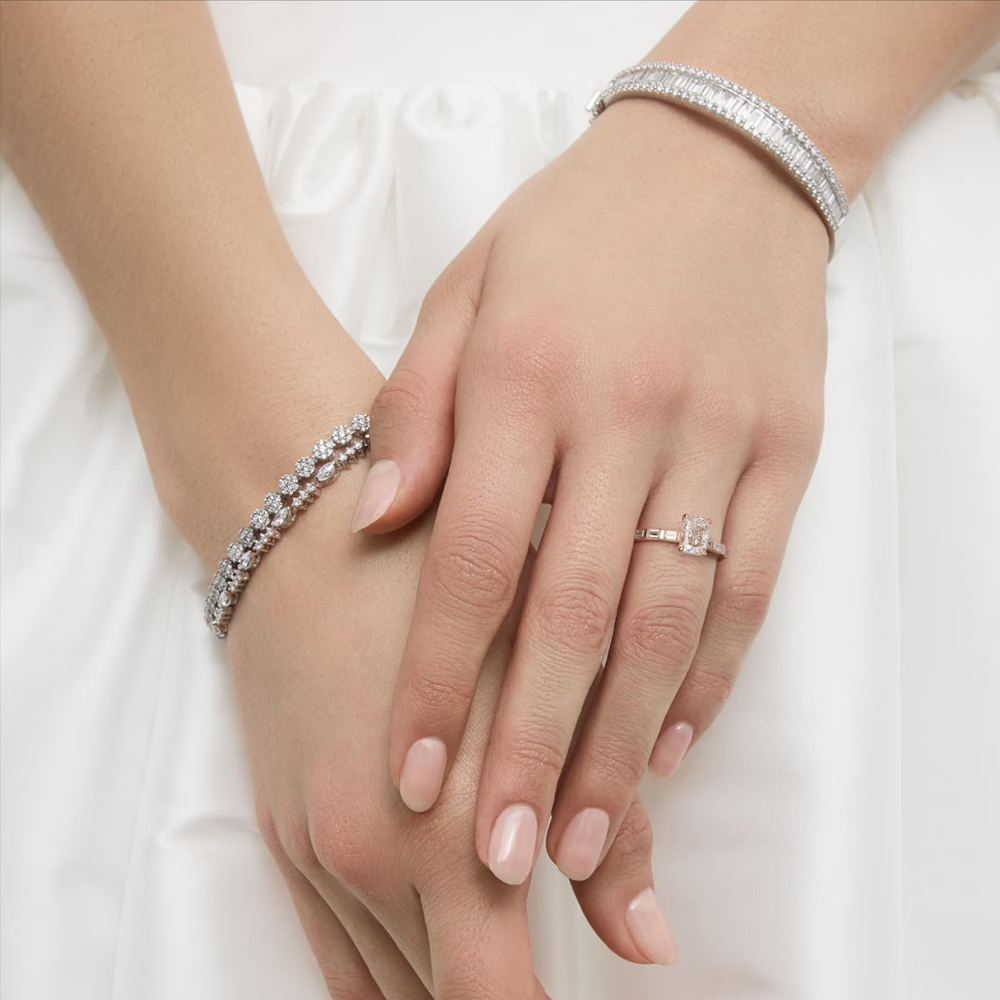
"Lab radiant cuts in rose gold surprise buyers every time. They come in expecting natural, and I show them a 1.5ct IGI radiant in rose gold for $2,400 total. The fire in that combination is real. The certificate is real. The stone is physically identical to a natural. The only difference is where it was grown and what it costs. In rose gold, the blush warmth adds something the stone alone cannot produce." — Farzana Hasan, Diamond Critics
The Setting Stack for Rose Gold Radiant
Not every setting works equally well with a radiant cut. Rose gold adds a specific consideration beyond the shape: the blush-toned metal amplifies certain design styles in ways that white and yellow gold do not. Vintage and Art Deco details — milgrain beading, lace engraving, filigree — read with particular depth in rose gold. Clean solitaires highlight the contrast between the blush band and the white diamond fire. Halos add a soft romantic warmth that the metal itself amplifies.
Below are 15 rose gold settings from current certified inventory. Ring totals are calculated using a 1ct IGI E-VVS1 lab radiant at $867 as the baseline stone. Your actual ring total = your stone price + setting price.
| Setting | Style | Setting Price | Ring From | What this means |
|---|---|---|---|---|
| Woven Solitaire 14k RG | Solitaire | $730 | $1,597 | Lowest-cost entry — woven texture on the band adds detail without adding shoulder diamonds |
| Petite Solitaire 14k RG | Solitaire | $870 | $1,737 | Slim band, four-prong head — center stone does all the work; clean and classic |
| Comfort Fit Six Prong 14k RG | Solitaire | $940 | $1,807 | Six prongs — best for elongated radiant cuts where extra anchor points on each long side add security |
| Engraved Solitaire 14k RG | Vintage | $1,030 | $1,897 | Hand-engraved band — vintage detail that resonates strongly with rose gold's Art Deco heritage |
| Criss Cross Solitaire 14k RG | Solitaire | $1,250 | $2,117 | Twisted band creates visual interest; the rose gold shows the cross detail beautifully |
| Leaf Solitaire 14k RG | Nature | $1,275 | $2,142 | Leaf-motif prongs hold the stone — botanical detail looks most romantic in rose gold |
| Flat Edge Solitaire 14k RG | Modern | $1,340 | $2,207 | Flat-edged angular band contrasts with the rose gold warmth — modern-romantic combination |
| Perfect Pavé Diamond 14k RG | Pavé | $1,360 | $2,227 | Continuous shoulder sparkle — diamonds fire with a blush warmth against the rose gold band |
| French Cut Pavé 14k RG | Pavé | $1,460 | $2,327 | V-shaped cut between pavé stones — more visible metal structure than standard pavé |
| Graduated Pavé Diamond 14k RG | Pavé | $1,630 | $2,497 | Stone size increases toward the center — flowing, tapered effect that reads elegantly in rose gold |
| Solitaire With Pavé Basket 14k RG | Pavé | $1,710 | $2,577 | Pavé on the basket — sparkle directly beneath the center stone adds depth to the rose gold fire |
| Classic Halo Diamond 14k RG | Halo | $2,000 | $2,867 | Round halo follows the radiant's clipped-corner octagonal base cleanly — softer warmth in rose gold |
| Micropavé Double Halo 14k RG | Double Halo | $2,265 | $3,132 | Two concentric micropavé rings — maximum apparent size, romantic effect in rose gold |
| Milgrain Lace Pavé Vintage 14k RG | Vintage | $2,650 | $3,517 | Art Deco lace engraving + milgrain beading — rose gold's standout vintage setting |
| Round Diamond Three Stone Pavé 14k RG | Three Stone | $4,260 | $5,127 | Three-stone pavé — maximum statement piece; past/present/future symbolism in rose gold |
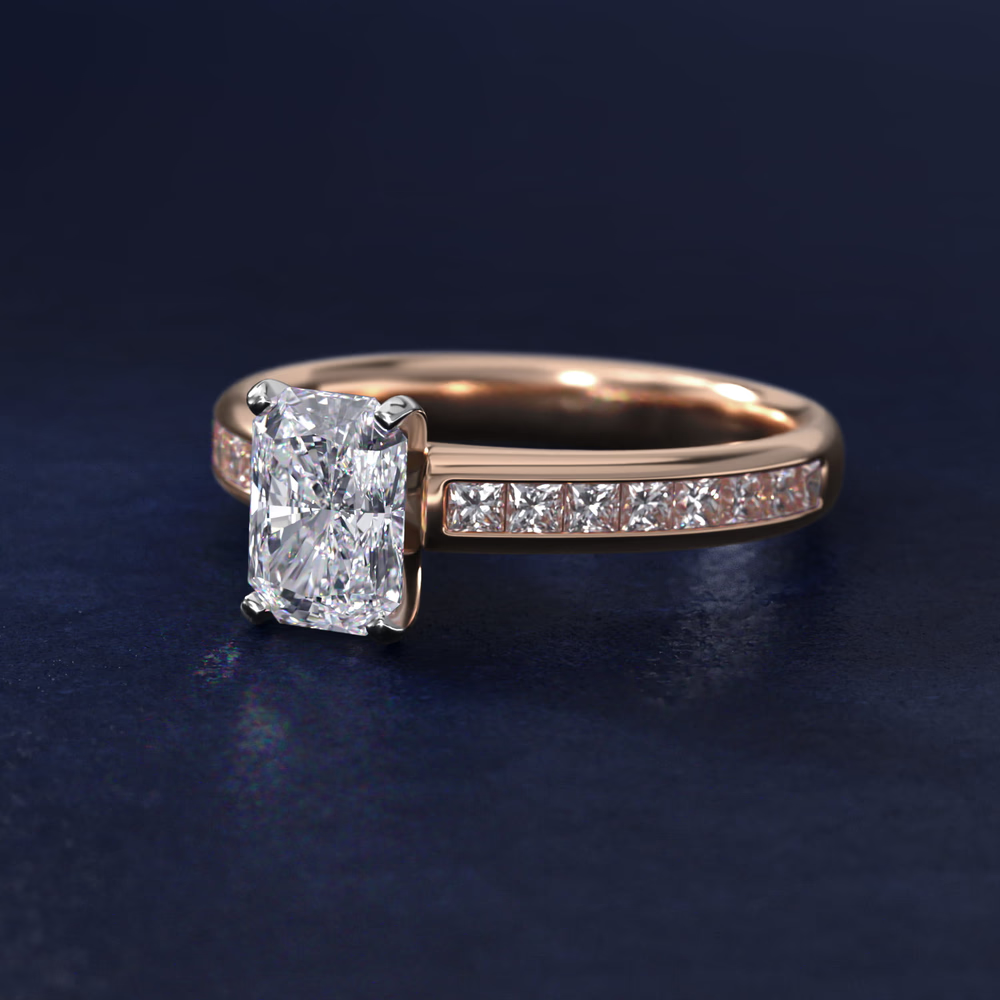
Verdict: For most buyers, the Petite Solitaire ($870) or the Perfect Pavé ($1,360) are the right starting points. The Petite Solitaire keeps full attention on the center stone and the rose gold band. The Perfect Pavé adds continuous shoulder sparkle for $490 more. The Milgrain Lace Vintage at $2,650 is the rose gold-specific standout — Art Deco lace engraving and milgrain beading look like they were made for rose gold because, historically, they were. This combination consistently photographs as the most romantic ring in any rose gold radiant lineup.
Solitaire settings are the most popular choice for rose gold radiant cut rings. The clean design puts all visual weight on the center stone and the blush band. A four-prong solitaire lets the 70-facet fire dominate completely. For buyers who want the metal to speak on its own and the stone to do the rest, solitaire is the answer.
Pavé settings add shoulder sparkle in a way that rose gold amplifies. The diamonds along a rose gold pavé band do not just sparkle white — they pick up a slight warmth from the metal surface between them. The Graduated Pavé is the most elegant pavé option. Diamond size increasing toward the center creates a natural visual flow that rose gold enhances.
Vintage and Art Deco settings are rose gold's home territory. Rose gold dominated the Art Deco period of the 1920s and 1930s — milgrain beading, lace engraving, and filigree work were all standard details in that era. The Milgrain Lace Vintage is the strongest rose gold-specific setting in this list. It is not just a pretty setting. It is historically accurate.
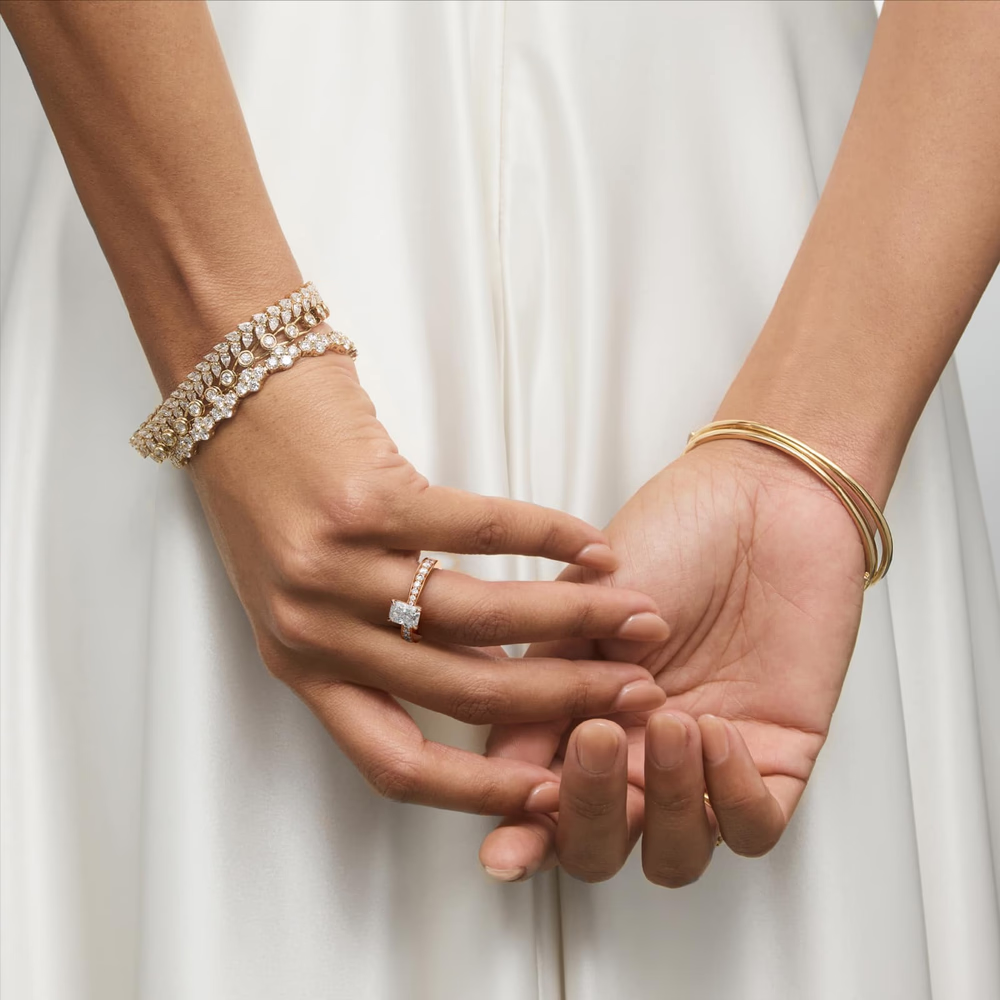
Halo settings work cleanly on radiant cuts. The radiant's clipped 45-degree corners create an octagonal base — a round halo follows those corners without fighting the stone's outline. In rose gold, halo diamonds fire with a softer, blush-tinted warmth rather than the sharp icy contrast you get in white gold. The Classic Halo at $2,000 and the Micropavé Double Halo at $2,265 are both strong picks for buyers who want maximum ring presence.
Tides Of Summer Capsule
Up To 30% Off
Shop The Sale →Vault ClearanceClear The Vault
Up To 70% Off
Shop Vault Deals →Affiliate link — no extra cost to you
Rose Gold vs. Yellow Gold vs. White Gold for a Radiant Cut Diamond
Rose gold and yellow gold both mask body color. White gold does not. That is the defining difference. Everything else — sparkle character, maintenance, skin tone — is secondary to that.
In rose gold and yellow gold, G and H grades are the correct color choice. D-F adds a premium that is invisible in either warm metal. If you have already decided you want a warm-metal ring, the choice between rose and yellow gold is entirely personal. Style preference, skin tone, and aesthetic vision all play a role — not price strategy, because the price strategy is the same for both.
| Factor | Rose Gold | Yellow Gold | White Gold | What this means |
|---|---|---|---|---|
| Best color grade | G-H | G-H | D-E-F | RG and YG both mask body color — buy G for either; only WG lets D-F show |
| Sparkle character | Soft blush fire | Rich amber fire | Cold icy contrast | RG is softer and more romantic; YG is richer; WG is sharpest and most contrasting |
| Maintenance | None required | None required | Rhodium replate every 2–5 yrs ($50–$150) | RG and YG: zero maintenance; WG adds recurring cost |
| Skin tone match | All tones, especially warm and olive | Warm and olive | Fair and cool | RG is the most universally flattering of the three metals |
| Vintage aesthetic | Strongest (Art Deco, Victorian) | Classic | Neutral | RG is historically the most romantic metal for vintage-style rings |
| 2026 bridal trend | Strongly trending | Trending | Classic stable | RG leads fashion; YG following strongly; WG always consistent |
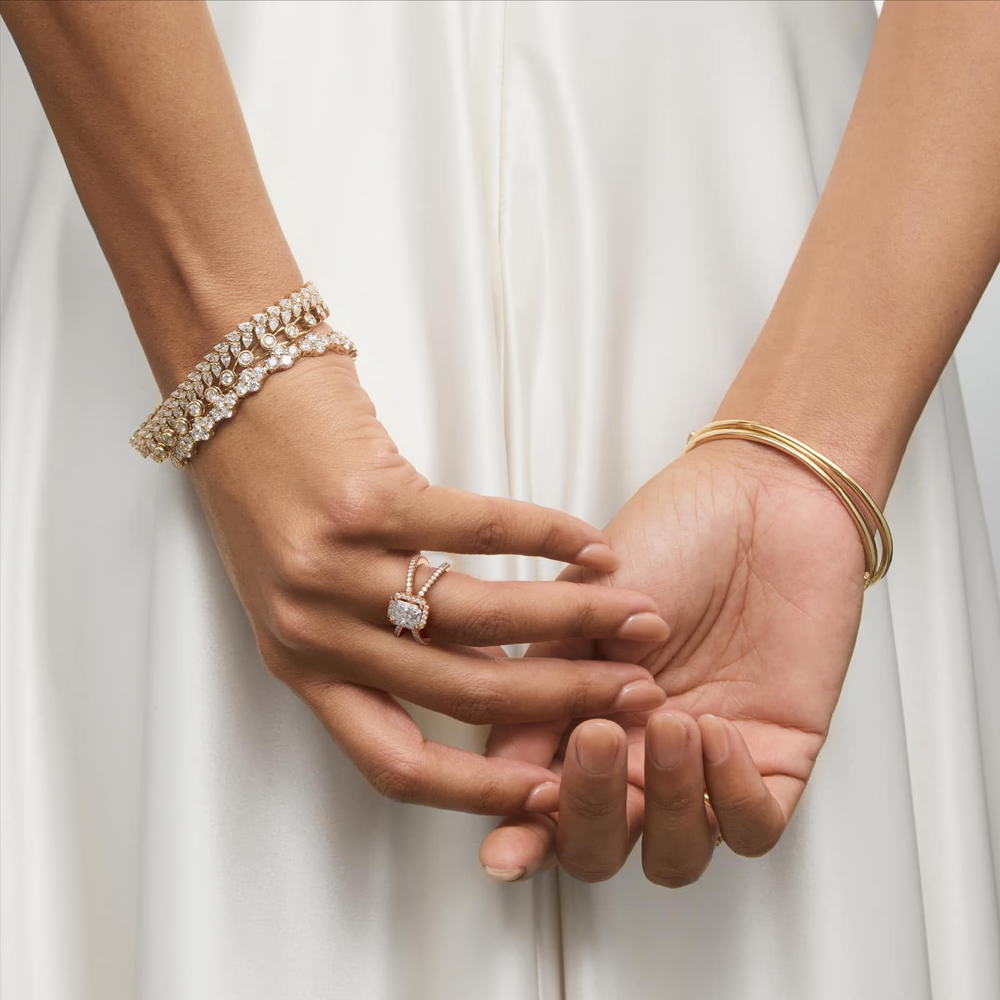
Verdict: For color grade management, rose gold and yellow gold are identical — both are G-H metals. The decision between them is purely aesthetic. Rose gold produces a softer, pinker warmth. Yellow gold produces a richer, more amber warmth. White gold is the correct choice only if your priority is buying D-E-F color and wanting it to show. For most budgets, rose gold with G color is one of the strongest ring combinations you can buy right now. See the full yellow gold breakdown at Radiant Cut Yellow Gold Engagement Ring.
14k vs. 18k Rose Gold for a Radiant Cut Ring
This is the most counterintuitive fact about rose gold: 14k is MORE pink than 18k.
Rose gold gets its blush color from copper. The more copper in the alloy, the more vivid the pink tone. 14k rose gold is 58.3% pure gold — the remaining 41.7% is primarily copper. 18k rose gold is 75% pure gold — which means less copper and a softer, more champagne-toned blush.
If you want the most vivid, distinctly pink rose gold, 14k is the correct choice. This surprises buyers who assume higher karat = better. In rose gold, higher karat means less pink, not more.
14k rose gold is harder, more scratch-resistant, more vividly pink, and less expensive than 18k. All settings in the tables above are 14k. The extra hardness in 14k protects the prongs that grip the radiant cut's clipped corners, which matter for long-term stone security.
18k rose gold is softer, develops fine scratches faster, costs 20–40% more, and produces a subtler champagne-blush tone rather than the vivid pink of 14k. The savings from choosing 14k over 18k are better directed toward the center stone.
The right choice for daily-wear is 14k. It costs less, looks more pink, and wears better. There is no tradeoff.
Radiant Cut Rose Gold Ring Budget Guide
Here is what you can build at each budget tier using current certified market inventory.
Under $2,500 — lab 1ct or 1.5ct, clean solitaire. A 1ct IGI E-VVS1 lab radiant at $867 + Woven Solitaire RG at $730 = $1,597 total. The upgrade: 1.5ct IGI F-VVS1 at $1,510 + Petite Solitaire RG at $870 = $2,380 total. A full certified 1.5ct radiant cut in rose gold for under $2,400. This is the best value ring in this post.
$2,500–$4,000 — natural 1ct GIA or lab 2ct. At $3,188 you get 1ct GIA G-VS2 natural at $2,318 + Petite Solitaire RG at $870 — GIA certified, G-VS2, rose gold. At $3,529 you get 2ct IGI F-VVS1 lab at $2,169 + Perfect Pavé RG at $1,360 — two certified carats in rose gold pavé. The lab 2ct is more stone per dollar. The natural 1ct carries a GIA certificate.
$3,500–$10,000 — vintage setting or natural 1.5ct. For the vintage pick: 1ct IGI E-VVS1 lab at $867 + Milgrain Lace Vintage RG at $2,650 = $3,517 total — Art Deco lace in rose gold. For natural 1.5ct: 1.5ct GIA G-VS2 at $7,704 + Petite Solitaire RG at $870 = $8,574 total — GIA certified, G-VS2 saves $2,000+ over E-VS1 with zero visible improvement in rose gold.
$10,000+ — natural 2ct statement ring. 2ct GIA D-VS2 at $17,714 + Leaf Solitaire RG at $1,275 = $18,989 total. At this tier, D-VS2 is acceptable — this is a statement piece regardless of the metal's warmth effect.
Elongated vs. Square Radiant Cut in Rose Gold
The L/W ratio changes how the ring reads on your hand. Rose gold works beautifully with both shapes — but it gives each shape a slightly different character.
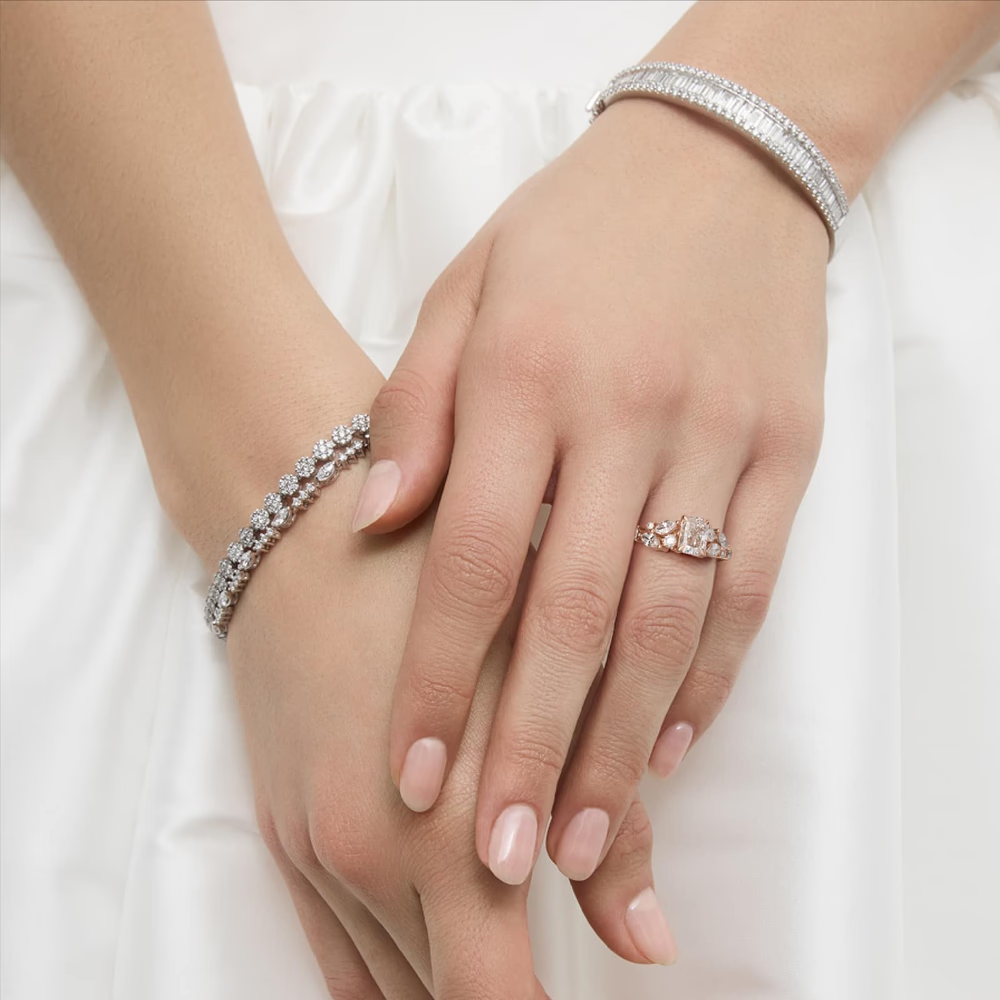
An elongated radiant (L/W ratio 1.20+) reads long and rectangular in the finger. In rose gold, the blush warmth spreads across the wider face of the stone, creating a flowing, sweeping fire from knuckle to knuckle. The elongated radiant in rose gold is consistently the more romantic-looking of the two proportions — long, warm, and soft. Buyers who like oval or emerald cut proportions but want brilliant faceting consistently choose the elongated radiant in rose gold.
A square radiant (L/W ratio below 1.10) reads compact and bold — closer to a cushion or princess in visual footprint. In rose gold, the square shape makes a strong, warm statement. It suits buyers who want a confident, vintage-adjacent look with maximum sparkle in a compact outline. Square radiant in rose gold looks particularly strong in the vintage settings — the Classic Halo and Milgrain Lace Vintage especially.
Both shapes work. The elongated is more flowing and finger-lengthening. The square is more bold and classic. Both absorb the rose gold warmth differently — neither is wrong. See full ratio guidance at Elongated Radiant Cut Diamond and Square Radiant Cut Diamond.
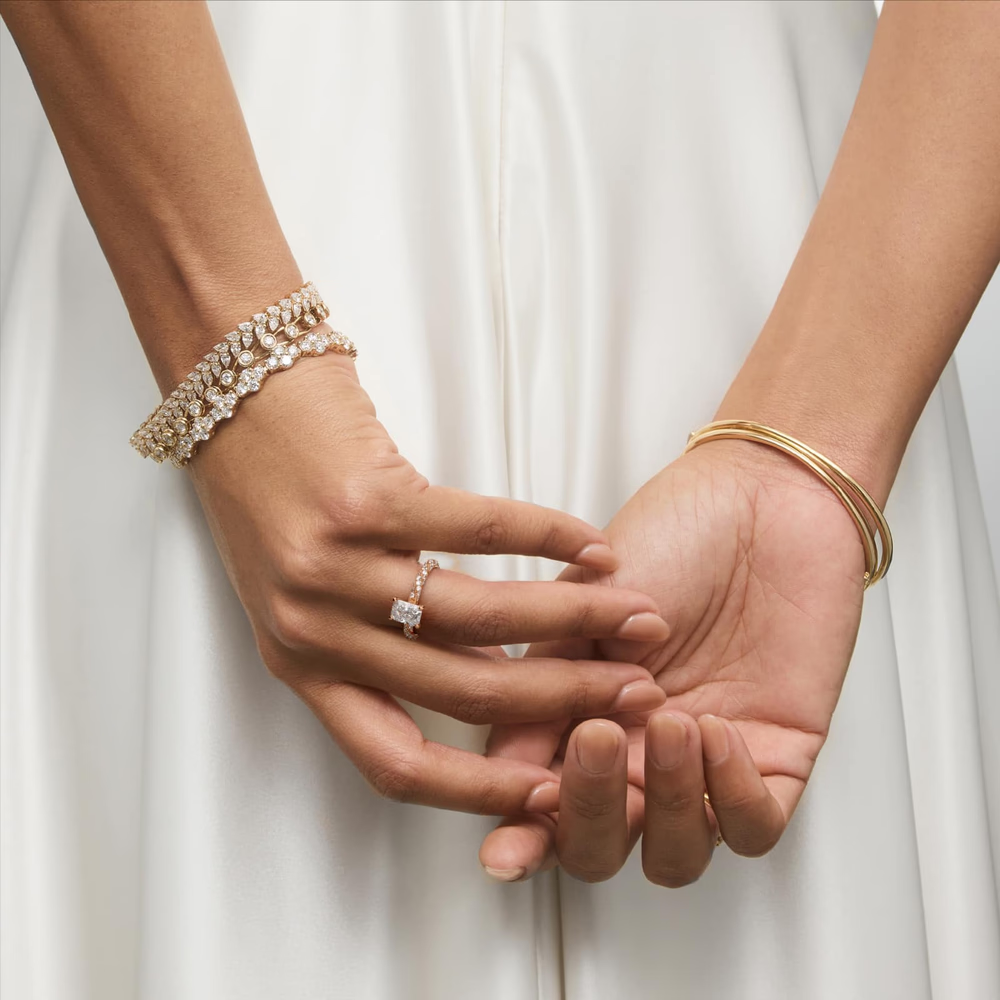
"Rose gold and radiant cut is the combination I most often call 'the ring that photographs itself'. The blush metal, the crushed-ice scatter from 70 facets, the warm afternoon light — it is genuinely one of the most photogenic pairings in fine jewellery. Buyers show me photos from their phones wanting to know what ring they saw. It is almost always a rose gold radiant. In a vintage setting — milgrain lace in rose gold — it is something different entirely." — Farzana Hasan, Diamond Critics
Final Verdict: Best Rose Gold Radiant Cut Engagement Ring for Your Budget
Best for buyers under $2,500 — lab 1.5ct solitaire: 1.5ct IGI F-VVS1 lab radiant at $1,510 + Petite Solitaire RG at $870 = $2,380 total. Full 1.5ct certified radiant in rose gold. Nothing at this price comes close.
Best for buyers wanting natural GIA — 1ct budget: 1ct GIA G-VS2 natural at $2,318 + Petite Solitaire RG at $870 = $3,188 total. Buy G, not D-F. Rose gold makes the $1,200+ color premium invisible. GIA certified.
Best for vintage style — Milgrain Lace setting: 1ct IGI E-VVS1 lab at $867 + Milgrain Lace Pavé Vintage RG at $2,650 = $3,517 total. Art Deco lace engraving in rose gold. The most photogenic ring in this post.
Best for maximum visual impact under $4K — lab 2ct: 2ct IGI F-VVS1 lab at $2,169 + Perfect Pavé RG at $1,360 = $3,529 total. Two certified carats in rose gold pavé. No ring under $4,000 outperforms this combination visually.
Frequently Asked Questions
What is the best color grade for a rose gold radiant cut engagement ring?
G or H. Rose gold masks body color — the blush-toned metal reflects warm pink light upward through the stone's base. G and H grades look identical to D-F face-up in rose gold. The $700–$2,000 per carat premium for D-E-F exists because those grades show in white gold and platinum, where the neutral metal lets colorlessness appear visually.
In rose gold, that premium is invisible. Buy G at 1ct and use the savings for carat weight or a better setting.
How much does a rose gold radiant cut engagement ring cost?
Ring totals start at $1,597 for a lab 1ct E-VVS1 radiant at $867 + Woven Solitaire RG at $730. Natural 1ct GIA starts at $3,188. Lab 1.5ct rings run $2,380–$2,470. Lab 2ct runs $3,529–$3,680.
Natural 1.5ct runs $8,574–$8,714. Natural 2ct starts at $18,989. All figures above are total ring prices — stone price plus setting price combined.
Is 14k or 18k rose gold better for a radiant cut engagement ring?
14k. It is harder, more scratch-resistant, and less expensive than 18k — and it is actually more vivid pink. The blush color in rose gold comes from copper. 14k has a higher copper content than 18k, so 14k produces a more intense pink tone.
If you want the most distinctly rose-gold-colored ring, 14k is the correct choice, not 18k. All settings in the tables above are 14k.
Does rose gold fade or change color over time?
Rose gold does not fade. It develops a slight patina as the copper in the alloy oxidizes gently over years of wear — this actually deepens and enriches the blush tone rather than diminishing it. Most long-term rose gold wearers find their ring more beautiful after a decade than when new.
It requires no replating, no rhodium treatment, and no recurring maintenance. Rose gold is the lowest-maintenance engagement ring metal available.
Does a halo setting work on a rose gold radiant cut diamond?
Yes. Radiant cut halos work because the stone has clipped 45-degree corners, creating an octagonal base that a round halo follows cleanly. This is the opposite of an emerald cut, where a round halo can fight the sharp rectangular outline.
In rose gold, halo diamonds pick up a blush warmth from the surrounding metal — producing a softer halo effect than in white gold. The Classic Halo 14k RG at $2,000 and Micropavé Double Halo 14k RG at $2,265 are both strong options.
What clarity should I buy for a rose gold radiant cut ring?
VS2. The radiant cut's 70 brilliant facets mask SI1 inclusions 60–70% of the time, but VS2 is the reliable eye-clean standard for any metal. Do not pay for VS1 or VVS — the improvement over VS2 is invisible in a radiant cut's brilliant faceting.
Never go below VS2 without reviewing the actual stone in person or via high-resolution video. Full clarity breakdown at Radiant Cut Engagement Rings.
How does rose gold compare to yellow gold for a radiant cut ring?
Both metals mask color equally — buy G-H for either. The visual difference is sparkle character. Rose gold produces a softer blush fire. Yellow gold produces a richer amber fire. A radiant in rose gold is warmer than in white gold but distinctly softer than in yellow gold — romantic, not bold.
The choice between rose and yellow gold is personal style. For pricing and yellow gold settings, see the Radiant Cut Yellow Gold Engagement Ring post.
Is a lab radiant cut diamond good in a rose gold setting?
Yes — one of the best combinations available. Lab radiant cuts are physically identical to natural diamonds, graded by IGI on the same four Cs scale. In rose gold, a lab stone is visually indistinguishable from a natural stone face-up. The 1.5ct IGI F-VVS1 lab at $1,510 + Petite Solitaire RG at $870 = $2,380 total — a full 1.5ct certified radiant cut in rose gold.
Full lab vs natural comparison at Lab Grown Radiant Cut Diamond.
What is the difference between elongated and square radiant cut for a rose gold ring?
The elongated radiant (L/W ratio 1.20+) reads long and finger-lengthening — like a miniature emerald cut with brilliant fire. In rose gold, the elongated shape creates a flowing blush warmth from knuckle to knuckle. The square radiant (L/W ratio below 1.10) reads compact and bold — closer to cushion proportions.
Both work beautifully in rose gold. The elongated is more romantic and sweeping. The square is more confident and compact. See Elongated Radiant Cut Diamond for the full ratio guide.
What prong style is best for a rose gold radiant cut ring?
Four-prong is the standard. The four prongs grip the radiant's clipped corners, securing the stone with minimal metal coverage — letting the 70 facets fire freely. In rose gold, the prong metal reads as a warm blush rather than competing silver or gold, which keeps the overall aesthetic cohesive.
Six-prong is worth considering for elongated radiant cuts where the stone's longer dimension benefits from extra anchor points on each long side.
How does rose gold affect the sparkle of a radiant cut diamond?
Rose gold reflects warm, blush-toned light upward into the diamond's base. The radiant cut's 70 facets scatter that blush warmth in every direction. The result is a softer, pinker fire compared to yellow gold's amber fire or white gold's cold icy contrast.
It is not better or worse than other metals — it is distinctly different. Buyers who want a warm, romantic, softer sparkle character consistently prefer rose gold over yellow and white gold for a radiant cut.
Is a rose gold radiant cut ring a good choice for active buyers?
Yes, with one consideration. The radiant cut is one of the most durable diamond shapes — clipped corners do not chip the way princess cut's sharp 90-degree corners do. A four-prong solitaire in 14k rose gold sits close to the finger without snagging.
Avoid full pavé settings if you work frequently with your hands — pavé diamonds can loosen with consistent impact. A solitaire or pavé basket setting is the most durable everyday option.
Is rose gold radiant cut a trend or a timeless choice?
Both. Rose gold engagement rings have been worn since the 1800s — Victorian, Edwardian, and Art Deco jewellery are all predominantly rose and yellow gold. The radiant cut is modern, patented in 1977. The combination reads as vintage-inspired and contemporary at the same time.
In 2026, rose gold is the leading trend in bridal jewellery. You are not taking a fashion risk. You are joining a return to a metal with deep historical roots and genuine staying power.
Expert Summary
A rose gold radiant cut engagement ring is one of the smartest and most photogenic combinations in the current certified diamond market.
Rose gold masks color. Buy G or H instead of D-F — save $700–$2,000 per carat with zero visible difference face-up. The blush warmth of rose gold makes G-H a positive match, not a budget compromise. This single rule alone can dramatically change what ring you can build.
The radiant cut has 70 facets — more than any comparable fancy shape. In rose gold's blush-toned light, those 70 facets scatter a fire that no other metal produces.
It is softer than yellow gold fire. Warmer than white gold fire. Uniquely romantic, and consistently the most photographed engagement ring fire character in current bridal media.
The best value ring in this post: 1.5ct IGI F-VVS1 lab radiant at $1,510 + Petite Solitaire RG at $870 = $2,380 total. Full 1.5ct certified radiant in rose gold.
Best natural entry: 1ct GIA G-VS2 at $2,318 + Petite Solitaire RG at $870 = $3,188 total. GIA certified, G color, rose gold.
Best vintage combination: 1ct IGI E-VVS1 lab at $867 + Milgrain Lace Vintage RG at $2,650 = $3,517 total. Art Deco lace in rose gold — the most photogenic ring in this post.
Maximum visual impact under $4K: 2ct IGI F-VVS1 lab at $2,169 + Perfect Pavé RG at $1,360 = $3,529 total. Two certified carats in rose gold pavé. Nothing under $4,000 matches this visually.
Three rules for every rose gold radiant purchase: Buy G, not D. Choose 14k, not 18k. Put 75–80% of your budget on the center stone.
See Also
- Radiant Cut Diamond: The Complete Buying Guide — L/W ratio, cut depth, fluorescence, full buying framework
- Radiant Cut Engagement Rings — 5 buying mistakes, setting comparisons, total ring pricing
- Radiant Cut Yellow Gold Engagement Ring — full yellow gold vs rose gold comparison, amber fire vs blush fire, 15 YG settings
- Lab Grown Radiant Cut Diamond — full lab vs natural price comparison, IGI grading explained
- Elongated Radiant Cut Diamond — L/W ratio guide, finger-size matching, best settings for elongated shape
- Square Radiant Cut Diamond — compact shape guide, cushion comparison, setting pairings
- Cushion Cut vs Radiant Cut Diamond — sparkle character, pricing differences, shape confusion resolved
- Princess Cut vs Radiant Cut Diamond — Corner Tax explained, clarity floors, full shape comparison
Expert Verdict
Always audit the stone individually — no grade replaces seeing the actual diamond. The certificate tells you what to look for. Your eyes tell you whether to buy.
— Farzana Hasan, GIA Expert · DiamondCritics.com