Round Diamond vs Heart Shape in 2026: Which Should You Buy?


TL;DR: Round vs Heart Shape — Key Differences
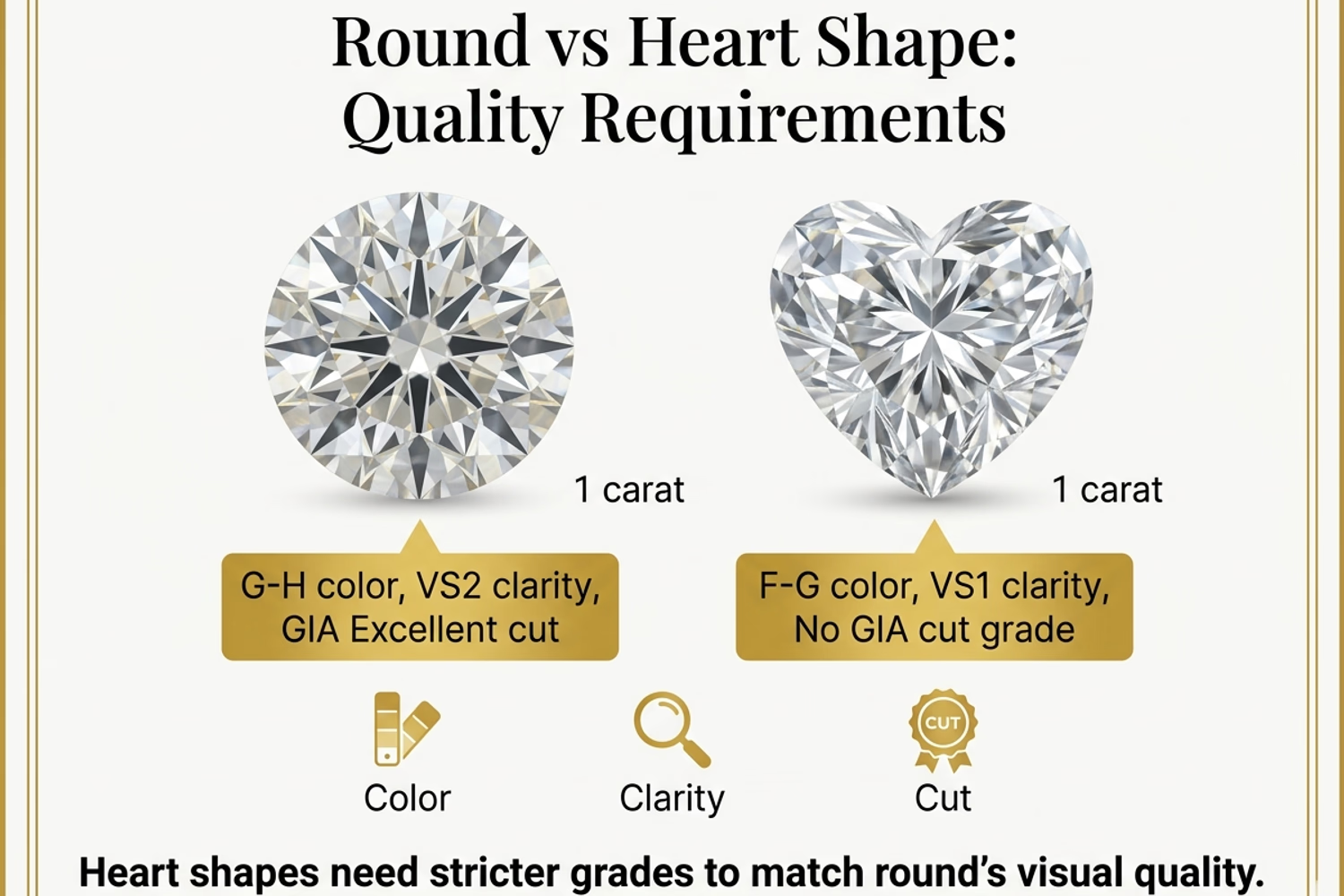
- Round diamonds are easier to buy well: GIA Excellent cut is an objective, verified standard. Heart shapes have no GIA cut grade — you are evaluating symmetry yourself or trusting the vendor's description
- Heart shapes require stricter quality: F–G color minimum (vs G–H for round) because color concentrates at the cleft; VS1 clarity minimum (vs VS2 for round) because asymmetric facets make inclusions visible at multiple angles
- The Romance Tax: heart shapes typically price 10–15% lower per carat than round for the same grade parameters, but the higher quality minimums needed to achieve visual parity erase most of that savings
- HD video is non-negotiable for heart shapes — The Video Mandate applies absolutely; symmetry defects invisible in photos ruin the shape at any viewing distance
- Round wins for daily wear: 58 well-proportioned facets with a GIA Excellent grade outperform any heart shape for consistent optical performance
- Heart shape wins for deliberate symbolism: if the heart silhouette is the point — a proposal where the shape matters to the recipient — it is worth the extra quality investment
The heart shape diamond occupies a specific emotional niche. No one buys a heart shape by accident — it is a declaration. But declarations made with a poorly cut, asymmetric, color-heavy stone are declarations undercut by their own execution. This guide explains what the differences between round brilliant and heart shape actually cost you, and when each choice makes sense.
How Round Brilliant and Heart Shape Differ Structurally
A round brilliant has 57 or 58 facets arranged in perfect rotational symmetry. Every facet angle is specified within GIA's Excellent cut range: table 53–58%, depth 59–62.3%, crown angle 34–35°, pavilion angle 40.6–41°. The symmetry is mathematical.
A heart shape has 59–65 facets arranged around a cleft at the top and two lobes that must match in size, outline, and position. The wings must be even. The lobes must mirror each other. The cleft must be centered. There is no universal industry standard for what constitutes an "Excellent" heart shape. GIA does not issue cut grades for fancy shapes including heart.
This structural difference has three practical consequences:
1. You Cannot Verify Cut Quality Independently
When you buy a GIA Excellent round, you have a third-party guarantee covering 57 precise measurements. When you buy a heart shape, you have a grade for color, clarity, and carat — but no grade for the thing that determines whether the shape looks beautiful. You must evaluate the shape yourself from photos and video, which is why HD video is mandatory.
2. Color Behaves Differently in a Heart Shape
In a round brilliant, color distributes evenly across all 58 facets. In a heart shape, the two lobes and particularly the cleft area concentrate color — the uneven facet arrangement creates zones where warmth is more visible than in others. A G color stone in a round brilliant looks effectively colorless in white gold. A G color stone in a heart shape shows more warmth at the lobes than the center.
The result: heart shape buyers should target F–G for white gold (vs G–H for round), and F for yellow gold settings is not unusual. That is one color grade higher than equivalent round diamonds, adding approximately 8–12% to the stone price.
3. Clarity Requires a Different Standard
In a round brilliant, VS2 inclusions at 1ct are reliably eye-clean because the 58 facets in GIA Excellent proportions mask inclusions extremely well. In a heart shape, the facet arrangement near the cleft and wings is less forgiving — inclusions near the cleft are more visible, and asymmetric inclusions that a round would hide may become apparent under normal viewing.
The practical minimum for a heart shape is VS1. At VS2, you should verify eye-clean status from video at multiple angles, not just a face-up photo.
The Romance Tax: What Heart Shapes Actually Cost
The romantic instinct is to assume heart shapes carry a price premium for their symbolism. The opposite is true: fancy shapes including heart typically price 10–15% below round brilliant for the same grade parameters. Round commands the highest per-carat premium of any shape because it requires the most rough diamond sacrifice and carries the highest cutting demand globally.
However, the higher quality minimums required to make a heart shape visually competitive with a round at the same visual impact level largely eliminate this saving. Here is how the math works at 1ct:
| Stone | Grade | Price | Visual Impact |
|---|---|---|---|
| GIA 1ct G-VS2 Round | G-VS2 Excellent | $3,230 | Excellent eye-clean |
| GIA 1ct G-VS1 Round | G-VS1 Excellent | $3,300 | Excellent eye-clean |
| 1ct Heart shape | F-VS1 | ~$3,400–$3,700 | Acceptable if symmetry is verified |
The heart shape at F-VS1 runs a similar price to the round at G-VS1, while requiring more due diligence to purchase correctly. This is The Romance Tax — you do not necessarily spend more, but you spend more per unit of verified quality.
2ct Comparison
| Stone | Grade | Price | Notes |
|---|---|---|---|
| GIA 2ct G-VS2 Round | G-VS2 Excellent | $16,490 | Reliable eye-clean, no video needed |
| GIA 2ct F-VS2 Round | F-VS2 Excellent | $18,140 | Equivalent quality anchor |
| 2ct Heart shape | F-VS1 | ~$17,000–$19,000 | Requires HD video, symmetry check |
At 2ct, the heart shape does not save you money relative to a round at equivalent visual quality. It requires higher grades, more verification work, and lacks a cut certification standard.
The Cleft Symmetry Trap
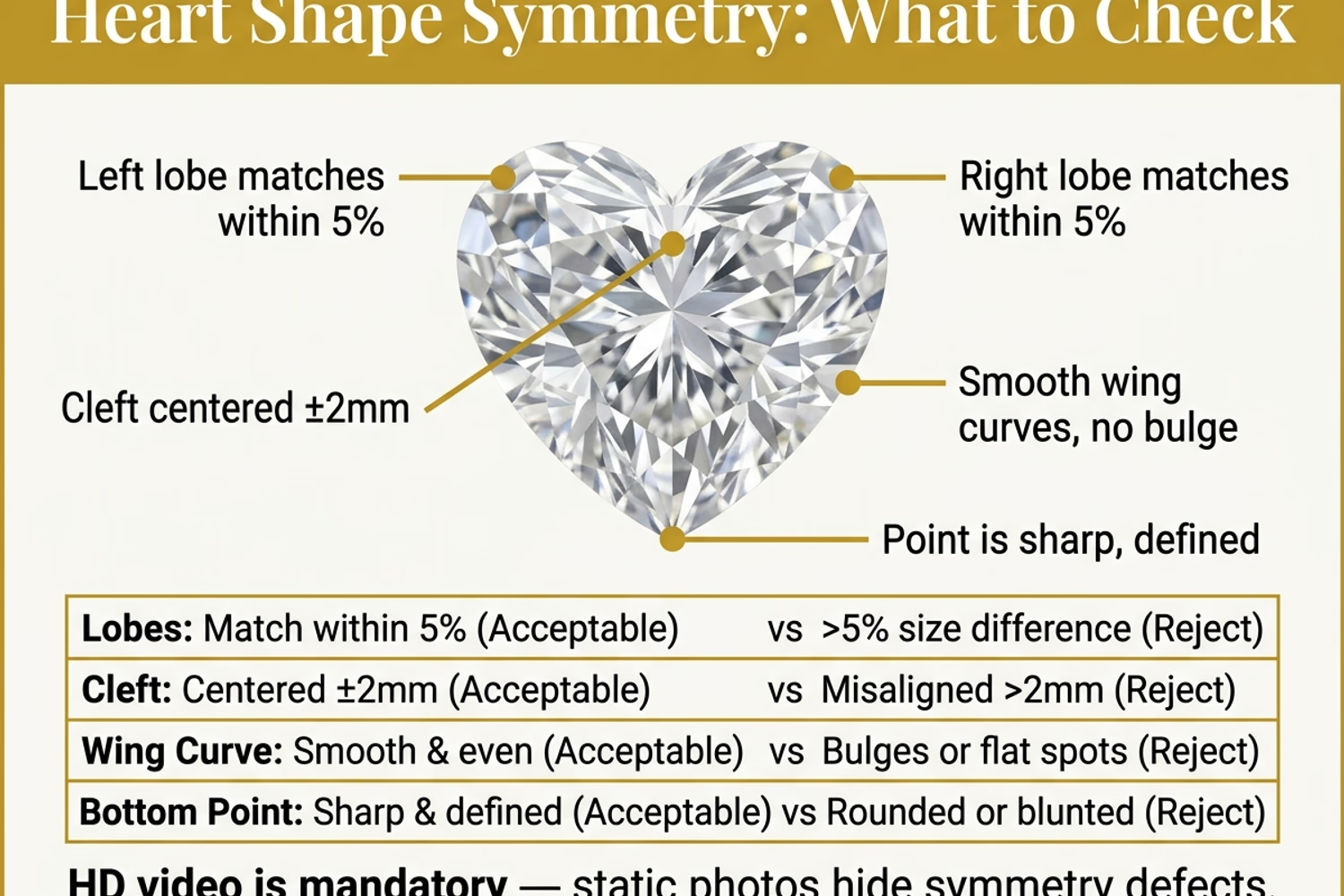
The most common failure mode in heart shape diamonds is asymmetric lobes. When one lobe is larger, higher, or differently curved than the other, the heart silhouette distorts — it looks like a bruised fruit rather than a heart. This asymmetry is often invisible in a static face-up photograph at low resolution and only appears in HD video or live viewing.
Symmetry requirements for an acceptable heart shape:
- Both lobes must match in size within 5% or less
- The cleft must sit within 2–3% of center horizontal alignment
- Wings must curve symmetrically from the cleft to the two lower points
- The bottom culet point must align with the center of the cleft
Blue Nile and reputable vendors show 360° video for heart shapes. If you cannot see HD video of a specific heart shape stone before purchasing, do not buy it. No exceptions.
The Wing Extinction Zone
Even a symmetrically perfect heart shape suffers from the Wing Extinction Zone — the upper corners of the heart (where the lobes meet the straight sides) where light extinction patterns appear in certain lighting. This manifests as dark patches at the upper quadrants of the stone.
In round brilliants, the 360° rotational symmetry means no facet zone suffers persistent extinction. In heart shapes, the geometric constraints of the lobe design mean some extinction in the wing area is inevitable. The severity depends on pavilion depth and crown height. Shallower pavilion depths (58–61%) tend to minimize wing extinction. The only way to evaluate this is video.
The GIA Cut Blind Spot
GIA issues cut grades for round brilliants. For all fancy shapes — including heart, pear, oval, marquise, princess — GIA grades color and clarity but not cut. This is The GIA Cut Blind Spot: the certificate tells you the color is F and the clarity is VS1, but tells you nothing about whether the 65 facets are arranged well enough to produce a heart-shaped outline that looks like a heart.
Implications for buyers:
- An F-VS1 heart shape with poor symmetry is worth less than an F-VS1 heart shape with excellent symmetry, but both carry the same GIA certificate
- You must evaluate cut quality from visual media, not from the certificate
- Platforms that offer an "Excellent" or "Ideal" heart shape grade (Blue Nile's own cut-quality filter) apply internal standards, not GIA standards
When Blue Nile marks a heart shape as "Ideal" in their cut filter, this reflects their in-house assessment. It is useful as a first filter but is not equivalent to a GIA Excellent grade.
Tides Of Summer Capsule
Up To 30% Off
Shop The Sale →Vault ClearanceClear The Vault
Up To 70% Off
Shop Vault Deals →Affiliate link — no extra cost to you
Lab-Grown Heart Shape: Is It Worth Considering?
For heart shape diamonds specifically, lab-grown makes strong sense. Since you are paying for the symbolic shape and the visual impact — not provenance — the $1,950 lab-grown 1.5ct option versus a $3,300+ natural 1ct round represents a different visual equation. IGI 1.5ct D-VVS1 lab-grown at $1,950 delivers 7.4mm of face-up diameter in a certified D-VVS1 stone for less than the price of a 1ct natural G-VS2 round.
If you want a heart shape for symbolism and you're budget-conscious, lab-grown in a heart shape gives you more size and better paper grades per dollar than natural. Apply the same symmetry checks — the shape requirements are identical regardless of natural or lab origin.
Round Diamond vs Heart Shape: When to Choose Each
Choose round brilliant when:
- Optical performance is your primary metric
- You want GIA-verified cut quality with no interpretation required
- Daily wear durability is a priority (the pointed tips on heart shapes are vulnerable to chipping)
- You want reliable resale value on a well-documented stone
- Budget is a constraint and you want maximum performance per dollar
Choose heart shape when:
- The symbolic shape matters to the recipient — this is a non-negotiable for some buyers
- You have verified the specific stone's symmetry via HD video
- You are buying F–G color minimum and VS1 clarity minimum
- You accept the extra verification burden as part of the purchase process
- The setting can protect the two lower lobes and bottom point (bezel, six-prong, or specialty heart-cut prong setting)
Farzana's Verdict: The heart shape is a legitimate choice — for a specific buyer. If the person receiving the ring has always said they want a heart, buy a heart. But buy it correctly: F color minimum, VS1 clarity minimum, HD video verified for symmetry, and set in a protective six-prong or bezel setting. If the heart shape is just a romantic gesture and the recipient would be equally happy with a round, the round brilliant GIA Excellent delivers objectively better light performance and removes all the verification risk. The Romance Tax is real — you pay similar money for a stone that requires more work to purchase well.
Frequently Asked Questions
Is a round diamond or heart shape better for everyday wear?
Round brilliant is better for daily wear. The round shape has no vulnerable points — the girdle is even all the way around and the stone sits low in most prong settings. Heart shapes have three exposed points: the tips of the two lobes and the bottom point. These are structural weaknesses that can chip if struck against a hard surface at the right angle.
Do heart shape diamonds cost more or less than round diamonds?
Heart shapes typically price 10–15% less per carat than round diamonds for the same color and clarity grades. However, heart shapes require higher quality minimums (F–G color vs G–H for round; VS1 vs VS2 for round) to achieve comparable visual quality. After adjusting for the necessary grade upgrade, the price difference shrinks to 0–10% less than round.
What color grade do I need for a heart shape diamond?
F or G minimum for white gold settings. The cleft and lobe structure in heart shapes concentrates color more visibly than the rotationally symmetric facets of a round brilliant. A G color round brilliant in white gold appears effectively colorless. A G color heart shape in the same setting will show slight warmth at the lobes. Buy F if budget allows, G if not, and avoid H or below in heart shapes.
What clarity is needed for a heart shape diamond?
VS1 at minimum. VS2 can be eye-clean in a heart shape but requires video verification of the specific stone — inclusions near the cleft or asymmetric inclusions positioned in the wing area are more visible in heart shapes than the same clarity grade in a round. SI1 in a heart shape is high-risk and requires exceptionally careful video inspection.
Can GIA grade the cut of a heart shape diamond?
No. GIA issues cut grades only for round brilliant diamonds. For all fancy shapes including heart, GIA grades color, clarity, polish, and symmetry — but not cut in the comprehensive sense that round brilliants receive. The symmetry grade (Excellent, Very Good, Good) on a GIA certificate for a heart shape describes facet alignment quality, not whether the heart silhouette looks correct.
What is the ideal length-to-width ratio for a heart shape diamond?
0.95–1.10 is the widely accepted ideal range for heart shapes. At 0.95, the heart appears slightly taller than wide (a more elongated silhouette). At 1.10, it appears wider than tall (a flatter, more spread look). Most buyers prefer the 1.00–1.05 range. Anything outside 0.90–1.15 starts to distort the recognizable heart outline.
Why is the Video Mandate so important for heart shape diamonds?
A static face-up photograph cannot show you lobe asymmetry, wing extinction, or cleft off-center alignment. These defects appear in motion — when the stone turns under light, asymmetric lobes catch light differently, extinction zones appear and disappear at different angles, and off-center clefts become obvious. HD 360° video is the only reliable way to evaluate a heart shape stone before purchase.
Is a lab-grown heart shape diamond worth buying?
Yes. For a heart shape purchase, the symbolic value of the shape matters more than the provenance of the stone. A well-certified (IGI, GIA, or GCAL) lab-grown heart shape in F-VS1 delivers the same visual heart silhouette at significantly lower cost. Apply identical symmetry verification standards — the lobe requirements do not change because the diamond was grown in a reactor.
What is the best setting for a heart shape diamond?
A bezel or six-prong setting with specialized prong placement that protects the bottom point and two lobe tips. The three points on a heart shape are the most structurally vulnerable areas. A four-prong setting that leaves the bottom point unprotected is the highest-risk option. Cathedral or V-prong settings designed specifically for heart shapes are also appropriate.
How do round and heart shape compare for resale value?
Round diamonds retain value significantly better than heart shapes. Round brilliants have the deepest secondary market globally — they are the most desired and liquid shape at resale. Heart shapes have a narrower buyer pool at resale, which typically means lower percentage recovery. For an investment-oriented purchase, round is the clear choice. Heart shape resale recovers 30–40% of retail versus 40–50% for round in comparable grades.
See Also
Expert Verdict
Always audit the stone individually — no grade replaces seeing the actual diamond. The certificate tells you what to look for. Your eyes tell you whether to buy.
— Farzana Hasan, GIA Expert · DiamondCritics.com