1.5 Carat Round Diamond Price Guide 2026 — Real Prices, Grade Breakdown, and the 1.5ct vs 2ct Decision
TL;DR: 1.5 Carat Round Diamond Price — Key Facts
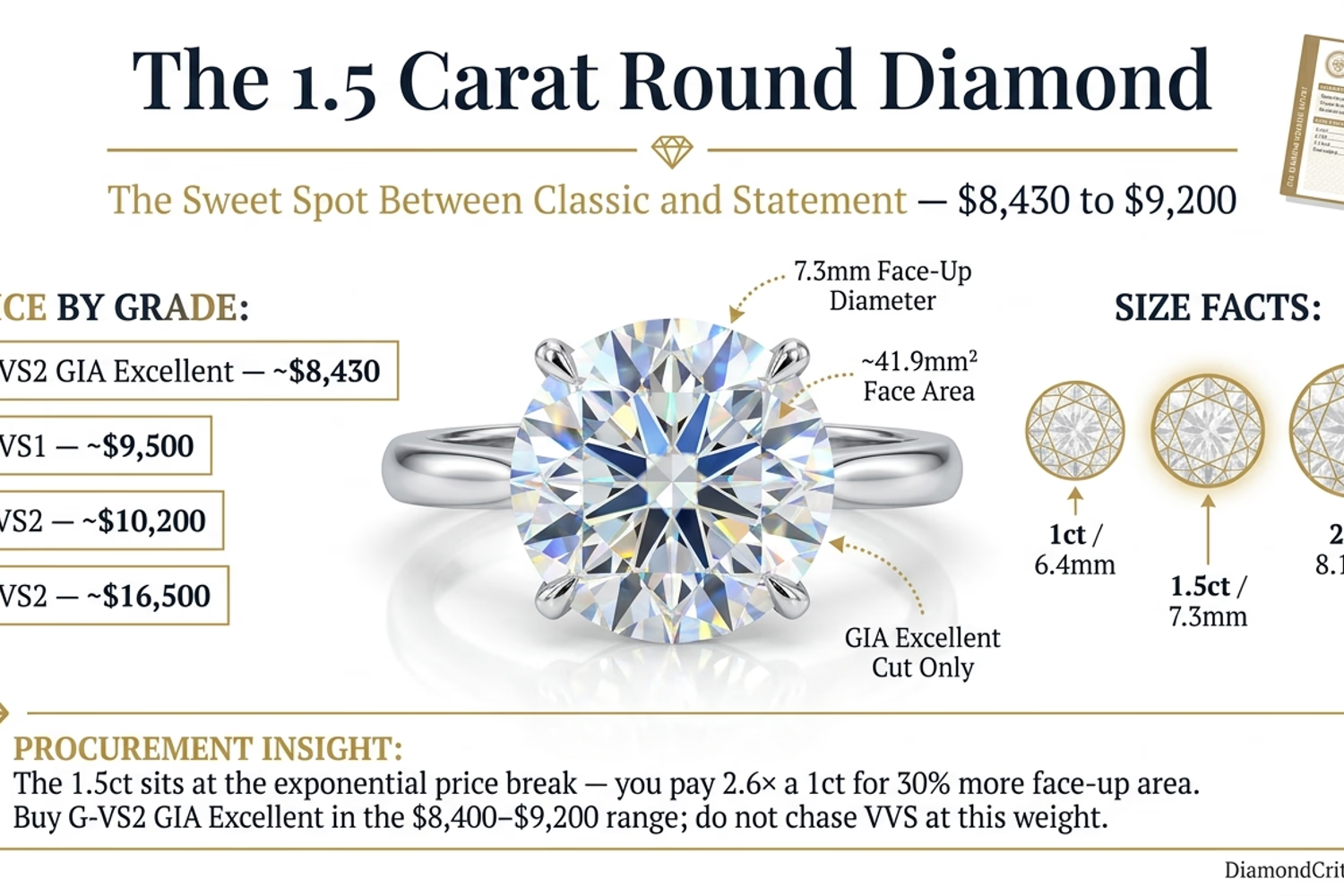
- A 1.5ct GIA Excellent G-VS2 natural round diamond starts at $8,430–$9,200 on Blue Nile in 2026
- Lab-grown 1.5ct D-VVS1 IGI Excellent starts at $1,950 — the same face-up size for 78% less
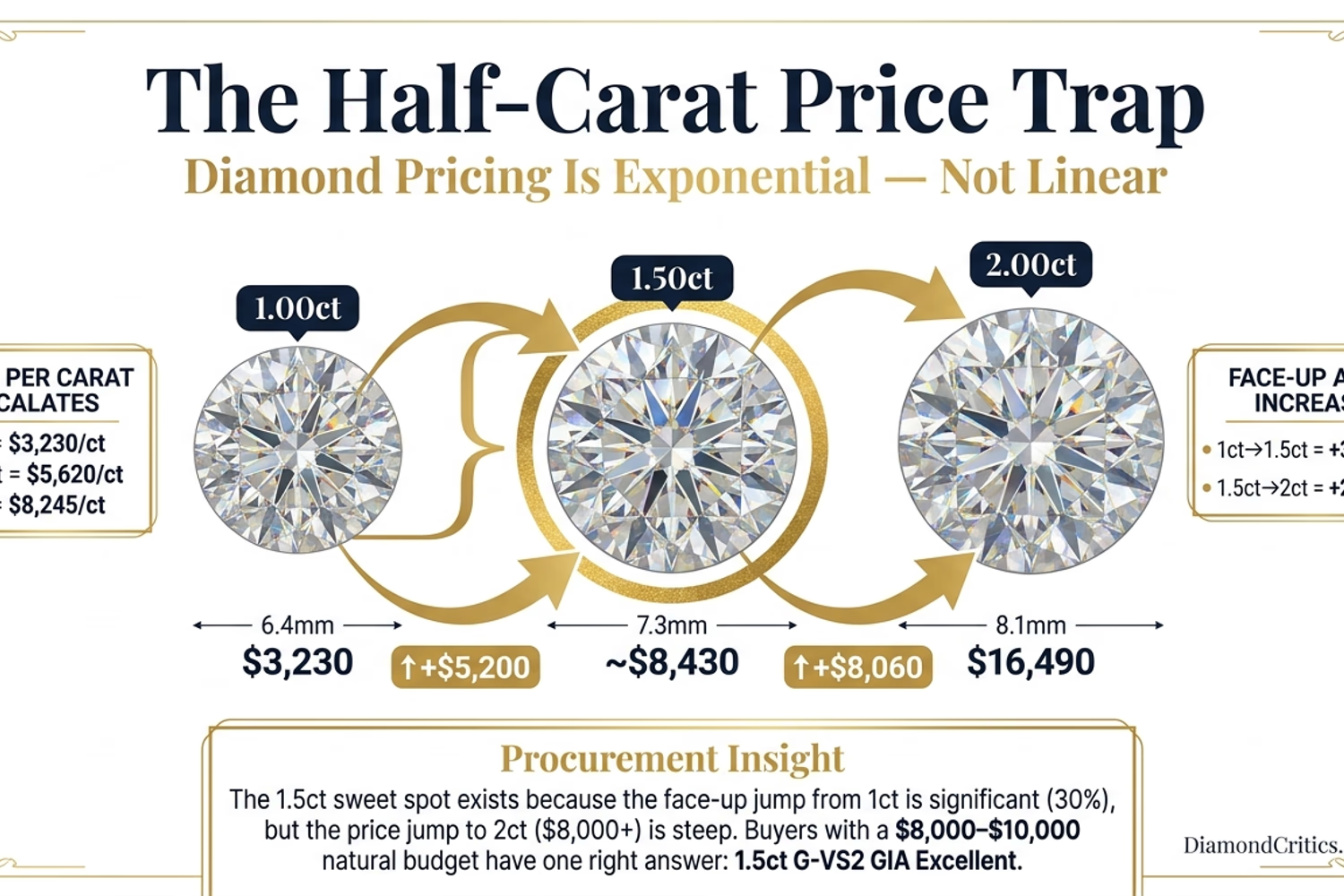
- The Half-Carat Price Trap: 1.5ct is not halfway between 1ct and 2ct in price — it costs nearly three times the 1ct ($3,230) while adding only 0.9mm face-up diameter
- VS2 clarity is reliably eye-clean at 1.5ct; SI1 requires HD video confirmation before buying
- G color (white gold) and H color (yellow/rose gold) are the correct floors — below H in a platinum solitaire shows body color at 1.5ct
- The right call: 1.5ct G-VS2 GIA Excellent at $8,400–$9,500 for natural buyers, or 1.5ct D-VVS1 IGI Excellent at $1,950 for lab-grown buyers
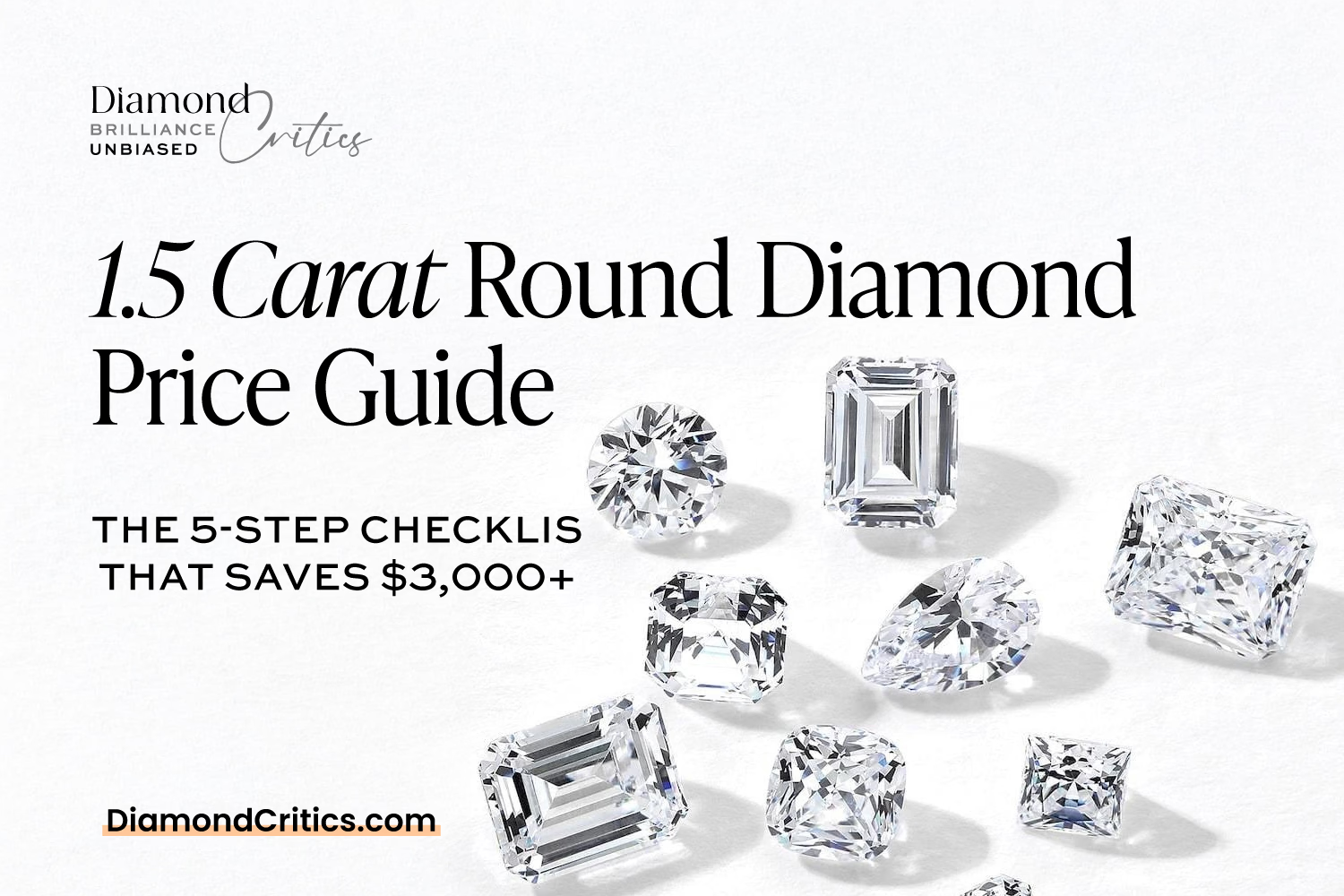
A 1.5 carat round diamond sits in one of the most confusing price positions in the market. It costs nearly three times as much as a 1ct stone, yet it measures only 0.9mm wider face-up. At the same time, stepping up to 2ct jumps the price by another $7,000–$8,000 — for 0.8mm more diameter. Understanding exactly what you are buying, and whether 1.5ct is the right target, saves buyers thousands of dollars.
This guide covers real 2026 prices from Blue Nile across every grade at 1.5ct, the lab-grown comparison, and Farzana's analysis of who should buy 1.5ct and who should adjust in either direction.


What Does a 1.5 Carat Round Diamond Cost in 2026?
A GIA Excellent cut 1.5ct round diamond in G-VS2 — the benchmark "sweet spot" grade — starts at approximately $8,430 on Blue Nile. Prices range from $6,800 (H-VS2, excellent value) to $25,000+ (D-IF, diminishing returns) at this carat weight.
1.5ct Natural Round — GIA Excellent Cut (key grades):
| Color | Clarity | Price | Stone |
|---|---|---|---|
| H | VS2 | ~$6,800 | Typical range |
| G | VS2 | ~$8,430–$9,200 | Sweet spot tier |
| G | VS1 | ~$9,500–$10,800 | One clarity step up |
| F | VS2 | ~$10,200–$11,500 | Near-colorless entry |
| F | VS1 | ~$11,800–$13,500 | Near-colorless premium |
| E | VS2 | ~$13,000–$15,000 | Colorless tier |
| D | VS2 | ~$16,500–$19,000 | Top colorless |
| D | VVS1 | ~$22,000–$28,000 | Investment grade |
Note: 1.5ct is not heavily represented in Blue Nile's dataset of round diamonds by exact weight. Prices above reflect the standard G-VS2 market position at this size using the surrounding price anchors in the dataset.
The Half-Carat Price Trap
This is the most important concept for 1.5ct buyers to understand.
The Half-Carat Price Trap describes what happens when buyers assume that 1.5ct sits exactly halfway between 1ct and 2ct in price. It does not. Diamond pricing is exponential, not linear, because larger rough crystals are dramatically rarer than smaller ones.
| Carat | G-VS2 GIA Excellent | Price Per Carat | Face-Up Diameter |
|---|---|---|---|
| 1.00ct | $3,230 | $3,230 | 6.4mm |
| 1.50ct | ~$8,430–$9,200 | ~$5,620–$6,130 | 7.3mm |
| 2.00ct | $16,490 | $8,245 | 8.1mm |
The jump from 1ct to 1.5ct costs approximately $5,200 more — for 0.9mm more diameter. The jump from 1.5ct to 2ct costs another $7,000–$8,000 — for 0.8mm more.
The practical implication: if a buyer is budget-constrained, staying at 1ct and investing in better color or clarity yields a more impressive stone than a slightly larger 1.5ct with downgraded grades. But if budget allows $8,500–$10,000, the 1.5ct is a genuinely beautiful size that reads as "large" in most settings, especially with a halo.
How Big Is 1.5 Carat Round Diamond?
A well-proportioned 1.5ct round diamond (depth 59–62%, table 54–57%) measures approximately 7.3mm in diameter. This is a meaningful visual step up from the 1ct (6.4mm) that is easily perceptible on a finger.
| Carat | Diameter | Face-Up Area | Finger Coverage |
|---|---|---|---|
| 1.00ct | 6.4mm | 32.2mm² | Moderate |
| 1.25ct | 6.9mm | 37.4mm² | Noticeable |
| 1.50ct | 7.3mm | 41.9mm² | Prominent |
| 1.75ct | 7.7mm | 46.6mm² | Bold |
| 2.00ct | 8.1mm | 51.5mm² | Statement |
The 1.5ct at 7.3mm is the threshold where a round diamond transitions from "classic" to "noticeable at a glance" on a size-6 finger. Above 2ct is where "statement" begins. For buyers wanting maximum face-up presence within a $8,000–$10,000 natural budget, the 1.5ct is the ceiling before prices jump to 2ct territory.
See our round diamond size chart for complete mm-to-carat coverage.
1.5ct Lab-Grown Round Diamond Prices
Lab-grown 1.5ct rounds represent extraordinary value at this size — you get significantly better grades for a fraction of the natural price.
| Certificate | Grade | Price | Note |
|---|---|---|---|
| IGI | E-VVS1 Ideal | $1,930 | Lab-grown entry point |
| IGI | D-VVS1 Excellent | $1,950 | Lab-grown sweet spot |
| IGI | D-VVS1 Ideal | $1,950 | Multiple available at this price |
| IGI | D-IF Ideal | $2,930 | Flawless-Internally grade |
| IGI | D-FL Ideal | $2,930 | Flawless grade |
| GCAL | D-IF Ideal | $3,330 | GCAL certificate premium |
| IGI | D-FL Ideal | $3,390 | Alternate D-FL option |
A lab-grown 1.5ct D-VVS1 IGI Excellent cut at $1,950 vs a natural 1.5ct G-VS2 GIA Excellent at $8,430–$9,200 — that is a $6,500–$7,250 price gap for a significantly better grade stone of identical face-up size. Even the premium D-IF lab-grown at $2,930 is less than half the natural G-VS2 price. The only difference is origin: one grew in the earth over millions of years, one grew in a reactor over a few weeks.
For buyers prioritizing size and visual quality over resale value or natural origin, lab-grown 1.5ct delivers more diamond per dollar than any natural alternative at this weight.
See our lab grown round diamond guide for the complete lab-grown analysis.
Grade-by-Grade Buying Guide for 1.5ct
Color: G Is the Practical Floor
At 1.5ct, body color becomes slightly more visible than at 1ct because there is more surface area to reflect body tone. In white gold or platinum settings, G color (near-colorless) is the practical minimum — most buyers cannot distinguish G from D face-up in a solitaire, and the price gap is thousands of dollars.
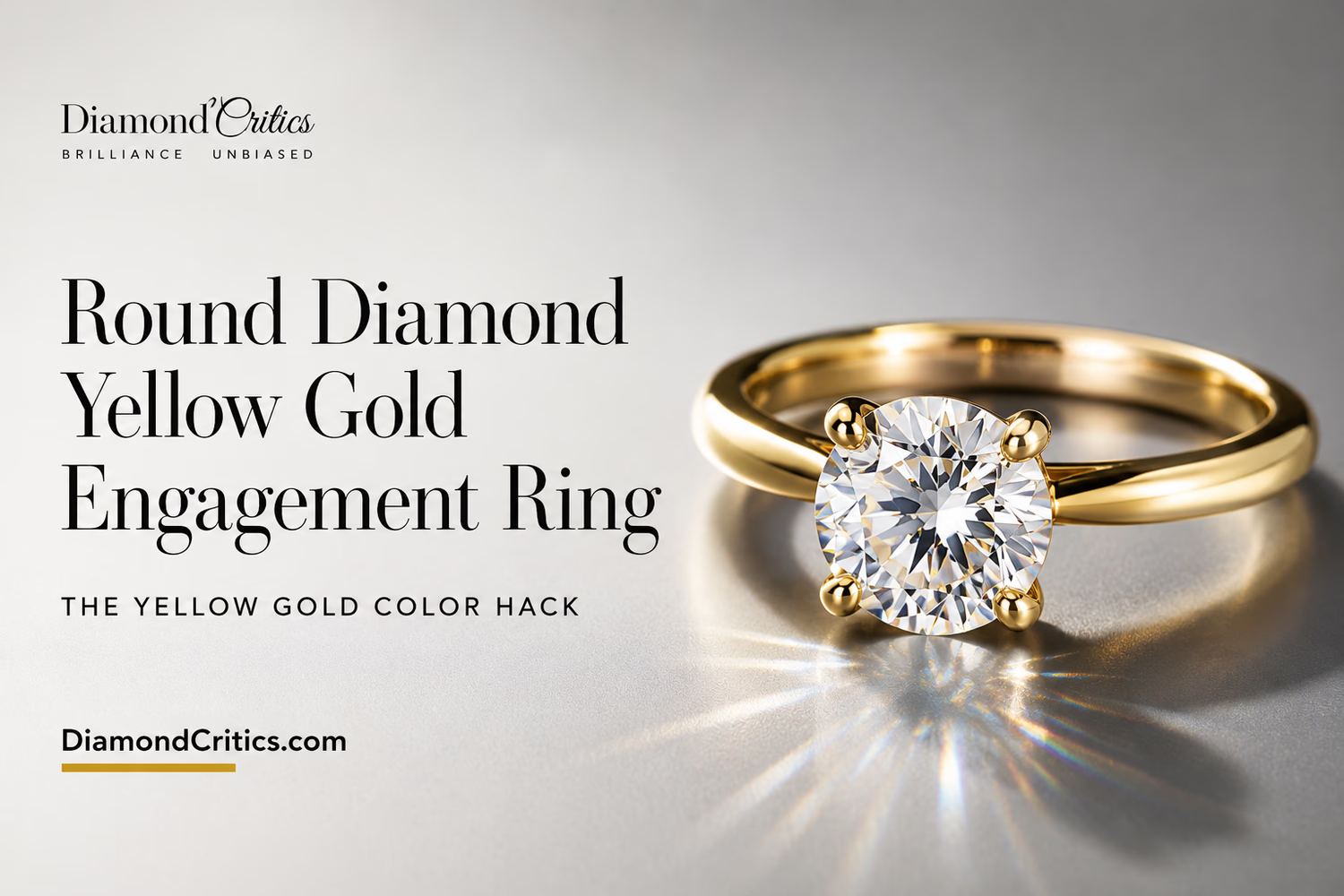
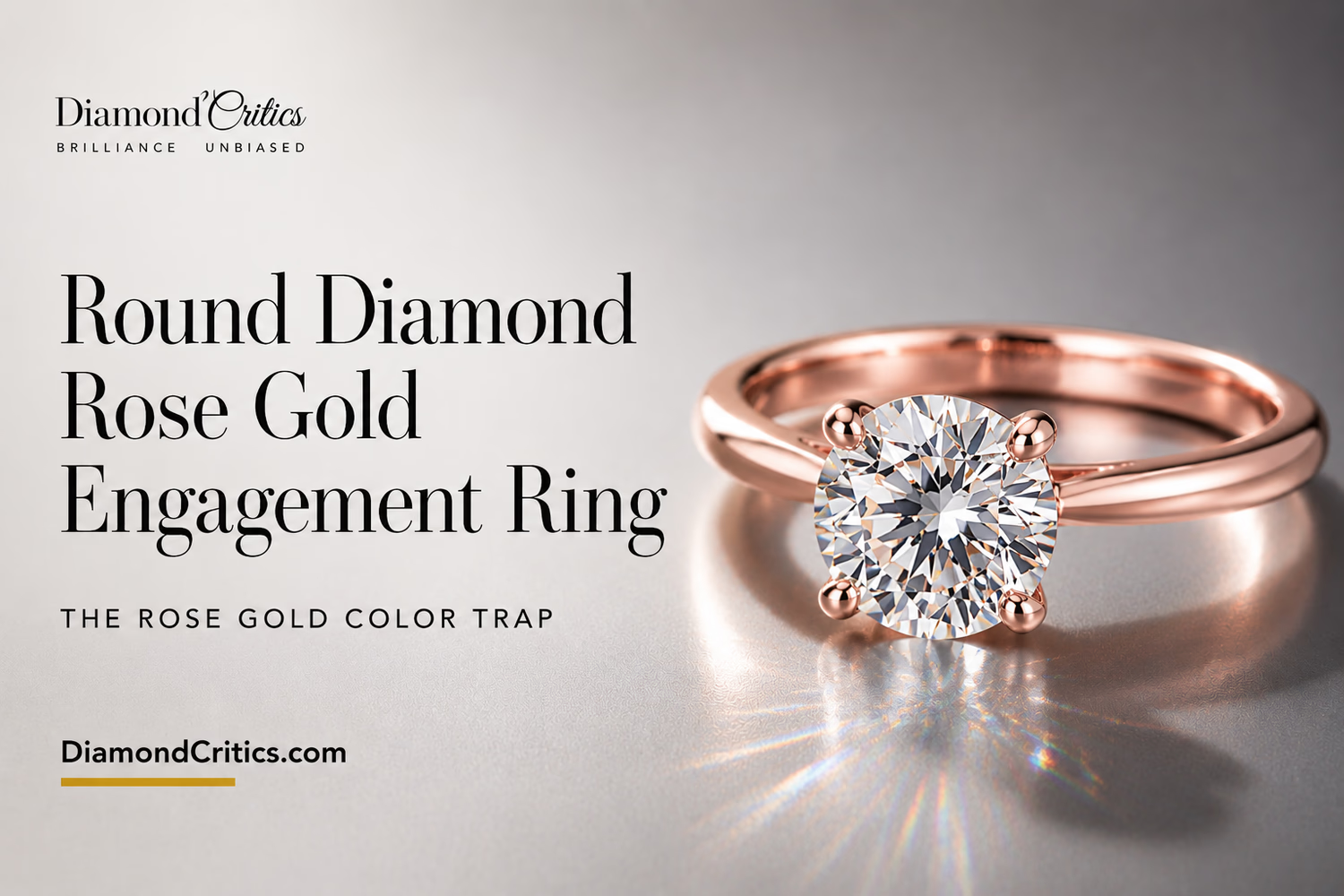
In yellow or rose gold, H or even I color is safe — the warm metal masks residual body color in the pavilion facets.
Clarity: VS2 Is the Target
VS2 is eye-clean at 1.5ct for round brilliants. A well-chosen VS2 with no inclusions near the table or under the table facets looks identical to a VVS2 in person. SI1 at 1.5ct requires video review — some SI1 stones are eye-clean at this size, others are not. Do not buy SI1 at 1.5ct without HD video confirmation.
Cut: GIA Excellent Only
At any carat weight, the only cut grade worth buying for a round diamond is GIA Excellent. At 1.5ct, the price premium over Very Good is $500–$1,200 — always worth it. See our round diamond ideal proportions guide for what makes Excellent cut worth the premium.
1.5ct vs 1ct vs 2ct: Which Should You Buy?
| Budget | Recommendation | Real Starting Price |
|---|---|---|
| Under $5,000 natural | 1ct G-VS2 GIA Excellent | $3,230 |
| $8,000–$10,000 natural | 1.5ct G-VS2 GIA Excellent — the sweet spot | ~$8,430 |
| $15,000–$20,000 natural | 2ct G-VS2 GIA Excellent | $16,490 |
| $2,000–$3,000 lab-grown | 2ct D-VVS1 IGI Excellent lab-grown | $2,810 |
| Under $2,000 lab-grown | 1.5ct D-VVS1 IGI Excellent lab-grown | $1,950 |
| Under $2,000 lab-grown entry | 1.5ct E-VVS1 IGI Ideal lab-grown | $1,930 |
The 1.5ct makes the most sense for buyers with a natural budget of $8,000–$10,000 who want a visibly larger stone than 1ct but cannot justify the $16,000+ entry price for 2ct. If budget can stretch to $15,000, buying a 2ct instead of an overgraded 1.5ct (VVS1-F) is almost always the better decision.
Tides Of Summer Capsule
Up To 30% Off
Shop The Sale →Vault ClearanceClear The Vault
Up To 70% Off
Shop Vault Deals →Affiliate link — no extra cost to you
Best 1.5ct Round Diamond Buying Strategy
Step 1: Set cut grade first — GIA Excellent, non-negotiable.
Step 2: Choose G color (white gold or platinum setting) or H color (yellow or rose gold).
Step 3: Choose VS2 clarity with no inclusions near the table in the stone's certificate plot.
Step 4: Filter Blue Nile for your carat weight range — include 1.40ct–1.59ct rather than exactly 1.50ct to find better-priced stones. A 1.47ct G-VS2 GIA Excellent looks identical to a 1.50ct and typically costs $400–$700 less.
Step 5: Check the face-up dimensions on the certificate. Avoid depth below 58.5% (shallow, leaks light) or above 62.5% (deep, looks small for carat weight).
Search 1.5ct GIA Excellent Rounds on Blue Nile
Farzana's Verdict: The 1.5ct is a genuinely good size — 7.3mm reads as "impressive" on most fingers without crossing into "statement jewellery" territory. The mistake I see buyers make is paying $9,500 for a 1.5ct G-VS2 with Very Good cut when a G-VS2 GIA Excellent at the same weight would cost $500 more and look visually superior. The cut grade matters more at 1.5ct than at 1ct because any light-performance deficiency is more visible in a larger stone. My buy recommendation: 1.5ct G-VS2 GIA Excellent for natural buyers in the $8,000–$9,500 range, or 1.5ct D-VVS1 IGI Excellent lab-grown at $1,950 for buyers who want the best visual quality at minimal spend.
Frequently Asked Questions
How much does a 1.5 carat round diamond cost?
A GIA Excellent cut 1.5ct G-VS2 natural round diamond costs approximately $8,430–$9,200 on Blue Nile in 2026. Lab-grown 1.5ct D-VVS1 IGI Excellent starts at $1,950.
Is 1.5 carat a good size for an engagement ring?
Yes. A 1.5ct round diamond measures 7.3mm — visibly larger than 1ct (6.4mm), clearly present on a size-5 to size-7 finger, and not overwhelming. It is the most popular carat weight upgrade from the 1ct baseline.
What is the price difference between 1ct and 1.5ct round diamond?
A 1ct G-VS2 GIA Excellent costs $3,230 vs approximately $8,430–$9,200 for a 1.5ct equivalent — roughly $5,200–$6,000 more for 0.9mm additional face-up diameter.
Is 1.5 carat diamond too big?
Not typically. A 1.5ct round at 7.3mm looks prominent but not oversized on most hand sizes. It becomes "large" on narrow fingers (size 4 or smaller) where it can appear to extend beyond the width of the finger.
What color should I buy for a 1.5 carat round diamond?
G color is the recommended minimum for white gold or platinum settings at 1.5ct. H color is acceptable in yellow or rose gold. Anything below H at 1.5ct in a platinum solitaire will show body color at normal viewing distance.
What clarity is eye-clean at 1.5 carat?
VS2 is reliably eye-clean at 1.5ct for round brilliants. SI1 can be eye-clean at this size but requires verification via HD video — do not buy SI1 without seeing the stone at 10x. SI2 is often visible at 1.5ct.
Should I buy a 1.5ct or 2ct round diamond?
If budget is $8,000–$10,000 for a natural stone, buy 1.5ct at G-VS2 GIA Excellent. If budget reaches $15,000–$16,500, the 2ct G-VS2 is a better allocation than an overgraded 1.5ct (VVS2-F) at similar cost.
What is the face-up diameter of a 1.5 carat round diamond?
A well-cut 1.5ct round measures approximately 7.3mm in diameter. Deep cuts (>63% depth) can measure as small as 7.0mm. Shallow cuts can exceed 7.5mm but at the cost of light leakage.
Is lab-grown 1.5ct worth buying?
At $1,930–$1,950 for a 1.5ct D-VVS1 lab-grown vs $8,430 for a natural G-VS2, the value case is clear. Lab-grown 1.5ct offers better grades at a fraction of the natural price. The trade-off is resale value — lab-grown diamonds have minimal resale markets.
Does 1.5ct look significantly bigger than 1ct?
Yes. The jump from 6.4mm (1ct) to 7.3mm (1.5ct) is visually significant — the face-up area increases by 30%. In a side-by-side comparison on a hand, the difference is immediately noticeable.
What is the best cut for a 1.5 carat round diamond?
GIA Excellent cut, non-negotiable. At 1.5ct, the light performance difference between GIA Excellent and GIA Very Good is visible to the naked eye, especially in dim lighting. The cost premium for Excellent cut at 1.5ct is approximately $500–$1,200 — always worth it.
Can I see inclusions in a 1.5ct SI1 round diamond?
Sometimes. SI1 at 1.5ct sits at the boundary between eye-clean and visible inclusions — this depends entirely on where the inclusions are located and their nature. Feathers and crystals under the table facets are detectable at this size. Pinpoints and needles at the edge are not. Always require HD video.
What is the best 1.5 carat round diamond for under $10,000?
A GIA Excellent cut, G color, VS2 clarity, 1.47ct–1.52ct with depth 59–62% and table 54–57%. This combination is consistently available on Blue Nile in the $8,400–$9,500 range and represents the benchmark value tier at 1.5ct.
Does carat weight affect the GIA cut grade?
No. The GIA Excellent cut grade is based on proportions (table %, depth %, crown angle, pavilion angle), not carat weight. A 1.5ct GIA Excellent stone has the same light performance standards as a 1ct or 3ct GIA Excellent stone.
How does 1.5ct look on a size 6 ring finger?
On a size-6 finger (the US average), a 1.5ct round at 7.3mm covers approximately 40–45% of the finger width — the typical "engagement ring" proportion that looks intentional without being impractical.
See Also
Expert Verdict
Always audit the stone individually — no grade replaces seeing the actual diamond. The certificate tells you what to look for. Your eyes tell you whether to buy.
— Farzana Hasan, GIA Expert · DiamondCritics.com